
This article contains affiliate links. Learn more in our affiliate disclosure.
After spending three beautiful days around Mt. Fuji, we continued to Kyoto — the third stop on our Japan itinerary — and it surprised us in the best way.
We knew some spots would be packed since we visited during peak fall foliage, but the atmosphere, the temples, and the old streets felt even more memorable than we expected.
We had four full days in the city, which was enough to cover the main attractions and explore a few quieter places that quickly became favorites.
This guide to the best things to do in Kyoto is based entirely on our own experience, including realistic timing, crowd levels, and what we’d skip next time.
We’ll also point out a few spots that felt overhyped or skippable, so you can easily decide whether to squeeze them in or save your time for something better.
If you’re visiting Kyoto for the first time, this should give you a clear, realistic idea of what to expect — and how to make the most of your trip.
These are our top hotels in Kyoto we’d book again
⭐️⭐️⭐️ Cross Hotel Kyoto (our top pick) – A modern mid-range stay in a central part of downtown. Comfortable rooms, great design, and an easy base for exploring.
👉 See prices & availability →
⭐️⭐️ The Thousand Kyoto – A luxury hotel with spacious, minimalist rooms and an excellent breakfast. Its location makes getting around the city incredibly easy.
👉 See prices &availability →
⭐️ Guesthouse Soi – A simple and budget-friendly guesthouse near Kiyomizu-dera with clean rooms and a genuinely warm, helpful atmosphere.
👉 See prices & availability
Top Things to do in Kyoto
Map of all the attractions
1. Visit Kiyomizu-dera Temple

Entrance Fee: 500 JPY

Opening hours: always check on the official website for correct info
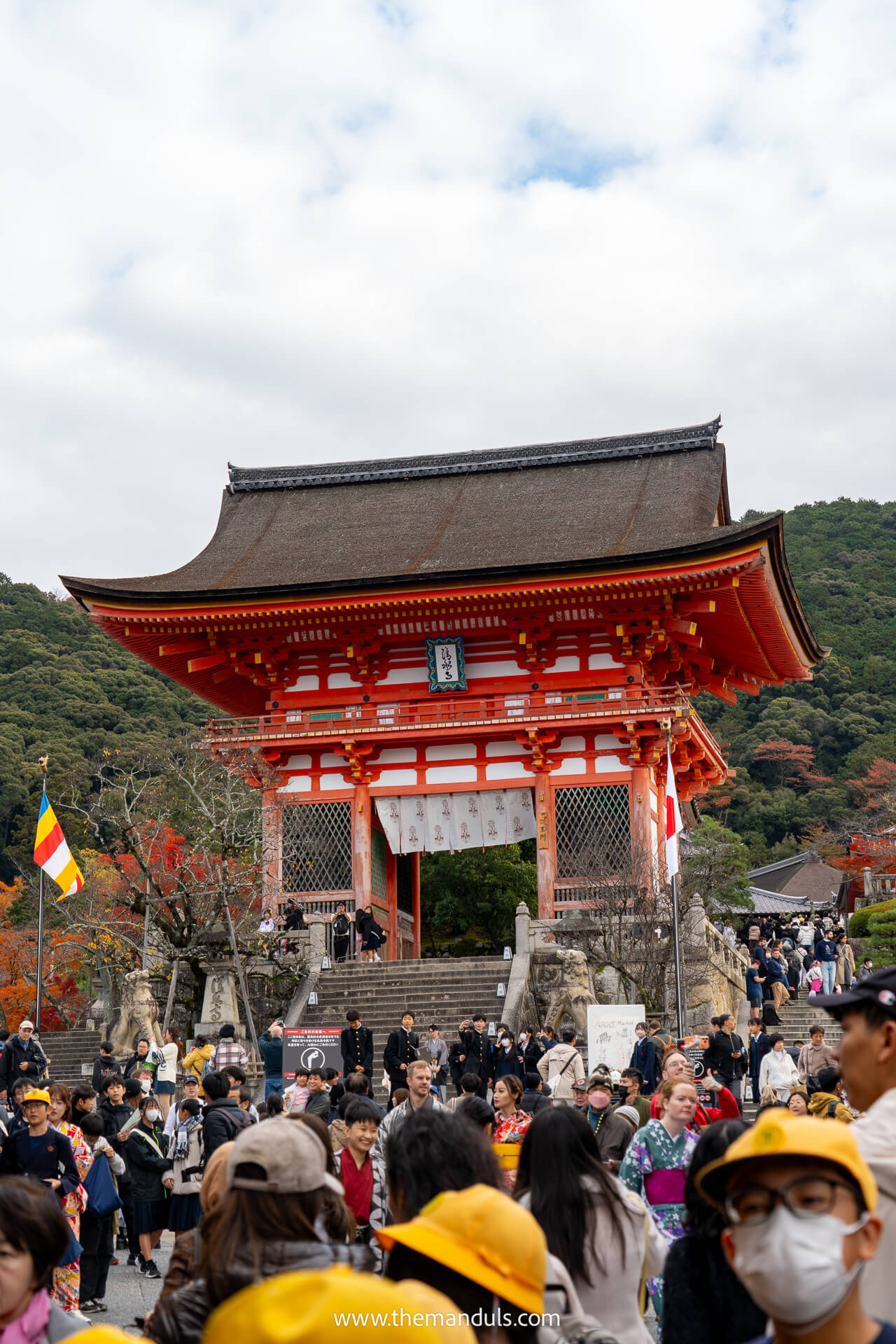
Kiyomizu-dera is one of Kyoto’s most iconic temples, known for its huge wooden stage overlooking the city and its atmosphere during autumn and spring. We visited in the afternoon, which definitely wasn’t the smartest decision because the crowds were intense, but we prioritised other places for sunrise and early mornings.
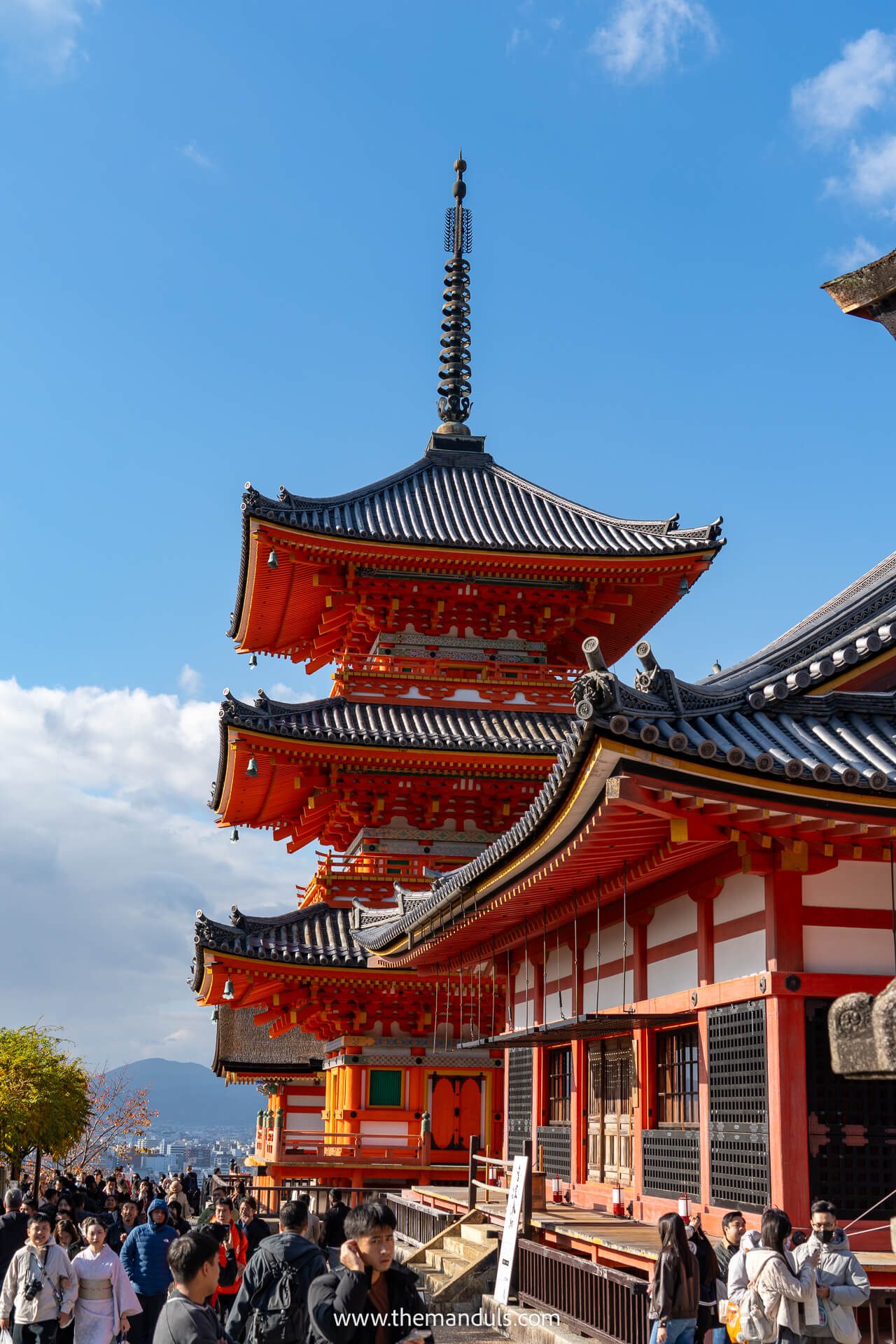
If this temple is high on your list and you really want to avoid squeezing through big groups, visit right when it opens at 6 AM — you’ll get a much calmer experience and you can even enjoy sunrise from the terrace.
It took us about one to one and a half hours to walk through the whole complex at a comfortable pace. We couldn’t take the stroller inside, but there was a designated spot to leave it at the entrance, so we switched to a baby carrier, which made the visit much easier.
During autumn, Kiyomizu-dera also offers Night Illuminations, which look incredible but come with a higher entry fee (usually around 1,000 JPY).
Official website: https://www.kiyomizudera.or.jp
2. Explore Higashiyama Old Town
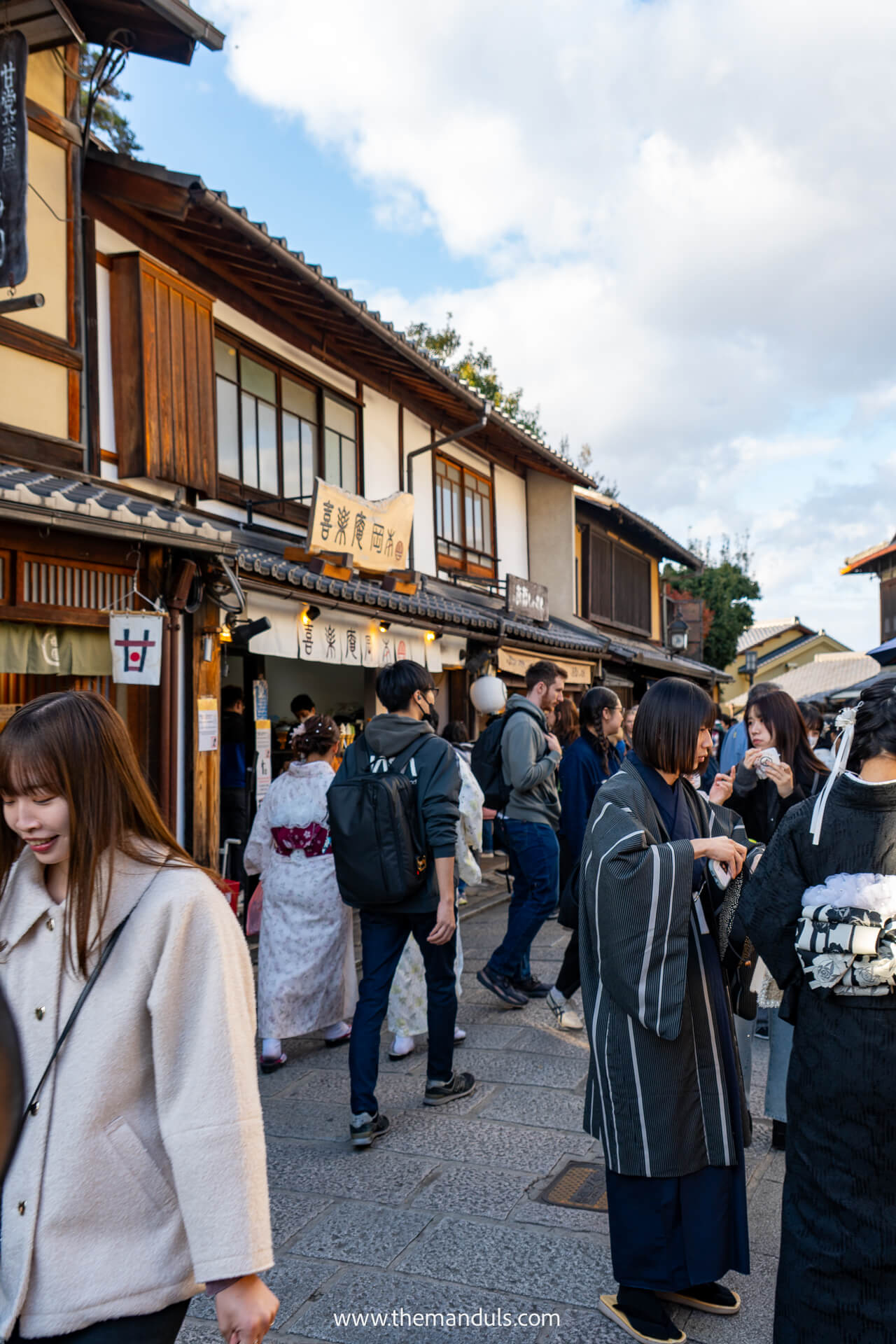
Higashiyama is one of the most atmospheric parts of Kyoto, with traditional wooden houses, small shops, cafés, and some of the city’s best-preserved streets. We loved wandering here without a strict plan — it’s one of those areas where every corner looks photogenic, especially in the late afternoon light.
Even though it gets busy, the vibe is still authentic, and it’s the perfect place to slow down between temple visits.
If you’re already heading to Kiyomizu-dera, walking through Higashiyama Old Town is the most natural route, and it’s easy to spend anywhere from one to two hours exploring.
The streets are narrow and mostly pedestrian, so it’s comfortable to walk, but if you’re visiting with a stroller, be prepared for a few slopes and crowds. Early mornings are the quietest and most enjoyable times to visit.
This is also a great spot for souvenirs, snacks, or a quick coffee before continuing towards Ninenzaka and Sannenzaka.
3. Walk through Ninenzaka
If you want that classic old-Kyoto atmosphere, Ninenzaka is one of the first places we recommend adding to your itinerary. This beautifully preserved street has everything Kyoto is known for — traditional wooden houses, small local shops, teahouses, and narrow stone steps that instantly transport you back in time.
We passed through Ninenzaka on our way to Yasaka Pagoda (more on that later), and even though we read that sunset is supposed to be calmer, that wasn’t the case at all.
It was extremely crowded to the point where walking was difficult. If you want to appreciate the street properly, we suggest coming around sunrise — it’s the only time you can enjoy the atmosphere without heavy foot traffic.
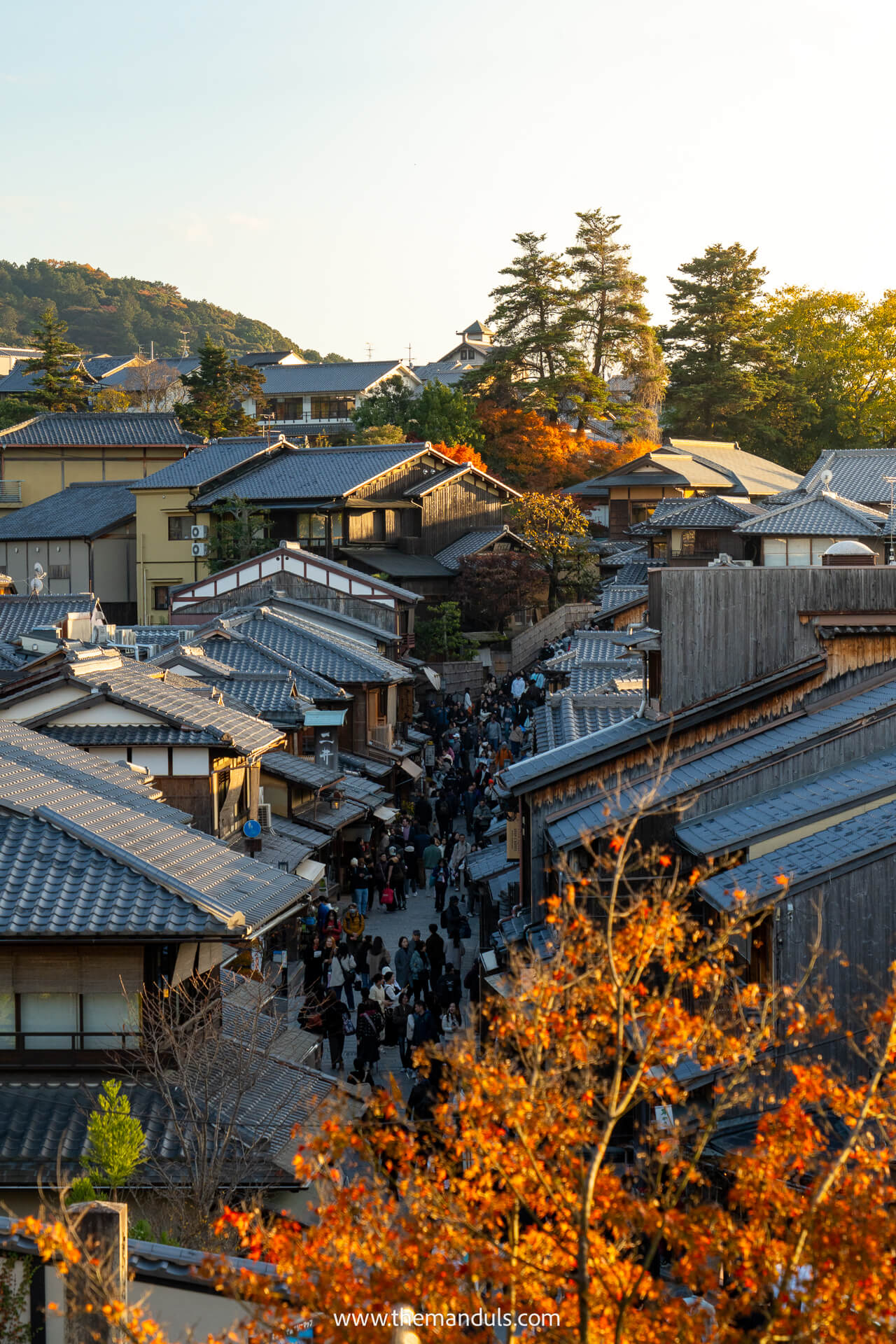
Shops start opening a bit later in the morning, so if your goal is photos, peaceful views, and a pleasant walk, sunrise is perfect.
If you want to browse the boutiques and cafés, arriving right after opening hours still keeps it manageable. From here, the route naturally continues toward Sannenzaka, which is just as scenic.
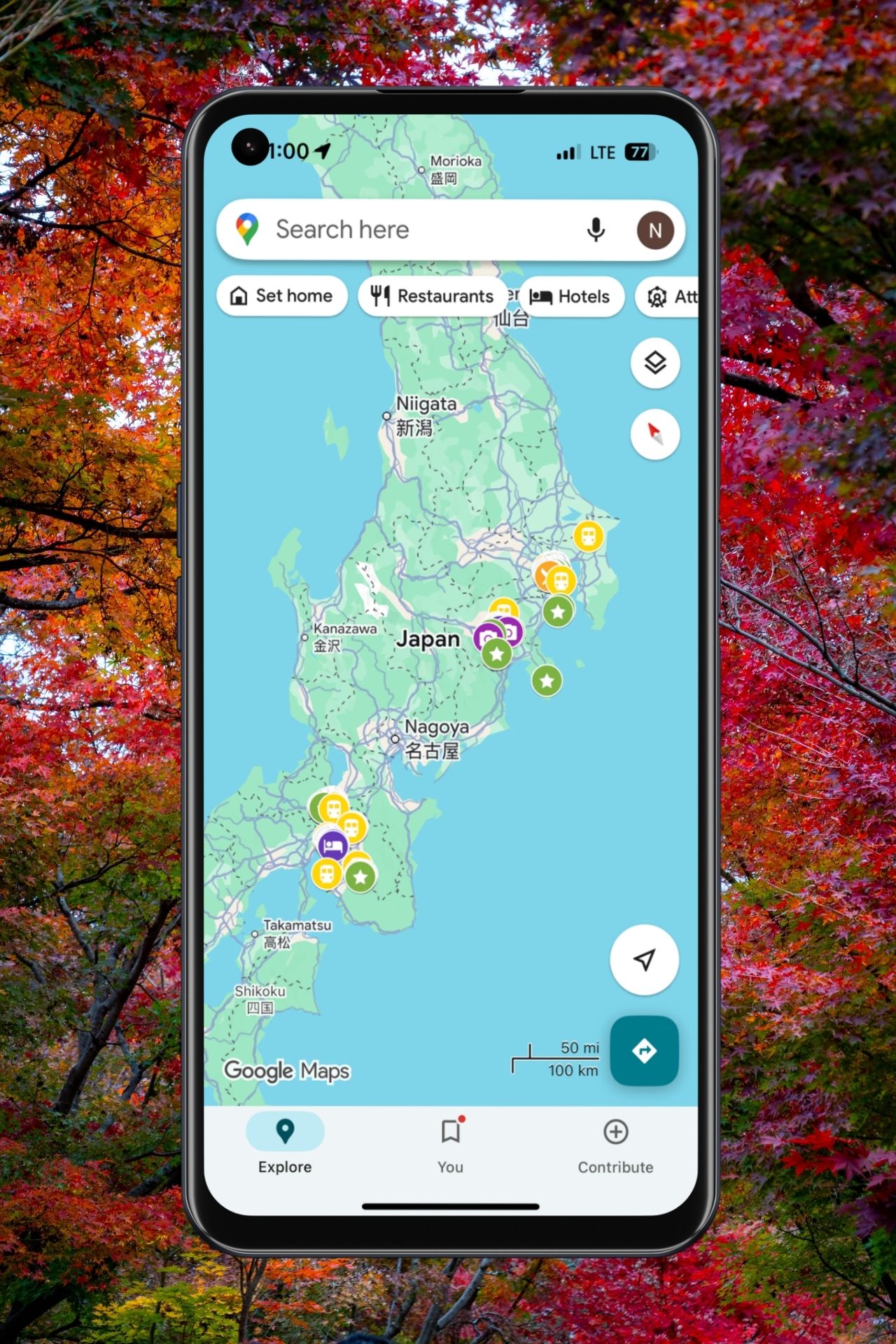
Our Japan Google Maps
Built from our real trips across Japan — only places we actually visited and loved.
No tourist traps. No random saves. Just a ready-to-use map that saves you hours of research.
219 handpicked spots, including:
📍 Highlights & hidden gems
🍜 Restaurants we’d go back to
🏨 Areas & hotels we’d book again
🗺️ Stops that fit into real, logical itineraries
4. Stroll along Sannenzaka
Right after Ninenzaka, you’ll naturally arrive at Sannenzaka, another beautifully preserved street that feels like an extension of old Kyoto. It has the same charming mix of wooden houses, small cafés, traditional souvenir shops, and scenic corners that make this part of Kyoto so memorable.

We enjoyed stopping for small snacks and looking through the handcrafted shops here — it’s one of those streets where you naturally slow down because there’s always something interesting to see. Early in the morning, the light is soft, the storefronts are still quiet, and the whole area feels much more atmospheric.
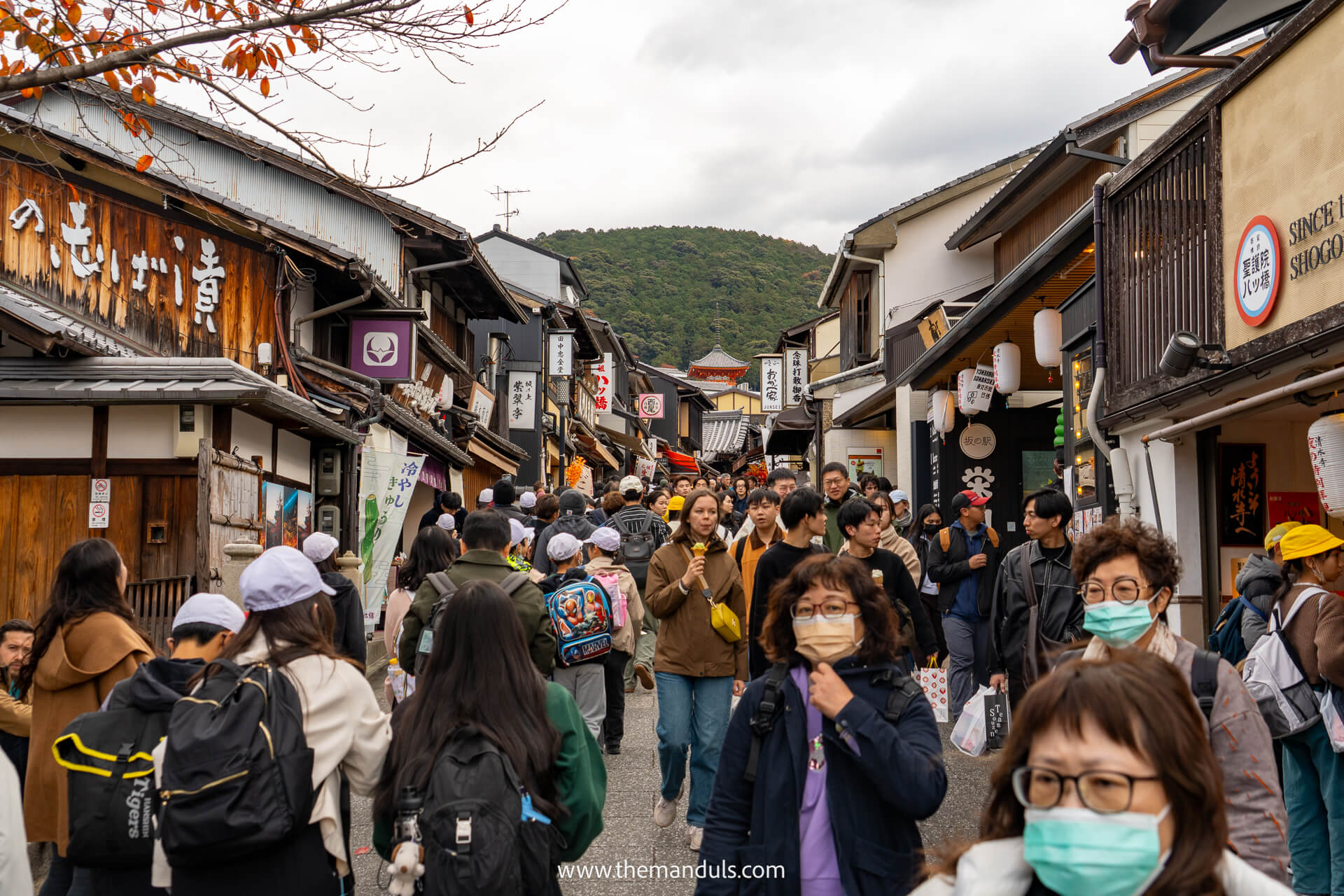
Later in the day, the street gets extremely busy, and during our visit it was almost impossible to move at a normal pace. If you want to appreciate the architecture and take photos without people constantly passing through, coming around sunrise is by far the best option.
If you’re visiting later, be patient and enjoy the shops — there are some lovely places selling ceramics, sweets, and locally made gifts.
5. Photograph Yasaka Pagoda (Hokan-ji)
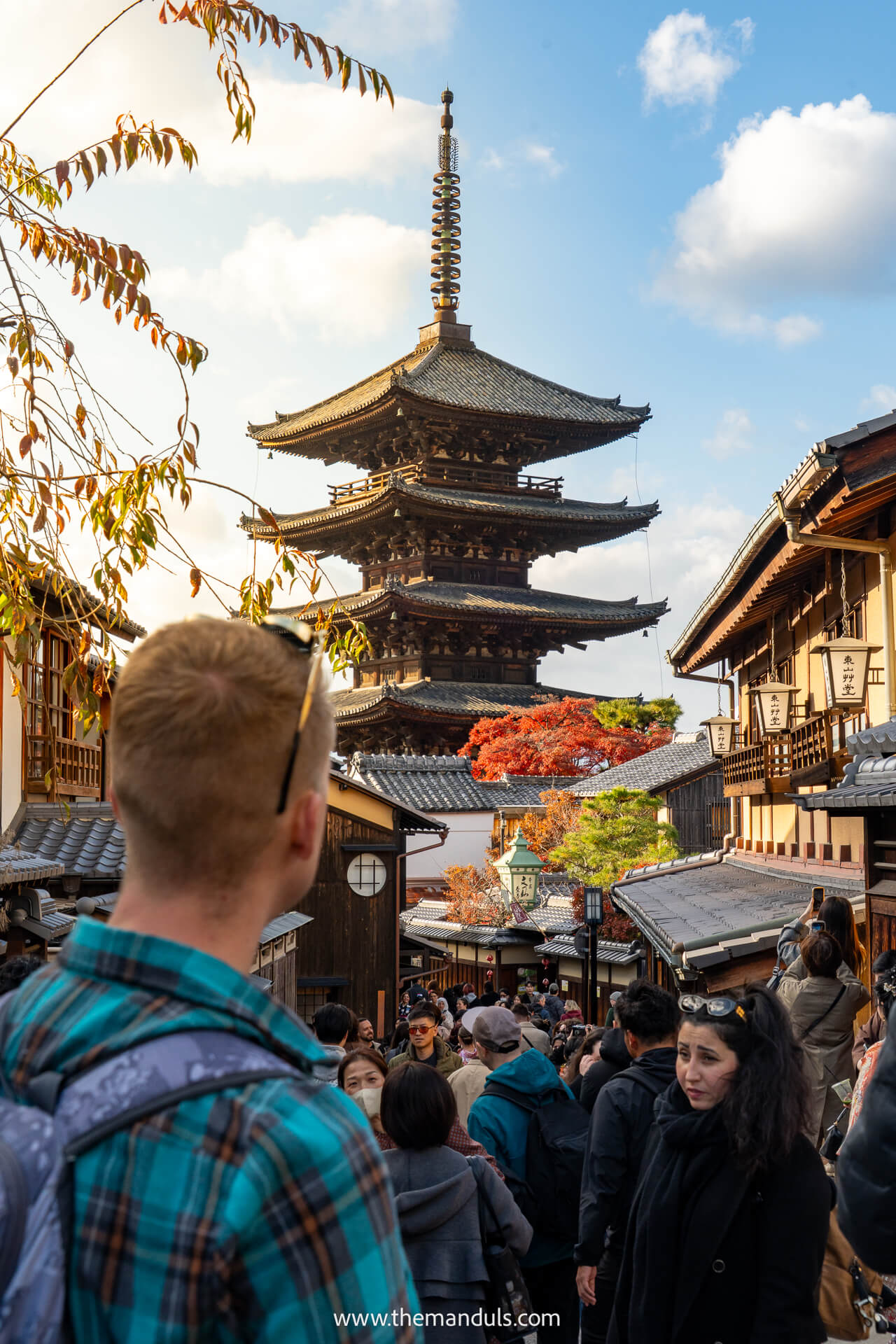
Yasaka Pagoda is one of the most iconic landmarks in Kyoto, and seeing it appear at the end of the narrow old-town street is genuinely a moment you won’t forget.
We walked here right after Ninenzaka, and even though we’d seen this view in photos countless times, the real scene — with the wooden houses framing the pagoda — feels completely different in person.

Based on our own experience, the timing makes a huge difference. We came in the late afternoon during peak season, and it was impossible to get a clean shot because the street was absolutely packed.
If photos are important to you, we suggest visiting around sunrise. Keep in mind you still won’t be completely alone — there will already be a few photographers trying to catch the classic shot without people — but at least it won’t be chaotic.
To be honest, we didn’t mind the crowds at all and took our photos with people in the frame, so this really comes down to your personal style. Both versions work, and the pagoda looks great either way.
6. Discover Kodai-ji Temple
Entrance Fee: 600 JPY
Opening hours: 9:00 AM to 5:30 PM (last entry 5:00 PM)
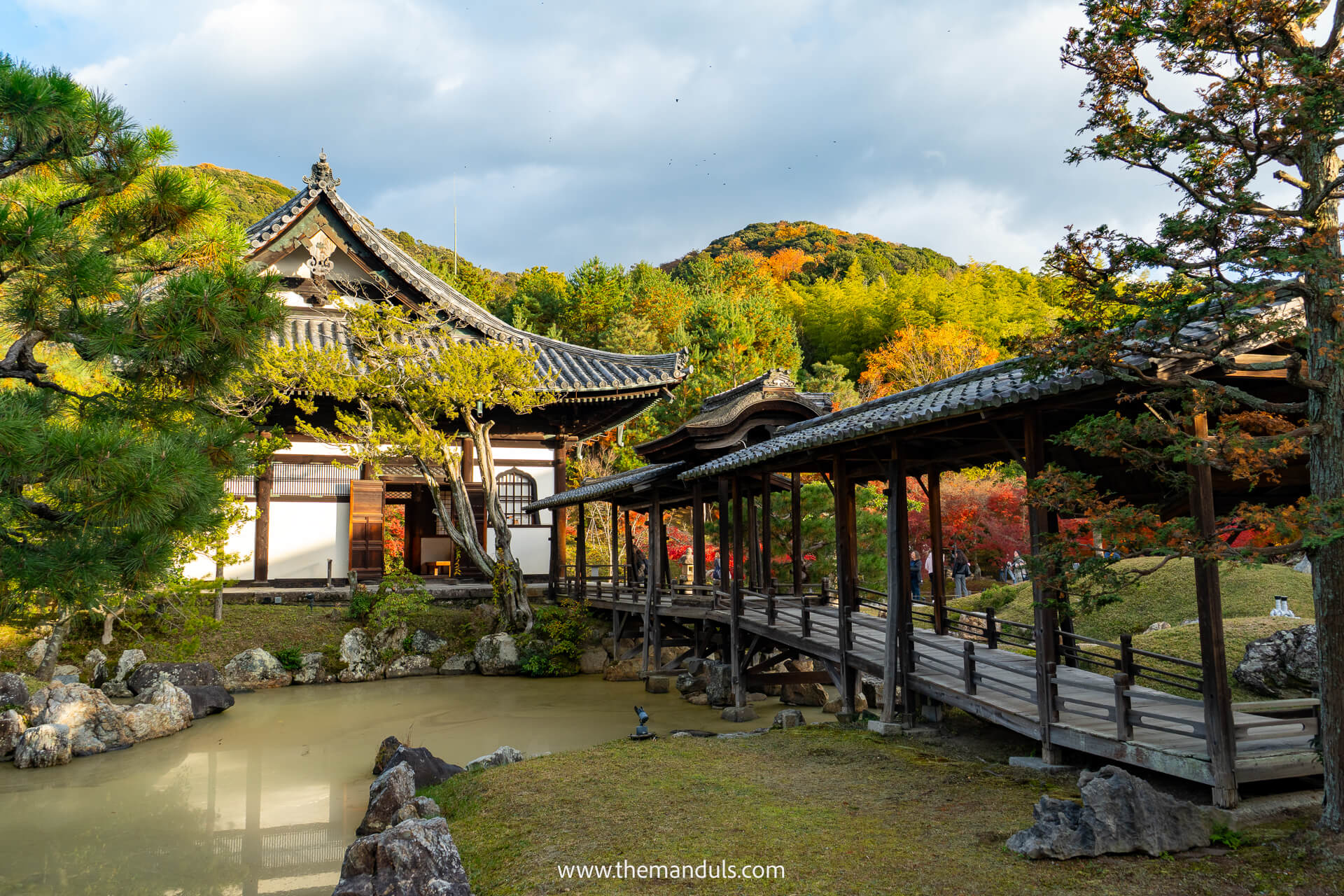
Kodai-ji is one of those temples that genuinely surprised us. The atmosphere is calm, the grounds are beautifully designed, and the visit is very straightforward thanks to the one-way pathway that leads you through each section without backtracking.
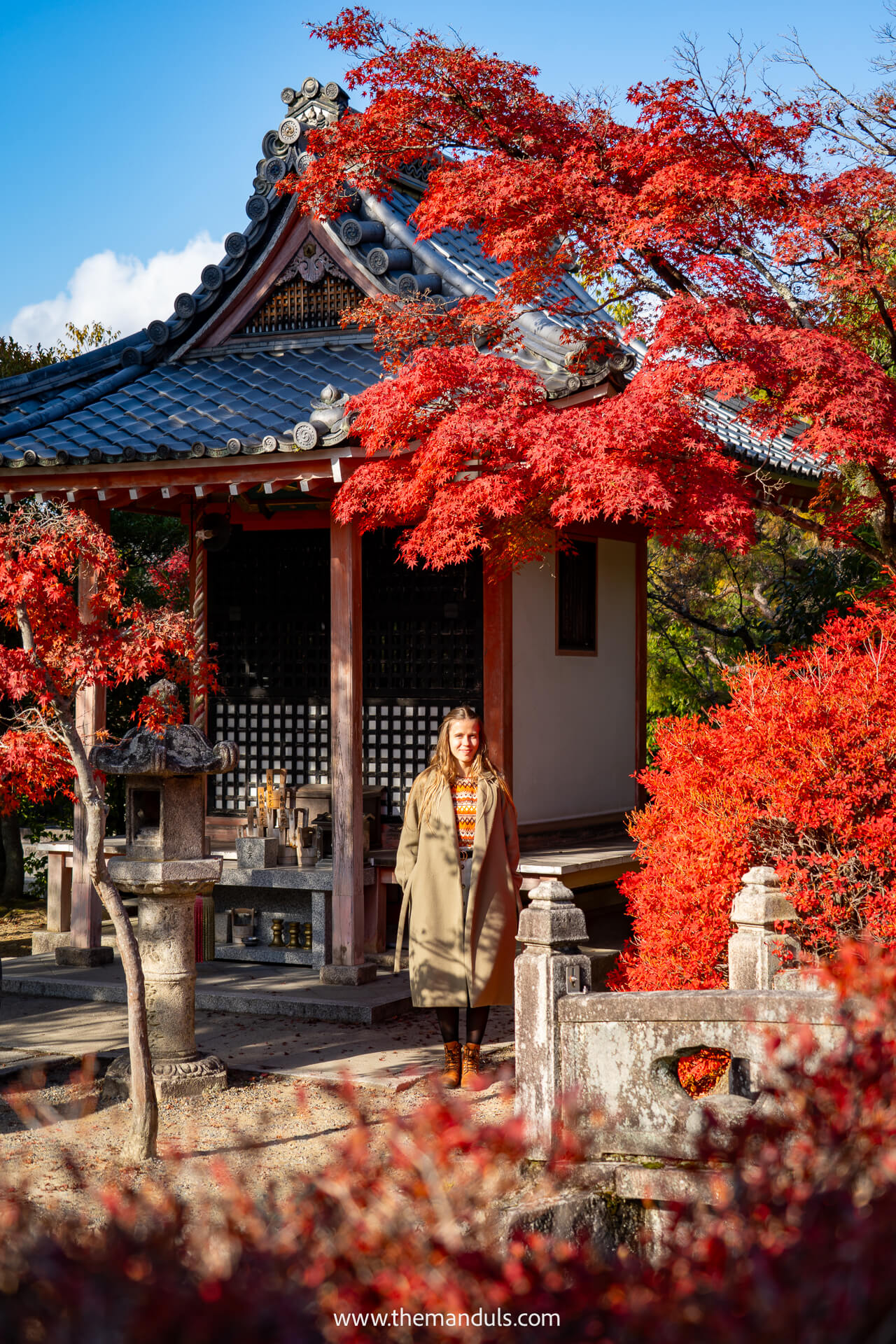
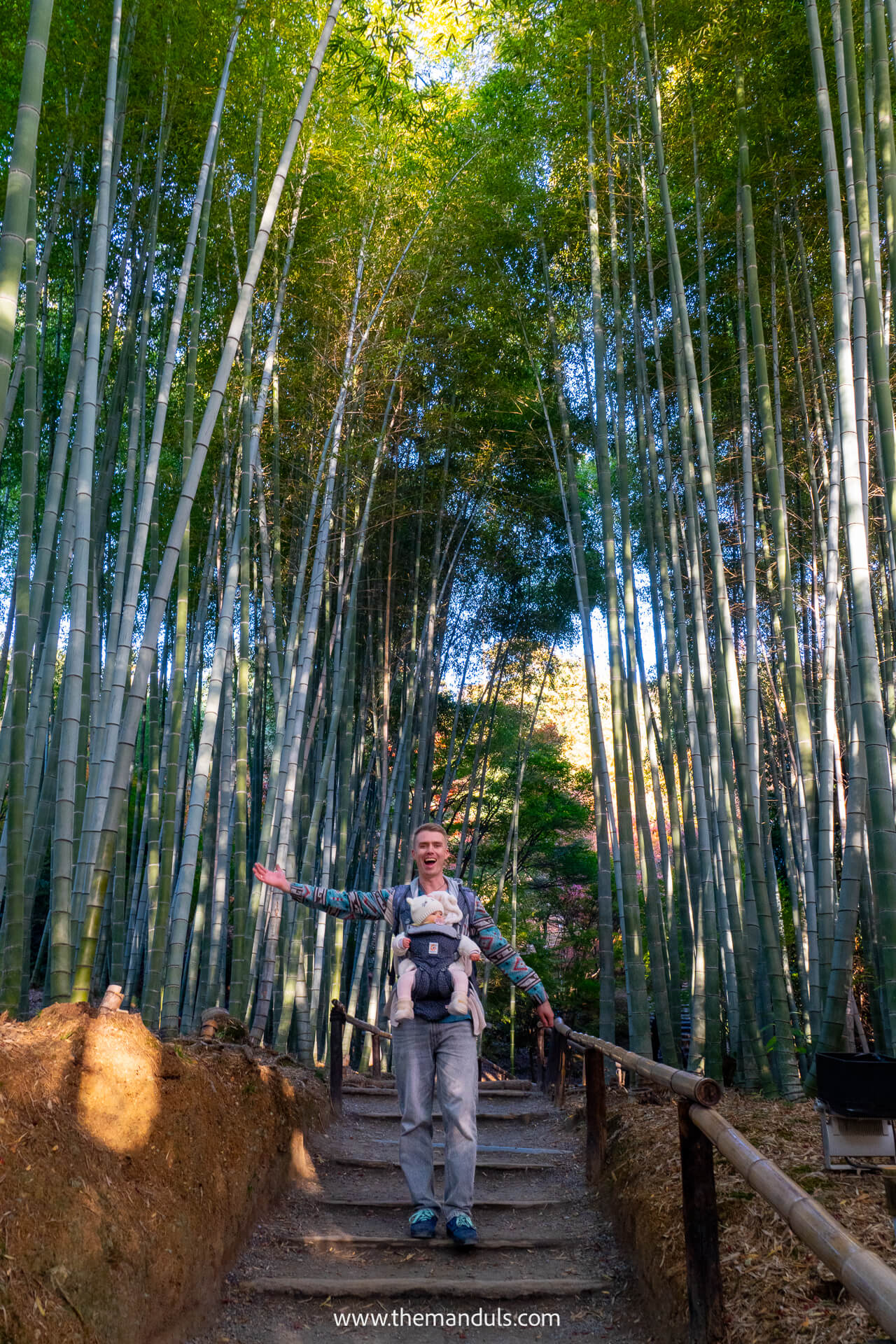
One of the highlights for us was the small bamboo forest inside the temple grounds. It’s not as big as the one in Arashiyama, but it’s a beautiful corner and something we didn’t see in many other temples across Japan. Combined with the peaceful walkways and traditional architecture, it makes the whole visit feel very relaxed.
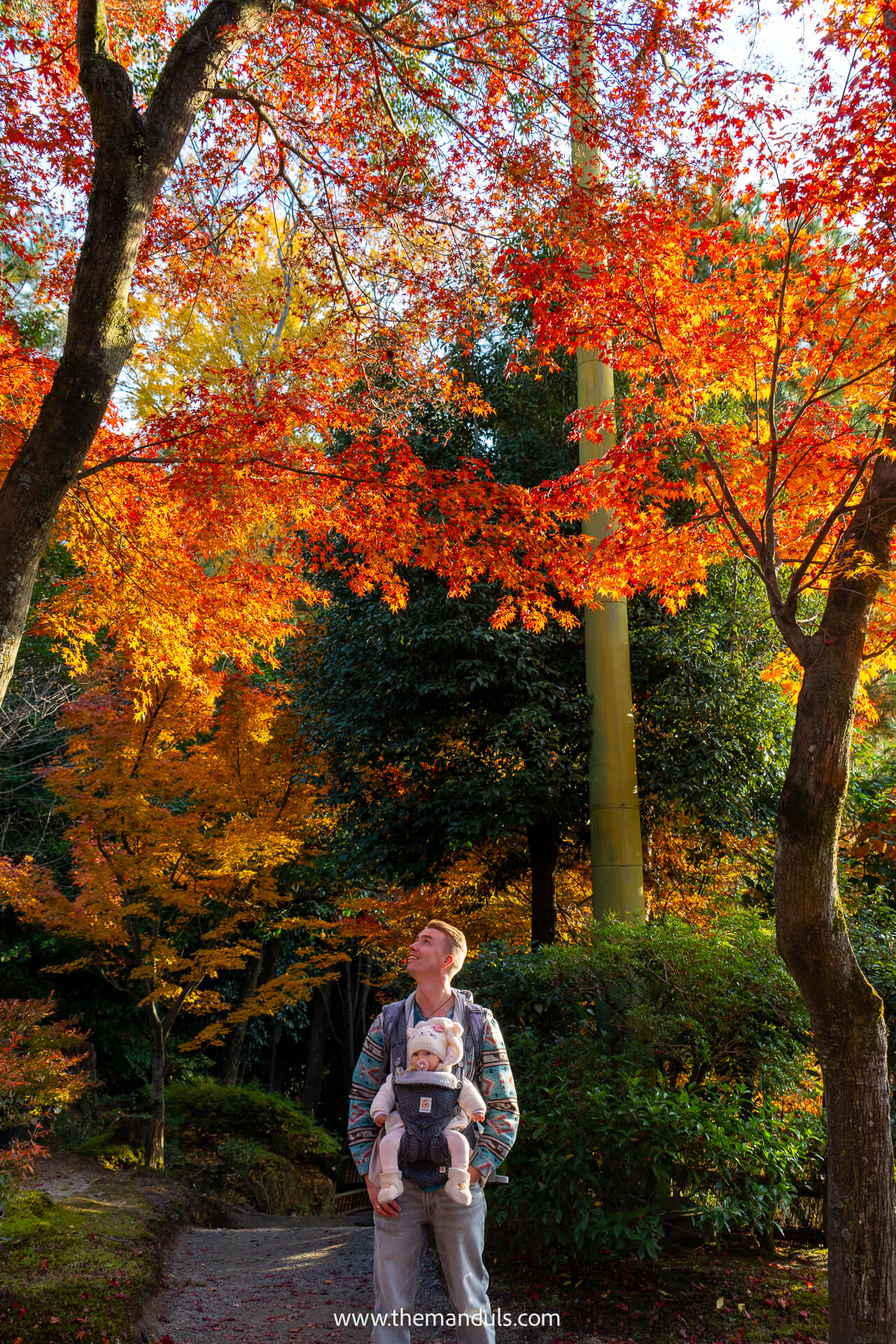
The gardens are also lovely, especially in autumn when the colours around the pond create great reflections. If you’re visiting in the fall as we did, it’s worth checking whether the Night Illuminations are running — Kodai-ji is known for having some of the most impressive evening displays.
The temple sits right between Yasaka Pagoda and the Ninenzaka/Sannenzaka streets, so it fits naturally into any Higashiyama route. The visit is not long; it took us around 30 minutes, including taking photos and videos, and it still felt very satisfying.
7. Stop by Yasaka Shrine
Entrance Fee: free
Opening hours: 24/7
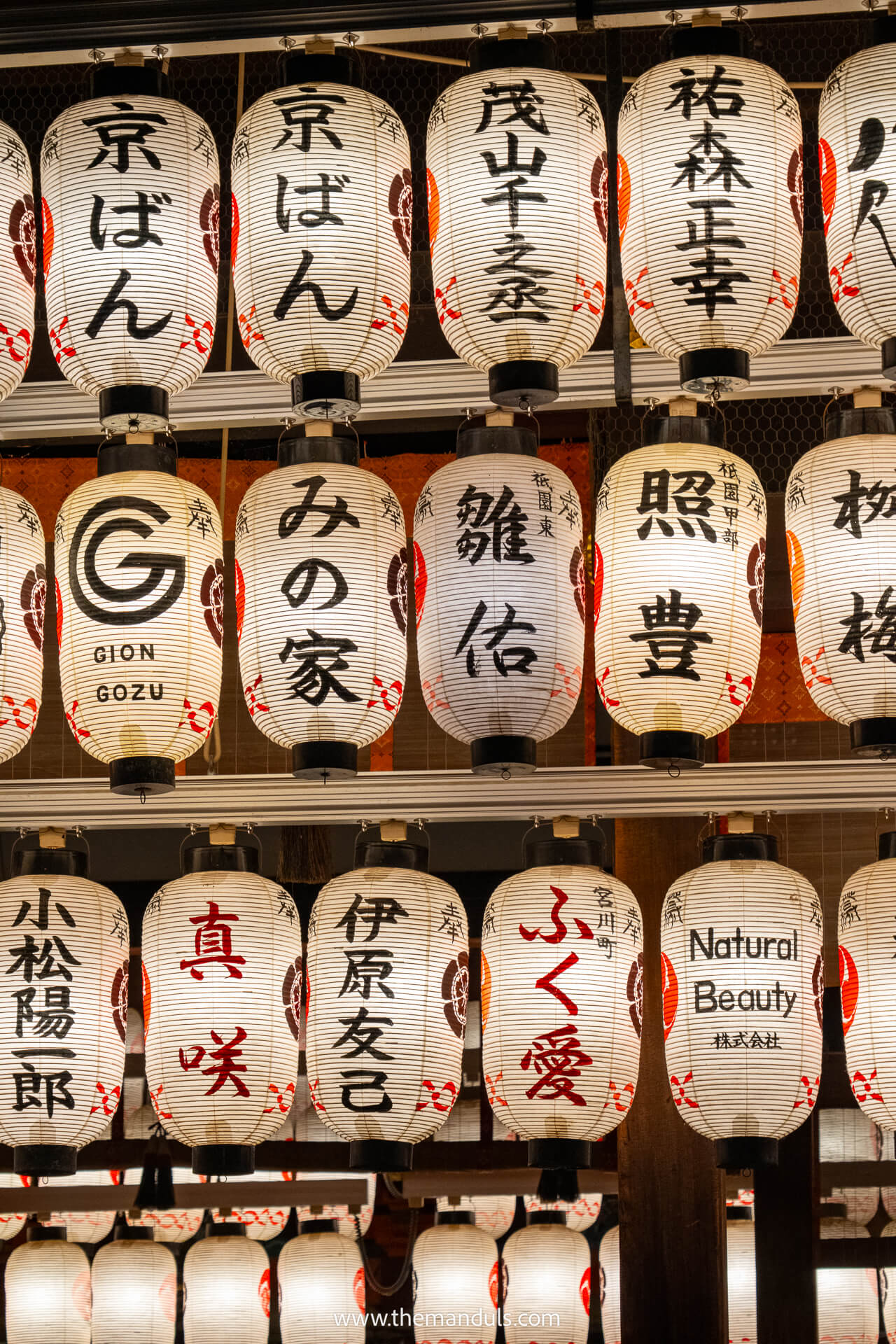
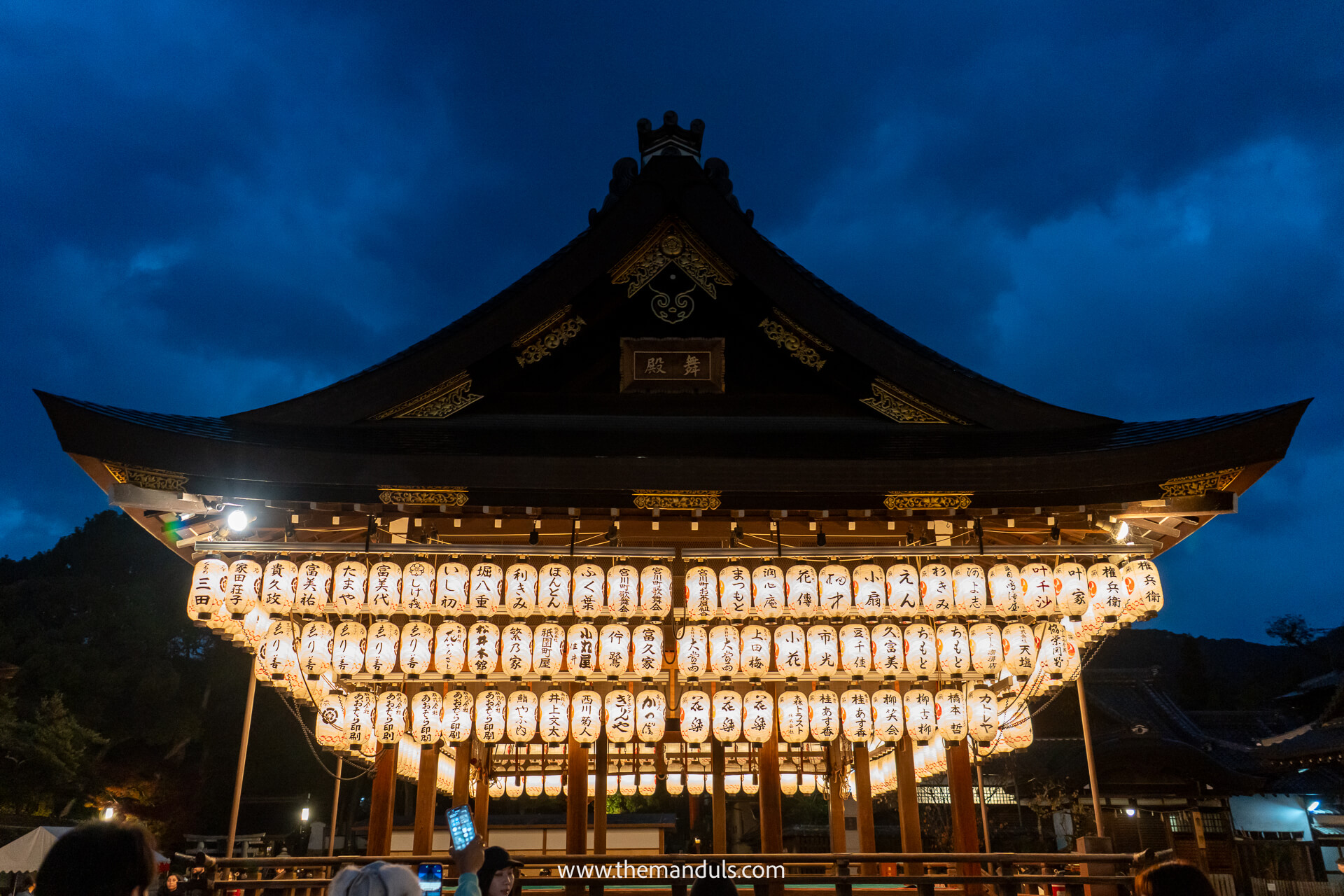
Yasaka Shrine wasn’t even on our original itinerary, but we passed it by accident at night on our way to Hanamikoji Street (more on that later) and instantly loved it. The entrance path was lined with street-food stalls, which created a lively atmosphere, and we tried a few things before heading inside. Right behind the stalls, the shrine opens into a large courtyard filled with glowing lanterns, and it looks especially beautiful in the evening.
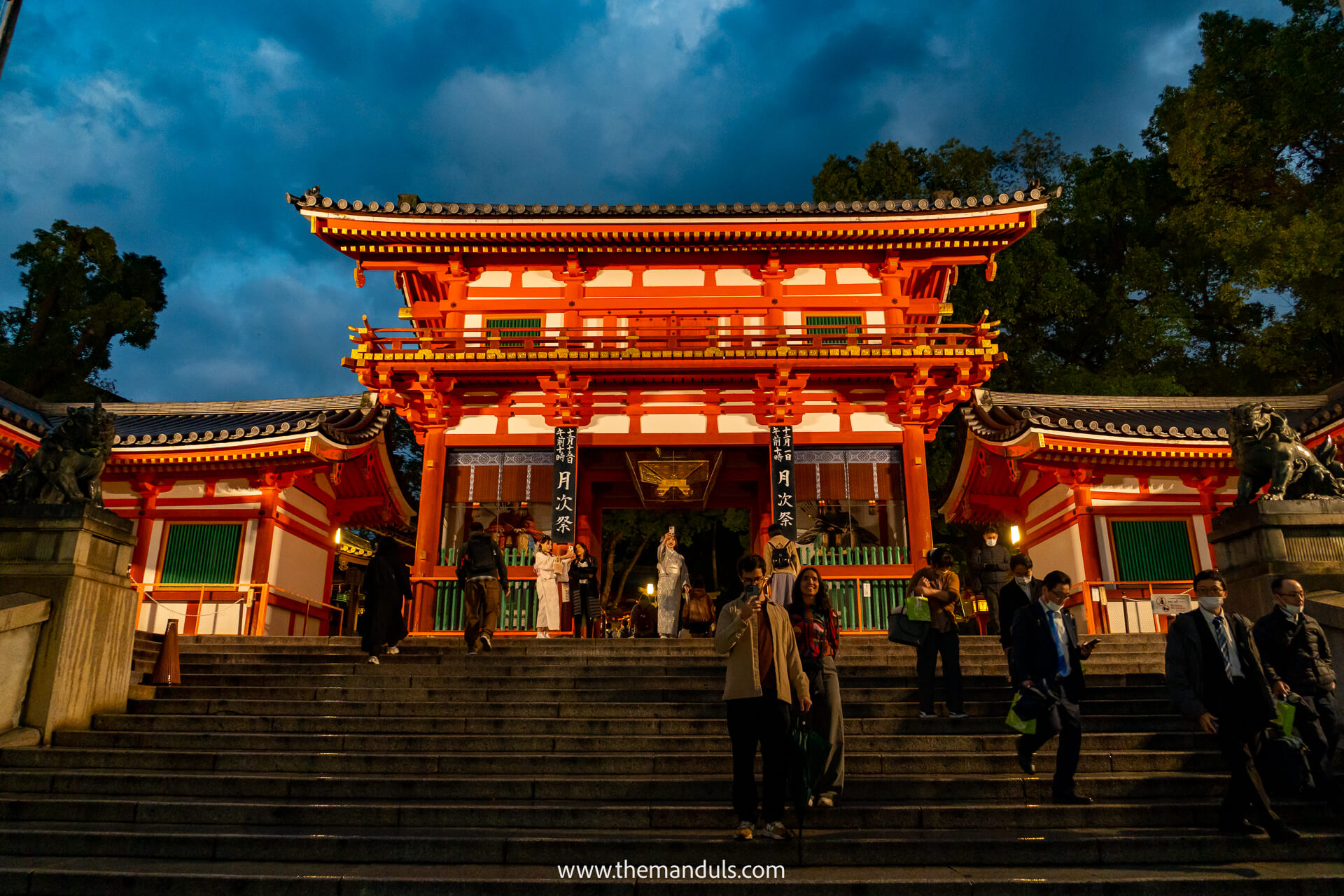
We spent around 20–30 minutes here just walking around, taking photos, and enjoying the unexpected break from the busy streets. It’s also completely free to visit, so it’s an easy addition to any Gion or Higashiyama route.
Yasaka Shrine is also one of the key locations for Kyoto’s major festivals, including Gion Matsuri in summer, so if you’re visiting at that time, the atmosphere is completely different and much more energetic.
For an evening stroll, though, the lanterns make it one of the prettiest nighttime stops in the area. We suggest passing through even if it wasn’t originally on your plan — it ended up being one of those small, memorable Kyoto moments for us.
Official website: https://www.yasaka-jinja.or.jp/en/
8. Wander around Gion District
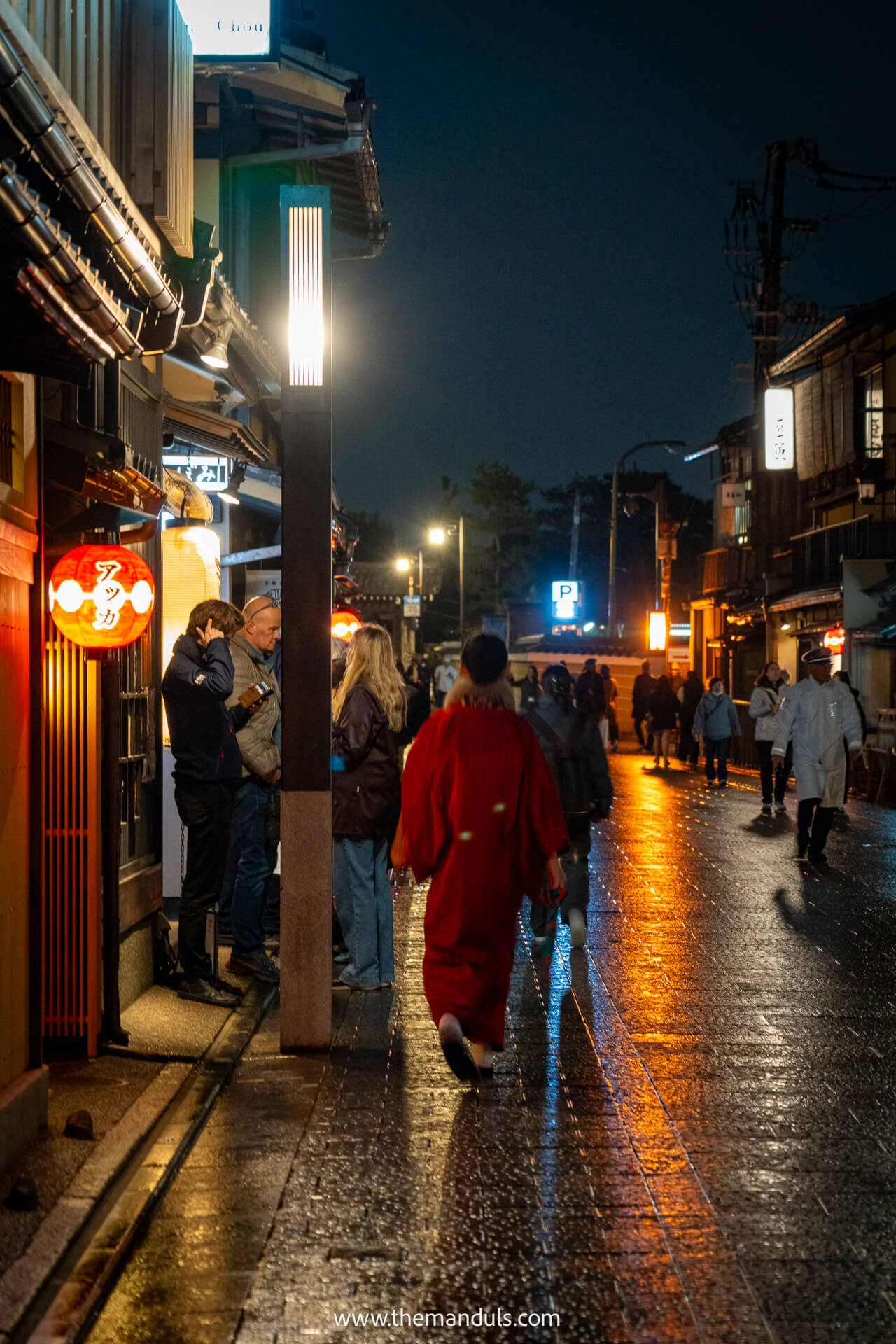
Gion is the area most people picture when they think of Kyoto, and walking here in the evening was one of the moments that felt truly unique on our trip. The narrow streets, wooden machiya houses, and dim lanterns create an atmosphere you won’t find anywhere else in the city.
We suggest visiting around sunset or early evening — the atmosphere is at its best, and you can easily connect this walk with Yasaka Shrine or Higashiyama as we did.
Below are the key spots in Gion that we recommend not skipping.
Walk Hanamikoji Street
This is the most famous street in Gion and one of the best places to get a sense of traditional Kyoto architecture. We walked it at night, and the warm lantern glow made the old wooden houses look even more impressive.
See Tatsumi Bridge
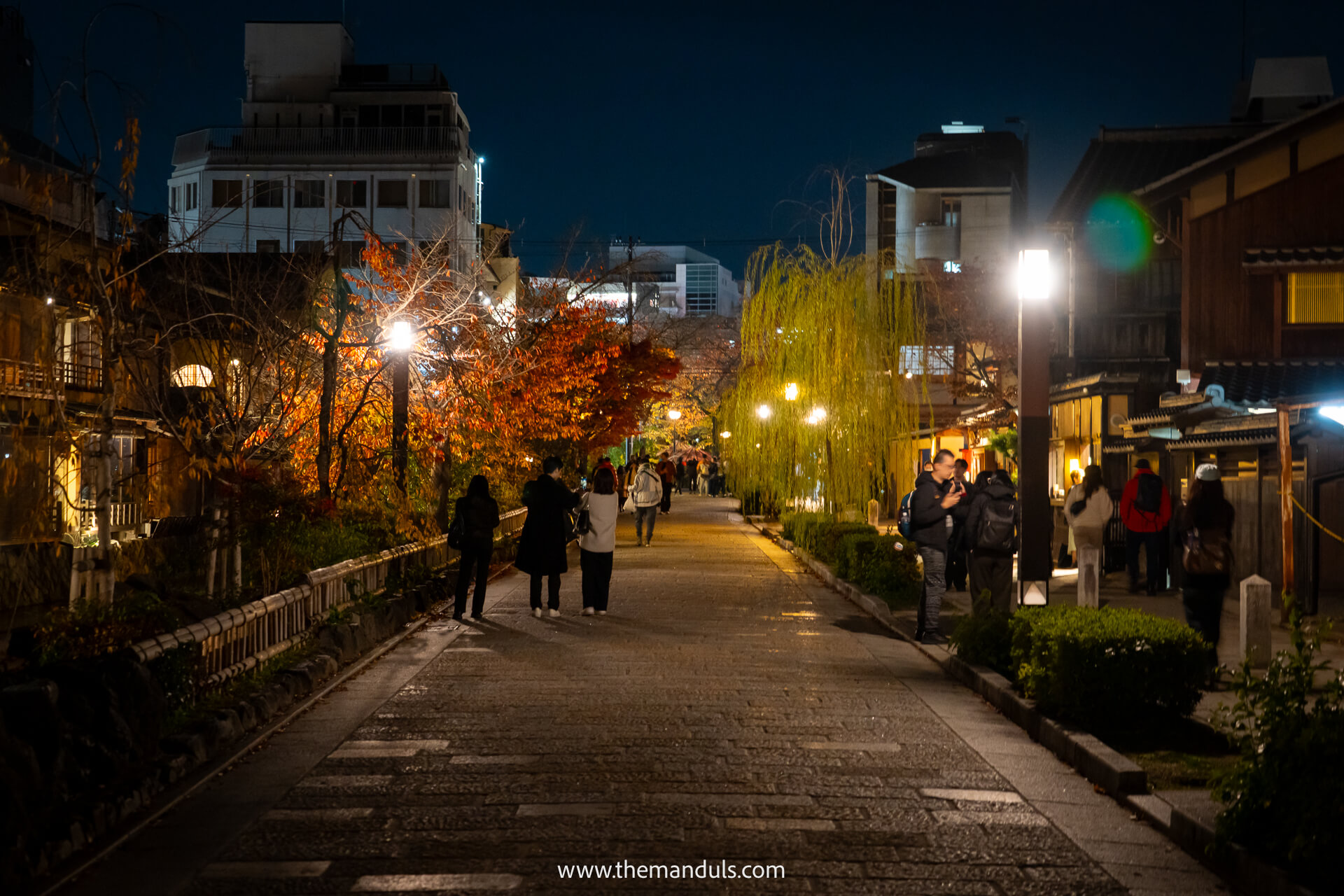
We visited Tatsumi Bridge in the evening during autumn, and even though the colours were beautiful, the lighting wasn’t ideal for photos. The best conditions here are actually during the daytime and in spring, when the cherry blossoms around the canal make the whole spot look much more vibrant.
Follow the Shirakawa Canal
After seeing the bridge, we continued walking along the Shirakawa Canal, and this ended up being one of the calmest parts of our evening in Gion.
Restaurant recommendation: Gion Danran
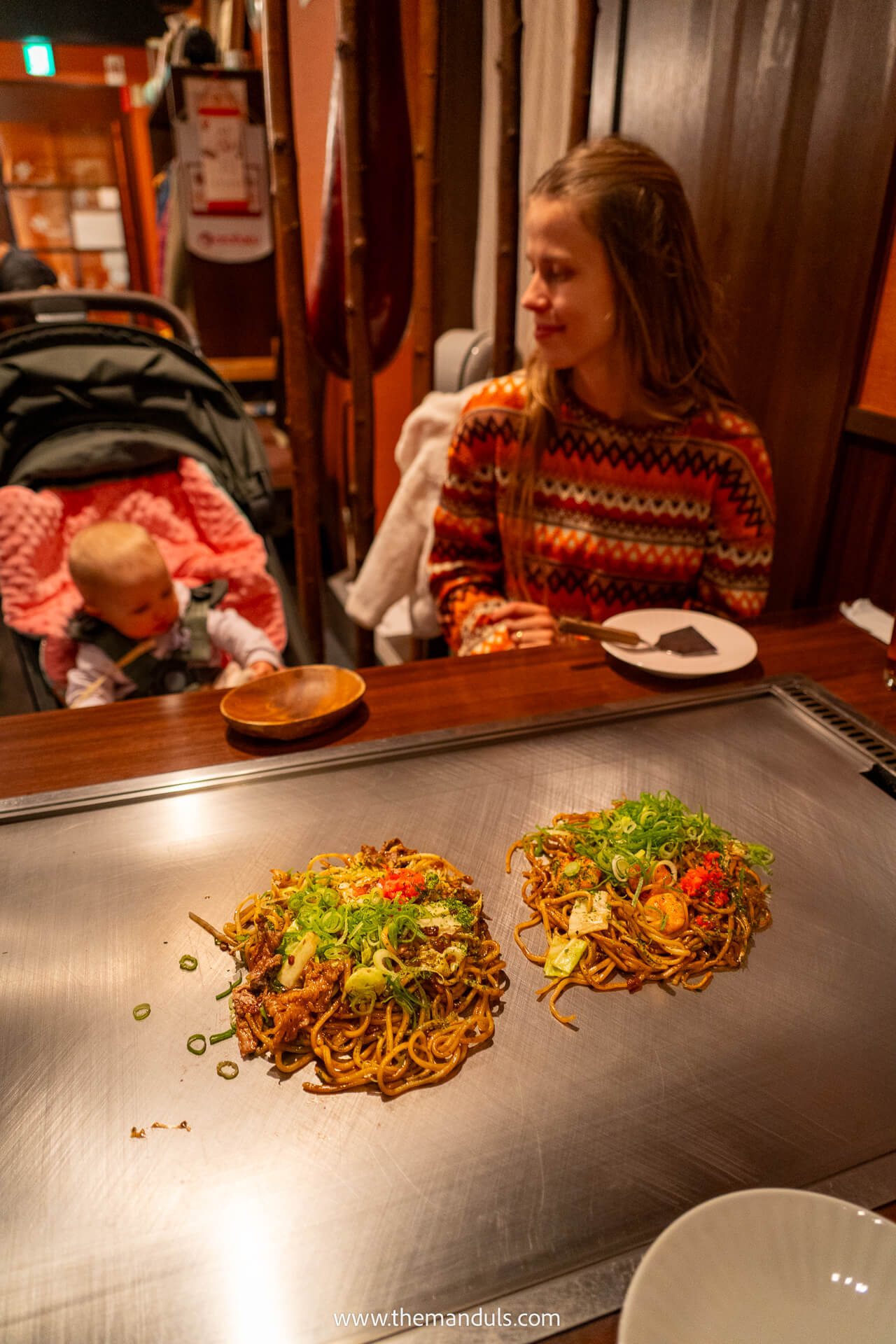
If you want a simple, great-value meal in the area, we recommend Gion Danran — a small restaurant run by an elderly couple. It opens at 5 PM, and it fills up almost immediately, so arriving by 5:05 PM is your last chance at getting a table; then you would need to wait quite some time.
We had the beef yakisoba here, and it was both delicious and affordable. It’s the kind of place that feels genuinely local and worth supporting.
9. Hike through Fushimi Inari Taisha
Entrance Fee: free
Opening hours: 24/7
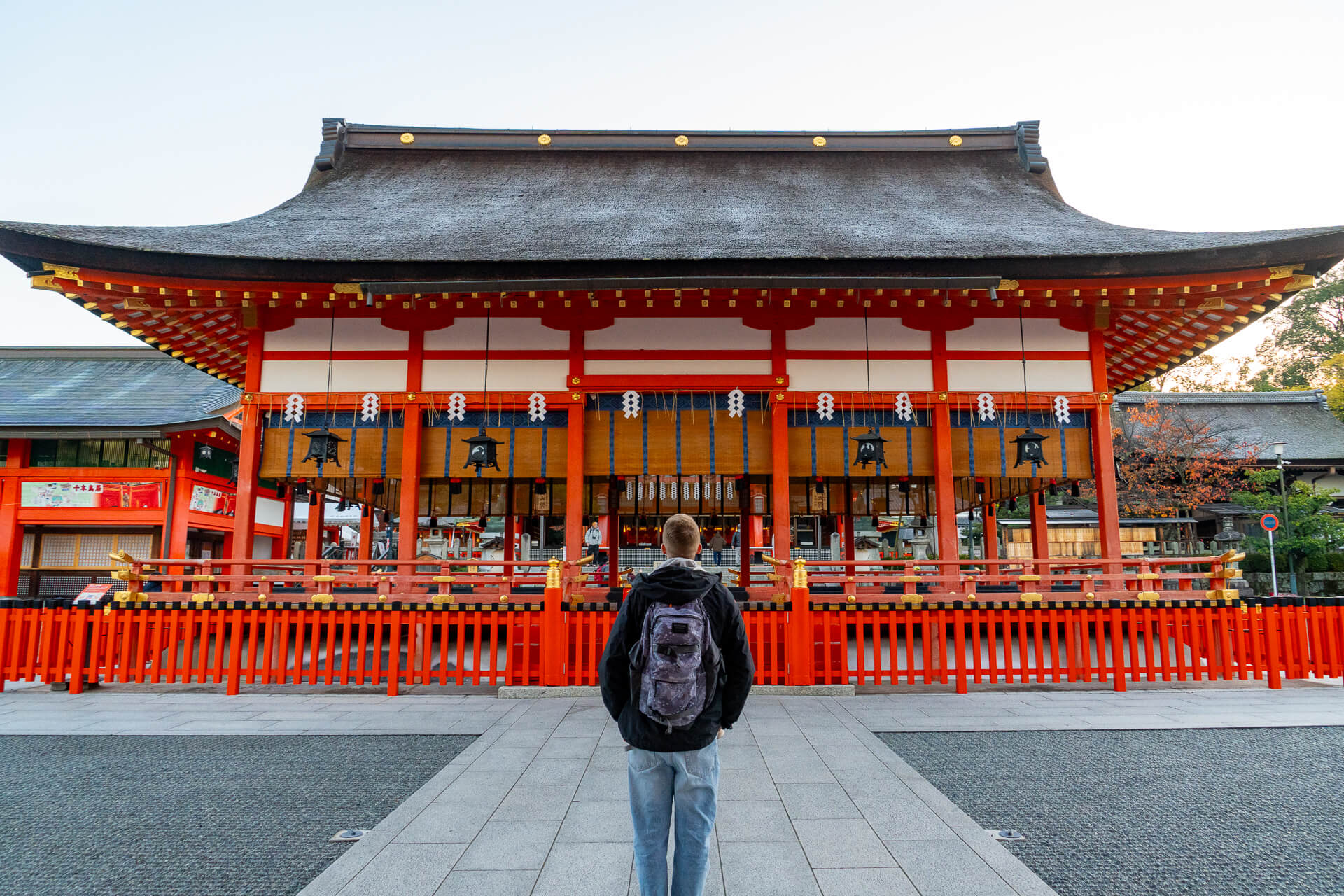
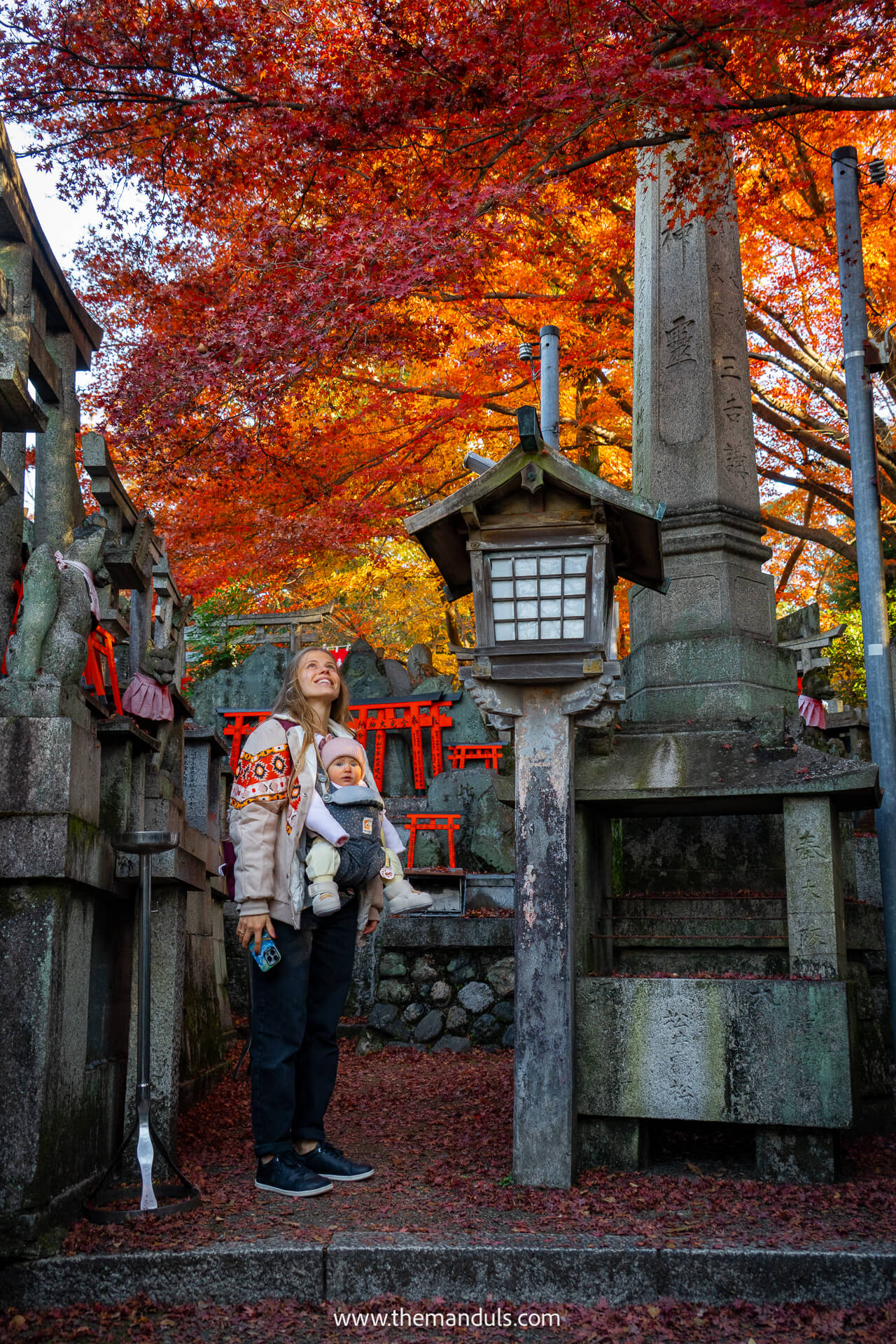
Before visiting Fushimi Inari Taisha, we already knew it was famous for its countless torii gates — but nothing prepared us for how impressive it feels in reality. This quickly became our favourite shrine in Japan, and we genuinely recommend putting it high on your list of the best things to do in Kyoto.
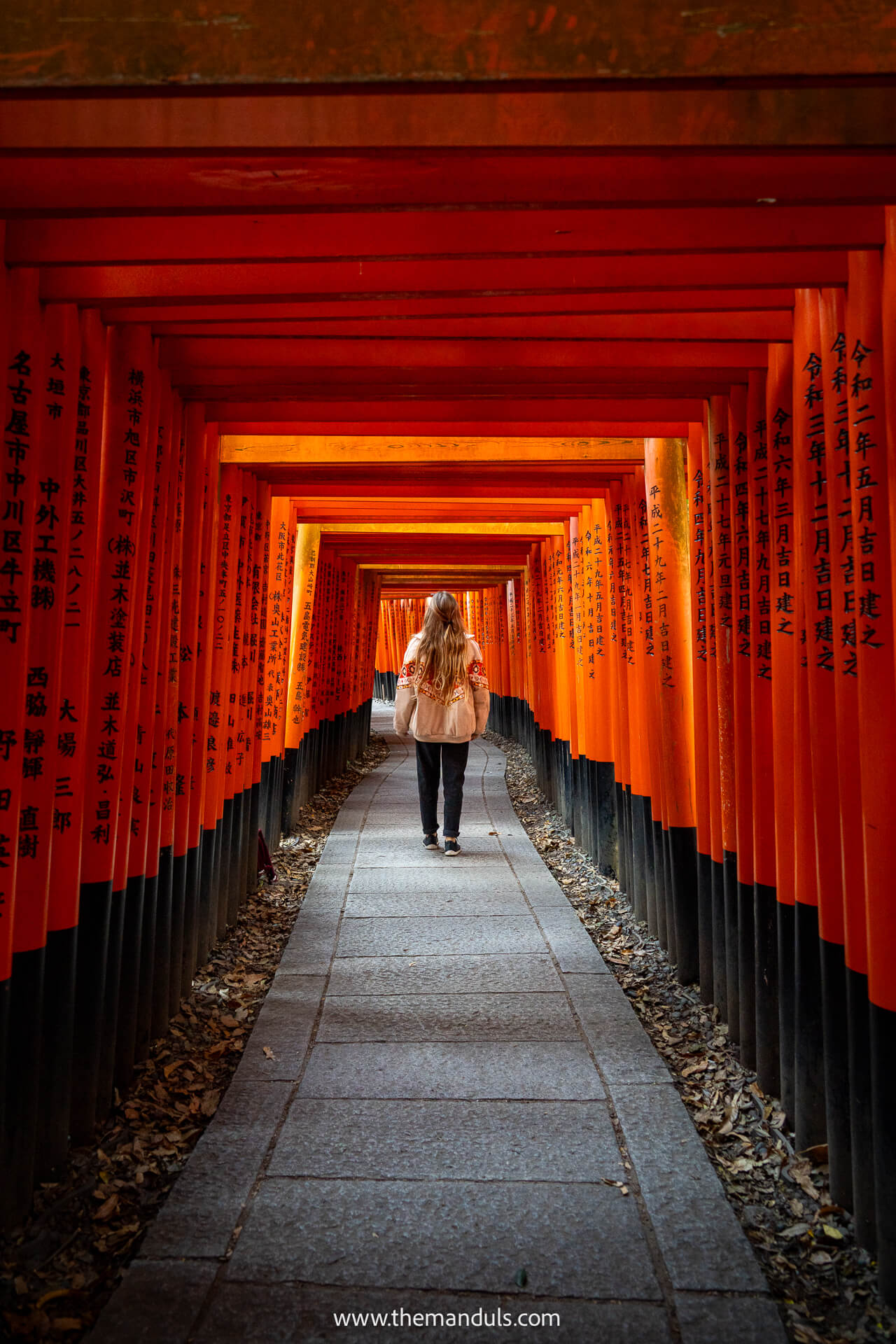
Because it’s extremely popular, we arrived right after sunrise, and it was one of the best decisions we made. We weren’t alone, but the crowds were minimal, and we had many sections entirely to ourselves. A few hours later, the entrance was completely packed, so coming early is essential if you want a quieter experience and better photos.
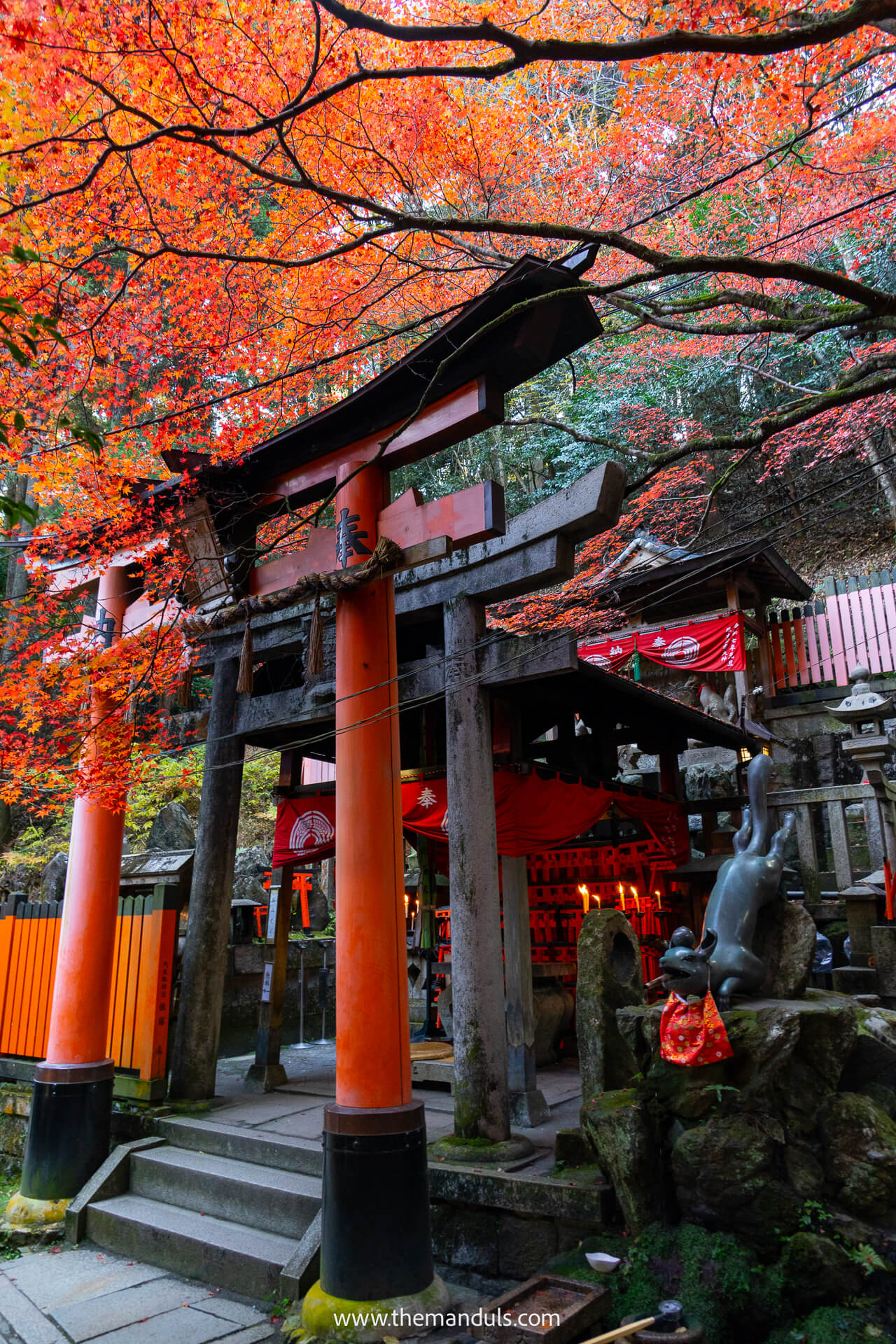
One of the things we loved most was that the entire trail winds through the forest rather than staying close to the city. The combination of red gates, silence, and nature makes it feel very different from any other shrine in Japan.
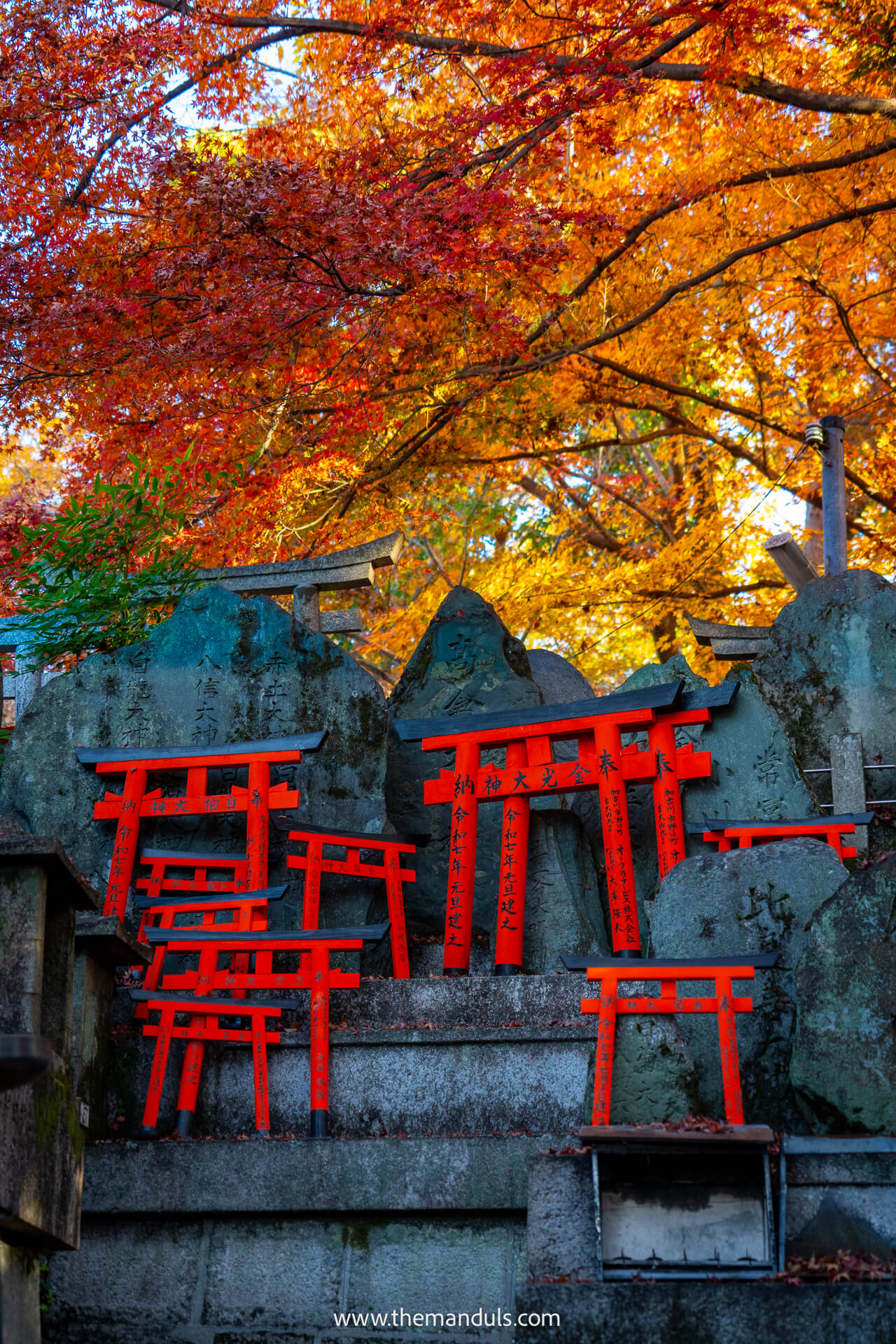
There are several beautiful stops along the way, including small sub-shrines, stone fox statues (foxes are considered the messengers of the deity Inari), and lookout points.
If you’re visiting with a baby, keep in mind that you’ll need to leave the stroller at the entrance and use a baby carrier instead. There are many stairs, and the paths aren’t stroller-friendly at all.
It’s open 24/7, so you can even visit at night — the atmosphere is completely different after dark, although it might feel a bit scary for some people.
Official website: https://inari.jp/en/
10. Relax in Kyoto Gyoen National Garden
Entrance Fee: free
Opening hours: 24/7
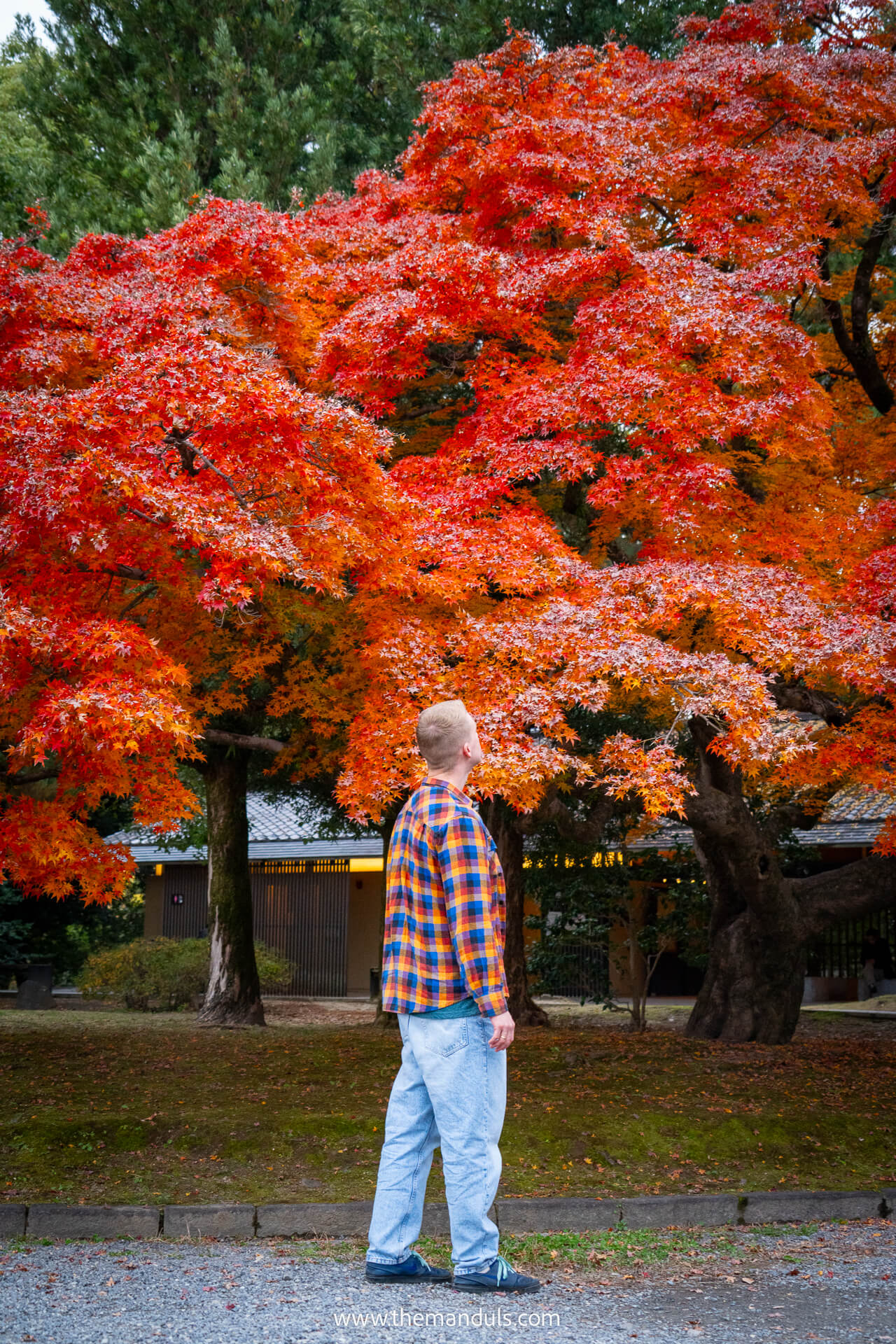
Kyoto Gyoen National Garden wasn’t originally in our itinerary, but since our hotel was just a few minutes away, we decided to explore it — and it turned out to be an incredible surprise. The park is huge, quiet, and filled with beautiful trees, especially during autumn when the colours are at their best.
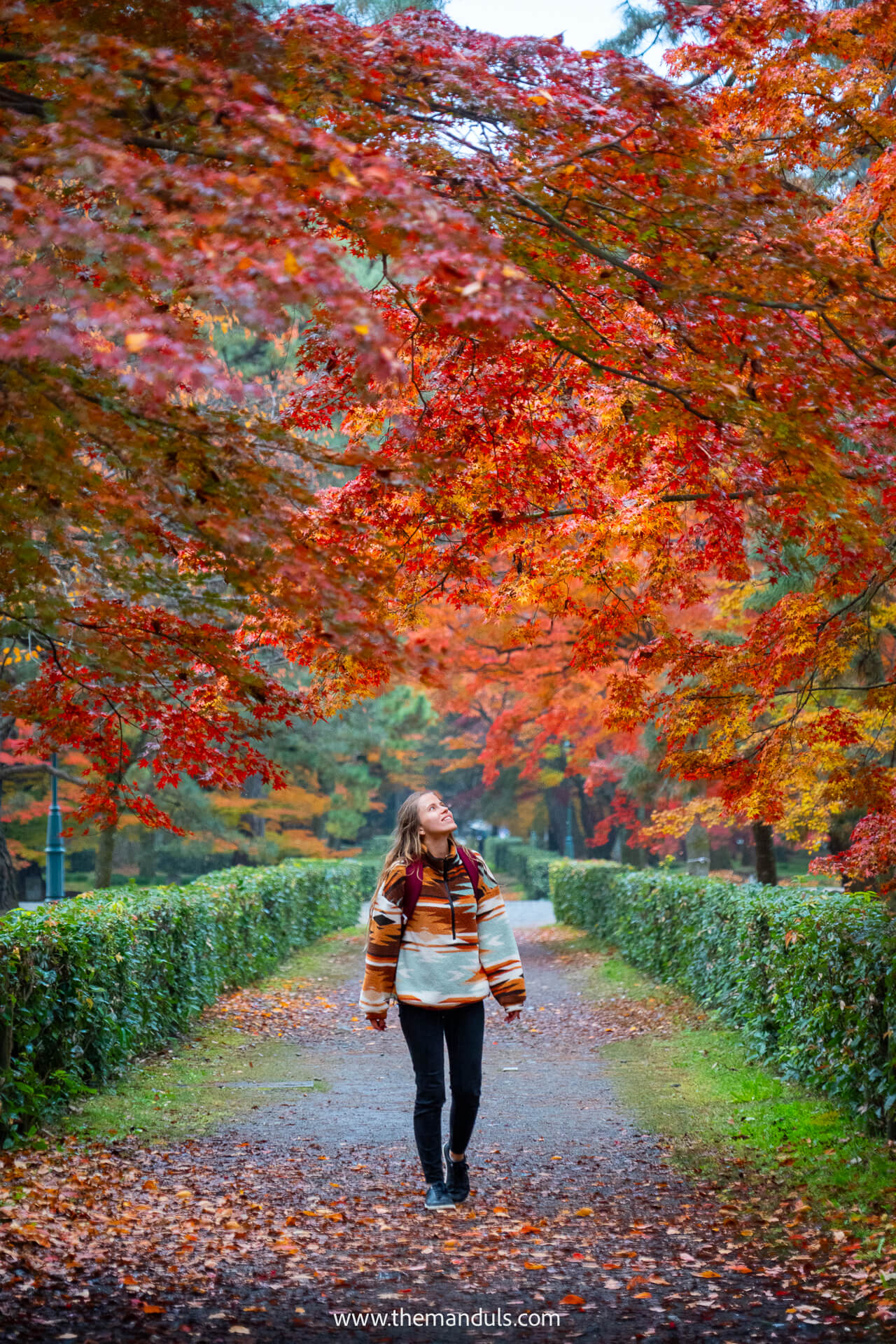
We spent around one hour walking, taking photos of the maple trees, and enjoying how peaceful it felt compared to the busier parts of Kyoto.
A quick note if you’re visiting with a baby: the paths are made of gravel, which makes it very difficult to push a stroller. We tried for a bit and ended up walking on the grass instead, so we recommend using a baby carrier only here. Also, it’s forbidden to ride a bicycle inside the park, so don’t plan on cycling through it.
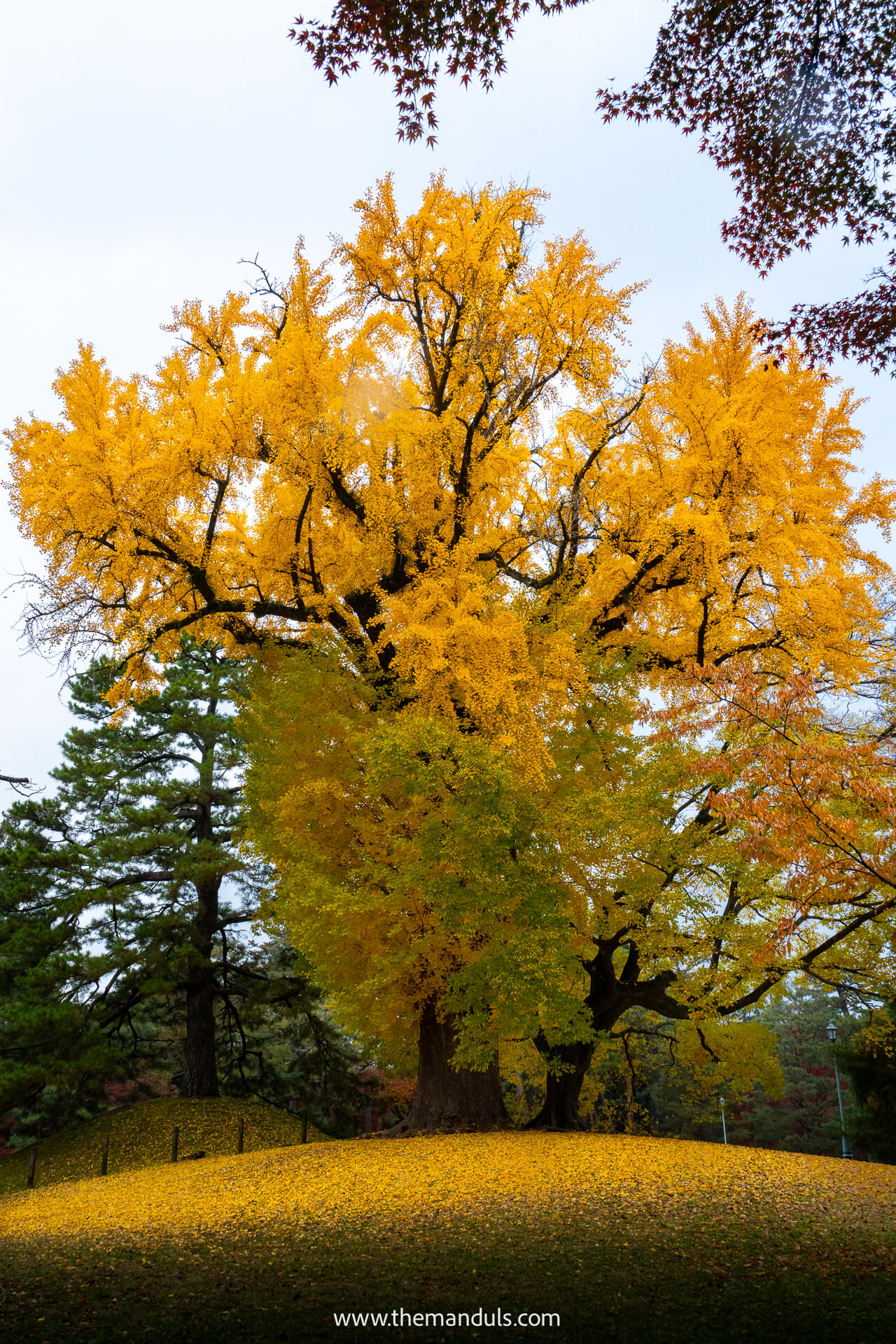
Seasonally, the garden looks completely different. In spring, the cherry blossoms around the Imperial Palace draw more visitors and add a softer, romantic feel to the grounds, while in autumn, the maple colours give it a warm, golden atmosphere. Both seasons are beautiful, but the park never feels overwhelming thanks to its size.
11. Try local food at Nishiki Market
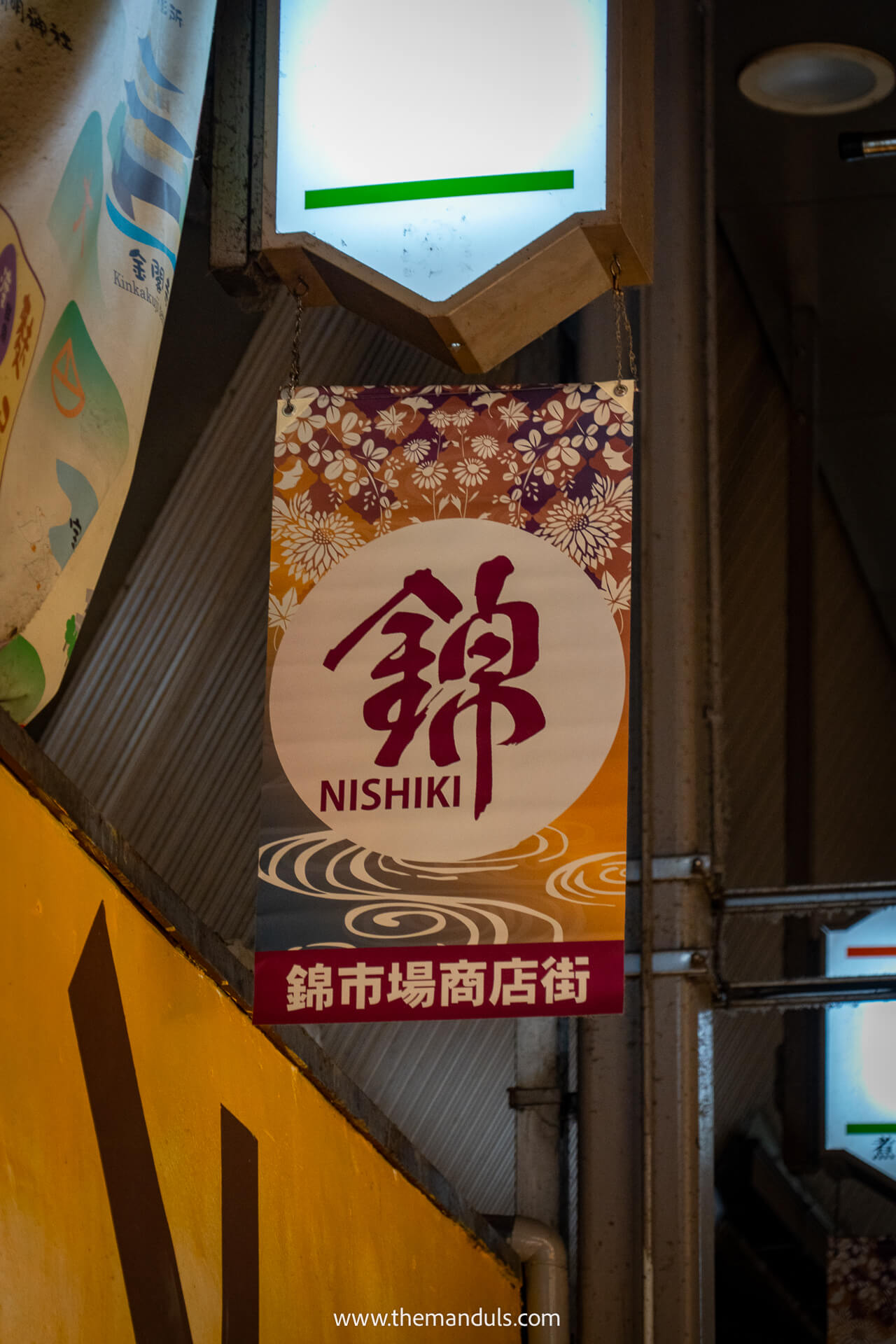
Nishiki Market is one of the best places in Kyoto to try local snacks and see a bit of everyday food culture. It’s a long, narrow covered street with small shops selling everything from fresh seafood and pickles to sweets, skewers, and matcha treats.
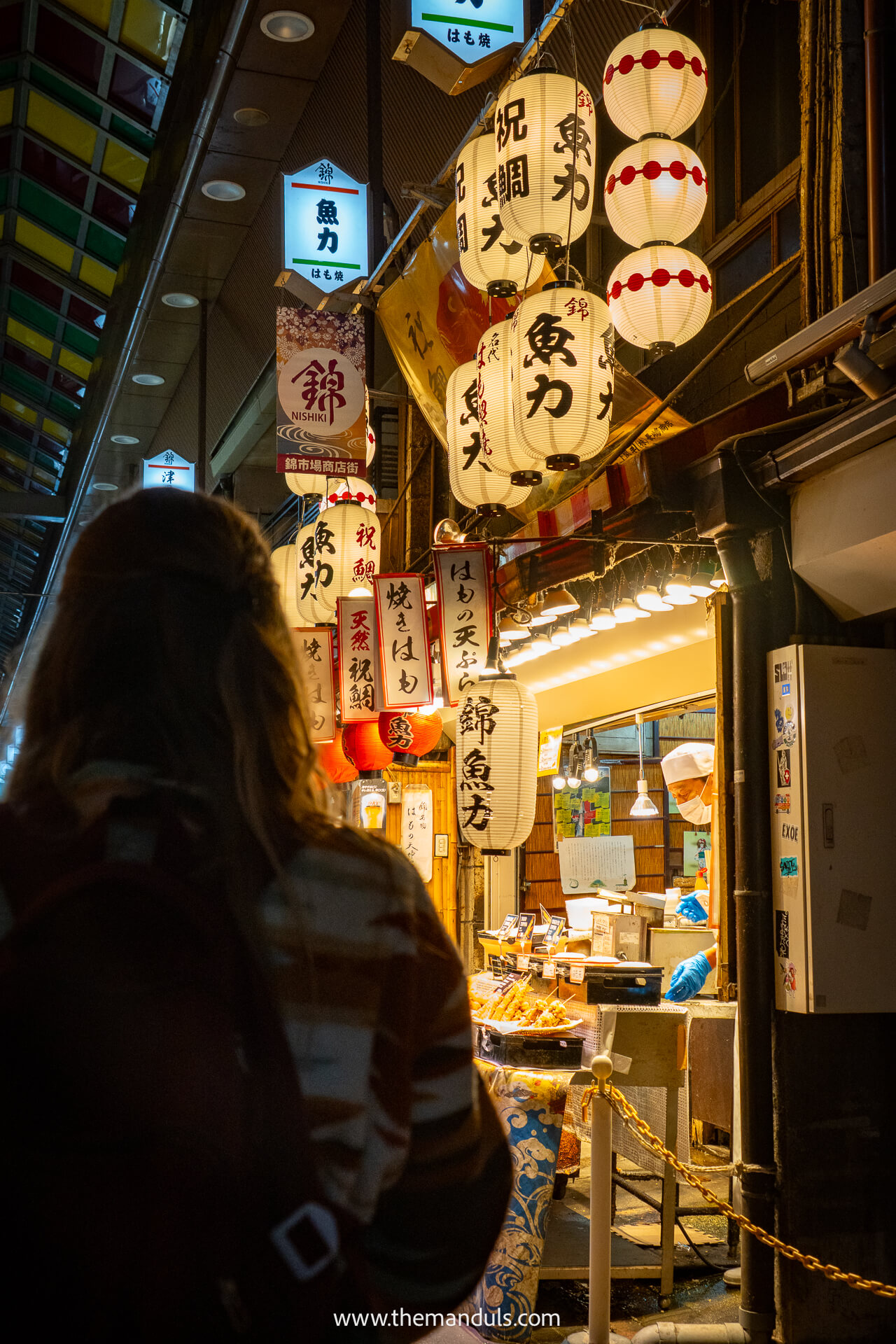
We visited around 4 PM, and even though it was busy, the atmosphere was fun, and the variety of food made it worth the stop — most shops were still open at that time.
Nishiki Market gets crowded very quickly, especially around lunchtime, so it’s better to arrive earlier in the day.
Eating while walking is generally discouraged in Japan, but here it’s a bit more relaxed — just be mindful of where you stand and avoid blocking the walkway. Also, many shops close by 5–6 PM, so don’t leave this too late.
12. Shop Teramachi & Shinkyogoku Streets
Teramachi and Shinkyogoku are two parallel shopping streets just a short walk from Nishiki Market, and they’re great if you want a mix of local shops, cafés, and more modern stores in one place.
We walked through here after visiting the market, and it was a nice change of pace — lively but not overwhelming, and easy to weave in and out of the shops.
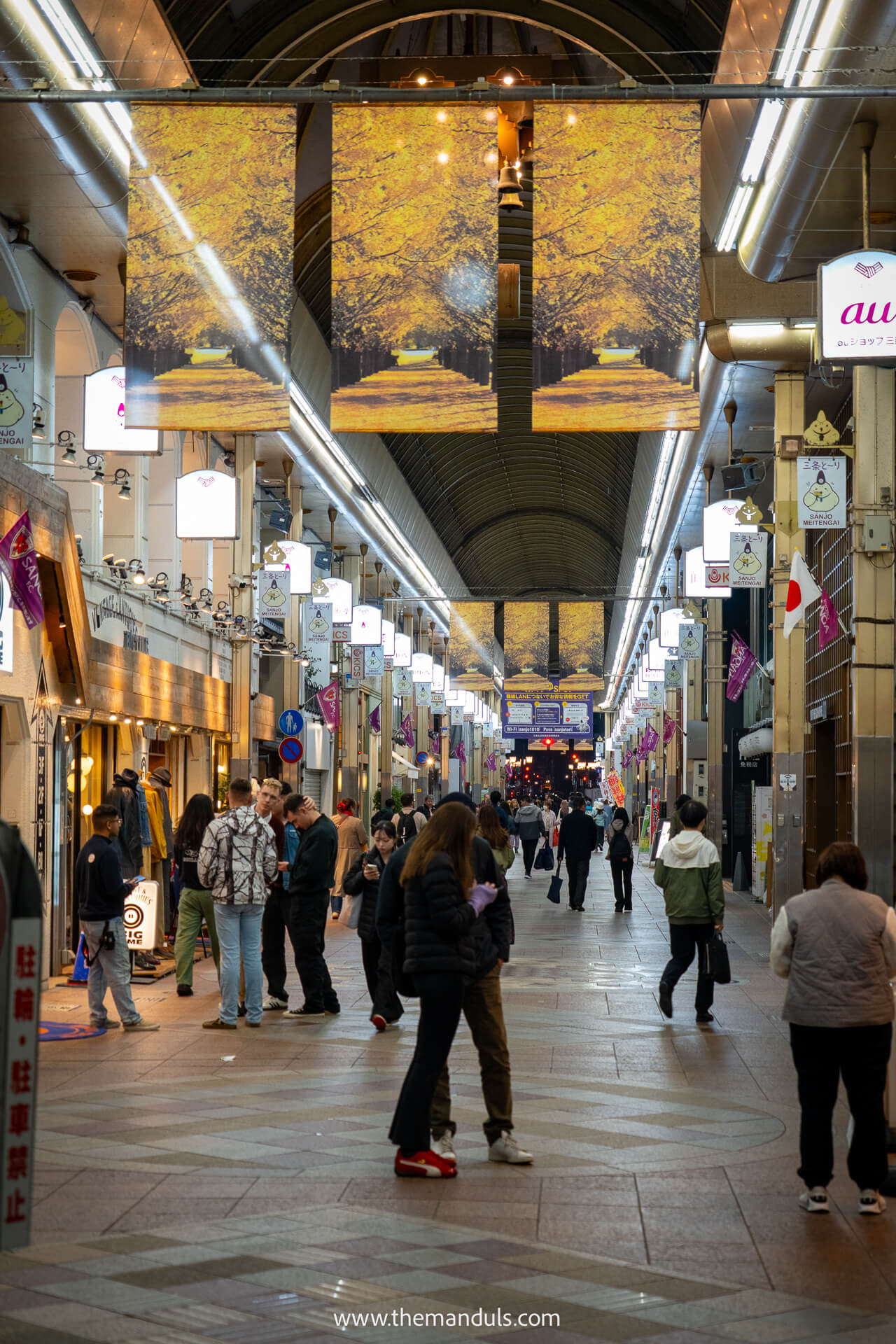
You’ll find everything from clothing and books to souvenirs, stationery, vintage shops, and small snack spots. It’s a good area to pick up practical things you might need for your trip or to browse for gifts that aren’t the typical tourist items. Since the streets are covered, it’s also a convenient stop on rainy days.
We recommend spending 30–45 minutes here, depending on how much browsing you plan to do. The best time to visit is late afternoon when most shops are open and the streets have a pleasant energy without feeling too crowded.
If you’re already in the area for Nishiki Market, these streets are right next door and easy to add to your route without going out of your way.
13. Rent a Kimono for the day
Renting a kimono is one of the most popular experiences in Kyoto. We didn’t do it ourselves, but we saw countless tourists wearing kimonos around Gion, Higashiyama, and the old streets near Kiyomizu-dera, and it definitely adds a unique touch to photos.
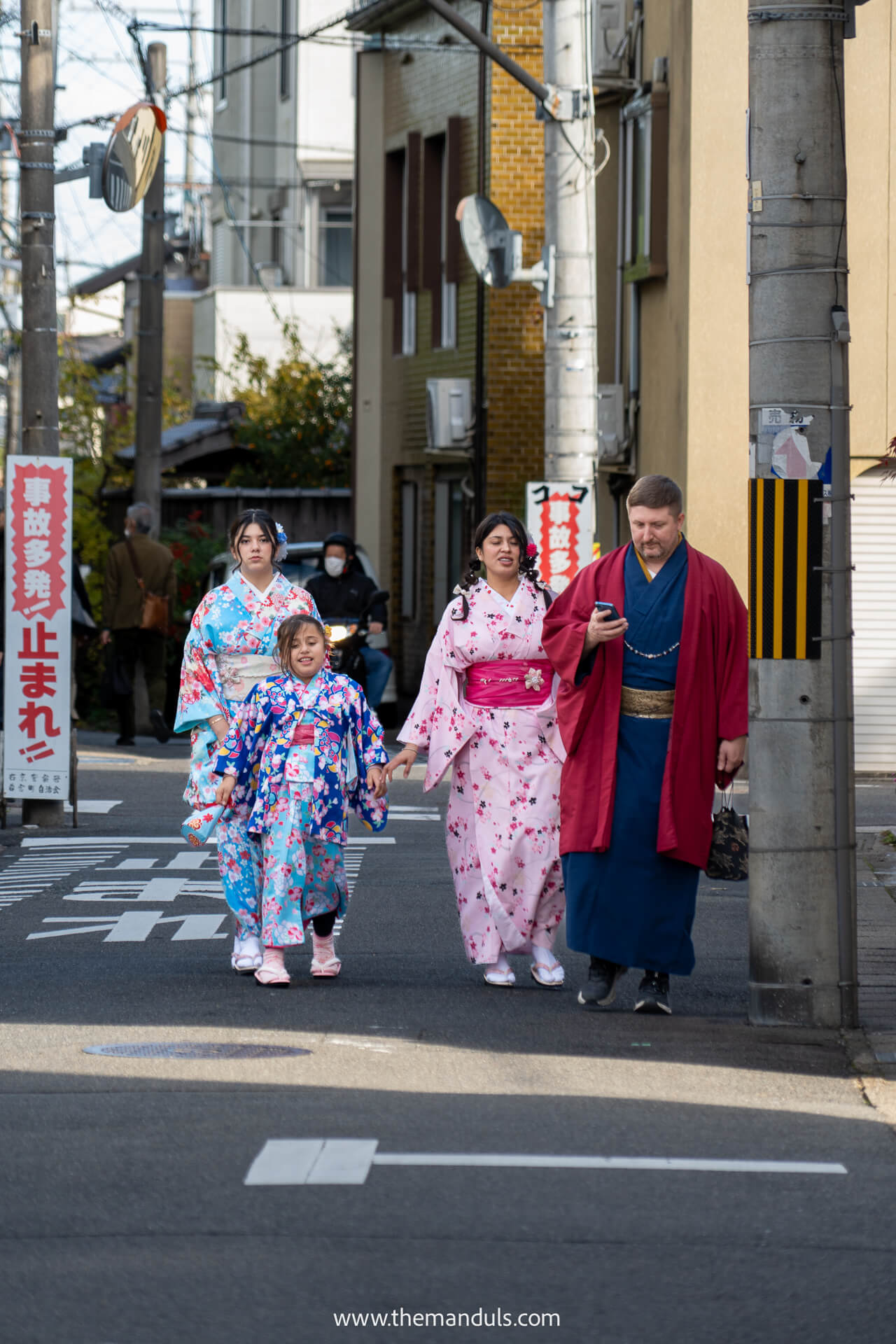
Most rental shops offer dressing assistance and optional hair styling, with prices typically starting around 3,000–6,000 JPY for a basic set and going higher for premium fabrics or full styling. If you want photos at popular spots like Yasaka Pagoda or Ninenzaka, we suggest starting early — it gets crowded quickly, and moving around in a kimono can be a bit slower.
Even though we skipped it, it’s an easy and memorable experience if you want to add something more cultural to your day in Kyoto.
14. Visit Nanzen-ji Temple
Entrance Fee: grounds are free, sub-temples usually 500 JPY
Opening hours: check on this website
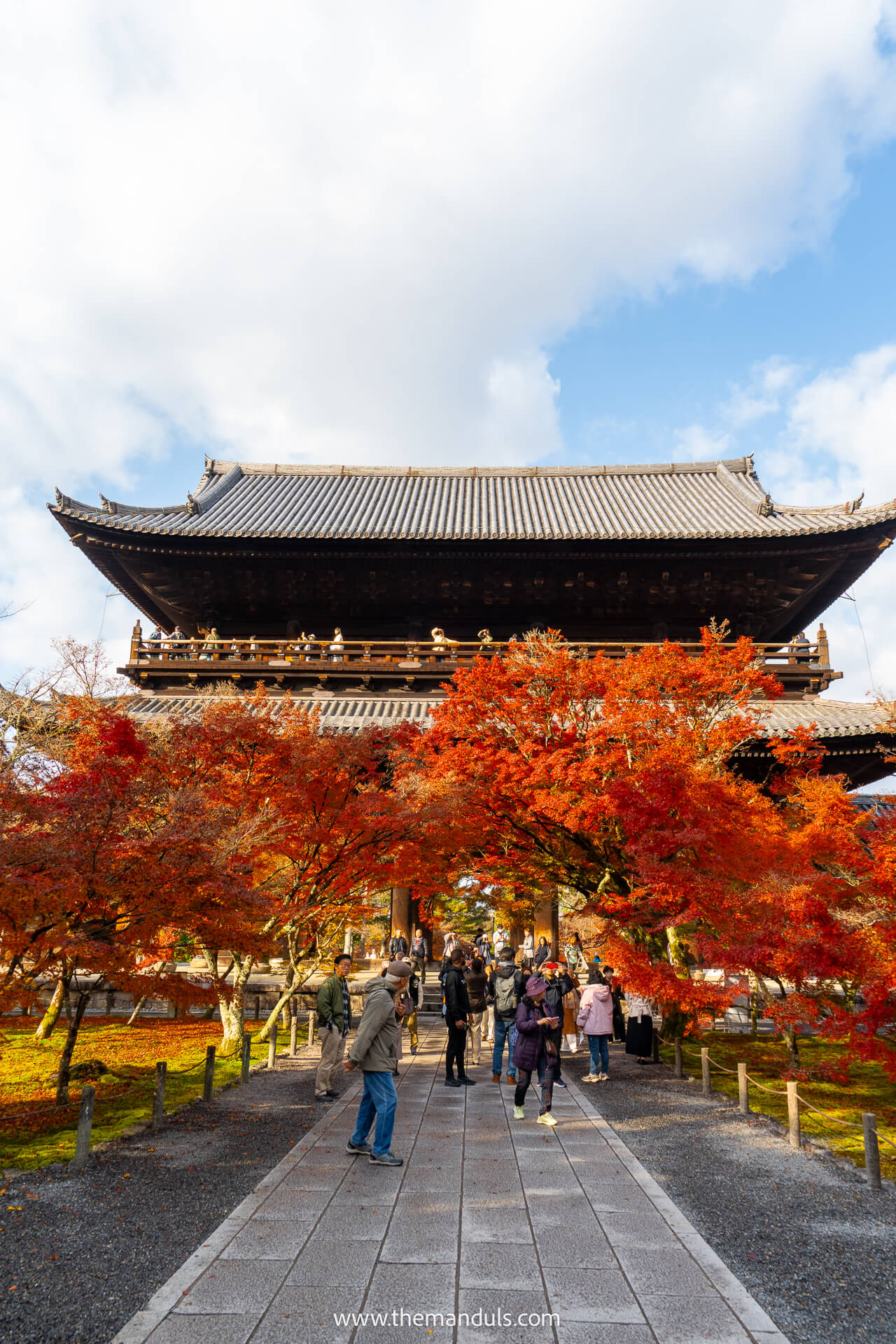
Nanzen-ji is one of the most impressive temple complexes in Kyoto, and we were surprised by how much there was to see within its grounds. The massive Sanmon Gate stands out immediately and sets the tone for the whole visit — spacious, calm, and beautifully designed.
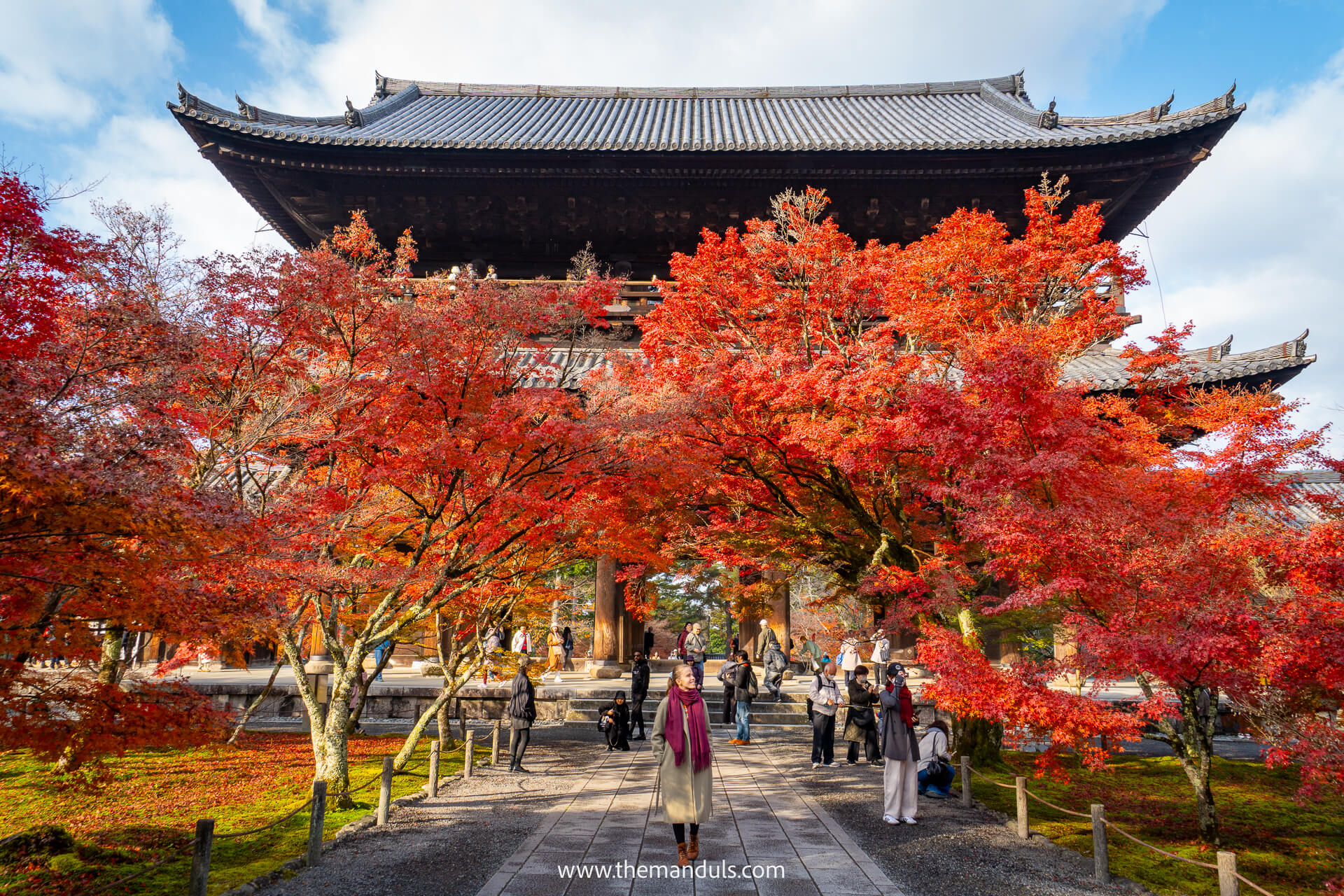
We visited during the peak of autumn, and the number of maple trees around the temple made the entire area look absolutely astonishing. It was hard not to take hundreds of photos.
The temple grounds are free to enter, and you can walk around at your own pace, explore the smaller corners, and enjoy the mix of nature and traditional architecture without the intensity of crowds you find at more famous spots like Kiyomizu-dera.
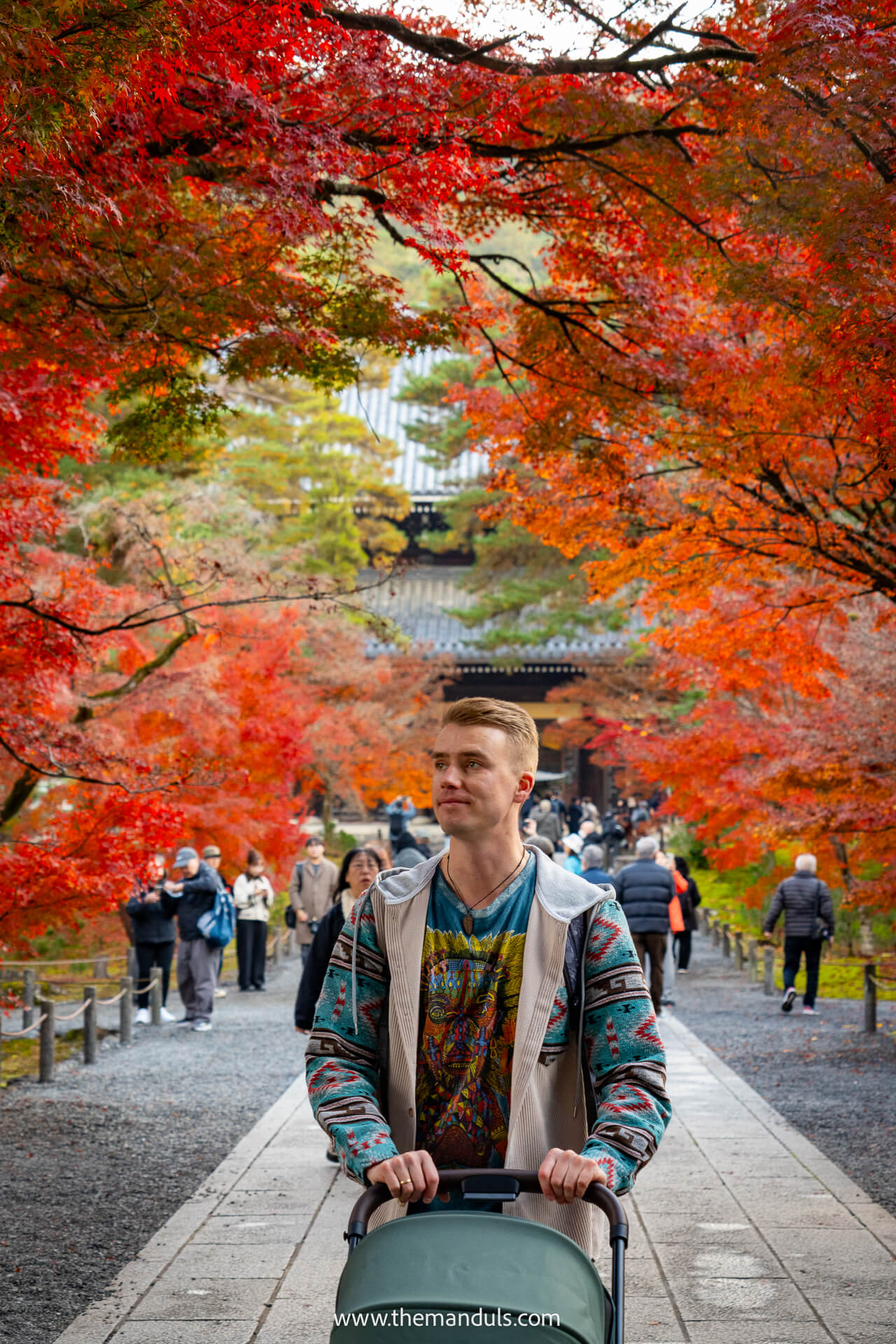
The old brick aqueduct running through the grounds is another highlight and a popular place to stop for photos.
If you want to see the interiors, you’ll need to pay an entrance fee for the sub-temples. We chose to visit Tenjuan Temple, which we’ll talk about next, and it was definitely worth it.
You don’t need a lot of time here; 45–60 minutes was enough for us, unless you’re planning to explore multiple paid sections.
15. Explore Tenjuan Temple
Entrance Fee: 500 JPY
Opening hours: 9 AM to 4:45 PM (until 4:30 PM from November 15 to February)
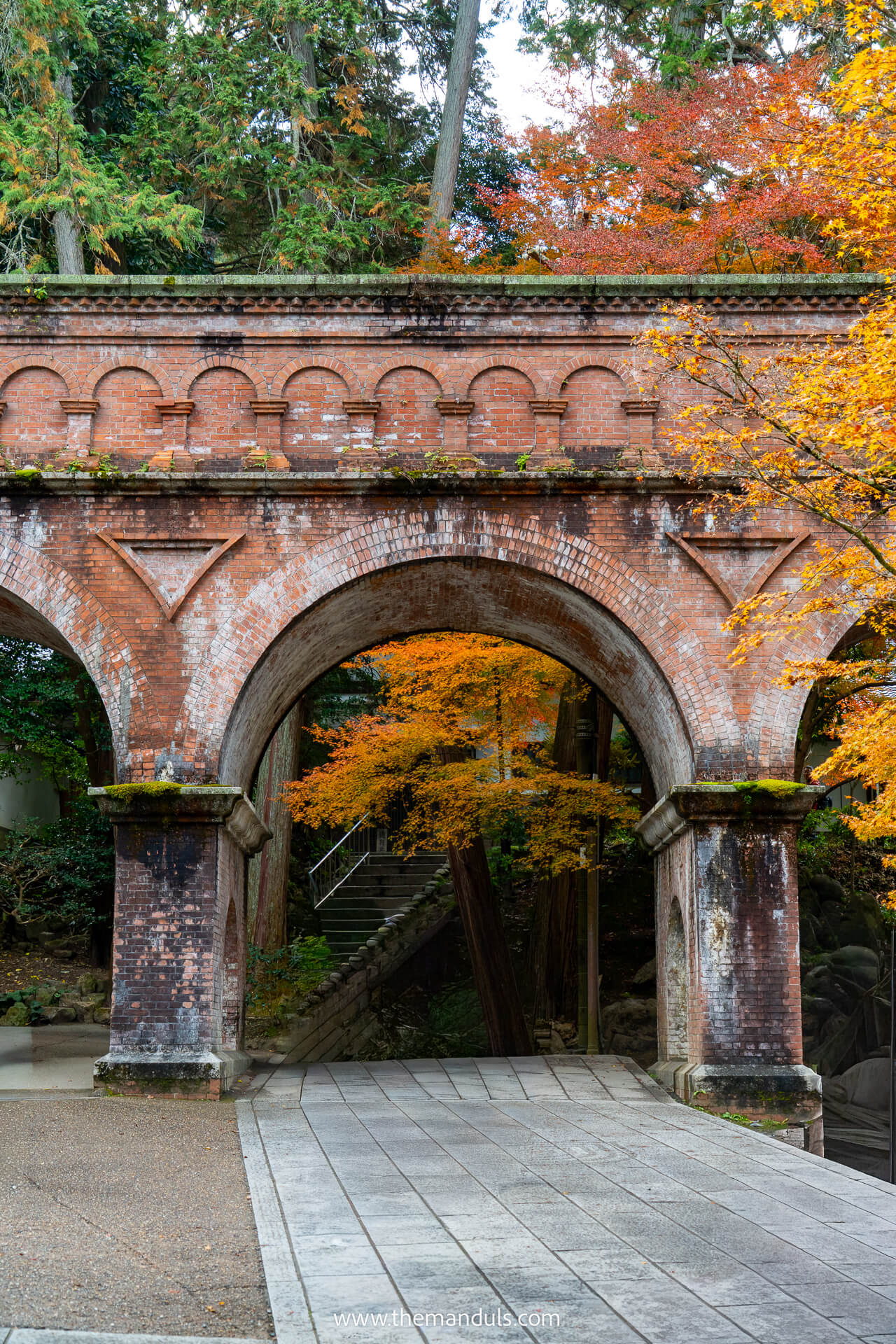
Tenjuan Temple is a small sub-temple within the Nanzen-ji complex, and it turned out to be one of our favourite garden experiences in Kyoto. We visited during peak autumn, and the colours here were incredible.
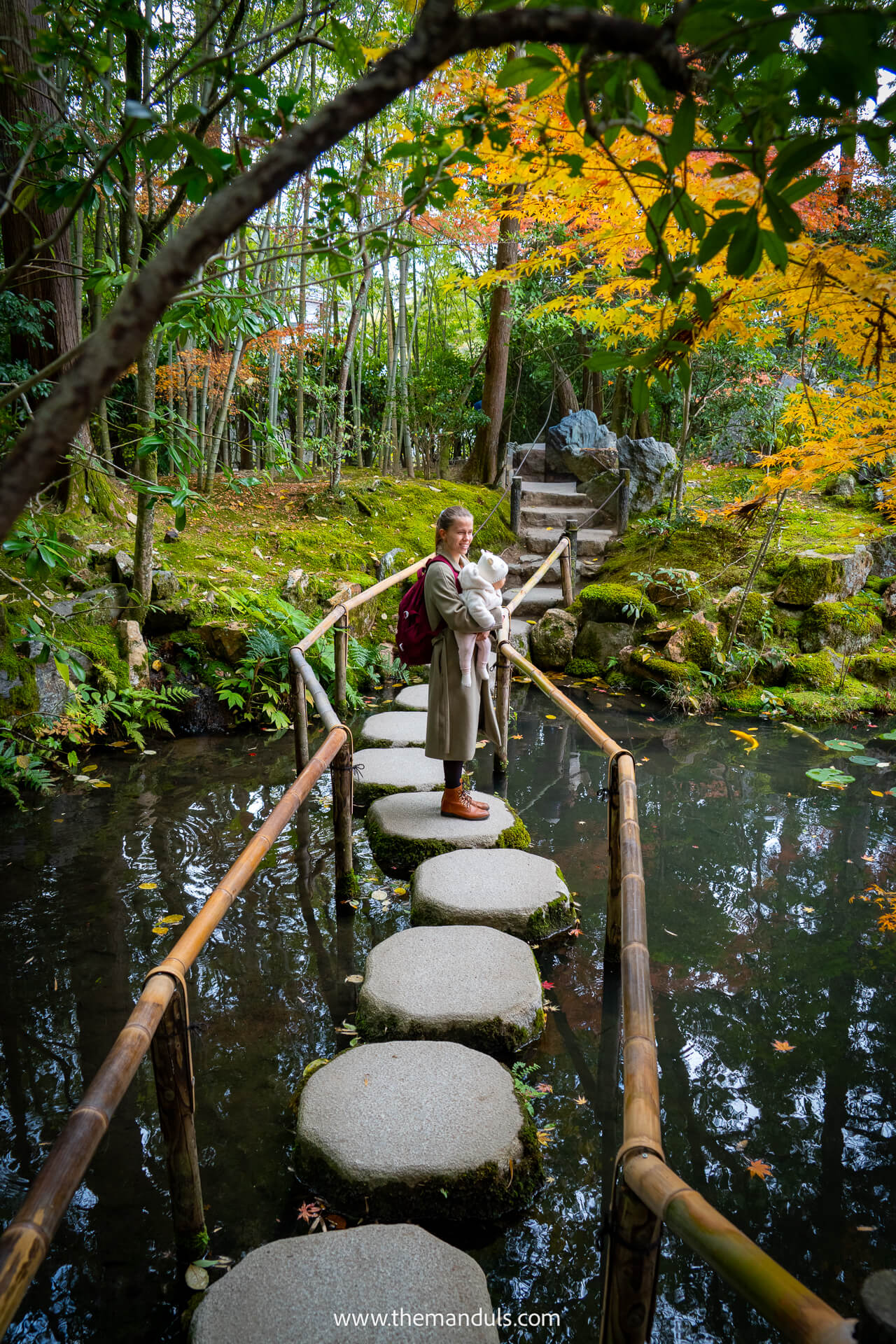
We chose to visit this garden even though it’s not big, but the pond surrounded by trees looked really nice in photos, so we wanted to see it with our own eyes — and it didn’t disappoint.
The pond is full of beautiful Japanese fish, and the reflections during autumn looked amazing. We arrived around 10 AM, and while it wasn’t crowded, we weren’t completely alone either. The path inside the garden is narrow, so we had to wait a few times for people to pass. For a more peaceful experience, we recommend coming right after opening.
We spent around 20 minutes here, which felt just right to enjoy the atmosphere, take photos, and walk the full garden loop. If you’re already visiting Nanzen-ji, adding Tenjuan is an easy and worthwhile stop.

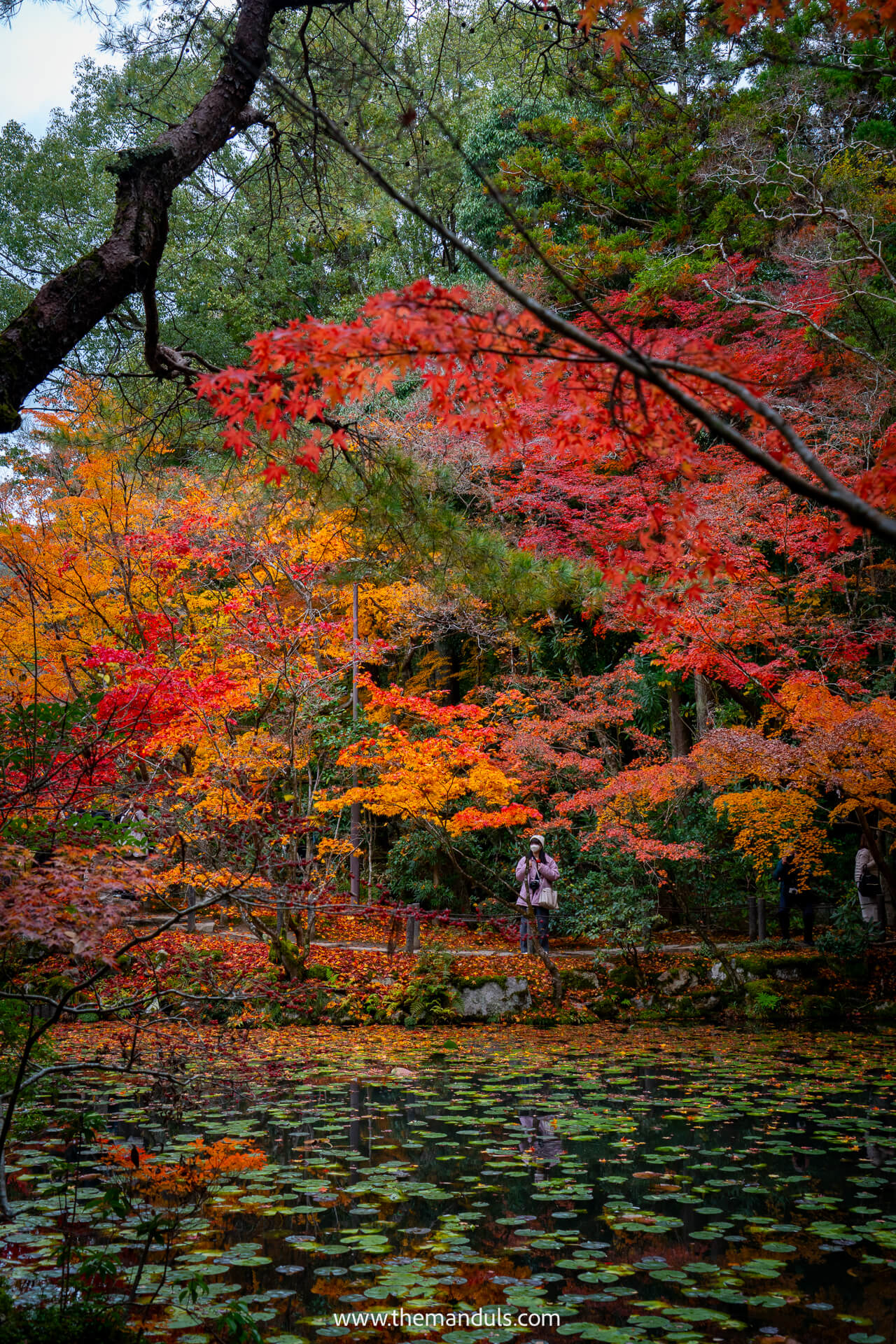
16. Enjoy Eikando Temple (Zenrin-ji)
Entrance Fee: 600 JPY, autumn foliage price: 1000 JPY
Opening hours: 9 AM to 5 PM (last entry 4 PM) daily, Night Illuminations: 5:30 PM – 9:00 PM (last entry 8:30 PM).
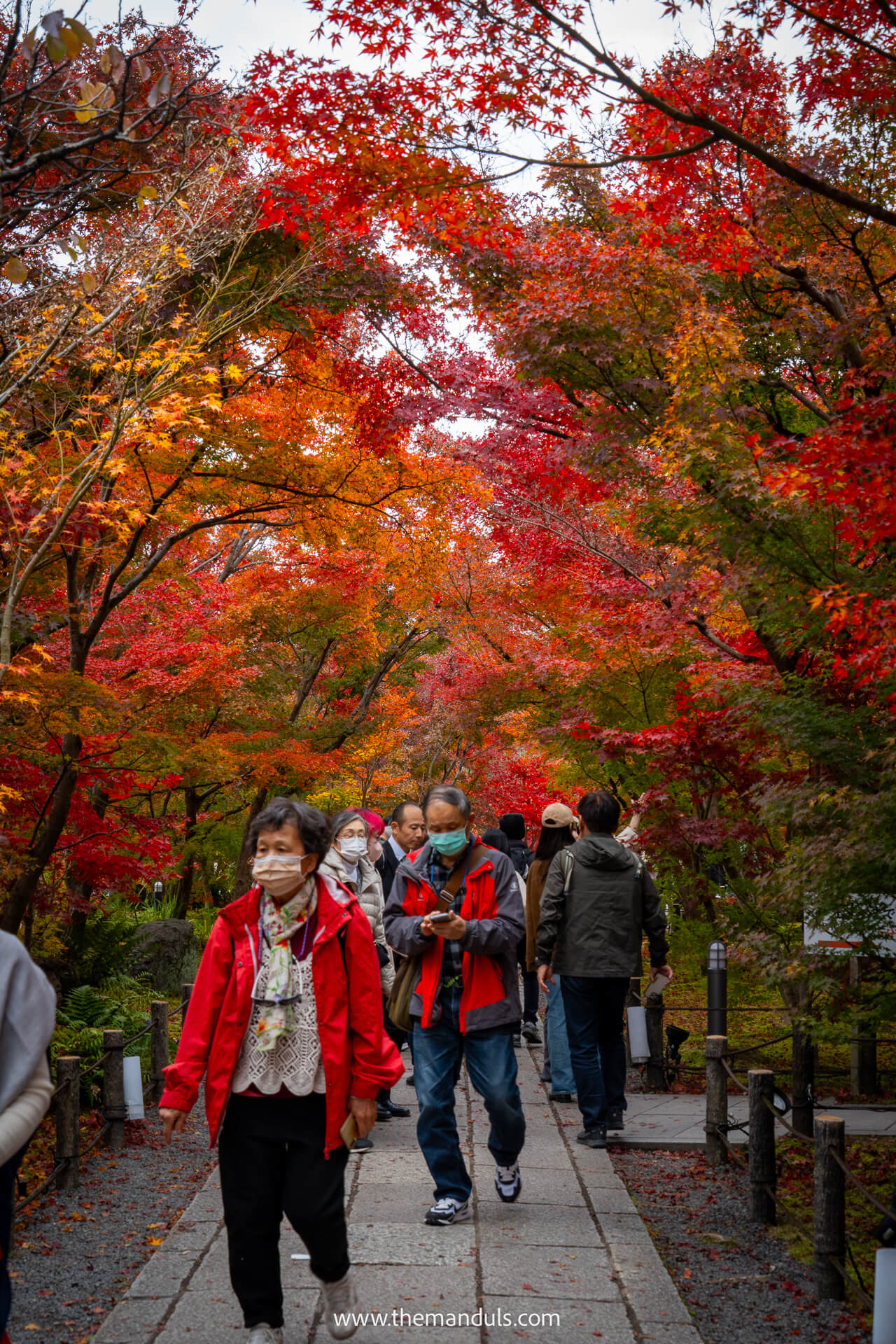
Eikan-do is one of Kyoto’s most famous spots for autumn foliage, and after visiting, we completely understood why. The entire complex is filled with maple trees, and during peak season, the colours here are some of the most vibrant we saw anywhere in the city.
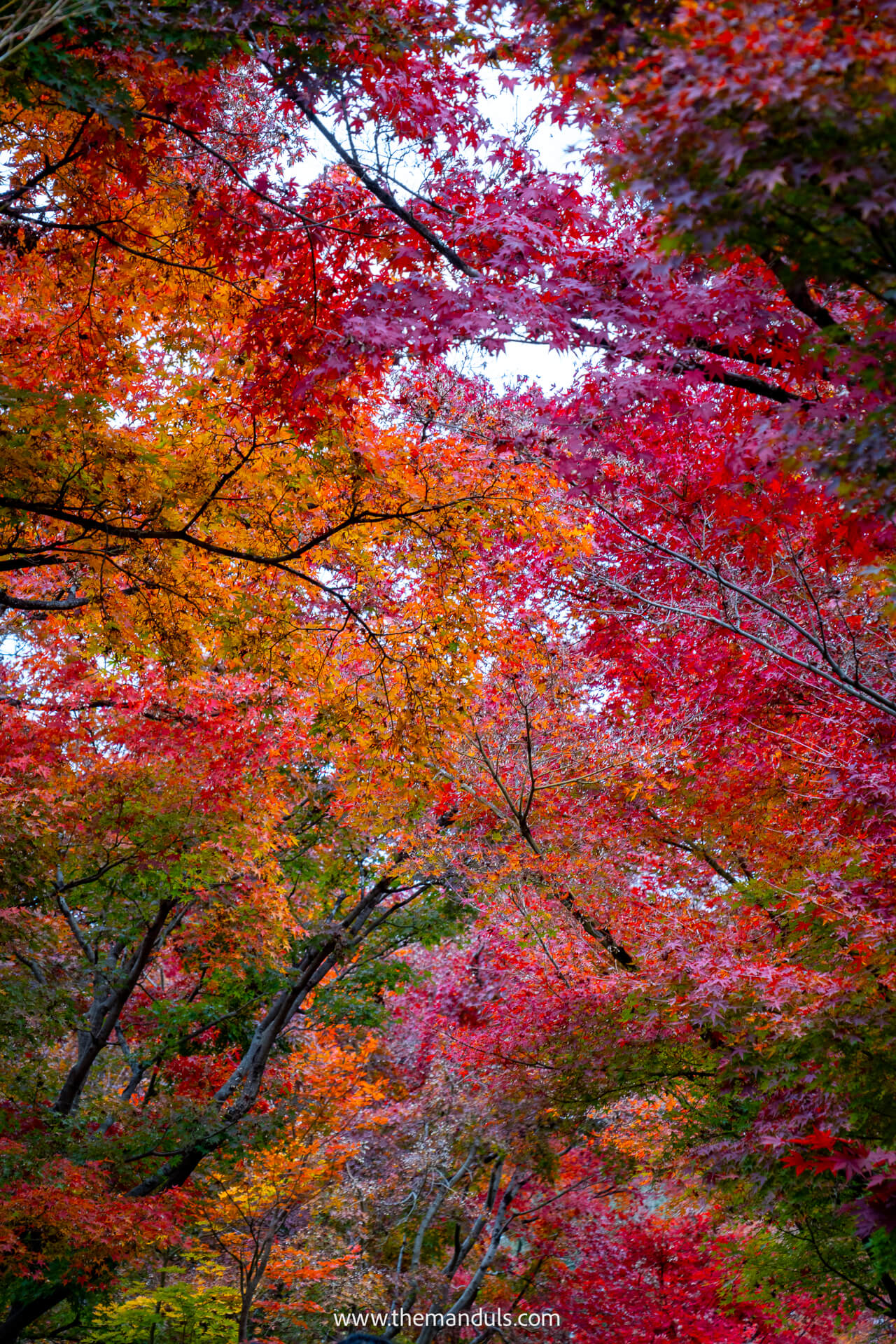
We came right after visiting Nanzen-ji and Tenjuan Temple, around 10:30 AM, and there was already a short queue for entry tickets. Inside, there were a lot of people, but since the complex is quite big, everyone was spread out.
We also visited the temple interior, and it was easy to walk through because the path is one-way only. We left our stroller at the entrance and carried our shoes in the provided plastic bag, since you’re not allowed to enter temples in Japan with shoes on.
The entrance fee is higher during autumn, but we think it’s justified — the experience feels unique, and the foliage alone makes it worth it. We spent around 45–60 minutes here walking through the different sections and enjoying the colours.
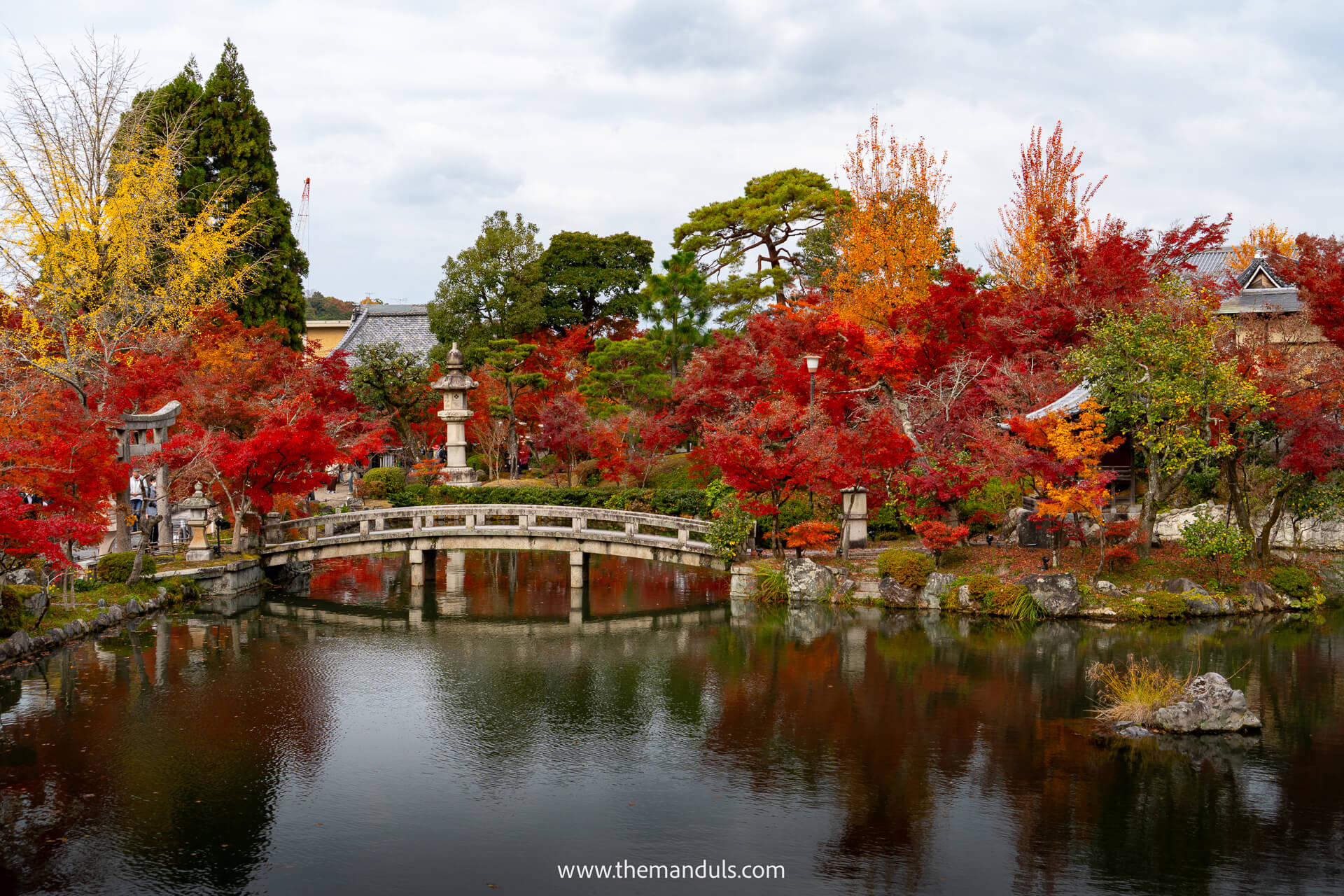
17. Visit Kitano Tenmangu Shrine
Entrance Fee: shrine grounds are for free, garden in autumn costs 1000 JPY
Opening hours: 7 AM – 5 PM
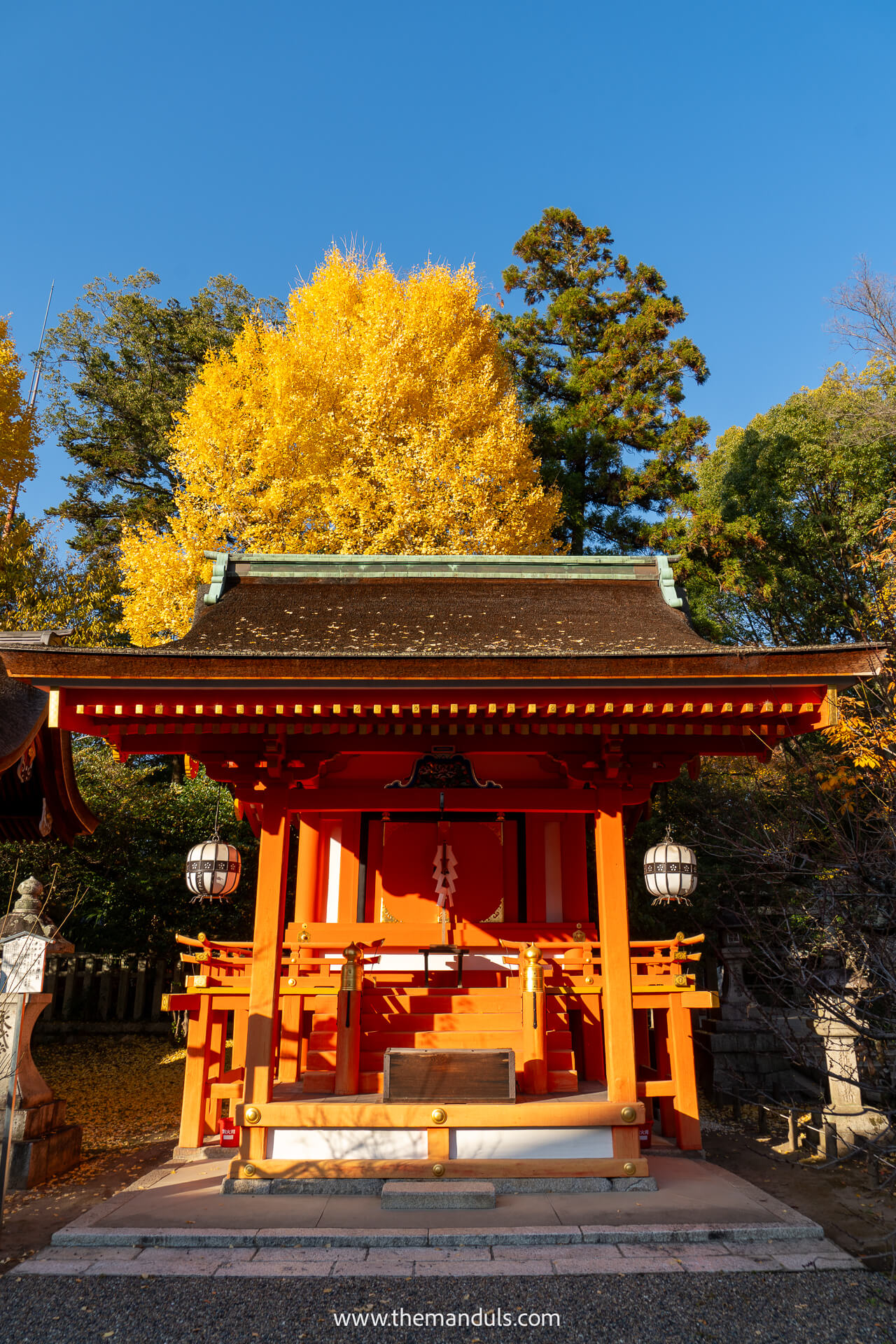
Kitano Tenmangu is a shrine with a very local feel, and we enjoyed visiting it because it offered something different from the more touristy spots in central Kyoto. The shrine is dedicated to the deity of learning, so you’ll see many students coming here to pray for good exam results. The architecture is beautiful, with detailed wooden carvings, bright colours, and many lanterns that make the shrine look especially charming.
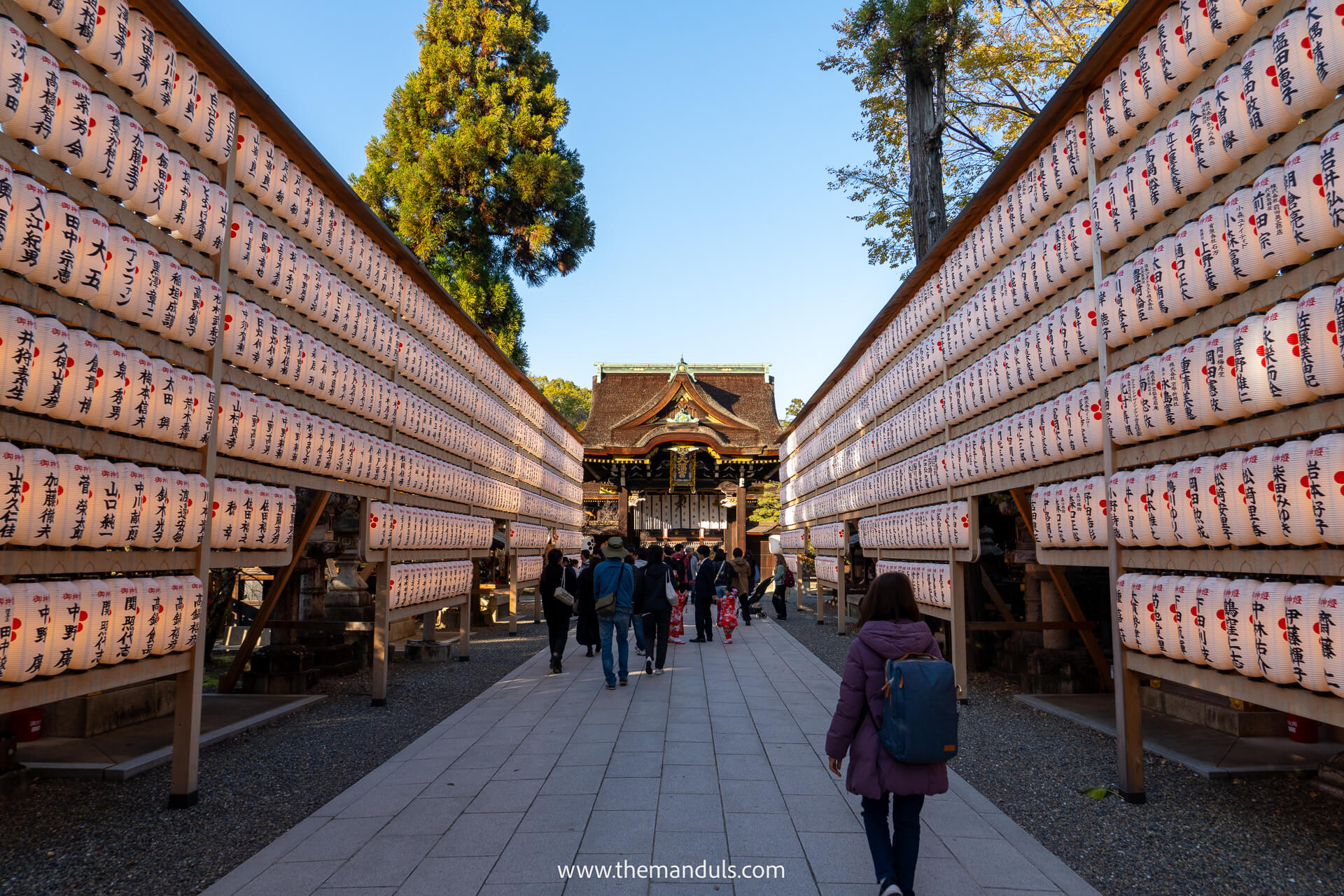
We visited in the early afternoon, and even though there were people around, the grounds felt spacious and calm. During autumn, the maple garden behind the main hall opens to the public, and the colours are incredibly vibrant — a completely different experience compared to the main courtyard.
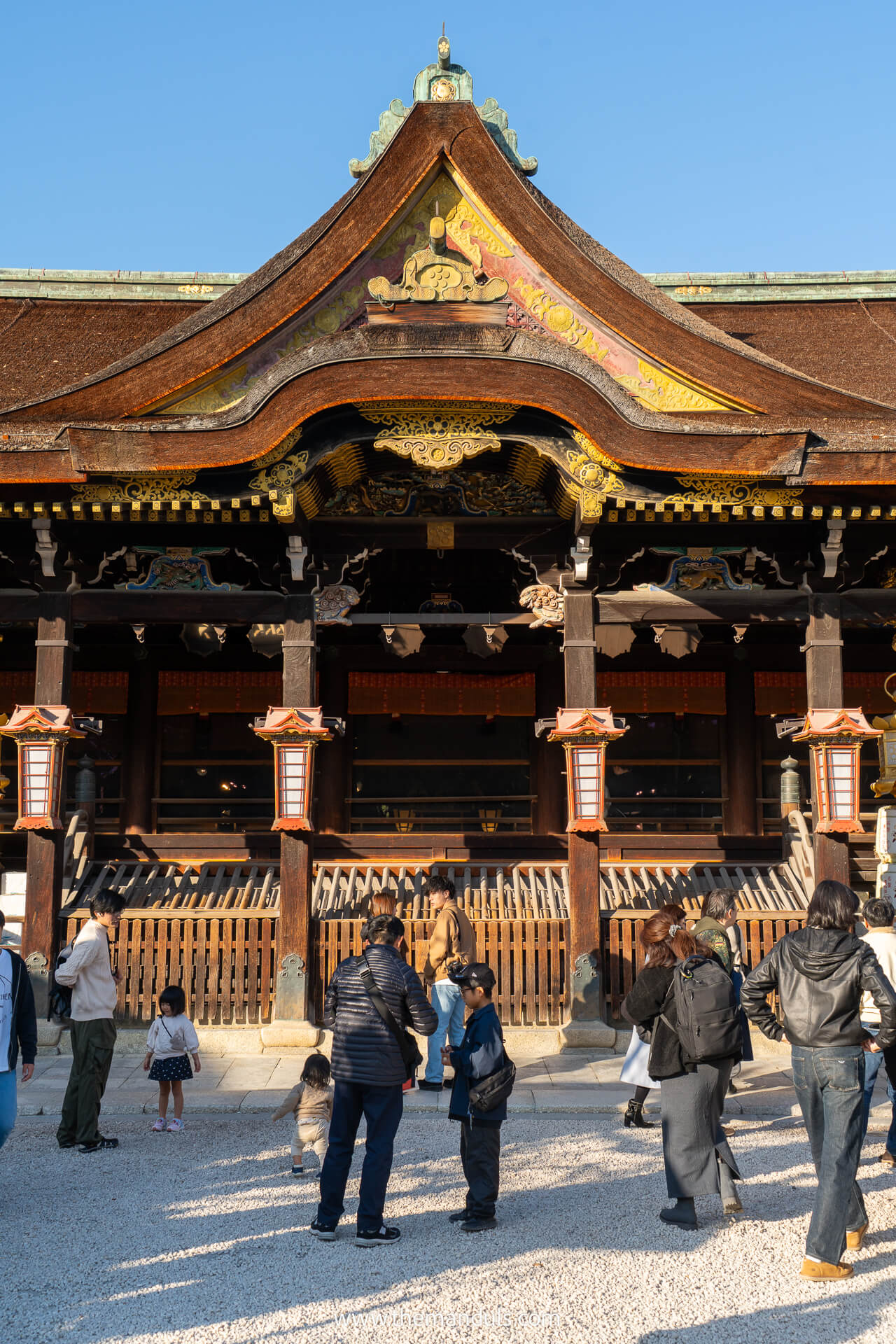
Kitano Tenmangu is also known for its monthly flea market held on the 25th of each month. It’s one of the largest in Kyoto, with vendors selling antiques, ceramics, old books, street food, and handmade goods. If your trip happens to align with the market day, it’s a great opportunity to experience a more local side of the city.
We didn’t spend long here — 30–45 minutes was enough for us to see the main courtyard, enjoy the atmosphere, and take photos. If you’re visiting during the maple garden opening or on the monthly market day, you could easily stay longer.
18. See To-ji Temple
Entrance Fee: Temple Grounds are free but entering the buildings costs from 500 JPY to 800 JPY
Opening hours: 5 AM – 5 PM, night illuminations offer extended evening hours up to 9 PM
To-ji Temple is easy to recognize thanks to its five-story pagoda — the tallest wooden pagoda in Japan. What surprised us the most is how similar it looks to Yasaka Pagoda, just on a much larger scale. Seeing it rise above the neighbourhood feels impressive even before you enter the grounds.
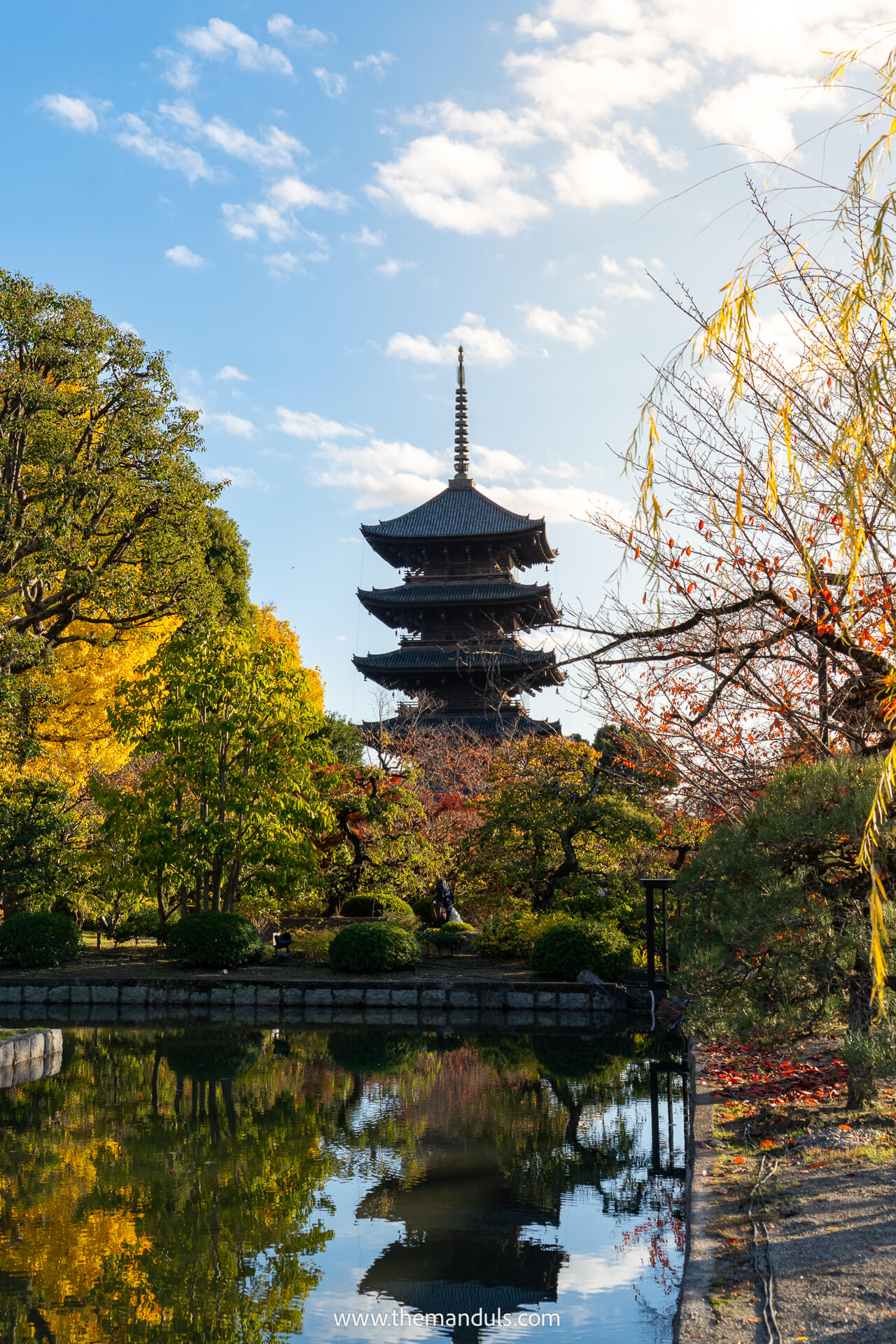
We visited in the afternoon and spent around 20–30 minutes walking through the grounds, taking photos, and enjoying the quiet atmosphere. The best view is from across the pond, where the pagoda reflects beautifully in the water.
During autumn, To-ji also hosts night illuminations, and the pagoda lit up in warm colours looks incredible. If you’re visiting in November, it’s worth checking the schedule.
If you happen to be in Kyoto on the 21st of the month, To-ji is even more interesting. The temple hosts one of Kyoto’s biggest flea markets, with antiques, ceramics, handmade goods, clothes, and plenty of food stalls.

19. Day trip to Arashiyama
Arashiyama is one of the best day trips you can do from Kyoto, and we immediately noticed how different it feels from the rest of the city.
We arrived right at sunrise to beat the crowds, and it was absolutely the right decision — a few hours later, the whole area became extremely overcrowded. In the early morning, though, it was calm, atmospheric, and much easier to enjoy.
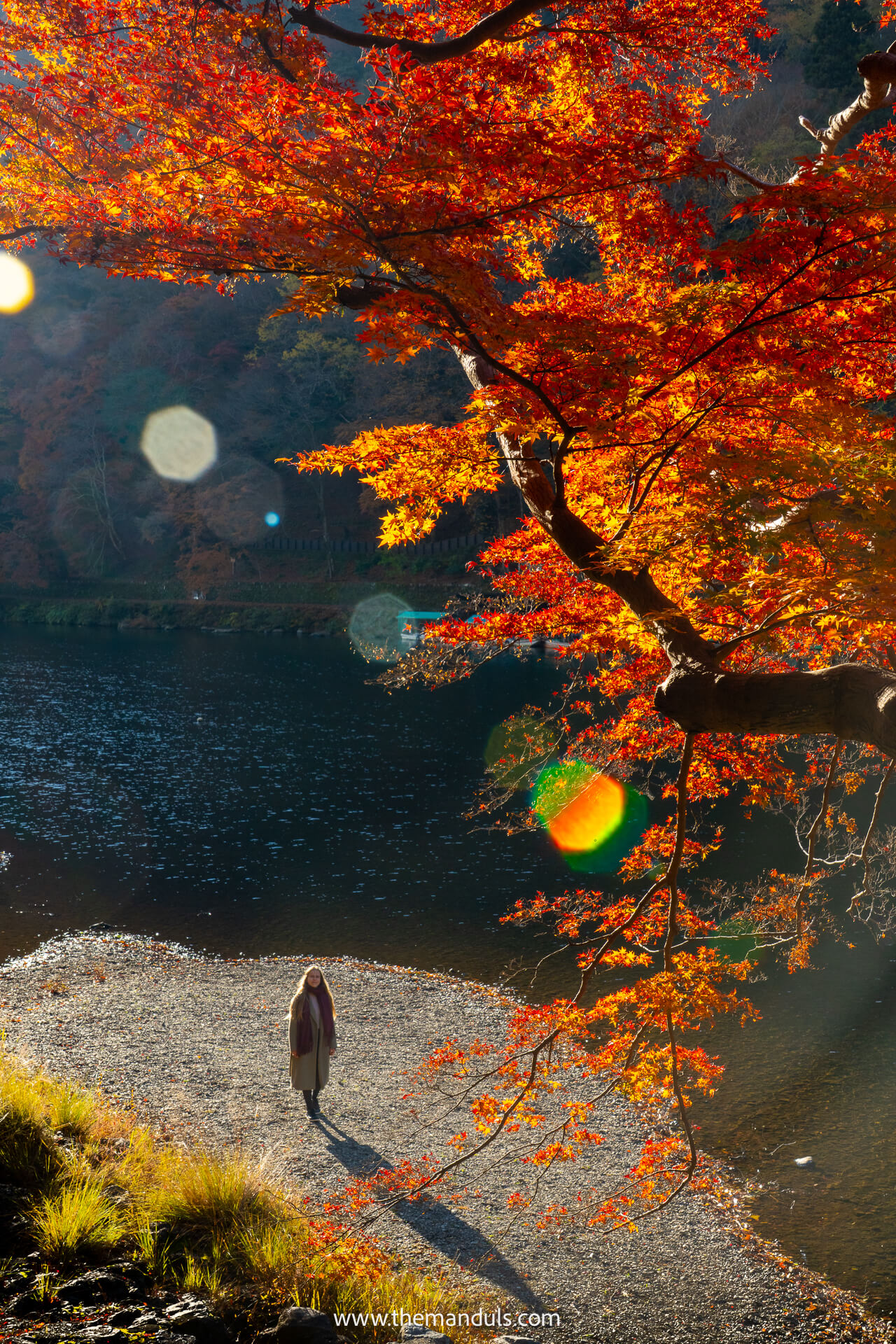
What makes Arashiyama special is the mix of riverside paths, temples, bamboo groves, and small traditional streets, all within walking distance. You can connect every main spot in one simple loop without rushing, which is why this area worked so well as a half-day trip for us.
Here’s what we recommend focusing on:
- Arashiyama Bamboo Forest
- Arashiyama Park Viewpoint
- Tenryu-ji Temple
- Togetsukyo Bridge
- Kimono Forest
We chose to skip the Monkey Forest. After researching and reading reviews, it felt more like a tourist trap than a meaningful wildlife experience, and with so many beautiful spots in Arashiyama, we didn’t feel it was necessary.
20. Day trip to Nara Park
A day trip to Nara Park is one of those trips from Kyoto that just makes sense. Trains run frequently, the ride takes around 45 minutes, and you don’t need to worry about seat reservations or complicated planning — it’s an easy add to almost any Kyoto itinerary.
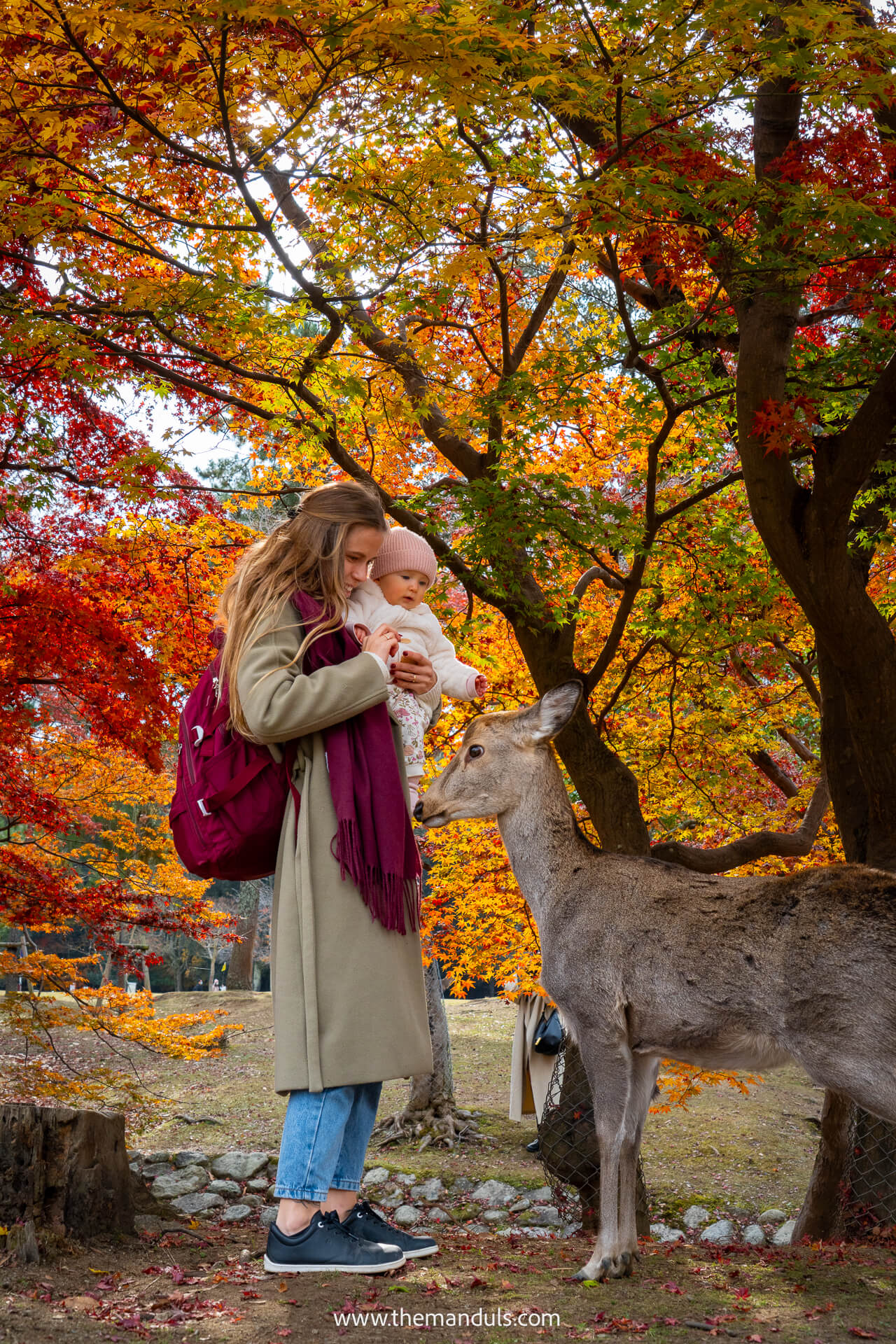
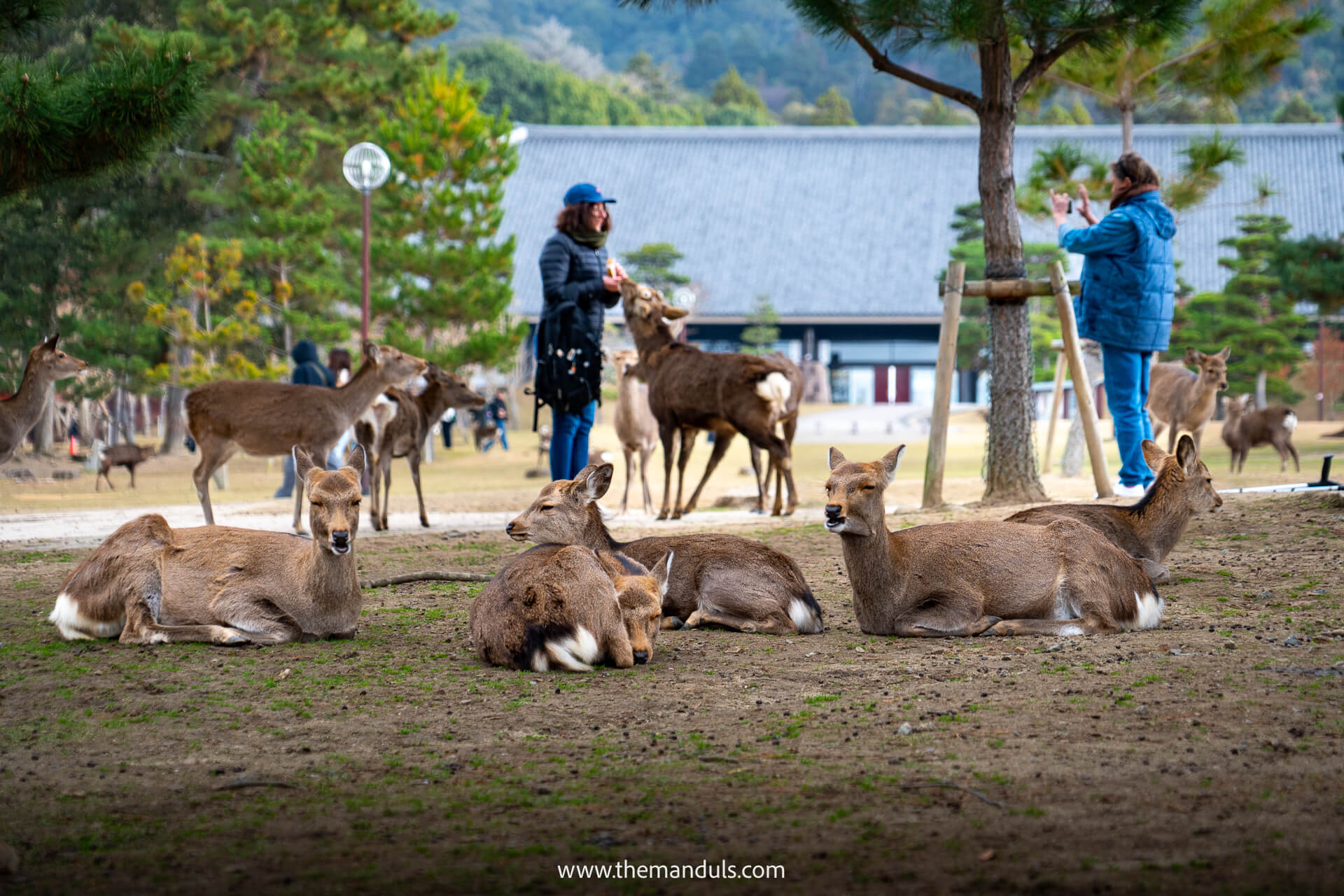
It feels different than Kyoto. Instead of moving from temple to temple, you’re wandering through open green spaces with deer everywhere, historic buildings in between, and a much more relaxed, playful atmosphere. It’s less structured, a bit chaotic at times, and exactly why it works so well as a contrast to Kyoto.
If you’re short on time, Nara Park fits perfectly into a half-day trip. Go early, explore at an unhurried pace, and head back to Kyoto before the late-afternoon crowds peak — it’s one of those side trips that feels easy but leaves a strong impression.
21. Experience a Traditional Tea Ceremony
If you want a deeper cultural experience beyond temples and gardens, participating in a traditional tea ceremony at Ju-An inside Jotokuji Temple is one of the most authentic cultural activities in Kyoto.
You’ll learn the history and meaning behind Japanese tea rituals, watch the precise preparation of matcha, and taste real ceremonial green tea with traditional sweets — all in an intimate, peaceful setting that highlights why tea is such a respected art in Japan.
The whole experience usually lasts about 70 minutes and includes an explanation of the ceremony’s etiquette and symbolism, making it both educational and calming. It’s a great way to pause, reflect, and appreciate a centuries-old tradition that’s still cherished today.

Book your tea ceremony at Jotokuji Temple here with free cancellation up to 24 hours in advance.
Final Thoughts
Kyoto ended up being one of the most memorable parts of our Japan trip, and we’re already sure we’ll return one day. The mix of temples, gardens, narrow old streets, and seasonal colours creates a atmosphere that’s hard to match anywhere else.
If you only choose a couple of absolute must-dos, we’d recommend Fushimi Inari at sunrise and a morning in Arashiyama — those two experiences stood out the most for us. Kyoto can be extremely busy, especially in spring and autumn, but with the right timing and a bit of planning, you’ll still find plenty of peaceful, beautiful moments.
We loved our time here, and we hope this guide helps you plan a trip that feels just as rewarding.
If you’re still thinking about where to base yourself, check out our guide on where to stay in Kyoto.