
This article contains affiliate links. Learn more in our affiliate disclosure.
Planning 3 days in Kyoto can feel tricky because there’s a lot to see, and many of the main sights are spread across different parts of the city.
At first, we were worried we wouldn’t have enough time to see everything we wanted, but once we grouped nearby places together, we were able to explore at a relaxed pace without feeling like we were constantly rushing.
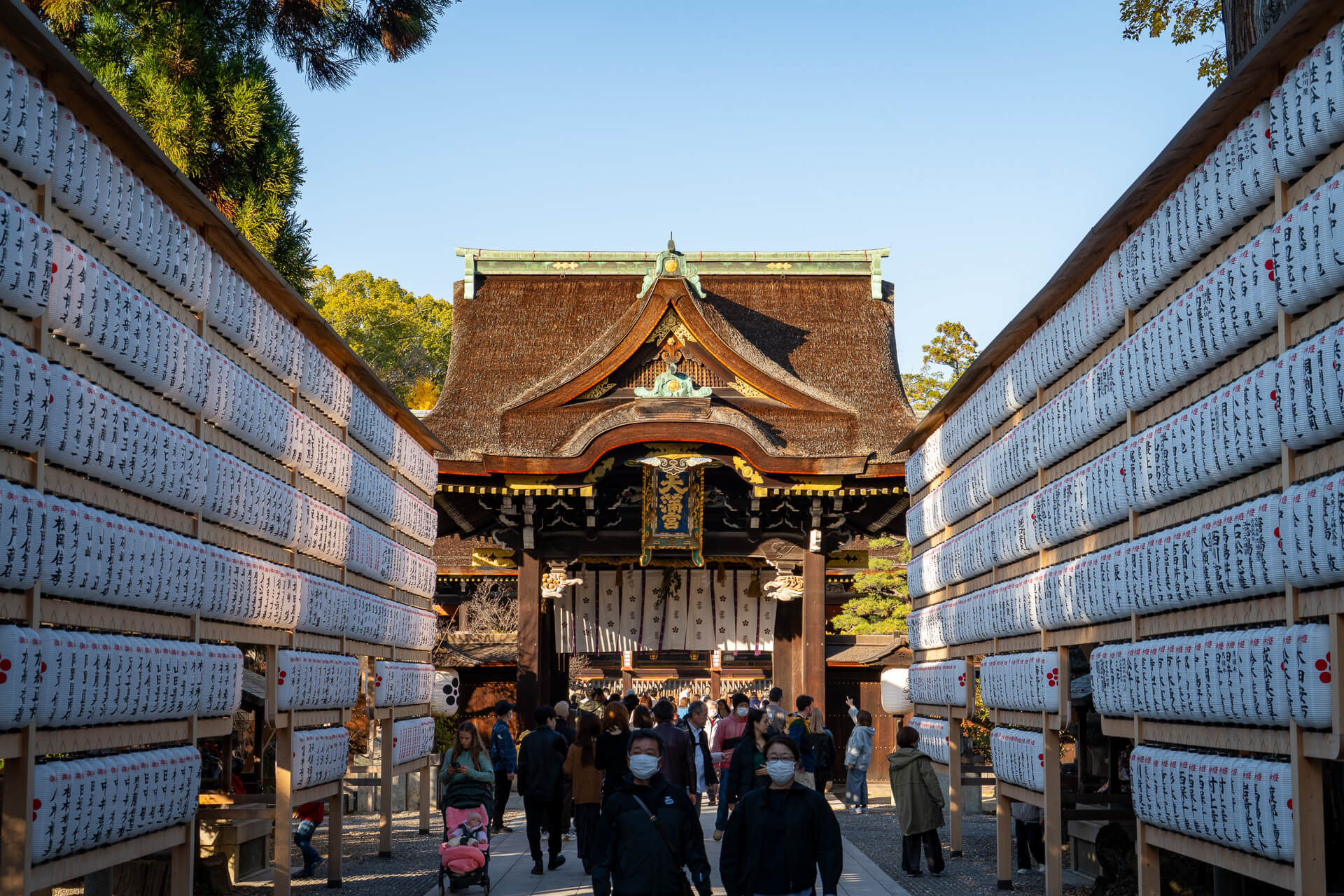
Kyoto felt completely different from Tokyo for us. It was calmer, more compact, and much more traditional, with days spent between temples, gardens, old streets, and some of the best autumn colours we saw in Japan.
This itinerary is based on what worked for us, with a few small changes we’d make after experiencing the city ourselves.
It covers Kyoto’s main highlights in a logical order, avoids unnecessary backtracking, and leaves enough time to actually enjoy each area instead of rushing from one attraction to the next.
In a hurry?
These are our top hotels in Kyoto
⭐️⭐️⭐️ Cross Hotel Kyoto (our top pick) – A modern mid-range stay in a central part of downtown. Comfortable rooms, great design, and an easy base for exploring.
👉 See prices & availability →
⭐️⭐️ The Thousand Kyoto – A luxury hotel with spacious, minimalist rooms and an excellent breakfast. Its location makes getting around the city incredibly easy.
👉 See prices & availability →
⭐️ Guesthouse Soi – A simple and budget-friendly guesthouse near Kiyomizu-dera with clean rooms and a genuinely warm, helpful atmosphere.
👉 See prices & availability →
3-Day Kyoto Itinerary at a Glance
We planned each day around one part of Kyoto, which kept the travel time low and made the itinerary feel much more relaxed.
- Day 1 – Arashiyama & Nishiki Market: Bamboo Forest, Kameyama Park, Tenryu-ji, Togetsukyo Bridge, Kimono Forest, and Nishiki Market
- Day 2 – Fushimi Inari & Eastern Kyoto: Fushimi Inari, Nanzen-ji, Tenjuan Garden, and Eikando
- Day 3 – Higashiyama & Gion: Yasaka Pagoda, Ninenzaka and Sannenzaka, Kiyomizu-dera, Kodai-ji, Hanamikoji Street, and Gion Shirakawa
The busiest places are scheduled early in the morning, while the afternoons are more flexible and focused on areas that are easy to explore on foot.
Many people also visit Nara Park as a day trip from Kyoto, although Osaka is slightly closer and that’s where we visited from. If you really want to include Nara in these 3 days, the easiest option is to combine it with Fushimi Inari.
Visit Fushimi Inari early in the morning, continue to Nara afterwards on the JR Nara Line, and skip Nanzen-ji, Tenjuan, and Eikando that day.
Is 3 Days Enough in Kyoto?
Yes — 3 full days is the sweet spot for a first visit to Kyoto. It gives you enough time to see the main highlights comfortably without making every day feel packed.
We spent 4 days in Kyoto, and by the last day we felt like we had already covered most of the places we really wanted to see. That’s when we started looking for quieter, lesser-known temples and gardens instead.
So for us, 3 days works best if you want to see Kyoto comfortably, while 4 days is better if you prefer slower travel and want more time for less famous places. With only 2 days, we think you’d have to cut too much or rush through the main sights.
Map of Our 3-Day Kyoto Itinerary
The map below shows all the main stops for each day, so you can quickly see how the route fits together.
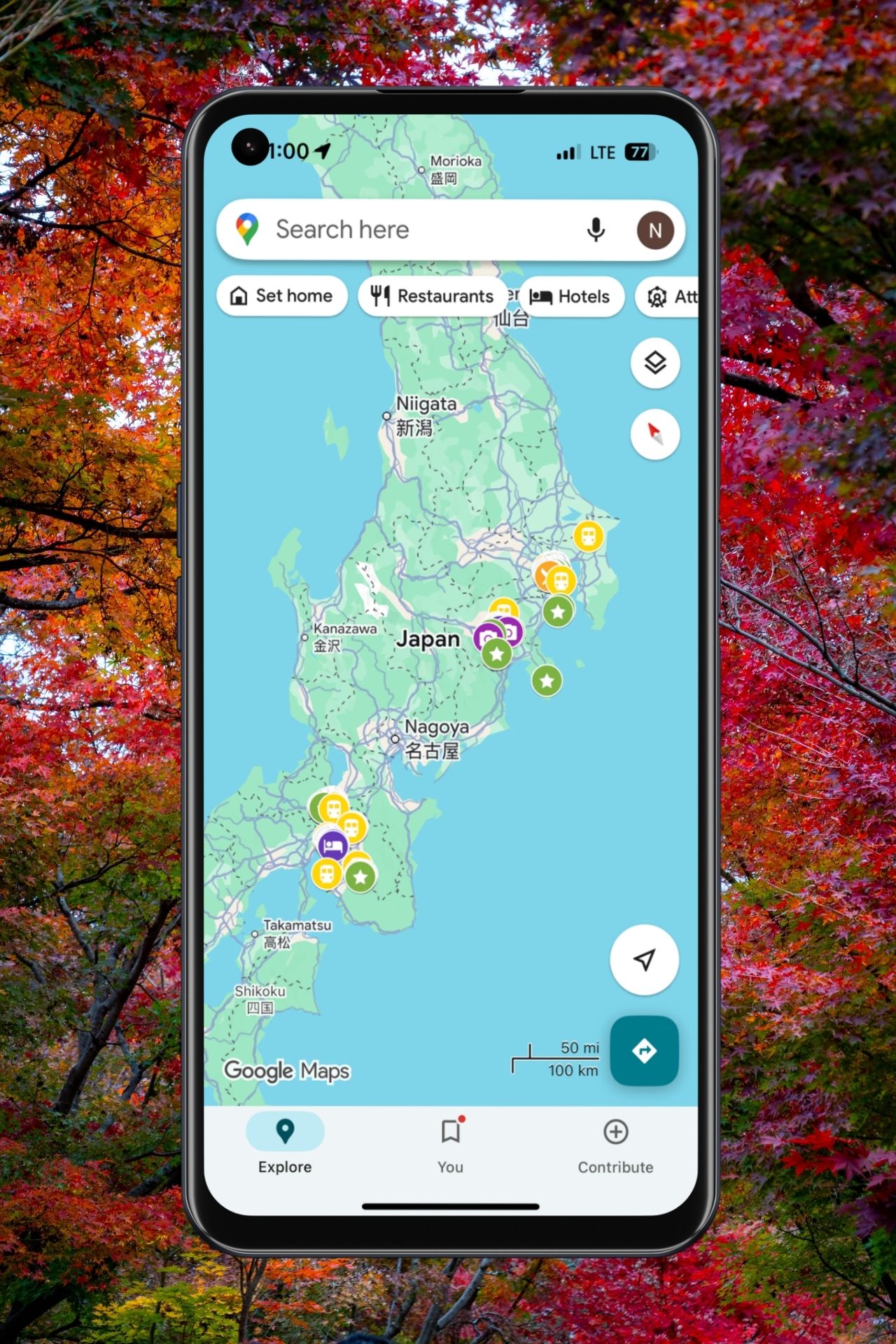
Our Japan Google Maps
Built from our real trips across Japan — only places we actually visited and loved.
No tourist traps. No random saves. Just a ready-to-use map that saves you hours of research.
219 handpicked spots, including:
📍 Highlights & hidden gems
🍜 Restaurants we’d go back to
🏨 Areas & hotels we’d book again
🗺️ Stops that fit into real, logical itineraries
3-Day Kyoto Itinerary
Day 1: Arashiyama & Nishiki Market
Suggested timing:
- 7:30–8:00 AM: Arrive in Arashiyama
- 8:00 AM: Arashiyama Bamboo Forest
- 9:00 AM: Kameyama Park Observation Deck
- 9:30 AM: Tenryu-ji Temple
- 10:30 AM: Togetsukyo Bridge and riverside
- 12:00 PM: Lunch at Sushi Naritaya
- 1:00 PM: Kimono Forest
- 2:00–3:00 PM: Head back toward central Kyoto
- 3:00 PM onwards: Nishiki Market and the surrounding streets
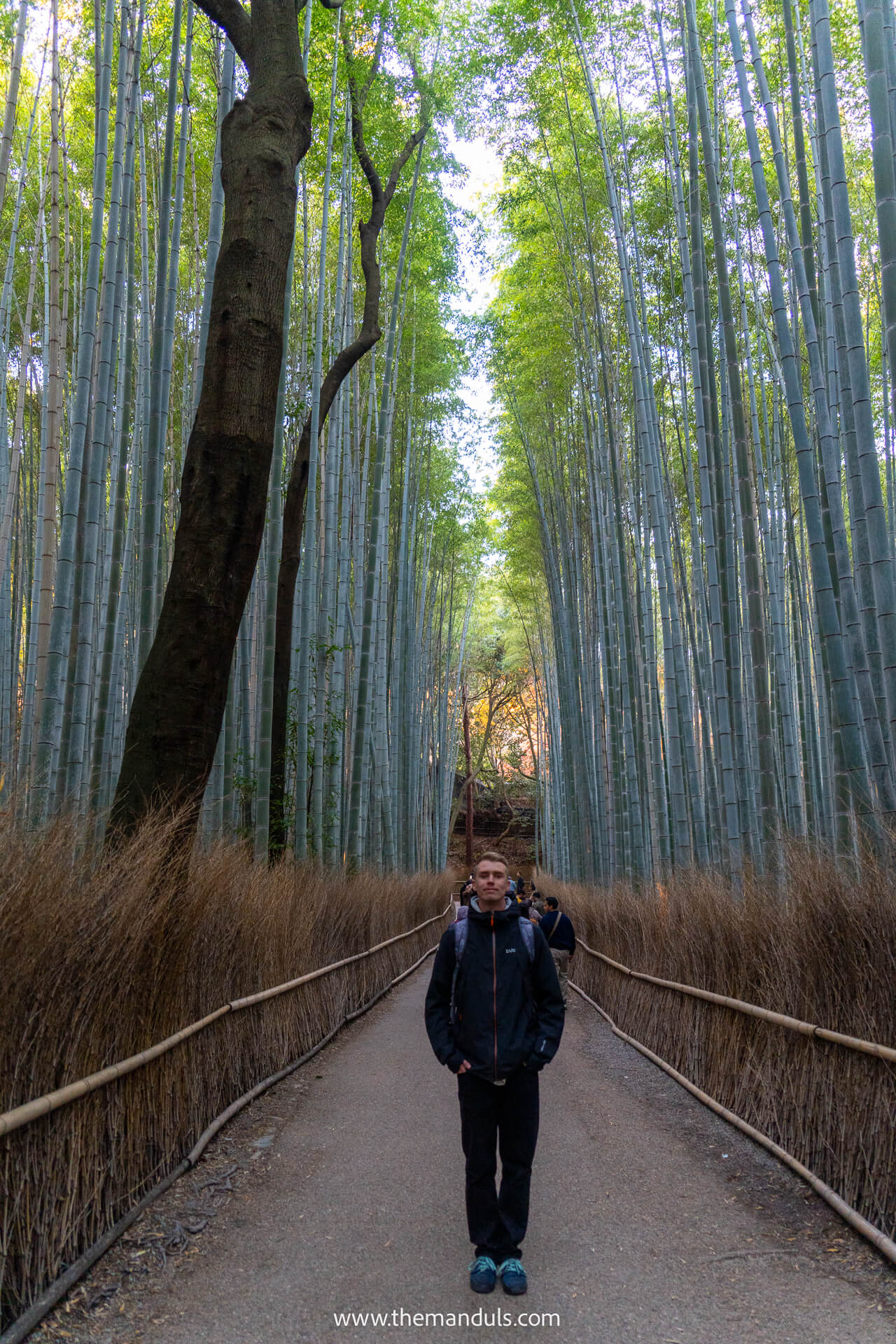
Start with the Arashiyama Bamboo Forest before the biggest crowds arrive. It is not a huge area, so you don’t need much time here, but early morning makes the walk much more enjoyable.
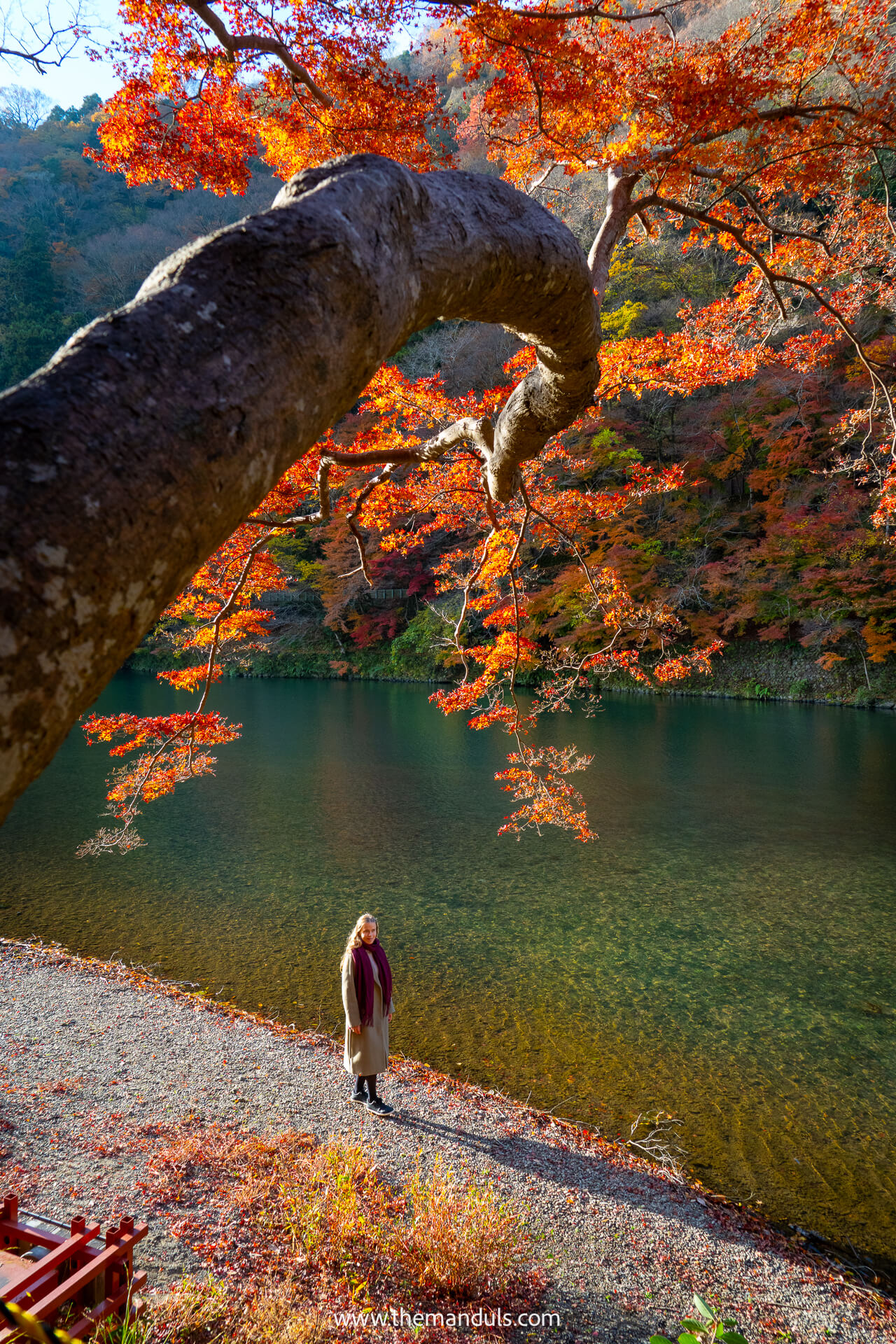
From there, continue uphill through Kameyama Park to the observation deck. We liked this part because it felt completely different from the bamboo grove and was much quieter, with views over the river and surrounding hills.
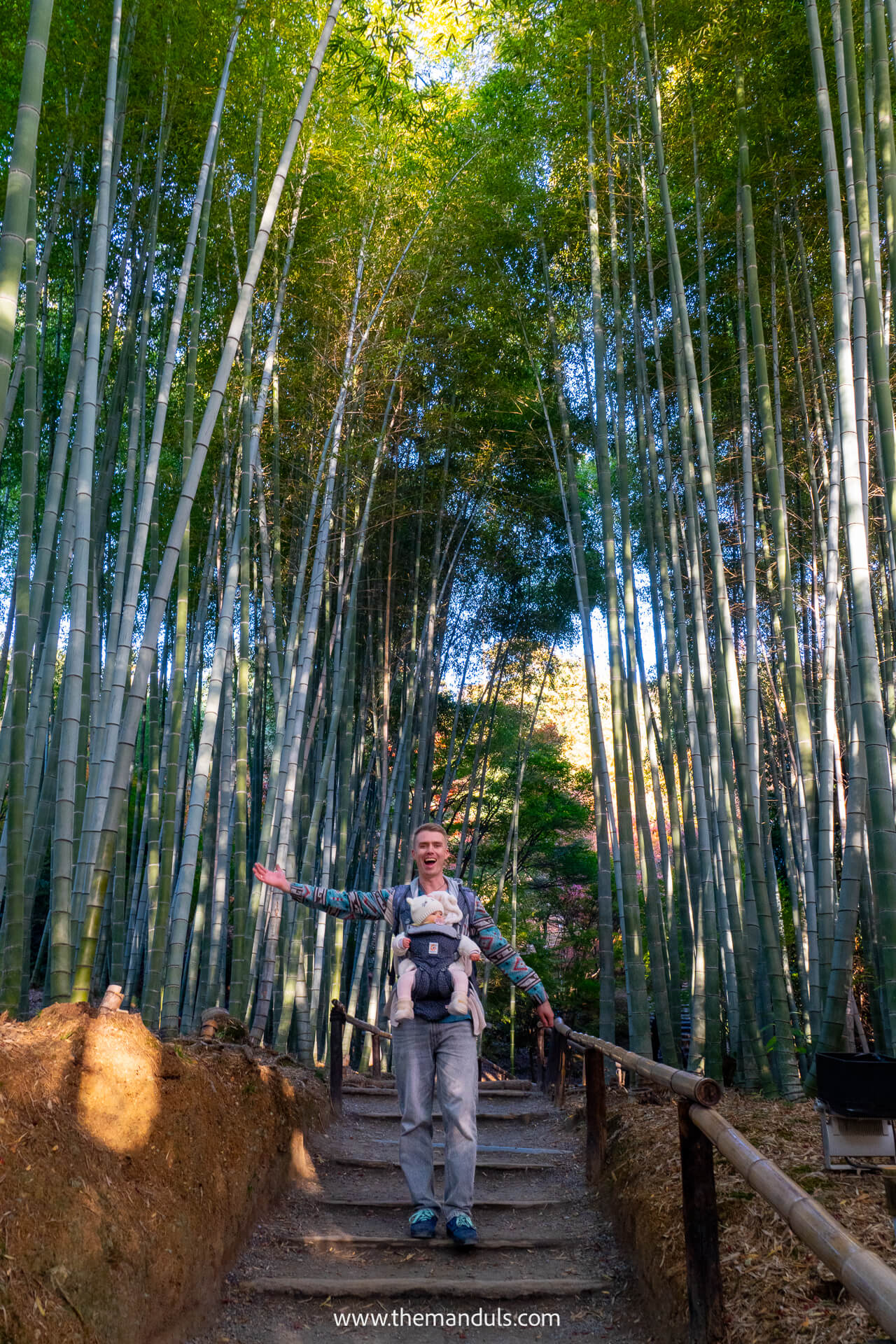
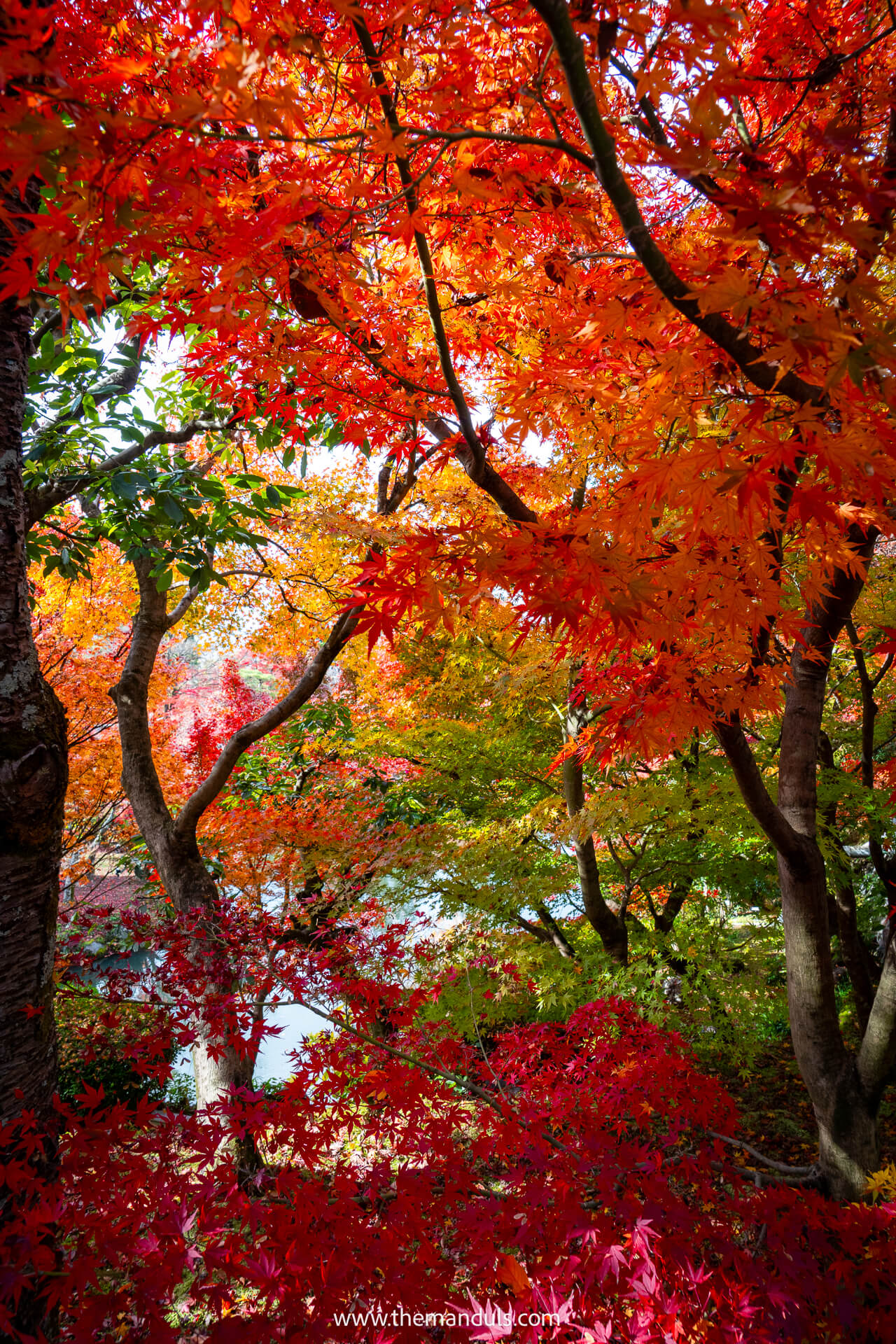
Next, walk back toward Tenryu-ji. Its garden was one of our favourite parts of Arashiyama, especially during autumn when we visited.
After the temple, continue towards Togetsukyo Bridge and spend some time around the river. By this point Arashiyama will probably feel much busier, but the riverside has more space than the narrow streets around the bamboo forest.
After crossing the bridge, you can also rent a small boat and spend some time on the river if you want a slower break before lunch.
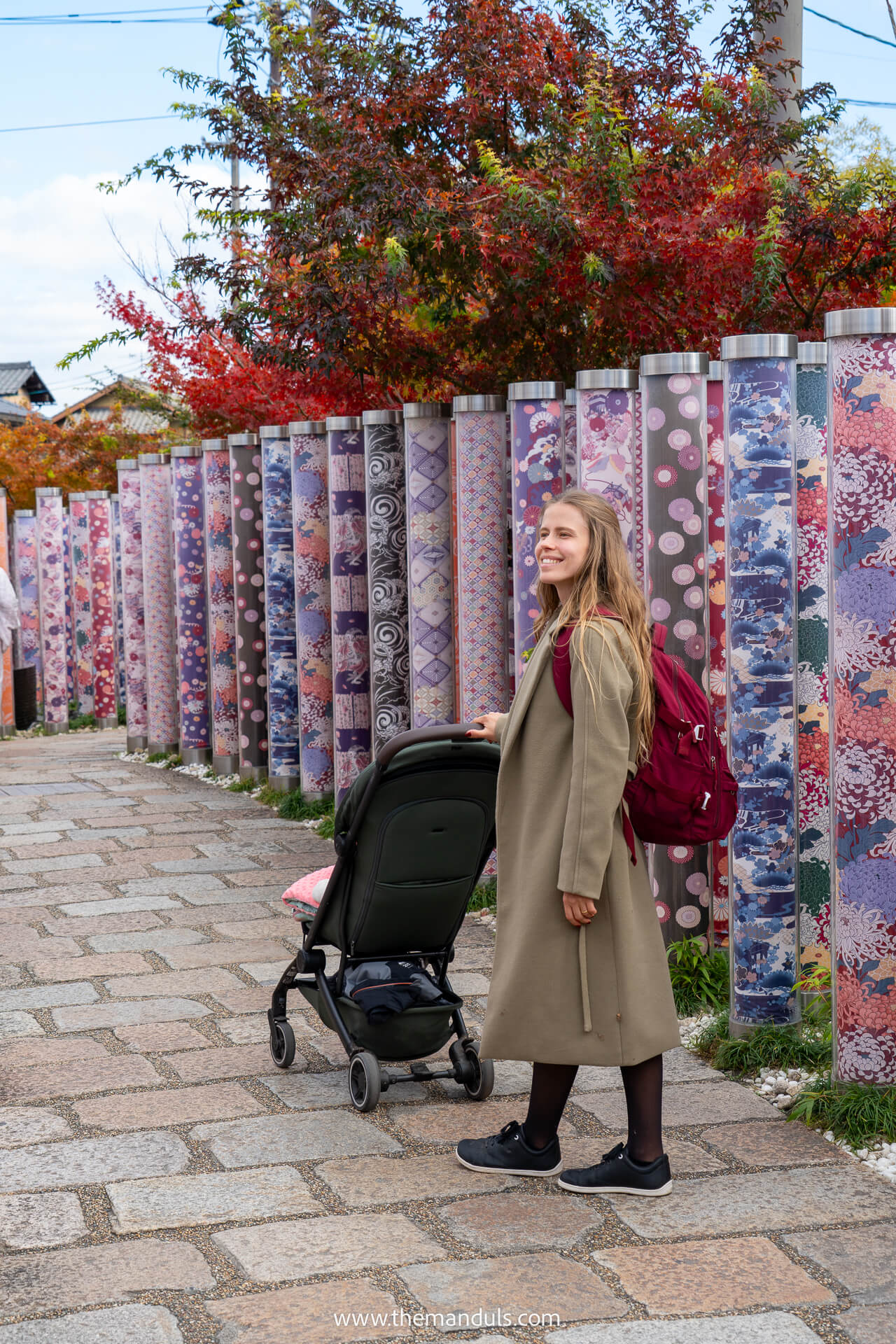
For lunch, we stopped at Sushi Naritaya, which became one of our favourite food stops in Kyoto. After eating, walk through the small Kimono Forest beside Arashiyama Station before leaving the area.
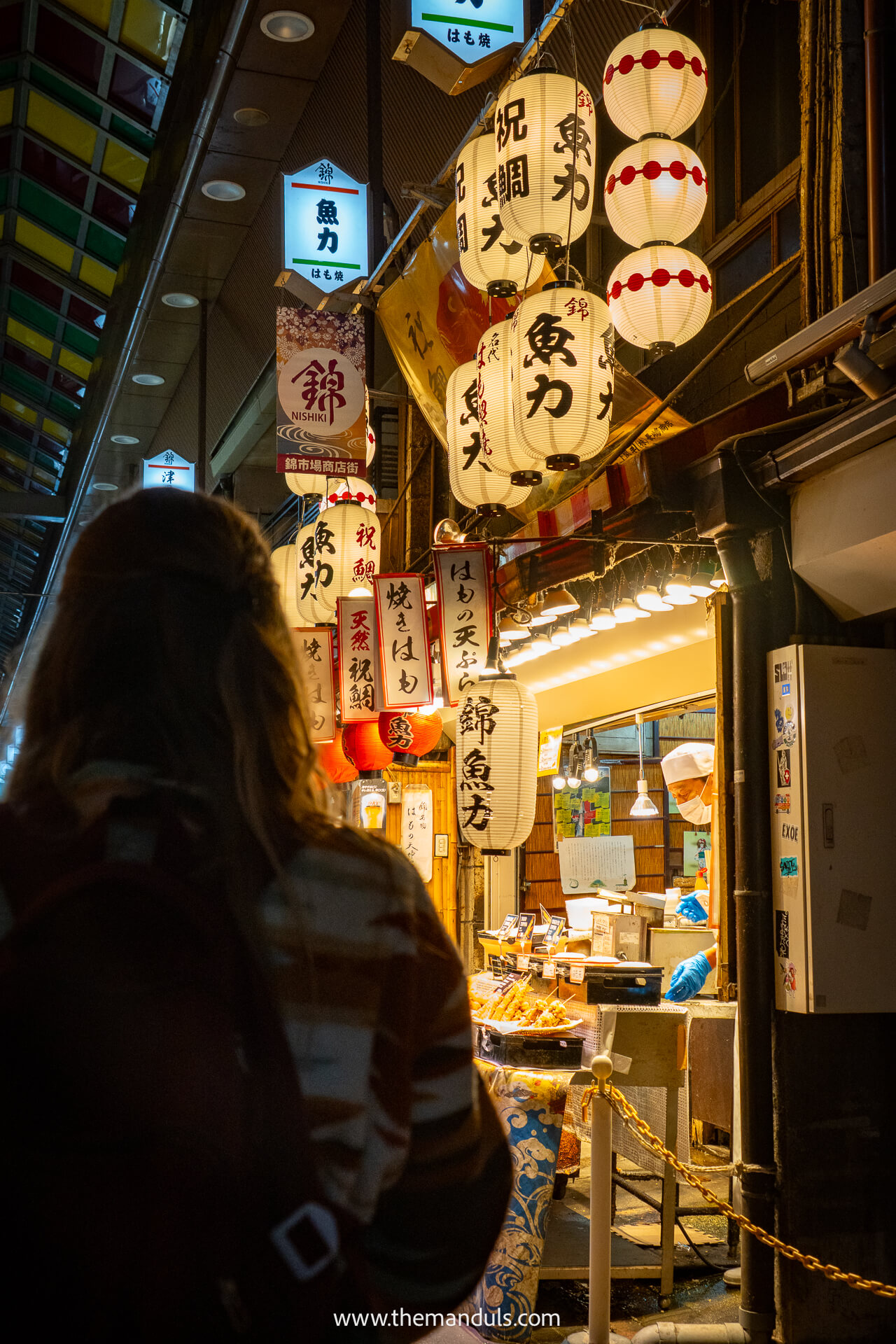
In the afternoon, head back toward central Kyoto and finish the day around Nishiki Market. We wouldn’t leave this too late because many stalls start closing towards the end of the afternoon.
It’s a good final stop because there’s no strict route to follow — you can simply walk through the market, try a few things, and continue exploring the surrounding shopping streets if you still have energy.
Day 2: Fushimi Inari & Eastern Kyoto
Suggested timing:
- 7:00–7:30 AM: Arrive at Fushimi Inari
- 7:30 AM–11:00 AM: Fushimi Inari hike
- 11:00 AM–12:30 PM: Travel + lunch
- 12:30 PM: Nanzen-ji
- 1:30 PM: Tenjuan Garden
- 2:30 PM: Eikando
- After Eikando: Free time / head back towards central Kyoto
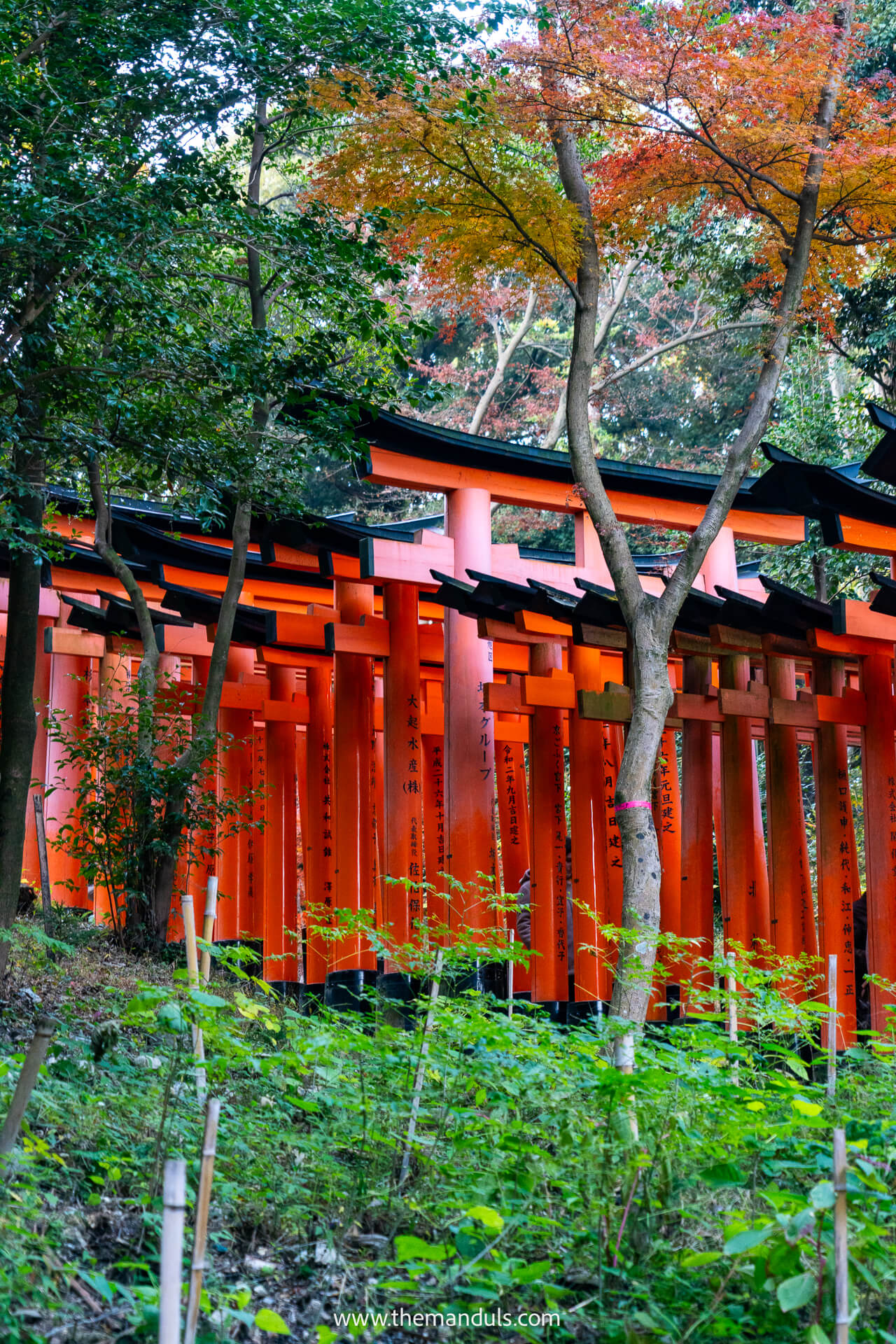
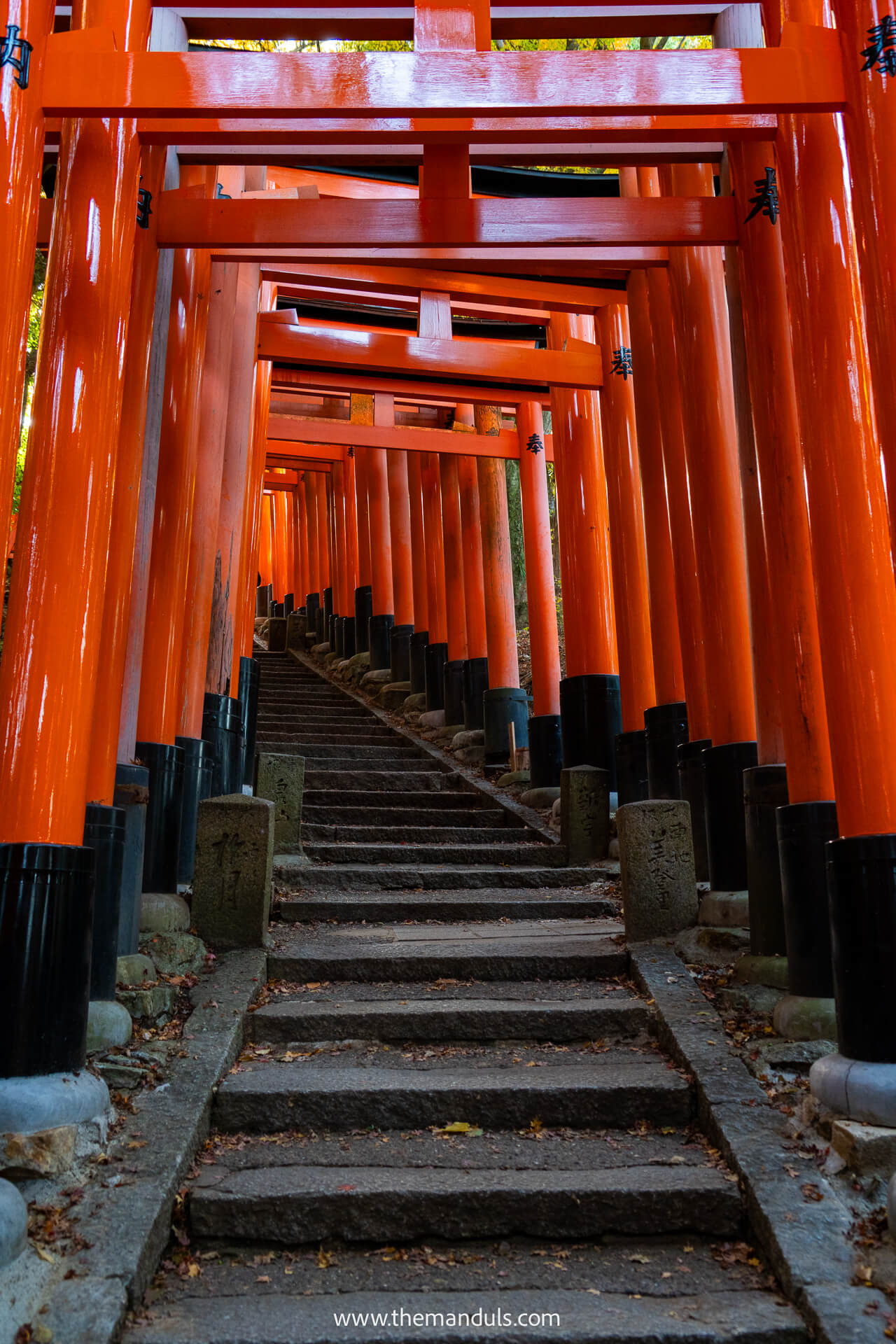
Start early at Fushimi Inari Taisha. The area around the entrance and the famous lower torii gates gets busy quickly, but what surprised us was how much quieter it became once we kept walking uphill.
We completed the full Mount Inari loop, which took us just under three hours at a relaxed pace. For us, it was absolutely worth doing — the further you go, the more the crowds disappear and the route turns into a proper forest hike past smaller shrines, stone lanterns, and endless torii gates.
If you don’t want to do the full hike, you can easily spend 1–2 hours around the lower sections instead. But if you have the energy, we’d keep going.
Want to visit Nara from Kyoto? This is the easiest day to fit it in. Fushimi Inari is already on the JR Nara Line, so after visiting the shrine you can continue straight to Nara and spend the rest of the day there.
We’d skip Nanzen-ji, Tenjuan, and Eikando in that case. We personally visited Nara from Osaka, which is slightly closer.
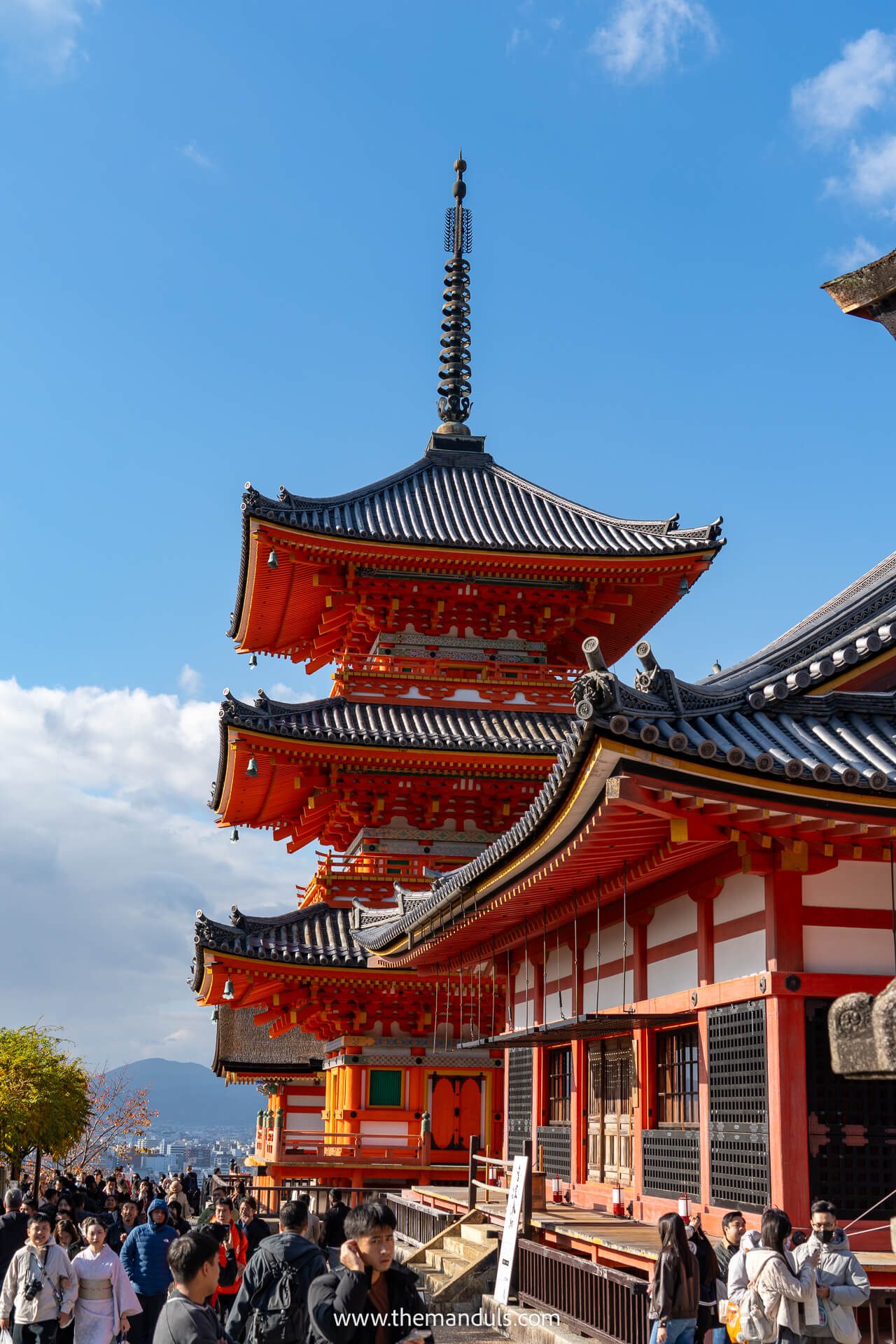
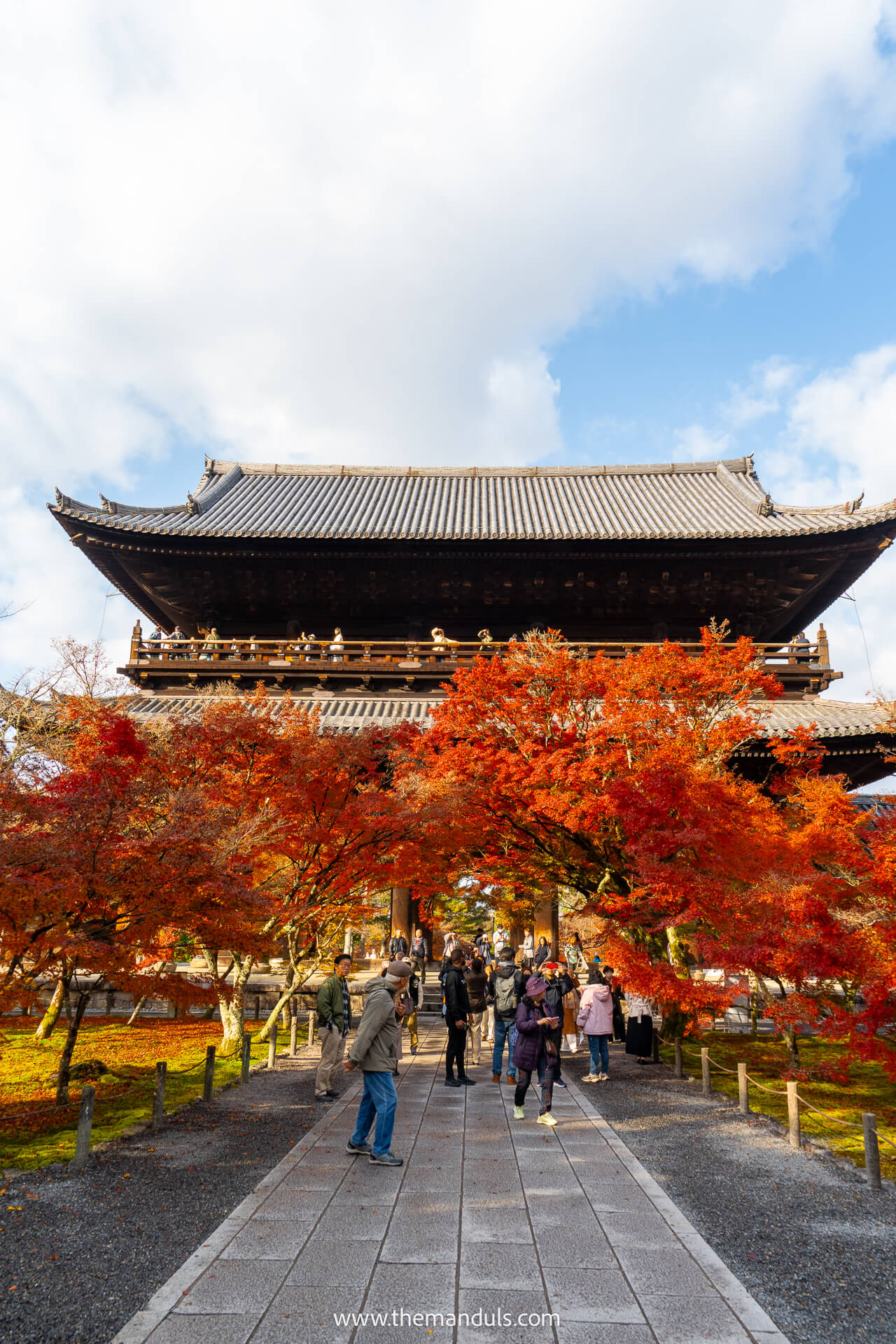
If you’re sticking with our Kyoto itinerary, grab some lunch after Fushimi Inari and then head across Kyoto to Nanzen-ji. This was one of the most impressive temple complexes we visited. The grounds are spacious, and the huge Sanmon Gate and brick aqueduct were our favourite parts.
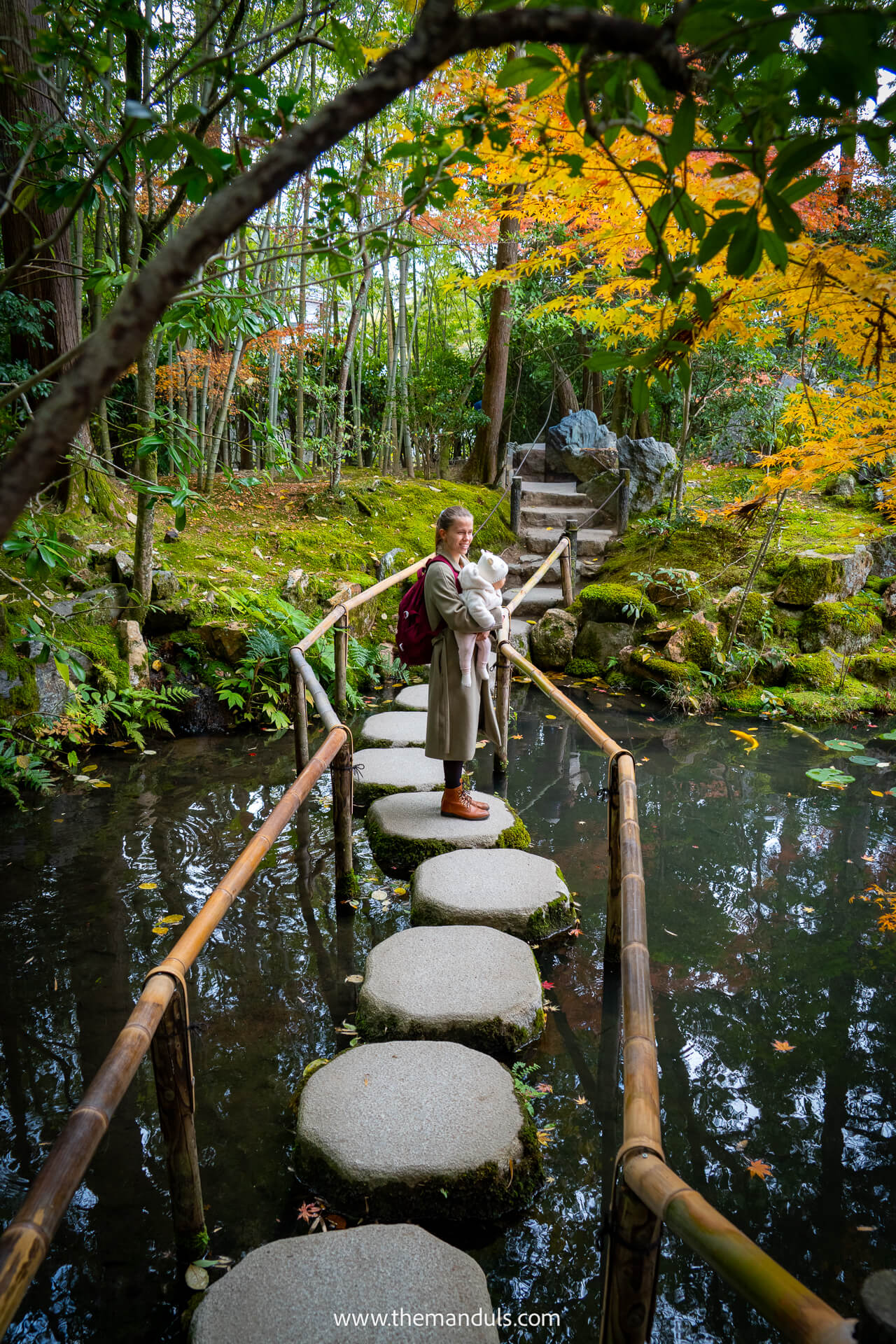
Inside the complex, we also visited Tenjuan Garden, which became one of our favourite gardens in Kyoto. It’s small, so around 20–30 minutes is enough, but the pond surrounded by maple trees looked incredible during autumn.
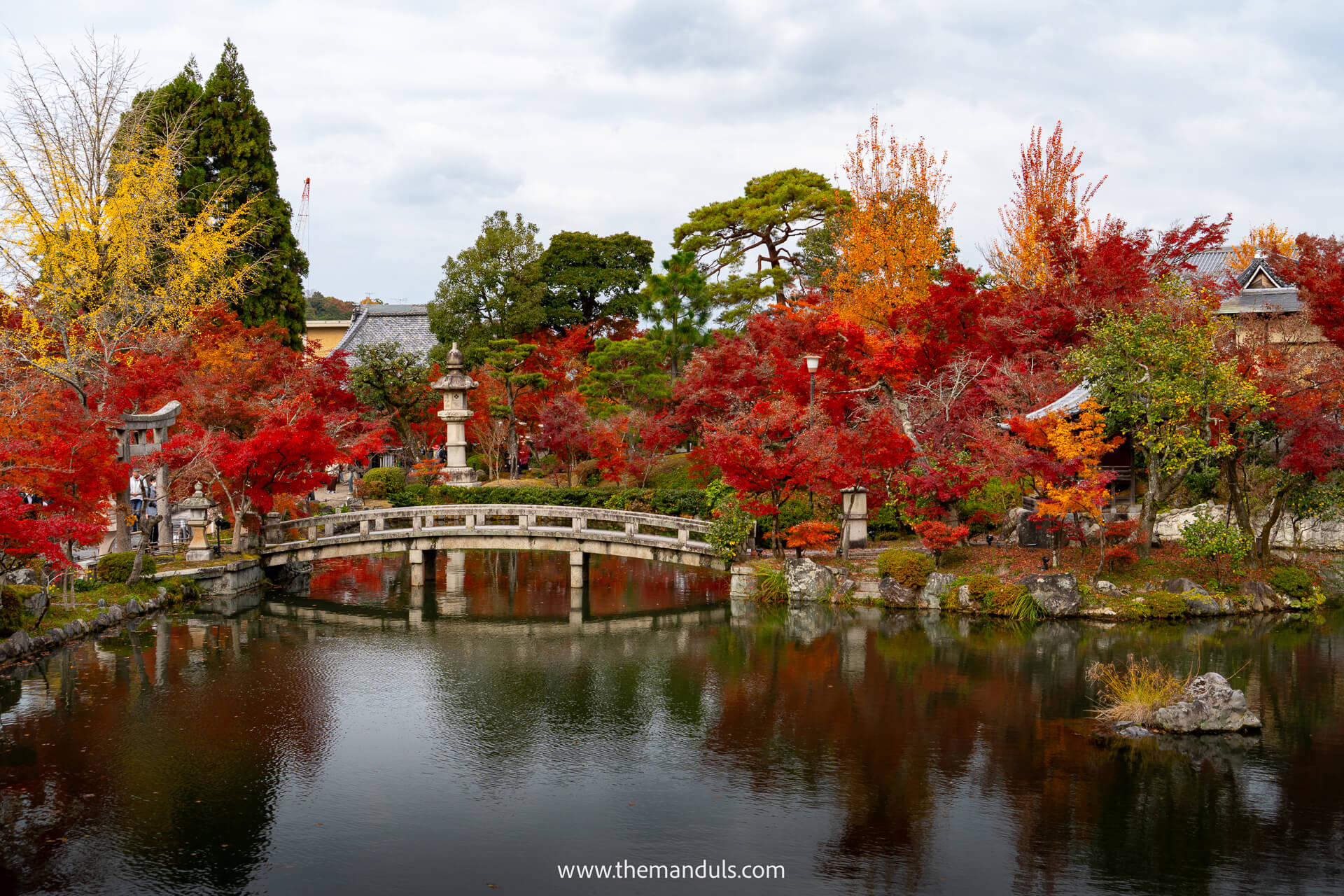
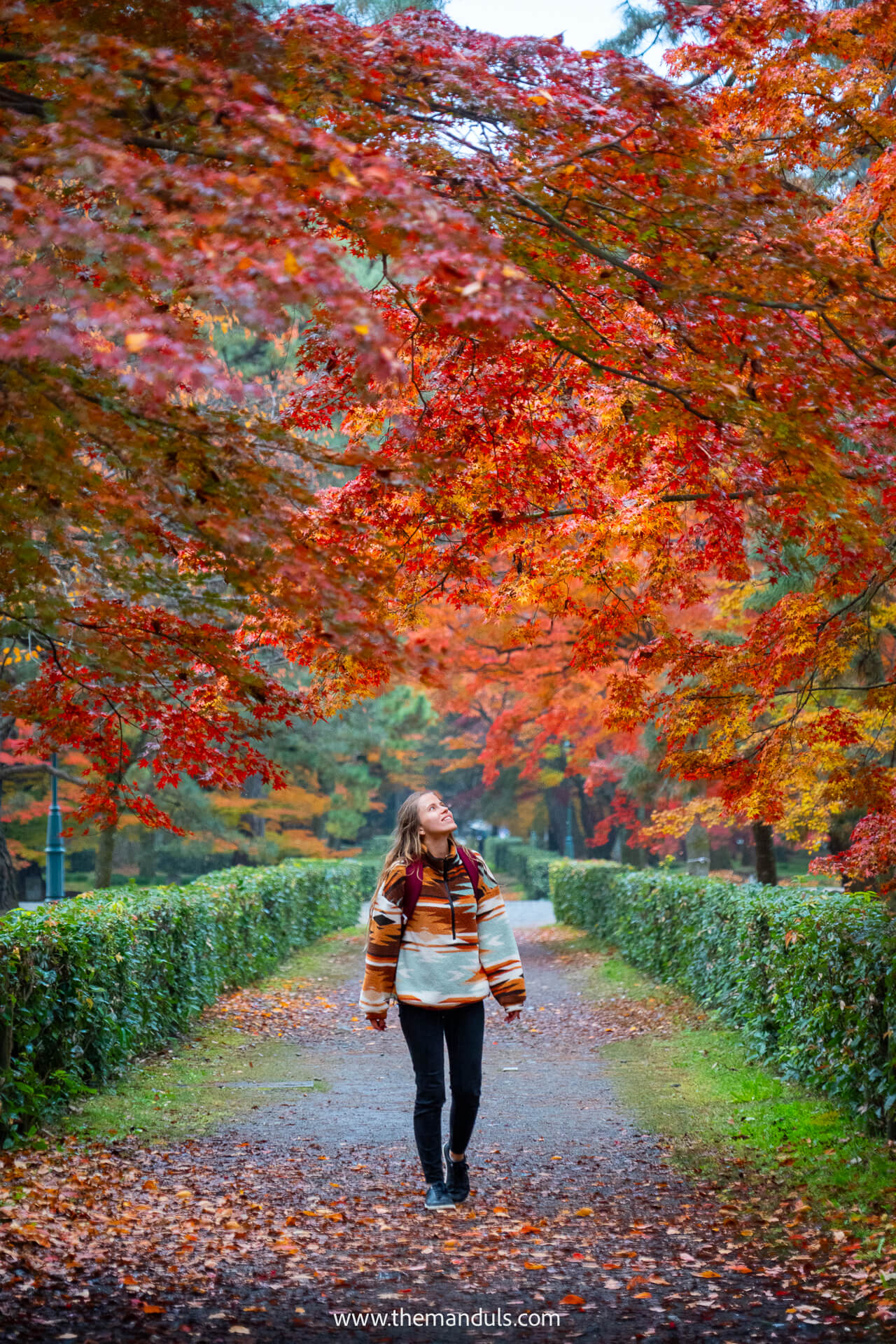
From there, walk to Eikando, the final major stop of the day. It’s especially famous for autumn foliage, which is exactly when we visited, but even beyond the colours we liked how much there was to explore between the ponds, temple buildings, and elevated walkways.
We spent around 1 hour here, and we’d definitely make the short climb to the upper pagoda viewpoint before leaving. We also recommend stopping for a traditional Japanese tea in the gardens — it was a nice way to slow down at the end of a full day of exploring.
If you still have time and energy afterwards, you could add Kyoto Gyoen National Garden. We’d treat it as an optional extra rather than something you need to squeeze into the day.
Day 3: Higashiyama & Gion
Suggested timing:
- 7:30 AM: Yasaka Pagoda
- 8:00 AM: Ninenzaka & Sannenzaka
- 8:30–10:30 AM: Kiyomizu-dera
- 11:00 AM–12:30 PM: Lunch in Higashiyama
- 1:00 PM: Kodai-ji Temple
- 2:30 PM onwards: Explore Gion
- Late afternoon / evening: Hanamikoji Street, Shirakawa Canal & Tatsumi Bridge
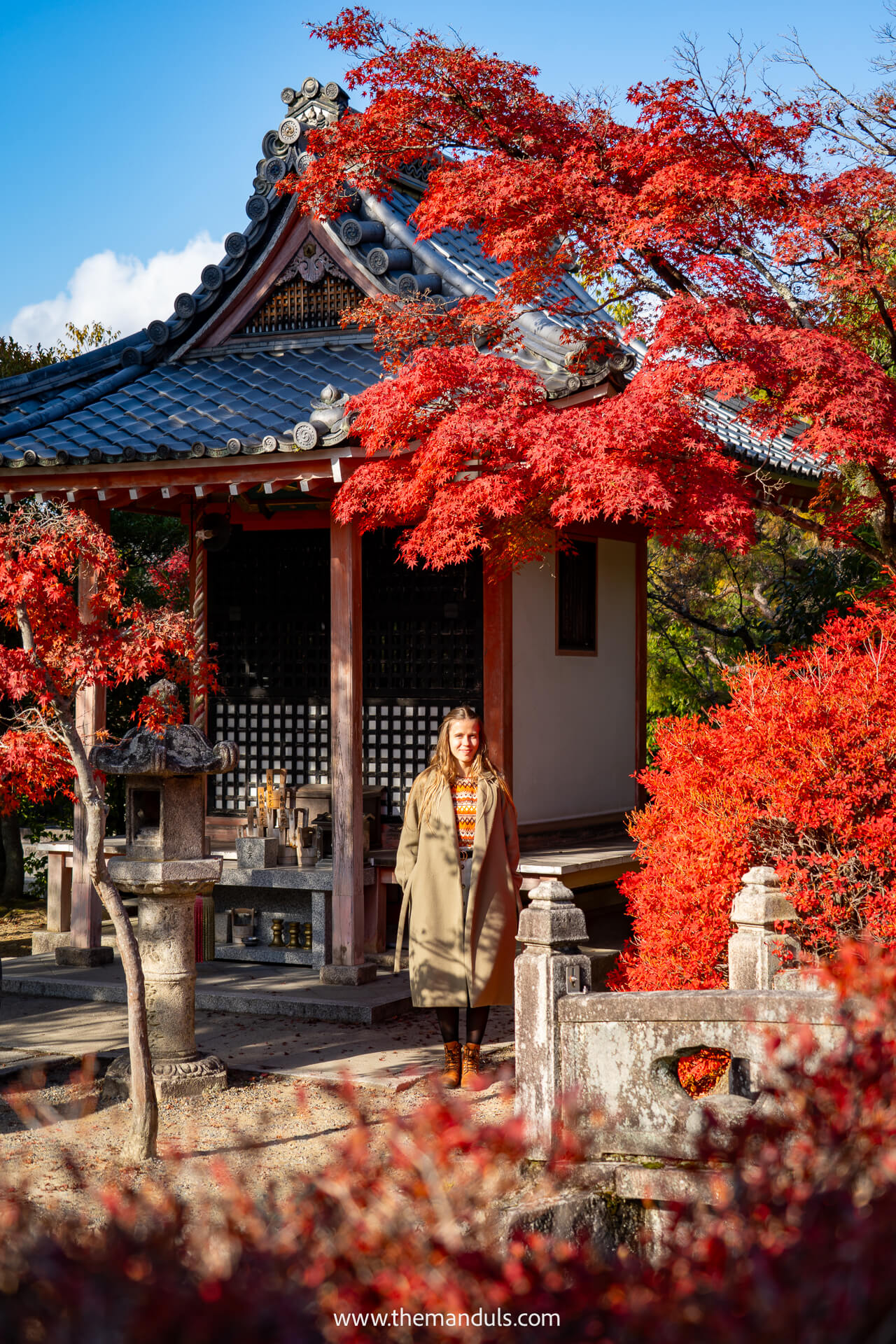
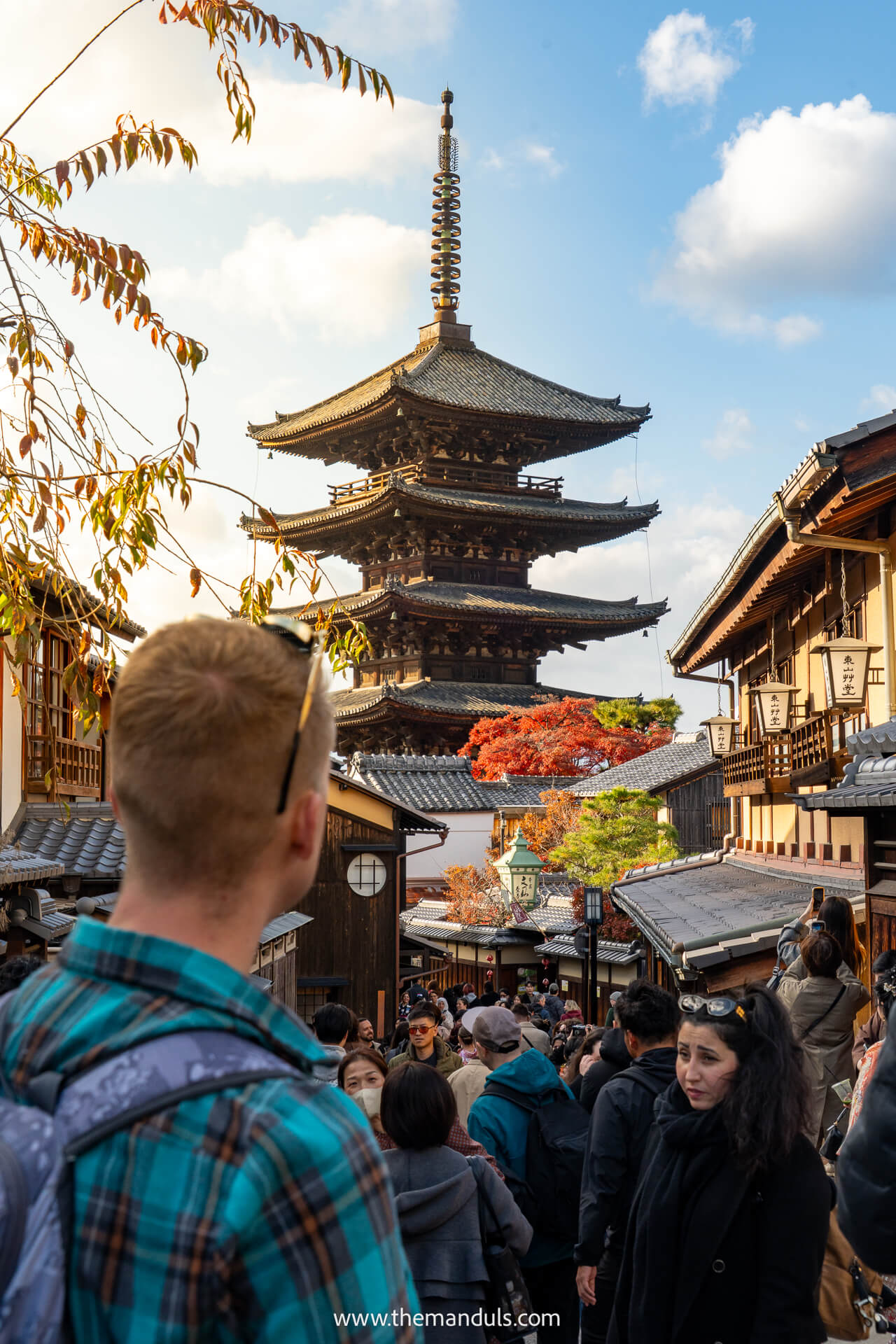
Start the morning around Yasaka Pagoda, then walk through Ninenzaka and Sannenzaka towards Kiyomizu-dera. This is one of the most atmospheric parts of Kyoto, but it also gets incredibly busy later in the day, so we’d definitely come early.
Continue uphill to Kiyomizu-dera. We visited later in the day and it was packed, so this is one of the main changes we’d make to our own trip. Going in the morning should make the temple, viewpoints, and surrounding streets much more enjoyable.
Afterwards, take your time walking back through Higashiyama and stop for lunch somewhere along the way. There are plenty of small shops, cafés, and food stalls here, so we wouldn’t plan a strict lunch stop in advance unless there’s somewhere specific you really want to try.
Next, visit Kodai-ji Temple. We liked how much calmer it felt compared with the busiest parts of Higashiyama, and its gardens make it a nice change of pace after Kiyomizu-dera.
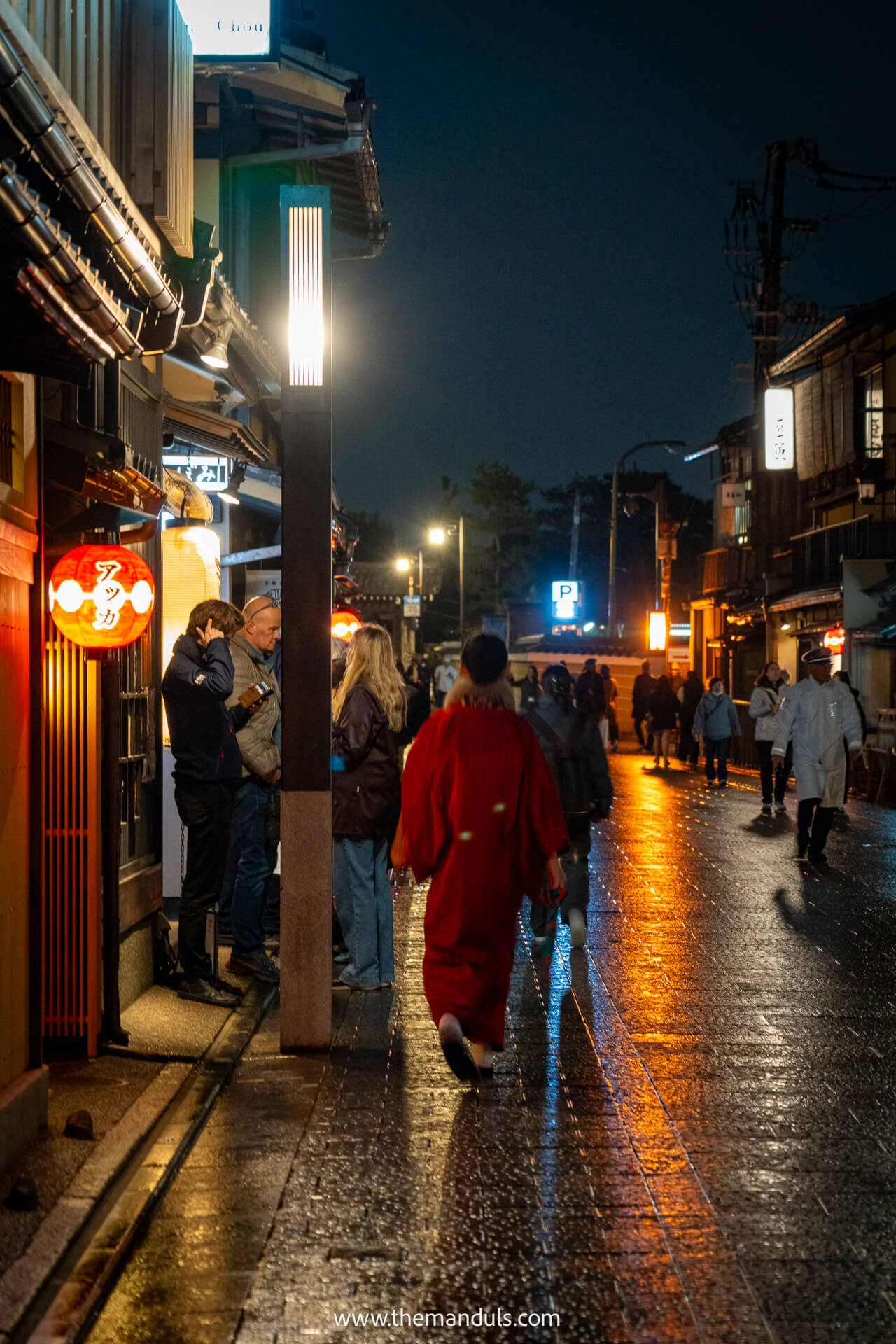
Spend the rest of the afternoon exploring Gion. Walk along Hanamikoji Street, wander through the smaller streets, and gradually make your way towards Gion Shirakawa and Tatsumi Bridge.
We especially liked this area later in the day when the light started to soften and the streets felt more atmospheric. There’s no need to rush through Gion — this is one of those parts of Kyoto where simply walking around for a while was part of the experience for us.
How to Get Around Kyoto on This Itinerary
For this itinerary, we mostly used a mix of trains, buses, and walking.
Trains are the easiest option for getting to Arashiyama and Fushimi Inari, while Higashiyama and Gion are best explored on foot once you arrive.
We also used Kyoto buses several times and found them easy to navigate with Google Maps, although they can get very crowded during busy periods. Whenever a train was convenient, we generally preferred it.
Where to stay in Kyoto
Kyoto is fairly compact, but choosing the right base still makes a big difference. We personally prefer staying central, close to Kawaramachi or Kyoto Station, so evenings are easy and you’re not overthinking transport after long sightseeing days.
You’ll find a good mix of restaurants, cafés, and transport connections, which works especially well for a multi-day itinerary like this.
If you’re still deciding which part of Kyoto suits you best, check out our full guide on where to stay in Kyoto — it breaks down the best areas in more detail, along with hand-picked hotel recommendations.
Here are the places we’d consider first:
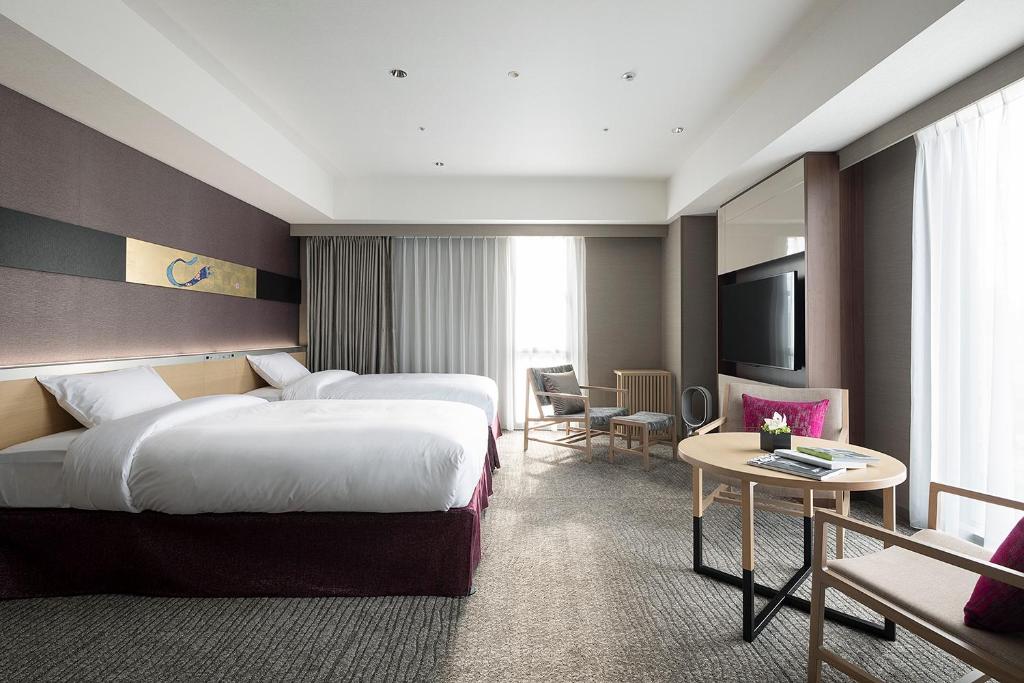
⭐️⭐️⭐️ Cross Hotel Kyoto (our top pick) – This is exactly the kind of hotel we love staying in when exploring a city. The location in Kawaramachi makes it easy to walk almost everywhere, and even after long days out, getting back never feels like a hassle.
The rooms feel well thought out and more spacious than many Kyoto hotels, and the overall atmosphere strikes a nice balance between stylish and practical. If we were visiting Kyoto again, this would be our first choice without hesitation.
Best for: First-time visitors who want a central, walkable base
👉 Check current deals →
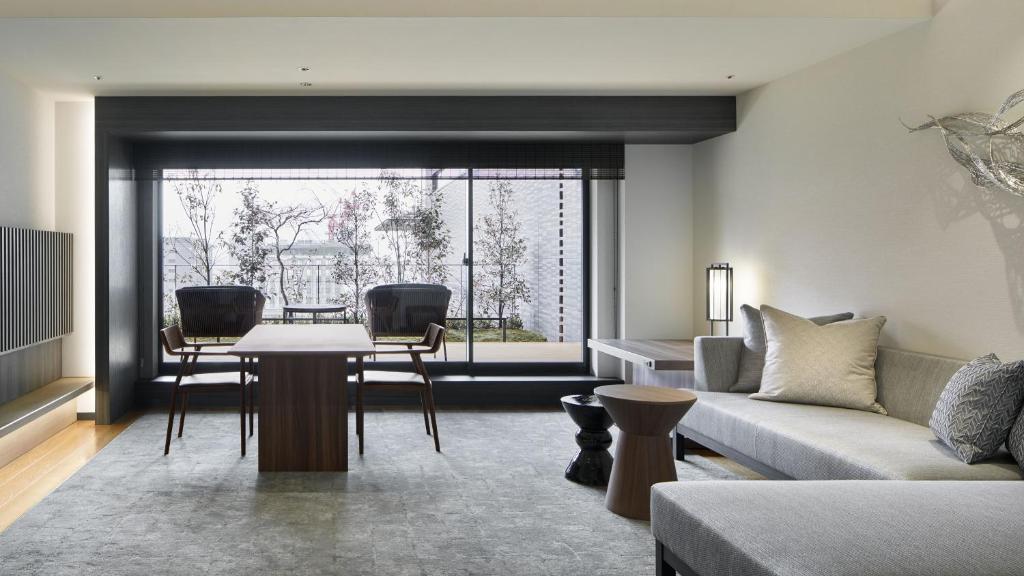
⭐️⭐️ The Thousand Kyoto – If convenience is your top priority, this is a great option. Being right next to Kyoto Station makes arrivals, departures, and day trips incredibly easy, especially if you’re moving around a lot.
Inside, the hotel feels calm and refined, which is a nice contrast to the busy station area outside. We’d choose this if we were planning multiple day trips or arriving late and wanted everything to be as smooth as possible.
Best for: Easy transport access and stress-free logistics
👉 Compare prices →
⭐️ Guesthouse Soi – This is a good pick if you’re looking for something smaller and more personal. It has a relaxed, home-style feel and offers a quieter experience compared to larger hotels.
While it’s more basic, the atmosphere and friendly setup make it a solid option for budget-conscious travellers who still want a comfortable stay. We’d happily consider this for a shorter stay or a slower-paced Kyoto trip.
Best for: Budget travellers who prefer a simple, local-style stay
👉 See availability →
Final Thoughts
Kyoto was one of our favourite stops in Japan, and this 3-day plan is how we’d recommend seeing it for the first time. It covers the places we enjoyed most, keeps the route practical, and still leaves enough space to slow down instead of rushing between temples all day.
If you follow the itinerary as planned, we’d especially prioritise early mornings in Arashiyama, Fushimi Inari, and Higashiyama. Those were the places where timing made the biggest difference for us.
And if you have an extra day, use it to slow down, explore some more of Kyoto’s temples and gardens, or add Nara rather than trying to squeeze more into these three days.