
This article contains affiliate links. Learn more in our affiliate disclosure.
Arashiyama is a scenic district on the western edge of Kyoto in Japan, best known for its bamboo forest, riverside walks, temples, and forested hills. It’s one of those places that feels much closer to nature than the rest of the city — which is exactly why it was an easy choice for us.
As huge nature lovers, Arashiyama immediately became part of our Kyoto itinerary. We were visiting Japan in autumn, so we couldn’t wait to see the hills covered in autumn foliage — and honestly, the experience exceeded our expectations. We had a wonderful time here, and Arashiyama ended up being our personal favorite thing to do in Kyoto.
That said, this area can get very busy, and without a bit of planning it’s easy to miss what actually makes it special. Timing and knowing where to go matter more here than almost anywhere else in Kyoto.
In this guide, we’ll share our personal favorite things to do in Arashiyama, what to skip, the best time to visit, and a few practical tips to help you make the most of your visit.
Key Highlights
📍Location: 30 minutes from central Kyoto
⭐️ Best time to visit: early morning
💰 Entrance fee: free
🕥 Opening hours: most temples 9 am – 5 pm
🚗 How to get there: JR train from Kyoto Station
🥾Accessibility: mostly easy flat walks, some stairs
At a Glance
Arashiyama feels like the perfect place to slow down a bit. You’ve got forested hills all around, the river running through the valley, and plenty of quiet spots, especially once you step away from the main road.
We’d definitely recommend it if you enjoy nature, walking, and a more relaxed side of Kyoto. If you’re not into walking much or you’re trying to squeeze everything into a super tight schedule, it might feel a bit spread out.
Mid-day crowds can be intense. But with the right timing, this easily becomes one of the best places to visit in Kyoto — and for us, it ended up being a real favorite.
In a hurry?
These are our top hotels in Kyoto we’d book again
⭐️⭐️⭐️ Cross Hotel Kyoto (our top pick) – A stylish mid-range stay in a super central and surprisingly calm part of downtown.
👉 See prices & availability →
⭐️⭐️ The Thousand Kyoto – A refined luxury hotel with spacious rooms, an excellent breakfast, and unbeatable convenience right next to Kyoto Station.
👉 See prices & availability →
⭐️ Guesthouse Soi – A simple, affordable stay close to Kiyomizu-dera with clean rooms and a friendly atmosphere.
👉 See prices & availability →
Is it worth it?
For us, Arashiyama was worth the time because it feels like an experience, not just a single attraction. Instead of rushing from one landmark to another, you spend most of the visit outdoors — walking along the river, crossing bridges, and slowly moving between temples and viewpoints.
What really sold it for us was the atmosphere. Early in the day, there’s a calm feel to the area — misty hills, soft light over the river, and quiet side paths that feel far removed from the city.
Later on, it’s a different story: busy, lively, and very popular. Knowing that contrast helps set the right expectations.
It is famous for the bamboo grove, but that’s not the real reason to come. The wow-factor comes from how much variety you get in one area — nature, views, temples, and long scenic walks.
We’d recommend skipping or keeping it very short if you’re on a tight schedule or don’t enjoy walking.
But if you want one place in Kyoto where you can feel surrounded by nature, Arashiyama is absolutely worth it — and for us, it delivered the most memorable moments of the trip.
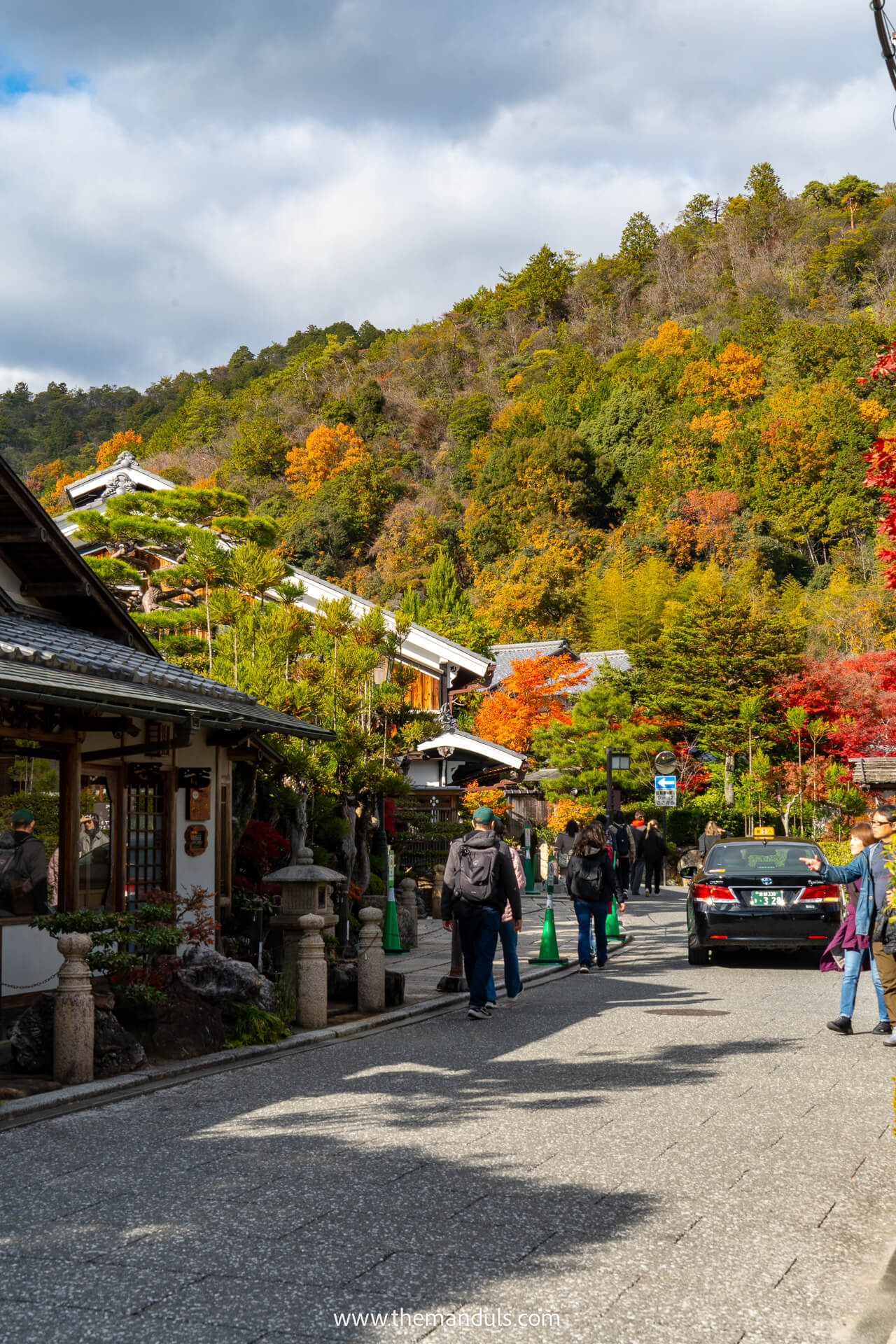
Where is Arashiyama
Arashiyama is located on the western edge of Kyoto, right at the base of forested hills along the Katsura River. It feels a bit removed from the city center, which is part of the charm — but it also means getting there takes a little planning.
In terms of distance, it is about 30 minutes from central Kyoto, including areas like Gion and Kawaramachi. From Kyoto Station, it takes roughly 20–25 minutes by train. It usually works best as a half-day trip rather than a quick stop.
📍Save the location of Arashiyama to your Google Maps.
How to get there
There are a few ways to get to Arashiyama, but not all of them are equally convenient — this is where many people lose time.
By train (best option):
We arrived here by the train, which is the easiest and most reliable way. From Kyoto Station, we took the JR San-In Line to Arashiyama Station (about 20 minutes), then walked around 10 minutes to the main sights. This is the route we’d recommend if you want the least hassle.
The ticket costs 240 JPY and we used Google Maps to see the schedule.
By bus
Buses do go to Arashiyama, but they’re slower and can get very crowded, especially during peak seasons. We’d only recommend this if a bus stop is right near your accommodation.
By taxi
Taxis are convenient but can get expensive, especially in traffic. They make sense if you’re short on time or traveling with luggage, but for most visitors, trains are faster.
Once you arrive, everything in Arashiyama is done on foot, so wear comfortable shoes — distances are longer than they look on the map.
Things to do at Arashiyama
1. Bamboo Forest
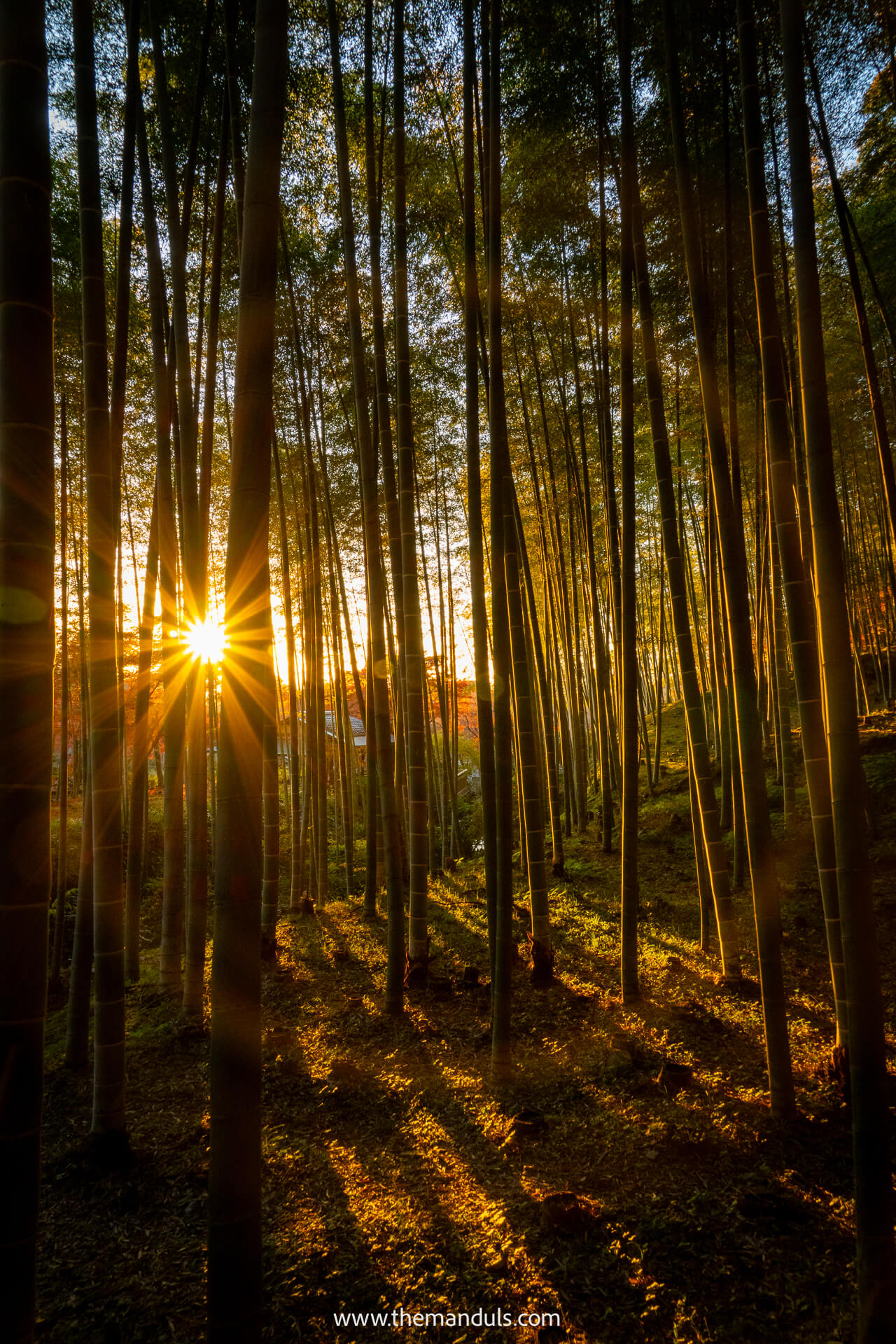
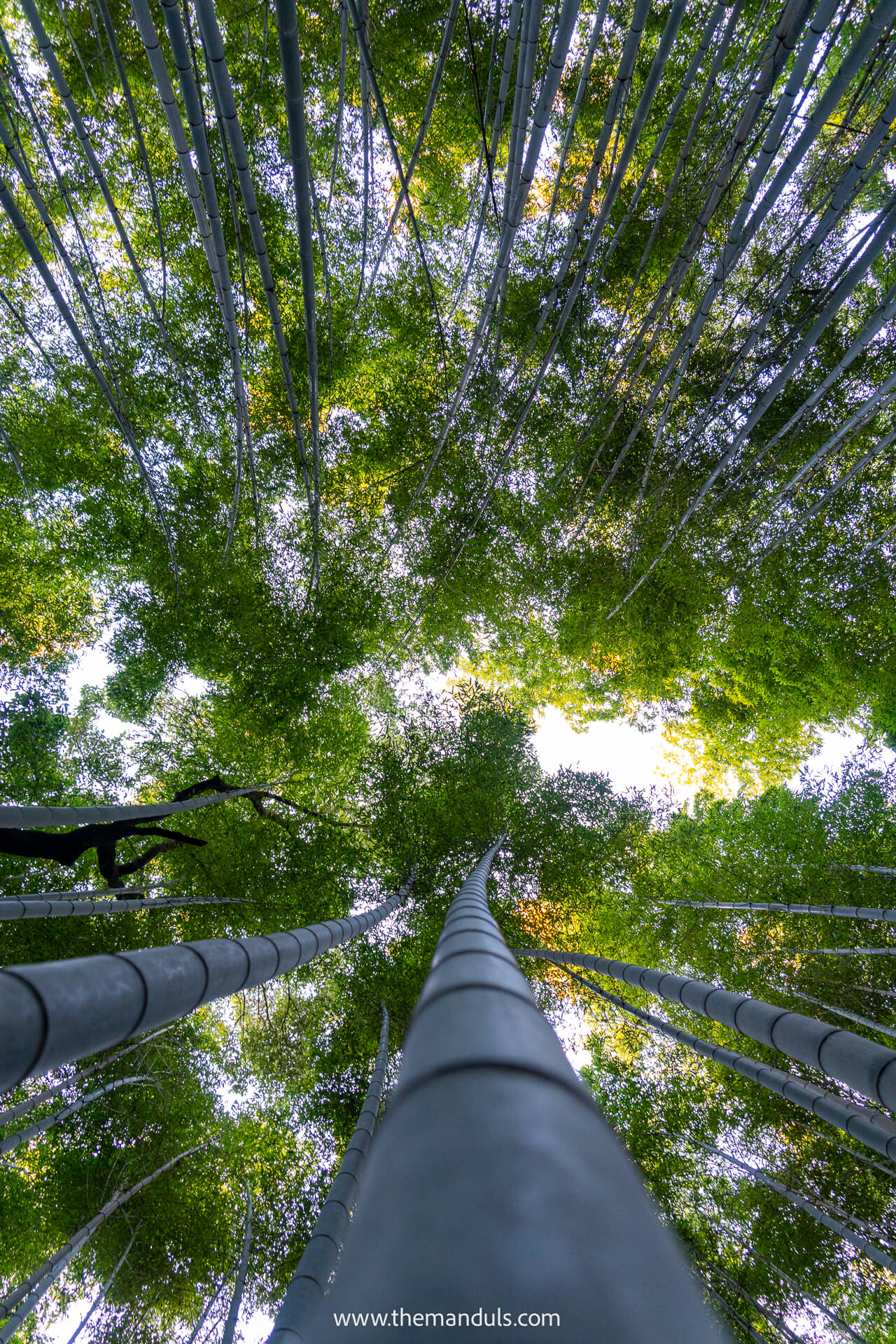
We arrived at the bamboo forest around 7:00 am, just as the sun started filtering through the tall bamboo stalks. The light was unreal — soft, warm, and slightly orange, cutting through the green in a way that felt cinematic.
It wasn’t empty by any means, but compared to what we saw later around 2:00 pm, coming early made a huge difference.
What we loved most was the atmosphere. Early on, it feels calm and quiet, with that gentle rustling sound as the bamboo sways above you.
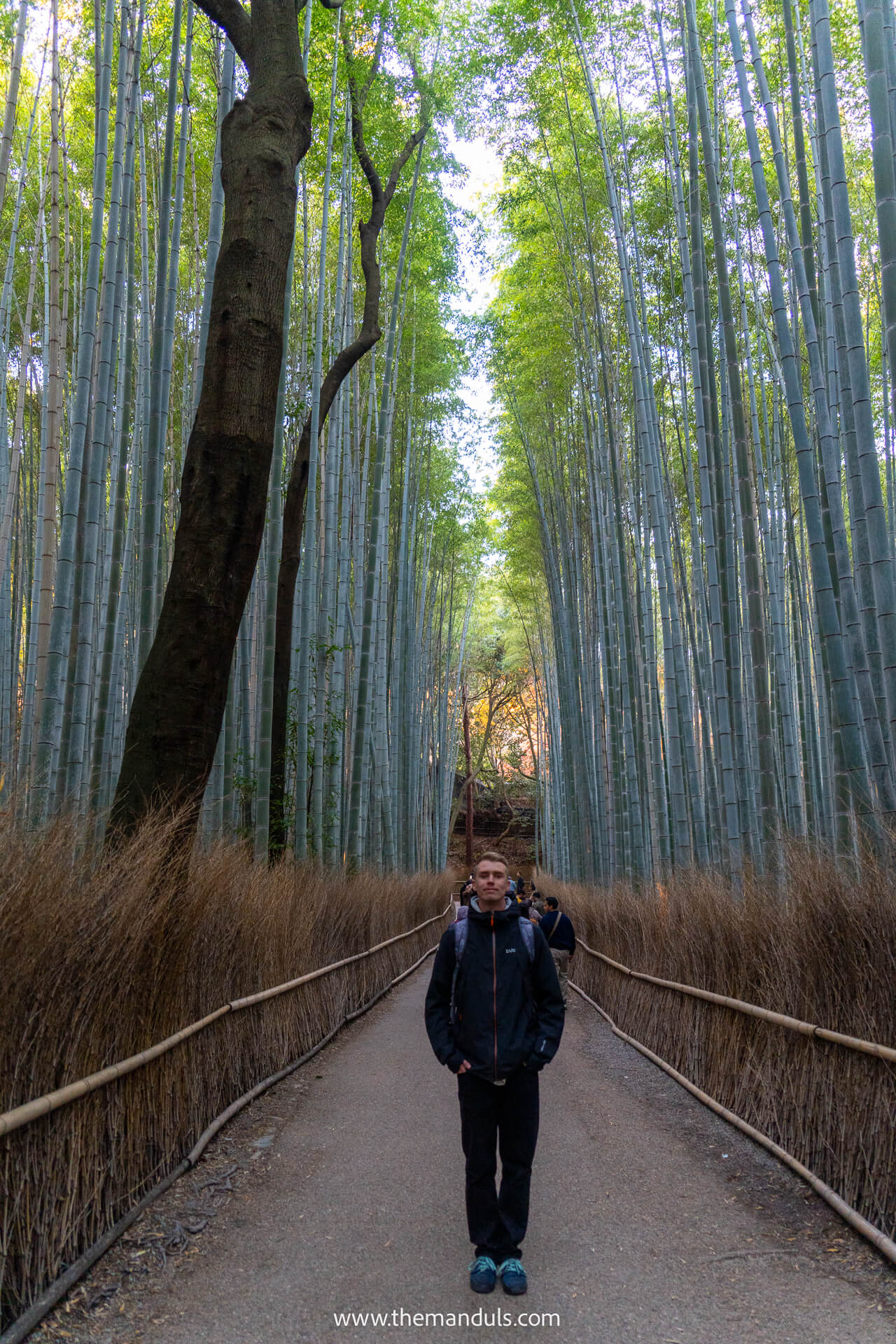
The path is wide, clean, and easy to walk, and there’s really no way to get lost — it’s one main path you simply follow. It takes around 15 minutes to walk through it.
Midday, the same place feels completely different: crowded, noisy, and rushed. If there’s one thing we’d do again exactly the same way, it’s this — set the alarm early and come here first.

TIP: If you want a more peaceful spot for bamboo photos, walk down the small side street just next to the main grove. It’s lined with bamboo on one side and usually has almost no people.
2. Enjoy the Views from the Observation Deck
After walking through the bamboo forest, we continued straight toward the observation deck. At the end of the path, we turned left and walked slightly uphill — nothing demanding, and it only took us about 5–10 minutes to reach the top.
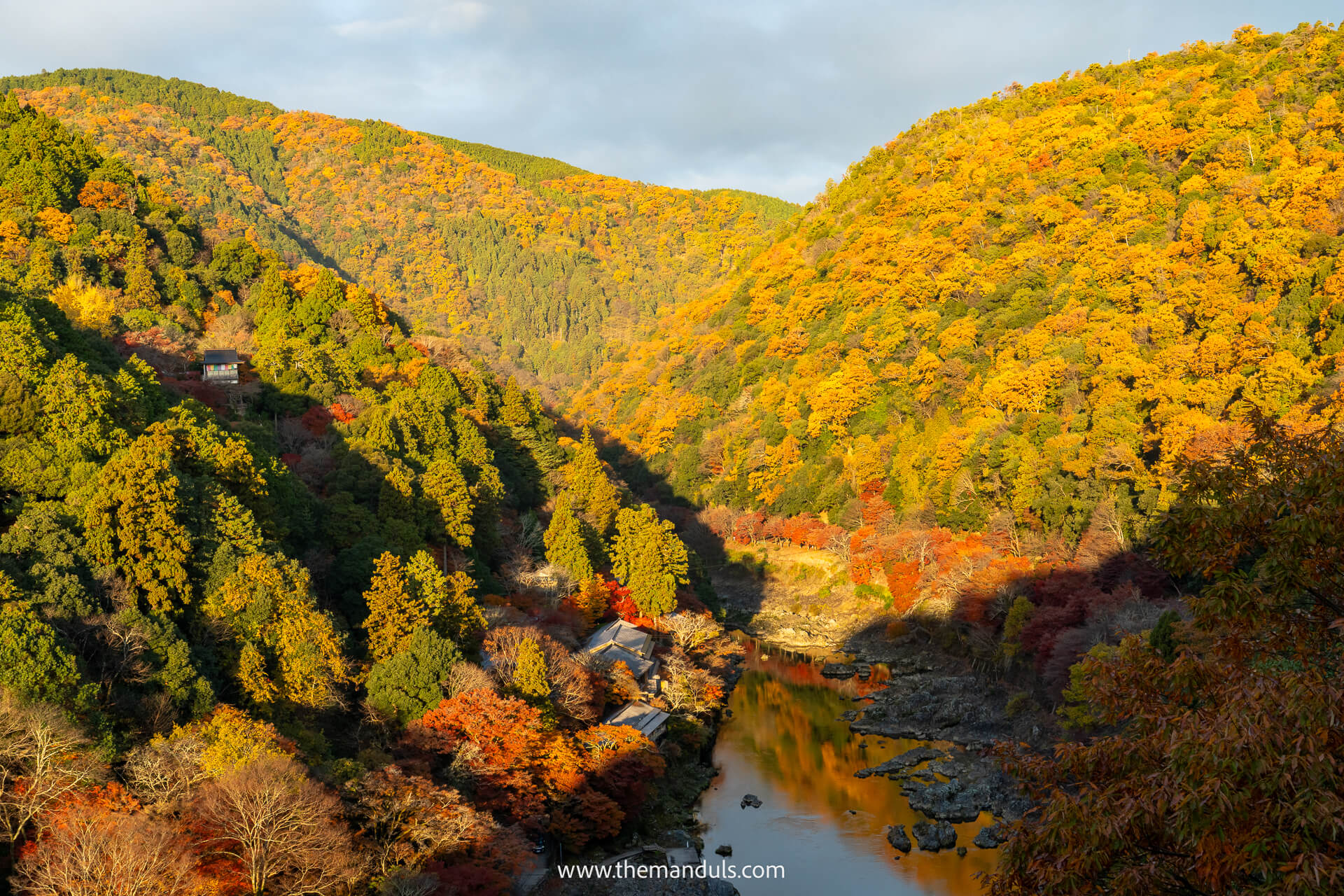
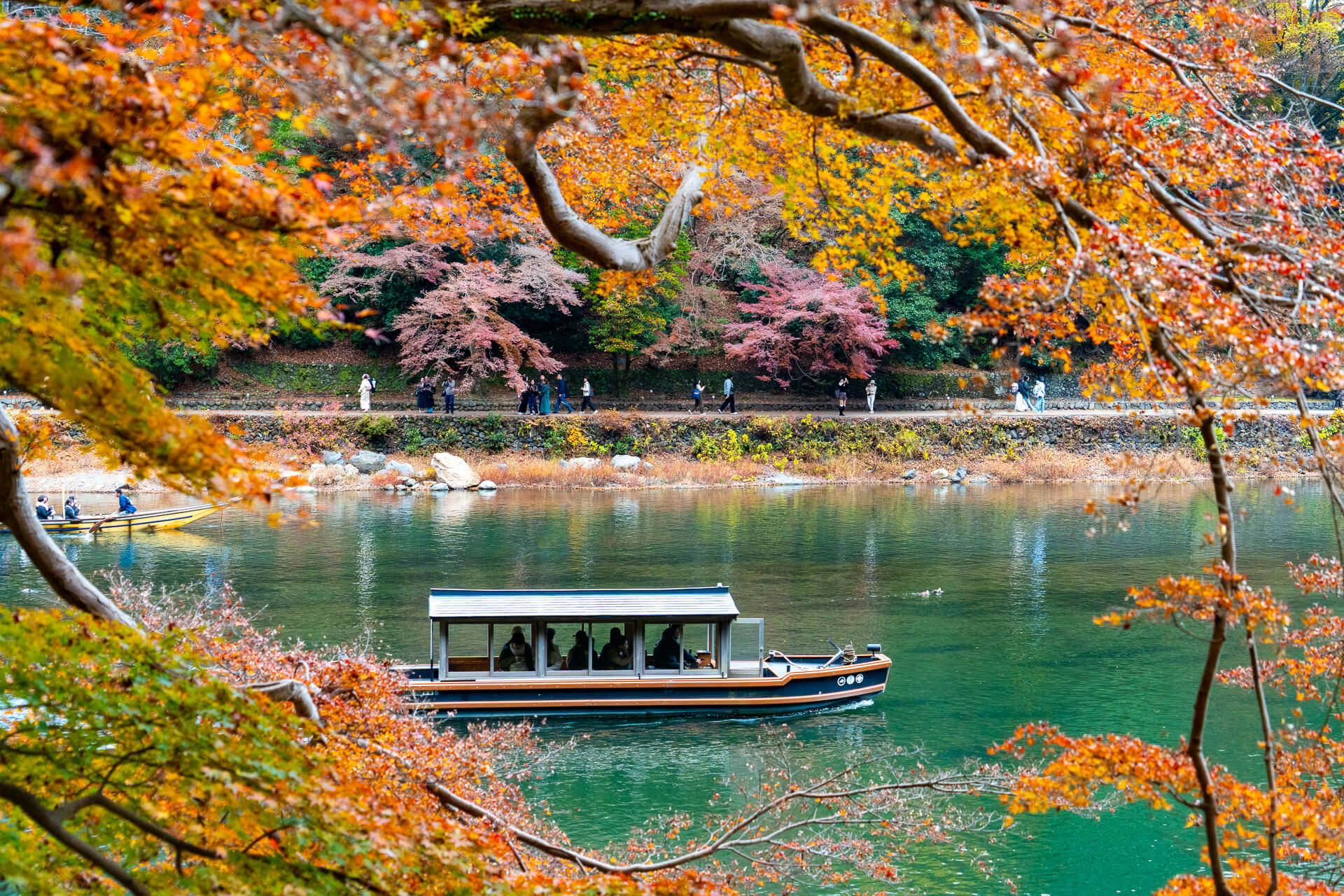
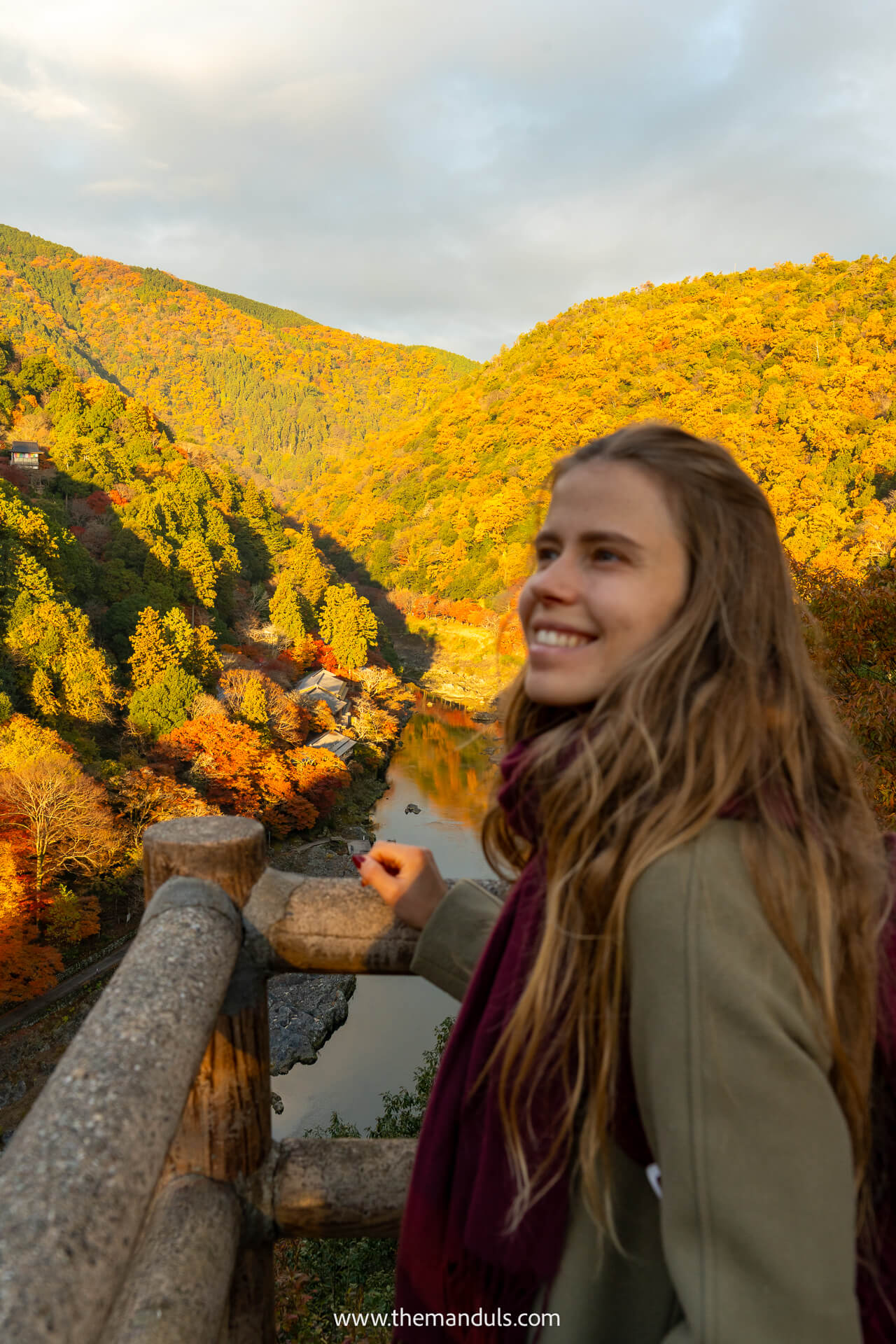
The view from up here really caught us off guard. We were looking out over a wide valley covered in forest, with the river slowly winding its way through the landscape below. In autumn, the hills were layered with shades of red, orange, and gold, and from this angle we really got a sense of how green and wild this part of Kyoto is.
What made it even better was how quiet it felt. There were only a few people up there when we arrived.
Our Japan Google Maps
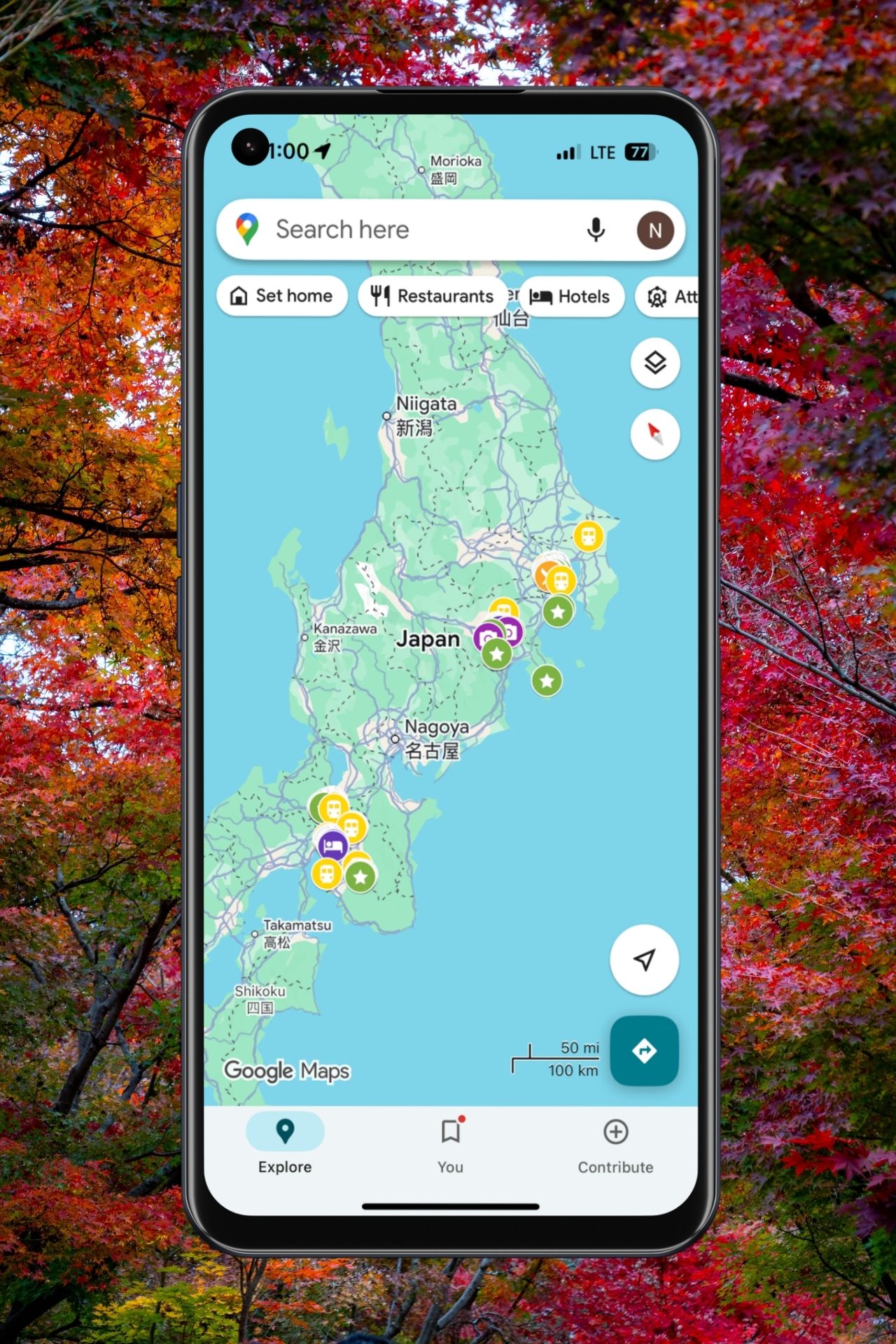
Built from our real trips across Japan — only places we actually visited and loved.
No tourist traps. No random saves. Just a ready-to-use map that saves you hours of research.
219 handpicked spots, including:
📍 Highlights & hidden gems
🍜 Restaurants we’d go back to
🏨 Areas & hotels we’d book again
🗺️ Stops that fit into real, logical itineraries
3. Stroll Around the Kameyama Area
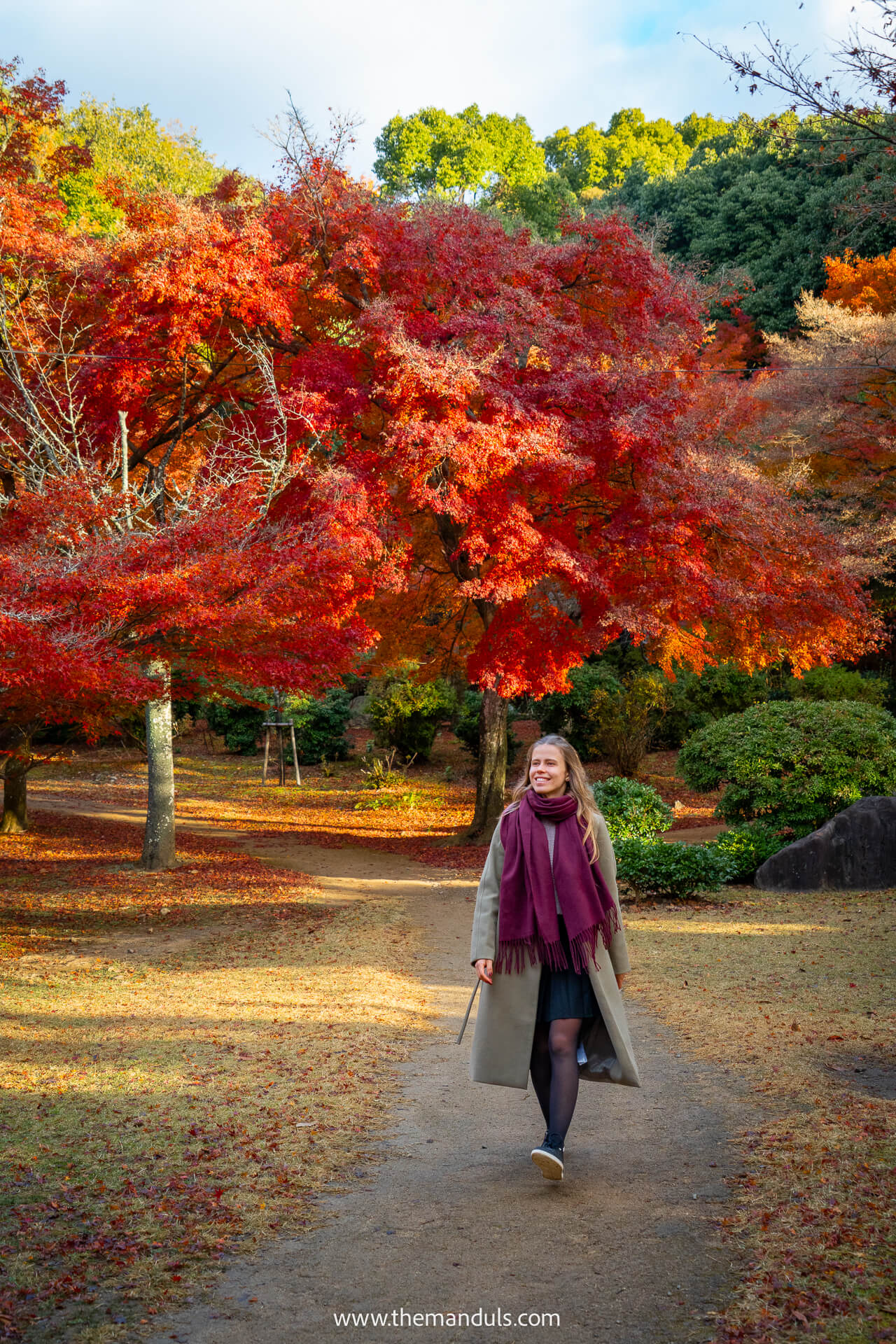
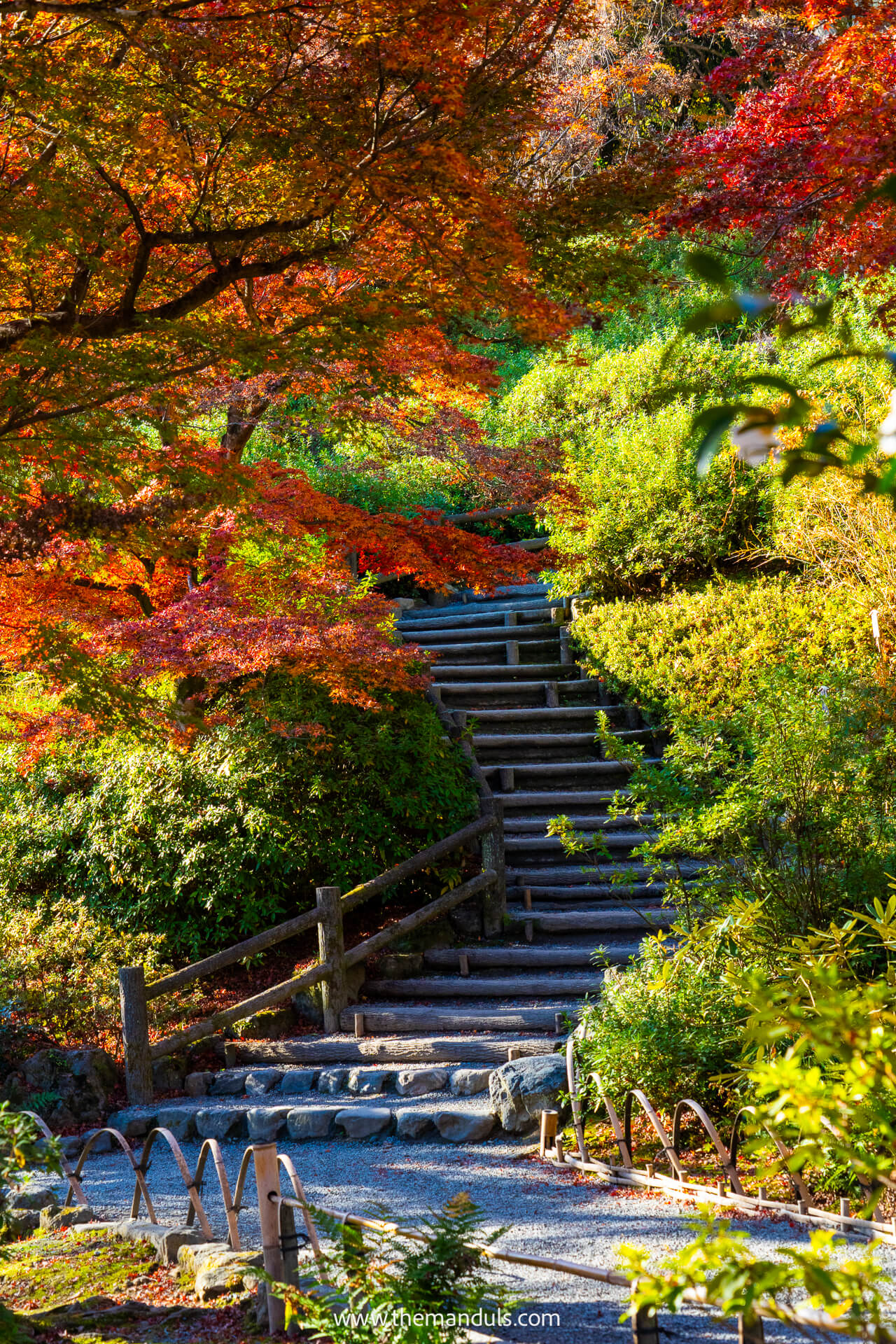
On the way down from the observation deck toward the riverside, we passed through the Kameyama Area — and this was one of those unexpected highlights. It’s a small, beautifully maintained park rather than a big attraction, but that’s exactly what makes it special.
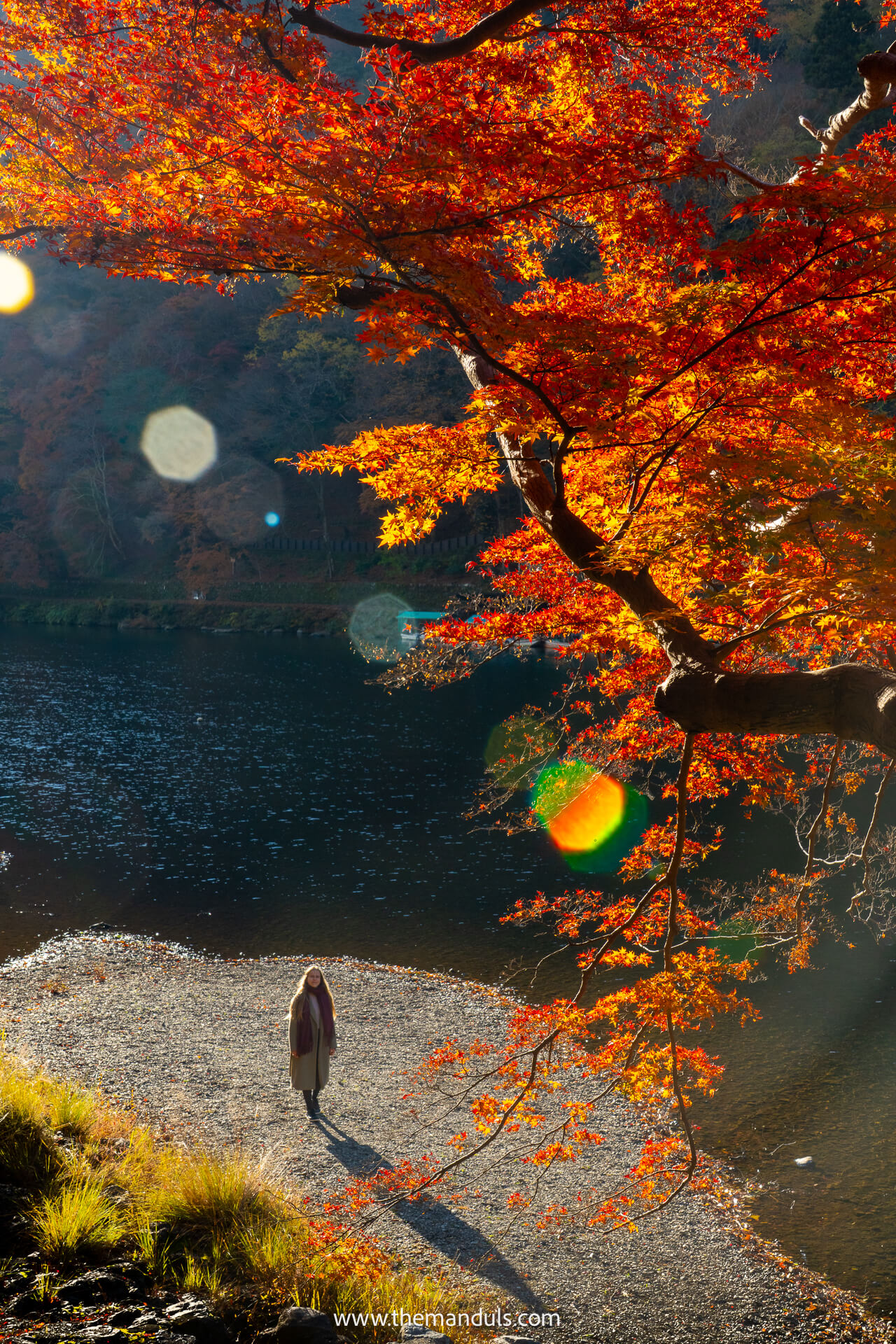
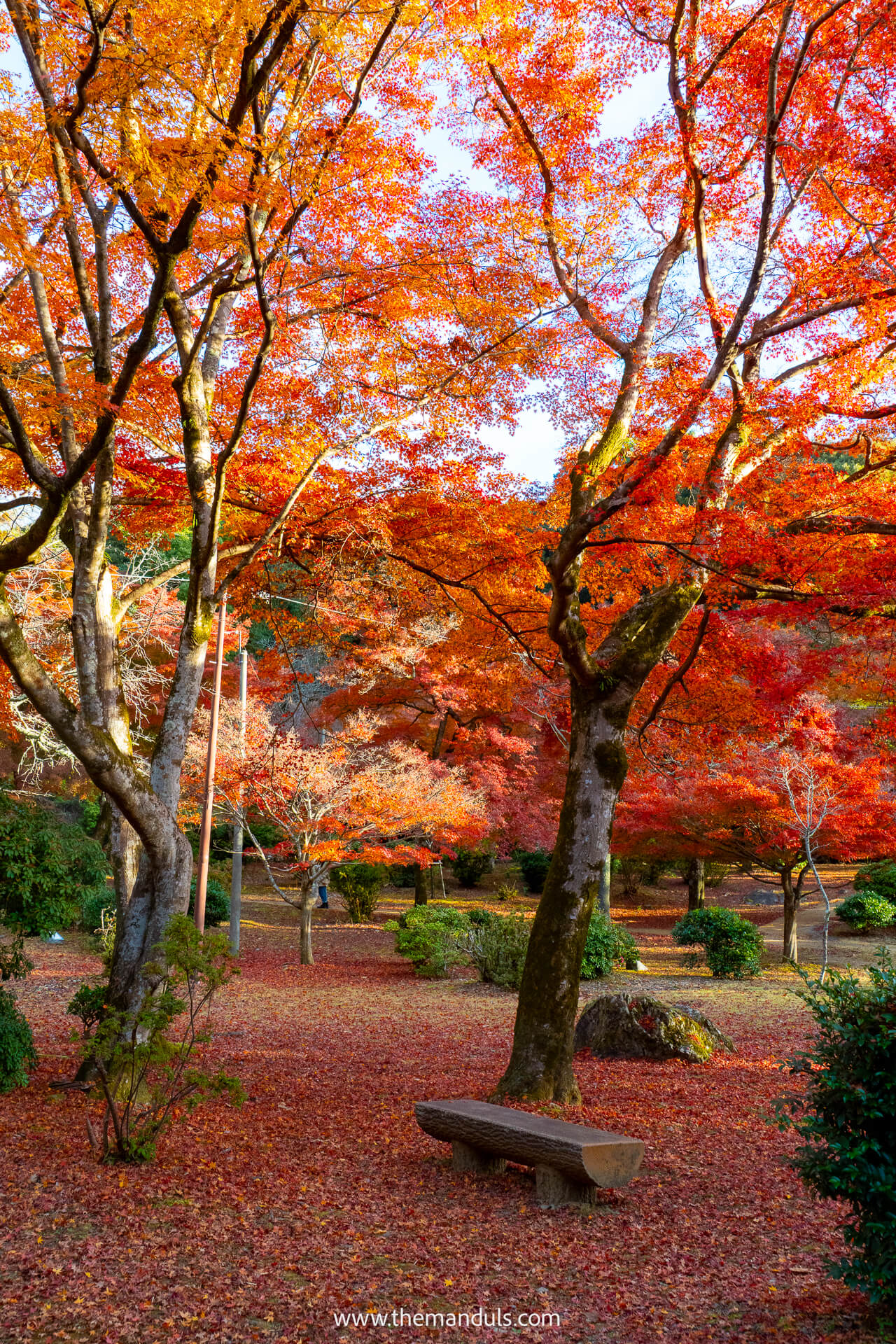
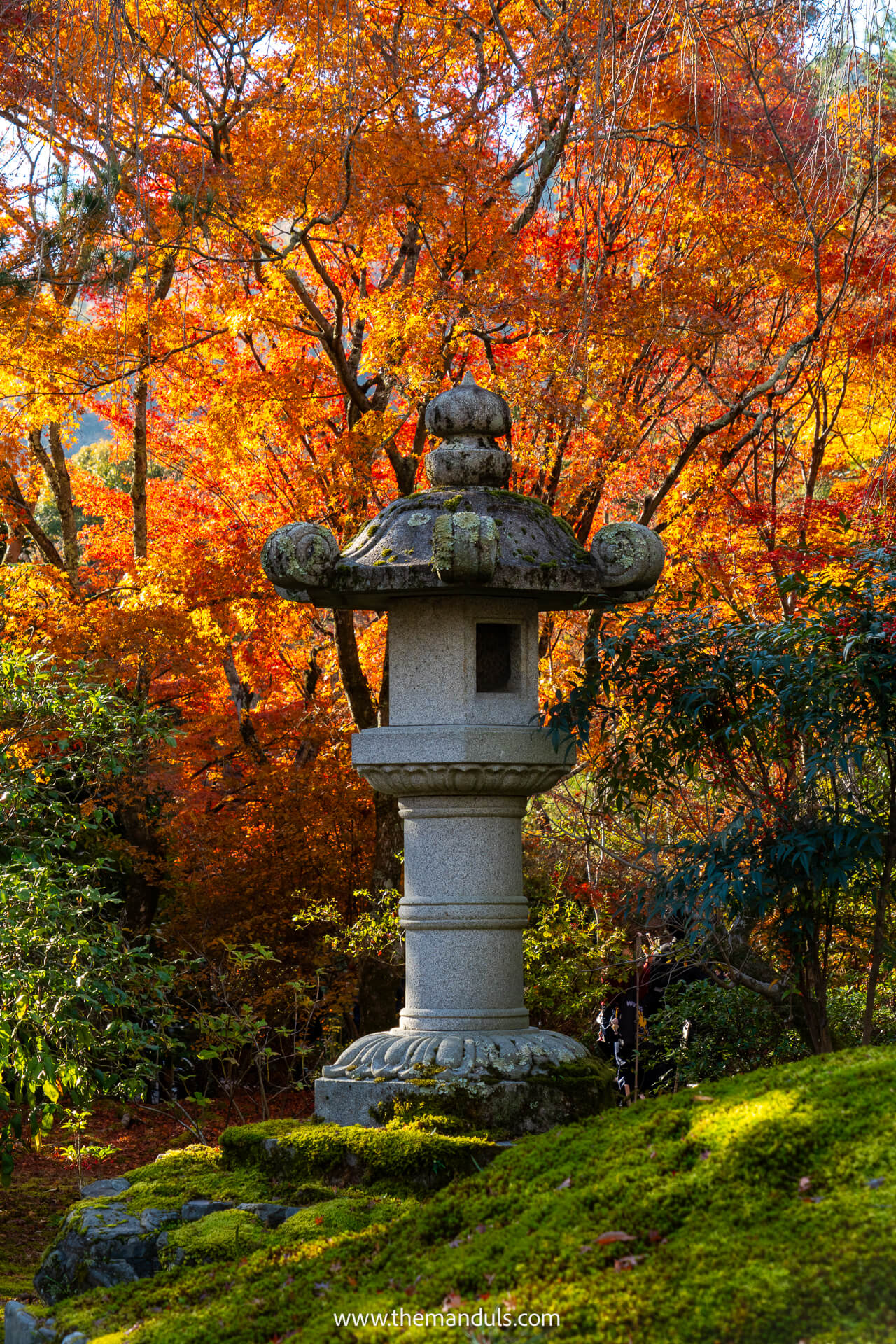
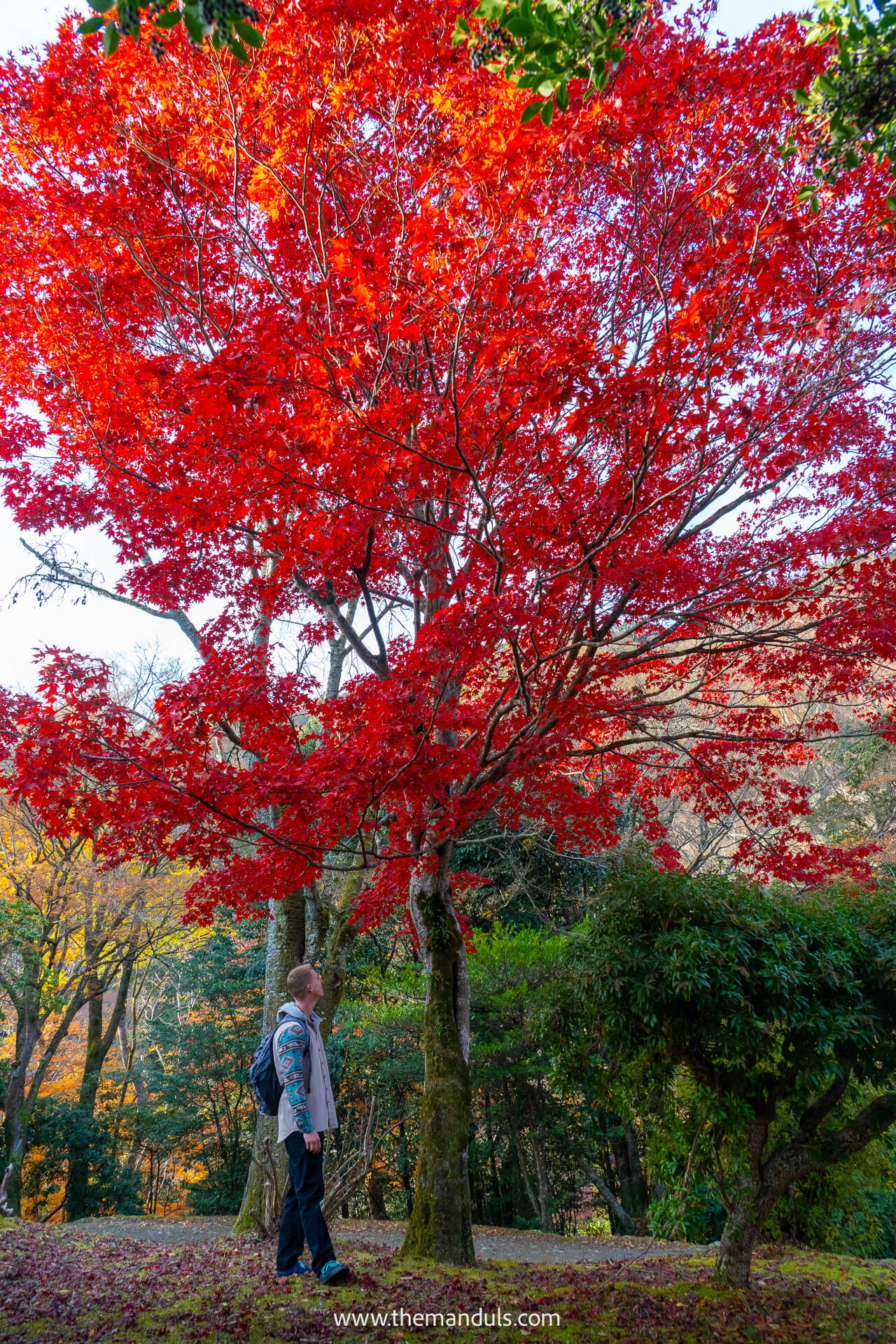
There are a few benches scattered around, perfect for sitting down and taking it all in. The biggest wow-factor for us was the autumn foliage. The colors honestly didn’t feel real — deep reds, bright oranges, and yellows so saturated it almost looked edited. We kept stopping just to stare at how intense the colors were.
4. Nonomiya Shrine
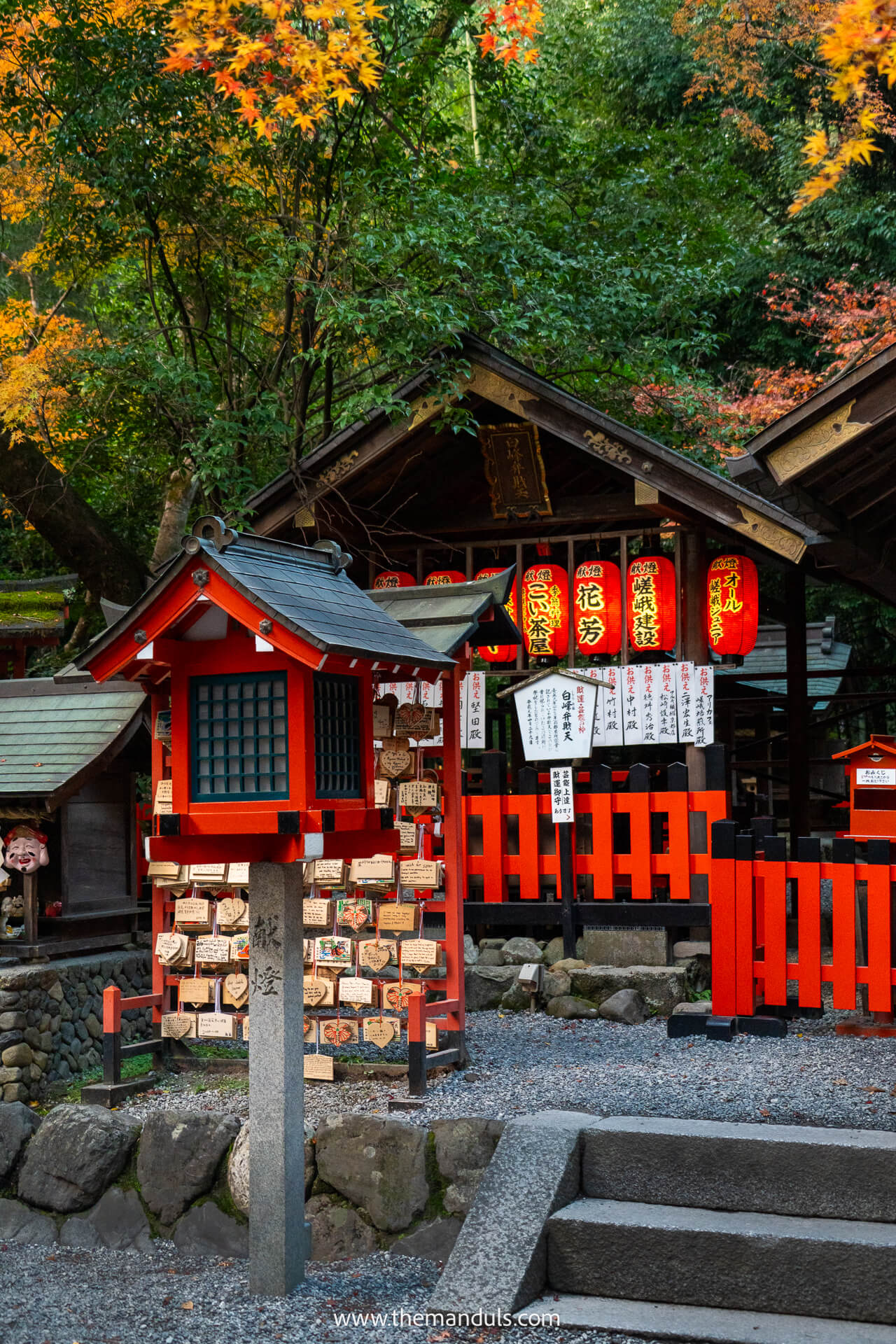
Right before the bamboo forest starts, there’s a small and very understated shrine called Nonomiya Shrine. It’s easy to miss if you’re rushing. We almost didn’t see it. But it’s worth a quick stop, especially if you’re here early.
We stopped by in the morning when it was completely empty, and the atmosphere felt calm and intimate. The shrine is surrounded by trees and bamboo, with simple wooden structures and gravel paths — nothing flashy or grand, but very peaceful.
5. Walk Through the Beautiful Gardens of Tenryu-ji Temple

Entrance Fee: 500 JPY for garden, 300 JPY for temple

Opening hours: 8:30 am – 5 pm
Tenryu-ji is one of the most famous temples in Arashiyama, but one thing we were glad we knew beforehand is that there are two separate entrance fees — one for the garden and another for the temple buildings.
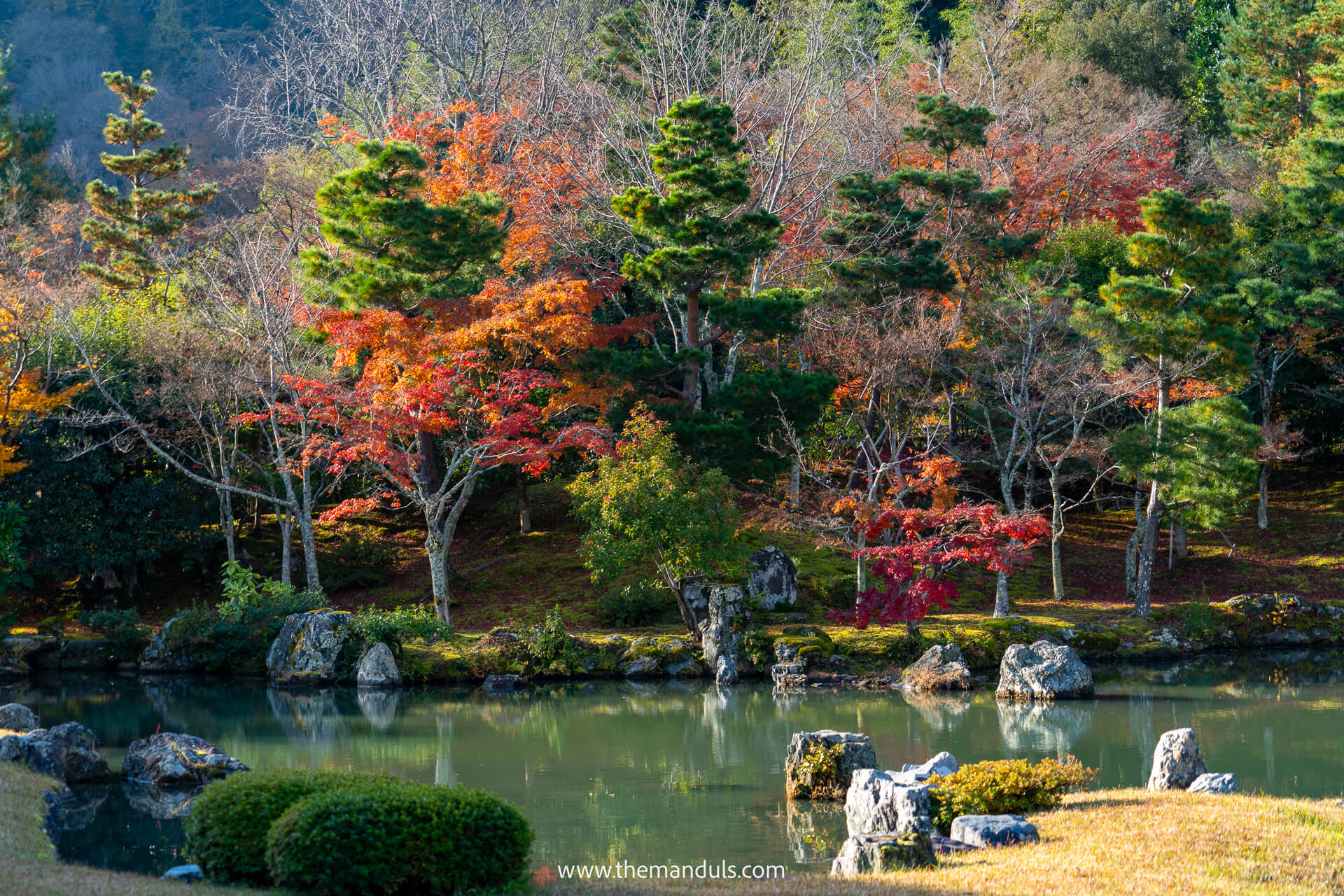
If you don’t feel like doing both, we’d personally recommend focusing on the garden. That’s where we spent most of our time, slowly walking around the paths, stopping by the peaceful ponds, and taking in the mix of trees, flowers, and the forested hills rising in the background.
In autumn, the reflections in the water were especially beautiful. We came a bit too late, with many trees already bare, but it was still a really lovely experience and felt calm and unrushed.
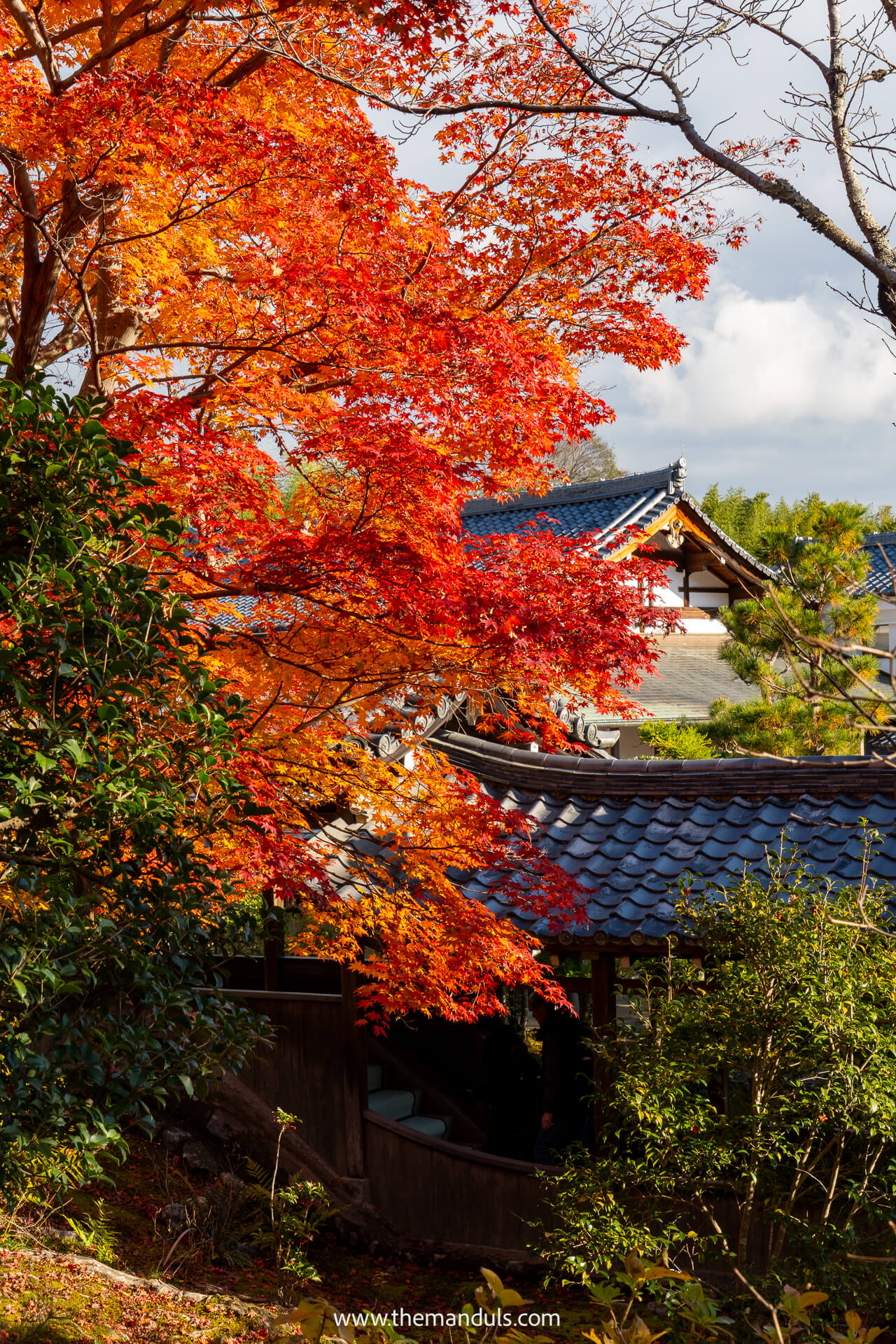
The temple buildings are simple and serene, offering a glimpse into Zen architecture and daily temple life. While they didn’t stand out as much for us as the garden itself, they do add a nice layer of context if you’re curious and have a bit of extra time.
6. Kimono Forest
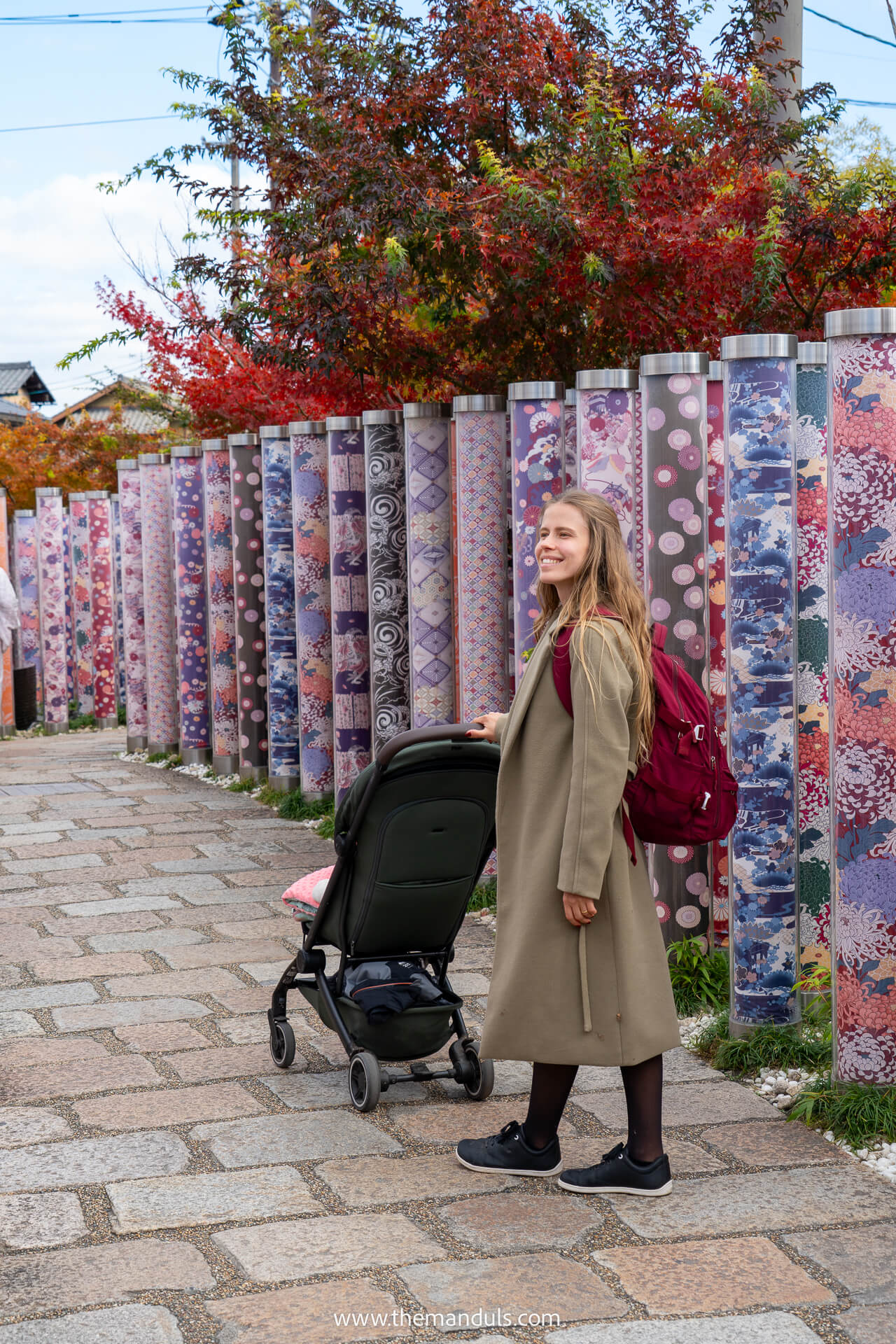
The Kimono Forest is a fun and slightly unexpected stop, especially if you’re passing through the area near the train station. It’s made up of tall pillars wrapped in colorful kimono fabric, each one with a different pattern and style.
We treated this more as a short stop rather than a must-see, but it was still worth it. During the day, it’s interesting to walk through and look at the details up close, but in the evening it becomes much more atmospheric when the pillars light up from inside.
It’s definitely more modern and touristy compared to the rest of Arashiyama, but as a quick photo stop or a break between walks, it works well. We wouldn’t go out of our way for it — but since it’s close to the train station, it’s an easy and enjoyable add-on.
7. Walk Along the Katsura River
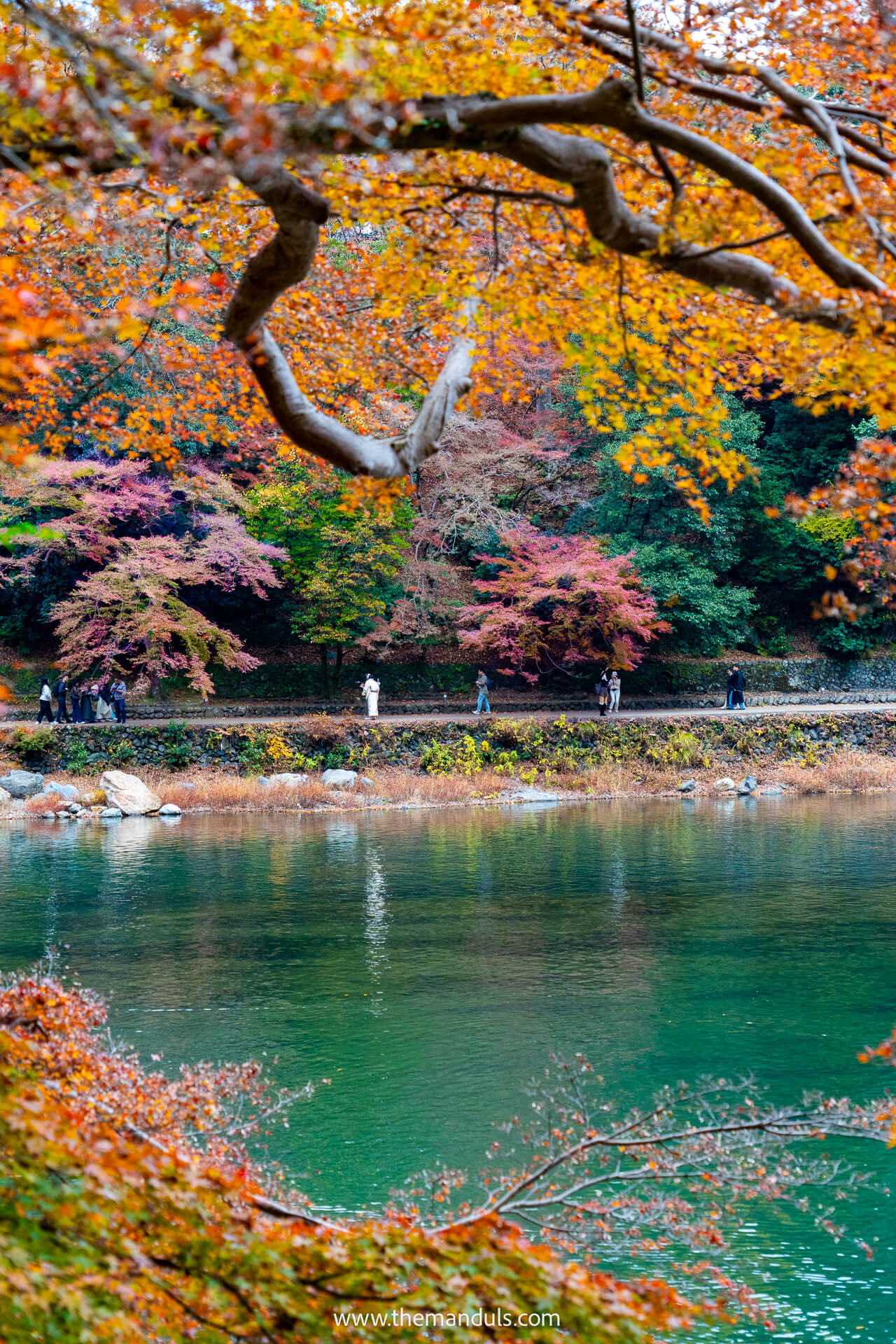
We spent some time walking along both shores of the Katsura River, and the difference between them was pretty noticeable. Near the start of the walk, especially close to the bridge, there are a few food stalls and restaurants, which makes it a lively area with plenty of people stopping for photos.
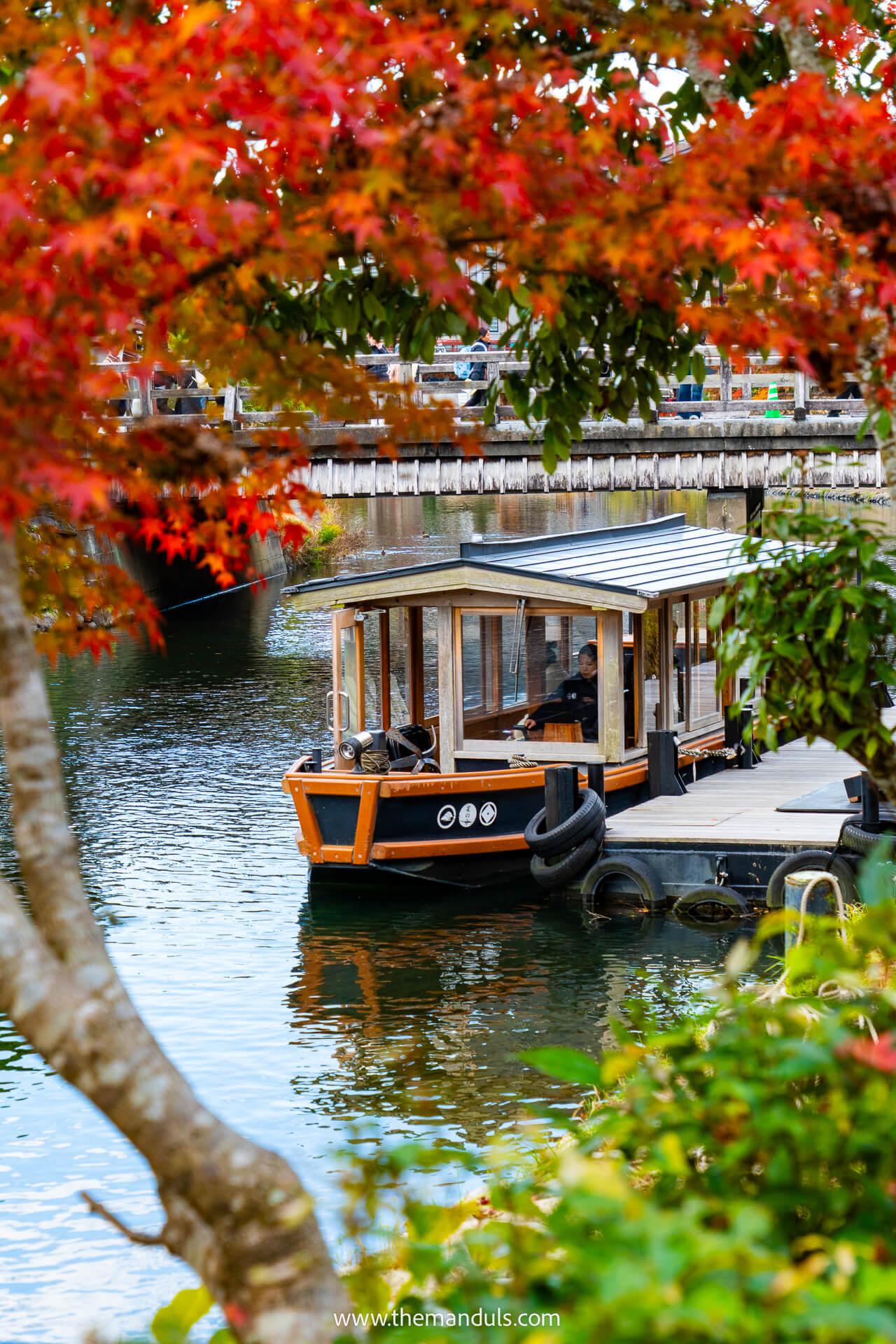
It’s also where you can rent a boat or join a group boat trip.
The northern side felt much busier overall, with crowds clustering around the viewpoints.
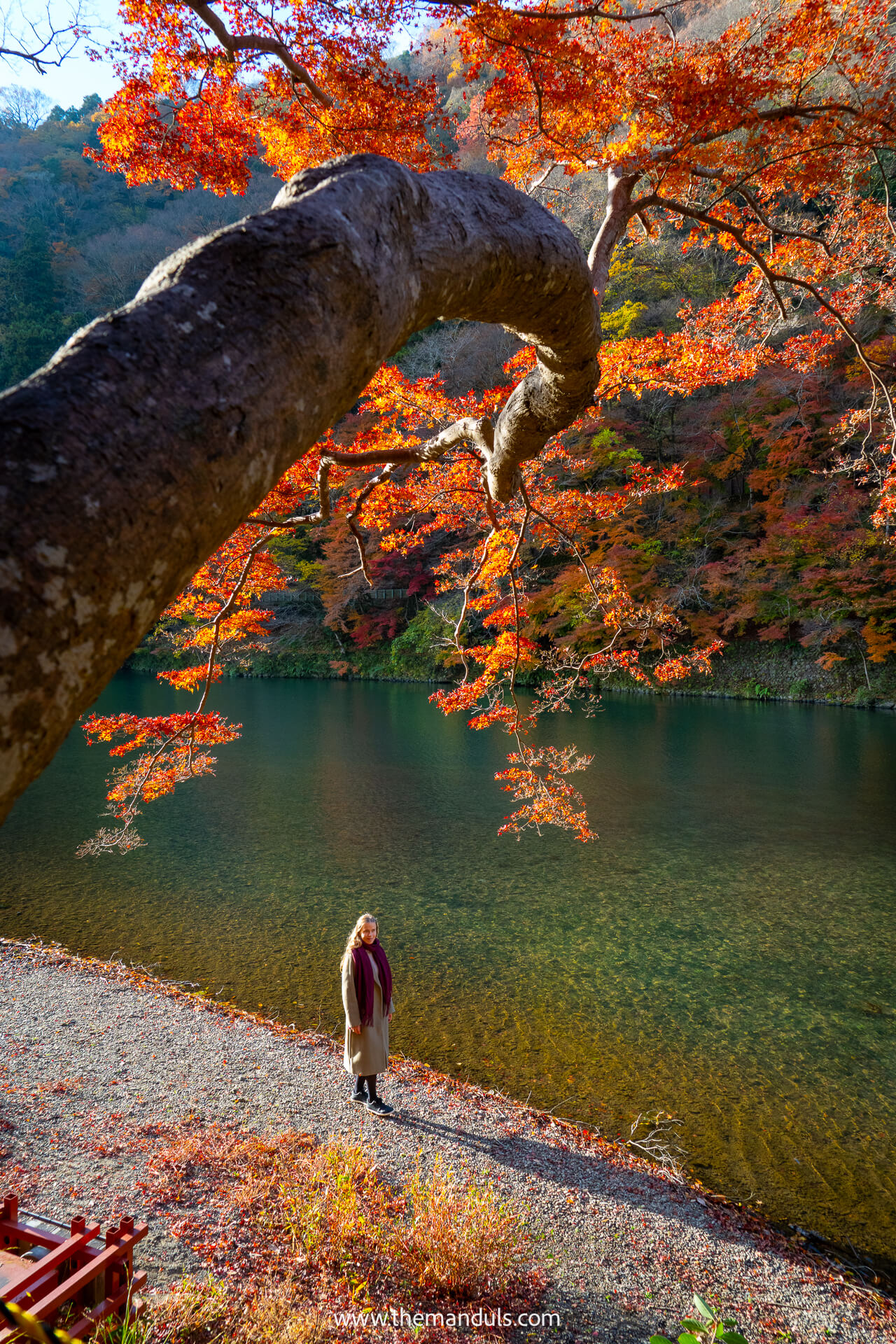
Once we crossed over to the southern shore, things changed quickly. After just a few minutes of walking away from the main area, we were almost completely alone, with only a few other visitors passing by now and then. The views stayed just as nice — wide river, forested hills, and autumn colors — but without the constant crowd.
At the far end of the path, there’s also a temple with a viewpoint overlooking the river. We didn’t go inside, but even from the outside it looked like a great final stop if you still have energy and time to explore a bit more.
8. Rent a Boat or Take a Boat Trip
Price: IDR
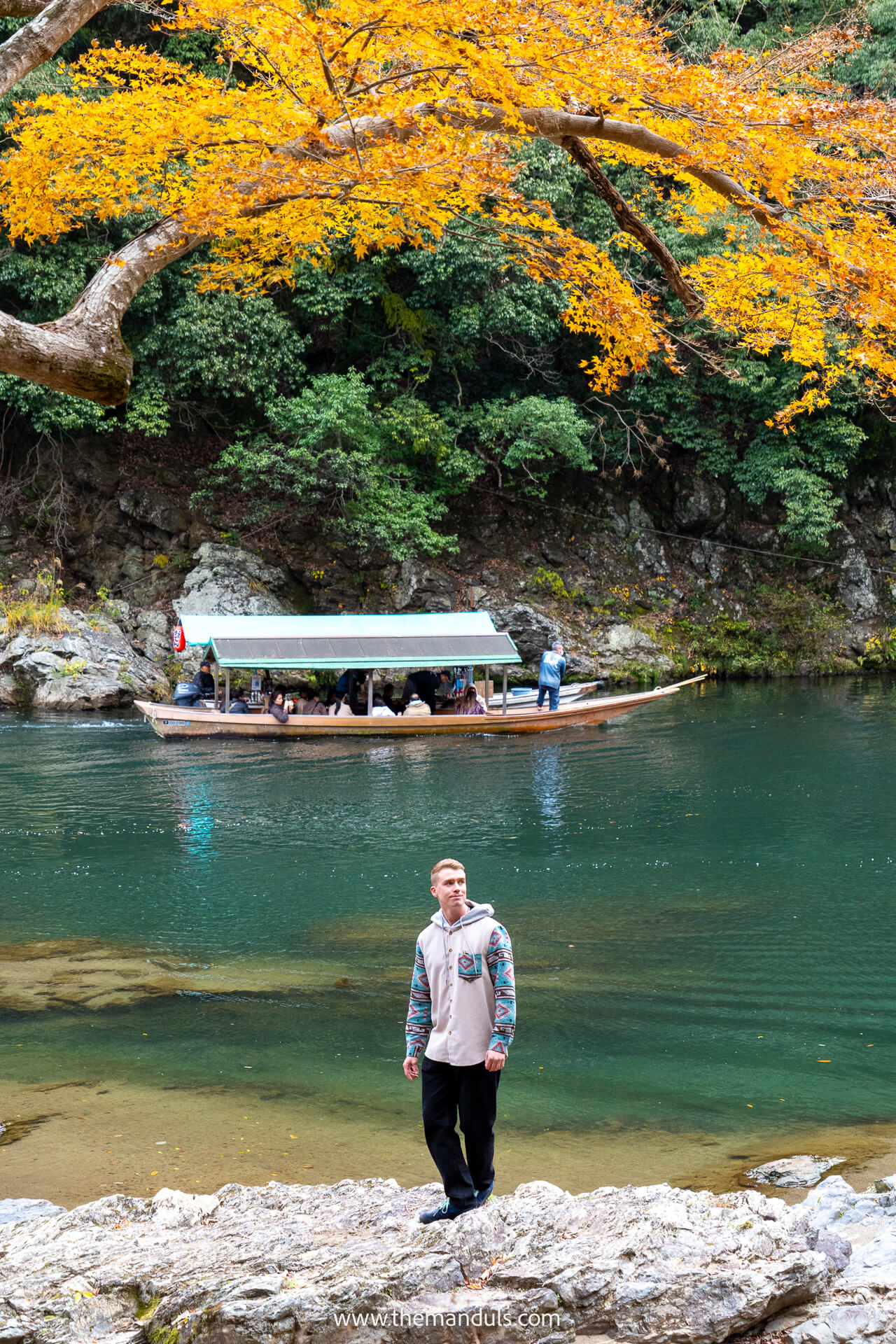
Renting a boat or taking a short river boat trip is a great way to experience Arashiyama from a different angle. Around Togetsukyo Bridge, the river is calm and wide, making it ideal for slow rowing while taking in the surrounding hills and forested slopes.
From the water, the scenery feels more open — especially in autumn, when the colorful trees line the riverbanks and reflect beautifully on the surface. It’s a relaxed experience that contrasts nicely with the busier walking paths.
You can choose between a small paddle boat or join one of the bigger wooden boats that go further in the valley.
9. Cross the Togetsukyo Bridge
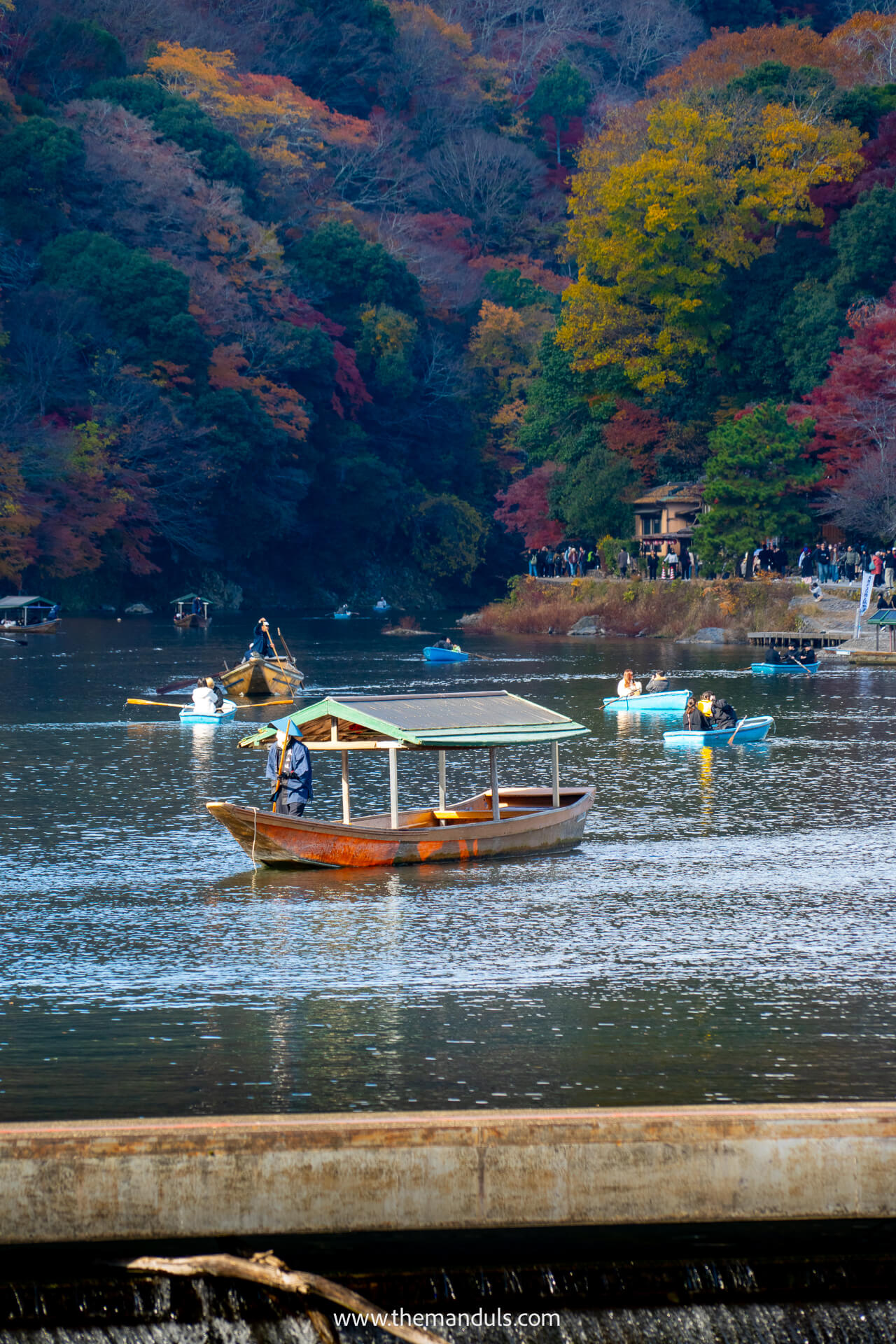
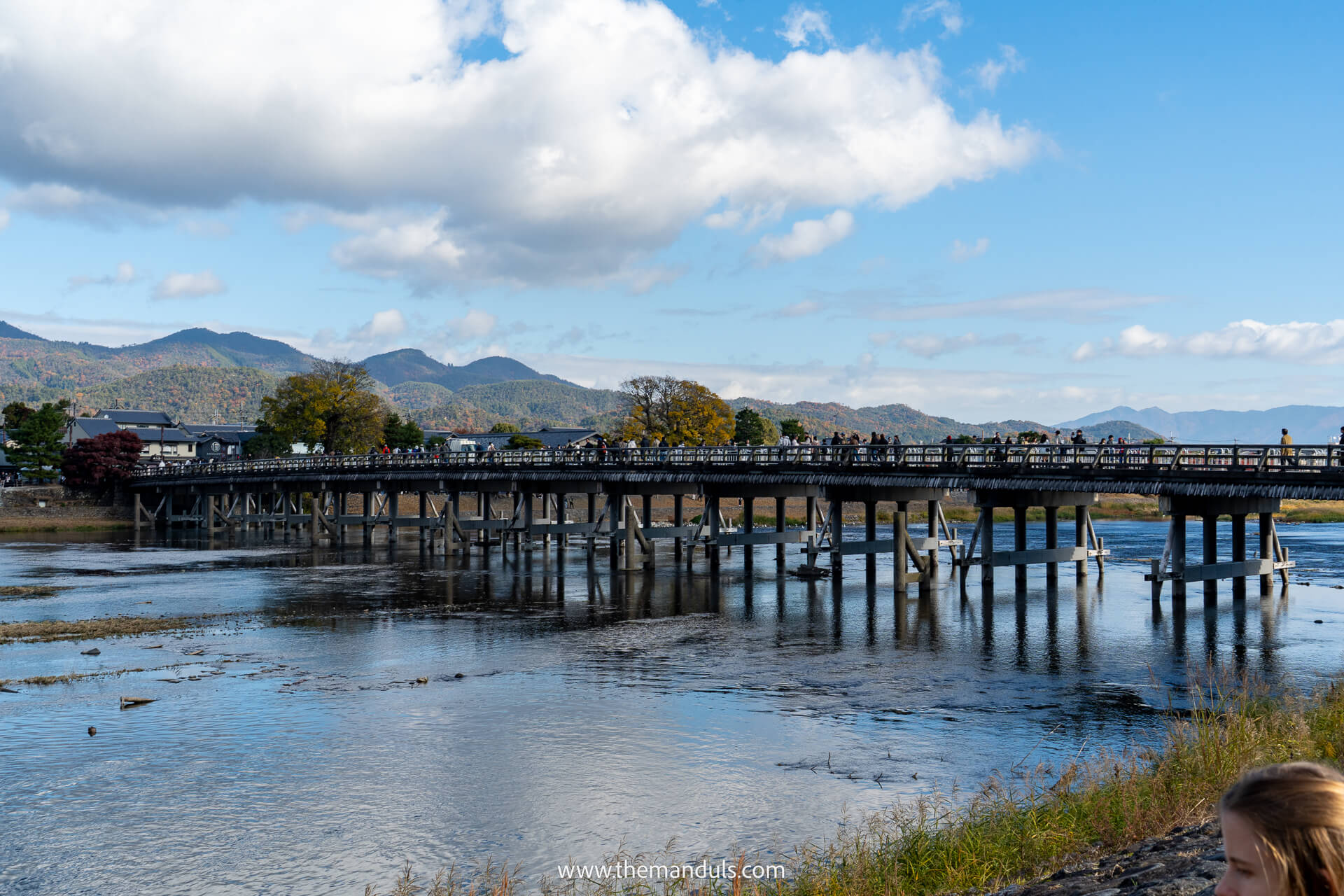
Togetsukyo Bridge is the main landmark in Arashiyama and connects most of the area’s walking routes — chances are, you’ll cross it without even planning to. It stretches across the Katsura River and offers wide views of the water, the boats below, and the forested hills rising on both sides of the valley.
This is one of the best spots to really take in the scenery all at once. In autumn, the hills are covered in fall colors, and from the bridge you get a clear, open view.
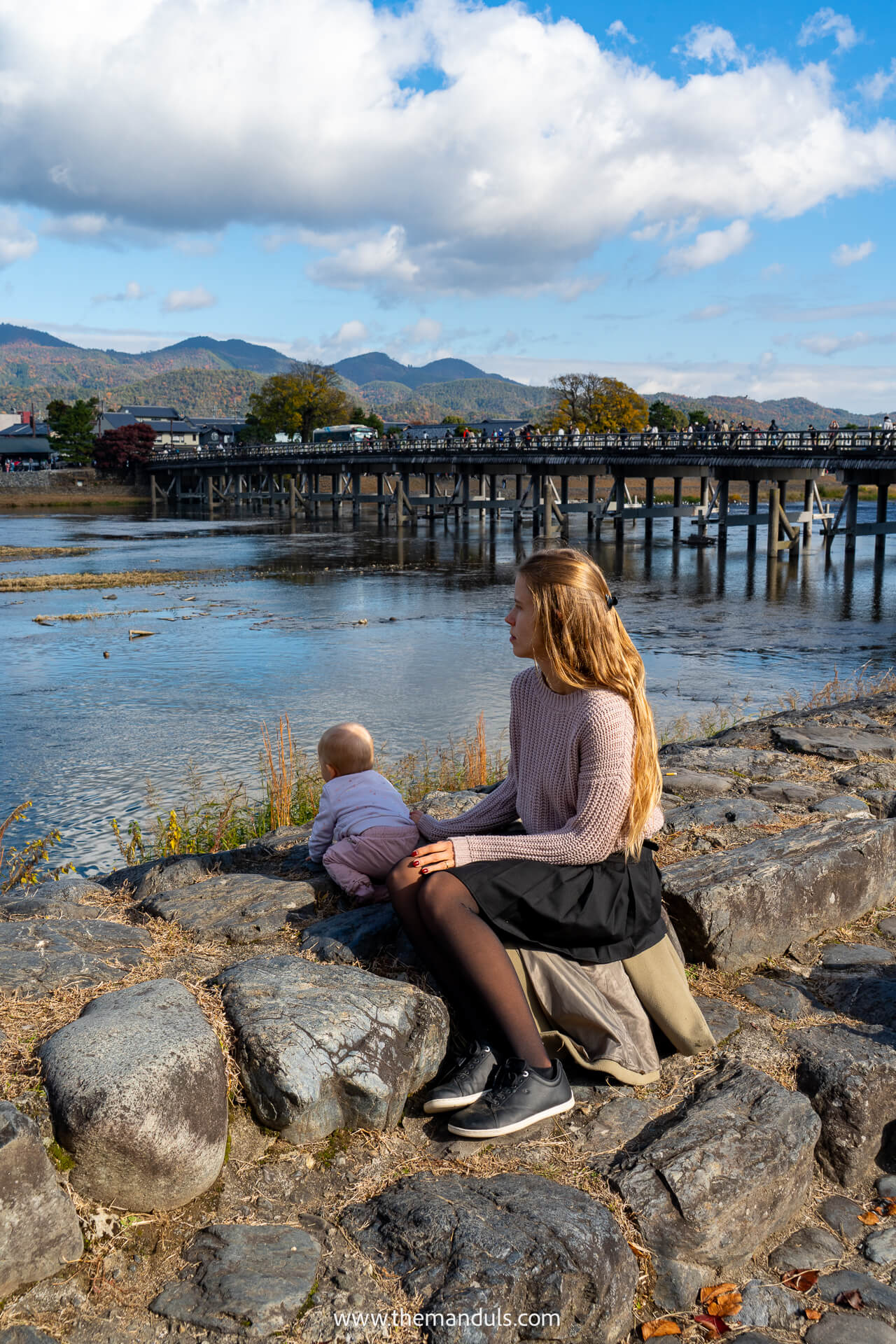
When we crossed the bridge earlier in the morning, the atmosphere was calm and relaxed. People were moving slowly, stopping halfway to take photos, leaning on the railing, and enjoying the view.
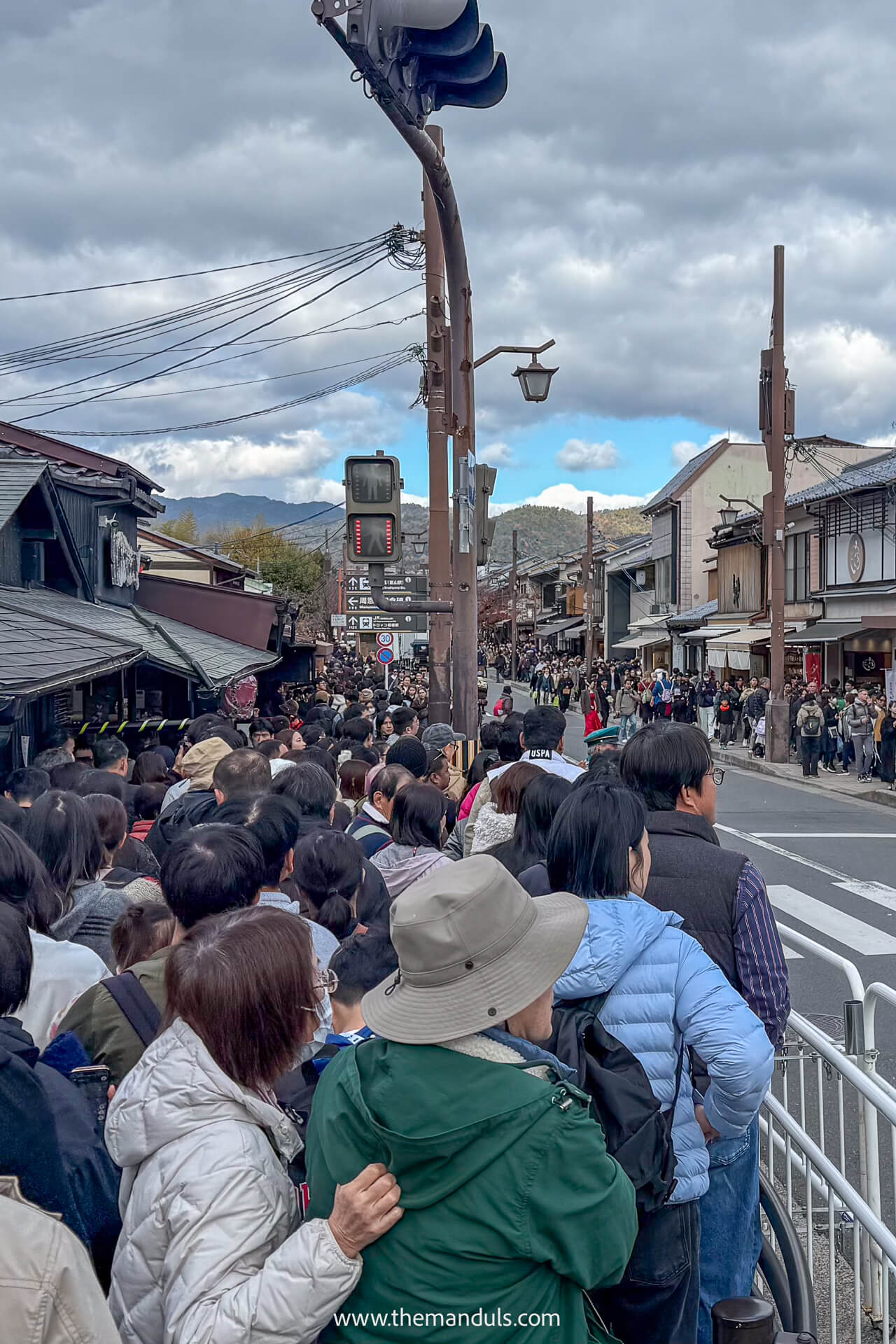
Later, around lunchtime, it was a completely different story. Loudspeakers were urging people to keep to the left, move in one direction, and not stop for photos due to congestion, with police regulating foot traffic at one end.
If you want to enjoy the bridge rather than just pass through it, timing really matters — early morning is the moment when it still feels like part of the experience, not just a busy crossing point.
10. Explore Arashiyama by Rickshaw
Exploring Arashiyama by rickshaw is a great option if you want to see more of the area without doing all the walking— or if you’re after an unusual way to see the park.
A guided rickshaw tour like this one gives you a relaxed way to move between key spots while learning a bit more about the area along the way. The drivers double as guides, pointing out details you’d probably miss on your own and adjusting the pace depending on crowds and conditions.
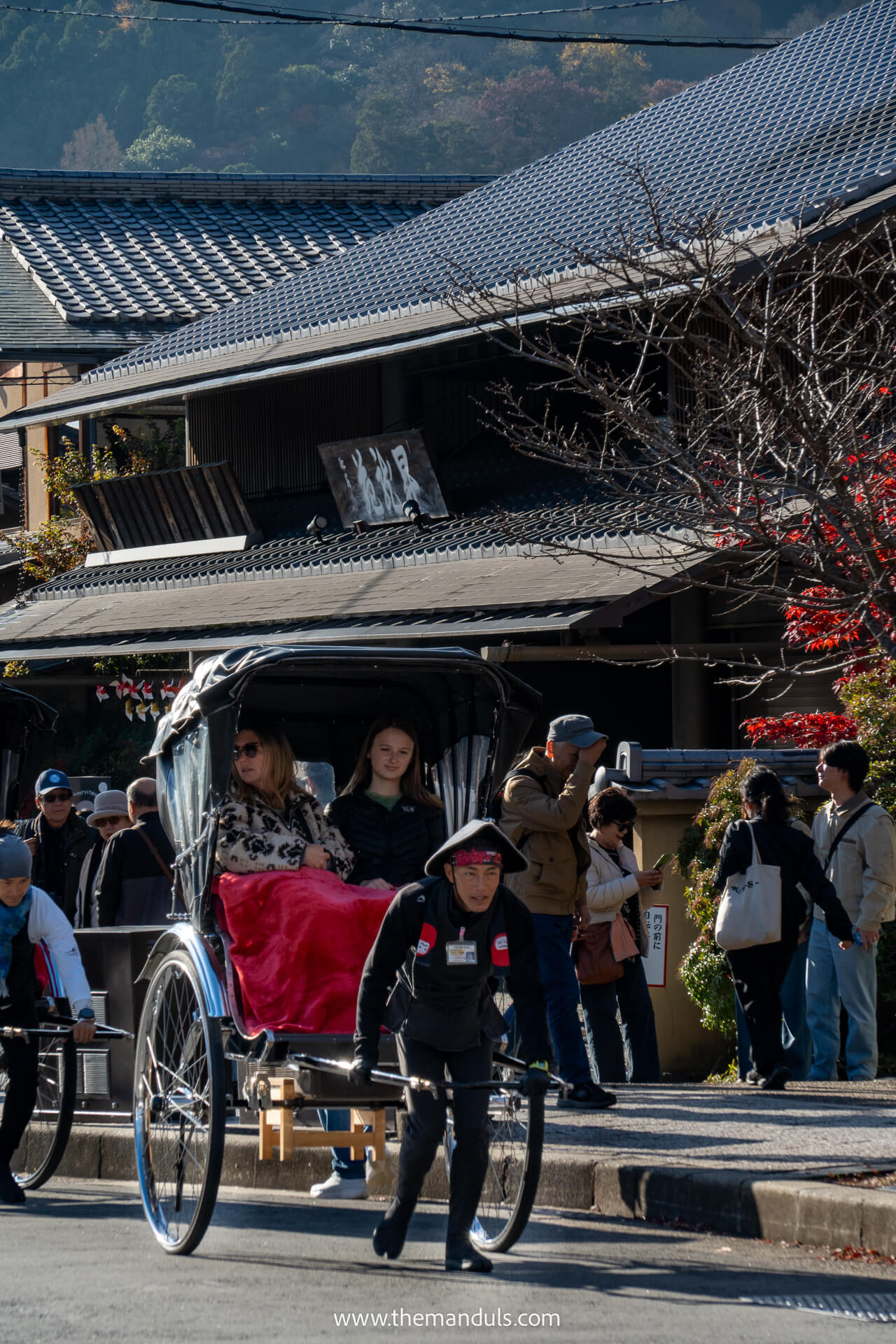
It’s especially nice for couples, families, or anyone who wants a different perspective on Arashiyama’s streets, bamboo-lined paths, and riverside scenery. It’s not the cheapest option, but for comfort, storytelling, and ease, it’s a memorable way to experience the area — particularly if you’re short on time or want something a bit special.
11. Ride the Sagano Romantic Train
Price: from 880 JPY
The Sagano Romantic Train is a scenic sightseeing train that runs through the valley just outside Arashiyama, following the river and cutting through forested hills. It’s a completely different way to experience the area, especially if you want great views without adding more walking to your day.
The ride itself is slow and relaxed, designed purely for enjoying the scenery rather than getting from A to B. Depending on the season, you’ll see lush greenery, river views, rocky cliffs, or seasonal colors — which is why it’s popular year-round.
We only found out about the Sagano Romantic Train too late, when tickets were already sold out for several days, which taught us one important lesson: planning is key. Seats are limited and this is not something you can count on booking last minute, especially during popular travel periods.
If it’s on your list, make sure to book in advance.
12. Adashino Nenbutsuji Temple
Entrance Fee: 500 JPY
Opening hours: 9 am – 3:30 pm
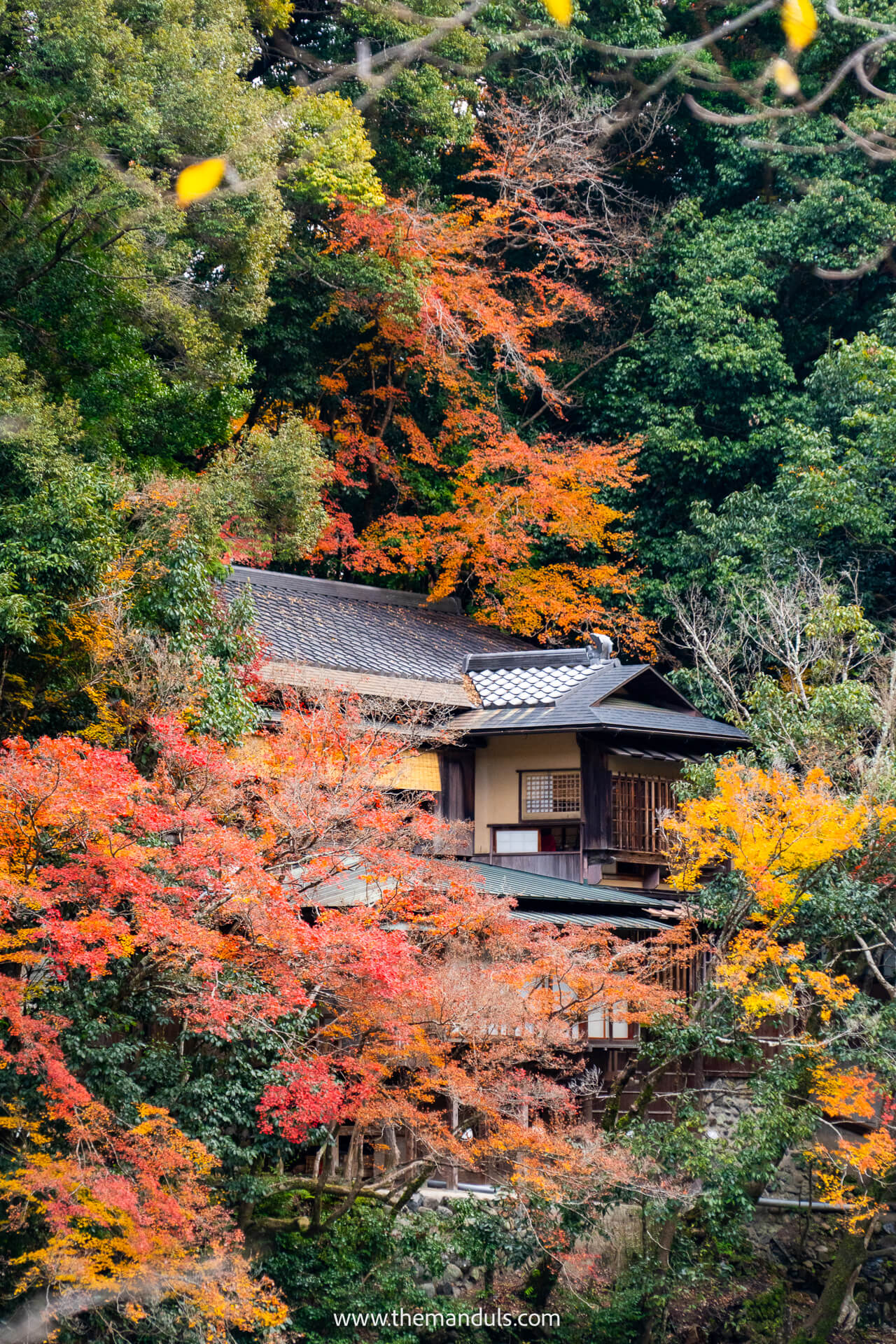
Adashino Nenbutsuji Temple sits slightly farther from the main Arashiyama sights and works best as an add-on rather than a must-see stop. Reaching it requires a bit more walking beyond the bamboo grove area, but that distance also means it’s noticeably less crowded than the central spots.
The temple is best known for its thousands of small stone statues, arranged across the grounds in a way that feels quiet, atmospheric, and deeply reflective. There’s also a short bamboo path here, similar in feel to the famous grove but far calmer.
If you don’t mind covering extra ground on foot, this temple offers a very different experience — less about ticking off sights and more about atmosphere, and peace.
13. Otagi Nenbutsuji Temple
Entrance Fee: 500 JPY
Opening hours: 9 am – 4:15 pm, closed on Saturdays and Wednesdays
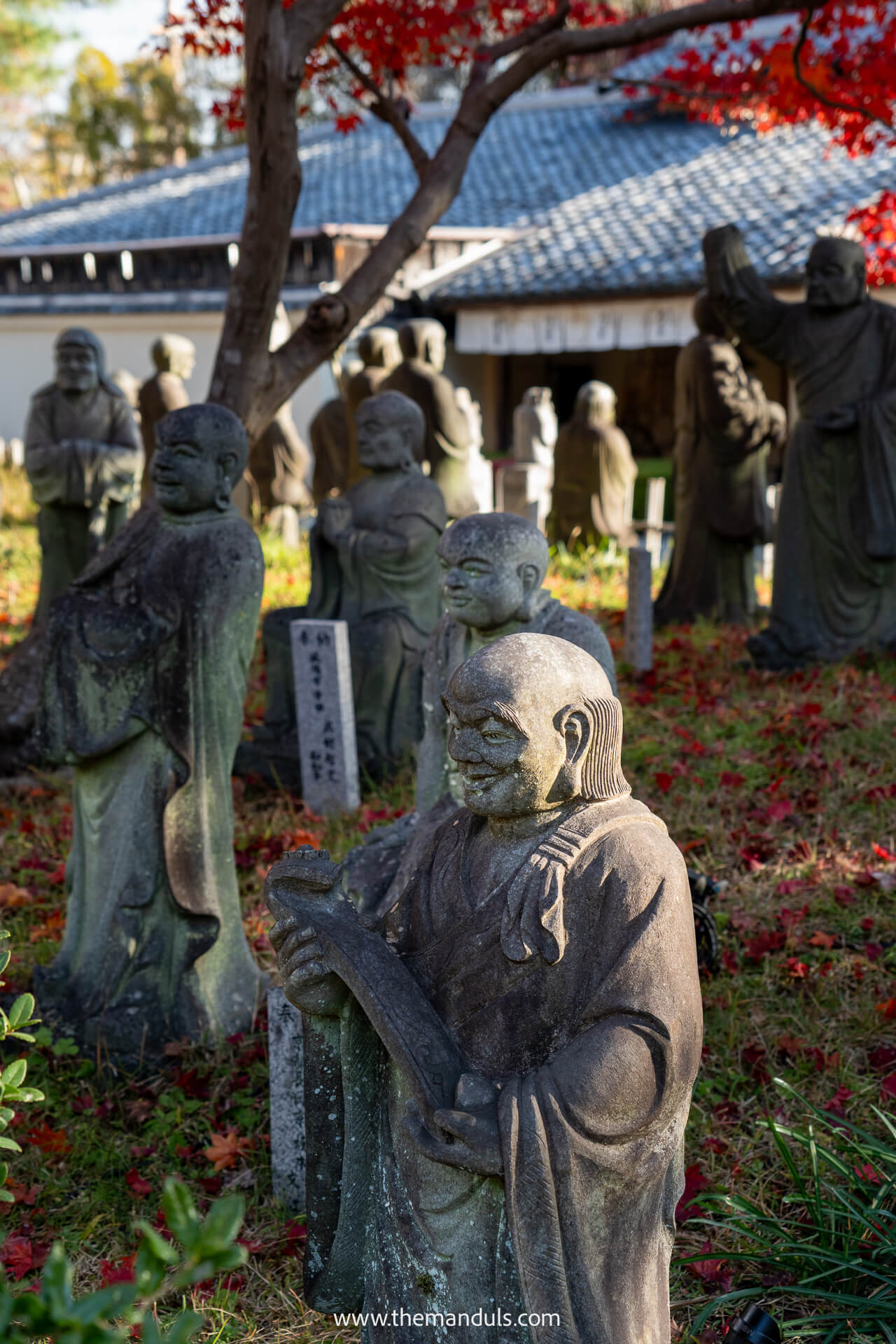
Otagi Nenbutsuji Temple is one of the most unique temples around Arashiyama and feels very different from the classic Zen gardens and grand halls elsewhere in Kyoto. It’s tucked away a bit farther north, which makes it less touristy.
The highlight here is the collection of hundreds of stone statues, each with a different expression — some smiling, some playful, some slightly odd. Walking among them feels surprisingly lighthearted and human, especially compared to more formal temples.
Many are covered in moss and fallen leaves, which adds to the atmosphere and makes the whole place feel quietly magical.
Because of its location, Otagi Nenbutsuji is usually much less crowded, and the walk to get there takes you through a calm residential area that feels far removed from the busy bamboo grove. If you enjoy places with character and don’t mind walking a bit more, this temple is a rewarding stop that offers something genuinely different in Arashiyama.
What to skip
Yusai Tei Gallery
The Yusai Tei Gallery looks stunning in photos, but this was one spot we deliberately skipped — and we don’t feel like we missed out.
The main issue is availability and timing. Tickets often sell out several days in advance, and during autumn (the most popular time to visit Arashiyama), prices are significantly higher than usual. For what you get, it didn’t feel like great value.
While the space is undeniably beautiful, it’s also very small. Many visitors mention that the experience revolves almost entirely around one room — the one you see in nearly every photo online.
Because of that, it gets crowded quickly and tends to feel rushed, with people cycling through just to get their shot for the Instagram.
If you’re hoping for a calm, immersive experience, this one can feel more like a quick Instagram stop than a place with real atmosphere or depth. Unless you’re set on that specific photo, we think your time is better spent elsewhere in Arashiyama.
Monkey Park
This one is popular, but we’d honestly skip it — especially if your time in Arashiyama is limited. Getting to the monkey park involves a fairly steep uphill walk, and once you’re up there, the experience revolves mainly around seeing macaques in a controlled, fenced-off setup.
What was the main reason we decided to skip it is that it doesn’t really feel like a natural habitat. The monkeys are clearly used to people, and the whole experience is structured around viewing and interacting with them within set boundaries. It feels more like a managed attraction than a place where animals are simply living undisturbed in nature.
If you’re hoping for a more authentic or ethical wildlife experience, this probably isn’t it. Compared to the rest of Arashiyama the monkey park felt out of place. For us, it didn’t align with the kind of experience we were looking for here.
Where to eat & drink
Arashiyama is full of cafés and restaurants, especially around the bridge and main streets, but these are the places we’d actually recommend — either because we’ve eaten there ourselves or because they’re a reliable choice when the area is busy.
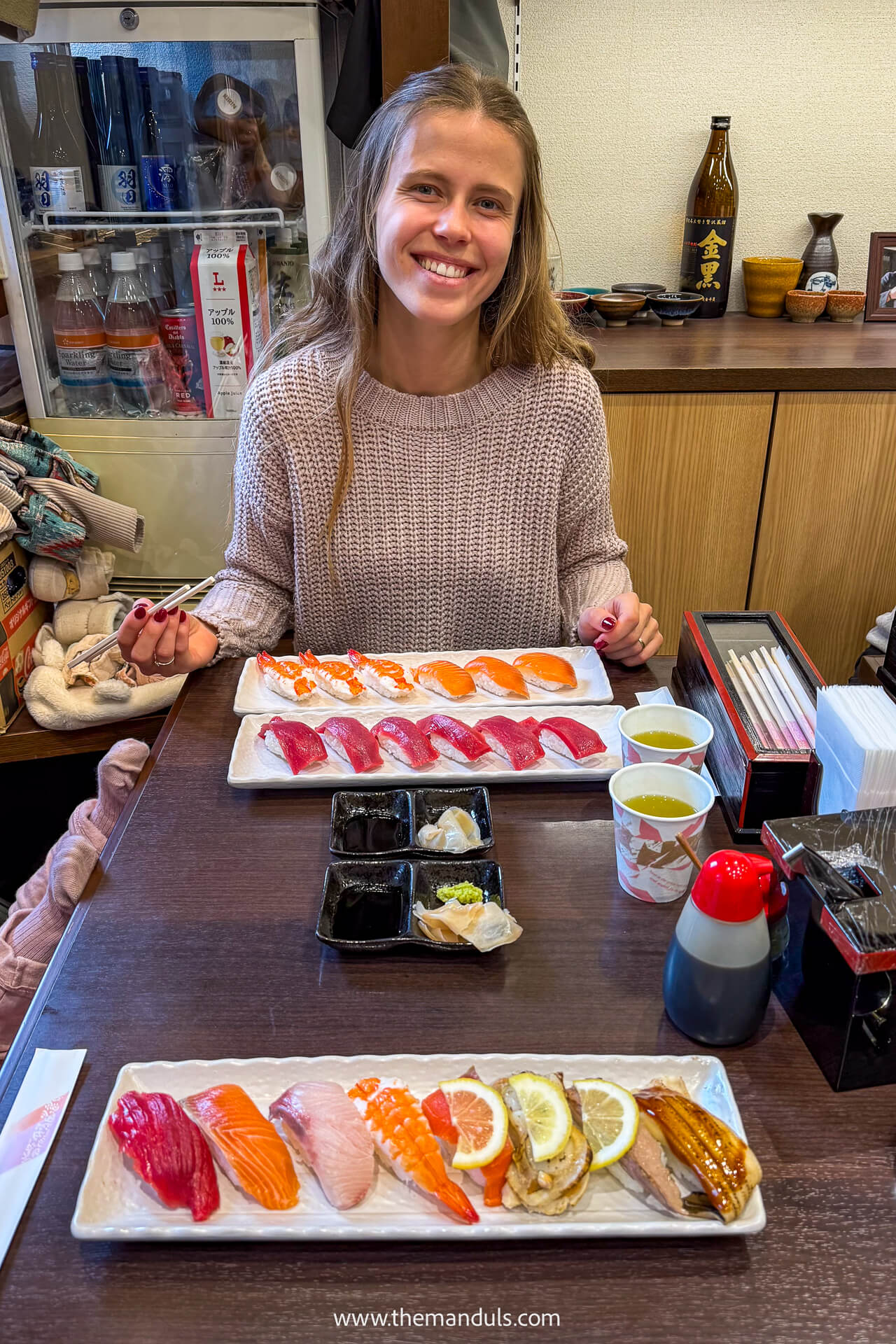
- Sushi Naritaya – We’ve eaten here and loved it. Incredibly tasty sushi and a surprisingly short wait time compared to other sushi spots nearby.
- Gyukatsu Kyoto Katsugyu – A reliable choice for a filling meal. We’ve eaten at this chain multiple times in different locations and it never disappointed, which is exactly what you want in a busy area. Expect a longer waitlist.
- Gion Duck Noodles – A great option for something warm and comforting. Perfect after a morning of walking around Arashiyama.
- Parking Café ReUnion – Ideal for a good cup of hot coffee. Grab it to go and enjoy it by the river with a view.
Facilities
Arashiyama covers a fairly wide area, so you’re never far from something if you need a break. Along the main streets and near the river, there are plenty of cafés, restaurants, small bars, and street food stalls, making it easy to grab a snack or sit down for a proper meal during your visit.
You’ll also find public bathrooms in several spots, especially near the main sights and train stations, which is handy if you’re spending a few hours exploring. Once you head into quieter areas and temple grounds, facilities become more limited, so it’s worth using them when you pass by.
Best time to visit
The best time to visit Arashiyama is early in the morning, no matter the season. We spent more than half a day here arriving shortly after sunrise and could see the how the crowds change depending on the hour.
Arriving around 7:00–8:00 am made a huge difference — the area felt calm, the light was softer, and we actually enjoyed places like the bamboo grove before the crowds arrived.
Midday is the worst time to visit, especially between 10:00 am and 3:00 pm, when tour groups arrive and the main paths get packed. We were shocked and a bit annoyed by the amount of crowds walking through the bamboo grove and over the Togetsukyo bridge.
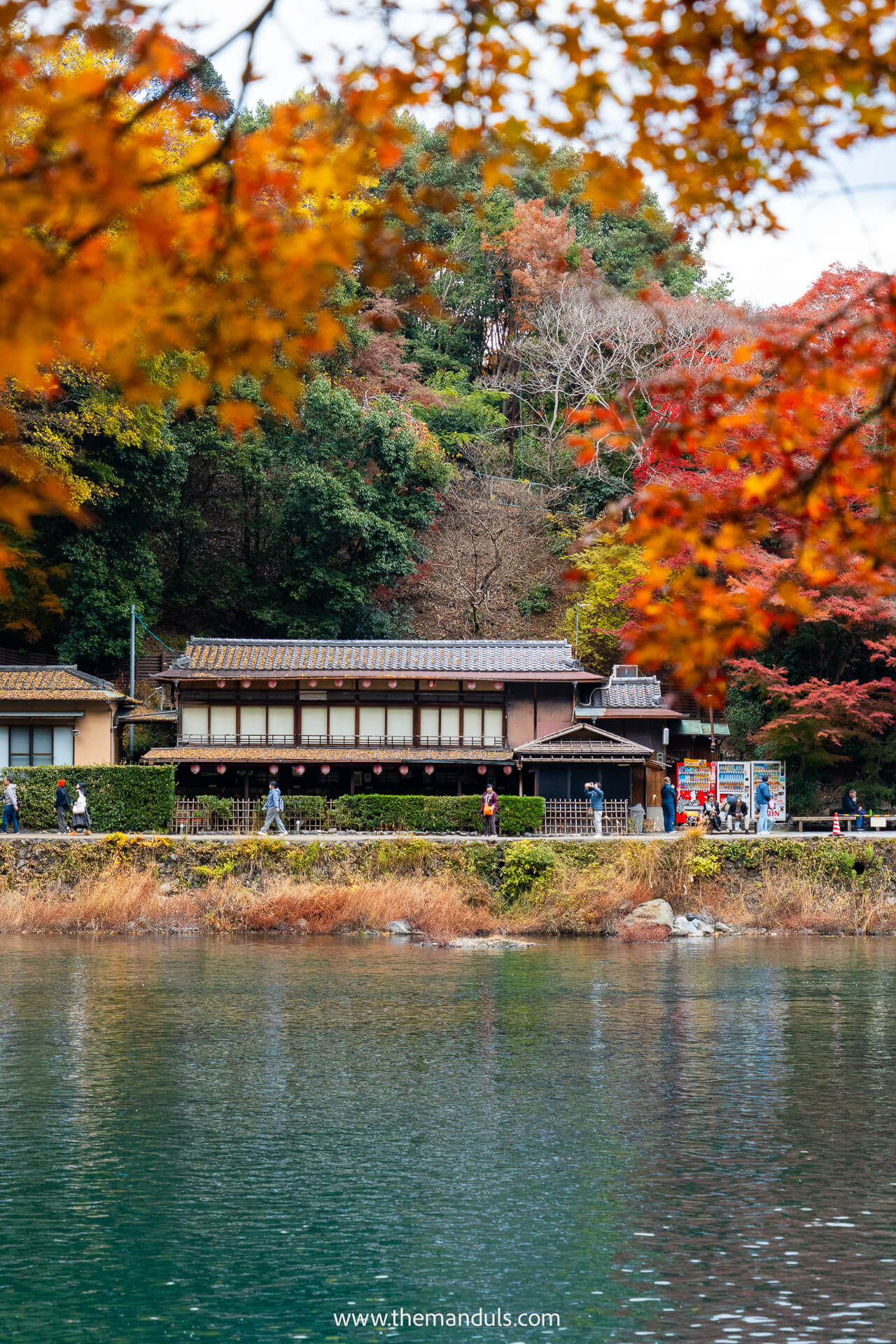
Season-wise, autumn (late November) is stunning, with colorful foliage covering the surrounding hills — this is when Arashiyama really shines, but it’s also the busiest time. Spring is another great option thanks to cherry blossoms, though crowds are similar.
Where to stay near Arashiyama
While there are a few accommodations in and around Arashiyama, we honestly think it makes more sense to stay in central Kyoto. Arashiyama works best as a half-day or early-morning trip, not as a base for exploring the rest of the city.
For a full breakdown of the best areas and hotels, check out our Where to Stay in Kyoto guide.
Best hotels in Kyoto
⭐️⭐️⭐️ Cross Hotel Kyoto (our top pick) – If you’re deciding where to stay in Kyoto, this is the one we genuinely recommend. It’s set in a quiet part of downtown, just a short walk from the Kamogawa River and surrounded by great restaurants, cafés, and shopping streets.
Rooms are modern and thoughtfully designed, with larger-than-usual bathrooms and enough space for two big suitcases — something we really appreciate when traveling with more gear. The overall vibe feels calm and polished, making it easy to relax after busy days of exploring.
⭐️ Best for: Couples and travelers who want comfort, design, and a peaceful but central base.
👉 Check current deals →
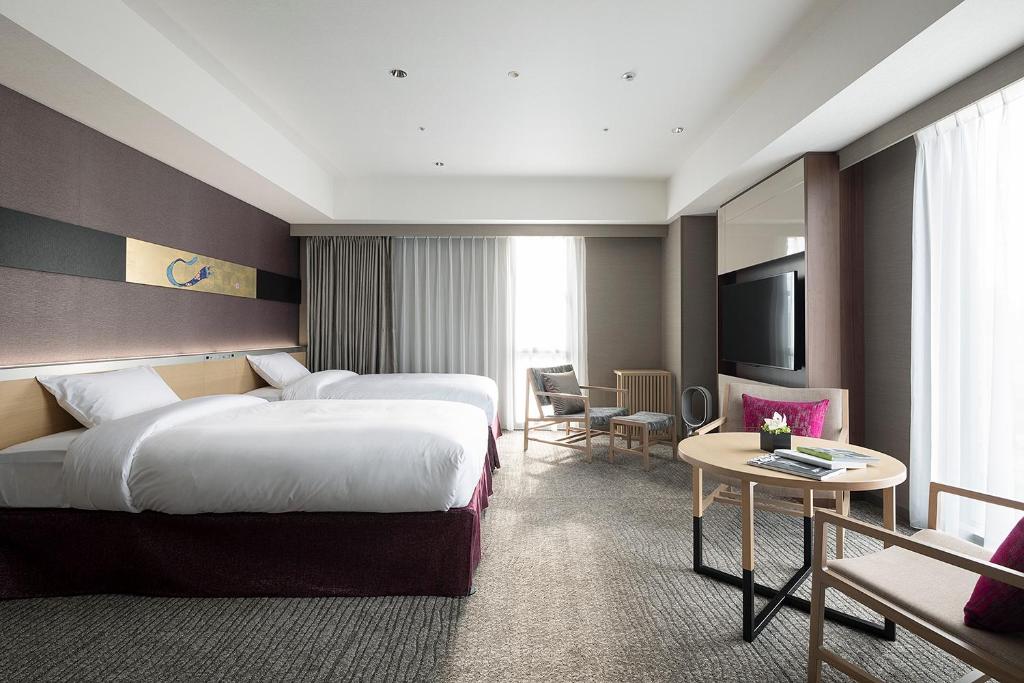
⭐️⭐️ The Thousand Kyoto – A modern, refined stay right next to Kyoto Station, ideal if convenience matters. The design is clean and minimal, rooms are surprisingly spacious, and the beds are exactly what you want after full days in the city.
Breakfast offers both Japanese and Western options, and the hotel features a beautiful spa, great on-site dining, and quiet common spaces that feel removed from the station crowds.
⭐️ Best for: Travelers who want refined comfort, excellent facilities, and direct access to Kyoto Station.
👉 Compare prices →
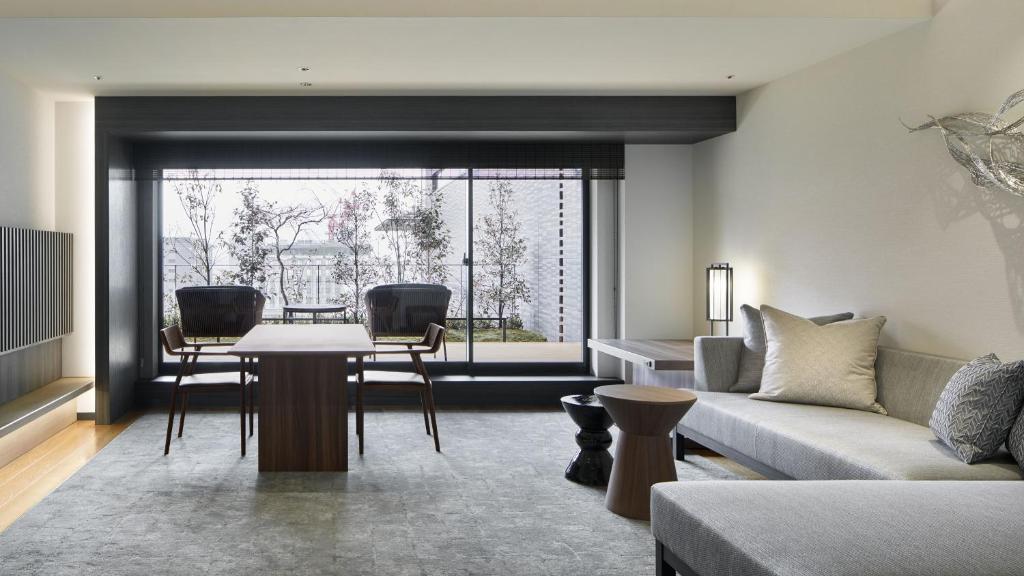
⭐️ Guesthouse Soi – A solid budget option in Higashiyama, just a short walk from Kiyomizu-dera and the historic streets leading toward Gion. Rooms are simple but clean, with private or shared bathroom options depending on your budget.
The warm, friendly atmosphere really stands out, and the hosts are known for being helpful with local tips. There’s also a shared kitchen and lounge, which is handy for longer stays.
⭐️ Best for: Budget travelers and sightseers who want a friendly stay in one of Kyoto’s best walking areas.
👉 See latest prices →
FAQ
Plan for half a day. That’s enough time to see the main sights, enjoy a few walks, and not feel rushed. Arriving early makes a big difference.
Yes, it can be — particularly around the bamboo forest and bridge between late morning and afternoon. Visiting early or exploring quieter areas makes a huge difference.
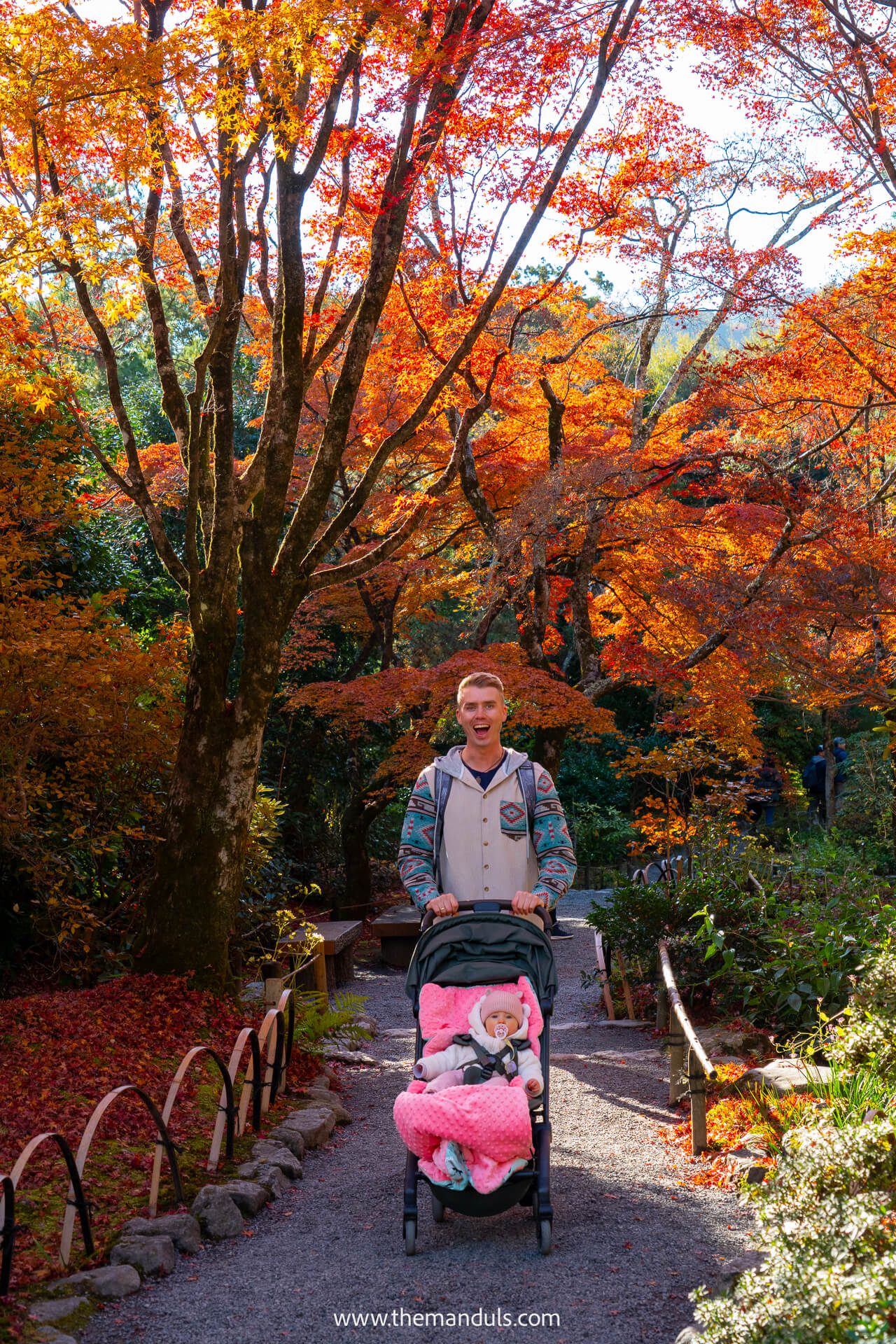
Mostly yes. The main paths are flat and easy to walk, though some temple areas include stairs and uneven ground. We visited a stroller and had to carry it a few times.
Final Thoughts
Arashiyama ended up being our favorite thing to do in Kyoto, and not because of one single sight. What makes it special is the combination of nature, walking routes, river views, and those quieter moments you find once you move slightly away from the main paths.
That said, timing really matters here. Visit early, plan your route, and be realistic about what’s worth your time — doing that completely changes the experience. Skip a few overhyped spots, focus on the walks, gardens, and viewpoints, and Arashiyama rewards you with some of the most memorable moments of the trip.
If you enjoy being outdoors and don’t mind walking, this area is absolutely worth prioritising.