
This article contains affiliate links. Learn more in our affiliate disclosure.
The Louvre Museum is the most famous museum in the world and one of the top attractions in Paris.
Originally built as a medieval fortress in the 12th century, it later became a royal palace before being transformed into a public museum during the French Revolution.
Today, the Louvre houses more than 35,000 artworks, including some of the most important masterpieces ever created — such as the Mona Lisa, Venus de Milo, and Winged Victory of Samothrace.
When we first saw the Louvre from the outside, we were genuinely stunned by how incredibly huge it is.
To be honest, we’re usually not the biggest fans of museums. But the Louvre genuinely surprised us. It definitely deserve a spot on any Paris itinerary.
Despite its size, visiting the Louvre turned out to be a memorable experience. With the right expectations and a simple plan, it’s possible to enjoy the highlights without feeling exhausted or lost inside one of the largest museums in the world.
If you’re currently planning your trip, we also recommend checking our guide to the best areas and hotels in Paris, where we share where we stayed and which locations we’d choose again.
Is Louvre Worth Visiting?
The answer really depends on what kind of traveler you are. If you’re a huge art lover, the decision is quite clear — you’ll most likely absolutely love the Louvre.
But what if you’re like us and usually prefer to avoid museums? Don’t worry — there’s a very good chance you’ll still enjoy your visit here.
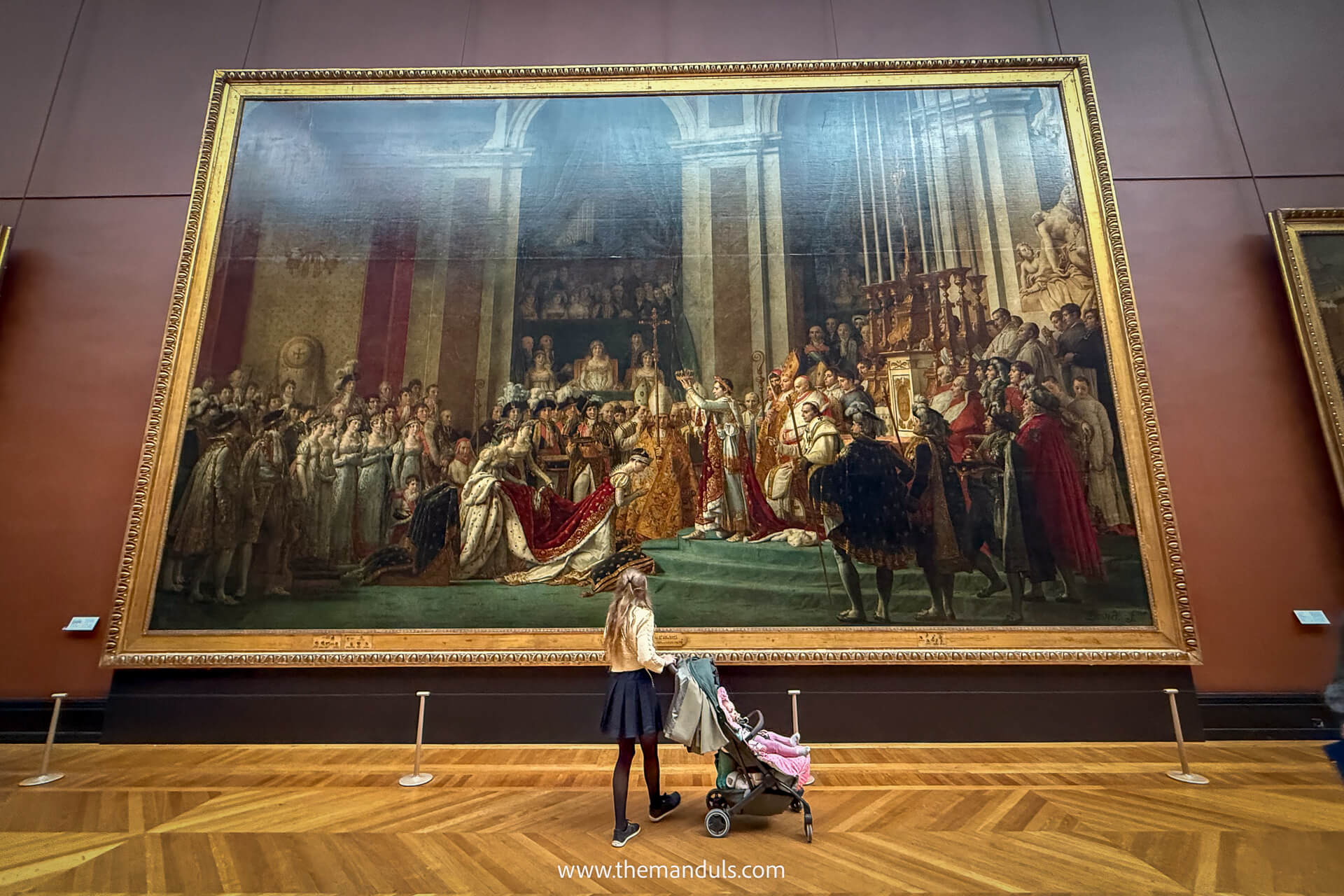
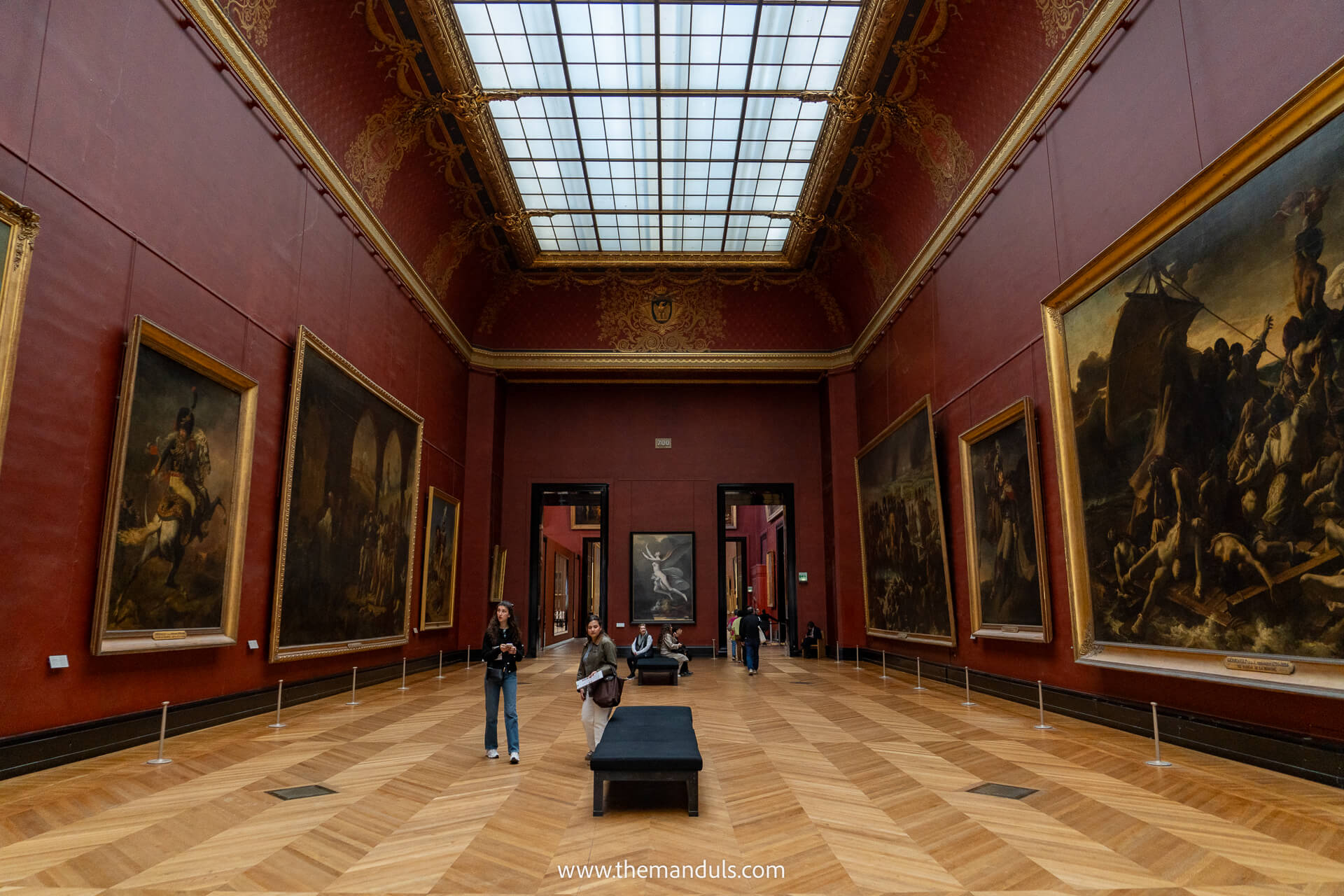
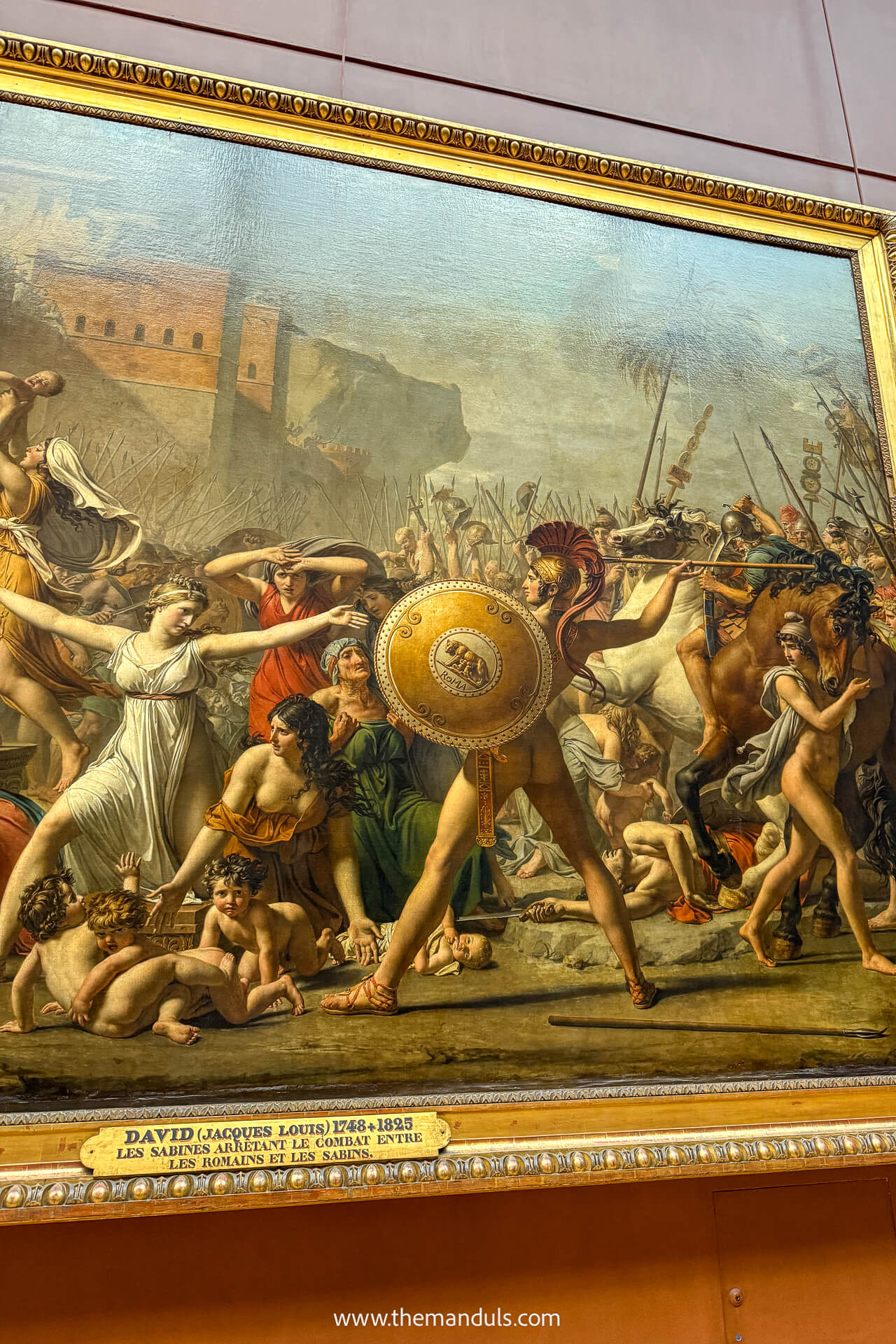
We saw some of the largest paintings we’ve ever seen in our lives, and we were genuinely fascinated by their sheer size and level of detail. Walking through the galleries, we came across beautiful sculptures and iconic artworks.
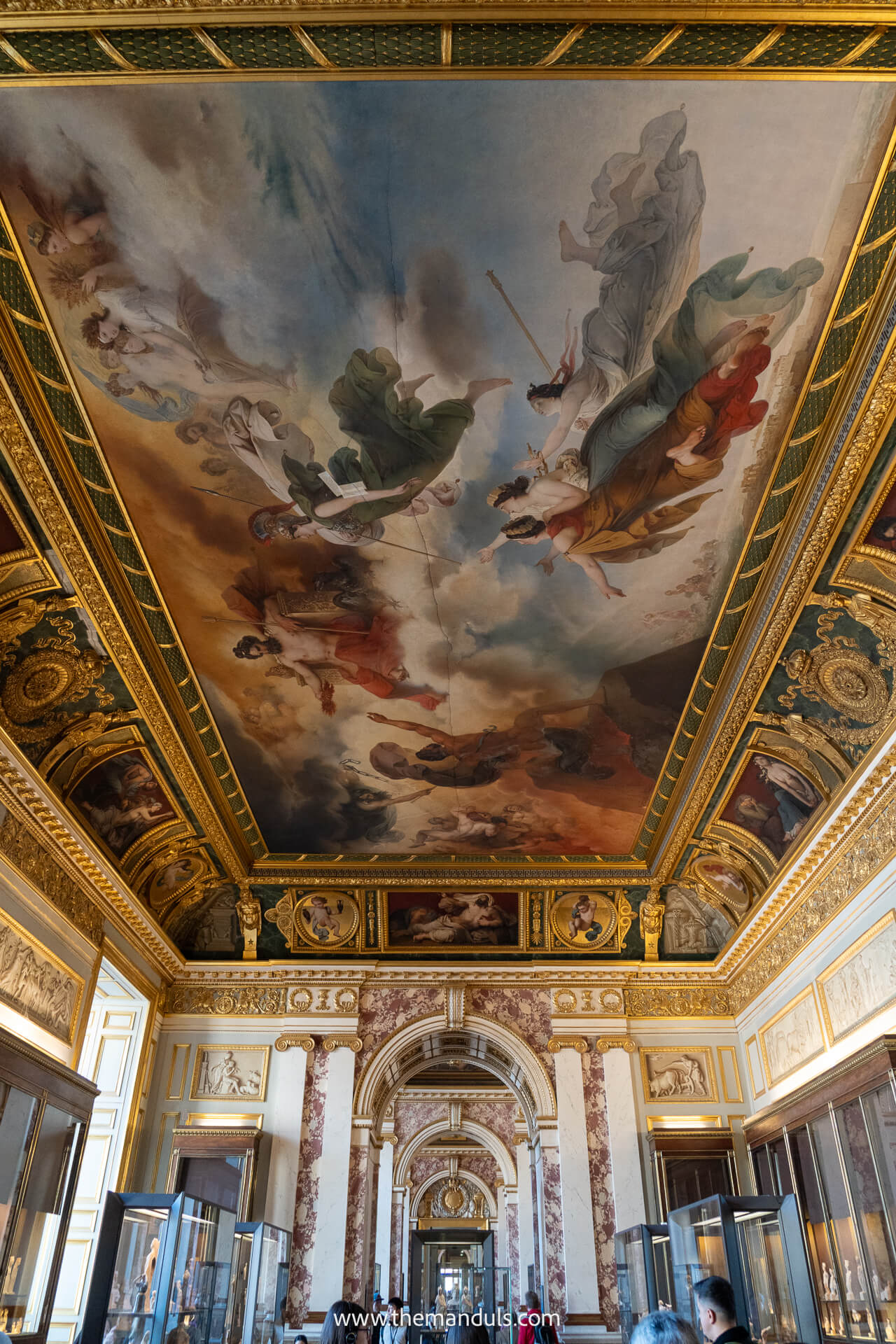
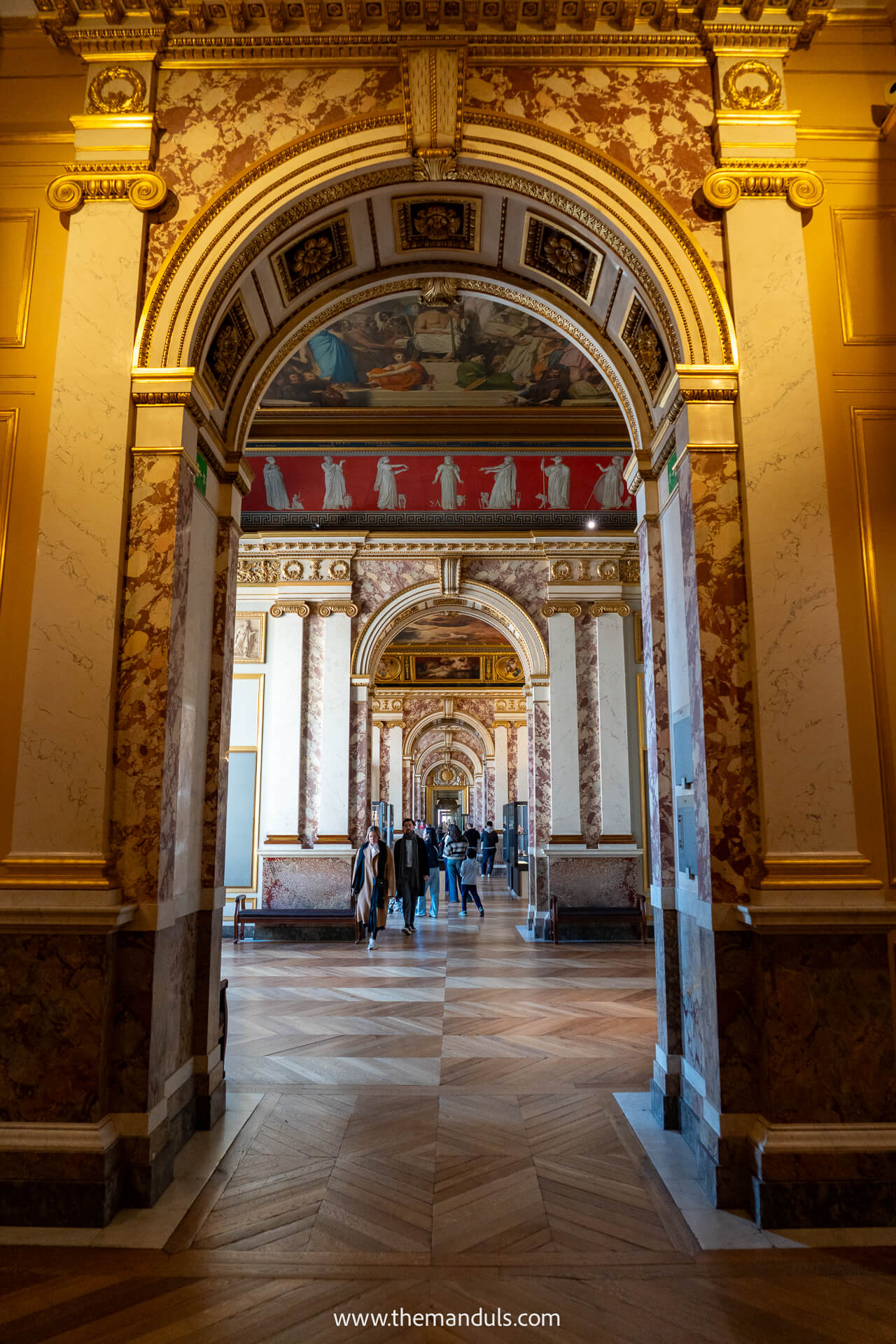
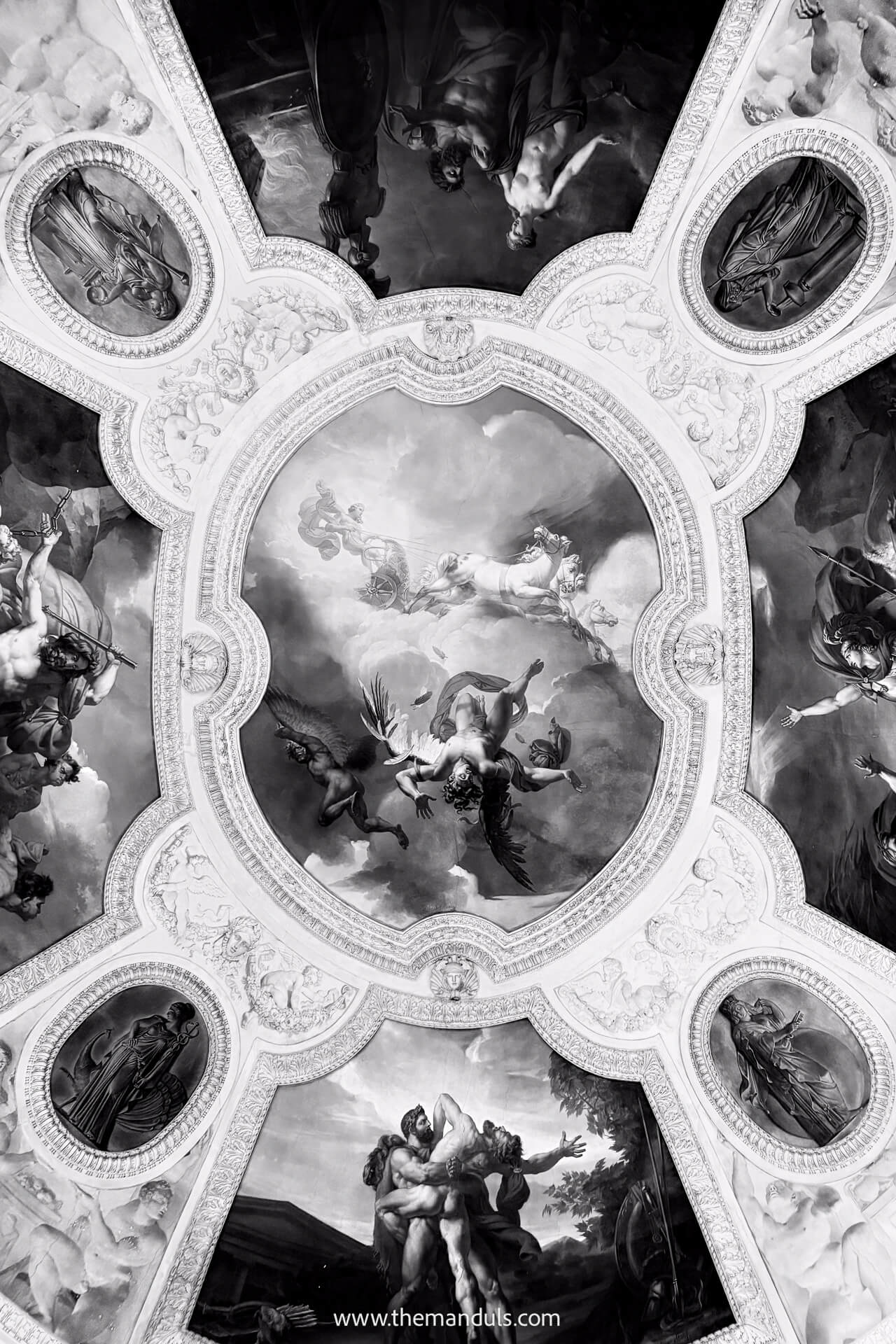
But the Louvre is not just about art. The building itself is an attraction. The architecture is impressive, with grand halls, historic rooms, glass ceilings, and endless corridors that feel almost like a maze.
You might only want to skip the Louvre if you strongly dislike museums and have very limited time in Paris.
For most travelers, however, we think the Louvre is absolutely worth visiting — even if you don’t consider yourself a typical museum person.
In a hurry?
These are our top hotels in Paris we’d book again
⭐️⭐️⭐️ Hotel Astra Opera – Astotel (our top pick)– great mid-range choice in a very central location with pool, sauna, gym, and spacious rooms.
👉 See prices & availability →
⭐️⭐️ Hôtel des Arts Montmartre – stylish boutique hotel with romantic atmosphere on a quiet street near Sacré-Cœur, perfect if you want charm and character.
👉 See prices & availability →
⭐️ Hôtel de Roubaix – affordable stay in Le Marais with a unique design and a very central location.
👉 See prices & availability →
How To Get There
The Louvre is very easy to reach by public transport, especially by metro. The most convenient stop is Palais Royal – Musée du Louvre (Lines 1 and 7), located just a short walk from the museum entrance and the Carrousel du Louvre underground access.
Other nearby stations include Louvre–Rivoli (Line 1) and Pyramides (Lines 7 and 14), both within a few minutes’ walk.
If you’re unsure which ticket or pass to choose, see our guide on how to use public transport in Paris, where we explain zones, tickets, and the best options for visitors.
How Much Time Do You Need at the Louvre?
Did you know that if you spent just 30 seconds at each artwork, it would take over 100 days to see everything inside the Louvre? The museum displays more than 35,000 pieces, so trying to see it all in one visit simply isn’t realistic.
But let’s be honest — most visitors don’t come to see every single exhibit.
How much time you need really depends on how interested you are in art and how fast you like to move. You could easily spend a full day wandering through different wings, exploring galleries, and discovering hidden corners of the museum.
If your goal is to see the most famous highlights without feeling overwhelmed, we’d recommend planning around half a day. This gives you enough time to visit a few selected sections, see the most important artworks, and still enjoy the experience without rushing.
What to See at the Louvre (Must-See Highlights)
Mona Lisa & Denon Wing
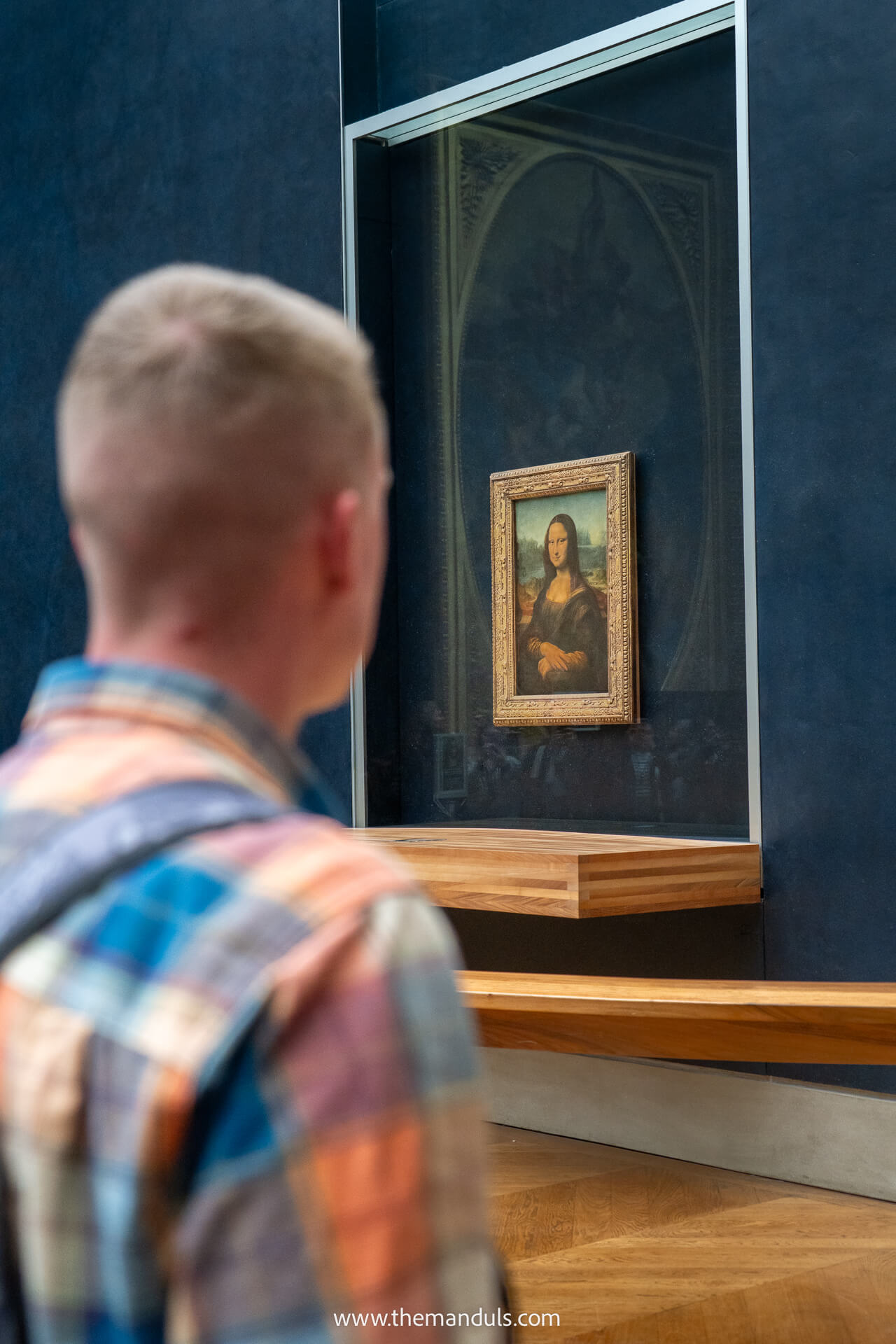
The Mona Lisa is the most famous artwork in the Louvre and naturally one of the most visited rooms in the museum. We did enjoy seeing it in person — it’s one of those iconic pieces you’ve probably seen hundreds of times online.
Our honest (and maybe slightly unpopular) opinion, however, is that the painting itself felt a bit overrated compared to the crowds around it. The room is usually very busy, and the artwork is smaller than many people expect.
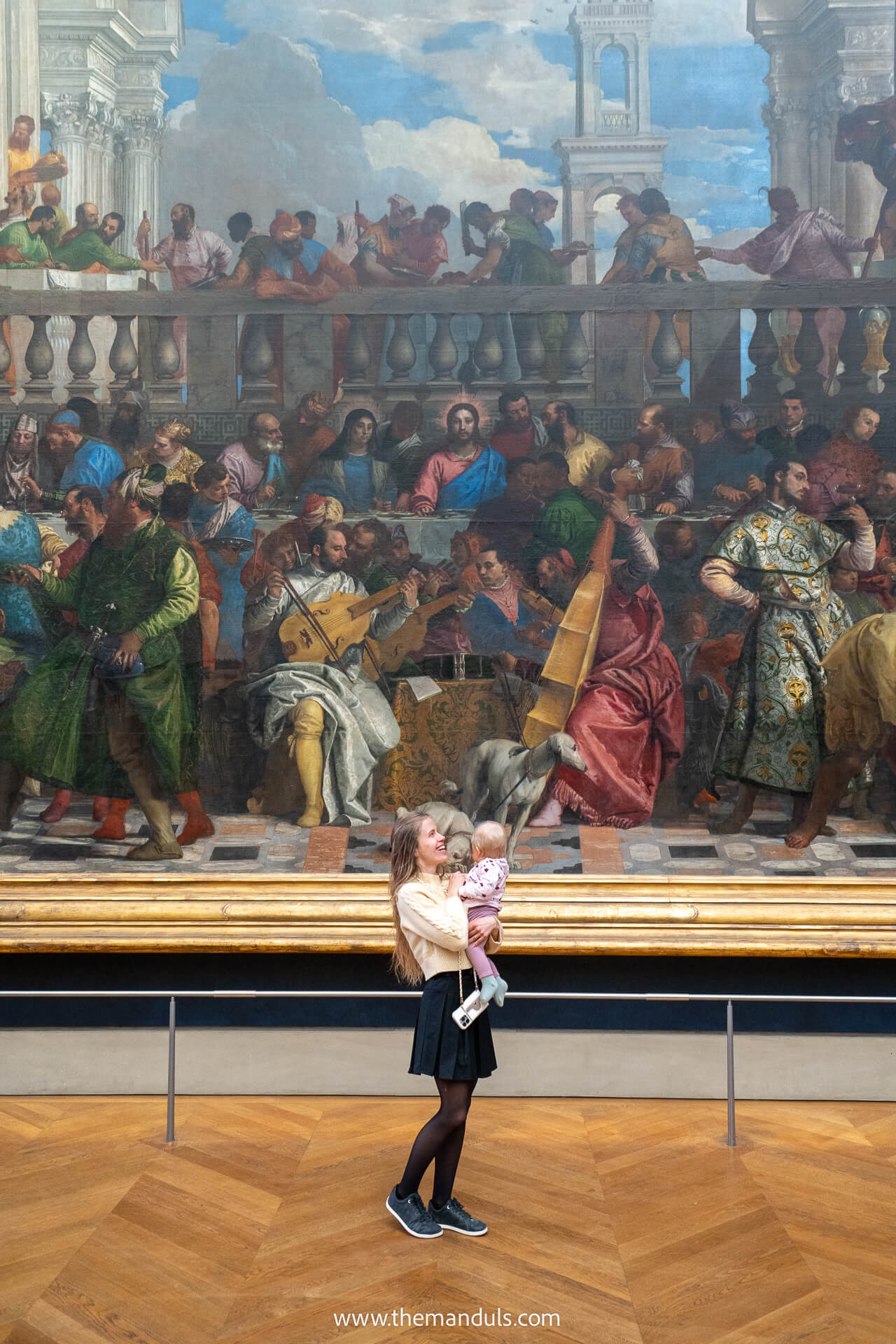
Interestingly, we were much more impressed by the massive paintings located just outside the Mona Lisa room, including The Wedding at Cana. Its sheer size and level of detail are truly incredible, and it completely caught us by surprise.
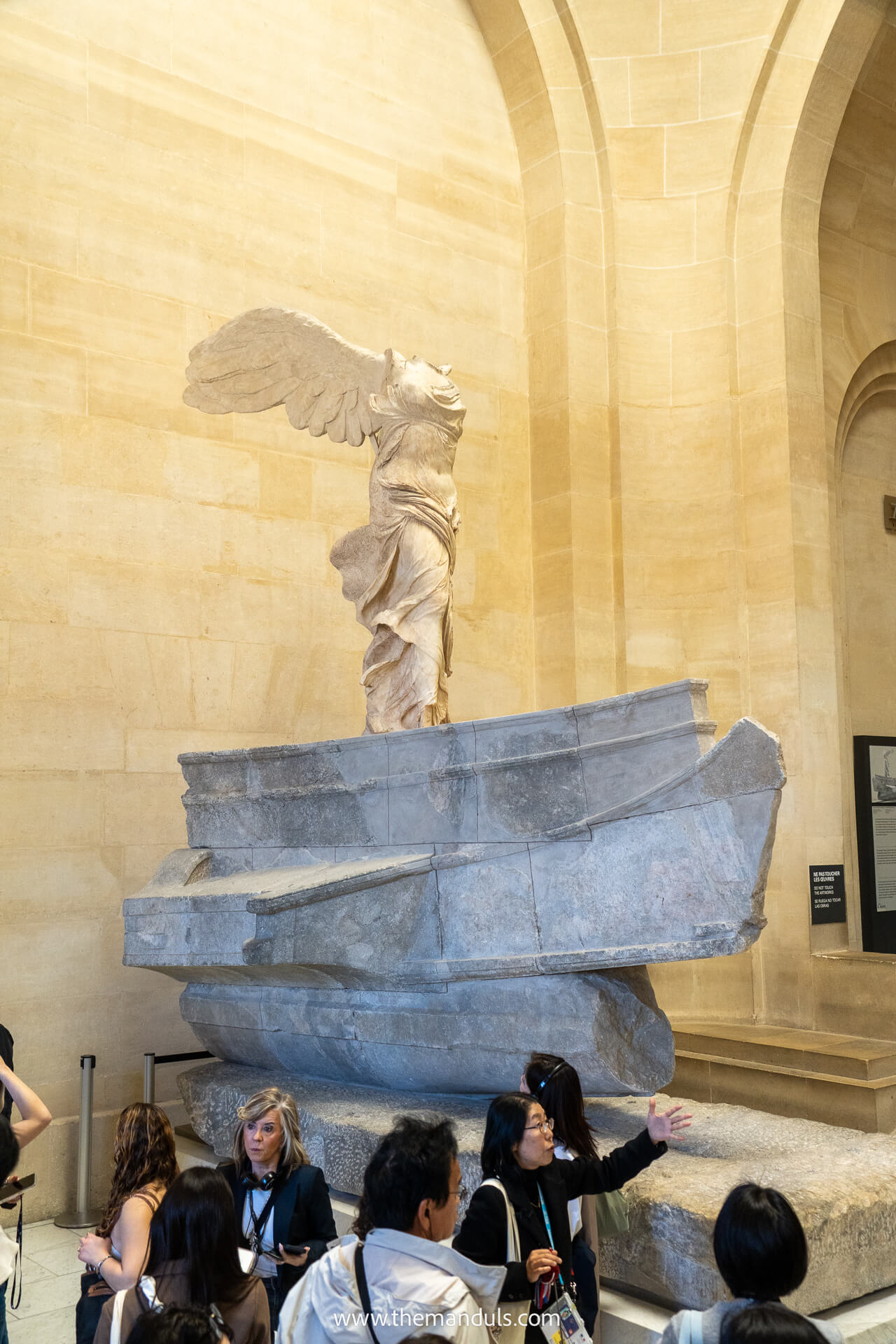
The Denon Wing also features other masterpieces, including the Winged Victory of Samothrace, one of the most impressive sculptures in the museum.
Venus de Milo & Classical Sculptures
Another highlight worth visiting is the Venus de Milo, one of the most famous ancient Greek sculptures. Even if you’re not deeply interested in art history, the elegance and realism of this statue make it a fascinating piece to see in person.
The surrounding galleries in this section also contain many beautiful sculptures and classical artworks that are well worth exploring.
Decorative Arts & Napoleon III Apartments
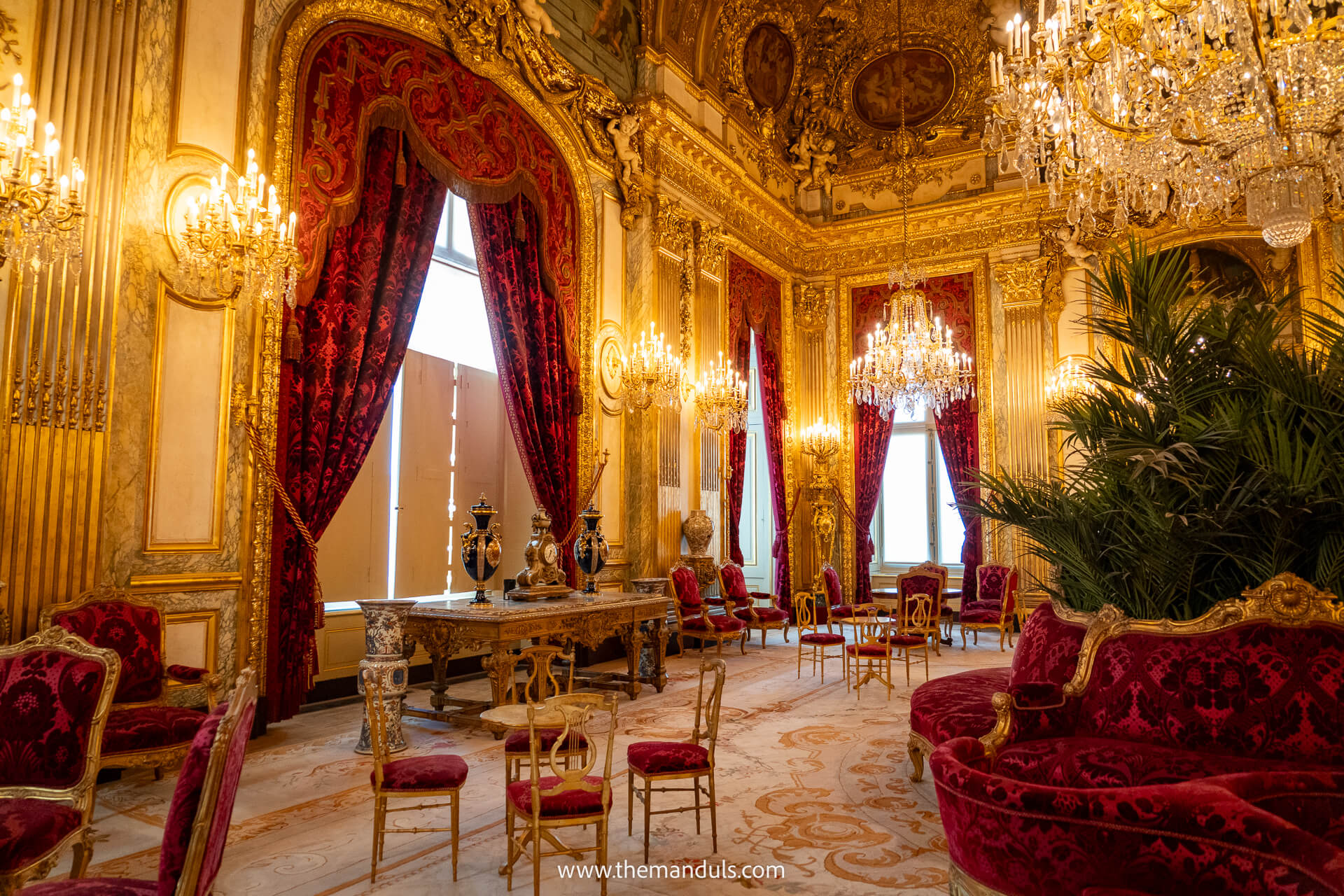
If you’re looking for something a bit different, head to the Decorative Arts section. This area is often quieter and showcases richly decorated interiors, furniture, and historic objects.
Our personal favorite here were the Napoleon III Apartments. The rooms are incredibly ornate, filled with chandeliers, gold details, velvet fabrics, and intricate ceiling decorations.
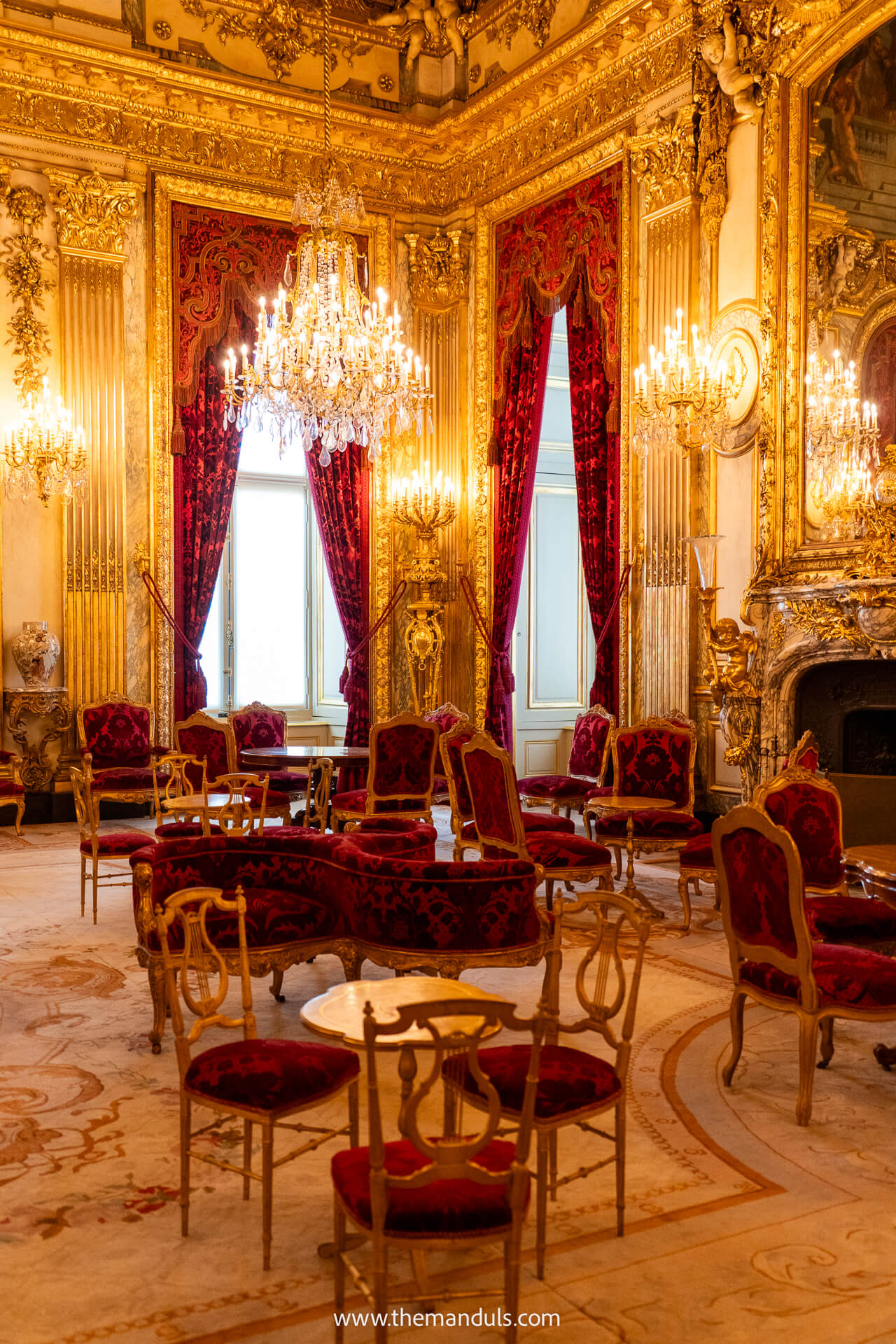
Even if you’re not usually interested in historical interiors, these rooms are very impressive.
If you enjoy these richly decorated interiors, we also recommend visiting the Palais Garnier, another masterpiece of Parisian architecture.
Louvre Architecture & Courtyards
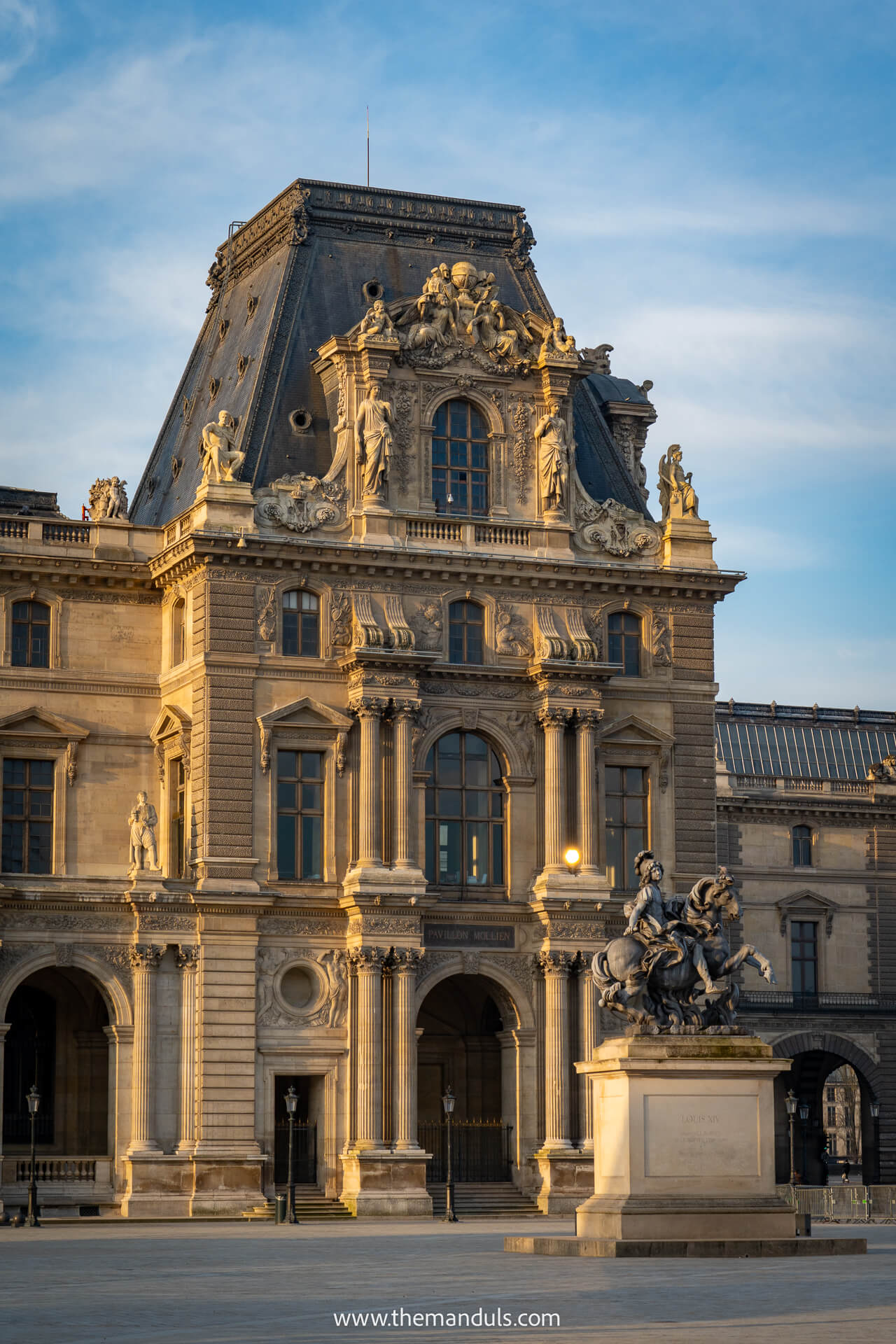
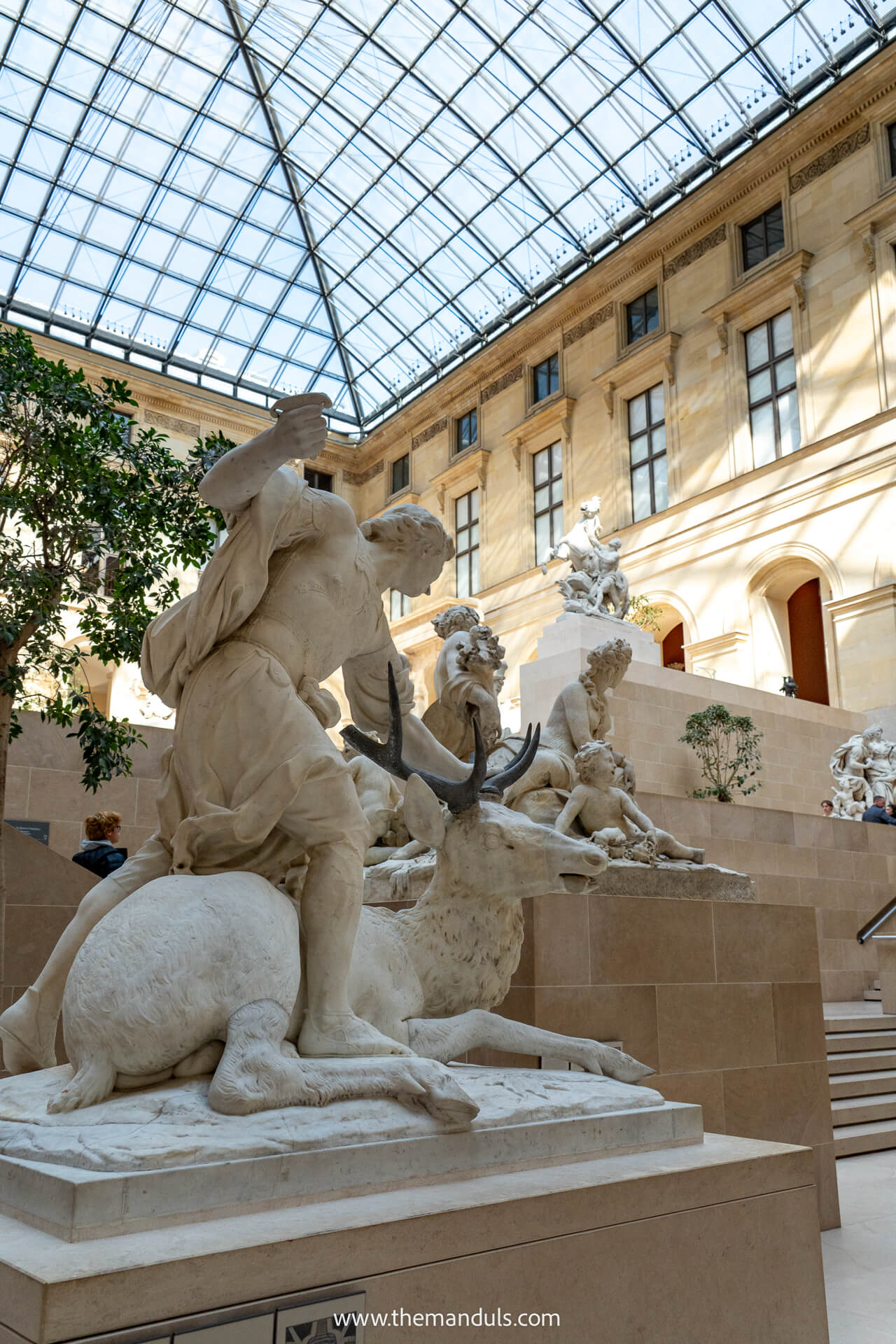
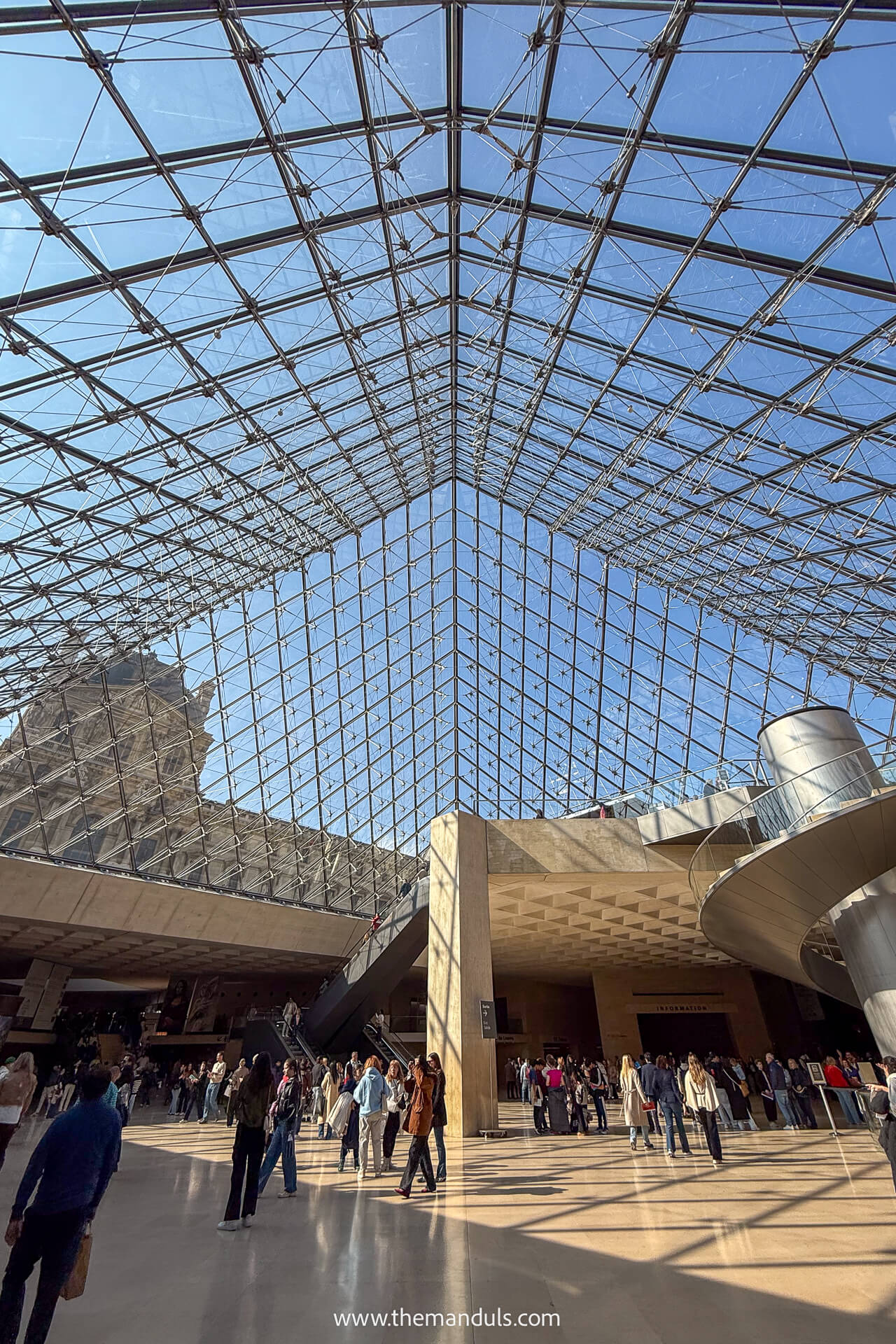
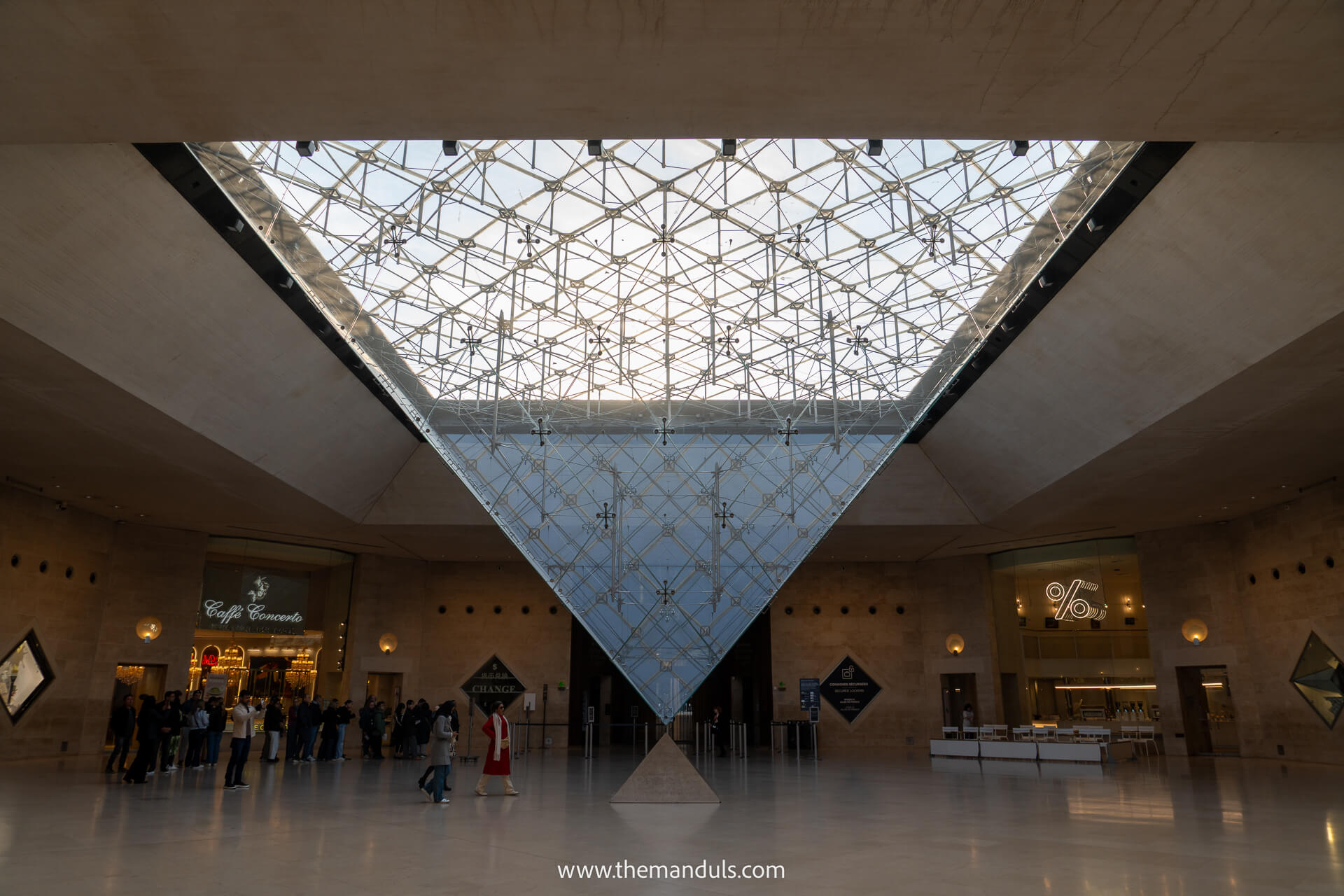
Beyond the artworks themselves, the Louvre is also about the building. The museum’s architecture is stunning, with grand staircases, glass ceilings, long corridors, and elegant courtyards.
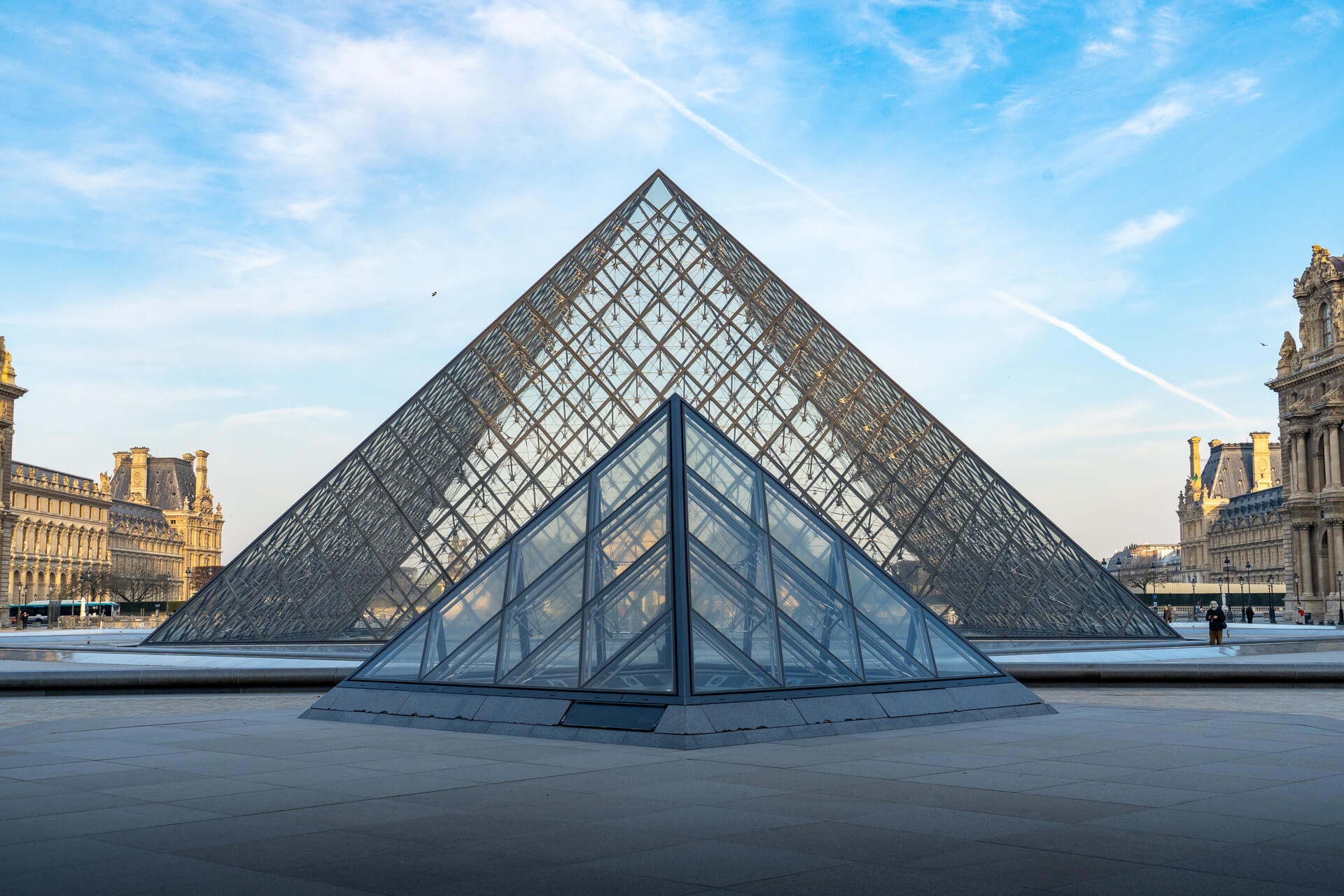
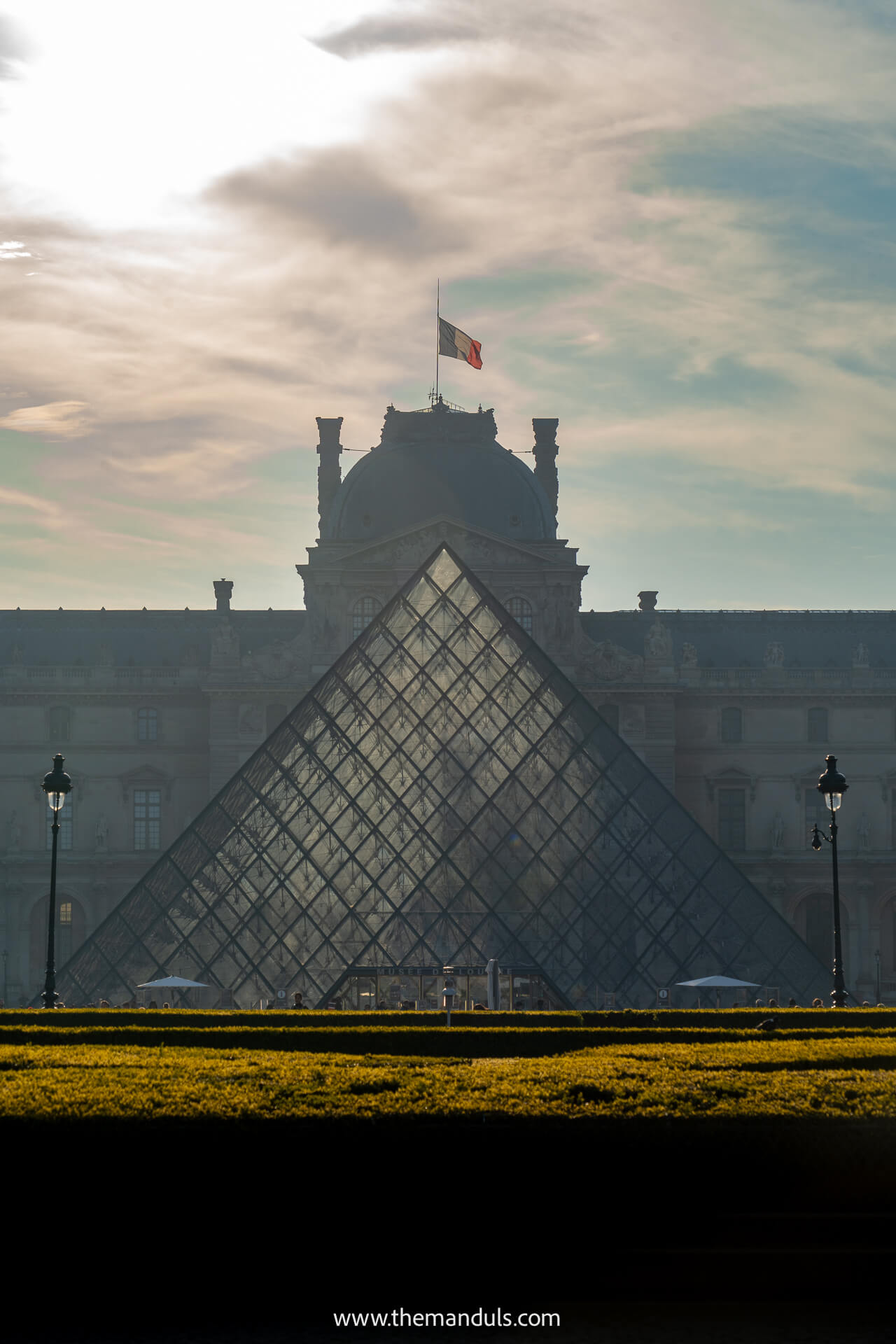
Don’t miss some of the beautiful courtyards, both outside and inside the museum. The most famous is Cour Napoléon, where you’ll find the iconic glass pyramid. Cour Carrée offers a more classical atmosphere, surrounded by elegant Renaissance facades.
Inside the museum, we also came across impressive covered courtyards such as Cour Marly and Cour Puget. These are filled with monumental sculptures. We especially enjoyed these areas because they combine art and architecture.
Tip: Choose 2–3 sections that interest you most and allow time to explore without rushing. Trying to see everything would quickly become overwhelming.
After exploring the museum, you can also take a walk through the nearby Tuileries Garden towards Place de la Concorde, where you’ll start to see views towards the Eiffel Tower in the distance.
If you’re planning to visit it as well, read our Eiffel Tower visitor guide with practical tips and ticket advice. You might also want to consider staying in one of the hotels with an Eiffel Tower view, where you can even watch the evening sparkle directly from your bed or private balcony.
Navigating Louvre
Even though there is an official Louvre map available online and you can also pick up a paper map inside the museum, we personally found it quite difficult to navigate using it.
Some of the passages shown on the map were closed during our visit, while others didn’t seem to lead exactly where we expected.
Because the museum is so large and divided into multiple wings and levels, it can sometimes feel a bit confusing to find specific artworks or sections.
Fortunately, there is plenty of staff throughout the museum, and we found them very helpful when asking for directions. If you’re unsure where to go, don’t hesitate to ask — it can save you quite a bit of time and unnecessary walking.
Louvre Tickets Explained
Ticket prices for the Louvre depend slightly on your residency status. The standard adult ticket costs €22, while visitors from outside the EEA may see prices around €32 depending on the ticket type or provider.
Visitors from the EEA under 25 years old have free entry, while all visitors under 18 get free entry regardless of nationality. The museum is also included in the Paris Museum Pass, although you still need to reserve a specific time slot in advance.
When purchasing your ticket online, you first select the date and preferred time slot, and then choose the ticket type.
Officially, entry is usually allowed within 30 minutes after your selected time slot. In our case, we even managed to enter about one hour earlier, but this may depend on staff and current crowd levels, so it’s not something to fully rely on.

Tip: We strongly recommend buying tickets only from the official Louvre website or from trusted, authorized resellers such as GetYourGuide. Scams and invalid tickets do occasionally happen.
How to Skip the Lines at the Louvre
The easiest way to skip the longest lines is to buy your ticket online in advance and choose a specific time slot. This allows you to enter through the priority line for ticket holders, which is typically much faster than the line for on-site ticket purchases.
Another useful tip is to arrive early in the morning or later in the afternoon, when crowds tend to be smaller. Midday is usually the busiest time.
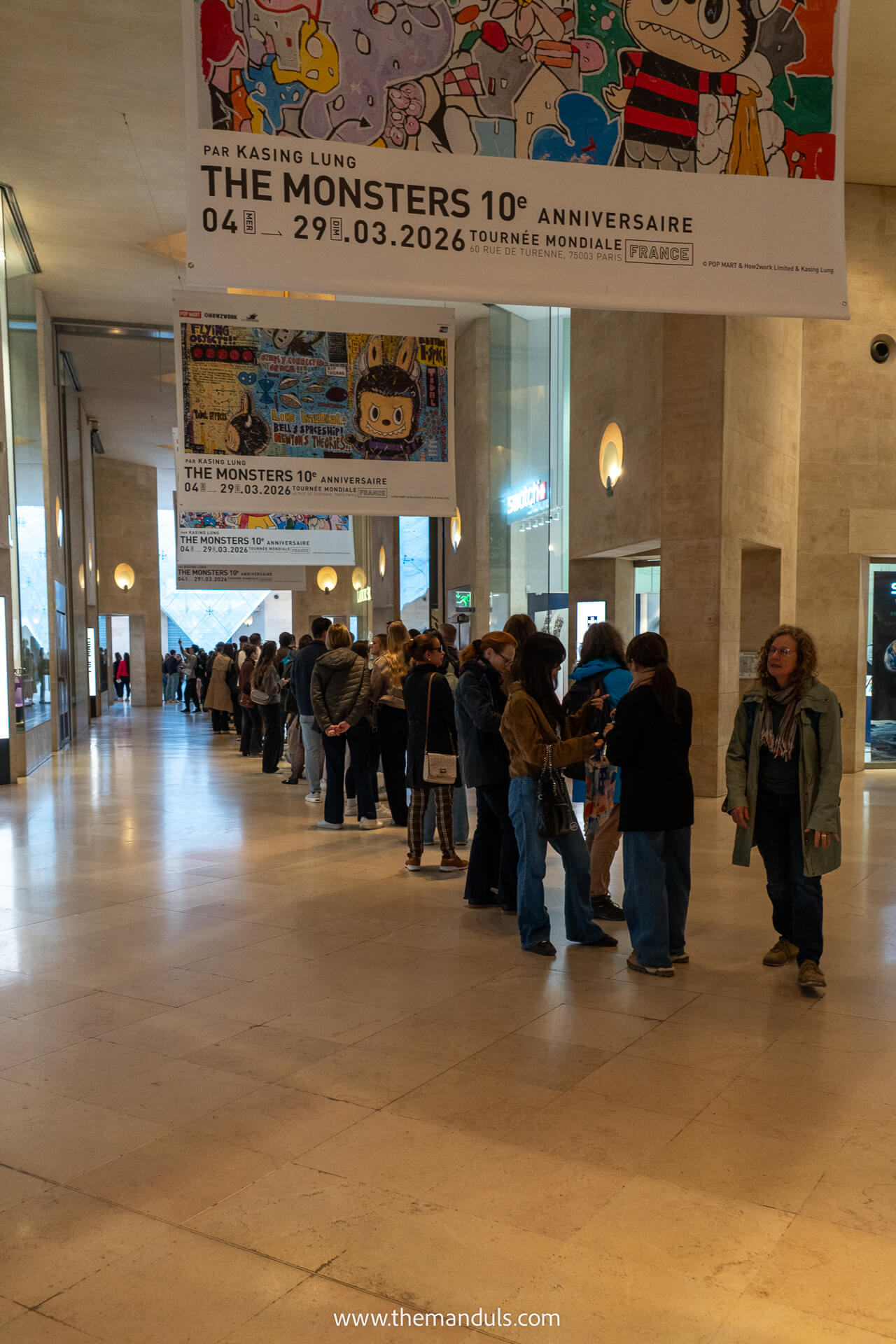
Many visitors head directly to the main pyramid entrance, but there are also alternative entrances that often have shorter queues, such as Carrousel du Louvre (underground shopping mall entrance) or Porte des Lions (when open).
If you want the smoothest possible experience, consider booking a skip-the-line guided tour. Besides faster entry, you’ll also benefit from a structured route through the museum, which can save time inside as well.
Best Time to Visit the Louvre
We visited the Louvre during the first available time slot in the morning, and the difference was noticeable. The queue was much shorter compared to when we were leaving just before noon.
If possible, we highly recommend choosing the earliest entry time of the day. Not only will you likely experience shorter security lines, but the galleries also feel more relaxed before peak crowds arrive.
Another interesting option can be later in the afternoon, when some tour groups have already left. However, keep in mind that entering later means you’ll have less time to explore, and the museum is so large that a shorter visit can feel a bit rushed.
It’s also worth remembering that the Louvre offers free entry on the first Friday of each month after 6 pm (except in July and August). While this can be a great way to save money, these evenings tend to be significantly more crowded.
Entrance & Security Process (What to Expect)
This is something to expect at almost every major attraction in Paris. Before entering the Louvre, you’ll go through a security check similar to an airport screening.
You’ll be asked to place your belongings into a tray, which then goes through an X-ray scanner, while you walk through a metal detector.
The process is generally well organized, but queues can form, especially later in the day when visitor numbers increase.
The Louvre prohibits certain items for safety reasons, including large suitcases, bulky luggage, sharp objects, glass bottles, and anything considered potentially dangerous.
If you’re visiting with a stroller, as we did, the process is usually straightforward. In many cases, you can leave the stroller as it is while it goes through the scanner. Occasionally, staff asked us to remove all the items from the stroller and place them in a tray.
One important thing to note is that the Louvre does not provide priority entry for visitors with strollers. Priority access is typically reserved only for visitors with disabilities.
FAQ
Yes, small backpacks are allowed. However, very large bags and suitcases are not permitted. Backpacks may need to be carried by hand in certain rooms for safety reasons.
Yes, the Louvre offers a free cloakroom where you can store coats, umbrellas, small bags, and other permitted items. Large luggage is not accepted.
Photography is allowed in most areas of the museum for personal use. Flash photography, tripods, and selfie sticks are generally not permitted.
Yes, there are several cafés and restaurants inside the museum, as well as a food court area near the Carrousel du Louvre shopping section.
Yes, most areas of the Louvre are accessible by elevator, and priority access is available for visitors with disabilities.
Unfortunately, re-entry is generally not allowed once you leave the museum, so it’s best to plan your visit accordingly.
Final Thoughts
The Louvre is one of those places that almost feels impossible to fully experience in a single visit — and that’s completely fine.
Instead of trying to see everything, we’d recommend focusing on a few highlights, enjoying the impressive architecture, and taking your time exploring the sections that interest you most.
Even though we’re not usually the biggest museum fans, the Louvre pleasantly surprised us. The sheer scale of the building, the variety of artworks, and the beautifully designed spaces made the visit much more enjoyable than we expected.
If you plan your visit in advance, choose a few key sections, and don’t put pressure on yourself to see everything, the Louvre can easily become one of the highlights of your time in Paris.