
This article contains affiliate links. Learn more in our affiliate disclosure.
Tokyo was the city we were most curious about before our trip to Japan — and the one that surprised us the most once we arrived. It’s massive, intense, and constantly moving, yet at the same time incredibly orderly and calm in ways we didn’t expect.
One moment you’re surrounded by neon lights and crowds, the next you’re walking through a quiet shrine or a peaceful park that feels worlds away from the city.
What makes Tokyo special is how different each neighbourhood feels. Every area has its own personality and atmosphere.
What we didn’t expect was just how long it would take to move between them. Getting from point A to B often took us much longer than it looked on the map — sometimes over an hour — and once you add shopping, food stops or simply spending longer somewhere you like, a day fills up very quickly.
This itinerary is based on how we experienced Tokyo ourselves and what we learned while planning our days there. We only had three full days, and it quickly became clear that it wasn’t enough.
That helped us understand which areas make sense to combine, where you lose too much time on transport, and how we’d plan a first visit differently next time.
If you want a deeper dive into individual spots, our full things to do in Tokyo guide covers the places themselves in more detail. Here, the focus is on how to fit them into four realistic days without spending half your trip crossing the city.
Is 4 Days Enough in Tokyo?
Yes, we think four days is enough for a first visit to Tokyo, especially if you plan your days around areas that are close to each other.
We only had three full days, and while we still managed to see a lot, it definitely felt rushed. There was very little room for spontaneous stops, shopping, or simply staying somewhere longer because we liked it.
With four days, you can cover the main areas at a much more comfortable pace without constantly jumping on trains. Five days or more would be even better if you want more time to explore, shop, or add places outside the main first-time highlights.
If you only have three days, it’s still doable — we’d just rather cut a few stops than try to squeeze this entire itinerary into less time.
4-Day Tokyo Itinerary at a Glance
Here’s how we’d divide four days in Tokyo based on what worked for us and what we learned during our trip:
Day 1 – Shinjuku
Shinjuku Gyoen → optional Hanazono Shrine → lunch & Shinjuku → Tokyo Metropolitan Government Building → Omoide Yokocho → Kabukicho & Godzilla Head → Golden Gai
Day 2 – Meiji Jingu, Harajuku & Shibuya
Meiji Jingu → Takeshita Street & Harajuku → Shibuya Crossing, Hachiko & 3D billboards → optional street go-karts → Shibuya Sky → Nonbei Yokocho
Day 3 – Asakusa, Ueno & Nezu
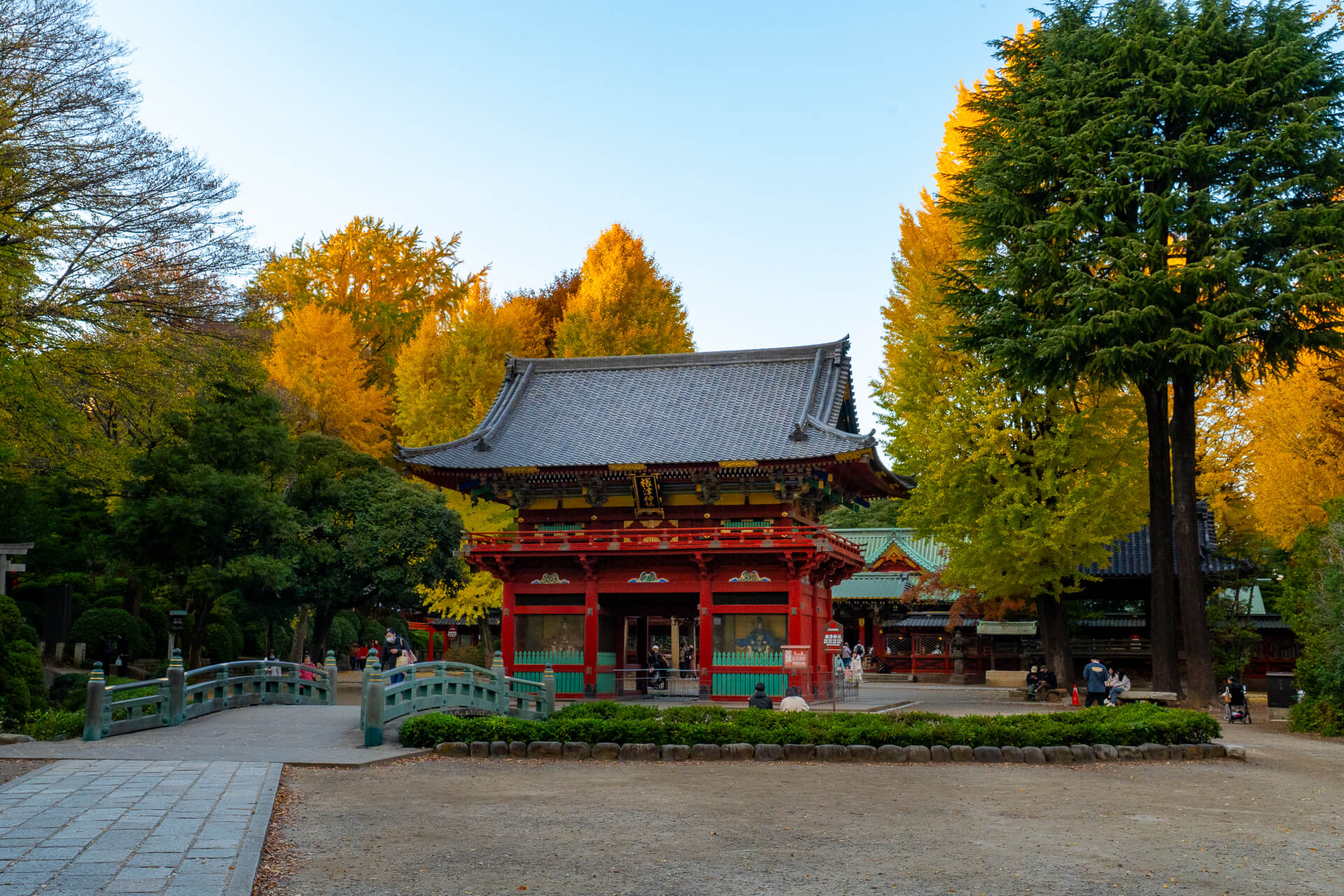
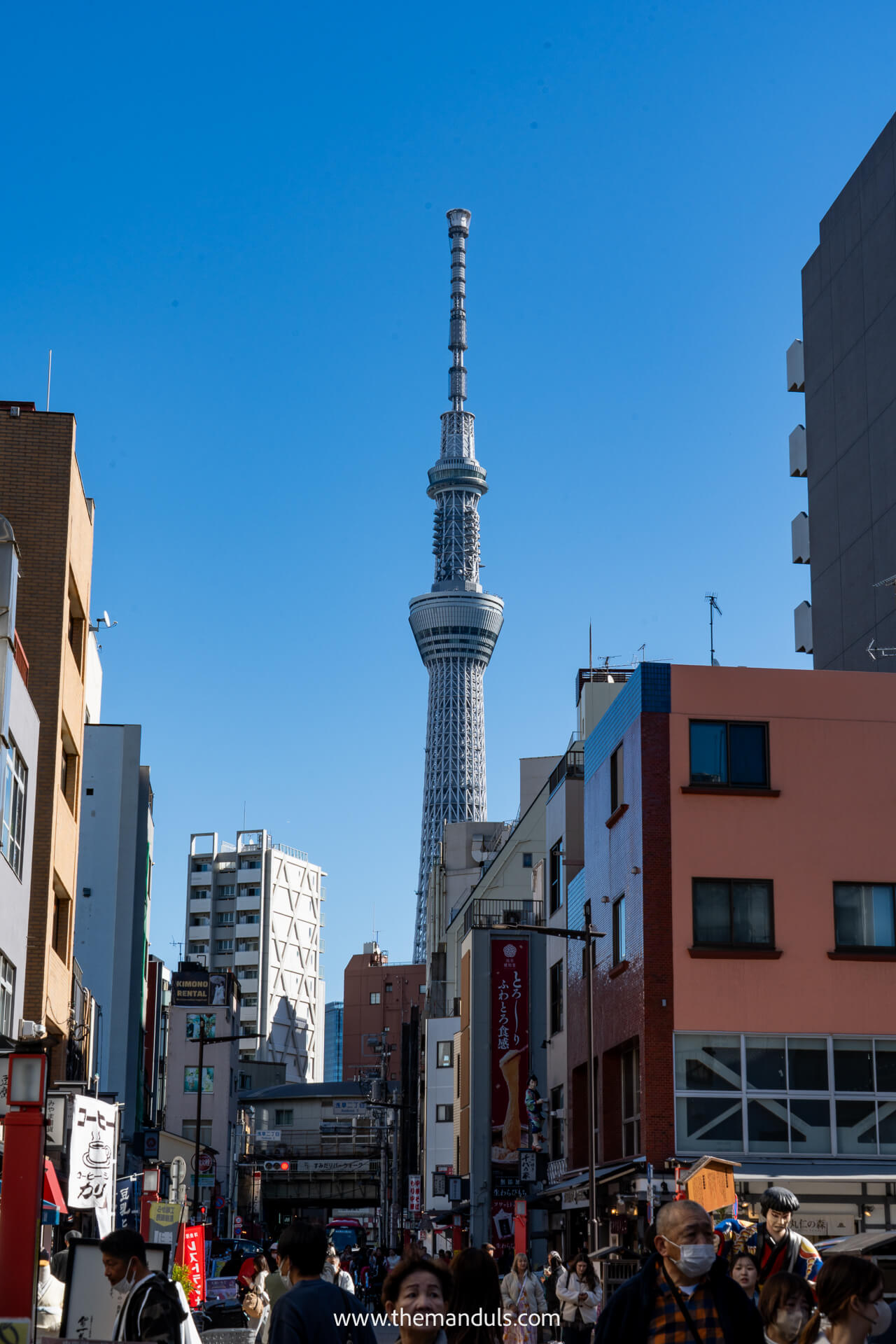
Kaminarimon Gate → Nakamise Street → Senso-ji → optional Tokyo Skytree → Ueno Park → Nezu Shrine
Day 4 – Tsukiji, Toyosu & Tokyo Tower
Tsukiji Outer Market → Yurikamome Line → optional teamLab Planets or Tokyo Toyosu Manyo Club → Tokyo Tower & Roppongi → seasonal illuminations
In a hurry?
These are our top hotel picks in Tokyo
⭐️⭐️⭐️ Keio Plaza Hotel Tokyo Premier Grand (our top pick) – Luxury hotel in Shinjuku with spacious rooms, skyline views, and lounge access.
👉 See prices & availability →
⭐️⭐️ Park Hotel Tokyo – Mid-range in Shiodome with art-filled interiors, skyline views, and quick access to Shiodome Station — a polished base without the chaos.
👉 See prices & availability →
⭐️ Shibuya Tokyu REI Hotel – Budget stay just minutes from Shibuya Crossing — ideal if you want comfort and convenience without overspending.
👉 See prices & availability →
Map of Our 4-Day Tokyo Itinerary
We grouped each day by area to avoid wasting too much time crossing Tokyo. The map below shows the exact route for all four days, including the main stops and the order that makes the most sense.
This was one of the biggest things we learned during our trip — places can look close on the map, but getting between different parts of Tokyo often takes much longer than expected.
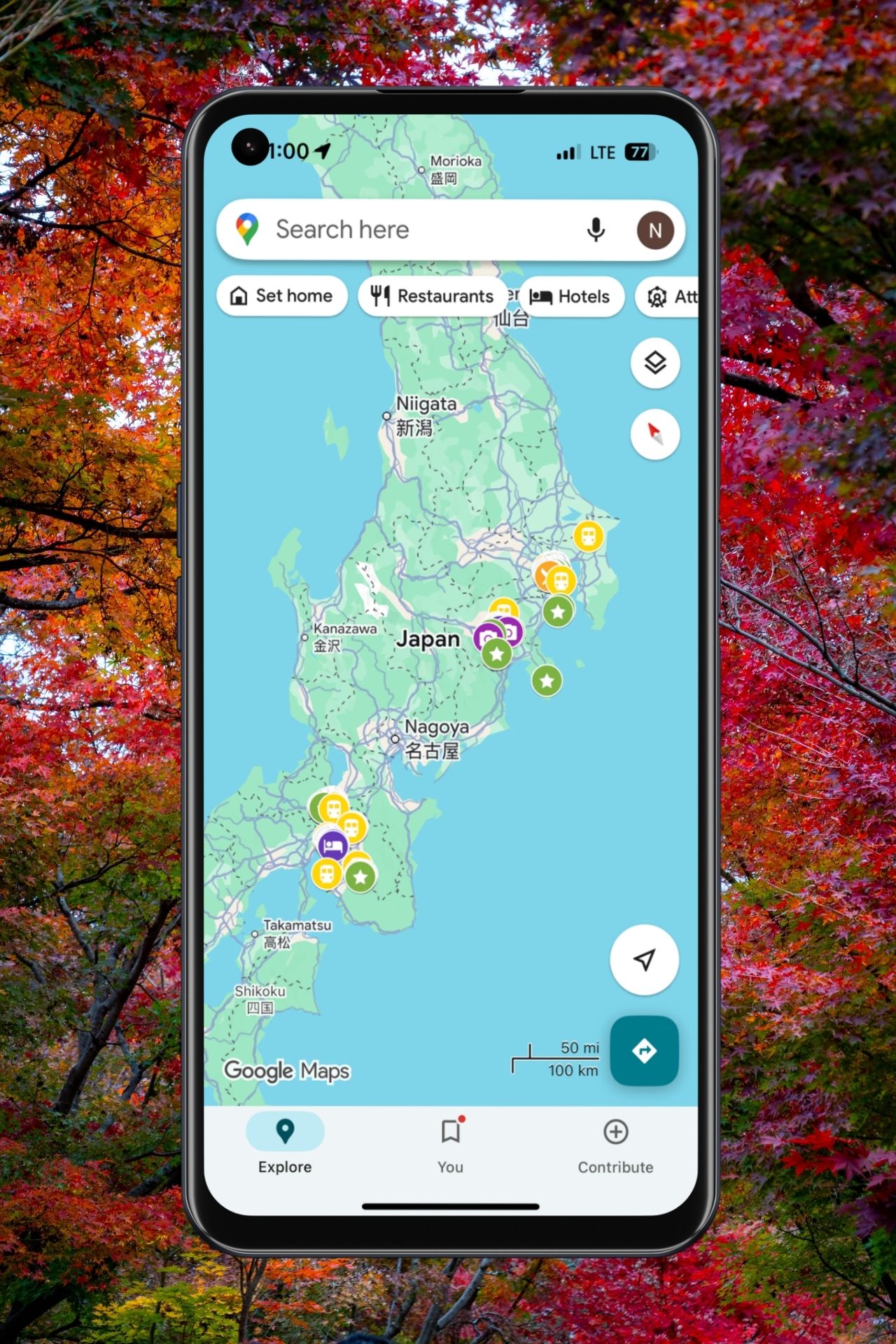
Our Japan Google Maps
Built from our real trips across Japan — only places we actually visited and loved.
No tourist traps. No random saves. Just a ready-to-use map that saves you hours of research.
219 handpicked spots, including:
📍 Highlights & hidden gems
🍜 Restaurants we’d go back to
🏨 Areas & hotels we’d book again
🗺️ Stops that fit into real, logical itineraries
Before You Start This Tokyo Itinerary
A few things will make this itinerary much easier:
- Start most days early. Tokyo gets busy quickly, and places like Senso-ji or Meiji Jingu are much nicer before the main crowds arrive.
- Use Google Maps for every transfer. Train routes can change depending on where you start, and we found that even simple-looking journeys often took longer than expected. Our guide to getting around Tokyo explains the main transport options in more detail.
- Keep a Suica or PASMO card on your phone or use a physical IC card. It makes jumping between trains and metro lines much easier.
- Book Shibuya Sky in advance if you want a specific time, especially around sunset.
- Leave some flexibility. Shopping, food stops and simply exploring a neighbourhood often took us longer than we planned, so we wouldn’t schedule every hour of the day.
- Check closure days before assigning the itinerary to specific weekdays. Shinjuku Gyoen is usually closed on Mondays, while many shops at Tsukiji close on Sundays, public holidays or selected Wednesdays. Swap the days around if needed and check the current opening schedule before your trip.
4-day itinerary for Tokyo
Day 1 – Shinjuku
We’d spend the first day entirely in Shinjuku. Keeping everything in one area makes the first day much easier and leaves enough room for lunch, shopping and spontaneous stops.
Suggested timing:
- 09:00–11:00 – Shinjuku Gyoen
- 11:00–11:15 – walk to optional Hanazono Shrine
- 11:30–15:30 – lunch, shopping & Shinjuku
- 60–90 min before sunset – Tokyo Metropolitan Government Building
- 10–15 min walk – Omoide Yokocho for dinner
- Evening – Kabukicho & Godzilla Head → Golden Gai
Morning – Shinjuku Gyoen
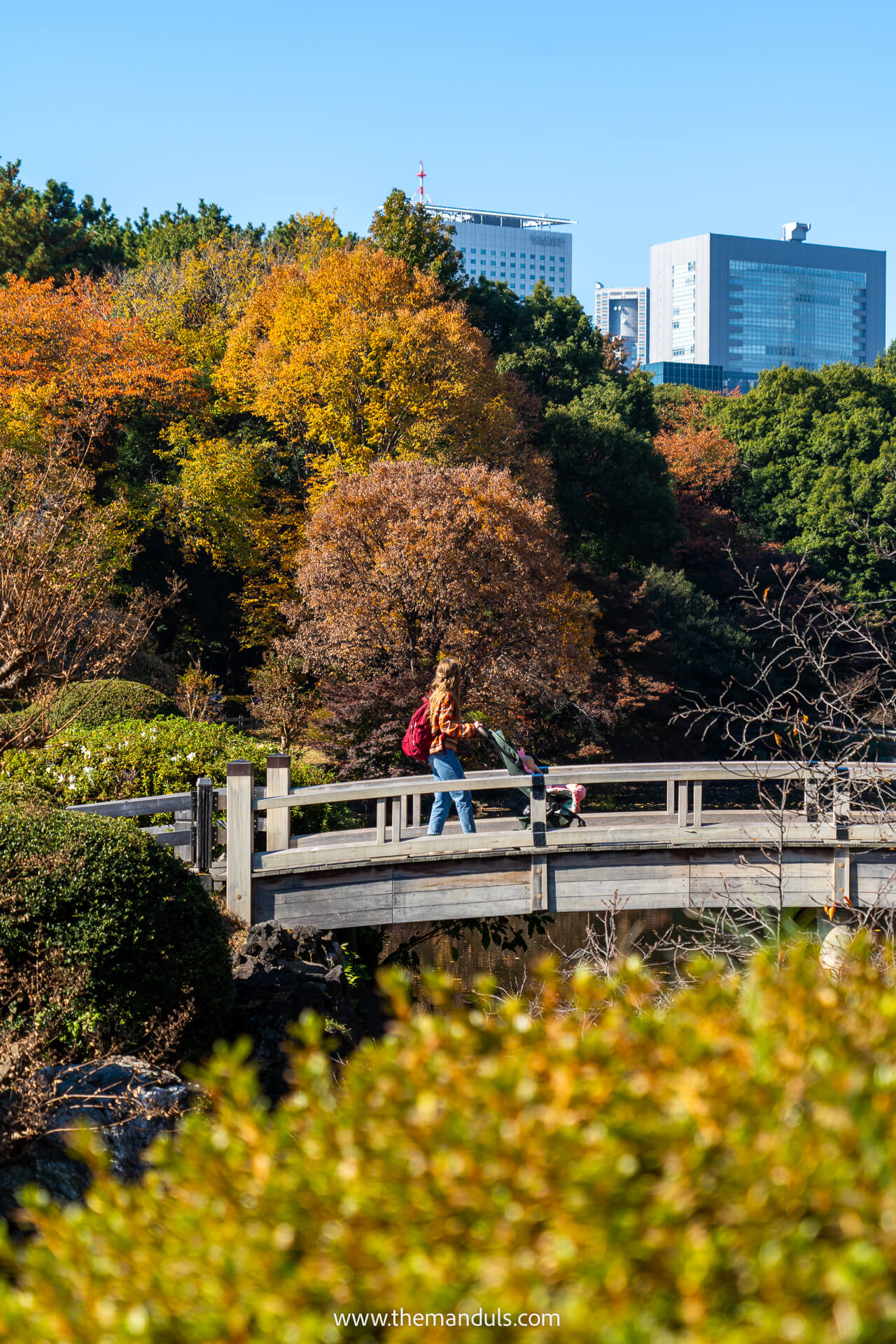
Start at Shinjuku Gyoen, which became our favorite park in Tokyo. We’d allow around 1.5–2 hours here, including some time for the greenhouse if you want to see it. The park is much bigger than it appears.
Optional – Hanazono Shrine
If you have time before lunch, make a short stop at Hanazono Shrine. It fits naturally into the route, but we wouldn’t plan the whole day around it.
Lunch & Shinjuku
Leave a good amount of time for lunch and simply exploring Shinjuku. We seriously underestimated how much time we’d spend shopping in Tokyo, so we’d avoid packing this part of the day too tightly.
Late Afternoon – Tokyo Metropolitan Government Building
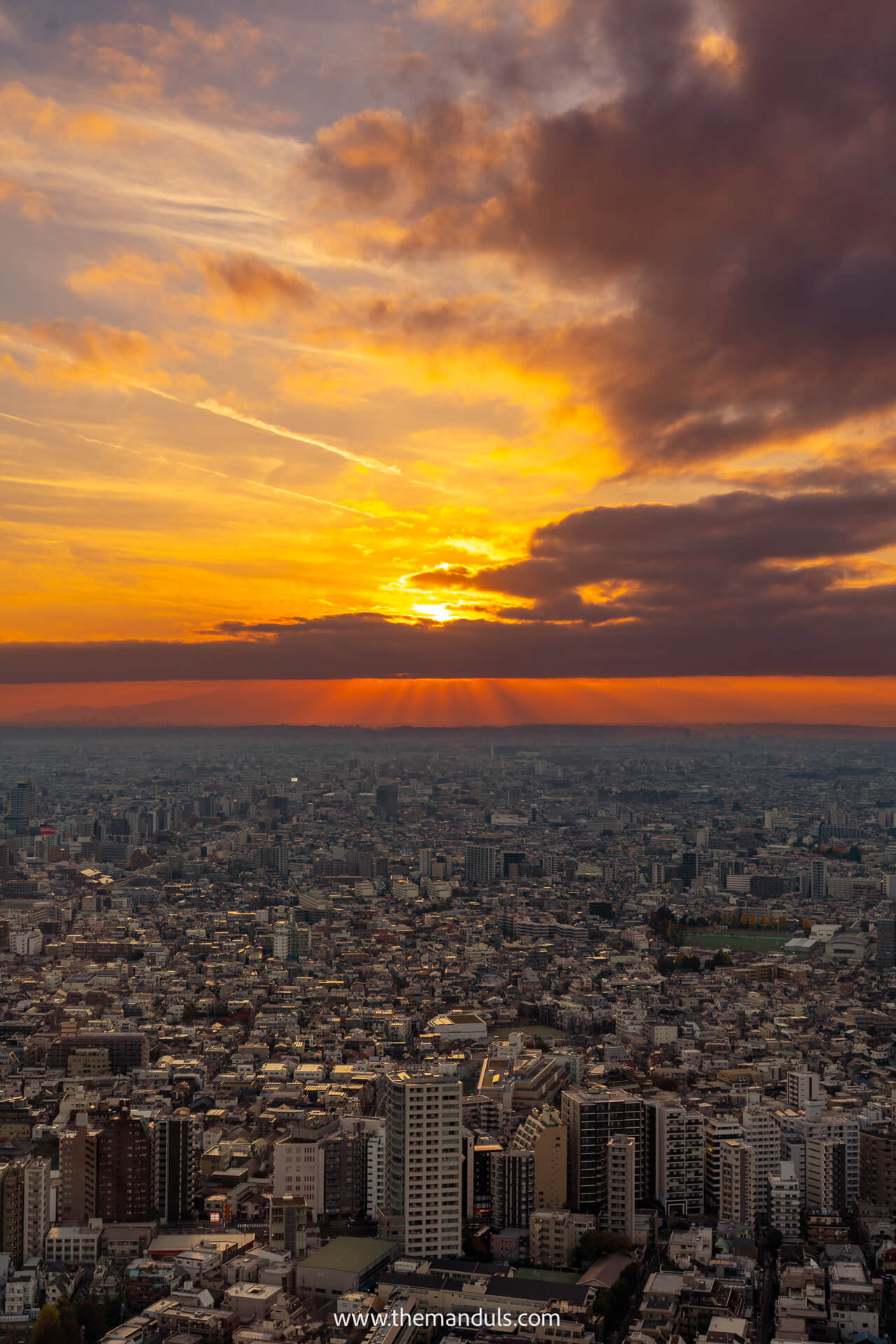
Head to the Tokyo Metropolitan Government Building later in the afternoon and try to time your visit around sunset.
We visited the viewpoint more than once, and this is one place where timing really matters. Arriving before sunset lets you see Tokyo in daylight and then watch the city light up after dark.
If you stay into the evening, check whether the projection mapping show on the Metropolitan Government Building is running that day — it’s an easy add-on since you’re already there.
Evening – Omoide Yokocho, Kabukicho & Golden Gai
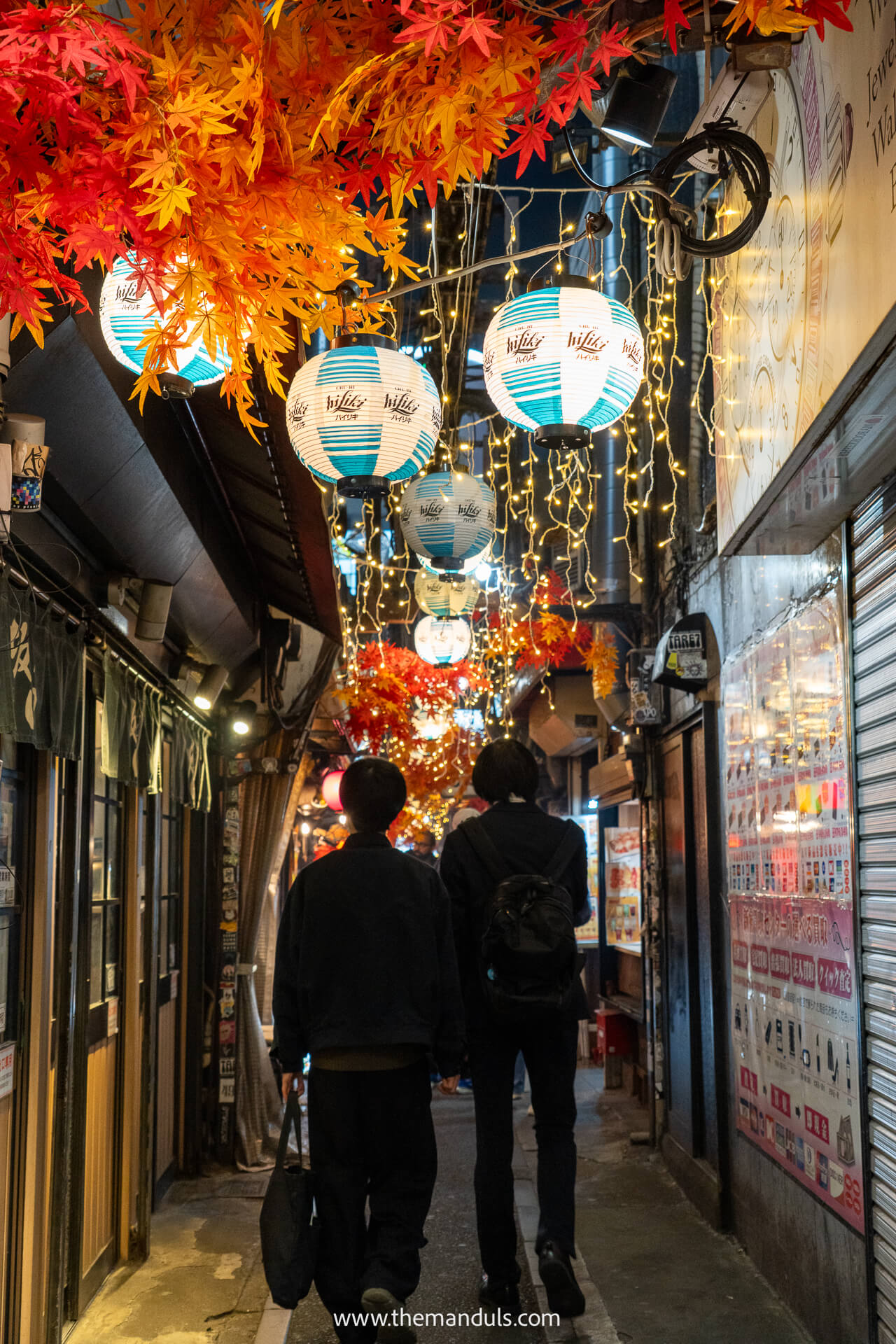
For dinner, head to Omoide Yokocho, a narrow street packed with tiny atmospheric bars and restaurants.
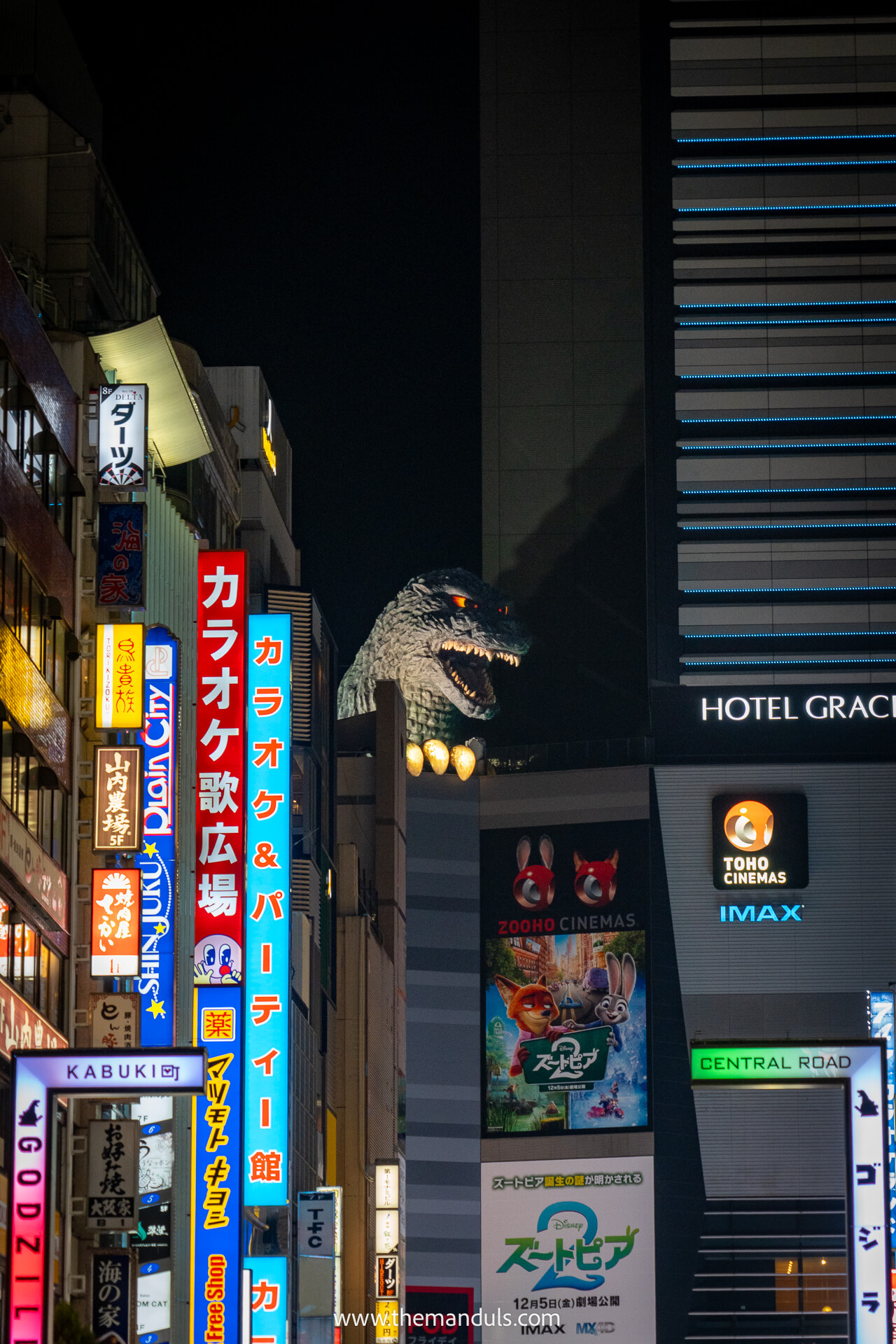
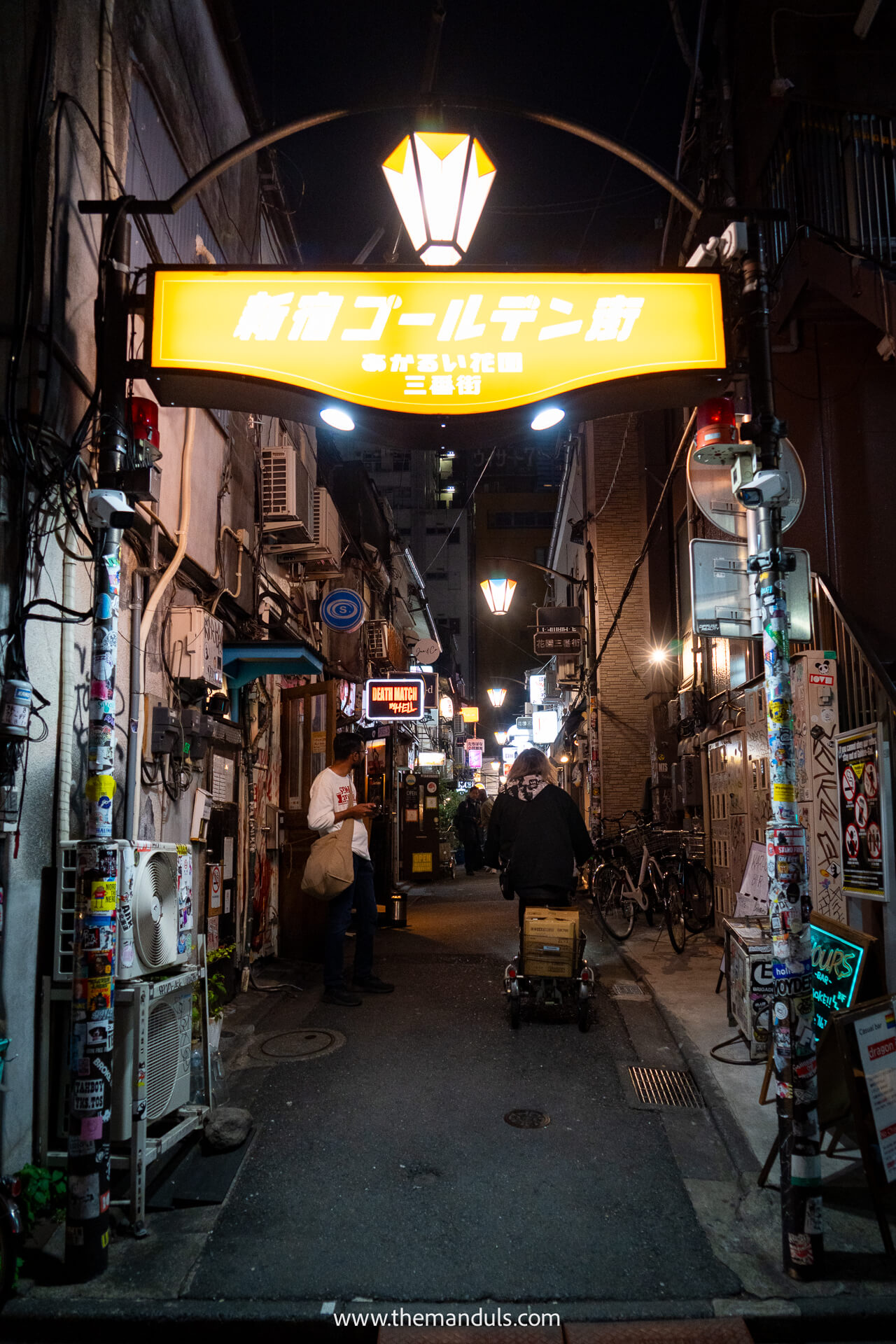
From there, walk through Kabukicho and stop by Godzilla Head before continuing to Golden Gai.
Golden Gai is worth walking through even if you don’t plan to drink. We skipped the bars ourselves because many were extremely small and smoky, but the narrow alleys still make it a great final stop for the night.
Day 2 – Meiji Jingu, Harajuku & Shibuya
Day 2 takes you from the calmer side of Tokyo around Meiji Jingu into busy Harajuku and Shibuya. Most of the stops are within walking distance.
Suggested timing:
- 09:00–10:00 – Meiji Jingu
- 10–15 min walk – Takeshita Street & Harajuku
- 10:15–13:30 – Harajuku, shopping & lunch
- Around 20 min walk – Shibuya
- 14:00–sunset – Shibuya Crossing, Hachiko, 3D billboards & free time
- Sunset – Shibuya Sky
- Evening – Nonbei Yokocho
Morning – Meiji Jingu
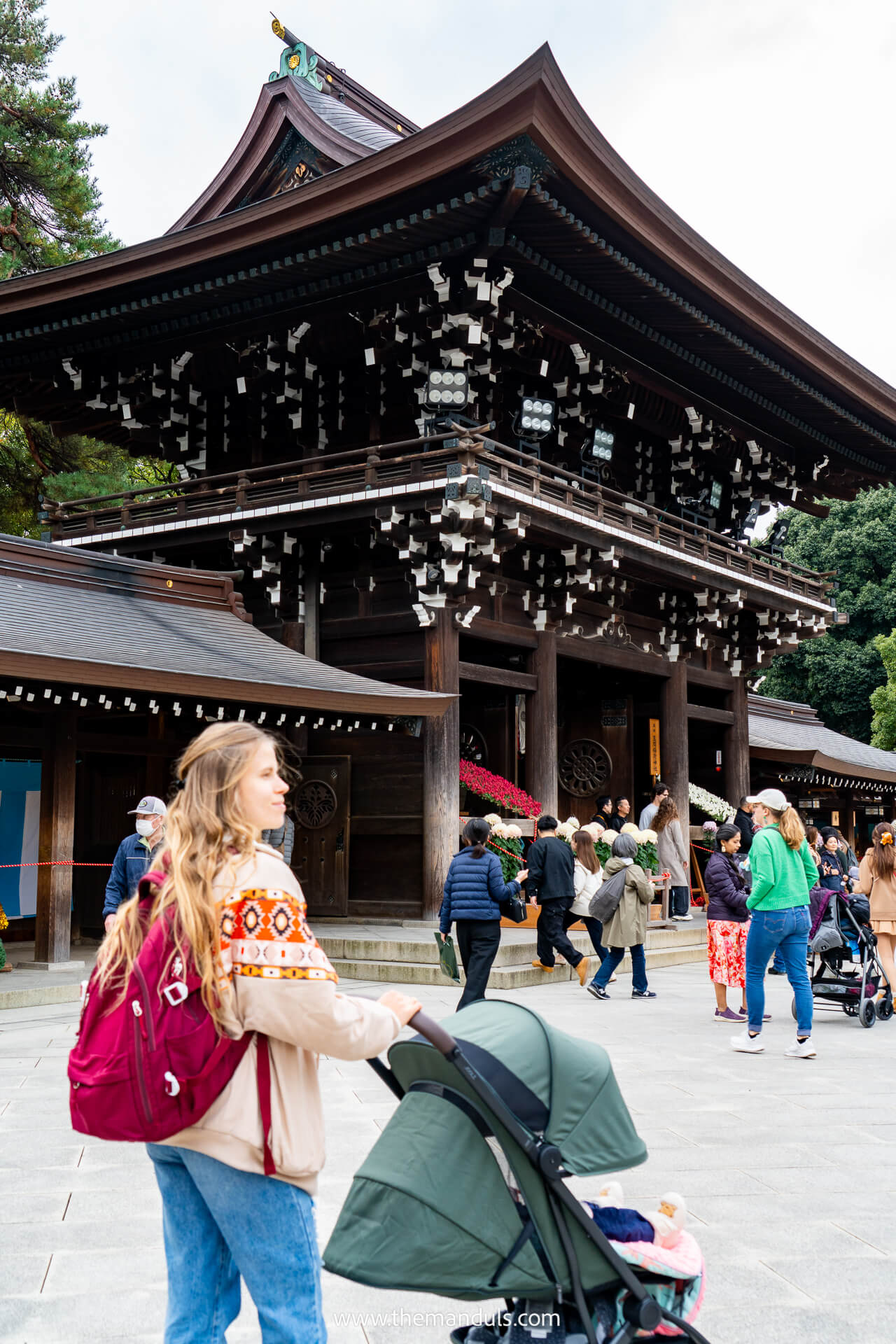
Start the morning at Meiji Jingu. We’d allow around 1 hour here — enough time to walk through the forest, explore the shrine grounds, and enjoy the calm before heading into much busier Harajuku.
Late Morning – Takeshita Street & Harajuku
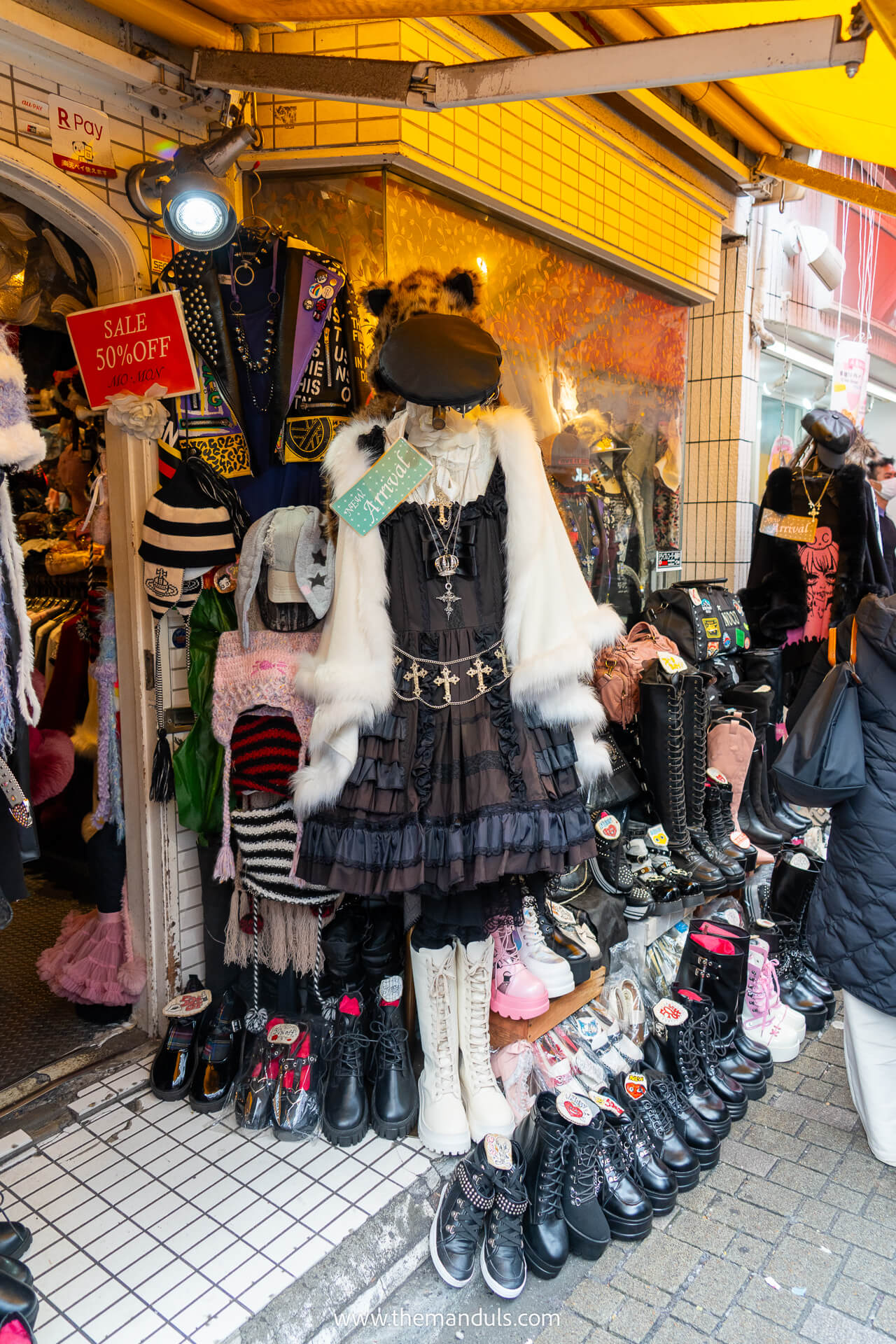
From Meiji Jingu, walk straight to Takeshita Street. It’s loud, colourful and usually packed.
This is another part of Tokyo where we’d leave some extra time for shopping. There are plenty of stores around Harajuku, and it’s very easy to spend longer here than planned.
Stop for lunch around Harajuku before continuing towards Shibuya.
Afternoon – Shibuya
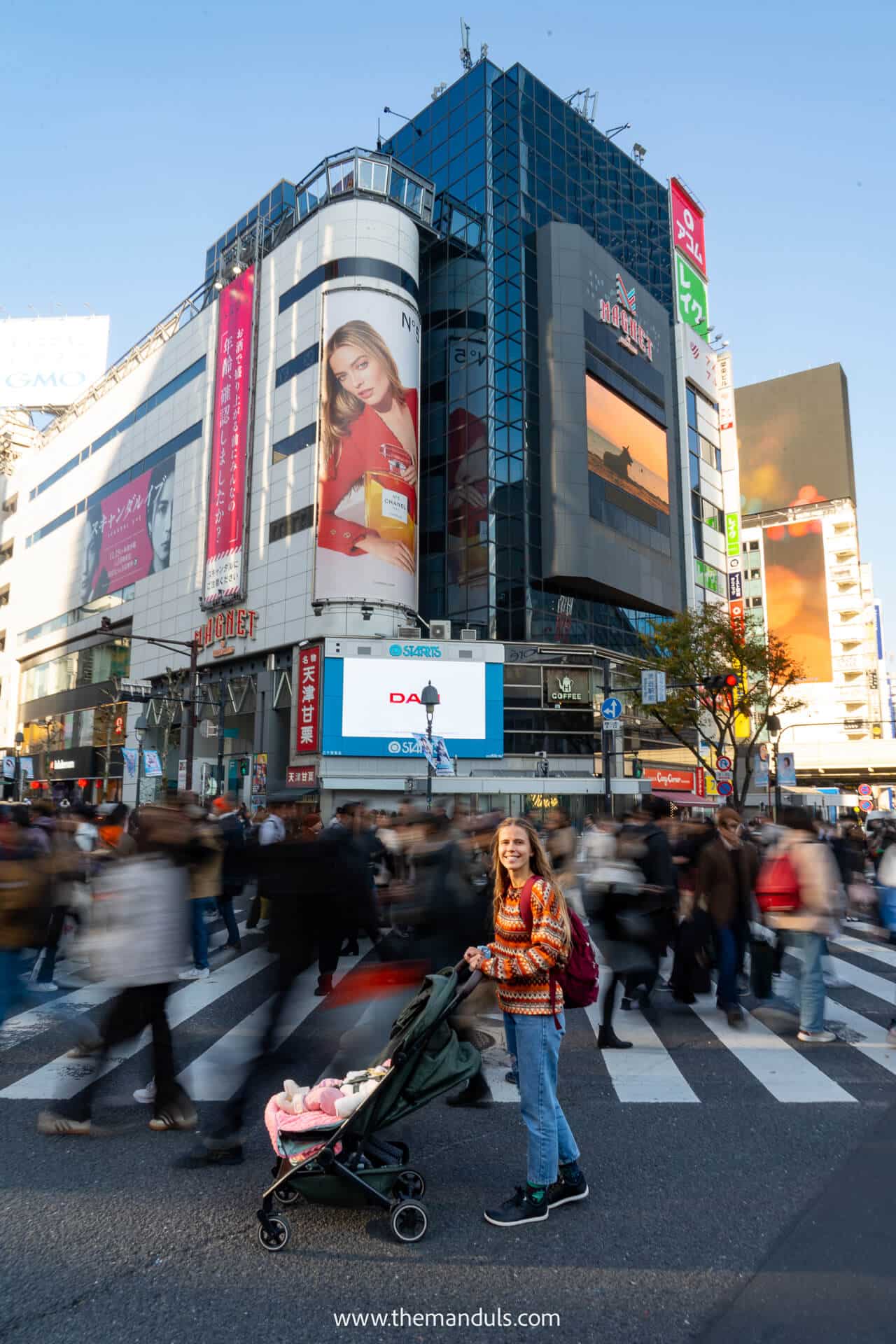
Continue towards Shibuya and group the main sights around the station together: Hachiko Statue, Shibuya Scramble Crossing, and the 3D billboards.
Hachiko only needs a quick stop — it was very crowded when we visited — while the crossing and surrounding streets are worth leaving more time for simply wandering around.
You’ll probably also see the street go-karts driving around Shibuya. We didn’t join one ourselves, but if that’s something you want to try, book a time in advance and plan the rest of the afternoon around it.
Sunset – Shibuya Sky
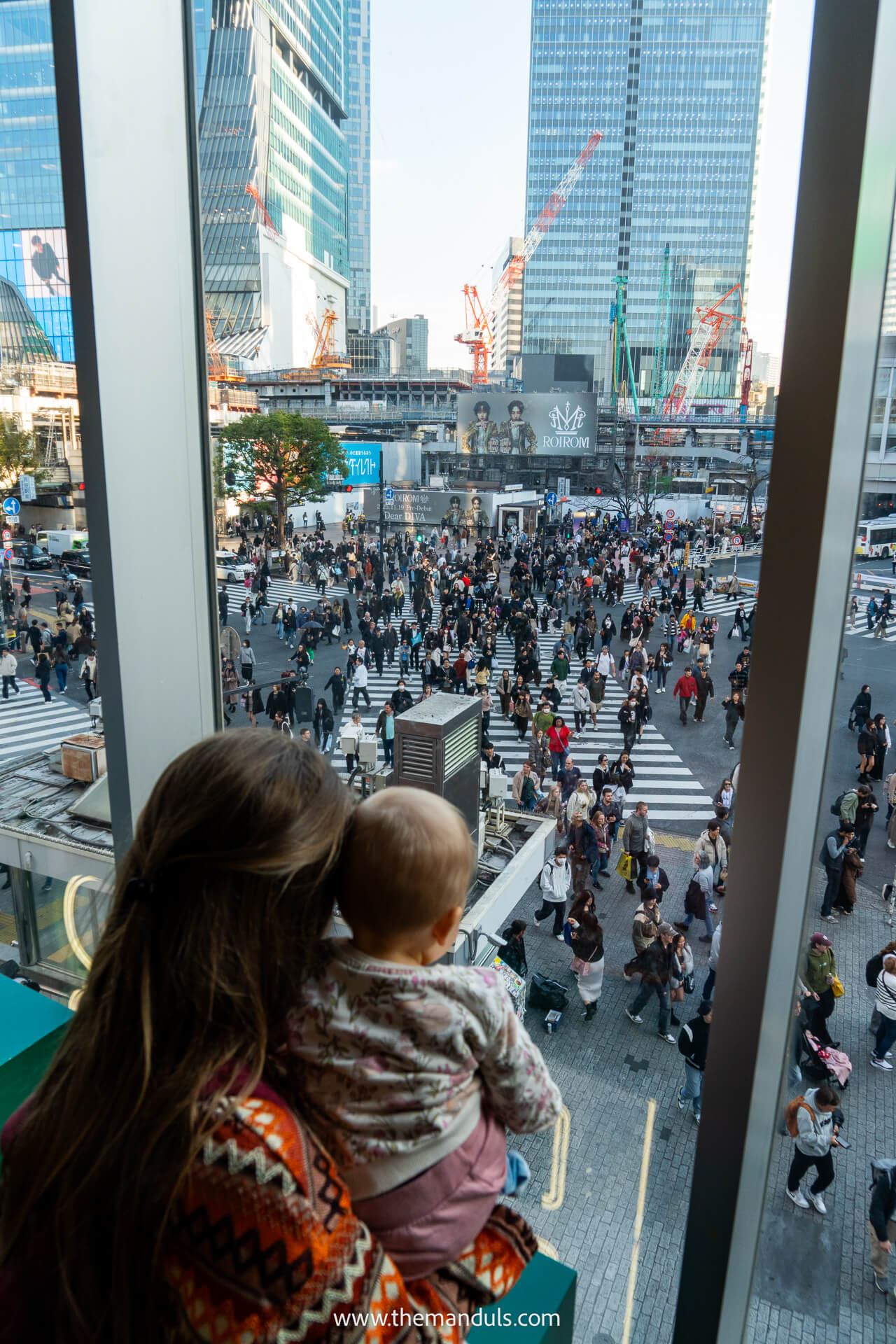
We’d make Shibuya Sky the main fixed point of the day and try to book a slot around sunset.
If Shibuya Sky is sold out, the Starbucks overlooking Shibuya Crossing is an easy alternative for seeing the crossing from above.
Evening – Nonbei Yokocho
Finish the day at Nonbei Yokocho, a small alley filled with tiny bars and eateries close to Shibuya Station.
After the crowds and bright lights around the crossing, we liked how much smaller and more old-fashioned this area felt.
Day 3 – Asakusa, Ueno & Nezu
Day 3 starts in Asakusa before continuing to Ueno and Nezu Shrine. If you start early enough, you can also add Tokyo Skytree.
Suggested timing:
- 08:30–11:00 – Asakusa
- 11:20–12:30 – optional Tokyo Skytree
- 12:30–14:00 – transfer to Ueno & lunch
- 14:00–16:00 – Ueno Park
- 20–25 min walk – Nezu Shrine
- 16:20–17:00 – Nezu Shrine
Skipping Tokyo Skytree gives you an extra 1–2 hours for lunch, Ueno or a slower morning in Asakusa.
Morning – Asakusa
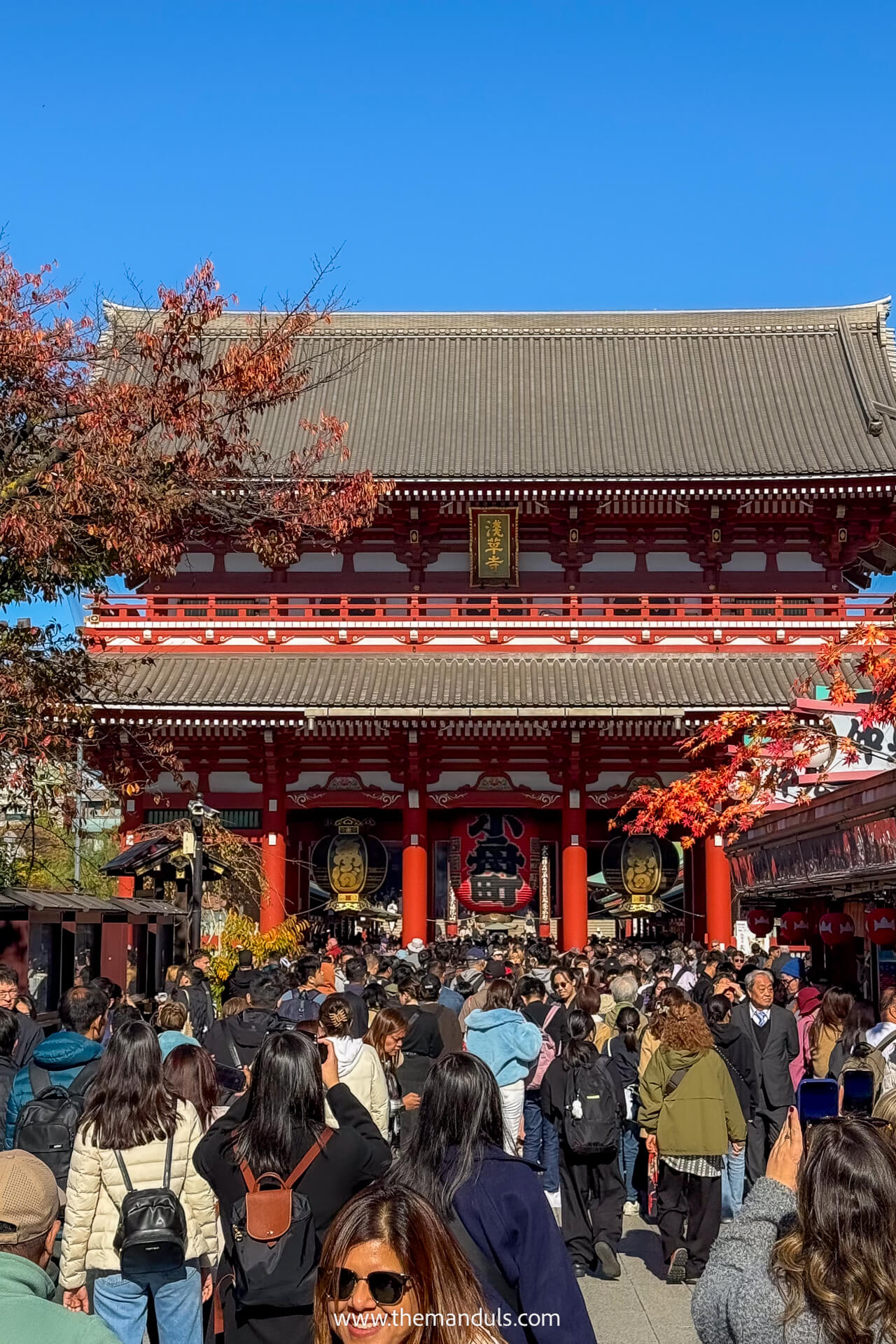
Start at Kaminarimon Gate and walk through Nakamise Street towards Senso-ji.
Asakusa felt like one of the busiest places we visited in Tokyo. Nakamise Street was absolutely packed when we were there, so if you want it even slightly calmer, we’d definitely come earlier than we did.
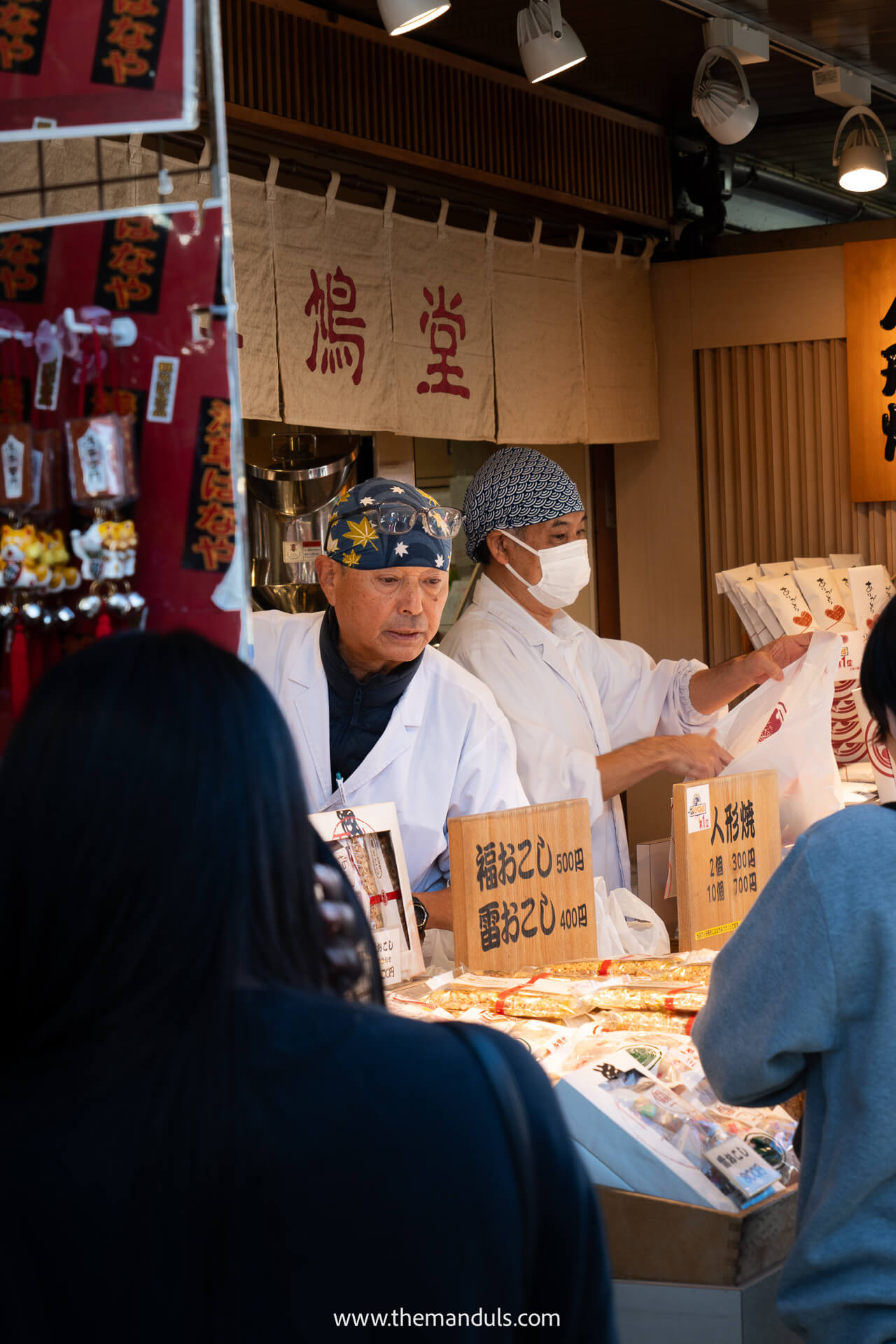
Also leave more time here than you might expect. There are lots of small street-food stalls and shops along Nakamise and around Senso-ji, so it’s very easy to spend a couple of hours just wandering, trying food and exploring the surrounding streets.
We’d allow around 2–3 hours for Asakusa rather than rushing through it.
Optional – Tokyo Skytree
If you start the day early and still have enough time, you can continue to Tokyo Skytree before heading to Ueno.
We actually skipped it because we started our day too late and didn’t want to rush the rest of the itinerary. If you do want to visit the observation deck, treat it as a proper stop and allow extra time rather than trying to squeeze it in.
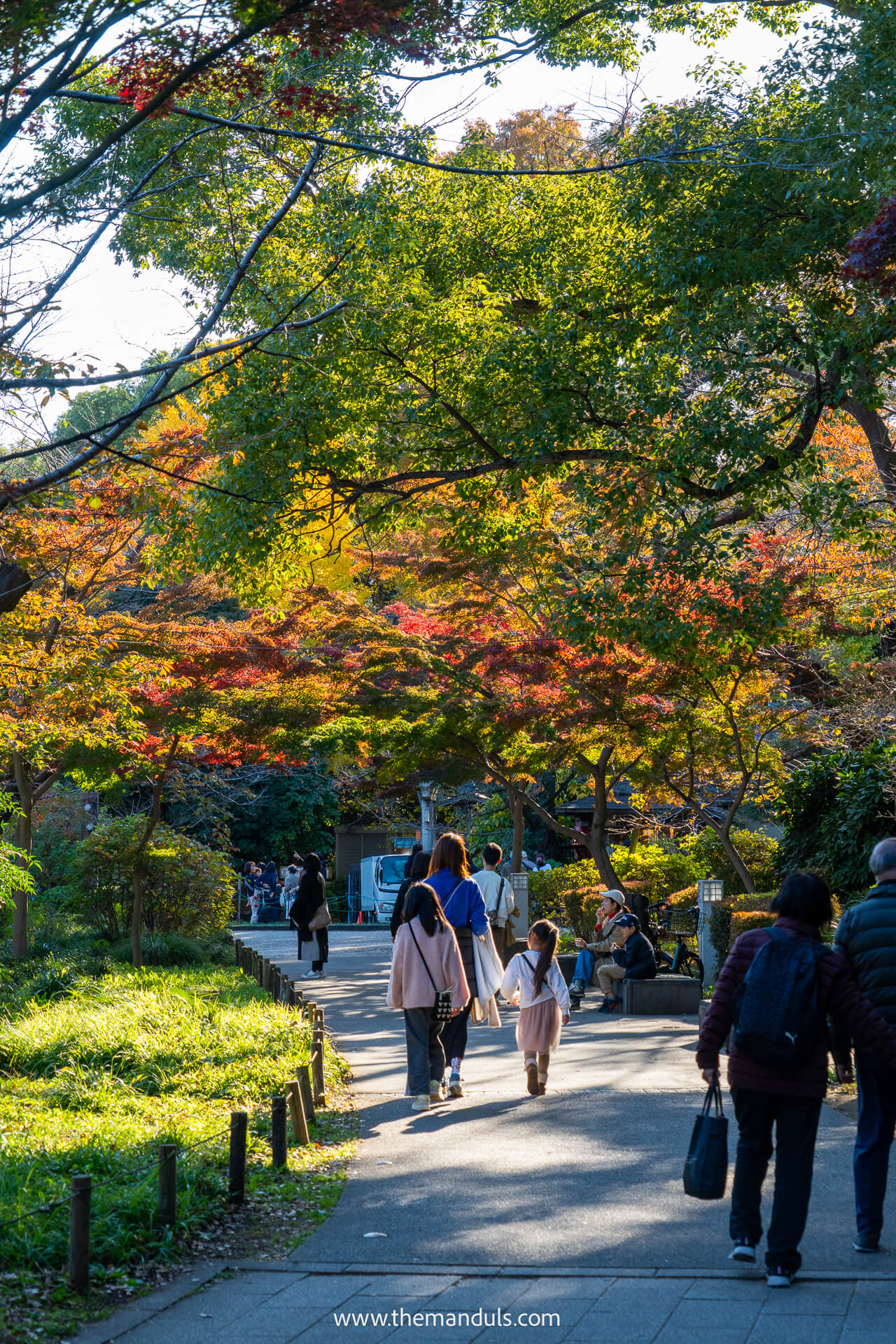
Afternoon – Ueno Park
Continue to Ueno Park in the afternoon. The park is huge, so how much time you need depends on whether you’re simply walking around or also planning to visit one of the museums.
Late Afternoon – Nezu Shrine
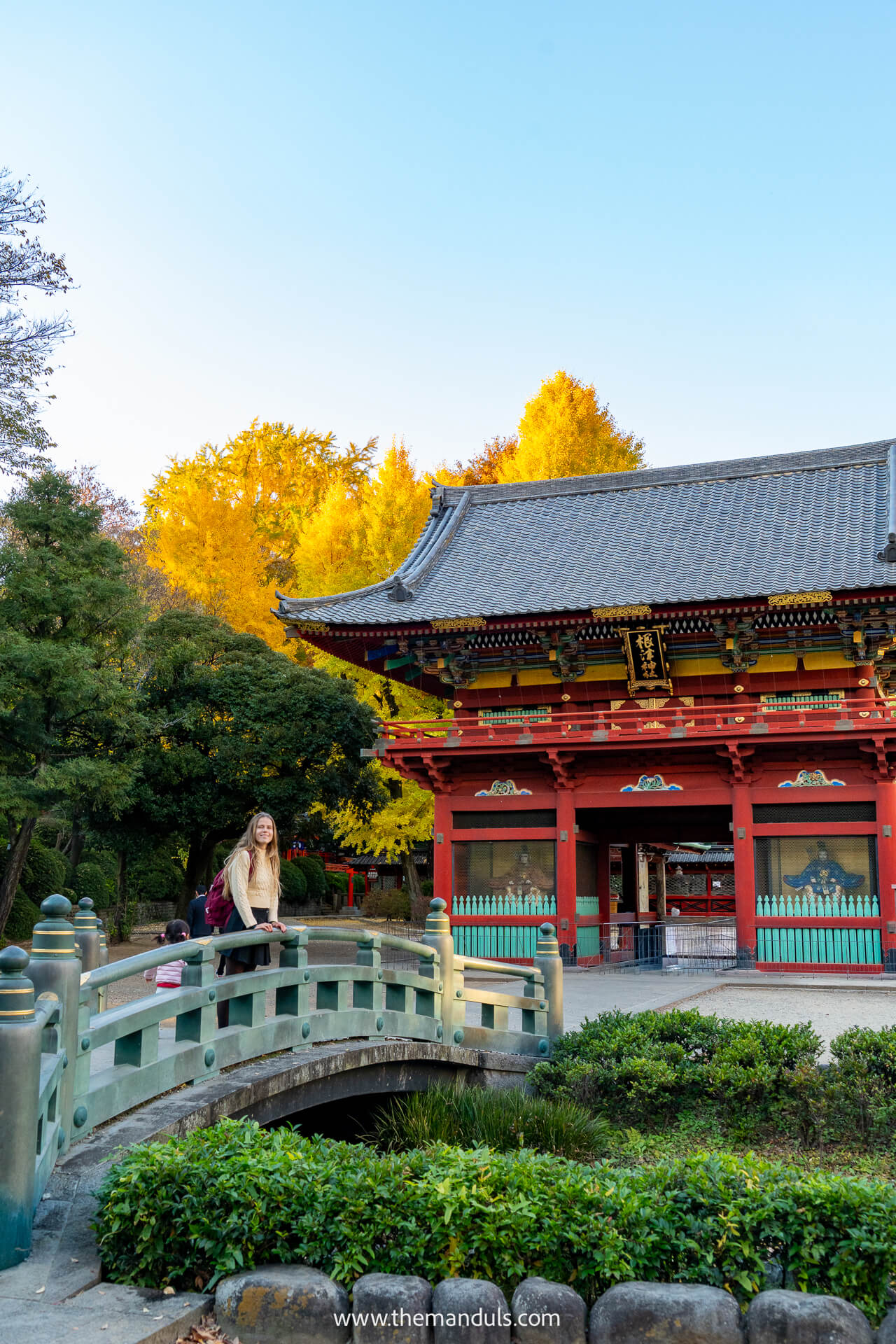
Finish at Nezu Shrine, which felt much calmer after busy Asakusa and Ueno.
It doesn’t require much time, so it works well as the final stop of the day. Just make sure you don’t arrive too late, it’s closing time is published as 5 PM.
Day 4 – Tsukiji, Yurikamome Line & Tokyo Tower
Day 4 takes you from Tsukiji towards Tokyo Bay before finishing around Tokyo Tower and Roppongi. If you want to visit teamLab or an onsen, this is the easiest day to add either one.
Suggested timing:
- 09:00–11:00 – Tsukiji Outer Market
- 11:00–11:30 – walk to Shimbashi Station
- 11:30–12:00 – Yurikamome Line to Toyosu
- 12:00–15:30 – teamLab Planets or Tokyo Toyosu Manyo Club
- 15:30–16:15 – transfer to Tokyo Tower
- 16:15–17:30 – Tokyo Tower area
- From 18:00 – Roppongi, dinner & seasonal illuminations
Morning – Tsukiji Outer Market
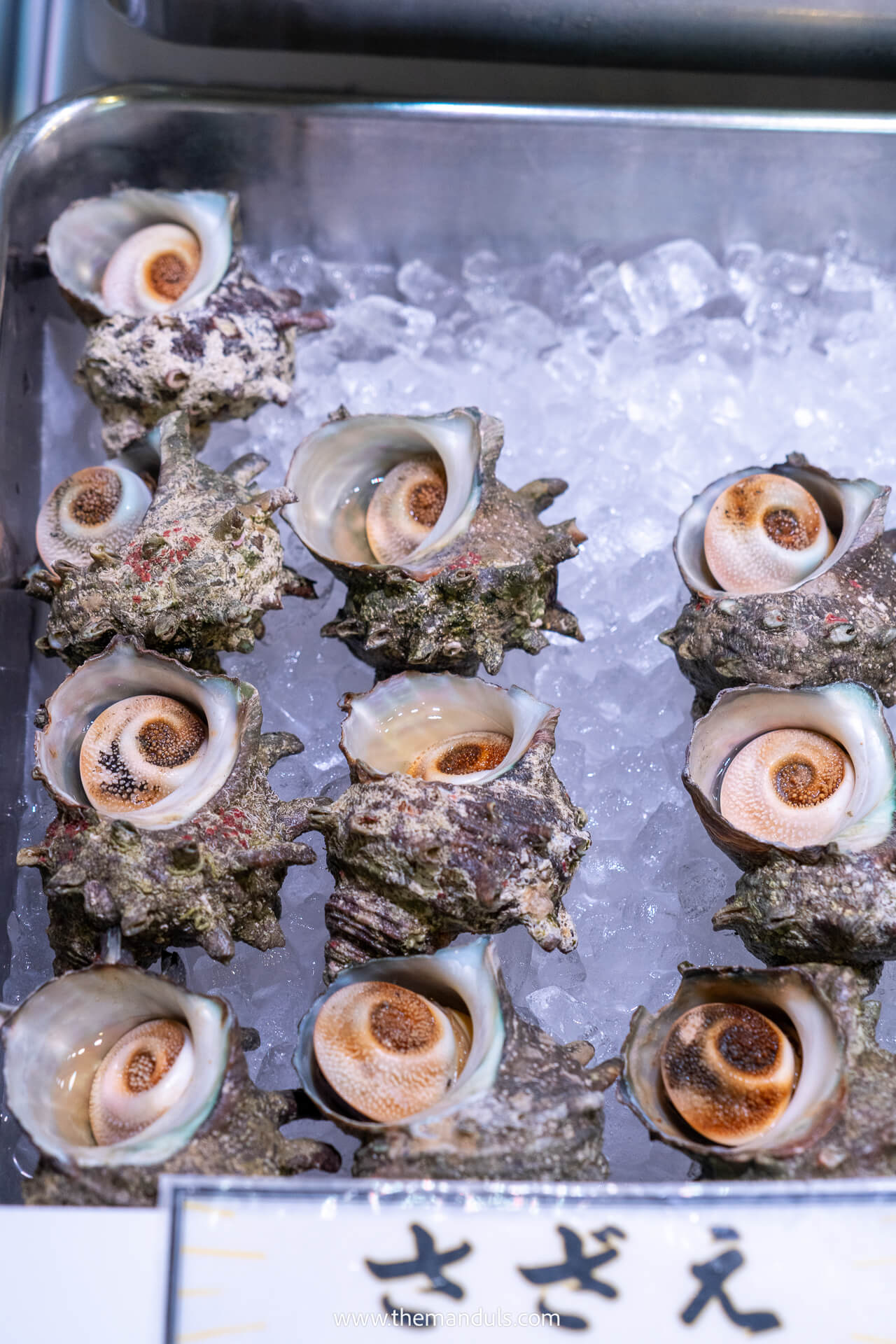
Start at Tsukiji Outer Market and arrive hungry.
Instead of planning a proper breakfast, we’d do what we did and try different things as you walk around. Fresh tuna sushi was our favourite, but there are plenty of small stalls, so leave enough time for a few stops.
Late Morning – Yurikamome Line
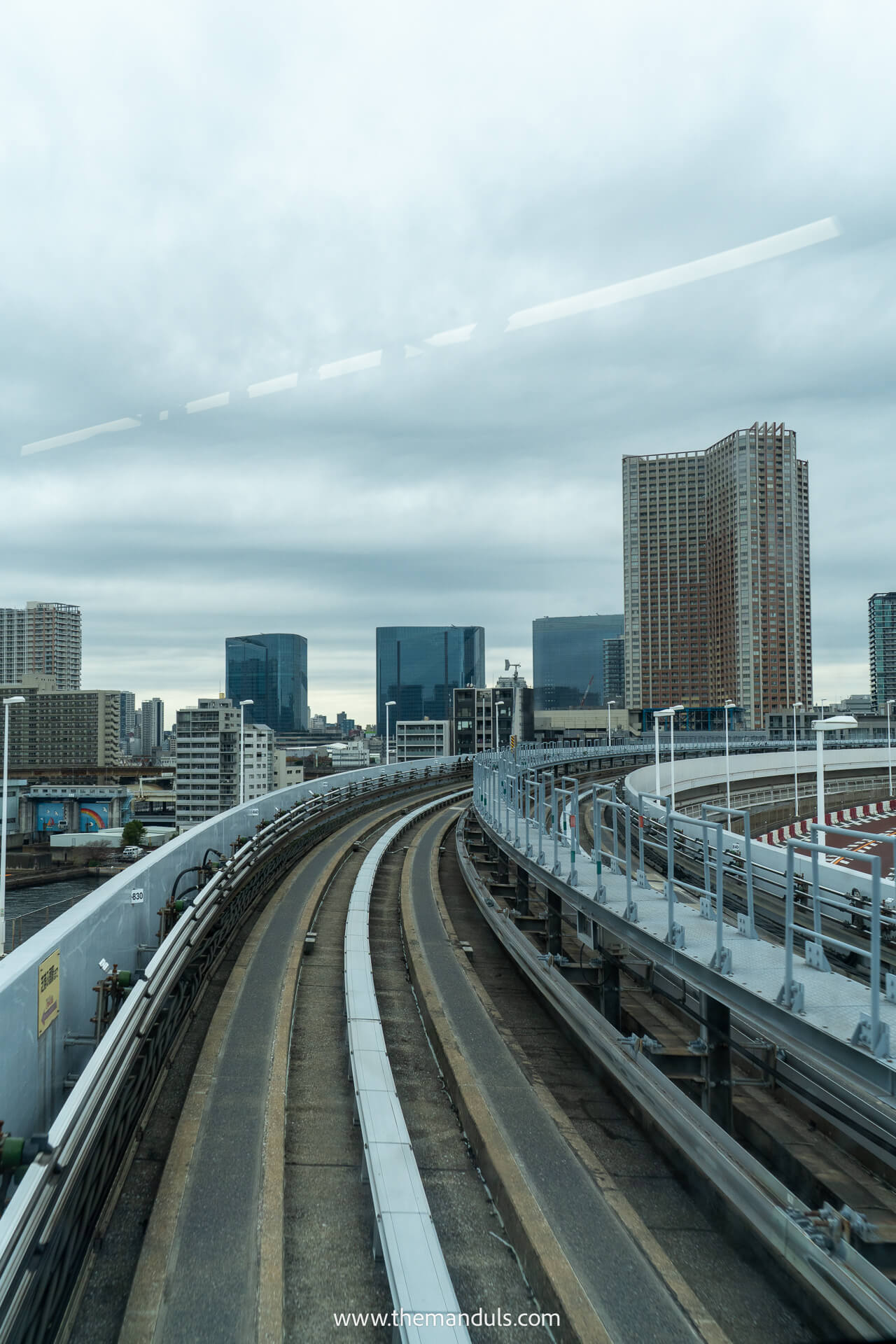
From Tsukiji, head to Shimbashi Station and take the Yurikamome Line towards the waterfront.
Try to get a seat right at the front if you can. We did this and it almost felt like a sightseeing ride, with elevated views over the roads, Rainbow Bridge and Tokyo Bay.
Optional – teamLab Planets or Tokyo Toyosu Manyo Club
If you want to add teamLab Planets or an onsen, this is the best point in the itinerary to do it since you’re already around Toyosu.
For the onsen, we’d choose Tokyo Toyosu Manyo Club. It has indoor and outdoor hot-spring baths, saunas and relaxation areas, plus a rooftop footbath overlooking Tokyo Bay.
We’d choose either the onsen or teamLab rather than trying to fit both into the same afternoon. If you’re visiting teamLab, book a timed slot in advance and plan the Yurikamome ride around it.
Late Afternoon – Tokyo Tower & Roppongi
Head back towards Tokyo Tower later in the afternoon.
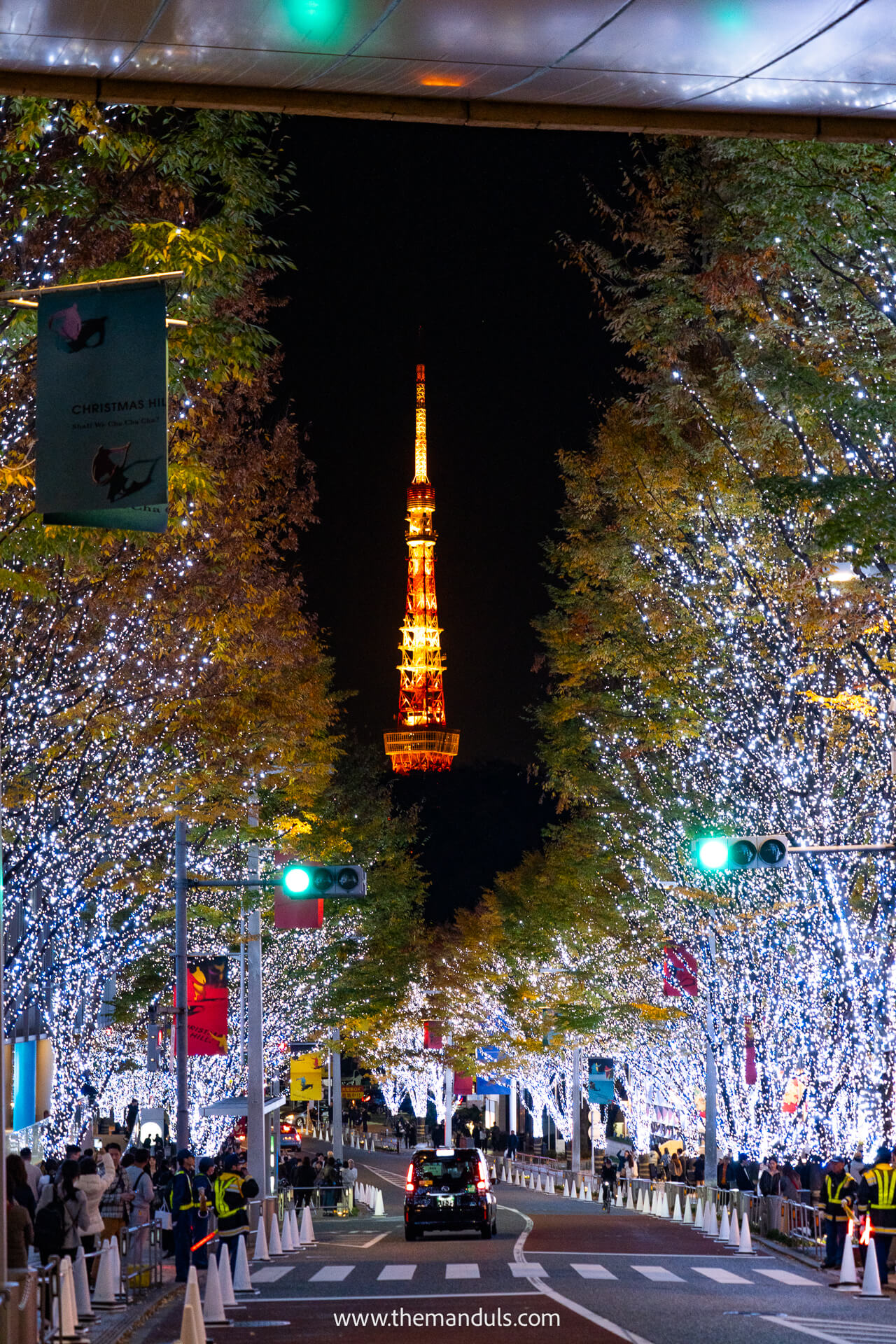
We actually preferred seeing the tower from different viewpoints rather than going up ourselves. One of our favourite views was from Roppongi, especially once the tower lit up after dark.
If you want to see Tokyo from the observation deck instead, you can book Tokyo Tower tickets here.
Evening – Roppongi & Seasonal Illuminations
Finish the day around Roppongi.
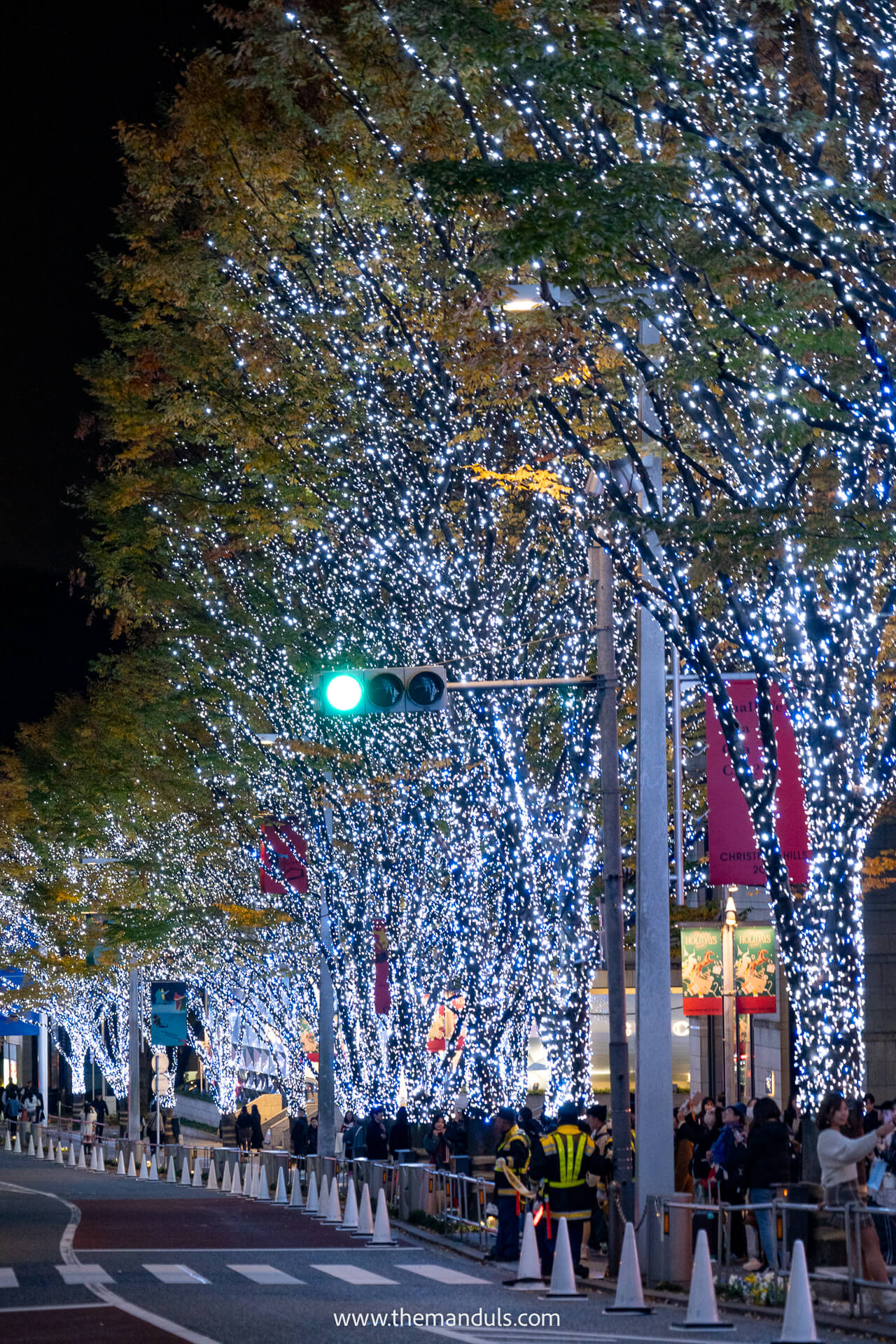
If you’re visiting during the winter illumination season, definitely leave some time for Roppongi Hills and Tokyo Midtown. We visited during this period, and the combination of the lights with Tokyo Tower in the background was one of our favourite evenings in the city.
Outside the illumination season, simply use this part of the evening for dinner and exploring Roppongi.
What We’d Change If We Had Only 3 Days
We actually had only three full days in Tokyo, and if we were planning it again, we wouldn’t try to squeeze the entire 4-day itinerary into three days.
We’d keep Day 1 and Day 2 almost exactly as they are.
For Day 3, we’d start early in Asakusa, but skip Ueno Park, Nezu Shrine and probably Tokyo Skytree. From there, we’d head to Tsukiji Outer Market for a late morning or early lunch and then continue towards Toyosu.
In the afternoon, we’d choose either teamLab Planets or Tokyo Toyosu Manyo Club rather than trying to do both.
That would give us:
Day 1 – Shinjuku
Shinjuku Gyoen → optional Hanazono Shrine → Shinjuku → Metropolitan Government Building → Omoide Yokocho → Kabukicho → Golden Gai
Day 2 – Harajuku & Shibuya
Meiji Jingu → Takeshita Street → Harajuku → Shibuya → Shibuya Sky → Nonbei Yokocho
Day 3 – Asakusa, Tsukiji & Toyosu
Asakusa → Tsukiji Outer Market → teamLab Planets or Tokyo Toyosu Manyo Club
For three days, we think this gives a better mix than trying to keep every park, shrine and viewpoint from the four-day itinerary.
Where to stay in Tokyo
Tokyo is huge, so where you stay really shapes how the city feels. We’d prioritise areas with great transport connections and enough going on nearby so evenings don’t turn into long commutes. For a first visit, staying around Shinjuku, Shiodome, or Shibuya makes exploring much easier and keeps the days balanced.
If you’re still deciding which part of Tokyo suits you best, check out our full guide on where to stay in Tokyo — it breaks down the best areas in more detail, including hand-picked hotel recommendations.
Here are the places we’d happily book again:
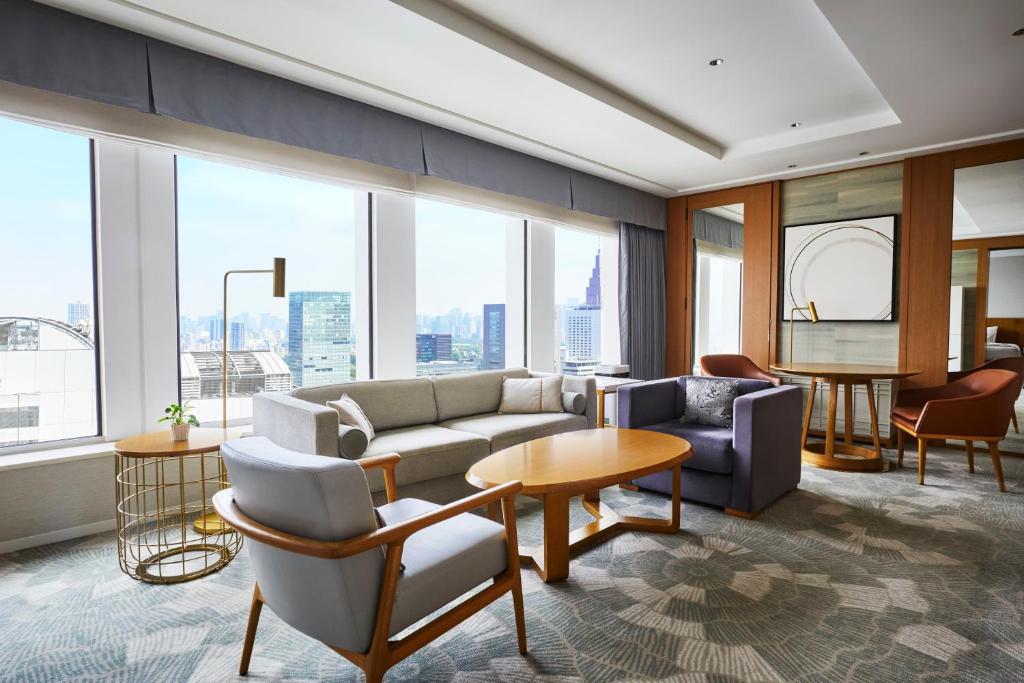
⭐️⭐️⭐️ Keio Plaza Hotel Tokyo Premier Grand (our top pick) – This is the kind of hotel that makes Tokyo feel manageable rather than overwhelming. Being right in Shinjuku means transport is effortless, but what really stands out is the Premier Grand experience — access to a private lounge, calmer common areas, and a noticeably more relaxed atmosphere than most large city hotels.
Rooms feel comfortable and well insulated from the chaos outside, which matters after long sightseeing days. If we wanted a smooth, stress-free Tokyo stay next time, this would be our first choice.
Best for: First-time visitors who want comfort, space, and excellent transport links
👉 Check current deals →
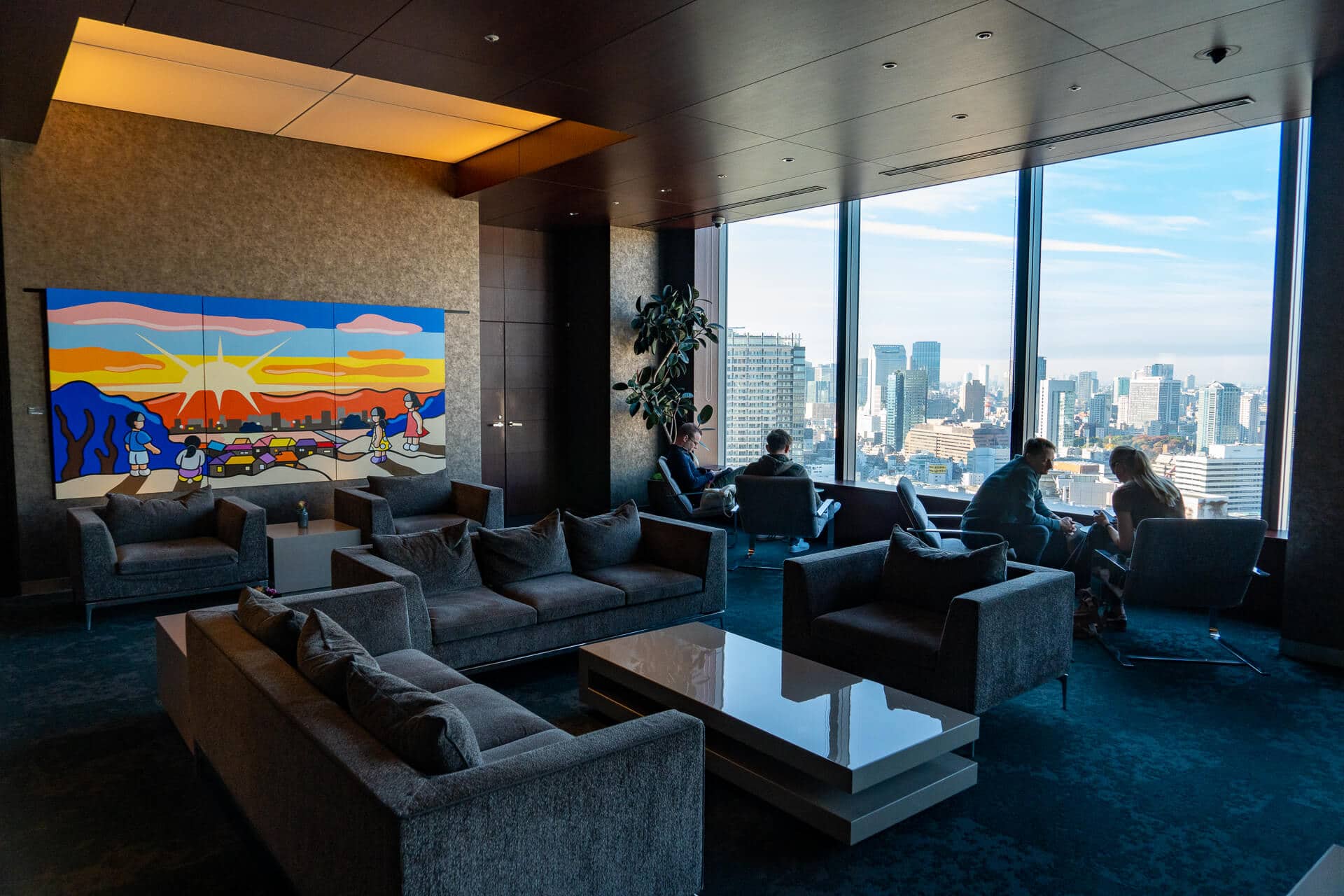
⭐️⭐️ Park Hotel Tokyo – We actually stayed here — and it ended up being one of our most memorable hotel experiences in Japan. What makes Park Hotel Tokyo different is its art-focused design and the feeling of staying above the city, rather than in it.
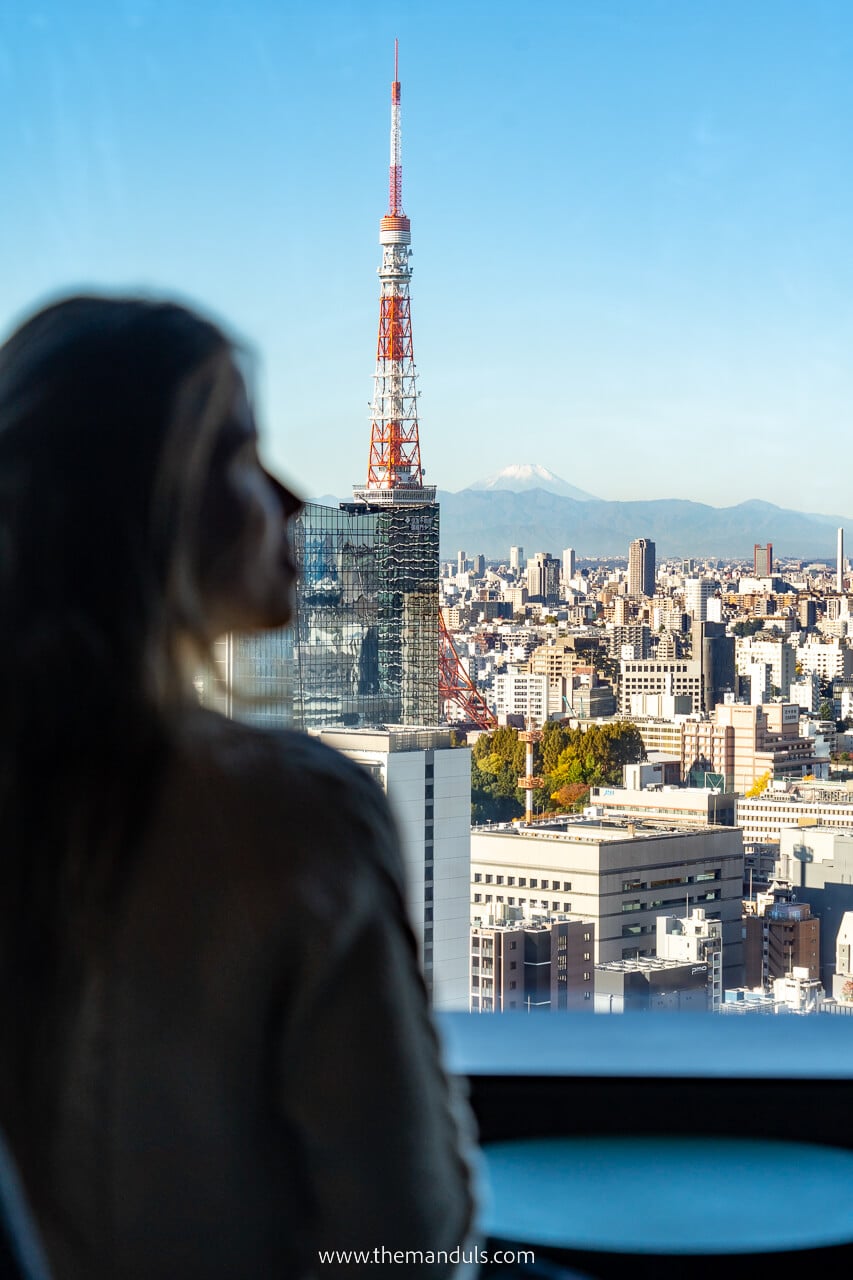
The hotel occupies the upper floors of a skyscraper in Shiodome, and the views over Tokyo (and even Mount Fuji on clear days) are incredible. Rooms feel calm, creative, and thoughtfully designed, and the location works surprisingly well for sightseeing. We’d book it again without hesitation.
Best for: A unique, design-led stay with standout city views
👉 Compare prices →
⭐️ Shibuya Tokyu REI Hotel – If location is your top priority, this hotel is hard to beat. Sitting just minutes from Shibuya Crossing, it puts you right in the middle of one of Tokyo’s most energetic areas.
Rooms are compact but efficient, and everything feels geared toward convenience rather than luxury. We’d choose this option if we wanted to maximise time out exploring and didn’t plan to spend much time in the hotel itself.
Best for: Budget-conscious travellers who want to stay right in the action
👉 See availability →
Final Thoughts
Would we go back? Without hesitation. Tokyo left us feeling like we’d only scratched the surface. Even with a packed few days, it never felt repetitive — every neighbourhood had its own rhythm, atmosphere, and surprises around the corner.
What made it especially memorable was the contrast: calm gardens in the middle of the city, hyper-modern districts just a few train stops away, and everyday moments that felt just as special as the big sights.
If we had to narrow it down to two can’t-miss experiences, it would be Shinjuku at sunset into night — from the skyline views to the energy on the streets — and Asakusa in the morning, where the mix of tradition, street life, and food gives you a real sense of old Tokyo.
Those two moments alone capture why Tokyo feels so layered and endlessly interesting.