
This article contains affiliate links. Learn more in our affiliate disclosure.
When we first started planning our visit, we honestly thought Fushimi Inari Taisha was just a small shrine in Japan with a short stretch of torii gates — the busy, Instagram-famous part everyone crowds around. And to be fair, that first section is crowded, loud, and chaotic.
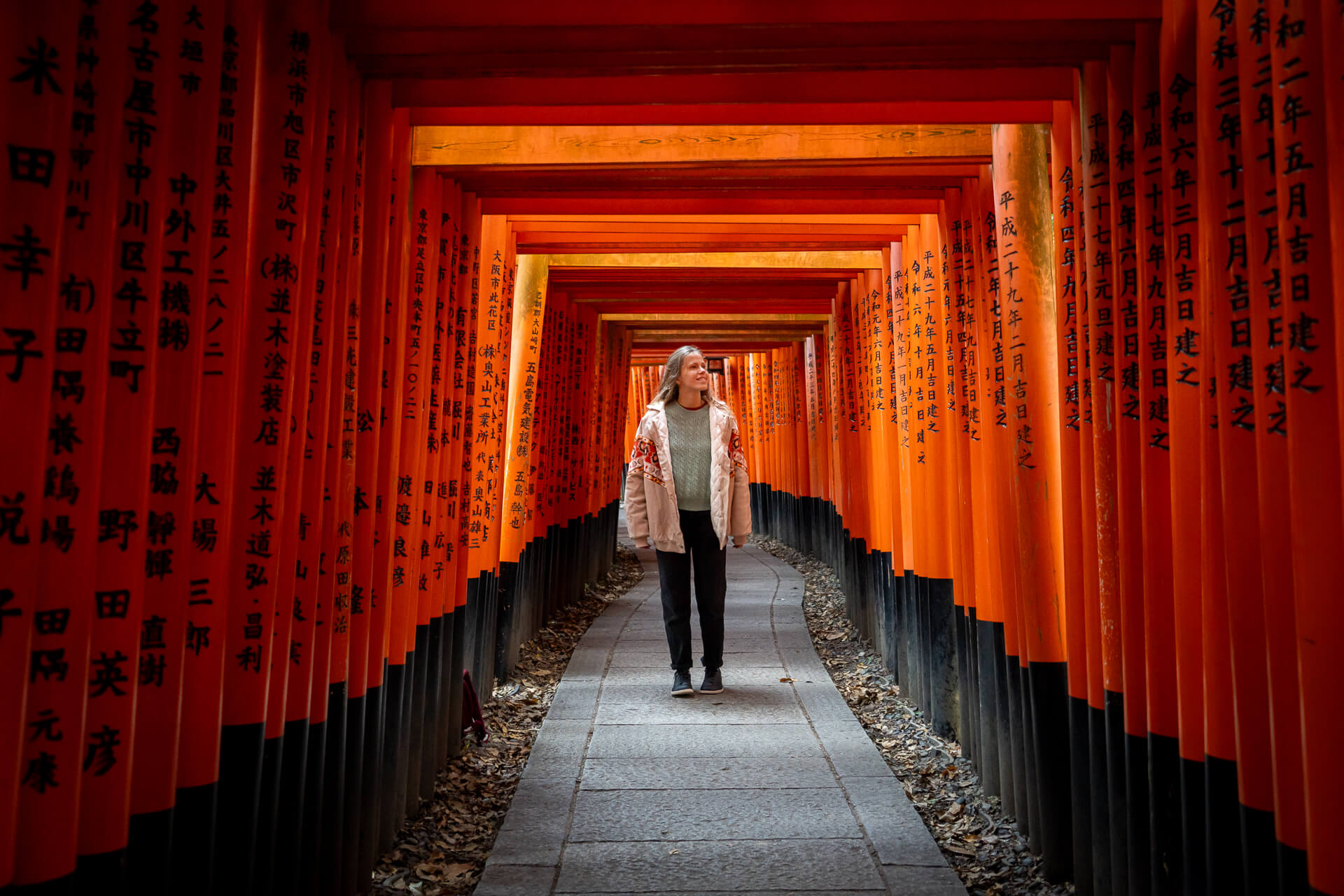
But as we dug a little deeper, we realised how wrong that assumption was. This isn’t just a shrine — it’s a vast sacred mountain, covered with thousands of torii gates (over 10,000, donated over decades), all different sizes, winding their way up and around the hill.
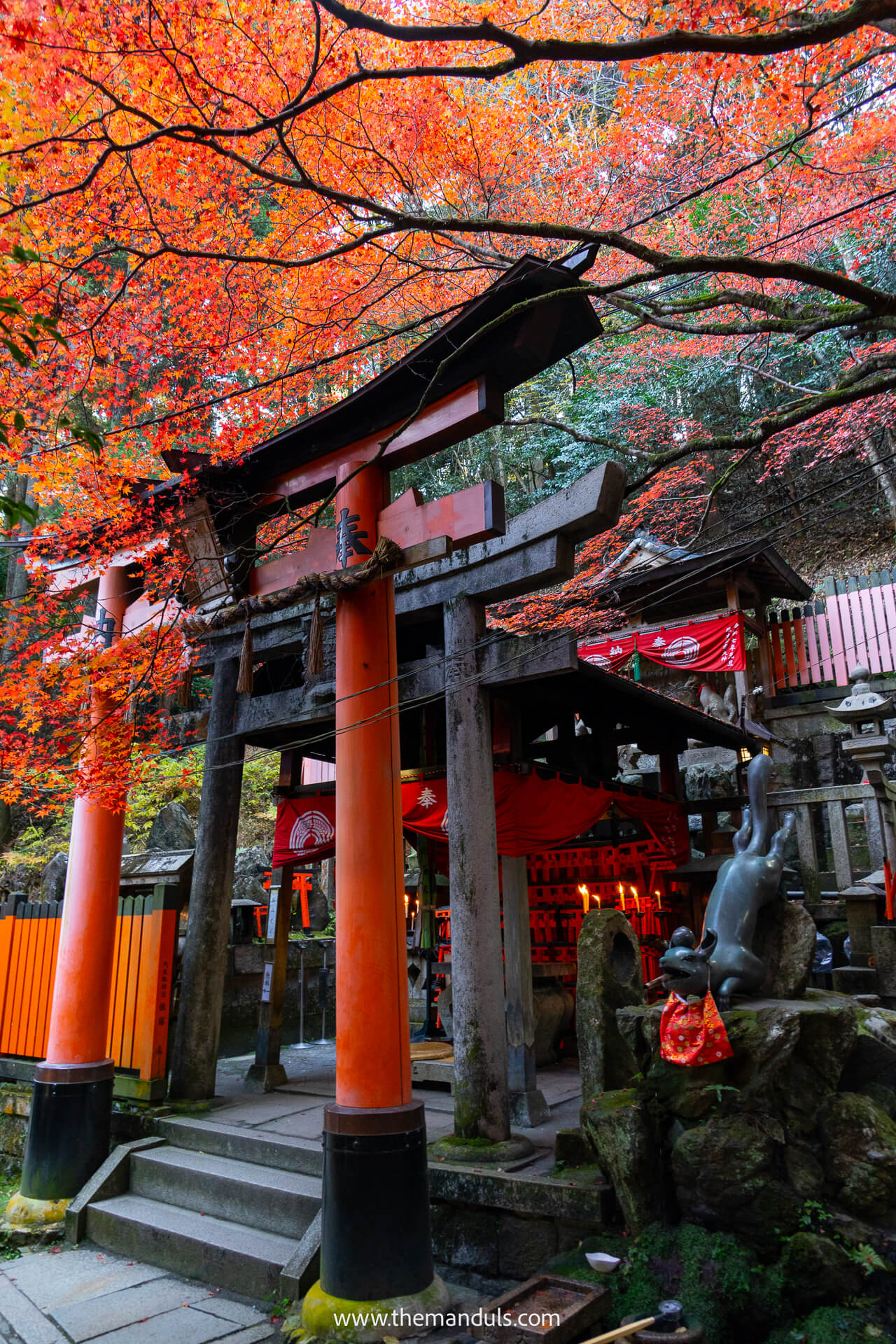
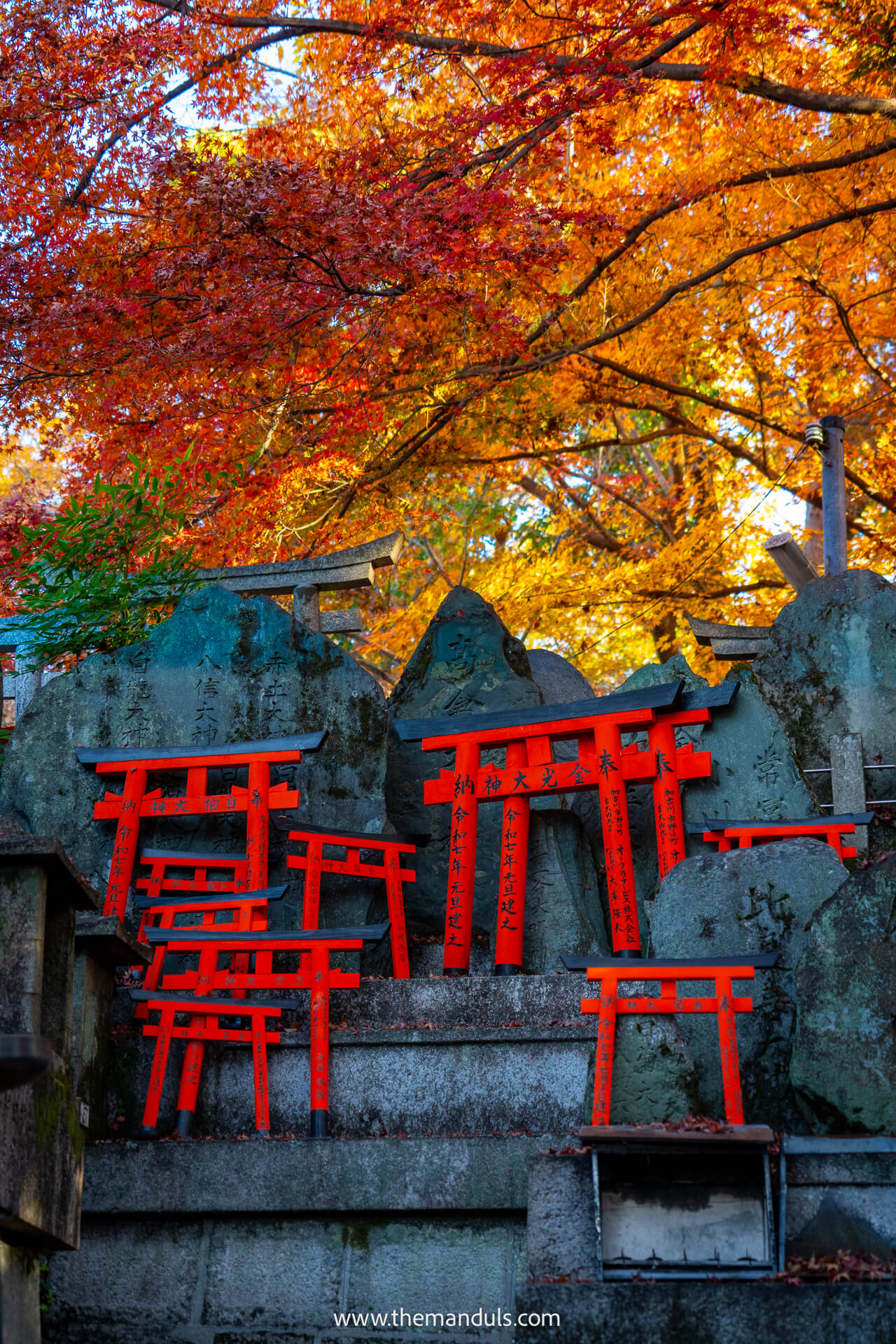
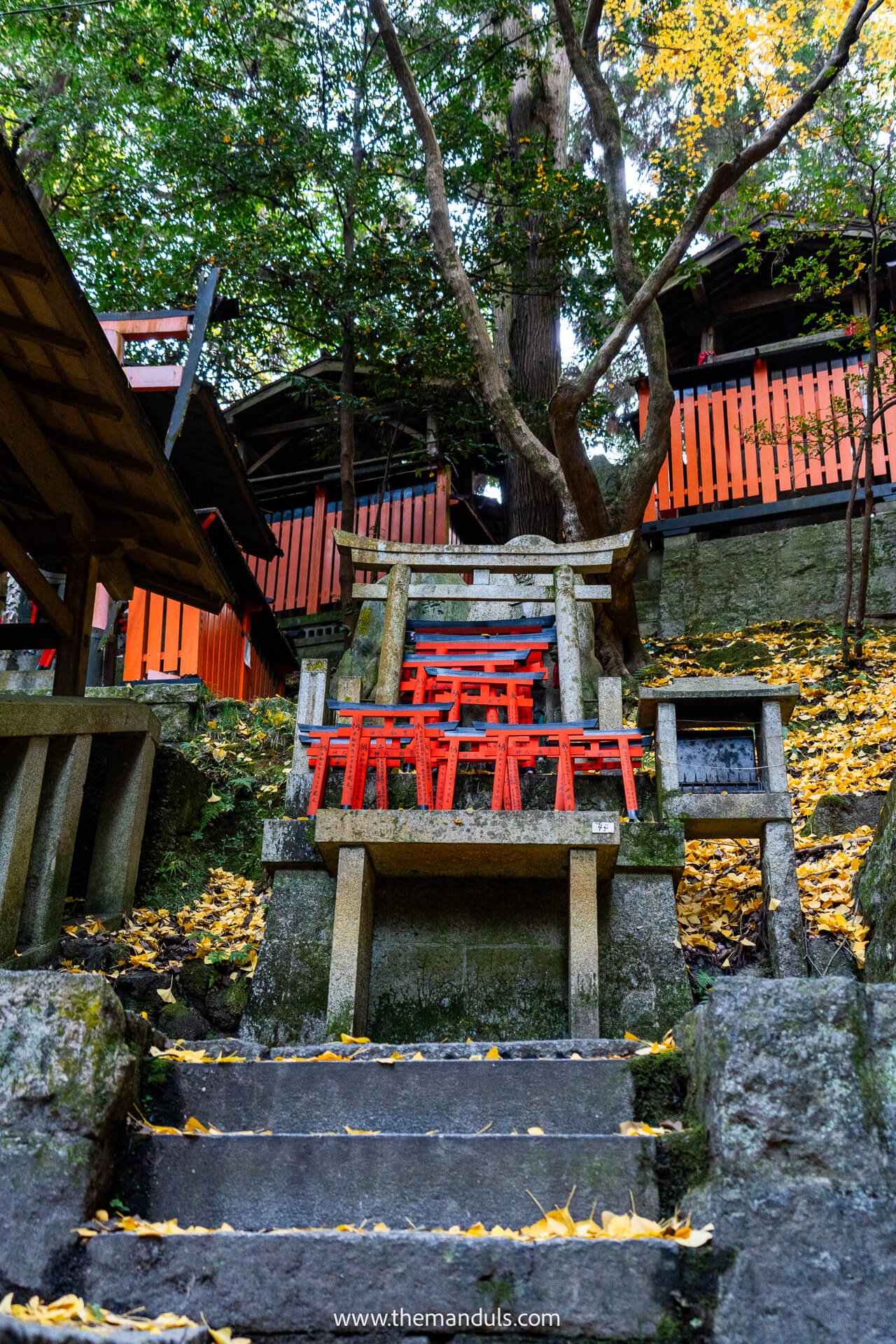
What surprised us most is that visiting Fushimi Inari is actually a proper hike. As we moved higher, the crowds thinned fast. We kept going — and eventually found ourselves almost alone, walking through a darker forest, surrounded by torii gates, stone lanterns, small shrines, and fox statues with all kinds of expressions.
The atmosphere shifted completely: quieter, calmer, and honestly a bit magical.
By the time we completed the full loop, it felt like we’d seen a completely different side of Kyoto — one that many visitors never experience. If you have the time and energy, we highly recommend doing the entire hike. For us, it was absolutely worth it, and easily one of the best things to do in Kyoto.
In this guide, we share exactly what to expect, how long the hike really takes, the best time to visit to avoid crowds, and what exactly you’ll experience on the full loop.
Key Highlights
📍Location: 15 minutes by train from Kyoto Station
⭐️ Best time to visit: early morning, late afternoon
💰 Entrance fee: free
🕥 Opening hours: open 24 hours
🚗 How to get there: train (JR Nara Line, Keihan Line)
🥾Accessibility: uphill hike with many stairs
Is it worth it?
For us, the overall experience really depends on how far you’re willing to go.
If we’d only walked through the lower part and turned back, we’d probably say it’s nice but not unforgettable. The experience changes once you commit to the climb — and that’s where it started to stand out for us.
If you’re reasonably fit and don’t mind stairs, we genuinely recommend doing the full loop. It’s slower, quieter, and feels far more rewarding than rushing through the crowded start.
But if your schedule is tight or long walks aren’t your thing, sticking to the shorter route still makes sense. It’s a lovely area that deserves a spot in your Kyoto itinerary. However, come early in the morning to enjoy it without the crowds.
In a hurry?
These are our top hotels in Kyoto we’d book again
⭐️⭐️⭐️ Cross Hotel Kyoto (our top pick) – A well-designed stay in the heart of Kawaramachi, in one of the best locations for exploring Kyoto on foot.
👉 See prices & availability →
⭐️⭐️ The Thousand Kyoto – Right next to Kyoto Station and super convenient, especially if you’re planning day trips or arriving by train.
👉 See prices & availability →
⭐️ Guesthouse Soi – A small, friendly guesthouse near Kiyomizu-dera, great if you’re after something simple, affordable, and welcoming.
👉 See prices & availability →
Where is Fushimi Inari Taisha
Fushimi Inari Taisha is located in southern Kyoto, in the Fushimi area, at the base of Mount Inari. It’s slightly outside the city’s main sightseeing core, but very easy to reach by train.
From Kyoto Station, it’s about 5 minutes by JR train (Inari Station) or roughly 10 minutes from downtown Kawaramachi. Popular spots like Gion or Kiyomizu-dera are around 20–30 minutes away, depending on traffic.
📍Save the exact location on Google Maps.
How to get there
By train (the best option)
There are two easy train options. We took the JR Nara Line toward Nara and got off at Inari Station — the ride takes about 5 minutes from Kyoto Station, trains run frequently, and the shrine’s main torii gate is right outside the station, which couldn’t be more convenient.
If you’re staying in other parts of the city, especially eastern Kyoto, it can be easier to take the Keihan Main Line and get off at Fushimi-Inari Station. From there, it’s a 5–10 minute walk to the entrance, and this route saves you from backtracking to Kyoto Station.
We used Google Maps to check train schedules and platforms, and it worked perfectly. There’s no need to buy tickets in advance — you can simply tap in and out with an IC card.
We used Suica, which we added to Apple Pay, and it made everything quick and hassle-free.
Entrance fee
There’s no entrance fee to visit the area. You can walk through the torii gates and hike the mountain completely for free, at any time of day.
If you plan to buy souvenirs, charms, or make small offerings at shrines along the way, bring some cash.
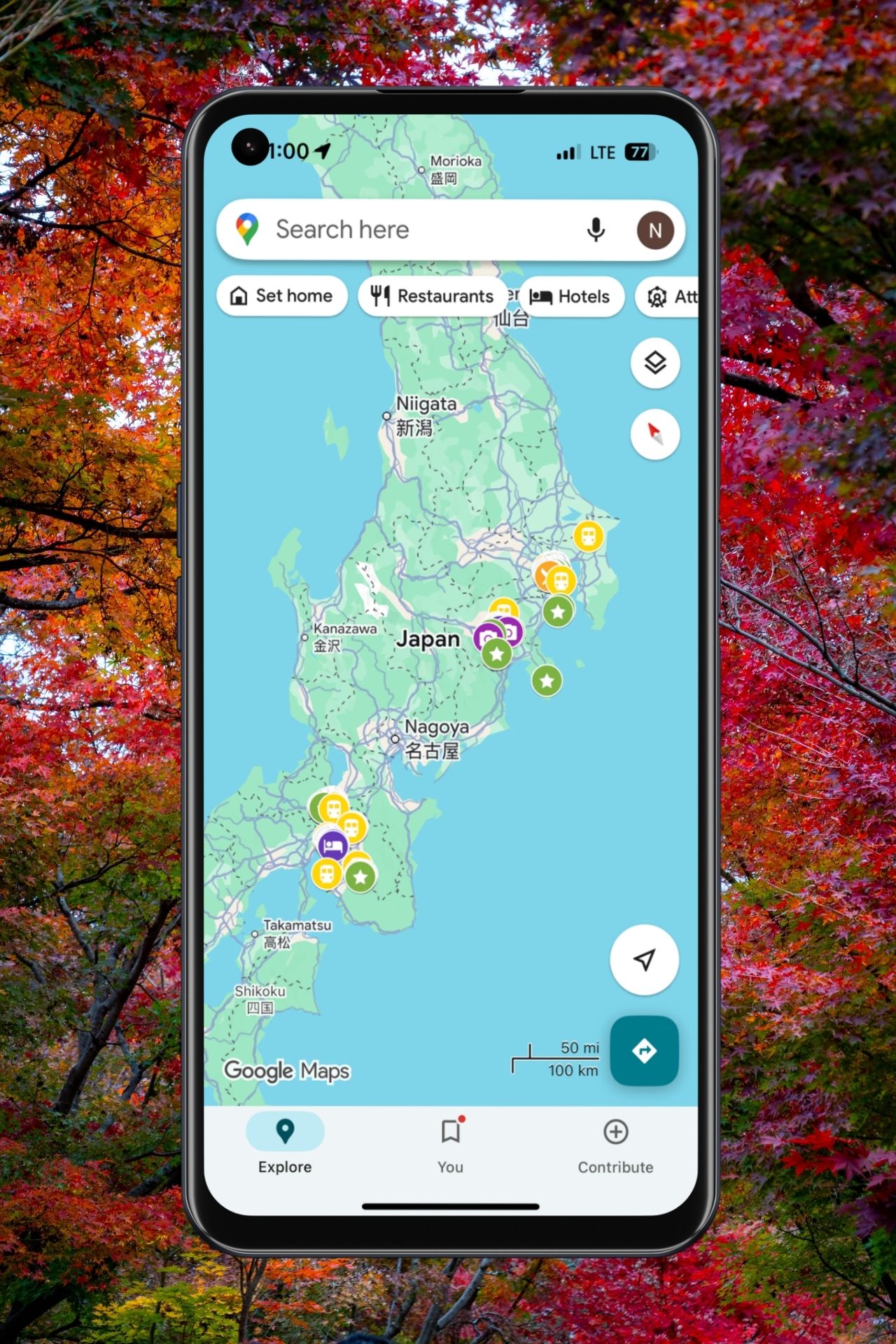
Our Japan Google Maps
Built from our real trips across Japan — only places we actually visited and loved.
No tourist traps. No random saves. Just a ready-to-use map that saves you hours of research.
219 handpicked spots, including:
📍 Highlights & hidden gems
🍜 Restaurants we’d go back to
🏨 Areas & hotels we’d book again
🗺️ Stops that fit into real, logical itineraries
What to expect at Fushimi Inari Taisha
There’s a lot more to Fushimi Inari than a quick photo stop. Unlike some smaller temples in Kyoto, the shrine complex covers a large area, and depending on how much time and energy you have, you can choose between a short walk near the entrance or the full loop hike around Mount Inari. As mentioned earlier, we did the long loop — and for us, it was definitely worth it.
A little bit of history
Fushimi Inari Taisha is one of Kyoto’s oldest Shinto shrines, founded in the 8th century and dedicated to Inari, the deity of rice, prosperity, and success.
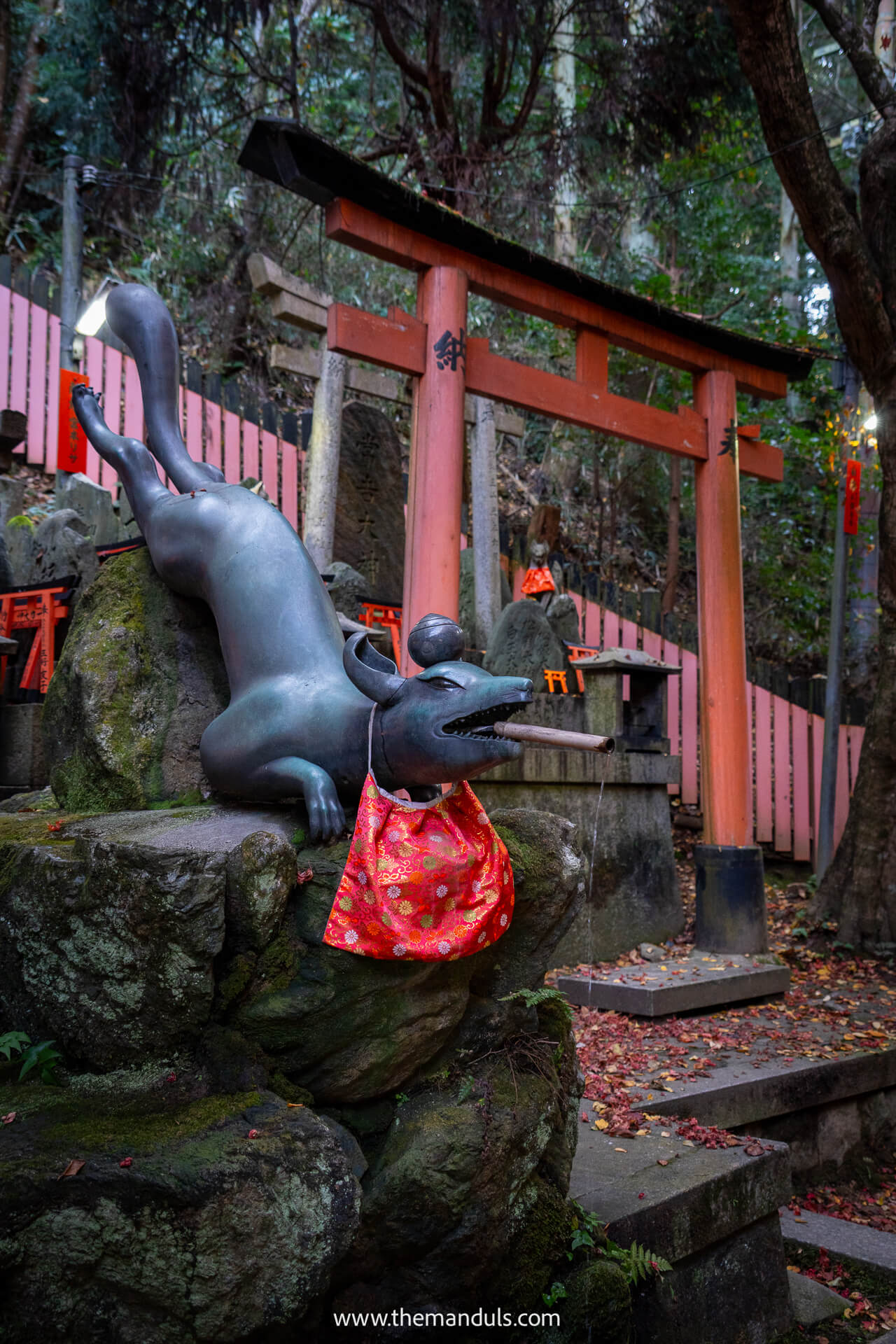
The thousands of torii gates you see today have been donated by individuals and businesses over the centuries as a way of giving thanks or making wishes. The fox statues throughout the shrine represent Inari’s messengers, which is why they appear everywhere along the paths and trails.
The short loop
The short loop begins right at the entrance of Fushimi Inari Taisha, where we were welcomed by two massive torii gates. Just beyond them are the main worship hall and shrine buildings, where we saw people stopping to pray, buy charms, or watch small rituals. Very quickly, we started noticing fox statues everywhere, often holding keys or scrolls.
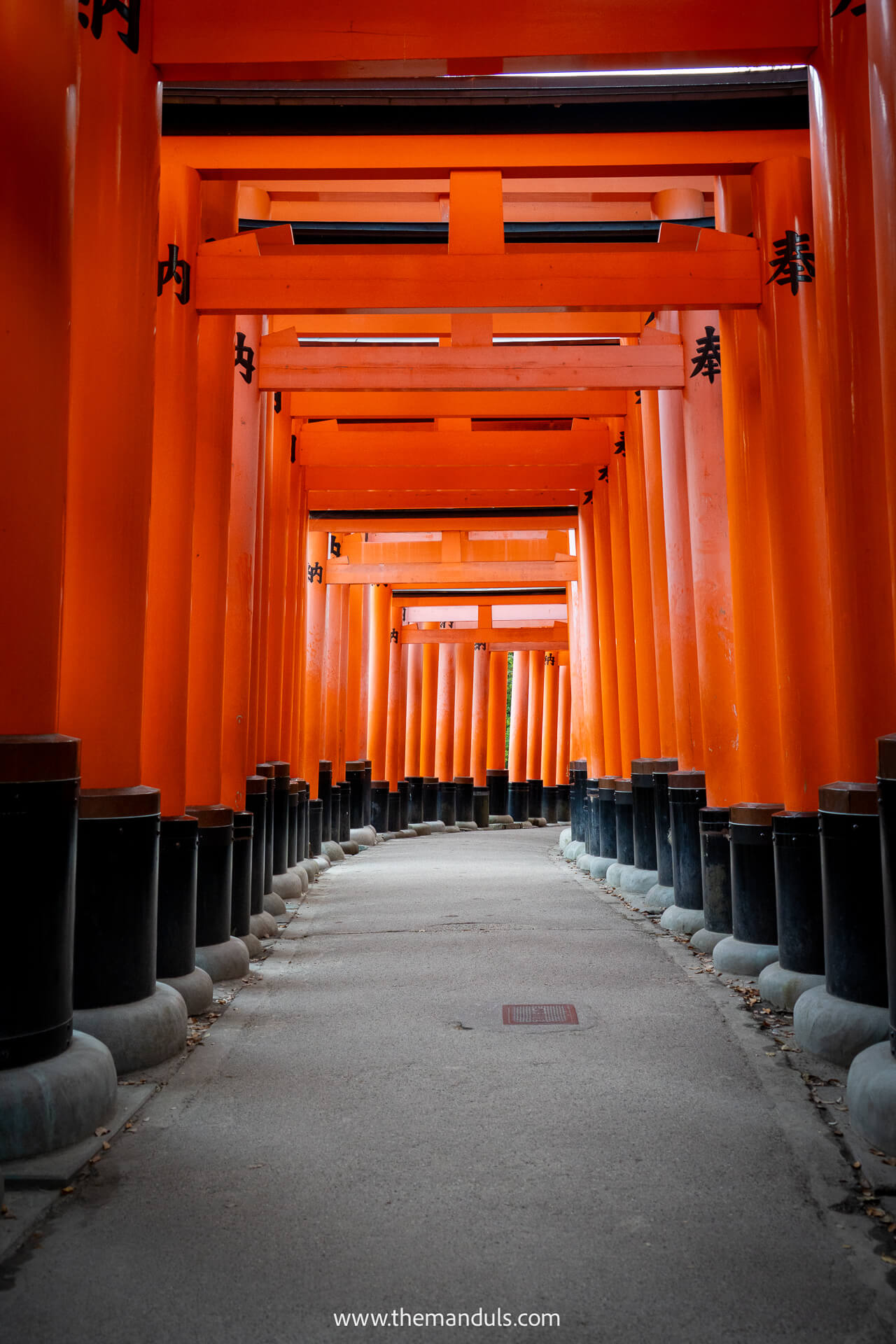
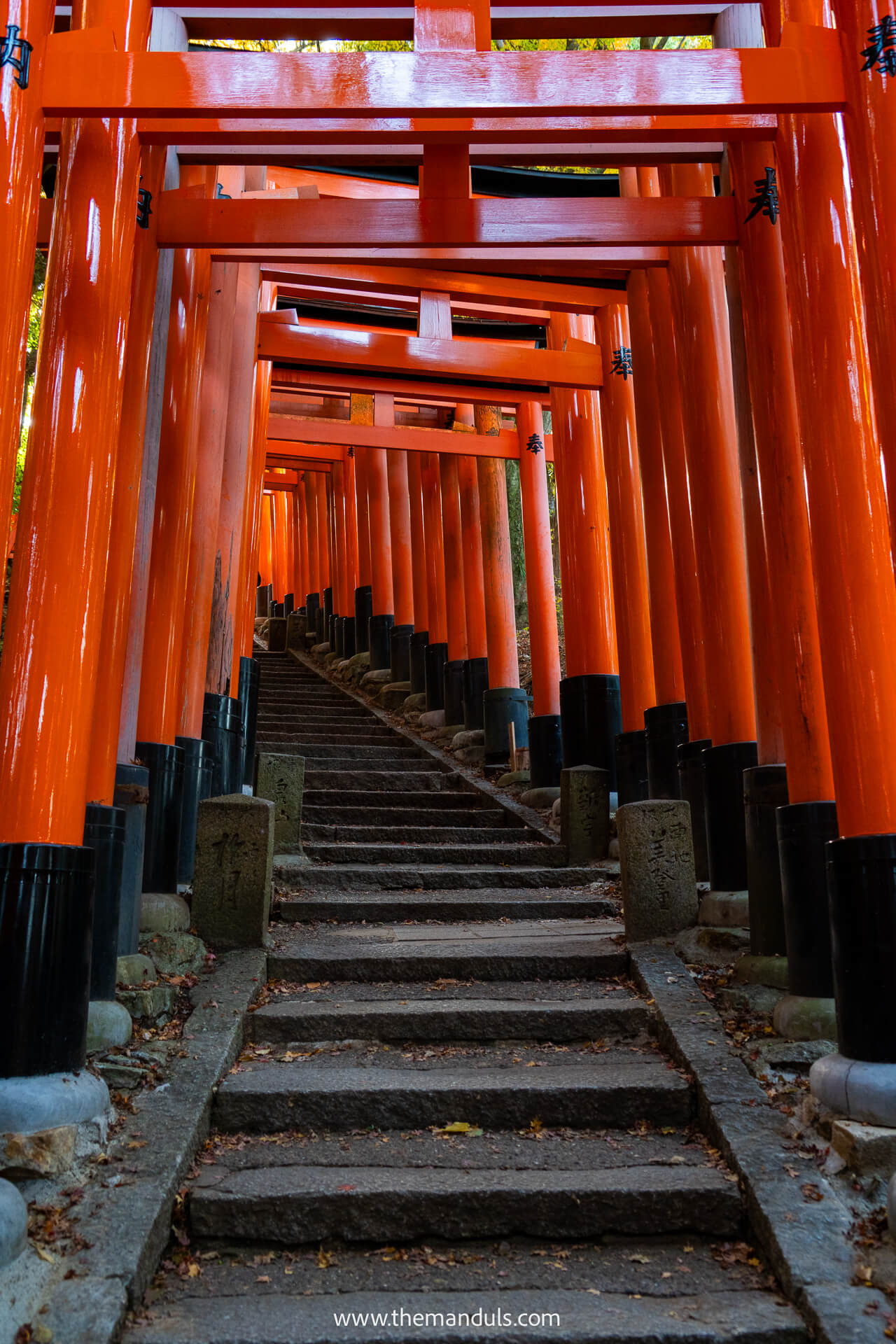
From there, we walked straight into the two iconic rows of torii gates — the most famous part of the shrine. We arrived around 7am, so while this section is usually very busy later in the day, it was still relatively calm when we passed through.
Some people only walk through these rows and return back to the main area from here.
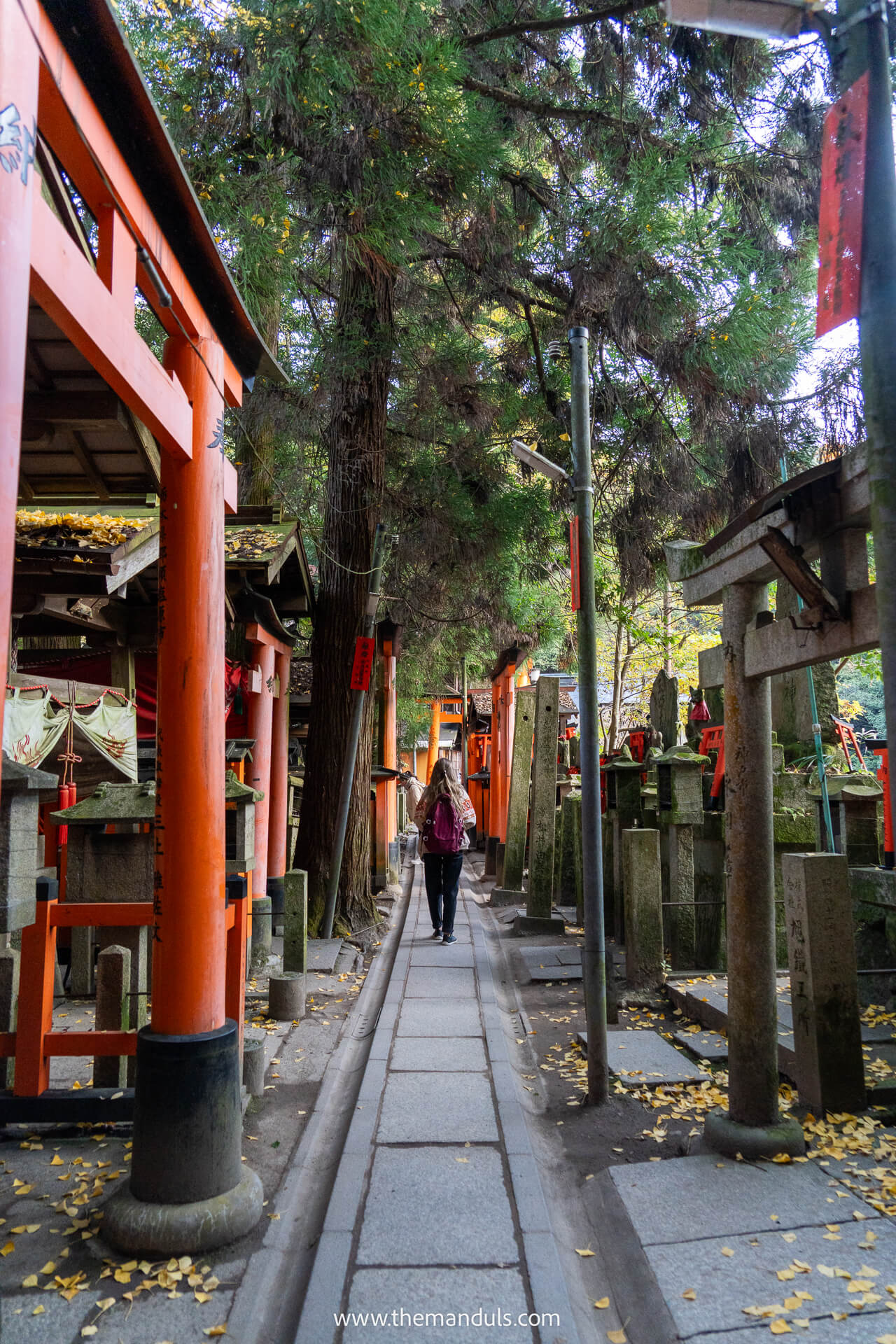
If you continue, the path turns left and begins going slightly up and down a series of stairs. This part already feels calmer, with small shrines lining the path as we walked along.
A few minutes later, we reached a crossroad, where we could either loop back toward the entrance or continue uphill and start the full hike.
The short loop itself takes about 15 minutes, but we’d suggest planning 1 to 1.5 hours to explore the lower area at a relaxed pace. Even without doing the full hike, this section alone gives a proper first taste of Fushimi Inari.

The full loop hike
The full loop takes you all the way up and around Mount Inari. From the crossroads, the trail continues steadily uphill through endless torii gates, forest paths, and long stretches of stairs. It’s clearly signposted, so we never felt lost, but it does require a bit of stamina.
The full loop is roughly 4 km (2.5 miles) in total and, based on our experience, takes around 2.5 to 3 hours at a relaxed pace, including short breaks, photos, and stops at small shrines along the way. The climb is gradual but constant, with plenty of steps, so it feels more like a hike than a casual walk.
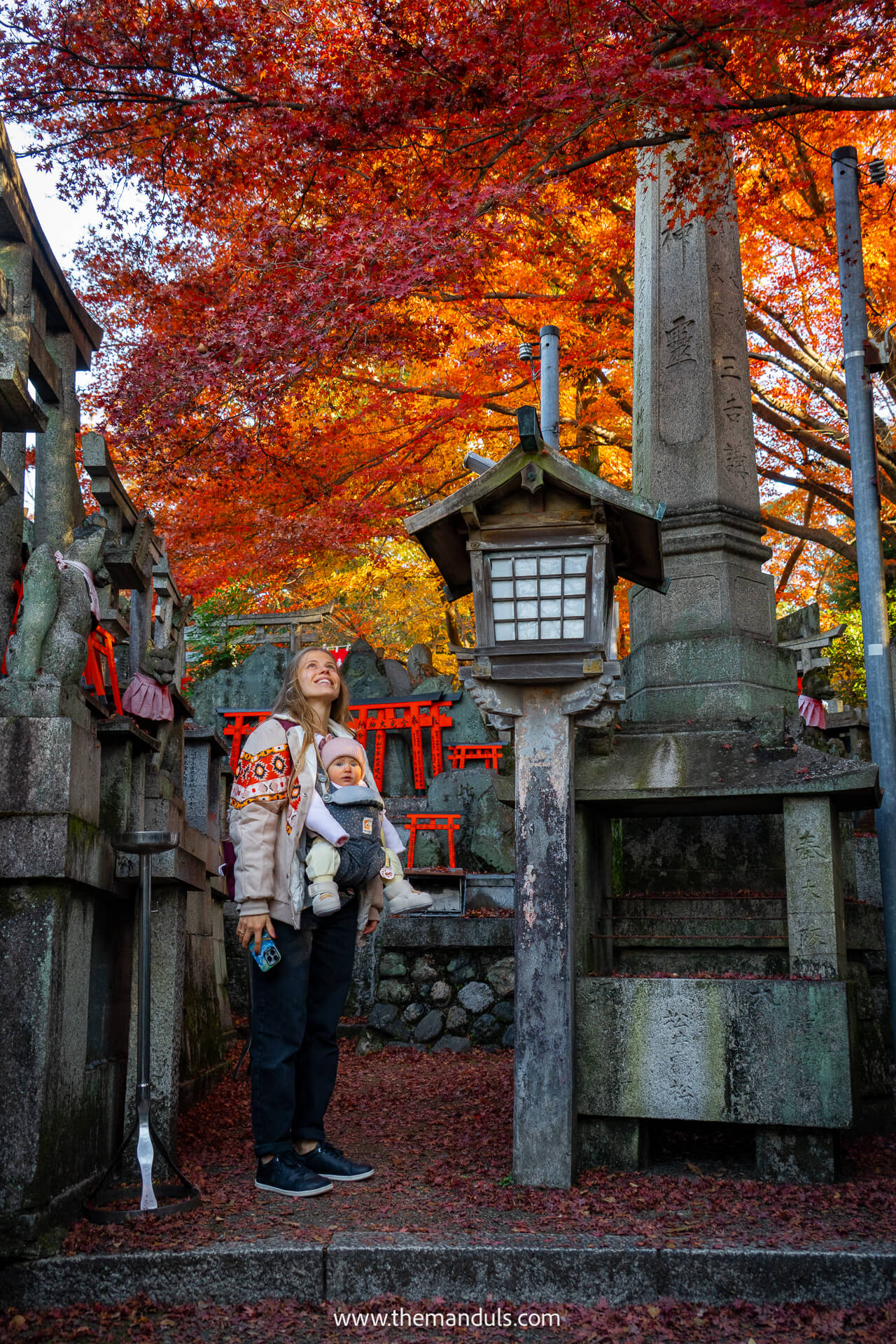
As we moved higher, the crowds thinned dramatically. Large tour groups disappeared, and long sections felt almost empty. The atmosphere became quieter and more immersive, with darker forest sections, stone lanterns, and torii gates appearing around every corner.
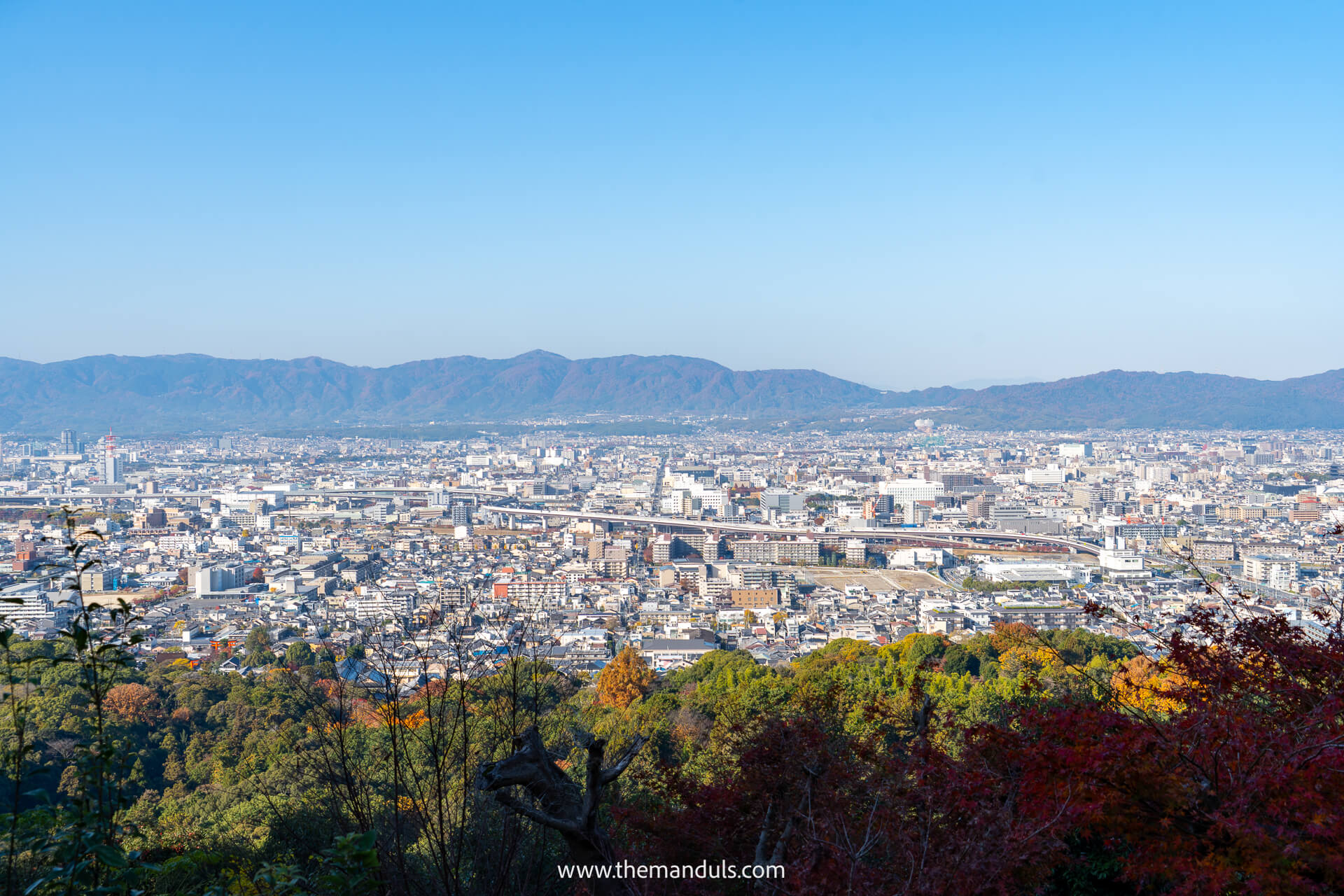
There are a few viewpoints along the route, where we could see Kyoto from above. But for us, the highlight wasn’t the views — it was the feeling of walking through a calm, sacred space far removed from the busy entrance below.
Facilities
Fushimi Inari Taisha is well set up for visitors, especially near the entrance. You’ll find public toilets, vending machines, and several food stalls and small restaurants selling snacks and drinks before the hike begins. There are also souvenir shops near the main gate.
Further up the mountain, we actually expected no facilities at all, but were pleasantly surprised.
Every now and then, we came across vending machines with water and snacks, and some small shrines selling simple food or souvenirs along the trail. There are also a few public toilets, but they’re quite limited — so if you see one, use it.
Best time to visit
Time of the day
Based on our experience, going early makes a huge difference. We arrived around 7am, and the atmosphere was calm and peaceful, especially once we started walking uphill. The lower section was already waking up, but it still felt manageable.
By the time we finished the full loop and came back down, the crowds were much more intense, especially near the entrance. If early mornings aren’t your thing, late afternoon can also work, but midday is when it feels busiest.
Season
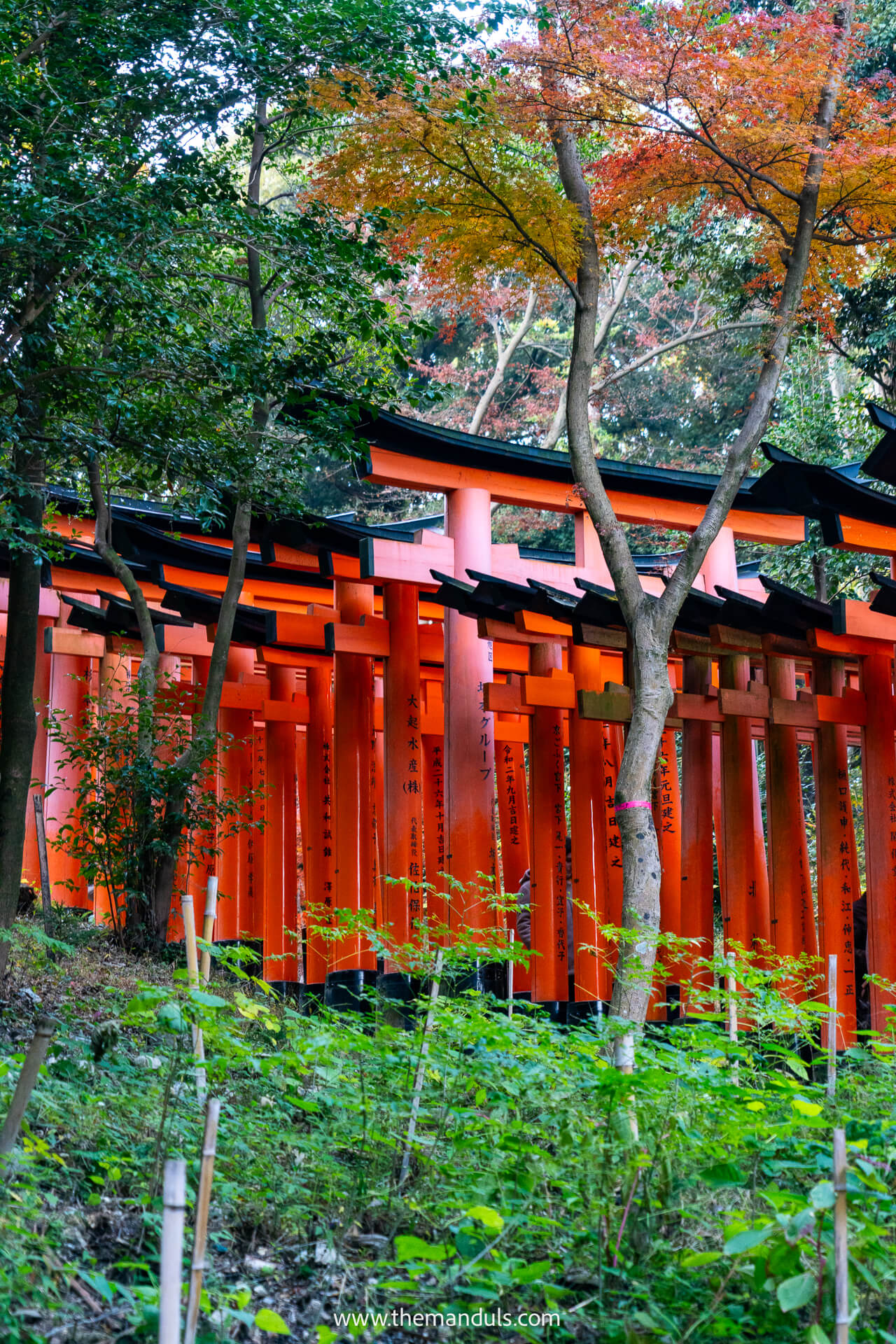
We visited in autumn, in early December, and it was a great time to be there. The temperatures were comfortable for hiking, and the forest atmosphere made the walk even more enjoyable. And we could enjoy the fall foliage all around.
That said, autumn is also one of Kyoto’s busiest seasons, so starting early was key.
Spring can be just as busy with cherry blossoms, while summer is hot and humid — doable, but not ideal for the full loop. Winter is quieter and still atmospheric, just colder and occasionally slippery after rain.
Where to stay in Kyoto
Short intro of the area and what type of stay to expect.
If you’re still deciding which part of Kyoto suits you best, check out our full guide on where to stay in Kyoto— it breaks down the best areas, including hand-picked hotel recommendations.
Here are the ones we’d happily book again:
⭐️⭐️⭐️ Cross Hotel Kyoto (our top pick) – A strong all-rounder in central Kyoto that combines a walkable Kawaramachi location that suits longer sightseeing days. It’s known for more practical room layouts than many city hotels, an active lobby café, and consistently helpful staff — a combination that works especially well for first-time visitors.
Best for: Travellers who want a central base
👉 Check current deals →

⭐️⭐️ The Thousand Kyoto – Designed with rail travellers in mind, this hotel sits directly next to Kyoto Station, making arrivals, departures, and day trips effortless. The atmosphere is noticeably quieter than the surrounding area, and the hotel is often praised for its refined design and reliable service.
Best for: Easy arrivals, day trips, and travellers prioritising transport convenience
👉 Compare prices →

⭐️ Guesthouse Soi – A small, independently run guesthouse offering a more local, low-key experience close to eastern Kyoto sights. It’s frequently chosen for its friendly hosts, shared spaces, and relaxed pace — a good alternative to larger hotels.
Best for: Budget travellers who prefer a personal, home-style stay
👉 See availability →
FAQ
Yes. Fushimi Inari Taisha is open 24/7. Evening and night visits feel quieter and more atmospheric, but bring a light and watch your footing.
Short sections near the entrance are fine, but the full loop can be tiring for younger kids due to the stairs and distance.
It’s quite challenging. There are many stairs throughout the area, which makes most of the site difficult to navigate with a stroller or wheelchair. That said, there is a stroller parking area right by the main gate, where you can leave your stroller while you explore the shrine and walk through the torii gates.
Final Thoughts
Fushimi Inari ended up exceeding our expectations. The lower area alone is impressive, but it was the choice to keep going that really changed the experience. For us, doing the full loop turned a popular Kyoto sight into something far more memorable.
If you’re short on time or energy, the short loop still gives you a great introduction. But if you can manage the climb, we’d strongly recommend committing to the hike — that quieter, more atmospheric side is what made our visit special.
it’s so beautiful place
Has a magical vibe 🙂