
This article contains affiliate links. Learn more in our affiliate disclosure.
Most of the Dolomites trips we’d planned before were built around a hike or a famous viewpoint. Falcade and Val del Biois felt different: we spent the day exploring tiny hillside villages, stopping for a short waterfall walk and taking the mountain road up to Passo Valles.
We visited in October 2026. Sappade, with its huge mountain backdrop, was our favorite village, while Val di Gares was the nature stop we’d recommend most. Here’s what was genuinely worth our time, plus a few stops we’d keep short.
Key Highlights
📍 Location: Belluno province, Veneto, Italy
🕥 Time needed: half a day for a few stops; a full day to explore the wider valley
🚗 Getting around: A car is strongly recommended
🔥 Best for: village-hopping, easy walks and a scenic drive
Our pick: Don’t try to stop in every village. We’d prioritize Sappade for its setting and Val di Gares for the waterfall walk, then add other stops depending on how much time you have.
Best Things to Do in Falcade & Val del Biois
1. Explore Falcade Village and Piana di Falcade
Falcade is an easy place to begin, but we’d treat it as a short stop rather than spend half the day in the center.
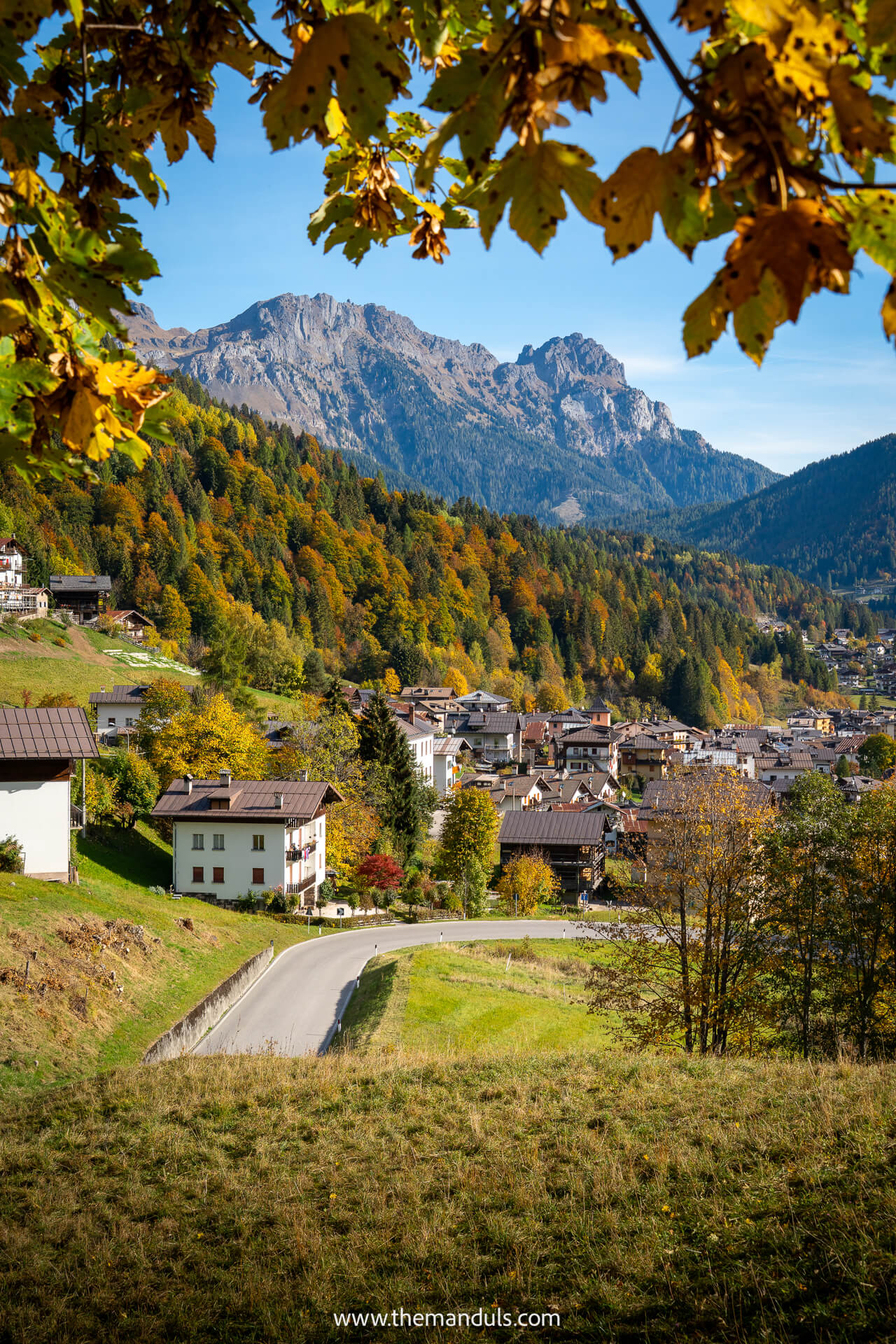
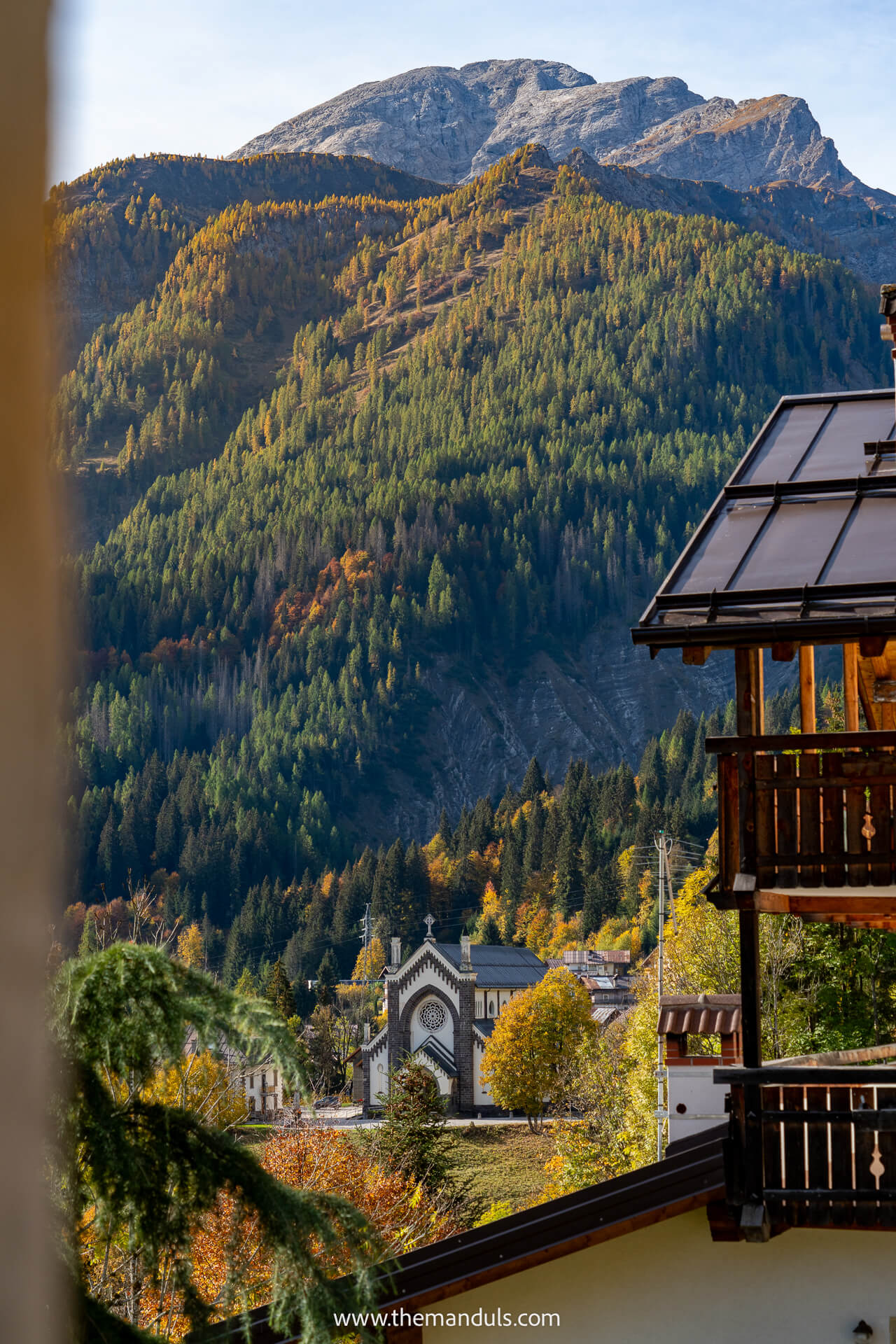
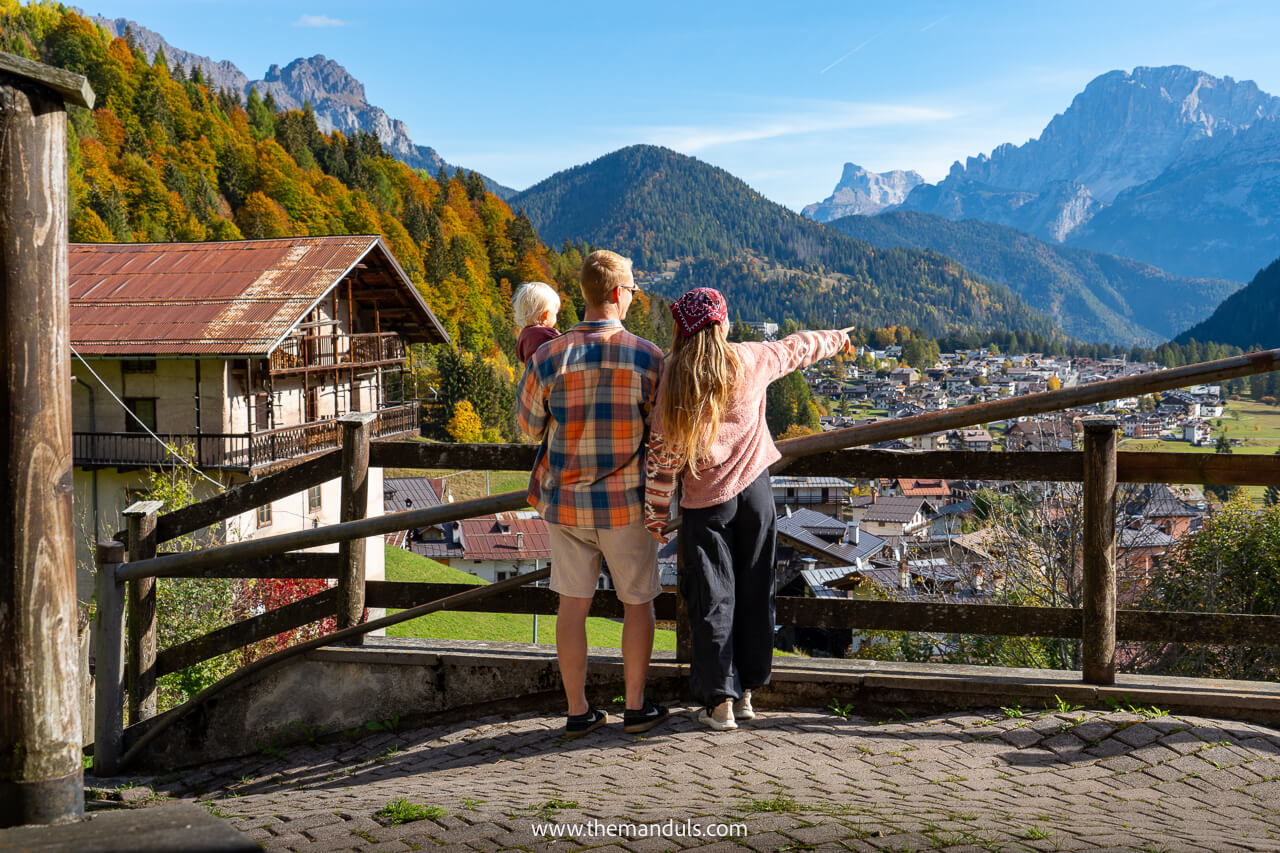
We walked around the village and stopped near Chiesa Parrocchiale della Beata Vergine Maria Immacolata. The view from around the church was our favorite, with the village below the surrounding peaks.
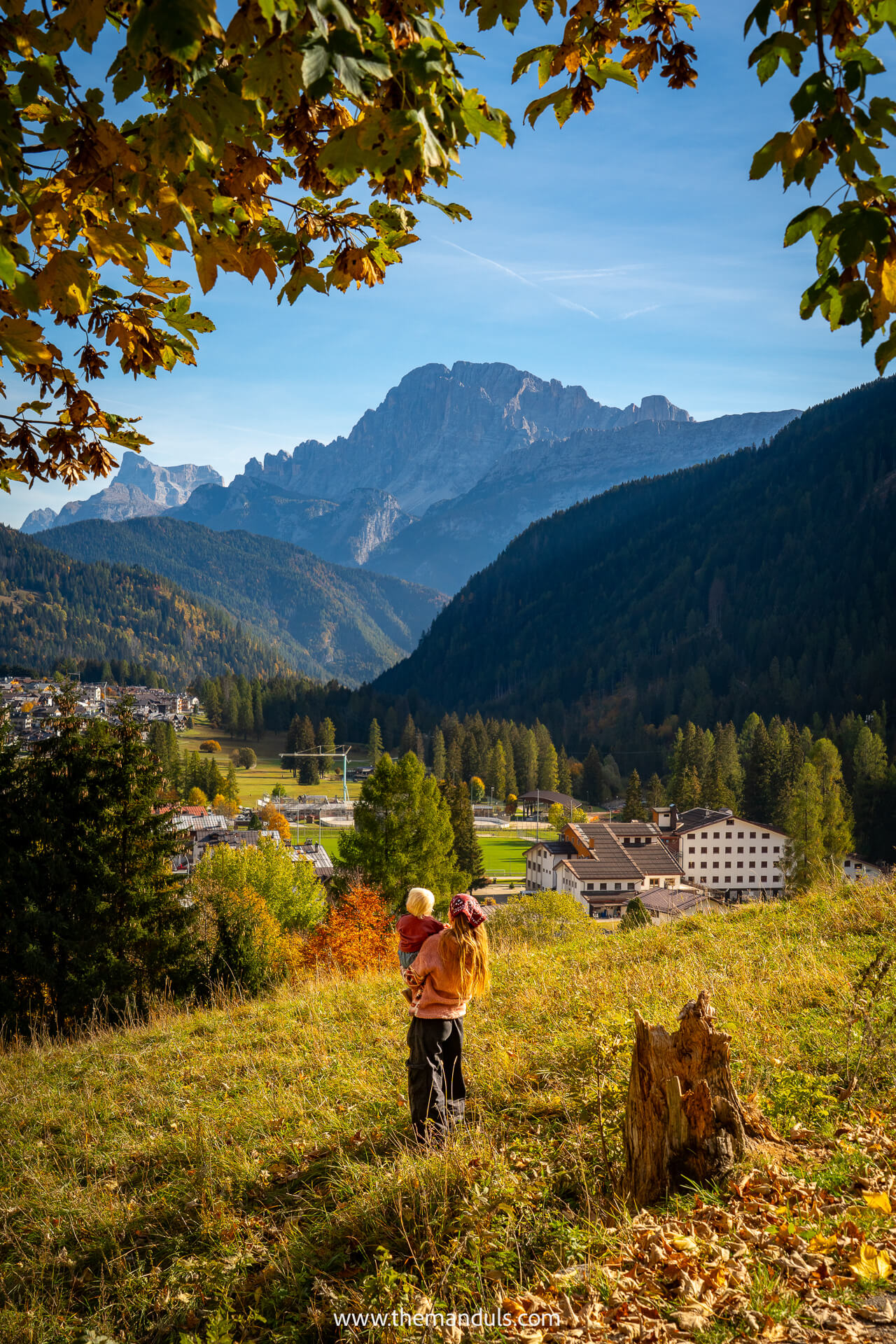
Just outside the center, Piana di Falcade is a broad meadow that’s ideal when you want to stretch your legs without committing to a proper hike. It also works well for a slower visit with children.
If you want a longer walk, La Cavalera follows the Biois stream from Piana di Falcade to Canale d’Agordo (4.5 km one way, about 1 hour 15 minutes). We didn’t walk the whole route, but it’s a useful option if you’d rather explore on foot. Details are on the official hiking page.
2. Discover the Traditional Barns of Villotta & Col de Rif
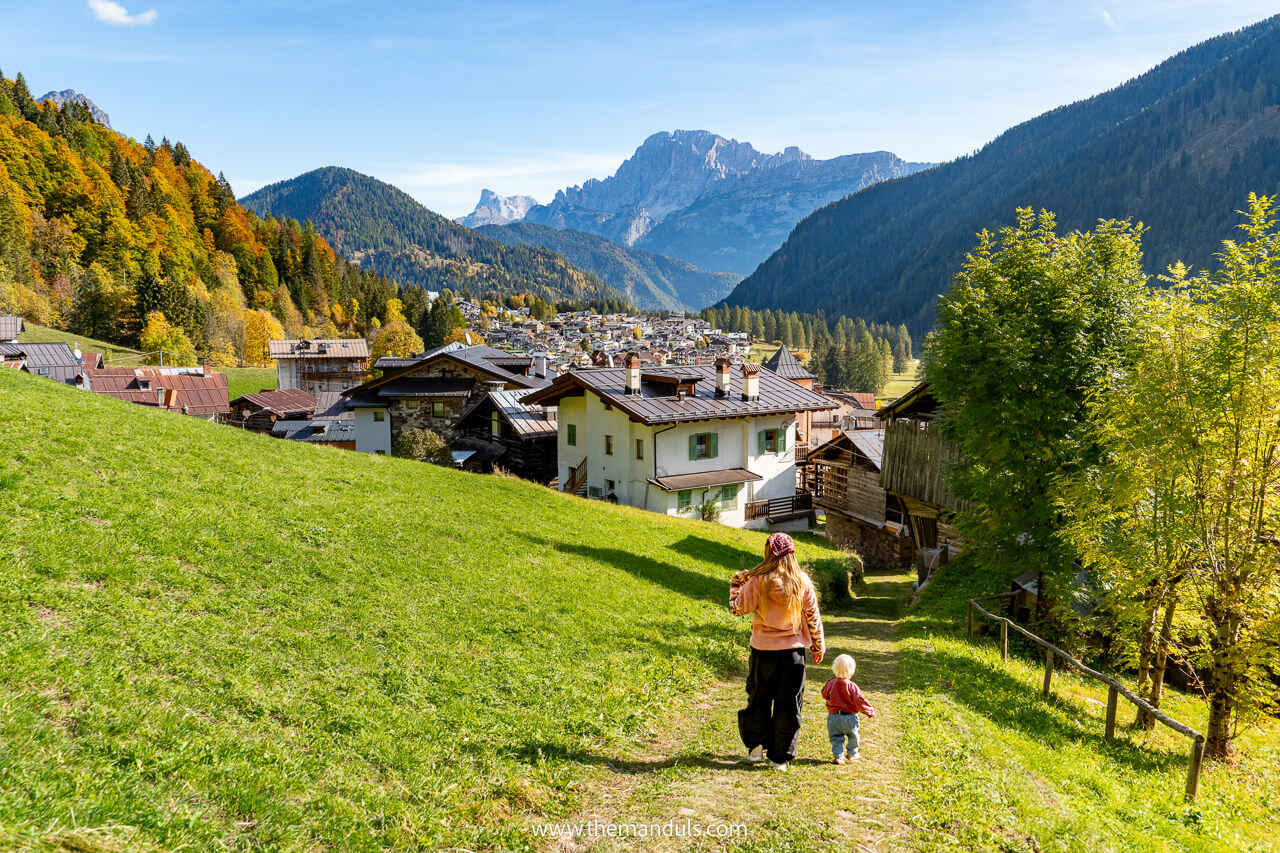
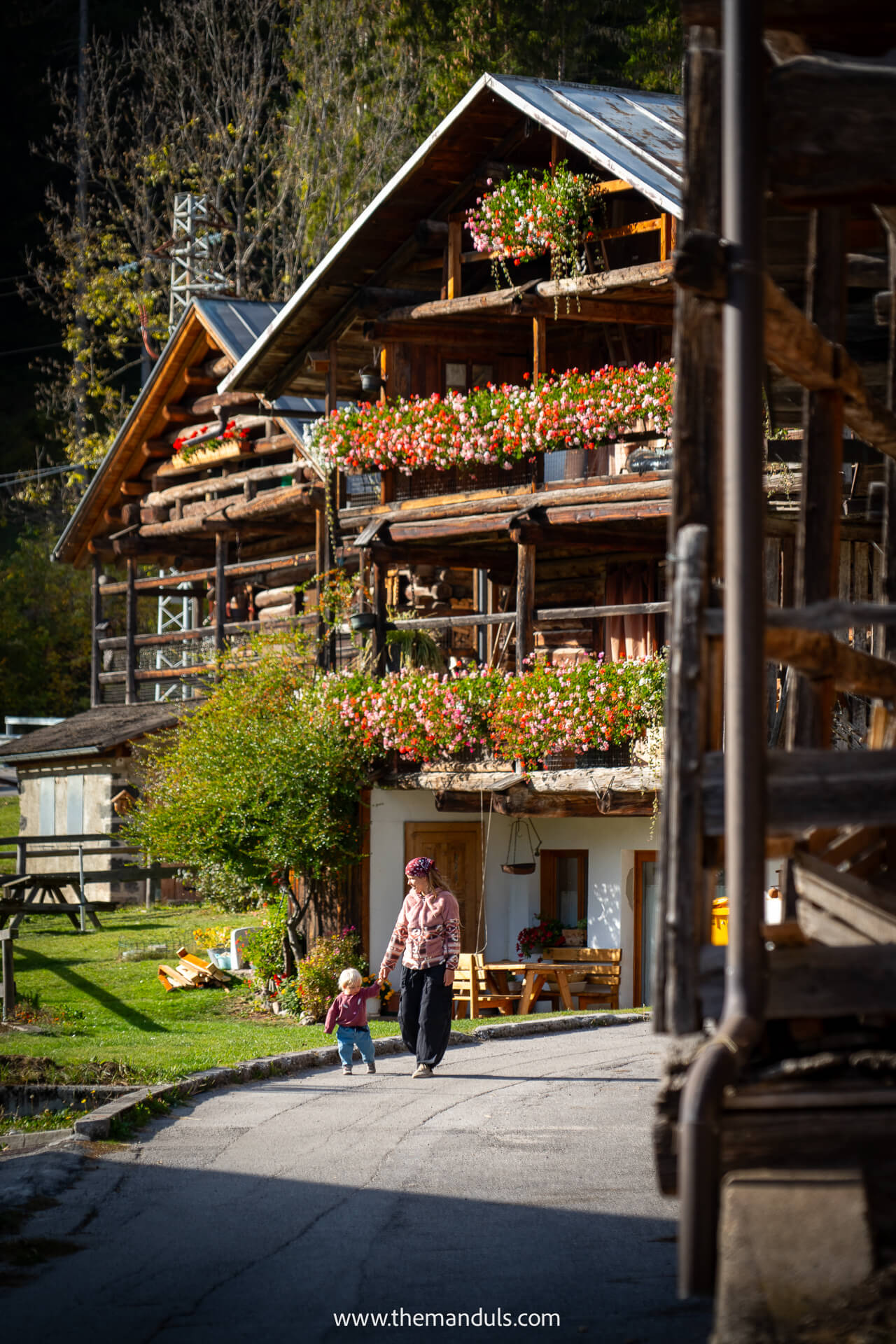
Villotta was more interesting to us for its old buildings than for any particular attraction. This upper part of Falcade has several tabià — traditional wooden barns once used to store hay and shelter farm animals.
We drove up to Villotta and walked downhill toward Col de Rif. The most memorable part was wandering past the timber buildings and looking back over Falcade. The little square farther down didn’t offer much, so we wouldn’t make it the goal of the walk.
The catch is getting there: the road up to Villotta is barely wide enough for one car in places, and parking is very limited. We’d only drive up if you’re comfortable on narrow mountain village roads.
If you prefer a longer marked walk, the Giro delle Coste starts in Falcade and passes through older neighborhoods around the hillside (about 5 km, 2 hours). We took a shorter walk instead; you can find the official route here.
3. Drive Through the Villages of Val del Biois
We drove through Sachet, Feder and Fregona, with stops to walk around Sachet and Sappade. The appeal here isn’t a list of sights; it’s seeing the older houses tucked into the hillsides and finding the occasional place to stop for a coffee.
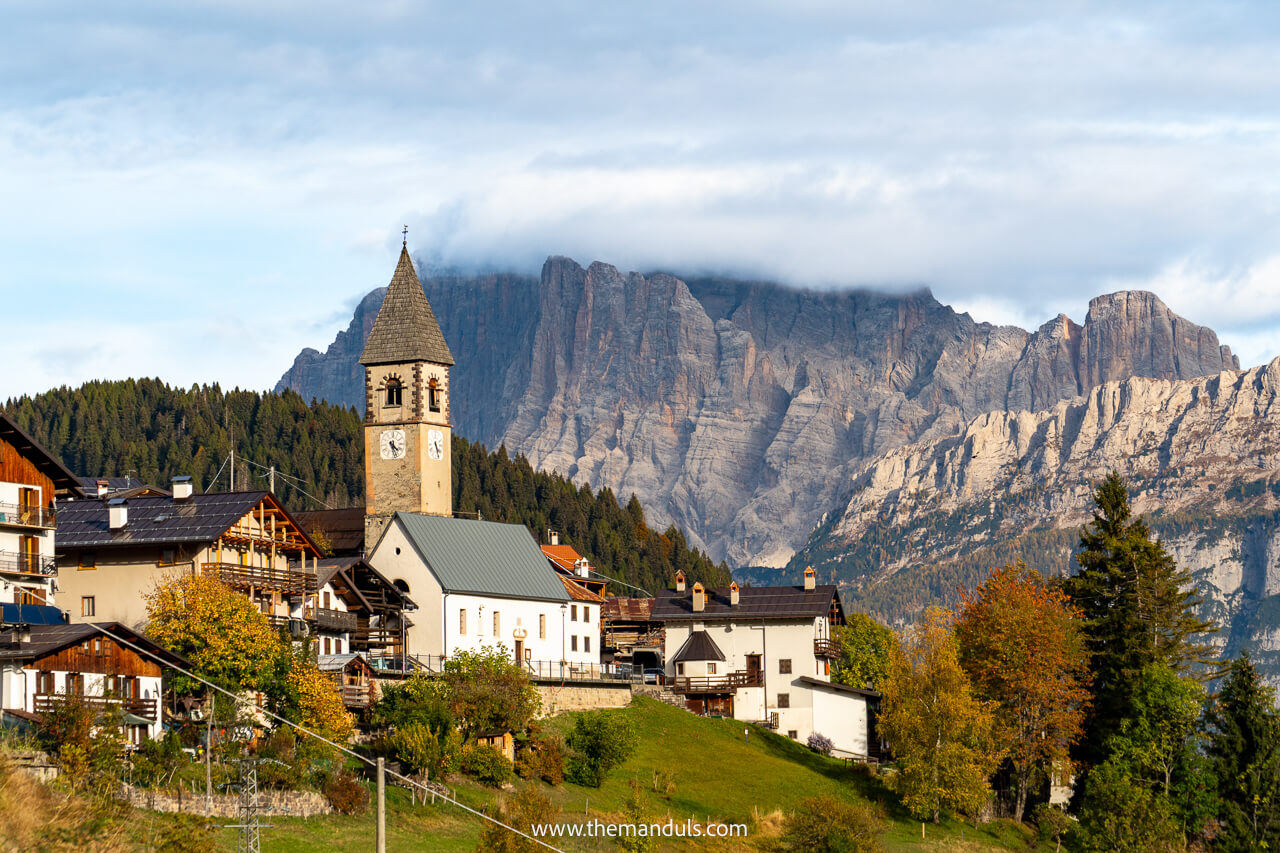
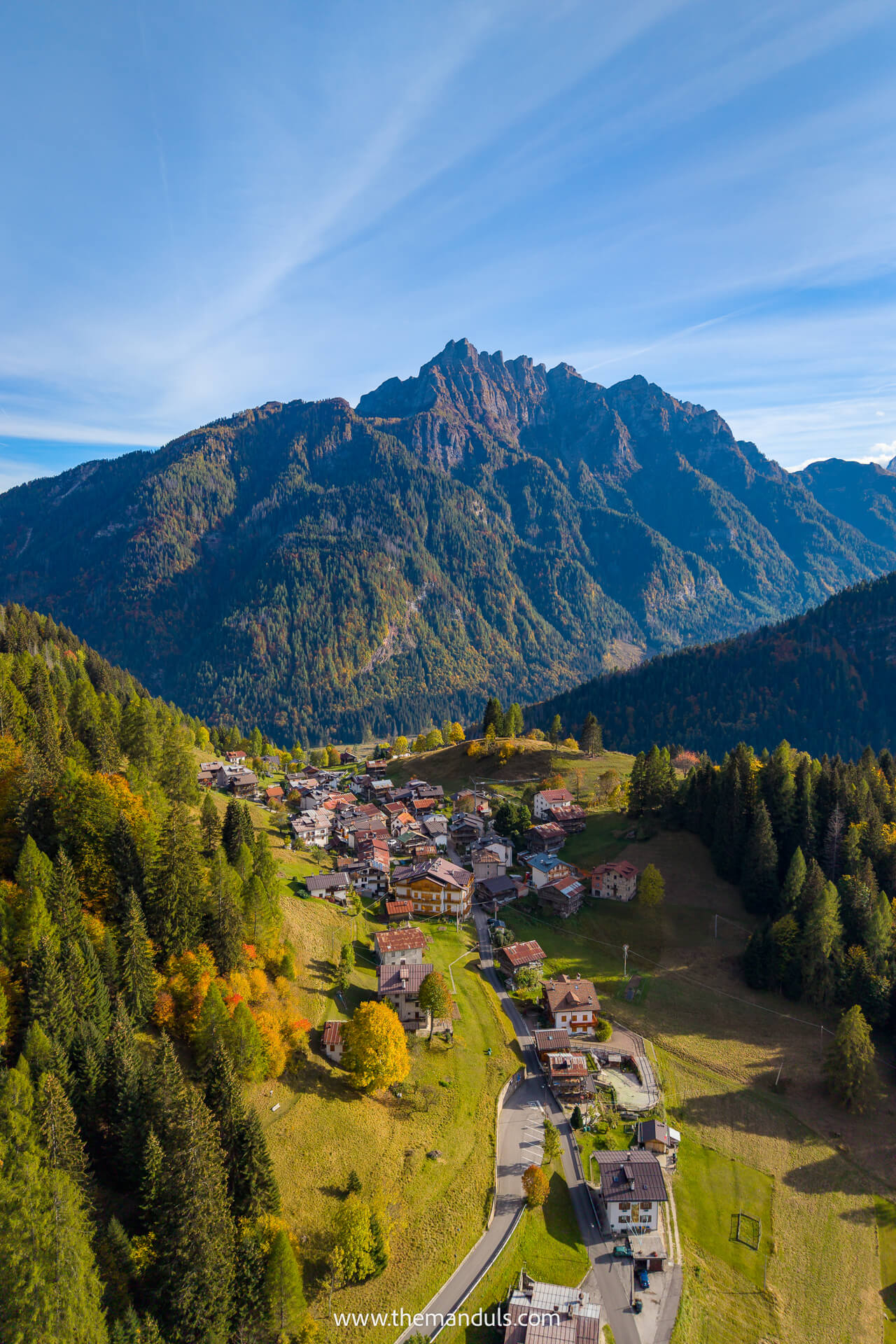
Sappade was easily our favorite. It sits high above the valley, and the scale of the mountains directly behind its houses caught us by surprise. The setting alone made it worth leaving the main road.
Sachet was pleasant for a quick wander too, but if you have to choose just one village, we’d spend that time in Sappade rather than try to see them all.
For a longer outing, the Sappade–Jore trail (CAI 692) takes around 1 hour one way over 2.5 km, with an uphill section near the start. Check the official route description before setting off.
4. Visit Canale d’Agordo
Our stop in Canale d’Agordo was brief, but it turned into a memorable lunch break. We walked through the center and ate at Pizzeria Ristorante Costa, which has a surprisingly unusual interior, full of old-fashioned details and decorations. It’s quite unlike the typical restaurant you’d expect in a small mountain village.
One unusual rule: photos weren’t allowed inside when we visited, so you’ll have to see the interior for yourself.
Canale d’Agordo is also the birthplace of Albino Luciani, who became Pope John Paul I. His birthplace and the MUSAL museum are in the village, although we didn’t have time to go inside. If local history interests you, that’s a good reason to stay longer; you can check visits on the MUSAL website.
We parked in a large paid car park near the church, a short walk from the center.
5. Explore Val di Gares and Its Waterfalls
If we could recommend only one outdoor stop in this area, it would be Val di Gares.
We drove to Pian delle Giare at the end of the valley, about 7 km from Canale d’Agordo, where there’s a large paid car park. From there, we walked to the lower Cascata delle Comelle waterfall in roughly 15–20 minutes.
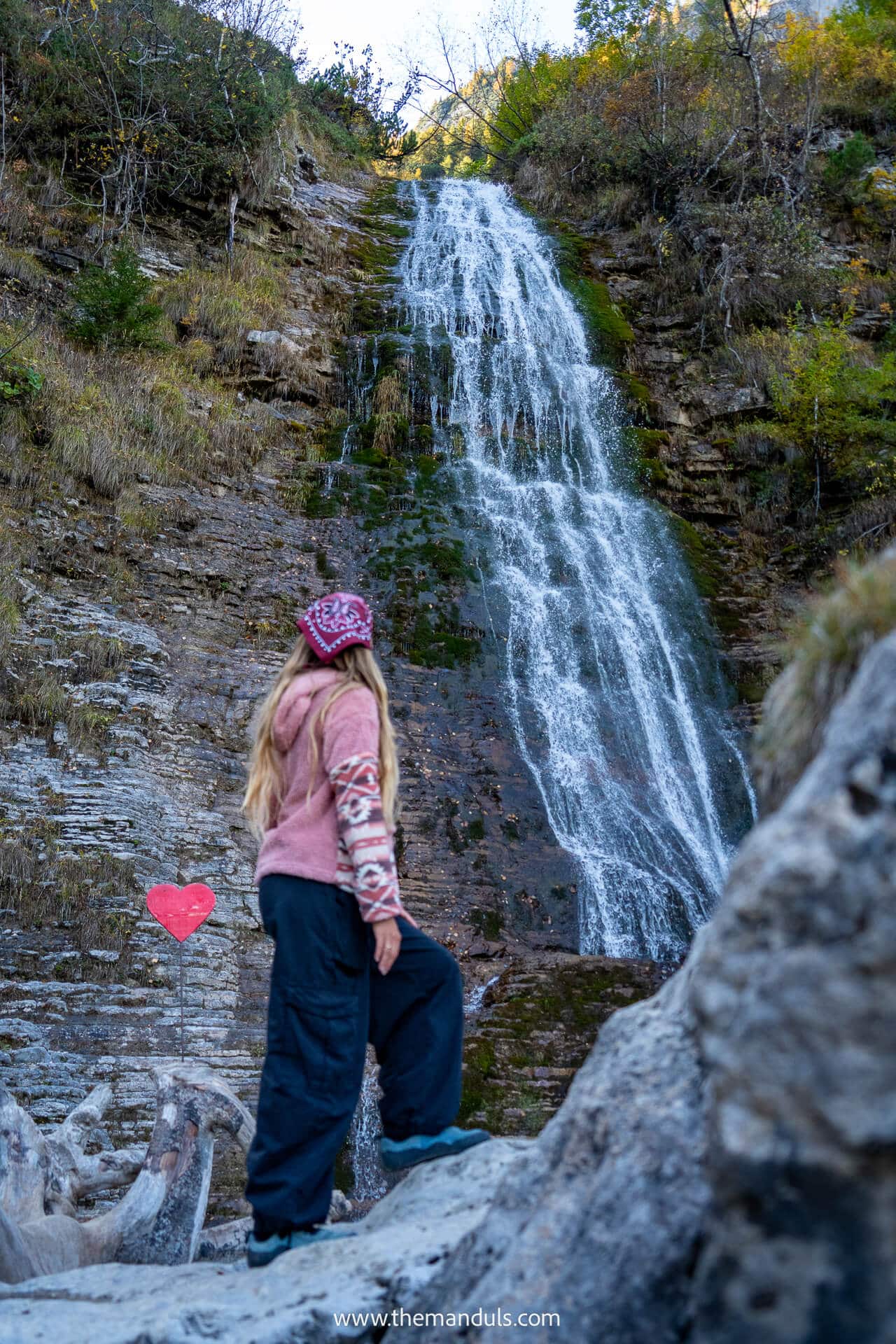
The walk was manageable, but don’t mistake ‘short’ for completely flat. The last part has a steeper section and stairs. We’d wear shoes with grip, and with a toddler we’d choose a carrier over a stroller.
We only did the short walk to the lower waterfall. The full Gares–Comelle waterfall circuit continues to the upper falls and is more demanding: the official route is around 3.5 km, takes approximately 1 hour 45 minutes and has 250 m of ascent.
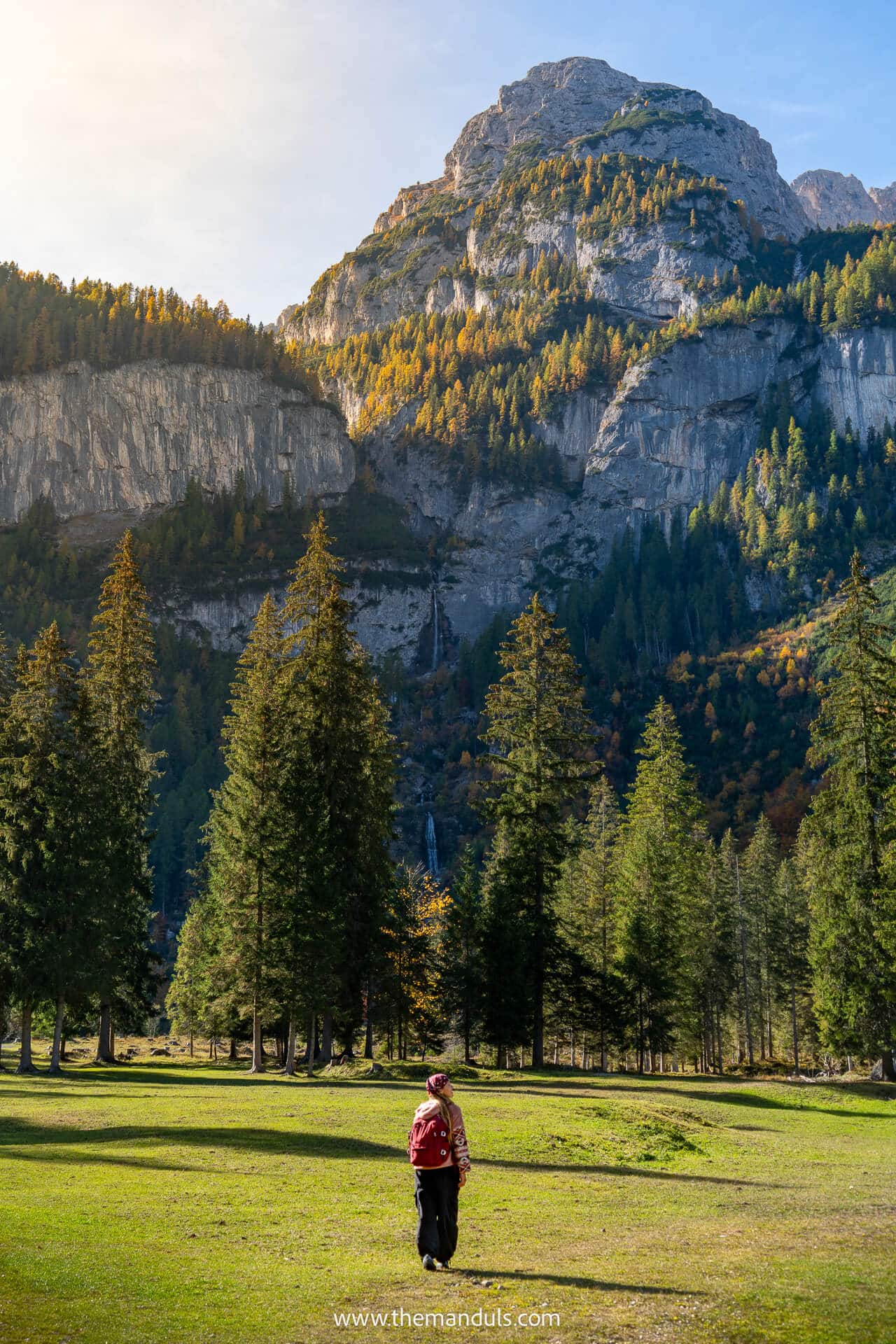
There’s also a small biotope lake near Pian delle Giare if you want a gentler walk. For us, the combination of the waterfall and the long valley enclosed by steep mountains made this one of the best stops of the day.
6. Enjoy the Mountain Views from Passo Valles
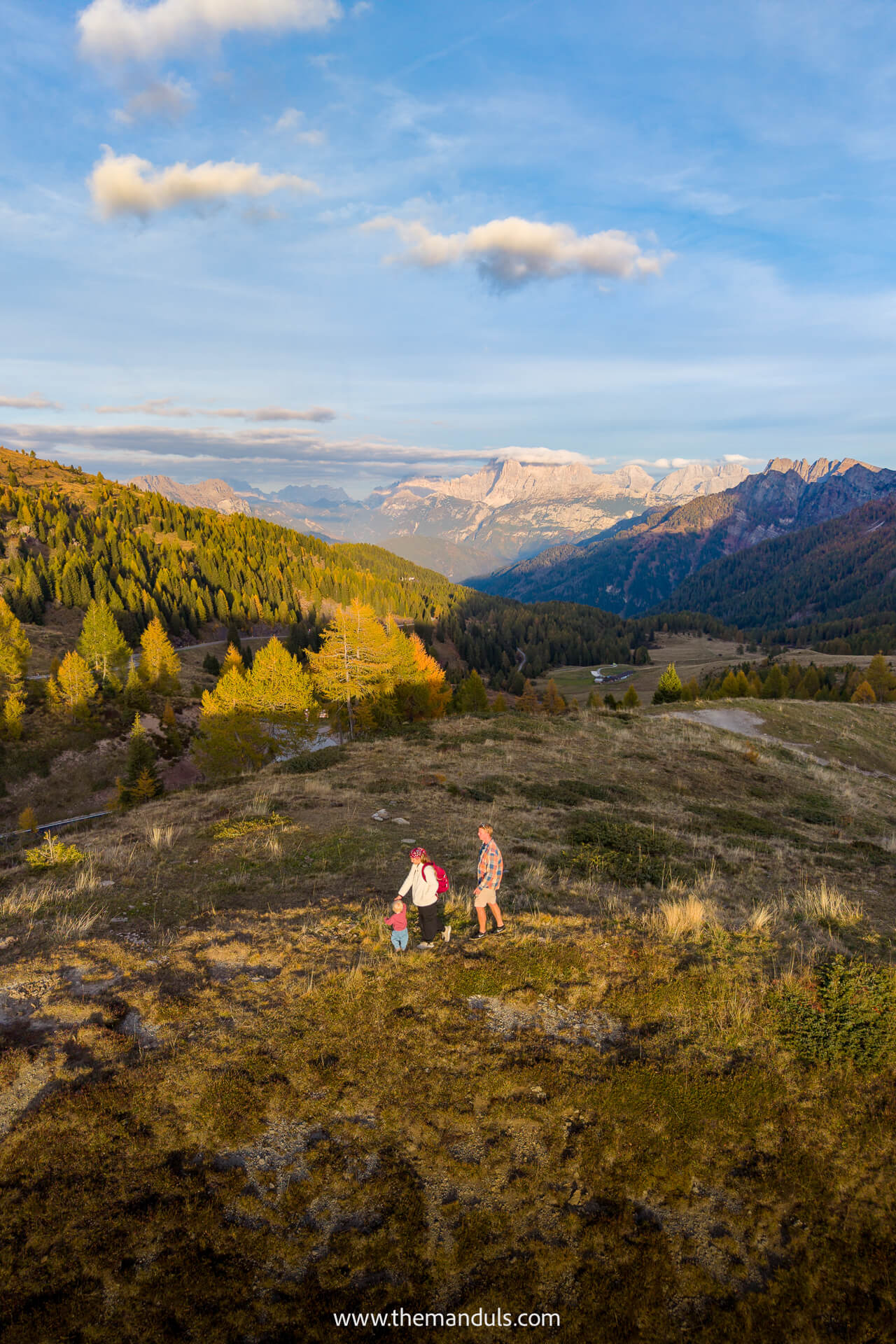
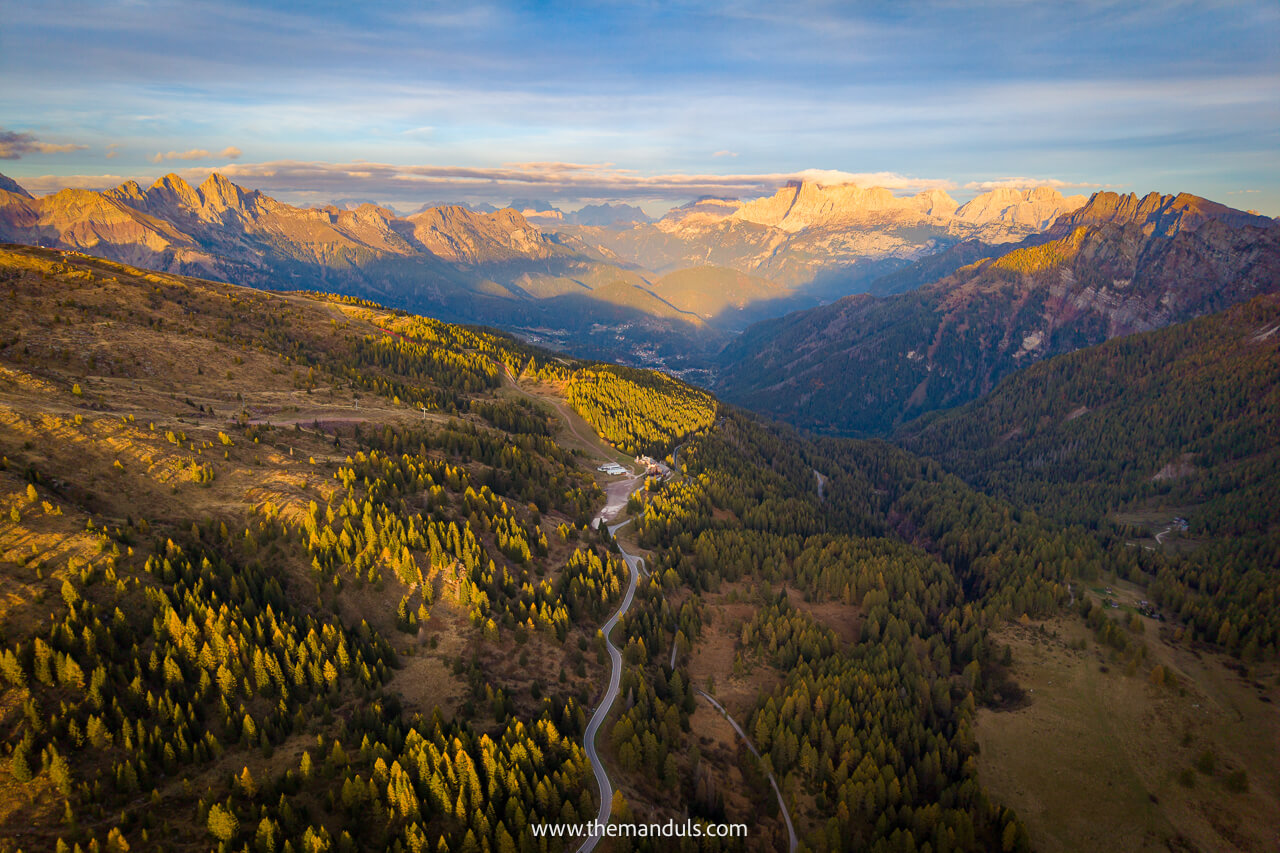
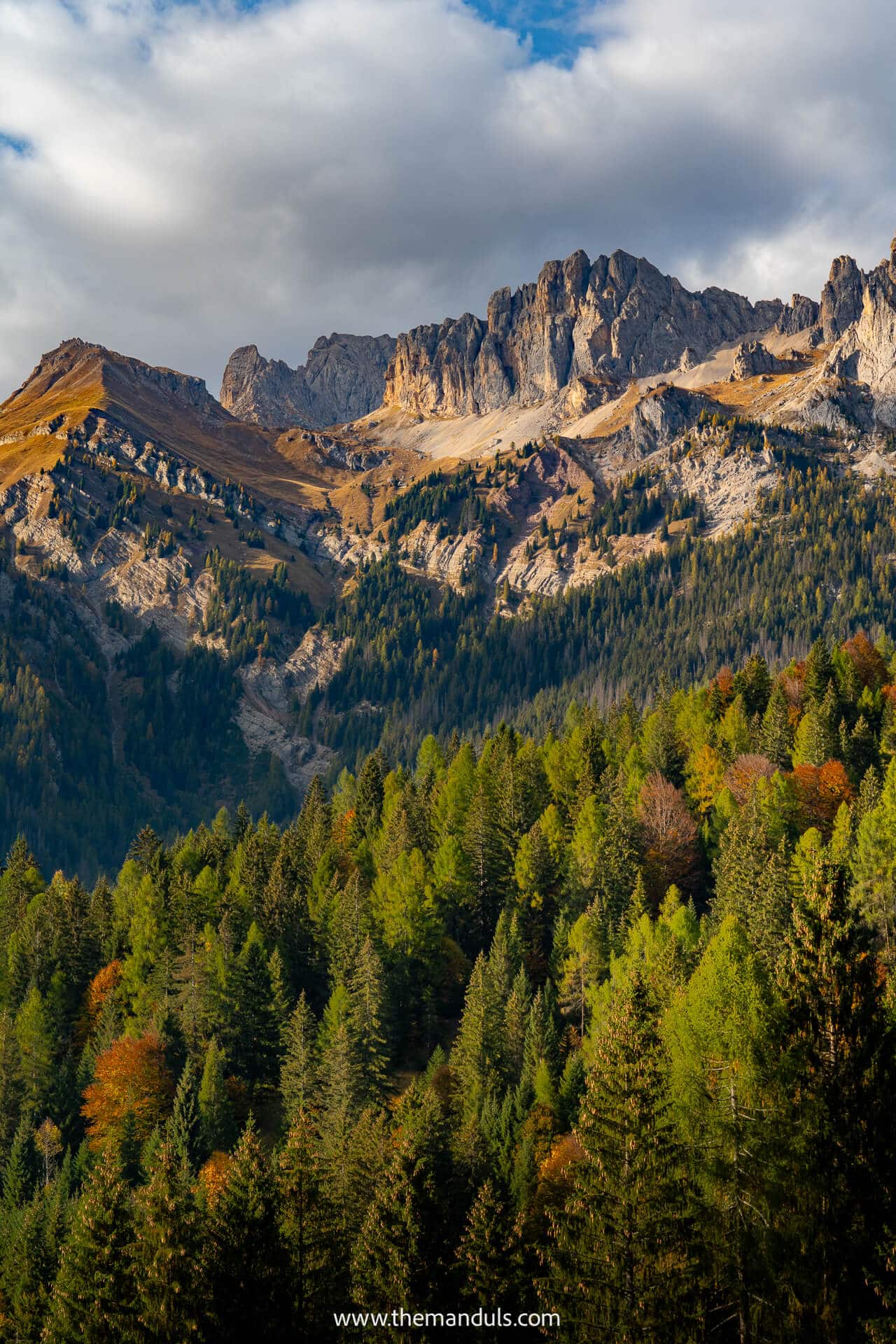
We saved Passo Valles for the end of our day. In October, the drive up was lined with golden larches, and by the time we reached the pass, the sun was getting low over the mountains.
We stopped by Rifugio Capanna Passo Valles, close to the Veneto–Trentino border. At about 2,032 m, the pass gives you a high-mountain setting without having to hike to reach it. Sunset was a particularly good time for us to be there.
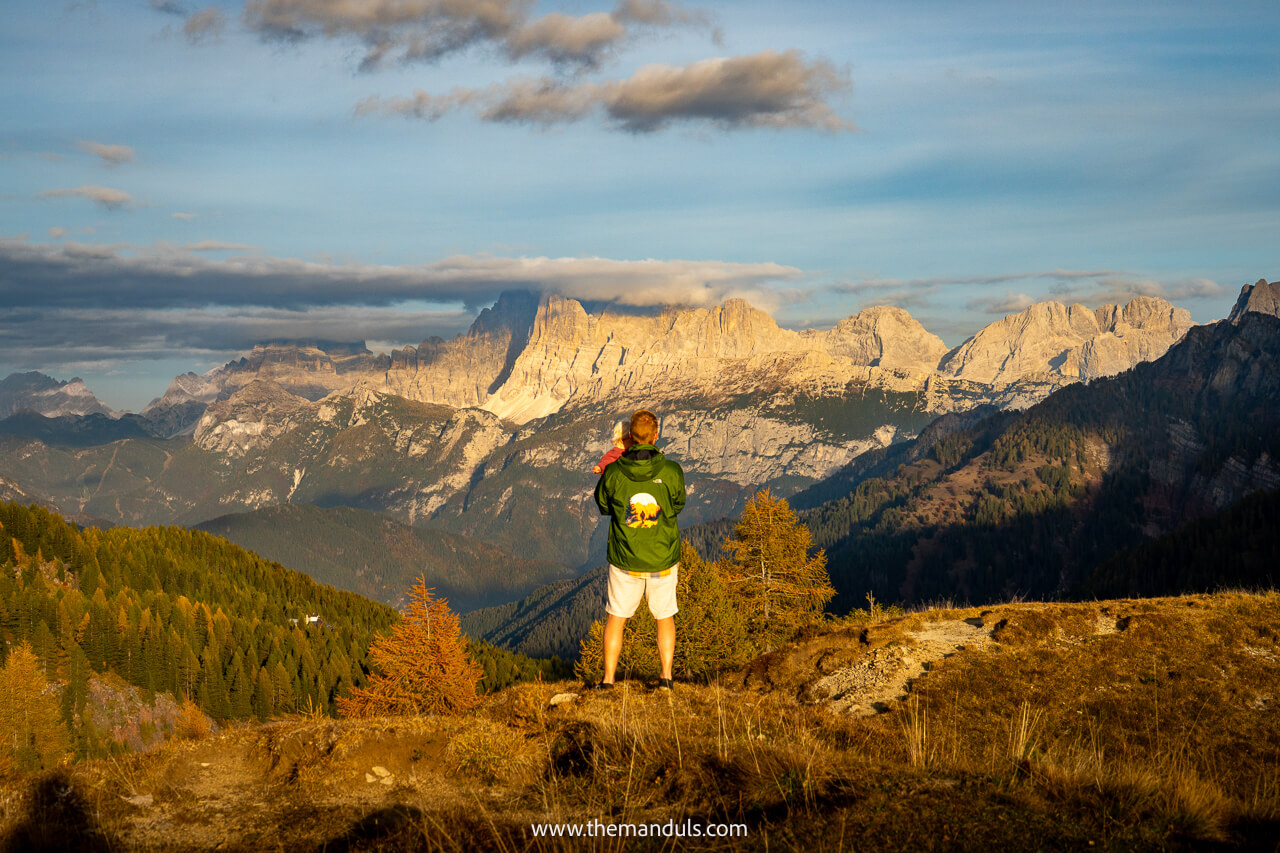
If you want more than a roadside stop, one hiking option is Col Margherita, reached on foot from the refuge in approximately 1 hour 30 minutes.
If you’re driving up outside summer, check the road and weather conditions first; the pass is much higher than Falcade.
How to Get to Falcade
Falcade is in the Belluno Dolomites, in Italy’s Veneto region. For the kind of trip we describe here, driving is the simplest option.
- From Belluno: follow the road through Agordo and Cencenighe Agordino into Val del Biois toward Falcade.
- From Val di Fassa: drive through Moena and over Passo San Pellegrino to reach Falcade.
These are mountain routes, so allow for slower driving and check pass conditions in bad weather or winter. Don’t assume a short map distance means a quick journey.
Public transport is possible via Belluno and the Dolomitibus network, often with a connection through Agordo. Check the current Dolomitibus timetable for your travel day.
How to Get Around Falcade & Val del Biois
You can explore Falcade village on foot, but we’d have a car for the rest of this guide. Sappade, Val di Gares and Passo Valles are not stops we’d try to combine using local buses.
The freedom to pull into a village or take a detour was a big part of our day. There are a few practical trade-offs, though: the access road to Villotta is narrow, and parking in the smaller hamlets is limited.
Best Time to Visit Falcade
Summer is the most straightforward choice for longer hikes. From roughly late June through September, daylight is longer and more high-altitude routes and seasonal services are available. As always in the Dolomites, weather and access still need checking before individual hikes.
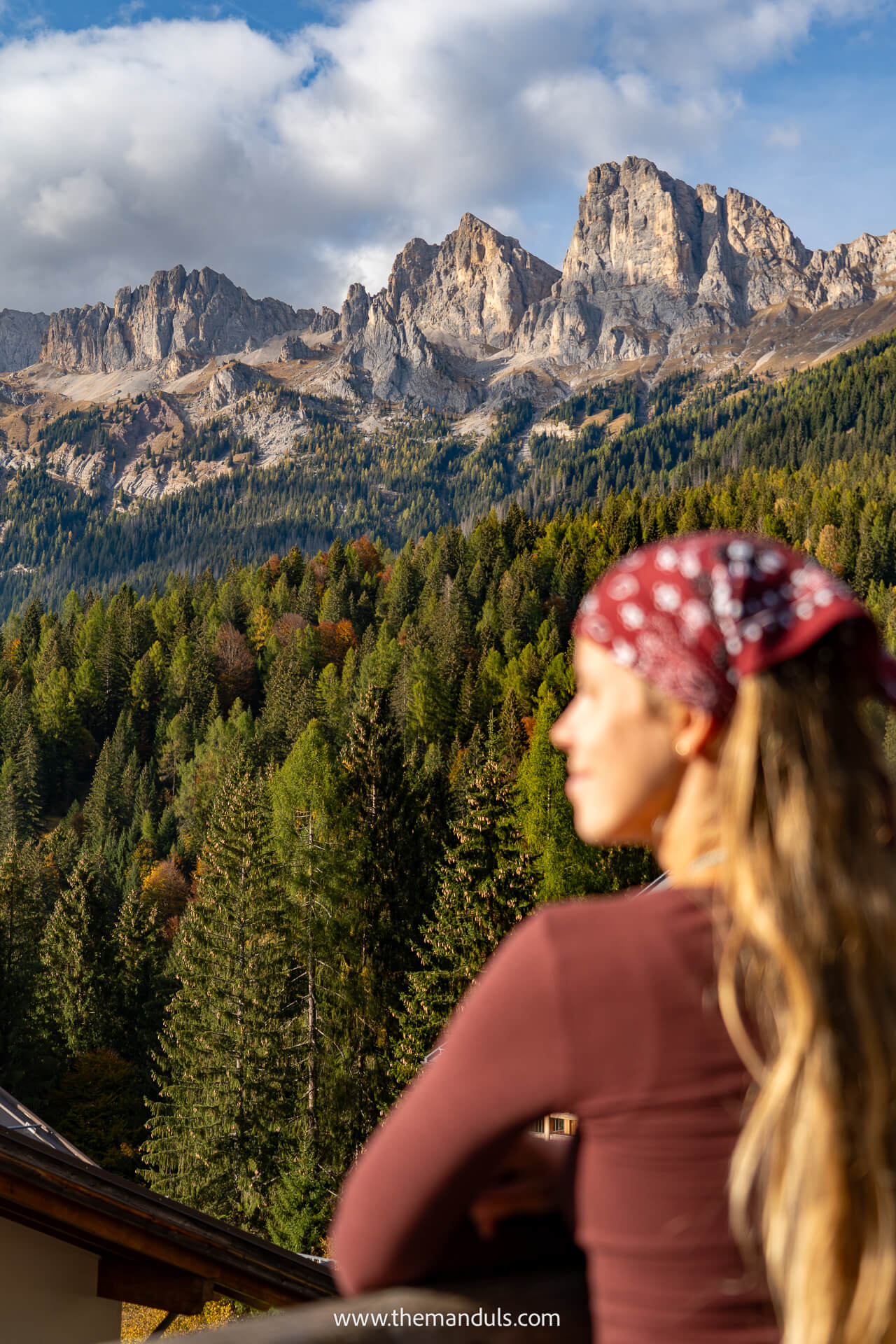
Our trip was in October 2026, and we’d choose that period again for a village-focused drive. The yellow larches on the way to Passo Valles were a highlight. The trade-off is shorter daylight and the possibility of closed lifts or huts, with snow already possible higher up.
Winter is a different kind of visit, particularly if you’re coming for skiing around Falcade–San Pellegrino. Spring is less predictable for hiking at altitude because snow can linger. So we’d choose summer for hiking and autumn for the kind of relaxed road trip we did.
Final Thoughts
Falcade wasn’t a day of famous Dolomites landmarks, and that’s exactly why we’d include it on a longer road trip. We could drive between small villages, stop for a short waterfall walk and still finish the day at a mountain pass.
If you’re deciding where to spend your time, don’t miss Sappade or Val di Gares. We’d add Villotta if you enjoy traditional wooden buildings and take the road to Passo Valles if the weather is clear.