
This article contains affiliate links. Learn more in our affiliate disclosure.
We planned our trip to Japan during one of its most beautiful seasons — autumn — hoping to catch the fall foliage in full swing.
We arrived a little late, with many trees already bare, but the crisp air, golden light, and peaceful vibe made it a wonderful time to visit.
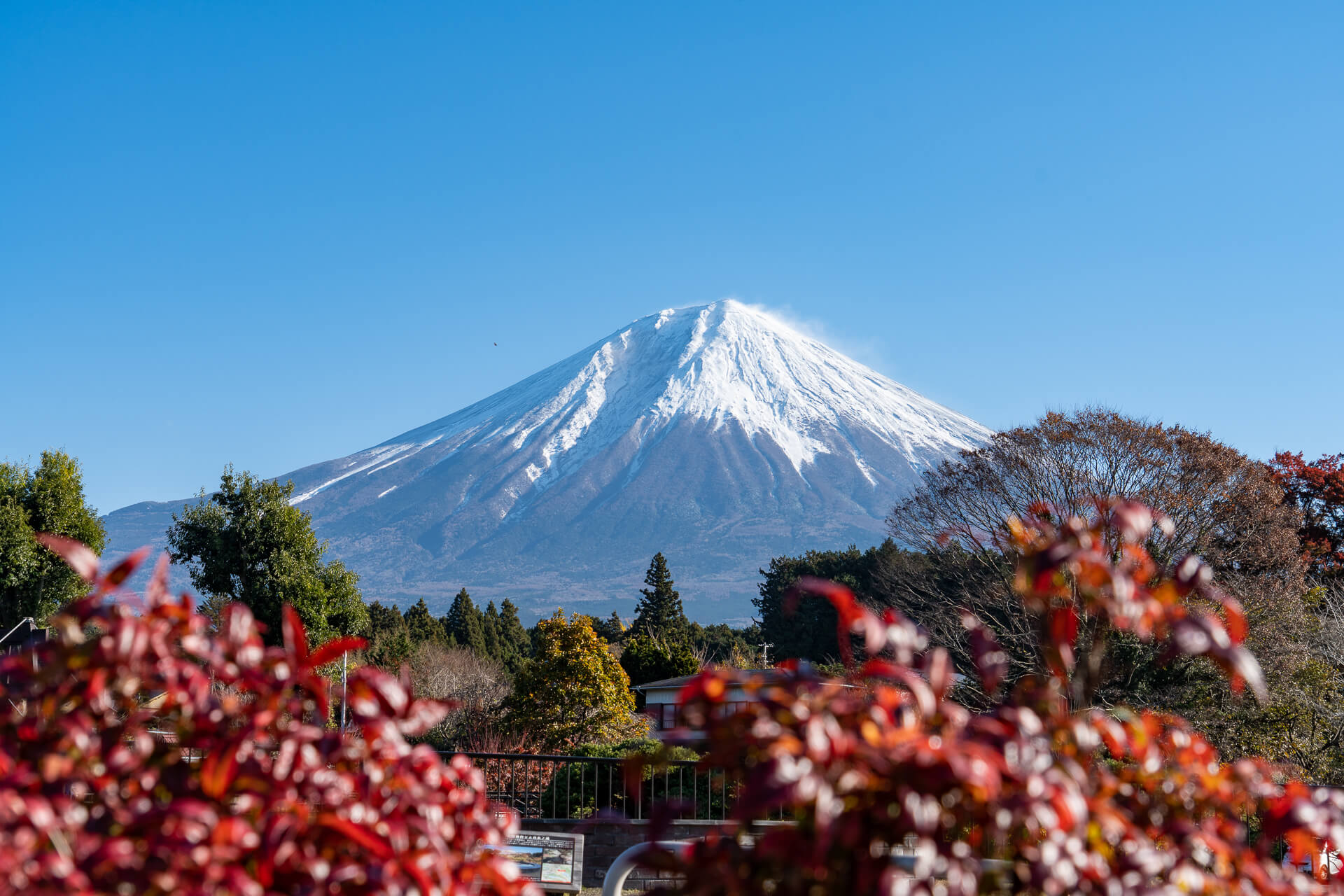
Autumn also brings some of the clearest skies of the year, and we were lucky enough to see Mount Fuji multiple times.
Even on days when the weather didn’t cooperate, we found there was still plenty to enjoy around the area. From quiet lakeside walks to scenic ropeways and historic shrines, there’s no shortage of beautiful and unique things to do near Mount Fuji — even when the peak is hiding.
After spending a few slow and lovely days exploring the region, we’re excited to share some of our favorite places with you. The best part? Many of them are still surprisingly calm despite the tourism boom.
In this guide, you’ll find scenic viewpoints, photo spots, food recommendations, when to visit, and a few extra tips to make your trip smooth.

Good to know before visiting Mount Fuji
The Mount Fuji area isn’t one single destination — it’s a wide region with lakes, towns, and viewpoints spread around the base of the mountain.
Buses run regularly between the major tourist spots, and they’re a good option if you’re not driving. But for the most freedom — especially if you want to explore places like Lake Saiko, Shiraito Falls, or some of the lesser-known spots — we recommend renting a car, which is what we did.
Driving here is easy, and most parking spots are free or very affordable. We always use DiscoverCars when renting — it compares offers from multiple companies and usually has better deals than booking directly.
Also good to know: you won’t see Mount Fuji all the time. Even on sunny days, the peak can be hidden for hours, so don’t panic if it’s cloudy when you arrive. Plan to stay at least two nights to increase your chances.
In a hurry?
These are our top hotels at Mount Fuji we’d book again
⭐️⭐️⭐️ Fuji Gran Villa TOKI – Our top pick. Modern villas come with plenty of space, privacy, and direct Mount Fuji views. A great balance of comfort and location.
👉 See prices & availability →
⭐️⭐️ Fuji Onsenji Yumedono – A luxurious ryokan-style stay with private onsen baths, beautiful interiors, and that calm, traditional feel.
👉 See prices & availability →
⭐️ Guest House HIIRAGI – Simple, budget-friendly, and with Lake Yamanaka views. Rooms are clean and quiet — perfect if you’re mainly here to explore and need a reliable base.
👉 See prices & availability →
Top Things to do at Mount Fuji
Map of all the attractions
1. Honcho Street View – the iconic photo spot
You’ve probably seen this one on Instagram — a straight street with Mount Fuji perfectly framed at the end. The street is actually quite long, and there are plenty of different spots along it where you can get a great photo, so no need to crowd into one exact spot.
While the tourist crowds weren’t a big issue, there was the constant traffic. This is one of the main roads through town, and it’s busy with cars, buses, and even trucks passing by all the time.
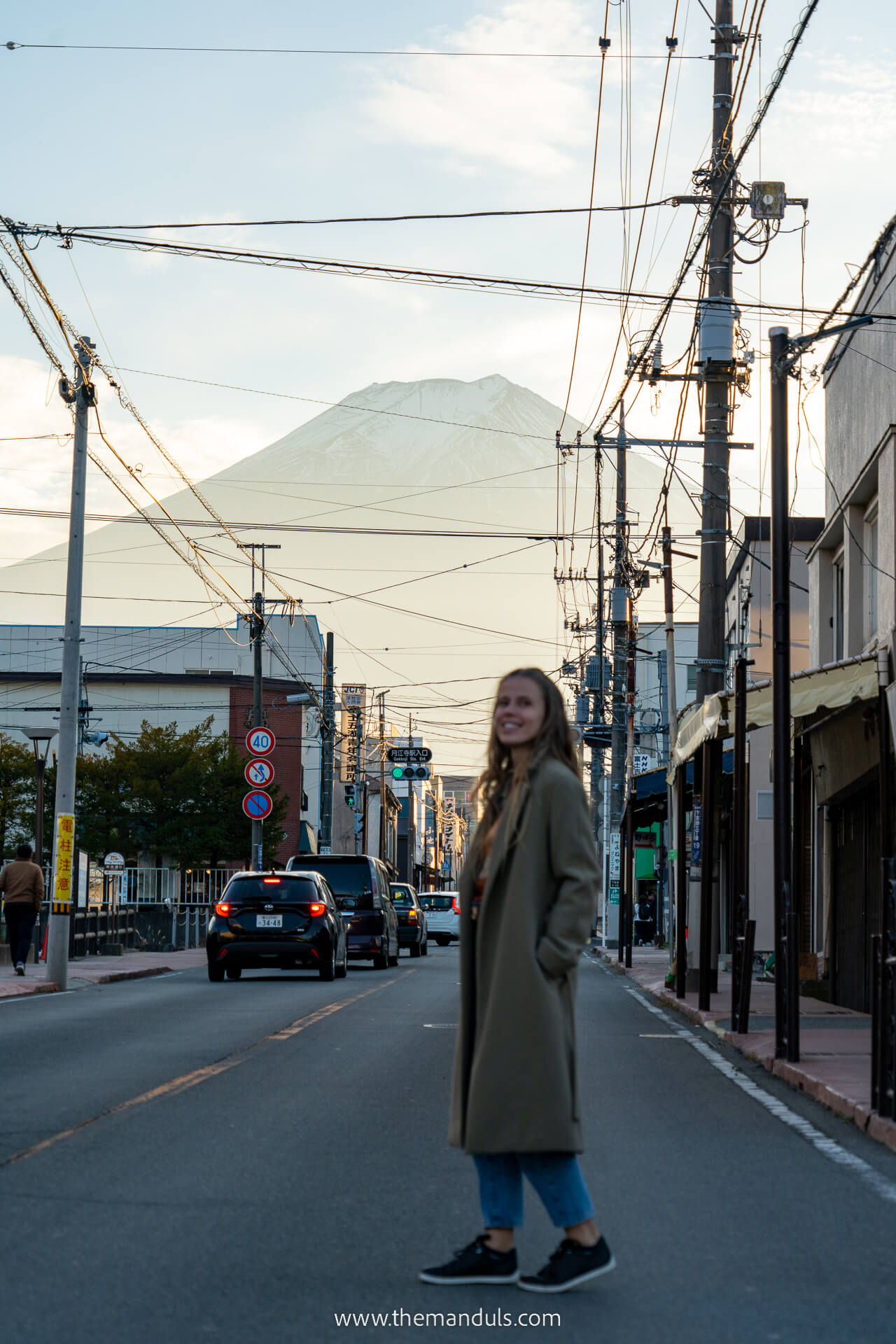
Local officials do advise against standing in the middle of the road for photos and while we’re quite sure you might “accidentally” do it anyway, just try not to block or interfere with traffic.
Honestly, it was almost funny watching everyone try to time their jump into the road between passing cars for that perfect shot.
2. The “hidden” street & sunset photo spot
If you’re looking for something a little quieter, here’s a tip: just one or two streets away, there’s a lesser-known view we ended up liking even more.
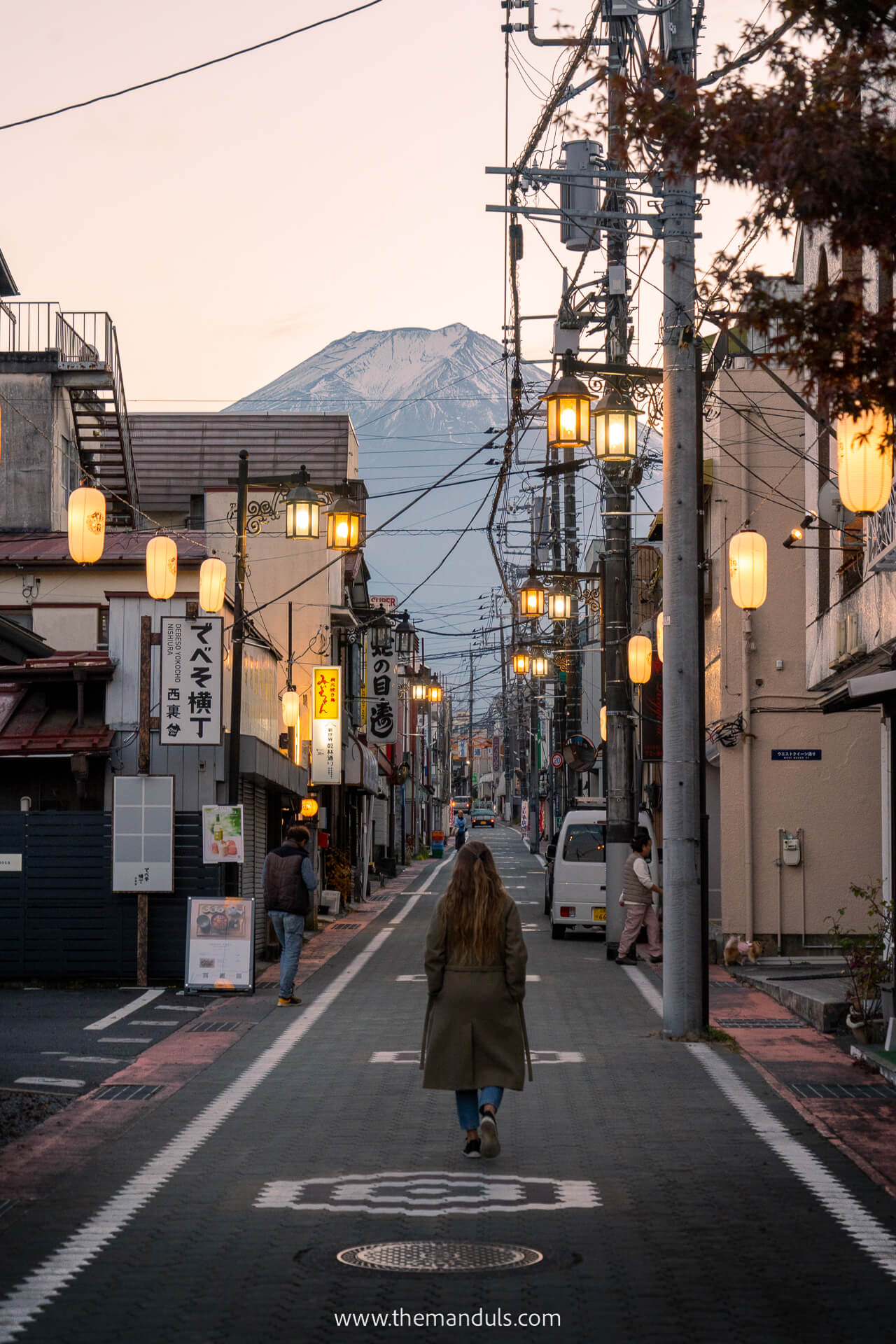
After sunset, when the lanterns light up, but there’s still just enough daylight to see Mount Fuji in the background, it’s a surprisingly peaceful scene. Hardly any tourists, barely any cars — just a quiet street with the mountain glowing in the distance.
Taking a stroll here was one of the best things to do at Mount Fuji for us!
📍Save this spot in your Google Maps.
3. Tatego Hama Beach at Lake Shōji
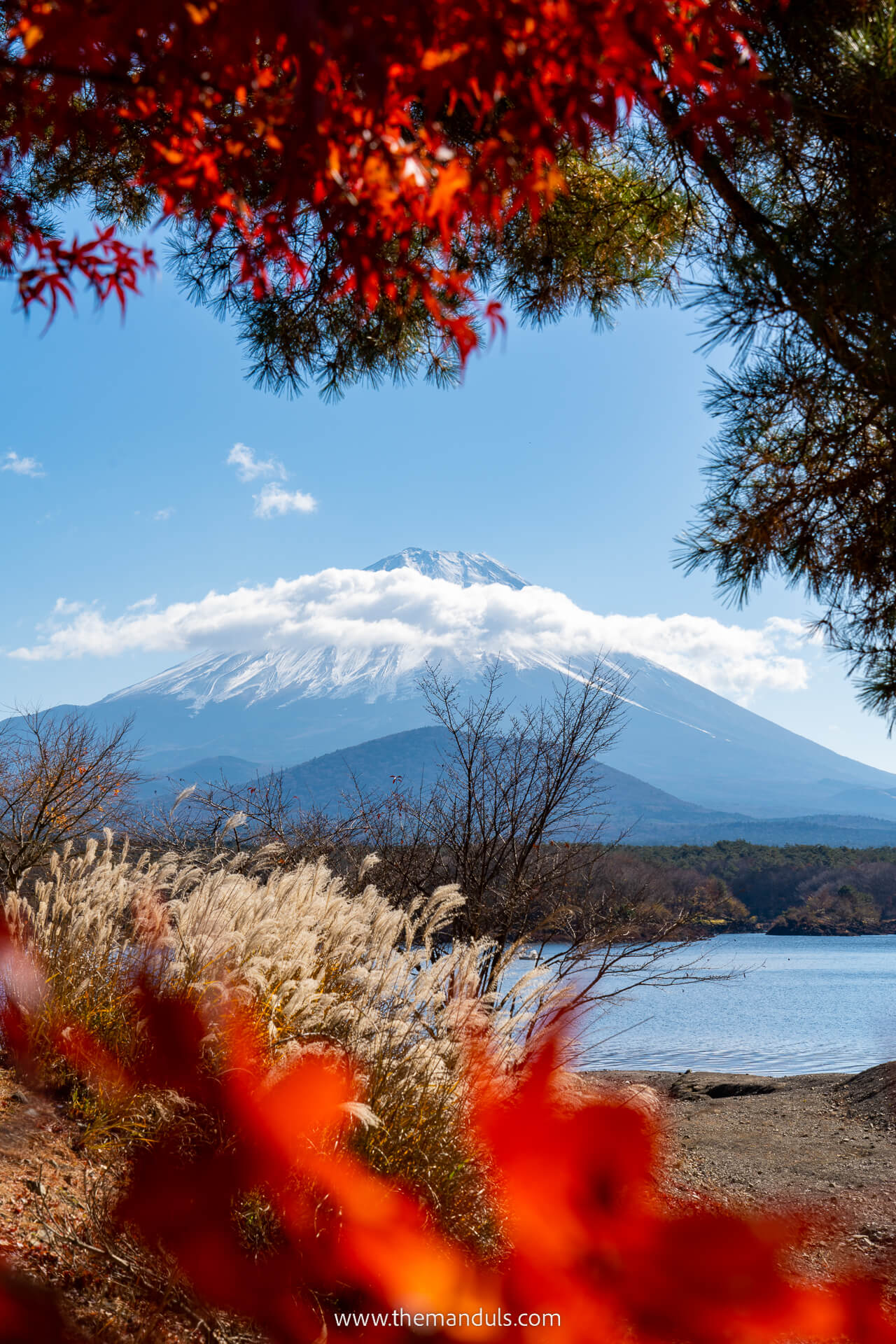
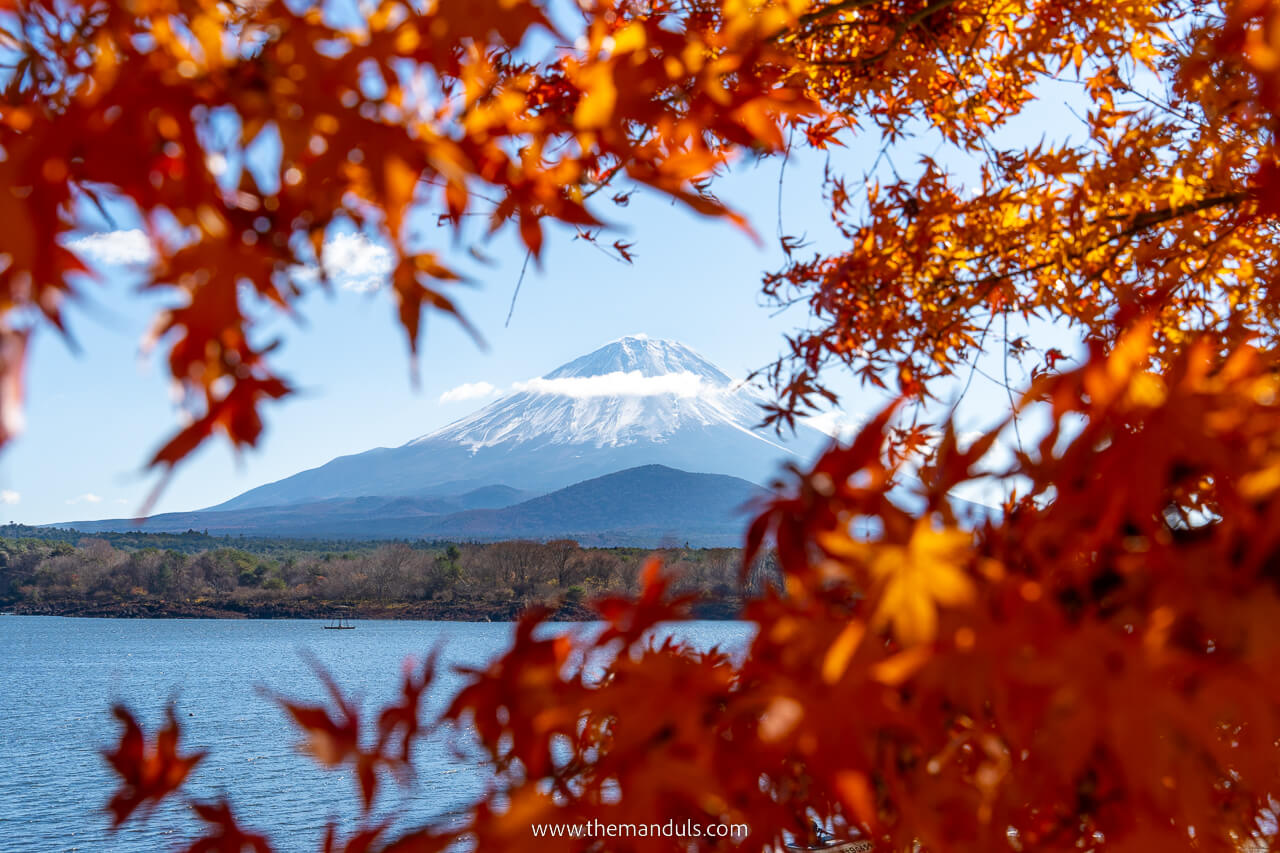
Lake Shōji is the smallest of the Fuji Five Lakes, but it felt like one of the most untouched. The lake is calm, the water clear, and the views of Mount Fuji (when visible) are incredibly dramatic thanks to the lower angle and undisturbed nature.
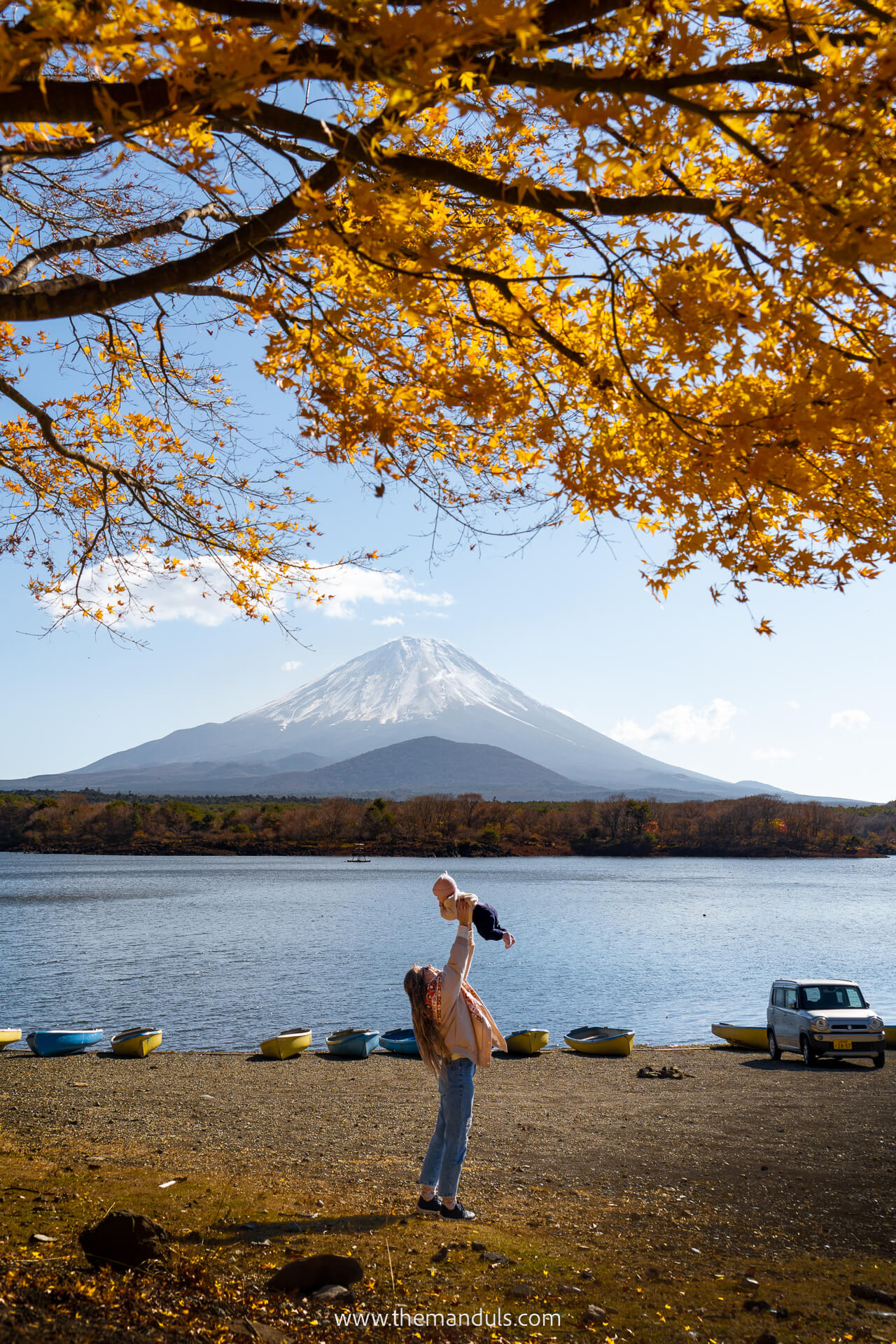
Tatego Hama Beach is the most scenic spot on this lake — it’s a pebbly lakeshore where you can walk, sit, or even set up a little picnic. We’ve seen a few boats that looked like the ones you can rent, but they didn’t seem to be open.
What we loved the most about this place was that it was really calm and peaceful, without crowds ruining the atmosphere.
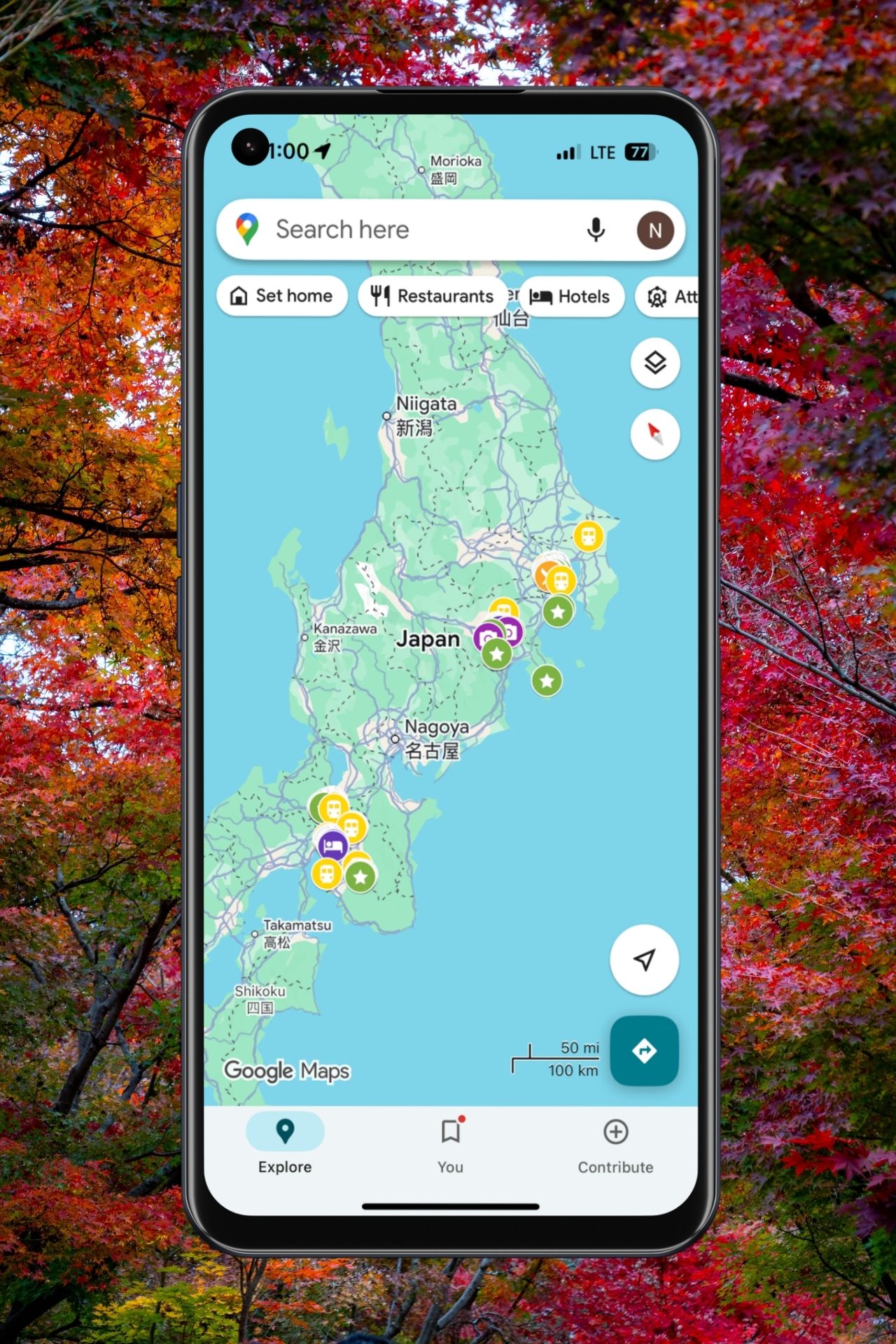
Our Japan Google Maps
Built from our real trips across Japan — only places we actually visited and loved.
No tourist traps. No random saves. Just a ready-to-use map that saves you hours of research.
219 handpicked spots, including:
📍 Highlights & hidden gems
🍜 Restaurants we’d go back to
🏨 Areas & hotels we’d book again
🗺️ Stops that fit into real, logical itineraries
4. Shiraito Falls + Otodome Falls

Entrance Fee: free
These two waterfalls are tucked away in the forested foothills west of Mount Fuji and can easily be visited together.
Shiraito Falls is definitely the highlight — a wide curtain of water pouring down mossy cliffs, with lush greenery growing behind it. It’s incredibly beautiful and peaceful, and when we visited early in the morning, we only shared the spot with a few other people.
The fall colors made it even more special — with deep reds and oranges surrounding the waterfall, it felt like a scene from a painting.
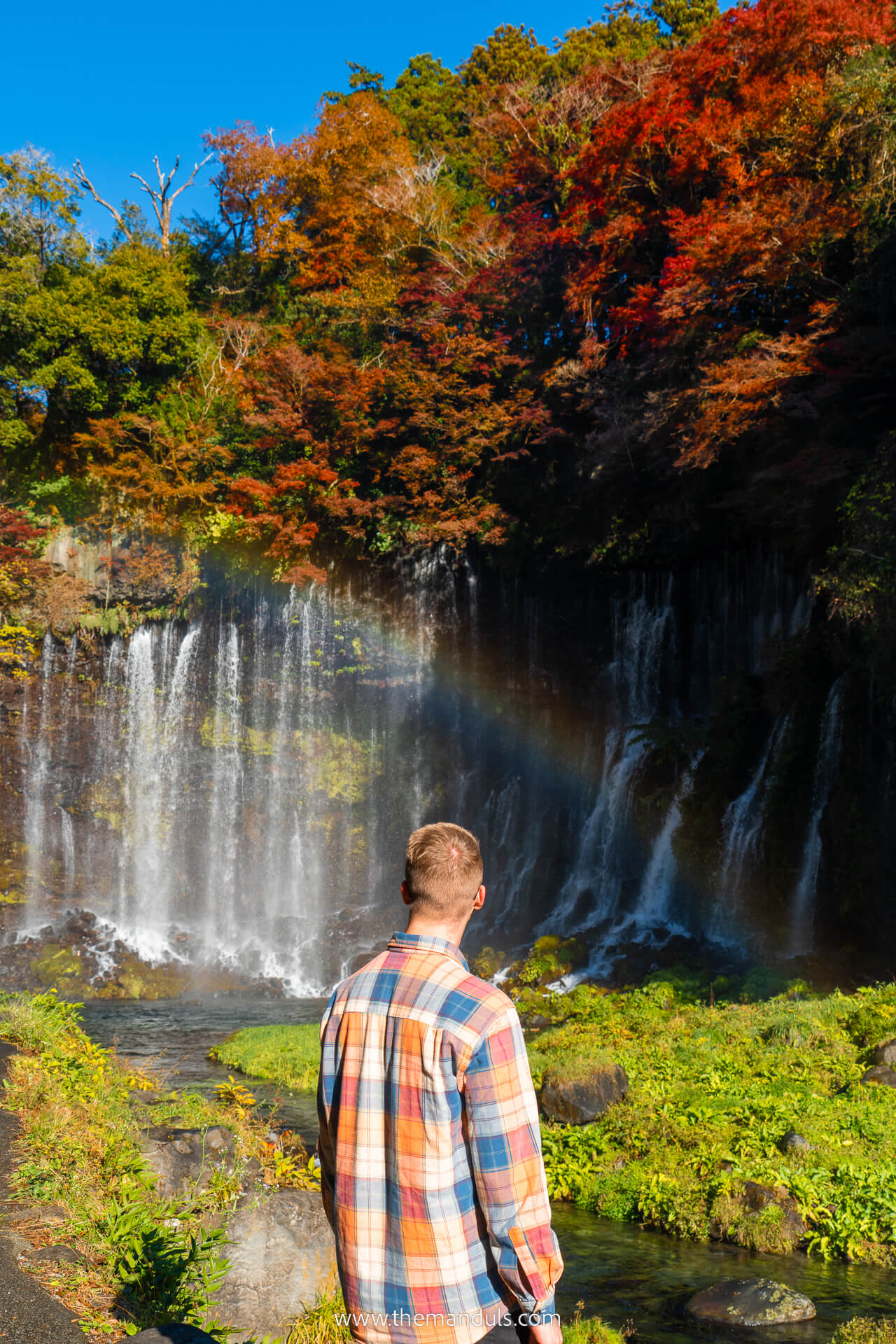
To get close to Shiraito, you’ll need to walk down a long staircase into the valley. It’s not difficult, but strollers and wheelchairs won’t be able to access the lower viewpoint. Still, there’s a nice view from the top, which is accessible for everyone.
One thing you shouldn’t miss is the observation deck above the falls. From the main viewpoint, follow the stairs up — it only takes a few minutes. From there, you’ll see the waterfall from above with Mount Fuji towering in the background. It was easily one of our favorite Fuji viewpoints on the entire trip.
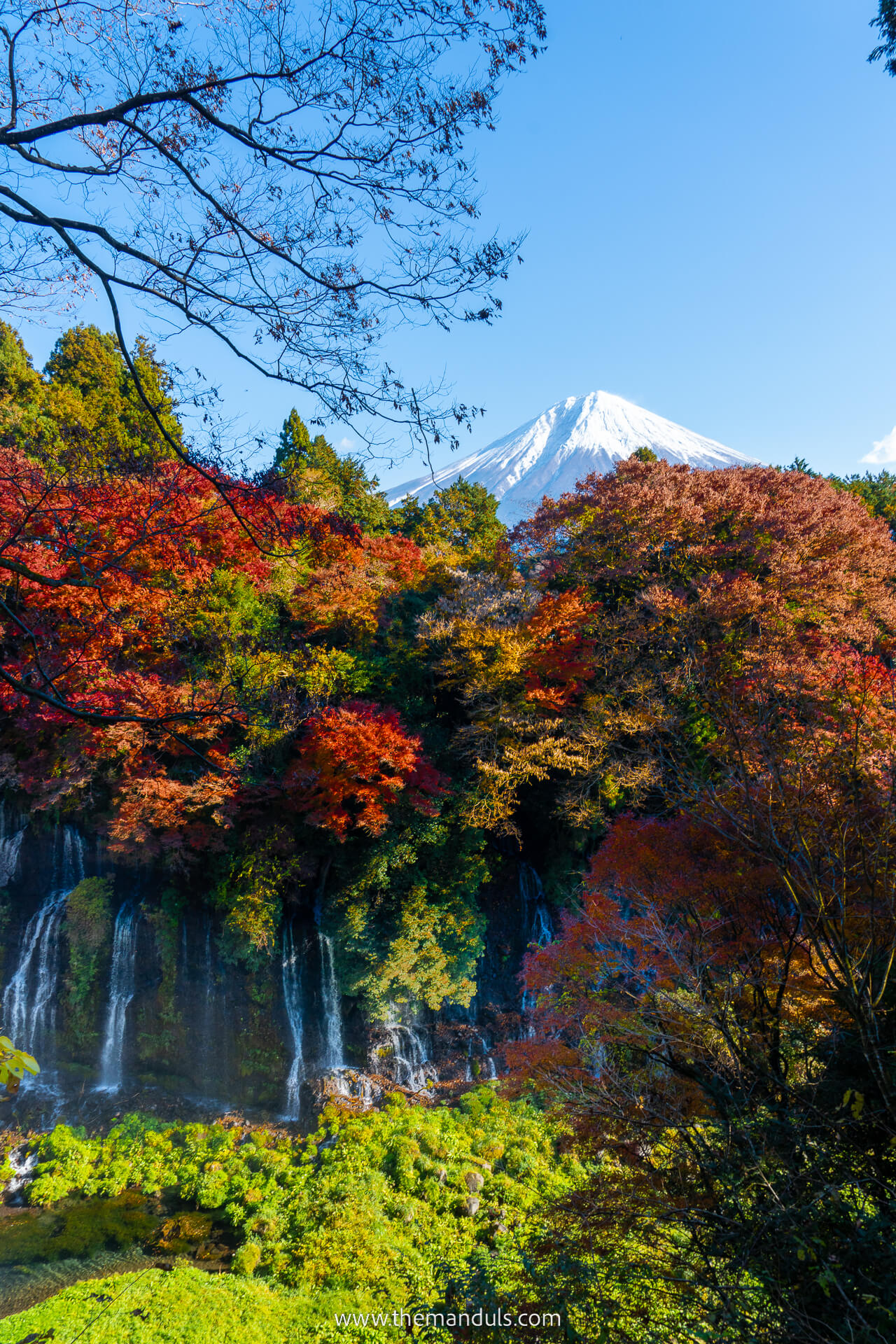
After climbing back up, before heading to the parking lot, we recommend making a short detour to Otodome Falls. It’s just a few minutes’ walk and has a small viewing platform overlooking the falls from a distance. You’ll also catch a partial Fuji view, though not directly behind the waterfall.


TIP: These falls are best reached by car or by joining a tour. There are several large parking areas — the first one charges ¥1000, but if you drive just a bit further, you’ll find another for ¥500. There’s no entrance fee, and toilets are available at the entrance.
5. Asama Shrine
Entrance Fee: free
We had one rainy, misty day during our Mount Fuji stay — and since many spots are all about catching a clear view of the mountain, we went looking for an alternative. That’s how we ended up at Asama Shrine, and honestly, it turned out to be our favorite thing we did in the whole area.
Tucked away in the forest near the popular Momiji Tunnel, we expected it to be busy. But to our surprise, we spent most of our time here completely alone — no tour groups, no crowds, just the quiet sound of rain.
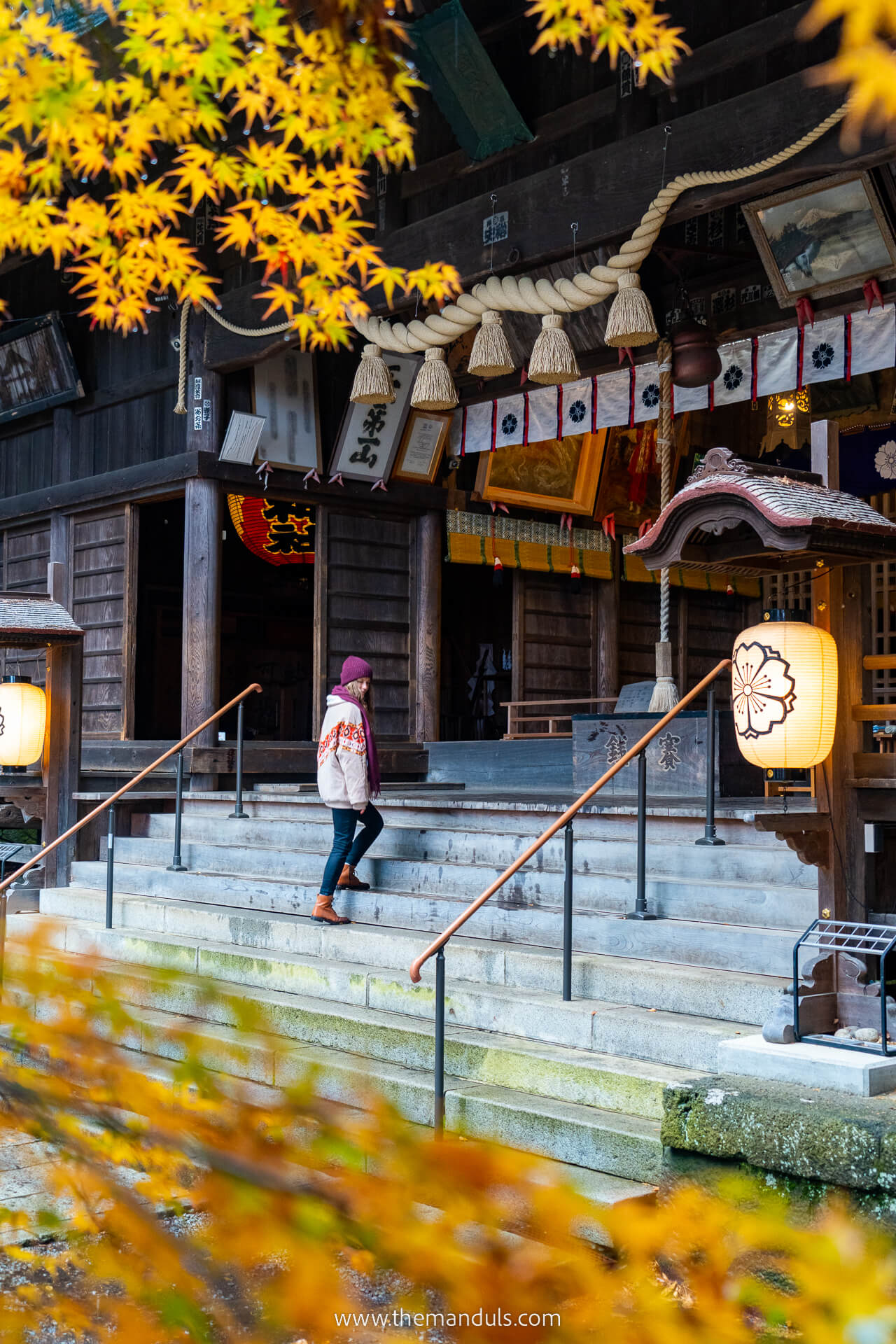
The entrance is marked by a large red torii gate, flanked by towering cedar trees. With everything wet from the rain, the whole place felt like it had been pulled from a Japanese fairytale.
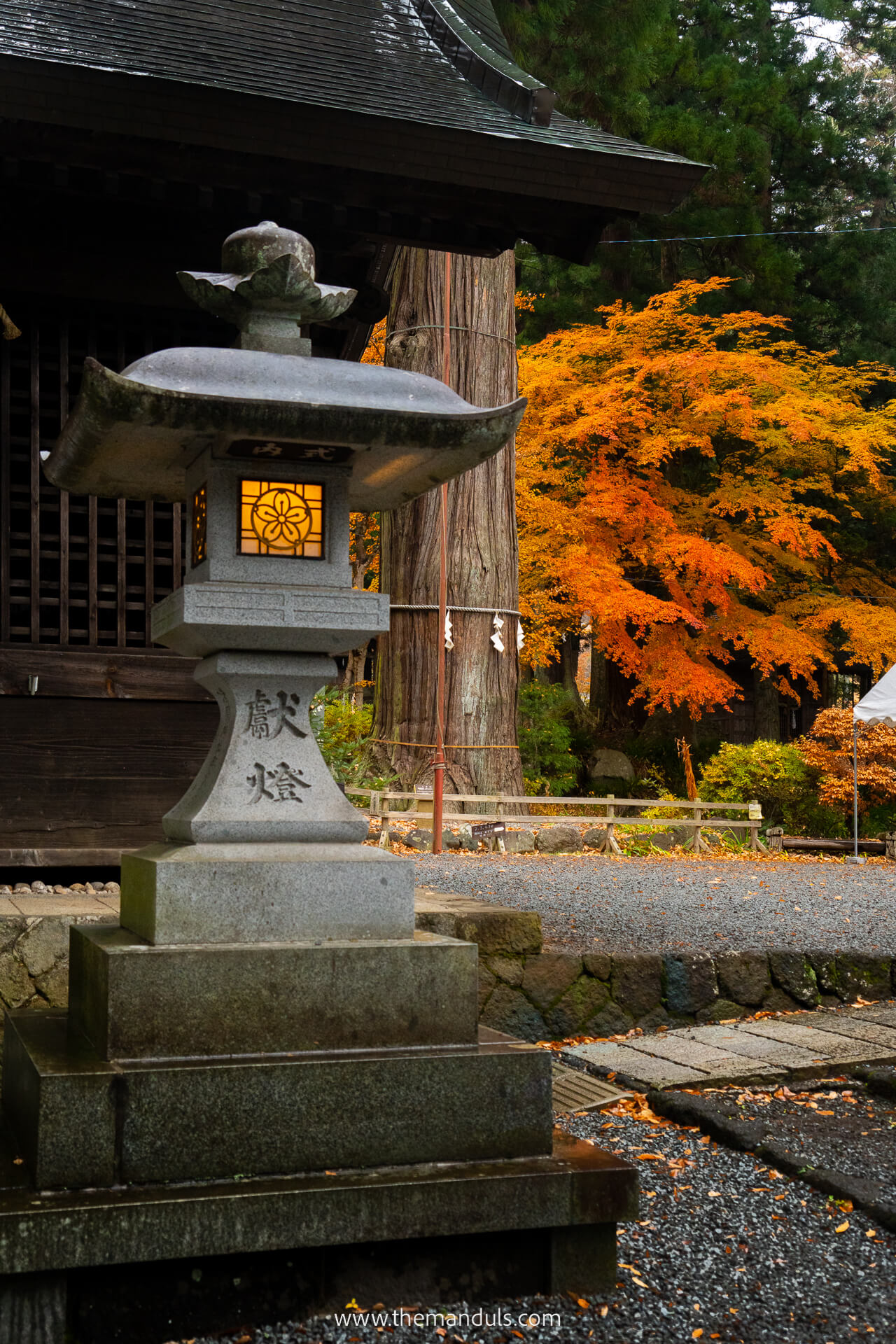
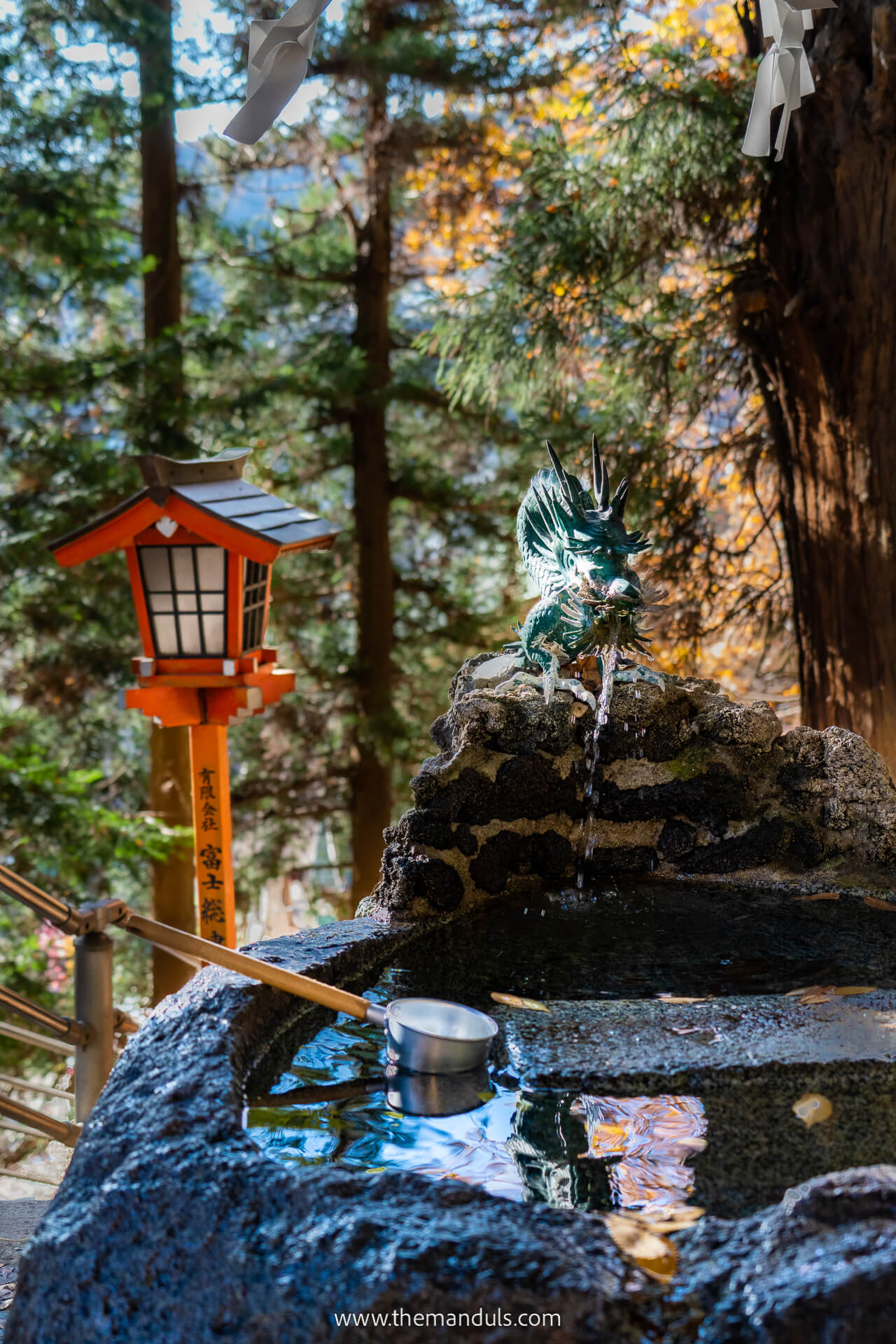
The path through the forest is lined with moss, stone lanterns, and tall trees wrapped in white sacred ropes and paper streamers.
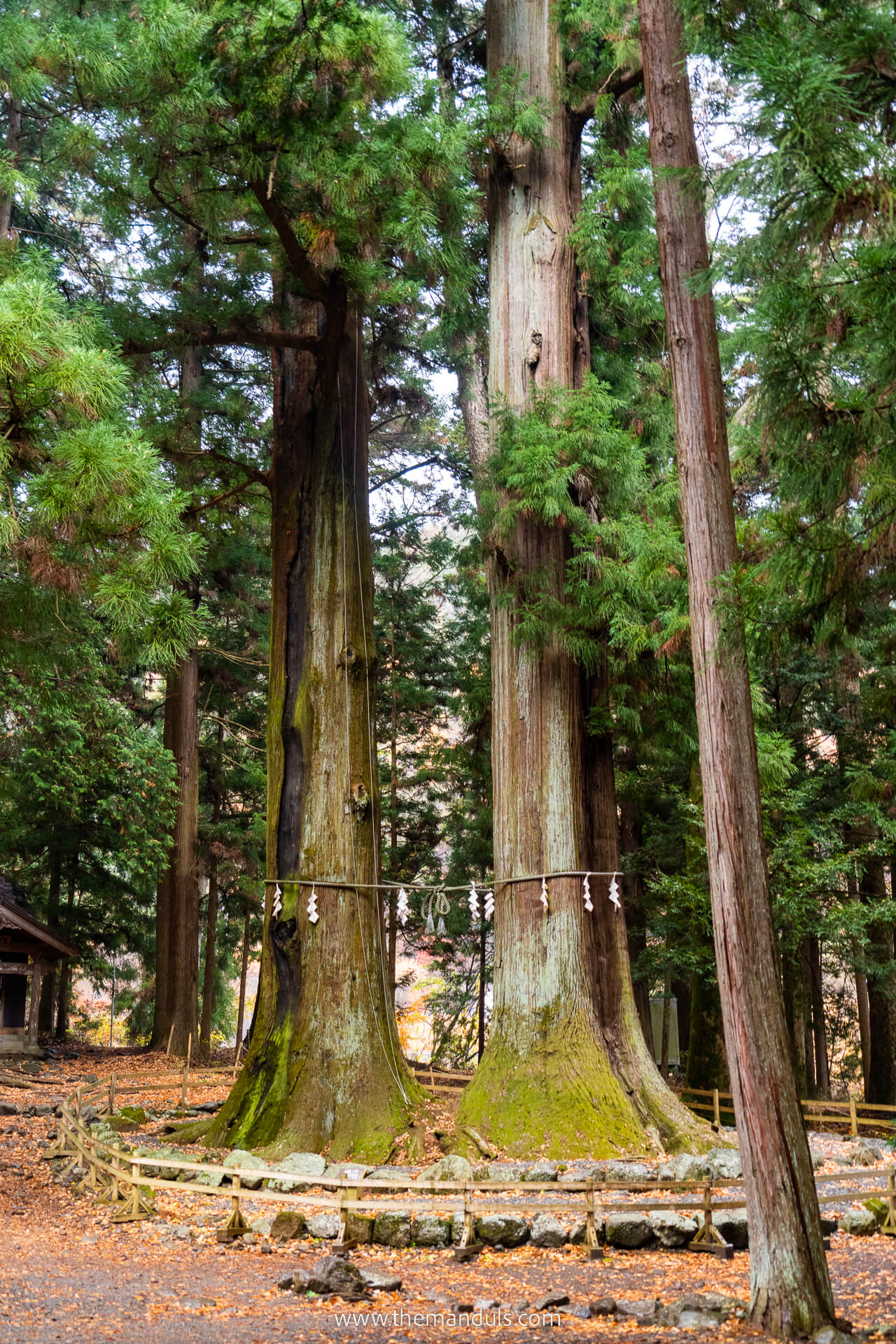
The main shrine area is small but incredibly atmospheric. Wooden structures painted in faded reds and browns blend into the natural surroundings. We couldn’t believe how close it was to the main tourist routes, yet it felt like a completely different world.
If you’re visiting Mount Fuji and want more than just viewpoints, this is the place we’d recommend most. It’s easily one of the most beautiful shrines we’ve seen in Japan, and the rainy weather only made it more magical.
There’s a large free parking lot right at the entrance, and no entrance fee is charged.
6. Lake Kawaguchi
Lake Kawaguchi is the largest of the Fuji Five Lakes and the beating heart of the area. Its southern shore is home to Fujikawaguchiko, the main town where you’ll find lively streets full of restaurants, shops, convenience stores, and hotels. It’s where most travelers base themselves — and for good reason. It’s well-connected by the Fuji Sightseeing Buses, making it one of the best spots to stay if you’re not renting a car.
But while it’s the busiest lake, not all of it feels crowded. Head north, and you’ll find the famous Momiji Corridor, one of the best places to catch autumn colors reflected in the water.
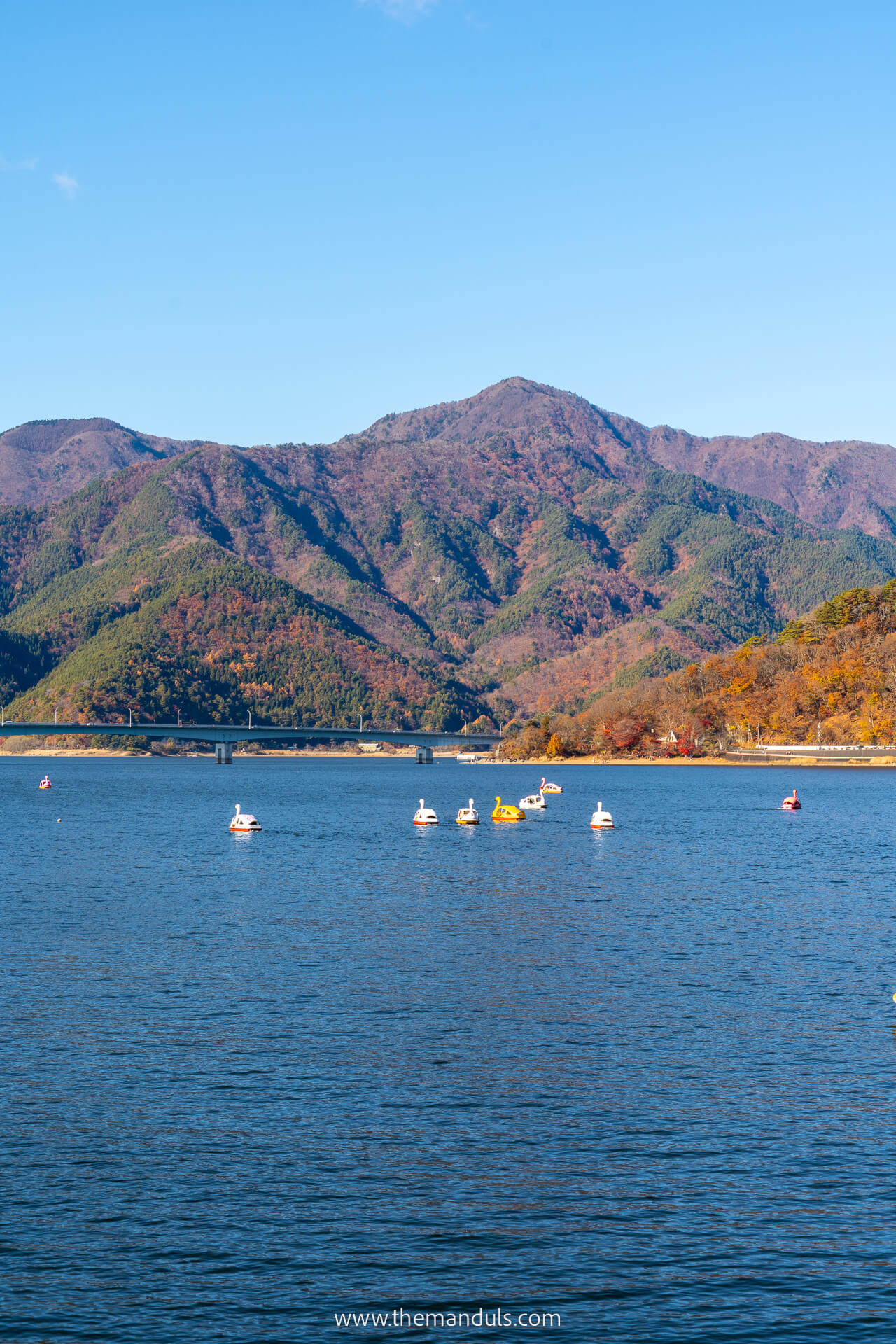
Keep going a bit further or explore the lesser-known stretches of shoreline, and you’ll come across peaceful corners where you can sit quietly with Mount Fuji in the background — no tour groups in sight.
We were tempted to try one of the cafés with the “classic” Fuji views, but instead went for Cafetino — a cozy spot serving incredibly fluffy pancakes that hit the spot on a chilly afternoon. Definitely worth the stop if you’re after something sweet and comforting.
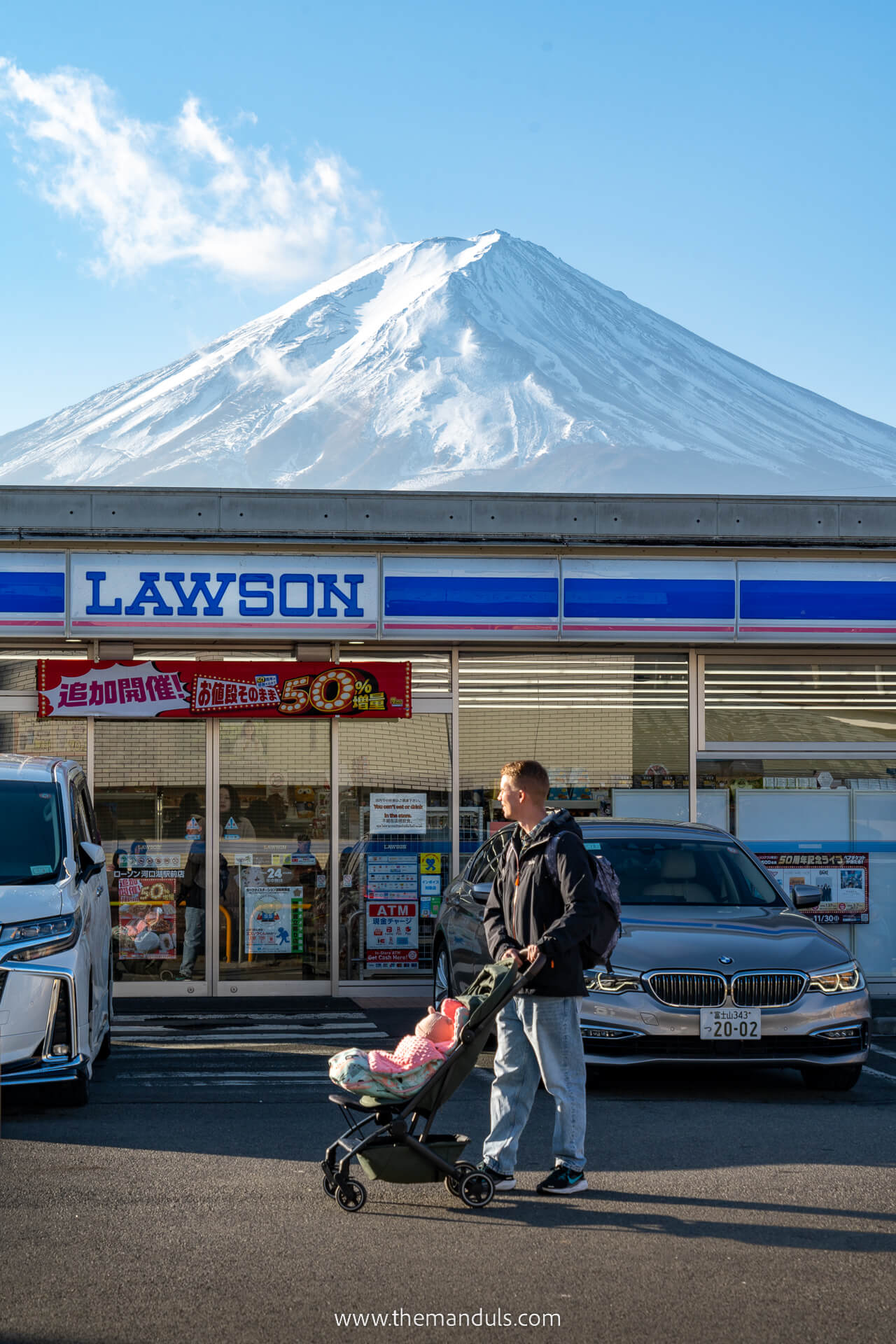
And yes, there’s also the iconic Lawson photo spot — a quirky but fun stop where you’ll find a convenience store perfectly framed by Mount Fuji behind it. Slightly overhyped? Maybe. But still worth it.
7. Momiji Corridor
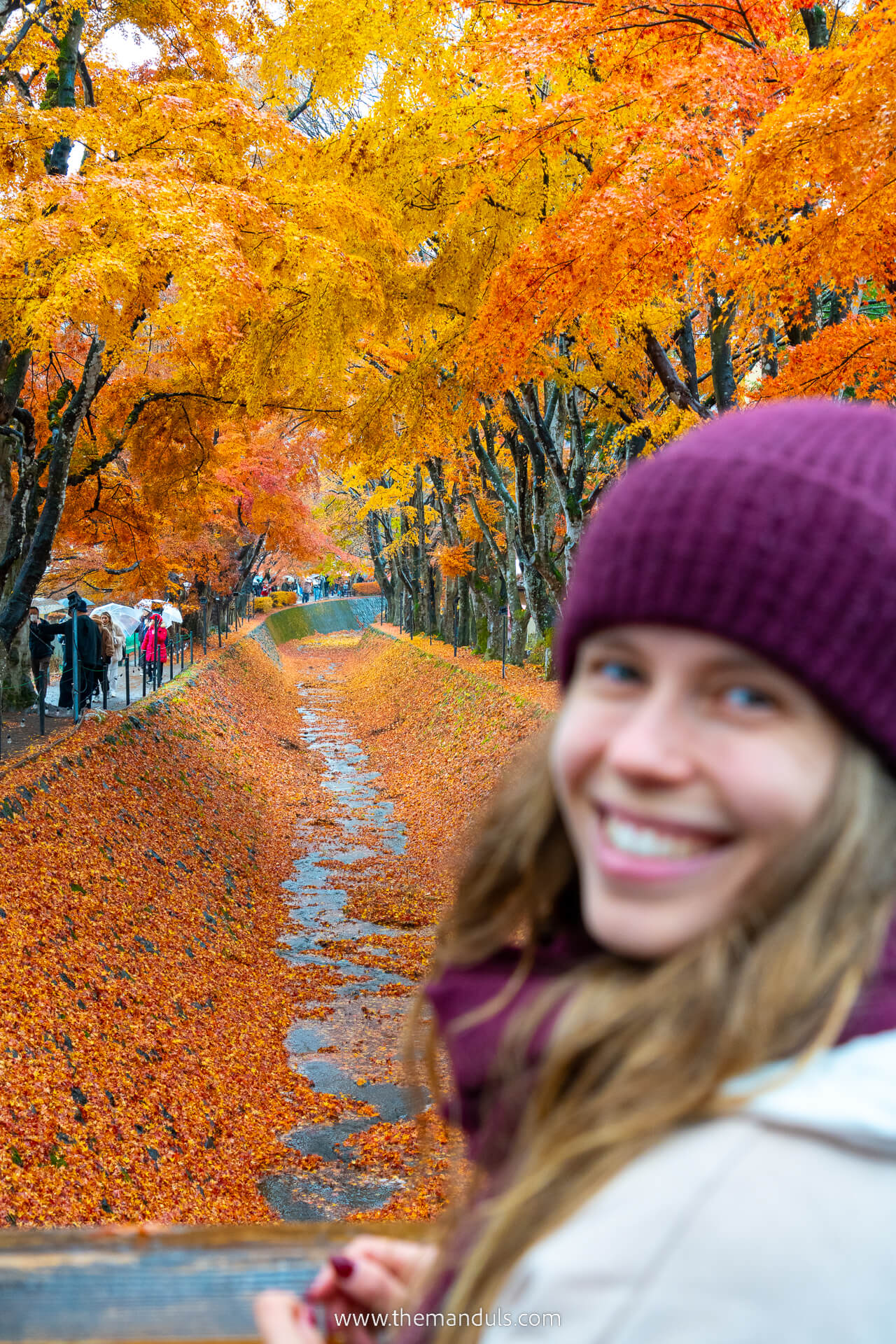
The Momiji Corridor is a short but famous stretch of maple trees along a small stream on the north shore of Lake Kawaguchi. It’s one of the best things to do at Mount Fuji in autumn when the leaves turn vibrant shades of red and orange. It really does look stunning.
That said, it’s also extremely popular. We visited during peak season and while the colors were absolutely mind-blowing, the experience felt a bit chaotic. Parking was ¥1000, which felt steep considering most people only stop here for a quick visit.
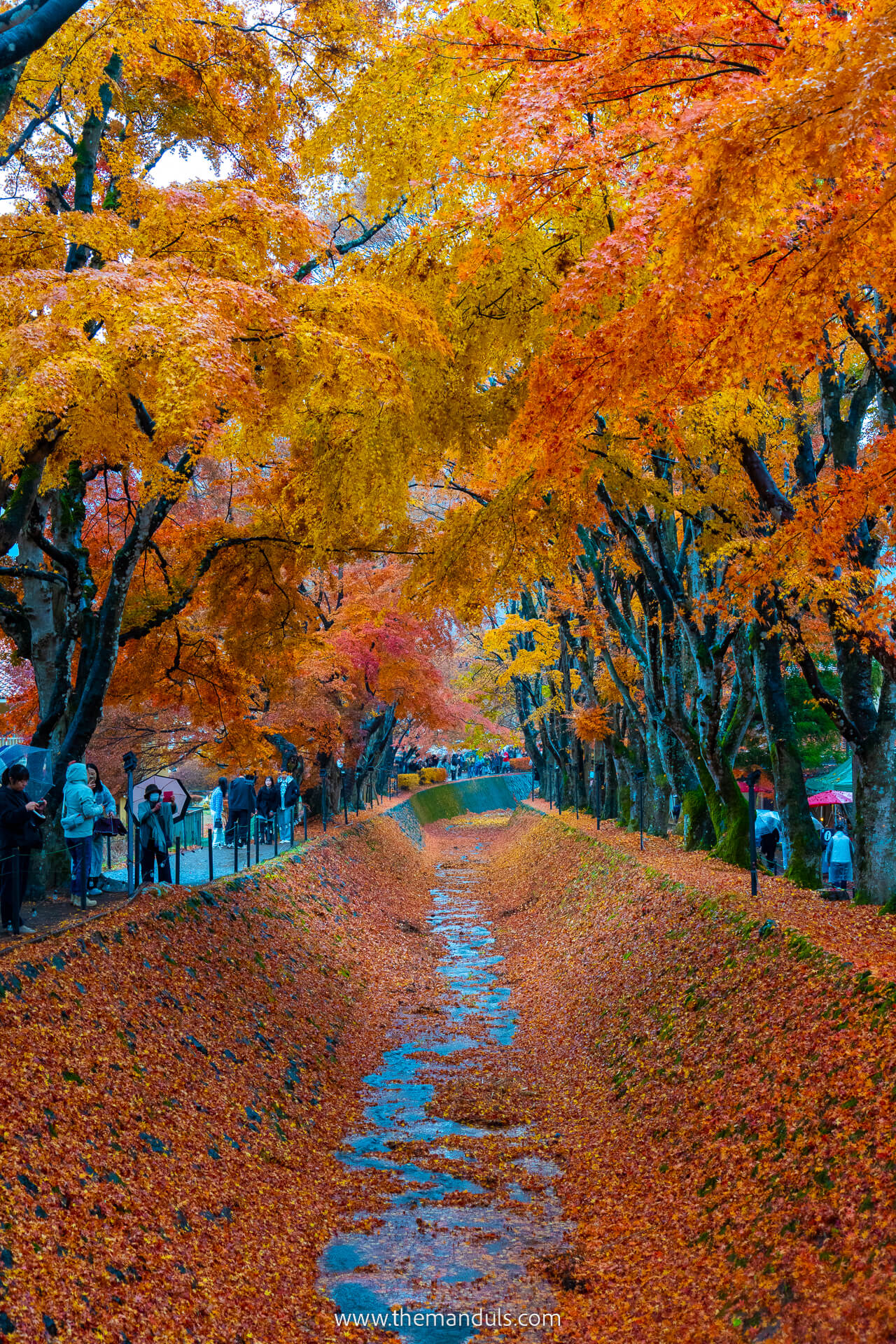
To be honest, we felt there were plenty of other corners around the lake that had just as beautiful colors — but with less hype, fewer crowds, and free parking. Still, the Momiji Corridor is worth seeing at least once if you’re visiting in autumn and don’t mind a bit of a crowd.
During the Autumn Leaves Festival (usually held from late October to mid-November), you’ll also find food trucks and stalls set up nearby. It’s a nice spot to grab a snack, walk along the lakefront, and take in the views — especially if you catch Fuji reflecting in the water.
There were also public restrooms available.
8. Momiji Tunnel
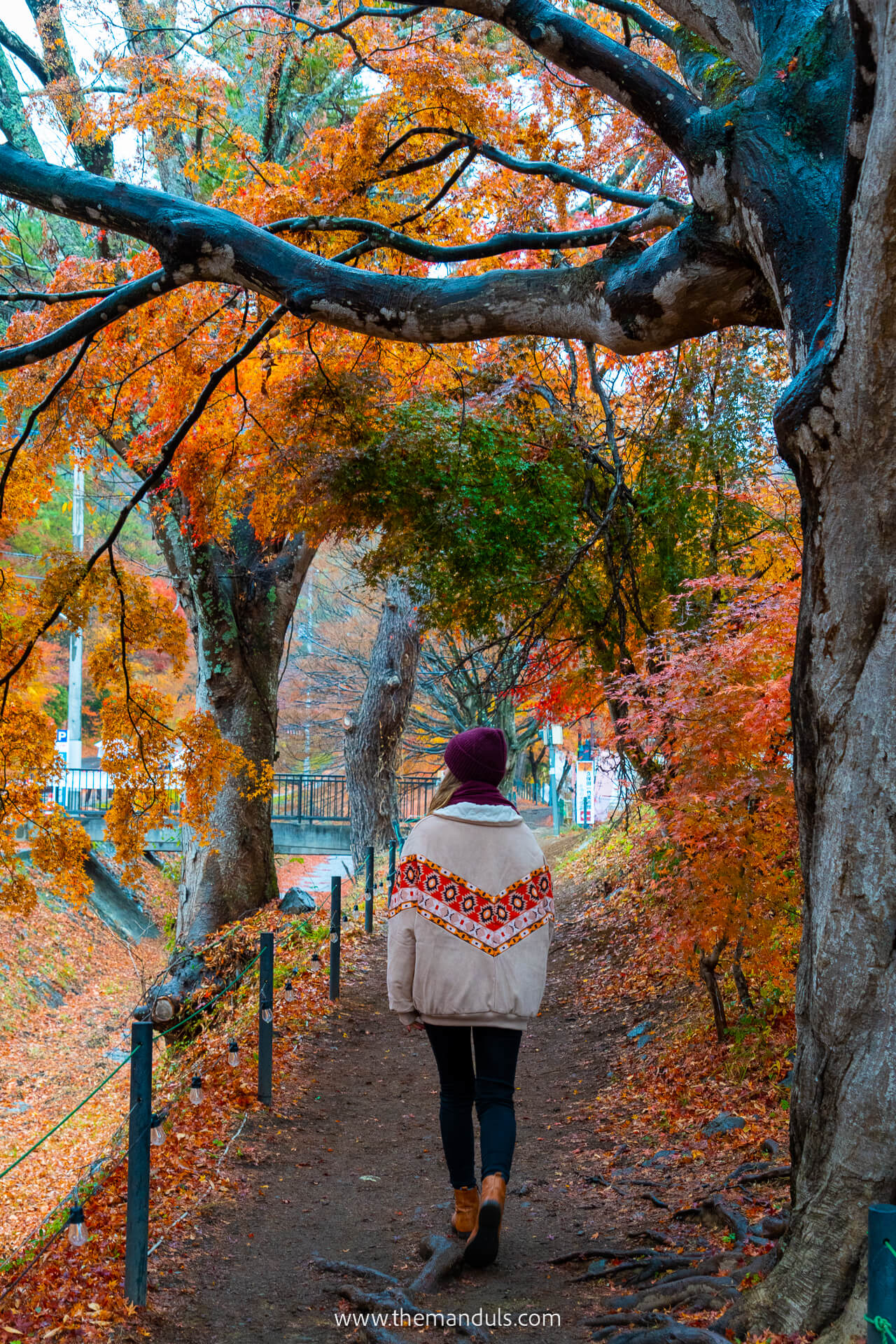
Funny story — when we saved this location on our map, we thought it was the famous Momiji Corridor. Turns out they’re two different places… but what a great mistake! We ended up loving the Momiji Tunnel just as much — if not more.
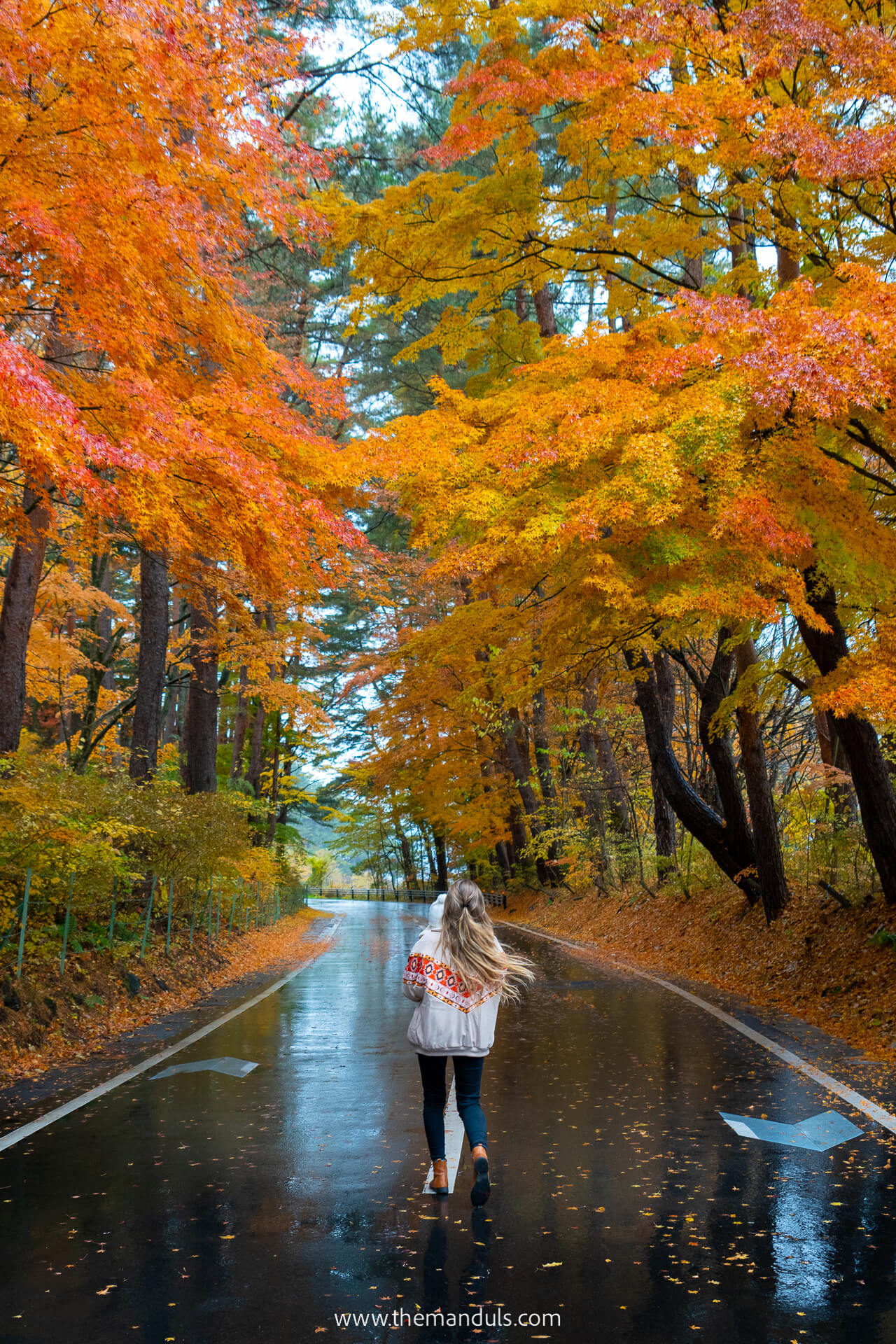
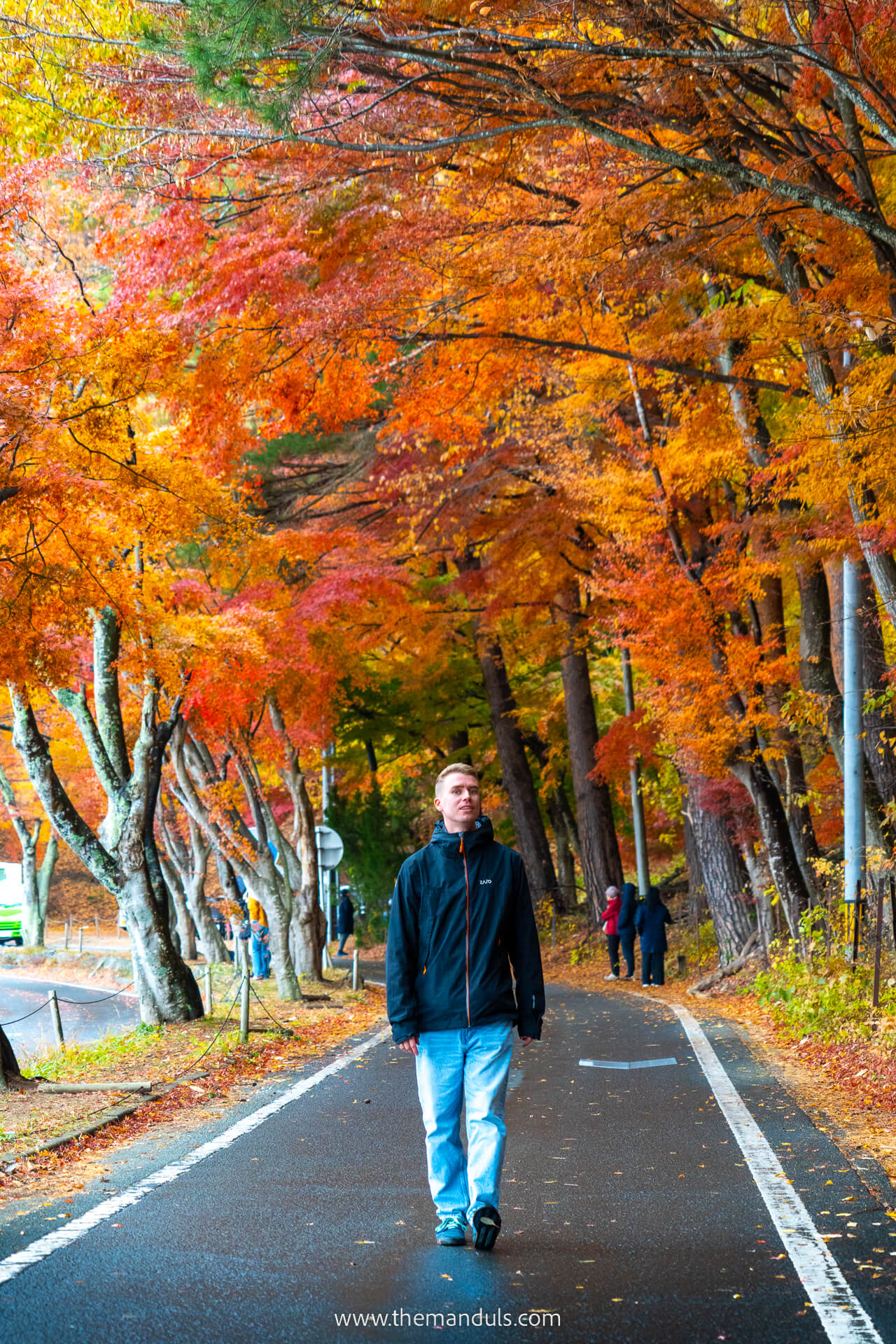
It’s a short stretch of road lined with vibrant red maple trees that create a beautiful tunnel effect, especially in late autumn when the leaves hit their peak. There’s a small free parking area right next to it, and the trees start lining the road almost immediately, making it super easy to enjoy and photograph.
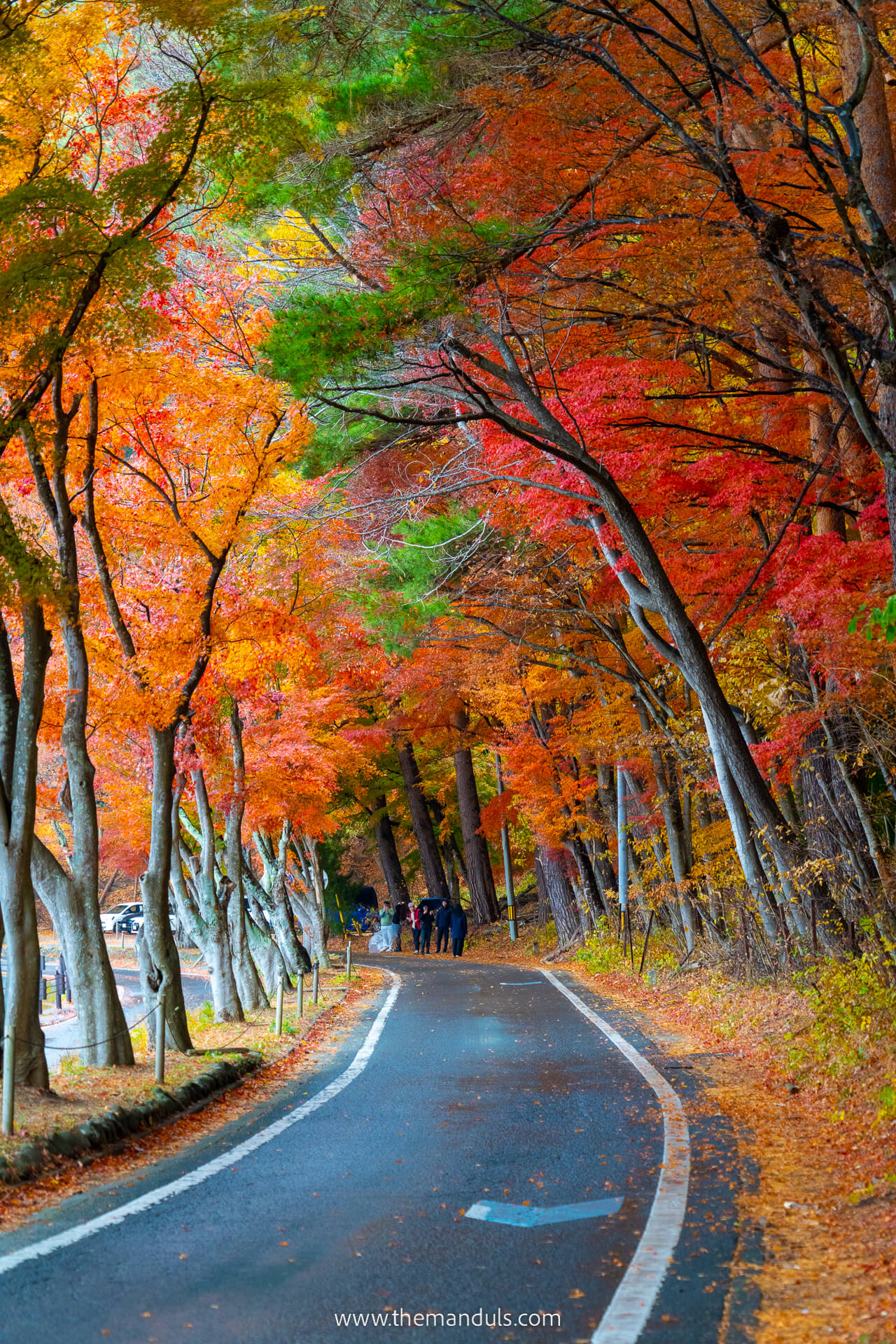
Just keep in mind: this is a public road, not a closed-off path — so keep an eye on the traffic while you’re snapping photos. Cars do pass fairly often, and it’s easy to get caught up trying to frame the perfect shot.
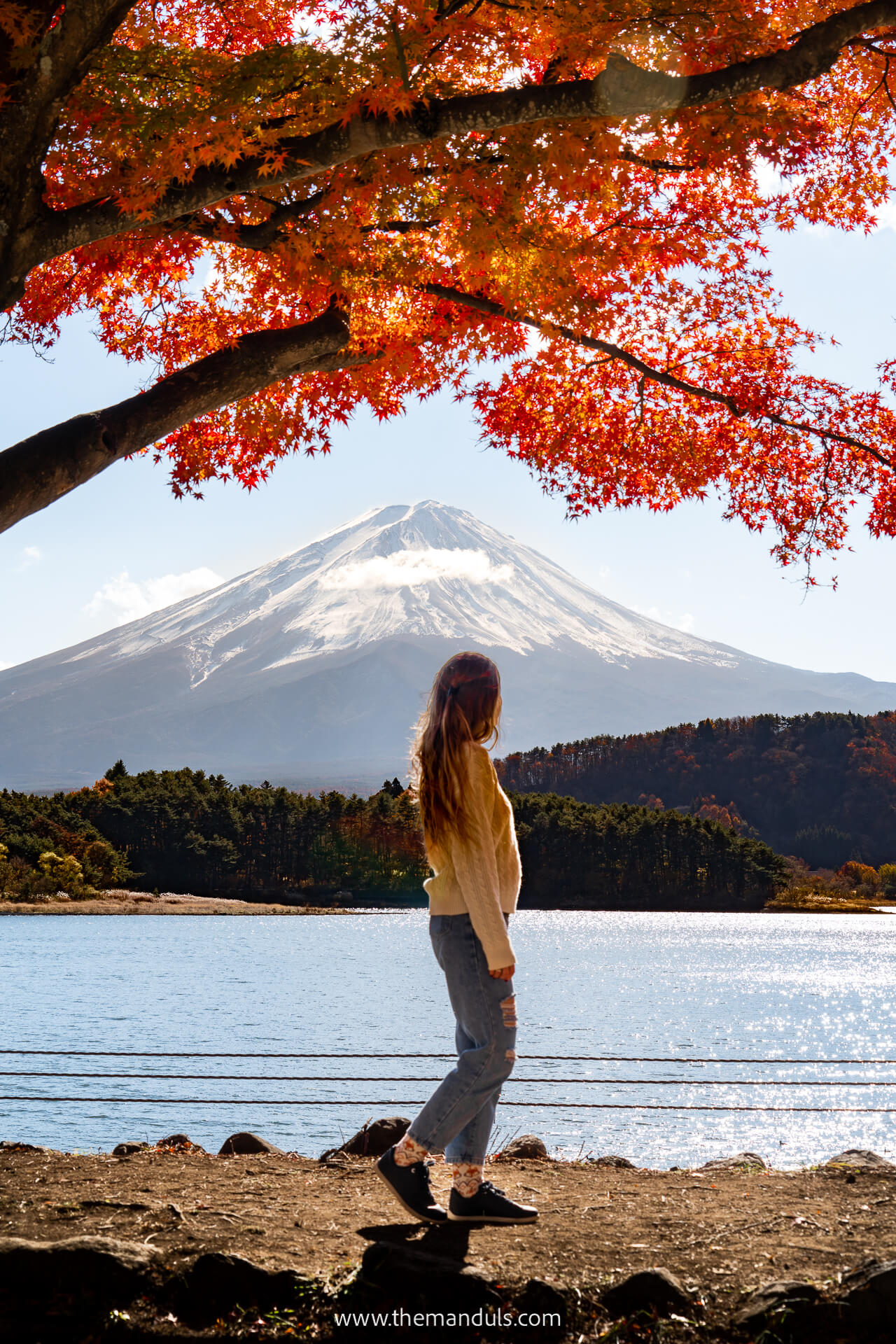
What we loved most was the angle facing the lake, where a line of fiery red trees opens up to a clear view of Mount Fuji in the background. It’s a bit busy during peak foliage season, but it didn’t feel overwhelming — and the views were totally worth it.
TIP: We also accidentally stumbled upon a beautiful, colorful forest and another maple-lined road tunnel near Fuji View Hotel — empty and completely unexpected.
9. Saiko Iyashi-no-Sato Nemba
Entrance Fee: JPY 500 for an adult (see online discount offer)

Opening hours: See on the official website
This open-air museum on the western shore of Lake Saiko recreates a traditional Japanese village with thatched-roof houses and local craft shops all set against a stunning Mount Fuji backdrop on clear days.
Each house has a different theme, from handicrafts and museums to workshops and small cafés where you can try local treats or even wear a kimono for photos.
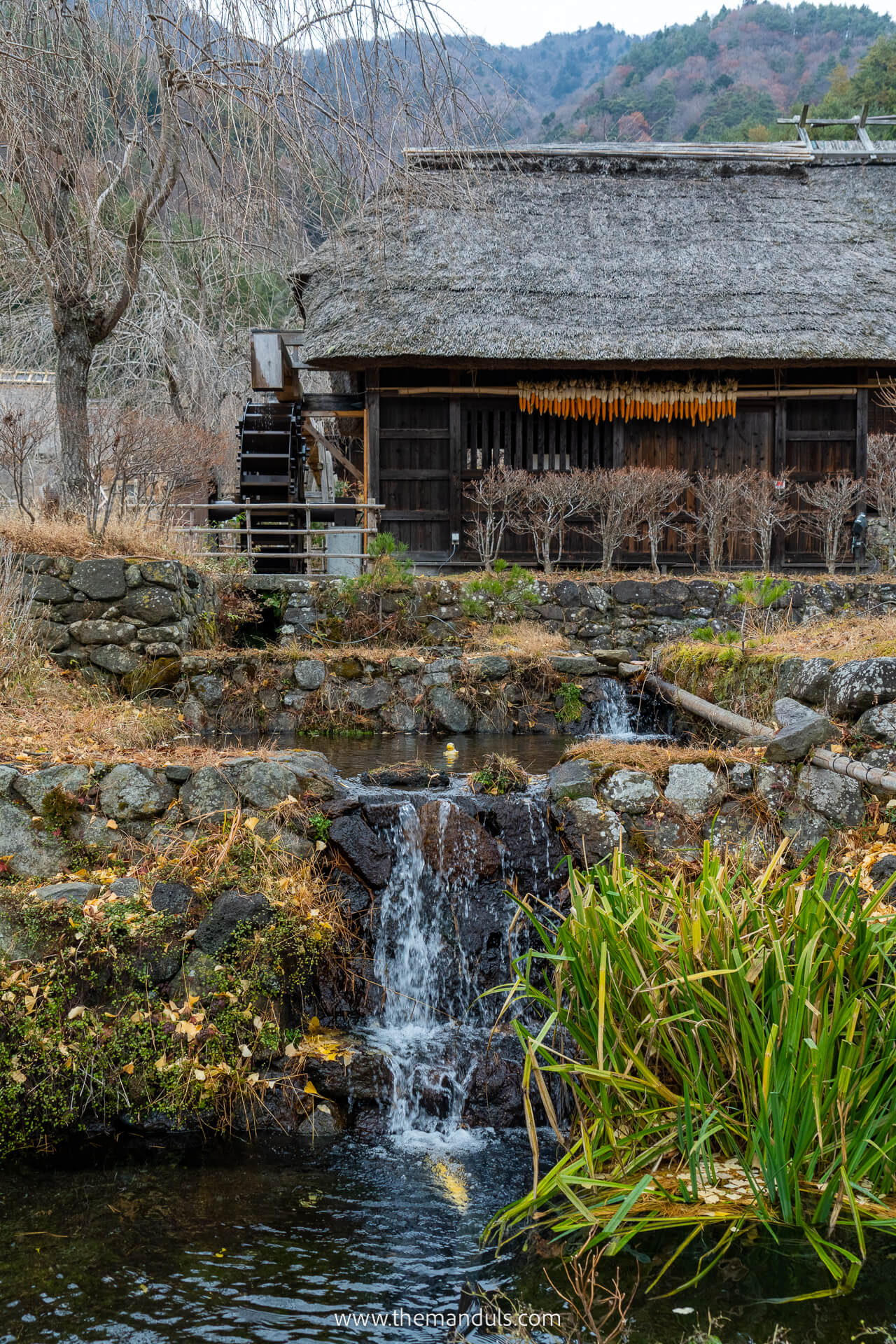
We visited early in the morning, and it was calm and peaceful — though to be fair, it was also raining, which probably helped keep the crowds away. The overall vibe is slow and relaxed, and even if you’re not into museums, it’s still worth a visit just to wander around and soak up the scenery.
We were hoping for vibrant fall colors, but unfortunately arrived a bit too late (end of November), with most of the trees already bare.
The entire area is accessible with strollers or wheelchairs.
TIP: There’s another traditional village which we didn’t have time to visit — Oshino Hakkai. It’s a small, scenic village with crystal-clear spring ponds, traditional thatched houses, and views of Mount Fuji on clear days. Entry is free.
10. Saiko Lake
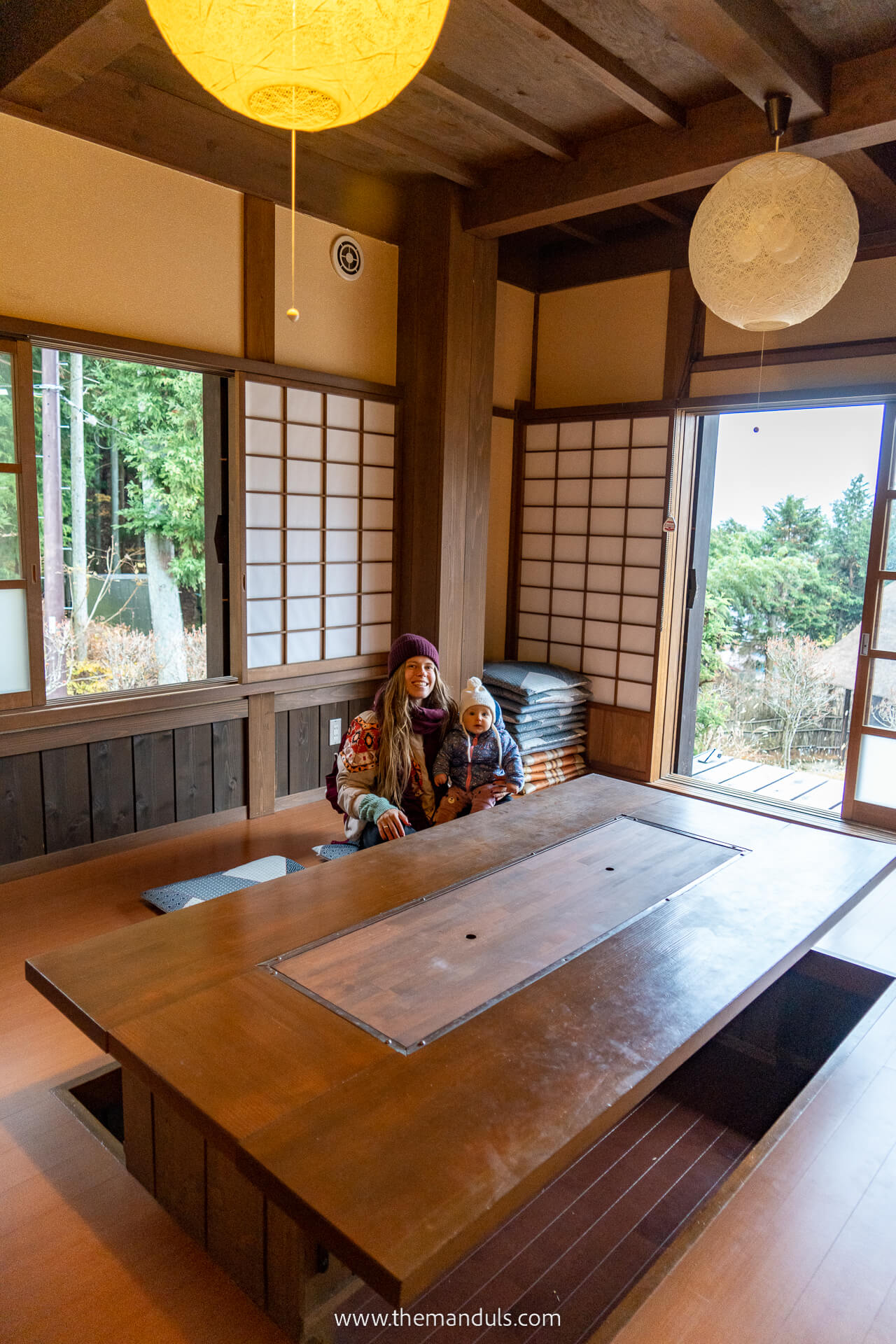
Just west of Lake Kawaguchi, Lake Saiko feels like a totally different world — quiet, undeveloped, and surrounded by forested hills. It’s perfect if you’re after a slower, more nature-focused experience, with calm water, walking trails, and barely any tourists around.
We didn’t do much here apart from driving around and soaking in the views, but that was part of the charm. Along the way, we passed a few kayak and SUP rental spots and some lovely-looking campsites, though they all seemed closed for the season — most likely only running in summer, as there were almost no people around when we visited.
11. Fuji Q Highland
Entrance Fee: free, you only pay for the rides
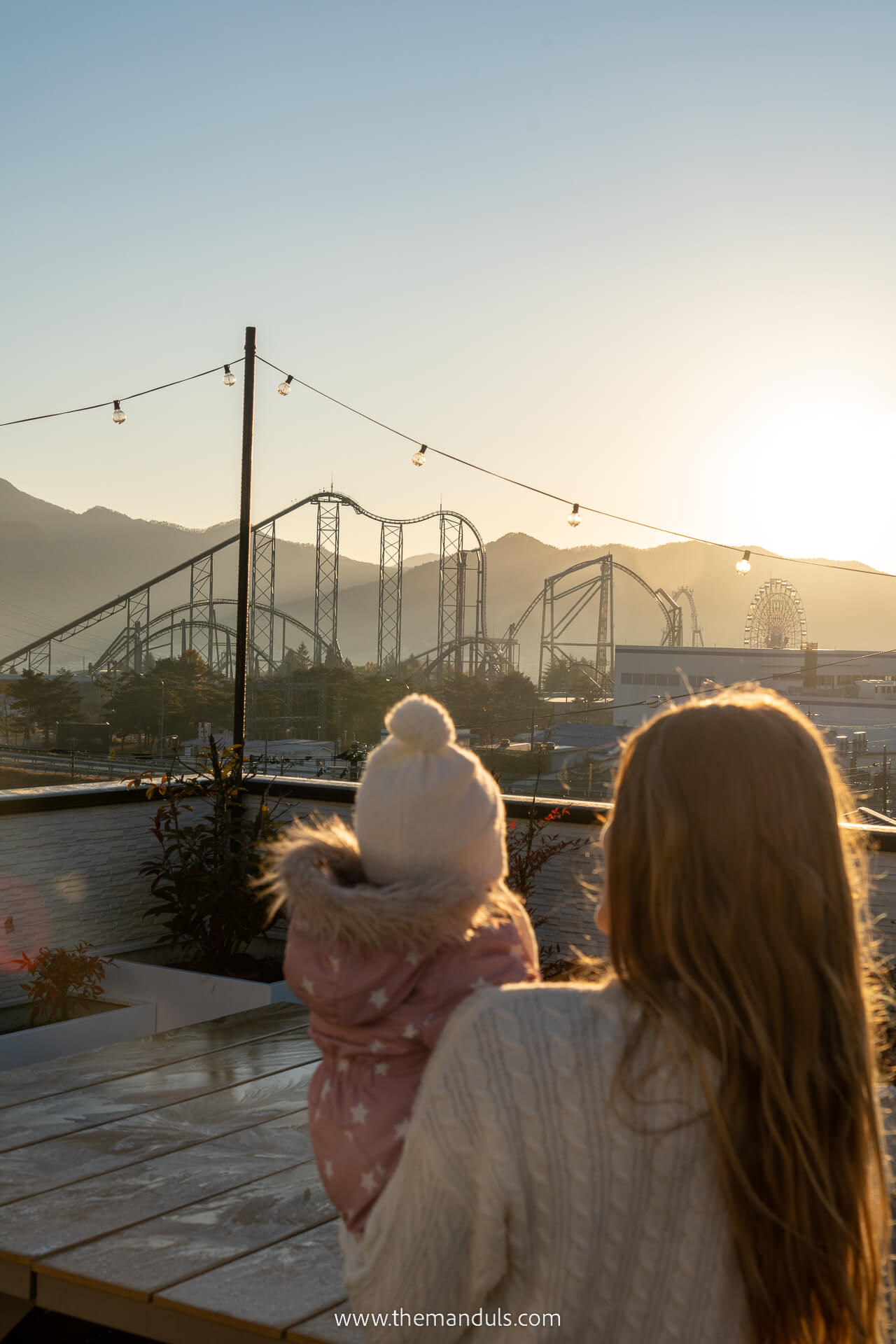
Fuji-Q Highland is one of Japan’s most famous theme parks, known for its record-breaking roller coasters and wild rides. While you can enjoy Mount Fuji views on clear days, it’s one of the best things to do at Mount Fuji during cloudy days, too.
We didn’t go in this time, but on a rainy or grey day, it’s an ideal way to fill a full day with something fun, especially if you’re traveling with kids or just need a break from sightseeing. There’s also a Thomas Land area for little ones.
They don’t charge an entrance fee, and rides cost between $2.5 and $12.5, depending on the attraction.
12. Chureito Pagoda
Entrance Fee: free
Chureito Pagoda is one of the most famous viewpoints in Japan — a red five-story pagoda perfectly lined up with Mount Fuji in the background. The climb to the top takes about 15 minutes, either by stairs or a gently sloped asphalt road, making it accessible for strollers and wheelchairs.
Along the way, you’ll pass stone lanterns, a small shrine, and a few early Fuji viewpoints.
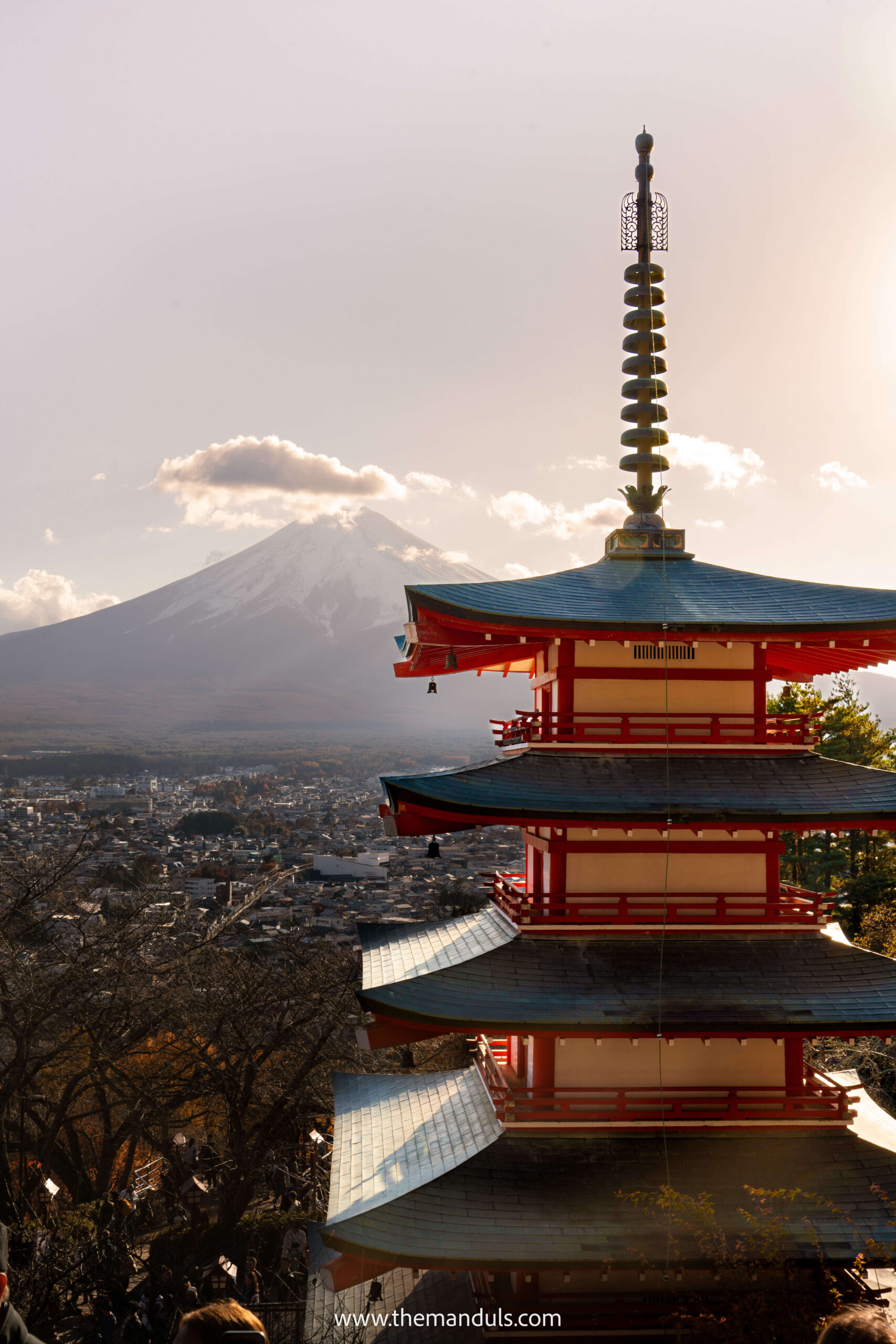
At the top, there’s a spacious clearing with the pagoda in front and a raised viewing platform behind it — the spot for that classic Fuji + pagoda shot. It’s also the most crowded part of the site.
Our experience was mixed. We came in late November and the leaves were already gone — not ideal for photos. If we were to return, we’d go early in the morning, when it’s peaceful, and the light is best.
Sunrise and sunset are popular with photographers, but from 10 AM to 3 PM, the place fills up fast with tours and can feel overwhelming. In the afternoon, the sun also shines directly from behind the pagoda, which is not the best for photos.
13. Oshino Hakkai
Entrance Fee: free
We didn’t have time to visit Oshino Hakkai, but if you’re exploring the area around Lake Yamanaka or Fuji-Q, it’s an easy and popular stop to include. This small traditional village is known for its crystal-clear ponds, fed by Mount Fuji’s underground spring water, with thatched-roof houses, wooden bridges, and a peaceful atmosphere when it’s not too crowded.
It’s especially photogenic on clear days when Fuji reflects in the water, and there are also a few local food stalls and souvenir shops to check out.
14. Lake Yamanaka & swans
We chose to visit Lake Yamanaka for sunset, but quickly realized it’s not the best time of day here — the sun sets behind the mountains, and the light isn’t as striking as we’d hoped. If you’re after that glowing Mount Fuji backdrop, we’d definitely recommend coming before noon, when the light hits the mountain from the front.
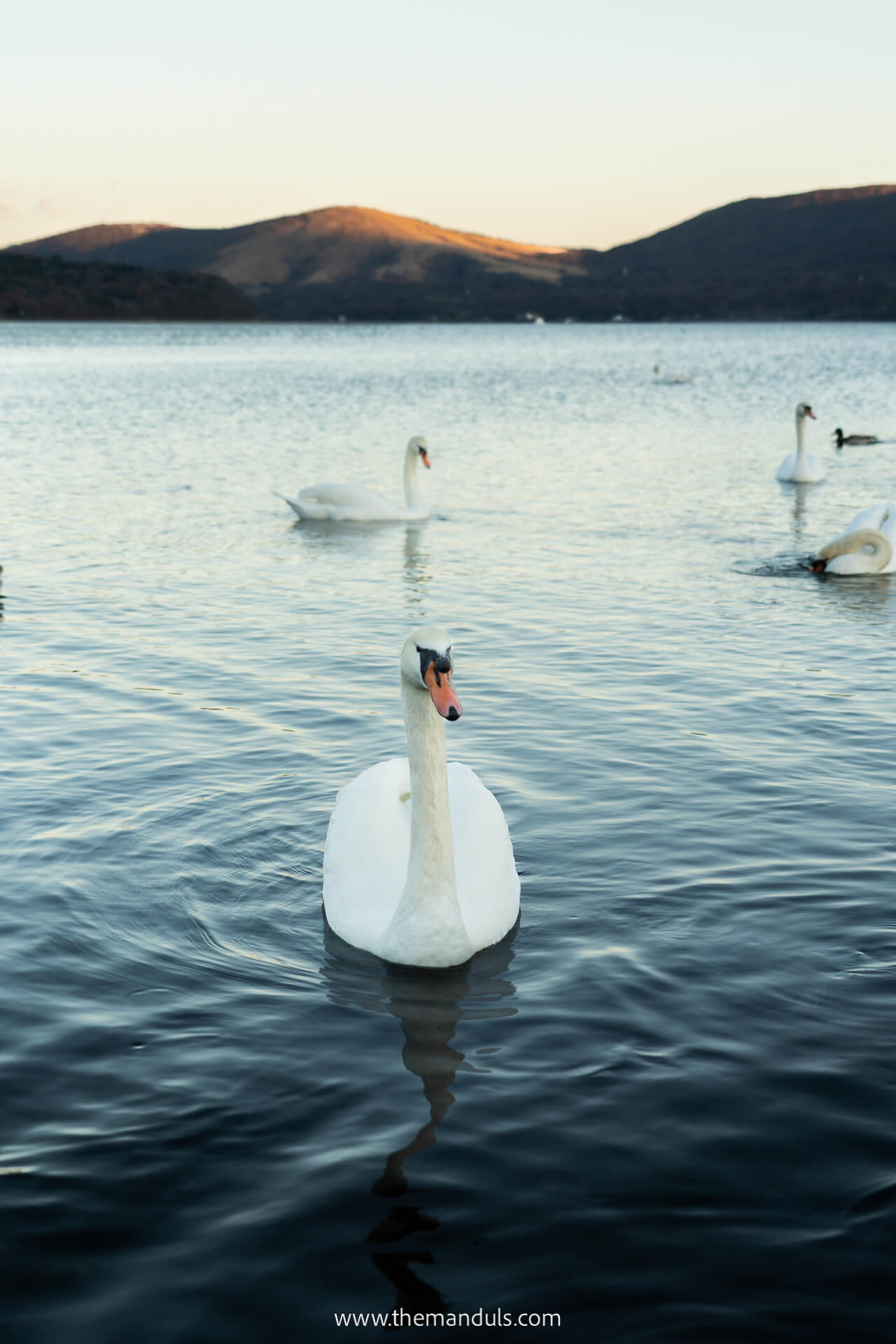
The lake itself is peaceful and much quieter than Kawaguchi, with wide-open views and multiple spots where you can stop, walk around, and just enjoy the stillness. It’s especially known for its swans casually floating on the lake — and while you can get some beautiful shots, our experience felt a little more staged than expected.
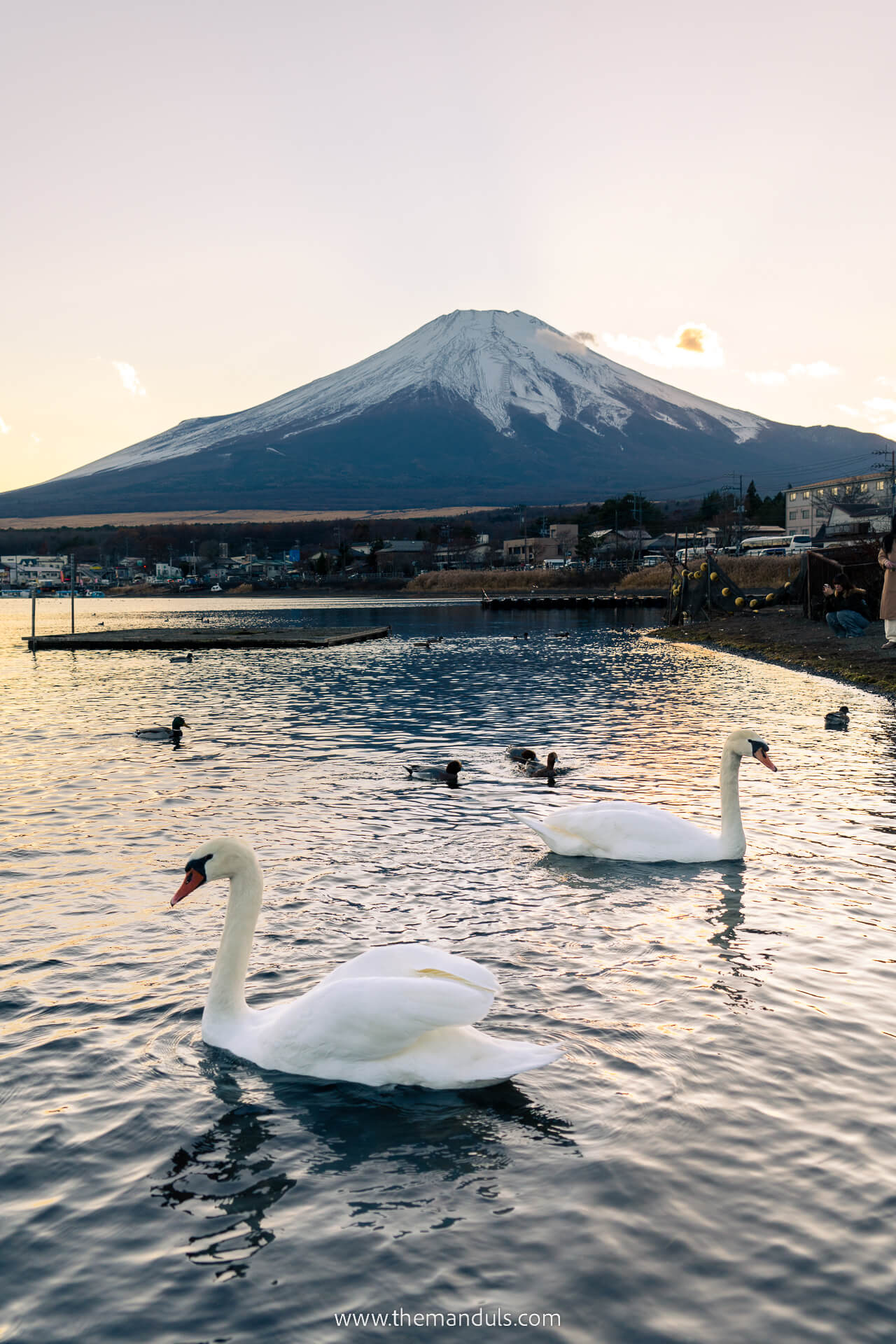
All the swans were gathered at a single beach surrounded by fencing, and access was only allowed if you bought swan food from the staff at the entrance. It felt more like a mini attraction than a spontaneous nature moment. Those who didn’t want to buy the food weren’t allowed in, which was a bit disappointing.
That said, there’s a long walkway built along the northern shore of the lake that’s great for a quiet stroll. Hopefully, you’ll have a different experience and spot the swans in a more natural setting elsewhere around the lake.
15. Climb Mount Fuji
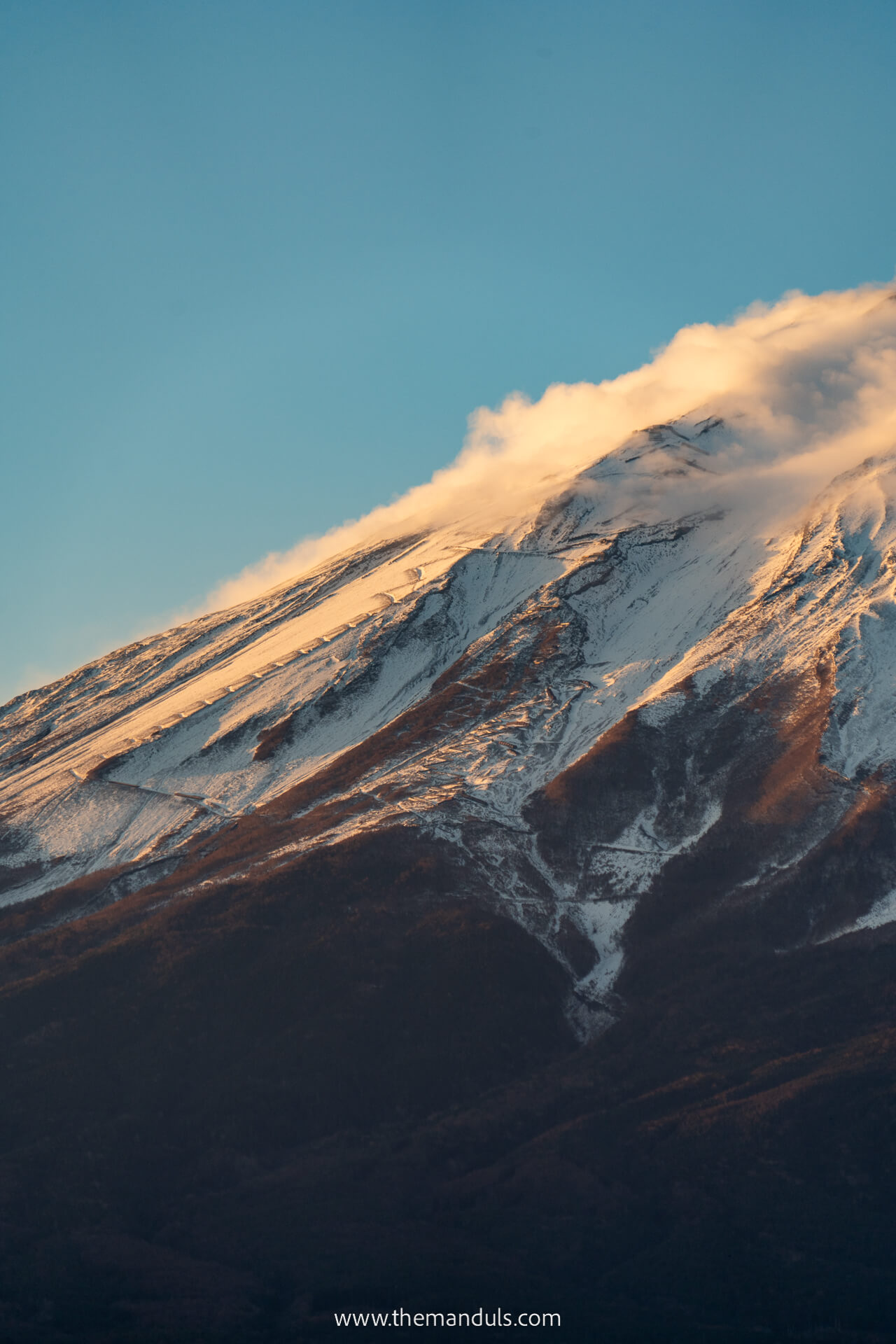
We didn’t climb Mount Fuji ourselves, but if it’s on your list, it’s good to know that the official climbing season is short— usually from early July to early September, when the trails are open, mountain huts operate, and the weather is safest.
There are several routes to the summit, but most people start from the 5th Station, which is accessible by bus or car. The climb typically takes 5–7 hours up and 3–5 hours down, and many choose to hike overnight to catch the sunrise from the summit, known as “goraikō”.
It’s not an easy hike — cold temperatures, altitude, and crowds can make it challenging — but if you’re well-prepared and visiting in season, it’s a once-in-a-lifetime experience.
16. Look for autumn foliage
When it comes to fall, going beyond the usual attractions is one of the best things to do at Mount Fuji. The most beautiful moments often come when you least expect them — turning down a quiet road, walking through a forest with no one else around, or just slowing down enough to notice the colors around you.
If you’re driving or renting a bicycle, make the most of it and venture away from the main stops. You’ll find some of the best views and peaceful spots completely to yourself. Our favorite was the forest near Fuji View Hotel, which we mentioned earlier — glowing red and orange, quiet, and full of atmosphere. It felt like we had stepped into another season entirely.
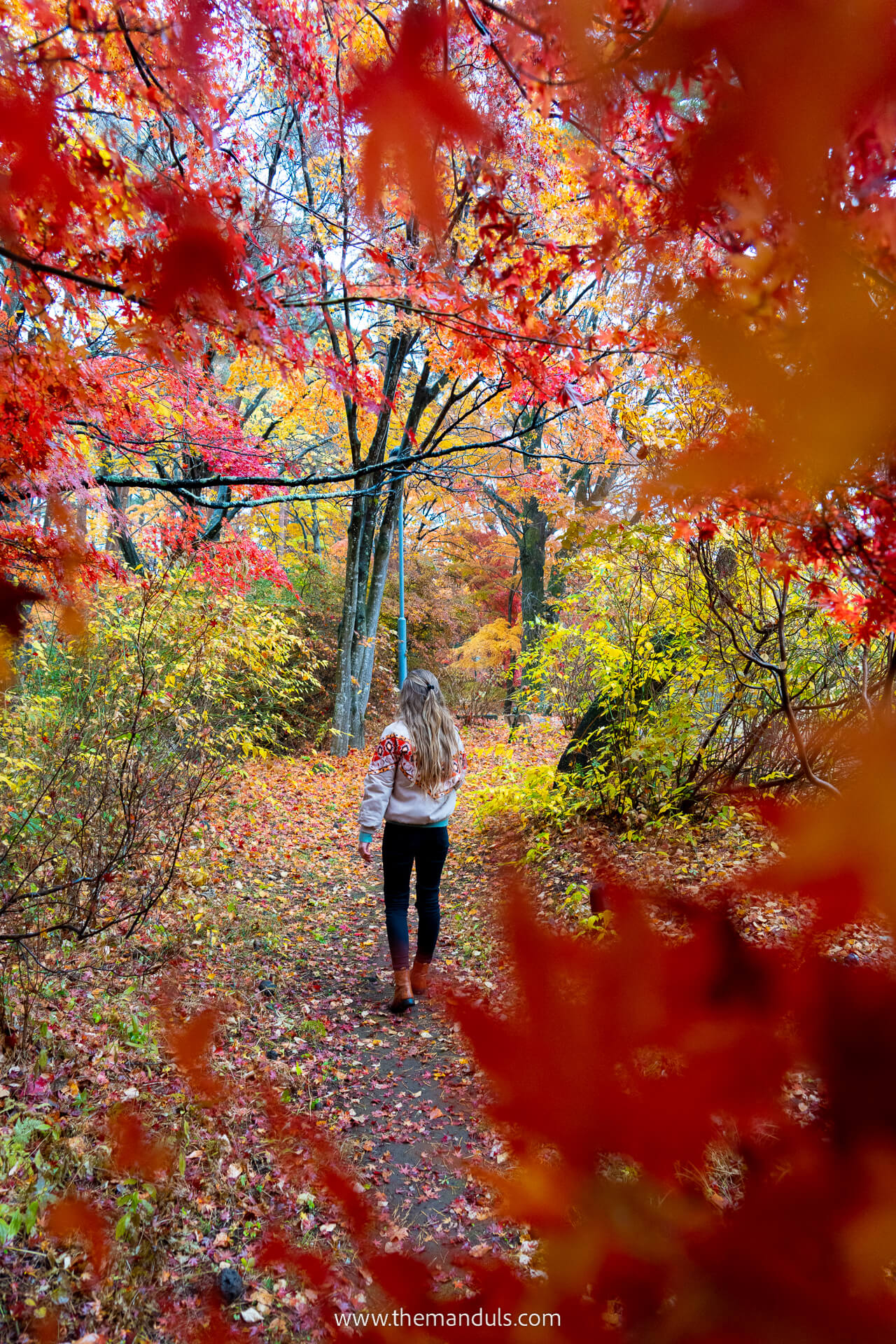
You don’t need a specific destination — just explore. Some of the smaller roads and lakeside paths were just as stunning (if not more) than the famous spots like the Momiji Corridor. And the best part? You won’t be sharing them with tour buses.
17. Ride the Panorama Ropeway
Ticket Price: 1000 JPY adult return
Operating hours: see the latest schedule
If you want an easy way to get above the lake and (hopefully) catch a stunning Fuji view, the Mt. Fuji Panorama Ropeway is a fun little ride. It takes just a few minutes to reach the top of Mount Tenjō, where you’ll find a viewing platform, walking trails, and a few fun photo spots — including a heart-shaped frame and a big swing.
The views over Lake Kawaguchi and Mount Fuji are impressive on a clear day, but as always, Fuji likes to play hide-and-seek.
Tickets are affordable, and you can either return by cable car or hike back down. If you’re staying in Kawaguchiko, it’s very easy to reach on foot.

Purchase tickets in advance via Klook.
Where to eat and drink
- Japanese Dining Suzukiya – A cozy, higher-end Japanese restaurant in Kawaguchiko with beautifully presented dishes and a warm atmosphere. Great for dinner after a full day out.
- CAFETINO Mt. Fuji – Small café where we recommend the fluffy pancakes. Enjoy good coffee and a quiet vibe. There is a waitlist, though.
- Non Hei – Laid-back yakitori spot with grilled skewers and local flavors. Casual, local, and a great dinner choice.
- らぁ麺 八葉 – We loved the ramen here! It’s near Kawaguchiko Station, serving rich, flavorful bowls. Ideal for a comforting, no-fuss lunch or dinner.
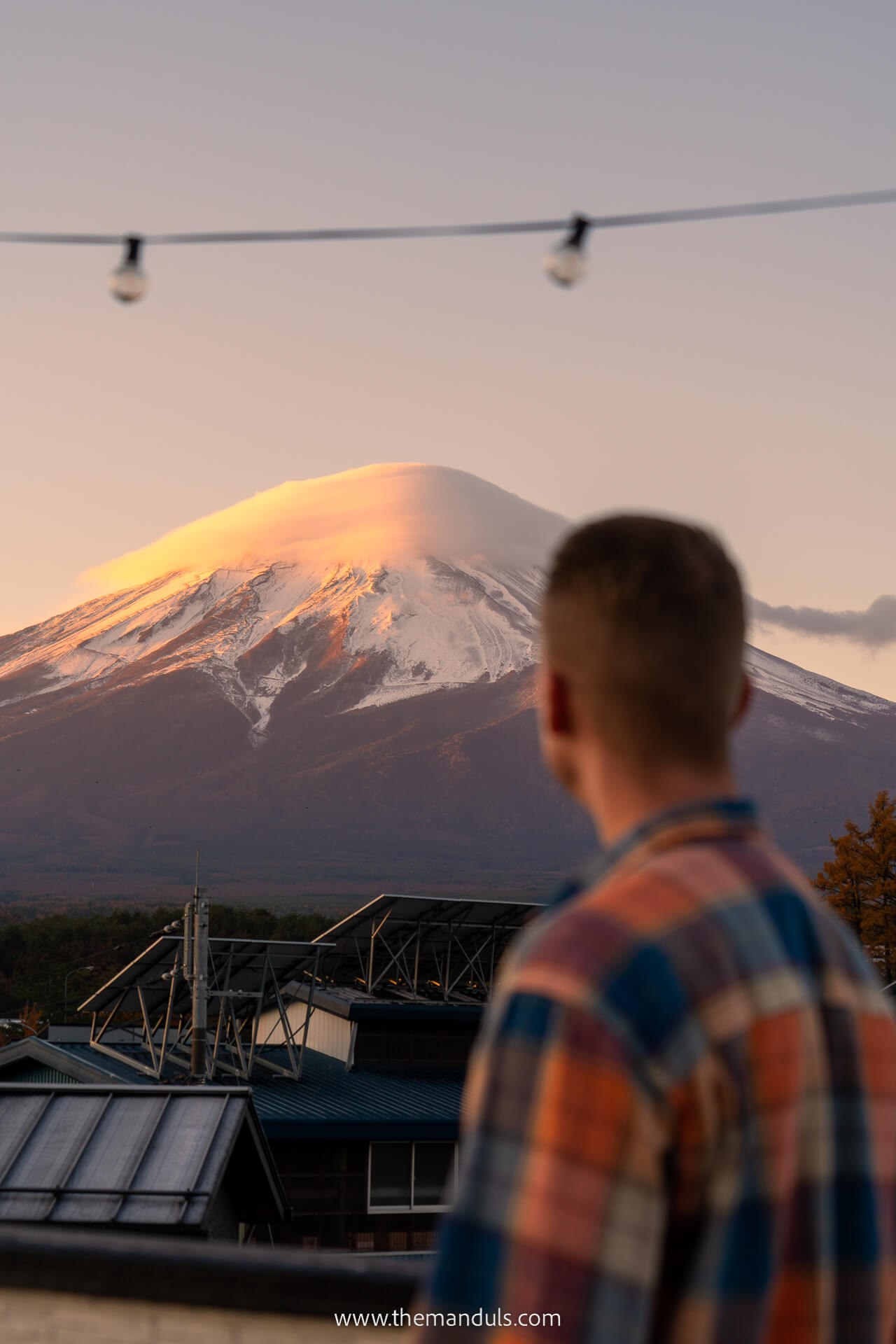
- 西乃家 – A local‑favorite sushi-bar with some of the tastiest and freshest sushi we’ve had in Japan.
How to get around
The Mount Fuji area is more spread out than it looks, so choosing the right way to get around makes a big difference. Here are the main options:
- Rent a car – This is what we did, and we’d do it again. It gave us total freedom to explore quieter spots. Roads are easy, parking is cheap or free, and you won’t waste time waiting for buses. We used DiscoverCars to compare prices — super quick and convenient. Read our Renting a car at Mount Fuji guide for more details.
- Fuji Sightseeing Buses – Great if you’re staying around Kawaguchiko and want to visit the main spots like Chureito Pagoda or the Panorama Ropeway. Just be prepared: buses can be slow, infrequent, and don’t reach everywhere.
- Bicycle rental – A fun option for exploring around Lake Kawaguchi or nearby areas on a clear day. Not great for longer distances. Yet we’ve met many tourists on bicycles.
Where to stay at Mount Fuji
The best option is to base yourself around Kawaguchiko or Fujiyoshida. Both give you quick access to the main viewpoints, plenty of food options, and a comfortable place to relax after a long day exploring.
We also created a detailed guide on where to stay in Kawaguchiko to help you pick the right area and the best hotel based on our experience and research.
Here are the ones we’d happily book again:
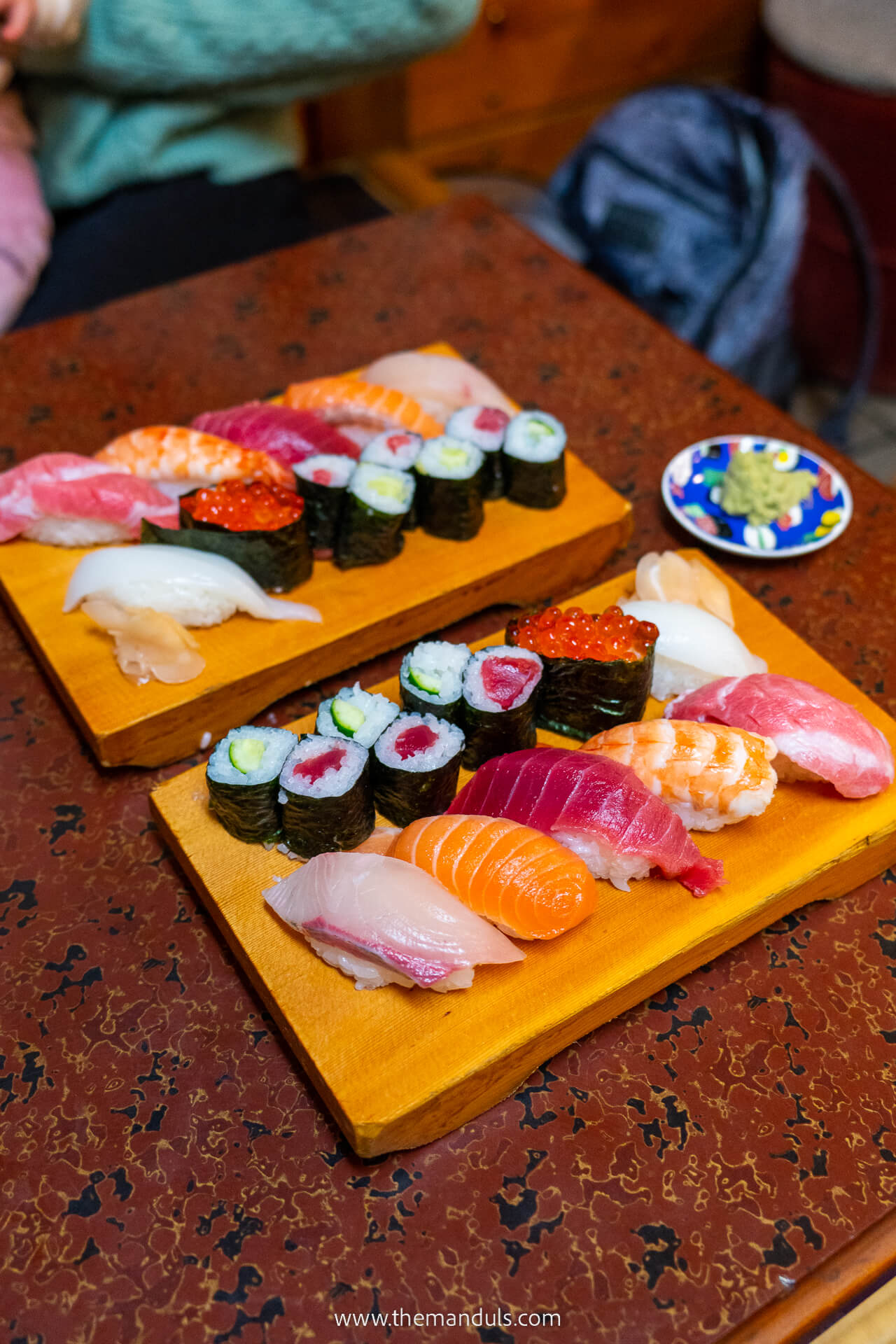
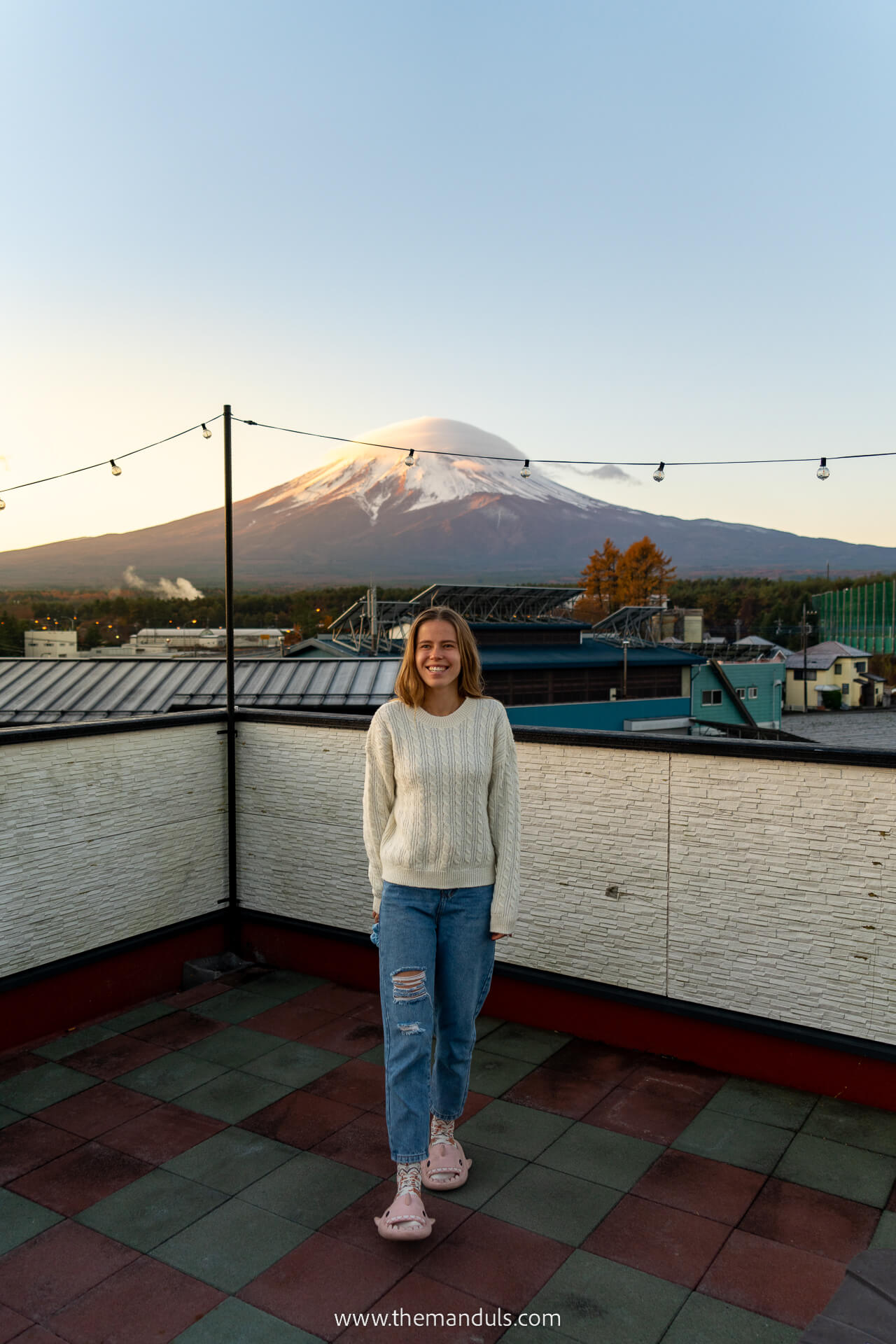
⭐️⭐️⭐️ Fuji Gran Villa TOKI – This was our base near Mount Fuji, and it worked perfectly. The private villas are modern, spacious, and come with rooftop terraces where you can enjoy clear Mount Fuji views. Having a small kitchen and extra space made the stay feel easy and relaxed, especially after busy sightseeing days.
Best for: Travelers who want privacy, comfort, and guaranteed Fuji views.
👉 Check current deals →
⭐️⭐️ Fuji Onsenji Yumedono – An elegant ryokan offering a more traditional experience with private onsen baths and beautifully finished rooms. The atmosphere is calm and refined, and the location near Lake Kawaguchi makes it a great choice if you want comfort without being far from the action.
Best for: Couples looking for a special stay with a private onsen.
👉 Compare prices →
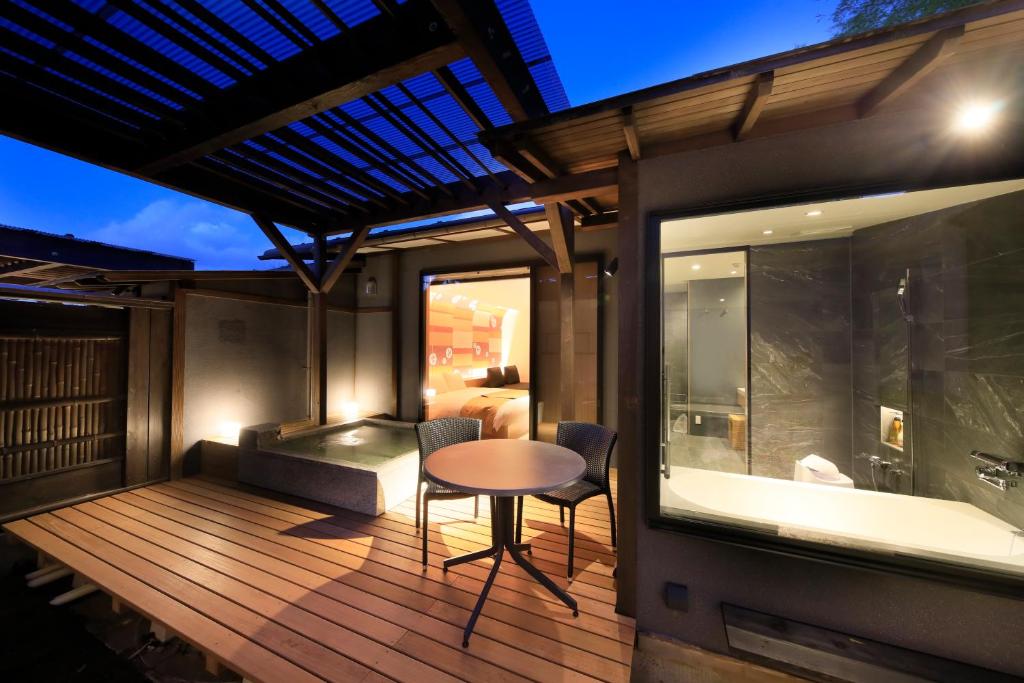
⭐️ Guest House HIIRAGI – A small, friendly guesthouse with a peaceful feel and great value for money. It sits right by Lake Yamanakako, with lake views and a quiet setting that’s perfect if you want to escape the busier areas around Fuji.
Best for: Budget travelers who want cheap and reliable stay
👉 See availability →
Best time to visit Mount Fuji
The best time to visit the Mount Fuji area really depends on what you’re after — clear views, colorful foliage, or even a chance to climb the mountain.
For more detailed overview, sea our Best time to visit Mount Fuji travel guide.
- Autumn (late October to mid-November) – This is when we visited, and it’s hard to beat for color. The leaves around the lakes and forest roads turn brilliant red, orange, and yellow. Just note that by the end of November, most trees are already bare — timing is everything.
- Winter (December to February) – Cold, but also the clearest skies. If seeing Mount Fuji in full glory is your top priority, this is the best season for visibility. Fewer crowds, too.
- Spring (late March to April) – Cherry blossom season adds another layer of beauty, especially if you’re visiting places like Chureito Pagoda. Weather can be hit or miss, though.
- Summer (July to early September) – The official climbing season. Not great for views (Fuji is often hidden behind clouds), but if you want to hike to the top, this is the only safe time to do it.
TIP: Stay at least 2 nights. Fuji loves to hide behind clouds — the more days you have, the better your chances of catching it.
Final Thoughts
Our visit to the Mount Fuji area was an incredible adventure — the weather was almost perfect, and Fuji was not shy this time! The foliage was past its peak, but honestly? We still loved it. We found so many peaceful corners, cozy cafés, and quiet roads that made the trip memorable.
If you’re planning a visit, we’d say this: come for at least two nights, don’t stress if Fuji hides behind clouds, and be open to discovering places that aren’t on every must-see list.
If we could only recommend one thing? Asama Shrine on a misty morning. No views, no crowds — just pure atmosphere.