
This article contains affiliate links. Learn more in our affiliate disclosure.
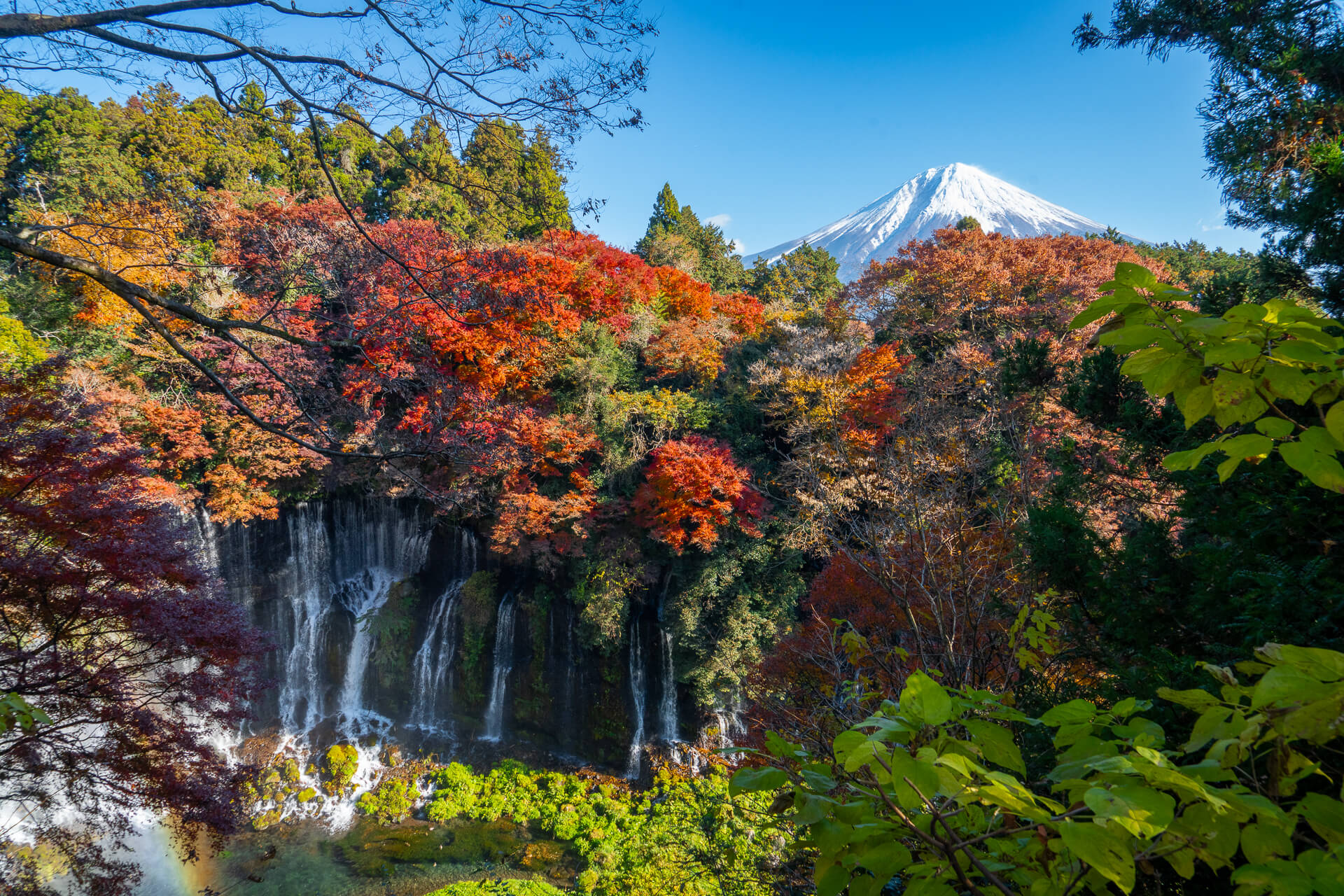
We visited Shiraito Falls in Japan during autumn, hoping to catch the peak foliage. Some of the leaves had already fallen by the time we arrived, but not all of them — and honestly, it didn’t take away from the experience at all.
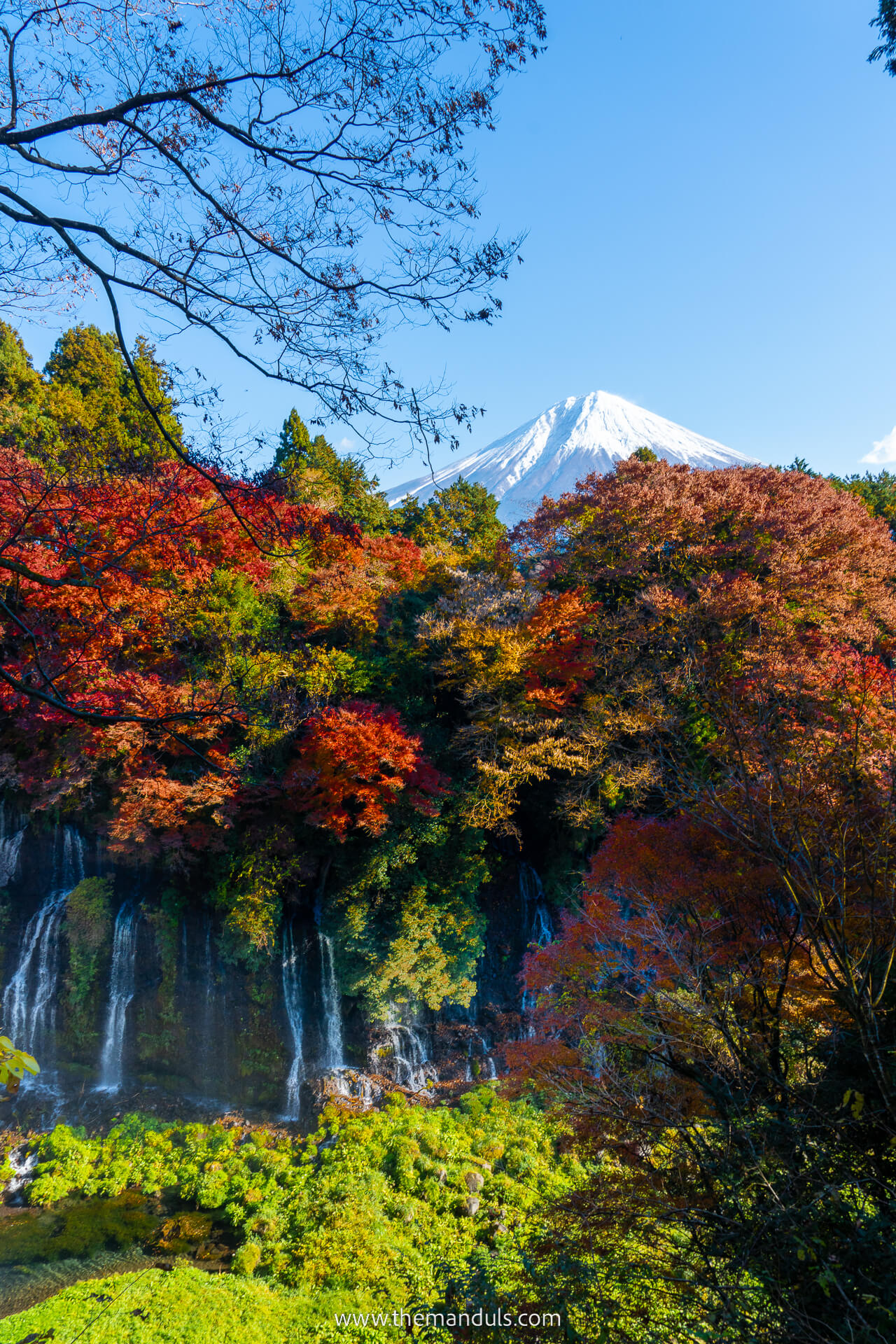
The contrast of the remaining autumn colours, the soft white streams of the waterfall, and Mount Fuji visible in the background still made it a beautiful stop.
It’s easily one of the best things to do at Mount Fuji, especially if you want something that feels calmer and more nature-focused than the usual viewpoints.
We arrived early in the morning to beat the crowds and catch the best light, and that decision paid off (more on that later).
In this guide, we’ll share what it is really like, whether it’s worth your time, how to get there without hassle, and when to visit for the best conditions — all based on our own experience.

Key Highlights
📍Location: Fujinomiya, Shizuoka Prefecture, around 40 minutes from Kawaguchiko
⭐️ Best time to visit: early morning, autumn for the best colors
💰 Entrance fee: free
🕥 Opening hours: opened 24-7
🚗 How to get there: Car, bus, or tour from Kawaguchiko
🥾Accessibility: Short walk with stairs; not stroller or wheelchair friendly
At a Glance
What makes it special isn’t height, but width — hundreds of delicate streams forming a wide curtain of water. From the main viewing platform, where we spent most of our time, you get a clear view of the falls with Mount Fuji rising in the background on a clear day.
For us, it’s one of the most scenic and underrated viewpoints of Mount Fuji in the area.
Getting there isn’t quite as straightforward (we’ll explain later), but if you’re already exploring the Fuji area, we think it’s well worth the small detour — especially when combined with nearby Otodome Falls just a few minutes away.

In a hurry?
These are our top hotels at Mount Fuji we’d book again
⭐️⭐️⭐️ Fuji Gran Villa TOKI – Modern and spacious private villas with rooftop terraces, a small kitchen, and perfect Mount Fuji views right from your room.
👉 See prices & availability →
⭐️⭐️ Fuji Onsenji Yumedono – A luxury ryokan stay just a short walk from Lake Kawaguchi, offering private onsen baths and beautifully styled rooms.
👉 See prices & availability →
⭐️ Guest House HIIRAGI – Simple but very clean and welcoming, this guesthouse is ideal for budget travelers who want a quiet base with easy access to Kawaguchiko’s top sights.
👉 See prices & availability →
Is it worth it?
Based on our experience, yes — as long as you know what to expect. Shiraito Falls isn’t about a dramatic drop or adrenaline factor. What makes it worth visiting is the atmosphere: the wide curtain of water, the forest setting, and the chance to see Mount Fuji.
If you’re already exploring the Fuji area, we think it’s a great addition that doesn’t take much time. Compared to other nearby attractions, it feels less rushed and more relaxing, especially if you visit early in the morning like we did.

The viewing platform gives you a clear, postcard-style perspective of the falls with Mount Fuji in the background, which easily became one of our favourite viewpoints.
That said, if you’re short on time or only want the most iconic photo spots around Mount Fuji, you could skip it without missing a “must-see.” But if you enjoy slower nature stops, autumn scenery, and places that feel peaceful rather than packed, we definitely recommend adding it to your itinerary.

Where is Shiraito Falls
Shiraito Falls is located in Fujinomiya on the southwestern side of Mount Fuji. It’s about a 40-minute drive from Lake Kawaguchiko and around 30 minutes from Fujinomiya city.
One important thing to note based on our planning: there are several waterfalls called Shiraito Falls marked on Google Maps.
Make sure you’re navigating to the Shiraito Falls in Fujinomiya. We recommend using the map below rather than searching by name alone to avoid ending up at the wrong location.
How to get there
By car (recommended)
Based on our experience, renting a car at Mount Fuji is by far the easiest and most flexible way to reach Shiraito Falls. The roads are paved and in good condition. It took us around 45 minutes to reach the falls.
For booking cars, we always use DiscoverCars and have consistently had good experiences with them.
One thing we never skip is full coverage insurance — it’s significantly cheaper through DiscoverCars compared to standard rental counters, and it gives real peace of mind when driving around the Mount Fuji area.
If you’re planning to explore more than one spot, we highly recommend this option.

By bus (possible, but slower)
It’s also possible to reach the falls by bus from Kawaguchiko Station, but expect longer travel times and limited schedules.
Buses don’t run very frequently, which makes planning a bit less flexible, especially if you want to visit multiple spots in one day. It’s doable if you don’t want to drive, but we think that it’s not the most efficient way to explore the Mount Fuji area.
Overall, if you want freedom, better timing, and less stress, we strongly recommend renting a car to visit the falls and exploring Mount Fuji more comfortably.

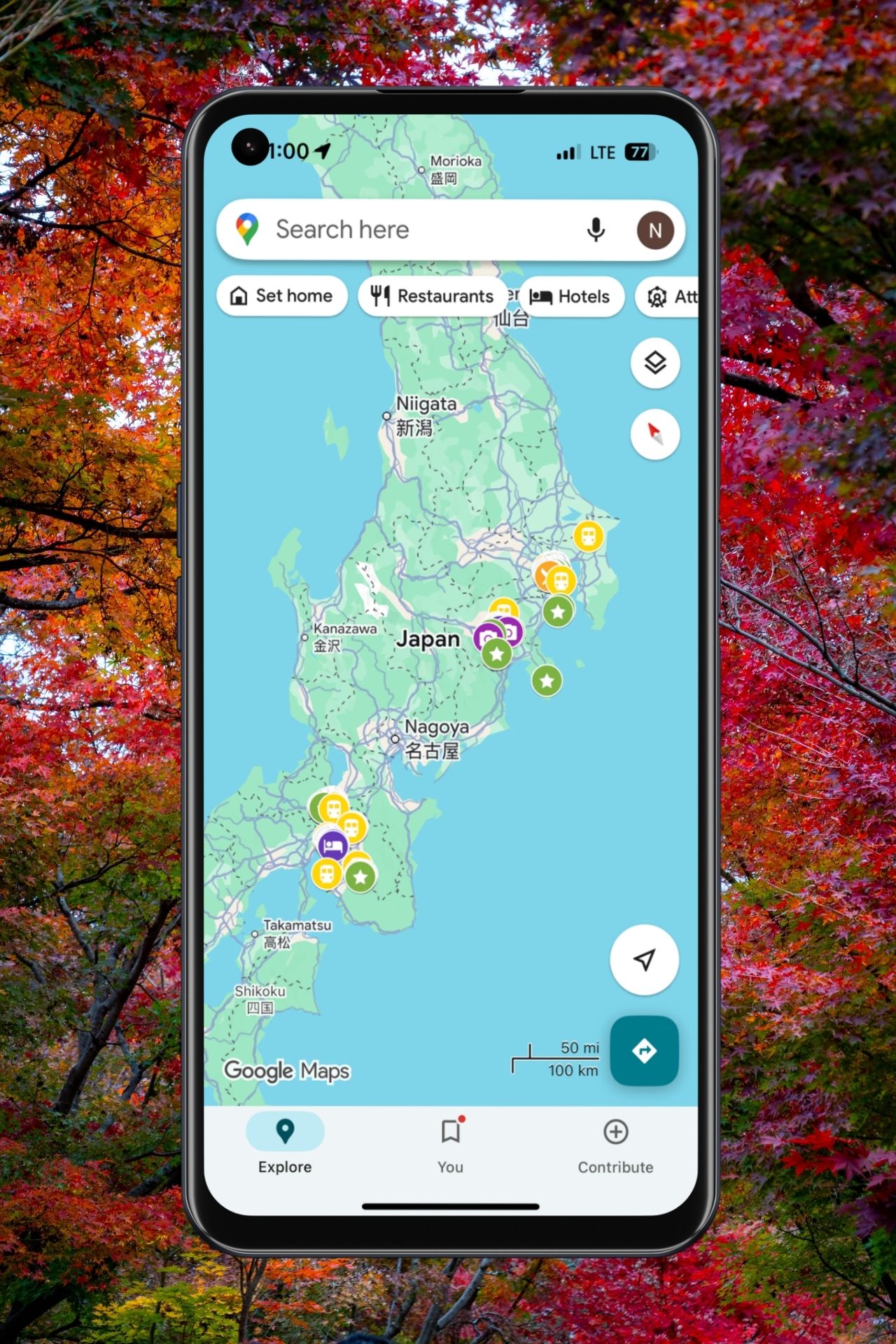
Our Japan Google Maps
Built from our real trips across Japan — only places we actually visited and loved.
No tourist traps. No random saves. Just a ready-to-use map that saves you hours of research.
219 handpicked spots, including:
📍 Highlights & hidden gems
🍜 Restaurants we’d go back to
🏨 Areas & hotels we’d book again
🗺️ Stops that fit into real, logical itineraries
Entrance and parking fees

Entrance Fee: free

Parking Fee: from 200 JPY up to 500 JPY for the whole day
Parking, however, is paid. There are three official parking areas near the falls. The first one you’ll come across costs 500 JPY for the whole day.

About 50 meters further, there’s a second parking lot — this is the one we used — and it costs 200 JPY for the whole day. Right next to it, you’ll find a third parking area, which also costs 200 JPY per day. Parking can be paid for only in cash.
We arrived early in the morning and were among the first visitors, which made parking completely stress-free.
We can’t say exactly how busy it gets later in the day, but based on what we saw, there seemed to be plenty of spaces. Since this place isn’t as crowded as some other Mount Fuji spots, parking should generally be manageable even outside the early morning hours.

Accessing Shiraito Falls
From the parking area, we followed a clearly marked path that leads directly down to the lower viewing platform, which is the first viewpoint you’ll reach. This is where you stand right in front of the wide curtain of waterfalls and really feel the scale and atmosphere of the place.

After spending some time there, we continued up a short set of stairs to the upper viewpoint. From this higher platform, the perspective changes, and on a clear day, you can see Mount Fuji rising in the background, which for us was one of the highlights of the visit.

The walk between the two platforms is short and straightforward. We saw families with kids and felt the area was easy to navigate and relaxed overall. Strollers aren’t practical due to the stairs, but otherwise, access is simple and doesn’t require much effort.

What to expect at Shiraito Falls
When we reached the lower platform, the first thing that stood out was how wide the falls are. Instead of one powerful drop, you’re standing in front of dozens of thin streams running down the rock face, and the sound of the water is constant but gentle.
We arrived early in the morning and had plenty of space at both viewpoints. As more visitors started to arrive, it still never felt chaotic — people naturally moved between the lower platform and the upper viewpoint, so it didn’t feel crowded in one single spot.

The early timing also worked well for photos, with softer light and clearer views toward Mount Fuji.
During our autumn visit, the mix of remaining fall colours, flowing water, and cool air made the stop feel especially refreshing.
We spent around an hour exploring Shiraito Falls, taking photos and videos at a relaxed pace, and that felt more than enough.

On the way back to the parking area, we made a short stop at the Otodome Falls observatory, where we spent about five minutes. It’s a single, tall waterfall, and on a clear day, you can see Mount Fuji rising in the background, which makes it a nice, quick addition to the visit.

If you’re expecting something dramatic or adventurous, this probably isn’t the place. But if you’re looking for a quiet, scenic break while exploring the Mount Fuji area, this is exactly what the falls offer.
Facilities
Shiraito Falls has basic but practical facilities. Near the parking areas, you’ll find public toilets, vending machines, and a few souvenir stalls selling local snacks and drinks.
There are also two small restaurants located right in front of the stairs leading to the viewing platforms, which makes them an easy stop either before heading down to the falls or on the way back up.

Where to eat and drink
If you’re planning to eat nearby, these are a few good options close to the falls:
- Tenjinbashi – Simple local spot serving Japanese dishes, good for a quick and no-frills meal.
- Wa No Sen – Small, traditional restaurant with a calm atmosphere and seasonal Japanese food.
- Mumesan – Great if you want Japanese pancakes and noodles.
All three work well if you want to eat before heading back toward the Mount Fuji area without adding a long detour.

Best time to visit
Shiraito Falls can be visited year-round, but each season changes how the place feels. We visited in autumn, which we think is the best time to visit Mount Fuji area, and even though we weren’t there exactly at peak foliage, it was still our favourite season to see the falls.
Autumn (October–November) is, in our opinion, the best time to visit. The combination of fall colours, cooler temperatures, and clearer views of Mount Fuji makes the experience feel especially balanced.
Spring (April–May) is another good option. Snowmelt keeps the waterfalls flowing well, and the surrounding greenery starts to return. Cherry blossoms aren’t a big feature right at the falls, but the overall freshness of the season is noticeable.
Summer (June–September) brings lush greenery and a refreshing atmosphere thanks to the cool mist from the water. It’s a popular time to visit Mount Fuji in general, so expect more people, especially during school holidays.
Winter (December–March) offers a quieter experience, and the area can feel very peaceful. However, access may be affected by weather, and Mount Fuji isn’t always visible due to clouds or snow conditions.

Where to stay near Mount Fuji
After exploring Fujikawaguchiko, we put together this where to stay in Kawaguchiko guide to help you choose an area and hotel that actually fit how you like to travel — not just what looks nice in photos.
We’ve handpicked the best hotels in Fujikawaguchiko, focusing on places we’d genuinely book again ourselves, so you can quickly find something that matches your style and budget. During popular periods like cherry blossom season and autumn foliage, prices rise fast and the best-view rooms sell out early, so booking ahead really matters here.
Once you find a place that works for you, we recommend sticking with it unless you have a strong reason to change. Fujikawaguchiko has limited accommodation compared to big cities, and availability drops quickly — rebooking later often means fewer choices or losing out on Mount Fuji views.
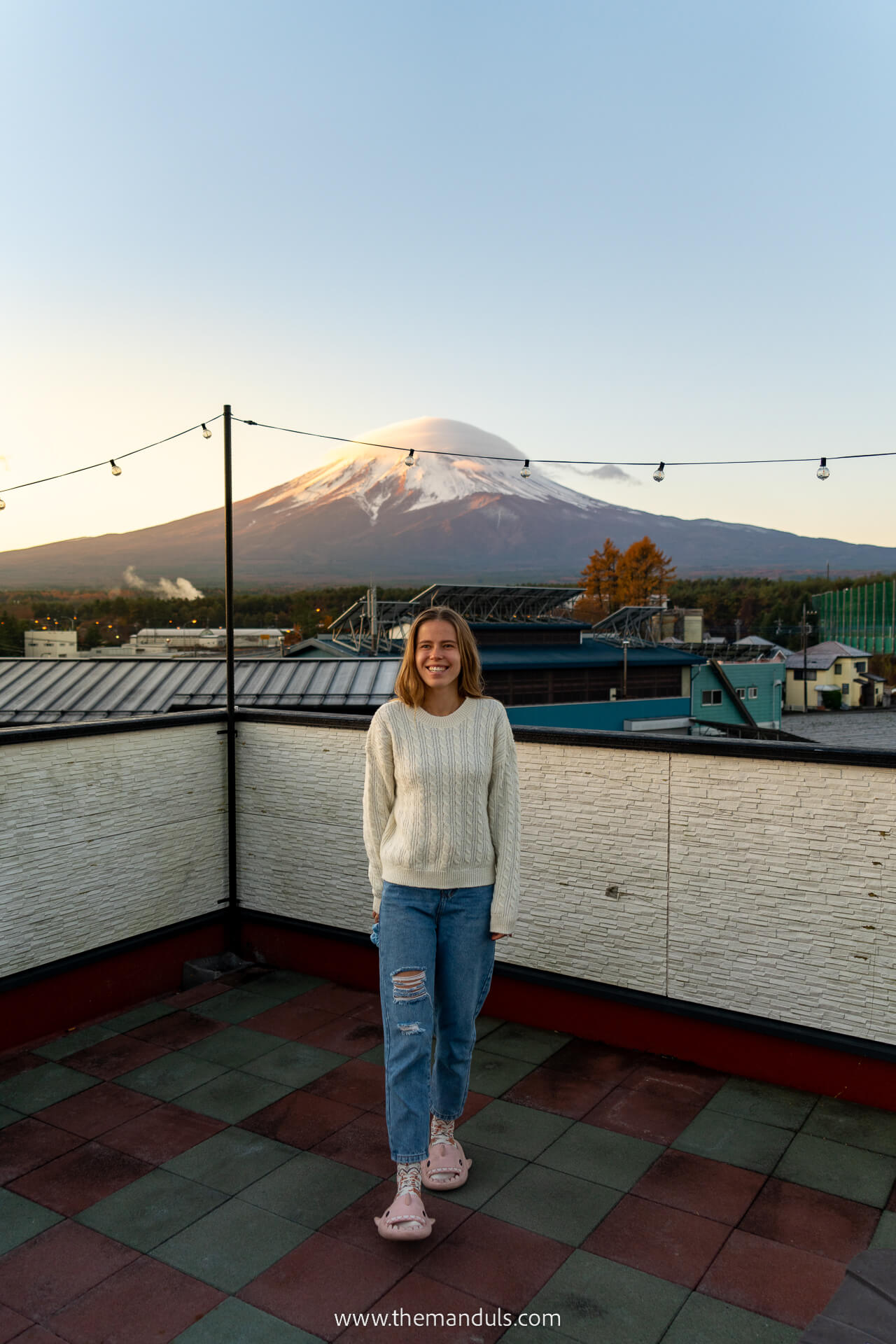
⭐️⭐️⭐️ Fuji Gran Villa TOKI – This was our base near Mount Fuji, and it worked really well. The private villas are modern and spacious, with rooftop terraces where you can enjoy clear Mount Fuji views when the weather cooperates. Having a small kitchen and plenty of space made the stay feel relaxed and comfortable, especially after full sightseeing days.
Best for: Travelers who want privacy, comfort, and guaranteed Fuji views.
👉 Check current deals →
⭐️⭐️ Fuji Onsenji Yumedono – A refined ryokan offering a more traditional stay, with private onsen baths and beautifully designed rooms. The atmosphere feels calm and intimate, and the location near Lake Kawaguchiko is ideal if you want something special without being too far from restaurants and sights.
Best for: Couples looking for a special stay with a private onsen.
👉 Compare prices →
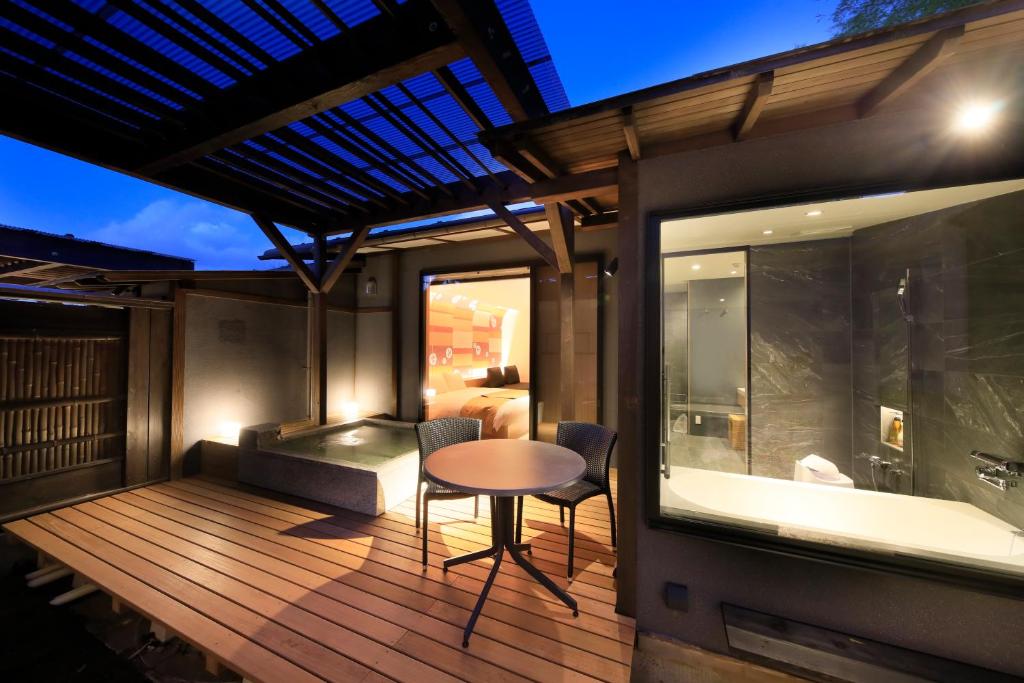
⭐️ Guest House HIIRAGI – A simple but very clean and welcoming guesthouse with a laid-back feel. It’s set right by Lake Yamanakako, with lake views and a peaceful atmosphere. A solid, no-frills option that offers great value for money.
Best for: Budget travelers who want cheap and reliable stay
👉 See availability →
FAQ
Yes. Even without a clear Mount Fuji view, the wide curtain of waterfalls, forest setting, and peaceful atmosphere still make it a worthwhile stop.
About 45–60 minutes is enough to see both viewpoints, take photos, and enjoy the scenery without rushing. We didn’t feel the need to stay longer.
Yes. The paths are clear and easy to follow, and we saw several families visiting. Strollers aren’t practical due to stairs, but otherwise it felt relaxed and manageable with children.
You don’t need a tour. The falls are easy to visit on your own, signage is clear, and getting there is straightforward if you have a car.

Final thoughts
Shiraito Falls ended up being one of our favourite nature stops around Mount Fuji. It’s easy to visit, doesn’t take much time, and offers a very different atmosphere compared to the area’s more famous viewpoints. The wide curtain of waterfalls, the forest setting, and the chance to see Mount Fuji from a quieter, more natural perspective all worked really well together.
We especially loved visiting in autumn and arriving early in the morning, when the light was soft, and the area still felt calm.
If you’re looking for something scenic, peaceful, and genuinely enjoyable — without the crowds or pressure to rush — we definitely recommend adding this place to your trip.