
This article contains affiliate links. Learn more in our affiliate disclosure.
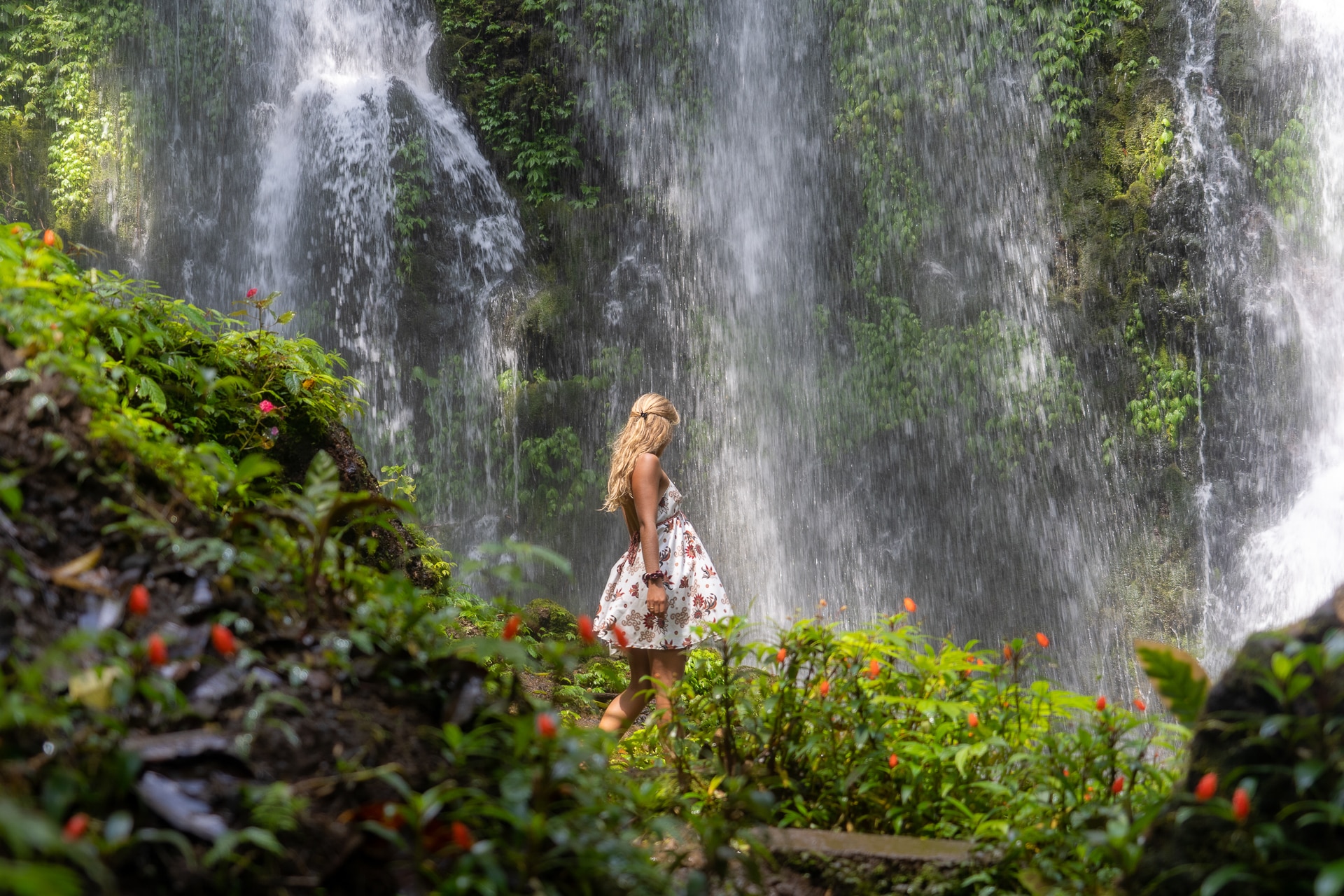
Planning waterfalls near Ubud is more confusing than it looks. Some are only 20–30 minutes from town, while others take over an hour each way — and not every waterfall is worth building your day around.
We spent more than a month in Bali and visited many of these waterfalls ourselves. Some quickly became favorites, while others looked better online than they felt in real life, especially once crowds, stairs, photo queues, and driving time were involved.
In this guide, we’ll help you choose the best waterfalls near Ubud based on what actually matters: how far they are, whether you can swim, how crowded they get, who they’re best for, and which ones we’d skip if we had limited time.
Best Waterfalls near Ubud: Quick Verdict
If you only have half a day, we’d visit Kanto Lampo + Tibumana. They’re close enough to combine easily and give you two different experiences.
If you want to swim, choose Tibumana Waterfall.
If you want photos, choose Kanto Lampo, but go early to avoid the photo queue.
If you want the most impressive waterfall, choose Nungnung. It’s farther from Ubud and has a lot of stairs, but it was our favorite.
If you want something different, add Beji Griya for the carvings and temple-like setting.
Don’t try to visit too many waterfalls in one day. For most people, 2–3 is enough.
Suggested Waterfall Routes from Ubud
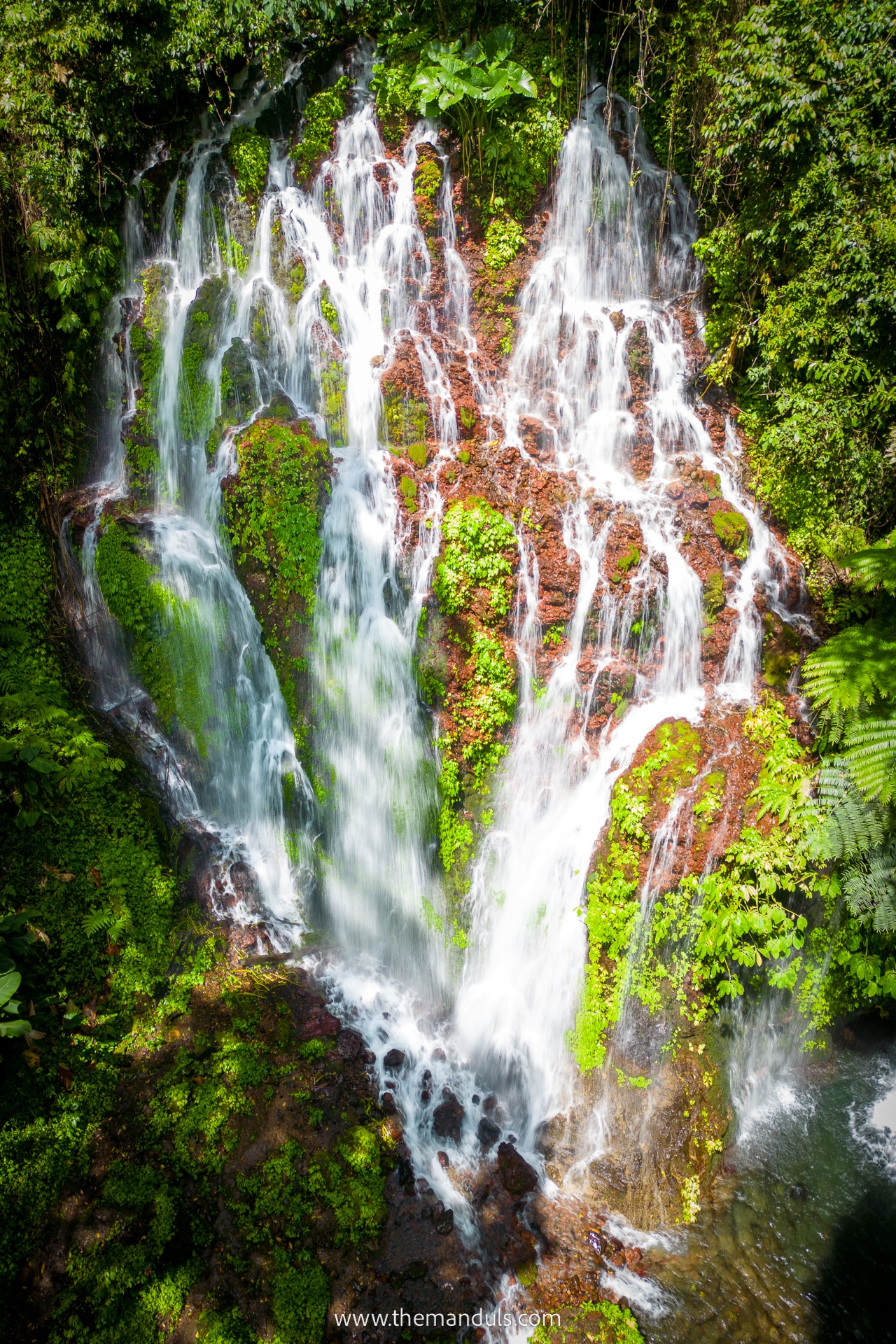
The easiest way to plan Ubud waterfalls is by route, not by ranking. Some waterfalls look close on the map, but once you add traffic, stairs, swimming, photo stops, and changing clothes, the day fills up quickly.
Half-Day Route
For a simple half-day trip, we’d choose:
Kanto Lampo → Tibumana → Beji Griya
This route works best if you want waterfalls close to Ubud without spending the whole day driving. Start early with Kanto Lampo before the photo queue builds up, continue to Tibumana for swimming, and finish at Beji Griya if you want something a little different.
For the best way to end the day, spend sunset at Campuhan Ridge Walk.
Full-Day Route
For an impressive full-day trip from Ubud, we’d choose:
Tegalalang Rice Terrace → Leke Leke → Nungnung
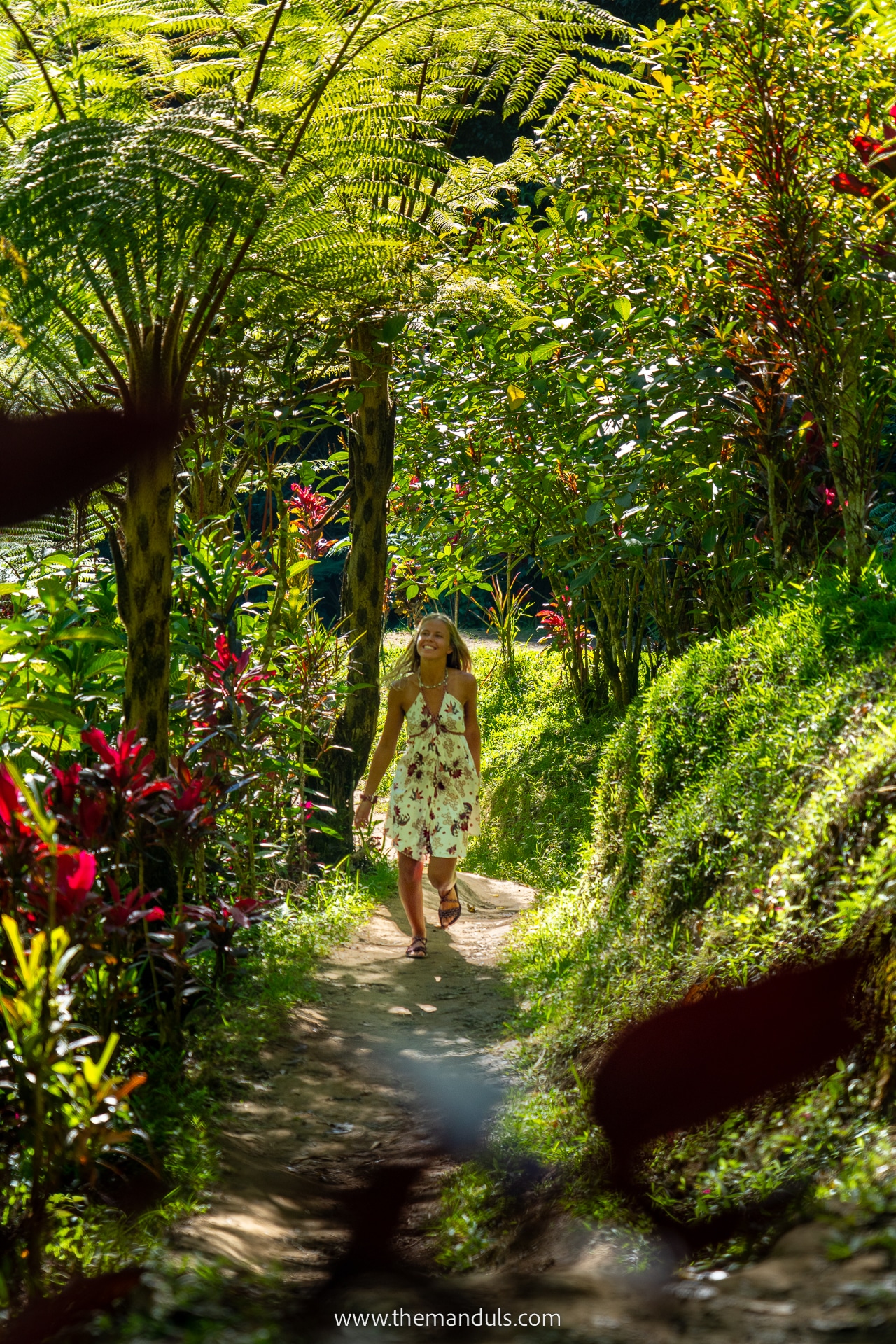
This route makes the most sense, as all the attractions are in the same way. Start with Tegalalang Rice Terrace before the crowds arrive. Leke Leke and Nungnung are both north of Ubud, so you can visit two very different waterfalls without too much backtracking.
The route passes close to several interesting spots, so check our guide to the best things to do in Bedugul and choose one or two extra stops that fit your day.
North Bali Day Trip
For North Bali waterfalls, treat it as a separate full-day trip from Ubud.
Banyumala → Banyu Wana Amertha → Gitgit
This route is worth it if waterfalls are one of your main reasons for visiting Bali. The drive is much longer, but the waterfalls feel bigger, wilder, and less like quick stops near town.
Choose this only if you’re ready for a long day on the road.
Best Waterfalls in Ubud
1. Tibumana Waterfall

Entrance Fee: 25,000 IDR

Opening Hours: 7 AM – 6 PM

Distance from Ubud: 15 km
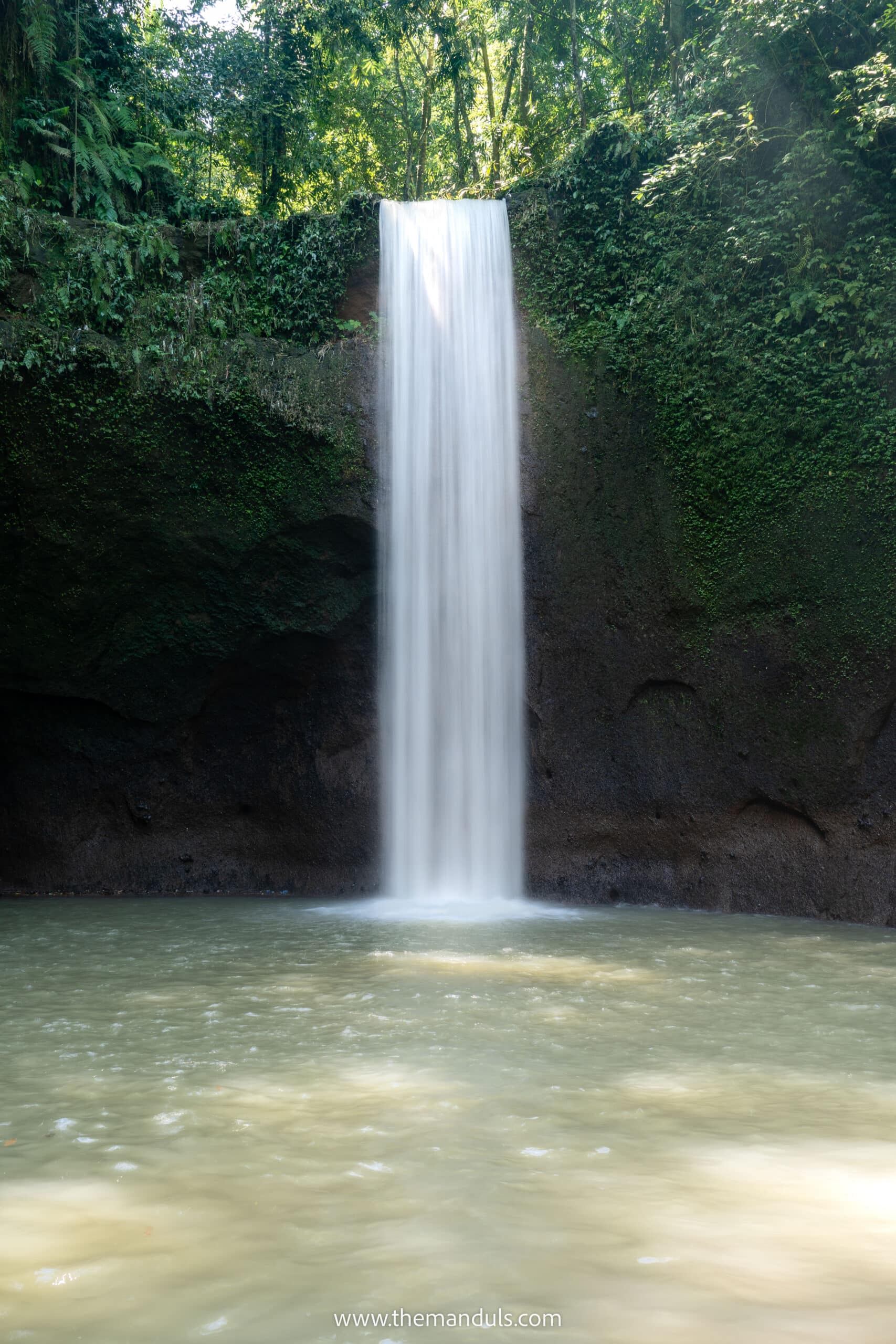
Tibumana is one of the easiest waterfalls near Ubud to recommend if you want a proper swim without planning a full-day trip. It’s close enough to combine with Kanto Lampo or Beji Griya, and the access is simple compared with bigger waterfalls like Nungnung.
From the parking area, it took us less than 10 minutes to reach the waterfall. The trail starts near a few small shops and photo spots, then heads down into the valley past small shrines, incense, and bamboo bridges.
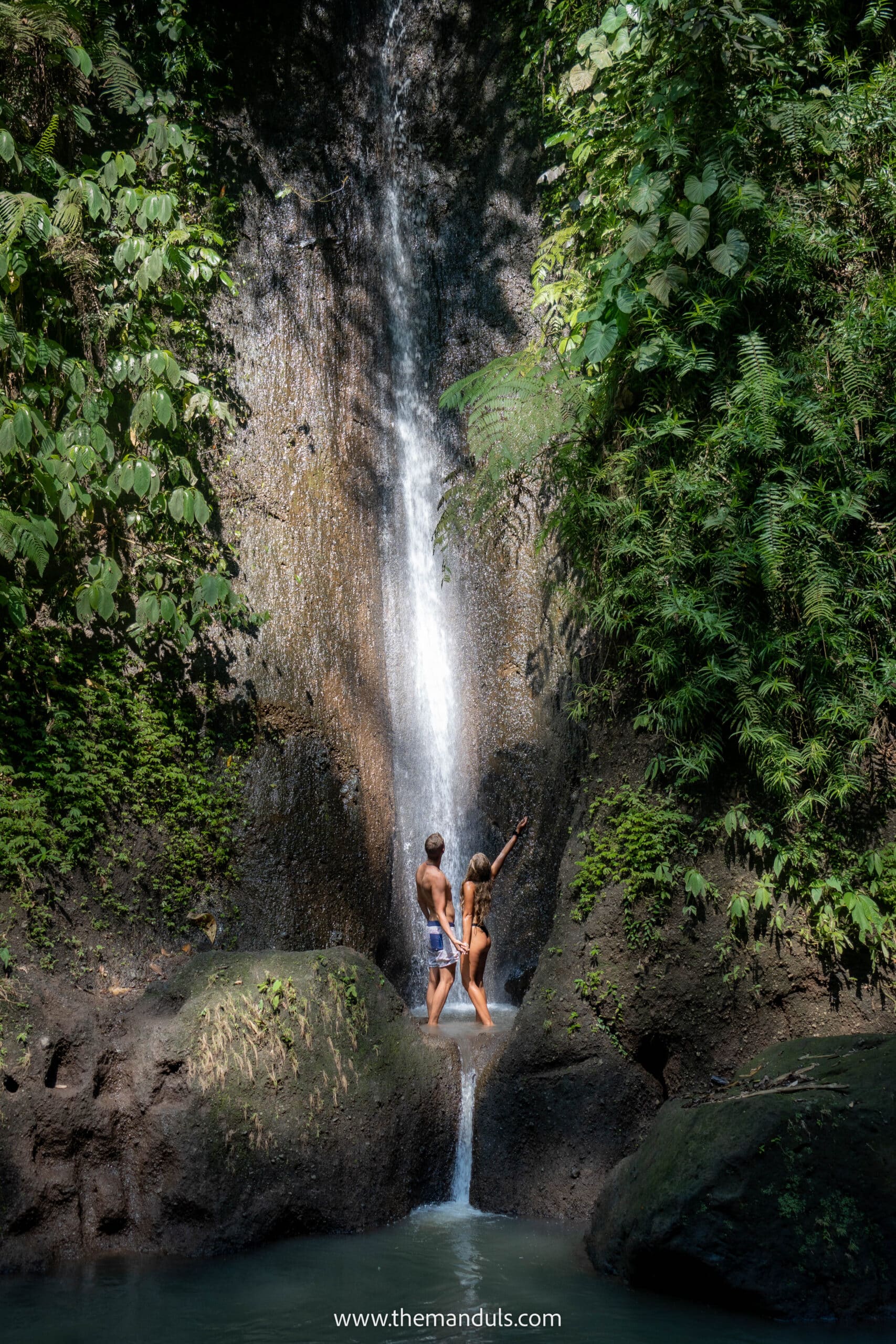
The main waterfall sits in a wide open valley and drops into a natural pool deep enough for swimming. Just keep in mind that many people come here for photos, so it can feel a little awkward if you’re swimming while others are waiting for a clean shot.
Another thing photos don’t always show: the water is not always bright blue. When we visited, it looked more greenish-brown, probably depending on rain, season, or editing in online photos.
Facilities: small restaurants and drink stalls near the path, no proper lockers or changing rooms.
Getting there: by scooter, private driver, or tour. Parking is 5,000 IDR for scooters and 10,000 IDR for cars
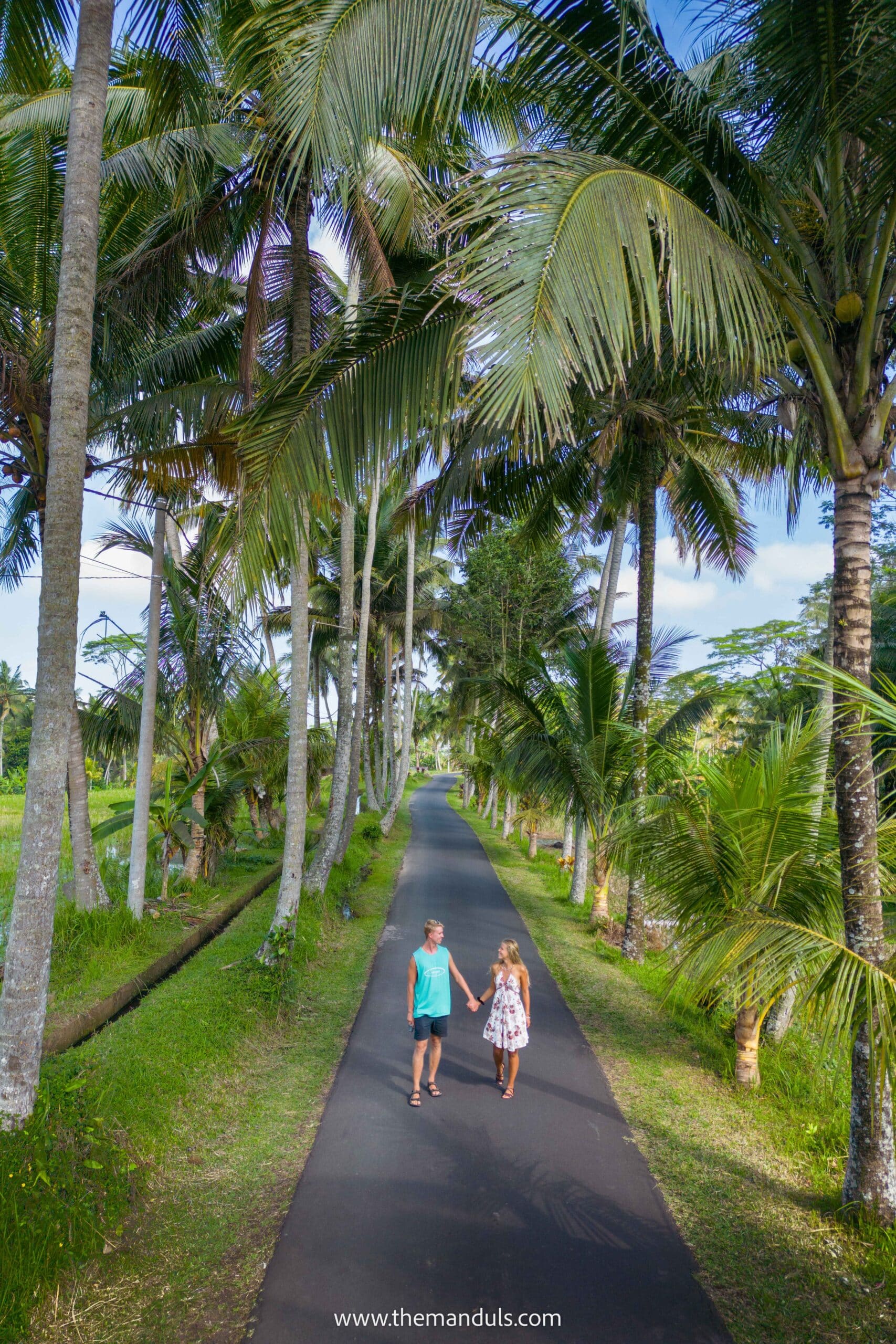
The final road to the parking area is also one of the prettiest parts of the visit, passing through a palm-lined rice field road known as Adilla’s Spot. It’s worth a quick stop if you’re not rushing.
2. Kanto Lampo
Entrance Fee: 25,000 IDR
Opening Hours: 6:30 AM – 6 PM
Distance from Ubud: 11 km
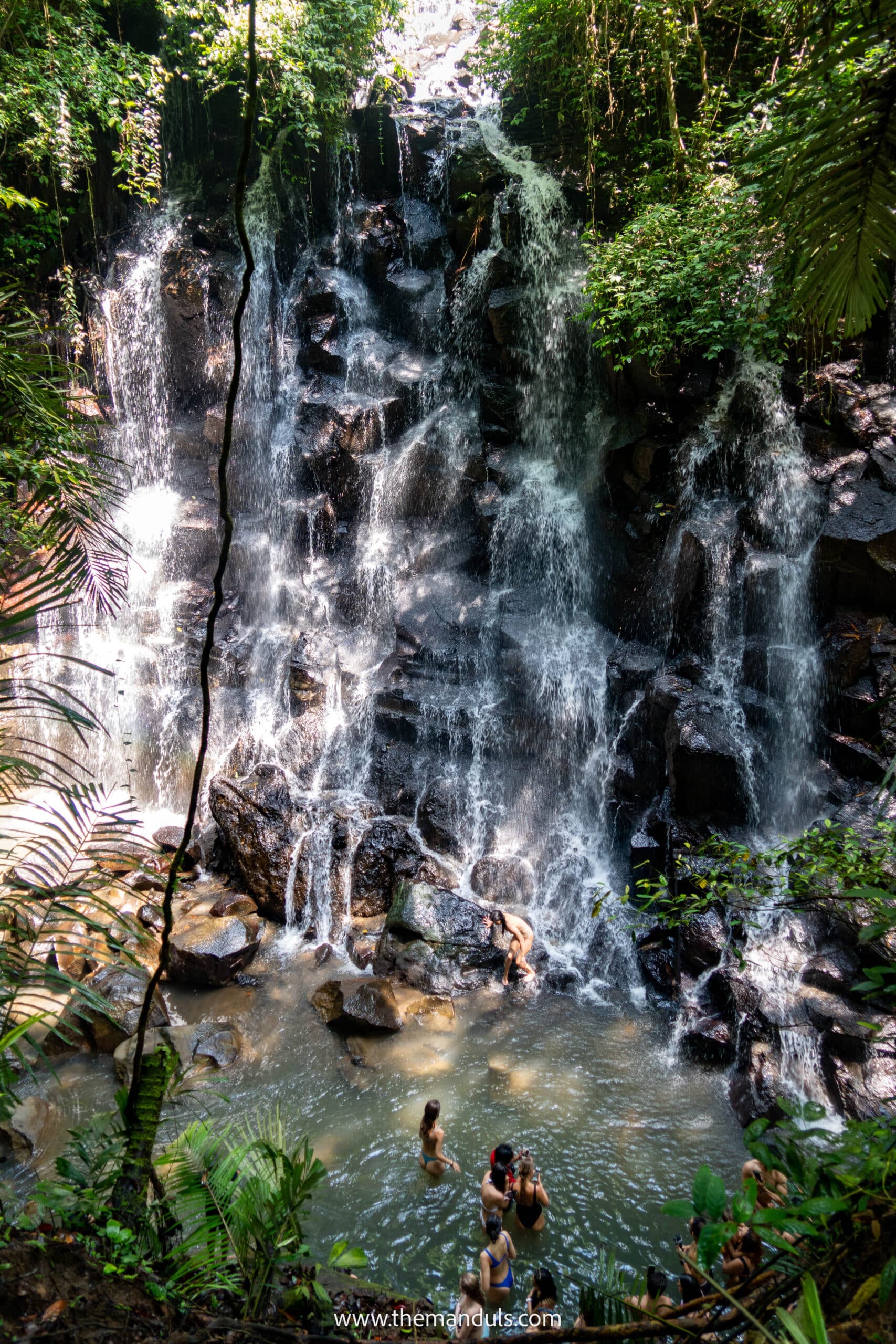
Kanto Lampo is the waterfall we’d choose for photos, not for a peaceful nature stop. It’s close to Ubud, easy to reach, and the black rock cascade looks genuinely impressive — but the photo queue can change the whole experience.
Unlike a classic single-drop waterfall, Kanto Lampo flows down layered black rocks, which makes it one of the most photogenic waterfalls near Ubud. You can climb onto the rocks, stand in the cascade, and get the killer photos that made this place so popular.
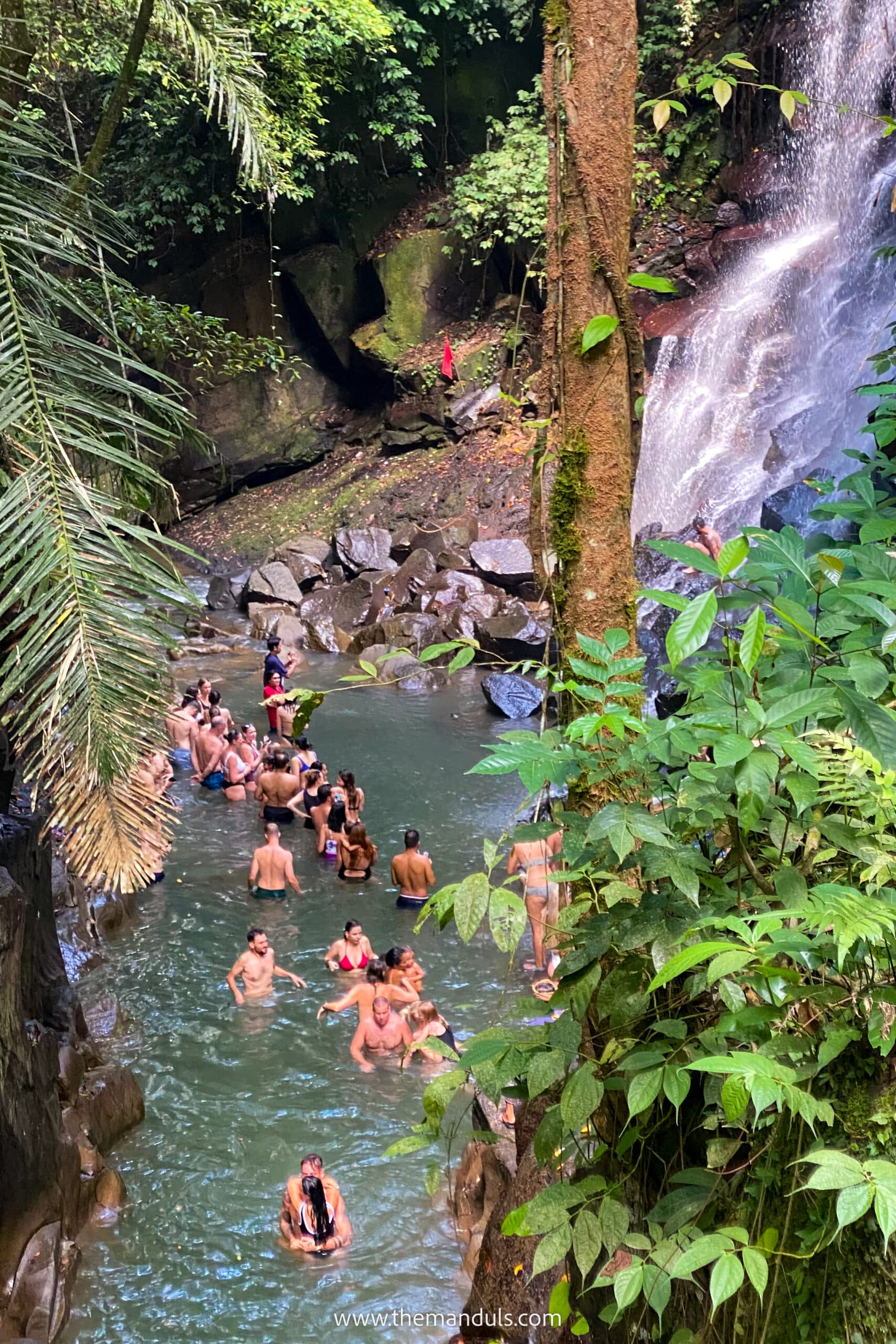
But that popularity is also the downside. When we visited, many people were waiting in line for photos, spending a few minutes on the rocks, and then leaving. If that’s what you want, you’ll probably enjoy it.
If you expect a quiet place to swim and relax, this may disappoint you.
The water is around waist-deep on the way to the falls, so be ready to get wet before you even reach the main cascade. Apart from the main waterfall, there’s also a small lagoon upstream, and we also crossed the river and walked up the small hill for a view from above.
Facilities: food stalls, drink shops, toilets, and lockers near the entrance.
Getting there: by scooter or private driver. Parking is free. Gojek pick-up is not allowed.
3. Beji Griya Waterfall
Entrance Fee: 100,000 IDR – 200,000 IDR
Opening Hours: 9 AM – 6 PM
Distance from Ubud: 12.5 km
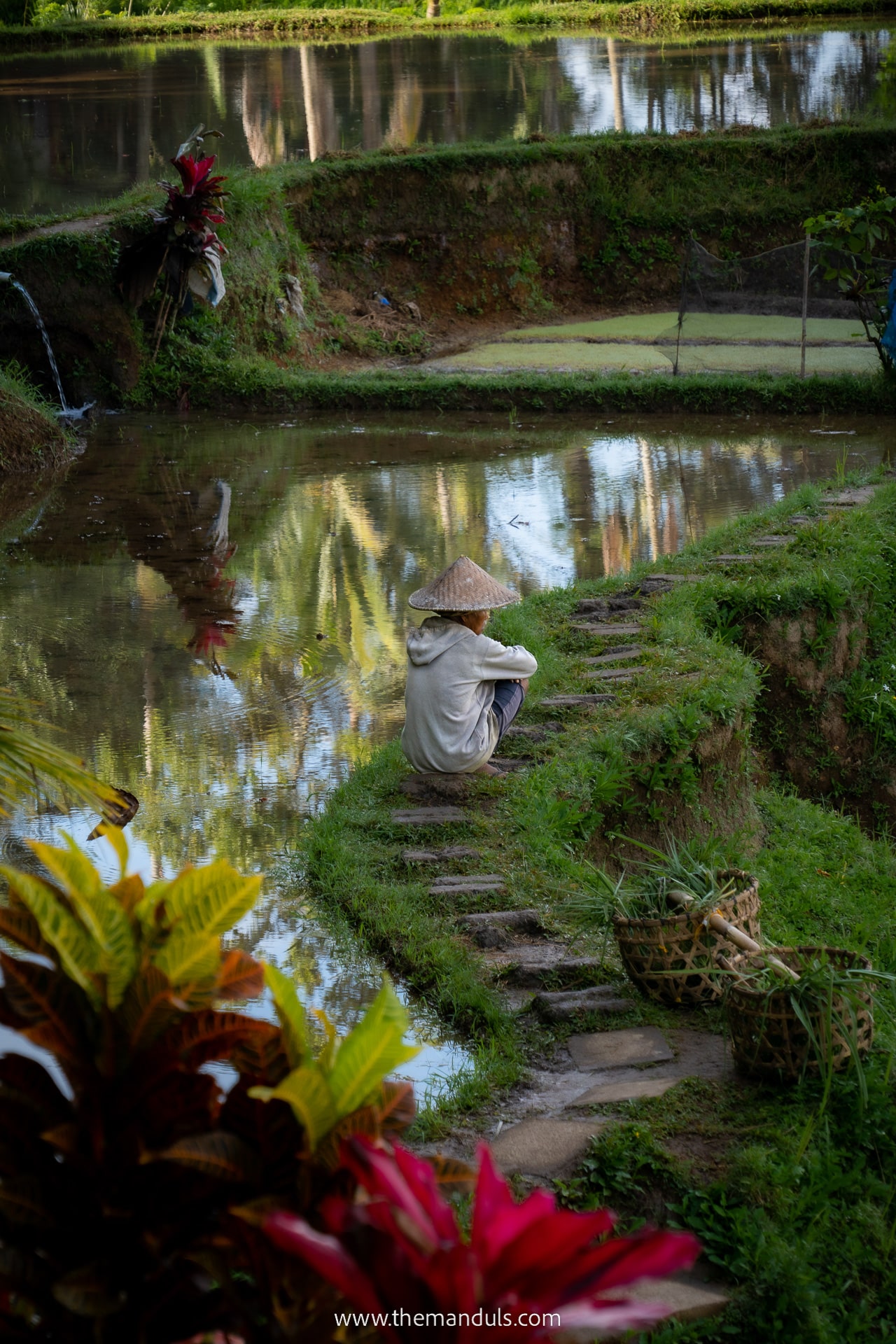
Beji Griya is worth adding if you want something more cultural than a normal waterfall stop. It’s not the wildest or most natural-feeling waterfall near Ubud, but the temple setting and rock carvings make it feel very different from Kanto Lampo or Tibumana.
The waterfall is part of a temple complex, with detailed carvings surrounding the water and pathways. You can visit just to see the waterfall area, or pay extra for a Hindu purification ceremony.
When we checked, the ceremony cost 200,000 IDR extra and included traditional clothes, towels, lockers, and a guide who explains the ritual and shares more about the culture.
If your main goal is swimming or a dramatic jungle waterfall, this would not be our first choice.
Facilitie: snacks and lockers
Getting there: scooter or private driver, parking fee is 5,000 IDR to 10,000 IDR
4. Tukad Cepung
Entrance Fee: 30,000 IDR
Opening Hours: 7 AM – 6 PM
Distance from Ubud: 28 km
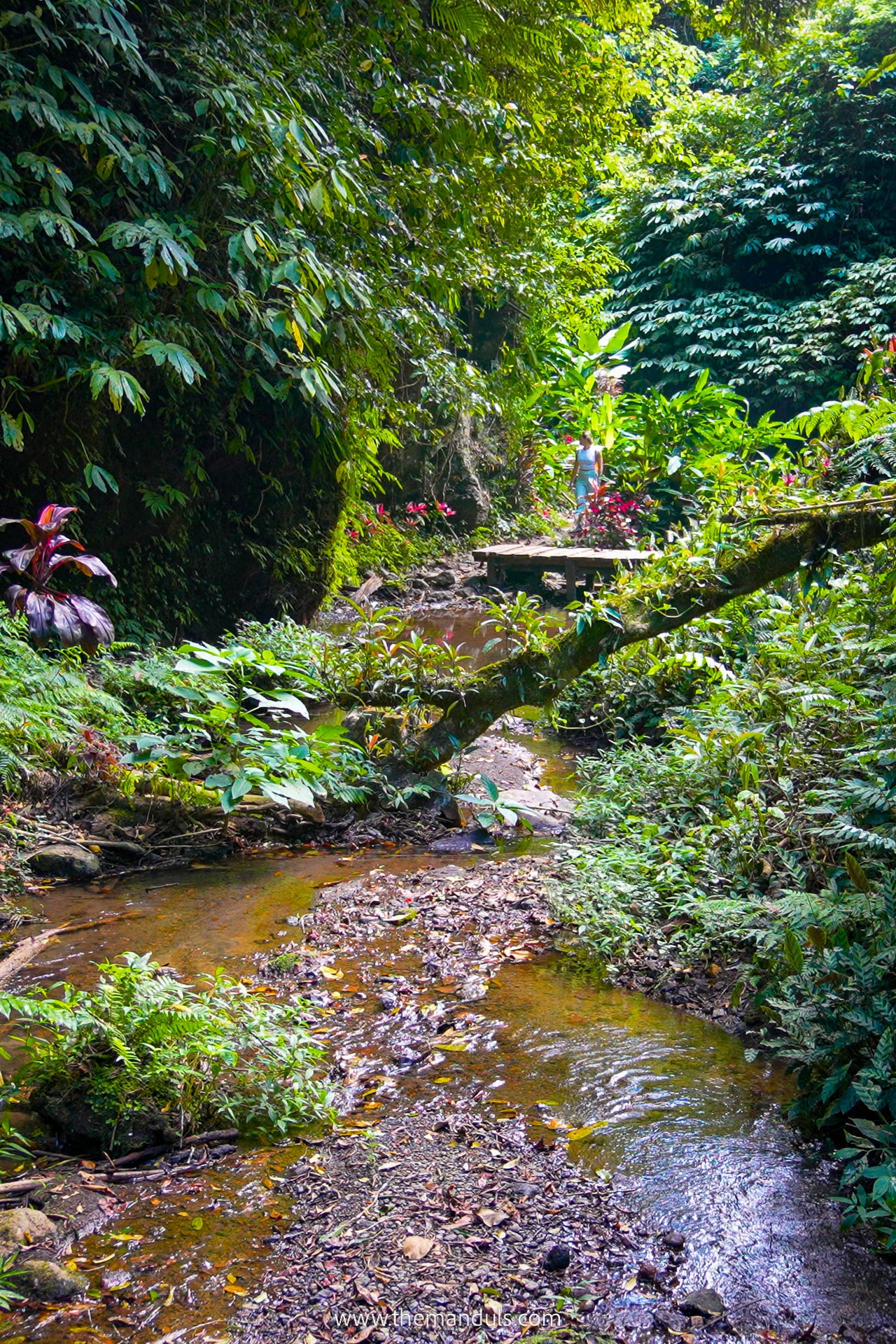
Tukad Cepung is worth considering if you want a waterfall that feels different from the usual jungle pool. The main reason to visit is not swimming, but the cave-like setting and the light beams that can appear inside the canyon.
The waterfall sits between high cliffs, so the whole place feels more enclosed. When the timing is right, sunlight enters the canyon and hits the mist from the falling water, creating the famous rays Tukad Cepung is known for.
The catch is timing. If you come too early, too late, or on a cloudy day, you may not get the light effect at all. And because this place is now very popular, the main photo spot can feel crowded once tours arrive.
We’d add Tukad Cepung if you care about photography or want a more unusual waterfall stop.
Facilities: a few small snack shops near the entrance
Getting there: by scooter or private driver. Parking is free.
Worth-the-Drive Waterfalls from Ubud
1. Leke Leke Waterfall
Entrance Fee: 50,000 IDR
Opening Hours: 7 AM – 6 PM
Distance from Ubud: 30 km
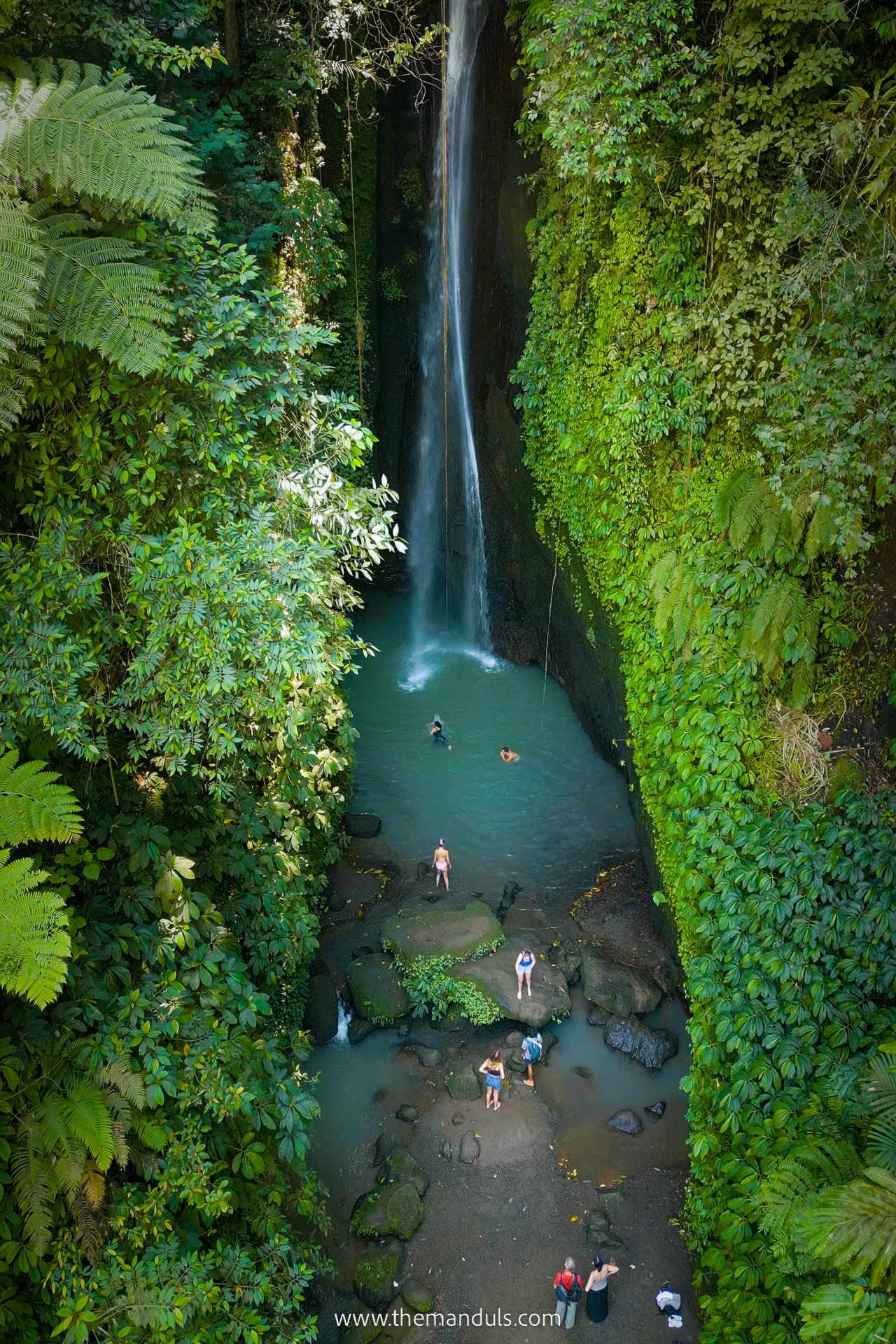
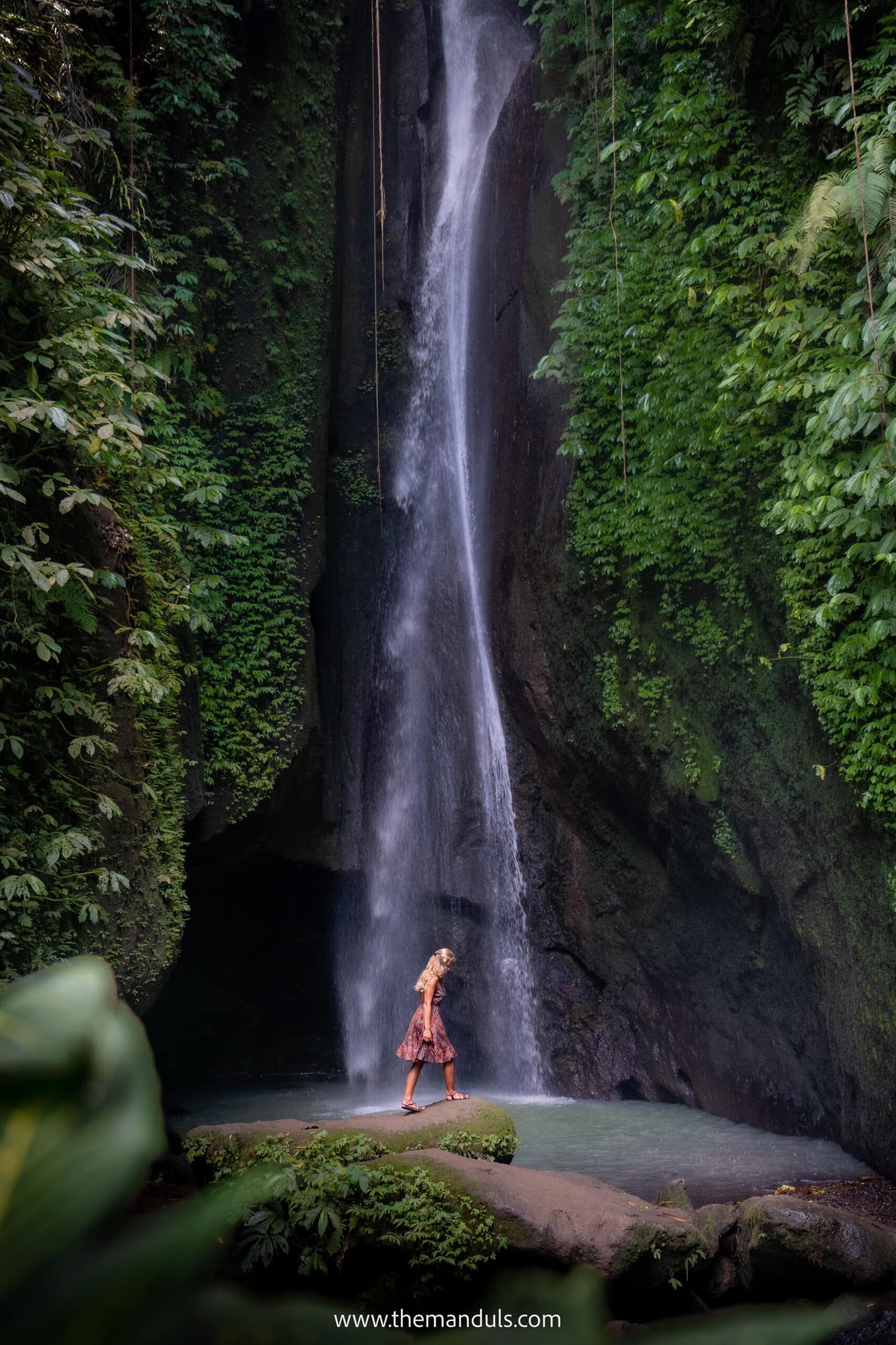
Leke Leke is worth visiting if you want one of the most photogenic waterfalls near Ubud, but we wouldn’t choose it mainly for swimming. The setting is beautiful, the walk is easy, and the narrow green valley makes it feel more dramatic than many smaller waterfalls — but expect photo queues.
The waterfall itself drops in one thin stream between steep green walls. There’s a small pool at the bottom, but it was only around knee-deep when we visited, so this is better for photos than a proper swim.
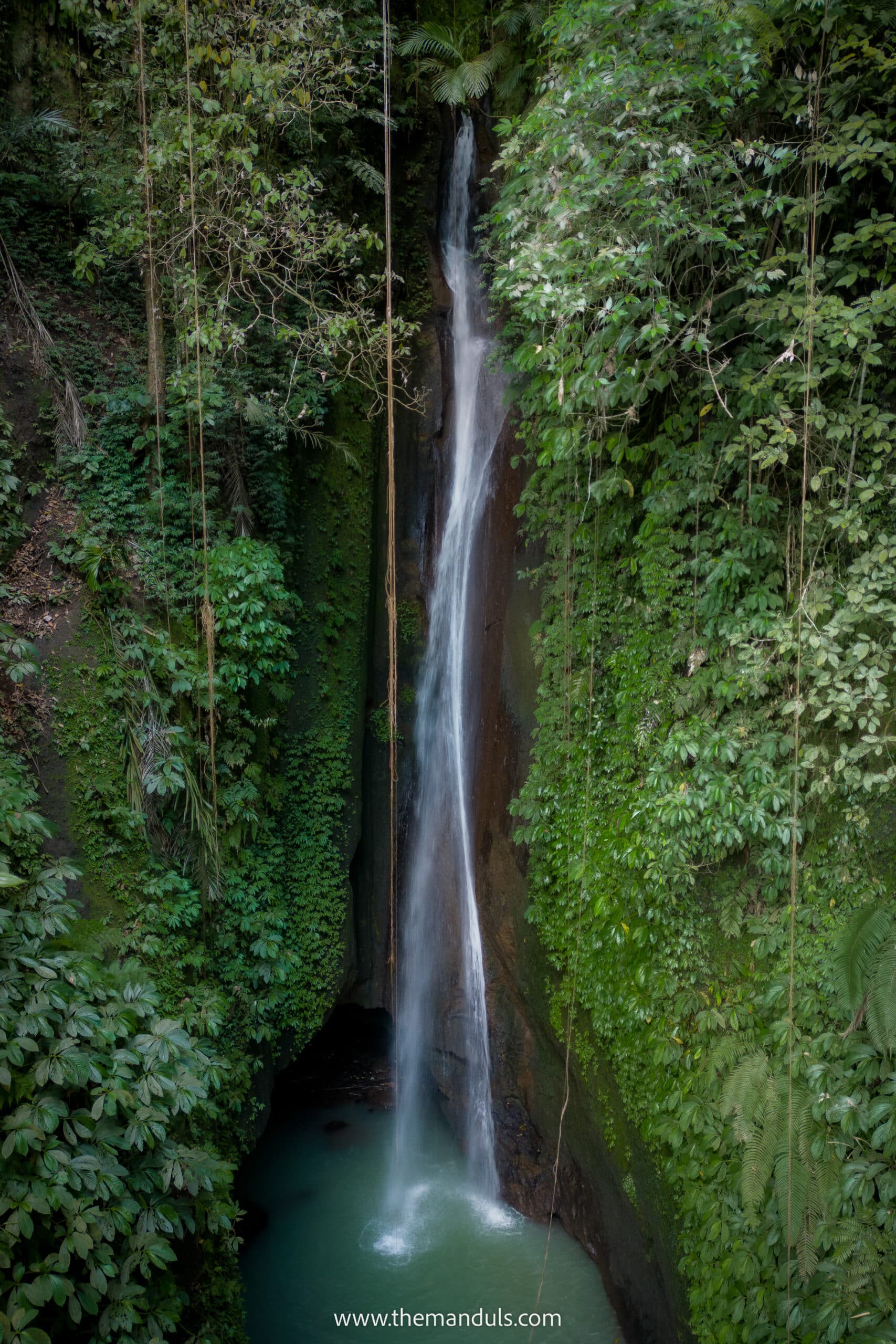
We visited around 9 AM because we knew it was popular on Instagram. Even then, there were already people waiting for photos, so we wouldn’t come much later if this is high on your list.

Tip: The official opening hours are usually when the entrance fee is collected. If you arrive earlier, access is still possible. Pay your fee when you leave.
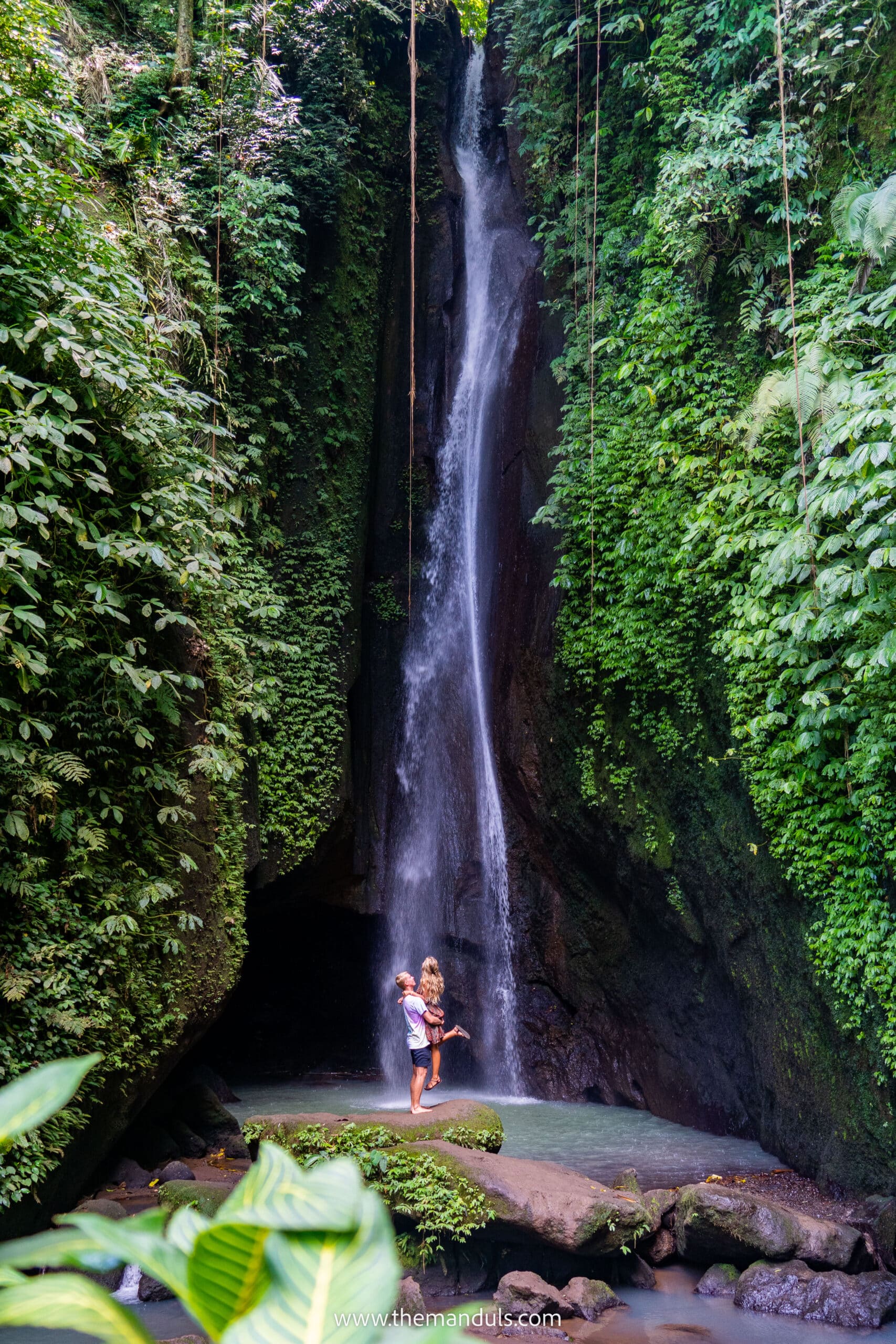
From the parking area, it took us around 10–15 minutes to reach the waterfall. The path is well maintained, with stairs leading down into the valley. On the way, you’ll pass a few paid photo spots, including a large swing over the rice fields.
Facilities: ticket counter, toilets, small snack shops, restaurant, paid photo spots, and rice field swing. There are no facilities down at the waterfall itself.
Getting there: scooter or private driver. Gojek/Grab pickup may be difficult or not allowed in some areas, so don’t rely on it for the return trip.
2. Nung Nung Waterfall
Entrance Fee: 20,000 IDR
Opening Hours: not sure, but accessible 24/7
Distance from Ubud: 35 km
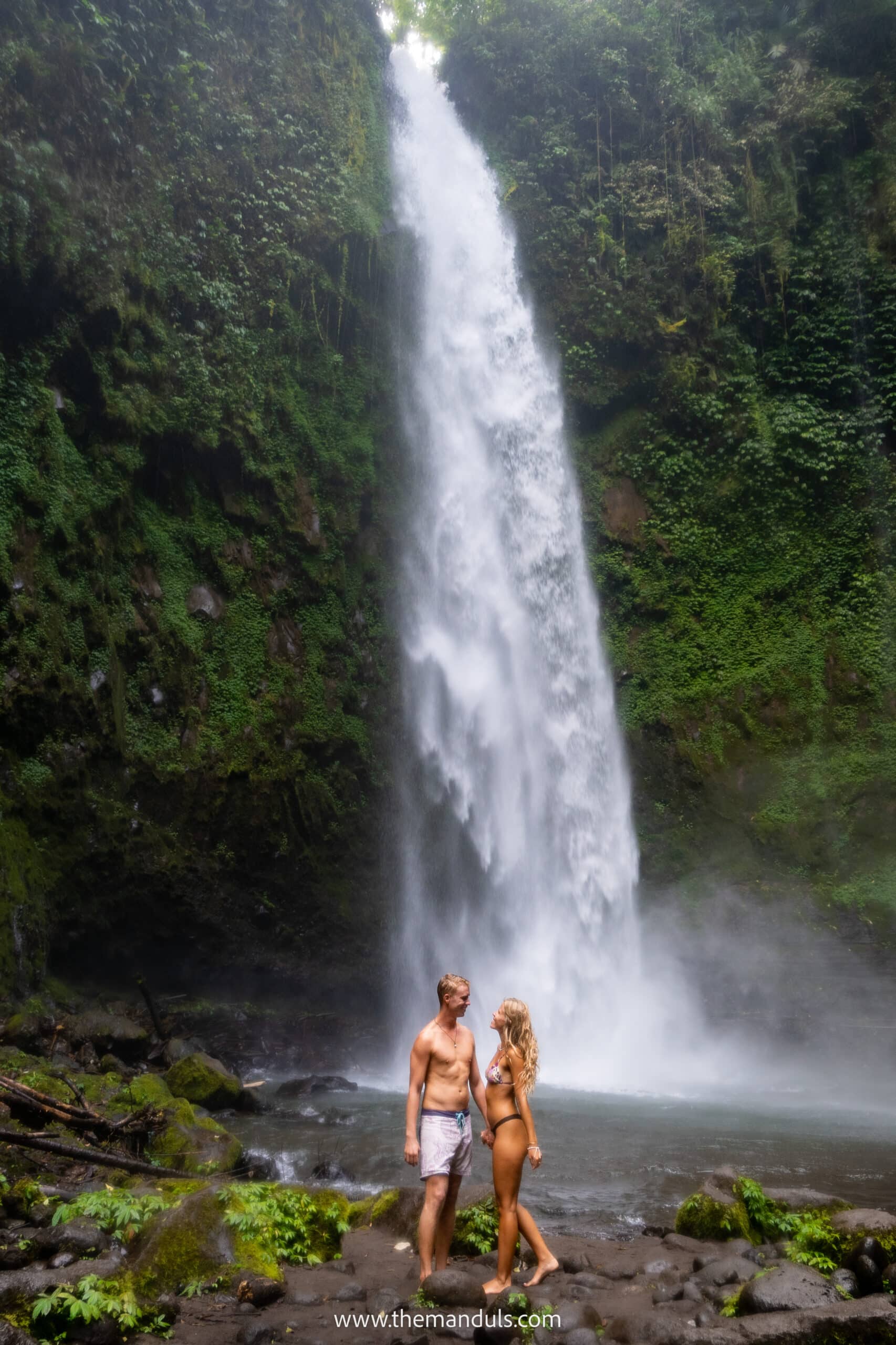
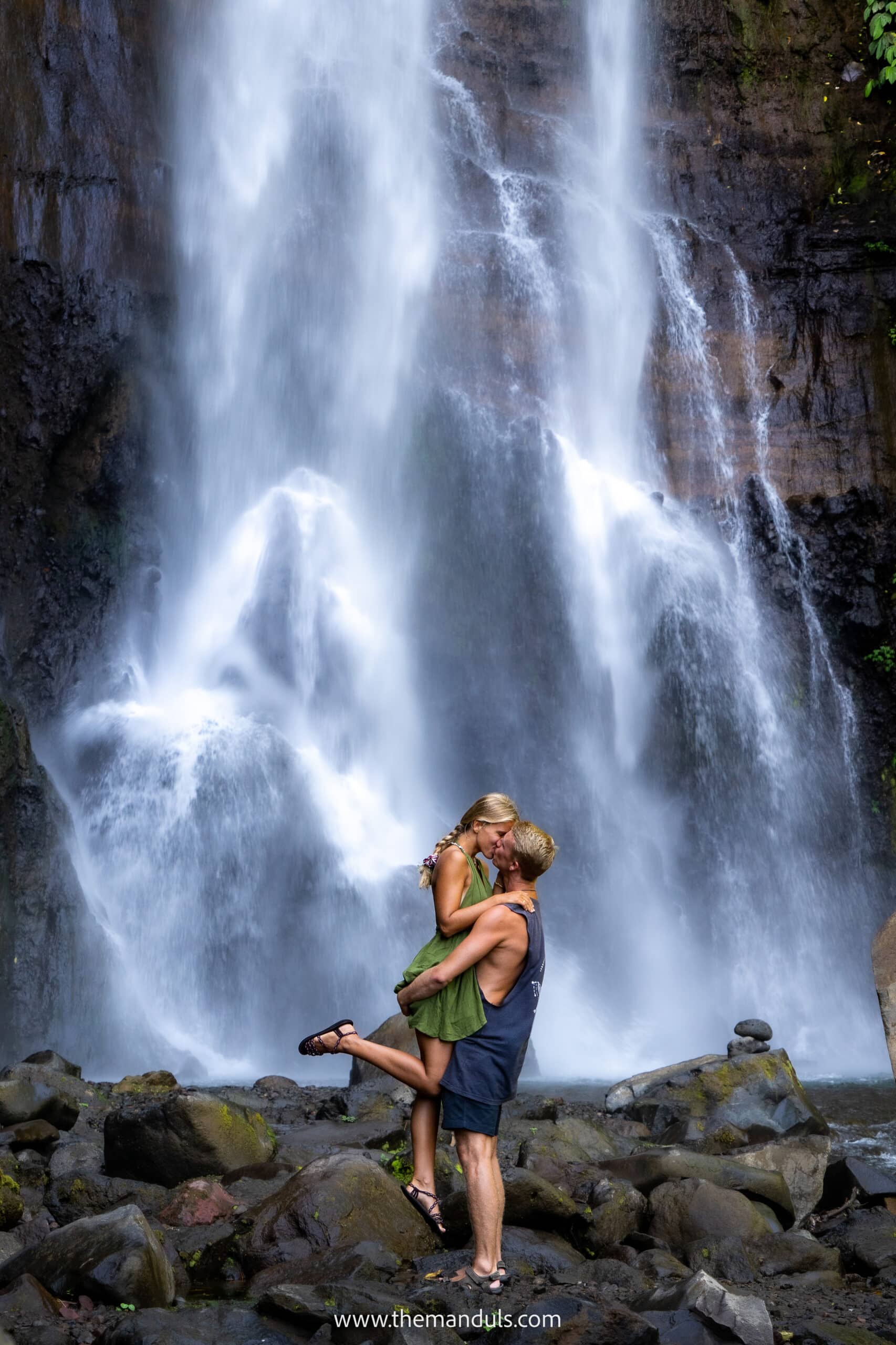
Nung Nung is the waterfall we’d choose if you want the most impressive waterfall experience near Ubud and don’t mind extra effort. It’s farther than others, and the stairs are a real workout, but this was our favorite waterfall in Bali. It was also the least crowded.
Nung Nung feels much wilder than the waterfalls closer to Ubud. It’s one huge, powerful stream dropping into a waist-deep pool.
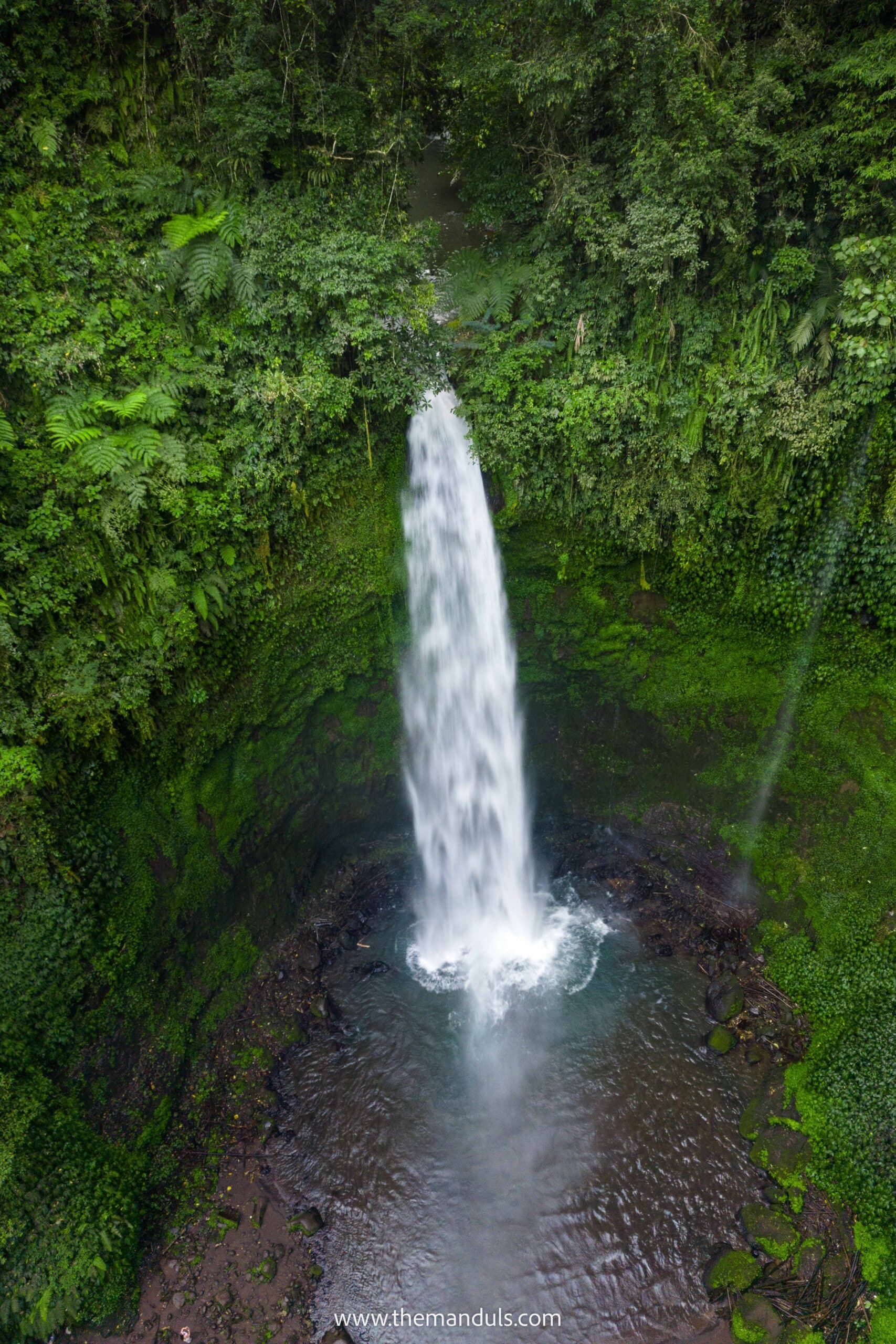
You can cool off in the water. Do not try to stand directly under the waterfall. The stream is extremely strong, and there’s also a risk of falling stones or branches from above.
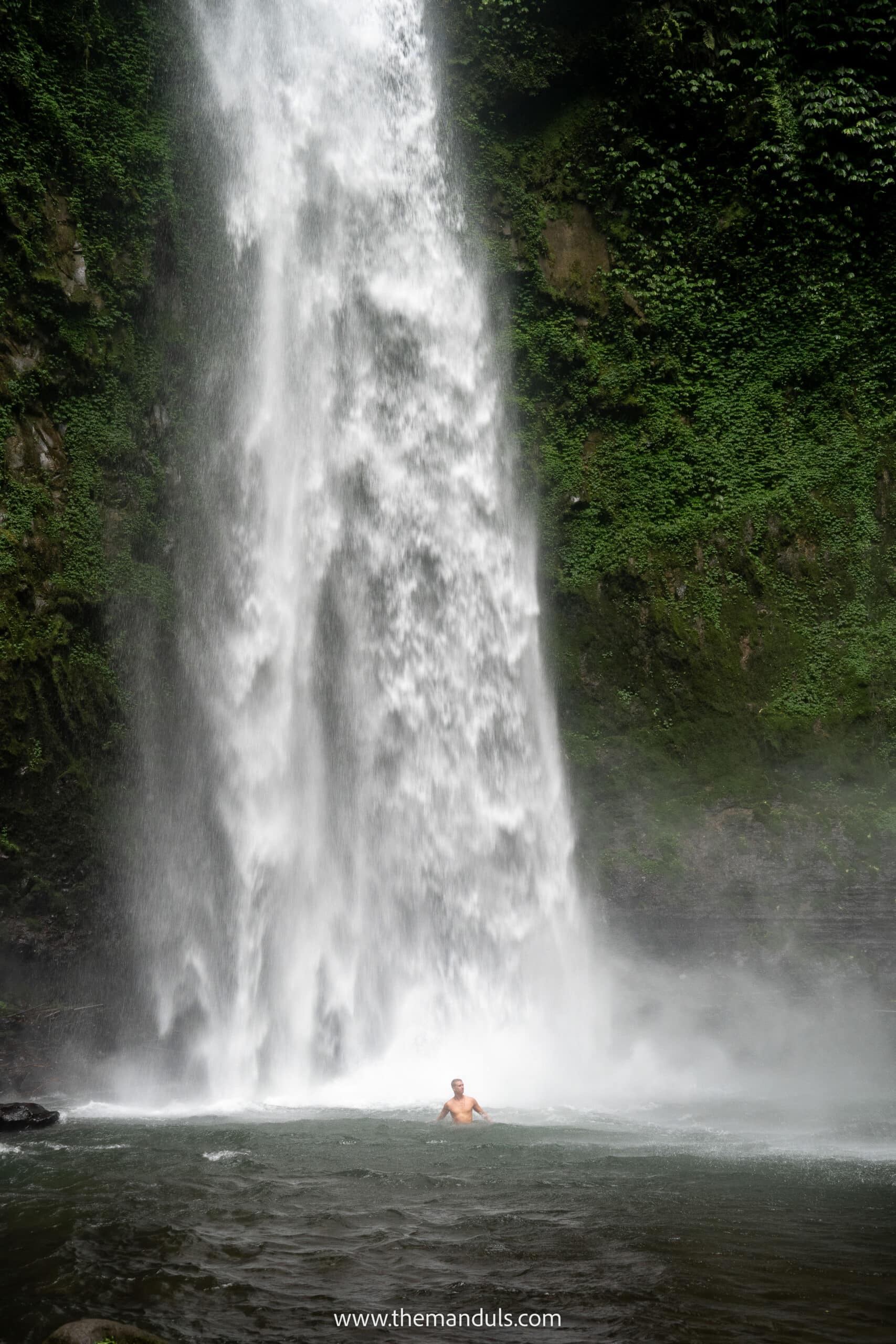
From the parking area, the trail starts with a long staircase leading deep into the valley. It took us around 15–20 minutes to reach the bottom.
Facilities: toilets, small drink/snack shops near the parking lot, and a small shop with coconuts and cold drinks near the start of the trail. There are no facilities down at the waterfall.
Getting there: The easiest way is by scooter or private driver. Parking is 5,000 IDR. We don’t recommend Gojek/Grab as it’s far.
Top hotels in Ubud we’d book again
⭐️⭐️⭐️ Blue Karma Dijiwa Ubud (Our Top Pick) – Peaceful boutique resort blending Balinese charm with elegant design.
⭐️⭐️ Tejaprana Bisma – Luxurious hillside retreat with private pools and tranquil forest views.
⭐️ Villa D’Uma – Simple, cozy villa stay offering great value and a quiet pool setting.
North Bali Waterfalls from Ubud: Are They Worth the Trip?
Yes — but only if you’re ready for a long day on the road. North Bali waterfalls are bigger, greener, and often feel more adventurous than the waterfalls close to Ubud, but they’re not the best choice if you only have half a day or want easy logistics.
From Ubud, we’d treat North Bali as a separate full-day trip, not something to squeeze into a normal Ubud waterfall route. The drive is longer, the roads are slower, and you’ll enjoy it much more if you don’t rush.
If you don’t want to deal with transport, route planning, and long scooter rides, this North Bali tour combines Sekumpul Waterfall, Banyumala Waterfall, and Jatiluwih Rice Terrace in one day, with pickup included and an 8-hour itinerary listed on GetYourGuide.

Banyumala Twin Waterfall
Entrance Fee: 50,000 IDR
Opening Hours: 8 AM – 6 PM
Distance from Ubud: 56 km
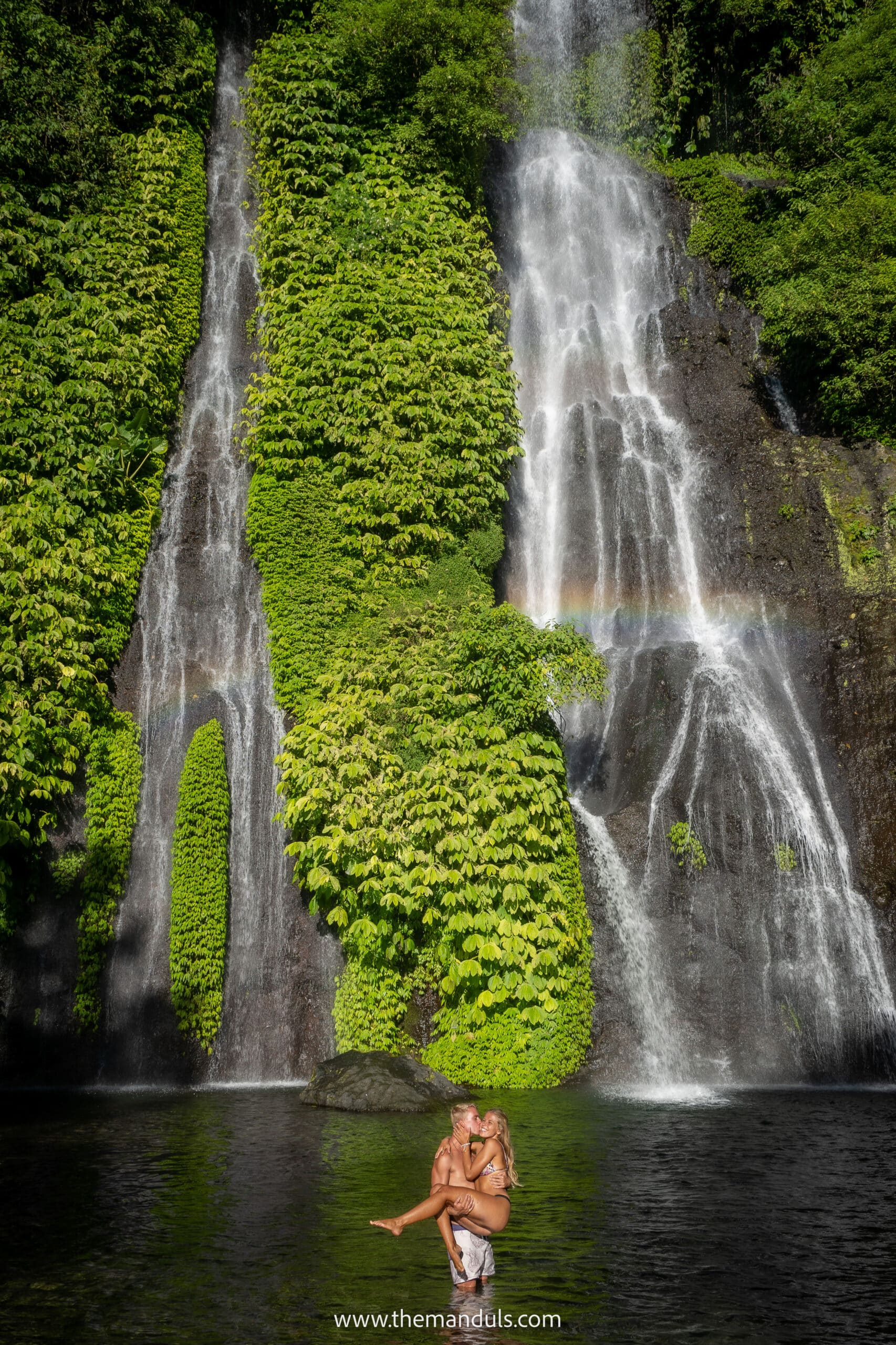
Banyumala is worth the trip if you want a calmer North Bali waterfall with a proper pool below it. It’s too far for a quick Ubud waterfall stop, but it works well as part of a full-day route with Banyu Wana Amertha or Gitgit.
The waterfall runs down a dark green cliff in two separate streams, which is where the “Twin Waterfall” name comes from. The area felt quiet when we visited, and it’s the kind of place where you can slow down for a while instead of only taking photos and leaving.
There’s a pool below the waterfall where you can swim, but the water was very refreshing when we visited early in the morning. On a hot sunny day, it would probably feel much better.
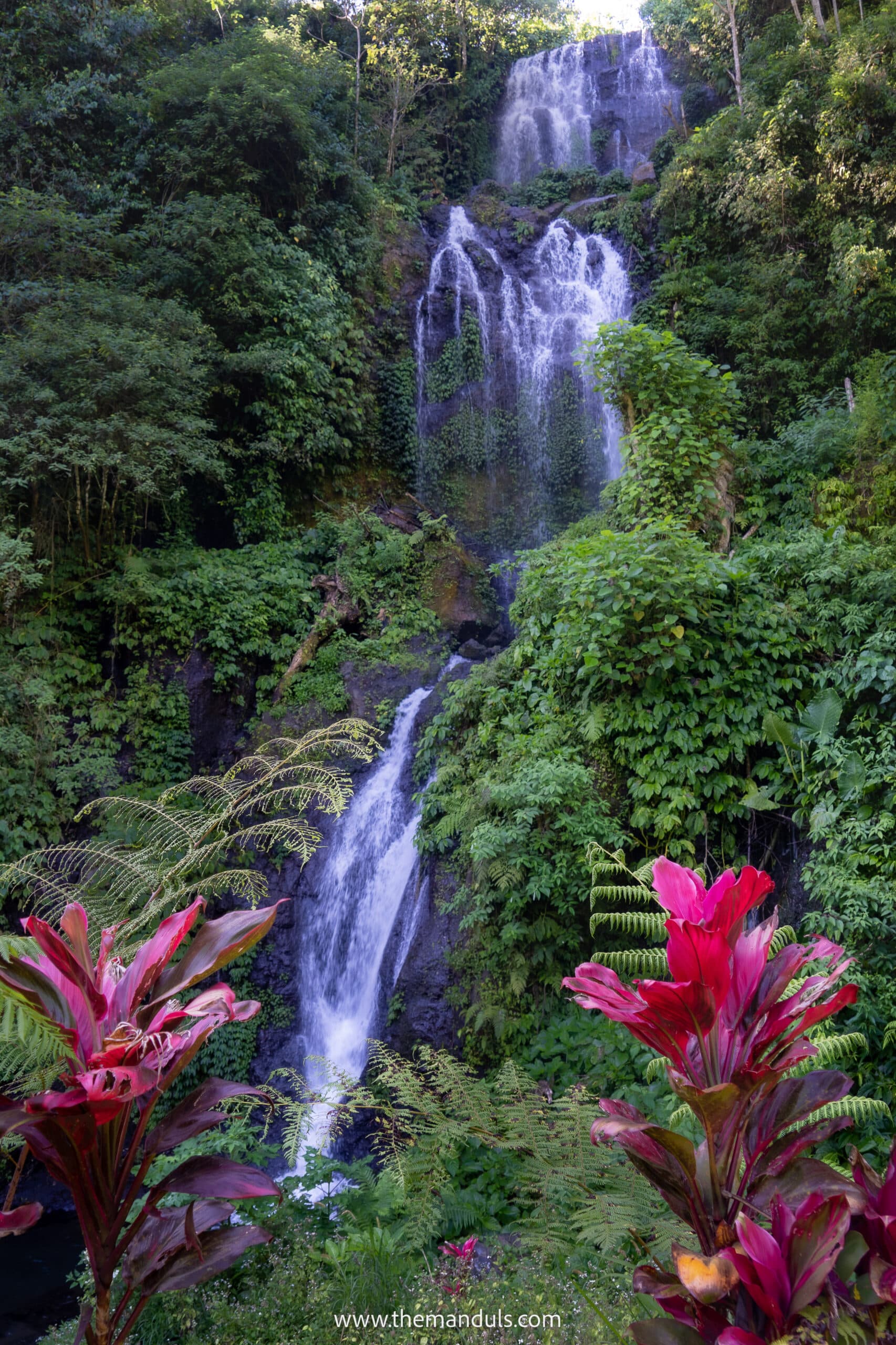
After visiting the main waterfall, we followed the same trail farther and found another waterfall in the back. It’s easy to find because there’s only one main path.
Facilities: small snack and drink shop near the entrance, a few wooden shelters near the waterfall, and limited facilities once you’re down in the valley.
Getting there: The easiest way is by scooter, private driver, or a North Bali waterfall tour.
Banyu Wana Amertha
Entrance Fee: 50,000 IDR
Opening Hours: 7 AM – 5 PM
Distance from Ubud: 55 km
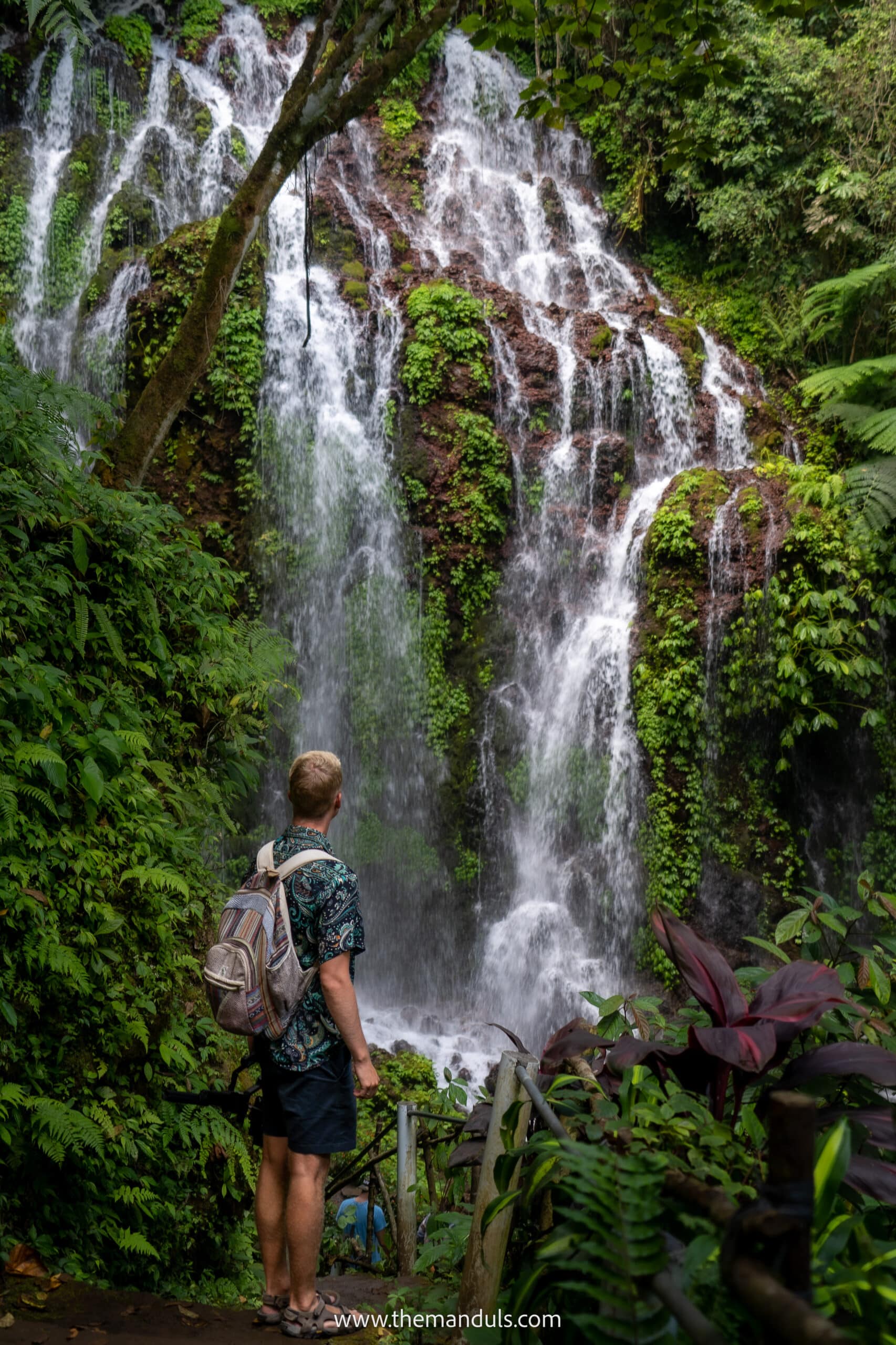
Banyu Wana Amertha is worth adding if you want several waterfalls in one stop. It’s far from Ubud, but after Nungnung, this was our second favorite waterfall area in Bali.
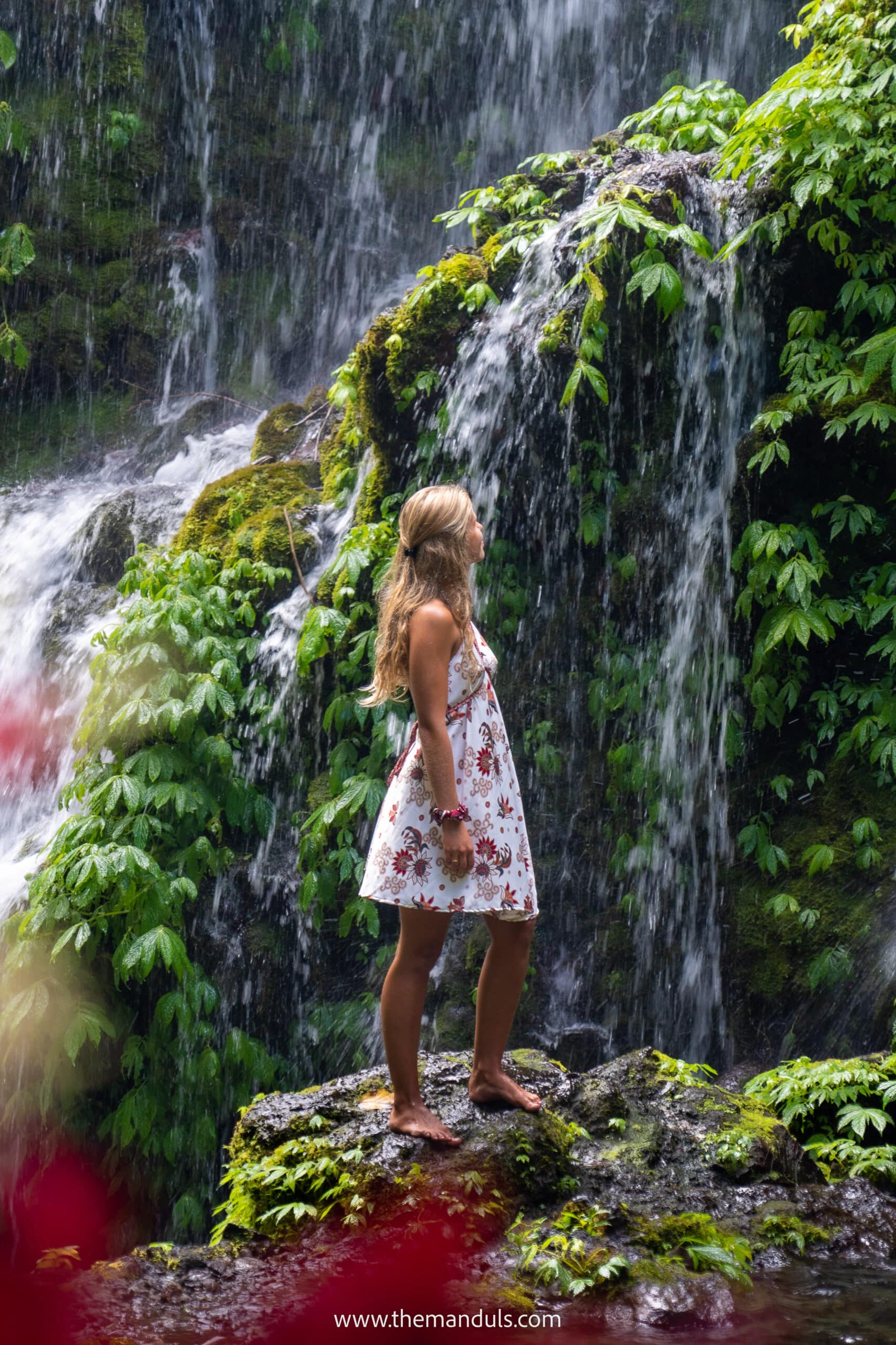
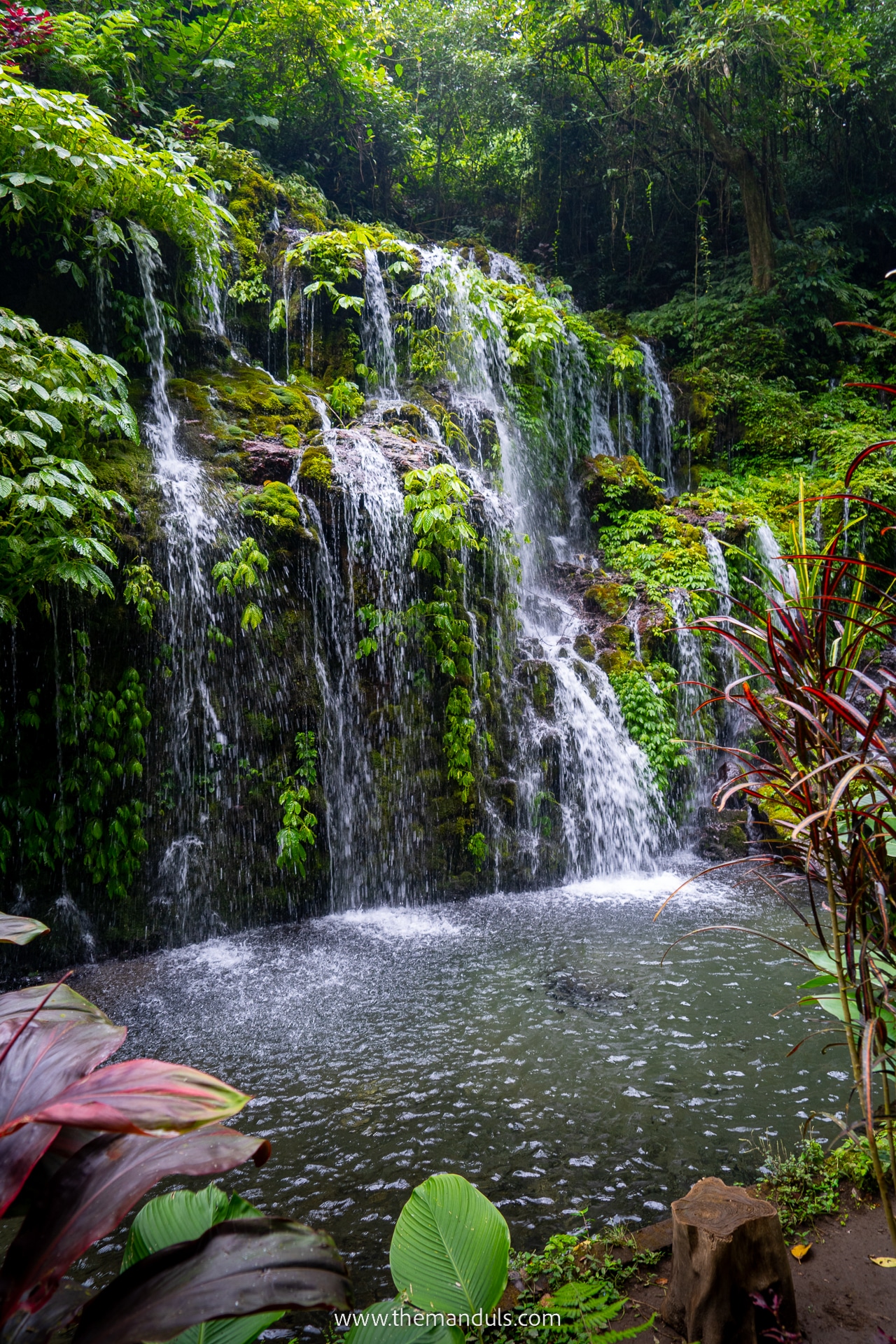
What makes Banyu Wana Amertha different is that you don’t visit just one waterfall. We visited three. The first was a smaller stream you could walk behind, while the second looked a little like Kanto Lampo, with water cascading down a reddish cliff.
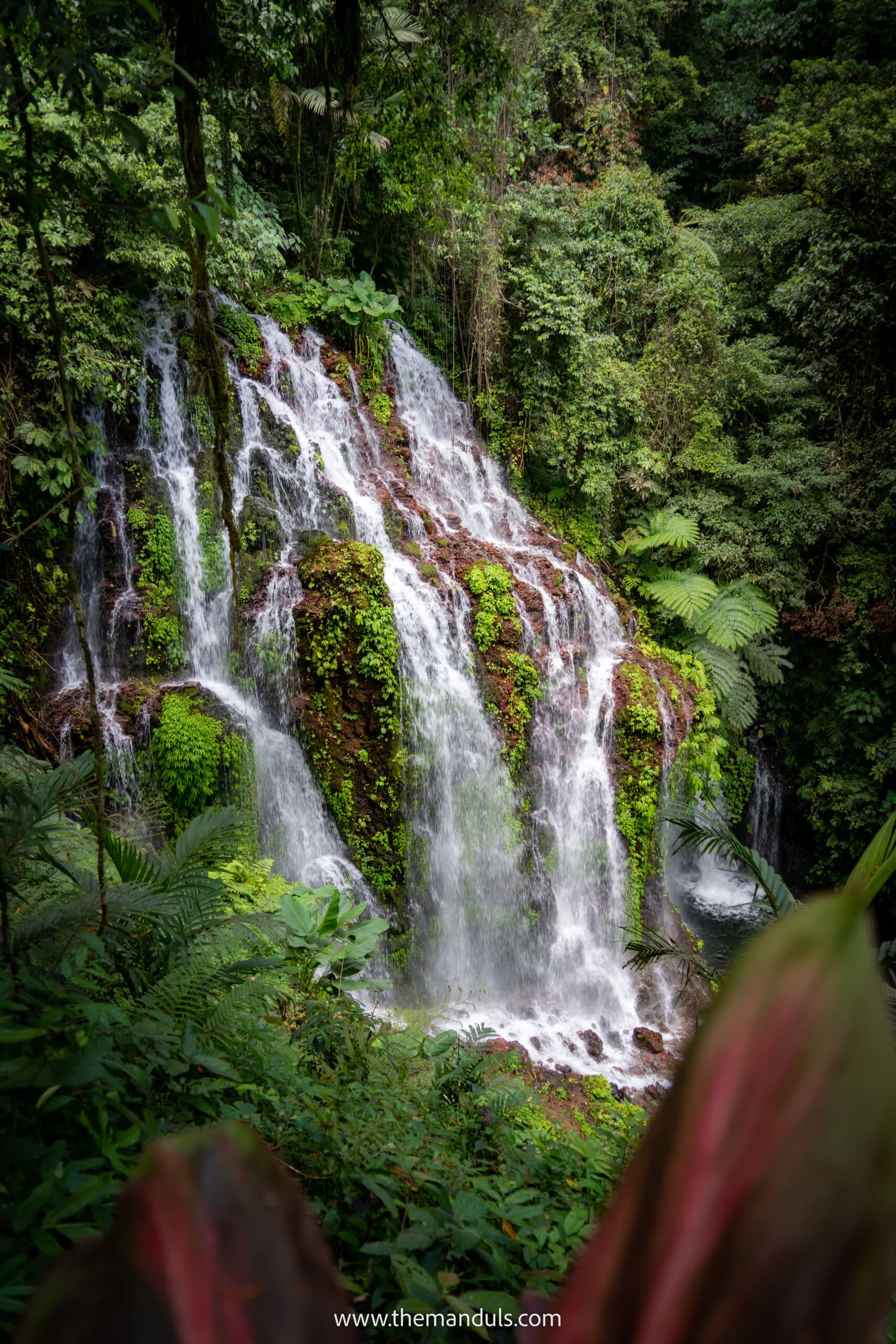
The last waterfall was the most impressive. It was much taller, with a wide cascade and enough spray in the valley that you should expect to get wet. You can also swim below it, which makes this one of the better North Bali stops if you want more than a quick photo.
Facilities: parking area, optional bike taxi, a few benches near the waterfalls, but very limited facilities once you’re down. We don’t remember seeing proper food or drink stalls, so bring water.
Getting there: The easiest way is by scooter or private driver. The road was narrow but in good condition.
After parking, we were offered a bike taxi down to the first waterfall for 25,000 IDR, but we walked instead. The trail was easy, slightly downhill, and took around 10 minutes.
Git Git Waterfall
Entrance Fee: 20,000 IDR
Opening Hours: 9 AM – 6 PM
Distance from Ubud: 62 km
Git Git is a good waterfall to add to a North Bali route because it’s easy to reach and sits close to the main road north of Lake Beratan. It’s not the best swimming waterfall, but it’s a simple, scenic stop that works well between Banyumala, Banyu Wana Amertha, and the northern coast.
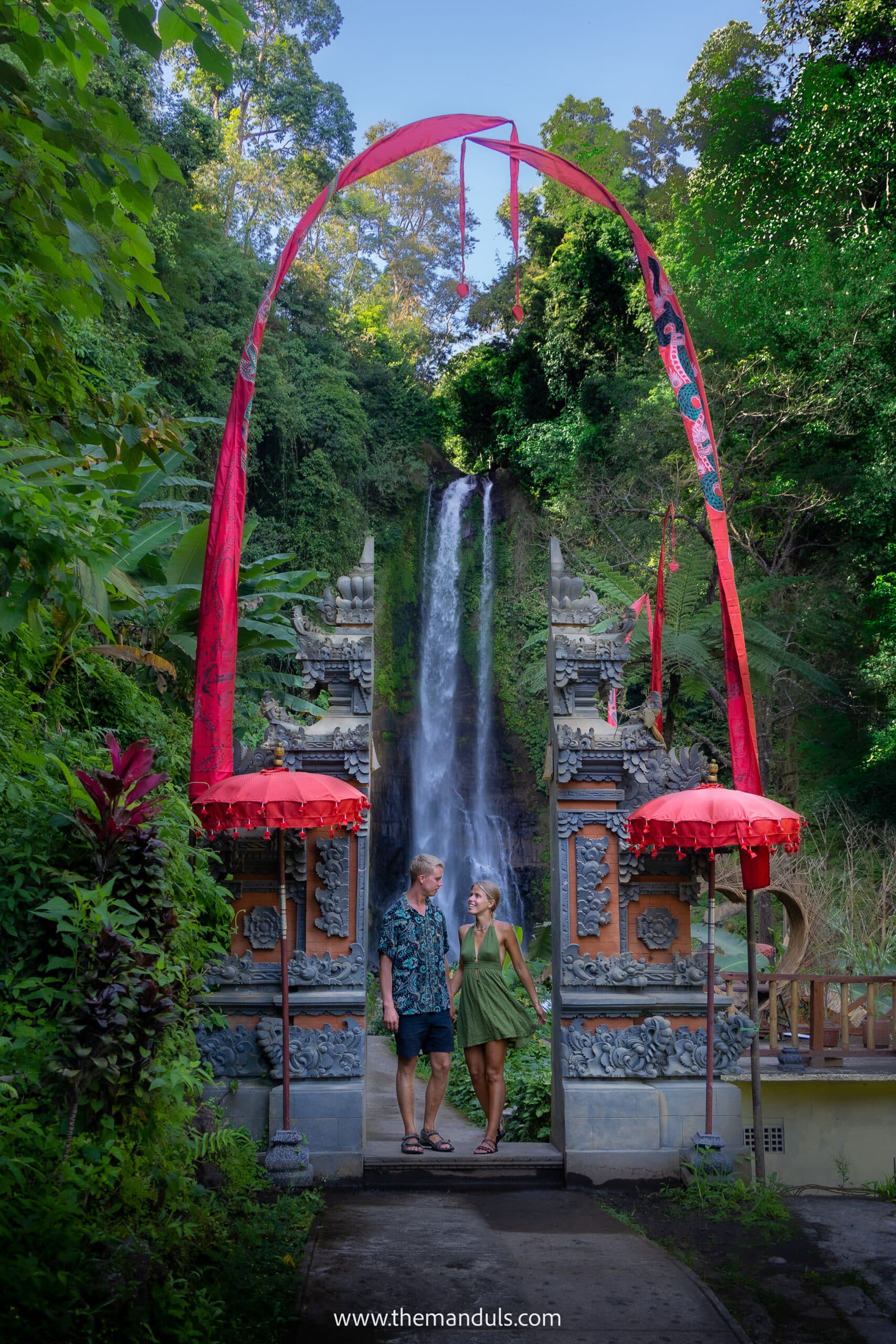
From the parking area, the path leads down through a small market and into the valley. Near the entrance, there’s a red gate and shrine, which makes the walk in feel more interesting.
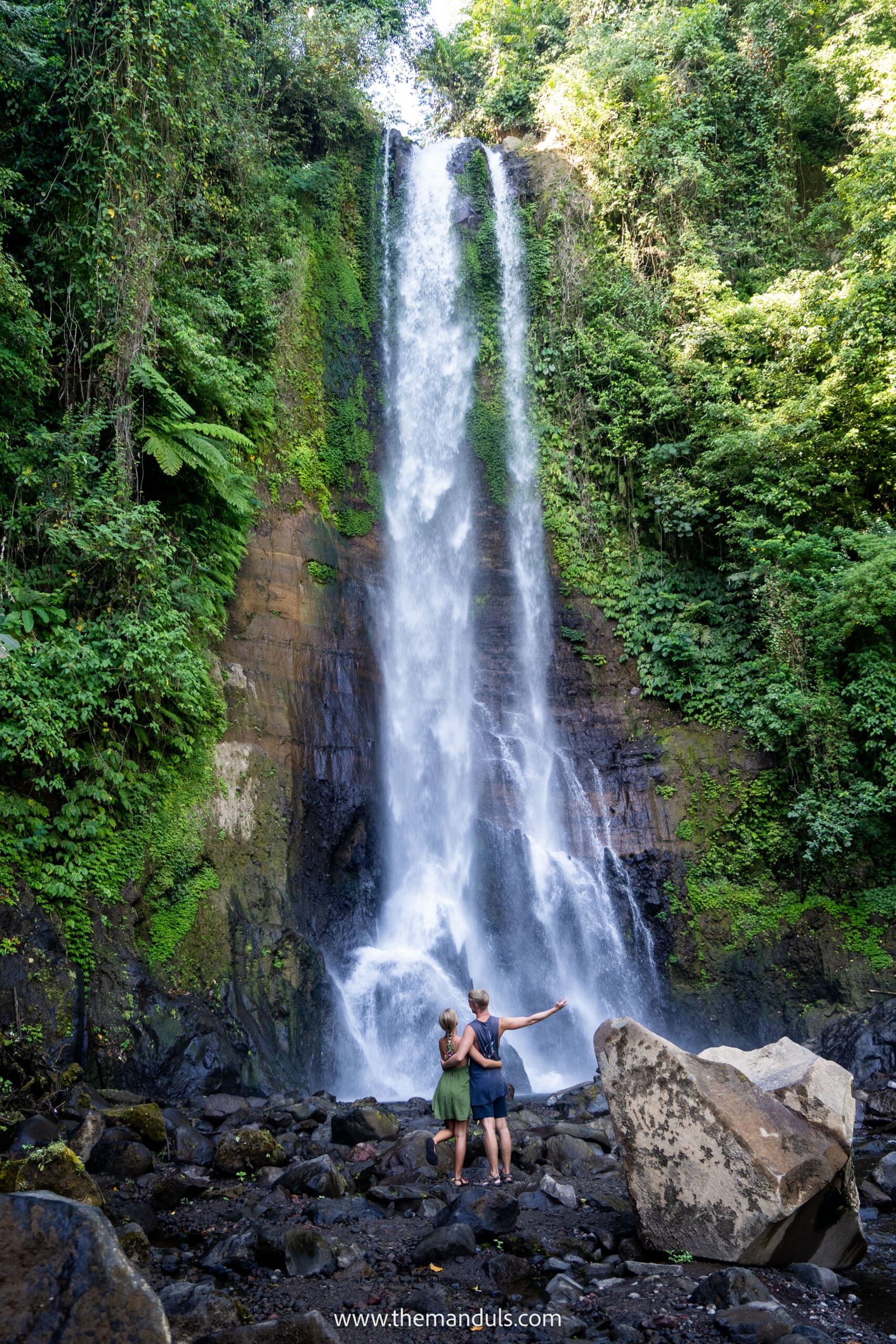
The waterfall itself is a tall, narrow stream dropping into a green valley. You can step into the small pool below it, but it’s too shallow for proper swimming, so we’d visit Gitgit more for the setting and easy access than for spending a long time in the water.
When we parked our scooter, we were offered a guide for around 150,000 IDR, but we continued on our own. You don’t need a guide for the main Gitgit Waterfall. Follow the stairs down instead, and you’ll find the small official ticket booth lower in the valley.
Facilities: souvenir market, small shops, and basic facilities near the entrance area. The market gives the visit a more touristy feel than some quieter waterfalls.
Getting there: scooter or private driver. Parking available for 2,000 IDR for scooter and 5,000 IDR for cars.
How to Visit Ubud Waterfalls
Scooter, Private Driver, or Tour?
Scooter: Best if you’re confident riding in Bali and want the cheapest, most flexible option. Scooter rental in Ubud usually costs around 70,000–100,000 IDR per day, depending on the bike and rental length. The downside is traffic, and longer rides back when you’re tired.
Private driver: Best if you want a custom route without riding a scooter or joining a fixed tour. This popular GetYourGuide option gives you a private car or minibus with an English-speaking driver for 10 hours, hotel pickup/drop-off, and the freedom to choose your own stops.
Ubud area tour: best if you want the easiest planned day from Ubud. This route combines Tukad Cepung, Tibumana, Kanto Lampo, Tirta Empul, and Tegalalang, so it’s a strong choice if you want waterfalls, a temple, and rice terraces without planning every stop yourself.
North Bali tour: best if you want bigger waterfalls without a long scooter day. This tour includes Sekumpul, Banyumala, and Jatiluwih Rice Terrace.
Where to stay in Ubud
Each corner of Ubud offers a different vibe — from the lively cultural center to the quiet rice fields of Tirta Tawar, the luxury jungle views of Sayan, and the village charm of Nyuh Kuning. Picking the right spot will shape your stay.
If you’re still choosing, head to our full guide on where to stay in Ubud — it’s packed with real tips and hotel picks we truly recommend.
Here are the ones we’d happily book again.
Best hotels in Ubud
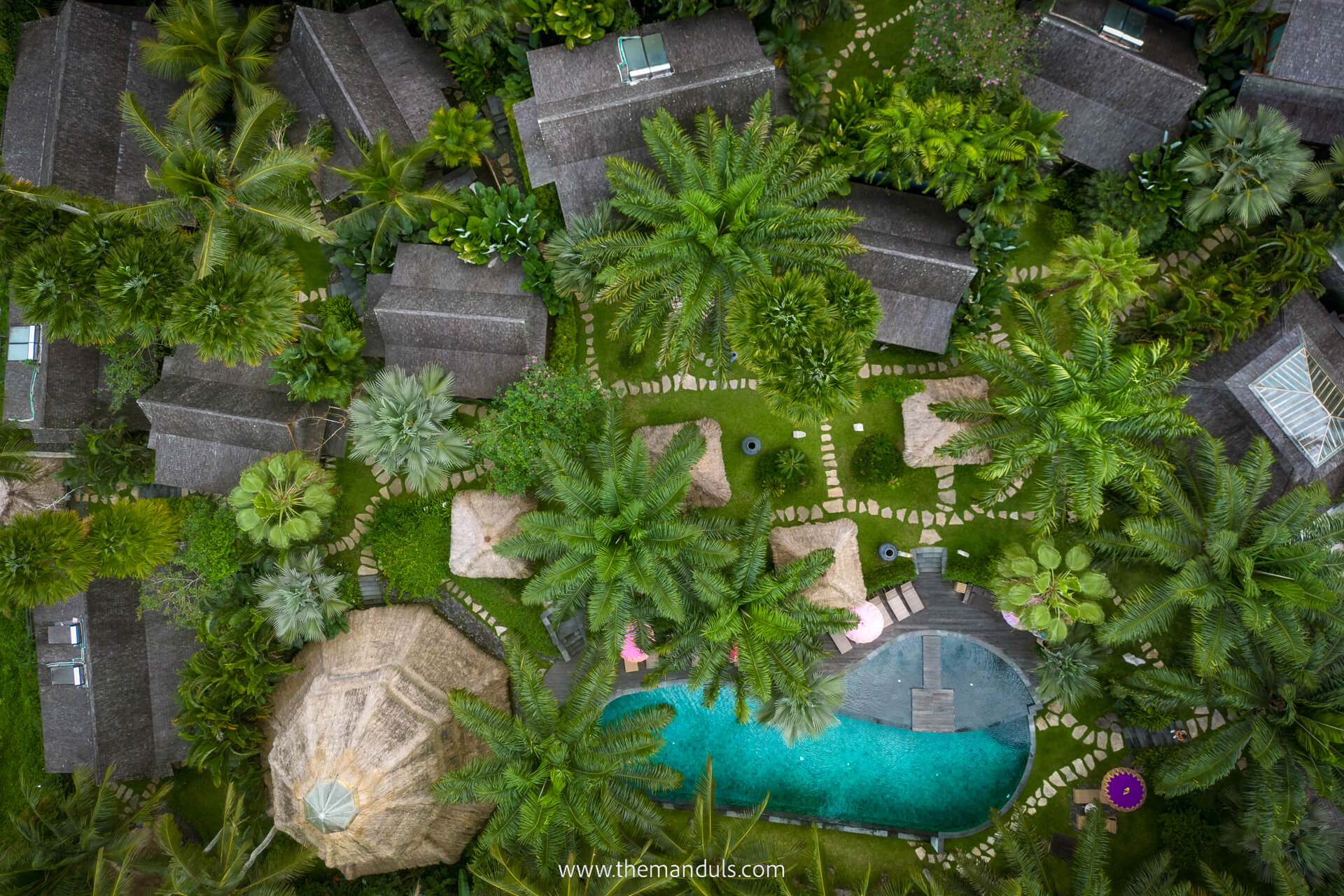
⭐️⭐️⭐️ Blue Karma Dijiwa Ubud (Our Top Pick) – A stunning boutique resort that instantly feels special. The villas combine natural design and comfort, surrounded by jungle and rice terraces. We loved waking up to jungle views and enjoying the fresh, flavorful food — everything feels calm, open, and perfectly cared for.
👉 Check current deals →
⭐️⭐️ Tejaprana Bisma – A refined yet laid-back hideaway near the center, perfect for those who want luxury without the crowds. Each villa has a private pool and garden, and the restaurant overlooking the infinity pool is the perfect morning spot. Peaceful, stylish, and run with genuine care.
👉 Compare prices →

⭐️ Villa D’Uma – A calm and affordable stay tucked away in Sayan, one of Ubud’s most peaceful areas. The rooms are cozy and private, each with a porch overlooking the lush garden and a lovely pool to unwind by. It’s simple, comfortable, and offers great value for anyone seeking a quiet escape.
👉 See latest prices →
FAQ
Swimming is generally safe only when the water is calm, the pool is not too close to the main drop, and there are no warning signs. Conditions can change after rain, so always check the water before entering.
We’d avoid swimming directly under strong waterfalls where the water pressure is intense and there can be falling stones or branches.
Bring a swimsuit, quick-dry towel, water shoes or sandals with grip, cash for entrance fees, and a dry bag if you’re carrying a phone or camera.
We’d also bring water, sunscreen, and a change of clothes if you’re visiting more than one waterfall in a day. Some waterfalls have basic shops, but we wouldn’t rely on them for everything.
You don’t strictly need them, but they help. Many paths are wet, rocky, or slippery, and at places like Kanto Lampo, you’ll walk through water before reaching the main photo area.
If you only bring sandals, choose something with grip. Flip-flops are not ideal on stairs or muddy paths.
Yes, the popular ones can get crowded, especially Kanto Lampo, Tibumana, and Tegenungan. The busiest time is usually late morning and early afternoon when tours arrive.
For a quieter visit, go early and choose fewer waterfalls instead of rushing between the most popular stops.
Final Thoughts: Which Ubud Waterfalls Are Actually Worth It?
The biggest mistake is trying to visit too many waterfalls in one day. On the map, it looks easy, but once you add traffic, stairs, swimming, changing clothes, and photo stops, even three waterfalls can feel like enough.
That’s why we’d plan the day around the experience you actually want. Choose Tibumana if swimming matters most, Kanto Lampo if you want photos, Nungnung if you want the most powerful waterfall, and Beji Griya if you want something more cultural.
If we did this again, we’d keep the route simple and leave more time at the places we liked instead of rushing to add “just one more” stop.