
This article contains affiliate links. Learn more in our affiliate disclosure.
When we first started planning our trip to the Dolomites, we had no idea how much timing would shape the entire experience. We assumed summer would simply be “the best,” but after visiting twice — once in peak summer and once in early autumn — we quickly realised that when you go here matters just as much as where you go.
Weather changes fast in the mountains, crowds can completely alter famous hikes, and even logistics like parking access and mountain hut openings depend heavily on the season. Visiting in August felt very different from hiking in late September — not better or worse, just different in ways we didn’t fully expect at first.
We’ve now experienced the Dolomites in high summer (August) and again in early autumn (late September), including hiking with our daughter Ema when she was seven months old.
Seeing how temperatures, trail conditions, crowds, and overall vibe shifted between these trips gave us a much clearer perspective on what each season actually feels like on the ground.
In this guide, we’ll help you find the best time to visit the Dolomites — based on real experience, practical planning, and what it’s genuinely like to hike, explore, and travel here in different seasons.
And if you’re already planning your trip, it pairs perfectly with our guides on the best hikes in the Dolomites and where to stay in the Dolomites.
Key Highlights
🌦️ Seasons: Summer (hiking peak), Early autumn (shoulder season), Winter (ski season), Spring (transition period)
🌤️ Best months: June-October for hiking, December-March for winter sports
👥 Crowd levels: Very high in July–August at famous spots; noticeably quieter from mid-September onward
💡 Good to know: Temperatures change fast — cold mornings, warm midday, and chilly evenings are normal even in summer, so packing layers is non-negotiable
Quick Overview
The best time to visit the Dolomites is from late June to September, when hiking trails are accessible, mountain huts are open, and long daylight hours make exploring easy.
July and August offer the most reliable weather and long days, but they also come with higher prices and heavy crowds at popular spots.
For a quieter experience, September is a sweet spot — cooler air, fewer people on the trails, and easier parking, with the trade-off of more variable weather.
October can still be fantastic, especially for seeing larches turn bright orange, which completely transforms the landscape, but many mountain huts start closing, and some high-altitude trails may already be inaccessible.
Our Experience
We’ve visited the Dolomites twice, and the difference between August and late September completely changed how the trip felt.
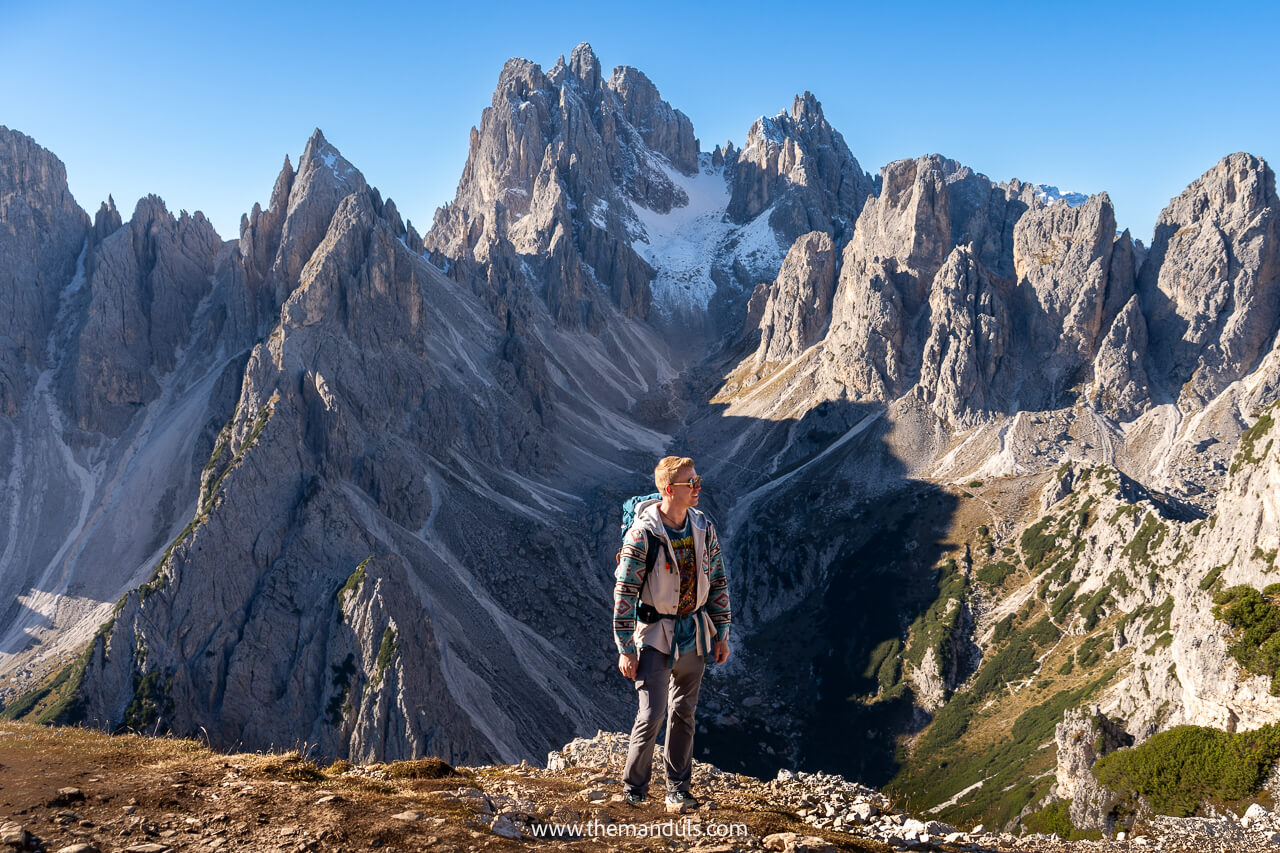
Our first visit was in August 2021, right in peak summer. Most days were sunny, with the occasional afternoon shower, and temperatures swung a lot throughout the day. Mornings were cold enough for layers, by late morning we were hiking in shorts and short-sleeve t-shirts, and evenings were chilly again.
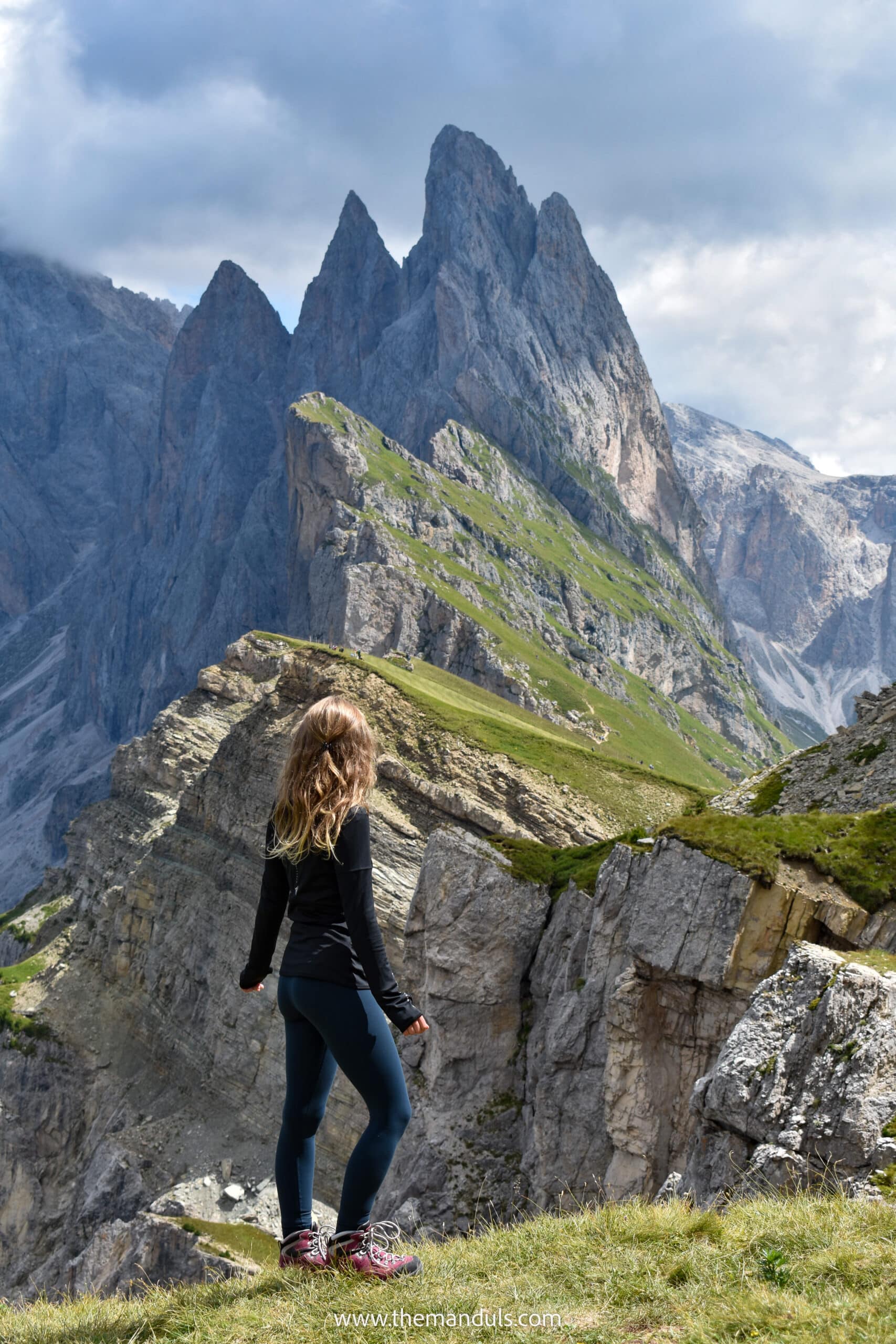
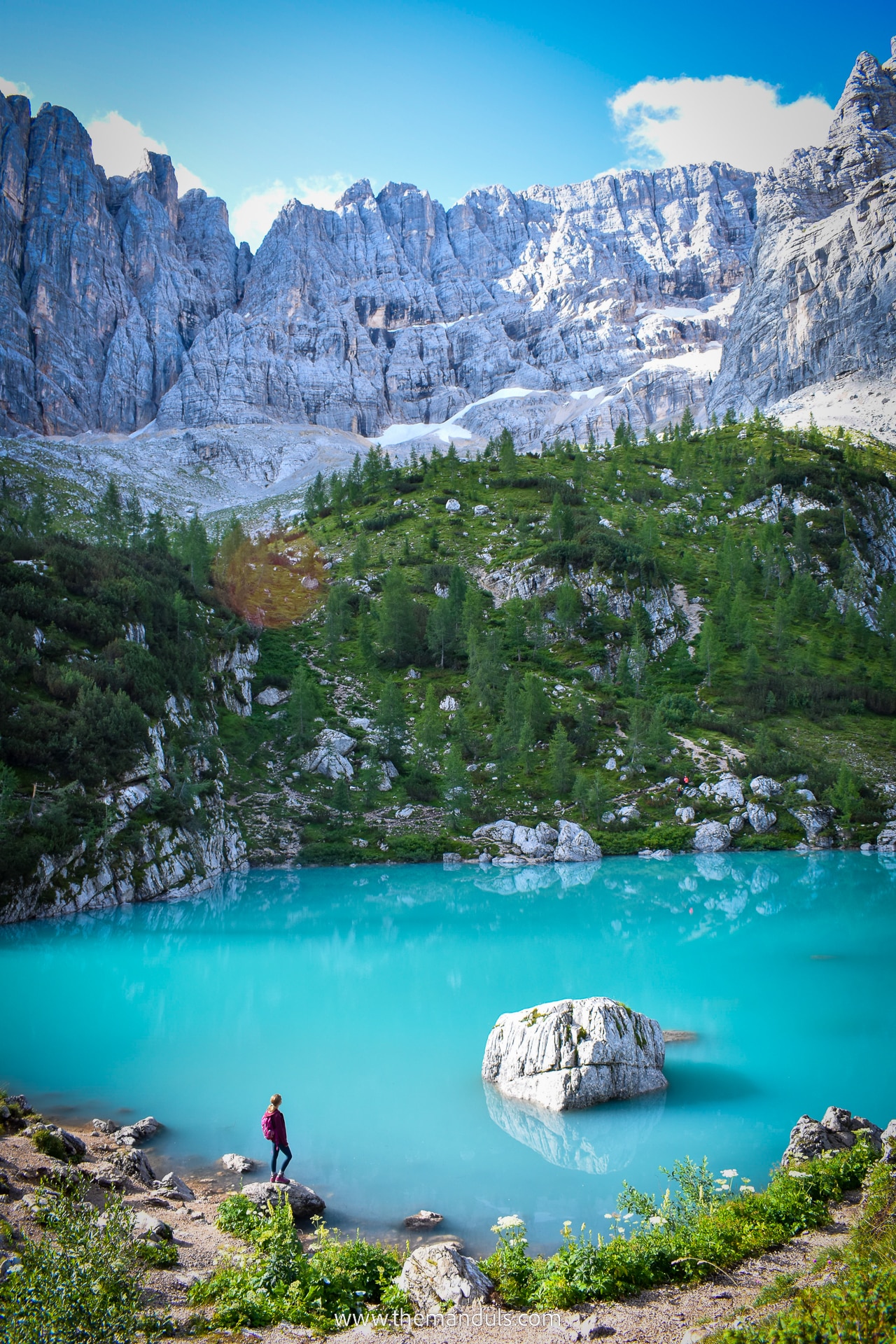
Packing layers wasn’t optional — it was essential. The upside? Long days, fully open mountain huts, and perfect conditions for long hikes. The downside was crowds. Places like Lago di Sorapis, Lago di Carezza, Seceda, and Tre Cime were extremely busy, but starting at sunrise made a huge difference.
Early starts gave us quiet trails and that raw alpine feeling before everyone arrived. Accommodation prices were noticeably higher, but overall we genuinely loved hiking in summer.
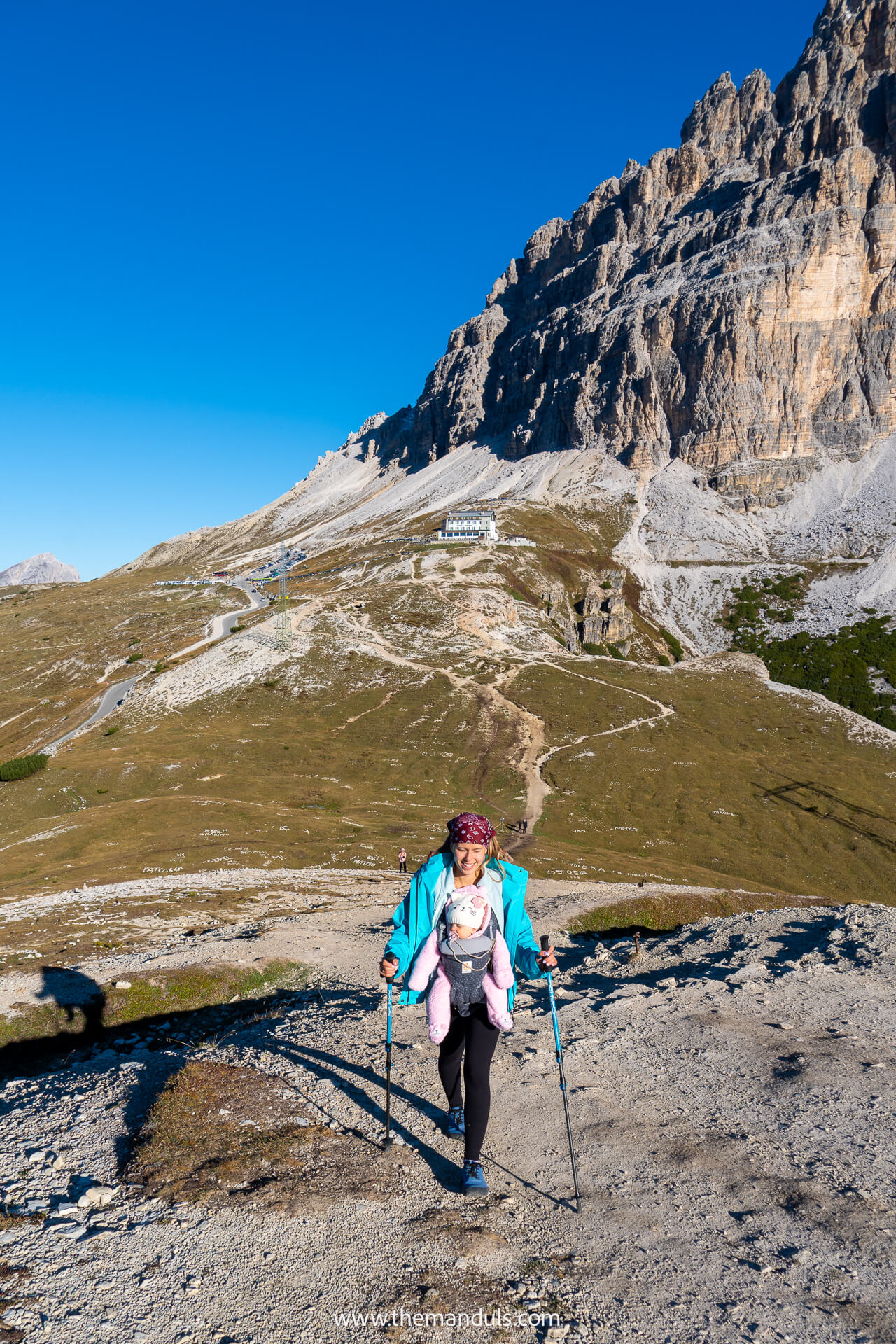
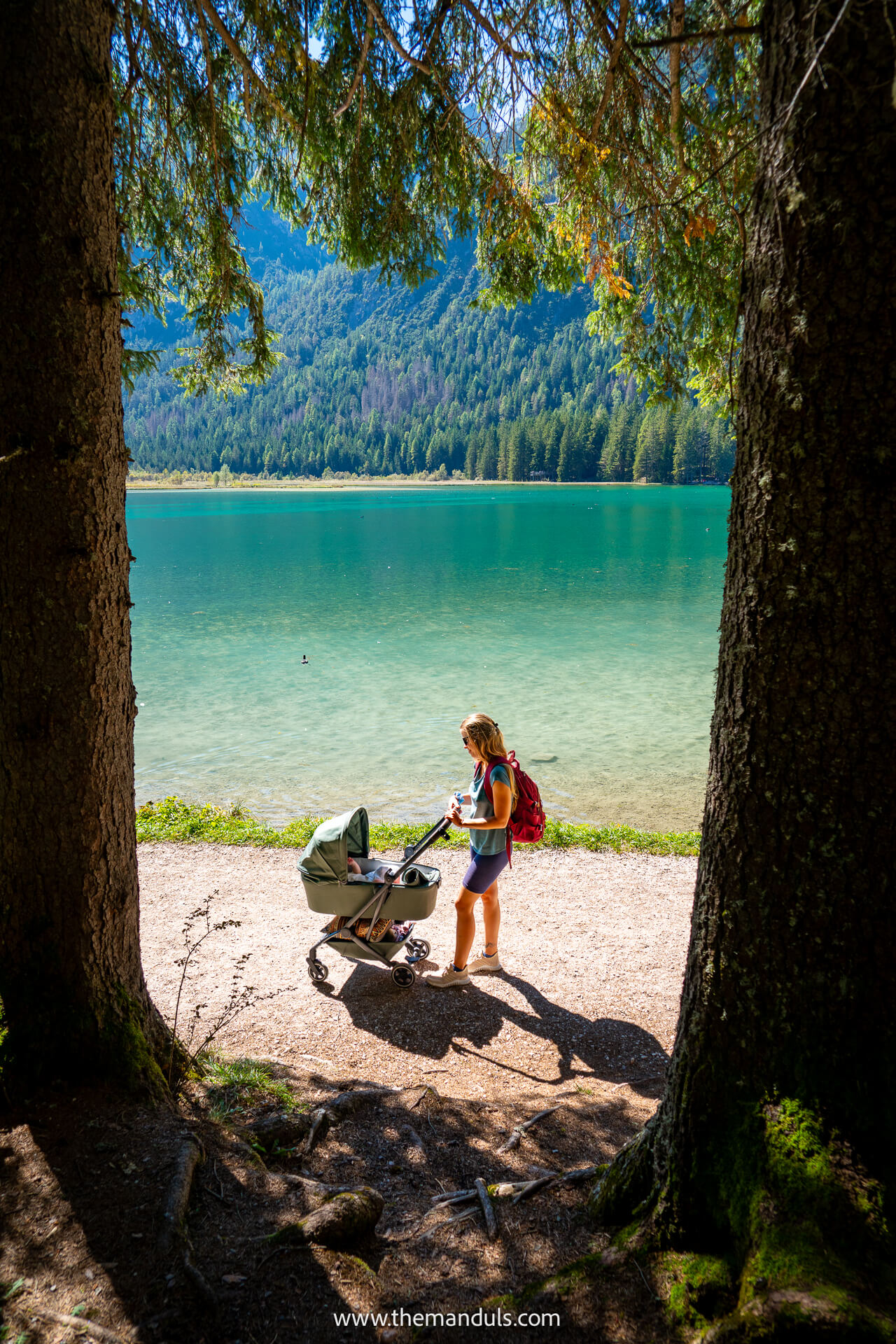
Our second visit was in the second half of September 2025, this time hiking with our daughter Ema when she was seven months old. The weather was cooler and more unpredictable — we had a few warm, sunny days where shorts still worked, mixed with several rainy days and even freezing conditions toward the end of the month.
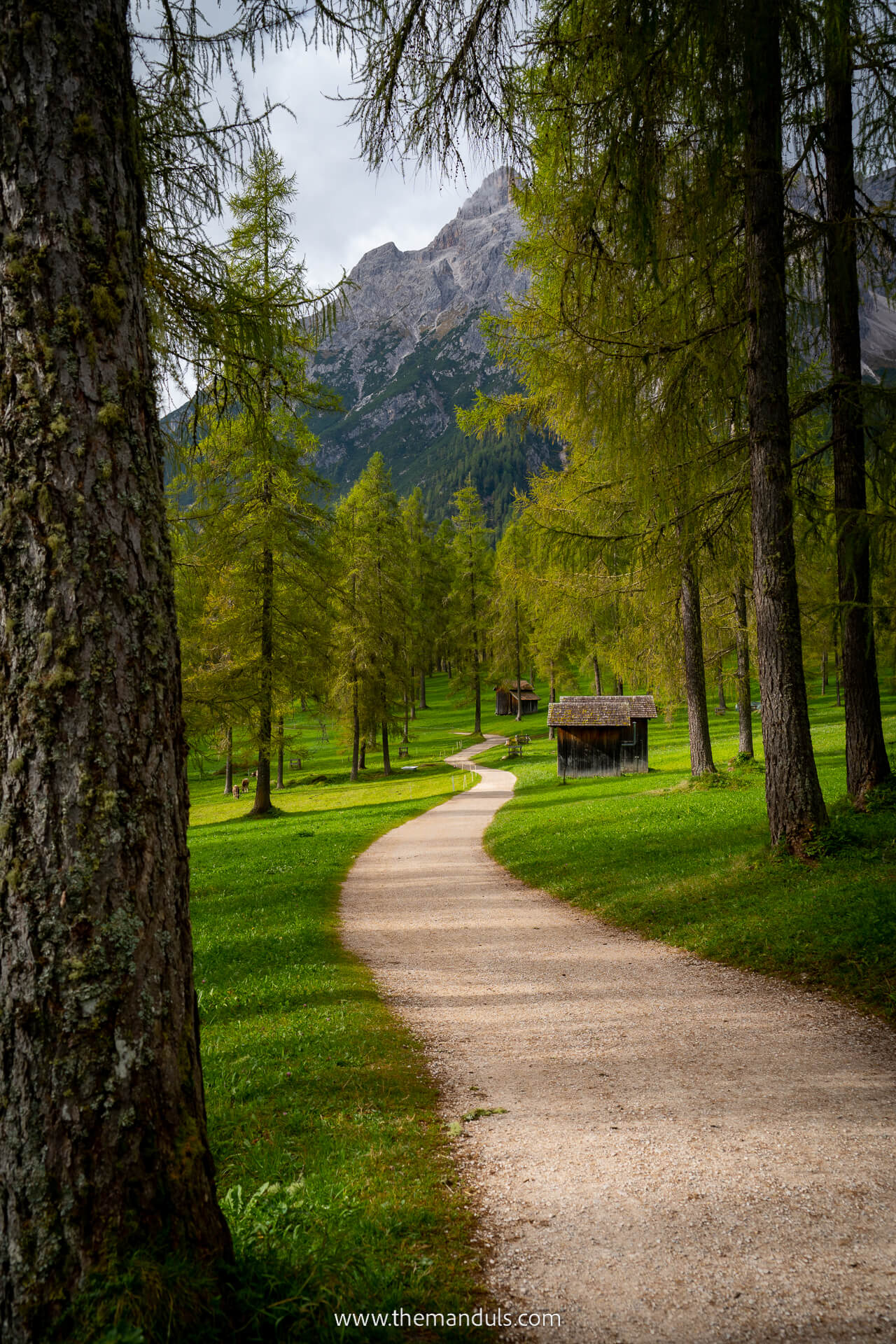
We packed more layers than in summer, including merino, and were very glad we did. What stood out most was how much quieter everything felt. Trails were far less crowded, and places like Lago di Braies or Val Fiscalina no longer had driving restrictions, which made mornings much easier without advance parking reservations.
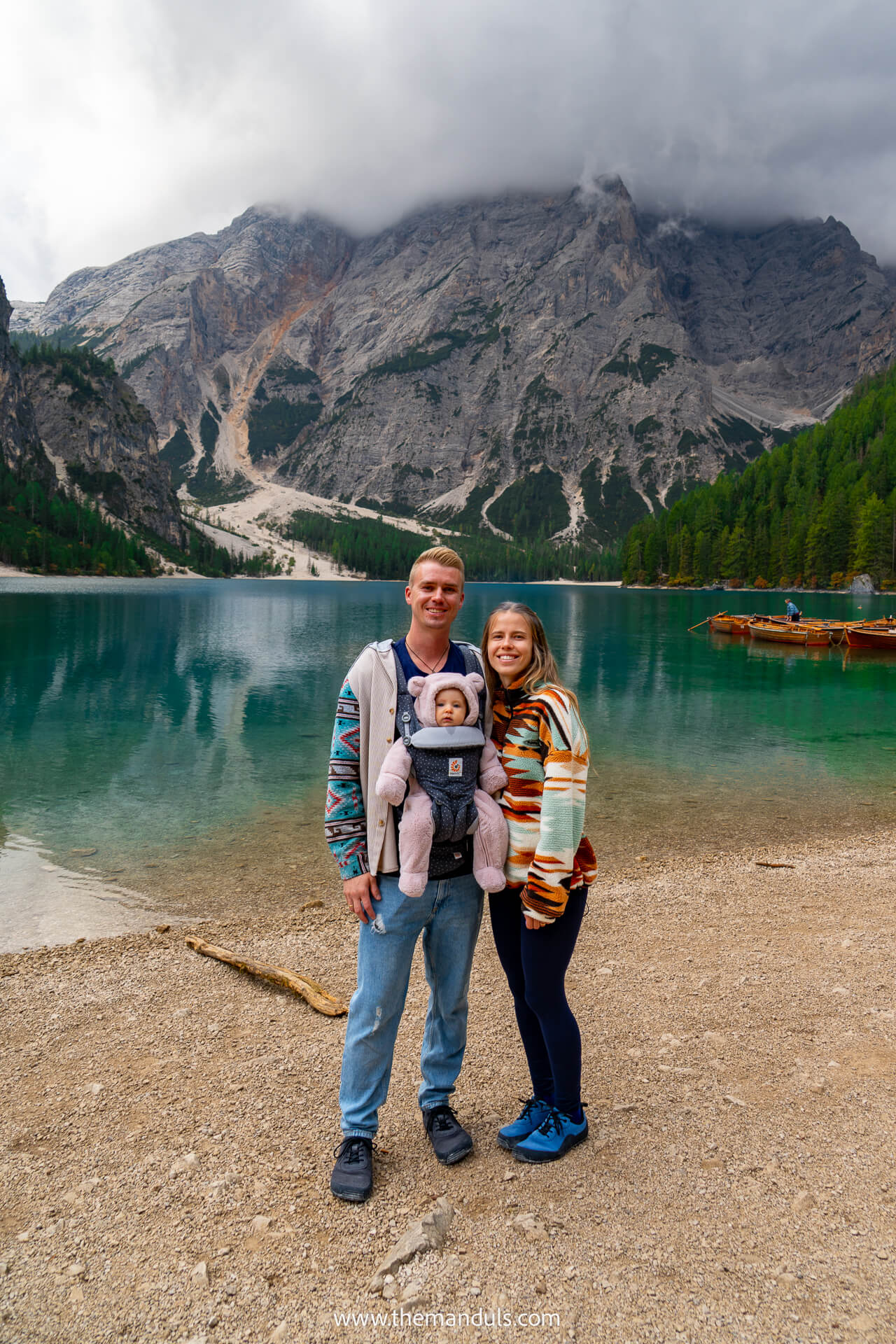
Cooler air also made hiking more comfortable — less sweating, but sunscreen was still a must since the mountain sun is strong year-round.
Hiking with a baby worked surprisingly well, especially in September, when temperatures were more forgiving and the pace naturally slowed.
Next time we’d love to visit in mid-October, when larches turn orange, and the landscape looks completely different — knowing that this comes with trade-offs like closed huts and limited trail access.
Best Time to Visit Dolomites
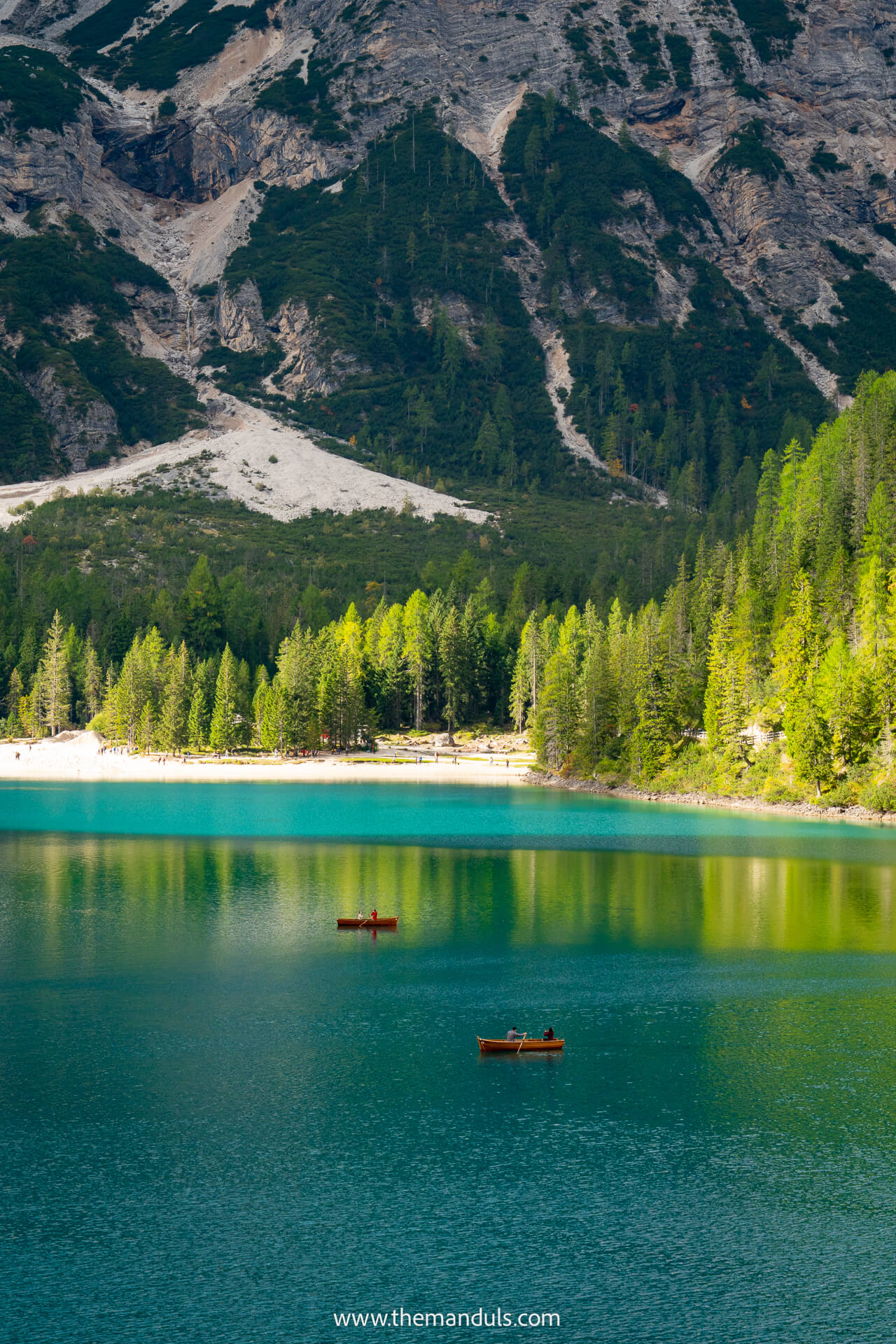
The best time to visit the Dolomites depends largely on what you want to do. Hiking, photography, road trips, and winter sports all peak in different seasons, and conditions can change quickly with altitude.
Below is a realistic breakdown of each season, starting with spring and moving through to winter, so you can match the timing to how you actually want to experience the mountains.
Spring (April – Early June)
Spring in the Dolomites is a transition season. Snow is slowly melting, valleys start turning green, and days get longer, but higher-altitude trails are often still snow-covered or muddy. Hiking options are limited, and many mountain huts remain closed until mid or late June.
Weather is unpredictable. You can get sunny, mild days in the valleys, but cold temperatures and snow higher up. This is not the best time for classic Dolomites hikes, but it can work if you’re flexible and focus on lower elevations.
Crowds are low, prices are better than in summer, and the region feels calm and local. That said, if hiking is your main reason for coming, spring usually feels a bit early.
✅ Pros: Fewer people, lower prices, peaceful atmosphere
❌ Cons: Limited hiking, closed huts, snow at altitude
Monthly overview:
- April: Quiet and scenic, but snow lingers; very limited hiking
- May: Gradually improving conditions, still hit-or-miss at higher elevations
- Early June: Some trails reopen, but summer season isn’t fully underway yet
Summer (July – August)
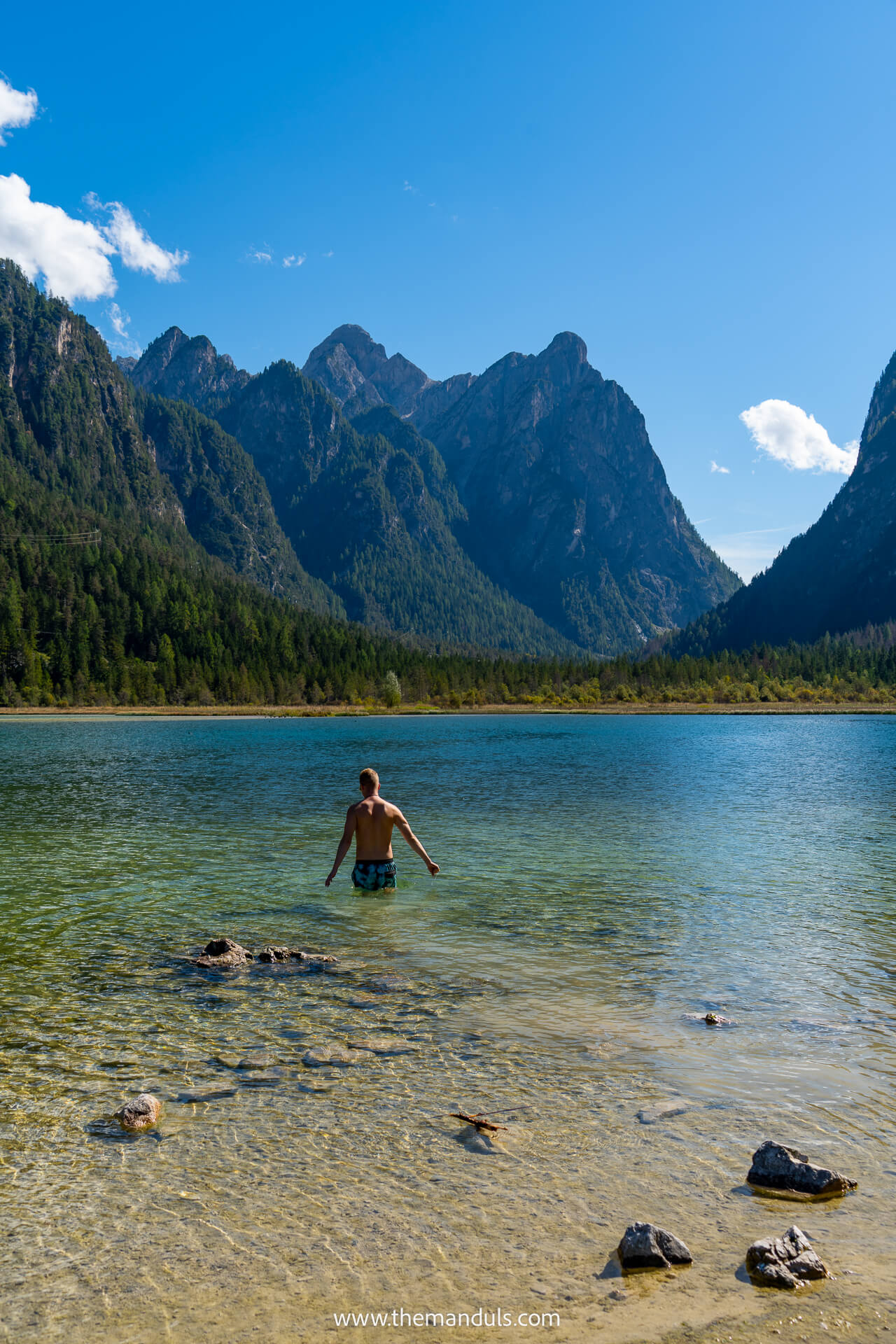
Summer is peak season in the Dolomites, and for good reason. This is when hiking conditions are at their best, mountain huts are fully open, and long daylight hours make it easy to explore without rushing.
Weather is generally stable, with mostly sunny days and occasional afternoon rain showers. Mornings can be cold — especially at higher elevations — but temperatures rise quickly, and by late morning it’s often warm enough for shorts and short-sleeve t-shirts. Evenings cool down again, so layering is essential.
We found ourselves changing outfits multiple times a day, and packing extra layers was unavoidable.
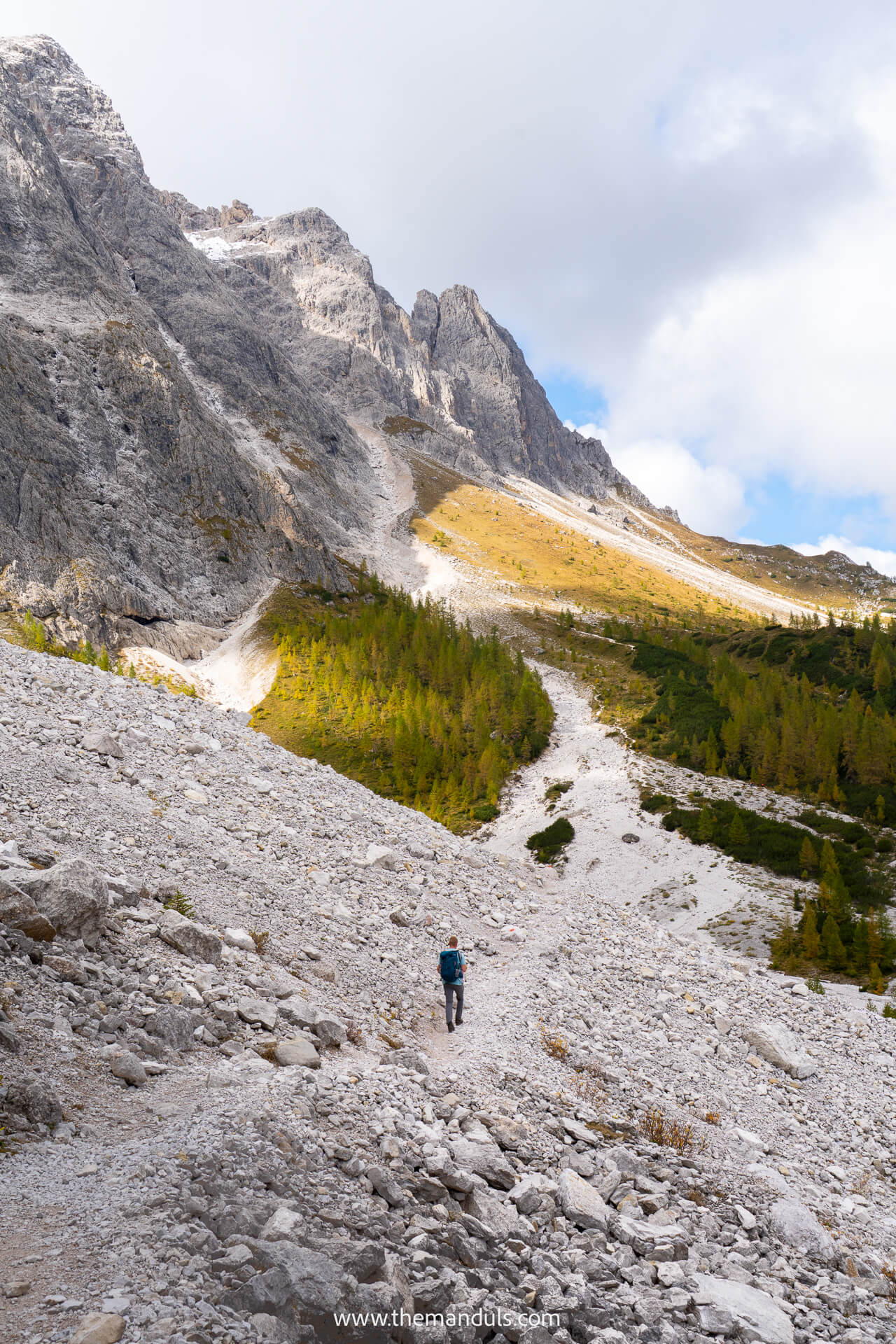
Crowds are the biggest downside. Starting hikes at sunrise made a huge difference for us — quieter trails, better light, and a much more enjoyable experience. Accommodation prices are at their highest during these months, and booking well ahead is necessary.
Despite the crowds, we genuinely loved hiking in summer. Long days gave us flexibility, conditions were mostly reliable, and everything simply worked.
⭐️ Best for: Hiking, via ferrata, first-time visitors, long outdoor days
✅ Pros: Open huts, long daylight, mostly reliable hiking conditions
❌ Cons: Heavy crowds, higher prices, busy parking areas, occasional thunderstorms
Monthly overview:
- July: Excellent conditions, slightly quieter than August, still very busy
- August: Peak season — longest days, best access, but the most crowded month
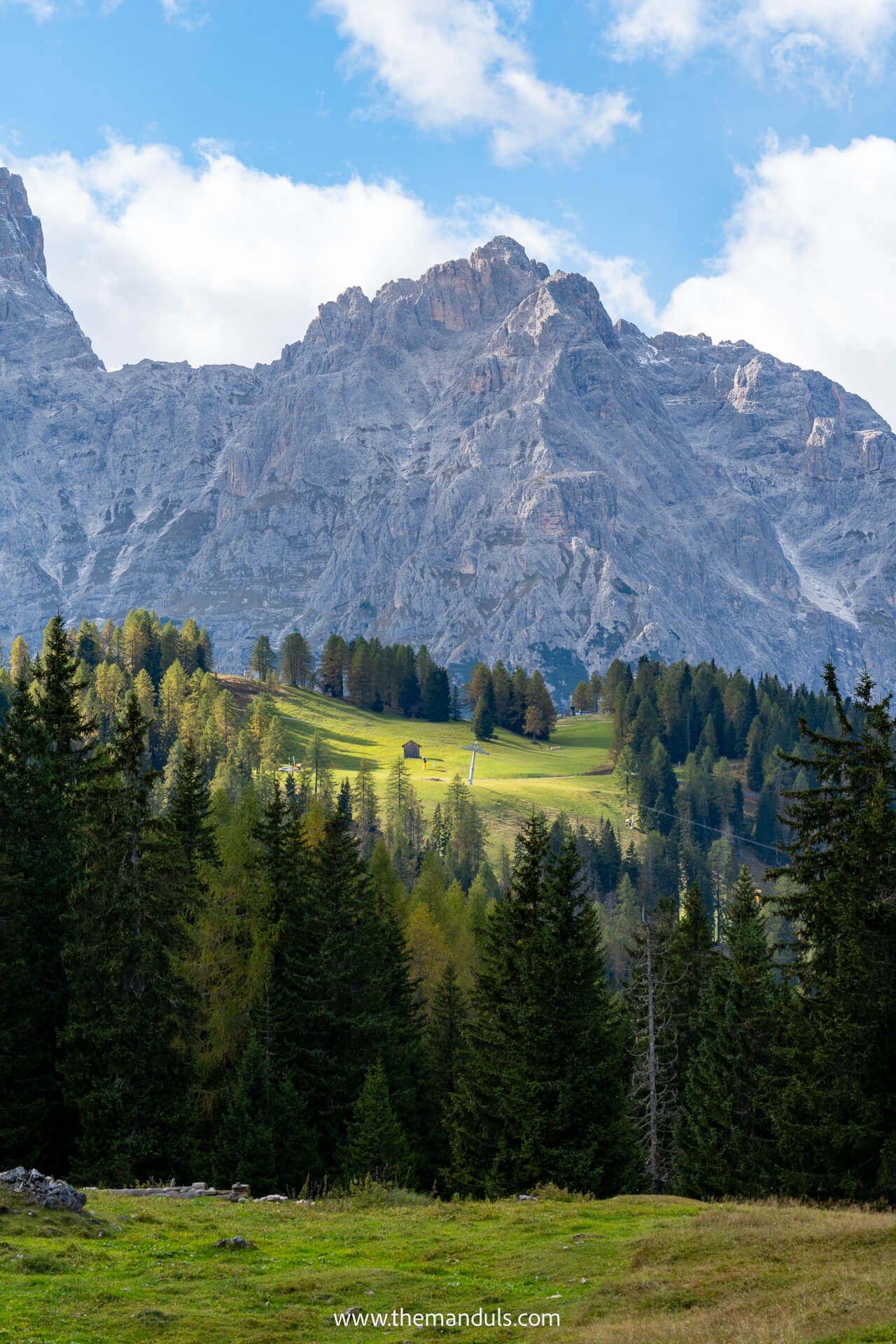
Autumn (September – October)
Autumn is a shoulder season in the Dolomites, and for us, it offered the best balance between conditions and atmosphere — with a few important trade-offs.
In September, the weather cools down noticeably compared to summer. Days can still be warm and sunny, but rain becomes more frequent, and temperatures drop quickly in the mornings and evenings.
We had several beautiful hiking days in short sleeves, mixed with rainy stretches and freezing conditions toward the end of the month. Snow is possible at higher elevations, so packing proper layers (including merino) is essential.
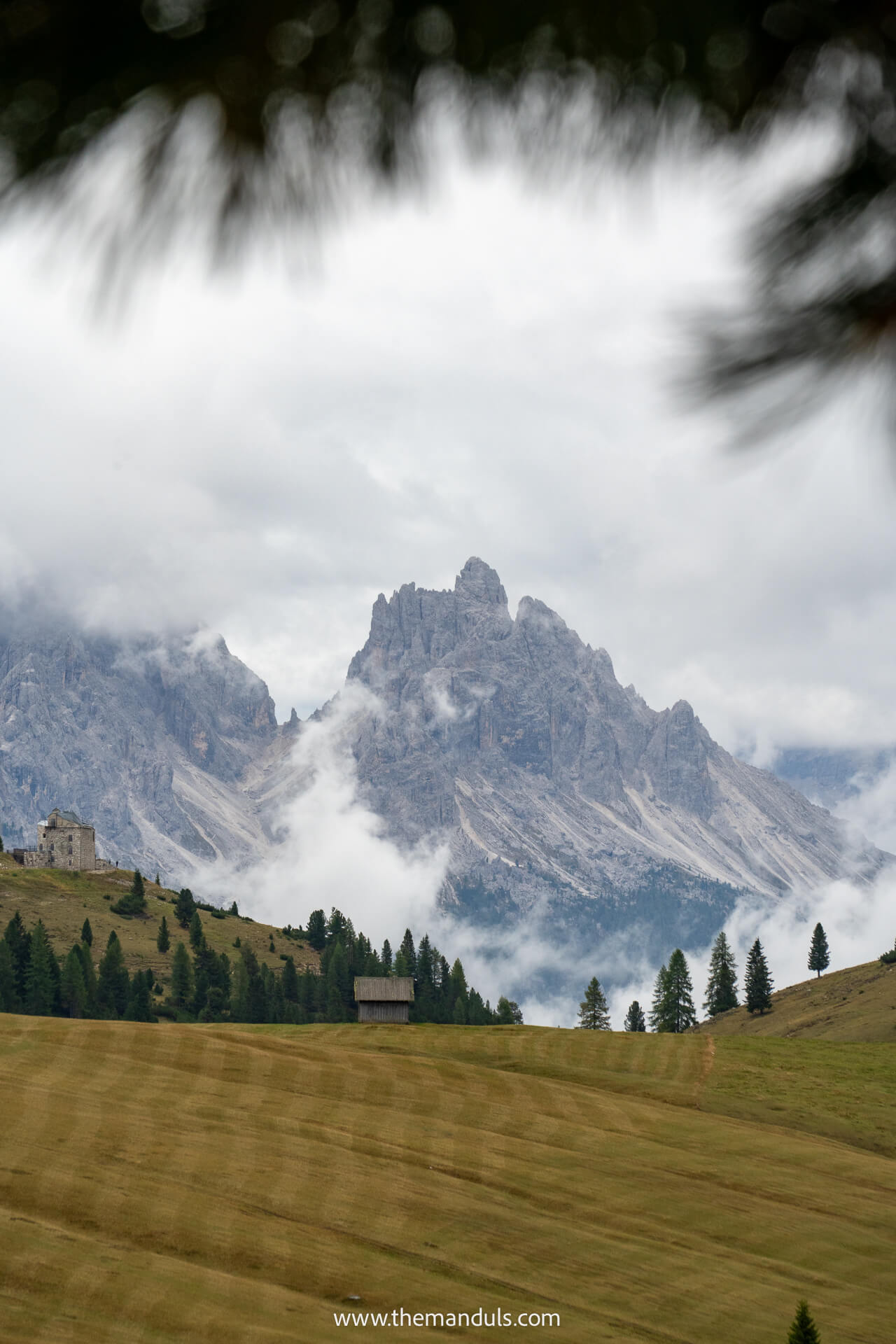
Cooler air also made hiking more comfortable — less sweating, better pace — though sunscreen was still a must, as the mountain sun stays strong year-round.
October is more limited but visually stunning. This is when larches turn bright orange, completely changing the landscape and making it one of the most photogenic times of the year.
However, it’s no longer full hiking season. Many mountain huts close, some high-altitude trails become inaccessible, and the weather can turn quickly. It’s a fantastic month for photography and scenic drives, but not ideal if your trip revolves around long hut-to-hut hikes.
⭐️ Best for: Cooler hiking, fewer crowds, photography, shoulder-season travel
✅ Pros: Quiet trails, easier parking, dramatic scenery
❌ Cons: Unstable weather, possible snow, hut and trail closures later in the season
Monthly overview:
- September: One of the best all-round months — fewer people, cooler air, still good hiking
- October: Incredible larch colours, but limited access and closed huts
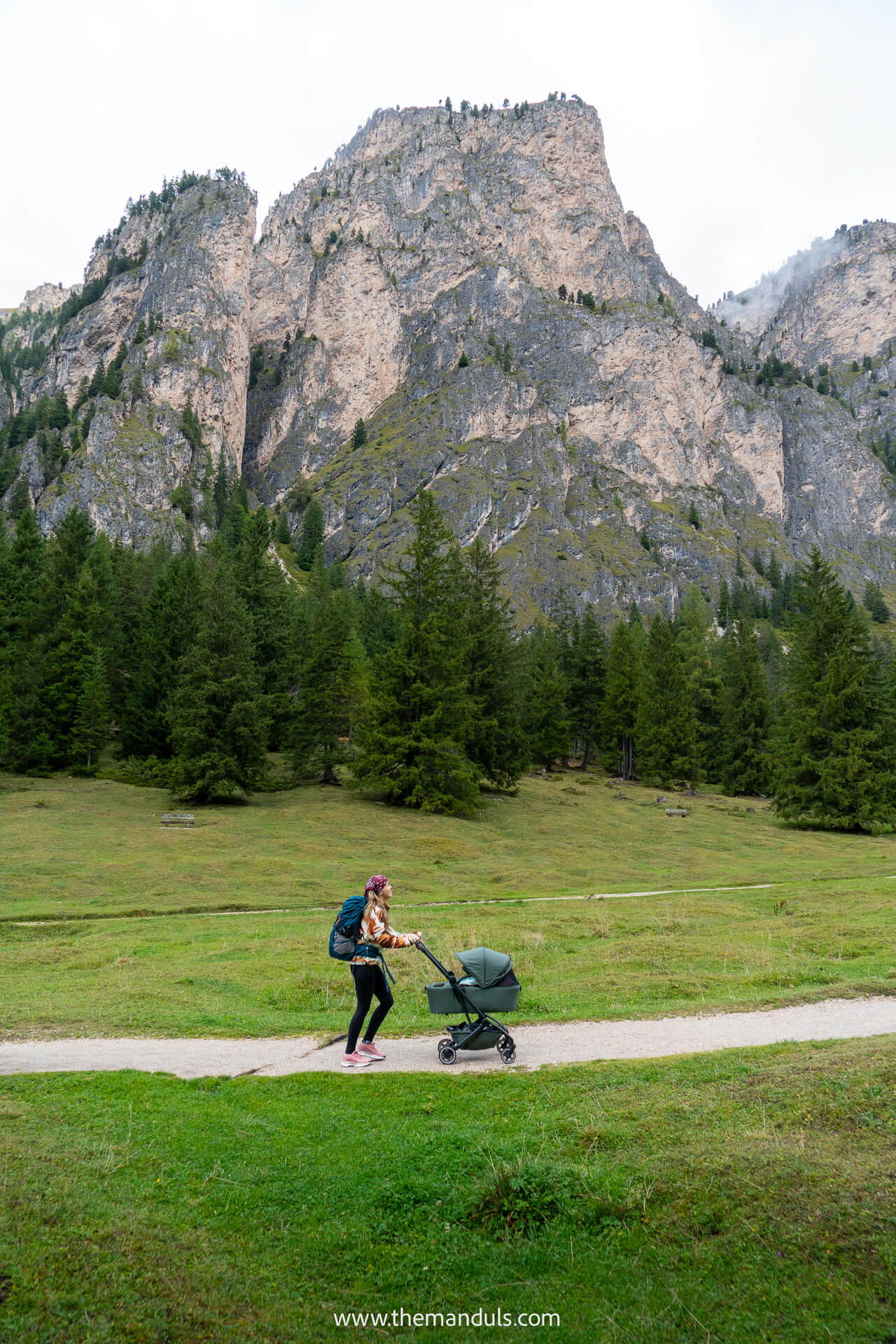
Winter (November – March)
Winter in the Dolomites is not a good time for hiking. Snow covers most trails, many mountain roads close or require chains, and hiking routes are either inaccessible or unsafe. If hiking is your main goal, we don’t recommend visiting during winter.
That said, winter is excellent for skiing and winter sports. Resorts like Cortina d’Ampezzo, Val Gardena, and Alta Badia are fully operational, slopes are well maintained, and the scenery is spectacular under snow. Villages feel cosy, Christmas markets add atmosphere in December, and the mountains take on a completely different character.
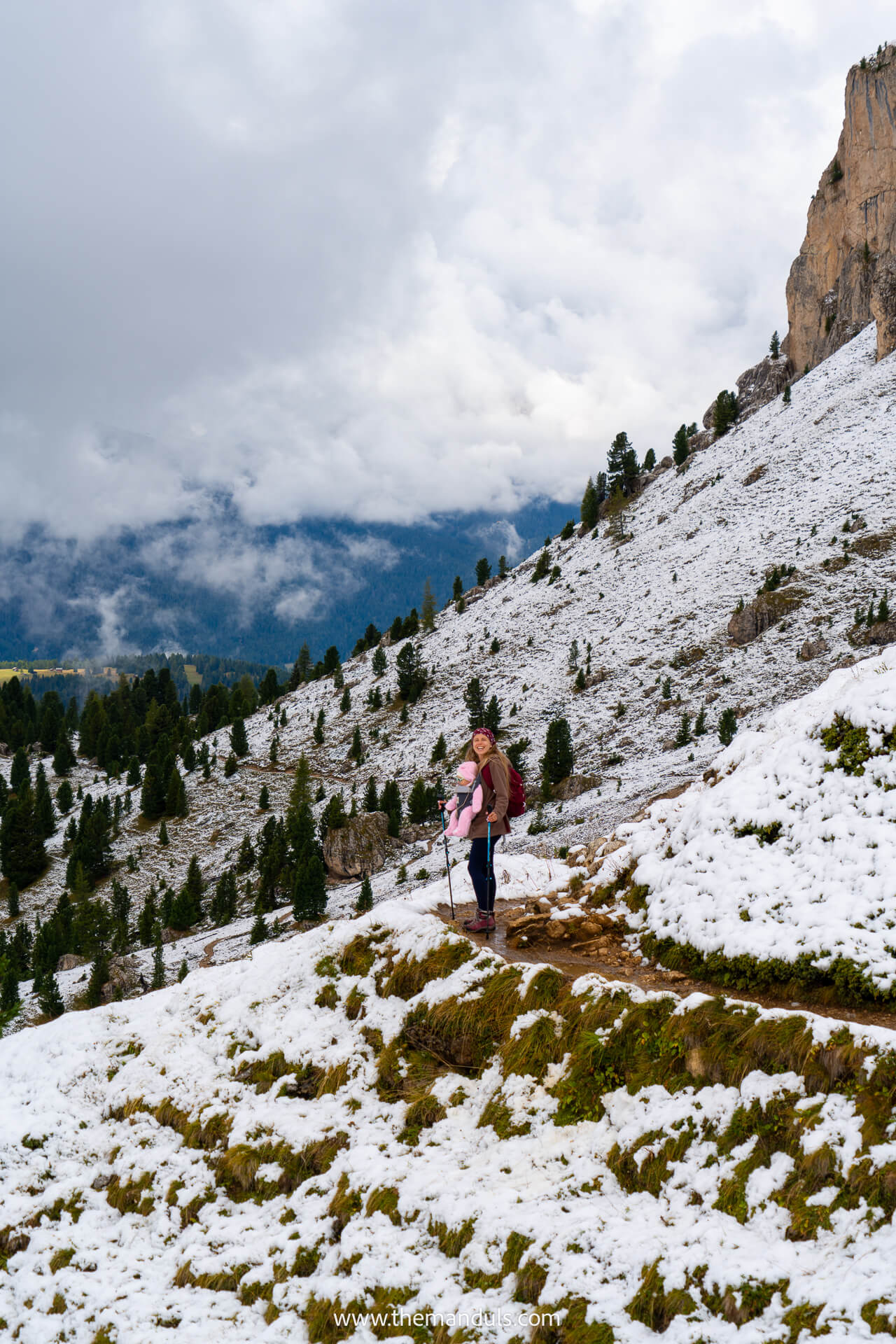
Days are short and cold, and outside of ski areas, many services shut down. For non-skiers, options are limited to snowshoeing, winter walks, or enjoying the alpine village atmosphere.
Prices vary — December holidays and February school breaks are expensive, while January (outside holidays) can offer better value.
⭐️ Best for: Skiing, snowboarding, winter landscapes, cosy alpine stays
✅ Pros: World-class ski resorts, dramatic snowy scenery, festive atmosphere
❌ Cons: No hiking, closed trails and huts, short daylight hours
Monthly overview:
- December: Festive vibe and Christmas markets, busy and expensive around holidays
- January: Cold but quieter after New Year, good value for skiing
- February: Peak ski season with high prices and crowds
- March: Longer days and softer snow, still winter conditions at altitude
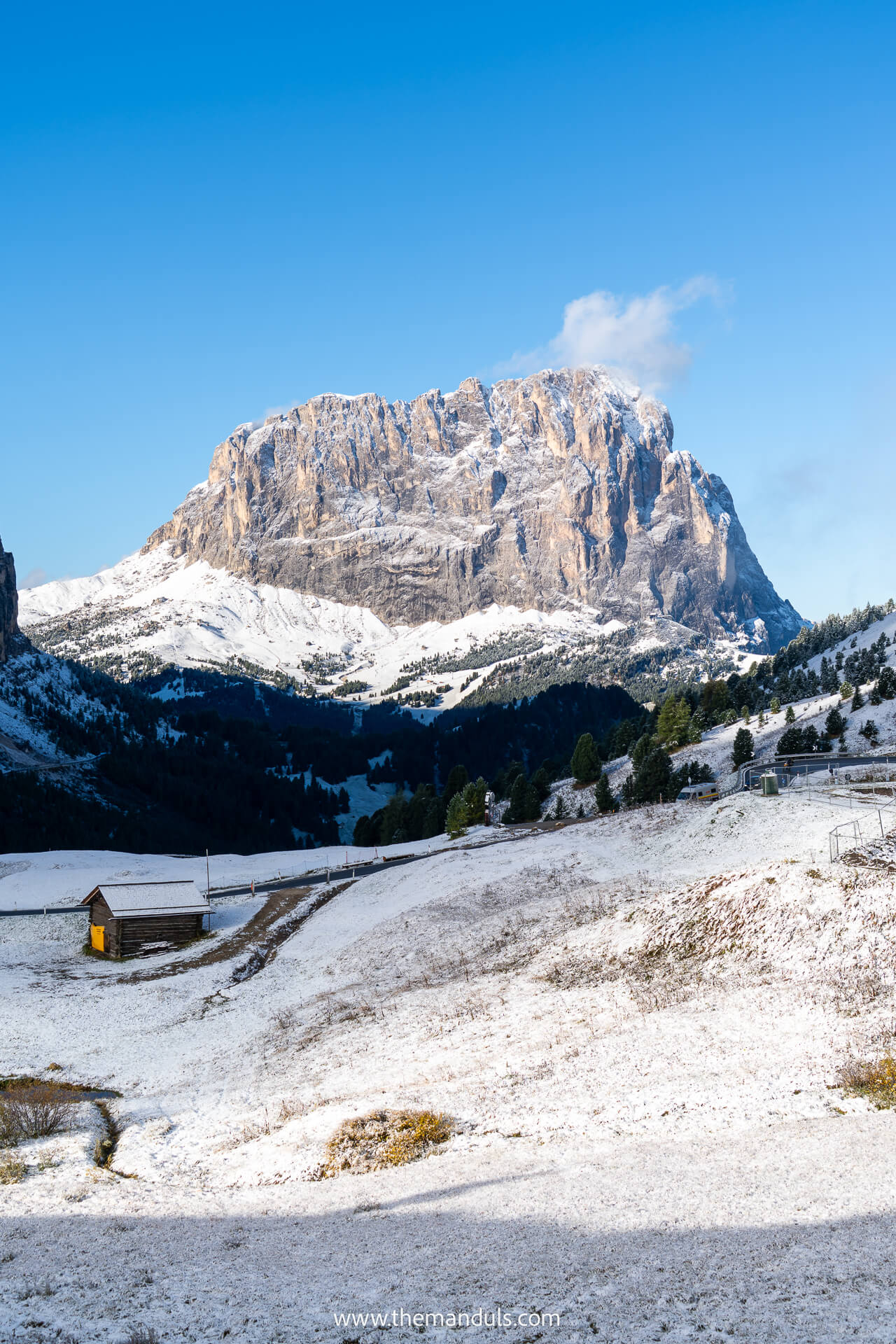
Crowds & Prices
Crowds and prices in the Dolomites closely follow the hiking and ski seasons.
July and August are the busiest and most expensive months. Popular hikes and lakes fill up quickly, parking restrictions are common, and accommodation prices peak — especially in places like Val Gardena, Cortina d’Ampezzo, and around Tre Cime.
If you’re visiting in summer, booking hotels well in advance is crucial, and starting hikes early is the easiest way to avoid crowds.
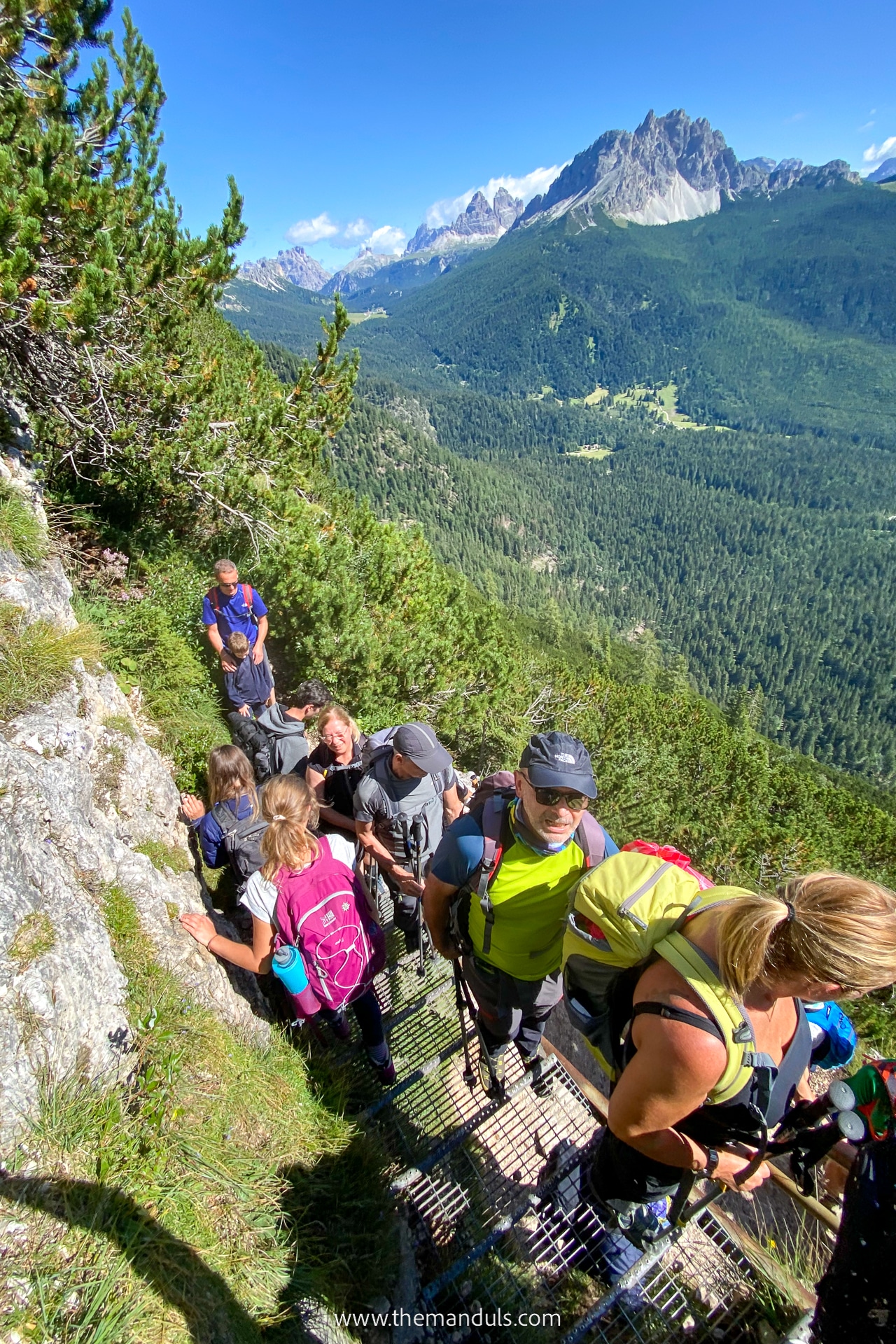
September is a noticeable step down in both crowds and prices. Trails are quieter, parking is easier, and accommodation prices begin to soften, especially toward the second half of the month. This is one of the best periods if you want good hiking conditions without peak-season chaos.
October is cheaper again, but with trade-offs. It works well for photographers and slow travel, less so for structured hiking plans.
Winter prices depend on timing. Christmas, New Year, and February school holidays are expensive, while January (outside holidays) often offers better value for ski trips.
Planning tips:
- Book summer and winter accommodation as early as possible, especially near famous hikes and best ski resorts
- Start hikes at sunrise in peak season to avoid crowds
- September offers the best balance of price, access, and atmosphere
Worst Time to Visit Dolomites
The worst time to visit the Dolomites depends entirely on what you want to do, but for hiking-focused trips, winter is the least suitable season.
From November to March, most hiking trails are snow-covered or inaccessible, mountain huts are closed, and conditions can be unsafe without proper winter equipment and experience. If your main goal is hiking, this is not the time we’d recommend coming.
Early spring (April to early May) can also be frustrating for hikers. Snow is melting unevenly, trails are muddy or still blocked at higher elevations, and many huts haven’t reopened yet. While the scenery can be beautiful, hiking options are limited and unpredictable.
FAQ
September is our top choice. Trails are quieter than in summer, temperatures are cooler, and most routes are still accessible.
Yes, especially at famous spots like Tre Cime and Lago di Sorapis. Starting hikes at sunrise makes a big difference.
Partially. Lower trails and scenic walks are still possible, and larch colours are stunning, but many huts close and high-altitude routes may be inaccessible.
Only if you’re coming for skiing or winter sports. For hiking, winter is not suitable.

Final Thoughts
Honestly, the Dolomites have something special in every season. The key is matching the timing to how you want to experience them — long hikes, quiet trails, photography, or winter sports.