
This article contains affiliate links. Learn more in our affiliate disclosure.
When we first started planning our trip to the Amalfi Coast in Italy, we quickly learned how much the timing can change the whole vibe. We’ve experienced both the quieter months and peak summer — and it really does feel like two different trips.
In this guide, we’ll help you figure out the best time to visit Amalfi based on real experience, seasonal differences, and what it actually feels like throughout the year.
And if you’re planning your itinerary, don’t miss our guides to the best things to do and where to stay on the Amalfi Coast.

Key Highlights
🌦️ Seasons: spring, summer, autumn, winter
🌤️ Best months: April–June and September–October
👥 Crowd levels: Peak in July–August, quietest from November to February
🎉 Notable events: Easter celebrations, summer festivals, autumn food events.
💡 Good to know: Ferries, beach clubs, and many restaurants run on a seasonal schedule.
Quick Overview
The best time to visit Amalfi is April–June and September–October, when the weather is warm, the sea is inviting, and the coast feels lively without the peak-summer chaos.
July–August offers perfect beach weather but also higher prices and packed streets, while winter is calm, cooler, and great for slow sightseeing.

If you want to make the most of your time in Positano, our complete guide to the best things to do in Positano will help you plan it right.
Our Experience
We’ve seen Amalfi at two totally different times of year, and it honestly felt like visiting two separate destinations.
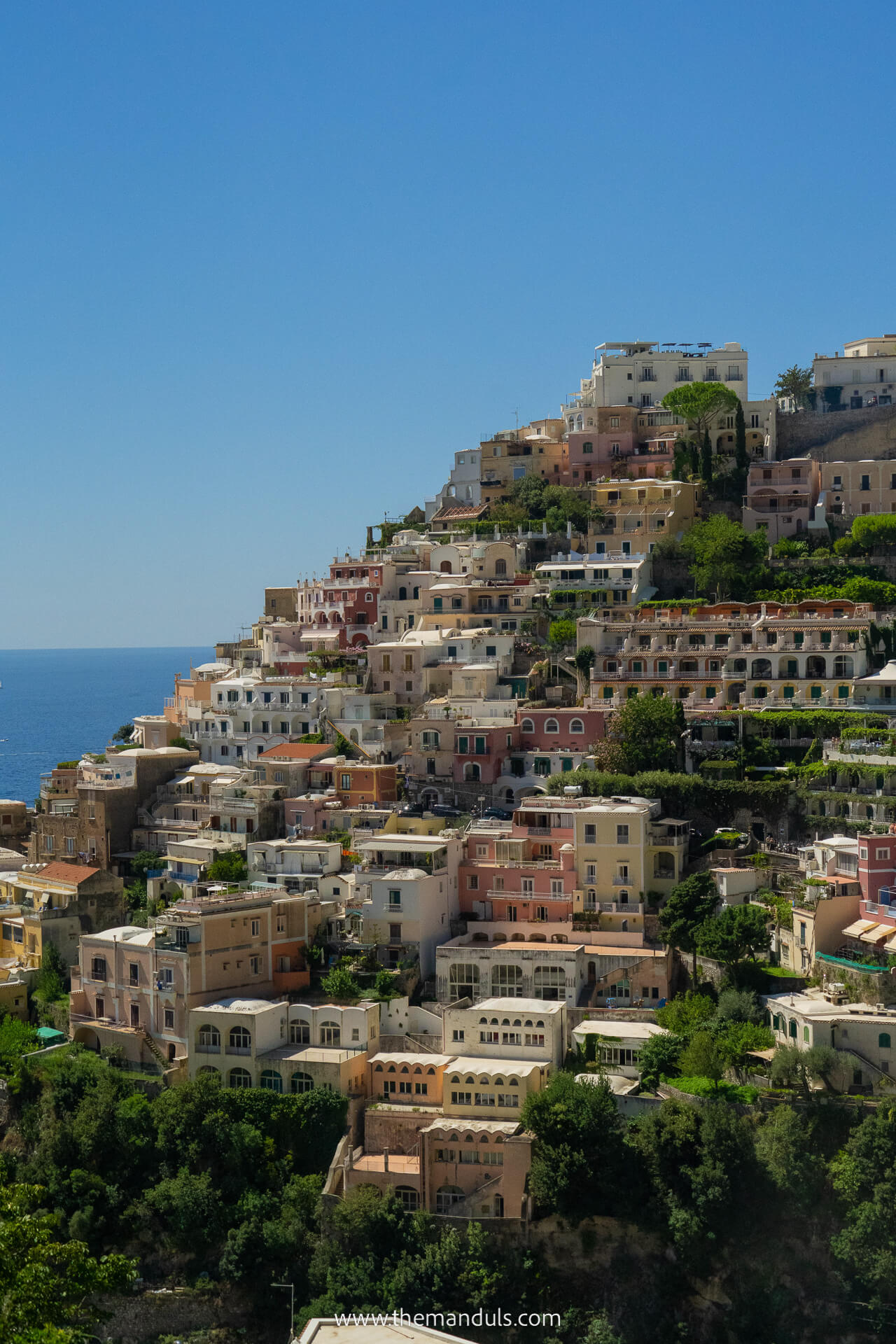
Our first trip was in February on a family getaway with my grandma and sister. The coast had a moody, quiet charm — soft grey skies, cooler air, and barely any people around.
Positano was almost empty, with many shops closed for the season, but that slower pace made sightseeing easy. It was the perfect time to visit Pompeii and Mount Vesuvius without queues, and walking around the towns felt calm.
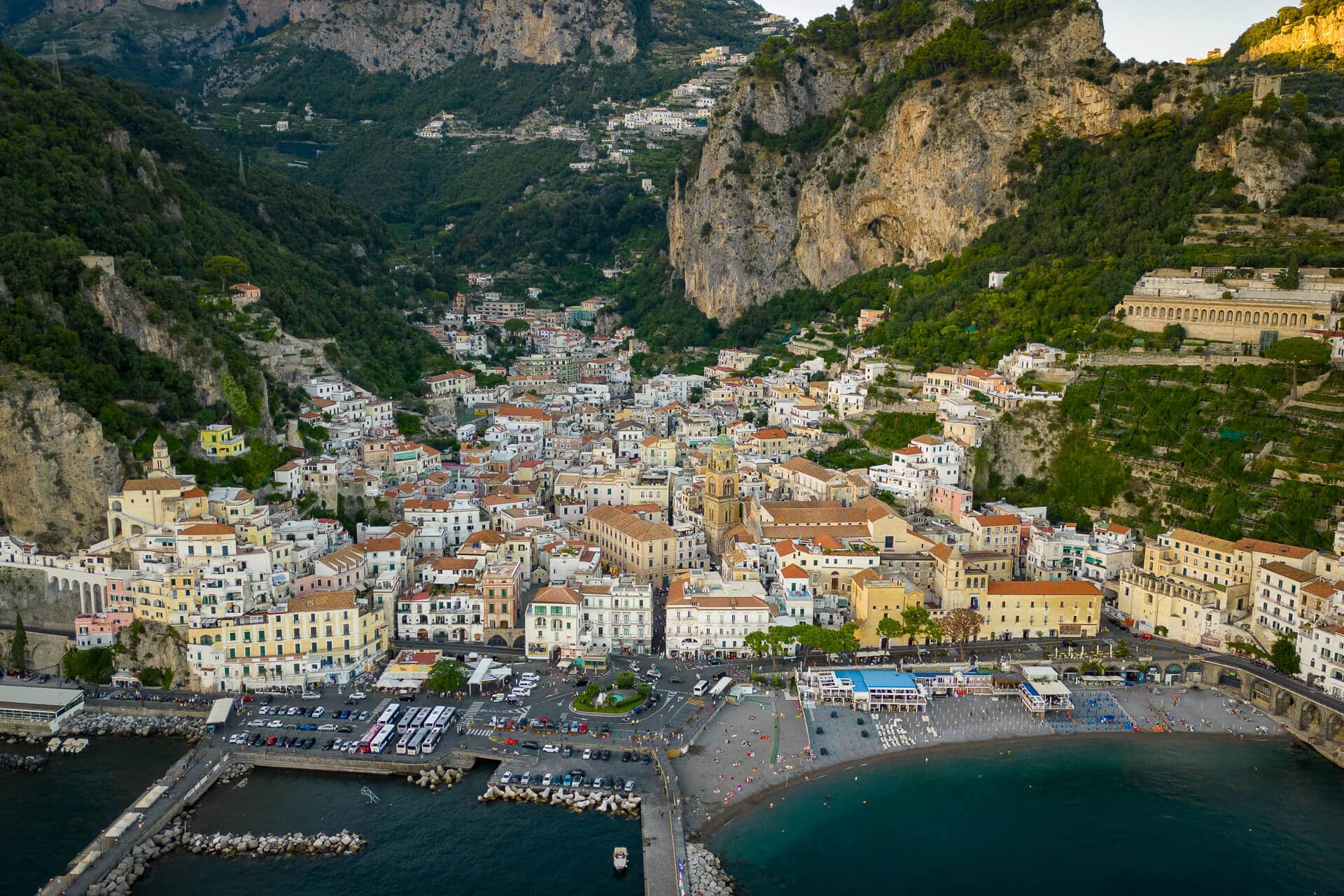
Our second visit, this time together in August, couldn’t have been more different. Amalfi was buzzing from morning until late at night — restaurants were full, ferries were running nonstop, and every corner felt alive.
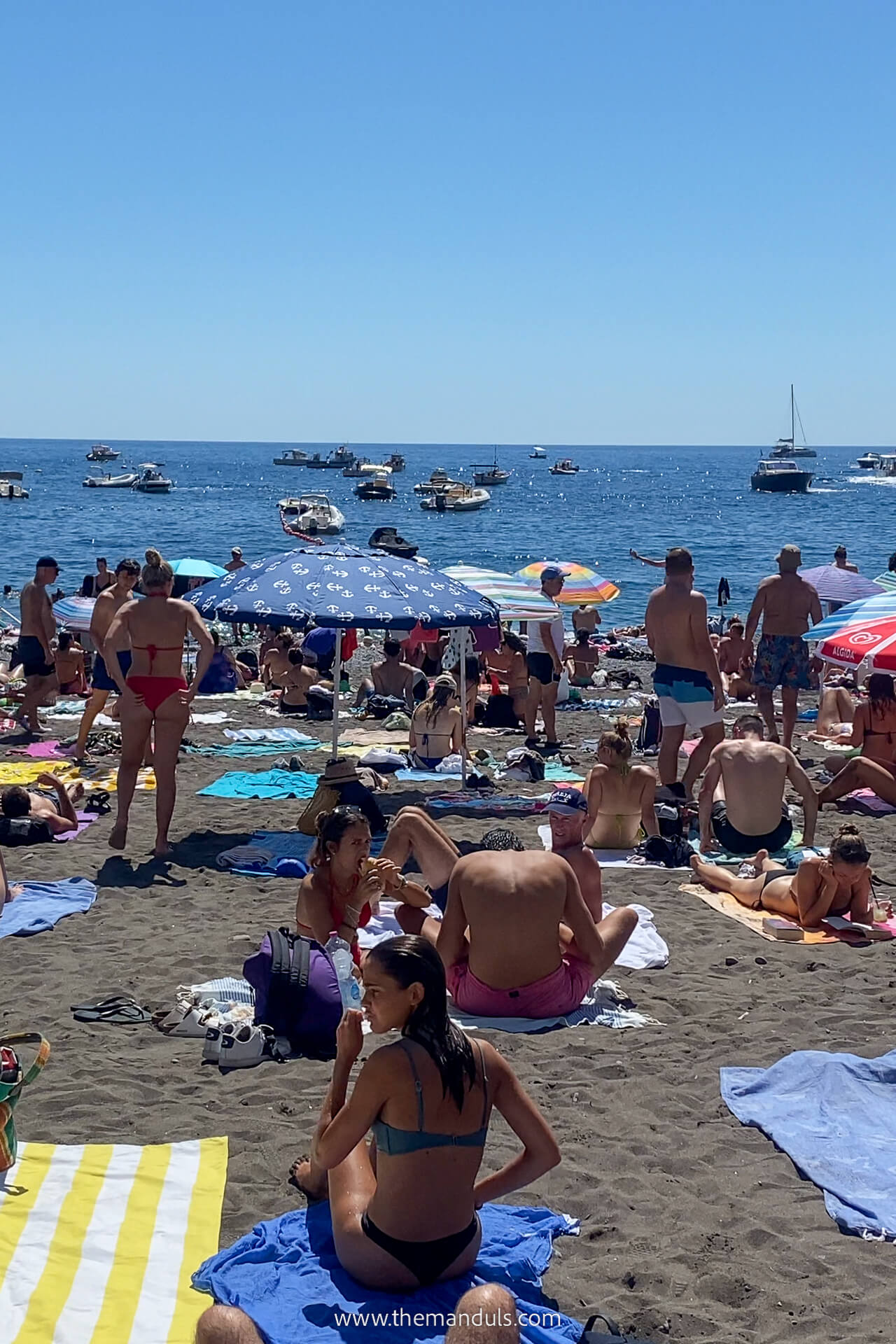
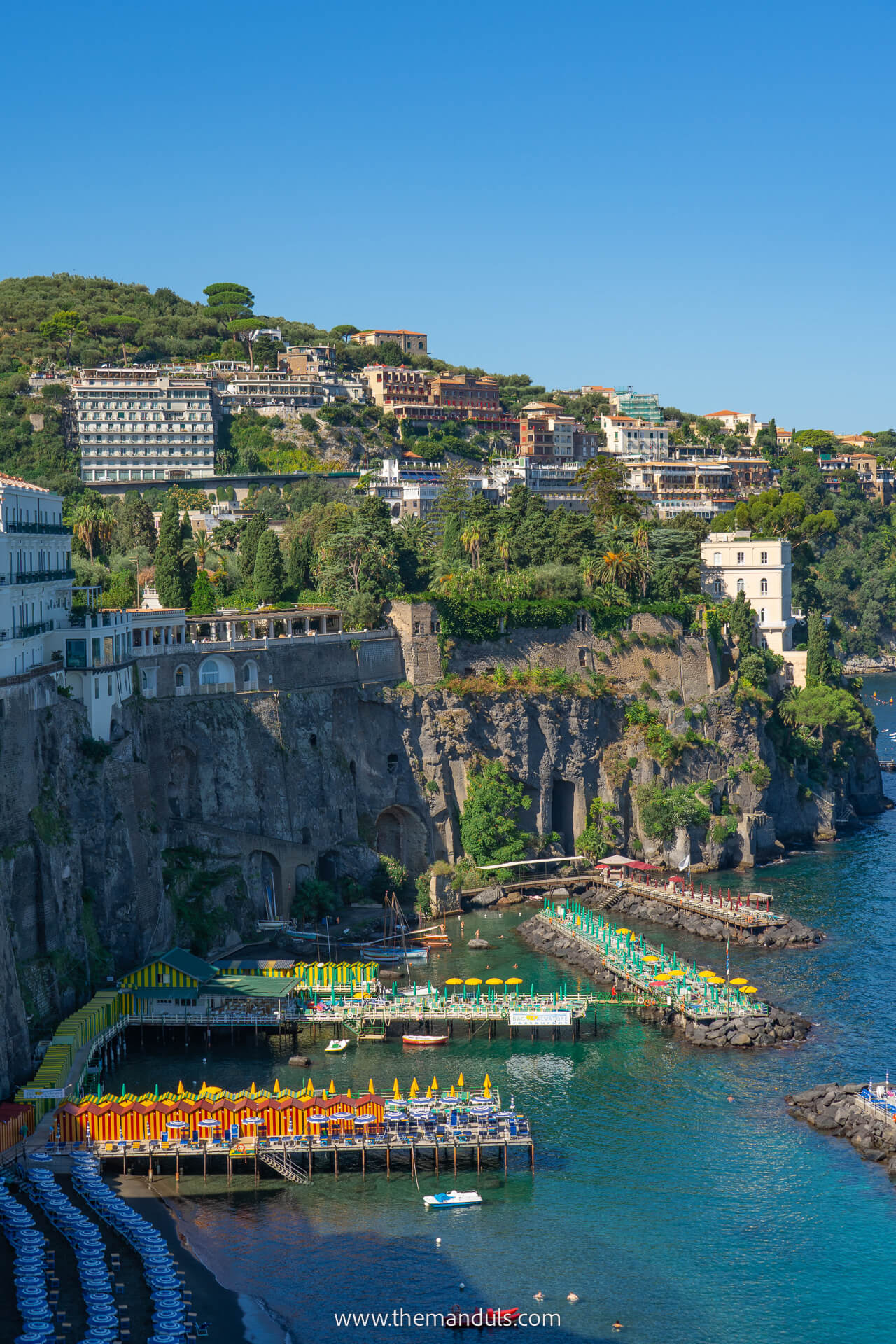
The warm days were perfect for swimming, and the late sunsets made the coastal walks feel magical. But it was busy. Beaches filled up early, and finding even a small patch of sand for one towel became a challenge.
Seeing both sides made it clear how much timing affects everything — from what’s open to how easy it is to get around.

Best Time to Visit [Destination]
The Amalfi Coast shifts dramatically between seasons — and planning around that can really shape your experience.
Spring (March–May)
Spring is when Amalfi slowly comes back to life. Our visit in late winter had that early spring feel — quiet streets, moody skies, and almost no tourists. But by April and May, the coast feels brighter, warmer, and much more inviting.
Daytime temperatures range from 14°C to 24°C, with more sun and longer days as spring progresses. March can still be rainy, but April is milder, and May often feels like early summer. The sea stays cold until late spring, though some beach clubs start opening by mid-May.
Crowds are low in March, moderate in April, and steadily increase through May — but it’s still calm compared to summer. You’ll find restaurants reopening, ferries running, and towns slowly filling with energy.
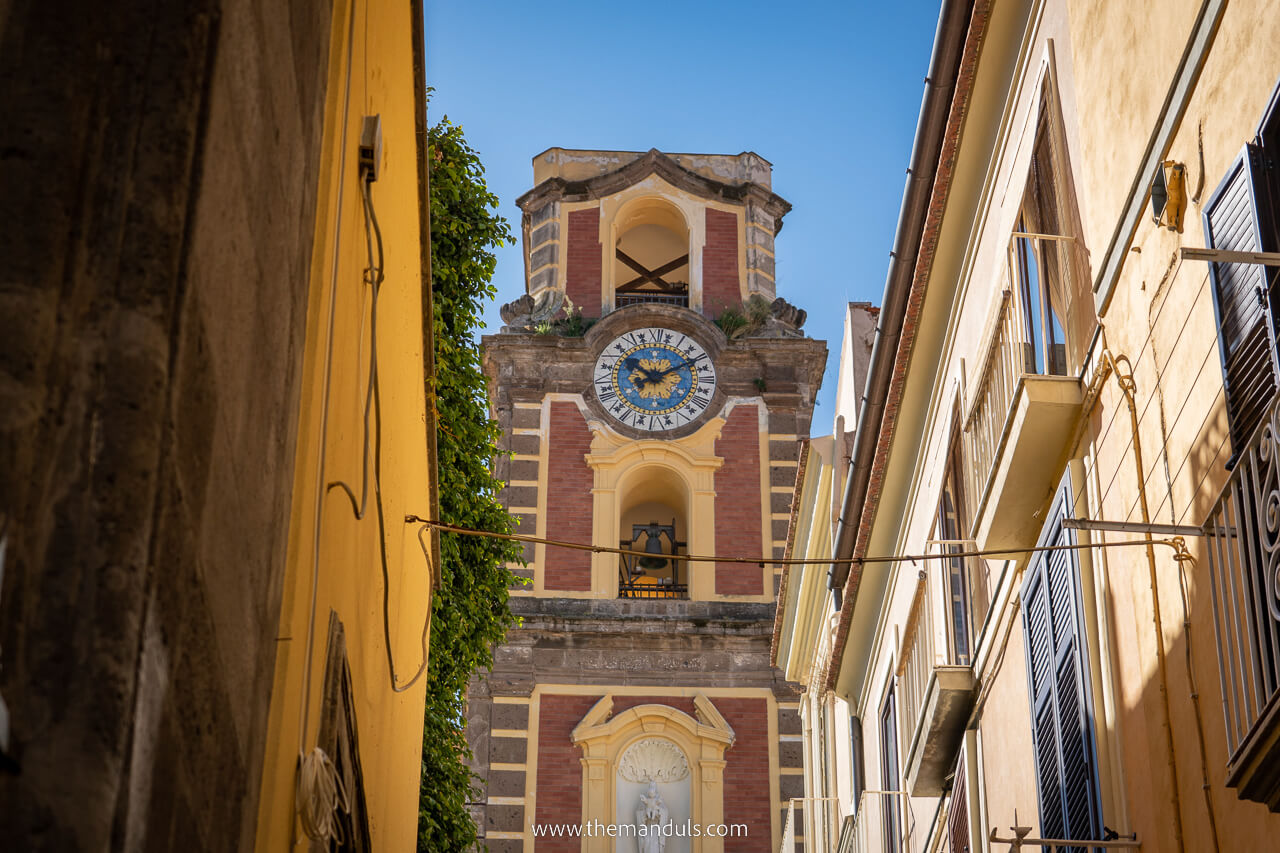
Spring is ideal for sightseeing, hiking, day trips to Pompeii or Capri, and enjoying the views without the heat or crowds.
Pros: Great temperatures for sightseeing, towns feel alive but not overrun, most things are open by April/May.
Cons: Sea is still cold, March can be rainy and very quiet, Easter week can get busy and expensive.
Monthly Overview:
- March – Quiet, peaceful, and still a bit cold. Great for slow travel and archaeological sites, but many restaurants and beach clubs remain closed. Weather can be mixed.
- April – Feels fresh. Flowers start blooming, towns open up, and it’s ideal for walking and coastal views. Easter can bring price spikes.
- May – Possibly the best month to visit. Warm but not hot, ferries and beach clubs running, and everything looks vibrant. Crowds are building but still manageable.
Summer (June–August)
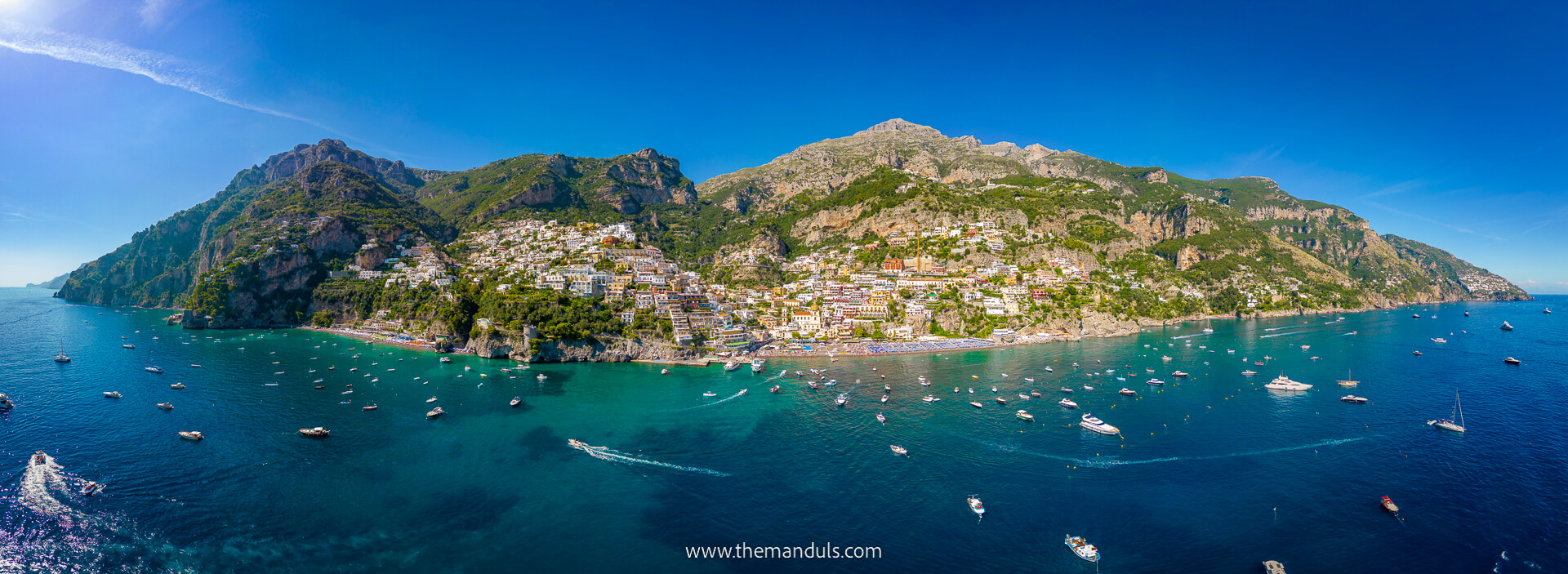
We visited Amalfi in August, and while the coast was buzzing with energy, it was also intense. Long, hot days made it perfect for swimming and boat trips, but the crowds were on another level — beaches were packed and ferries full.
Temperatures sit between 26°C and 32°C, often feeling hotter under the sun with high humidity. Rain is rare, and the sea is warm and crystal clear — ideal for beach days, cliff jumping, or boat tours. Daylight lasts late into the evening, perfect for sunset dinners and slow evenings outside.
This is the busiest time of year. July and August are peak season, with high prices, long queues, and packed beaches. June is slightly quieter, but by mid-July the coast gets crowded fast. Expect traffic, fully booked ferries, and hotel rates at their highest.
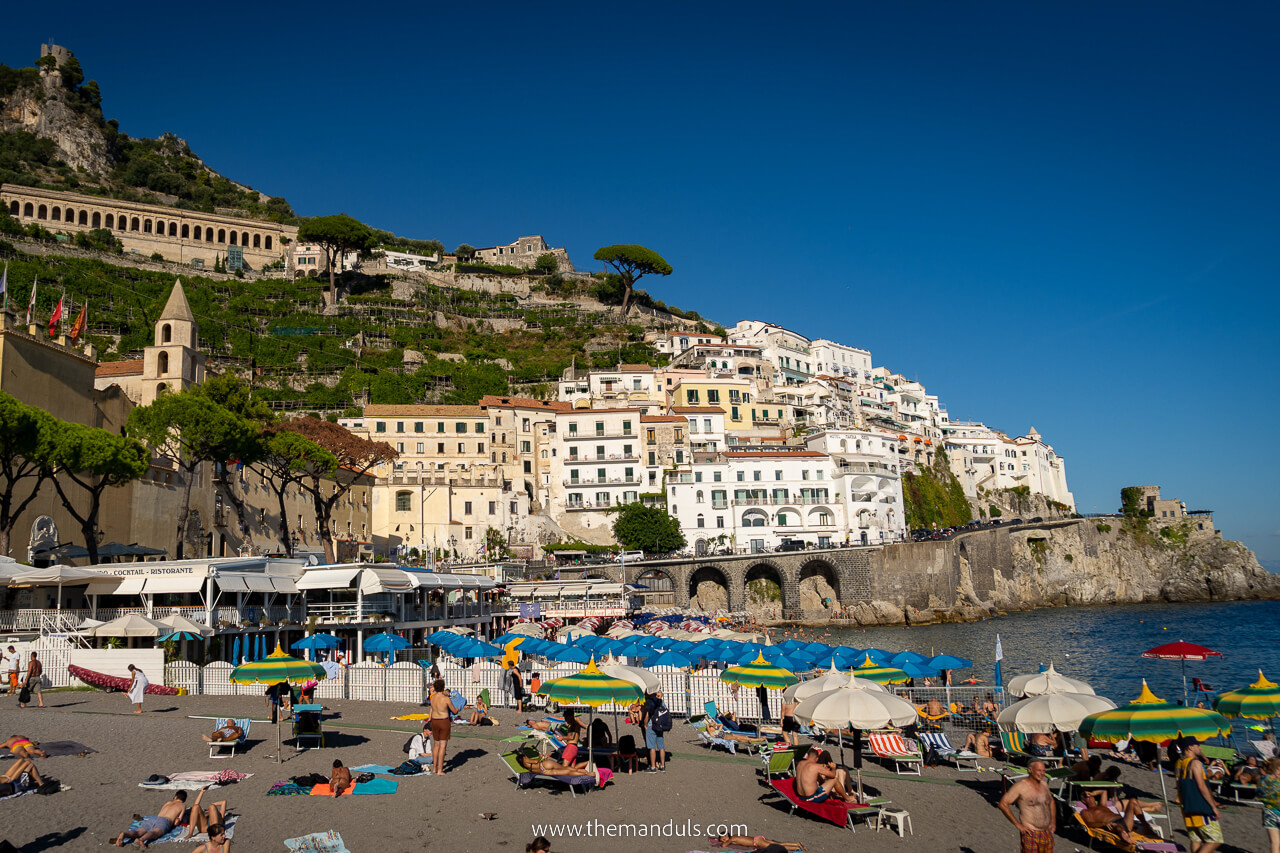
Summer is best for travelers who don’t mind the crowds and want full summer energy — swimming, sunbathing, dining outdoors, and experiencing Amalfi at its most alive.
We loved the summer buzz, but finding space on the beach — even for one towel — was a struggle. It’s beautiful, yes, but you need to plan and book in advance.
Pros: Perfect beach and swimming weather, everything is open and running, long sunny days, and warm evenings.
Cons: Very crowded, especially in July and August, expensive hotels and fully booked ferries, hard to find quiet spots or beach space.
Monthly Overview:
- June – Warm, sunny, and a great mix of life and space. Still manageable crowds and ideal for swimming.
- July – Peak season begins. Hot, lively, and full-on. Great energy, but you’ll need to plan everything ahead.
- August – The busiest and hottest month. Locals and tourists flood the coast. Great for beach life, but chaotic for sightseeing.
Autumn (September–November)
Autumn is one of the most underrated times to visit Amalfi. While we haven’t been here in fall specifically, we’ve traveled around Italy during this season, and it’s easily one of our favorites — still warm, but calmer and more local.
September feels like summer’s slower cousin — sunny, warm, and ideal for beach days without the stress of peak crowds. October cools down slightly and brings a more peaceful rhythm. By November, things get much quieter, with cooler days and some places starting to close for the season.
Temperatures range from 24°C in early September to around 15°C by November. Rain becomes more frequent later in the season, especially in November, but early autumn still sees plenty of sunshine. The sea stays warm into October, so swimming is definitely still an option.
Crowds drop noticeably after August. September is still busy (especially early on), but by mid-to-late October, the coast feels slower and more local. Hotel prices begin to fall, and booking last-minute becomes easier.
Pros: Warm weather and fewer tourists (especially after mid-September), cheaper prices than summer, sea still swimmable through October.
Cons: Some places start closing in late October, rain becomes more likely in November, less nightlife and slower ferry schedules
Monthly Overview:
- September – Still warm and lively, but easier to enjoy than summer. Ideal for both beaches and sightseeing.
- October – Cooler but still pleasant. Great light, fewer people, and perfect for hiking or relaxed travel.
- November – Quiet, often rainy, and many places start closing. Good for slow-paced trips or budget stays, but not ideal for beach-goers.
Winter (December–February)
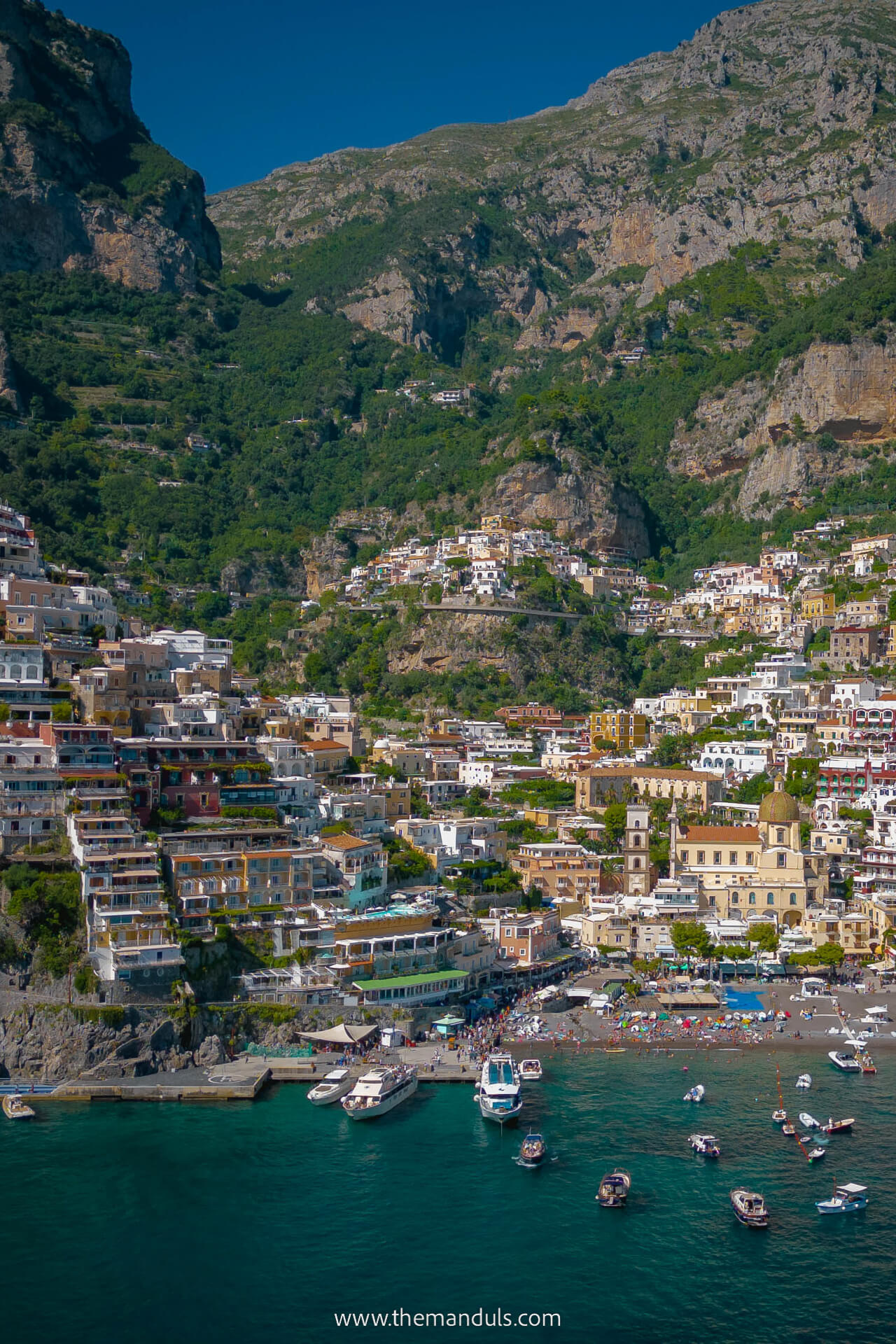
Our first visit to Amalfi was in February, on a family trip — and while it wasn’t the classic sunny Amalfi you see on postcards, it had its own charm. Positano was almost empty, skies were grey, and many places were closed, but it was perfect for slow walks, photography, and day trips without the crowds.
Temperatures hover between 9°C and 15°C, with short days, occasional rain, and chilly evenings. It rarely gets freezing, but it’s not beach weather. Most coastal towns feel quiet and local, with limited ferries and shorter opening hours.
Winter is the low season, with minimal tourists and the lowest prices of the year. Some hotels and restaurants shut down, especially in January and early February, but you’ll still find enough open in the main towns.
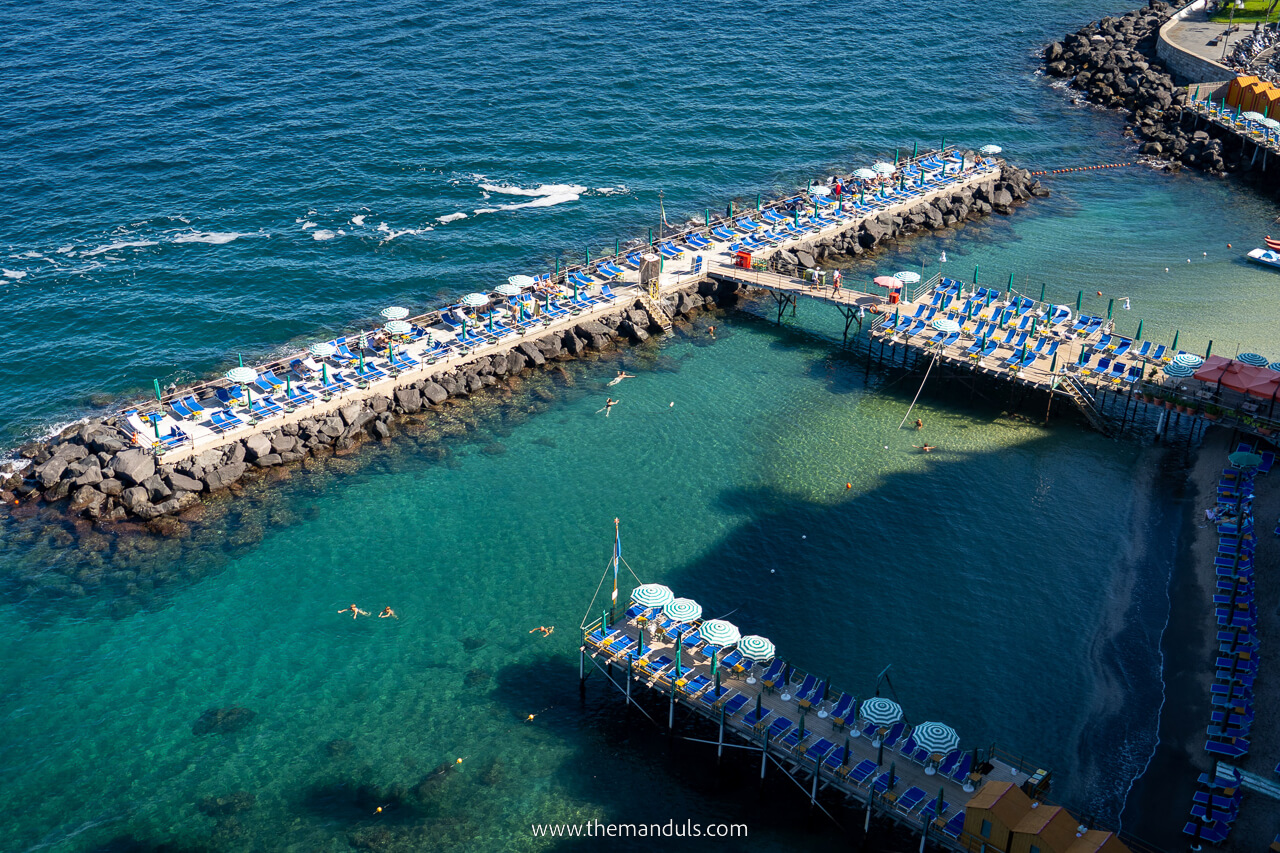
This season suits travelers looking for peaceful, slow-paced trips — no beach life, but lots of atmosphere. It’s ideal for budget-conscious visitors, offbeat photography, and those who want to experience Amalfi without the crowds.
We didn’t mind the cloud cover — in fact, it made the coast feel cinematic. And while Positano was nearly empty, that’s also what made it special in its own way.
Pros: Peaceful, quiet towns with no tourist rush, lowest prices for hotels and flights, great for archaeological day trips
Cons: Cool and often grey weather, many places closed, not suitable for beach or boat activities
Monthly Overview:
- December – Quiet and festive. Some towns have lights and Christmas markets. Cold, but not harsh.
- January – Coldest and quietest month. Great for budget travel, but expect closures and limited ferry service.
- February – Still cool and moody, but with signs of spring returning. Good for uncrowded sightseeing.
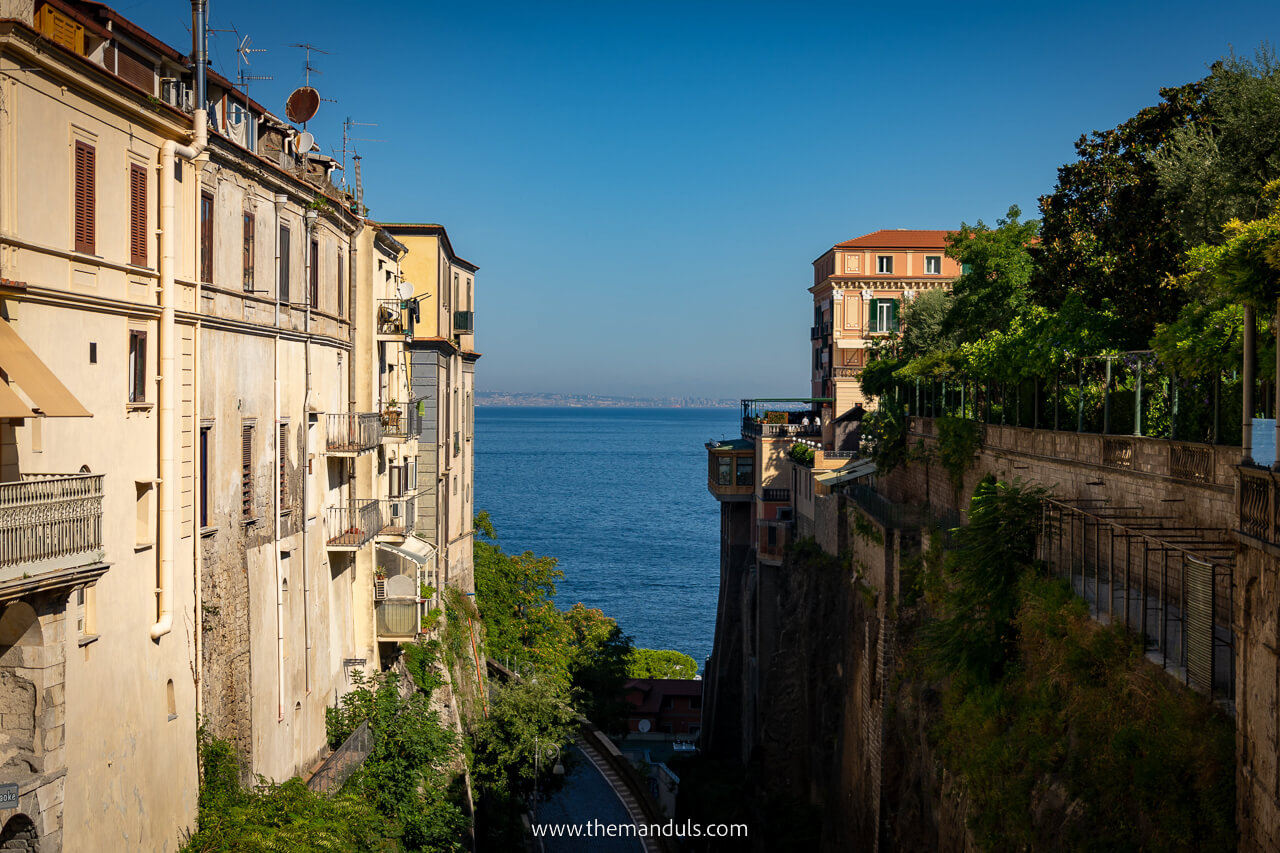
Crowds & Prices
The busiest and most expensive time to visit Amalfi is from June to August, especially mid-August during Italian holidays. Hotels, ferries, and beach clubs book out early, so it’s important to plan ahead.
April–May and September–early October offer the best balance — good weather, fewer crowds, and lower prices compared to peak season.
From November to March, the coast is at its quietest. Flights and hotels are much cheaper, but some places close for the season and ferry schedules are limited.

TIP: If you’re visiting in summer, book your accommodation and transport well in advance — last-minute options are limited and usually overpriced.
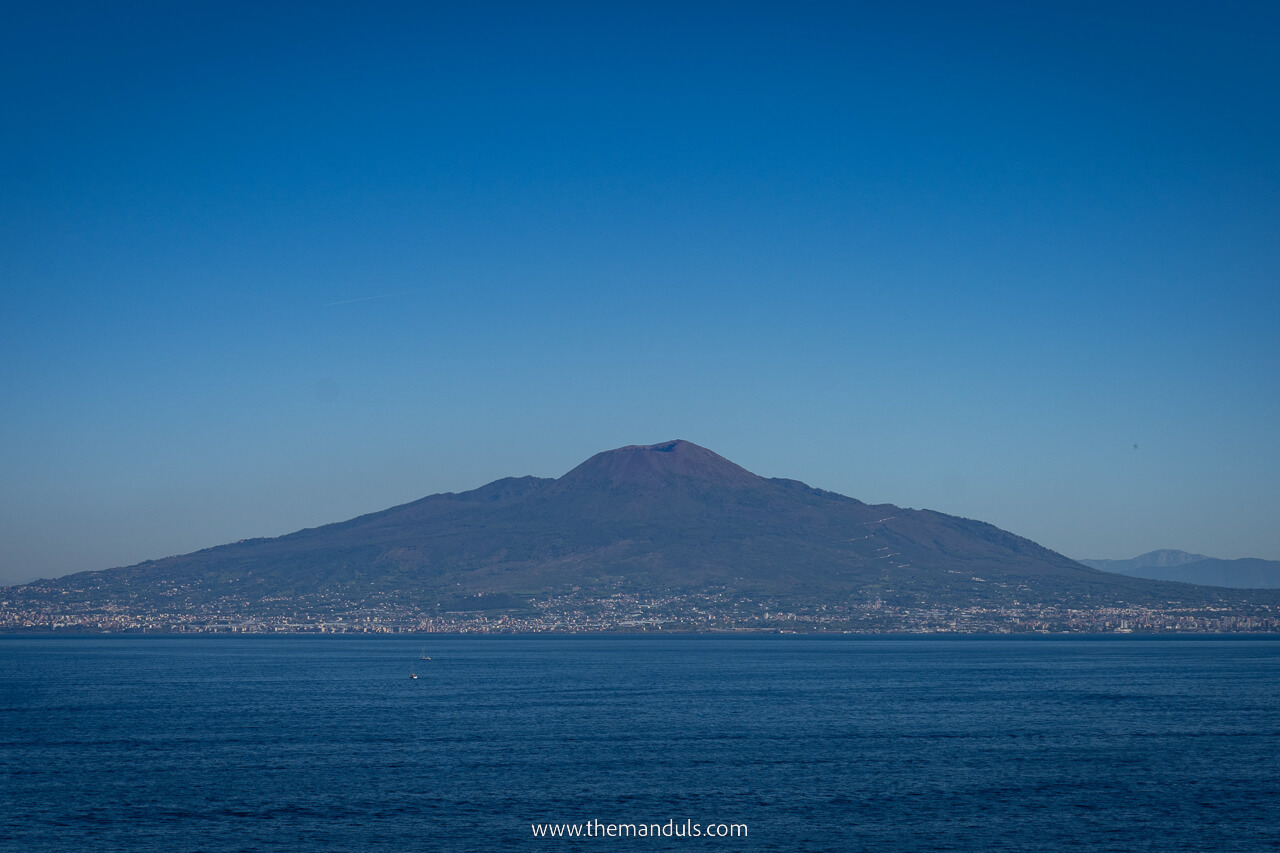
Events & Festivals
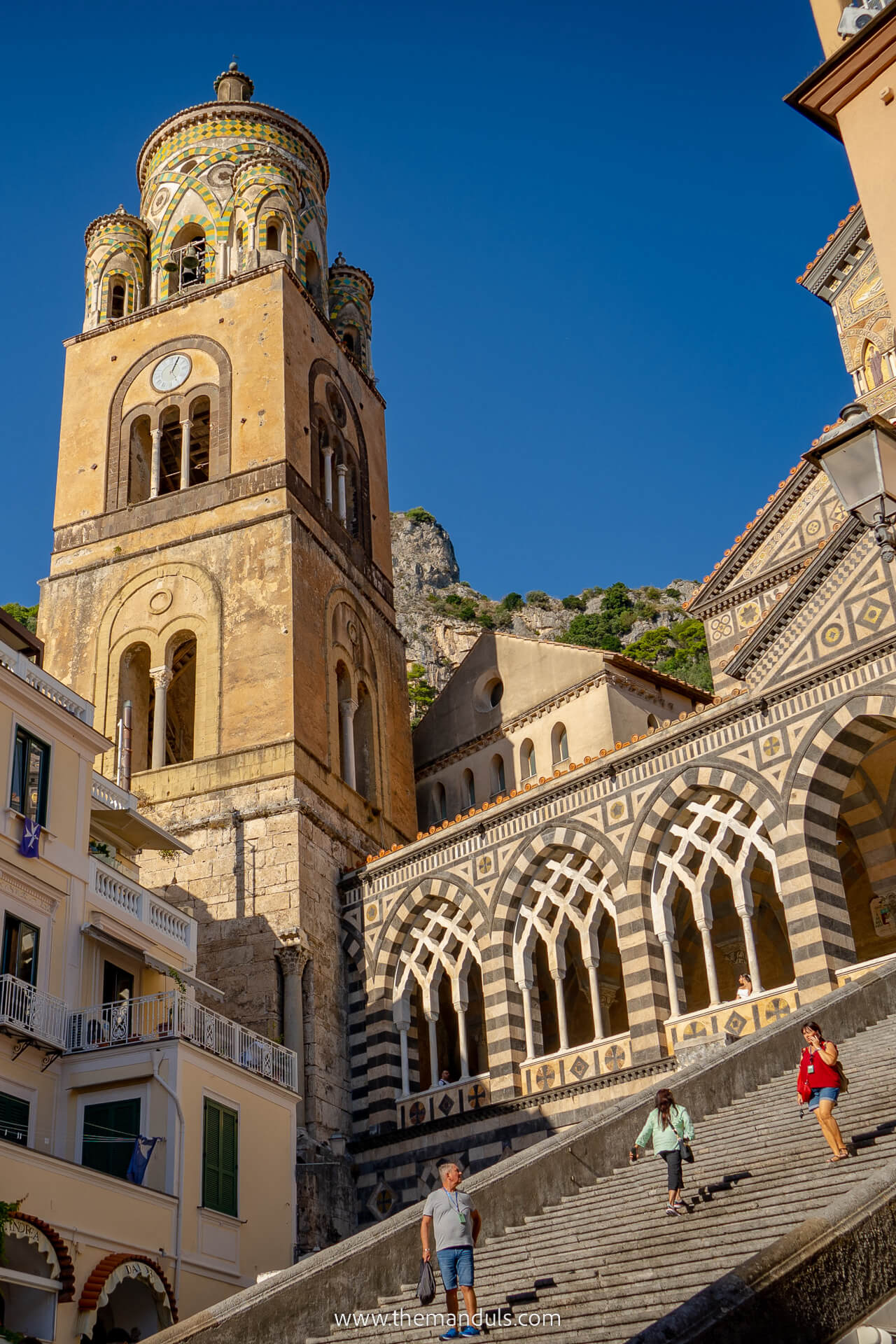
- Festival of Sant’Andrea (June 27 & November 30) – Amalfi’s patron saint is celebrated with a dramatic religious procession through town, fireworks over the harbor, and a festive crowd gathered on the cathedral steps.
- Ravello Festival (July–September) – A world-class music and arts festival set in the gardens of Villa Rufolo. Performances range from classical concerts to contemporary acts, all with incredible sea views.
- Ferragosto (August 15) – Italy’s national summer holiday. Expect packed beaches, local fireworks, and a fun, chaotic atmosphere in every town. It’s a great time for people-watching, but not ideal if you’re hoping for quiet.
- Lemon Festival, Massa Lubrense (late July) – A local celebration of the region’s iconic lemons, with food stands, crafts, and traditional music. It’s small, authentic, and a fun excuse to try all things limoncello.
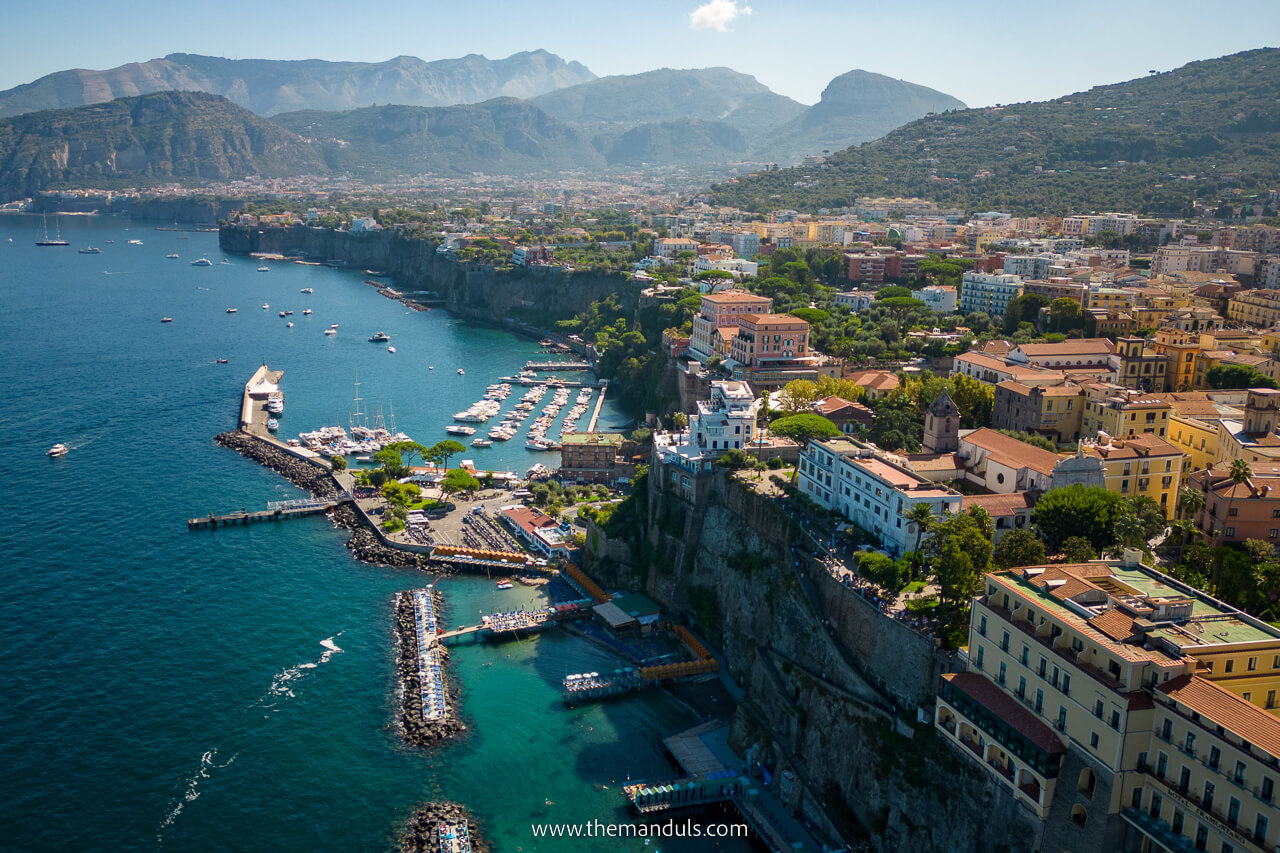
Worst Time to Visit Amalfi Coast
The least ideal time to visit Amalfi really depends on what kind of experience you’re after — but for most travelers, August and late winter (January–early February) are the trickiest.
August is the peak of the summer rush. It’s hot (often over 32°C), extremely crowded, and prices are at their highest. But if you don’t mind the heat or the crowds, it’s when the coast is at its liveliest — full of energy, open-air events, and late-night buzz.
On the flip side, January and early February are the quietest months of the year. Many hotels, restaurants, and beach clubs shut down, and the weather is often grey, rainy, and chilly. But this season does work for slow-paced, budget-friendly trips.
In short — avoid August if you hate crowds, and avoid winter if you’re after a classic beach holiday.
FAQ
Yes, especially in early October. The sea stays warm from summer, and many beach clubs remain open until mid-month, depending on the weather.
Main towns like Amalfi and Positano stay open, but many restaurants, hotels, and beach clubs close from late October to March — especially in smaller villages.
Lemon trees bloom mainly in spring (April–May) and again in smaller cycles throughout the year. The scent is strongest in late spring.
Final Thoughts
If we had to choose, we’d say the best time to visit Amalfi is in May or September — warm days, fewer crowds, and that perfect balance between lively and laid-back. It’s when the coast really shines, without the stress of peak season.
That said, Amalfi has something special in every season. Whether you’re here for beach days, scenic hikes, or quiet winter walks with moody skies and no tourists, it really just depends on what kind of experience you want.