
This article contains affiliate links. Learn more in our affiliate disclosure.
Asakusa was one of those places in Japan where we immediately knew it would be busy — even before we properly started exploring. As soon as we arrived, the energy around the area felt different, and it was clear this is one of the most visited neighborhoods and one of the most popular things to do in Tokyo.
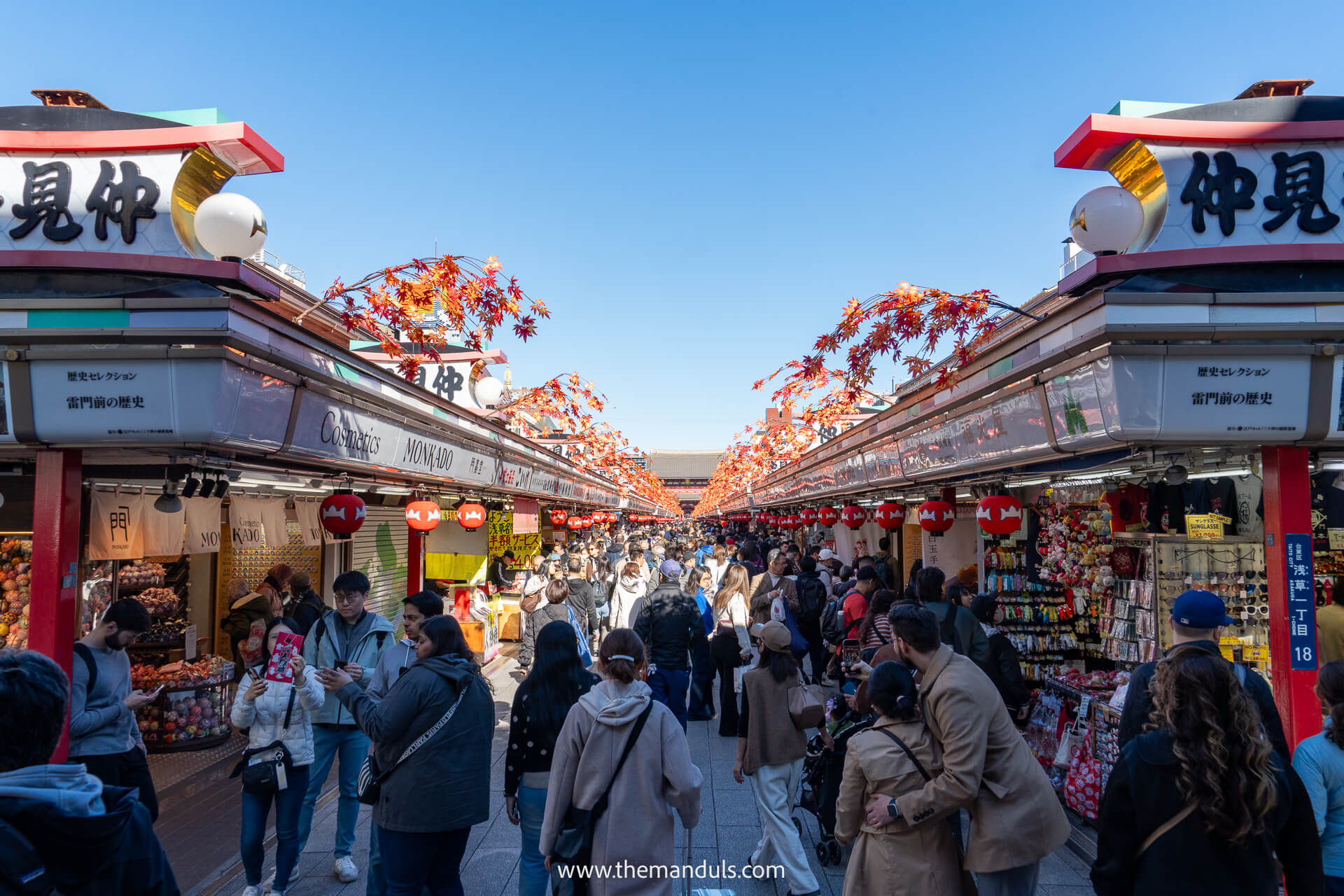
We actually got there early in the morning, but decided to stop for a coffee first. By the time we were ready to explore, Nakamise-dori was already packed. Moving through the street wasn’t easy at all, especially with a stroller, and at times it felt more like slowly flowing with the crowd than walking at our own pace.
That said, the atmosphere was still special — rows of tiny shops selling snacks and souvenirs, food being cooked right in front of you, and a constant buzz that made the area feel very alive.
What surprised us most was how big the temple complex behind the main street is. Once you pass through the crowds, the space opens up, and Senso-ji feels far more impressive than we expected.
In this guide, we share what we think is actually worth your time in Asakusa, when to visit, where to eat, and a few practical tips.
In a hurry?
These are our top hotels in Tokyo we’d book again
⭐️⭐️⭐️ Keio Plaza Hotel Tokyo Premier Grand (our top pick) – Luxury hotel in Shinjuku with spacious rooms, skyline views, and lounge access.
👉 See prices & availability →
⭐️⭐️ Park Hotel Tokyo – Mid-range in Ginza with art-filled interiors, skyline views, and quick access to Shiodome Station — a polished base without the chaos.
👉 See prices & availability →
⭐️ Shibuya Tokyu REI Hotel – Budget stay just minutes from Shibuya Crossing — ideal if you want comfort and convenience without overspending.
👉 See prices & availability →
Is it worth it?
Asakusa is worth visiting if you’re looking for a lively, old-school Tokyo atmosphere, not a quiet escape. We genuinely enjoyed our time here, but it’s important to know what you’re getting into.
This is one of the city’s most visited areas, and it shows — crowds are part of the experience. If you absolutely hate busy places, coming early in the morning makes a huge difference. By late morning, it’s already packed.
What makes Asakusa stand out is the energy. The streets are full of movement, food smells, and souvenir shops.. Nakamise-dori in particular feels chaotic at times, but it also has a certain charm. Don’t expect a peaceful stroll — expect noise, queues, and slow walking, especially during the day.
For us, the highlight wasn’t ticking off landmarks, but the street food. Trying different snacks, stopping wherever something looked good, and just soaking in the atmosphere was far more memorable than rushing from one sight to another.
Compared to other Tokyo attractions, Asakusa feels less about views or “wow” architecture and more about experience. It’s not romantic or quiet, and it’s not a hidden gem — it’s famous, busy, and unapologetically touristy.
Guided Asakusa Walking Tour
If you want to experience Asakusa with more context and less guesswork, a guided walking tour is a solid option — especially given how busy the area gets. We’d recommend this Asakusa Walking Tour with Senso-ji Temple on GetYourGuide.
It’s a ~2-hour tour that starts at Kaminarimon Gate and covers the main highlights, including Nakamise Street, Senso-ji Temple, Asakusa Shrine, and Hoppy Street, all with a live English-speaking guide.
Why this tour is a good choice:
- ⭐️ Very well reviewed (4.7/5+) with thousands of bookings
- 🧭 Helps you navigate the crowds while explaining what you’re actually seeing
- 🏯 Covers the essentials without feeling rushed
- 👣 Ideal if you’re short on time or visiting Tokyo for the first time
If you like having stories and context rather than just walking past landmarks, this tour is a good way to experience Asakusa.
Where is Asakusa
Asakusa is located in northeast Tokyo, in Taito City, along the Sumida River. It’s one of the city’s oldest districts and sits a bit outside the main modern hubs like Shibuya and Shinjuku, which is why it feels so different in atmosphere.
In terms of distance, Asakusa is still very easy to reach from most popular areas:
- Around 20–25 minutes from Ueno
- About 30 minutes from Tokyo Station
- Roughly 35–40 minutes from Shibuya or Shinjuku
📍Save the location to your Google Maps.
How to get there
Getting to Asakusa is very easy. The main transport hub you want to aim for is Asakusa Station, which is served by the Ginza Line and the Toei Asakusa Line.
We relied on Google Maps the whole time and it worked perfectly — it even showed us which platform to use, which made transfers stress-free.
Once we got off the train, it was just a few minutes’ walk to Nakamise Street, so there’s no complicated navigation involved after arriving.
Best things to do at Asakusa
1. Walk through Kaminarimon Gate
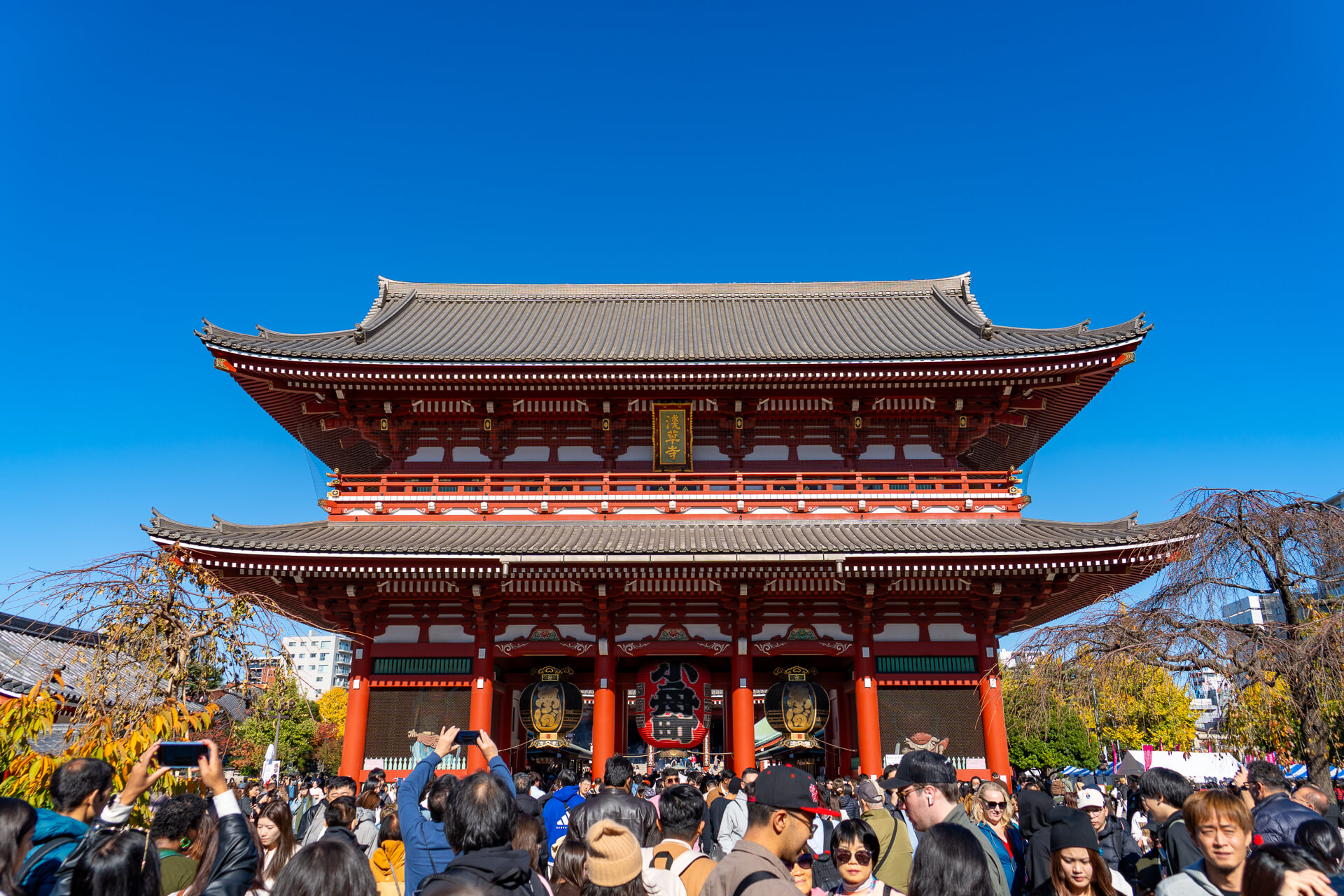
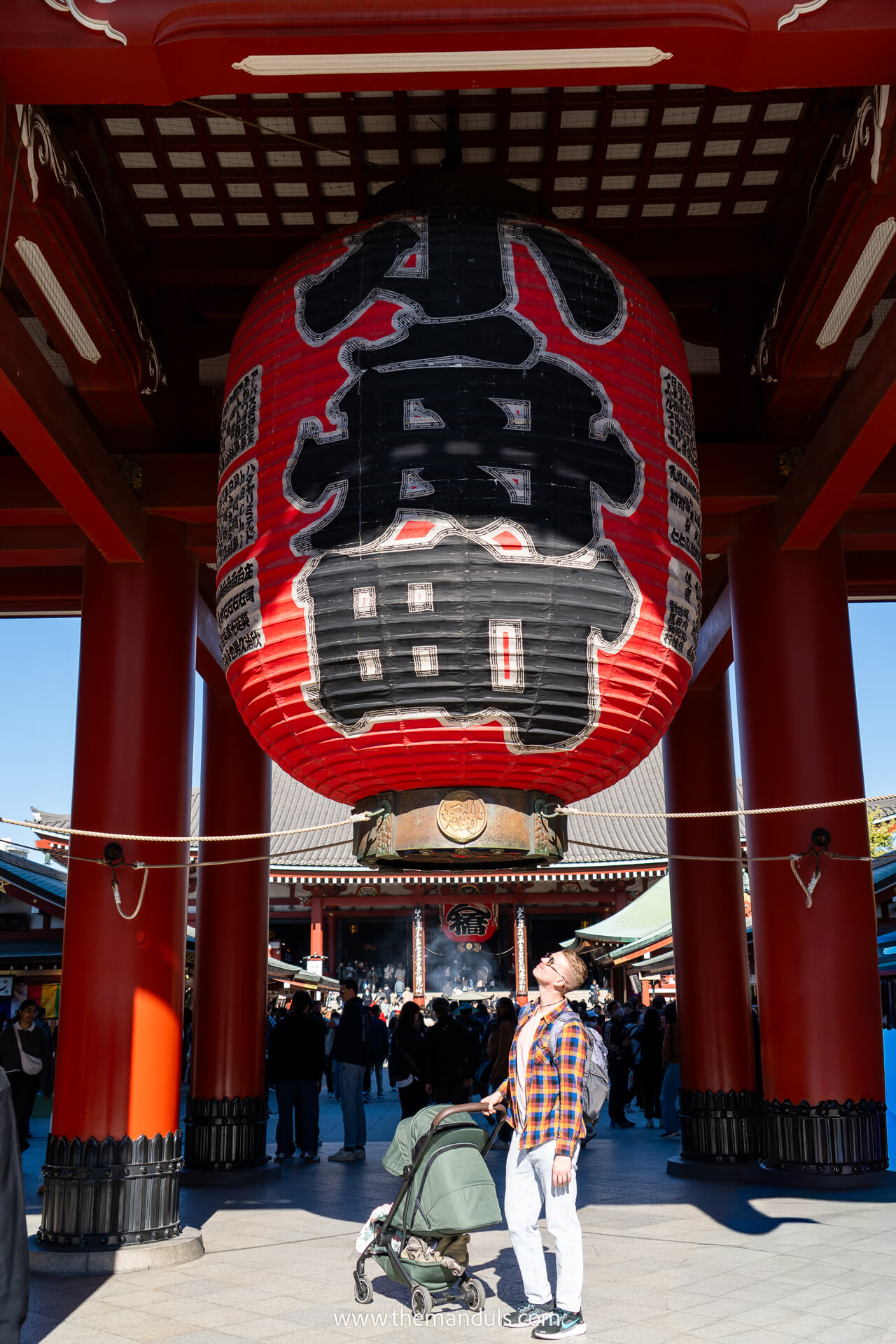
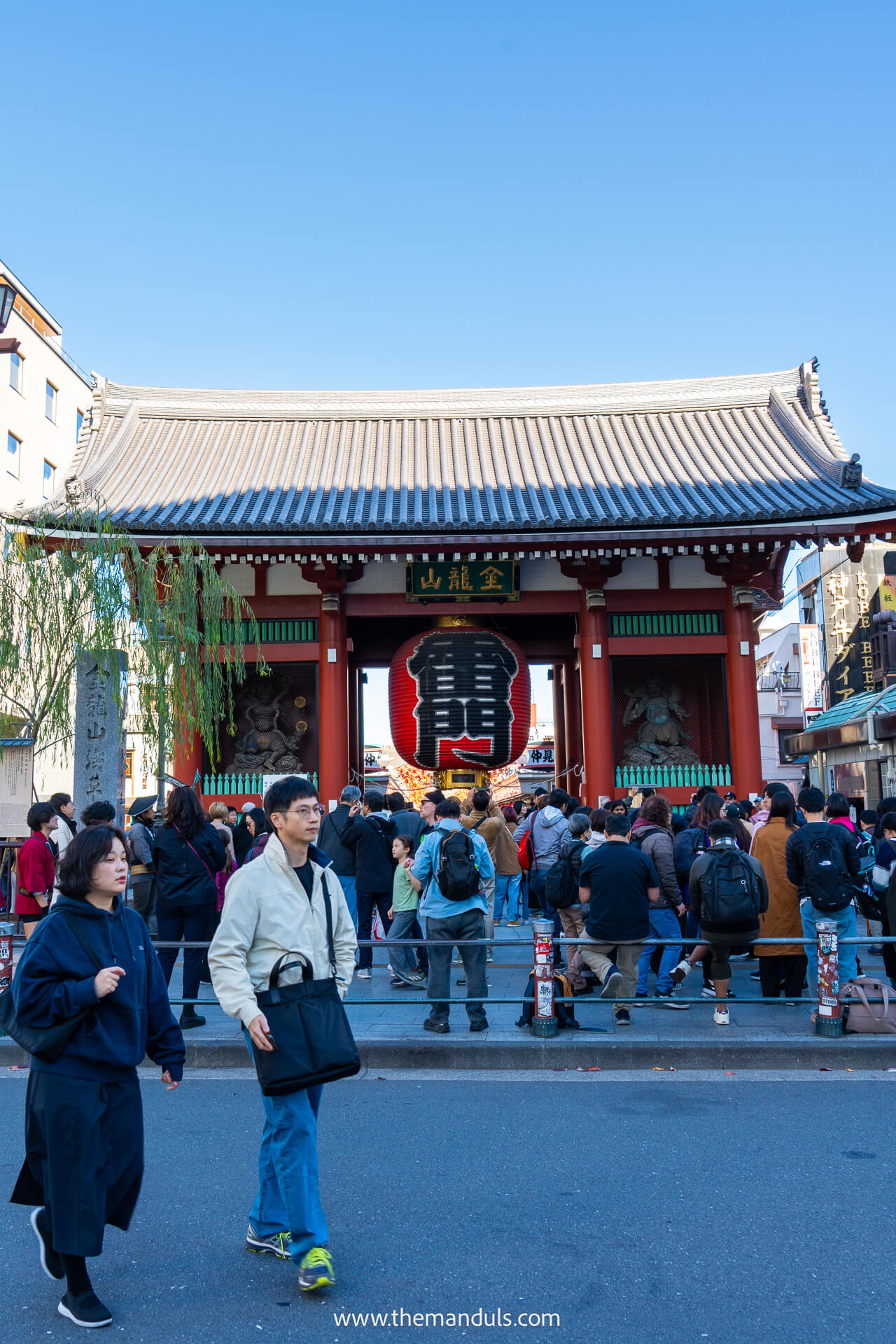
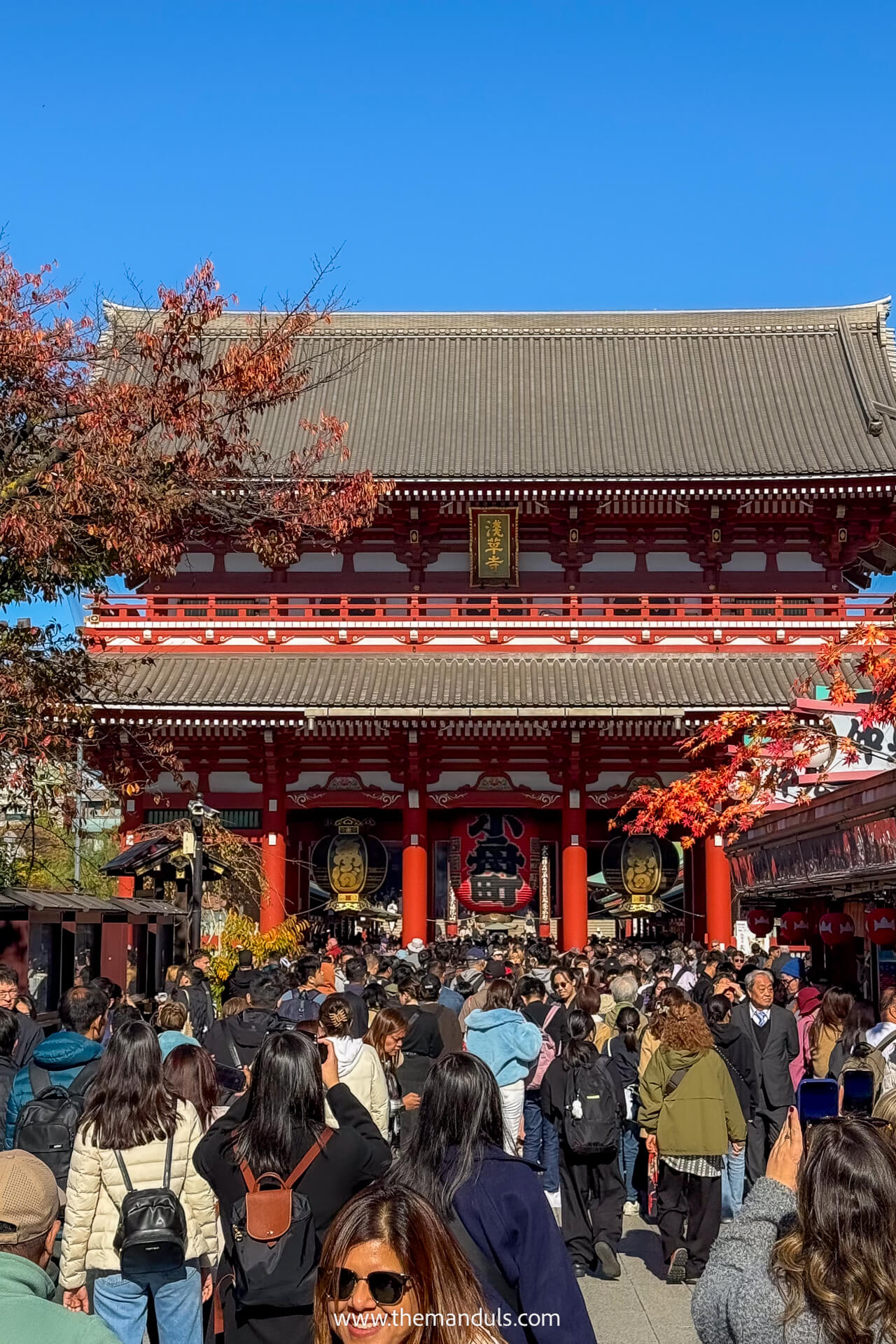
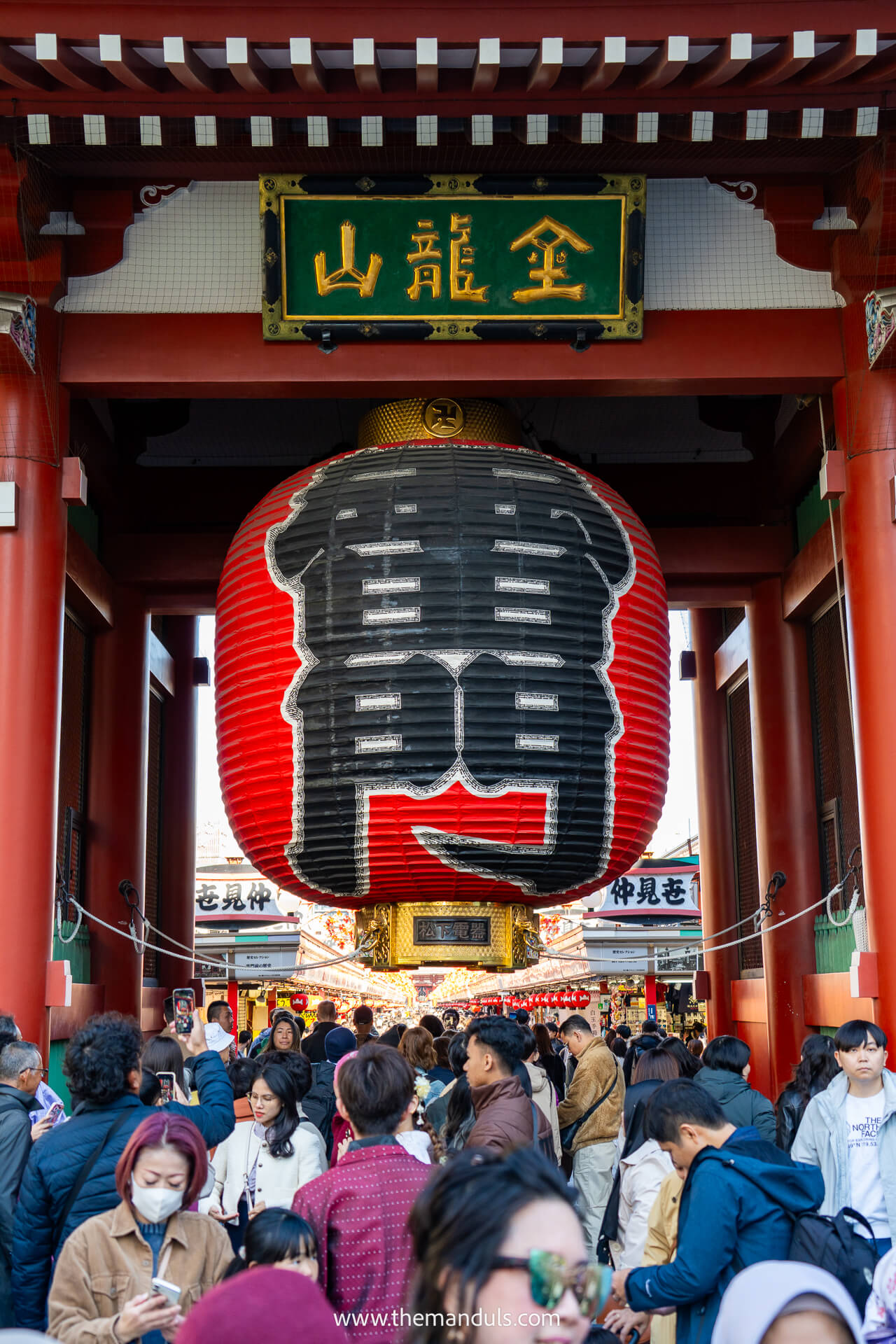
Kaminarimon is the iconic entrance to Asakusa and marks the start of the walk toward Senso-ji Temple. The name translates to “Thunder Gate,” and it’s guarded by statues of the gods of wind and thunder, which are meant to protect the temple beyond. The huge red lantern hanging in the middle is what most people come to see — and yes, it’s even bigger up close.
When we walked through, it was already busy, with people constantly stopping for photos, so expect slow movement and a bit of chaos. We didn’t mind it too much, though — pausing here, looking up at the gate, and watching the flow of people felt like a proper introduction to Asakusa. It’s not a place you spend long, but it’s worth taking a moment to take it all in before moving on.
2. Nakamise Street (Snacks, Souvenirs & Street Food)
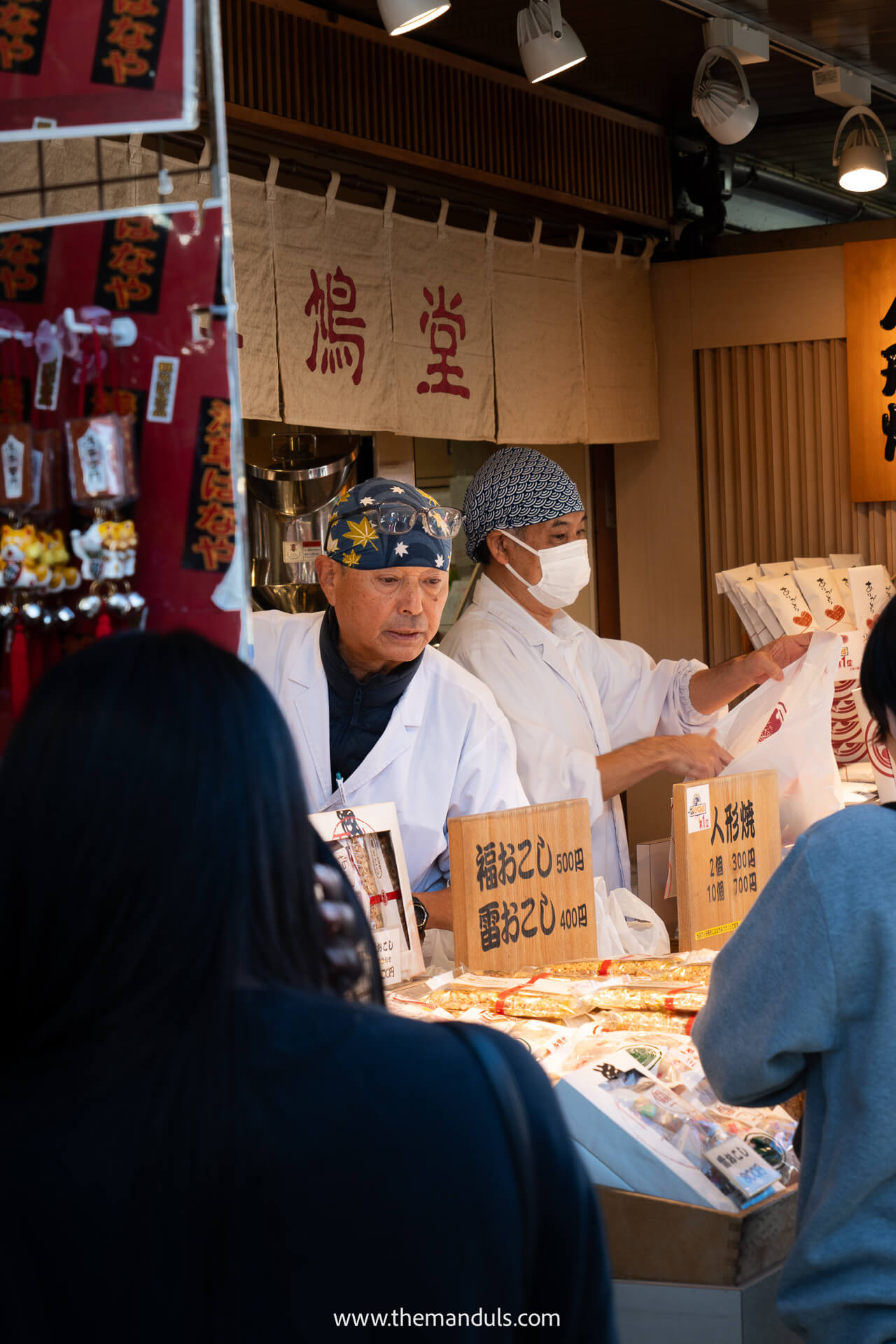
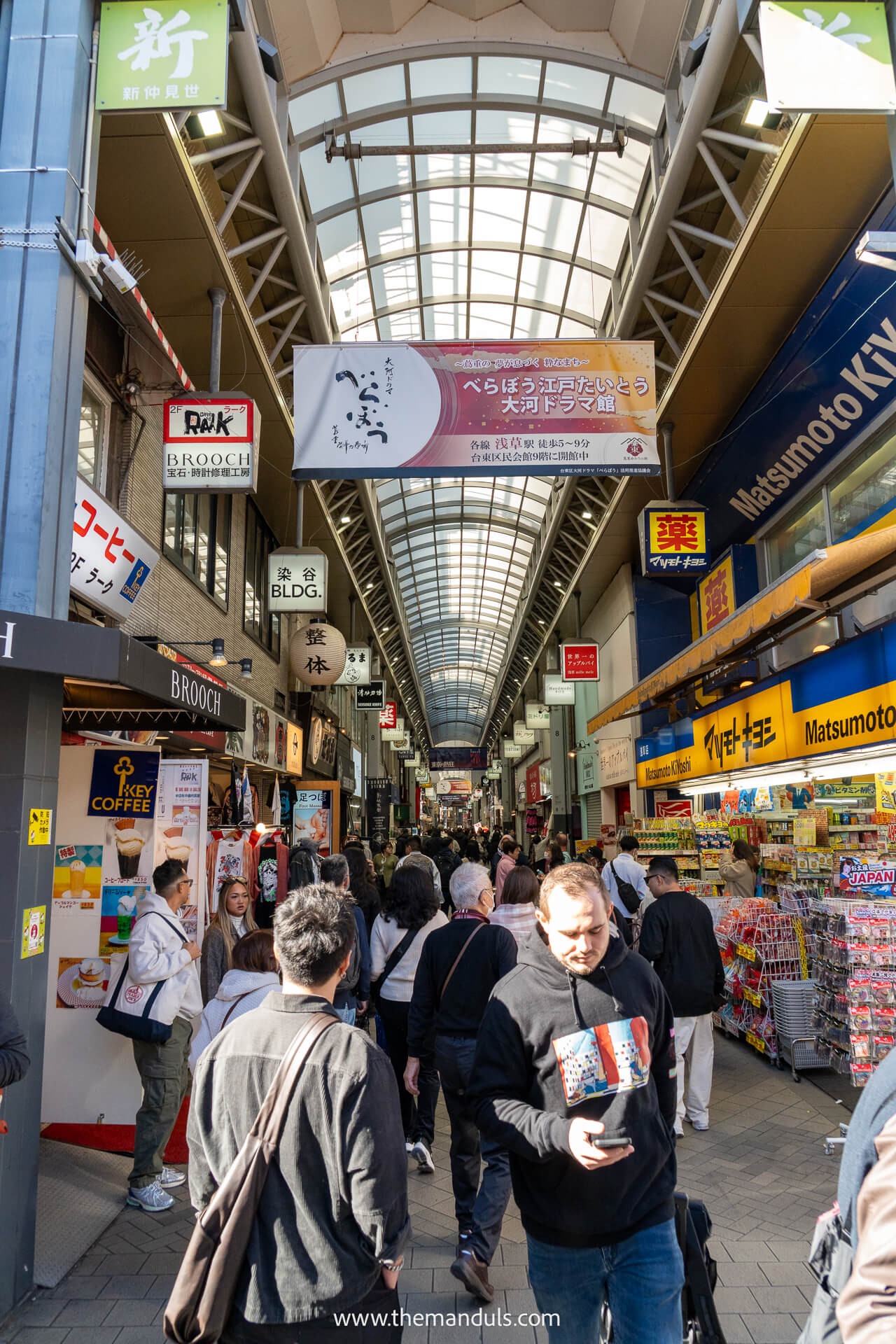
Nakamise Street is the busy stretch that leads from Kaminarimon to Senso-ji, lined with small stalls selling snacks, sweets, and souvenirs. This was easily one of the most crowded parts of Asakusa when we visited, but it’s also where a lot of the fun atmosphere comes from — everything smells good, looks tempting, and there’s always something happening.
One thing we found genuinely funny (and very Japanese) is the unspoken rule about not walking and eating. You can’t just grab a snack and stroll — and you can’t eat anywhere you like either.
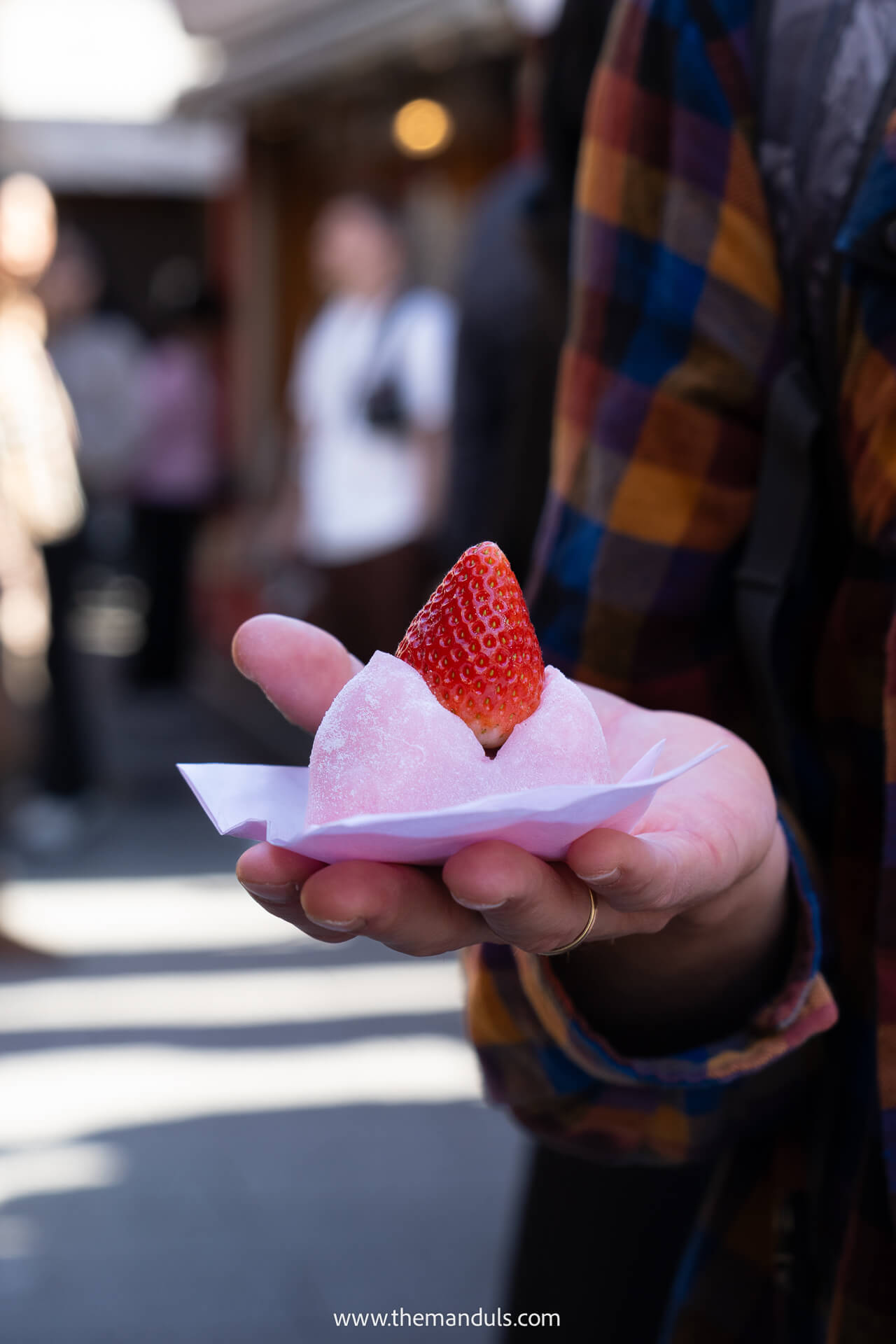
Each stall usually has a designated spot where you’re allowed to stand and eat, often right next to where you bought the food. It makes street food a bit tricky at first, but once you get used to it, it actually keeps the street from turning into total chaos.
For us, this ended up being one of the highlights of Asakusa. We didn’t rush it — we stopped, ate, moved on, and repeated — and that slower rhythm made the experience much more enjoyable despite the crowds.
3. Senso-ji Temple (Asakusa’s Main Landmark)

Entrance Fee: free
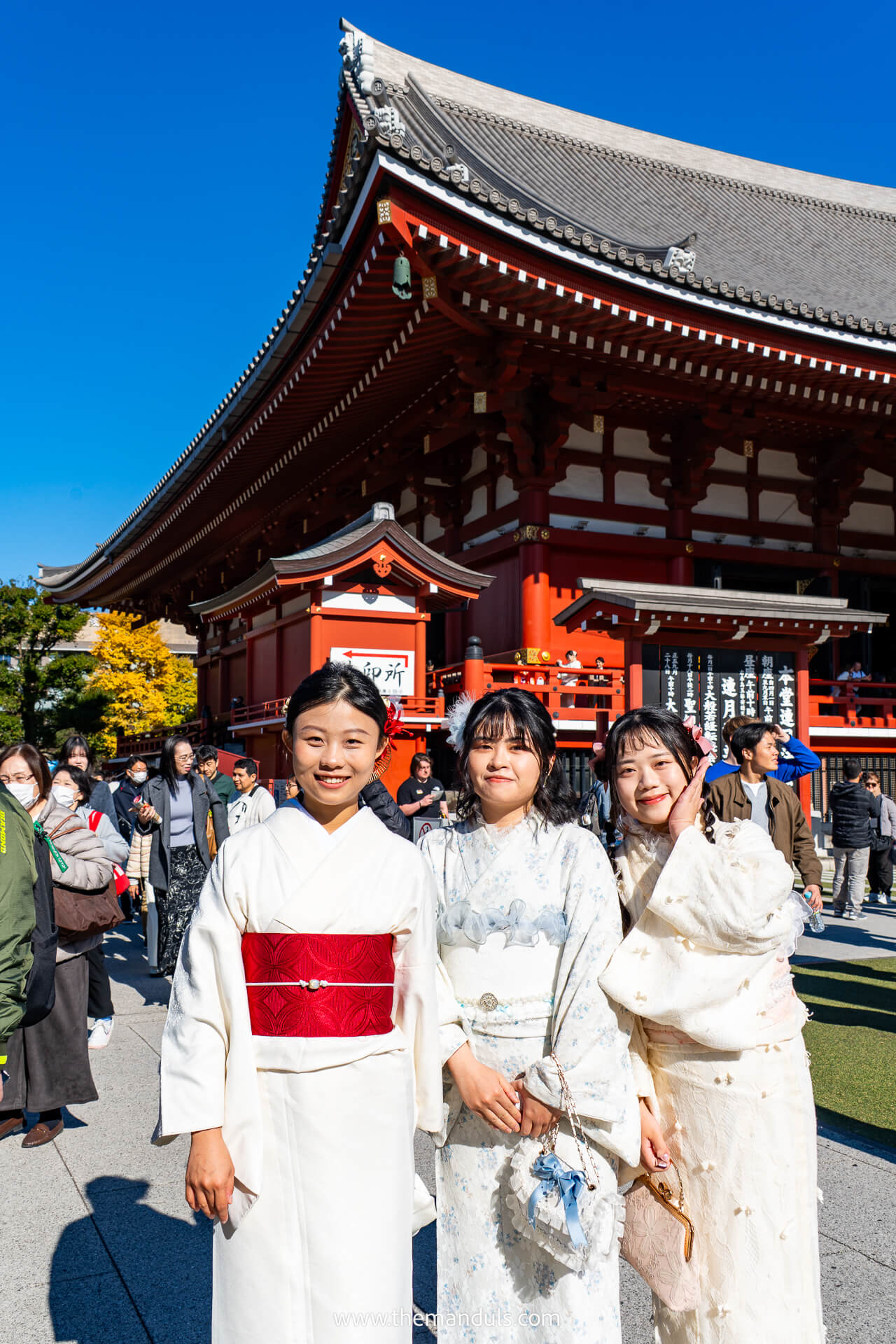
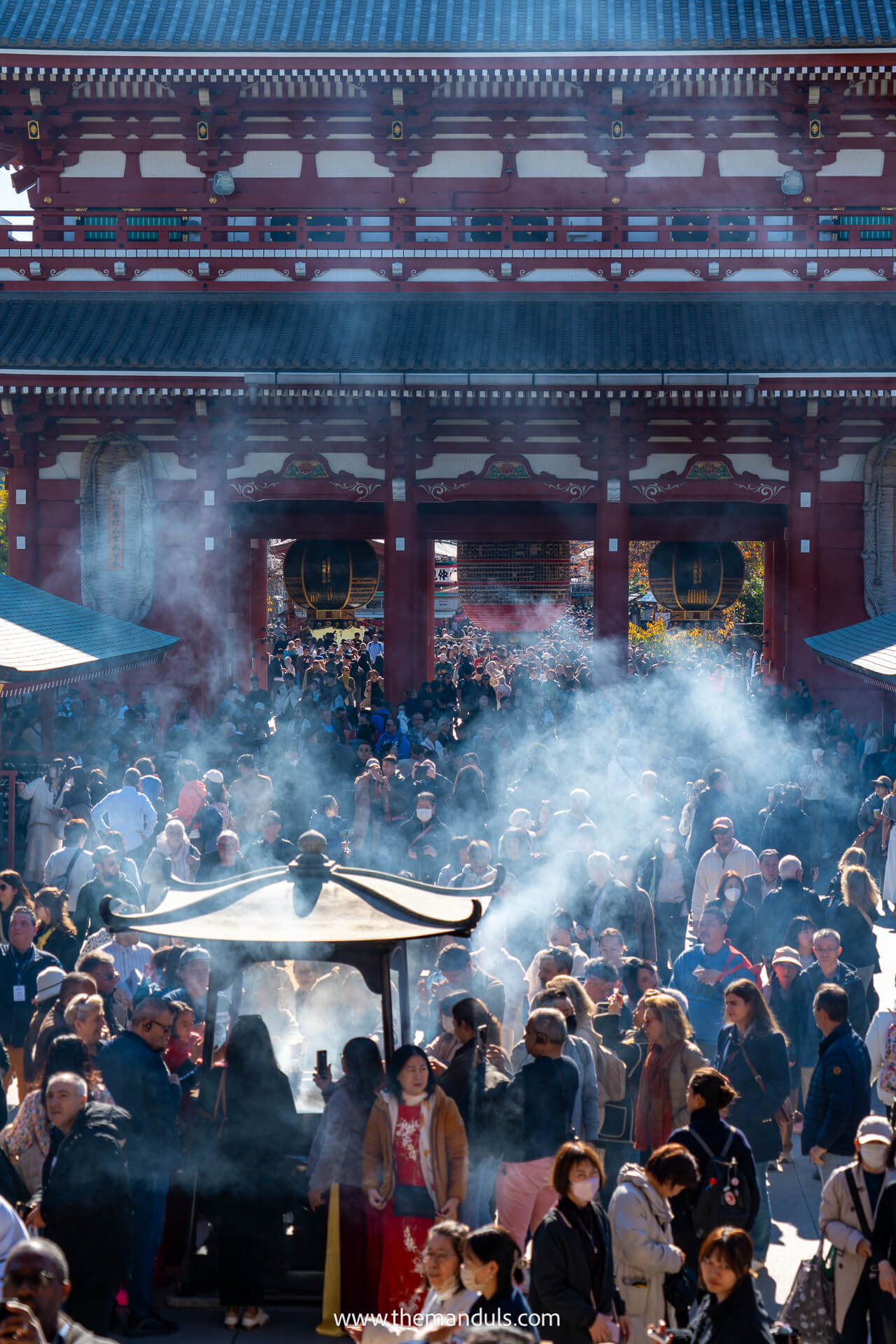
Senso-ji is the main reason people come to Asakusa. Once we passed Nakamise-dori and entered the temple complex, the space immediately opened up and the crowds thinned a little, which honestly felt like a relief — even though it was still busy overall. The atmosphere changes here: people praying, lighting incense, and plenty of visitors in rental kimonos stopping for photos around the grounds.
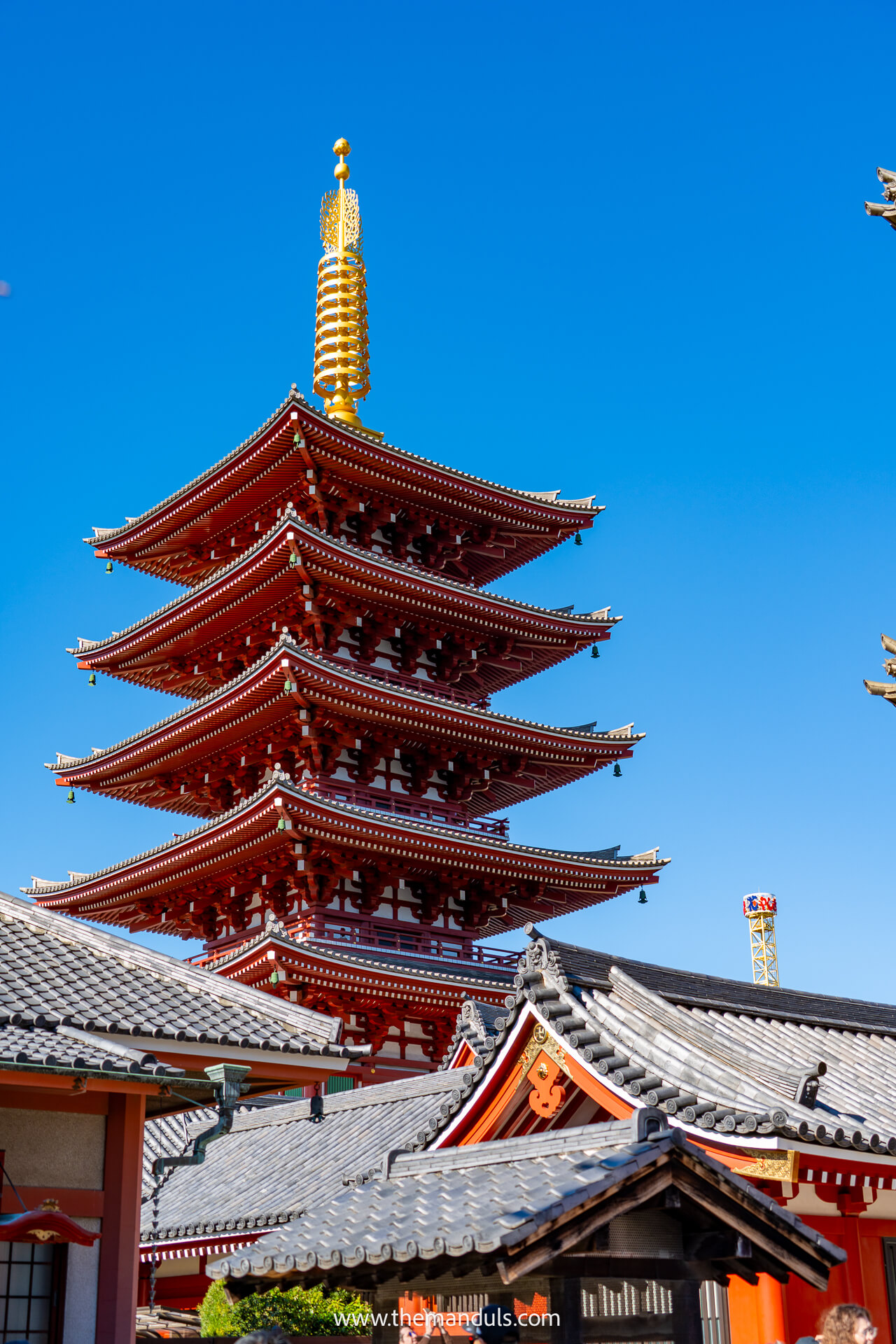
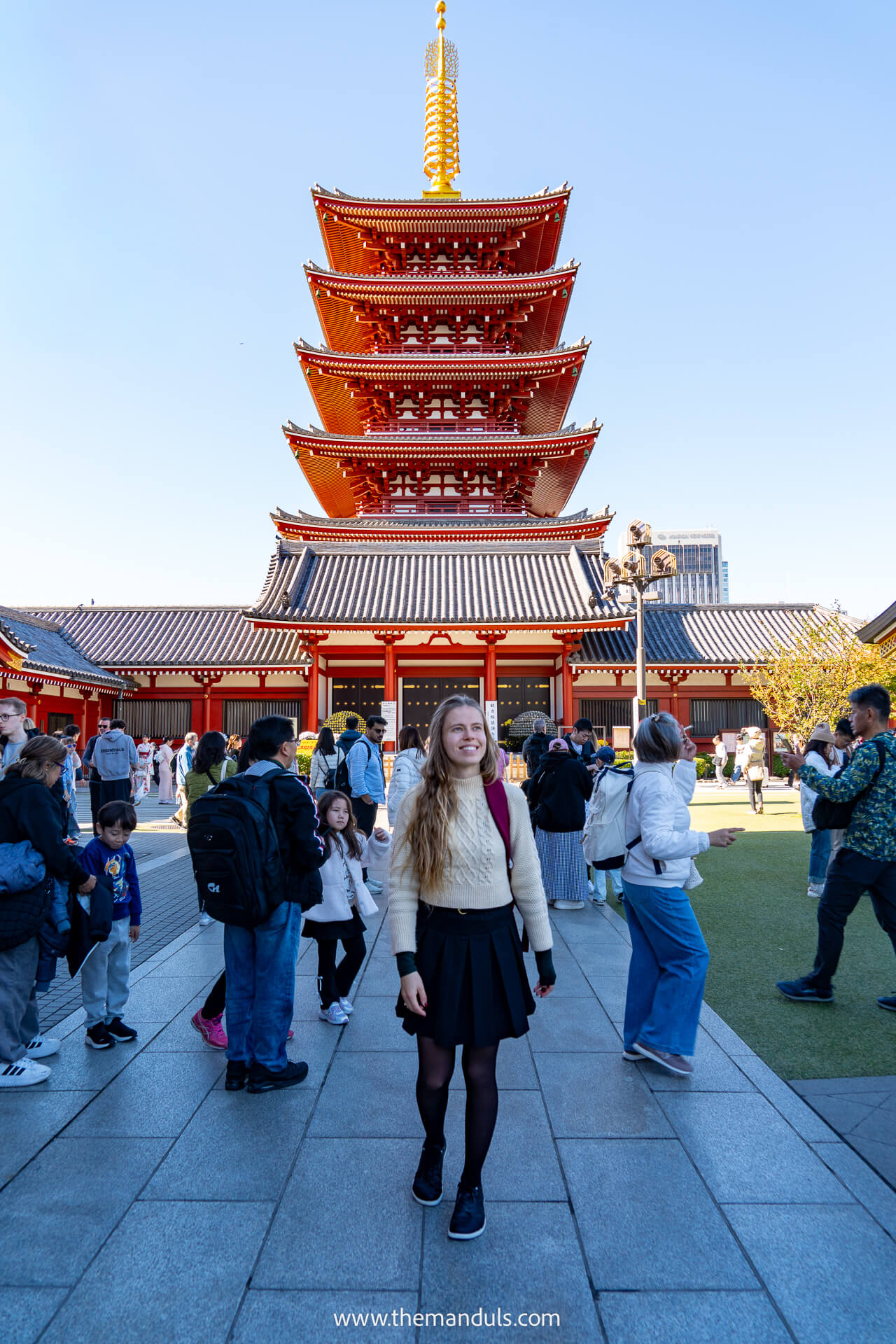
After passing through the entrance gate, you’ll notice a tall red-and-white pagoda on your left, while straight ahead stands the main temple hall, marked by a huge red lantern hanging at the entrance. Inside is the prayer hall, where visitors come to pray and make offerings. It’s not possible to enter, though.
It’s important to know that photography of the prayer hall is not allowed.
4. Explore the nieghbourhood on a rickshaw
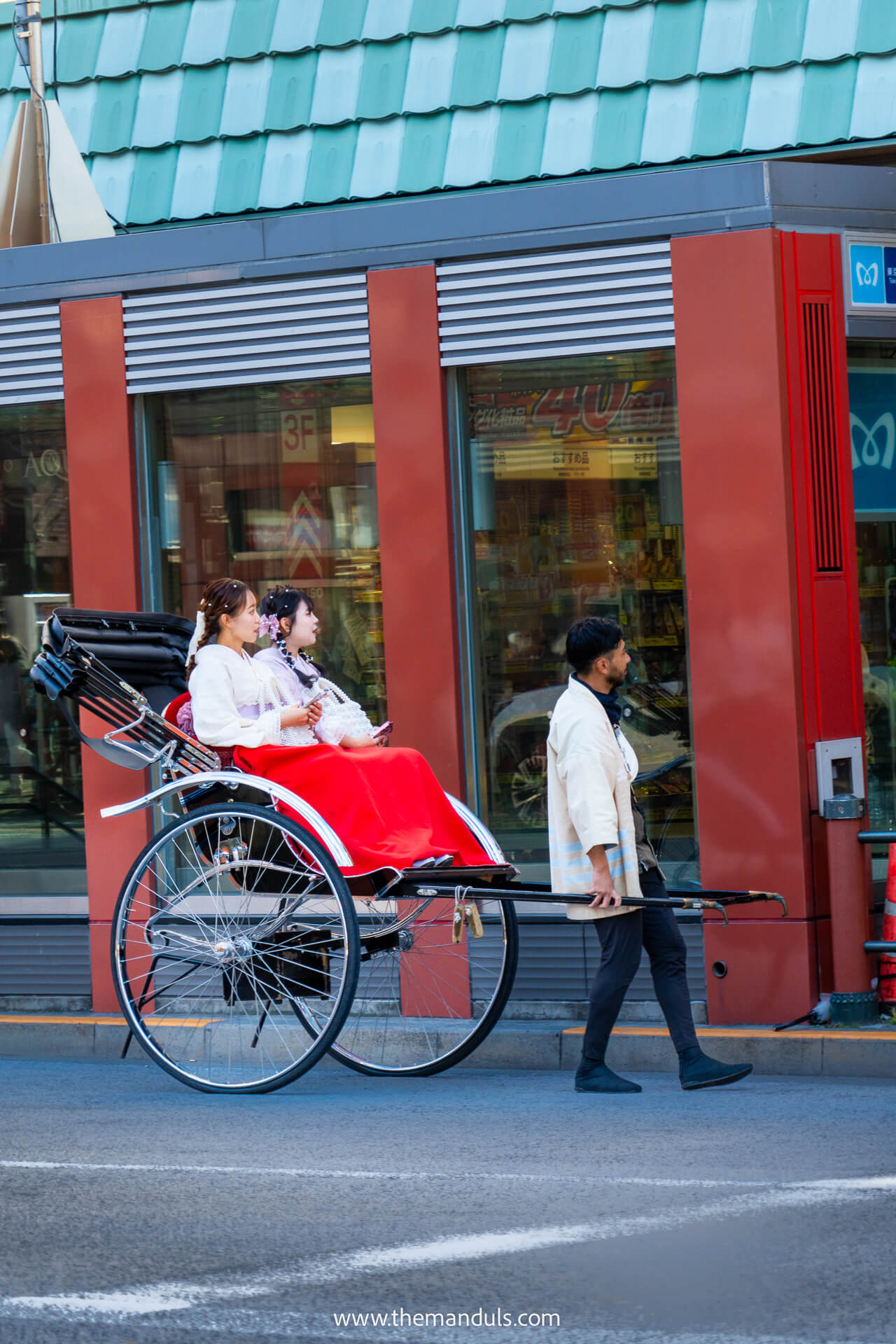
If you want to experience Asakusa in a more fun and effortless way, a rickshaw ride is a great option. These traditional rickshaws are a common sight in the area and let you see both the main streets and quieter corners without constantly weaving through crowds.
This 30-minute Asakusa rickshaw tour is especially popular and works well if you’re short on time, traveling with kids, or just want a break from walking. The drivers also act as guides, sharing local stories and helping with photos along the way, which makes the experience feel more personal than simply getting from A to B.
5. Sensō-ji Denboin Garden
Denboin Garden sits right next to the main temple complex, but it feels like a completely different world. The garden is beautifully maintained, with traditional landscaping, ponds, stones, and carefully shaped trees. It’s not huge, but that’s part of the charm.
Unfortunately, the garden is only open on special occasions, such as during illuminations in late autumn. We didn’t get to visit ourselves, but if your timing lines up, it looks like a great way to experience a quieter side of Asakusa.
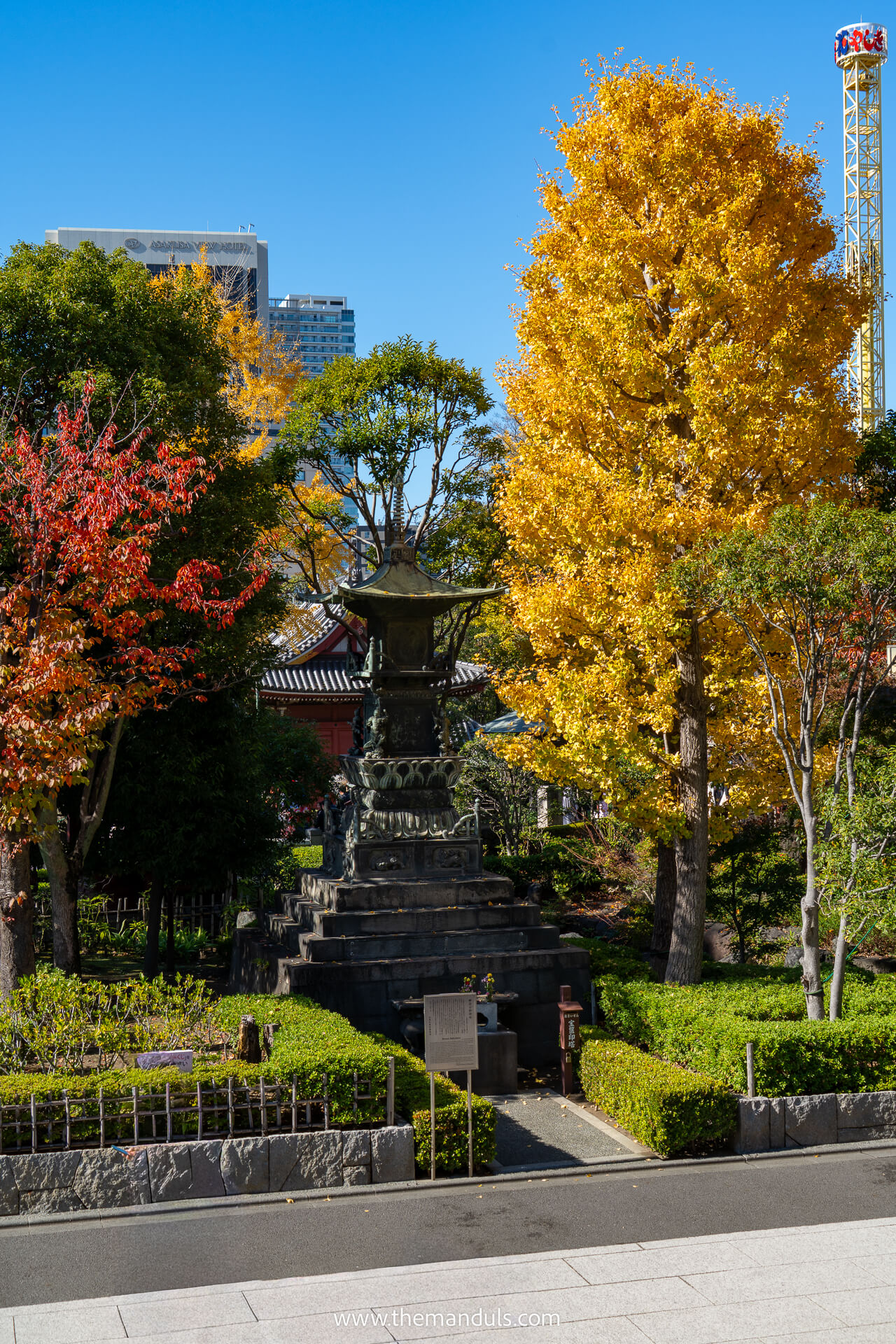
6. Enjoy views of Tokyo Skytree from Asakusa
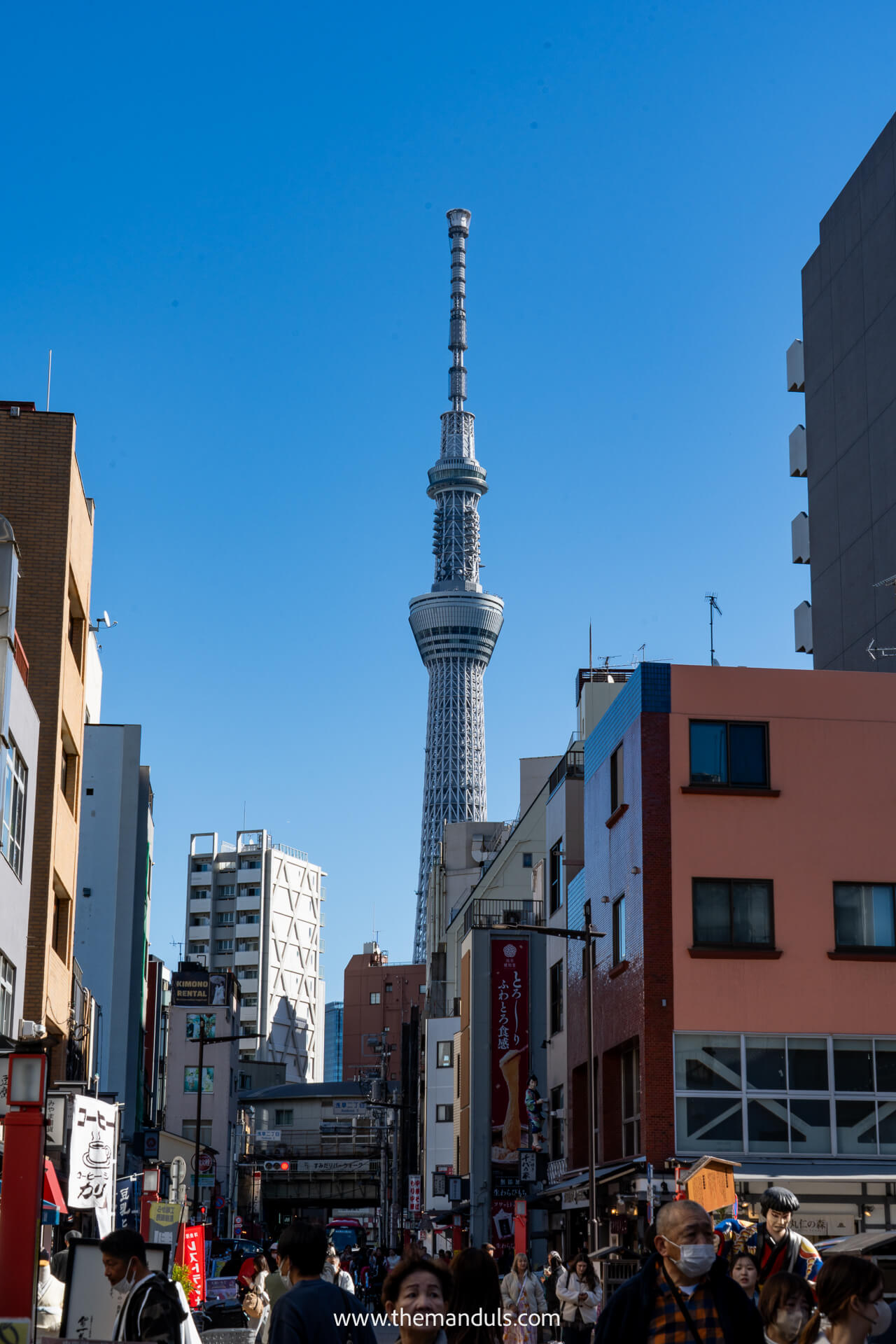
One thing we really liked about Asakusa is how close Tokyo Skytree feels, even though it’s technically in a different area. As we walked around the temple grounds and nearby streets, Skytree kept popping up in the background, creating a really nice contrast between old and modern Tokyo.
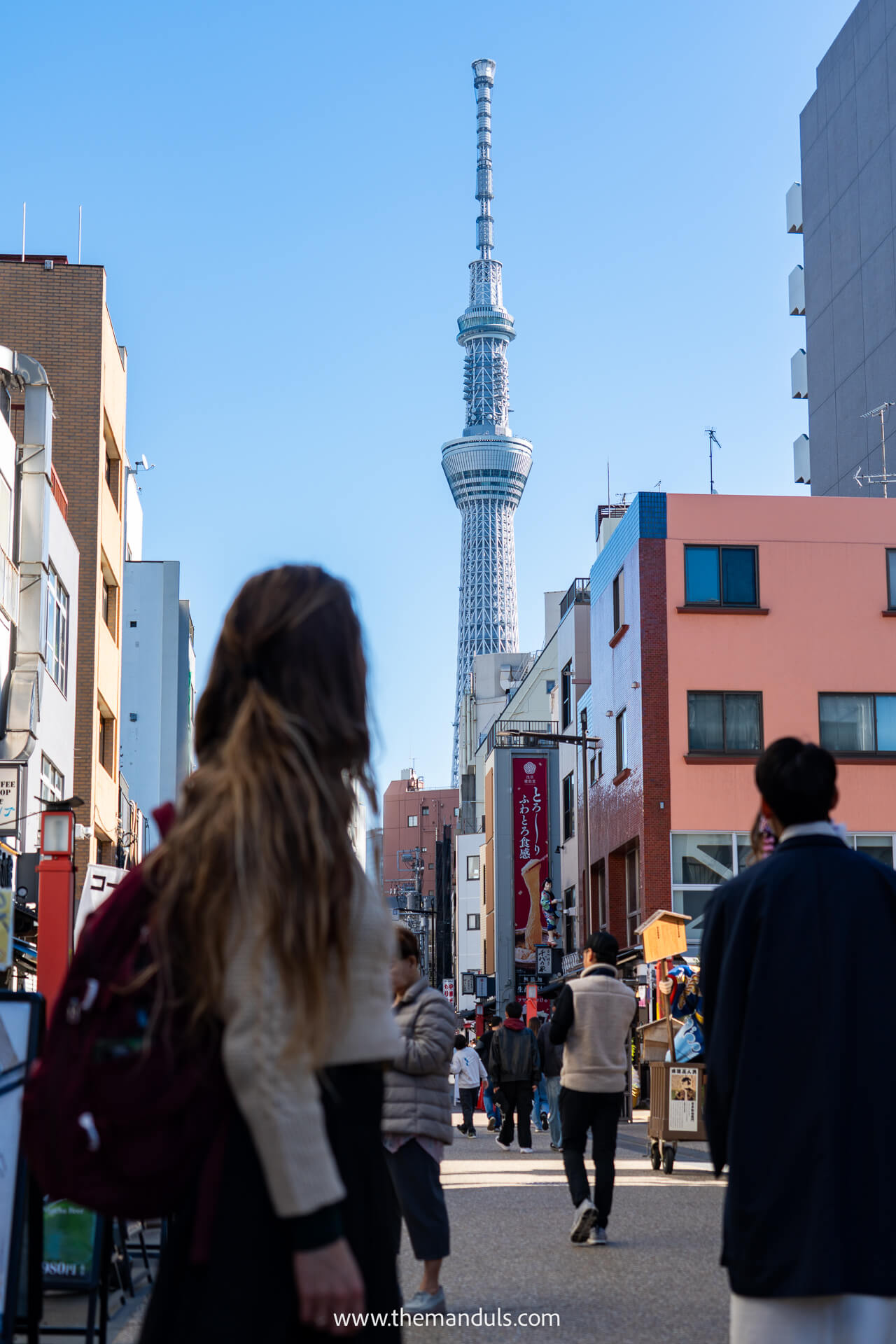
We found some of the best views along the edges of the temple complex and when walking toward the Sumida River, for example along Denboin Street. It’s not a dedicated viewpoint, but that’s exactly what we liked about it — we were just casually exploring, and suddenly there were these clear sightlines of one of Tokyo’s most recognizable landmarks.
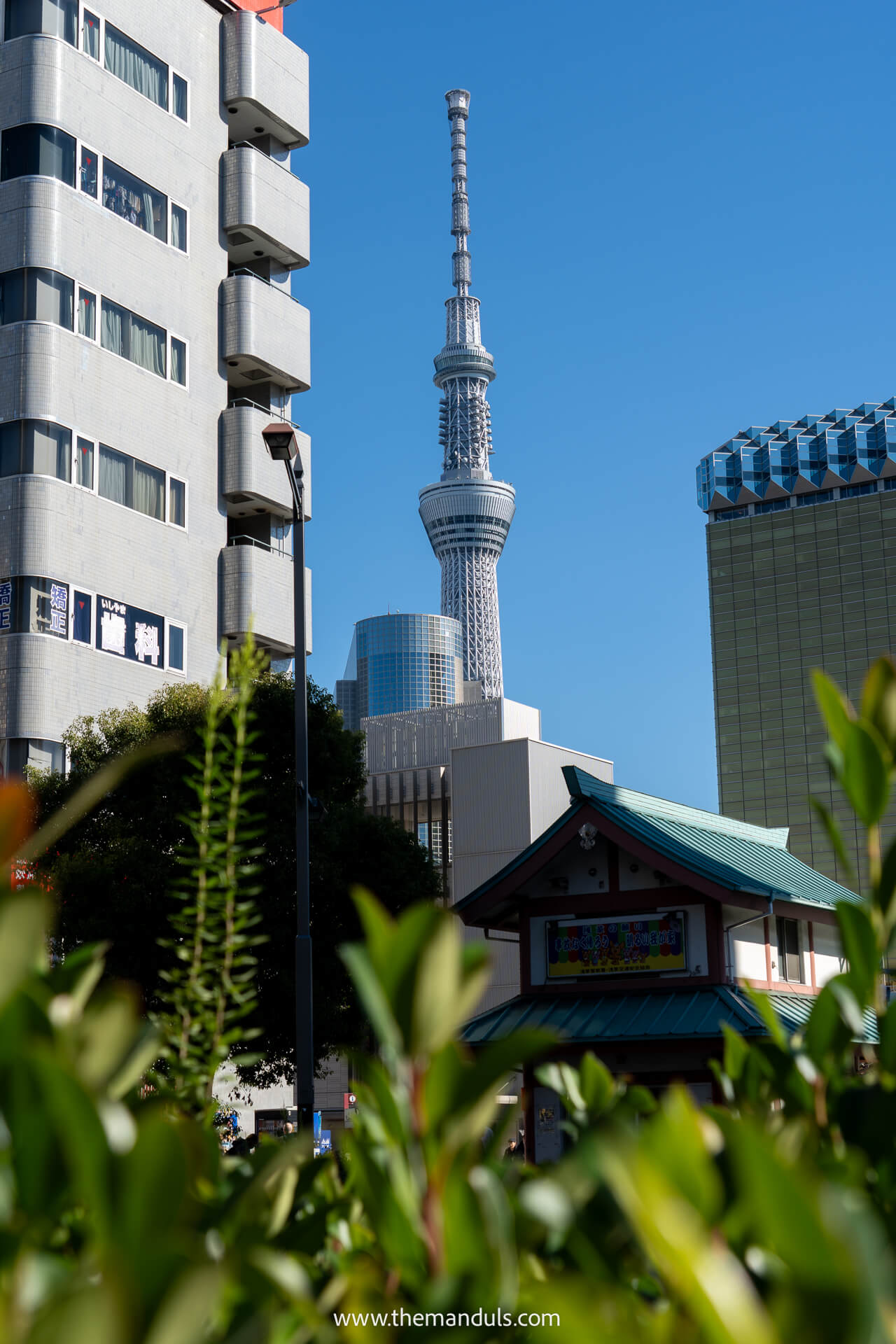
7. Explore the side streets for local shopping
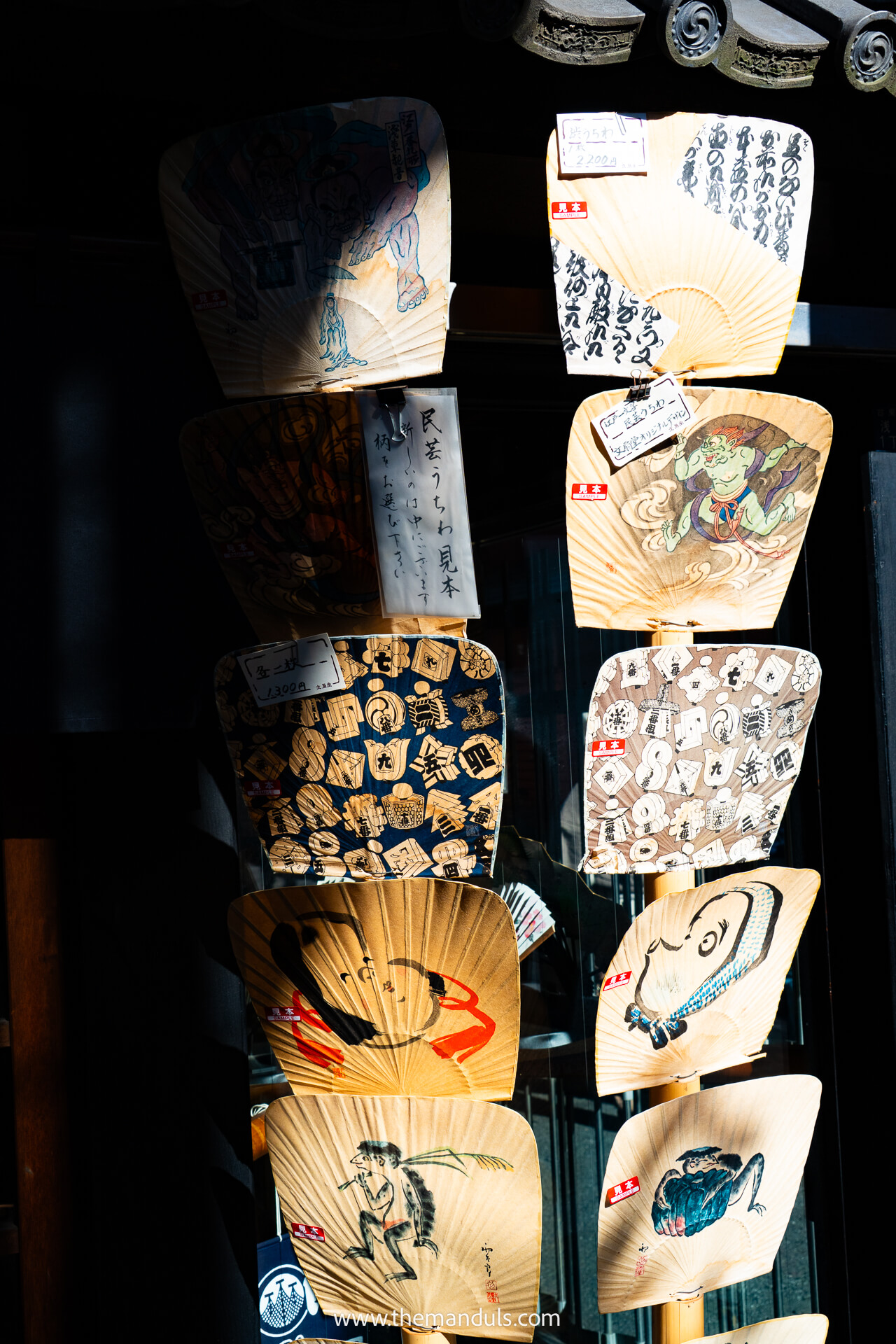
Once you step away from Nakamise Street, Asakusa immediately feels more relaxed. We really enjoyed wandering the side streets, where the crowds thin out and the shops feel more local. This is where you’ll find small family-run stores selling kitchenware, ceramics, traditional crafts, and everyday items rather than touristy souvenirs.
That said, if you prefer to stay closer to the main streets, you’ll find more street food options, souvenir stalls, and even a few small food courts. It’s busier, but also more lively — and better if food is your main focus rather than shopping.
8. Walk along the Sumida river
We didn’t end up walking along the Sumida River ourselves — mainly because we had limited time and wanted to focus on other spots in Asakusa. That said, it’s a really nice add-on if your Tokyo itinerary is a bit more relaxed.
The riverbanks offer a completely different atmosphere compared to the busy temple area: more open space, fewer people, and clear views toward Tokyo Skytree. If you find Asakusa overwhelming or simply want to slow things down, this walk can be a good way to balance out the crowds.
Where to eat & drink
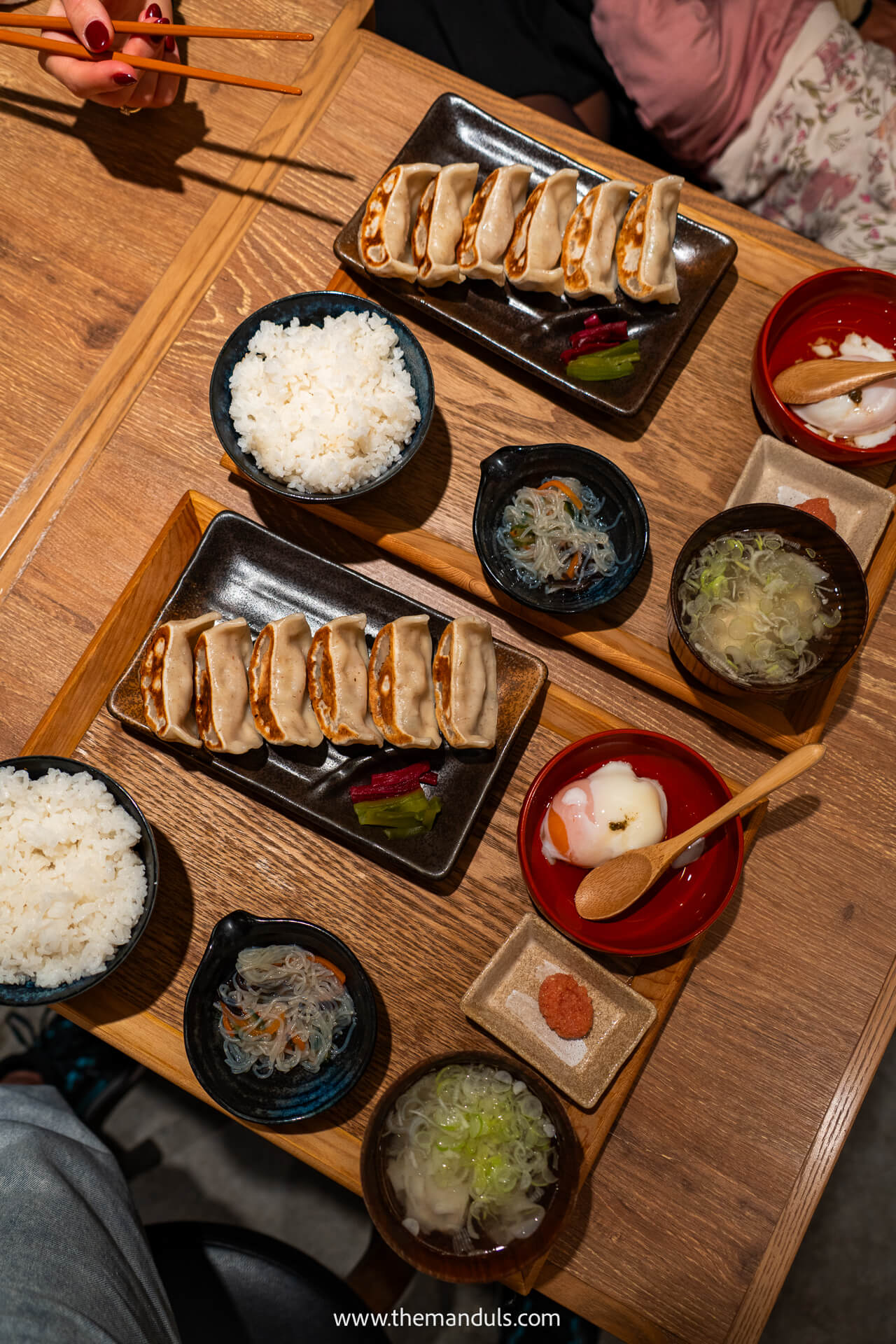
- The Juicy Dumpling Manufactory – Where we had lunch. Incredible gyoza: juicy, freshly made, and very fair prices. Casual and perfect between sights.
- Maguro Bito Kaminarimon – The best sushi in the area if quality matters most. A small standing sushi bar, but the tuna is excellent and worth the wait.
- Mo-Mo-Paradise Asakusa Kaminarimon – Popular shabu-shabu & sukiyaki spot with good-quality A5 Wagyu that melts in your mouth.
- Asakusa Omakase Sushi Restaurant Horikawa – A more refined omakase experience with seasonal fish and attentive service. Ideal if you want a once-in-a-lifetime dining experience.
- Injoy – A relaxed izakaya-style place with incredibly tasty vegan options.
Best time to visit
Early morning (before 9am) is hands down the best time to visit. The streets are quieter and Senso-ji feels far more atmospheric.
We arrived late morning, and it was already packed, especially around Nakamise Street, with slow-moving crowds.
Evening (after sunset) is another good option. The temple is beautifully lit, crowds ease off, and the area feels calmer and more local.
Where to stay in Tokyo
Tokyo is huge, and where you stay has a big impact on how easy (or exhausting) your trip feels. After spending time moving between different neighborhoods, we put together a detailed where to stay in Tokyo guide that focuses on areas and hotels that actually work in real life — not just places that look central on a map.
We’ve narrowed it down to hotels with consistently strong Booking.com reviews, good transport access, and the kind of comfort we’d personally look for again. One important thing to keep in mind: during peak periods like cherry blossom season and autumn foliage, hotel prices climb fast — sometimes doubling — and the best options sell out early.
Once you find a hotel that ticks the right boxes, it’s usually smarter to lock it in and stick with it. Waiting or cancelling in hopes of a better deal often backfires, leaving you with fewer choices or a less convenient location.
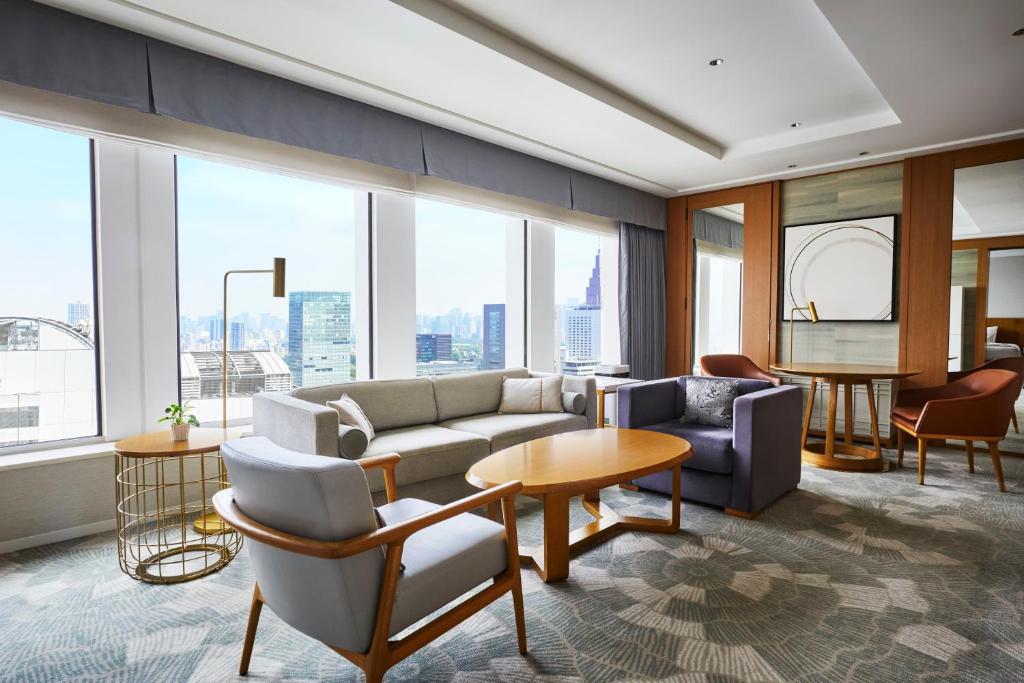
⭐️⭐️⭐️ Keio Plaza Hotel Tokyo Premier Grand (our top pick) – A high-end stay in Shinjuku that consistently stands out for room size, comfort, and service — three things that are surprisingly hard to find together in Tokyo. Reviews regularly highlight the spacious rooms, quiet atmosphere despite the busy area, and the added value of the Premier Grand lounge. The location makes getting around effortless, with multiple train lines, restaurants, and evening walks all within easy reach.
⭐️ Best for: Couples who want comfort, space, and a premium experience in a busy area.
👉 Check current deals →
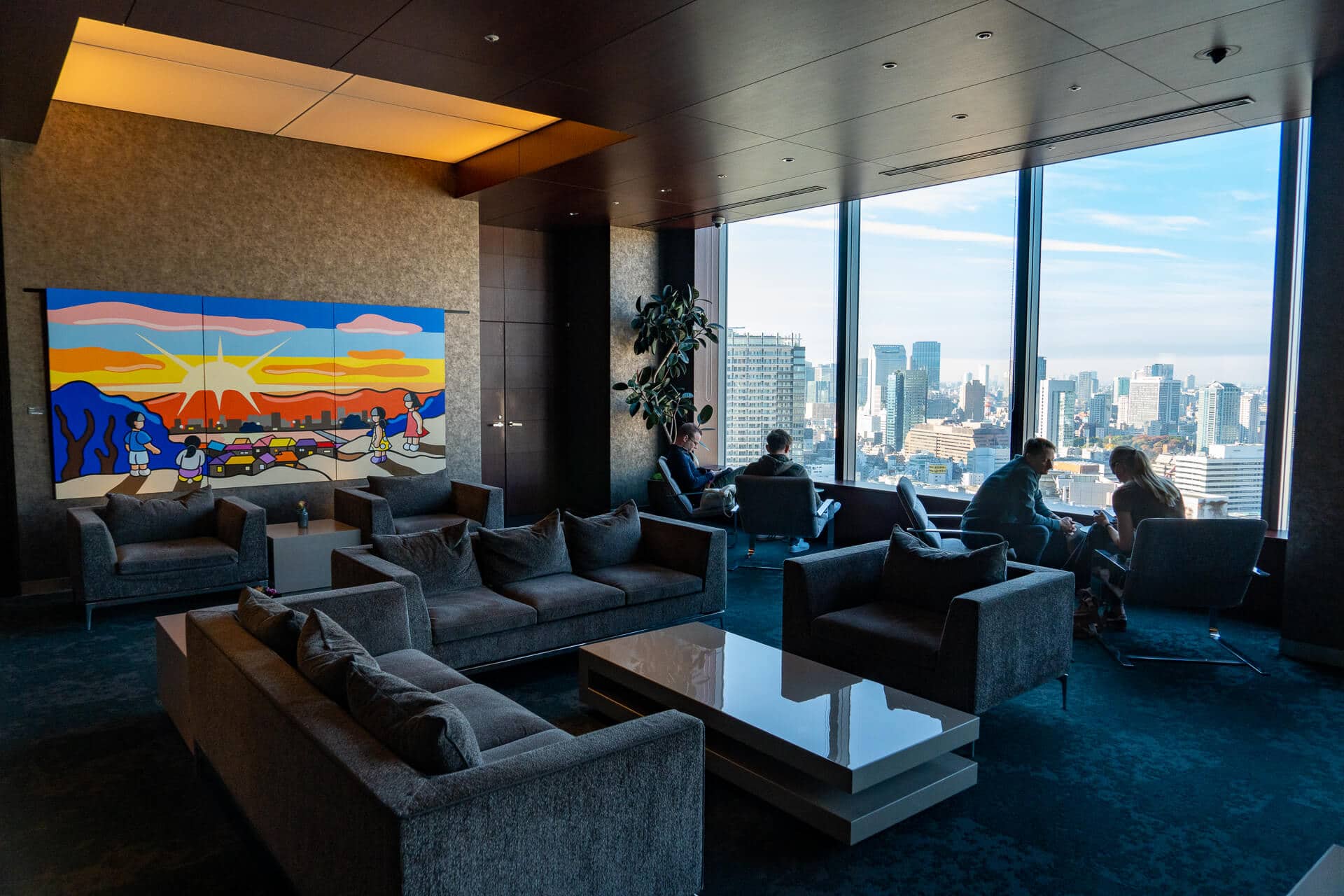
⭐️⭐️ Park Hotel Tokyo – We stayed at Park Hotel Tokyo and really liked it as a calm, well-located base in the city. The hotel sits above Shiodome Station, which made getting around Tokyo incredibly easy, and once you’re inside, it feels noticeably quieter than the streets below. Our room had city views and an art-filled design, which gave the stay more character.
What stood out most was how balanced it felt — modern and polished, but not flashy or overwhelming. Based on our stay and what other guests consistently mention in reviews, it’s a solid choice if you want comfort, convenience, and a central location without the chaos of busier neighborhoods.
⭐️ Best for: Travelers who want design, convenience, and a calm base.
👉 Compare prices →
⭐️ Shibuya Tokyu REI Hotel – A reliable budget-friendly option just steps from Shibuya Crossing. Reviews consistently point out the unbeatable location and cleanliness, with rooms that are compact but well laid out. It’s not a place you spend much time in — but for short stays or packed itineraries, it does exactly what it should.
⭐️ Best for: Budget travelers who want location and simplicity.
👉 See latest prices →
FAQ
For most people, 2–3 hours is enough to see the main highlights, eat some street food, and walk around without rushing. If you add the river walk or shopping side streets, plan closer to half a day.
Definitely. It shows a more traditional side of Tokyo and is easy to navigate, even if it’s your first day in the city. Just be prepared for crowds.
Yes, but expect it to be slow and sometimes tricky, especially on Nakamise Street. The temple grounds are more spacious, but busy periods can still be challenging.
Yes, especially if you want a quieter experience. After sunset, crowds thin out and the temple area feels calmer, with a completely different atmosphere.
Final Thoughts
Asakusa isn’t a hidden gem — it’s busy, lively, and unapologetically popular — and that’s exactly why it works. We had a good time here, even though it was crowded, and for us the experience was more about the atmosphere and street food than ticking off sights.
If you go in expecting calm and quiet, you’ll likely be disappointed. But if you visit early, take your time, and accept the crowds as part of the experience, Asakusa shows a side of Tokyo that feels very different from the modern neighborhoods.
It’s not somewhere we’d spend a full day, but it’s absolutely worth a spot on your Tokyo itinerary.