
This article contains affiliate links. Learn more in our affiliate disclosure.
There’s something about the Bavarian Alps in Germany that pulls me back again and again. The crisp mountain air, cowbells echoing across valleys, and dramatic peaks make every day feel memorable.
This guide is all about experiences — hikes worth the effort, lakes that actually live up to the hype, viewpoints you shouldn’t miss, and a few surprises that most visitors overlook. If you’re planning an active trip and want more than just scenic drives, you’re in the right place.
I’ve visited the Bavarian Alps more than 10 times since 2016, in every season — from snowy winter landscapes to wildflower-covered summer meadows — and each trip gave me completely different memories.
So if you’re wondering which experiences are truly worth your time and which ones you can skip, here’s a curated list of the best things to do in the Bavarian Alps based on my own trips and what actually stood out.
These are our top hotels in Bavarian Alps we’d book again
⭐️⭐️⭐️ Hotel Das Rübezahl 4* – The most romantic stay we’ve ever had, with a spa overlooking Neuschwanstein and outstanding food. Book this if you want a memorable experience, not just a room.
⭐️⭐️ Das König Ludwig 5* – Best adult-only pick for a wellness-focused stay thanks to its huge spa, pools, and resort-style comfort after long mountain days.
⭐️ Das Graseck 4* – Choose this if you want something unique and peaceful — you arrive by private cable car and wake up surrounded by mountains.
Best Things to do in Bavarian Alps
1. Explore Garmisch-Partenkirchen & its historic colorful houses
I’ve been to Garmisch-Partenkirchen quite a few times by now, but each visit still surprises me. It’s the perfect base for exploring the Bavarian Alps — central, scenic, and surrounded by some of the region’s best highlights.
If you’re planning multiple hikes, lakes, or mountain trips, staying here just makes everything easier.
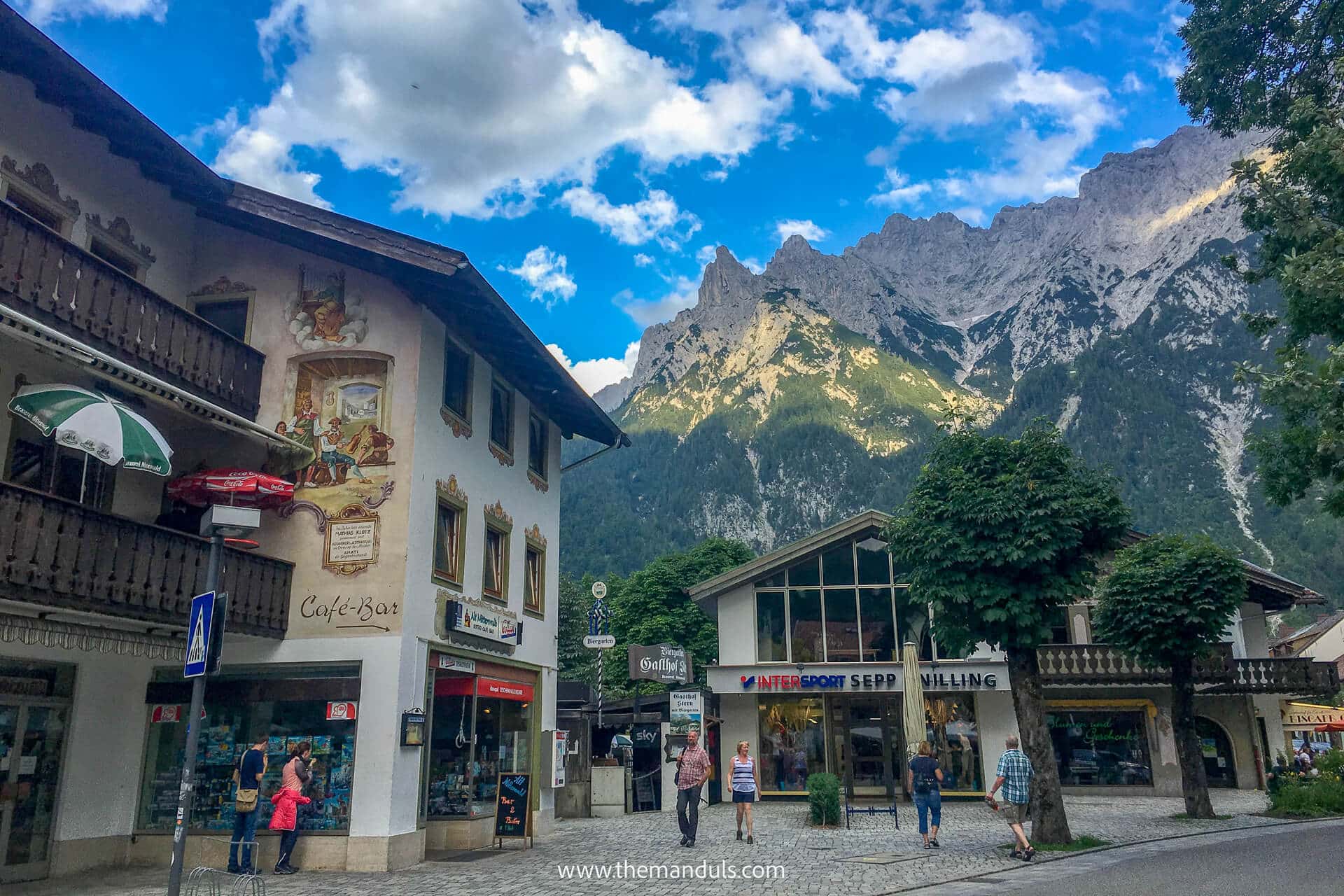
My favorite part is the historic Partenkirchen side, especially Ludwigstraße, where traditional Bavarian houses are decorated with colorful frescoes (Lüftlmalerei). It honestly feels like walking through an open-air gallery — painted facades, flower-filled balconies, and mountain backdrops everywhere you look.
In summer, it’s a fantastic base for hikes and nearby adventures like Partnachklamm. In winter, it transforms into a major ski destination.
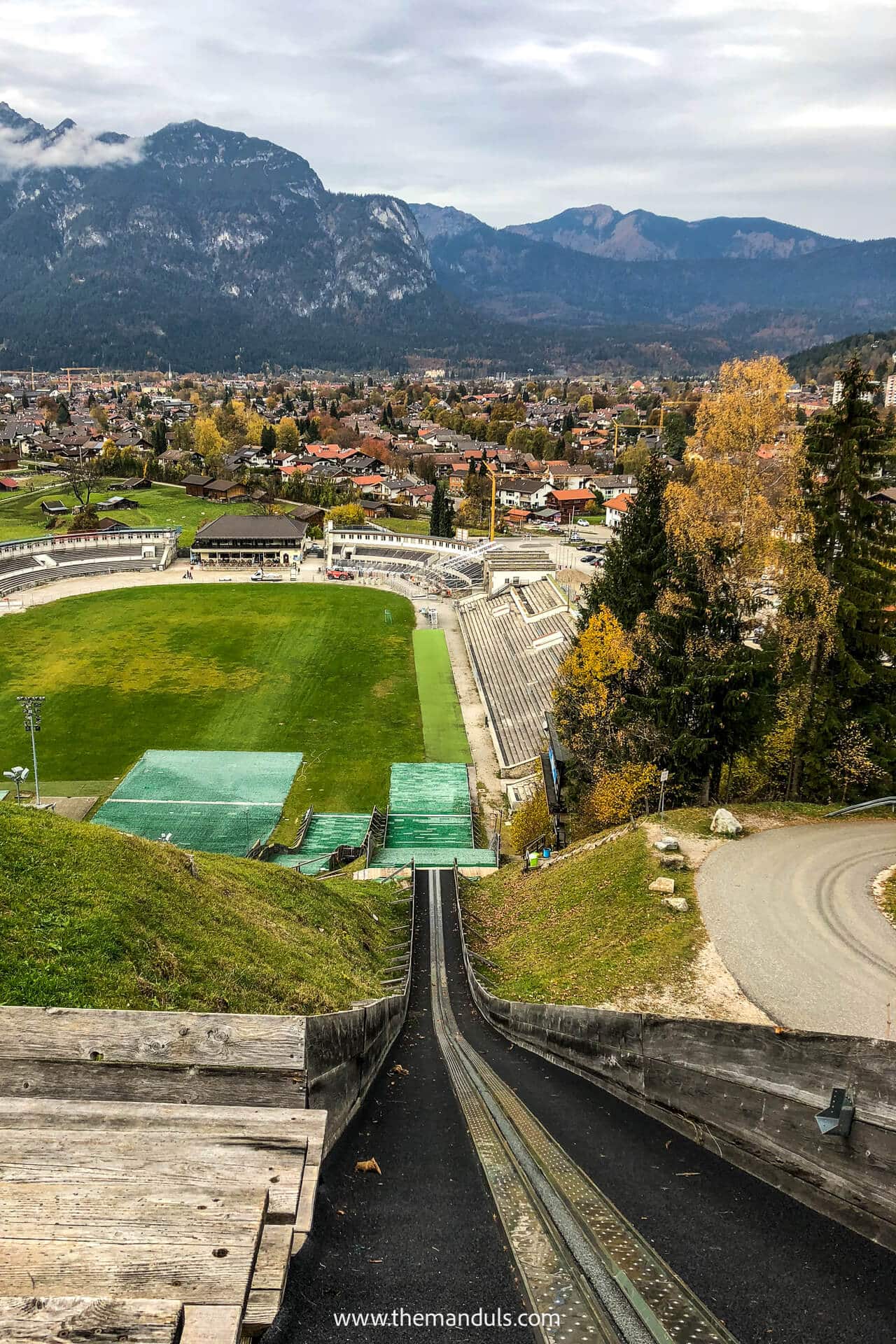
The town even hosted the 1936 Winter Olympics, and today you can still admire the Olympic ski jumps — their height is genuinely impressive when you see them in person.
Plan at least 2–3 hours to explore the old town properly, longer if you stay for food or combine it with nearby sights.
2. Visit the dramatic Partnachklamm

Entrance Fee: adult €10, children €5

Opening hours: 8 am – 8 pm or 6 pm depending on season
I’ve been to Partnachklamm twice, and it still feels dramatic every single time. There’s a reason why it’s one of the most visited attractions in Bavarian Alps.
The hike starts with about a 30-minute walk from the Olympic stadium to the gorge entrance, and even that section is beautiful — open meadows, mountain views, and forest paths that slowly build anticipation.
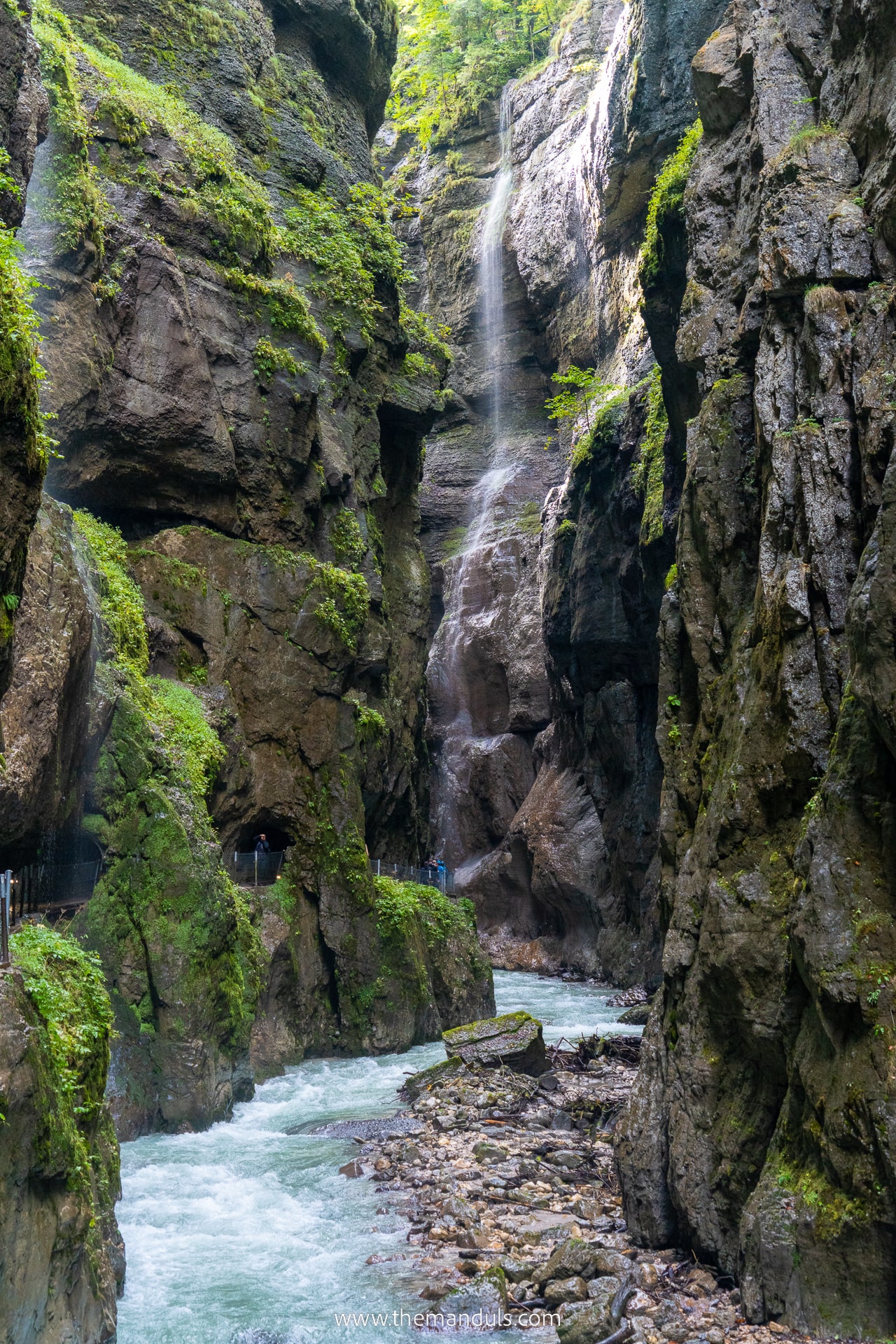
The entrance itself is marked by a short tunnel, which already gave us a preview of what’s coming. Inside, we moved through a series of tunnels and open sections where the river rushed powerfully below the narrow walkway.
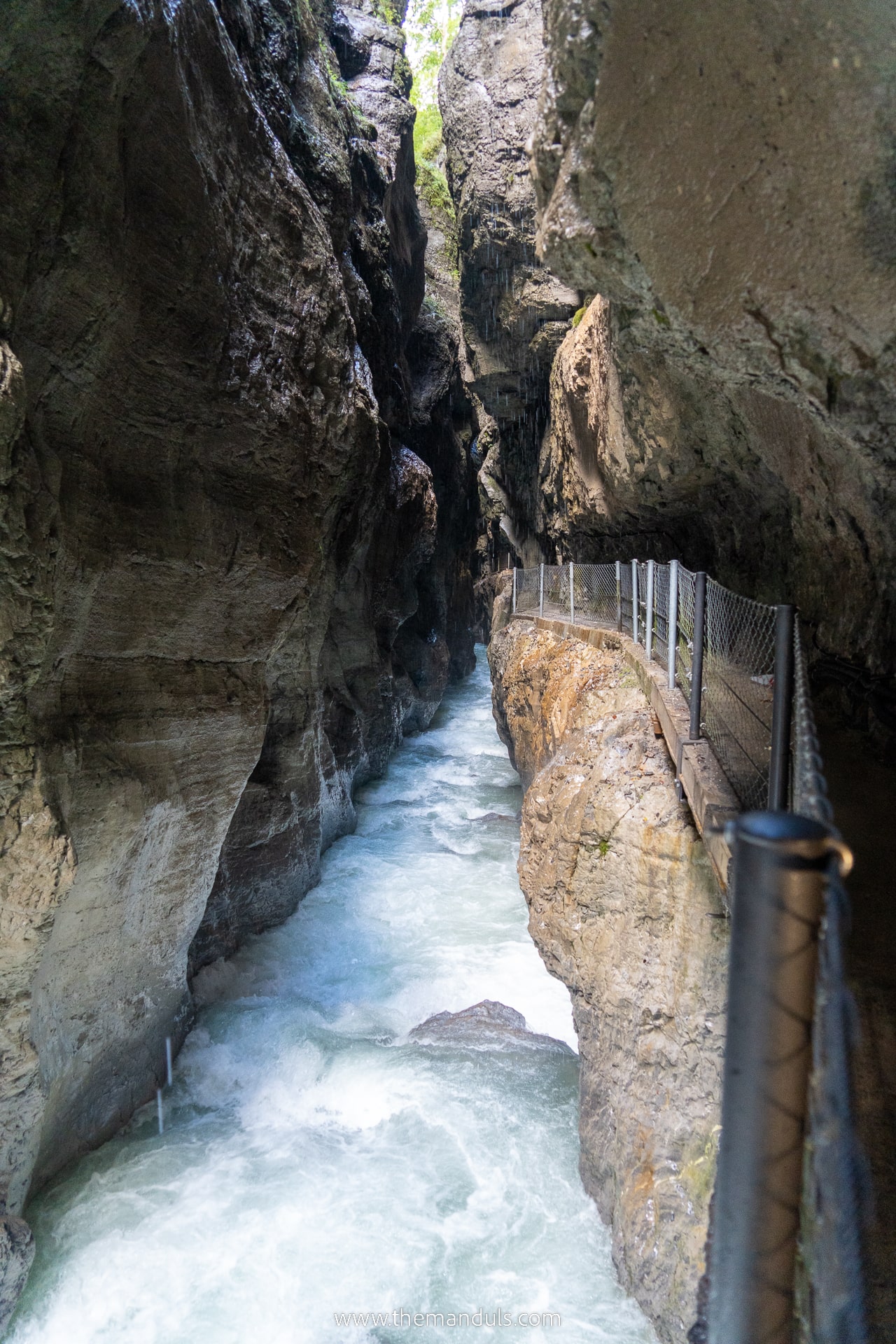
The rock walls rise almost vertically above you, and in some spots the path feels carved straight into the cliff. It’s not physically demanding at all, but visually it’s incredibly impressive.
The gorge section takes around 45 minutes, but I’d recommend turning it into a loop. For the return, hike back above the gorge through the meadows and forest — it’s quieter, scenic, and gives you a completely different perspective.
Insider tip: Always bring extra layers — it’s usually much colder once you’re inside the gorge.
Official Website: partnachklamm.de
3. Stroll around Lake Eibsee
Lately, Eibsee has been everywhere online — and after visiting three times in three different seasons, I can confidently say it really is that beautiful in real life.
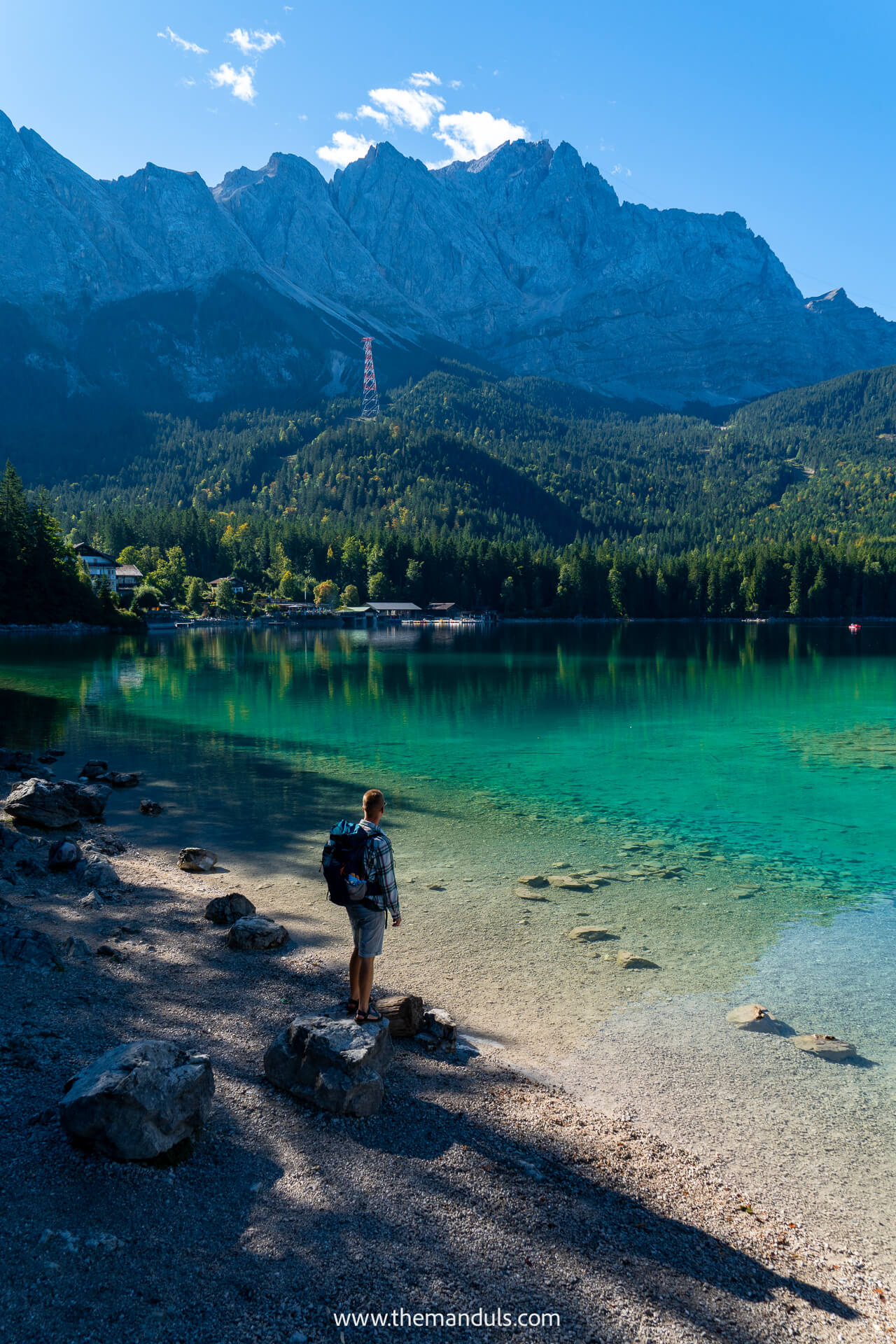
The first time I saw the turquoise water with Zugspitze rising dramatically behind it, it instantly became one of my favorite places in the Bavarian Alps.
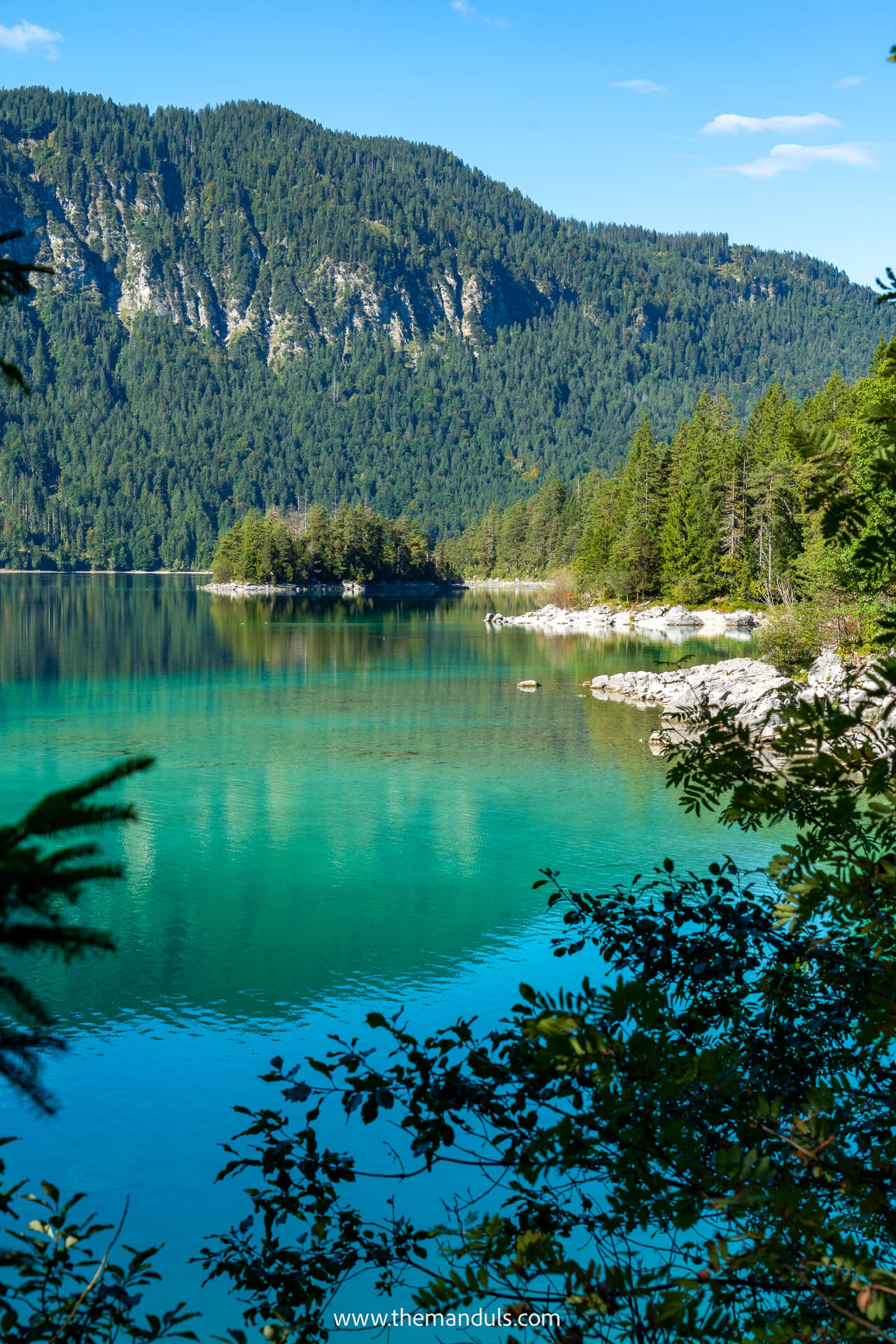
The main highlight is walking the 7.2 km lakeside loop, which takes about 2–2.5 hours at a relaxed pace. It’s more of a scenic stroll than a hike — wide gravel paths, mostly flat, and suitable for almost everyone.
If you don’t have time for the full circuit, I’d strongly recommend prioritizing the north shore. That’s where the views toward Zugspitze are the most dramatic, with tiny islands scattered across crystal-clear water.
What makes Eibsee worth it is the variety in one place — viewpoints, forest sections, small beaches, boat rentals, and even swimming spots.
If you want the full experience without rushing, plan at least half a day. And if you’re building your trip around the region, this is easily combined with Zugspitze visit.
Insider tip: Arrive before 9 am in peak season — parking fills up quickly on sunny days, and the lake feels completely different when it’s quiet
Official Website: eibsee.de
4. Visit Zugspitze — Germany’s highest peak
Price: ~ €60 – €80 for an adult
Standing on top of Germany’s highest mountain feels genuinely special — not just because of the altitude, but because the views stretch across four countries on clear days.
You glide up by cable car or train, and within minutes the landscape transforms from forests and valleys to dramatic rocky peaks and snowfields. It’s ideal for anyone who wants those big mountain views without a strenuous climb — including families, casual travelers, and photographers chasing panoramic shots.
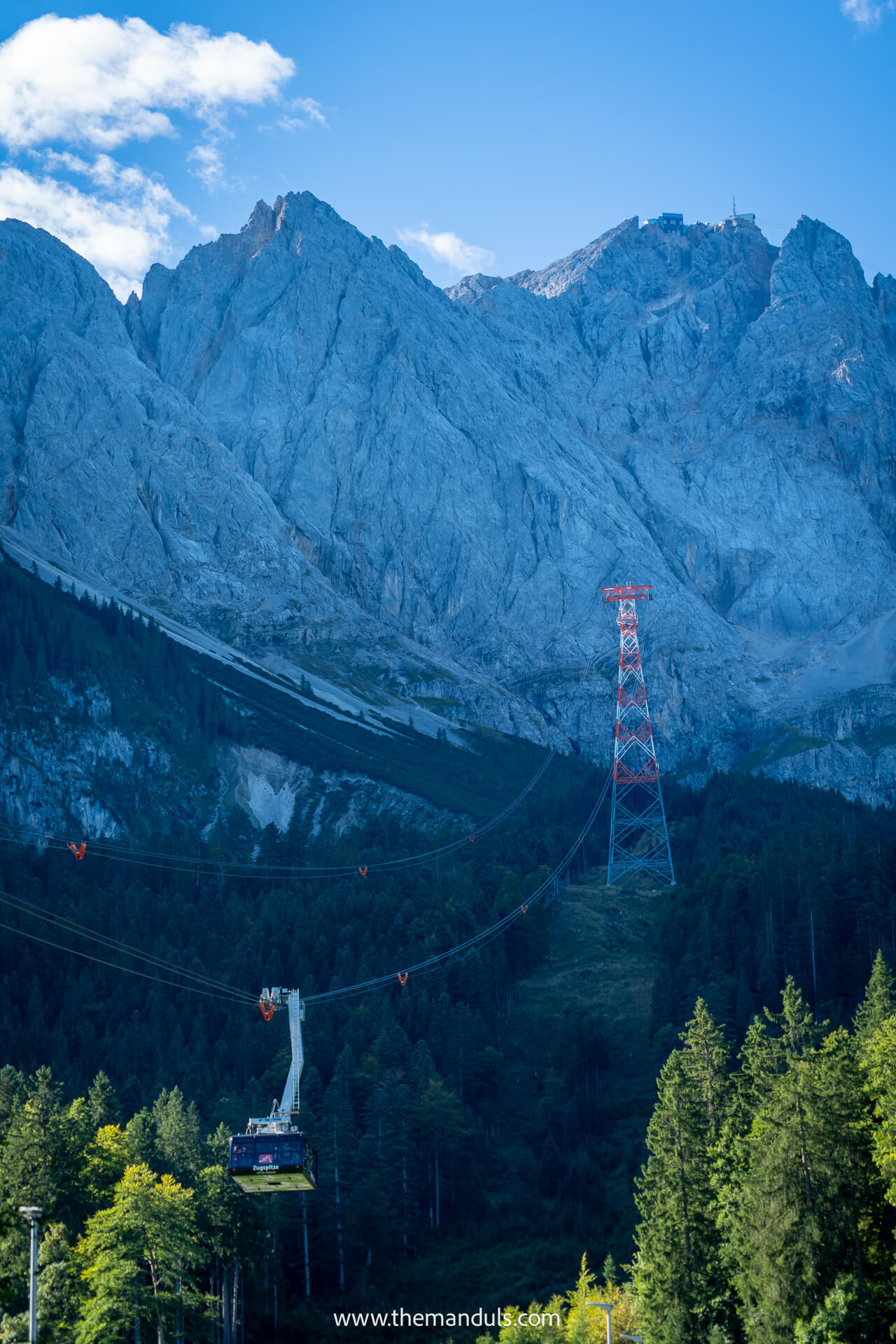
What makes it worth it is how much there is to see once you’re up there. There are several viewing platforms, a glacier area, restaurants, and wide open viewpoints where you can just stand and take in the Alps stretching endlessly in every direction.
Plan around 2–3 hours to explore properly, longer if you want lunch or to walk across the summit areas. For the best experience, go early in the morning when visibility is usually clearest.
On cloudy days the summit can be fully covered, so it’s smart to keep this flexible in your plans and visit when the forecast looks good.
Official Website: zugspitze.de
5. Go on a Neuschwanstein Castle tour
Entrance Fee: adult €21, children up to 18 free
Opening hours: April till mid-October 09:00 – 18:00, otherwise 10:00 – 16:00
There’s a reason Neuschwanstein is one of the most famous landmarks in Germany. The saying that it looks like something pulled straight from a fairytale is not far from truth. It was an inspiration for the Disney Castle.
Built in the late 1800s by Ludwig II of Bavaria, it rises above the village of Hohenschwangau with the Alps stretching behind it. Even if castles aren’t usually your thing, it’s hard not to be impressed when you see those white towers emerging from the forest in real life.
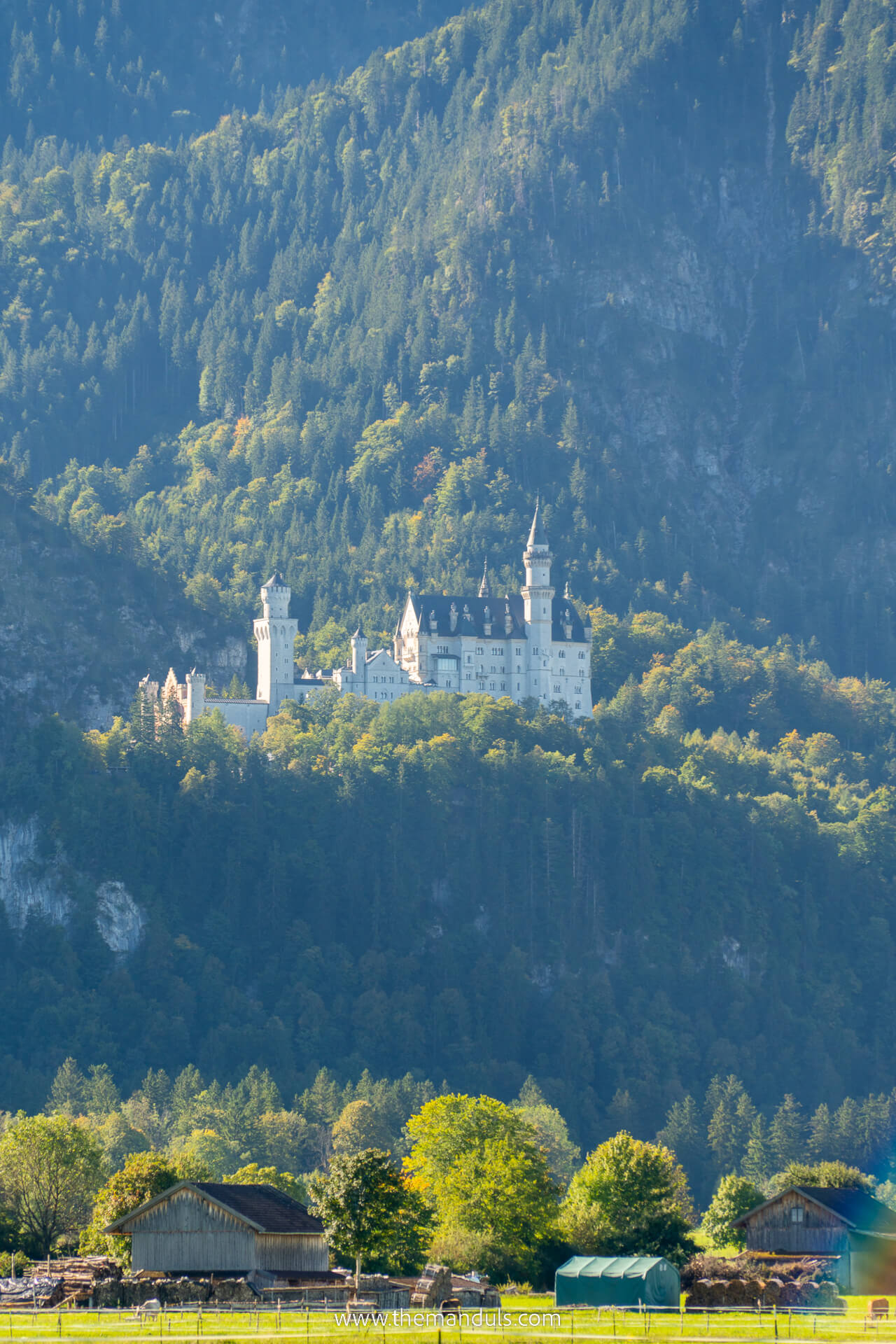
Inside, the rooms are just as dramatic as the exterior — colorful, ornate, and slightly eccentric, reflecting Ludwig’s fascination with art, mythology, and grand symbolism. The guided tour itself is relatively short (around 30 minutes inside), but you should plan 2–3 hours total including the uphill walk, viewpoints, and waiting time.
Before heading in, make sure to stop at Marienbrucke. That’s where you get the classic postcard angle — and honestly, it’s one of the best viewpoints in all of Bavaria.
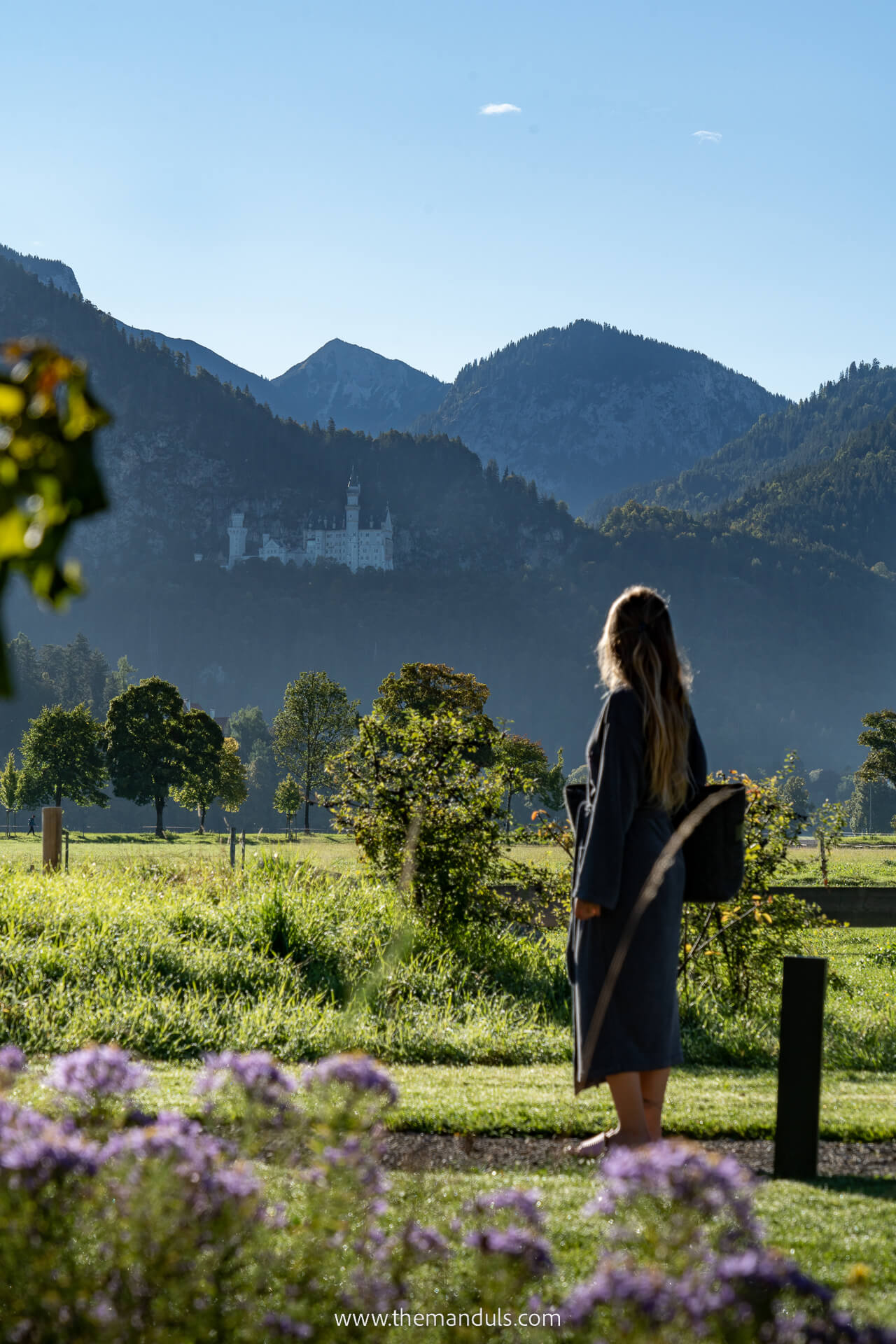
Buying tickets requires planning. It’s possible to try on-site, but I once waited two hours in line, and tickets were already selling out by late morning. Booking online (with a €2.50 fee) is strongly recommended, though even those can sell out days in advance.
If you’re unable to get an online ticket but really want to see the castle, we recommend joining this small group tour of Neuschwanstein Castle. It’s a great option if booking last-minute and everything else is sold out.
Offical Website: neuschwanstein.de

6. Visit Schloss Hohenschwangau
Entrance Fee: adult 21€, children up to 18 free (guided tours slightly more)
Opening hours: April till mid-October 09:00 – 16:00, otherwise 10:00 – 15:30
Right across the valley from Neuschwanstein stands Hohenschwangau Castle — and while most visitors focus only on its famous neighbor, this one is absolutely worth considering.
It was the childhood residence of Ludwig II of Bavaria. From the outside, the yellow façade and romantic towers make it instantly recognizable.
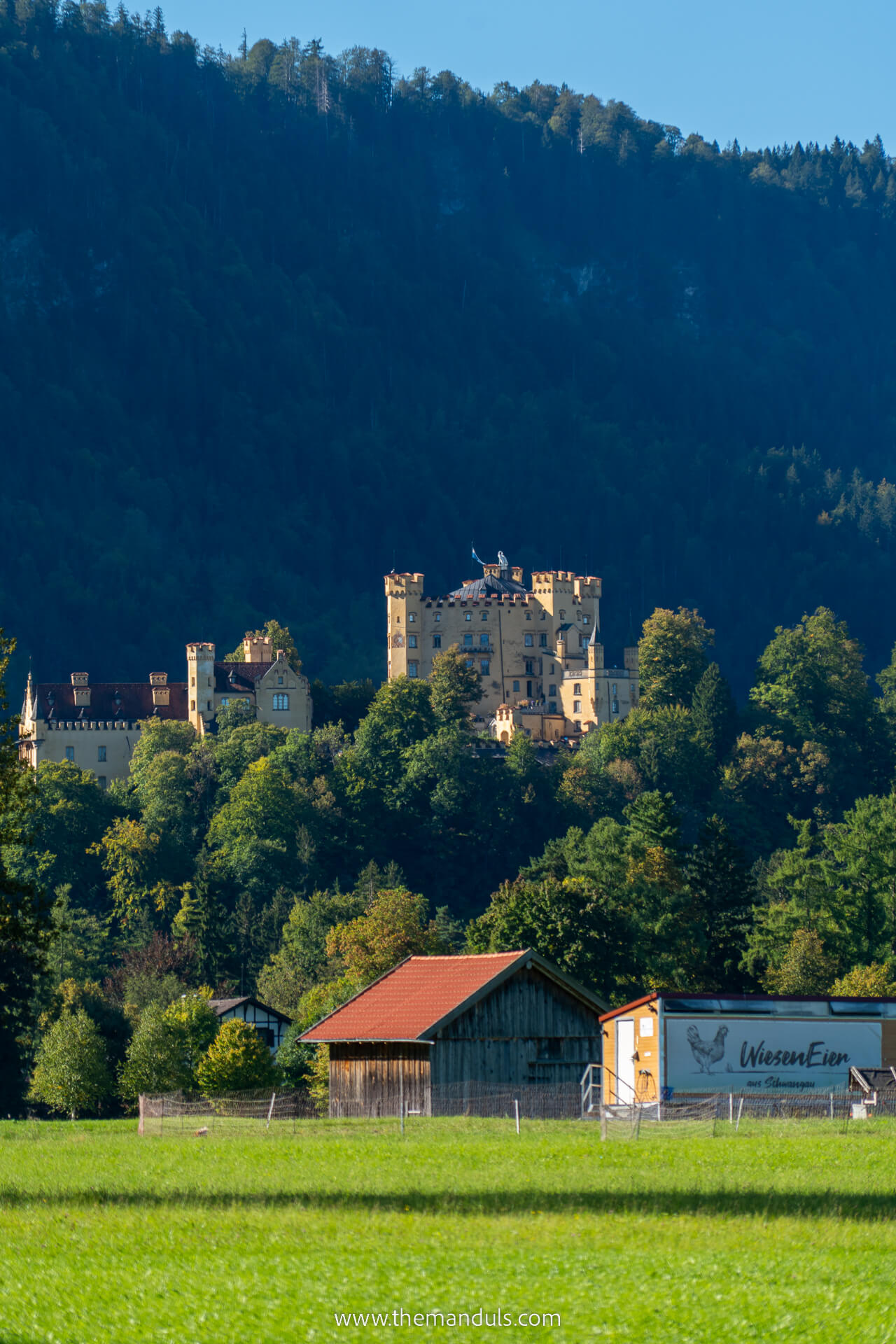
But the real value is inside. The rooms feel more intimate and grounded, decorated with detailed murals, royal furnishings, and personal elements that give context to Ludwig’s later obsession with dramatic architecture.
The guided visit takes about 45 minutes, and overall you should plan around 1.5–2 hours including the walk up and photos around the lake. It’s ideal for travelers who enjoy history and want deeper insight into the Bavarian royal story, especially if already visiting Neuschwanstein.
Insider tip: If visiting both castles in one day, schedule Hohenschwangau first — it’s less crowded early on and gives helpful background before seeing Neuschwanstein.
Official Website: hohenschwangau.de
7. Enjoy a peaceful day at Forggensee
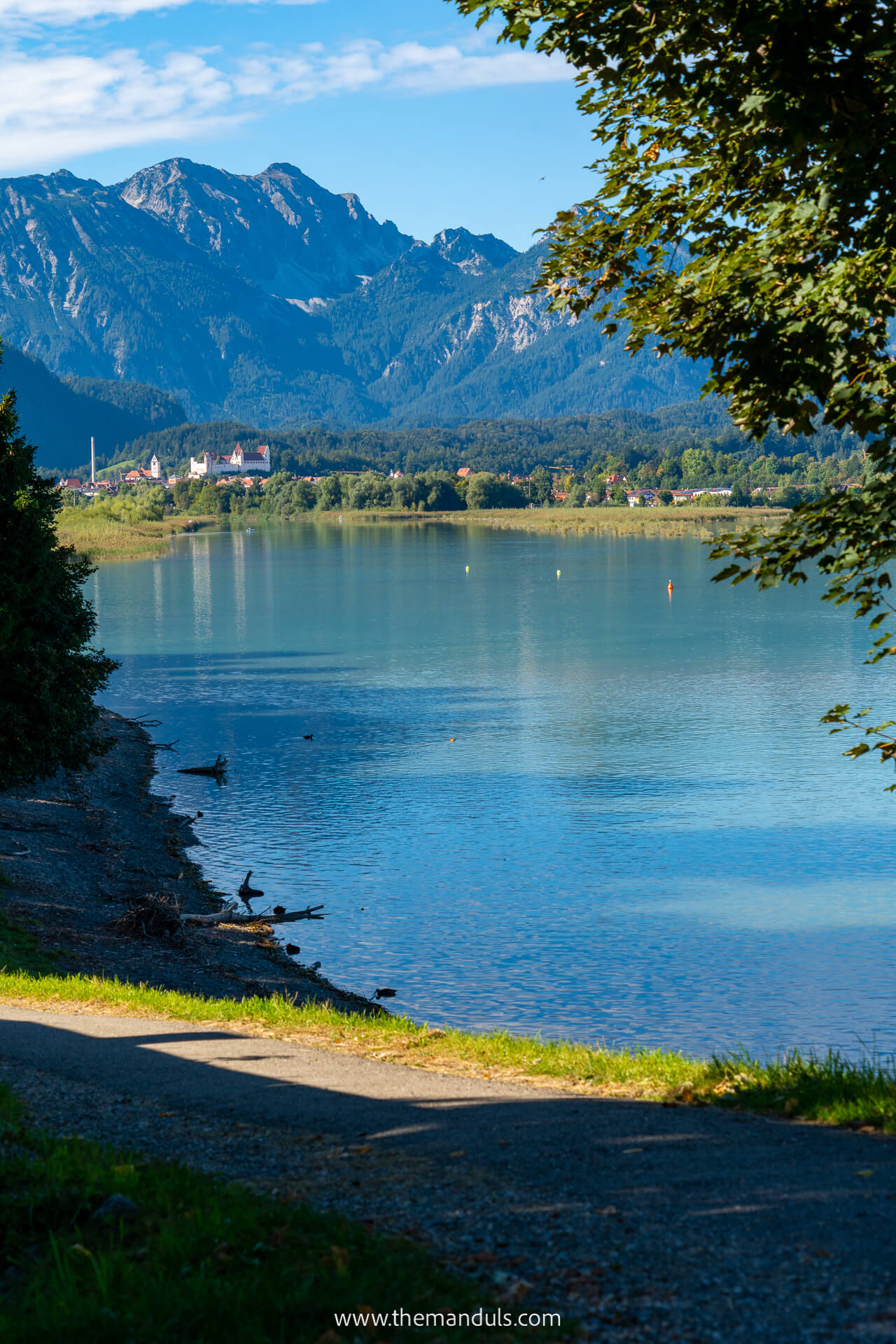
We first stopped at Forggensee on our way to Neuschwanstein Castle, expecting just another alpine lake — but it quickly became one of our favorite calm spots in the area.
The water has this soft blue-green tint that changes with the light, and the open landscape gives it a peaceful atmosphere that feels very different from smaller mountain lakes.
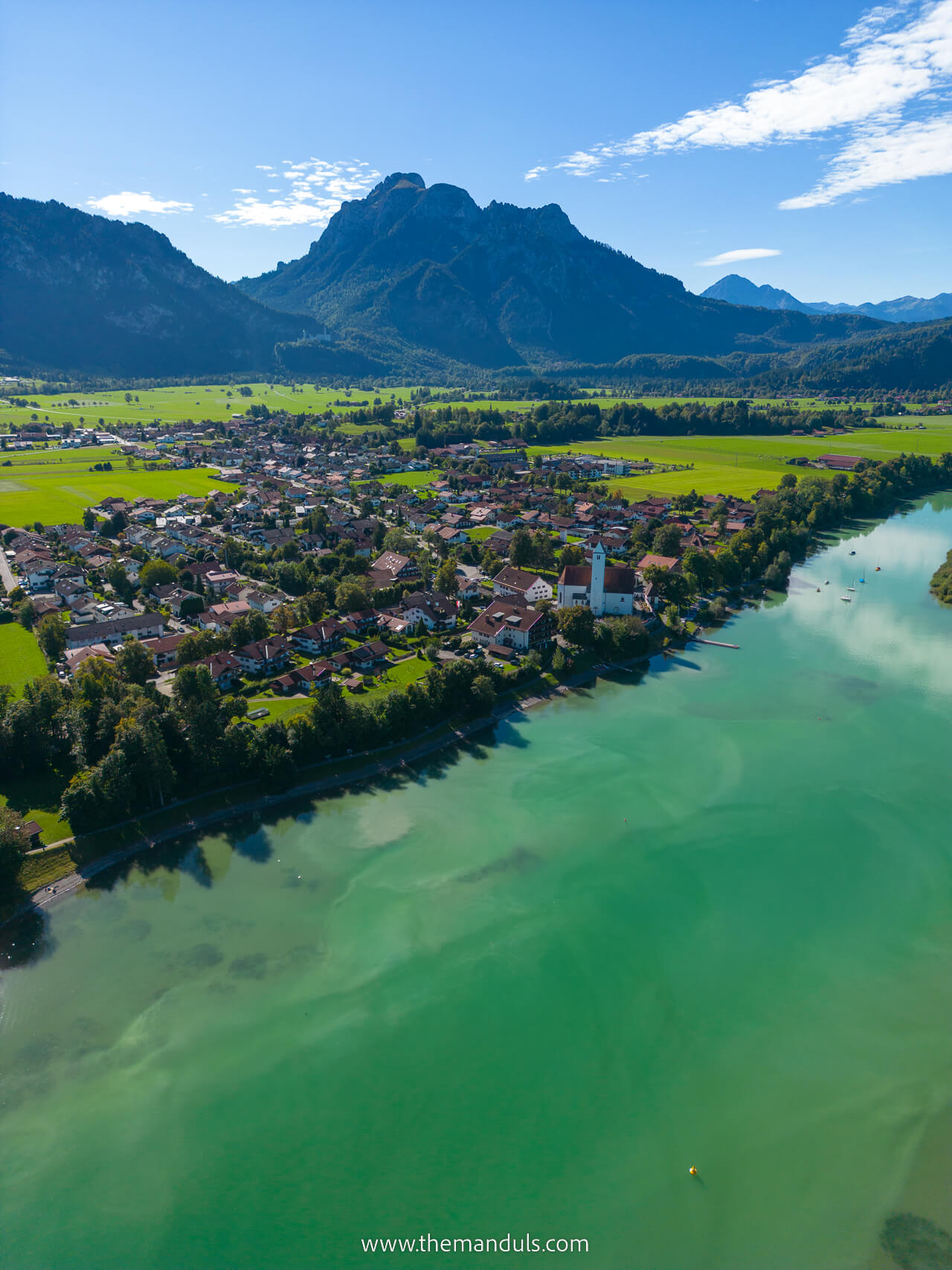
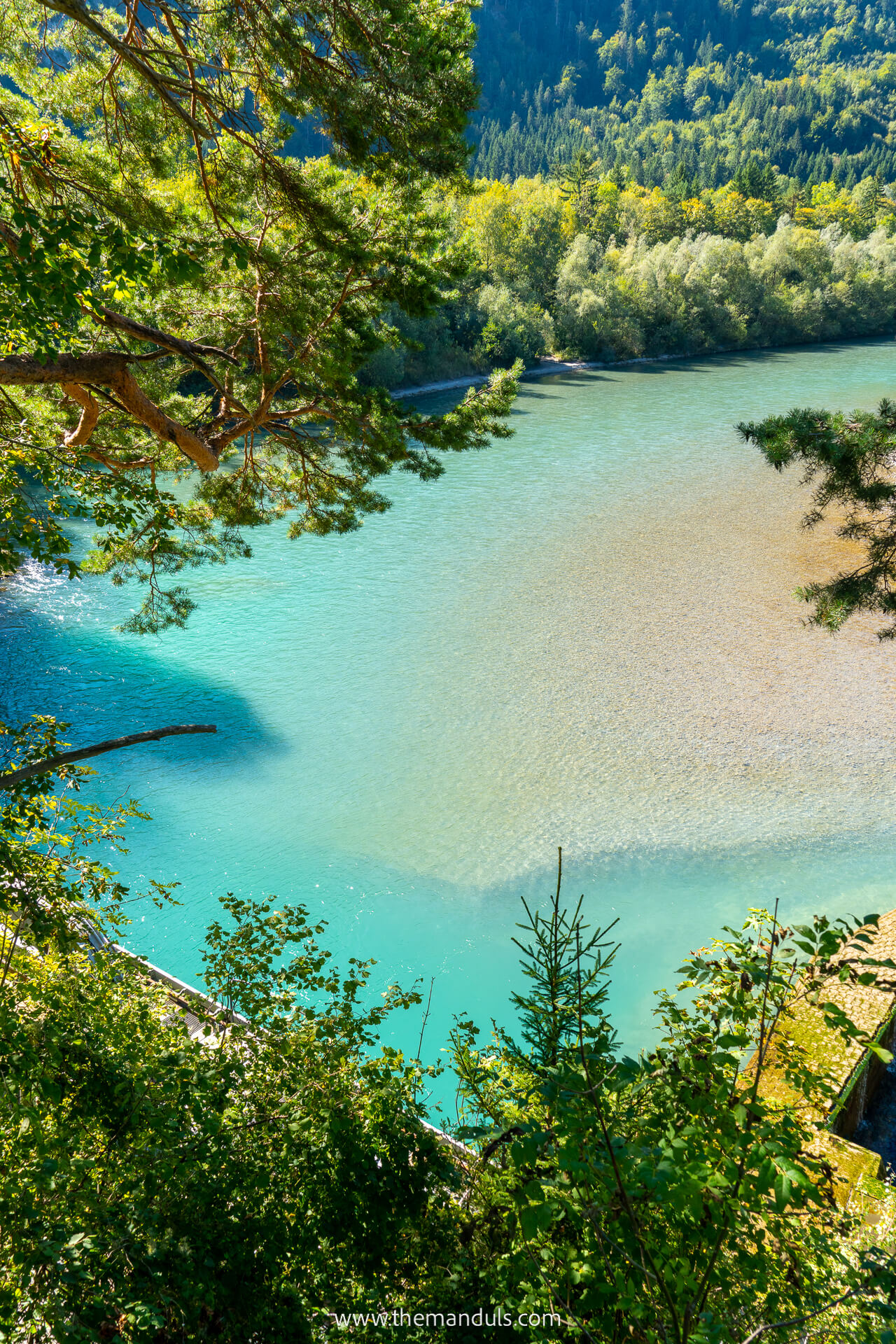
What makes it worth visiting is that you’re just minutes from the castles and Füssen, yet the lake itself feels relaxed and uncrowded. You can enjoy walking along the shore, cycling parts of the 32 km loop, or simply swimming and sitting by the water with the Alps in the background.
You can spend 1–2 hours for a quick stop, or easily half a day if you include cycling, swimming, or a summer boat cruise.
Insider tip: The best time to visit is June to early October, when the lake is fully filled (it’s partially drained in winter).
8. See the beautiful Lechfall
Lechfall is one of those quick stops that surprised us. Just a short walk from Füssen’s old town, the turquoise Lech River rushes through a narrow rocky section, creating a compact but very photogenic waterfall.
It’s not huge, but the color of the water and the surrounding scenery make it worth the detour — especially if you’re already exploring Füssen. There’s a pedestrian bridge directly above the falls, giving you a great top-down perspective, and you can continue along the riverside path for quieter viewpoints.
You only need 20–30 minutes here. We’d recommend visiting early or later in the day when the light enhances the vibrant blue tones.
Insider tip: There’s a small free parking area labeled “Lechfall Parkplatz”. Spaces turn over quickly, so you only need to wait for a short while.
9. Relax in Kristall-Therme Schwangau with castle views
Entrance Fee: adult from €19
Opening hours: 9 am to 9 pm
If the weather turns cloudy or you just want a slower day, this thermal spa is a great alternative to hiking. The highlight is obvious — relaxing in warm outdoor pools with direct views toward Neuschwanstein and the Alps.
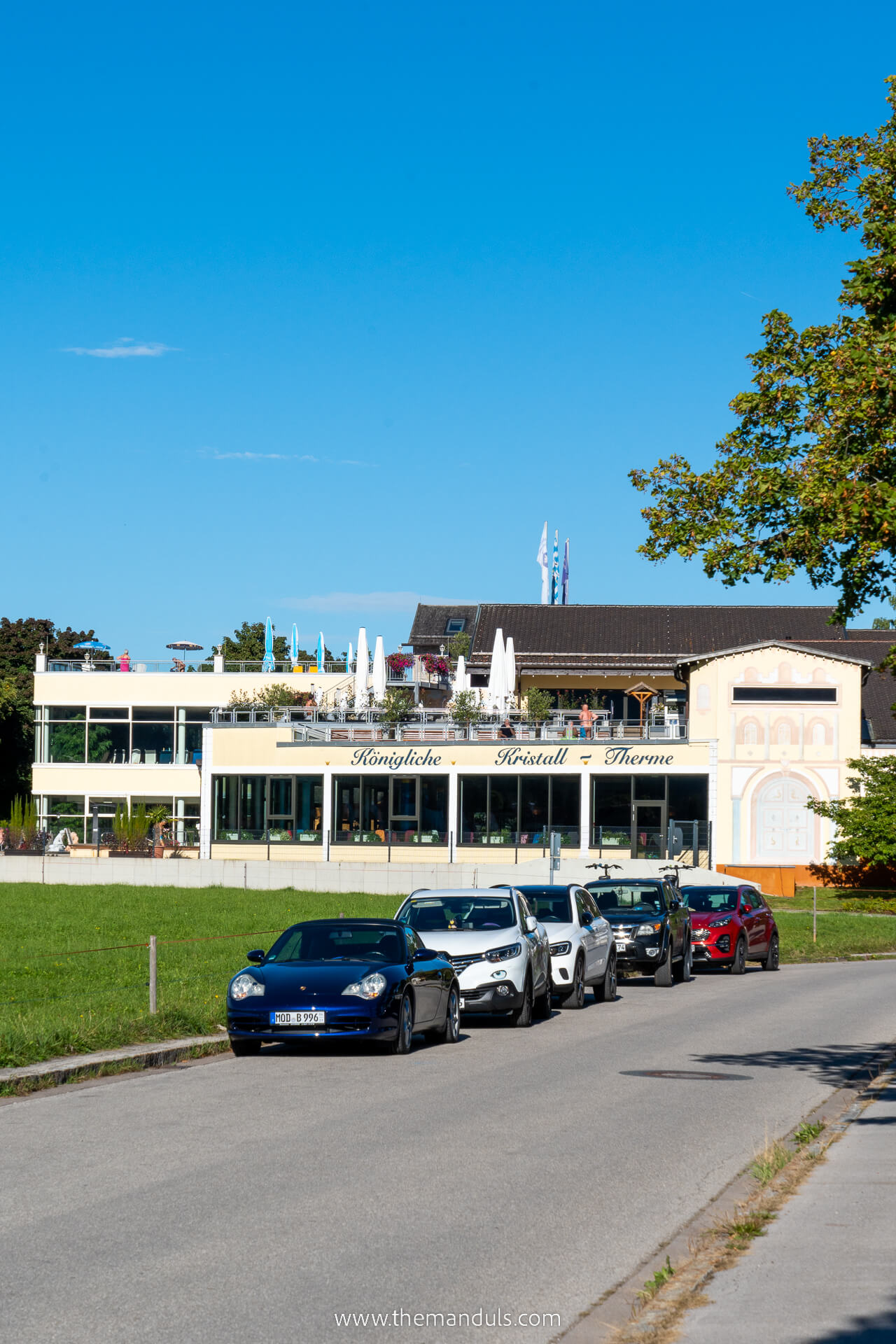
We liked how the experience feels both relaxing and scenic at the same time. There are indoor and outdoor thermal pools, several sauna areas, and spacious relaxation zones. It’s ideal after a few active days in the mountains.
Plan at least 2–3 hours to properly enjoy it. Evenings are especially atmospheric, when the light softens and the castle silhouette becomes even more dramatic.
Official Website: kristalltherme-schwangau.de
10. Hike through Höllentalklamm

Distance: 5.2 km
Elevation gain: 780 m
Duration: 3.5 hours
Entrance Fee: adult €7, children 7-17 €3.5
Höllentalklamm doesn’t get the same attention as Partnachklamm, but after hiking it, we honestly found it wilder and more adventurous.
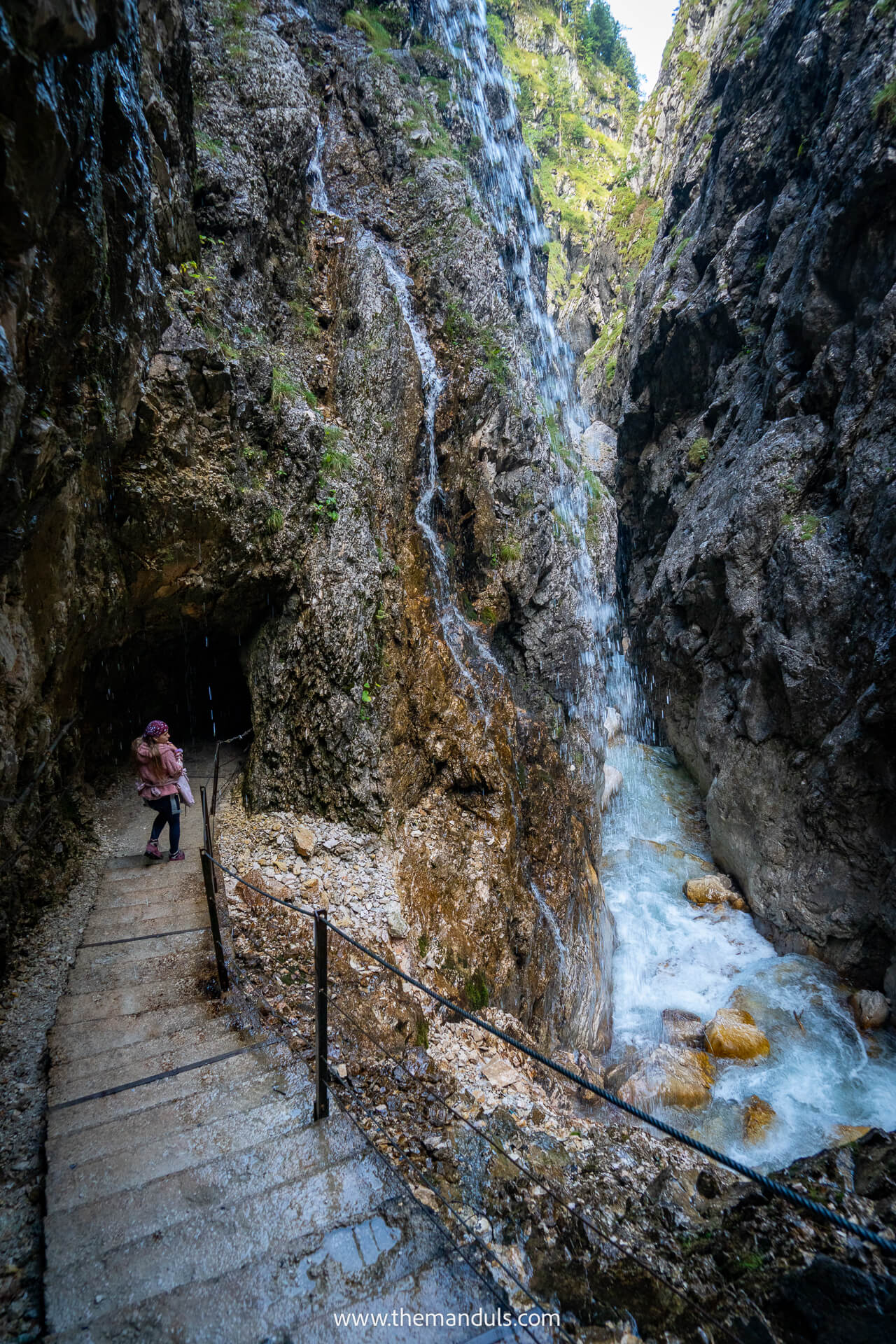
We chose to do it as the longer route from Kreuzeck, starting with the cable car up and hiking across the exposed ledges of the Wetterstein mountains before descending toward the gorge — and that approach made the whole experience even more epic.
Then came the gorge itself. We walked through dark tunnels carved straight into the rock, across sturdy bridges, and along narrow ledges with waterfalls crashing beside us.
In some sections, the cliffs rise so steeply that we could only see a thin slice of sky above.
It’s dramatic, loud, and raw — yet still manageable for most hikers with decent footwear. The gorge section itself is only about 1.2 km, but we spent nearly an hour there because we kept stopping to enjoy it and take photos.
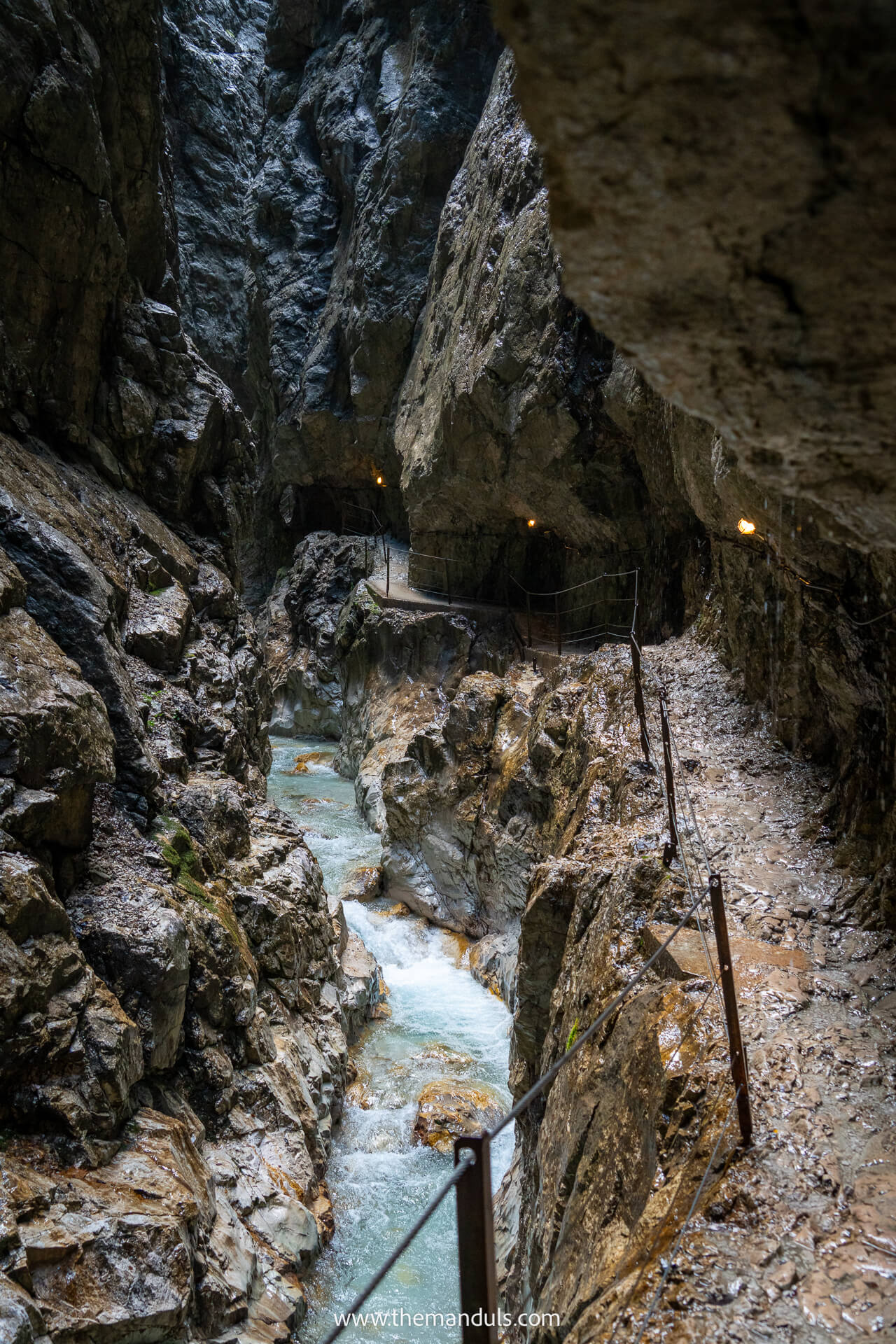
After exiting the gorge, you can continue uphill toward Höllentalangerhütte beneath Zugspitze for even more alpine scenery, or simply return the classic way.
This was definitely one of the best hikes in Bavarian Alps.
Insider tip: You will get wet inside the gorge — water drips constantly from above. Bring a rain jacket and wear proper hiking shoes with good grip.
Official Website: hoellentalklamm-info.de
11. Enjoy sunset at Geroldsee
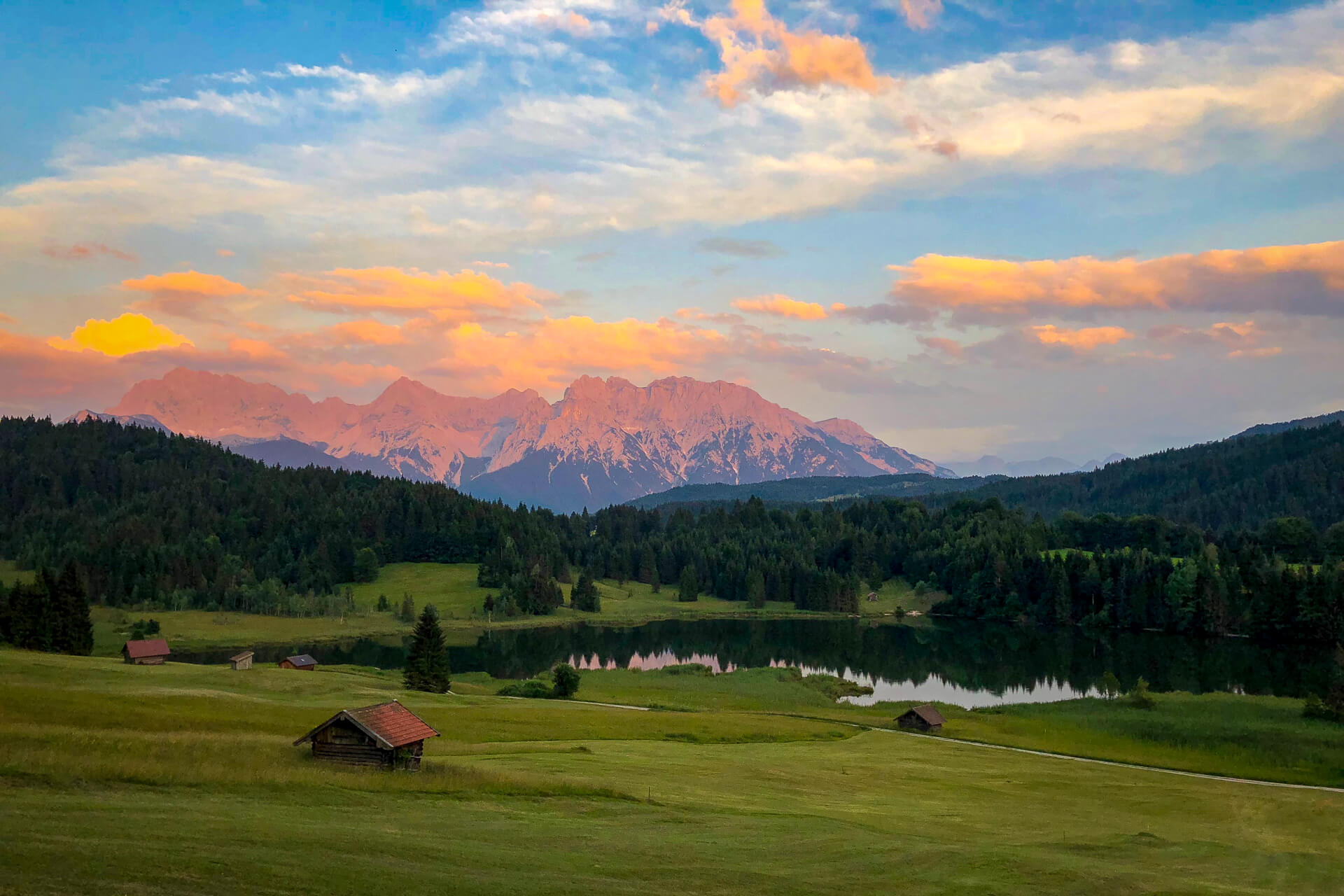
Geroldsee is one of those places that looks unreal in the right light. I’ve stopped here multiple times, and every single time it was the evening that made it special. The lake itself is small and calm, surrounded by open meadows and traditional wooden huts, with a mountain backdrop that feels almost perfectly staged.
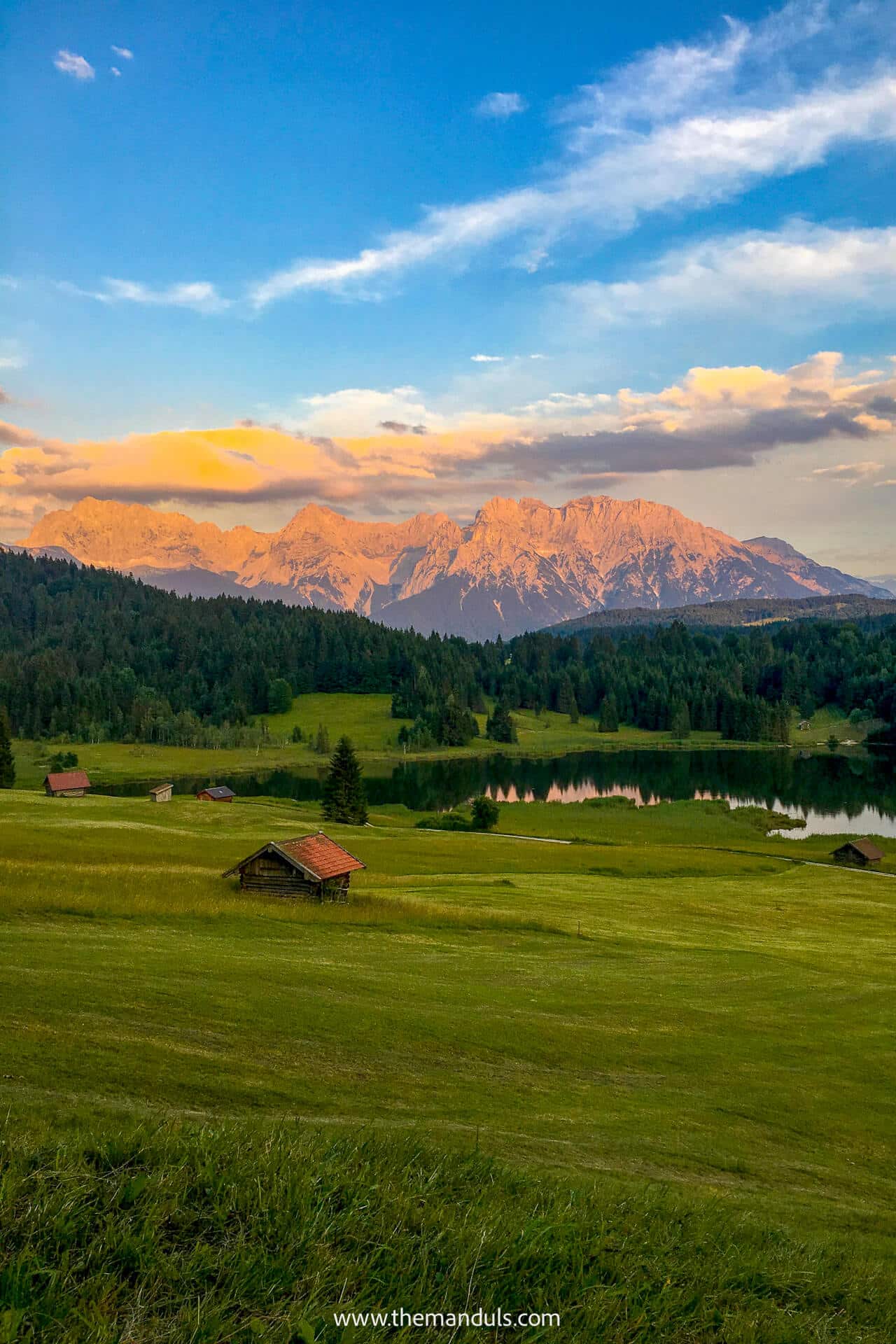
We parked nearby and it only took us a few minutes to get to the like. No long hike, no effort — just wide alpine scenery right in front of you. If you want to wander, there are gentle paths around the meadows.
Sunset is when this place truly shines. As the sun drops, the peaks behind the lake look like they’re glowing red.
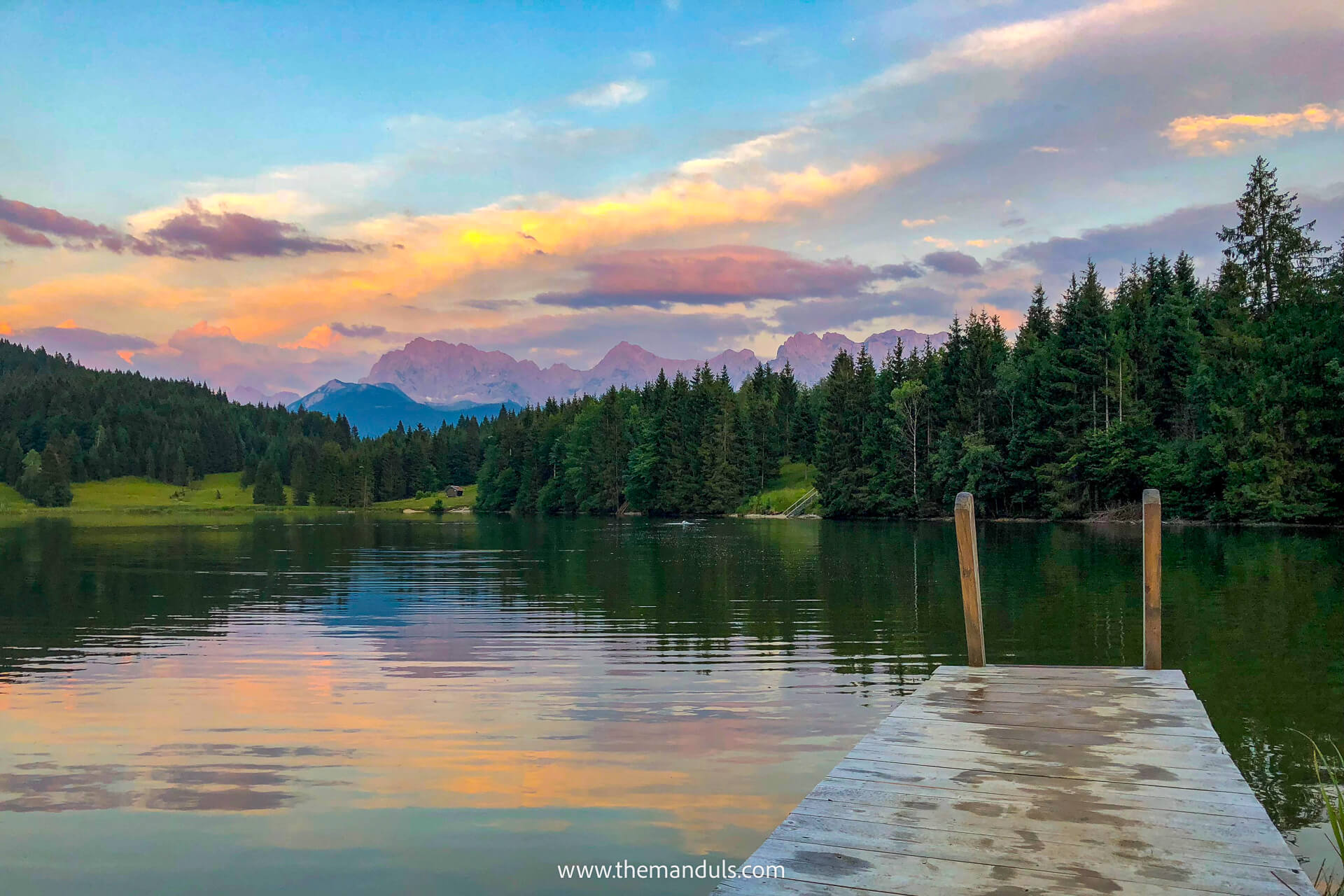
You don’t need long here — 30 to 60 minutes is perfect — but it’s absolutely worth planning your timing around golden hour.
Insider tip: Arrive at least 30 minutes before sunset and don’t leave too quickly — the sky often becomes even more dramatic after the sun dips below the horizon.
12. Spend a day at turquoise Walchensee
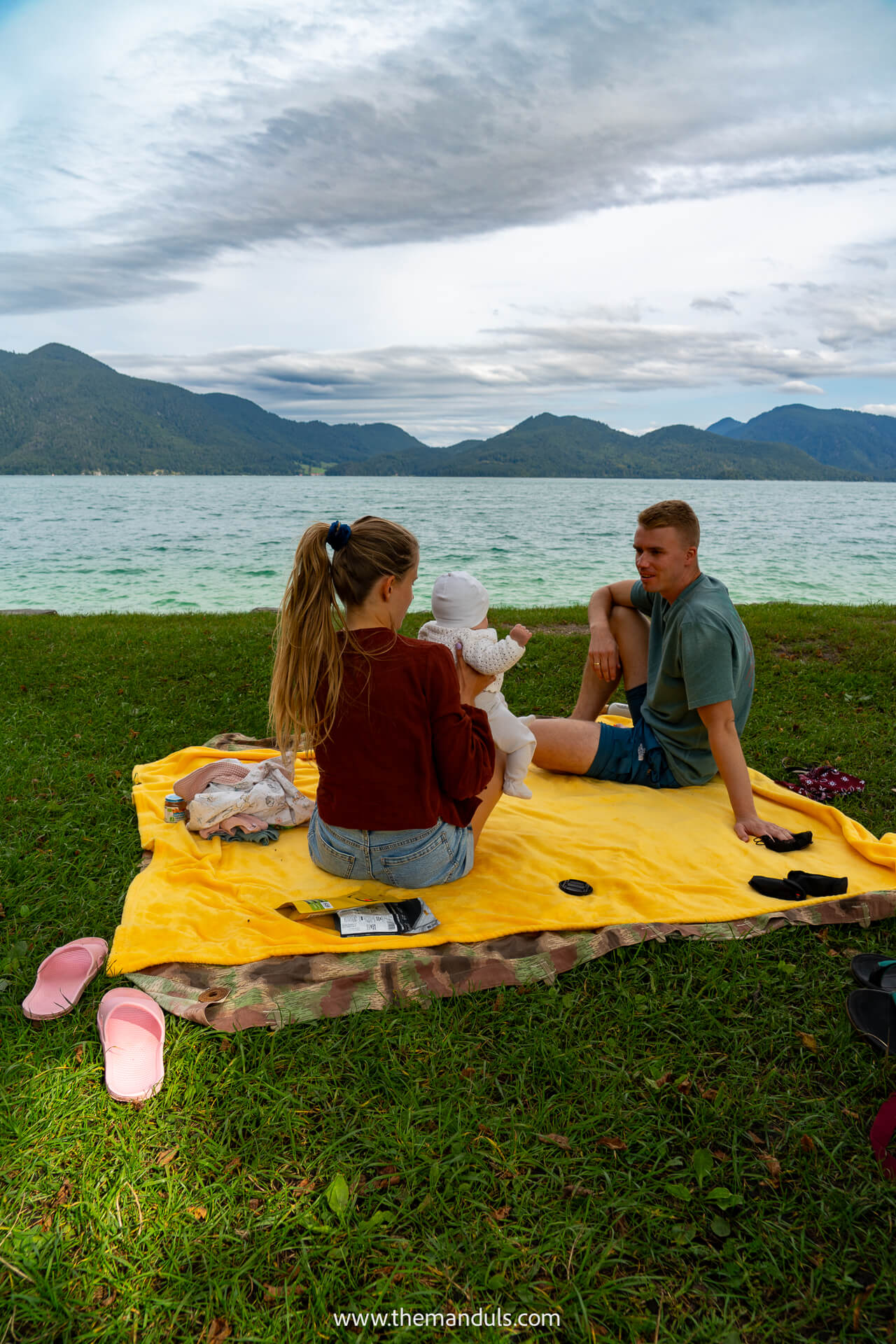
We’ve visited Walchensee three times now, and it still catches us off guard. The first thing you notice is the color — that intense turquoise water looks almost tropical on sunny days. And yes, it really is that clear in real life.
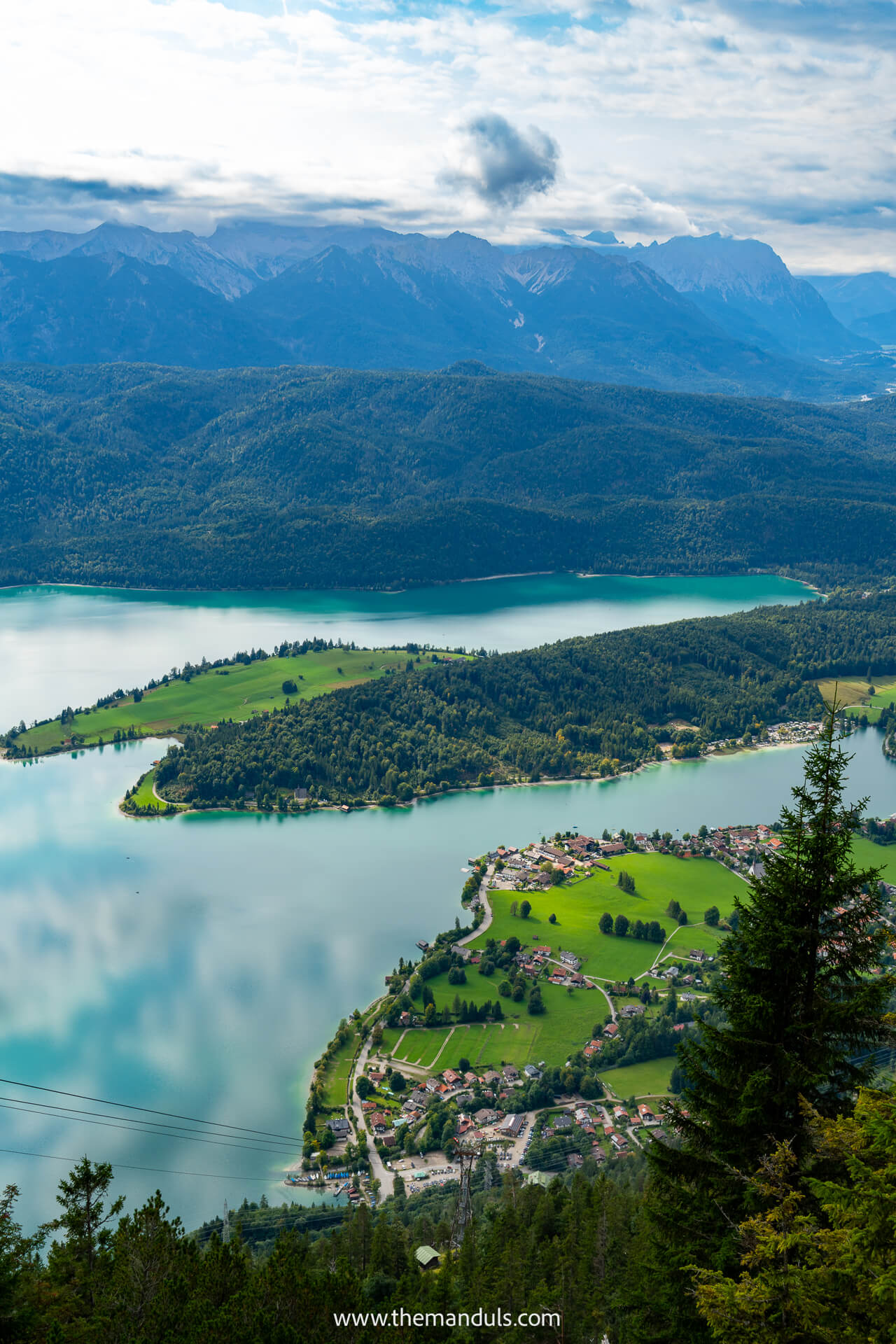
What we love most is how natural it feels. Even in peak season, we’ve always managed to find a quiet stretch of shoreline away from the main beach. You can swim (it’s cold, but refreshing), paddleboard, picnic, or simply sit and enjoy the mountain backdrop.
There’s also plenty to do beyond swimming. Scenic drives along the lakeside road, hidden coves, windsurfers flying across the water on windy days, and several hikes in the surrounding mountains.
Insider tip: The main beach gets busy, but the shoreline is long. Drive a little farther and you’ll likely find your own quiet entry point.
13. Hike up to Herzogstand
Distance: 1.5 km
Elevation gain: 100m
Duration: 1 hour
I’ve hiked Herzogstand twice, and both times it delivered. The first visit felt like a peaceful hidden gem, while the second was noticeably busier — but the views made it worth it either way.
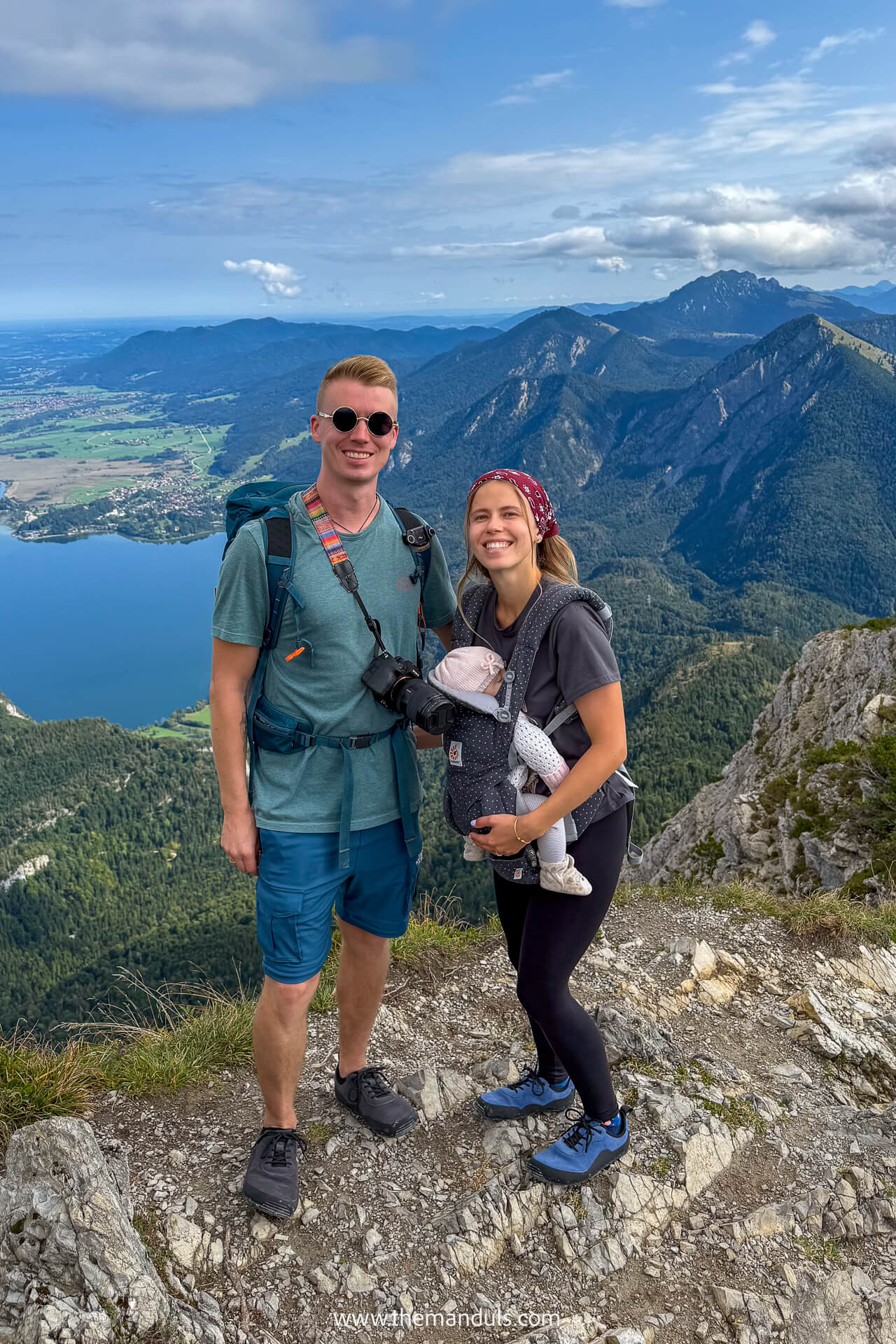
I took the cable car up and hiked the final section to the summit. That way, you get the reward without a long uphill hike.
The trail from the top station starts easy, passes a mountain hut, and then becomes rockier and steeper toward the summit. It’s not technically difficult, but you do need proper shoes and steady footing.
The best part is how quickly the scenery opens up. As you climb higher, Walchensee turns into a deep turquoise pool far below, and on clear days you can also see Zugspitze and endless Alpine peaks in the distance.
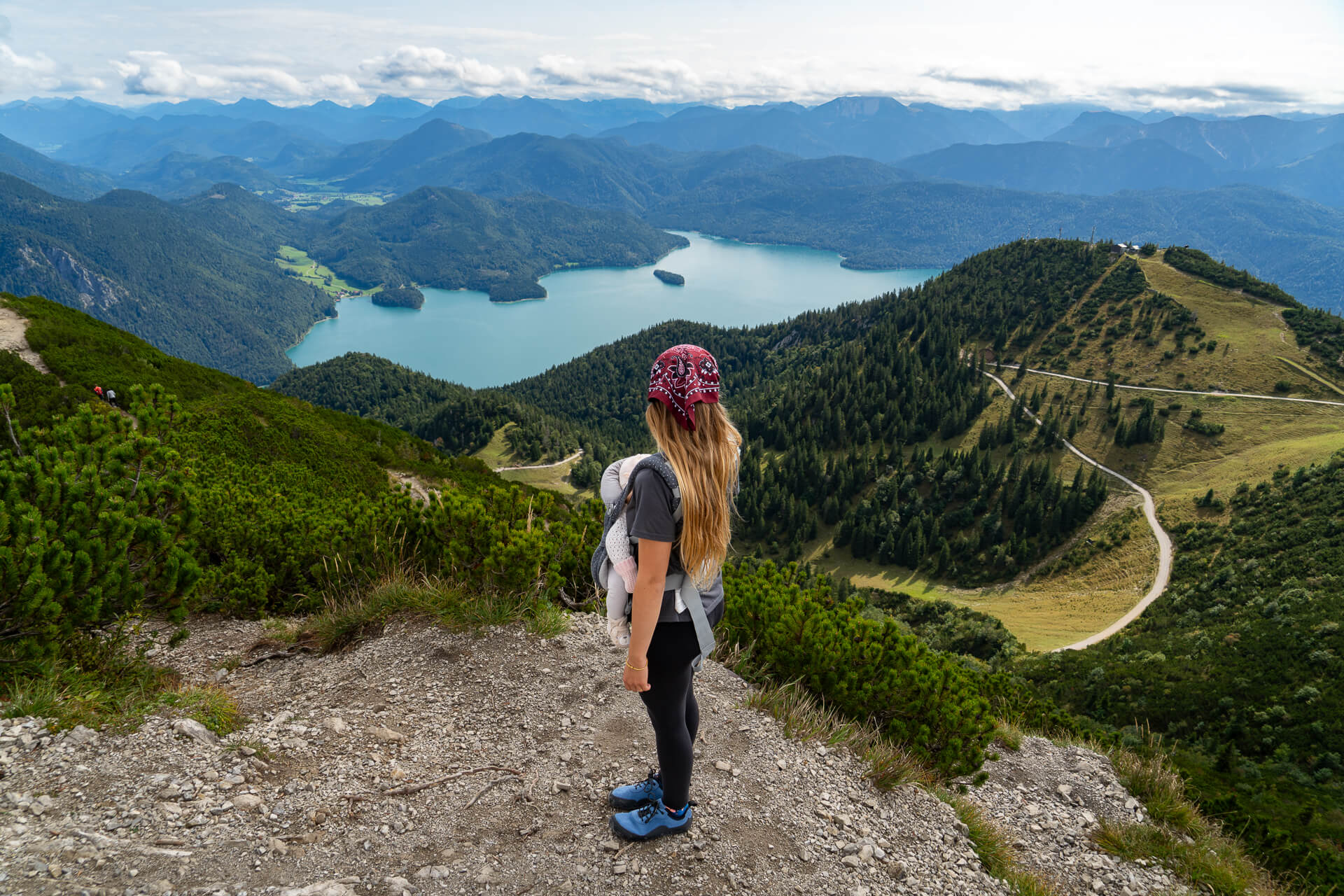
The summit feels like a real mountain top, with wide panoramas and dramatic drop-offs.
If you’re feeling ambitious, you can hike up from the lake (around 5–6 km one way, 900+ m elevation gain), but that turns it into a proper workout.
Official Website: herzogstandbahn.de
14. Marvel at the beautiful Königssee
Königssee is one of the most iconic lakes in Bavaria — and when we first saw it, we immediately understood why. The water has this deep emerald tone, surrounded by steep rock walls that rise almost vertically from the shoreline. It feels more like a Norwegian fjord than a typical alpine lake.
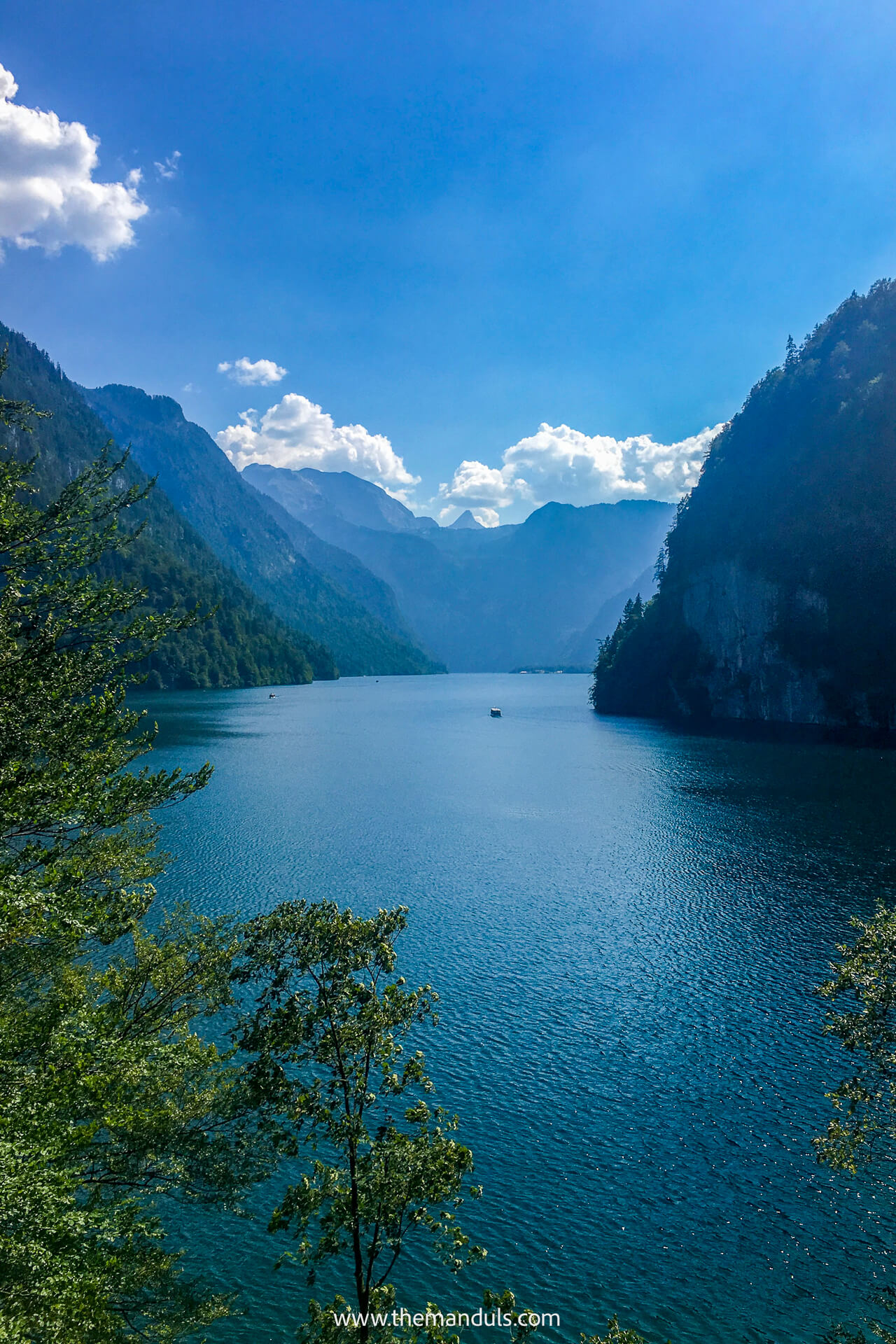
The only way to properly experience it is by electric boat. About halfway across, the boat stops so the captain can play a trumpet toward the cliffs, demonstrating the natural echo. It’s touristy, yes — but still surprisingly atmospheric.
Most visitors continue to St. Bartholomä, the small red-domed church sitting dramatically at the edge of the lake. From there, you can walk along the shoreline or continue toward Obersee.
15. Learn about history at Kehlsteinhaus
Entrance Fee: free with mandatory return bus costing €30
Operating hours: open from May till October, closed in winter
Kehlsteinhaus, often referred to as the Eagle’s Nest, is one of the most historically significant viewpoints in the Bavarian Alps. Sitting high above Berchtesgaden, it was built in the 1930s and later associated with Adolf Hitler’s regime.
Today, it serves as a historical site and restaurant with panoramic Alpine views.
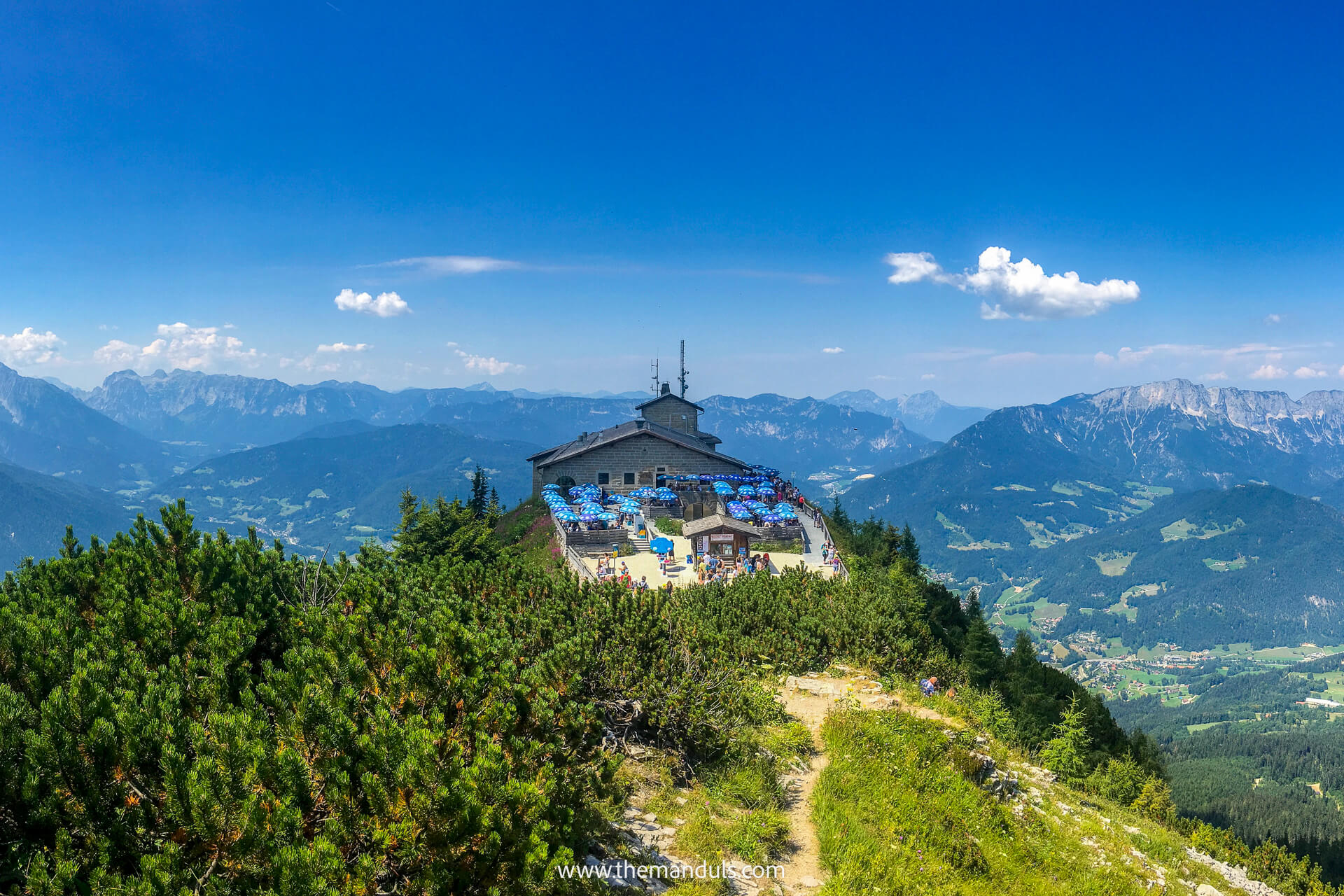
Reaching it is part of the experience. Private cars aren’t allowed. We had to take a special mountain bus up a dramatic road carved into the cliffs, followed by a short tunnel and a historic brass elevator that took us to the top.
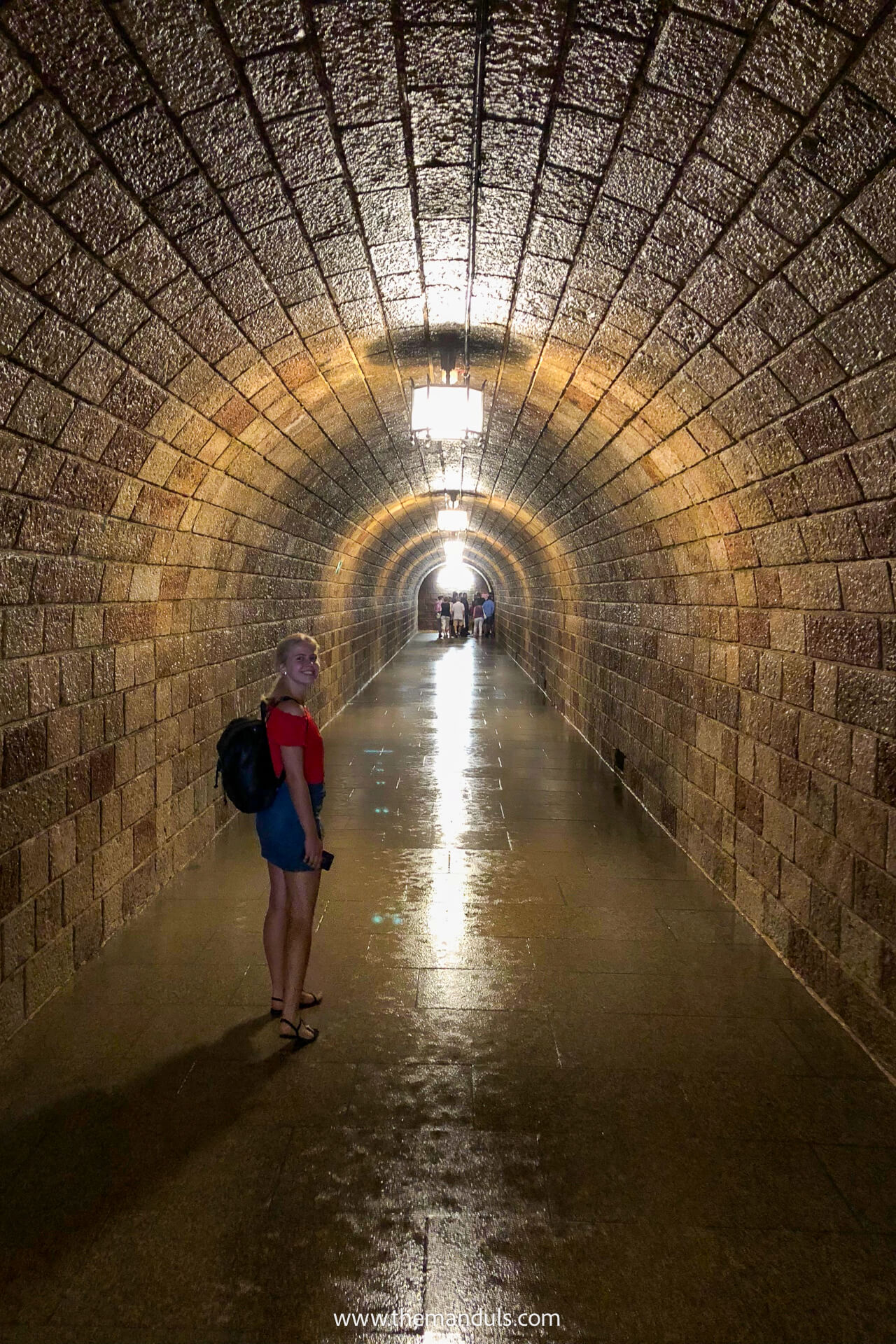
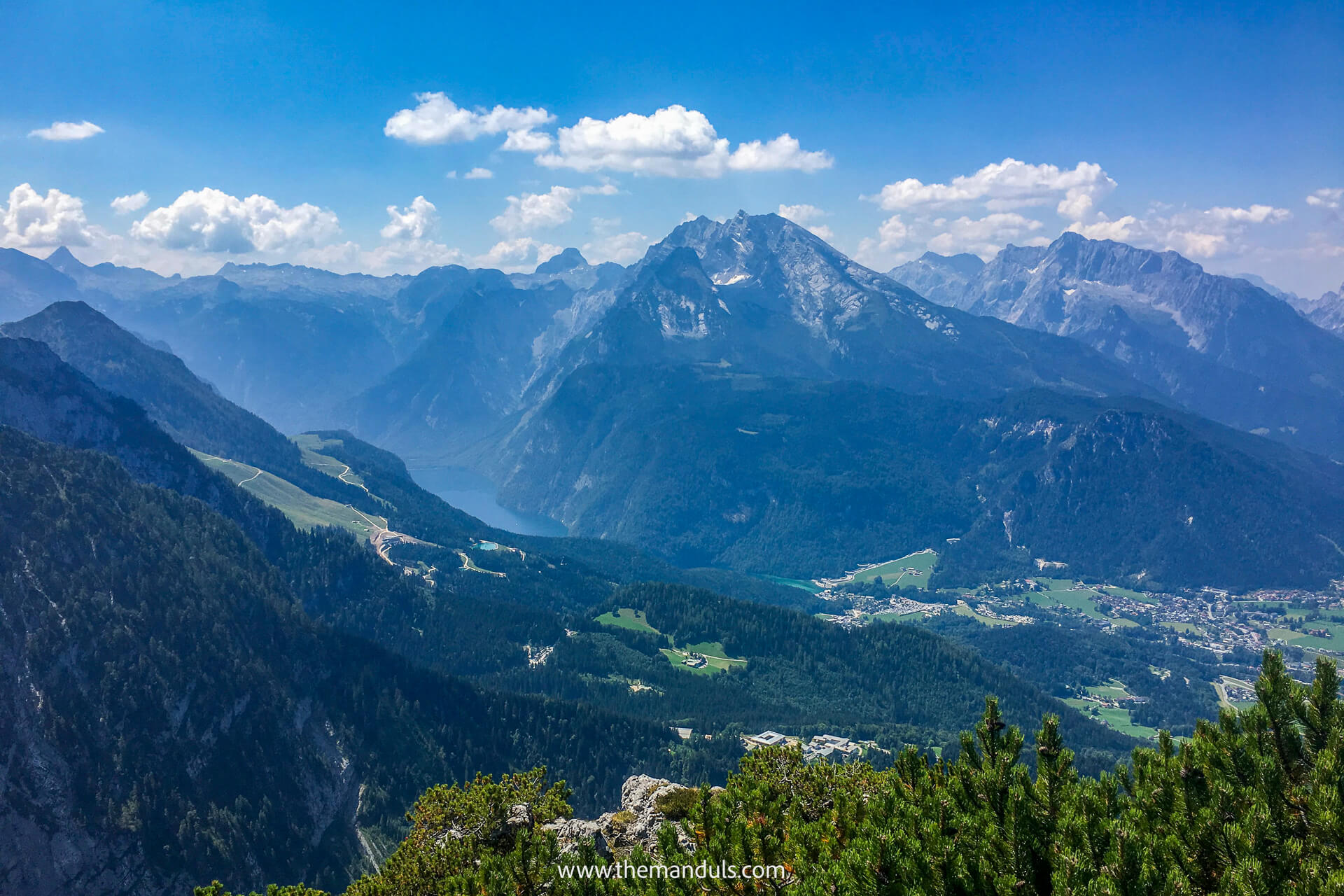
The terrace offers sweeping views over the surrounding peaks, and on clear days, the panorama is breathtaking. Inside, there’s a small exhibition explaining the historical background, which adds important context to the visit.
Plan around 2–3 hours total, including transport up and down. It’s best visited in clear weather, as clouds can completely hide the views.
Official Website: kehlsteinhaus.de
16. Spend a day at Tegernsee
I’ve been to Tegernsee a few times, sometimes just for a short walk, other times for a slower summer afternoon by the lake.
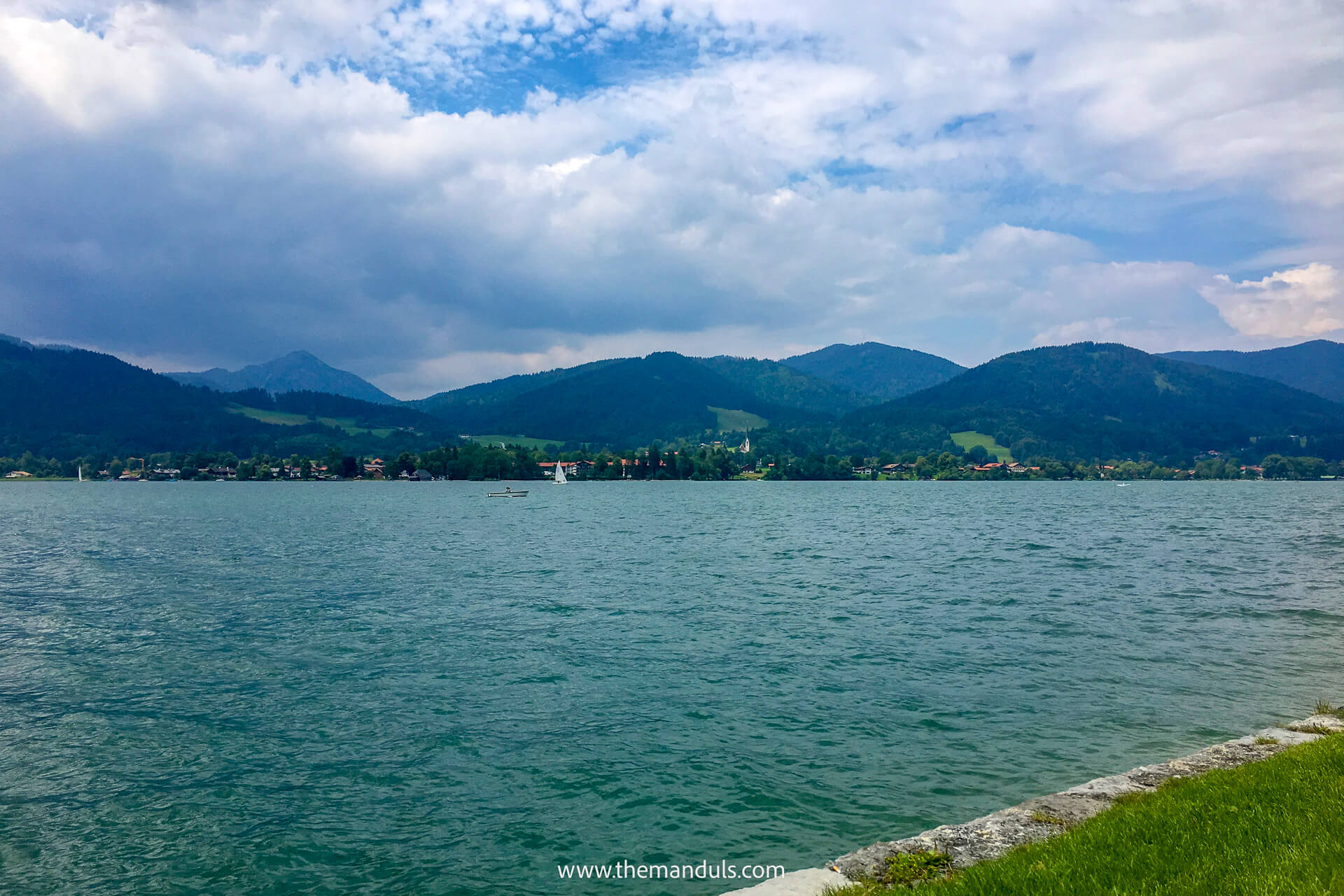
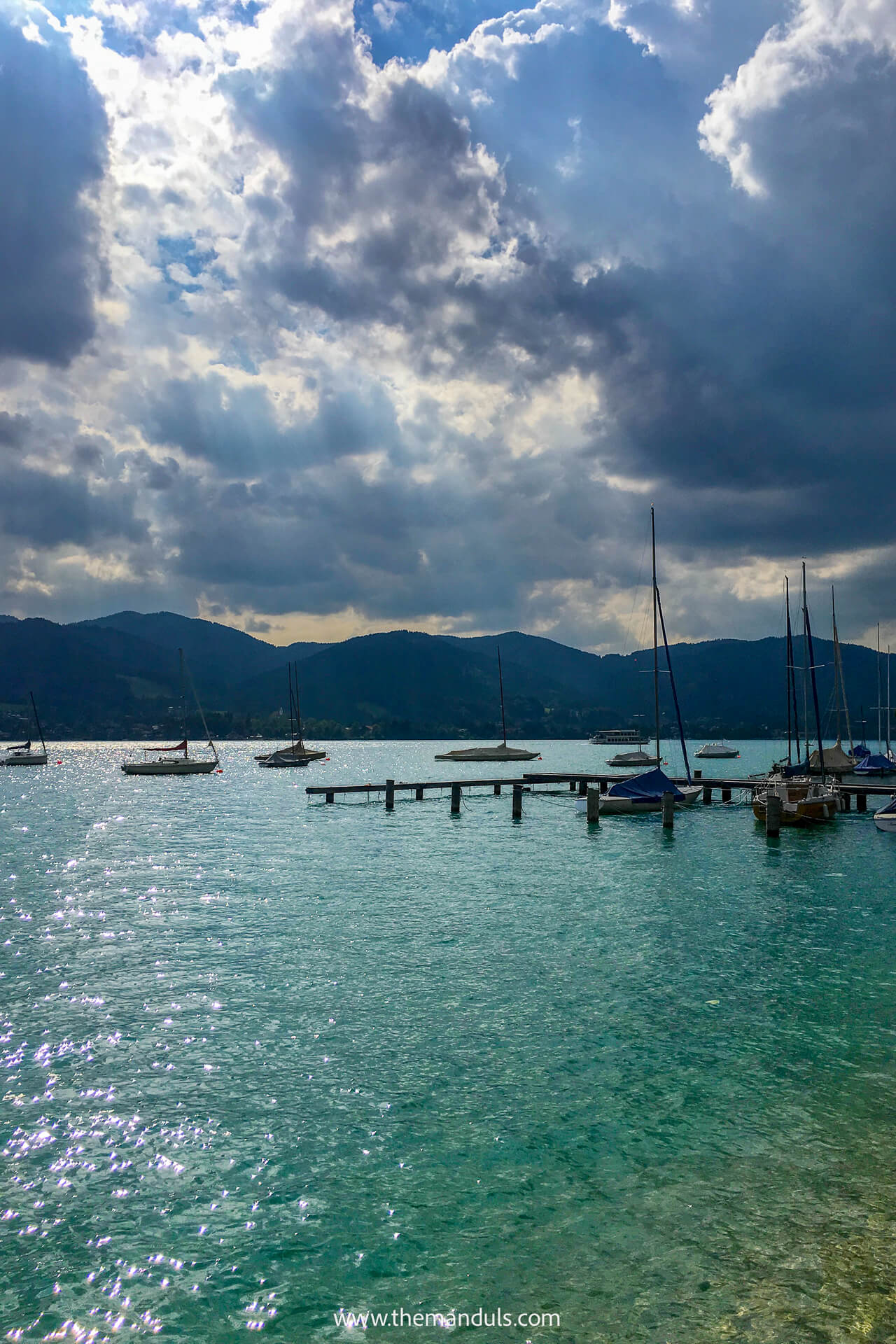
The lake itself is large and framed by soft mountain ridges. The promenade in the town of Tegernsee is perfect for an easy stroll, with cafés, small bakeries, and boats passing by.
You can take a boat cruise across the lake, rent bikes, swim in summer, or combine it with a hike like Riederstein for views from above.
Plan half a day to a full day, depending on whether you’re just strolling or adding a hike or boat trip.
17. Enjoy the views from Riederstein
Distance: 3.6 km (one-way)
Duration: 5 hours
Difficulty: moderate
The trail up to Riederstein starts directly in the town of Tegernsee, which makes it easy to combine with a relaxed day by the lake.
There are multiple ways up, but we chose a longer, more gradual route 686a to avoid the steeper direct ascent. That decision paid off — the climb felt steady and manageable rather than exhausting.
Most of the way leads through forest, which means shade and a quiet atmosphere, but also limited views during the ascent.
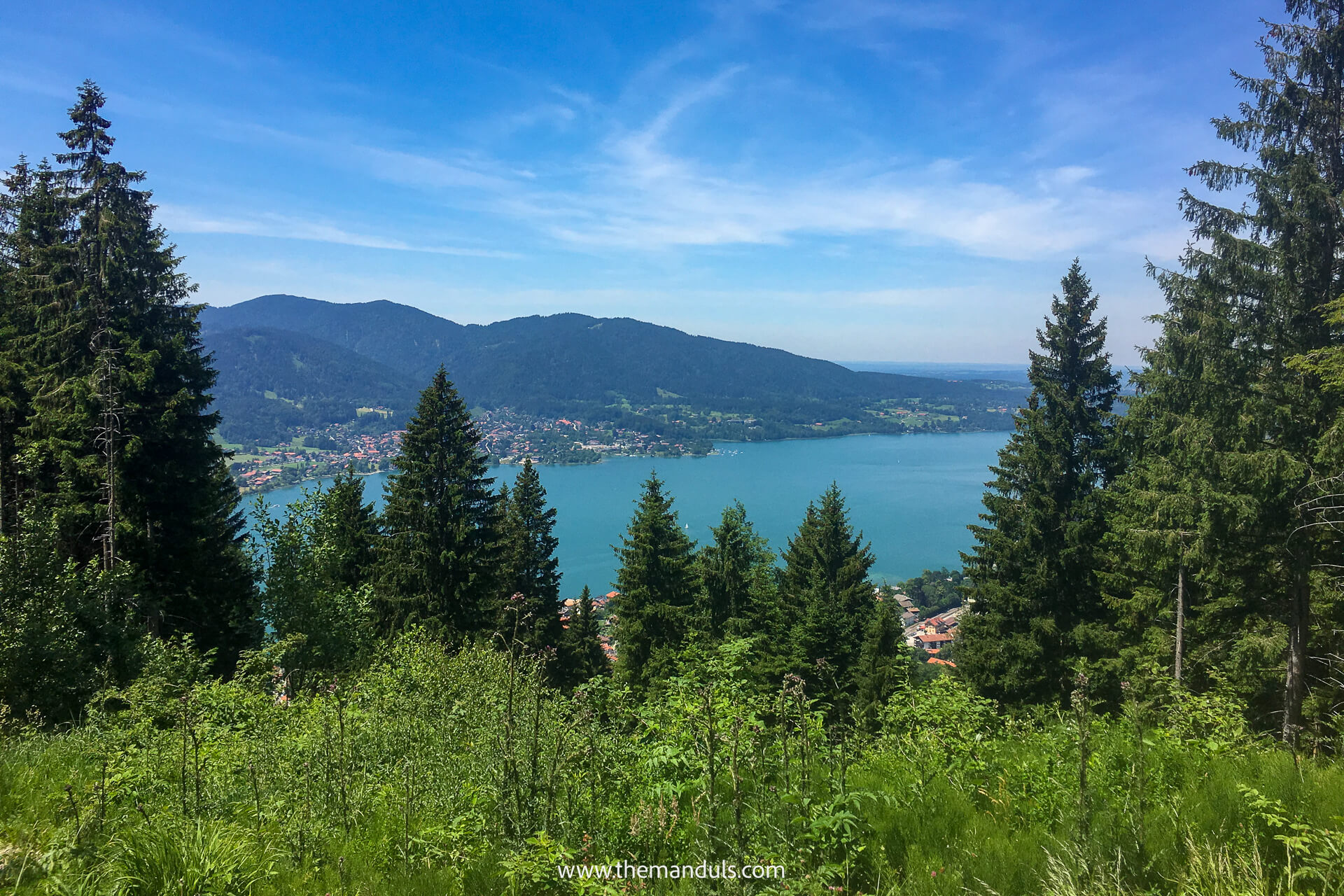
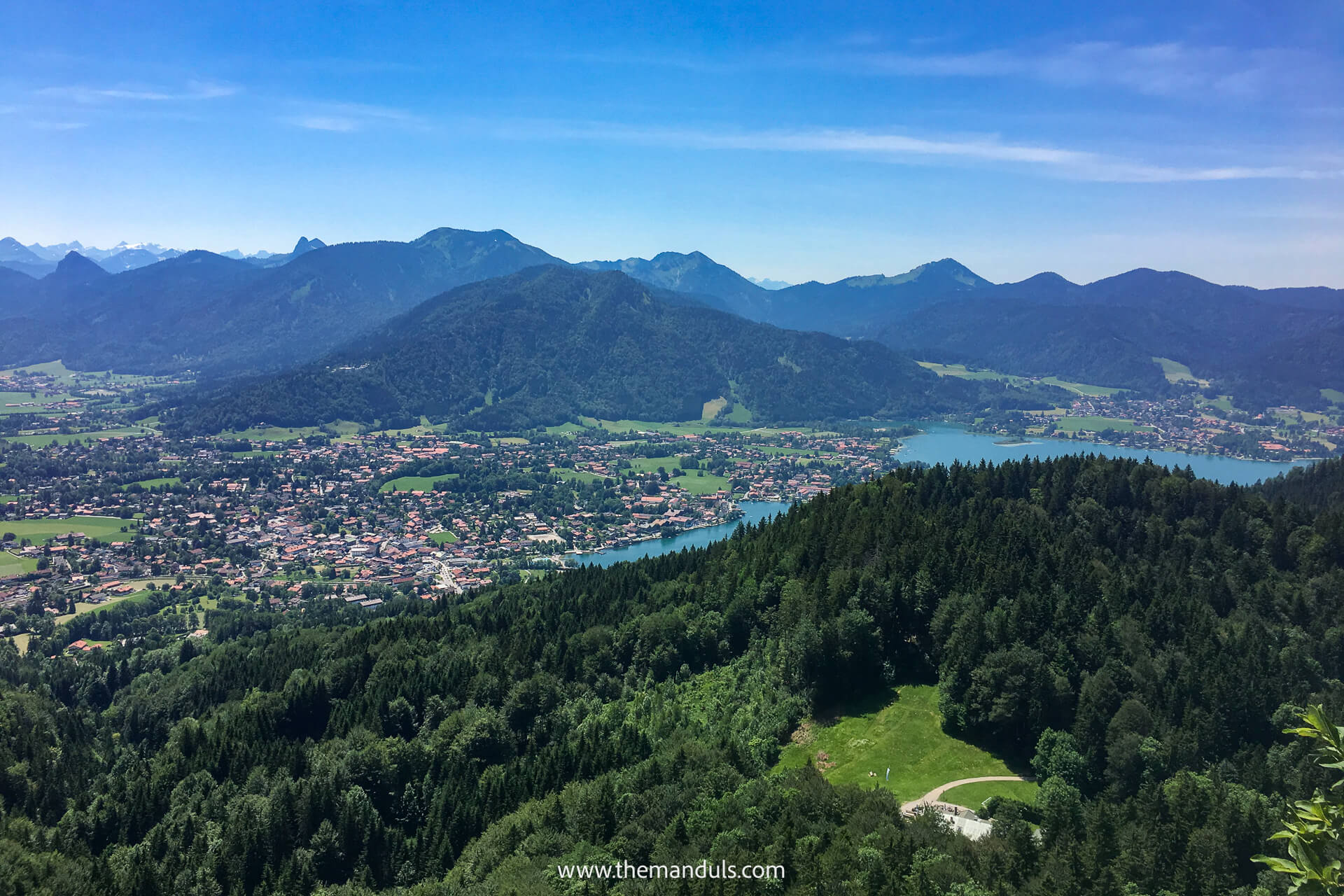
As you gain height, the trees begin to thin out and the scenery slowly reveals itself. We stopped at Berggasthaus Riederstein for a short break before tackling the final section. The last stretch to the summit is shorter but steeper, adding a bit of effort just before the reward.
At the top, a small chapel sits dramatically above the lake, and offers panoramic views over Tegernsee and the surrounding hills.
18. Hike up to Kampenwand near Chiemsee
Distance: 6.7 km (one-way)
Duration: 7 hours
Difficulty: moderate
Kampenwand was one of those hikes that genuinely surprised us. It’s located near Chiemsee, and while there are several routes to the top, we chose the classic trail starting from Hohenaschau.
It turned out to be a great balance, long enough to feel rewarding, but not too steep or exhausting.
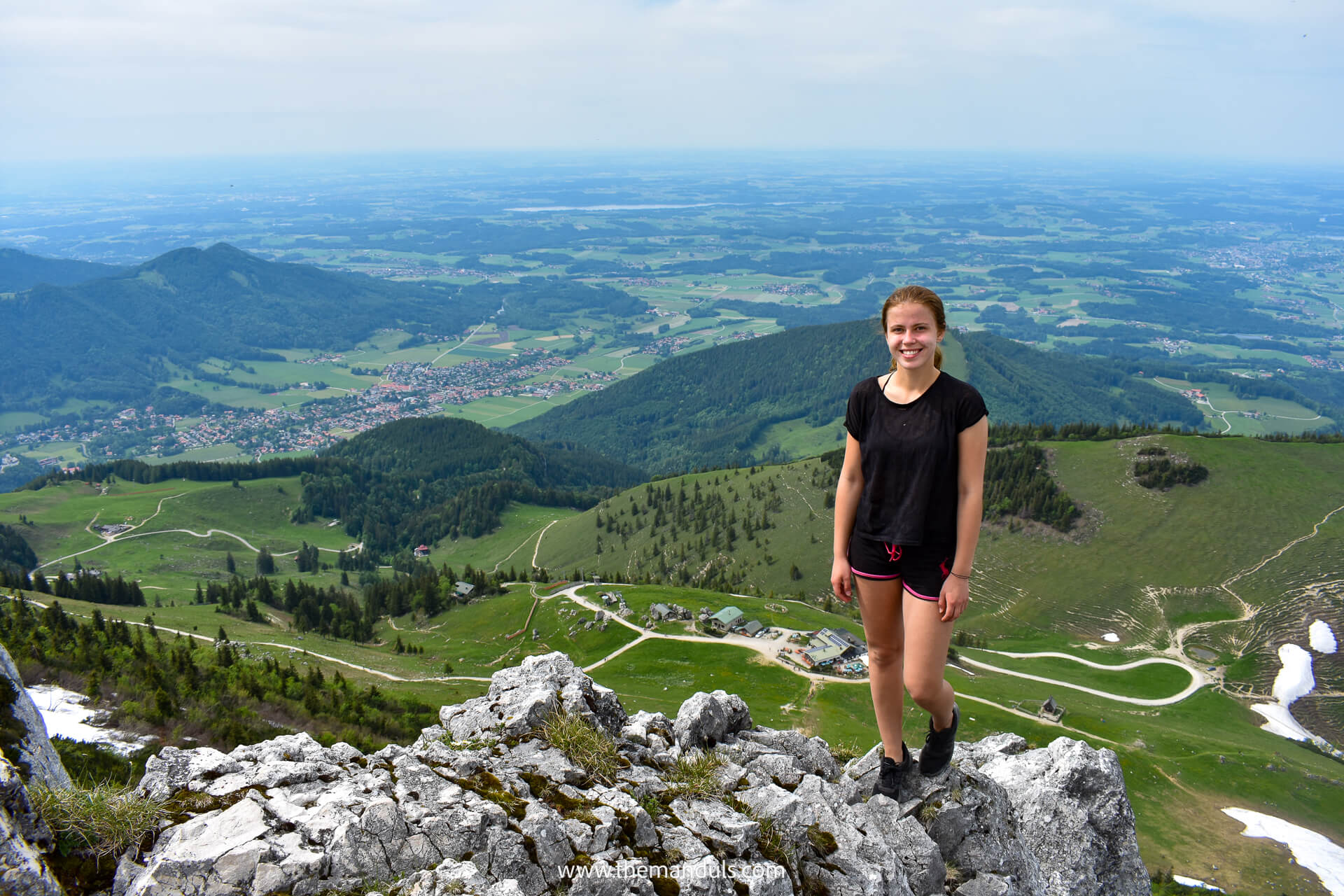
We followed trail no. 20, which begins gently through forest before gradually opening into alpine pastures. The steady ascent made it enjoyable the entire way. As we gained elevation, the scenery slowly shifted from shaded woodland to wide, open mountain views.
Along the route, we passed traditional huts like Gorialm and Steinlingalm — perfect places for a quick drink or snack.
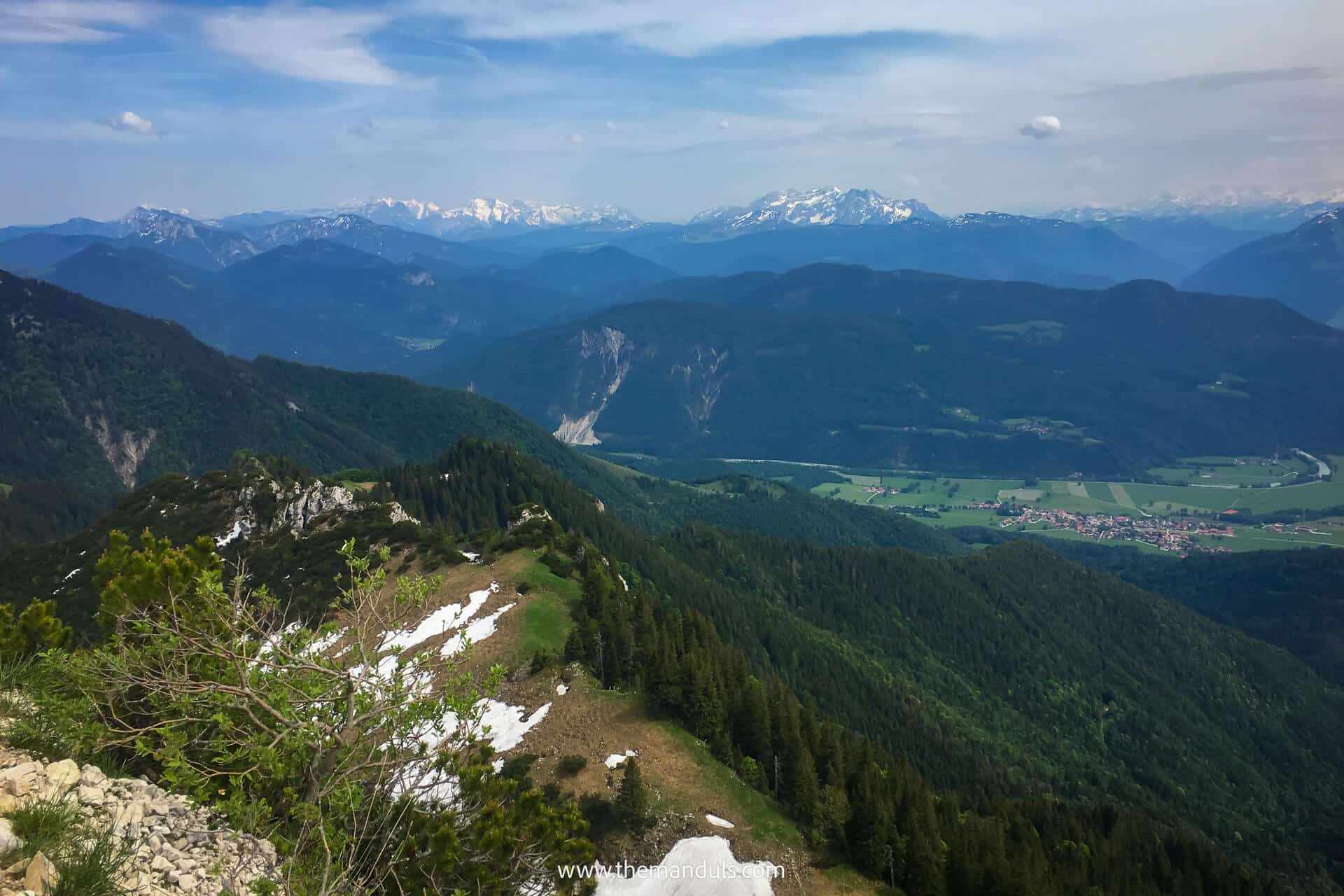
Near the summit area, the landscape becomes more dramatic, with rocky formations and panoramic views stretching toward the Alps and down to Chiemsee below. On clear days, the perspective over the lake is especially impressive.
If you want to shorten the hike or conserve energy, you can take the Kampenwandbahn cable car for part of the route.
Insider tip: Start earlier in the day — the trail is popular in summer, and afternoon storms can roll in quickly in this region.
Official Website: kampenwand.de
19. Visit Munich on a day trip
I’ve been to Munich countless times, and it’s one of those cities that’s easy to return to again and again. If you’re already exploring the Bavarian Alps, adding Munich as a day trip makes for a lovely day.
Most visits naturally start at Marienplatz, where the historic buildings and Glockenspiel set the tone. From there, I recommend to wander toward Frauenkirche, explore the Residenz, or relax in the English Garden. We especially like how walkable the center is.
What makes Munich worth it is the atmosphere. It feels like the perfect mix of traditional yet modern. You can grab a pretzel and coffee in the morning, explore museums or churches midday, and finish the day in a classic beer garden.
Trains from the Alps run frequently, making it a very manageable day trip.
Quick Tips & Local Insights
- Start early. The Bavarian Alps are popular for a reason. Parking at places like Lake Eibsee, Königssee or trailheads near Walchensee fills up quickly on sunny days.
- Always check the weather — especially for mountains. Peaks like Zugspitze, Herzogstand or Kampenwand can be completely covered in clouds even when it’s sunny in the valley.
- Bring layers, even in summer. Gorges such as Höllentalklamm are much colder inside, and summit winds can be surprisingly strong.
- Carry cash. Some mountain huts (Alms) still prefer cash payments, especially for smaller amounts.
- Respect nature rules. Wild camping is generally not allowed, drones are restricted in many areas, and swimming spots are natural environments — leave no trace.
- Public transport works — but a car gives flexibility. Trains and buses connect major spots, but if you want sunrise lakes, remote trailheads, or hidden coves, having your own car makes a big difference. Rent with DiscoverCars.
- Storms build fast in summer. If hiking, start earlier in the day. Afternoon thunderstorms are common in the Alps.
Final Thoughts
I’ve spent a lot of time in the Bavarian Alps, and every visit feels slightly different. Even though this isn’t the largest part of the Alps, the variety here is impressive.
You can have slow, peaceful days by lakes like Lake Eibsee or Walchensee— and the next day be hiking dramatic routes through places like Höllentalklamm or climbing peaks above the clouds.
That mix is what keeps drawing us back. It’s easy to design your trip around your energy levels — relaxed swims and scenic drives, or bigger mountain days with proper elevation gain.
And because distances are relatively short, you can see and do a lot without constantly changing bases.