
This article contains affiliate links. Learn more in our affiliate disclosure.
Tsukiji Fish Market is one of those places that almost everyone adds to their Tokyo itinerary — but not always for the right reasons. After visiting it ourselves, we realized it’s often misunderstood.
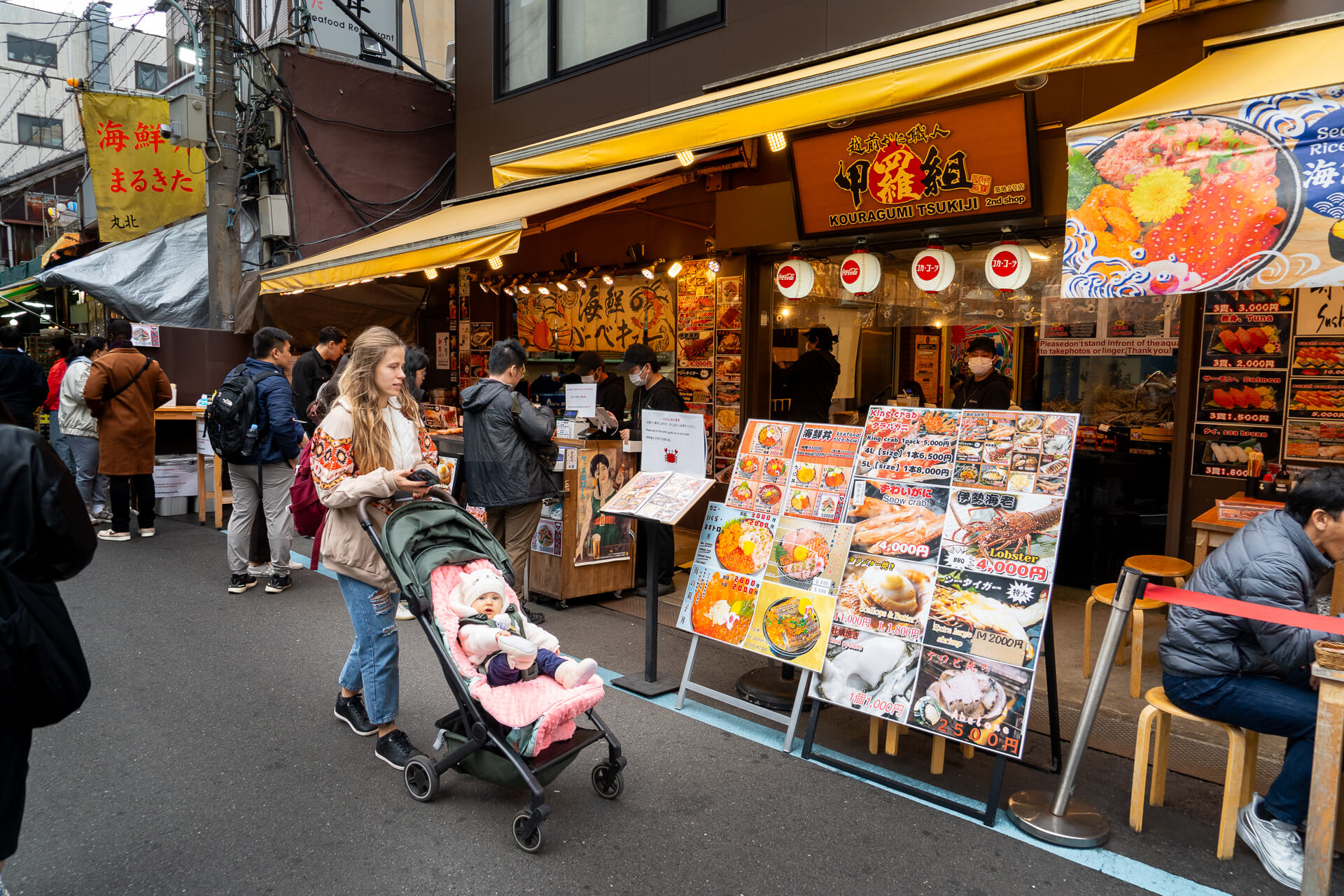
Many people still expect the old wholesale tuna auctions, while what you’ll actually find today is a lively outer market focused on food, street snacks, and small restaurants.
We visited early in the morning, right after breakfast at our hotel — and to be honest, that wasn’t the smartest decision. We ate too much beforehand and only later realized how many things we wanted to try at the market.
Don’t make the same mistake and come at least a little bit hungry. Being able to sample food as you walk around is part of the experience here.
We didn’t expect to enjoy it as much as we did. It’s busy, noisy, and clearly touristy — but it’s also one of the easiest places in Tokyo to try fresh seafood without committing to a full sushi restaurant. Visiting the market is easily one of the best things to do in Tokyo.
In this guide, we’ll share what Tsukiji Fish Market is really like today, what surprised us during our visit, and whether we think it’s still worth your time compared to other food spots in Tokyo.
Key Highlights
📍Location: Chuo City, Tokyo — about 1 km from Ginza and roughly 15 minutes by train from Tokyo Station
⭐️ Best time to visit: Early morning (around 8:00–10:00) for the freshest food and fewer crowds
💰 Entrance fee: free
🕥 Opening hours: Monday to Saturday from around 6 AM to 2 PM
🚗 How to get there: Easily reached by public transport (Tsukiji station) or by foot
🥾Accessibility: Easy walk on flat ground, no stairs or steep sections, good for wheelchair and stroller
Is it worth it?
For us, Tsukiji was worth the stop because it delivered exactly what it’s known for: easy access to fresh seafood in one very concentrated area. We didn’t come for a long, relaxed visit — we came to eat, and that’s where it works best.
Walking from stall to stall and choosing what looked good in the moment made the visit feel more spontaneous than sitting down in a single restaurant.
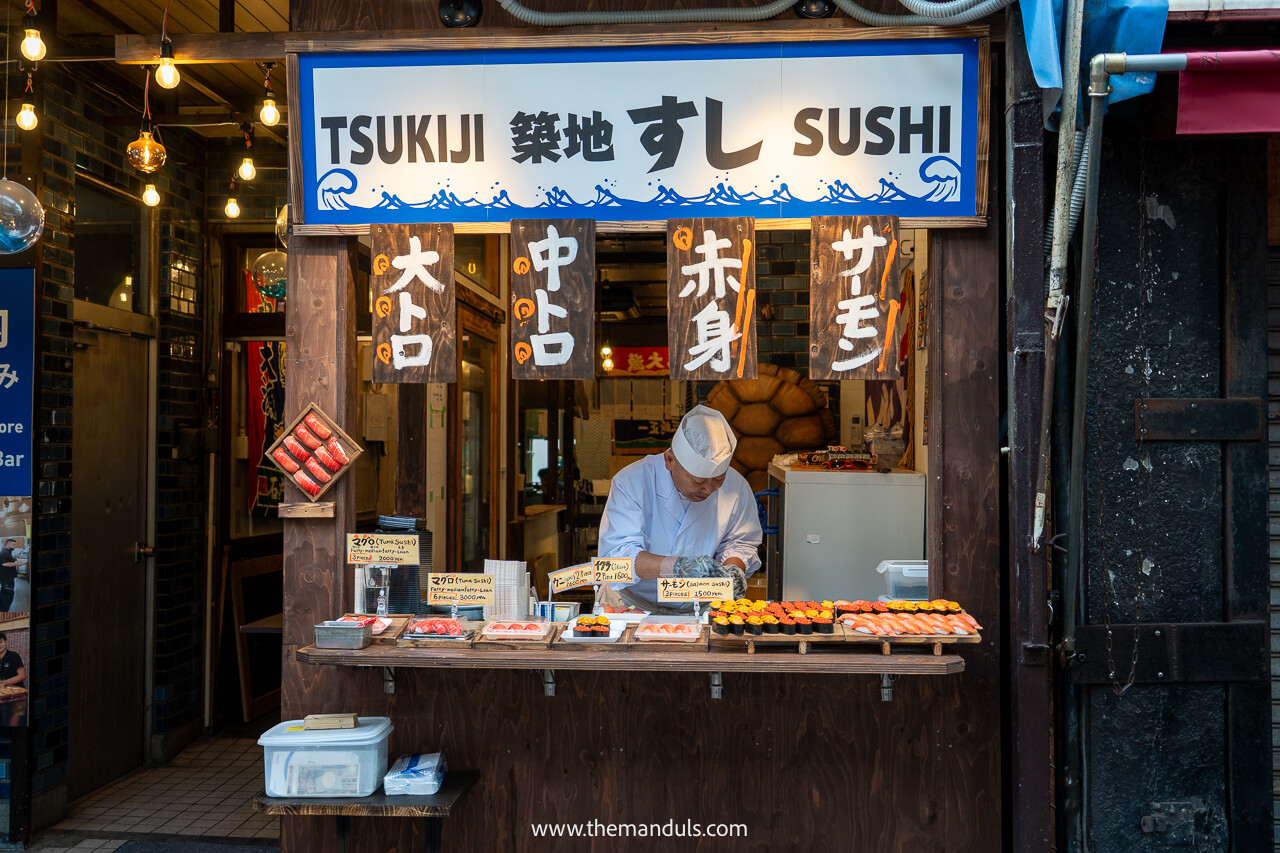
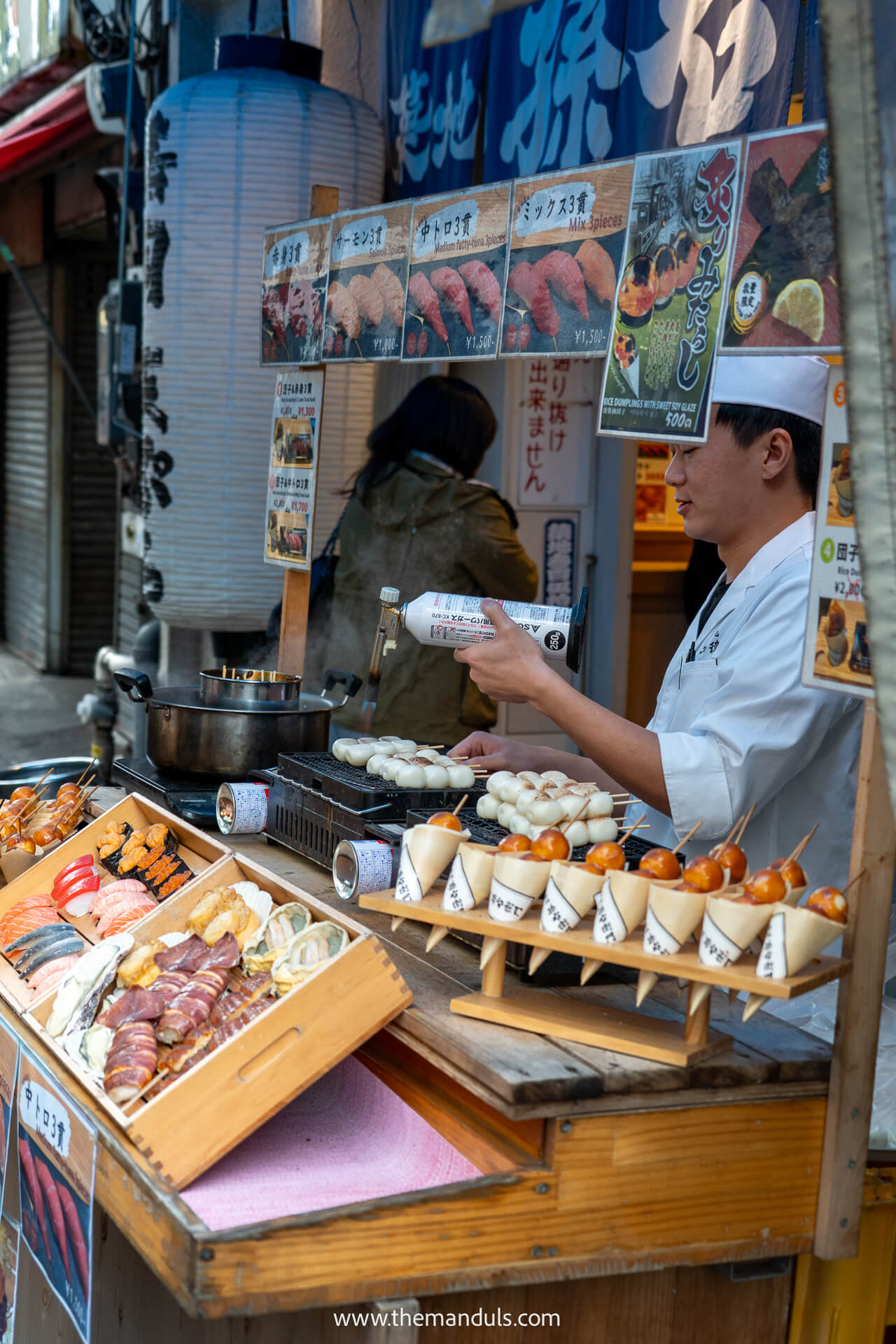
We tried several things, but what stood out most was tasting three different types of tuna side by side — lean, medium fatty, and fatty. It’s something that’s surprisingly hard to find together in regular sushi restaurants, and being able to compare them on the spot made the experience feel more special than just ordering sushi off a menu.
What makes Tsukiji Fish Market stand out is the atmosphere. The narrow lanes, shouting vendors, and smell of grilled seafood make it feel raw and busy in a way that many parts of Tokyo don’t.
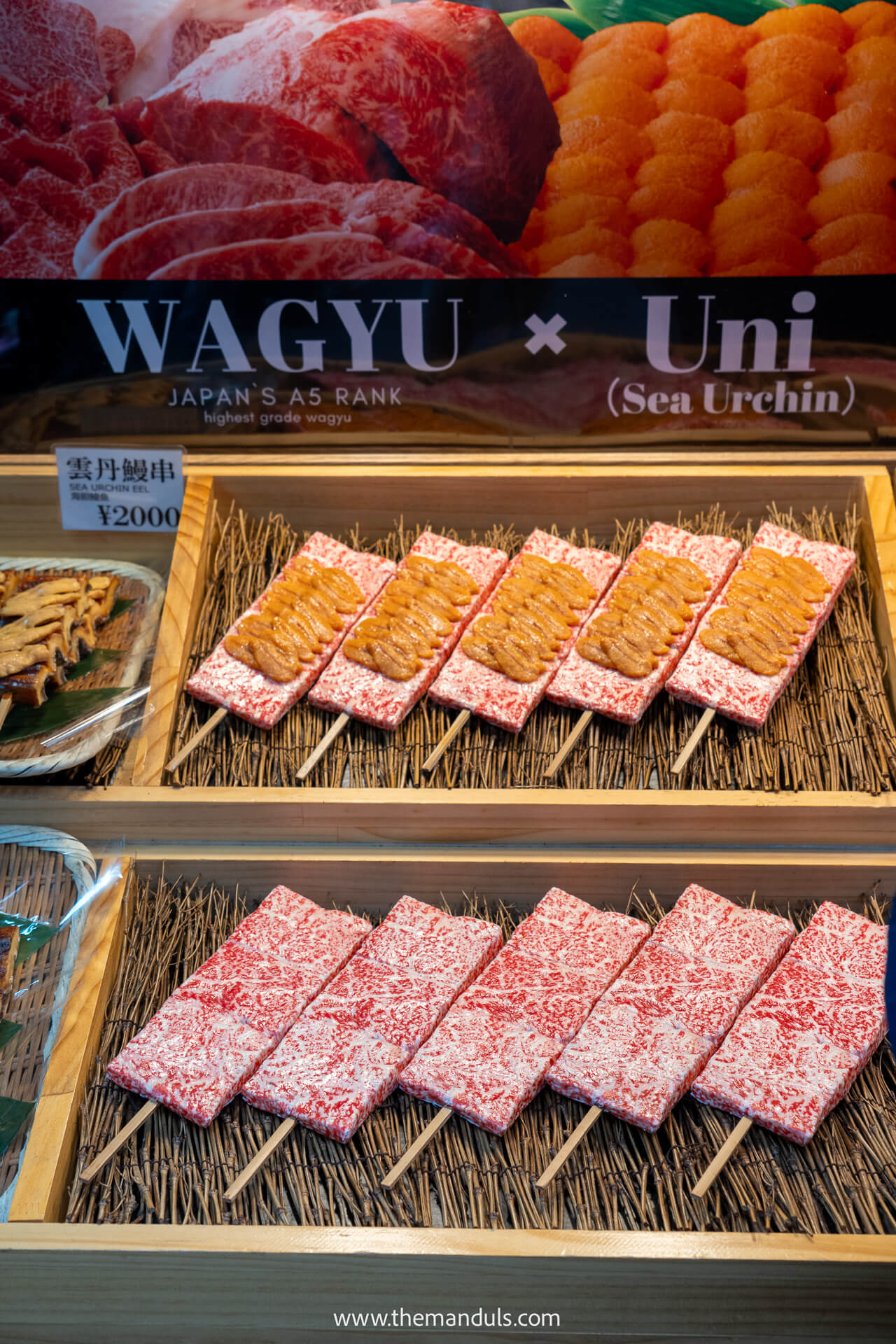
That said, it’s important to set expectations. Tsukiji is famous for sushi, tuna, wagyu, and street-style seafood snacks, and it attracts a lot of people because of that. It’s not quiet, and it’s not a hidden gem. Keep in mind that some prices are really high.
In a hurry?
These are our top hotels in Tokyo we’d book again
⭐️⭐️⭐️ Name of the hotel – Our top pick and continue with short text about naturally
👉 See prices & availability →
⭐️⭐️ Name of the hotel – short text
👉 See prices & availability →
⭐️ Name of the hotel – short text
👉 See prices & availability →
Where is the Tsukiji Fish Market
Tsukiji Fish Market is located in Chuo City, central Tokyo, just south of Ginza and close to Tokyo Bay.
From Ginza, it’s about a 10–15 minute walk. From Tokyo Station, it takes roughly 15 minutes by train. If you’re already exploring areas like Ginza, Shiodome, or Hamarikyu Gardens, Tsukiji is close enough to reach on foot.
How to get there
Tsukiji Fish Market is easy to reach from most parts of Tokyo, and you don’t need a car. We either walked or used trains, and both worked well depending on where we stayed.
By train (most practical option)
There are two stations that work best:
Tsukiji Station (Hibiya Line)
This is the closest station and the most straightforward choice. From the station exit, it’s about a 3–5 minute walk to the outer market streets. If you’re coming from areas like Ueno, Roppongi, or Akihabara, the Hibiya Line is very convenient.
Shiodome Station (Oedo Line / Yurikamome Line)
From here, it’s around a 10-minute walk. This option works well if you’re coming from Shinjuku or Roppongi using the Oedo Line.
If you’re coming from Tokyo Station, it usually takes about 15 minutes by train (JR + metro combination), or around 25 minutes on foot if you don’t mind walking.
Don’t forget to add Suica to your Apple Wallet before coming to Japan. We used it during our trip and it was easy and very convenient.
On foot (if you’re staying nearby)
We walked because our hotel was about 20 minutes away, and it was an easy walk through Ginza. If you’re staying in Ginza, Shimbashi, or Tsukiji, walking makes sense and lets you arrive without dealing with station exits and crowds.
By taxi
Taxis are a good option if you’re coming early in the morning or traveling with luggage. From central areas like Ginza or Tokyo Station, the ride is short and usually inexpensive compared to longer cross-city trips.
Just say “Tsukiji Outer Market” or show it on Google Maps. Drivers know the area well. There’s no dedicated parking for visitors, but taxis can drop you close to the main streets.
By bus
There are several local bus lines that stop near Tsukiji, especially from Ginza and Shimbashi. This isn’t the fastest option, but it can be useful if you’re already using buses that day or staying nearby.
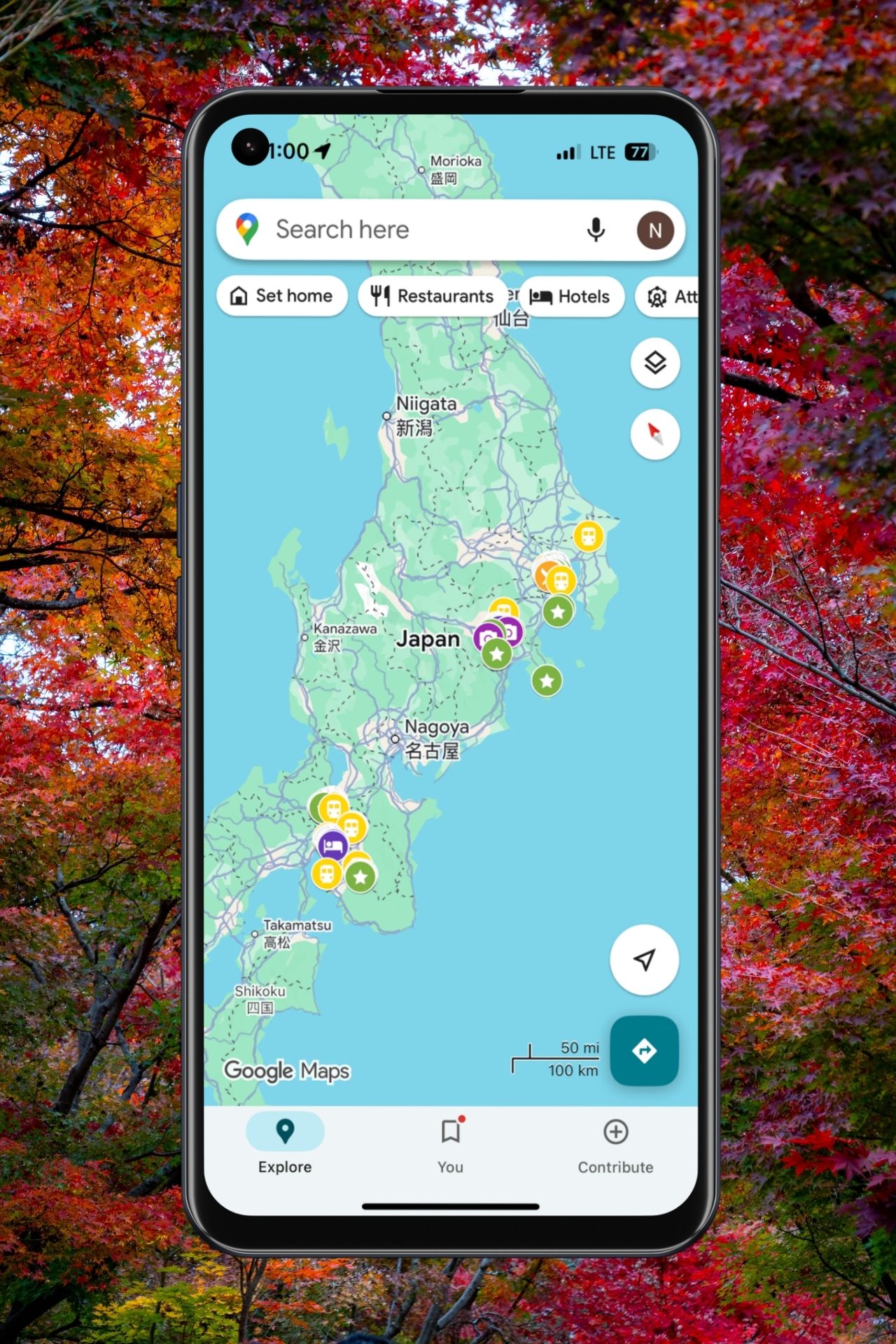
Our Japan Google Maps
Built from our real trips across Japan — only places we actually visited and loved.
No tourist traps. No random saves. Just a ready-to-use map that saves you hours of research.
219 handpicked spots, including:
📍 Highlights & hidden gems
🍜 Restaurants we’d go back to
🏨 Areas & hotels we’d book again
🗺️ Stops that fit into real, logical itineraries
What to expect at Tsukiji Fish Market
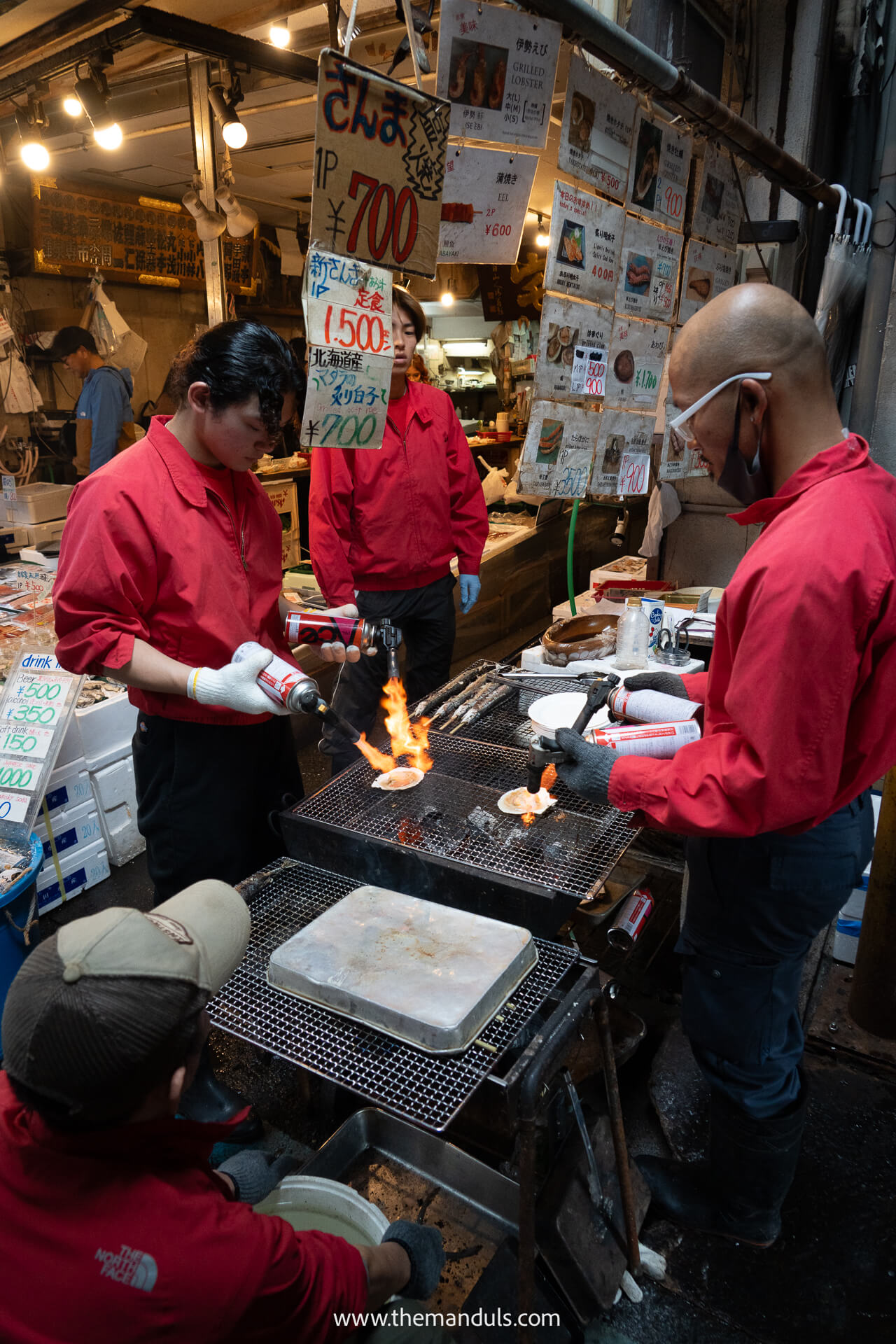
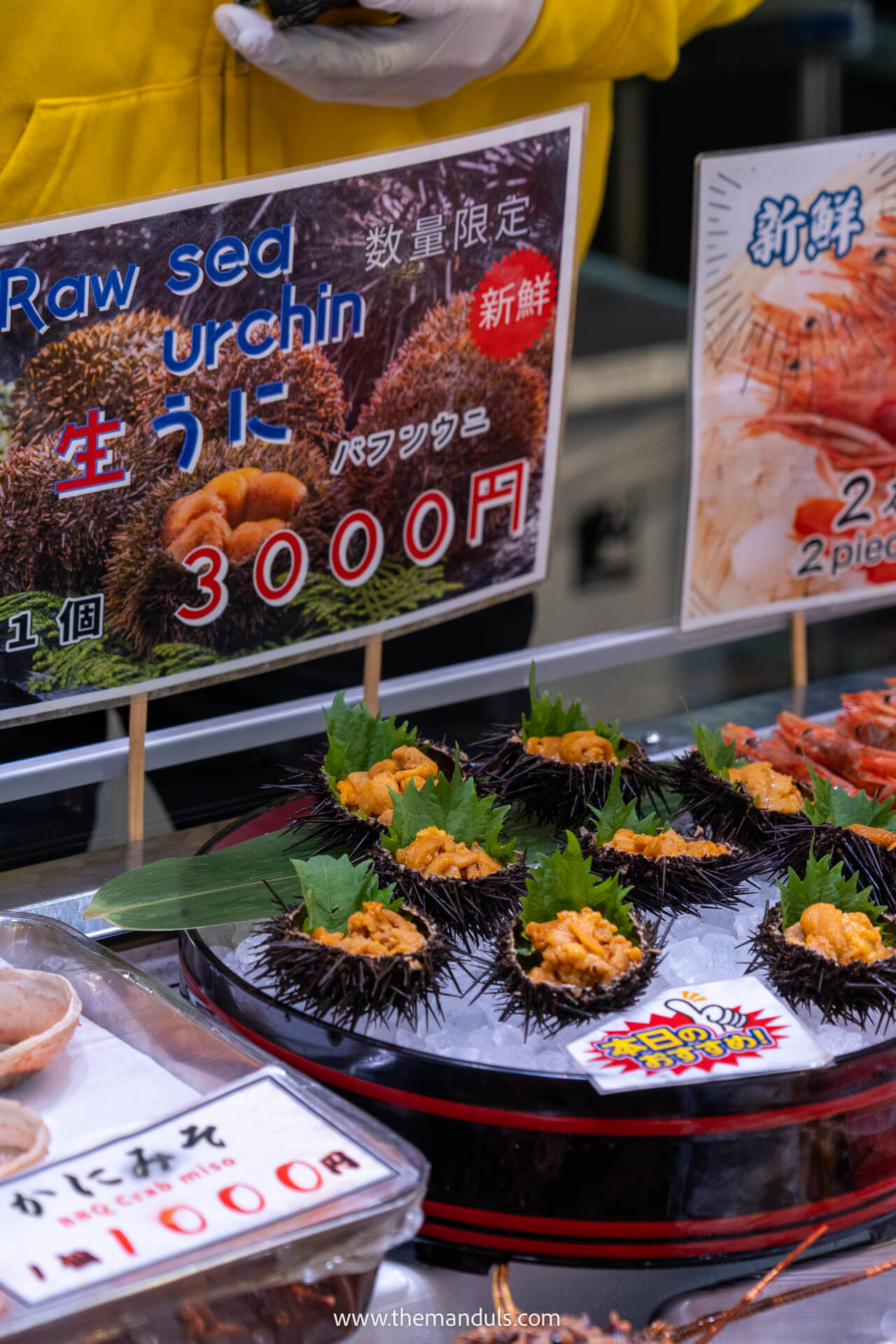
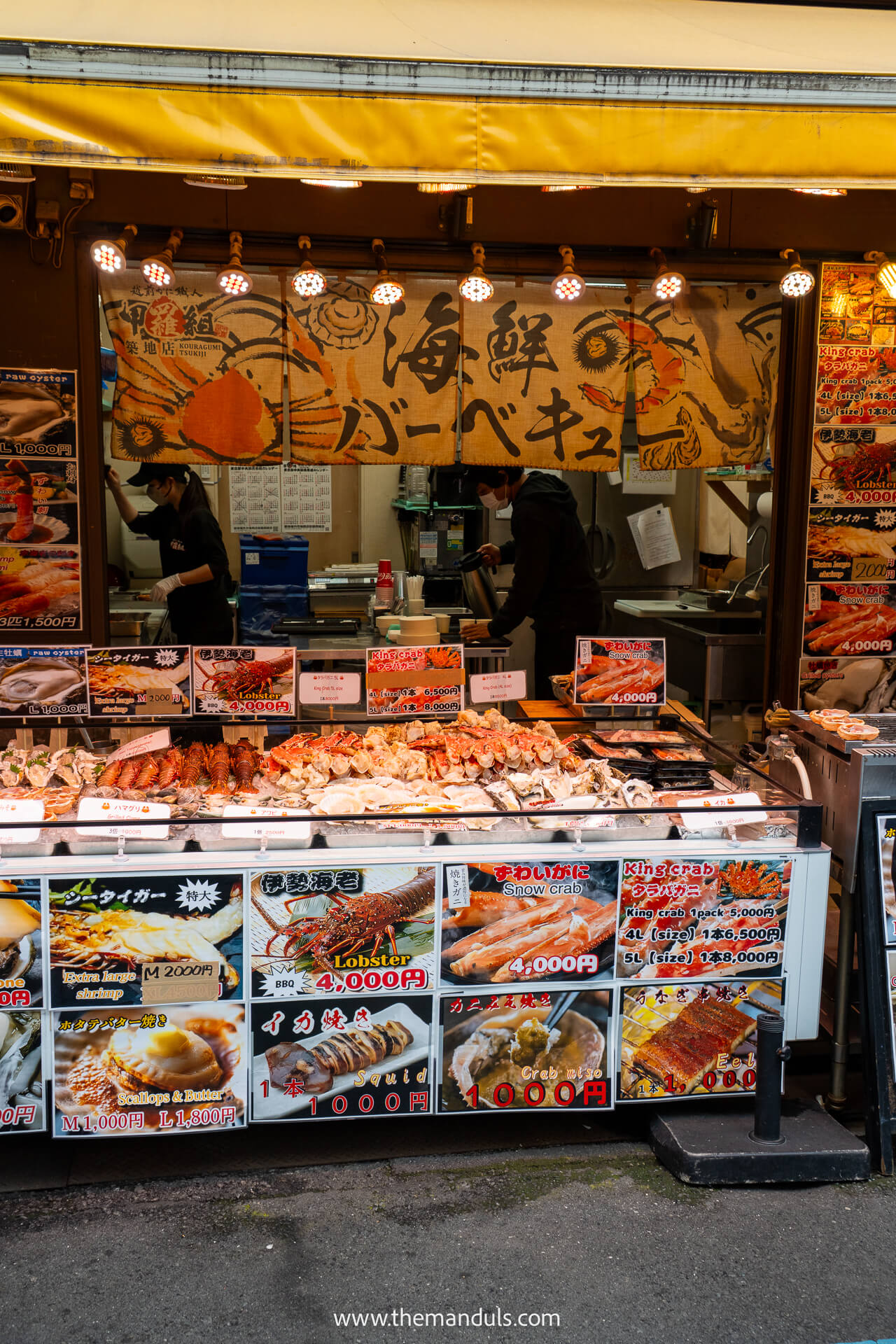
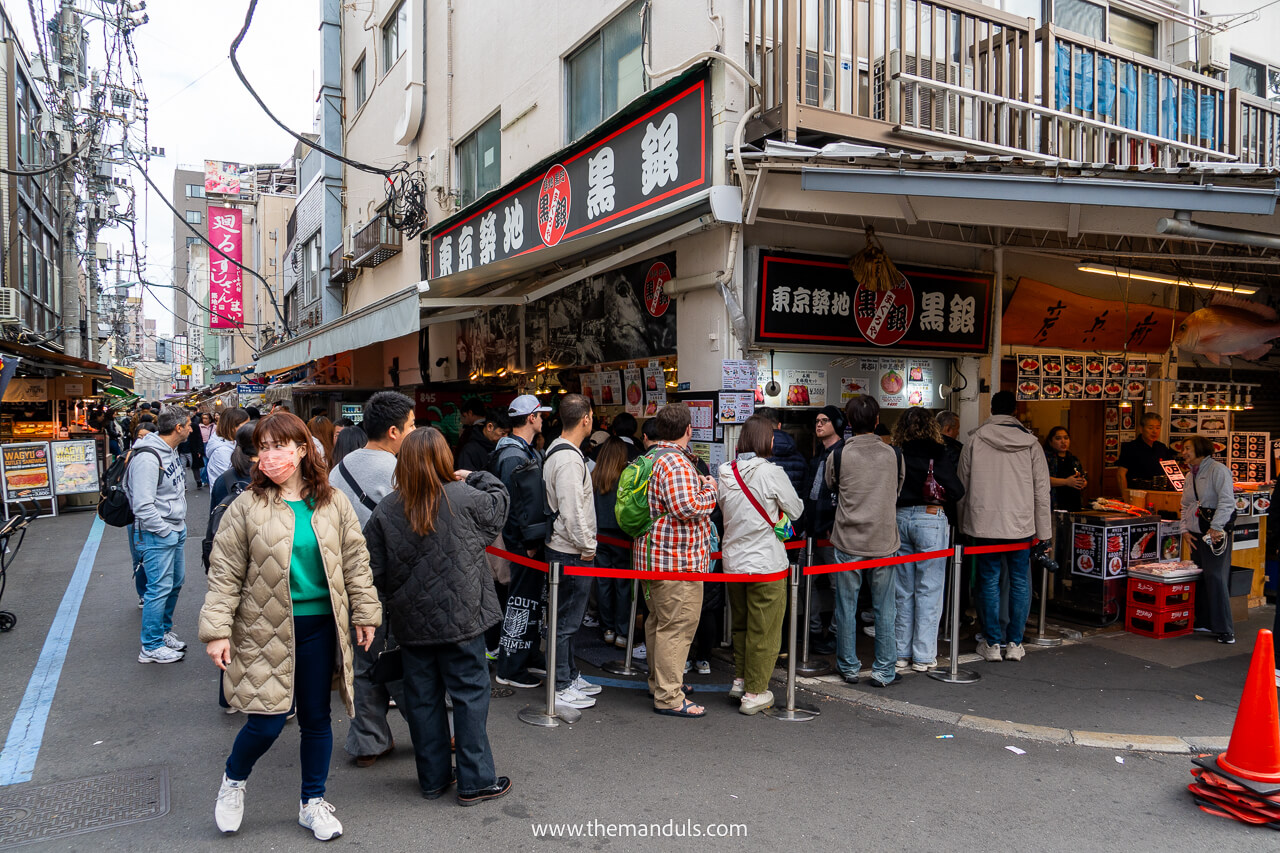
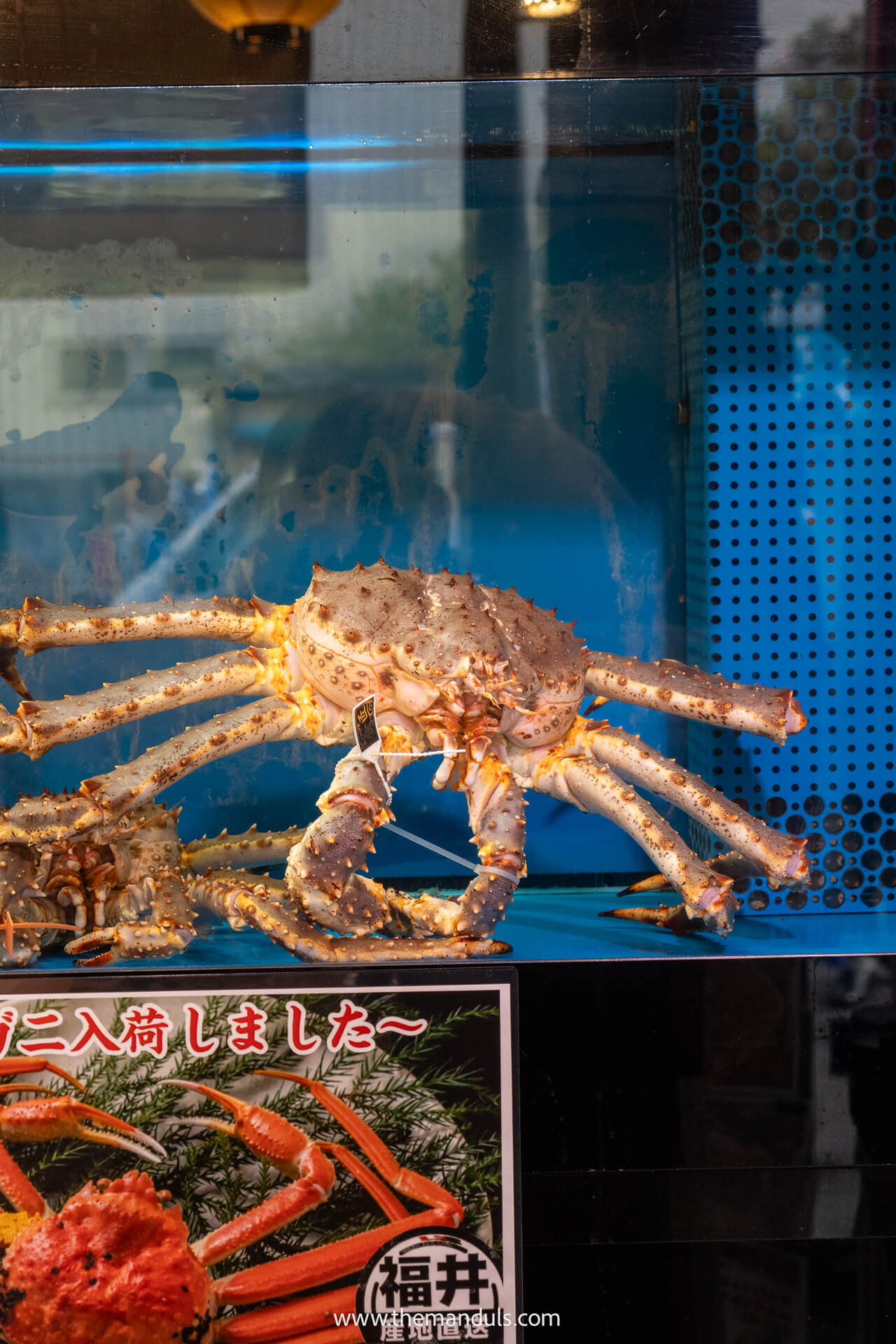
At Tsukiji, you should expect a place that’s focused almost entirely on food. The lanes are narrow and busy, and most of what you’ll see are small stalls and counters selling fresh tuna, sushi and sashimi, grilled scallops and eel, fish skewers, tamagoyaki, seafood rice bowls, and sweets like mochi or matcha drinks.
Coming early really matters. Most stalls start closing around 2:00 pm, so this is not somewhere to leave for late afternoon. That said, if you arrive closer to closing time, you might find some food sold at discounted prices as vendors try to finish their stock for the day. We noticed that timing can make a big difference both in crowd levels and in what’s available.
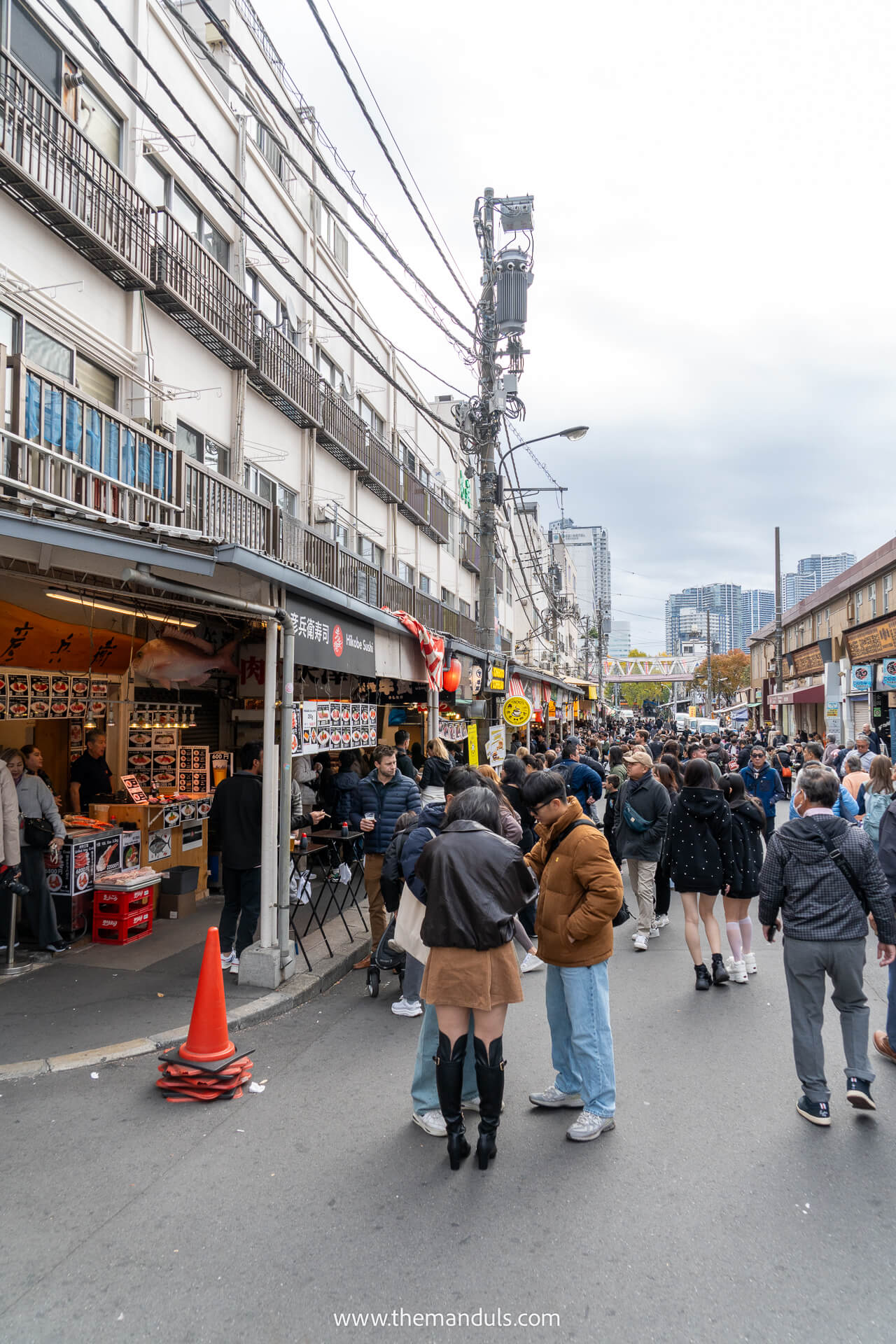
The market is almost always busy, especially mid-morning. You’ll be moving slowly through the lanes, stopping often, and sharing space with other visitors and delivery carts. We spent around an hour here, which felt like the right amount of time to eat a few things and move on.
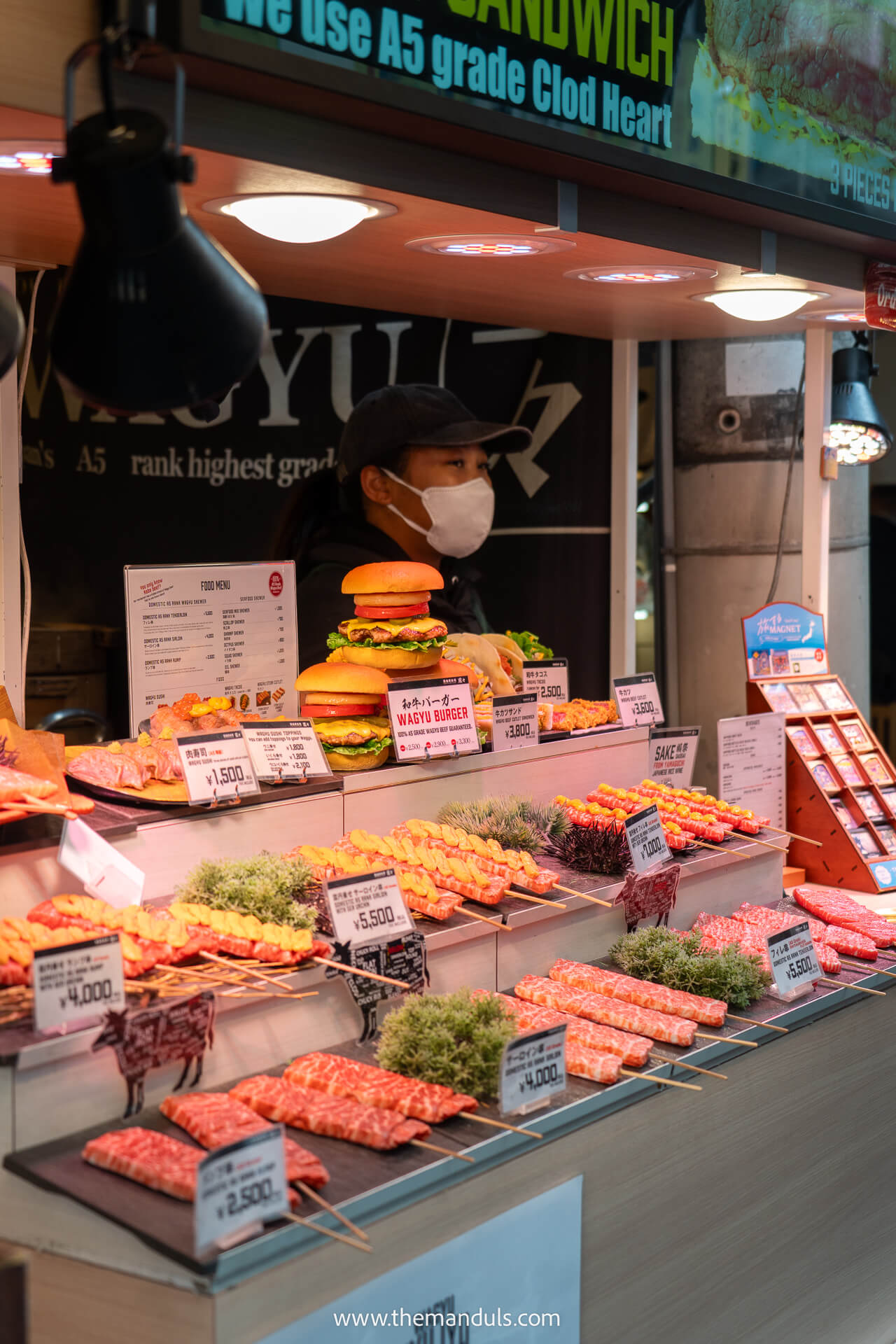
What we didn’t like were a few stalls that felt clearly overpriced. One example was a small wagyu skewer for 5,000 yen, which honestly felt like a rip-off when we later found similar-quality meat for almost half the price elsewhere. That’s why where you choose to eat here matters more than at many other markets.
One tip we really recommend following: places filled with locals almost always have better prices and better food than stalls surrounded only by tourists.
We know how it works — when you see a long queue, it’s tempting to think it must be amazing. Sometimes that’s true, but sometimes it’s just overhyped.
At Tsukiji, we skipped the stalls with 30–40 minute lines and instead tried food from places without queues. The prices were lower, the food came instantly, and everything we tried tasted excellent.
We paid for everything in cash, since most vendors didn’t accept cards when we visited. A few larger shops had card terminals, but many of the small food stalls and counters were cash-only, especially for street food.
Facilities
- Public toilets are available in and around the market area
- Small seating areas at some stalls, but most food is eaten standing
- Trash bins are limited, so it’s best to finish food near the stall where you bought it
- ATMs can be found near the market, but not inside the narrow food lanes
- No large luggage storage facilities — the space is tight and not designed for big bags
What we recommend trying at Tsukiji
Tsukiji is best treated like a tasting walk rather than a single meal. Instead of sitting down immediately, we recommend trying a few smaller items from different stalls.
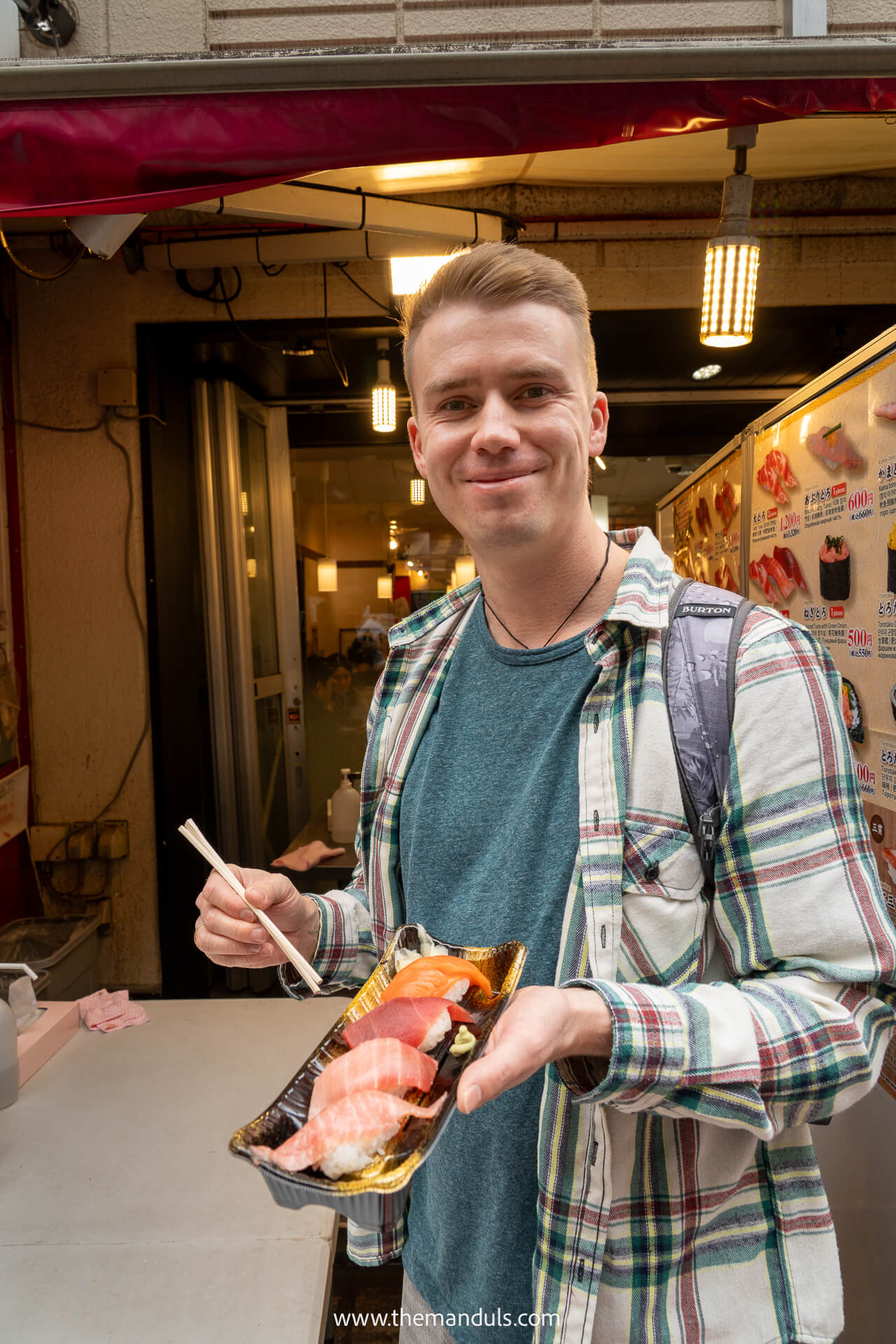
If there’s one thing to look for, it’s tuna. We tried three types side by side — lean (akami), medium fatty (chutoro), and fatty (otoro). Tasting them back to back really shows the difference in texture and richness. Our favorite was lean tuna since it wasn’t as chewy as the other two.
Other things we enjoyed and would happily try again:
– Tamagoyaki (sweet Japanese omelette), often made fresh in front of you
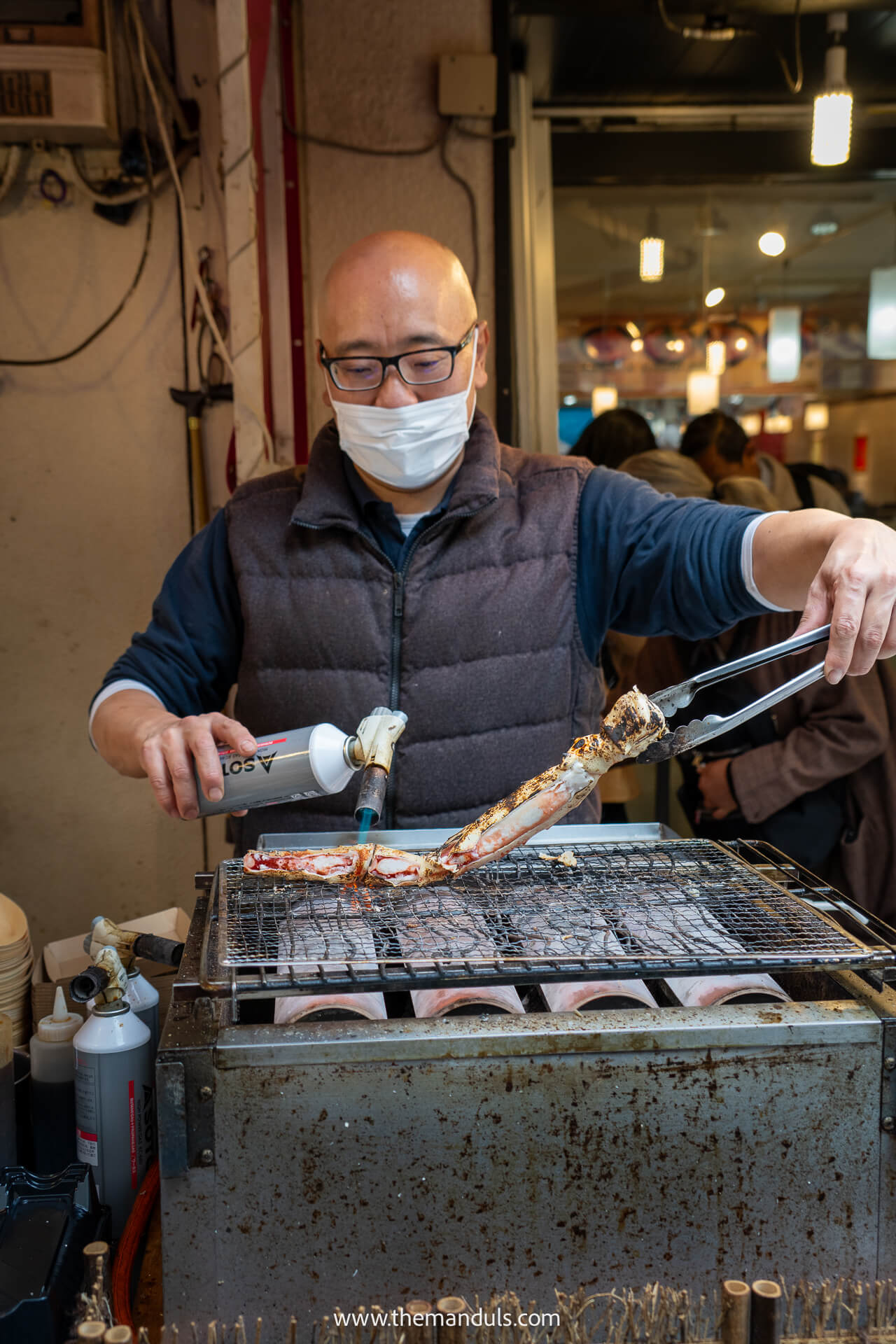
– Grilled eel skewers
– Seafood donburi (rice bowls topped with sashimi)
– Fresh sushi and sashimi
– Matcha drinks and strawberry mochi for something sweet
The portions are usually small, which makes it easy to try more than one thing — as long as you come hungry.
Common mistakes to avoid
- Coming full – We ate breakfast before visiting and immediately regretted it. Come at least a little bit hungry.
- Arriving too late – Most stalls close around 2:00 pm, so this is not a late-afternoon stop.
- Waiting in long lines – Long queues don’t always mean better food. We skipped 30–40 minute waits and had excellent food at stalls without lines.
- Not bringing cash – Many small vendors don’t accept cards, especially for street food.
Best time to visit
The best time to visit Tsukiji Fish Market is early in the morning, ideally between 8:00 and 10:00. At this time, most stalls are open, the food is at its freshest, and the crowds are still manageable. This is when the market feels most like a working food area rather than a tourist attraction.
Late morning and early afternoon are the busiest, especially from around 10:30 to 13:00, when tour groups and late risers arrive. The lanes get very crowded, and lines at popular stalls can become long.
Most vendors start closing around 14:00, so this is not a place to leave for late afternoon. If you do come closer to closing time, you might find some food at discounted prices as stalls try to sell what’s left for the day — but the choice will be more limited.
Weekdays are generally better than weekends, and it’s worth checking the market’s closure days (usually Sundays and some Wednesdays), as many stalls do not open on those days.
Where to stay in Tokyo
After exploring Tokyo, we put together a where to stay in Tokyo guide to help you choose an area and hotel that actually match how you like to travel — not just what looks good on a map.
We’ve handpicked the best hotels in Tokyo, focusing on places we’d genuinely book again ourselves rather than just listing popular names.
During peak seasons like cherry blossom season and autumn foliage, prices rise fast — often doubling or even tripling — which makes booking well in advance especially important.
Once you find a hotel that works for you, we recommend sticking with it unless you really need to change. Availability drops quickly, and rebooking later often means fewer options or ending up in a less convenient location than your original choice.
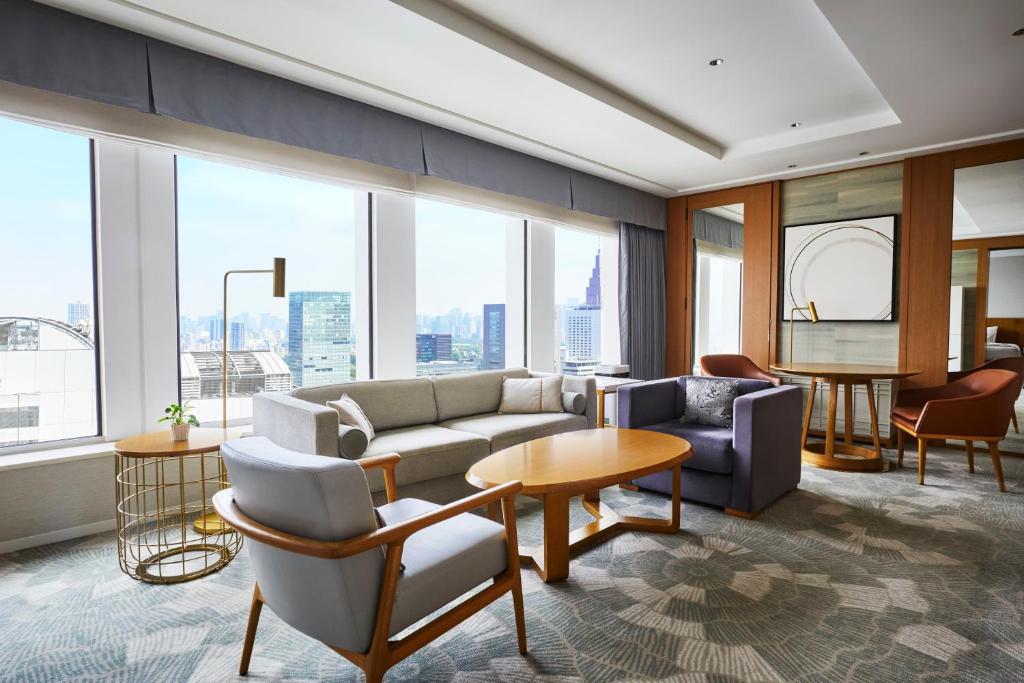
⭐️⭐️⭐️ Keio Plaza Hotel Tokyo Premier Grand (our top pick) – A high-end stay in Shinjuku with generous room sizes, skyline views, and access to a quiet lounge away from the crowds. The location makes moving around the city easy, and evenings here feel surprisingly relaxed for such a busy area. If we came back and wanted a comfortable, no-compromise base, this is the hotel we’d choose.
⭐️ Best for: Couples who want comfort, space, and a premium experience in a busy area.
👉 Check current deals →
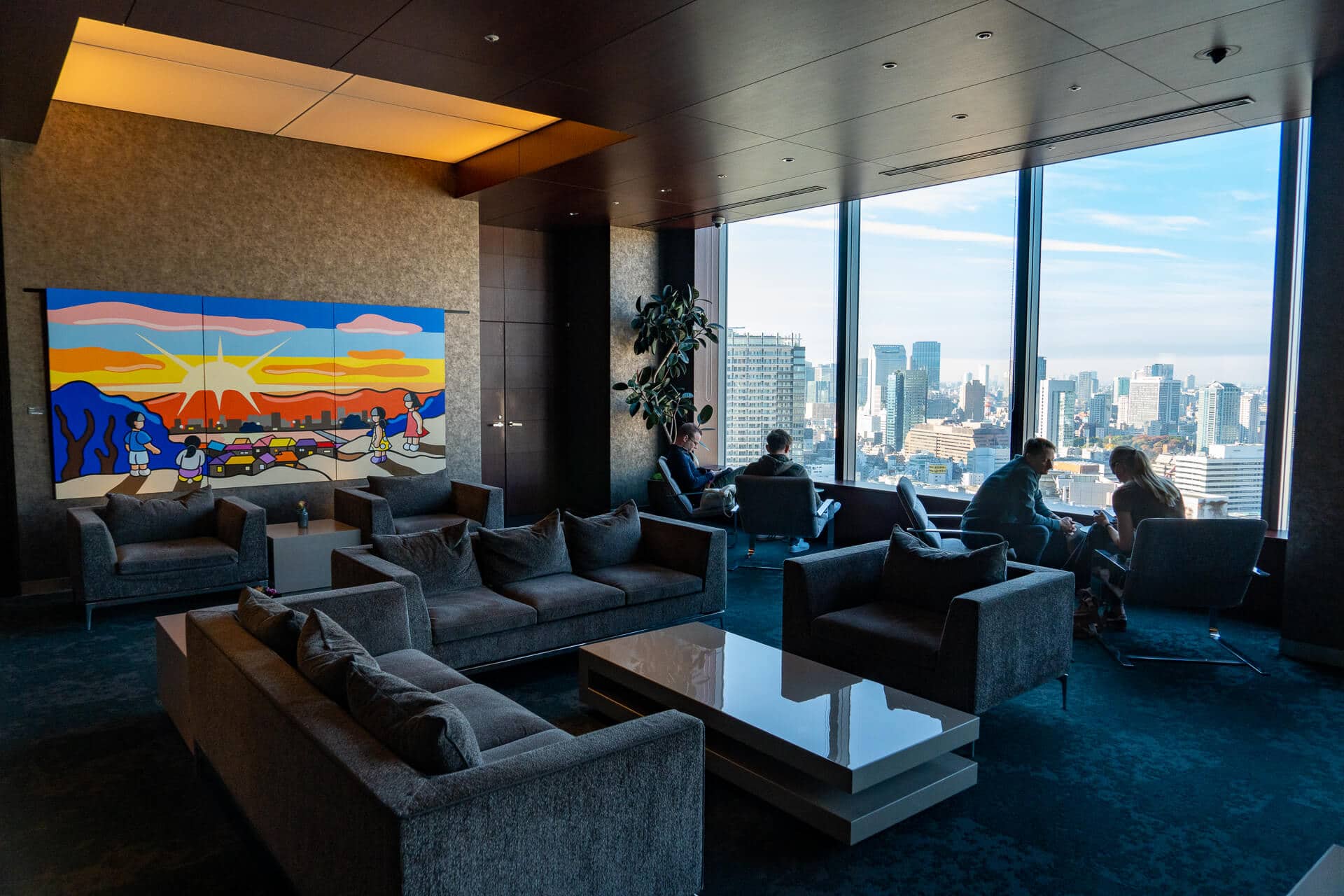
⭐️⭐️ Park Hotel Tokyo – A stylish mid-range hotel in Ginza with art-filled rooms and city views. It feels modern and well-designed without being flashy. Direct access to Shiodome Station made getting around simple, and we liked that the area stayed calm in the evenings despite being central.
⭐️ Best for: Travelers who want design, convenience, and a calm base.
👉 Compare prices →
⭐️ Shibuya Tokyu REI Hotel – A practical budget hotel just minutes from Shibuya Crossing. Rooms are small but comfortable, and the location is the main advantage. It worked well for short stays when we wanted to be close to everything without paying for luxury.
⭐️ Best for: Budget travelers who want location and simplicity.
👉 See latest prices →
Final thoughts
Tsukiji Fish Market isn’t about watching tuna auctions or discovering a hidden local secret — it’s about eating your way through one of Tokyo’s most famous food areas.
What we liked most was how easy it was to sample different foods in one place, especially fresh tuna in different cuts. What surprised us was how intense and crowded it felt after 9 AM. And while some stalls were clearly overpriced, we still found great food by choosing places without long lines and paying attention to where locals were eating.
It’s not for everyone, but if food is part of why you’re visiting Japan, we think it’s worth adding to your itinerary.