
This article contains affiliate links. Learn more in our affiliate disclosure.
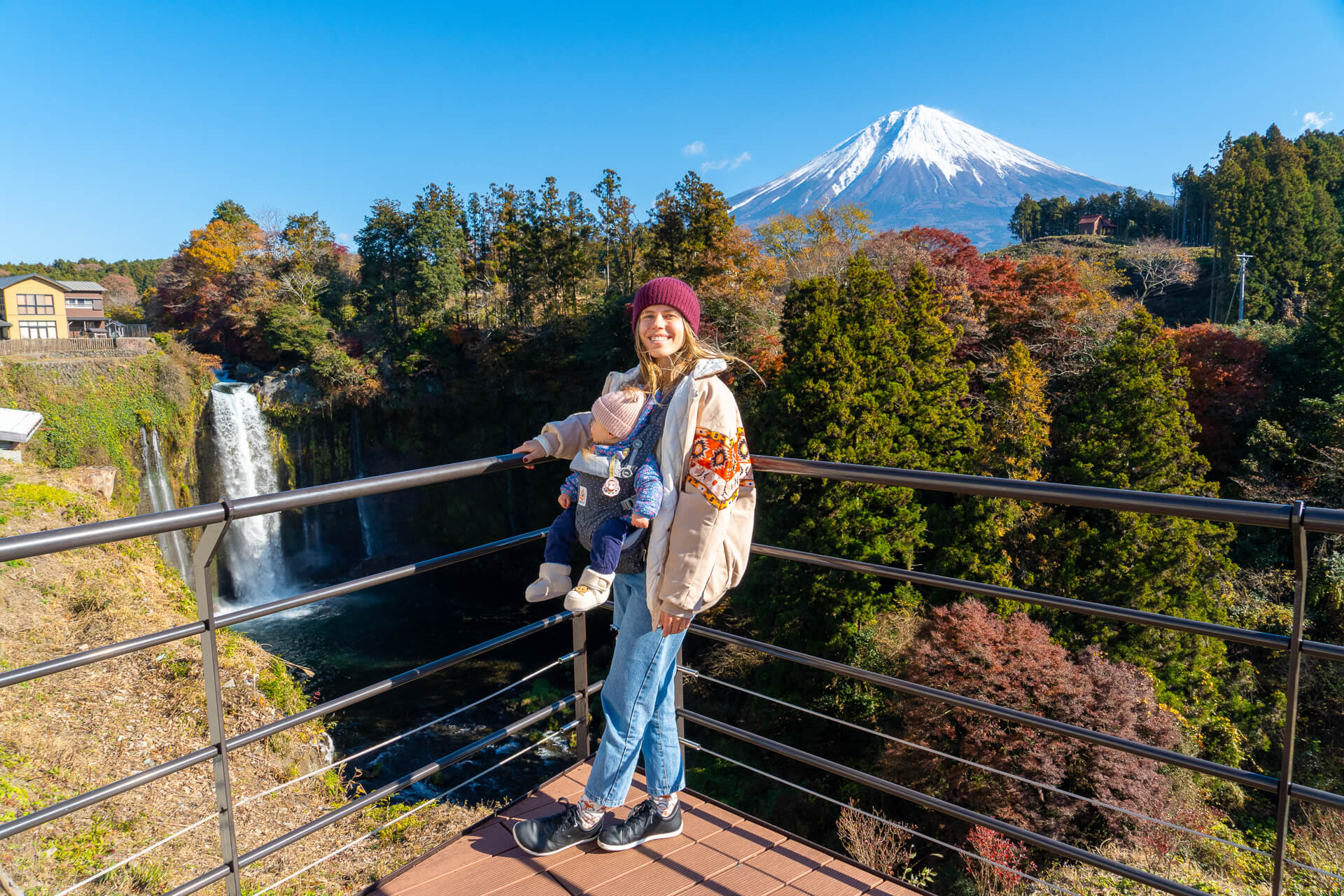
When we first started planning our trip around Mount Fuji, we quickly realized that timing matters here even more than in most places in Japan. Fuji isn’t just a destination — it’s a weather-dependent experience. The mountain can look absolutely perfect one day… and be completely hidden behind clouds the next.
Unlike cities like Tokyo or Kyoto, Fuji doesn’t reward spontaneity. Visibility, seasons, and even time of day shape everything — from whether you’ll see the peak at all, to how busy the area feels, to whether it’s worth staying overnight.
In this guide, we break down the best time to visit Mount Fuji based on what it actually feels like to be there: when views are clearest, when crowds spike, and which seasons give you the highest chance of seeing Fuji in all its glory.
If you’re already planning, our guides on things to do around Mount Fuji and where to stay near Mount Fuji will help you turn good timing into a great experience.
Key Highlights
🌦️ Seasons: Four distinct seasons with very different visibility
🌤️ Best months: October–November and January–February
👥 Crowd levels: Peak in summer and cherry blossom season
🎉 Notable events: Climbing season, cherry blossoms, autumn foliage
💡 Good to know: Clear mornings matter more than months — early starts are key.
Quick Overview
The best time to visit Mount Fuji is during autumn (October–November) and winter (January–February), when air is clearer and chances of seeing the peak are highest. These months offer crisp visibility, fewer clouds, and calmer conditions around the lakes.
Spring is beautiful but unpredictable, while summer is the worst season for views despite being the most popular time to visit.
Our Experience
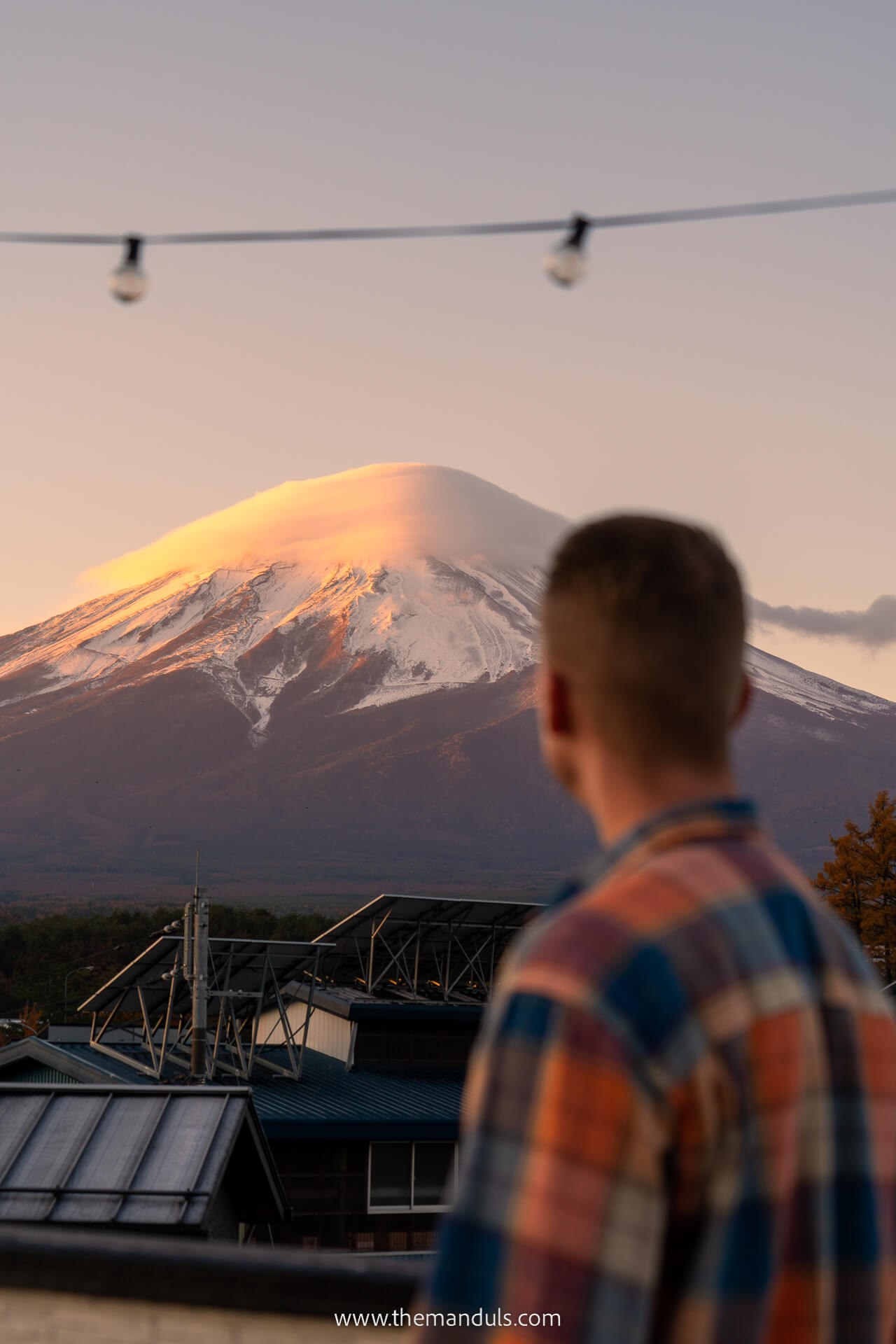
We planned our Fuji visit very intentionally — and that decision paid off. What stood out most wasn’t just the season, but how dramatically the view changed throughout the day. Early mornings were everything. Fuji was sharp, dramatic, and fully visible right after sunrise, while by late morning, clouds often rolled in and partially hid the peak.
The biggest takeaway? You can visit Fuji at the “right” time of year and still miss it if you don’t plan your timing properly. We recommend staying overnight near the lakes and starting early made all the difference.
Best Time to Visit Mount Fuji
Spring
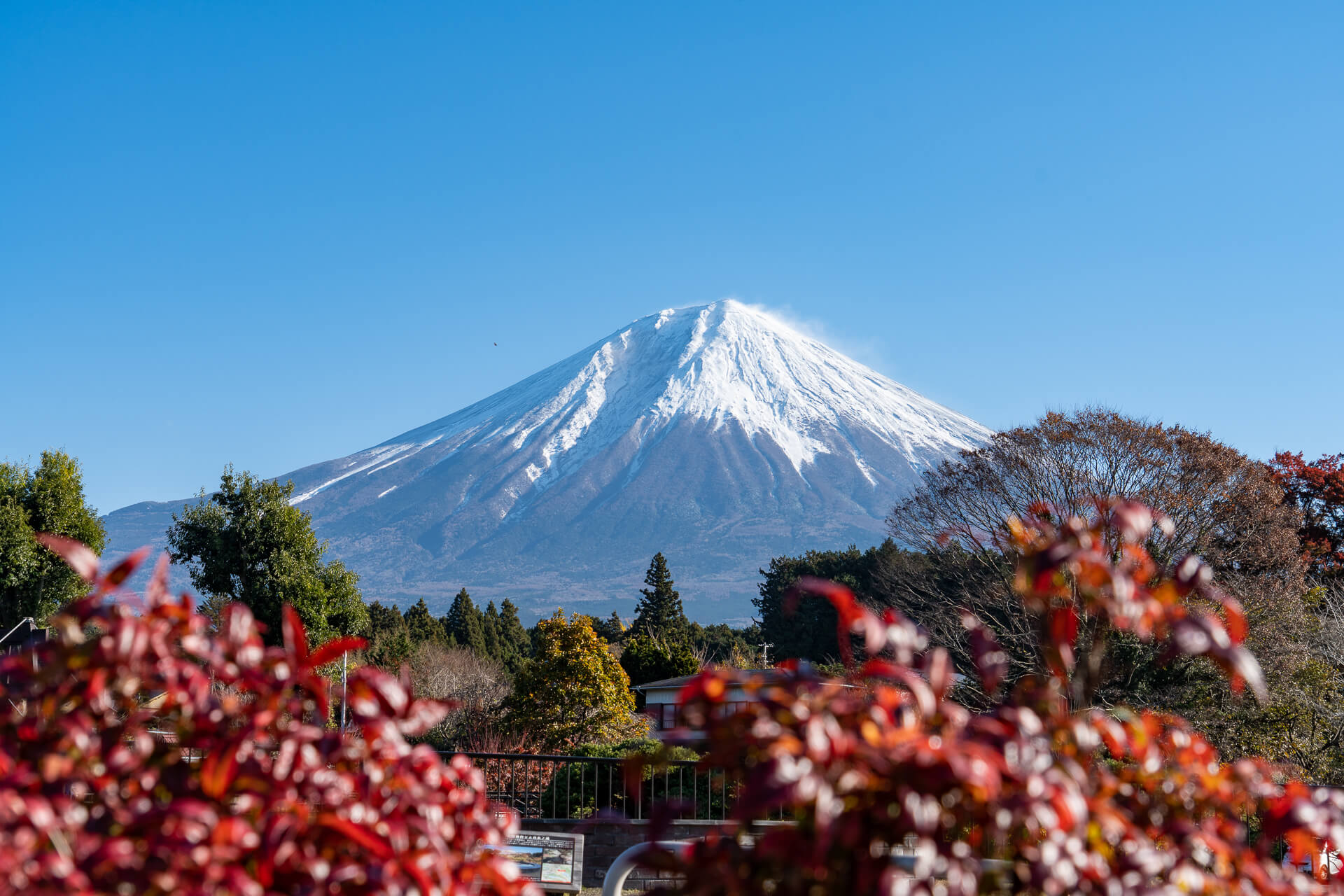
Spring around Mount Fuji is visually stunning — but also unpredictable.
Cherry blossoms around the lakes create postcard-perfect scenes, especially in April. However, this season brings unstable weather and frequent cloud cover, which means Fuji is often hidden for large parts of the day.
Temperatures are comfortable, usually around 10–20°C, but visibility is hit or miss.
✅ Pros: Cherry blossoms, fresh greenery, mild weather
❌ Cons: Unreliable views, heavy crowds in April, higher prices
Monthly overview:
- March: Cool, quieter, visibility improves late month
- April: Peak blossoms, very crowded, inconsistent views
- May: Pleasant weather, Golden Week crowds early in the month
Summer
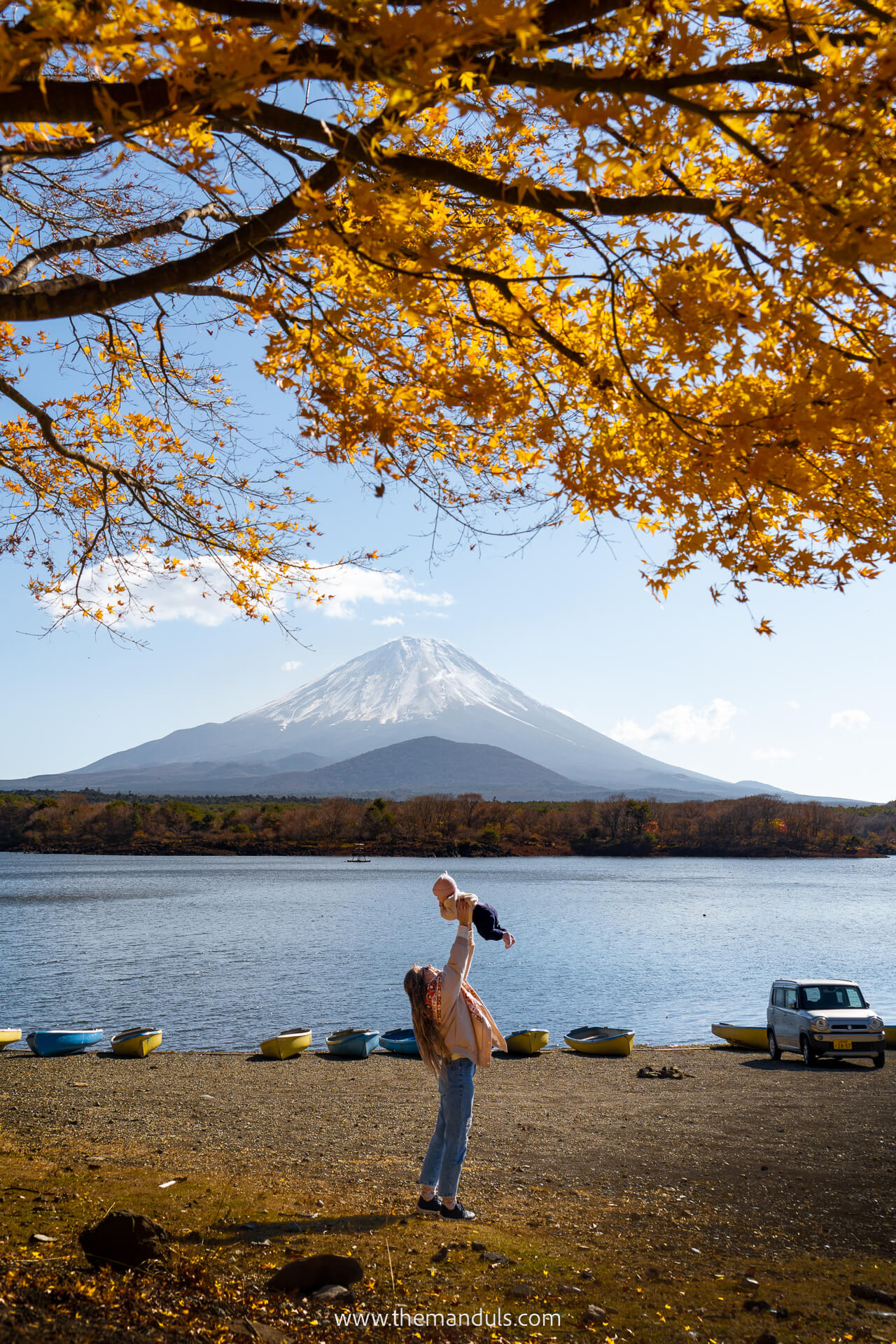
Summer is the worst time to visit Mount Fuji for views — even though it’s the most popular season.
Humidity is high, clouds build quickly, and Fuji is often completely hidden. June brings the rainy season, while July and August are hot and hazy, with temperatures regularly above 30°C.
This is also the official climbing season, which explains the crowds.
✅ Pros: Climbing access, festivals, lively atmosphere
❌ Cons: Poor visibility, heat, humidity, crowded transport
Monthly overview:
- June: Rainy, cloudy, low visibility
- July: Climbing season starts, very busy
- August: Peak crowds, peak heat, hazy conditions
Autumn
Autumn is still the best time we’d recommend visiting Mount Fuji, but it’s not perfect every single day — and our experience proved that.
We spent three days around Mount Fuji in autumn, and the weather was a real mix. One full day was rainy and cloudy, with Fuji completely hidden. On the other two days, the conditions were excellent — crisp mornings, clear air, and some of the best views we’ve had in Japan. That contrast is exactly why staying more than one night matters here.
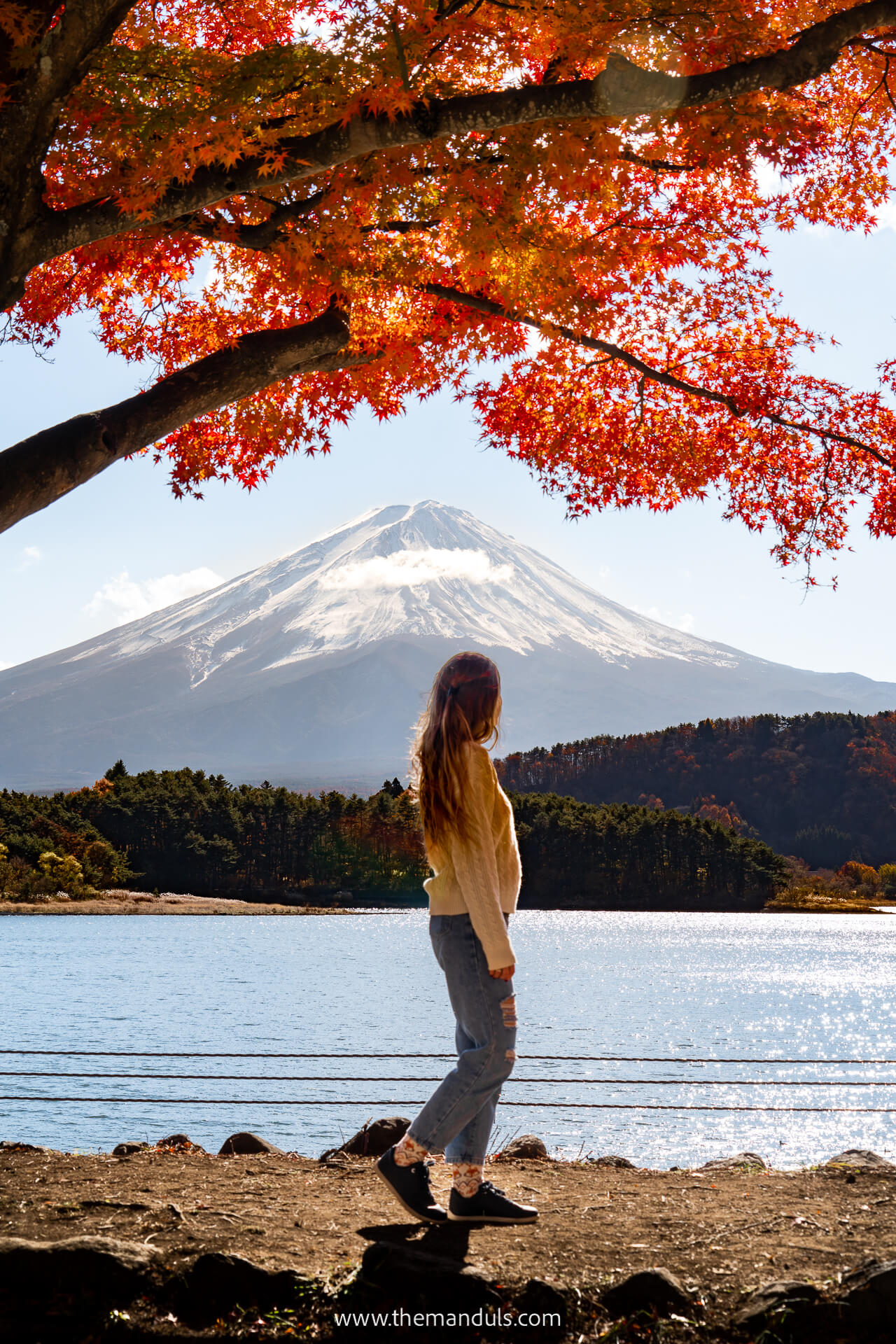
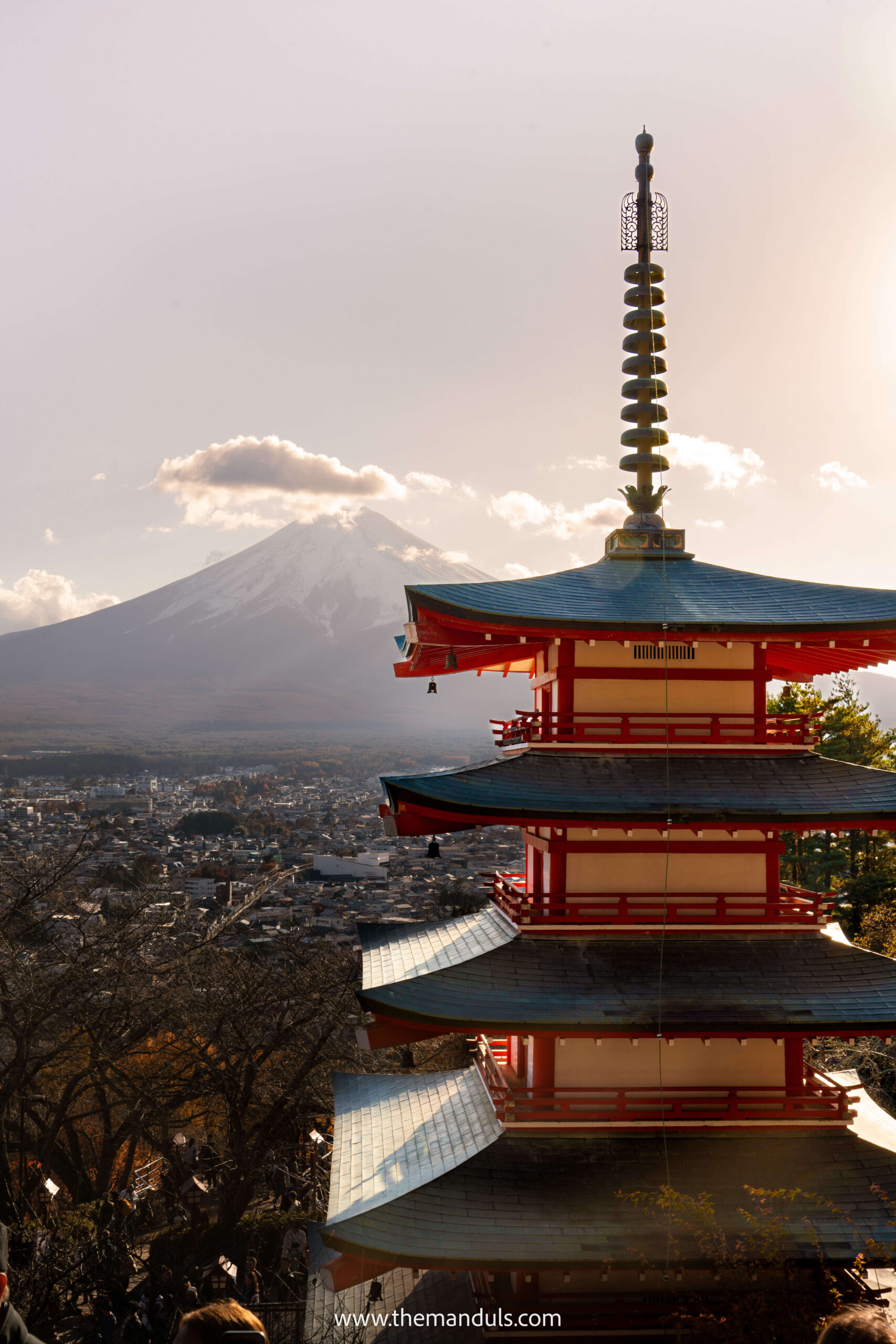
When the weather cooperates, autumn is hard to beat. Cooler temperatures (around 10–20°C) made it comfortable to be outside all day, and the air was noticeably clearer than in spring or summer. Morning views were especially reliable, while clouds tended to build later in the day.
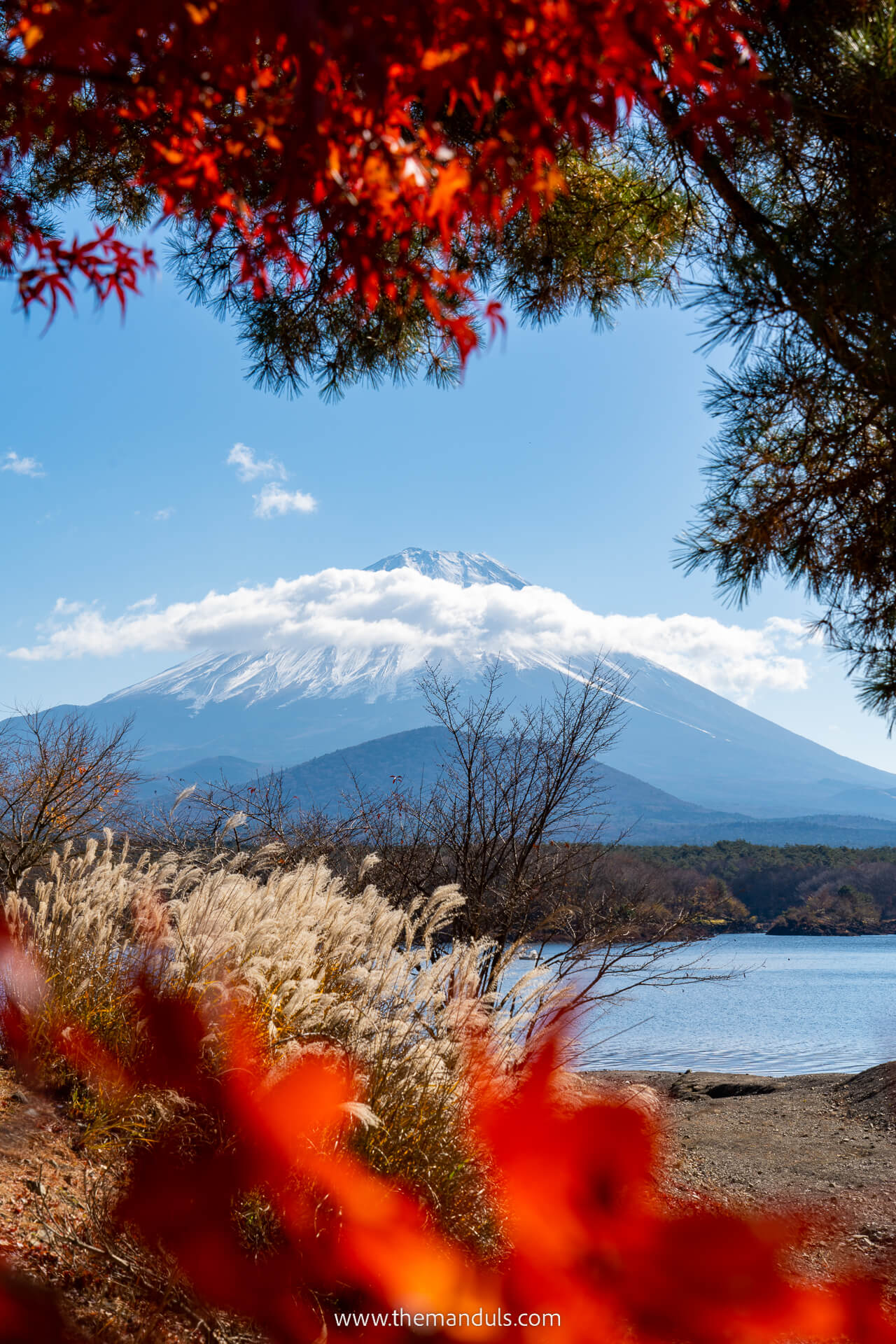
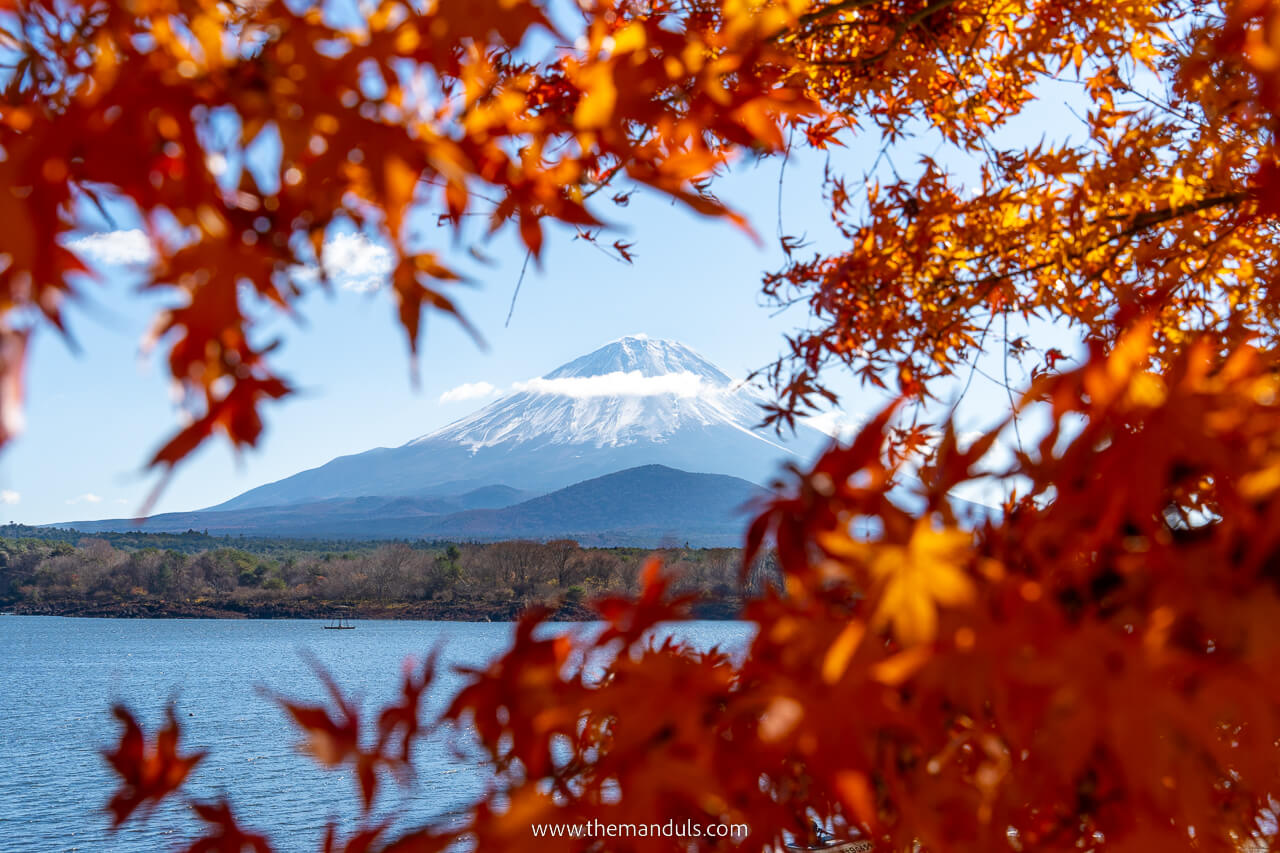
Autumn colors around the lakes added a lot to the experience, even on the cloudy day — and when Fuji did appear, the combination of red and yellow foliage with the snow-dusted peak felt genuinely special.
✅ Pros: Best overall visibility, comfortable weather, autumn colors
❌ Cons: Not guaranteed every day, November crowds, accommodation sells out fast
Monthly overview:
- September: Transitional weather; visibility improves, fewer crowds
- October: One of the most reliable months for views
- November: Peak foliage and atmosphere — but very busy
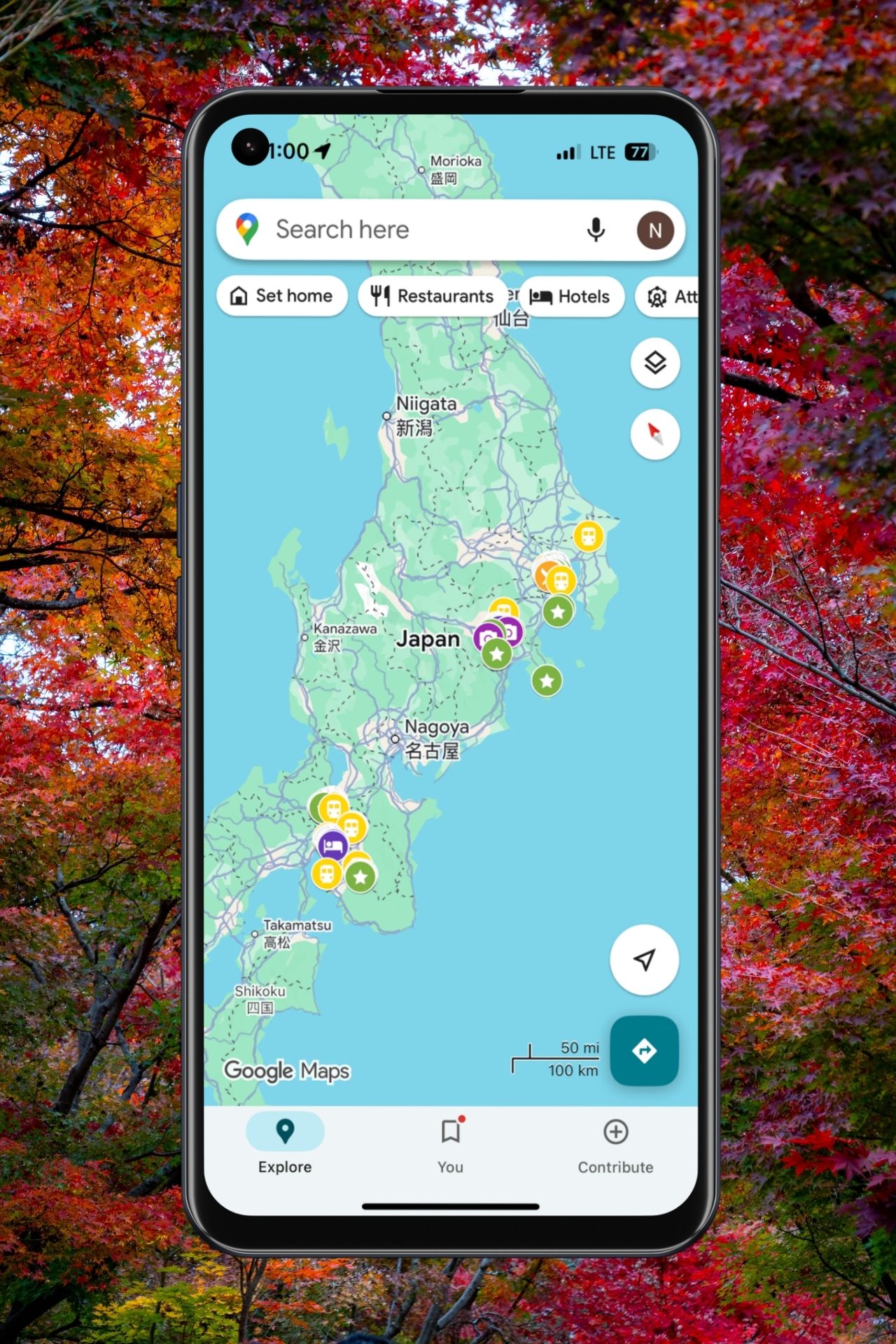
Our Japan Google Maps
Built from our real trips across Japan — only places we actually visited and loved.
No tourist traps. No random saves. Just a ready-to-use map that saves you hours of research.
219 handpicked spots, including:
📍 Highlights & hidden gems
🍜 Restaurants we’d go back to
🏨 Areas & hotels we’d book again
🗺️ Stops that fit into real, logical itineraries
Winter
Winter is a hidden gem for visiting Mount Fuji.
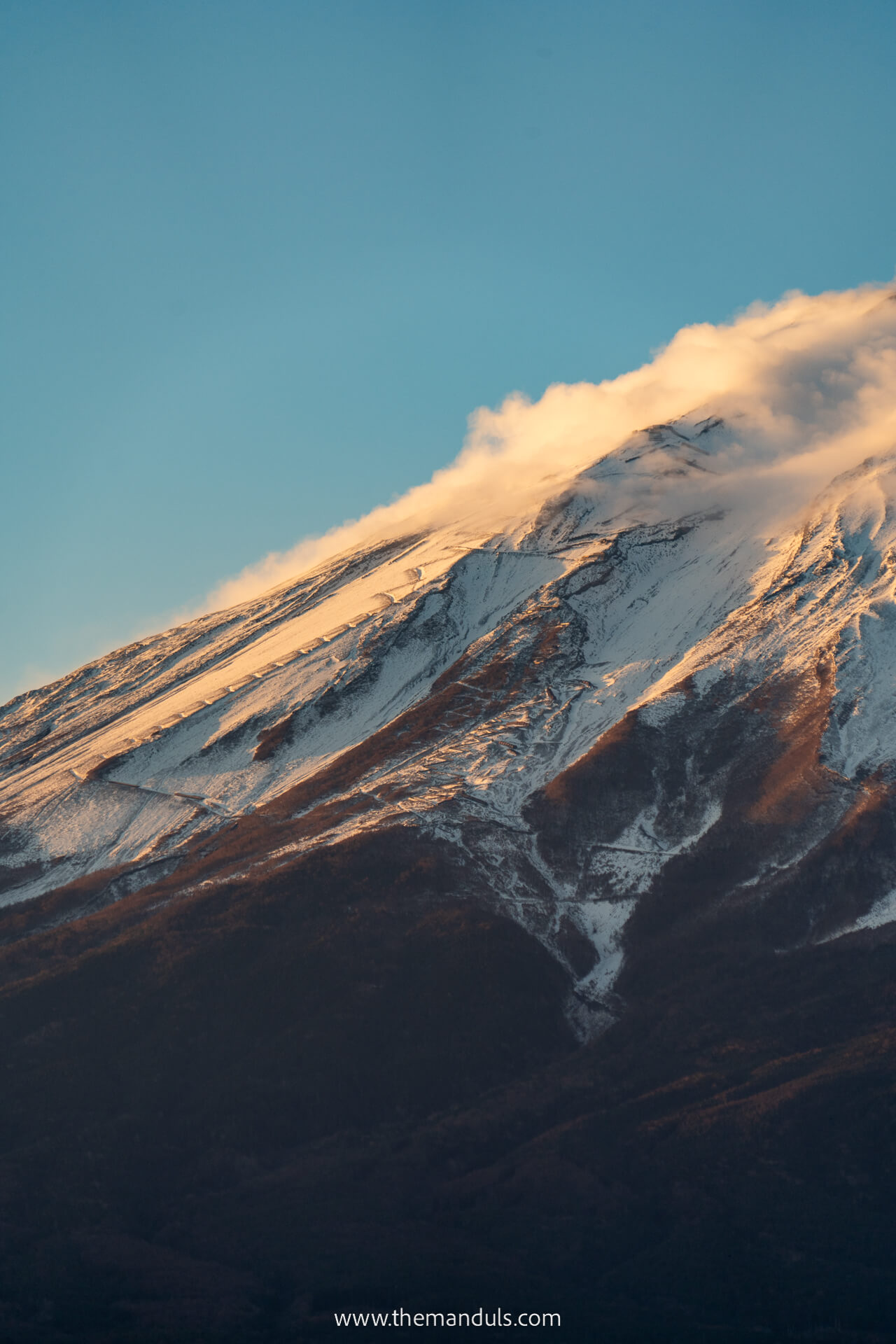
Cold air brings incredibly sharp visibility, often better than any other season. Fuji is frequently visible all day, especially in January and February. Crowds are low, prices are better, and the area feels calm and local.
Temperatures drop to 0–10°C, and snow is common around the mountain (not usually at lake level).
✅ Pros: Crystal-clear views, fewer crowds, lower prices
❌ Cons: Cold mornings, shorter days, limited hiking
Monthly overview:
- December: Quiet, festive feel, good visibility
- January: Cold but clear, excellent views
- February: Calm, sharp light, great value
Crowds & Prices
Mount Fuji is extremely season-sensitive.
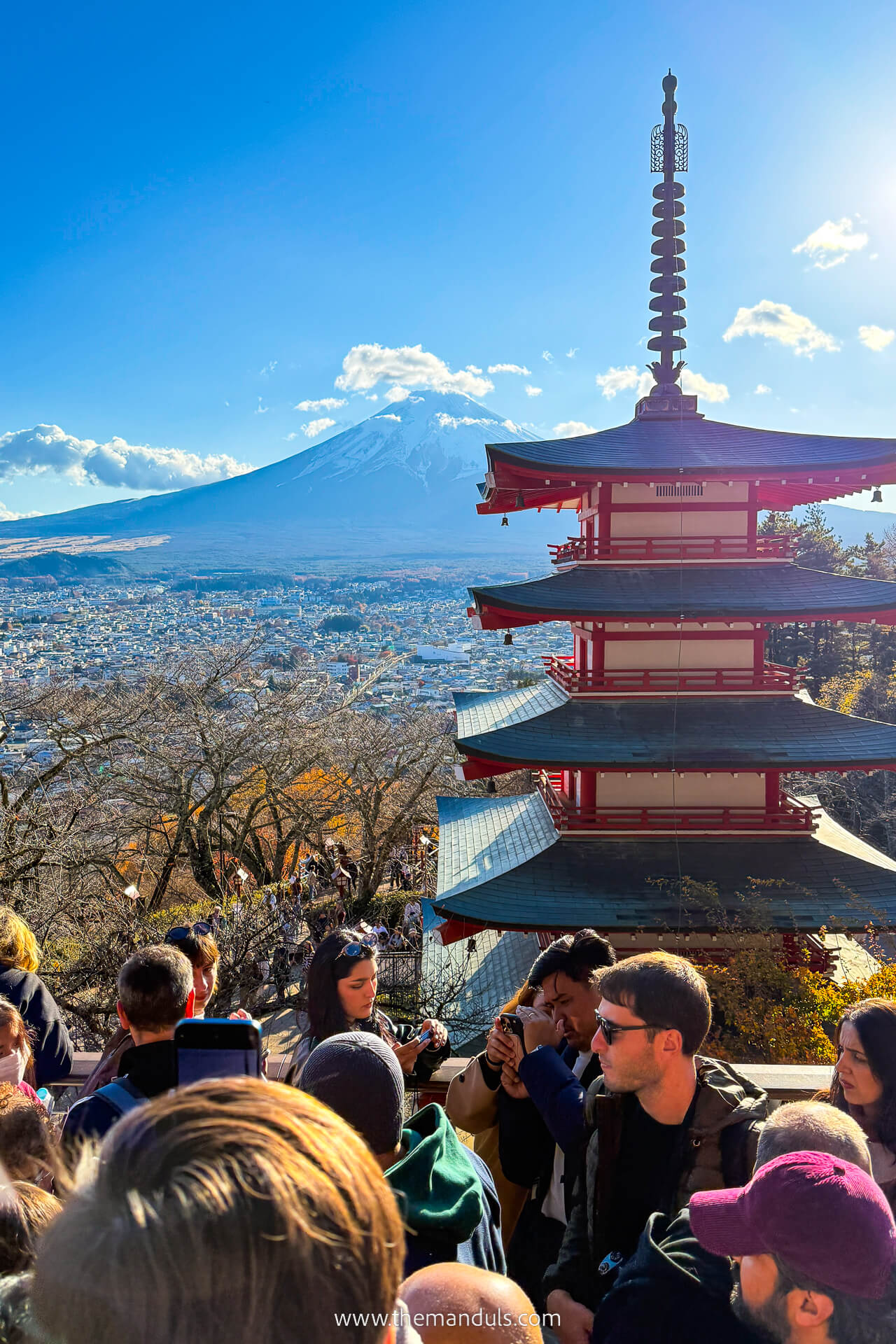
- Most crowded: July–August, November and April
- Most expensive: Cherry blossom season, Fall Foliage and climbing season
- Best value: January–February (excluding holidays)
Accommodation around the lakes fills up fast during peak months. If seeing Fuji clearly matters to you, staying overnight is worth it — day trips often miss the best viewing windows.
Events & Festivals
- Cherry blossom season (April): Beautiful foregrounds, unreliable views
- Golden Week (late April–early May): Very busy domestically
- Climbing season (July–September): Crowded, limited visibility
- Autumn foliage (November): Stunning scenery, high demand
Worst Time to Visit Mount Fuji
The least ideal time to visit Mount Fuji is summer, especially June to August. Clouds, haze, rain, and heat combine to make clear views rare.
If your goal is simply to be “near” Fuji, summer works. If your goal is to actually see it, choose another season.
FAQ
Early mornings in autumn and winter offer the clearest views.
June to mid-July, with frequent cloud cover.
January and February (outside public holidays).
Visually beautiful, but visibility is unpredictable.
Final Thoughts
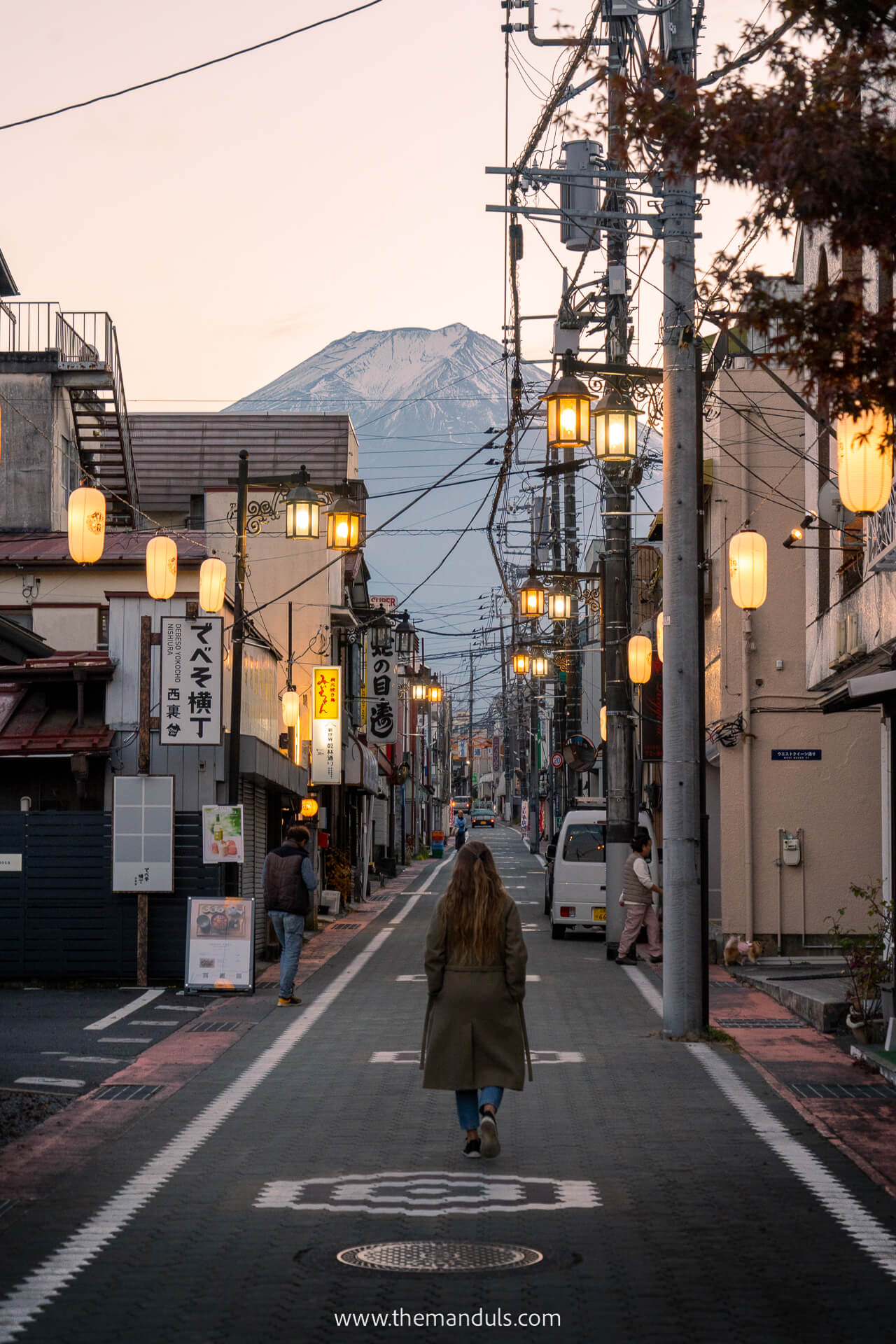
If we had to recommend just one time to visit Mount Fuji, it would be autumn — followed closely by winter. Clear air, dramatic views, and comfortable conditions make these seasons the most rewarding.
Spring is scenic but unreliable, summer is lively but disappointing for views, and winter quietly delivers some of the best Fuji moments of the year.
Honestly, the best time to visit Mount Fuji depends on one thing above all else: how important seeing the mountain clearly is to you — and whether you’re willing to plan around it.