
This article contains affiliate links. Learn more in our affiliate disclosure.
Nara Park is no ordinary place. We’d heard about it many times before our trip, and it was high on our list of the best things to do in Osaka and best things to do in Kyoto as a day trip — but it still managed to surprise us.
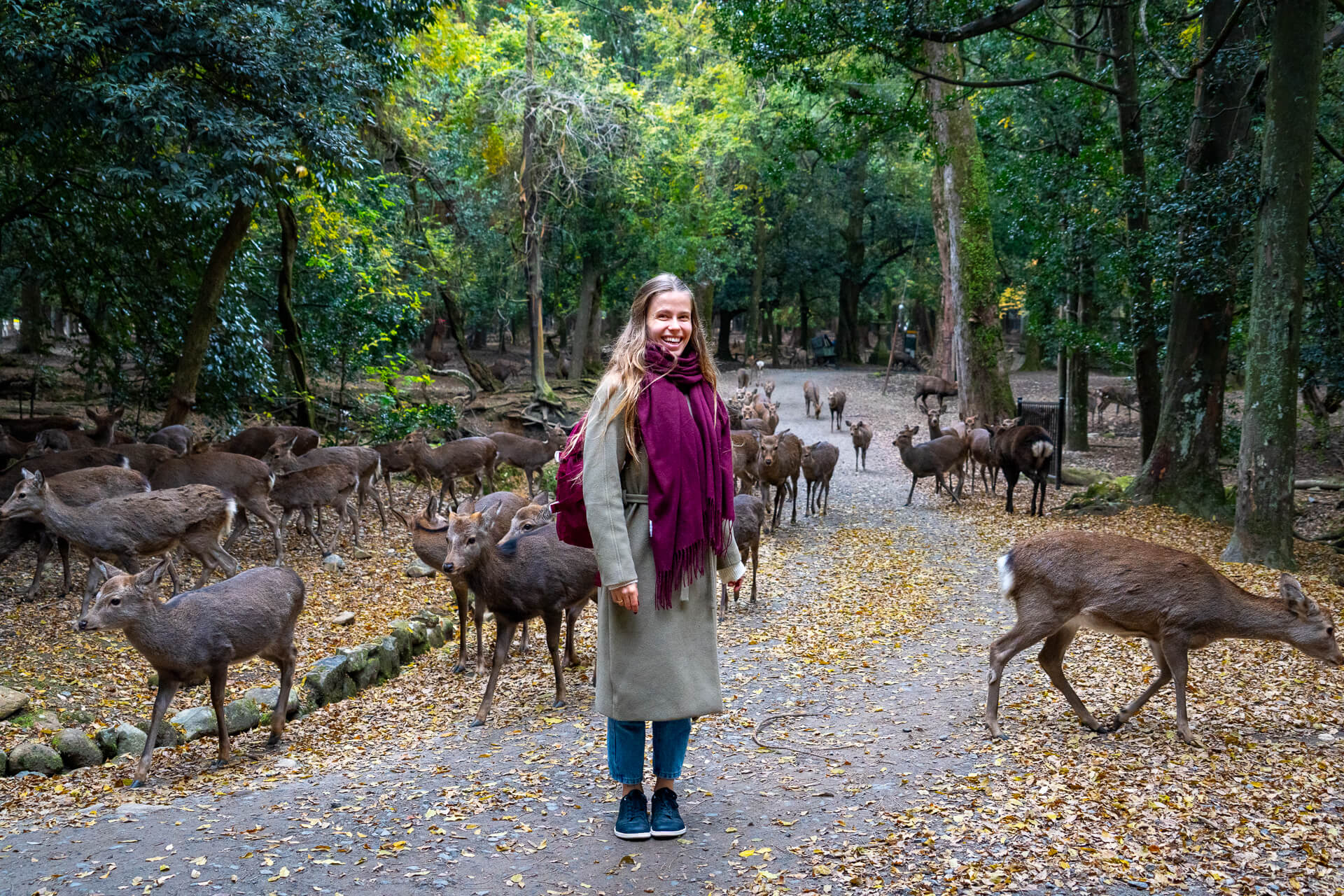
The deer are everywhere, far more than we expected, and interacting with them quickly became one of those experiences that just makes you smile without trying.
This wasn’t only fun, it genuinely made it to our list of the best things to do in Japan. If you’re planning your Japan itinerary, we’d absolutely add Nara Park to your list.
It’s playful, memorable, and unlike anywhere else we visited. In this guide, we share everything you need to know, based on our own experience — from how to get there and the best time to visit, to opening hours, accessibility, and practical tips to help you plan your trip properly.
Key Highlights
📍Location: Nara Park is in Nara City, about 45 minutes from Osaka by train.
⭐️ Best time to visit: Autumn and Spring. Early morning for fewer crowds and calmer deer.
💰 Entrance fee: Free
🕥 Opening hours: Open 24/7 (nearby temples have set hours).
🚗 How to get there: Train from Osaka or Kyoto to Nara Station, then walk.
🥾Accessibility: Mostly flat paths, with some slopes and stairs.
At a Glance
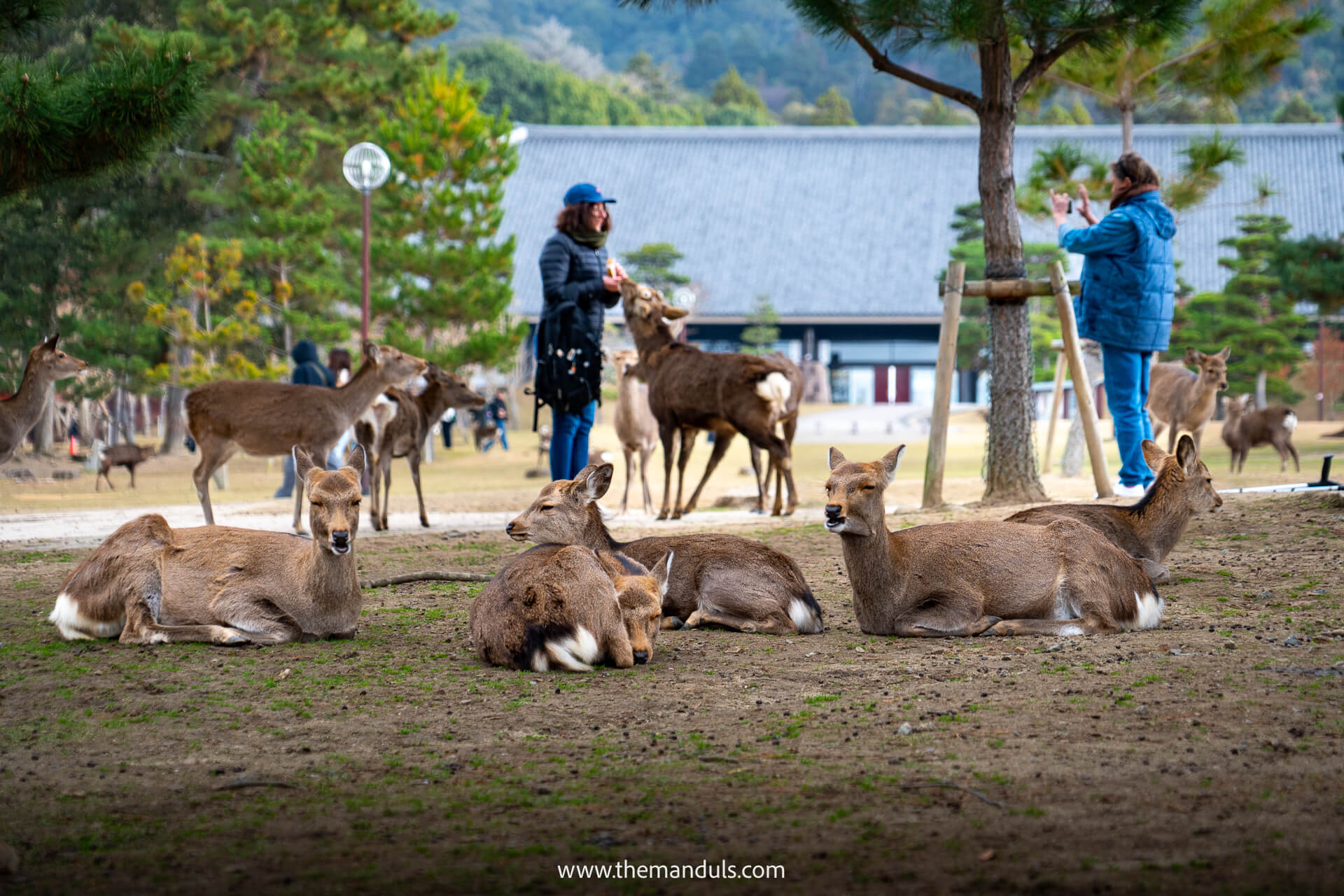
Nara Park feels wide open and surprisingly green, with temples, forested paths, and deer wandering freely in every direction. It looks calm in photos, but one thing we didn’t expect was just how close the deer get — they’re curious, bold, and very used to people.
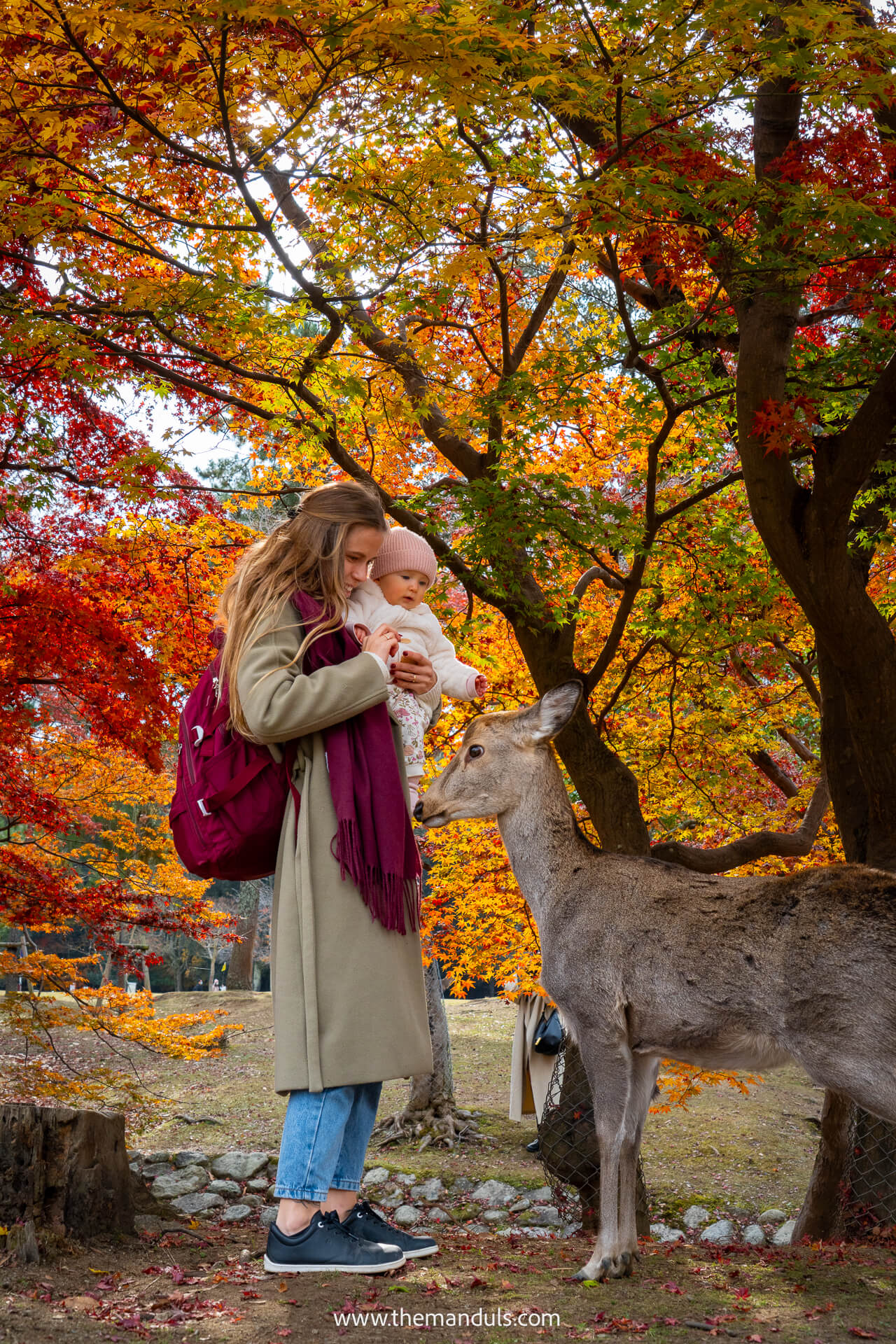
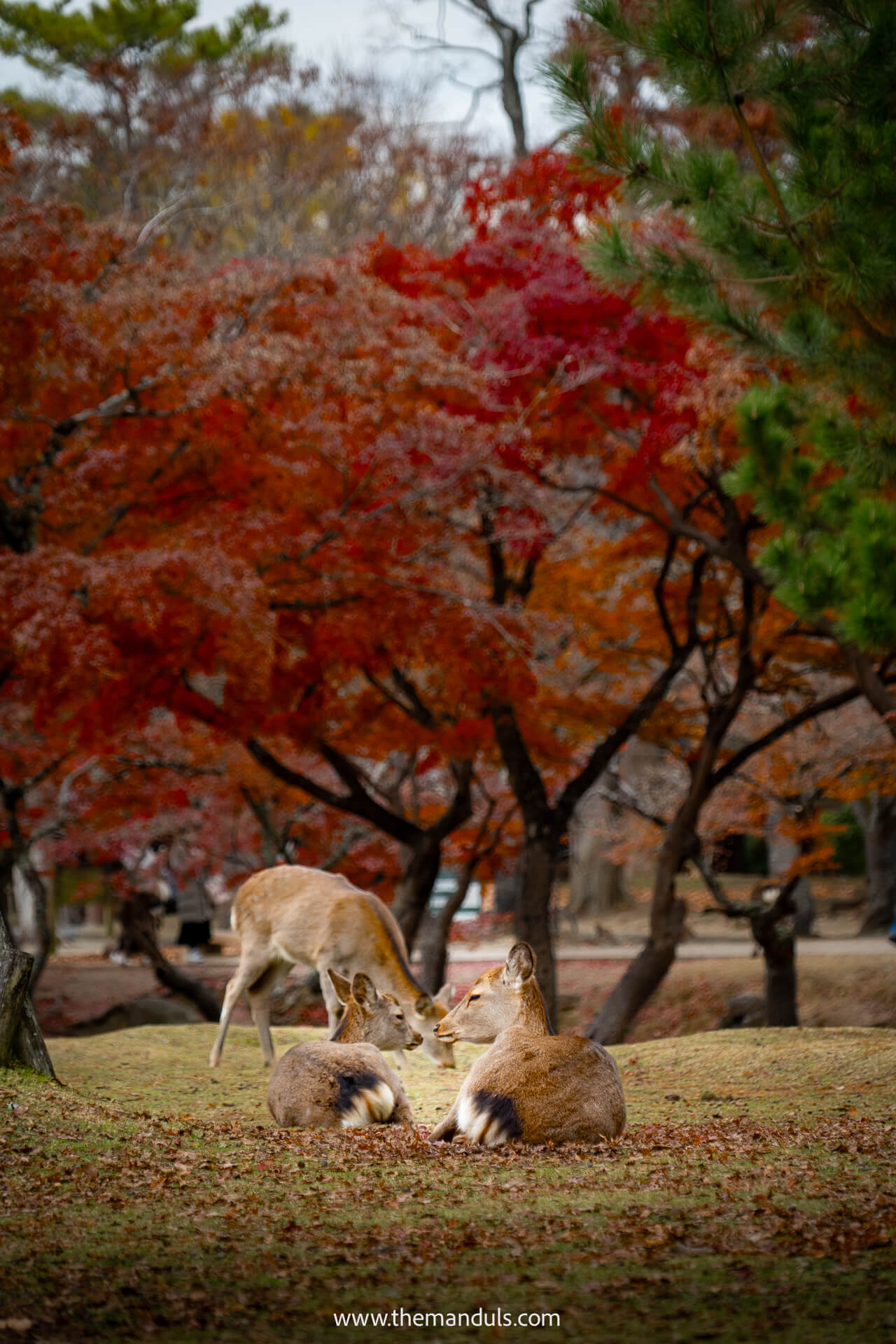
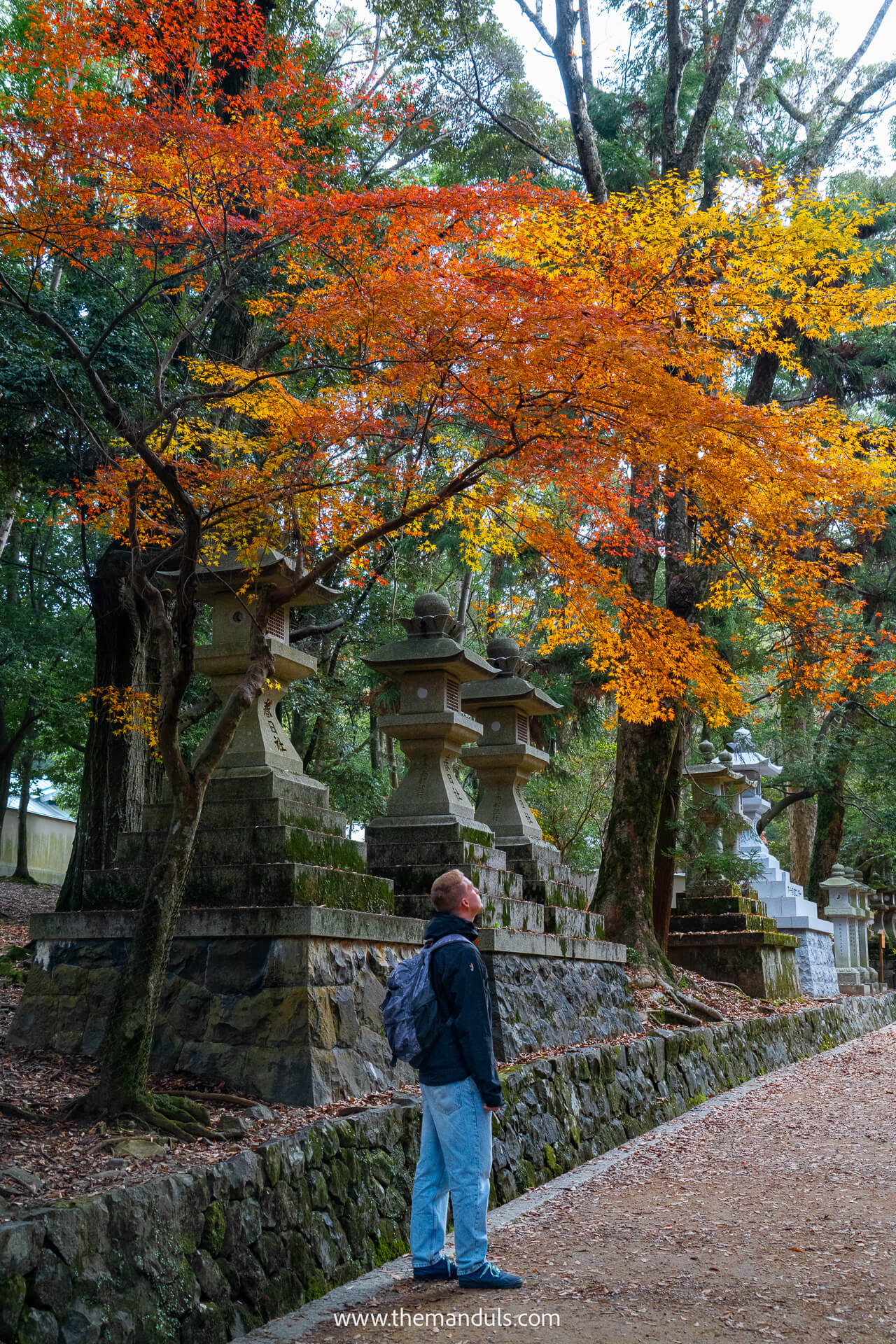
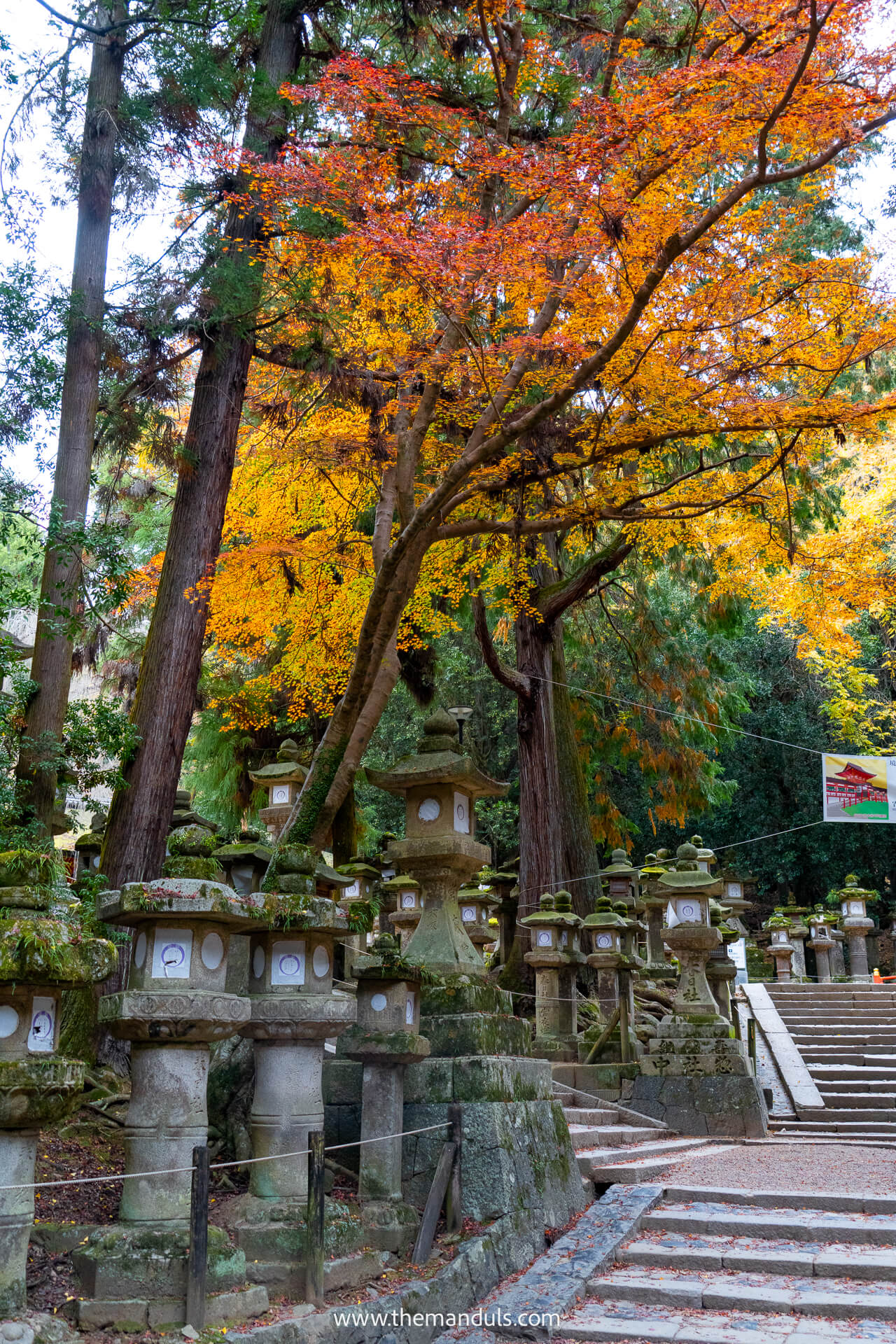
We visited in autumn, and the experience felt even more magical thanks to the beautiful maple trees adding bursts of color throughout the park. We’d come for the unique atmosphere and the chance to see wildlife up close in such a historic setting, but still avoid peak midday hours if you don’t like crowds.
Getting there was actually easy, though we’ll explain the best routes and small tips later to make it even smoother.
In a hurry?
These are our top hotels in Nara we’d book again
⭐️⭐️⭐️ Onyado Nono Nara Natural Hot Spring (our top pick) – Tatami-style rooms, natural hot spring, and a great location near the park.
👉 See prices & availability →
⭐️⭐️ Ryokan Asukasou – A classic ryokan hotel close to Nara Park with a calm, traditional atmosphere.
👉 See prices & availability →
⭐️ Yuzan Guesthouse – Simple, budget-friendly, and close to the park.
👉 See prices & availability →
Is it worth it?
Absolutely. Nara Park didn’t feel like a quick stop or a box to tick — we ended up spending much longer here than planned. Walking among the deer, with temples and nature all around, felt genuinely fun and different from anything else on our Japan trip.
If you’re choosing between temples alone and something more interactive, Nara Park easily stands out. The mix of history, open space, and wildlife makes it more memorable than many nearby sights, especially if you’re already visiting Osaka or Kyoto.
The deer roaming freely across such a large, historic park is what makes this place special. It’s not a zoo or a fenced area — everything blends naturally, which is what we liked the most.
It’s fun, a little chaotic at times, and busy during the middle of the day — but still completely worth it, so we would happily recommend it to everyone.
Where is Nara Park
Nara Park is located in Nara city, in the Kansai region of Japan. The park sits right next to Nara’s historic center, within walking distance of major sights like Todai-ji Temple and Kasuga Taisha.
From Osaka, it takes about 45 minutes by train, and from Kyoto roughly the same, which makes it one of the easiest and most popular day trips from both cities.
How to get there
By train
Getting to Nara Park is easy and budget-friendly. There are regular local trains running from both Osaka and Kyoto, with no seat reservations needed. From JR Osaka Station, the trip takes around 45 minutes.
We simply tapped our Suica card at departure and arrival, and the fare was 840 JPY one way. Trains run frequently, making this the most convenient option for most travelers.
From Kyoto Station, the journey is similarly straightforward and takes about the same time.
There’s also the Nara Express, which is just a bit more expensive and requires a seat reservation, but it offers a retro-style train and a slightly more “special” travel experience.
We actually wanted to take it ourselves, but it was fully booked three days before our trip. If you’re visiting during busy seasons like autumn or spring, we definitely recommend booking it in advance if this option appeals to you.
Join a guided tour
Another easy option is joining a guided tour, especially if you want everything handled for you and prefer visiting Nara early, before it gets busy. We’d recommend this Early morning Nara tour, which departs from Osaka or Kyoto and focuses on visiting the park at its most peaceful time.
It’s a great choice if you don’t want to deal with train schedules, want some local context, and like the idea of seeing Nara Park before the main crowds arrive.
Book your Early morning Nara tour here with a free cancellation up to 24 hours in advance.
By car
The last option we recommend is going by car, and it’s the best choice if you’re already exploring Japan by road. Renting a car just for a Nara Park trip isn’t worth it, but if you already have one, it gives you full flexibility and makes it easy to combine Nara with other nearby spots.
For car rentals, we can’t recommend DiscoverCars enough. We use it on every trip where we need a car, including when we explored the Mt. Fuji area. They consistently have the best deals, and their full coverage insurance is a must — it’s usually cheaper and more comprehensive than what rental companies offer on the spot.

Check current deals on discovercars.com
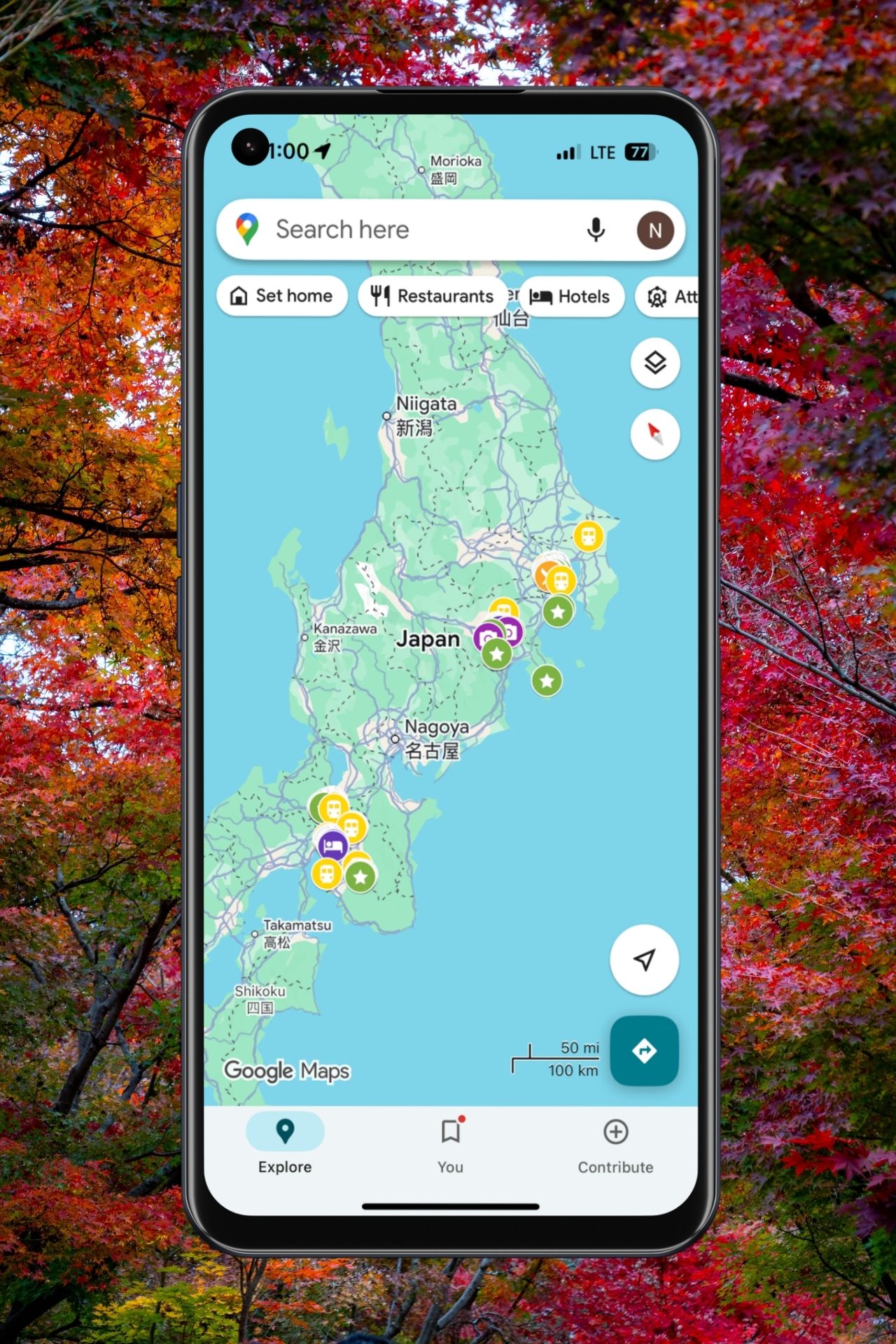
Our Japan Google Maps
Built from our real trips across Japan — only places we actually visited and loved.
No tourist traps. No random saves. Just a ready-to-use map that saves you hours of research.
219 handpicked spots, including:
📍 Highlights & hidden gems
🍜 Restaurants we’d go back to
🏨 Areas & hotels we’d book again
🗺️ Stops that fit into real, logical itineraries
Entrance and parking fees

Entrance Fee: free

Parking Fee: around 1000 JPY per day
Nara Park is completely free to enter and explore, open 24/7.
There are several paid parking lots around the park. One popular option is Naranoboriojijidosha Parking Lot, located close to Todai-ji, which offers free parking for the first two hours on weekdays, followed by a daily rate. You’ll also find other paid lots scattered around the park area.
Street parking is not allowed, so make sure to use an official parking lot to avoid fines. We recommend arriving early, especially during autumn and spring, when parking fills up quickly, and free spots are snapped up fast.
Accessing Nara Park
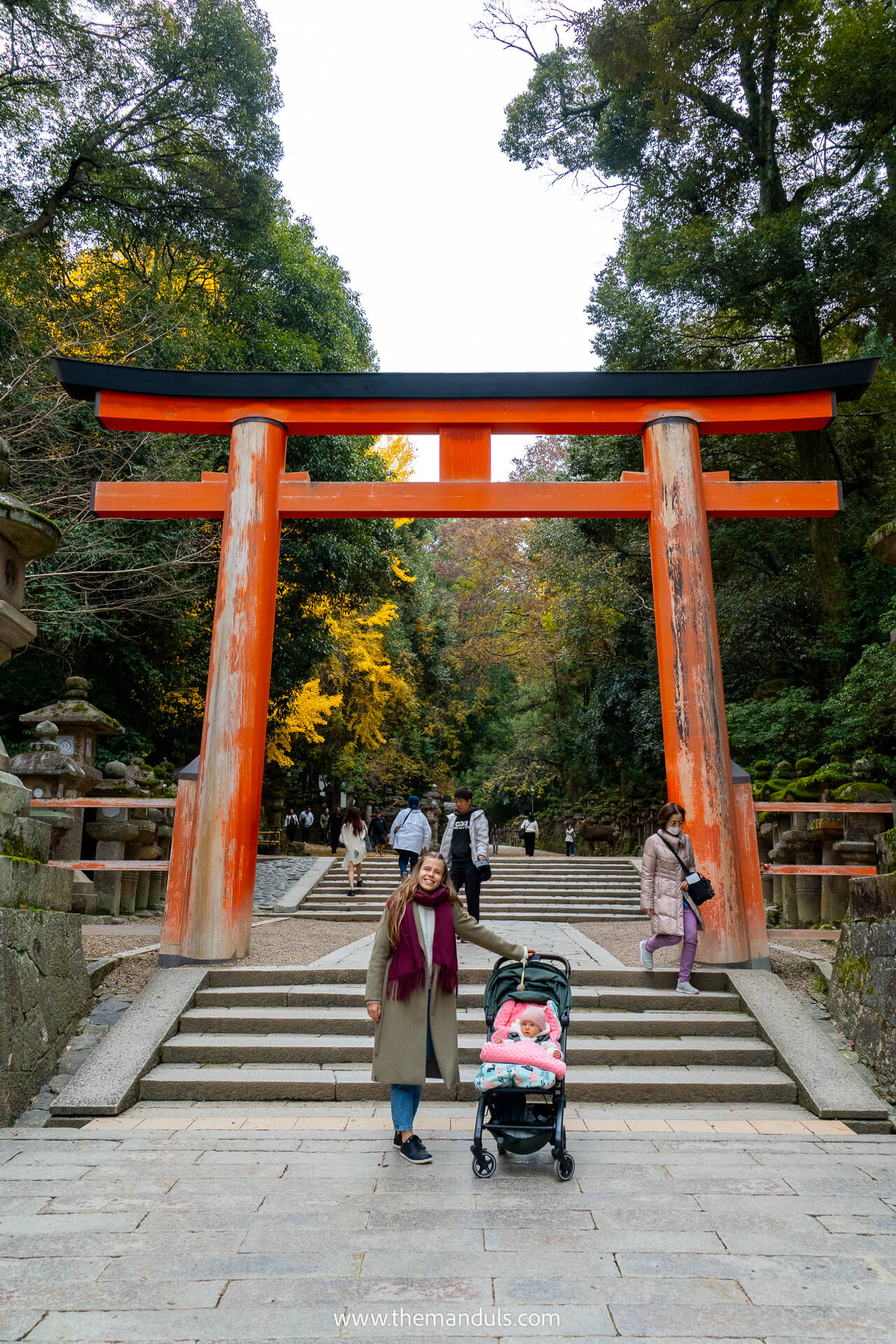
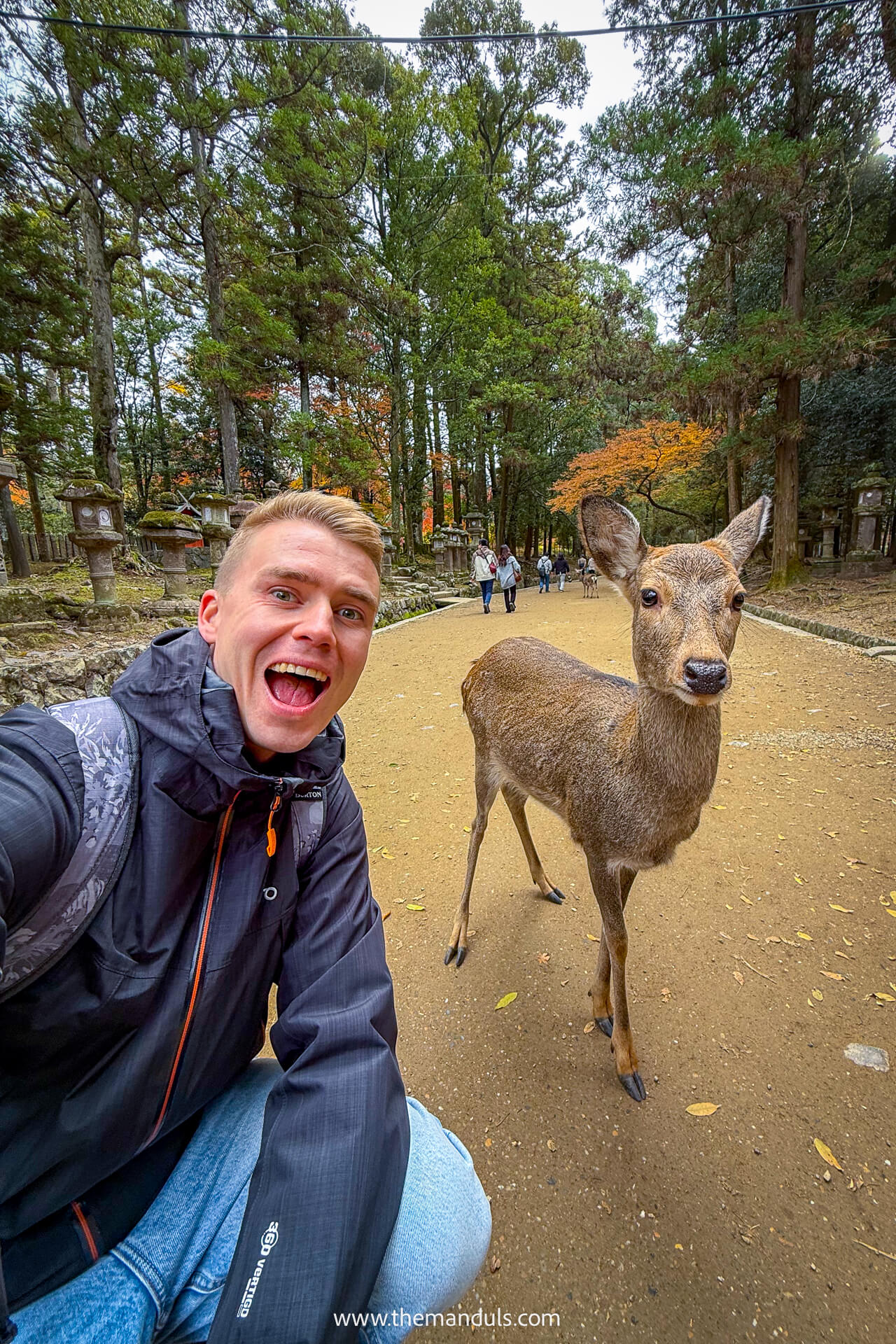
Accessing Nara Park felt very natural and easy for us. We walked in from Nara Station, and before we even realized we were “inside” the park, the deer started appearing around us. There isn’t one main entrance — the park blends straight into the city, which makes the experience feel relaxed rather than structured.
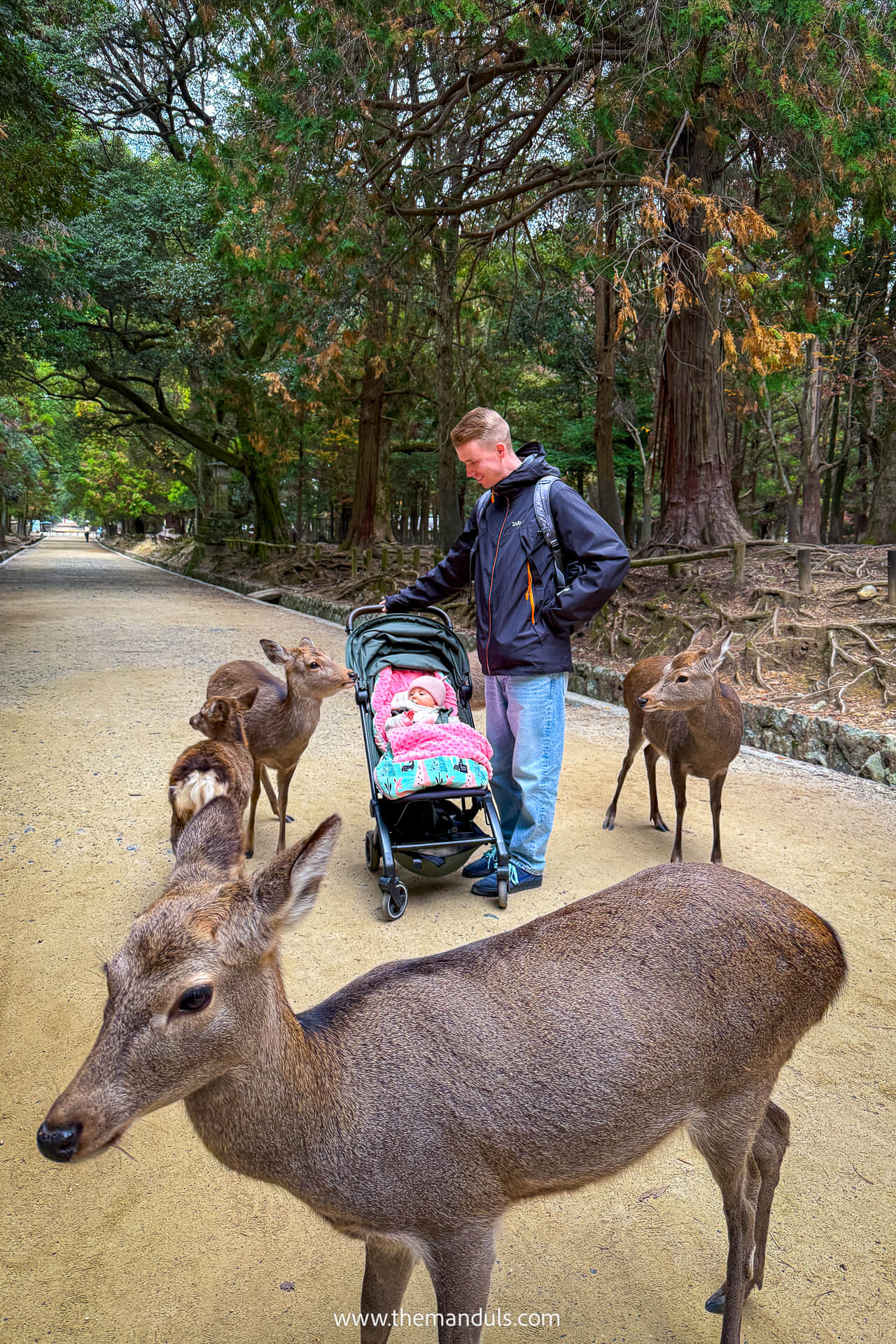
Most of the paths we used were wide, flat, and well maintained, so walking around was comfortable. We also saw plenty of families with kids and strollers. That said, once you move closer to temples like Todai-ji, you’ll encounter stairs and uneven paths, so a bit of flexibility is needed if you’re pushing a stroller.
We explored the park on our own without a guide and found it easy to navigate, but a guided visit can be helpful if you want more historical context rather than just wandering at your own pace.
What to expect at Nara Park
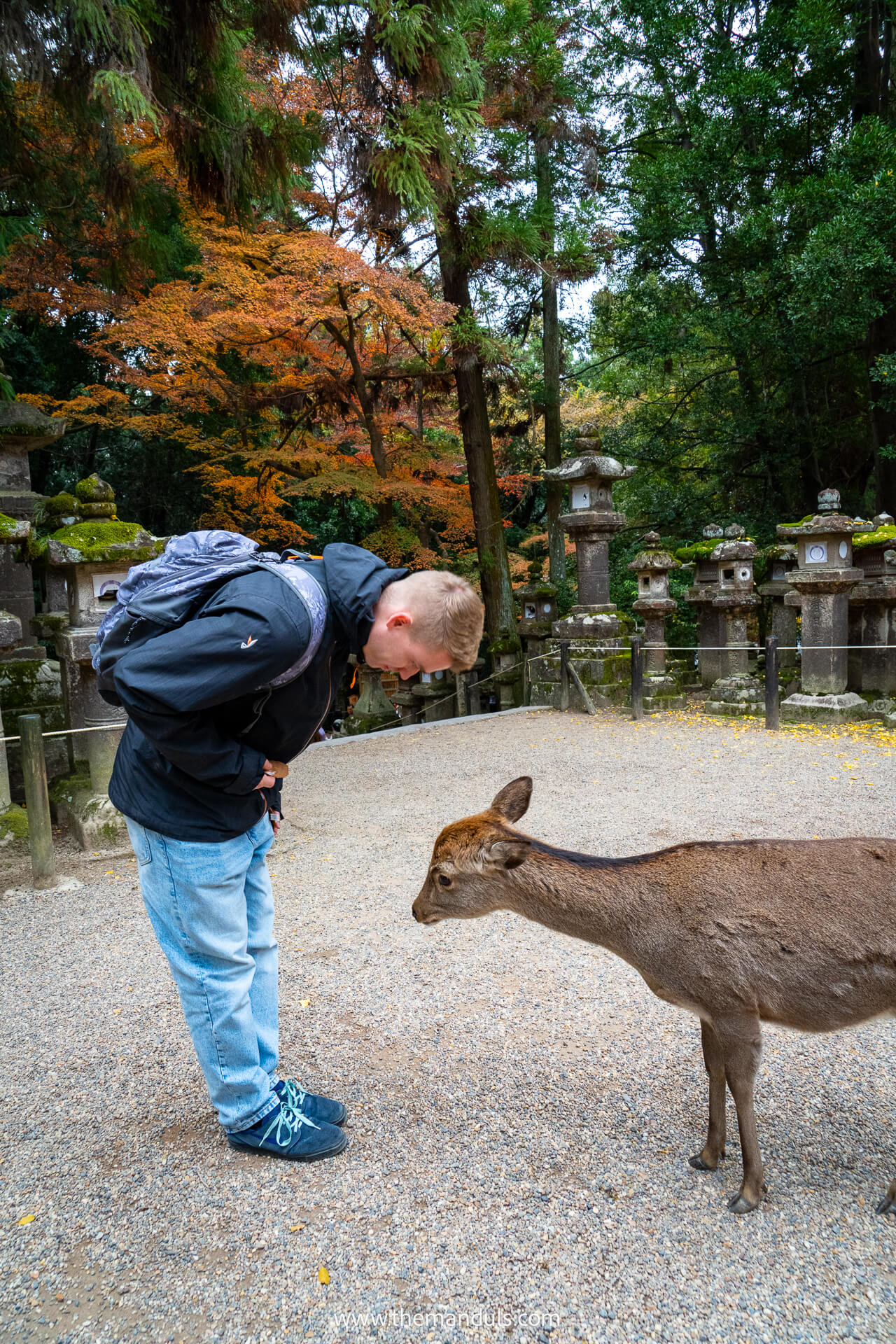
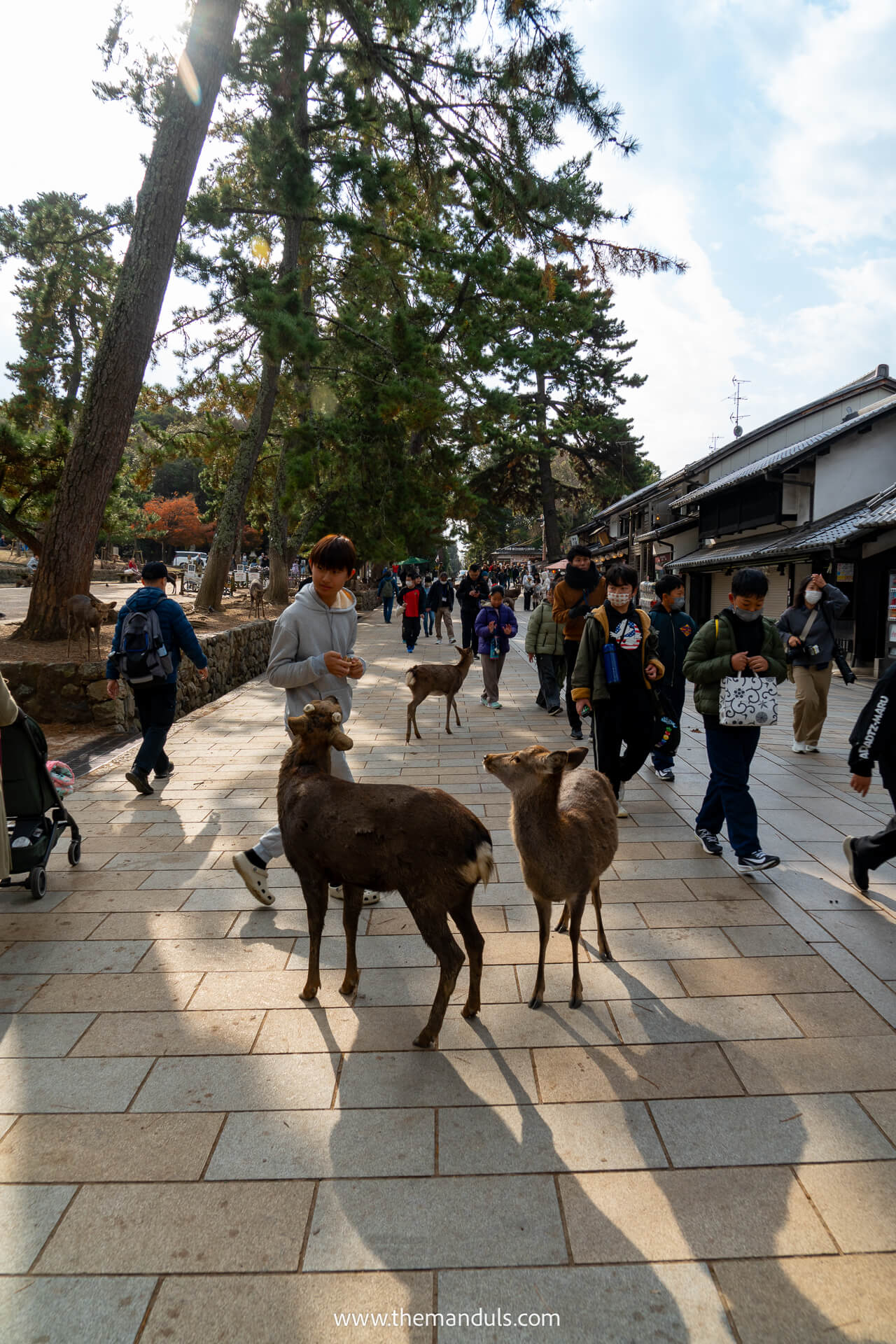
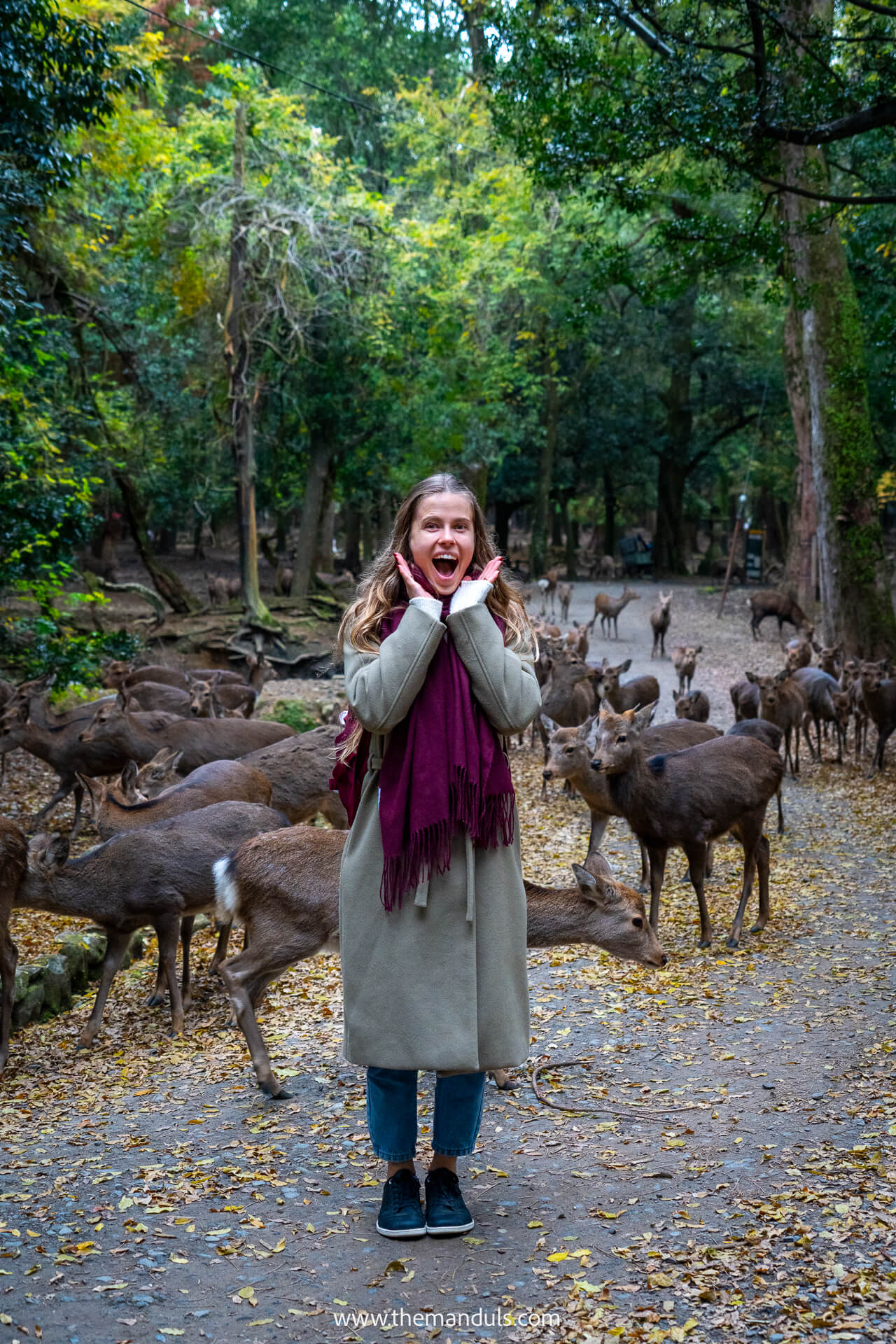
Nara Park felt lively and unpredictable from the moment we arrived. The deer were everywhere — not just in the grassy areas, but walking right across the paths and stopping in front of us as if they owned the place. At first, it’s cute, then you quickly realize they’re very confident and definitely know when people are carrying food.
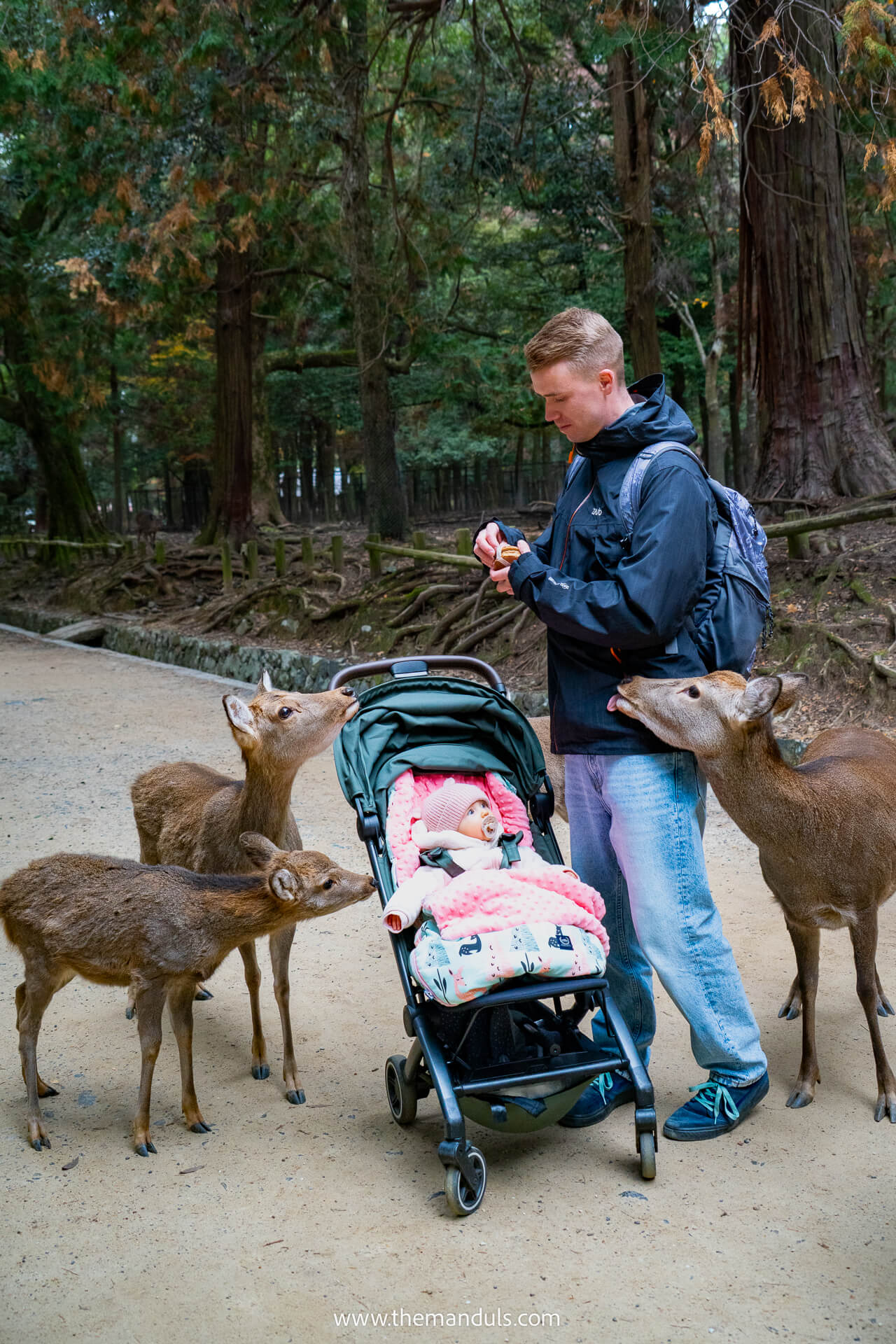
We visited in the morning, which felt calm and enjoyable, but even then, there were already quite a few visitors around the main spots. As we walked closer to Todai-ji, the crowds increased, and the atmosphere became more energetic and busy. We could easily imagine how intense it gets around midday, especially in peak seasons.
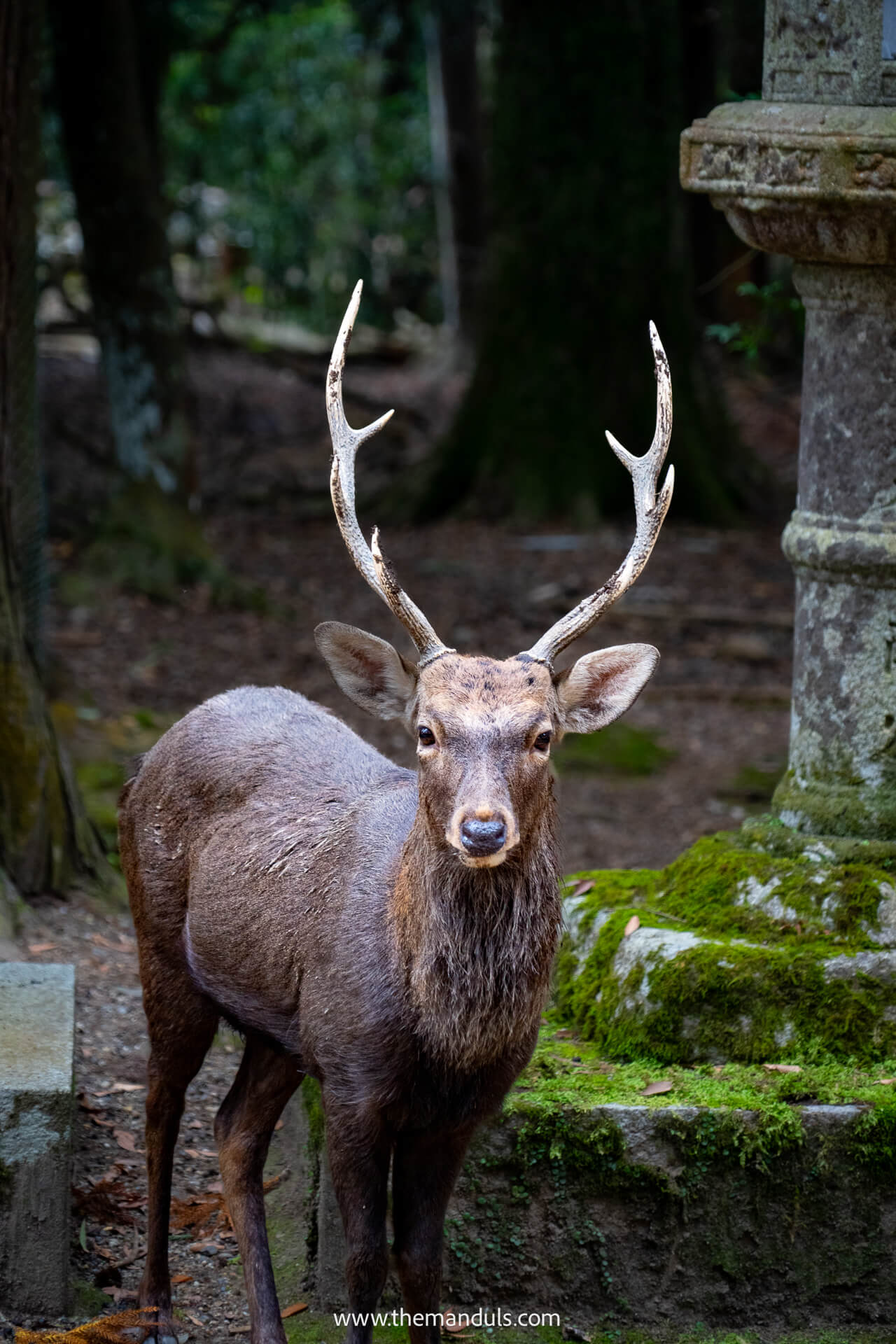
One thing we learned quickly: keep your snacks hidden. We saw deer gently nudging people, pulling at bags, and following anyone who looked even slightly suspicious. They’re friendly, but they don’t hesitate, so keeping a bit of distance helps.
Overall, expect a mix of nature, temples, crowds, and constant interaction with the deer. It’s not a quiet stroll in the park — it’s active, fun, and at times a little chaotic, which is exactly what made it so memorable for us.
Rules & Etiquette at Nara Park
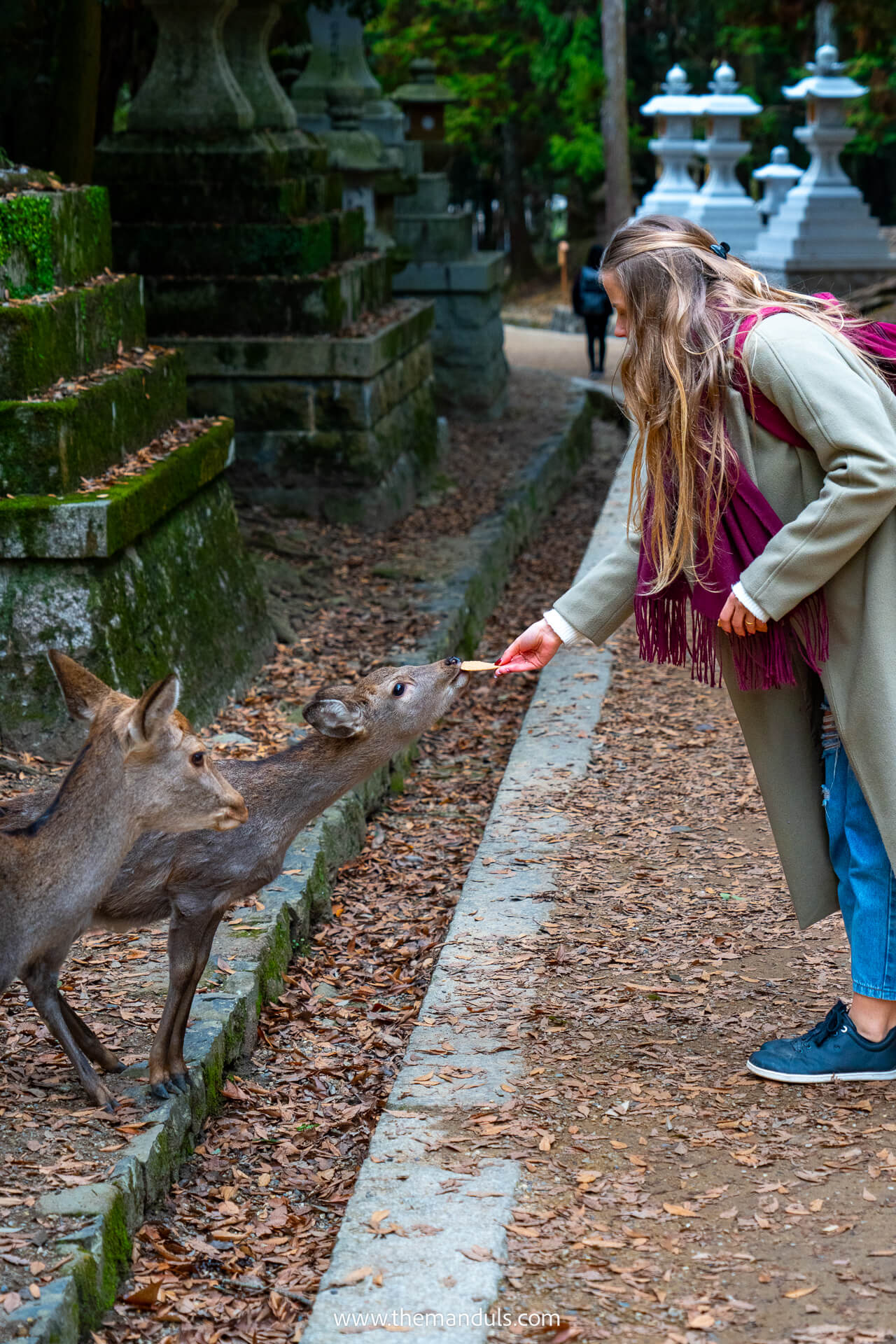
- Only feed deer with official deer crackers (shika senbei) sold in the park
- Don’t tease deer with food, paper, or bags — they will come closer than you expect
- Keep snacks and belongings hidden when walking
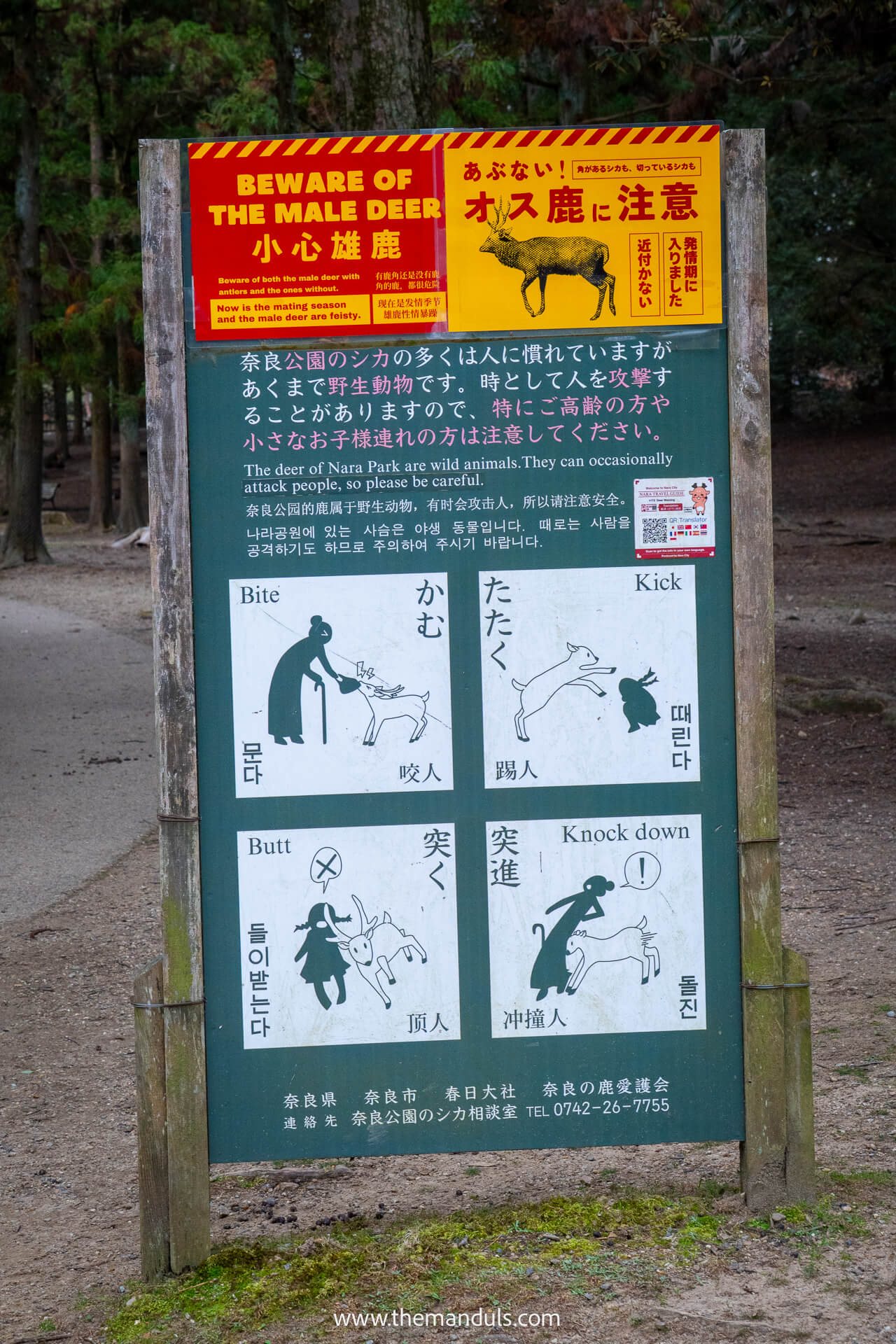
- If a deer gets pushy, step back and give it space
- Don’t touch, pull antlers, or chase the deer
Facilities
- Public toilets are available in several spots around the park
- Vending machines with drinks and snacks near main paths and temples
- Small food stalls and souvenir shops close to popular areas
- Benches and open grassy areas for resting
- Nearby cafés and restaurants outside the park boundaries
Best time to visit
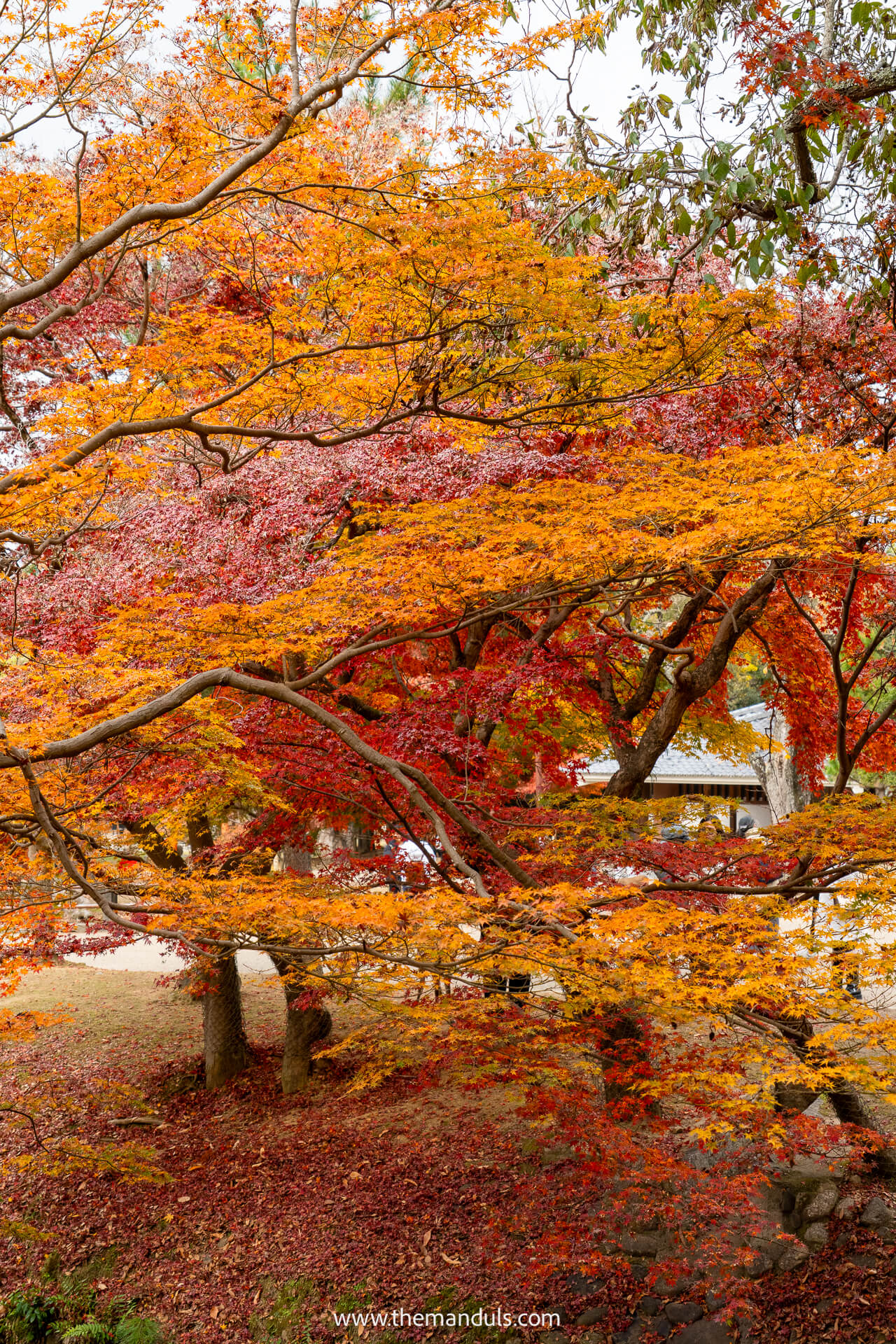
Autumn (October–November) is our favorite time to visit Nara Park. We were there during this season, and the park felt especially beautiful with colorful maple trees scattered throughout the grounds. The cooler temperatures made walking comfortable, and the autumn colors added a completely different atmosphere to the experience. It’s a busy time, but arriving early makes a huge difference.
Spring (March–April) is another excellent season, thanks to cherry blossoms and mild weather. It’s one of the most popular times to visit, so expect larger crowds, especially around the main paths and temples.
Summer (June–August) is hot and humid. The park is still enjoyable, but walking long distances can feel tiring, and deer tend to rest in shaded areas. Early morning visits are best if you’re visiting in summer.
Winter (December–February) is quieter and cooler, with fewer visitors overall. While you won’t get blossoms or autumn colors, the peaceful atmosphere can be a nice contrast if you prefer a calmer visit.
Where to stay near Nara Park
Since for us this was a day trip, we didn’t stay overnight and slept in Osaka instead. If you’re planning to do the same, check out our guide on where to stay in Osaka to choose an area that works best for day trips like this one.
Book early, especially in autumn and spring. Hotels near the park go quickly during peak seasons, and being close means you can beat the crowds by getting there before they arrive.
If you’d rather stay nearby and explore Nara Park at a slower pace, here are the best hotel options near Nara Park we’d recommend:
⭐️⭐️⭐️ Onyado Nono Nara Natural Hot Spring (our top pick) – A fantastic mid-range option and easily the hotel we’d choose again. It’s located close to Nara Park and the main sights, but what really sets it apart is the onsen-style experience. Tatami floors, a natural hot spring bath, and a calm, traditional atmosphere make it feel special after a full day of walking. Comfortable, well-run, and great value for what you get.
⭐️ Best for: Travelers who want a traditional feel with modern comfort and an onsen experience
👉 Check current deals →
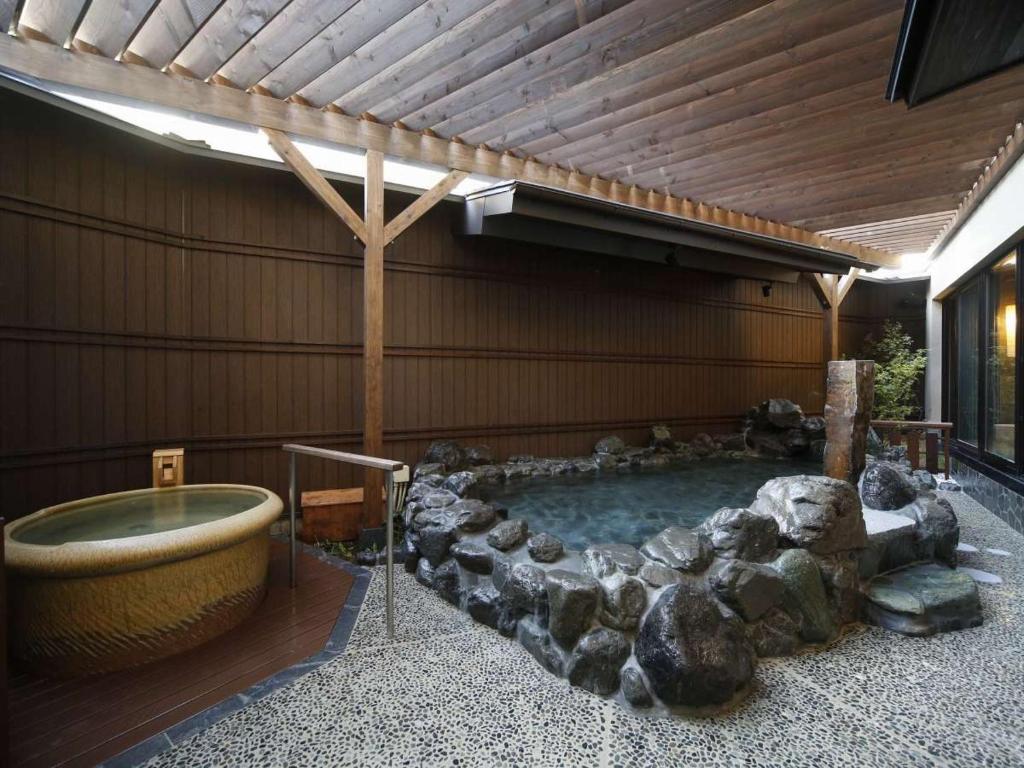
⭐️⭐️ Ryokan Asukasou – A more upscale ryokan-style stay right near Nara Park. Rooms are spacious and elegant, and some offer beautiful views over the park area. The experience feels refined and peaceful, making it a great choice if you want something more memorable than a standard hotel.
⭐️ Best for: Couples or travelers looking for a classic ryokan stay close to the park
👉 Compare prices →
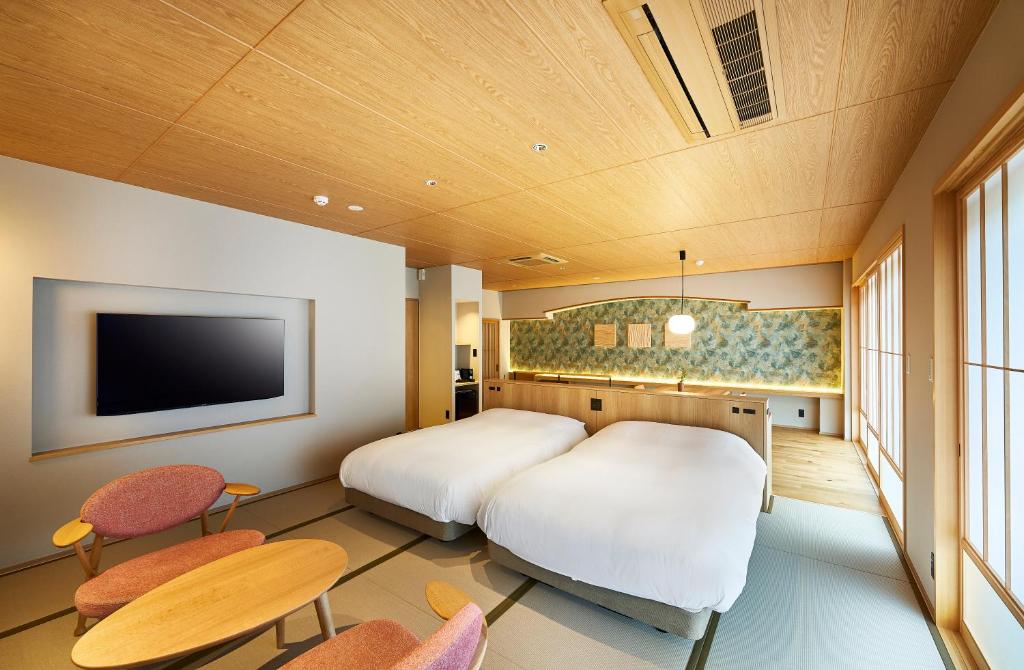
⭐️ Yuzan Guesthouse – A simple, budget-friendly guesthouse within walking distance of Nara Park. It’s basic but clean and functional, perfect if you plan to spend most of your time exploring and just need a comfortable place to sleep.
⭐️ Best for: Budget travelers who want a central location without paying for extras
👉 See latest prices →
Other places to visit nearby
FAQ
Yes, but they’re very used to people and can be pushy, especially if they think you have food. We recommend keeping snacks hidden, not teasing them, and giving them space if they get too close.
We’d plan at least 2–3 hours, more if you want to explore nearby temples like Todai-ji or take things slowly. It’s larger than it looks on the map.
Yes, most main paths are wide and flat, and we saw many families visiting. Some areas near temples have stairs and uneven paths, so you may need small detours with a stroller.
Absolutely. It’s one of the easiest day trips from both cities, with frequent trains and no need for seat reservations on regular services.
Final thoughts
Nara Park ended up being one of those places that stayed with us long after we left. It’s fun, a little chaotic, and completely different from the typical temple-only stops you’ll find across Japan. The mix of free-roaming deer, historic landmarks, and open green spaces makes it feel special rather than just another sightseeing stop.
It’s absolutely worth the visit, whether you’re coming from Osaka or Kyoto. For us, it wasn’t just a quick day trip, but one of the experiences that made our Japan trip more memorable.
thanks for the information