
This article contains affiliate links. Learn more in our affiliate disclosure.
The 5 Lakes Hike in Zermatt, Switzerland, looks like an easy walk between mountain lakes, but the route is longer and more demanding than many photos suggest.
The biggest planning decision is whether to start at Blauherd and follow the official trail downhill to Sunnegga, or save money by beginning in Sunnegga and hiking up to Blauherd first.
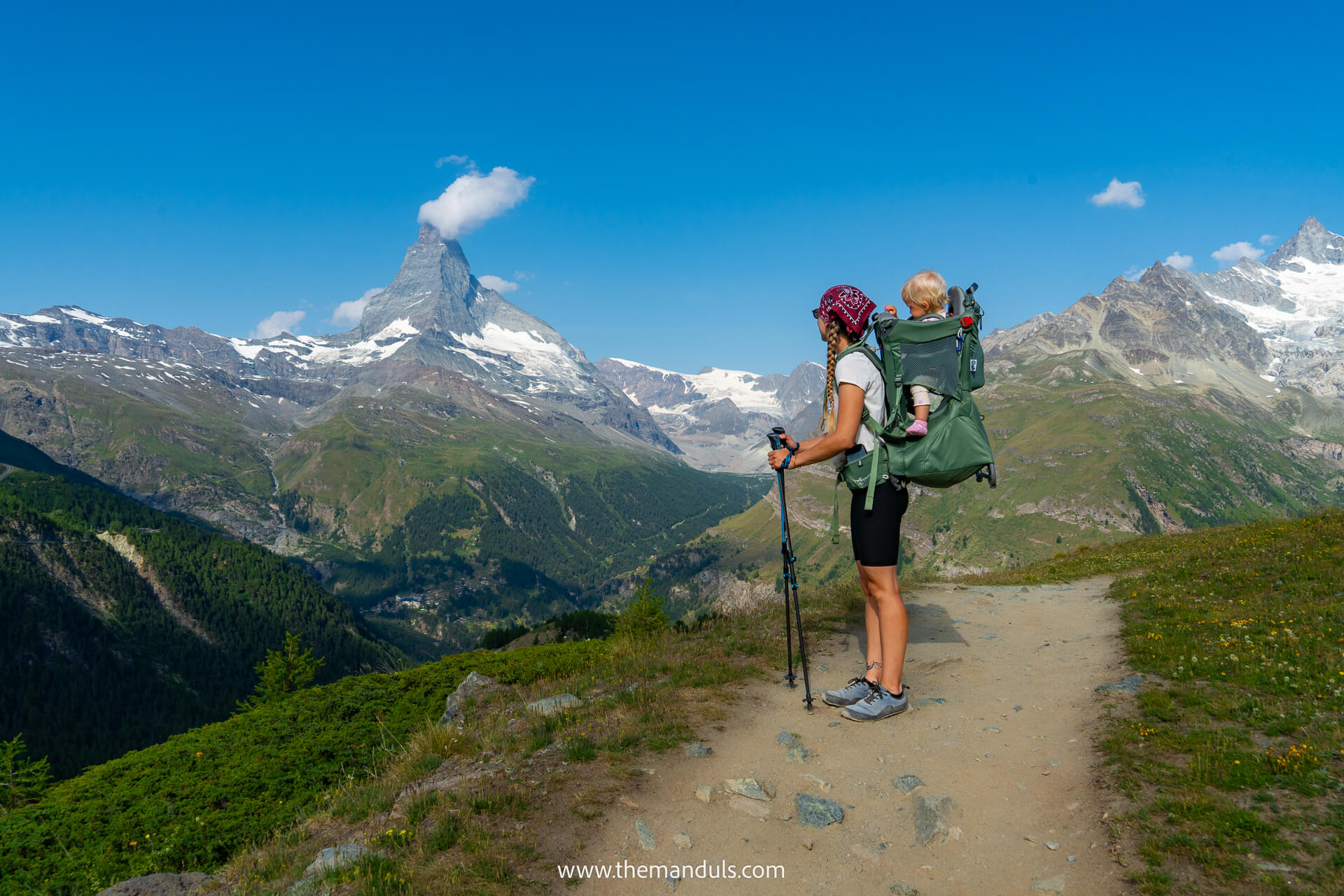
We chose the longer option from Sunnegga in late June 2026. The extra climb follows the Marmot Trail, and for us, it was worth the effort for the Matterhorn views and the chance to spot marmots along the way.
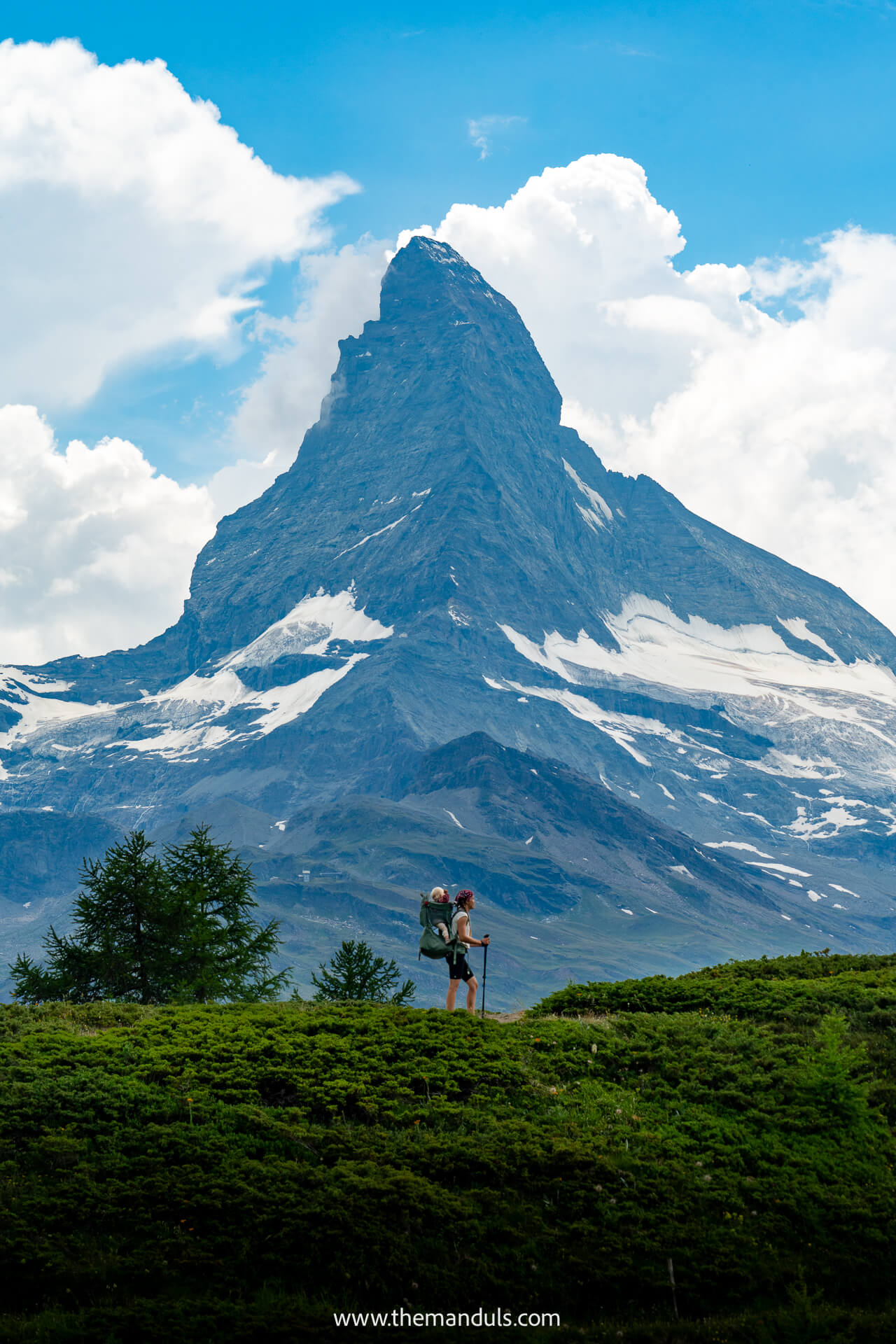
The full hike surprised us with how varied it felt. It combines five very different lakes, mountain huts, forest trails, open meadows, animals, and almost constant views of the Matterhorn.
But it is not just a short, relaxed stroll. Even the official route is a proper half-day hike, especially if you are not used to mountain trails.
In this guide, we cover the official 5 Lakes route from Blauherd to Sunnegga, our cheaper alternative starting in Sunnegga, which direction to hike, what to expect at each lake, and whether the trail is worth doing without perfect Matterhorn reflections.
Key Highlights
📍Start/End of trail: Blauherd / Sunnegga
🥾Distance: app 10.8km
🕥 Duration: 3:30 hours of walking time
⛰️ Elevation gain: 262m up, 547m down
🔥 Difficulty: moderate
⭐️ Trail type: Point-to-Point hike
Why We Think This Hike Is Worth It
We think the 5 Lakes Hike is worth doing if you want a varied half-day trail with almost constant Matterhorn views. The route combines five very different lakes, mountain huts, open meadows, forest sections, grazing animals, and several places where you can stop for food or simply enjoy the scenery.
What we liked most was the variety. Grünsee had the clearest water and became our favourite lake, Moosjisee stood out for its intense turquoise colour, and Leisee gave us the best Matterhorn reflection of the day.
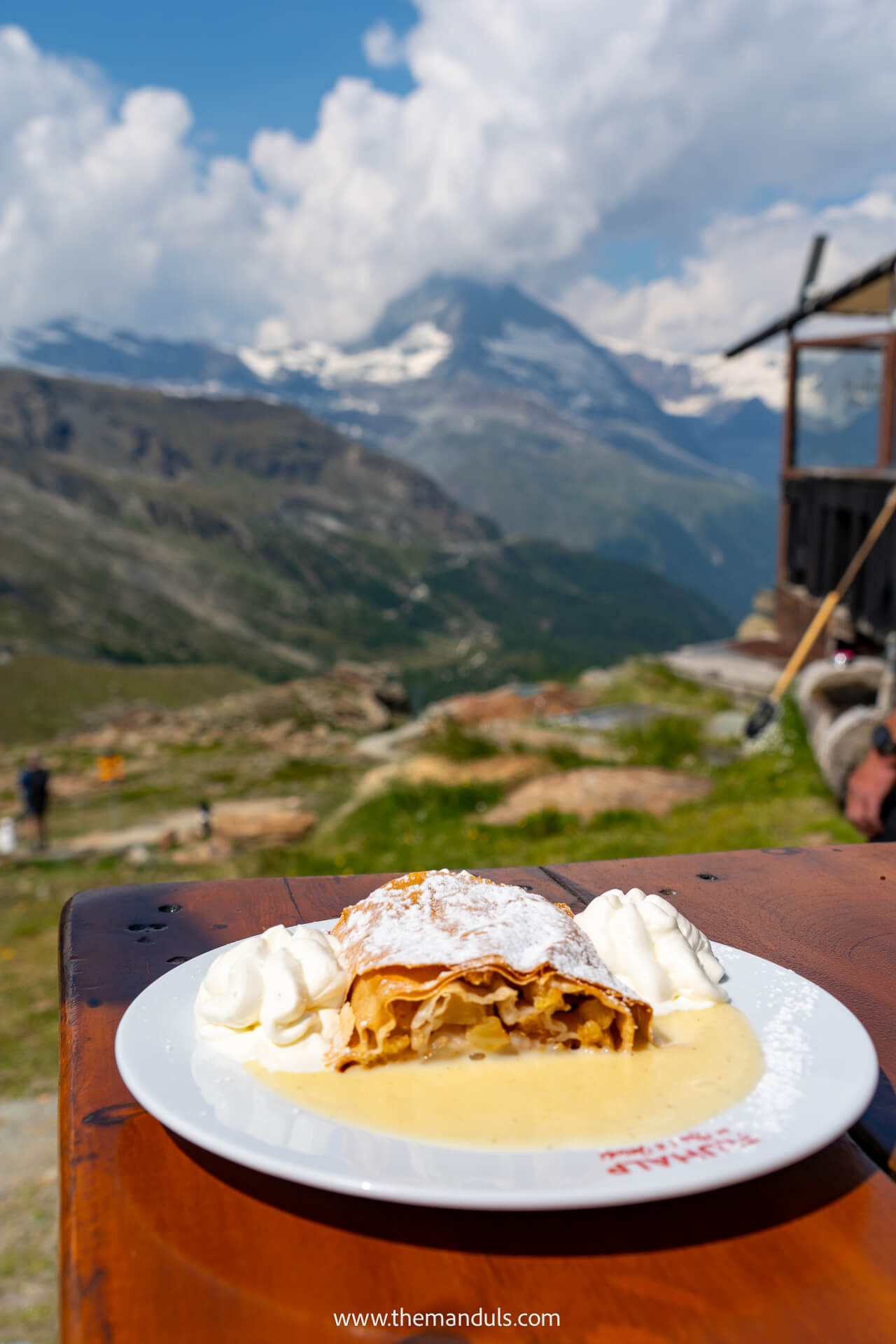
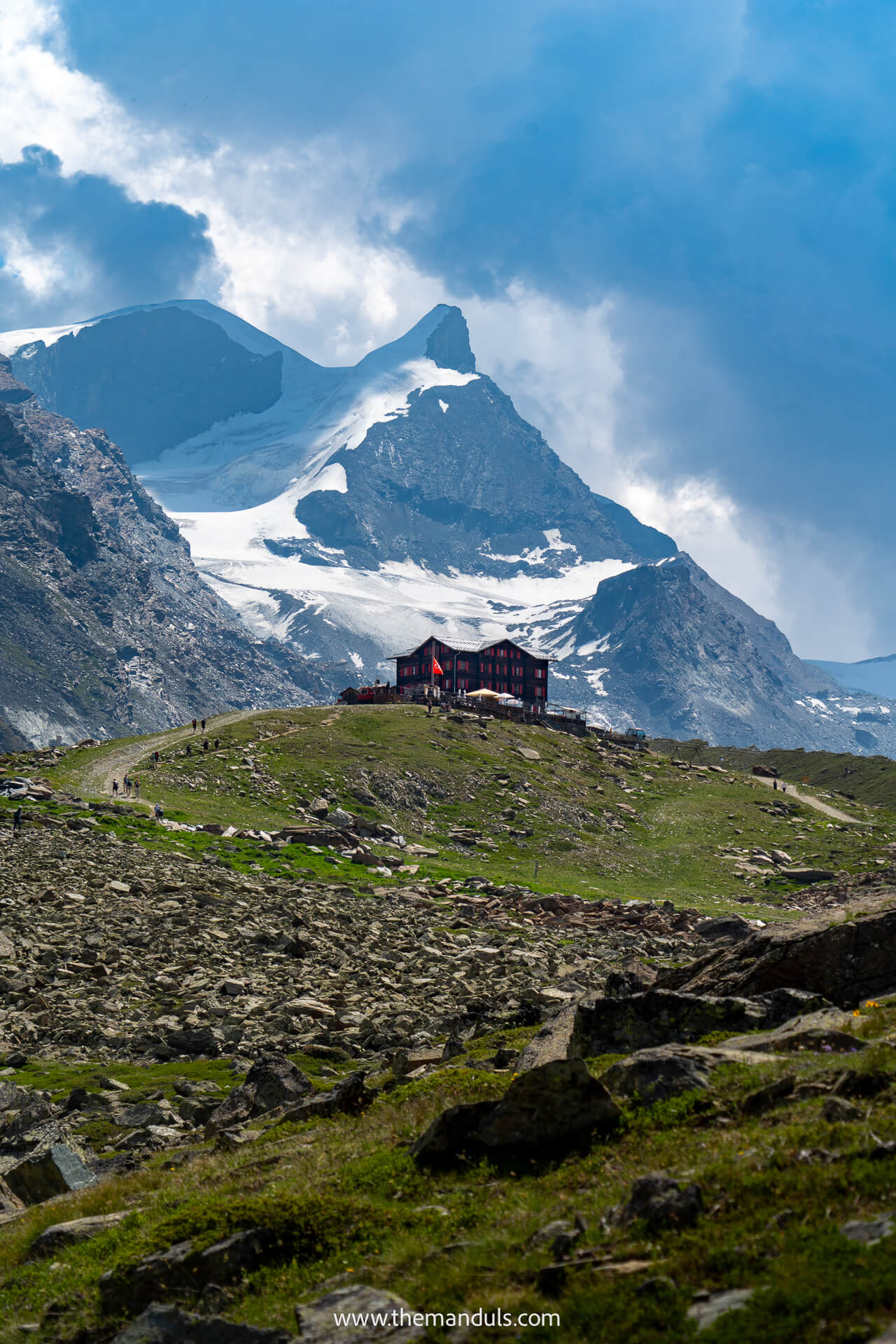
We also stopped for a delicious strudel at Fluhalp, with views towards the glacier further up the valley.
However, not every lake looked as photogenic as we expected, and the hike itself was more demanding than it may seem. It is not a flat walk between five lakes but a proper mountain trail with several uphill sections and a steeper descent through the forest.
In a hurry?
These are our top hotels in Zermatt we’d book again
⭐️⭐️⭐️ Le Mirabeau Resort & Spa – Our Top Pick
Choose it for Matterhorn-view rooms, a strong spa and a saltwater pool in the garden — the best option after long hiking days.
👉 See prices & availability →
⭐️⭐️ Hotel Antares – Best for Cable Car Access
Choose it if you want to stay steps from the Matterhorn Express and start your mountain days with minimal walking.
👉 See prices & availability →
⭐️ Hotel Bahnhof – Best Budget Stay
Choose it for one of the most practical lower-cost locations in Zermatt, directly beside the train station with access to a shared kitchen.
👉 See prices & availability →
5 Lakes Hike Trail Map
When to Hike the 5 Lakes Trail
The official hiking season for the 5 Lakes Trail is generally June to September. In 2026, the dedicated lift ticket is available from 13 June to 4 October, although trail access still depends on snow, weather, and lift operations.
Check the official trail status to see if it is open.
We hiked the trail in late June 2026. All lifts and mountain huts were operating, and we found no snow, mud, or closed sections. It was also less crowded than we expected, especially after leaving Stellisee.
We recommend starting as early as possible. Calm morning conditions usually give you a better chance of seeing the Matterhorn reflected in the lakes, while an early start leaves enough time for lunch at a mountain hut, swimming at Grünsee, and longer stops without watching the clock.
During our stay, clouds often built up later in the afternoon, sometimes followed by rain or thunderstorms. Mountain weather changes quickly, so check the forecast before setting off.
Much of the route is exposed to the sun, with shade limited mainly to the forest sections. Bring sun protection even when the temperature in the village feels comfortable.
Getting to the Trailhead
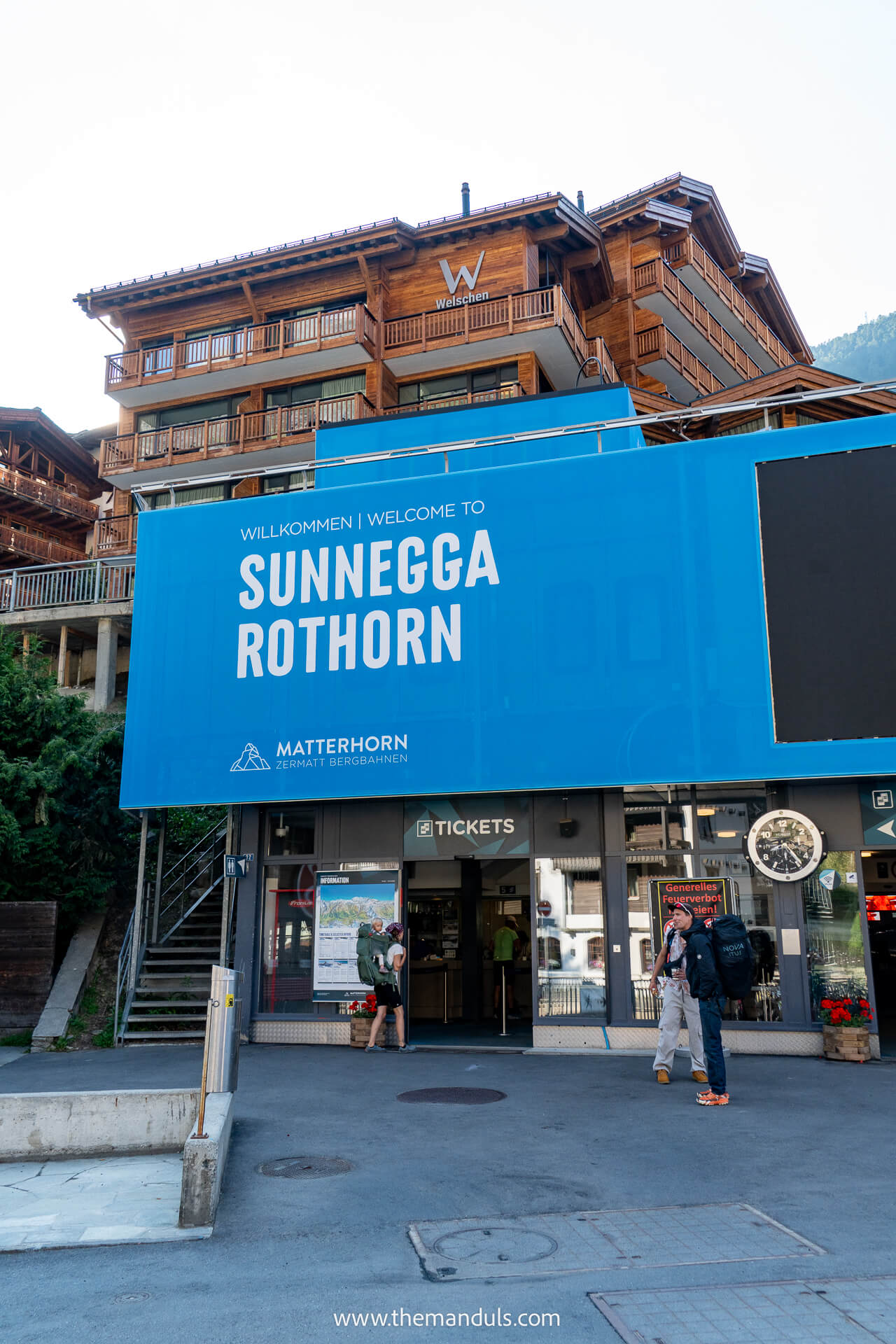
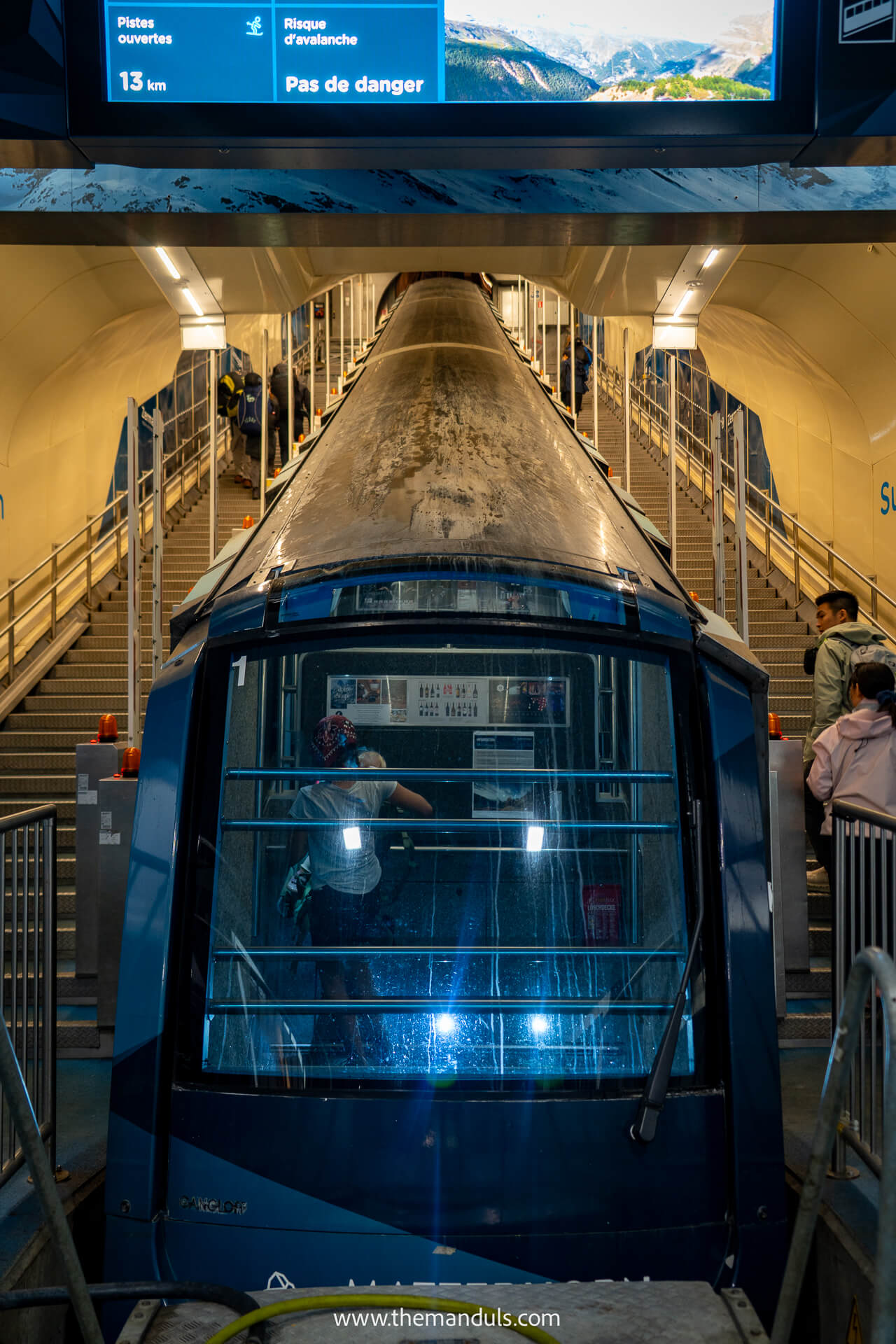
The official 5 Lakes Hike starts at Blauherd mountain station. From central Zermatt, take the underground Sunnegga funicular and continue from Sunnegga to Blauherd by gondola.
The Sunnegga funicular station is within walking distance of Zermatt’s centre and train station. We bought our tickets directly at the station in late June and boarded without any problems. Advance booking is not required, although buying online can save time during busier periods.
Option 1: Take the Lifts to Blauherd
This is the easiest option and the one we recommend if you want to save your energy for the main hike.
The 5 Lakes Walk combination ticket includes:
- Zermatt → Sunnegga by funicular
- Sunnegga → Blauherd by gondola
- Sunnegga → Zermatt after the hike
In summer 2026, combination tickets cost CHF 53. Children under nine travel free, while children aged 9–15 and holders of the Half Fare Card, GA or Swiss Travel Pass receive discounts.
Prices can vary, so check the current fare for your date.
Option 2: Start Hiking From Sunnegga
Budget travellers can take only the funicular to Sunnegga and hike to Blauherd instead of paying for the additional gondola. The return Sunnegga ticket costs CHF 33 in 2026.
This adds approximately:
- 1.9 km
- 1 hour
- 290 m of elevation gain
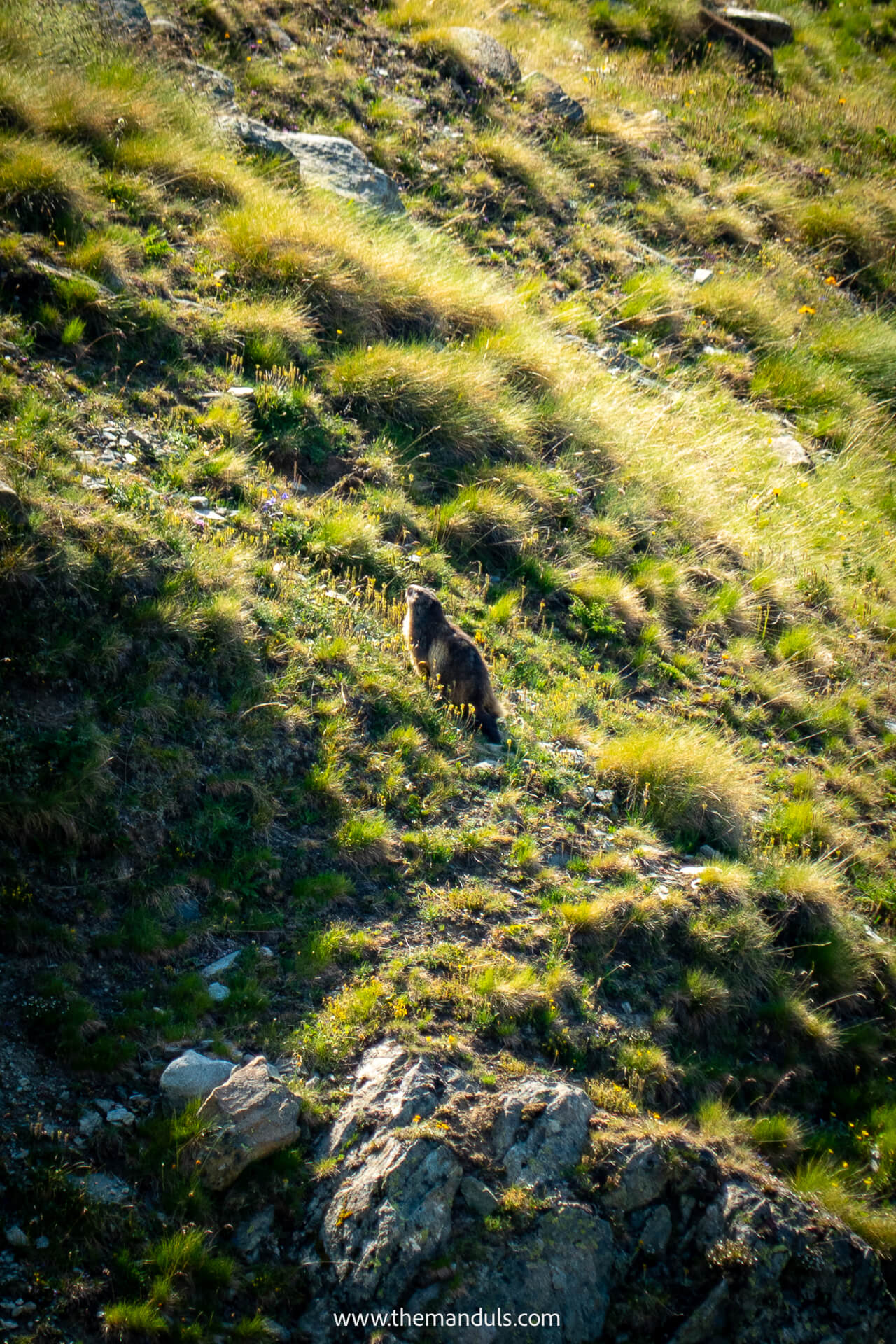
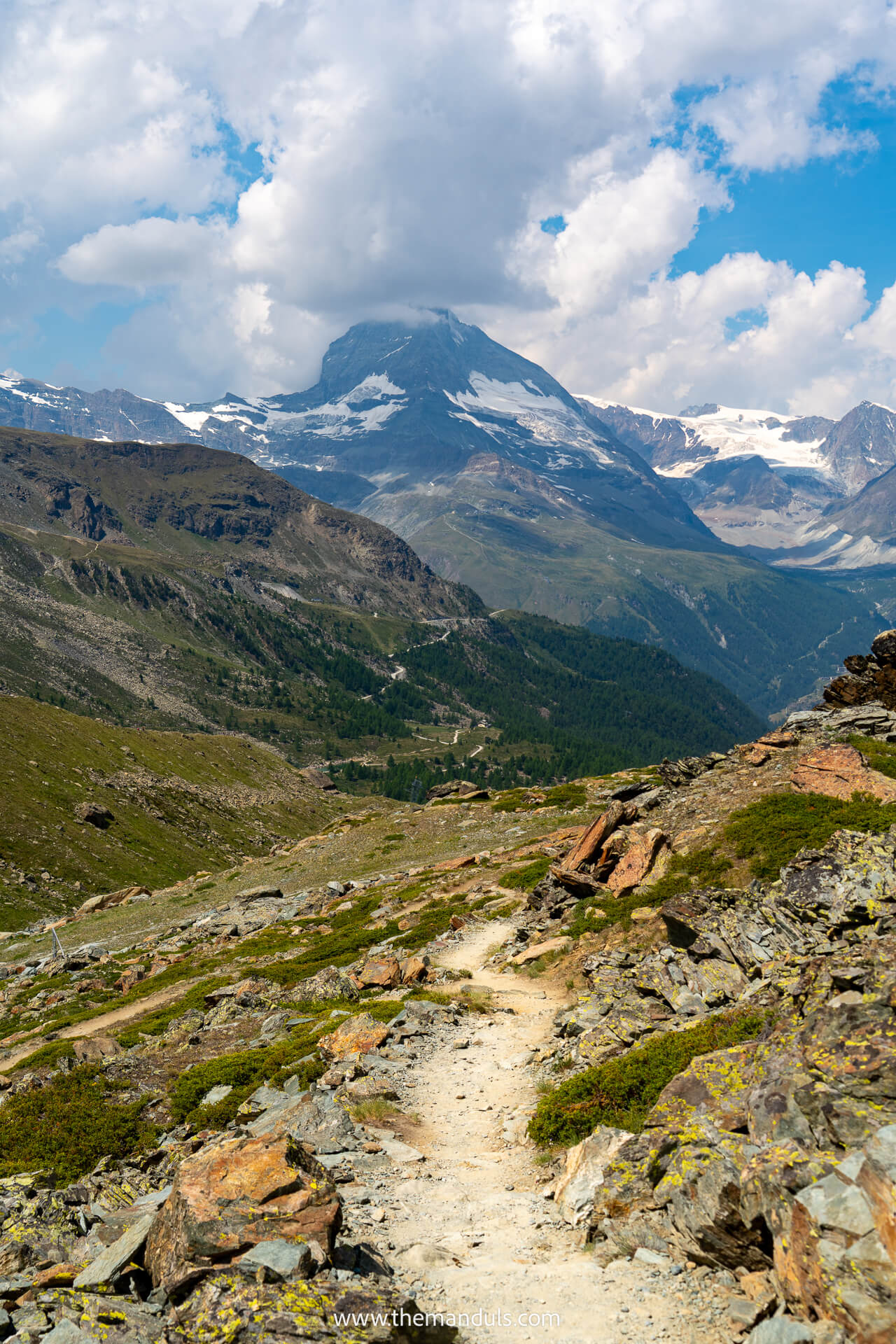
The route follows the Marmot Trail, a narrow mountain path with wide-open Matterhorn views from the beginning. The final ten minutes are steep, but overall, we found the trail manageable.
We also spotted marmots along the way, which made the extra effort feel worthwhile. We would choose this option again when travelling on a budget, but it increases the complete day to around 12.7 km with more than 550 m of ascent.
If saving money is not a priority, take the gondola to Blauherd. The main 5 Lakes route was already more tiring than we expected, so skipping this opening climb will make the rest of the day noticeably easier.
Getting to Zermatt
Zermatt is car-free. If you are arriving by car, leave it in Täsch and continue by shuttle train. The train from Täsch takes around 12 minutes, normally runs every 20 minutes during the day, and costs CHF 17.20 return in 2026.
5 Lakes Hike Trail Description
The trail description below follows the longer route we completed from Sunnegga. If you take the gondola directly to Blauherd, simply skip the first section.
Sunnegga to Blauherd via the Marmot Trail
🕥 1 hour
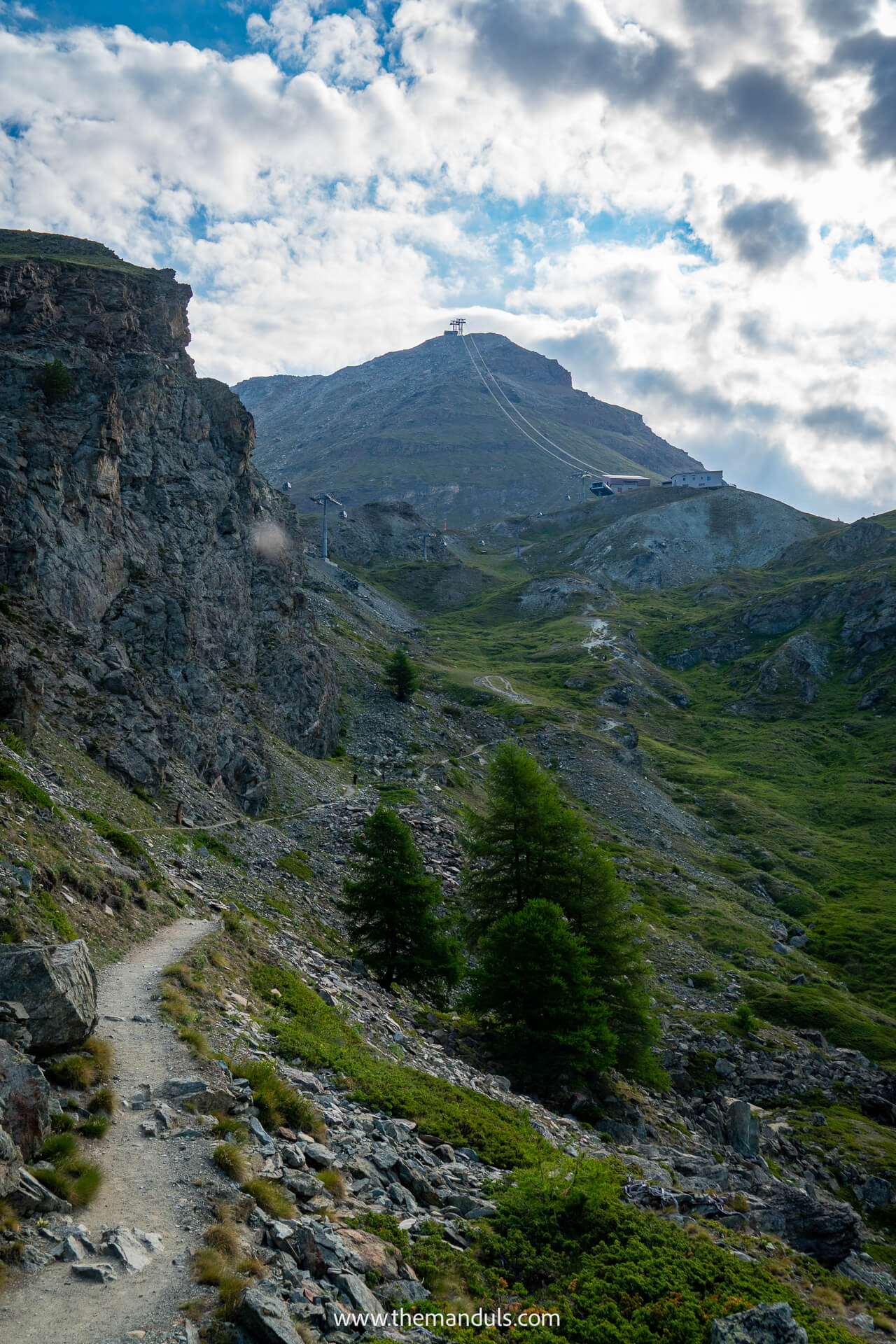
Starting at Sunnegga instead of taking the gondola to Blauherd is the cheaper option, but it adds the biggest climb of the day.
The route follows the Marmot Trail, a typical narrow mountain path with stones, uneven ground and open sections across the hillside. Matterhorn views begin almost immediately, so the climb never felt boring.
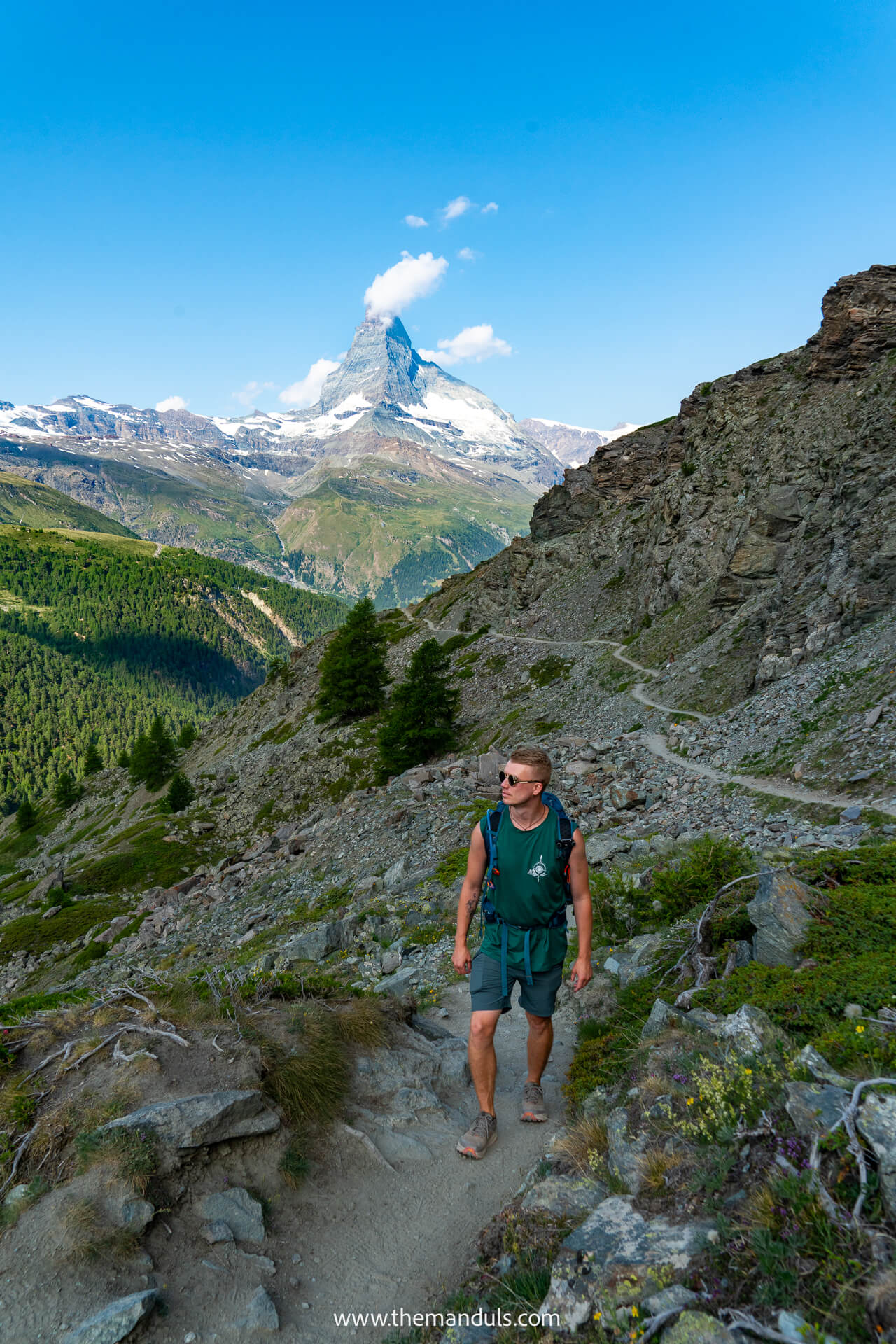
We also spotted marmots beside the trail, which made the decision to walk rather than take the lift feel worthwhile.
Most of the ascent is steady and manageable. The steepest part comes during the final ten minutes below Blauherd, but it is short and we didn’t find it too difficult.
Blauherd to Stellisee
🕥 Approximately 25 minutes
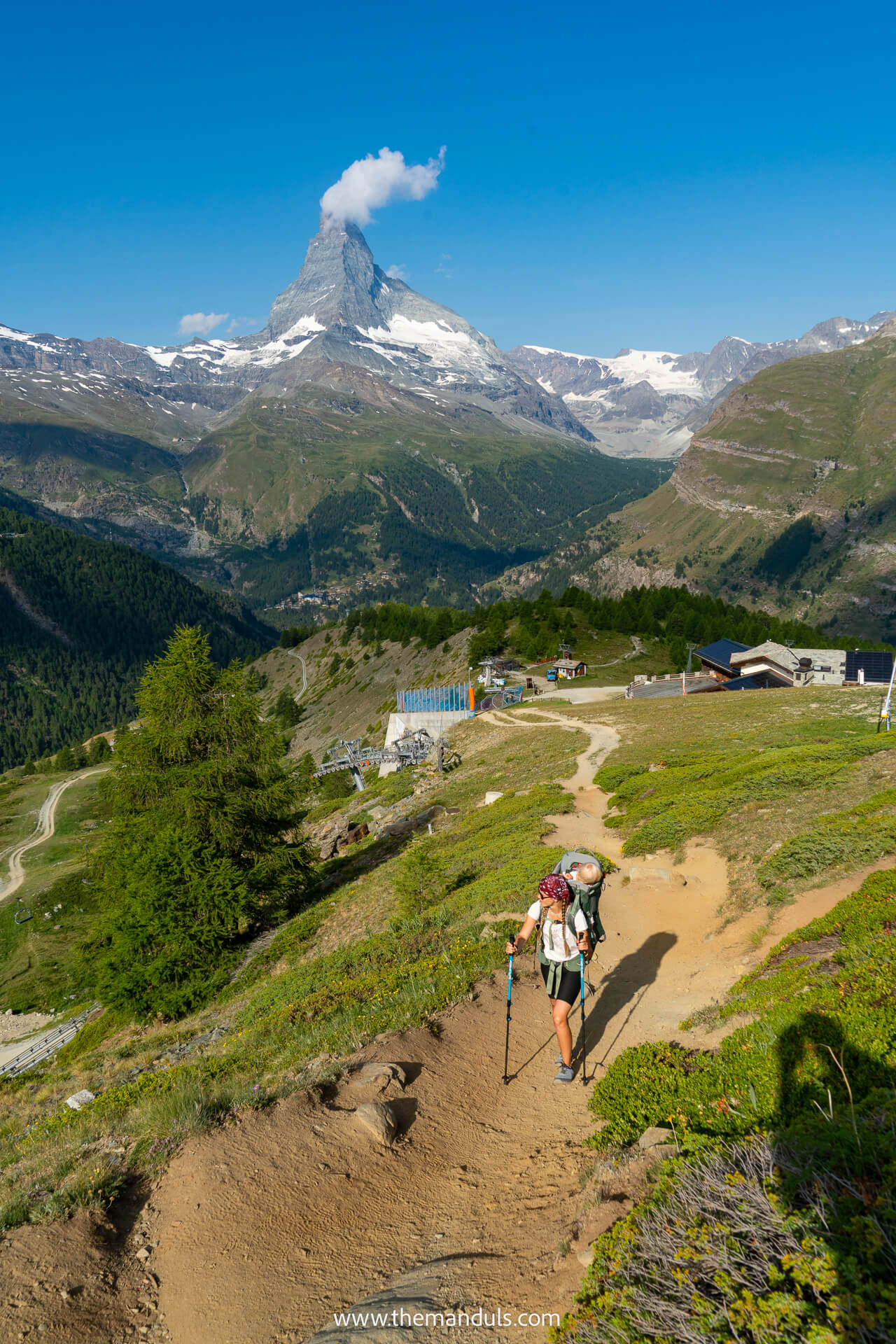
Two paths leave Blauherd in the direction of Stellisee. The lower option follows a wide gravel road that is also used by cyclists, while a narrower hiking path crosses the meadow slightly above it.
We chose the upper path and would recommend the same. It feels more like a proper mountain trail, keeps you away from the wider gravel road and offers better photo opportunities.
The route climbs gently towards Stellisee. It is not particularly steep, but it quickly makes clear that the 5 Lakes Hike is not simply a downhill walk between lakes.
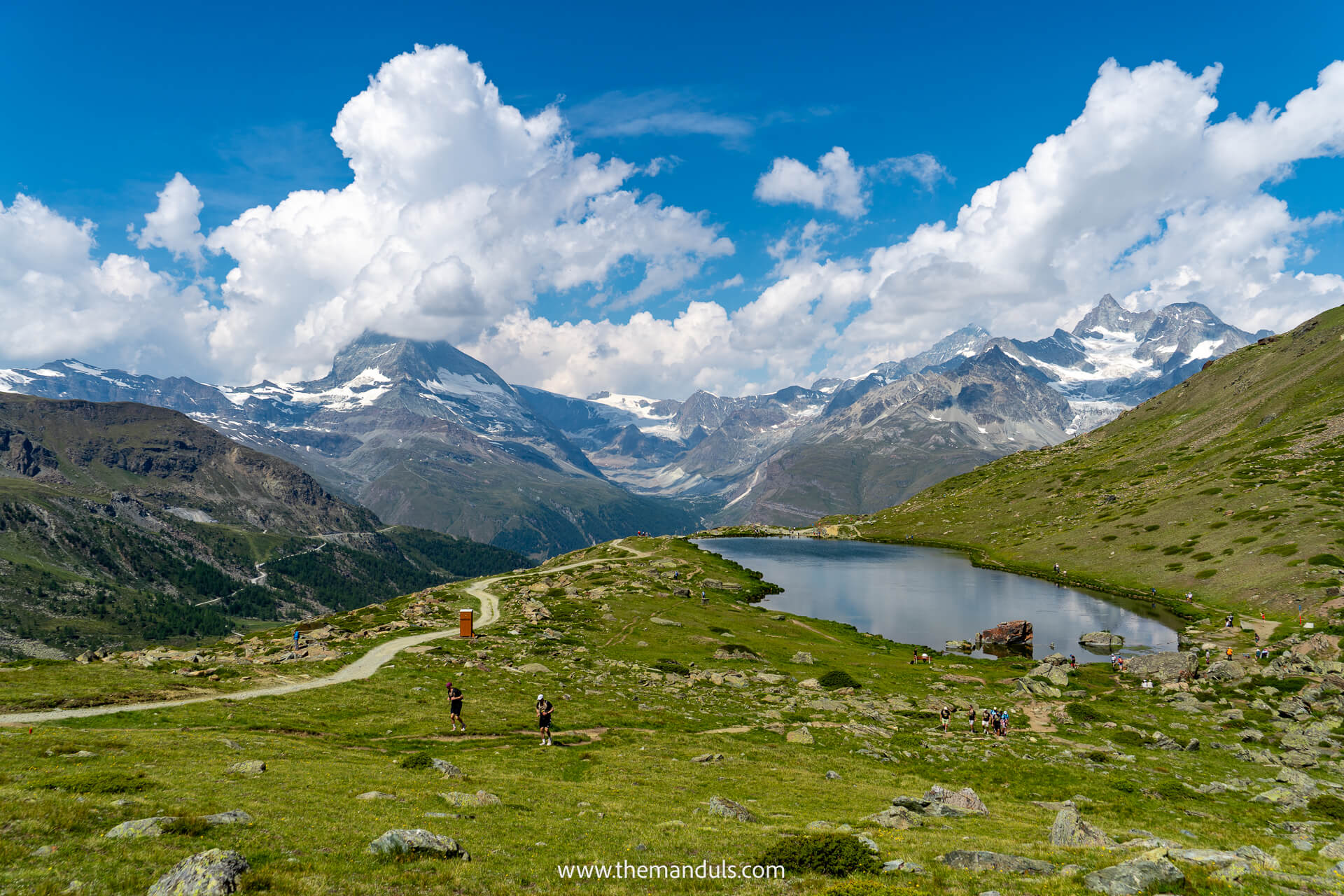
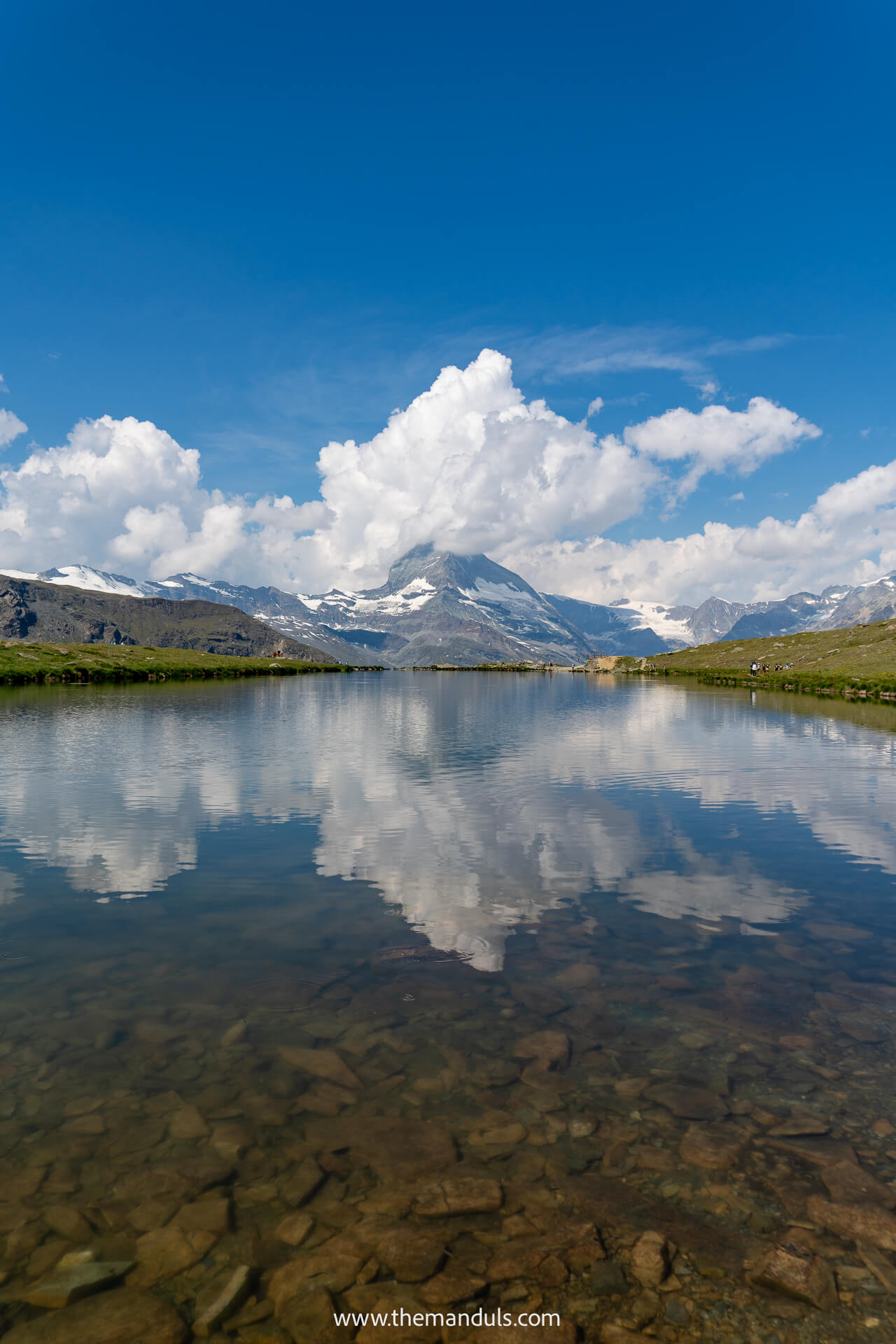
Stellisee is the best-known lake on the route, mainly because of the classic Matterhorn reflection shown in so many photos. The water was slightly disturbed by wind during our visit, so we did not get a clear mirror image.
It was also the busiest lake of the day, although it still did not feel uncomfortably crowded.
Walk around the shore rather than stopping at the first viewpoint. The appearance of the Matterhorn and its reflection changes noticeably depending on your position.
Stellisee to Fluhalp
🕥 Approximately 25 minutes
Fluhalp is not essential if you want to complete the shortest version of the 5 Lakes route. From Stellisee, you can continue directly towards Grindjisee instead.
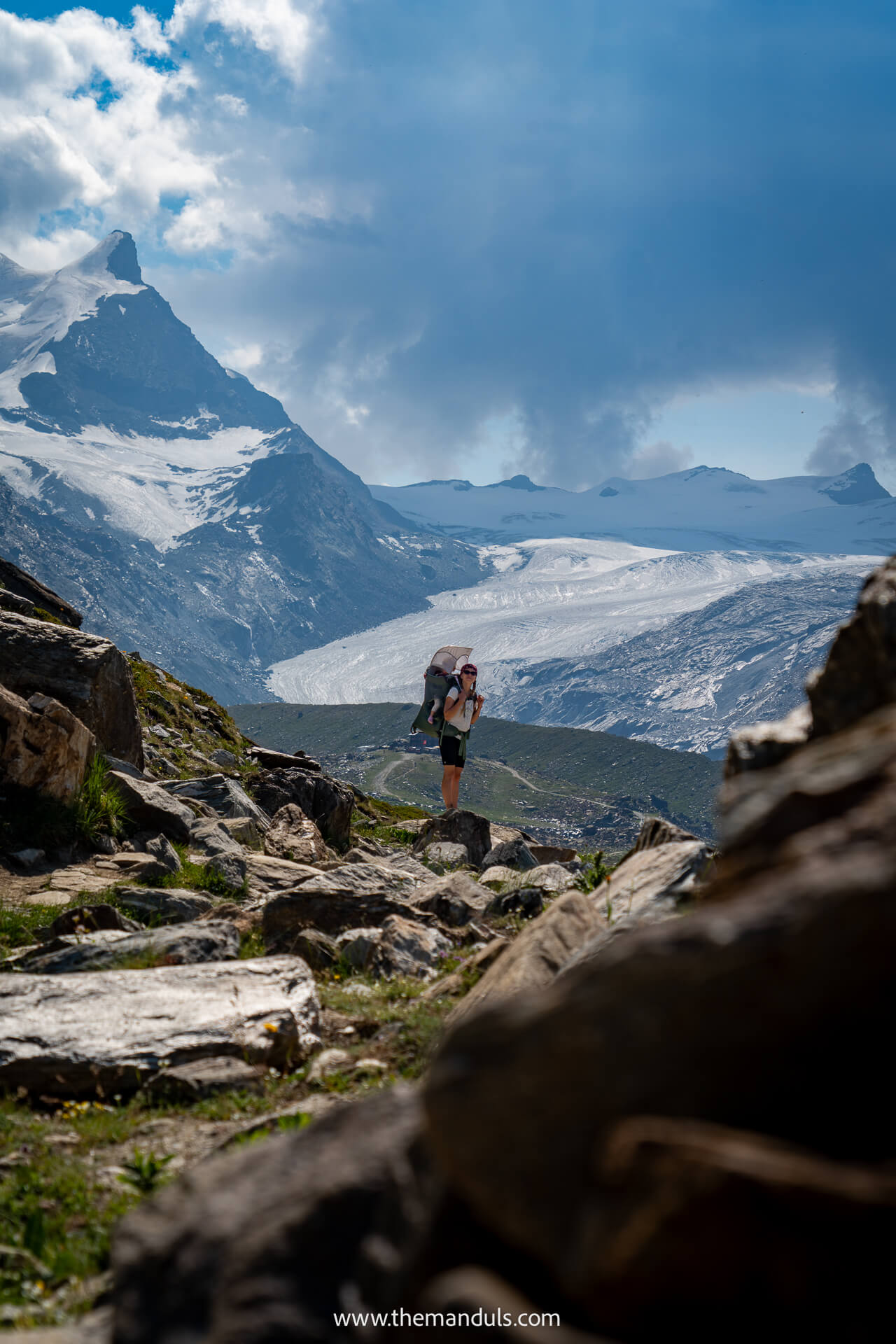
However, we think it is worth considering if you have enough time for a proper food stop. The path continues gradually uphill from Stellisee, with increasingly wide views towards the Findel Glacier further up the valley.
We stopped at Fluhalp for apple strudel, and it was one of our favourite breaks of the day. The strudel was delicious, but the terrace location was just as memorable, with open views towards the glacier and surrounding peaks.
Fluhalp to Grindjisee
🕥 Approximately 55 minutes
From Fluhalp, the trail initially feels easier, with flatter and downhill sections leading back towards Grindjisee.
Pay attention to the route at the junctions above Grindjisee. We accidentally followed the wrong path and missed part of the higher trail, which offers the better elevated view over the lake.
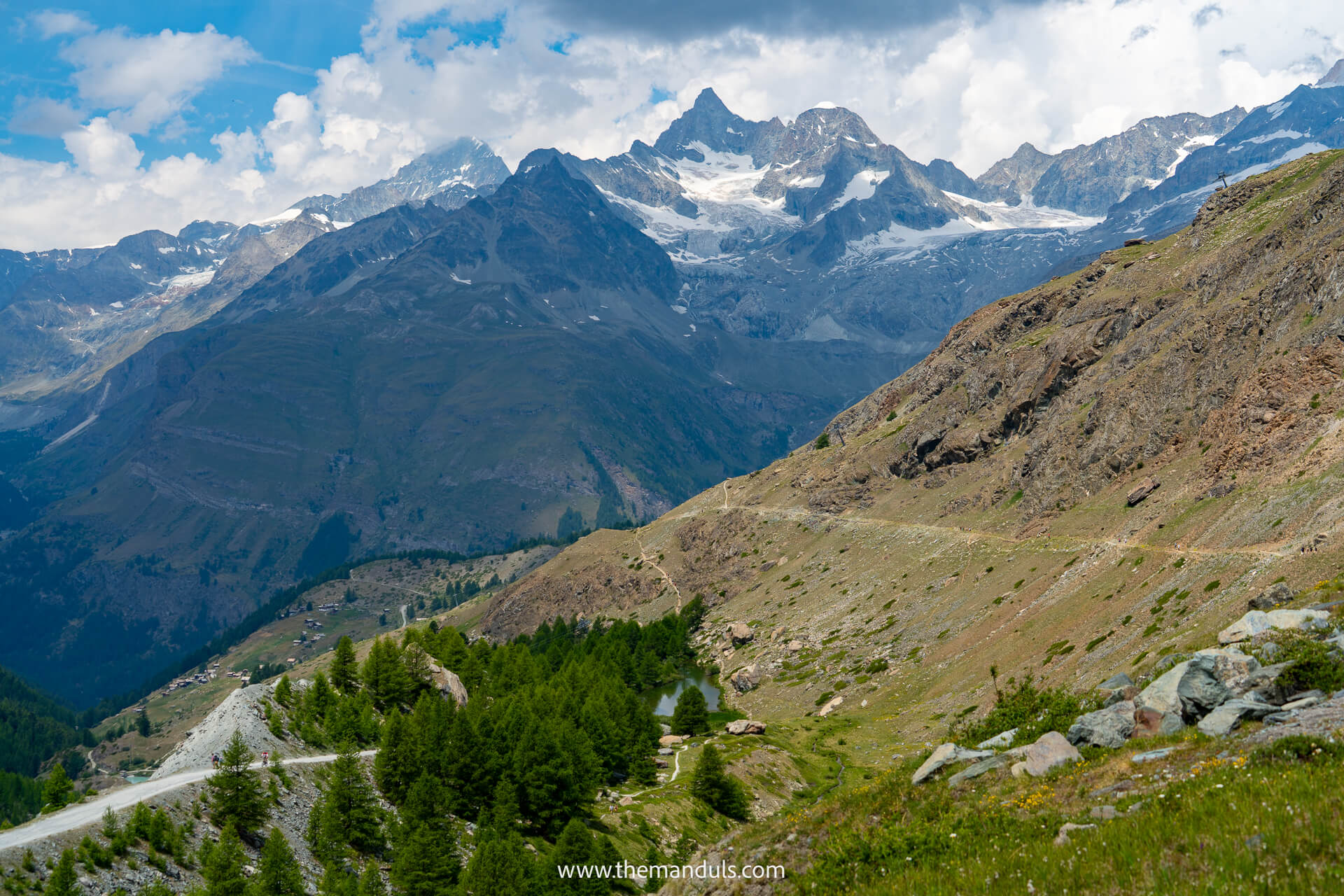
Grindjisee is a small lake surrounded by more vegetation than Stellisee. We liked the view from above, where the shape of the lake and the surrounding landscape are easier to appreciate.
We also walked down to the shore, but it did not look as clear or photogenic from close range during our visit.
Grindjisee to Grünsee
🕥 Approximately 25 minutes
The path from Grindjisee to Grünsee includes both downhill and uphill sections, but neither felt especially demanding. By this point, the route was also much quieter than around Stellisee.
Grünsee was easily our favourite lake of the hike. The water was clear, the surroundings felt more natural, and the views towards the Matterhorn were among the best of the day.
Swimming is allowed at Grünsee unless signs beside the lake state otherwise. We had not checked this before the hike and did not bring swimwear, which we regretted as soon as we arrived.
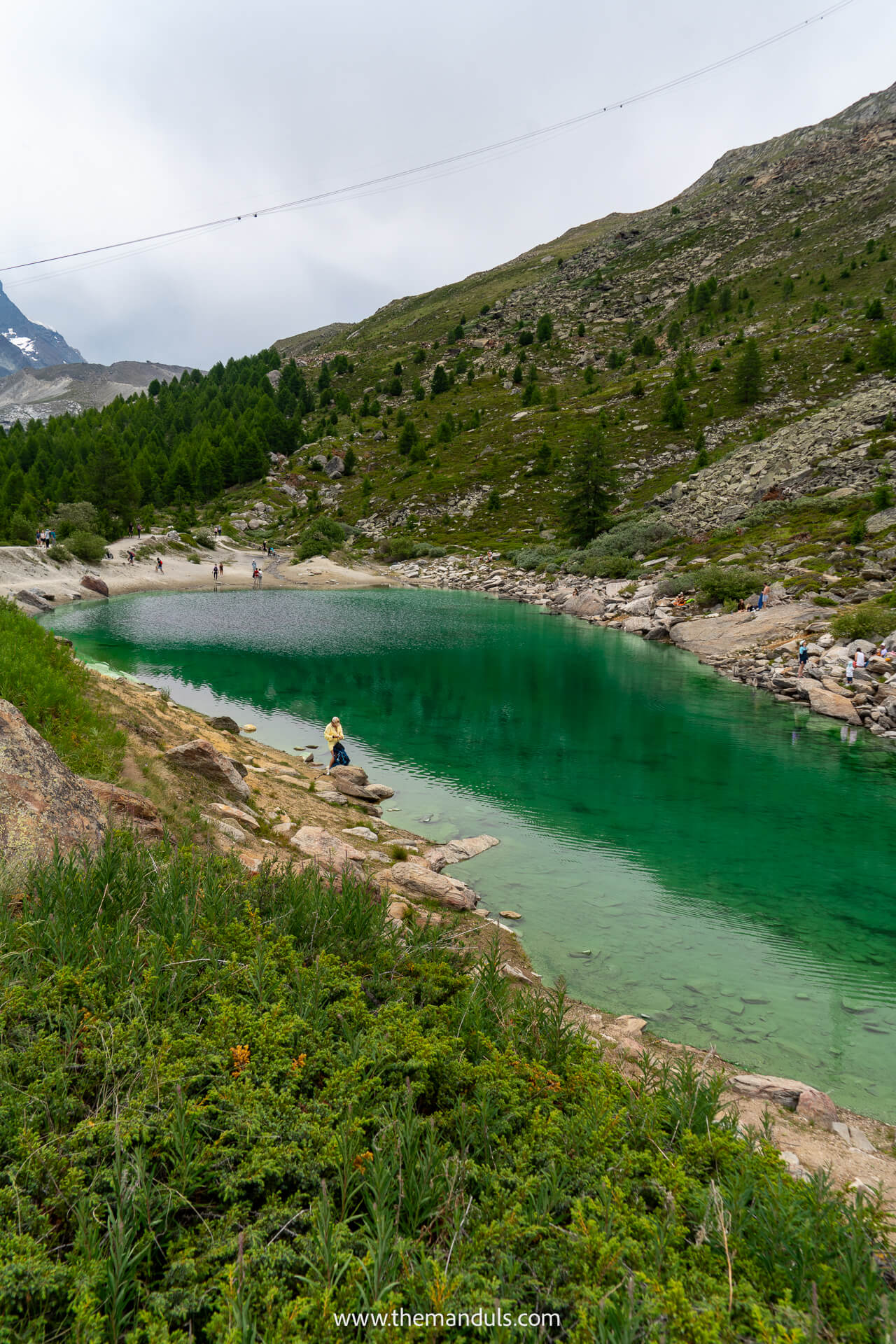
The water felt surprisingly pleasant for a mountain lake, at least if you are comfortable swimming in cooler water.
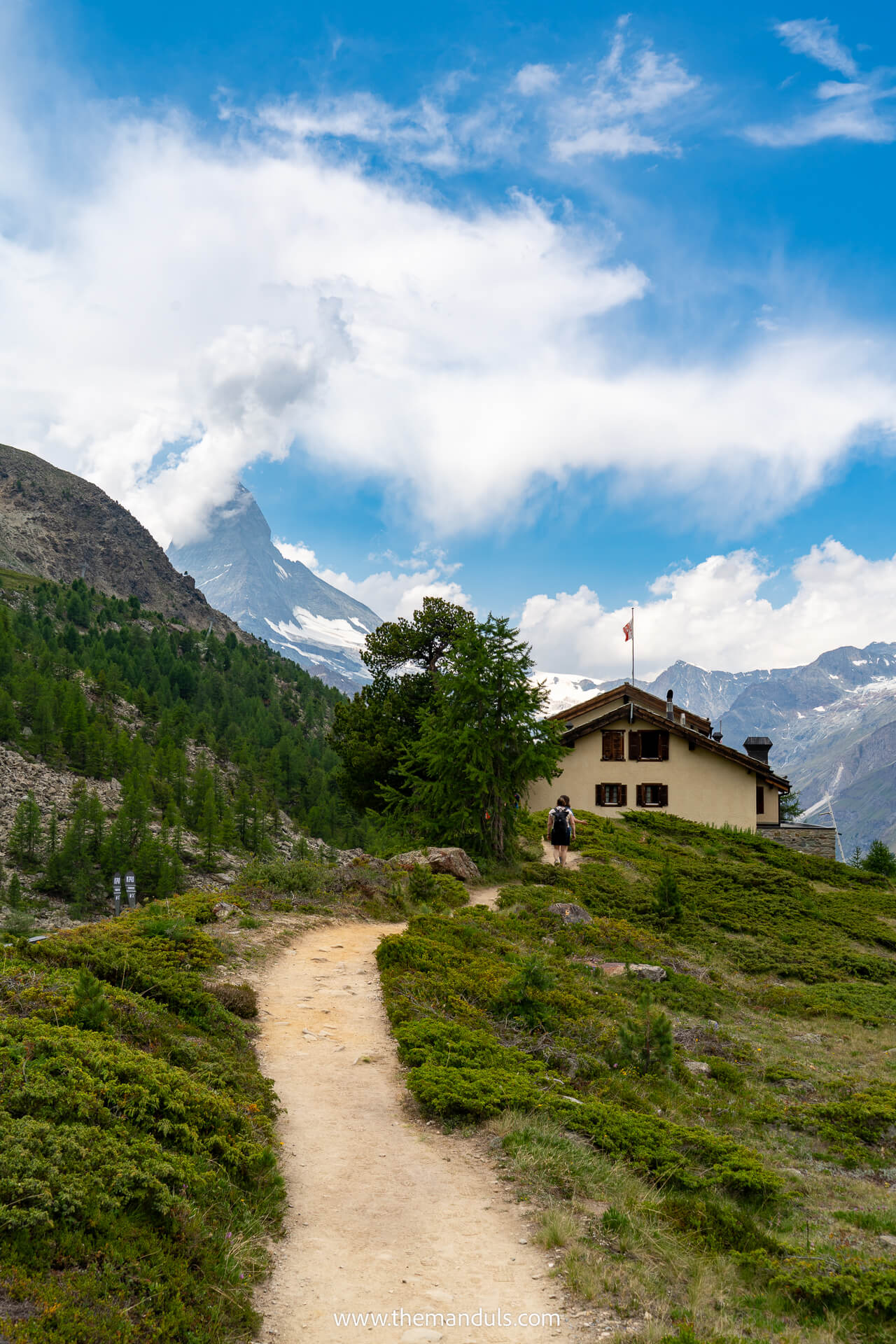
There is also a mountain hut nearby, making this one of the better places to plan a longer break. With an early start, we would allow enough time here for swimming rather than treating Grünsee as another quick photo stop.
Grünsee to Moosjisee
🕥 Approximately 35 minutes
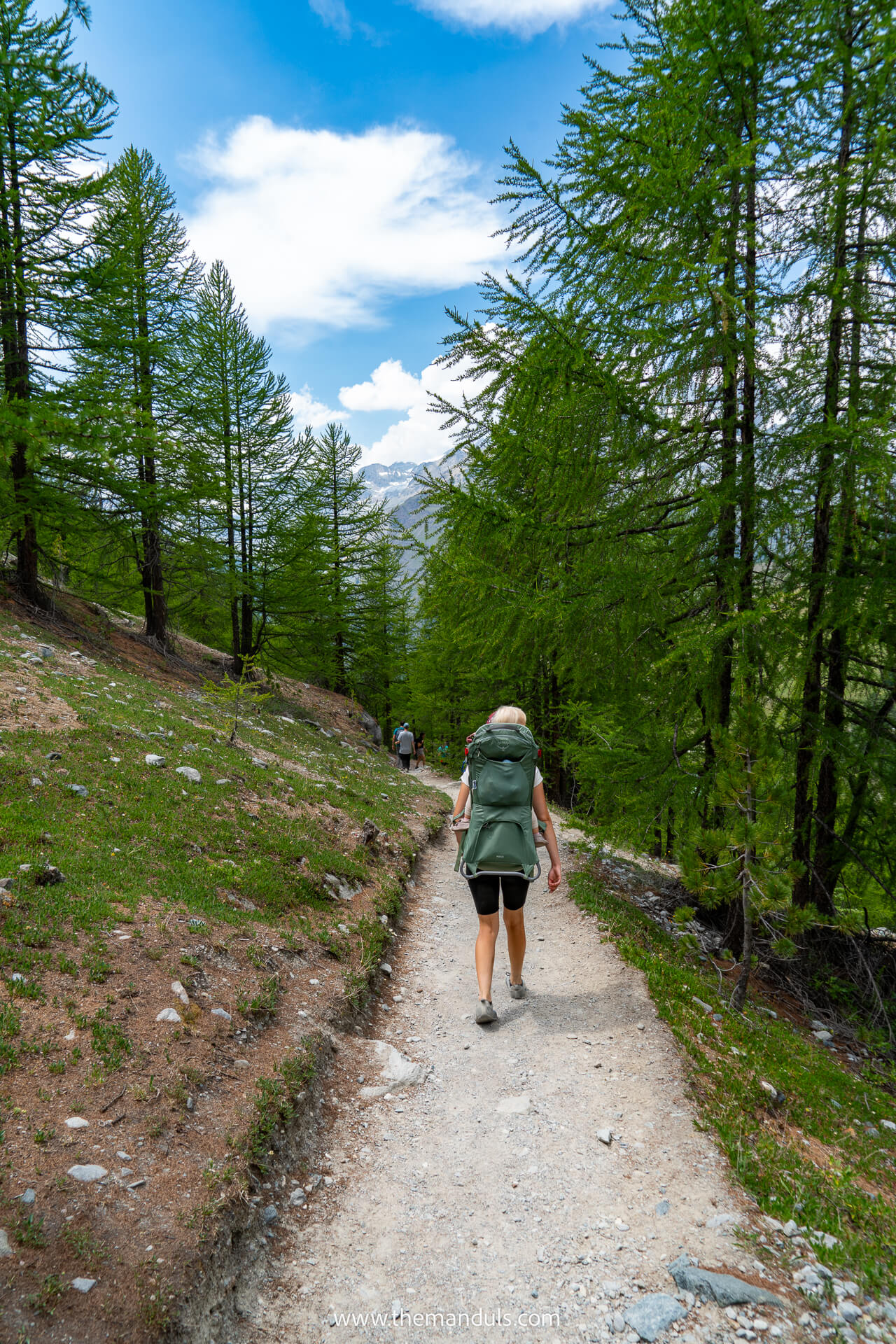
From Grünsee, the trail descends through the forest in a series of zigzags. This section is noticeably steeper than the earlier parts of the route, and we could feel the descent in our knees.
There was nothing exposed or technically difficult, but hiking poles could make this part more comfortable, especially if you are sensitive to long downhill sections.
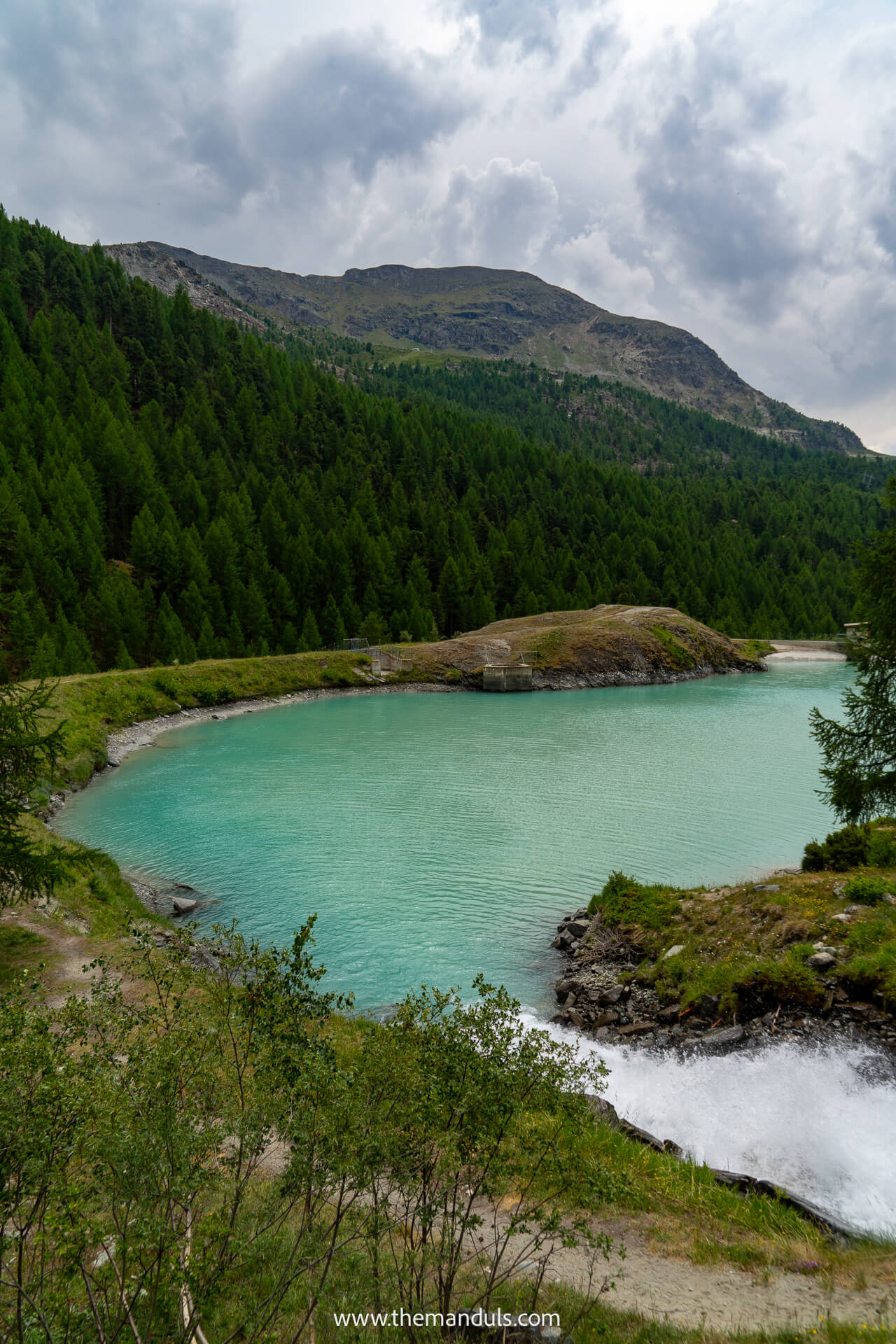
Moosjisee looks completely different from the previous lakes. Its bright turquoise colour immediately stands out, and we also found sheep grazing around the surrounding slopes.
However, Moosjisee is a reservoir, and the visible dam takes away some of the natural atmosphere. It is still worth seeing because of the colour, but it was not one of the lakes where we wanted to stay for a long break.
This was also the point where we started to feel the distance of the hike. Although the remaining route looks manageable on the map, the walk towards Leisee felt longer than we expected.
Moosjisee to Leisee via Findeln
🕥 Approximately 35 minutes
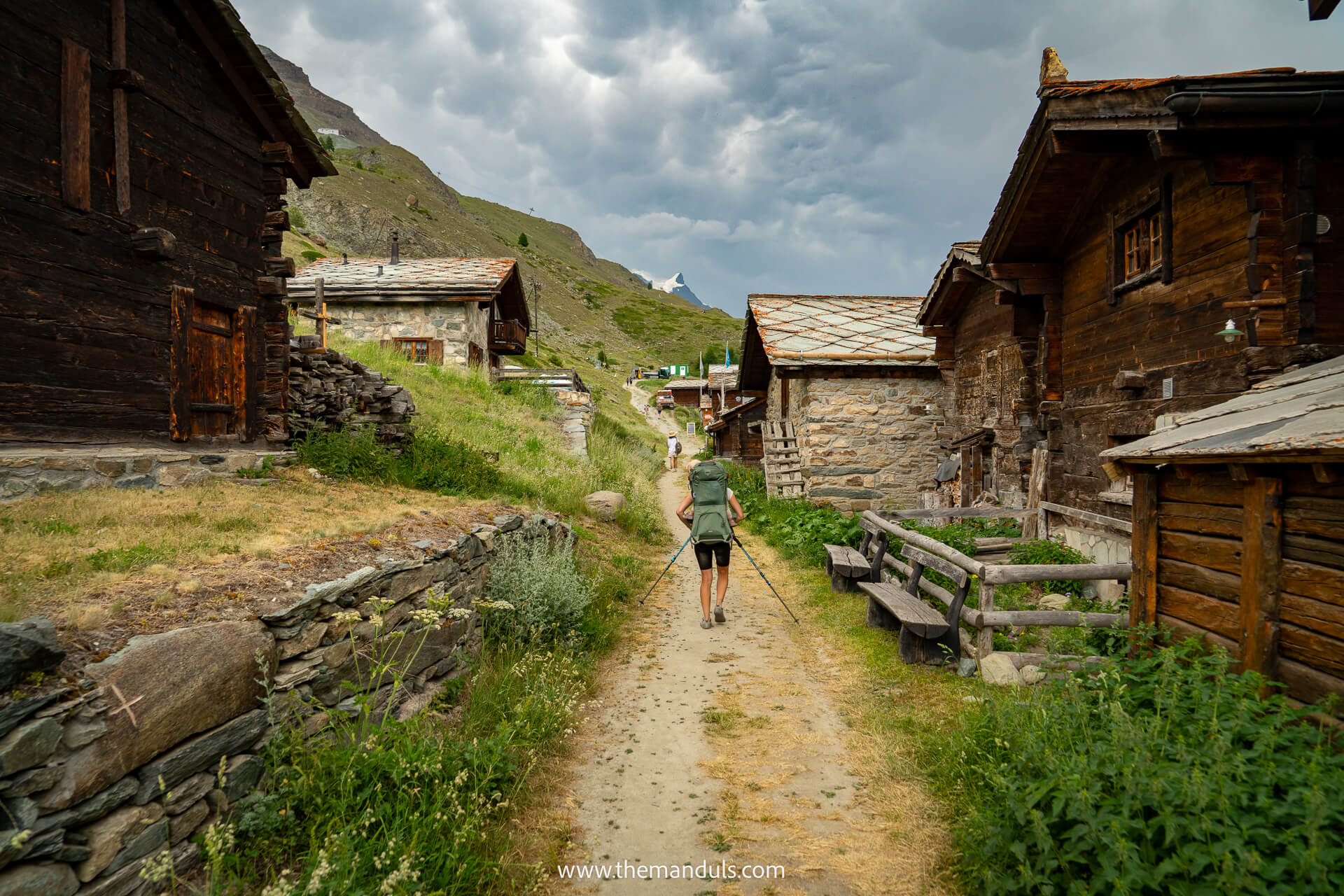
The trail initially continues across gentler terrain before reaching Findeln, a traditional hamlet of dark wooden houses and agricultural buildings scattered across the hillside.
This was one of the most unexpected parts of the hike. Many of the buildings looked empty during our visit, but the old timber houses made the route feel very different from the open lake sections higher up.
Findeln was historically used by Zermatt families during the summer farming season, while many of its old houses are now used as holiday homes.
At the junction near Findeln, you can continue downhill towards Zermatt or turn right and follow the 5 Lakes route uphill towards Leisee and Sunnegga. Make sure you follow the signs towards Leisee unless you intentionally want to finish the hike in the village.
Several mountain restaurants are located around Findeln, with terraces overlooking the Matterhorn. This can be a good additional stop, but keep in mind that one final uphill section still remains.
The climb towards Leisee took us around 20 minutes. It is not especially steep, but after several hours of walking, it felt longer than it probably would at the beginning of the hike.
Leisee and Wolli’s Adventure Park
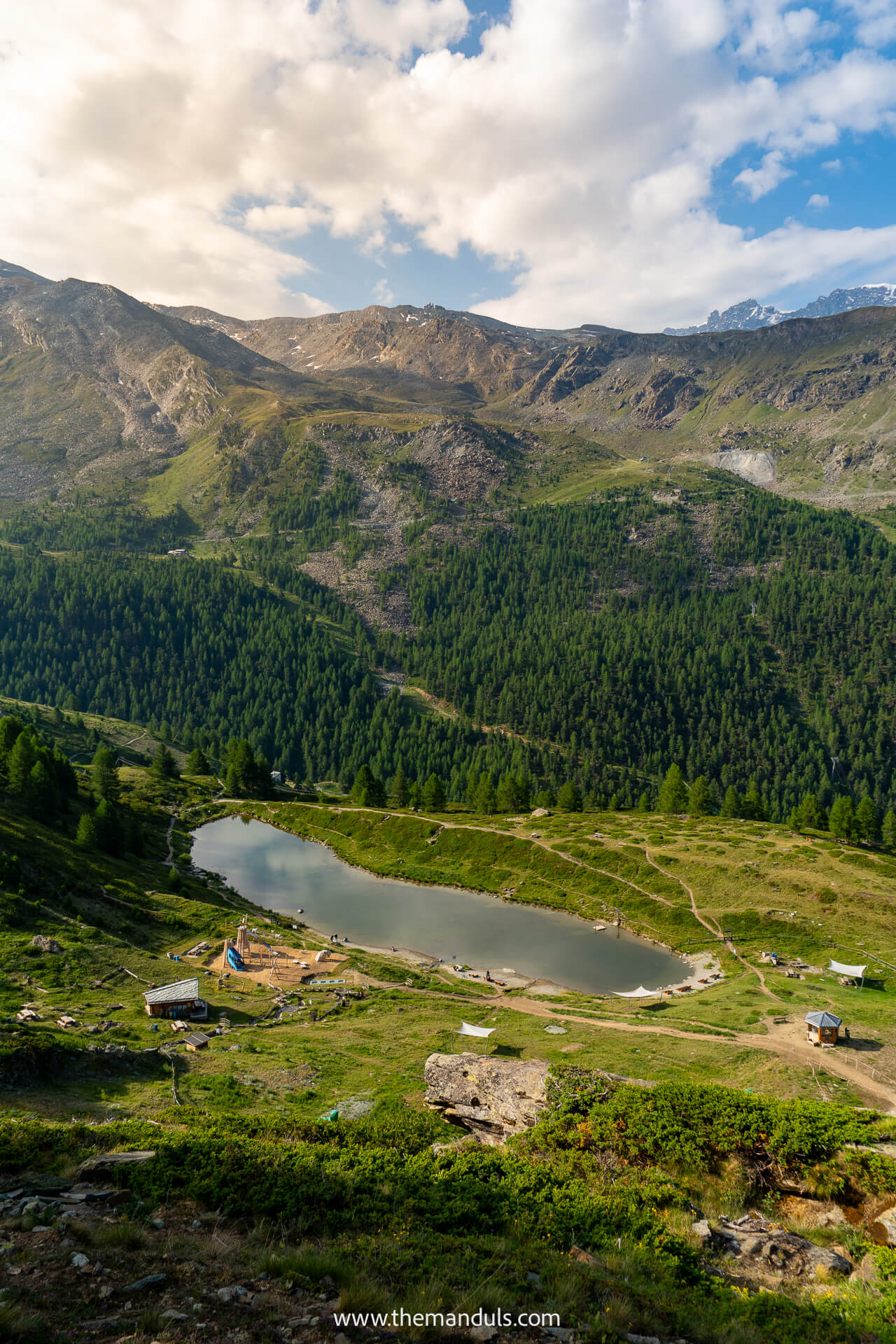
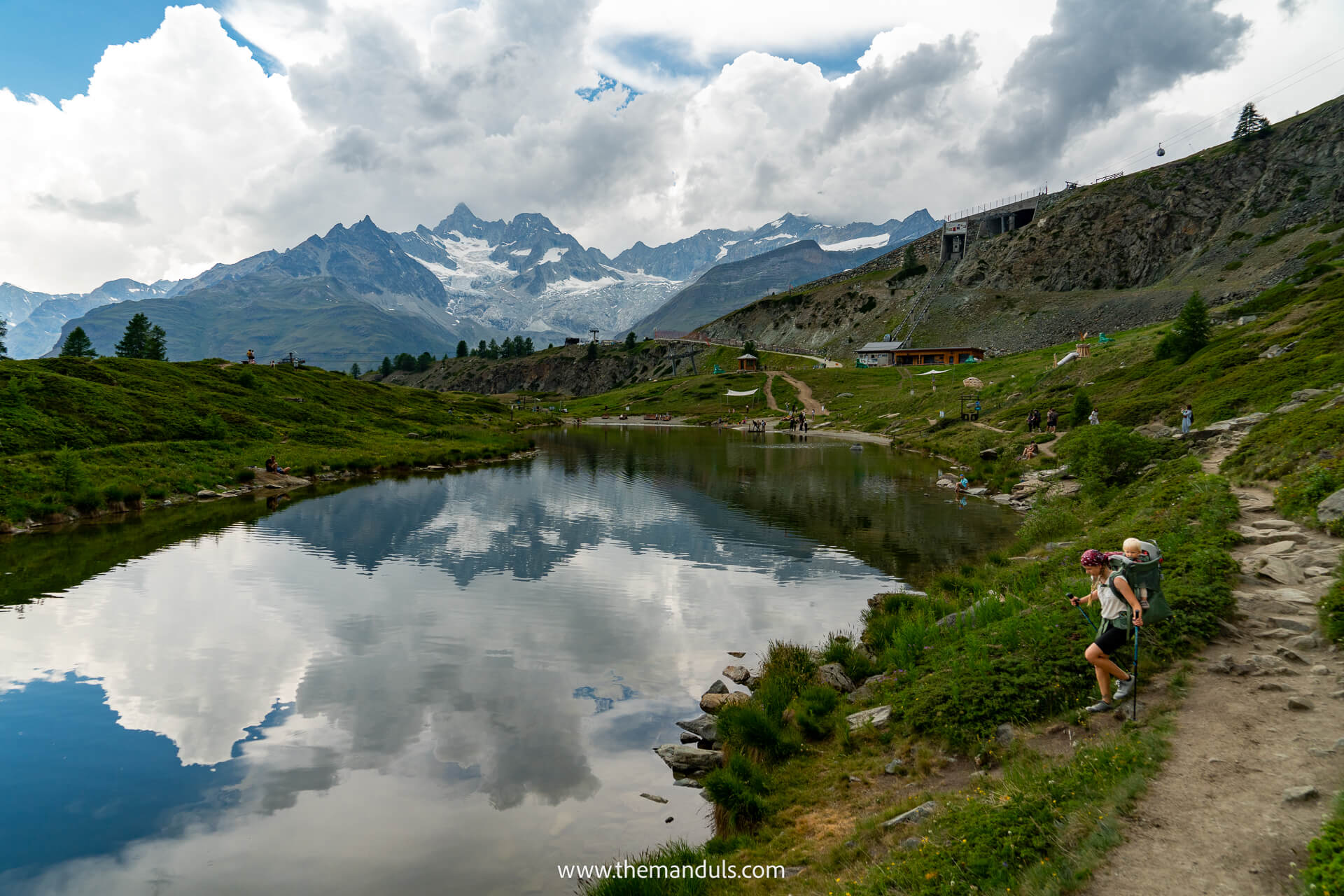
We were happy to finally reach Leisee, and it gave us the best Matterhorn reflection of the day. We had simialr experience when hiking to Riffelsee.
Swimming is also allowed here, but the water looked more brownish and murky than at Grünsee during our visit. Only one or two people were swimming, and personally, we found Grünsee much more inviting.
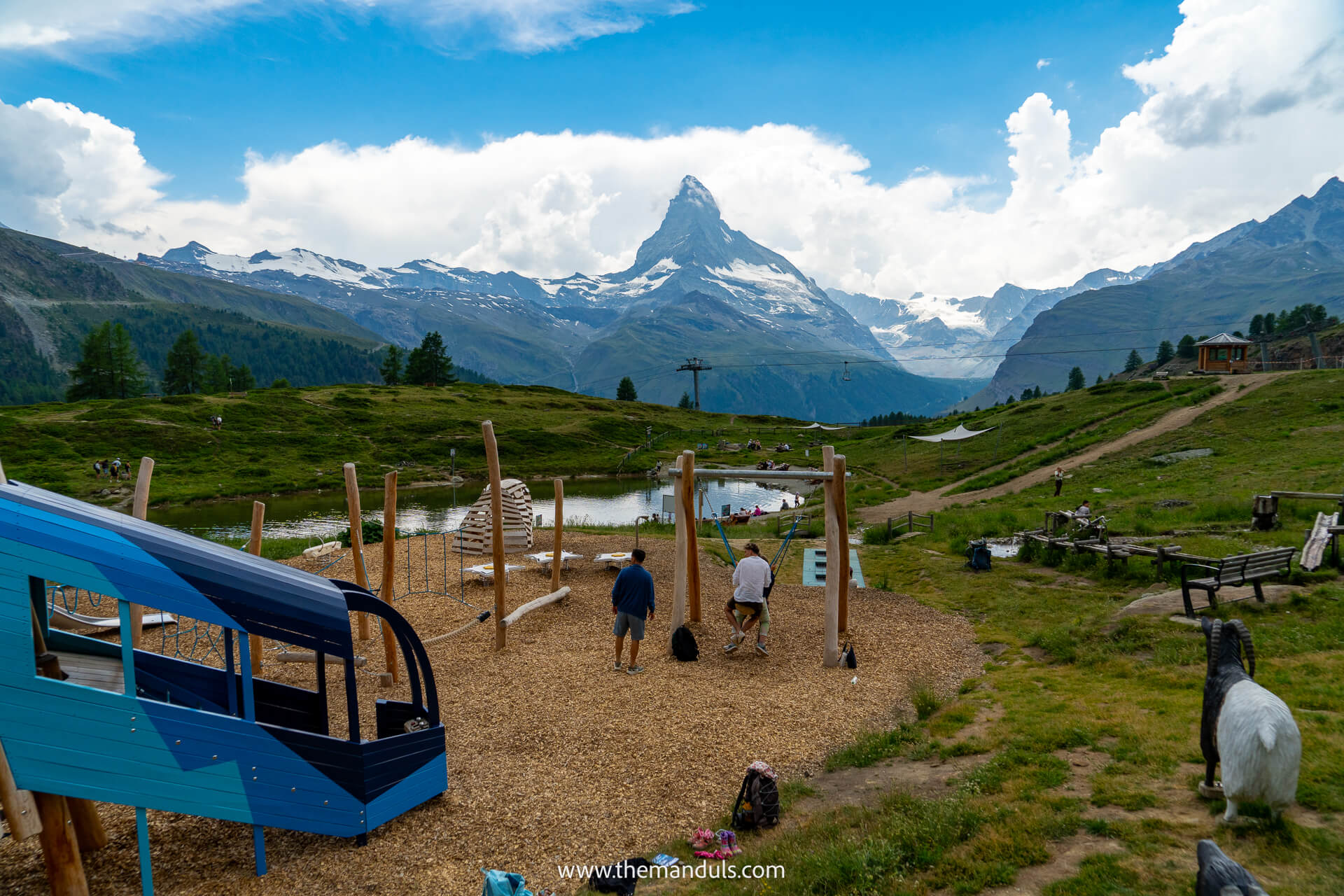
Leisee is still worth spending time at, especially if you are hiking with children. Wolli’s Adventure Park surrounds the lake and includes a playground, climbing features, water play, picnic areas and a wooden raft that can be pulled across the lake.
There is a toilet beside the park, but no mountain hut selling food or drinks directly at the lake. Bring enough water and snacks if you plan to stay here, or continue to the restaurant at Sunnegga mountain station.
Unlike the rest of the 5 Lakes Hike, the area around Leisee is accessible with a stroller.
Leisee to Sunnegga
🕥 Around 15 minutes on foot
The final section climbs from Leisee back to Sunnegga mountain station. After the full hike, even this short uphill finish can feel unnecessary.
Fortunately, there is a small self-service Leisee Shuttle connecting the adventure park with Sunnegga. The shuttle was free during our visit in late June 2026, and we were very happy to use it instead of walking the final climb.
Surprisingly, many hikers continued uphill on foot, so it seems that not everyone realises the shuttle can be used without an additional ticket.
From Sunnegga, take the underground funicular back to Zermatt.
Although our Mapy.com route showed around 3 hours 30 minutes of walking from Blauherd, we would plan at least half a day. With Fluhalp, swimming, food and unhurried stops at the lakes, the hike can easily become a full-day activity.
Facilities on the Trail
The 5 Lakes Hike has better facilities than many mountain trails around Zermatt, but restaurants and toilets are not evenly spaced. We would still carry enough water and at least one snack, especially if you plan to skip Fluhalp or hike outside the main summer season.
All the mountain restaurants we passed were open during our visit in late June 2026. Opening days and hours are seasonal, so check them before planning the hike around a specific lunch stop.
Where to Eat
Fluhalp is the most scenic food stop on the upper part of the hike, but it requires an uphill hike from Stellisee.
Grünsee Mountain Lodge, sits close to Grünsee. It is the most convenient place to stop around the middle of the route.
Later in the hike, Findeln has several well-known mountain restaurants, including Findlerhof, Chez Vrony and @Paradise. These make sense if you want a longer lunch with Matterhorn views.
There is no hut selling food or drinks directly beside Leisee. Your next option is the restaurant at Sunnegga mountain station.
Toilets and Water
Toilets are available at several mountain restaurants, at Leisee and at Sunnegga. Some toilets were free during our visit, while others required payment or were intended for customers.
We also passed several water fountains, but the ones we saw were marked as untreated and not officially suitable for drinking. We refilled from one and had no problems, but we would not recommend relying on them.
Bring enough water or buy more at one of the huts.
Trail Difficulty
The official 5 Lakes Hike is rated as moderate, and we think that is accurate. It is not technically difficult, but it is also not the easy lakeside walk.
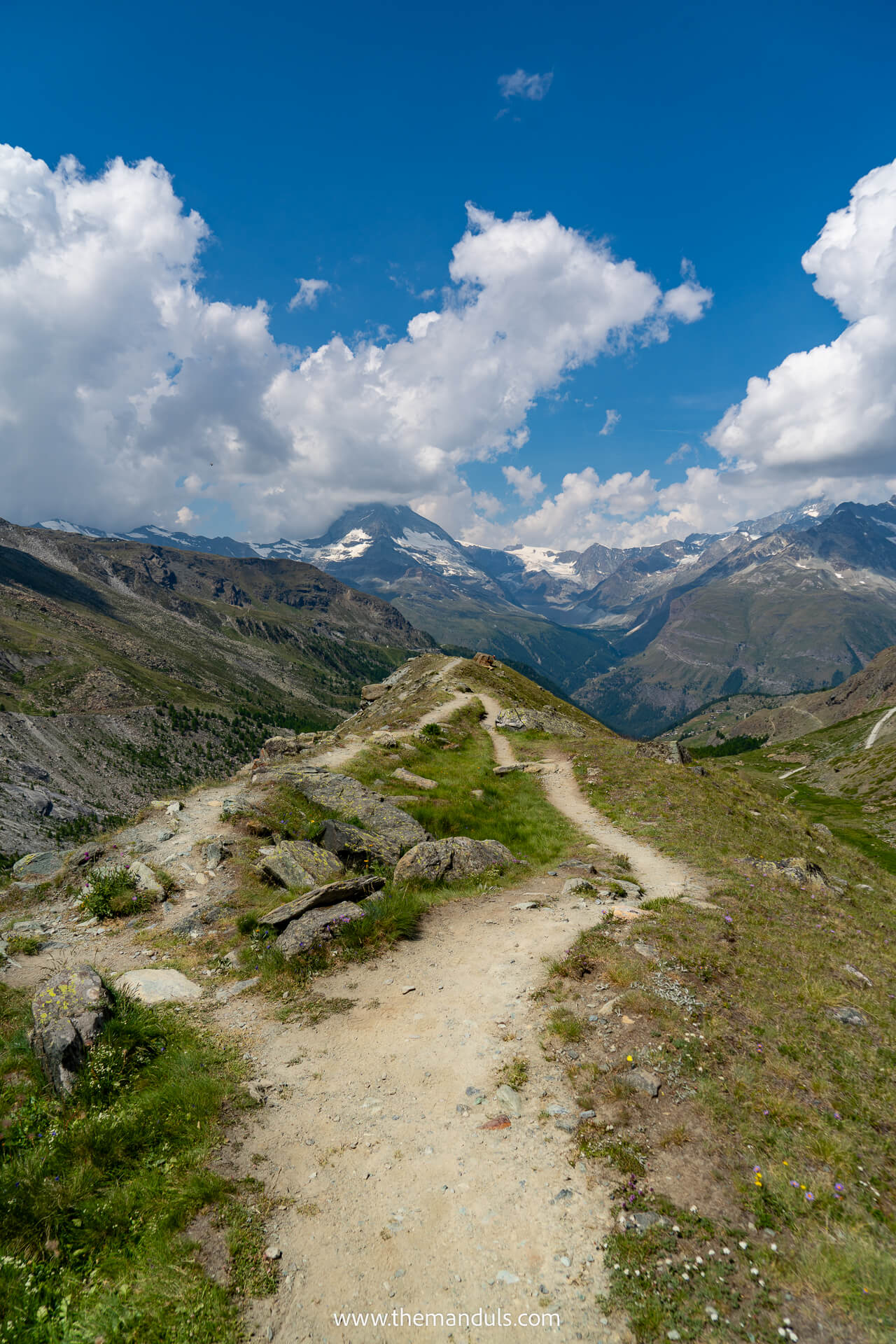
Most of the route follows narrow mountain paths with stones, sand and uneven ground.
There are no exposed sections, chains or difficult scrambling, but you still need to watch your footing, especially on the trail above Grindjisee and during the steeper forest descent after Grünsee.
We wore low barefoot hiking shoes and felt comfortable. Heavy hiking boots are not necessary in dry summer conditions, although shoes with good grip and ankle support may feel more stable if you are not used to rocky mountain trails.
Hiking poles can also help on the steeper downhill sections.
We completed the hike with Ema in a carrier and felt safe throughout. The full trail is not suitable for strollers, but Leisee and Wolli’s Adventure Park can be reached with one from Sunnegga.
We also saw several children hiking the route. Whether they can complete it depends on their fitness and experience, as the distance is the main challenge.
We would not recommend this hike to anyone expecting a short, relaxed stroll. It is a proper half-day mountain hike and can easily take most of the day.
Where to Stay in Zermatt
Zermatt is more spread out than it seems, and location matters when you are planning several early starts in the mountains.
Here are the three hotels we would consider, each for a different reason.
⭐️⭐️⭐️ Le Mirabeau Resort & Spa – Our Top Pick
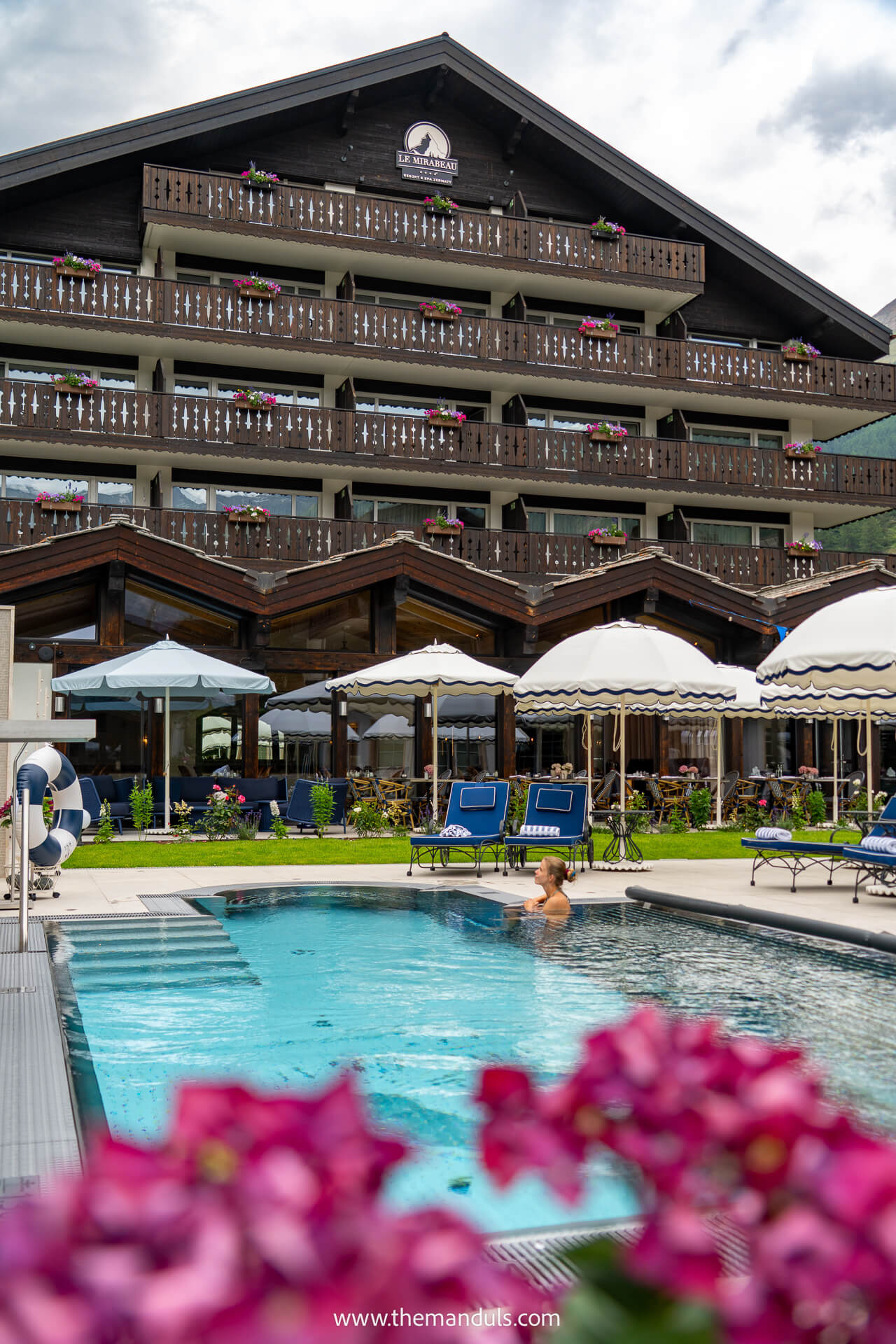
We stayed at Le Mirabeau and would happily choose it again. Our room was incredible, with a direct Matterhorn view that made even the time spent inside feel special.
What made the hotel stand out for us was how well it worked after long hiking days. The Alpine Hideaway Spa has a large indoor pool, Jacuzzi and three different sauna and steam experiences, while the quiet garden courtyard has a saltwater pool and loungers with Matterhorn views.
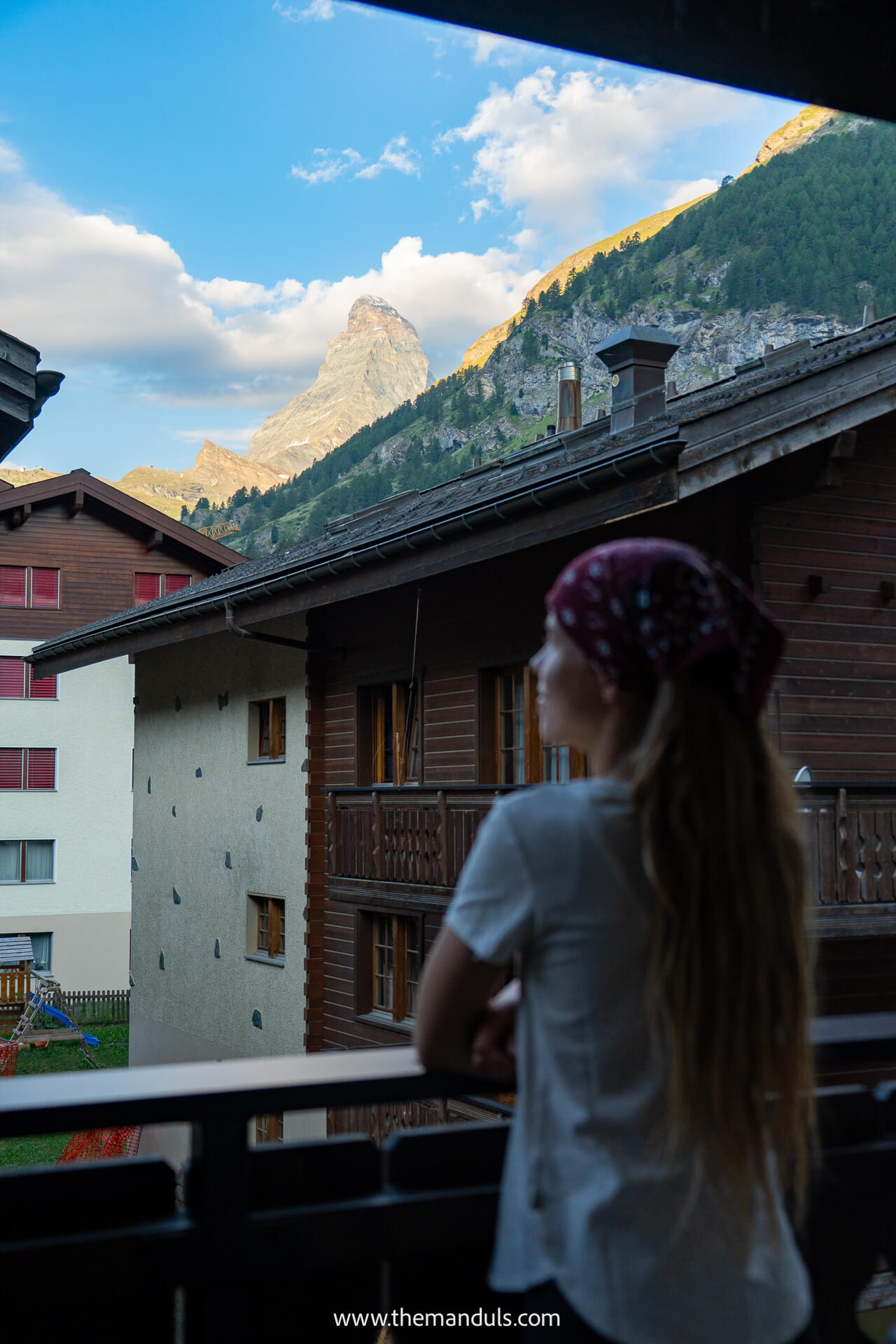
The hotel is also only a few minutes from Zermatt railway station and the Gornergrat Railway, which makes arrivals, departures and early starts much easier.
Best for: A comfortable stay with a strong spa, Matterhorn views and an easy central location.
👉 Check availability and current prices →
⭐️⭐️ Hotel Antares – Best for Matterhorn Glacier Paradise Access
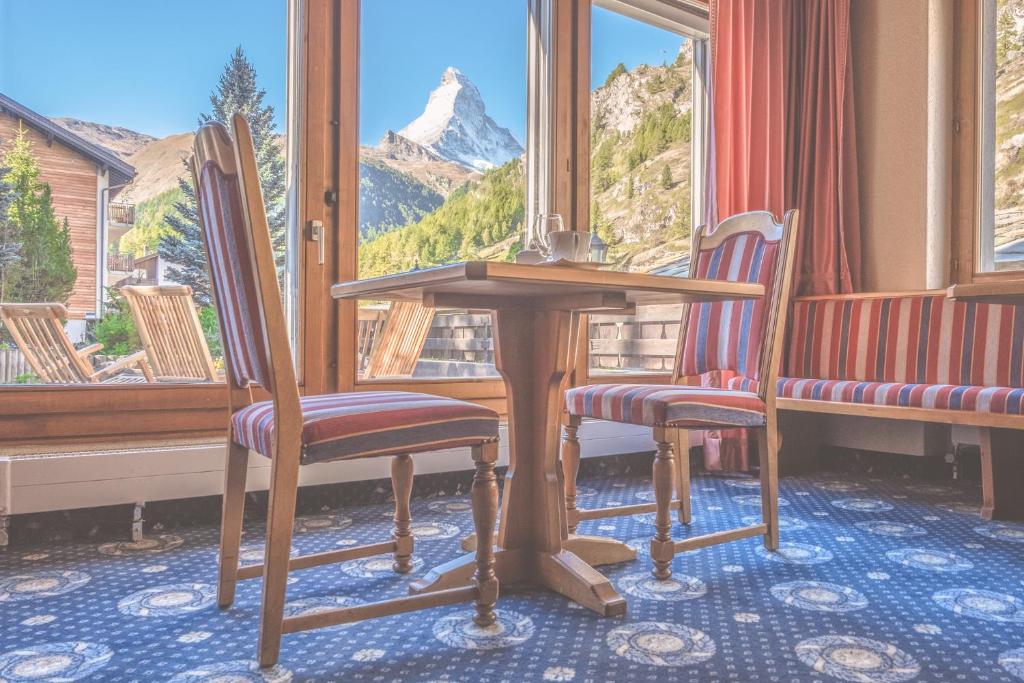
Hotel Antares if hiking is only around 50 metres from the Matterhorn Express station, making it especially convenient for Matterhorn Glacier Paradise, Schwarzsee and trails on that side of Zermatt. The village centre is still reachable on foot within a few minutes.
The hotel has a more traditional, classic style, with warm cherry-wood interiors. Its superior rooms and junior suites have balconies facing the Matterhorn, while cheaper economy rooms face the opposite direction.
Best for: Hikers who want to stay steps from the Matterhorn Express cable car.
👉 Check availability and current prices →
⭐️ Hotel Bahnhof – Best Budget-Friendly Option
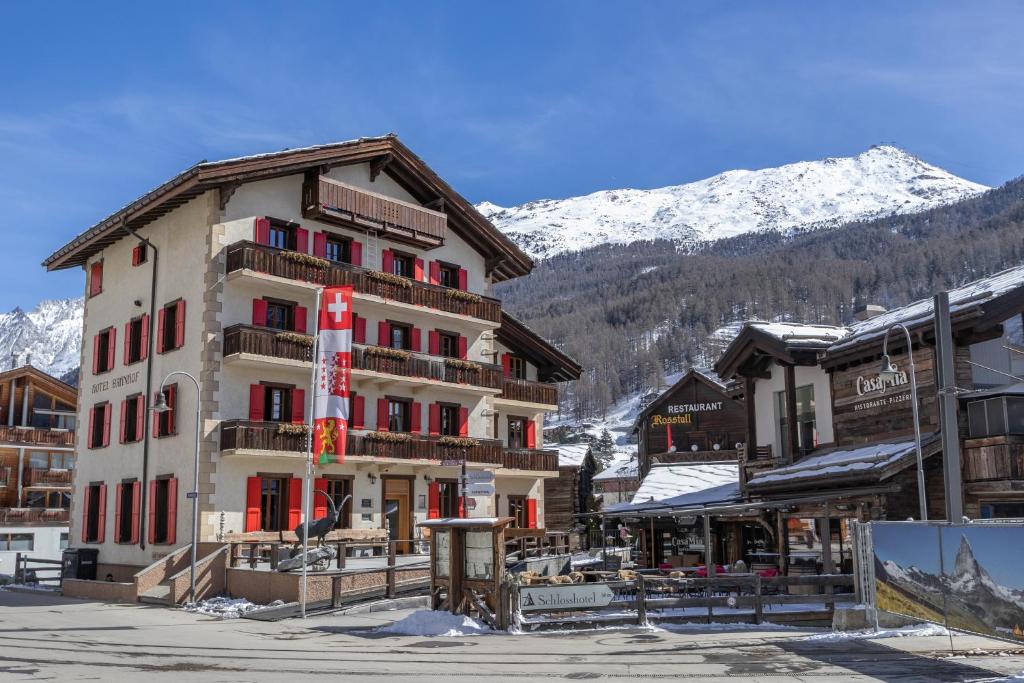
Hotel Bahnhof is one of the most practical lower-cost stays in central Zermatt. It sits directly beside the railway station.
The hotel offers a mix of private rooms, family rooms and dormitories, with either private or shared bathrooms. There is no breakfast, but guests can use the shared kitchen, which is a useful way to reduce food costs in an expensive destination like Zermatt.
This is a much simpler stay than the other two, but that is the point. We would choose it if the priority is an excellent transport location and spending less on accommodation rather than having a spa or full hotel service.
Best for: Budget travellers who value the train-station location and self-catering facilities.
👉 Check availability and current prices →
FAQs
If the Sunnegga funicular is operating, you can start the hike in Sunnegga and walk to Blauherd via the Marmot Trail. This adds around 1 hour, 1.9 km and 290 m of ascent.
The lakes, mountain huts, forests and villages still make the route varied, but the Matterhorn views are a major part of the experience.
If the mountain is only partly covered, we would still do the hike because conditions can change quickly. If the Matterhorn is completely hidden and heavy rain or thunderstorms are forecast, we would save the trail for another day.
It is possible to hike from Zermatt, but this adds a significant amount of climbing and changes the route into a much longer and more demanding mountain day.
For most hikers, we recommend taking at least the funicular to Sunnegga. Starting there already saves money compared with travelling to Blauherd while keeping the full route manageable. You can skip the return Sunnegga trip and hike down from Findeln instead.
Final Thoughts
The 5 Lakes Hike is one of the most varied trails we did in Zermatt.
We would recommend the official route from Blauherd if you want an easier day with more time at the lakes. Starting in Sunnegga and hiking up via the Marmot Trail is a good budget alternative.
Not every lake looked as photogenic as we expected, and perfect Matterhorn reflections depend heavily on wind and weather.
Even so, the trail is still worth doing for the variety alone.