
This article contains affiliate links. Learn more in our affiliate disclosure.
Osaka was the last stop on our Japan itinerary, and it felt completely different from both Tokyo and Kyoto. It’s more laid-back, a little rougher around the edges, and far more playful. Some areas were still busy (we visited during fall foliage, so we expected that), but the city surprised us in the best way.
Endless shopping streets, maid cafés, the colorful chaos of Dotonbori and Shinsekai, an unexpectedly relaxing Japanese head spa, and easy day trips to places like Nara or Koyasan — all of this made our time in Osaka genuinely memorable.
After spending four full days exploring the city, we’ve put together this list of the best things to do in Osaka, based purely on our own experience, so you can focus on what’s actually worth your time.
If you’re still deciding where to base yourself, we’ve also put together a detailed guide on where to stay in Osaka, covering the areas and hotels we’d genuinely book again.
16 Best Things to Do in Osaka
Map of all the attractions
1. Explore Dotonbori During a Day and Night
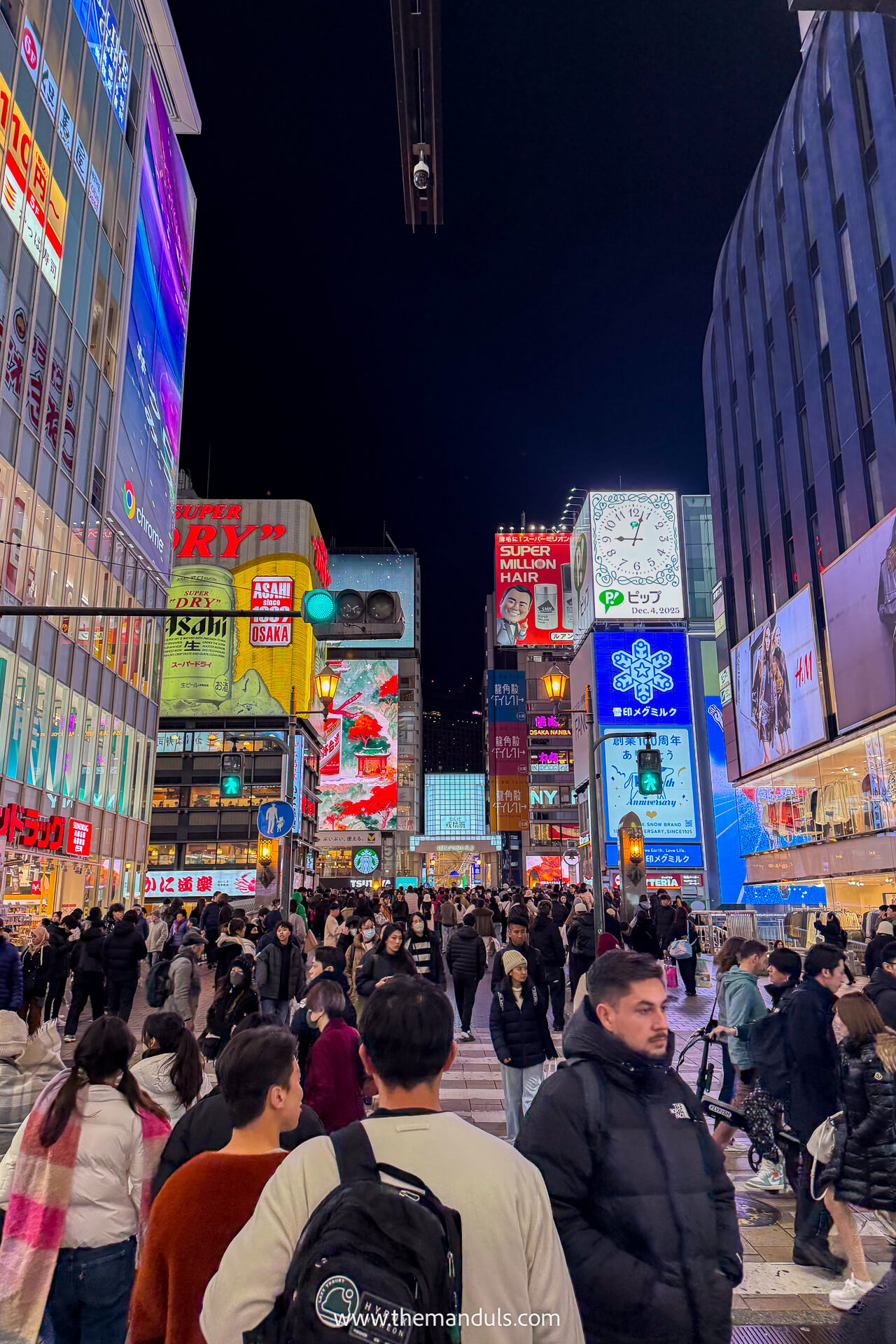
Dotonbori is one of those places you’ll almost certainly end up visiting — and it really does feel different depending on the time of day. During the day, there are fewer people, but it’s still fairly busy. Shops are open, the streets are lively, and it’s easier to look around without constantly stopping in crowds.
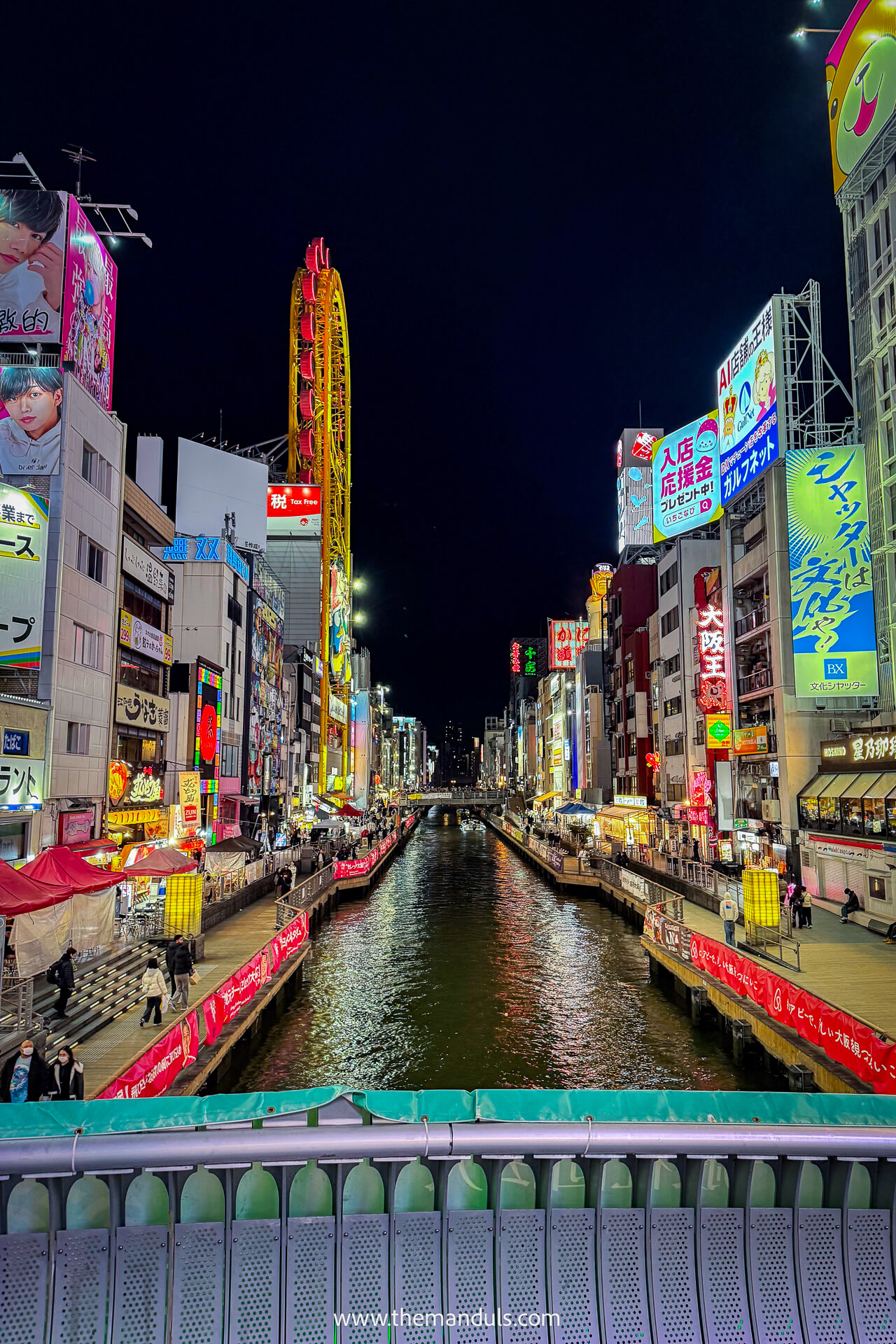
At night, everything changes. The streets get packed, neon signs start glowing, and the whole area feels more playful and over-the-top. It’s louder, brighter, and much more chaotic — in a fun way. Walking through Dotonbori after dark feels like stepping into a different version of Osaka.
One place we genuinely recommend here is Sushiro. It’s a conveyor-belt sushi restaurant that’s cheap, fast, and surprisingly good. Ordering everything on the screen makes the whole experience fun and easy, even if it’s your first time in Japan. We came back like 2-3 times and always left with a full belly.
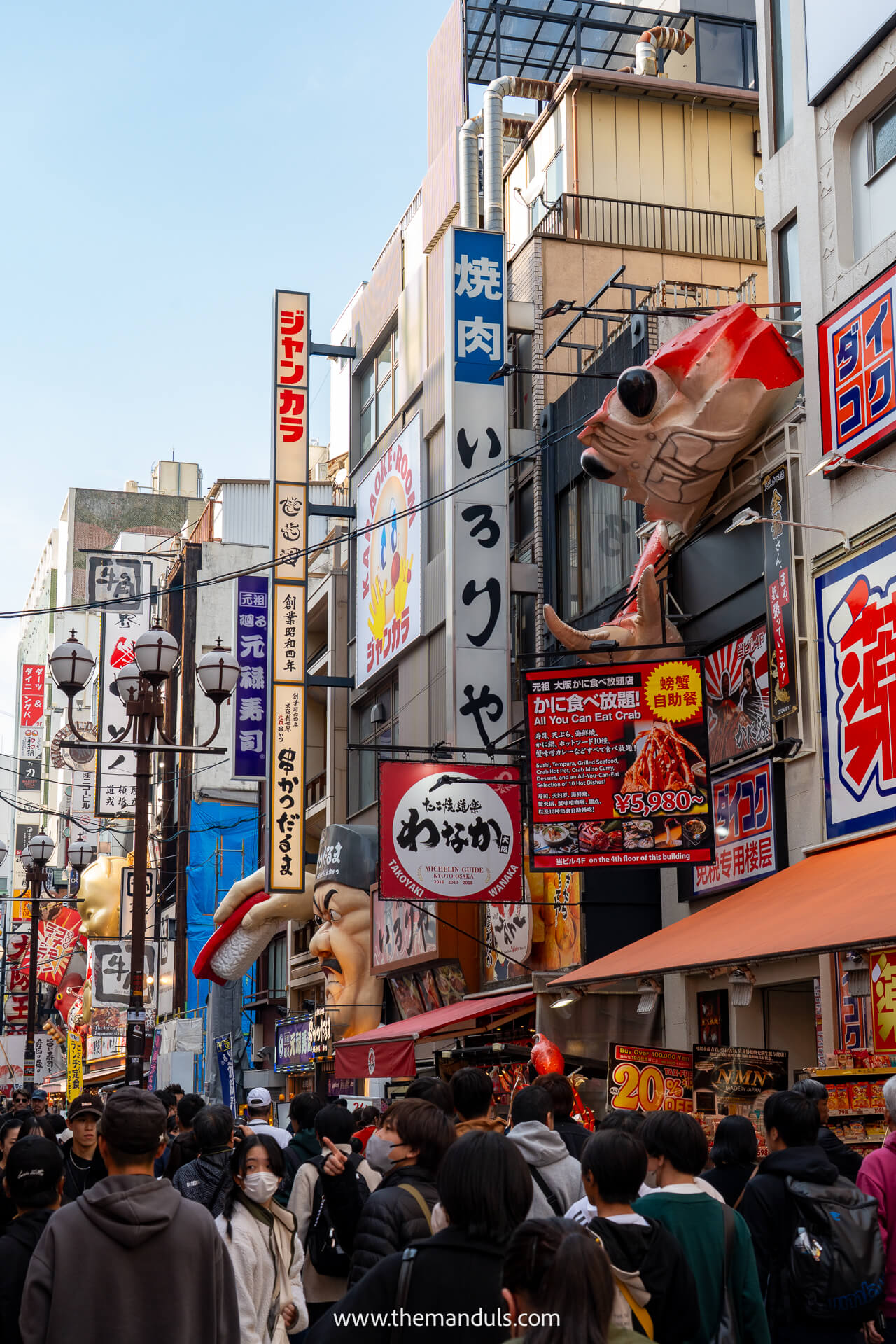
Dotonbori is packed with street food stalls, shops, arcades, and plenty of weird little surprises. It’s lively, chaotic, and unapologetically touristy — and that’s exactly why we loved it and why we think it’s a must for anyone visiting Osaka.
2. Dotonbori River Cruise
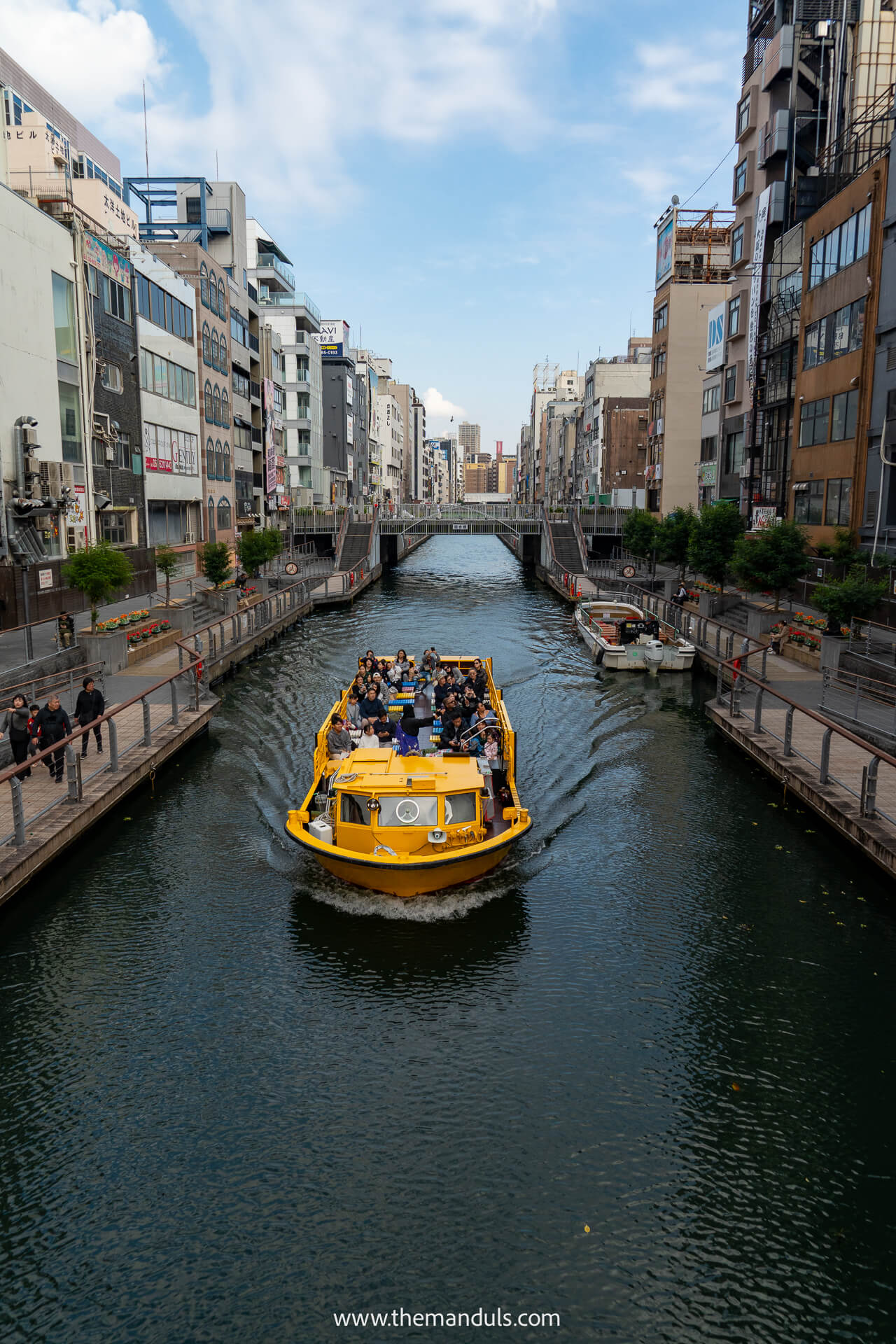
If you want to see Dotonbori from a different perspective without dealing with the crowds the whole time, we recommend this Dotonbori River Cruise. It’s an easy, low-effort experience that fits nicely into an evening walk around the area.
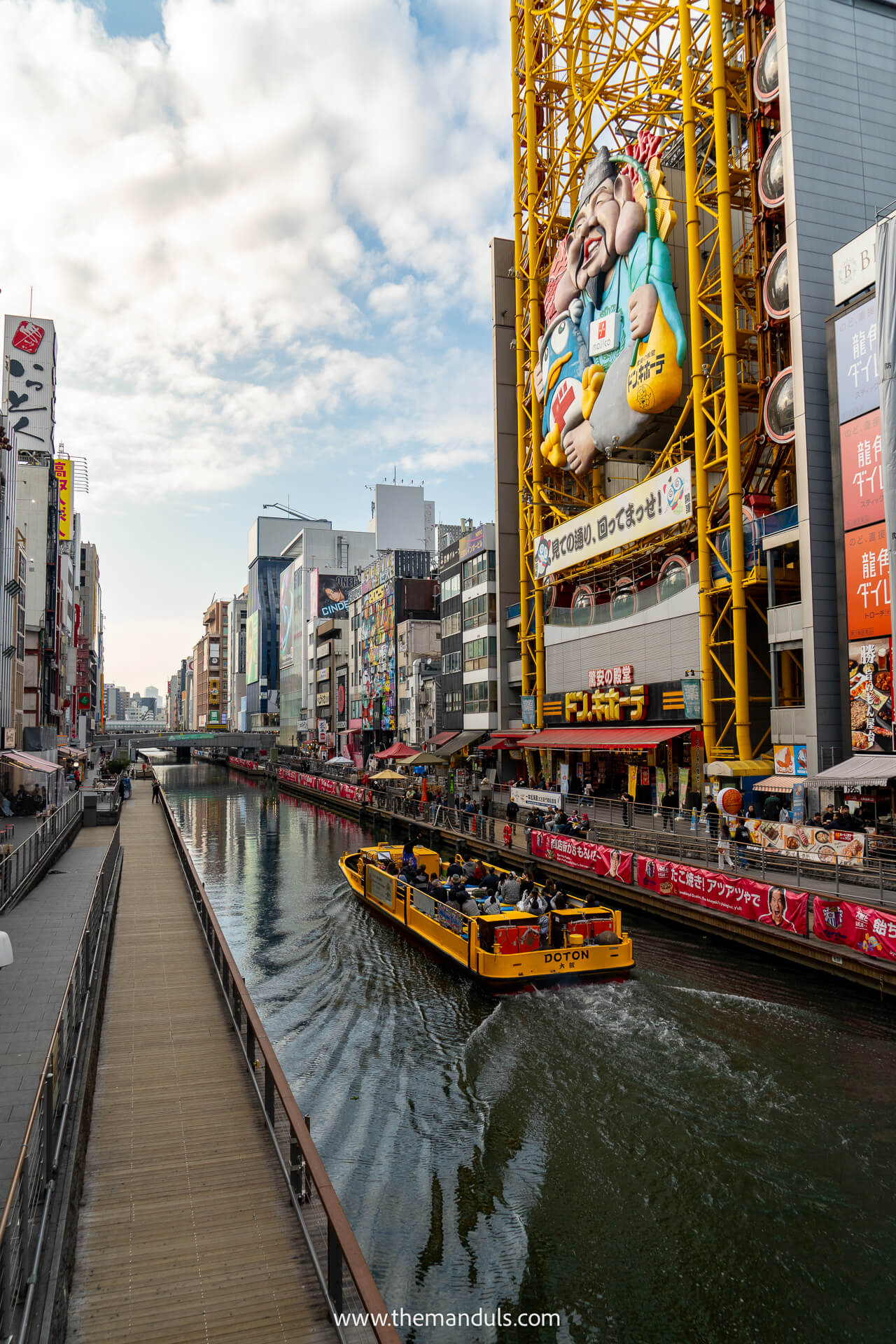
The boat takes you right through the heart of Dotonbori, passing under bridges and alongside the famous neon signs — including the iconic Glico sign. It’s a surprisingly relaxing break from the busy streets above.
We liked that it doesn’t require much planning or time commitment. It’s short, cheap, and straightforward.
Book your Dotonbori River Cruise here with free cancellation up to 24 hours in advance.
3. Day trip to Nara Park
This was high on our list of the best things to do in Osaka — and it ended up being so much fun. We spent around four hours walking around Nara Park, and honestly, the time flew by.
We visited Nara Park during autumn, and it was absolutely magical — and from what we’ve seen, spring during cherry blossom season is just as special.
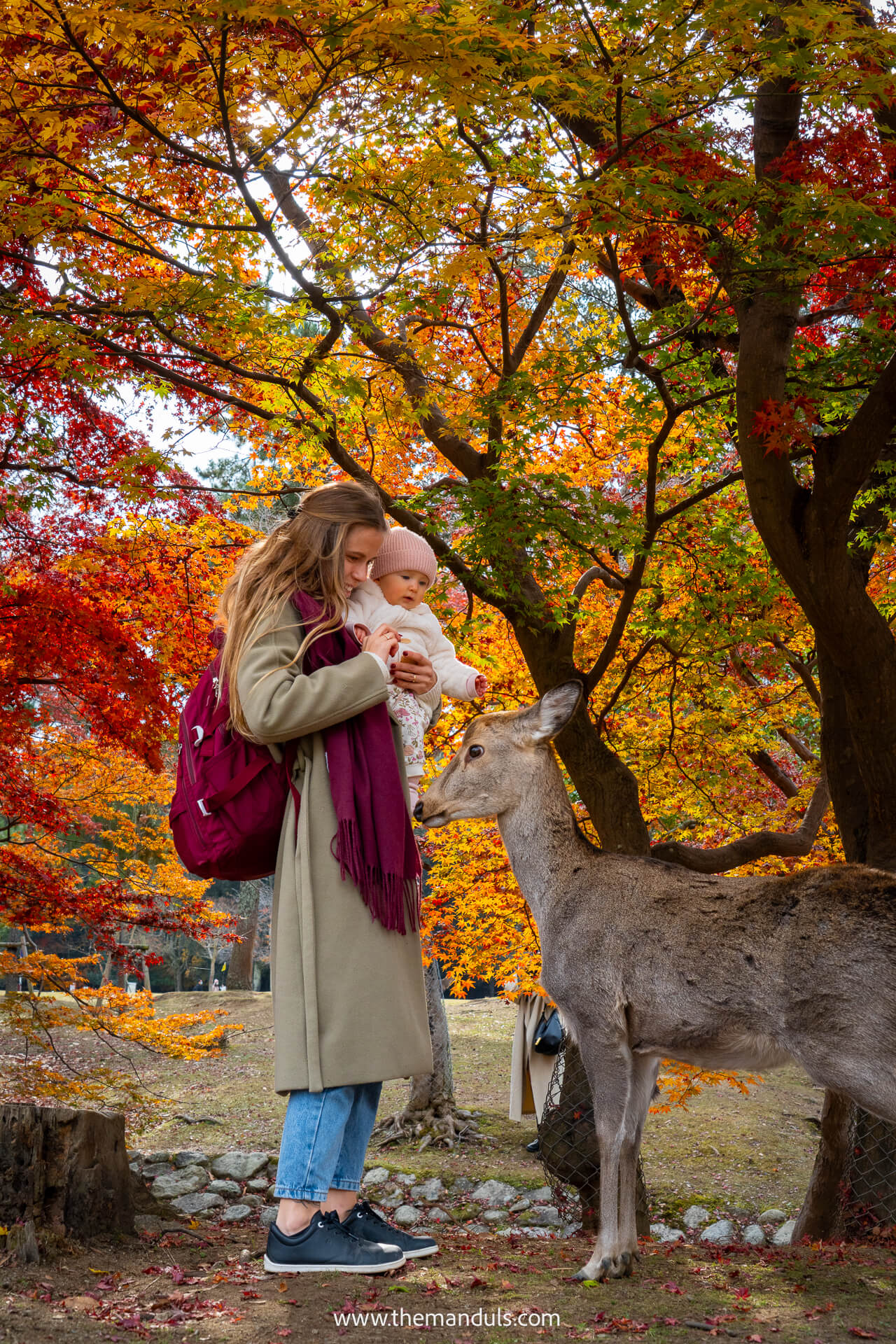
The main attraction here is, of course, the Japanese deer. They’re everywhere, and you definitely don’t need to search for them. Right after arriving by train from Osaka, we spotted stalls selling deer rice crackers and immediately bought a few packs. Within seconds, we were surrounded.
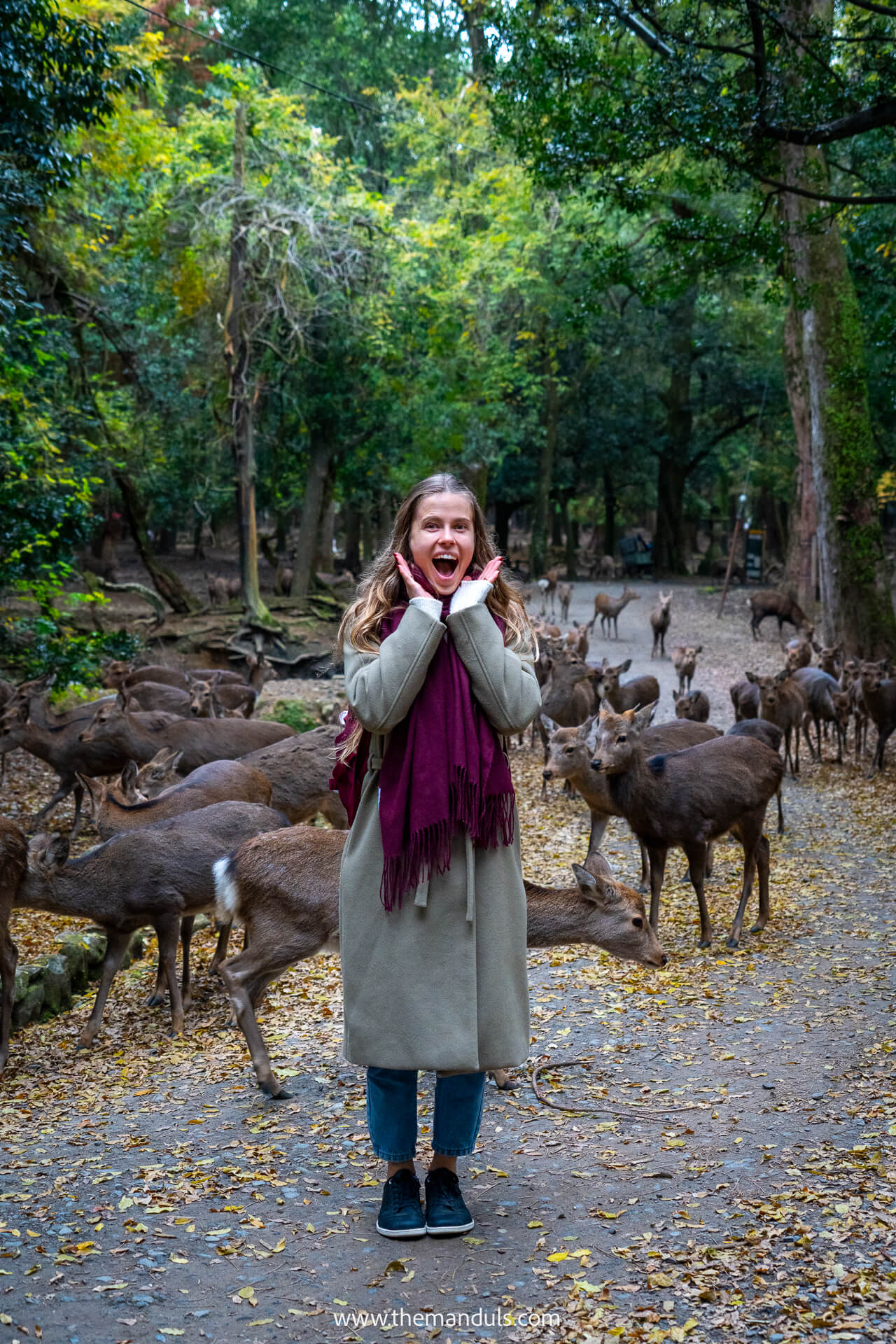
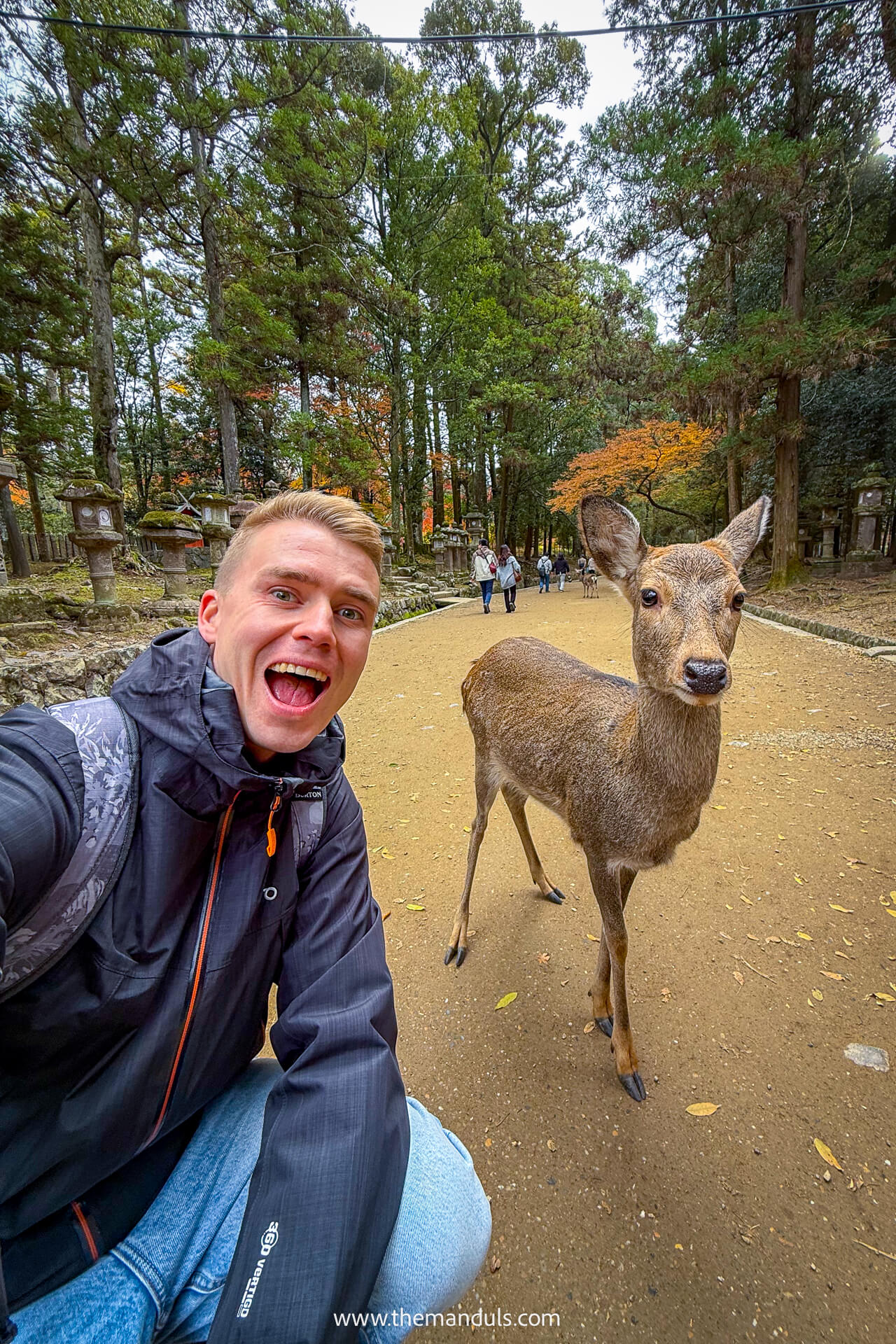
The deer are used to being fed and are surprisingly confident. Most are friendly, but some are also… a bit annoying. A few tried to bite us lightly or bump into us from behind — nothing painful or dangerous, just their not-so-subtle way of asking for food. It caught us off guard more than once and definitely made us laugh.
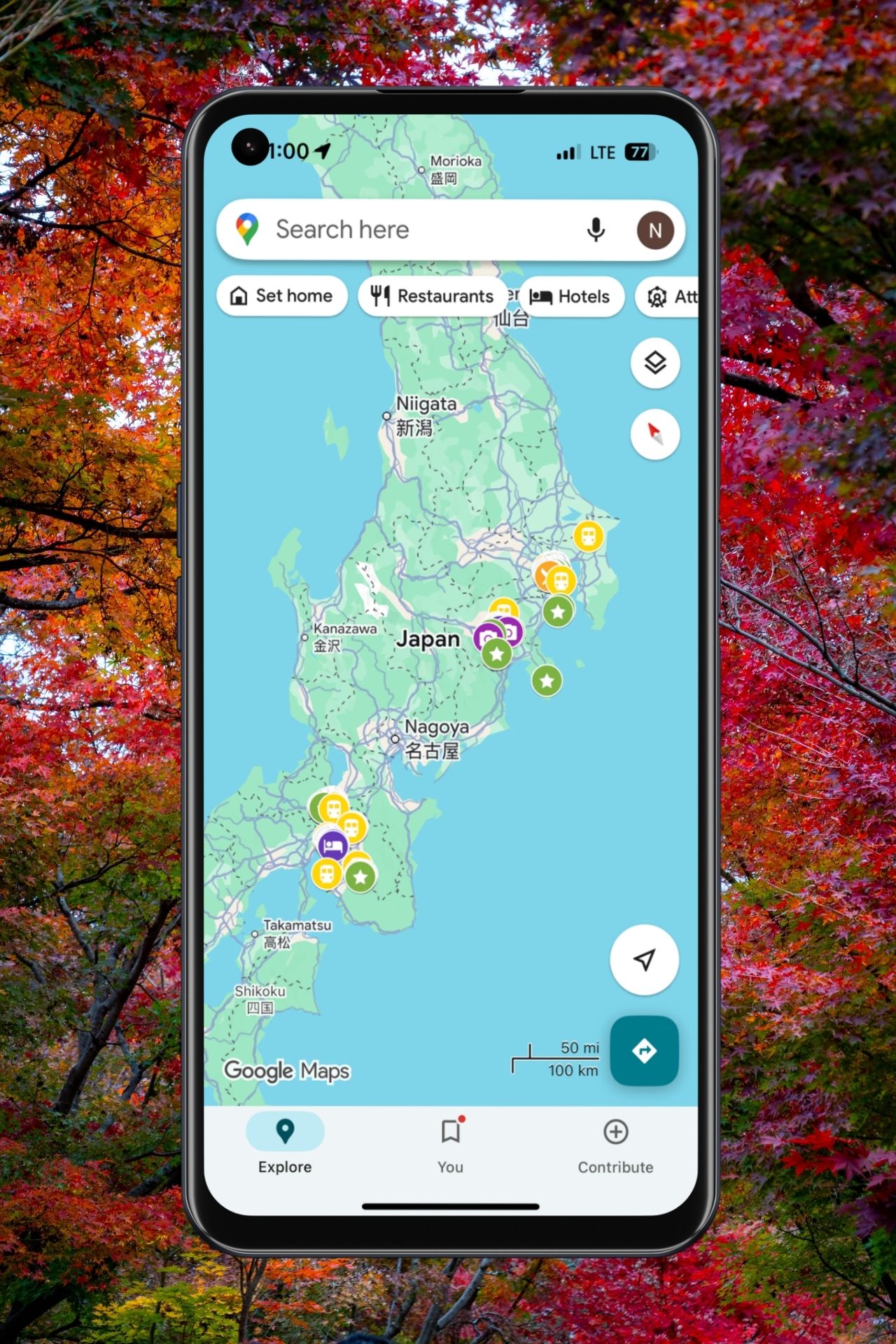
Our Japan Google Maps
Built from our real trips across Japan — only places we actually visited and loved.
No tourist traps. No random saves. Just a ready-to-use map that saves you hours of research.
219 handpicked spots, including:
📍 Highlights & hidden gems
🍜 Restaurants we’d go back to
🏨 Areas & hotels we’d book again
🗺️ Stops that fit into real, logical itineraries
4. Visit Kuromon Market
Kuromon Market is one of the best places in Osaka to snack your way through the city. It’s a long, covered shopping street packed with food stalls selling everything from fresh seafood and grilled skewers to fruit, sweets, and local specialties. The vibe is lively but a bit more relaxed than Dotonbori.
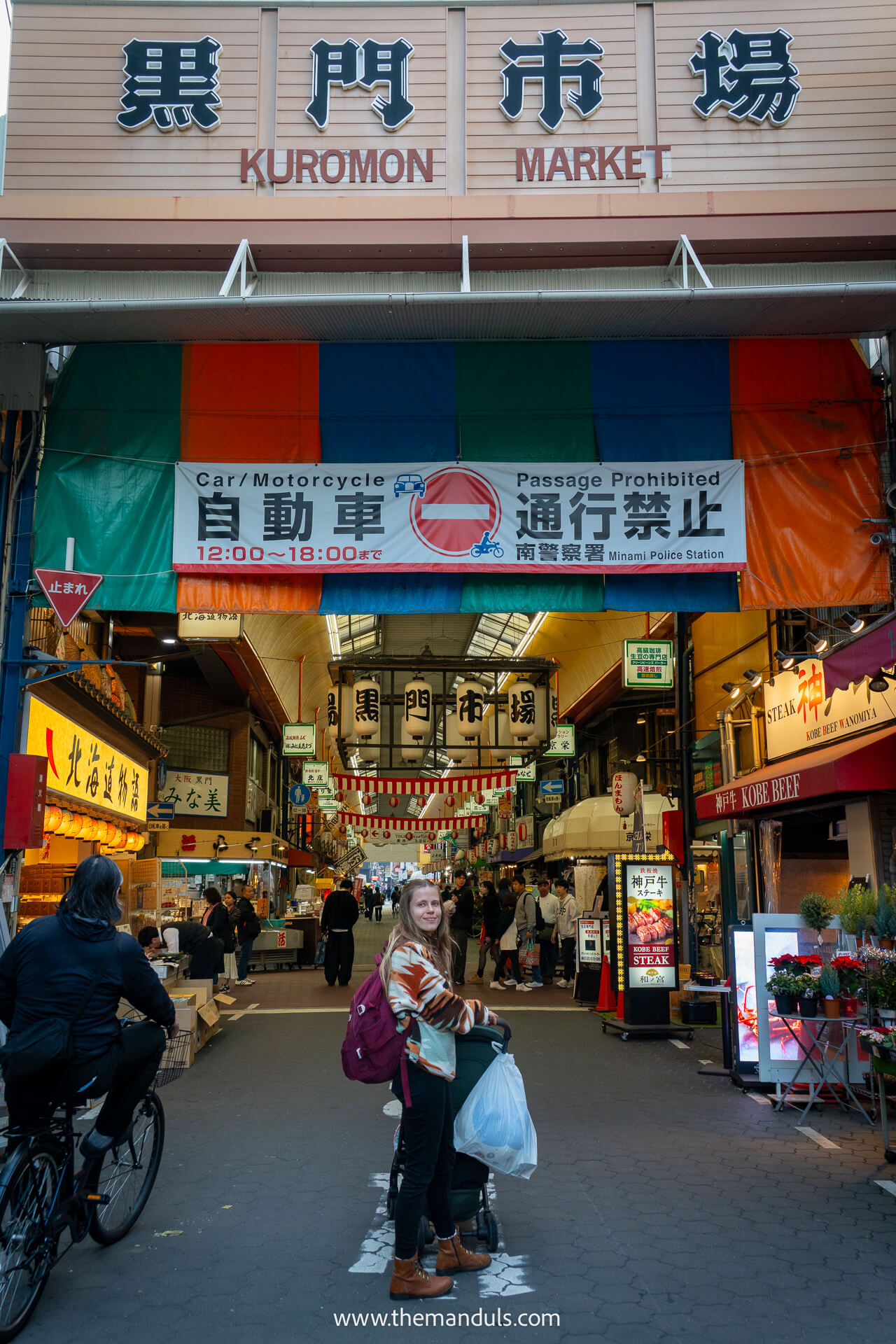
We didn’t treat this as a proper lunch spot — and we wouldn’t recommend doing so either. Prices vary a lot, and some stalls are clearly aimed at tourists. That said, it’s perfect for trying a few things, watching vendors prepare food right in front of you, and getting a feel for Osaka’s food culture.
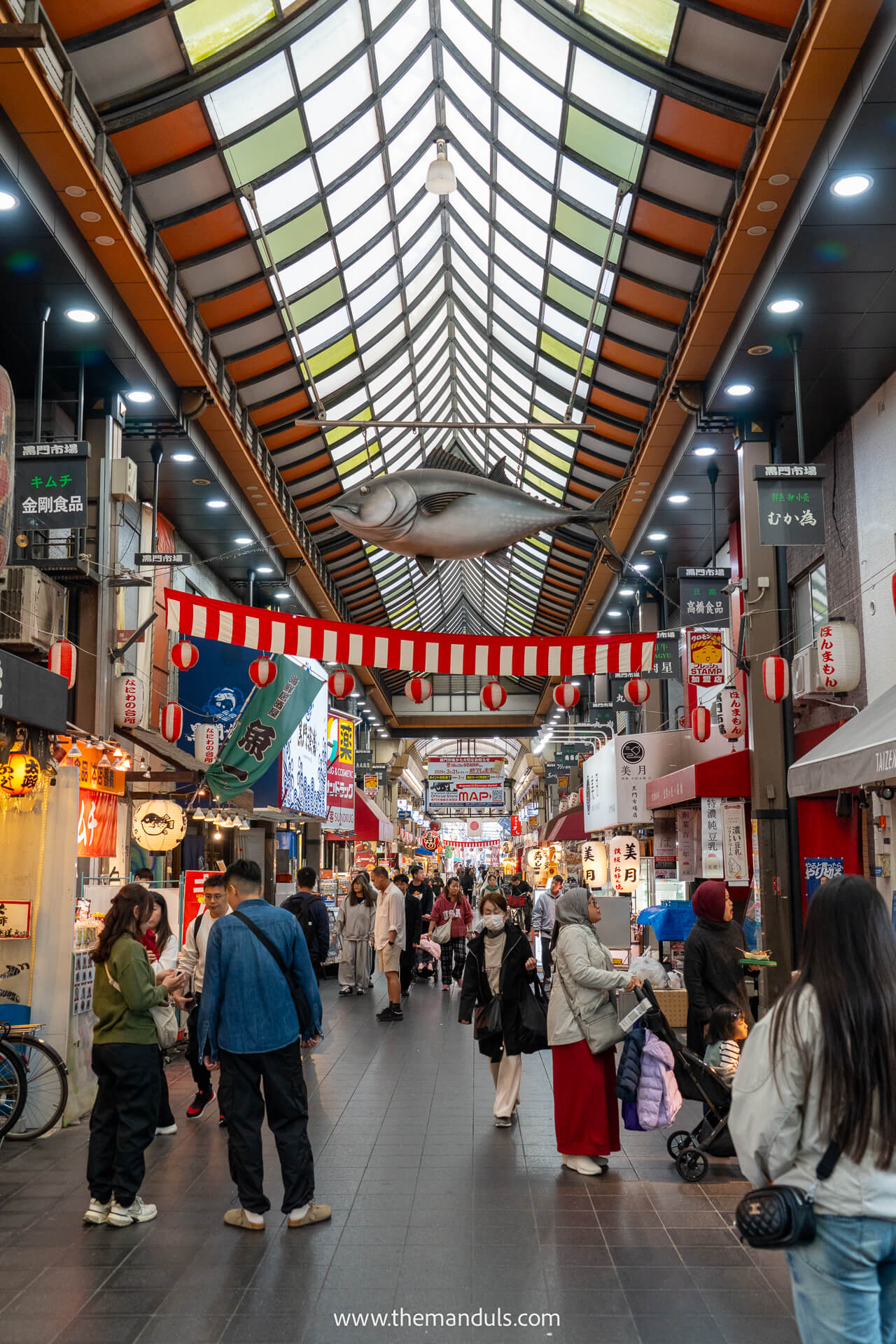
Walking the full length of the market doesn’t take long, but it’s easy to spend an hour or more stopping for small bites. We liked it most earlier in the day, before it got too busy and before popular items sold out.
It’s not the cheapest place to eat, but as a food-focused stop between sightseeing, Kuromon Market is absolutely worth it.
In a hurry?
These are our top hotels in Osaka we’d book again
⭐️⭐️⭐️ Citadines Namba Osaka (our top pick) – A reliable mid-range hotel right in Namba with spacious studio-style rooms, and an easy walk to Dotonbori.
👉 See prices & availability →
⭐️⭐️ Osaka Marriott Miyako Hotel – Luxury hotel in Tennoji with high-floor rooms and sweeping city views. Ideal if you want comfort, space, and a calmer area.
👉 See prices & availability →
⭐️ Lespedeza Osaka – A simple, budget-friendly option in Tennoji offering basic comfort and quieter nights.
👉 See prices & availability →
5. Visit Osaka Castle
Osaka Castle is one of those places where it’s easy to slow down and take a breather from the city’s busier neighbourhoods.
The castle itself is impressive, but we enjoyed walking around the park rather than heading inside. The wide paths, moats, bridges, and open green spaces make it a really pleasant area to explore at your own pace. We visited in autumn, and the seasonal colours made the walk even better.
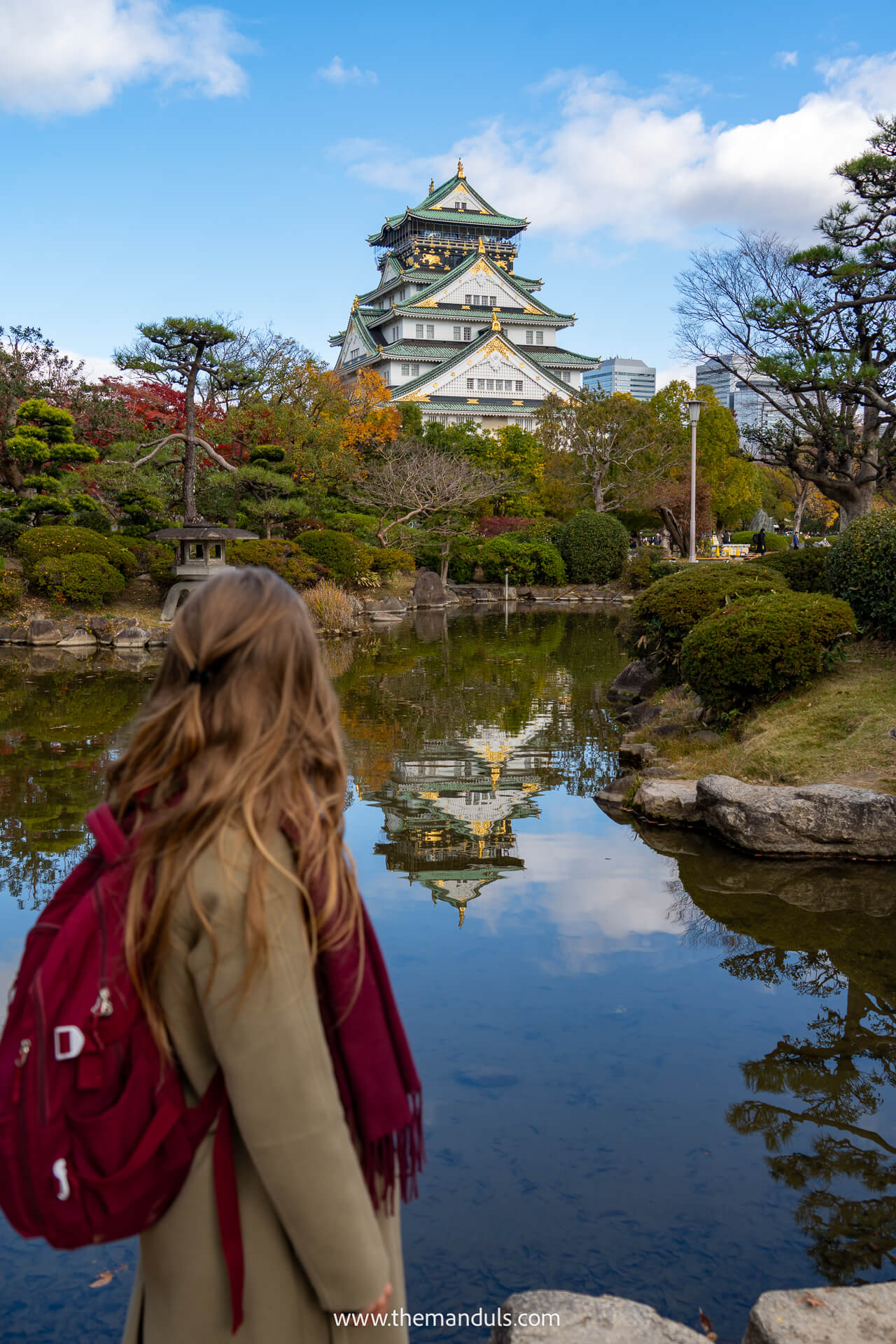
That said, if you’re into history, architecture, or museums, going inside Osaka Castle is definitely worth considering. The interior focuses heavily on the city’s history and offers elevated views over the park and skyline.
Book your Osaka Castle skip-the-line ticket now and beat the queue.
Practical tips:
- The park is free and open all day
- Allow at least 1–2 hours for a relaxed walk
- Best visited in autumn or spring
If you want a calmer side of Osaka with plenty of space to wander, Osaka Castle is an easy and enjoyable stop.
Official website: https://www.osakacastle.net
6. Experience Retro Osaka in Shinsekai
Shinsekai, which means “New World,” is one of the most distinctive neighborhoods in Osaka and feels very different from the rest of the city. The area dates back to 1912, when it was developed with inspiration from Paris and New York, and that mix of ambition and history is still visible today.
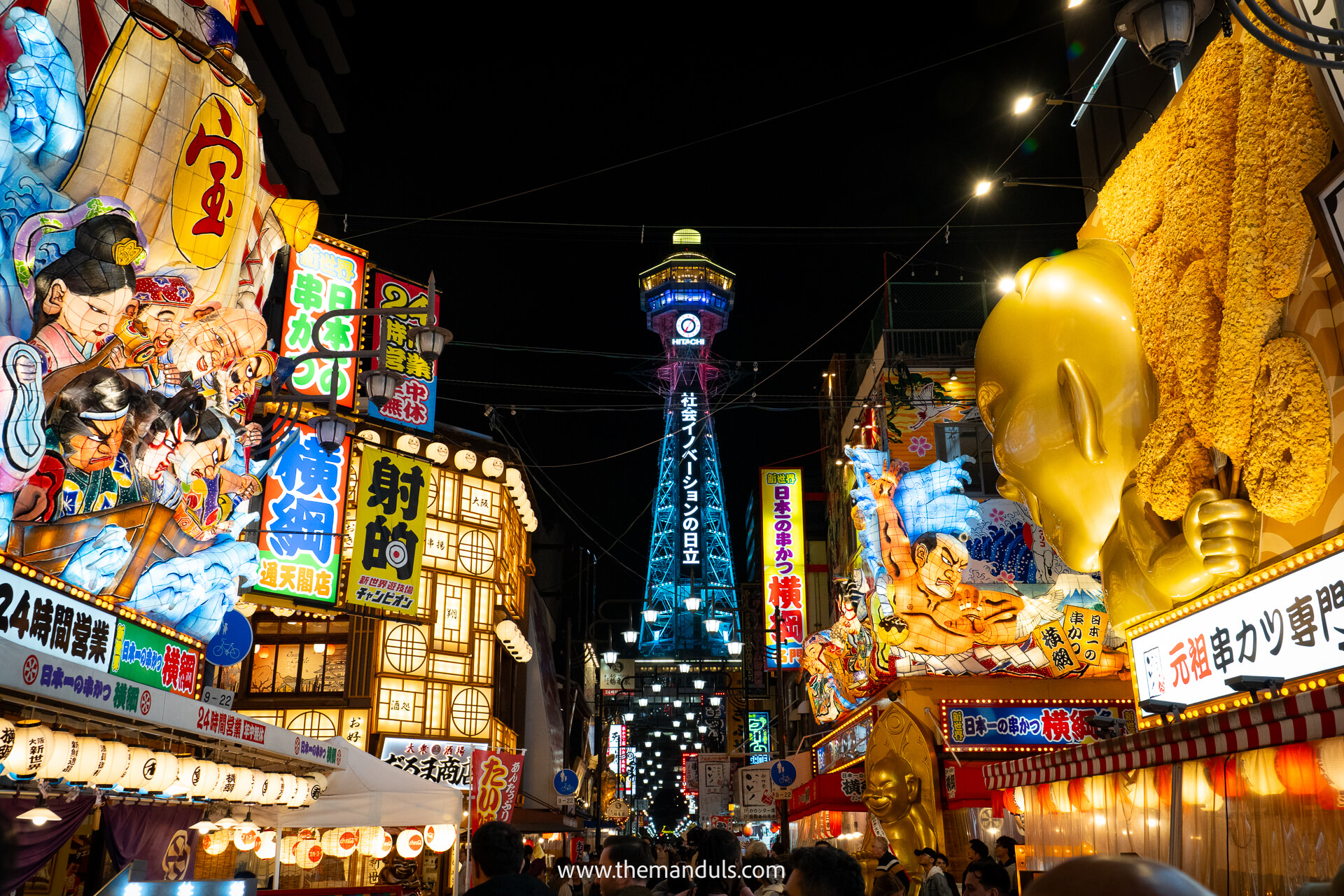
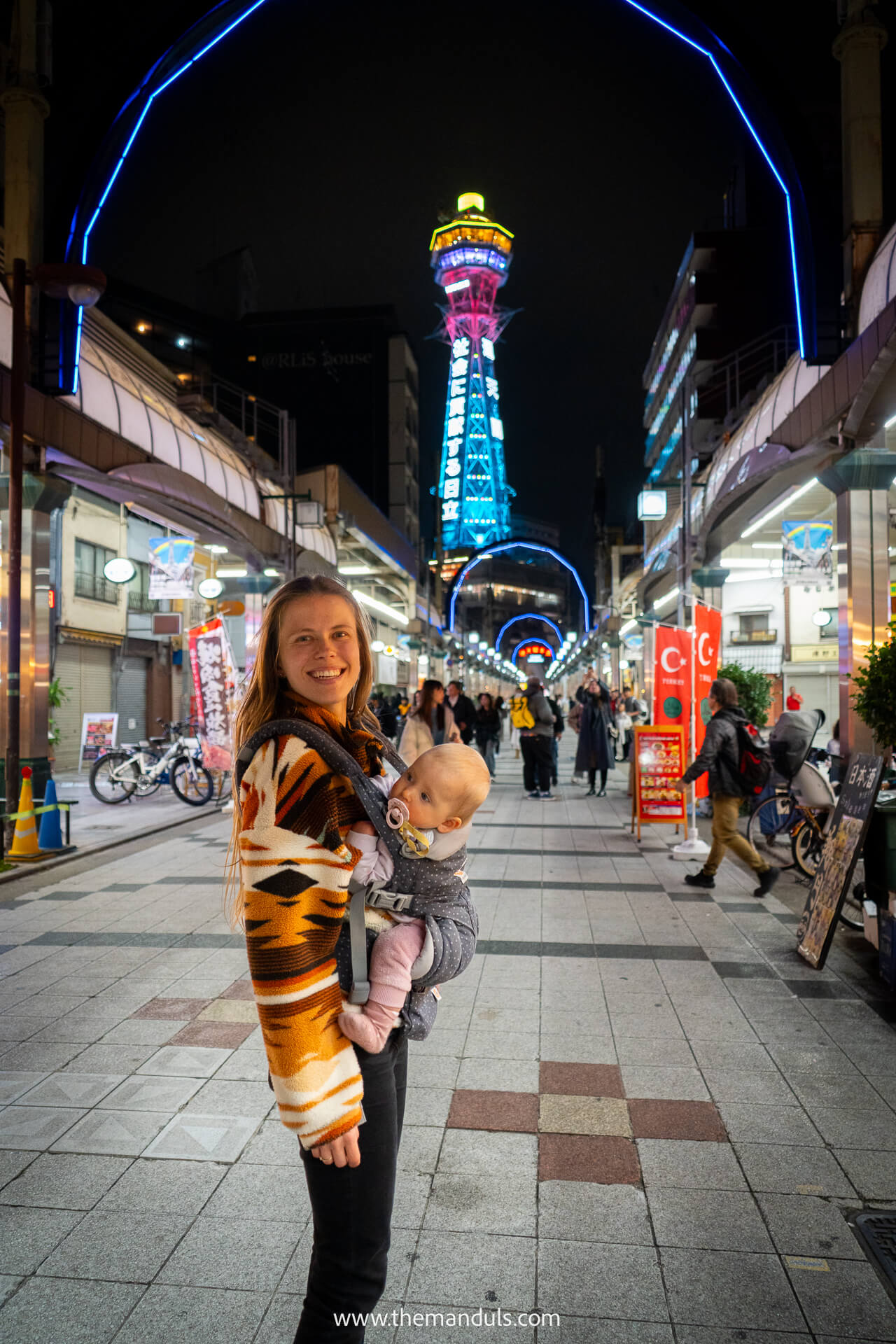
Walking around Shinsekai, you’ll see flashy signs, old-school game centers, and small traditional restaurants lining the streets. The area is best known for the Tsutenkaku Tower, which has become its symbol, and for Janjan Yokocho, a narrow alley packed with casual restaurants and local life.
Food plays a big role here, especially kushikatsu, the local specialty of deep-fried skewers that you’ll see almost everywhere.
We recommend visiting in the evening, when all the neon lights are lit up and the area looks absolutely amazing. Around 1 to 2 hours is definitely enough to explore its streets and corners, with a few food stops along the way.
7. Enjoy the View from Umeda Sky Building

Entrance Fee: 2000 JPY

Opening hours: 9:30 AM to 10:30 PM
Somehow, we completely missed this place and only realized after our trip had ended — which was slightly painful. If you’re looking for the best views over Osaka, this is the spot to go for.
The main draw is the open-air Floating Garden Observatory, which gives you wide, unobstructed views across the city. Unlike many observation decks, it feels open and spacious rather than enclosed, which makes a big difference.
Sunset is considered the best time to visit, when the city slowly lights up, and Osaka stretches out in every direction below you.
Even from the outside, the building is worth a look, with its two towers connected at the top — it’s one of Osaka’s more unique pieces of architecture. If views are high on your list, this is one place you shouldn’t skip.
If you want a stress-free way to enjoy Osaka’s skyline, this Umeda Sky Building Official E-Ticket is a solid choice — it gives you skip-the-line access to the Kuchu Teien Observatory with 360° panoramic views from above.
Official website: https://www.skybldg.co.jp/en/
Book your Umeda Sky Building Official E-Ticket with free cancellation up to 24 hours in advance.
8. Play Arcades Around Namba
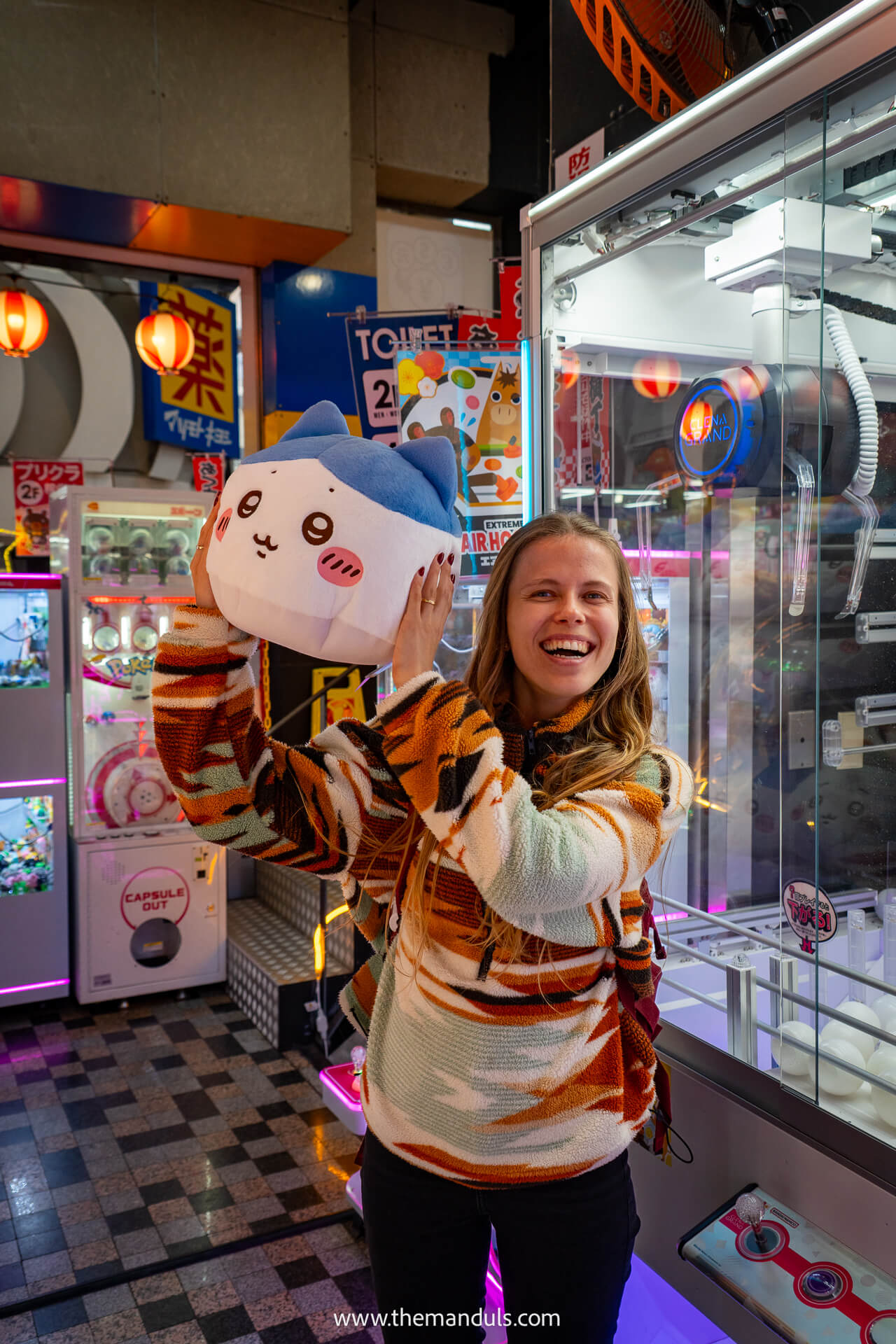
Namba is one of the best areas in Osaka to experience Japan’s arcade culture properly. Multi-floor game centers are everywhere, packed with claw machines, rhythm games, racing simulators, and plenty of games you’ll probably see for the first time.

After losing many times in Tokyo and not winning a single thing, we decided to change our strategy here — and it actually worked.
The key is patience. Since these machines need to make money, watching one machine being played 10–15 times makes a big difference. After enough money is spent, the crane often gets slightly stronger in certain positions, and that’s when your chances improve. That’s how we finally won for the first time.
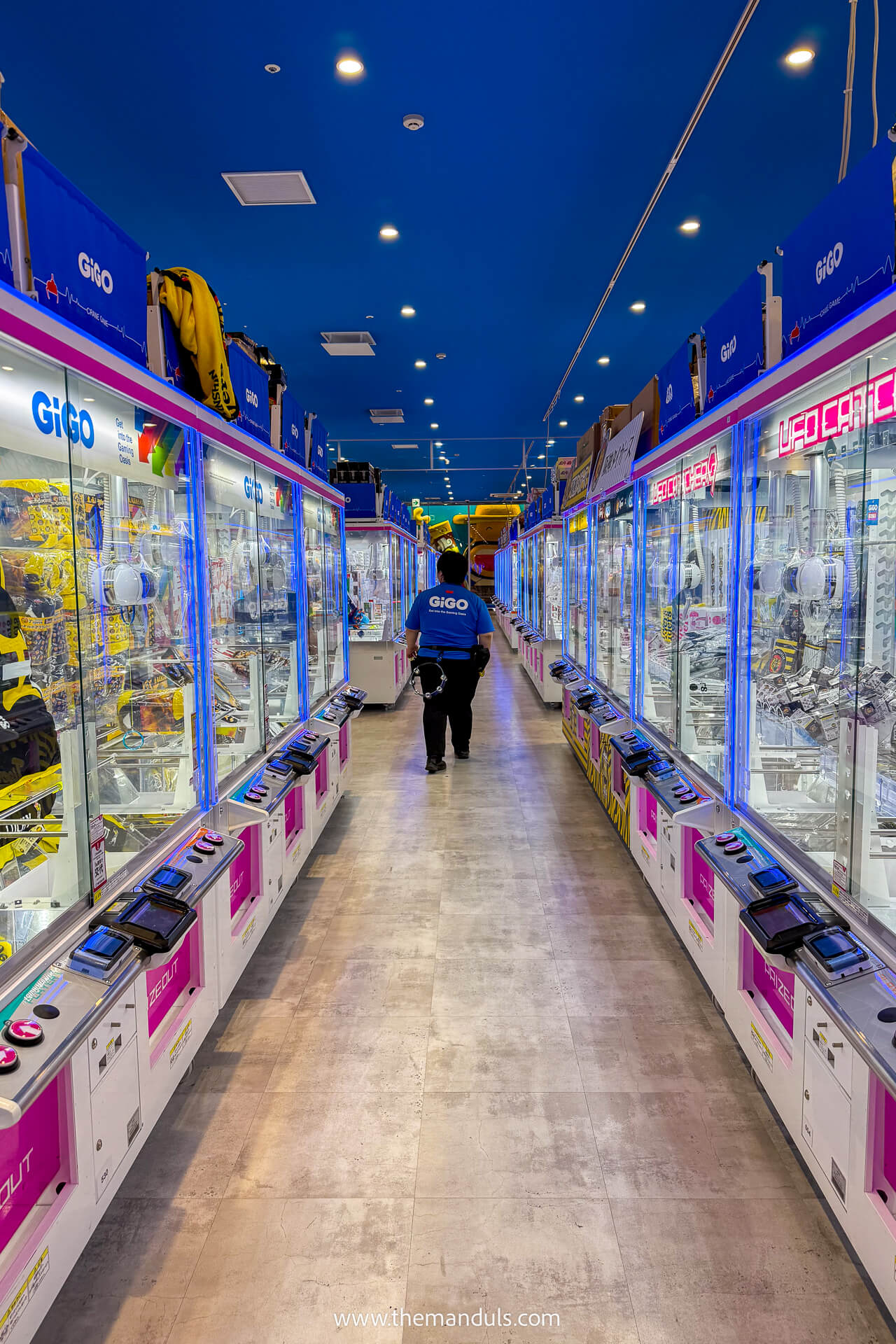
There’s also one small secret most people don’t mention. Some arcades have one or two machines marked as “easy to win” (written in Japanese). They’re usually more expensive per try, but for a good reason.
We found this at the GiGO arcades and ended up winning three times in a row. The toys were placed right on the edge on purpose — we grabbed one, and the rest fell with it.
In case you win a few big toys as we did, we highly recommend stopping by a Daiso to buy a compression bag — it’s cheap, you can squeeze all the toys inside, suck the air out, and it saved us a ton of luggage space without needing to buy another suitcase.
9. Visit Namba Yasaka Shrine
Entrance Fee: free
Opening hours: 6:00 AM to 5:00 PM
Namba Yasaka Shrine is a quick but interesting stop, especially if you’re already staying around Namba. The shrine is best known for its giant lion head, which is said to swallow bad luck and bring good fortune — and it honestly looks even more impressive in real life than in photos.
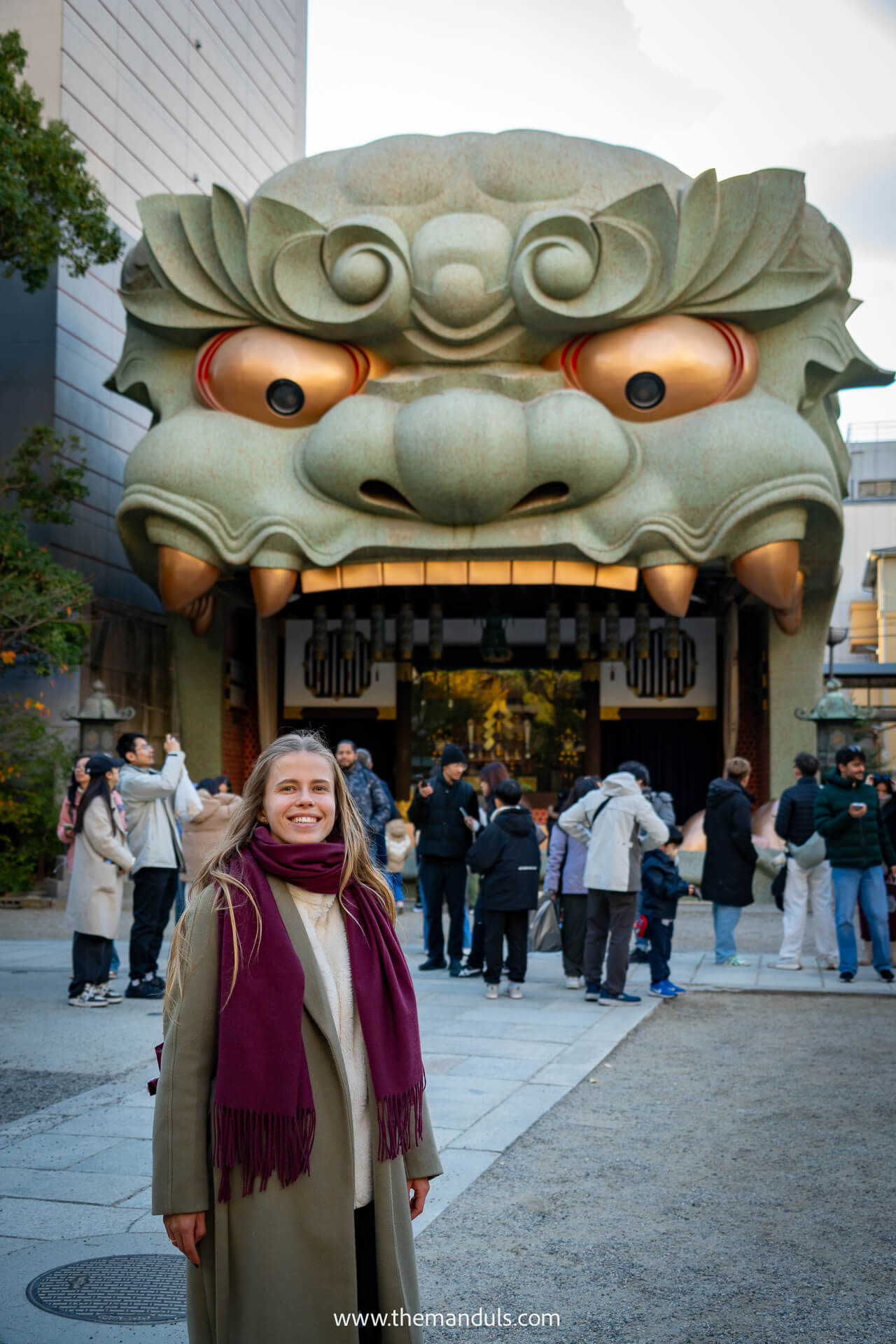
We spent around 10 minutes here, including taking photos, which is really all you need. It’s calm, compact, and noticeably less crowded than many other shrines in Osaka, making it easy to fit into your day without any planning.
Because it’s slightly tucked away from the main shopping streets, the atmosphere feels more relaxed and works well as a short break while exploring the Namba area.
10. Explore Street Culture in America Mura
America Mura (often called Amemura) is Osaka’s youth and street-culture hub, sitting just a few minutes from Shinsaibashi. It feels completely different from the more traditional parts of the city and is all about fashion, music, and creative self-expression.
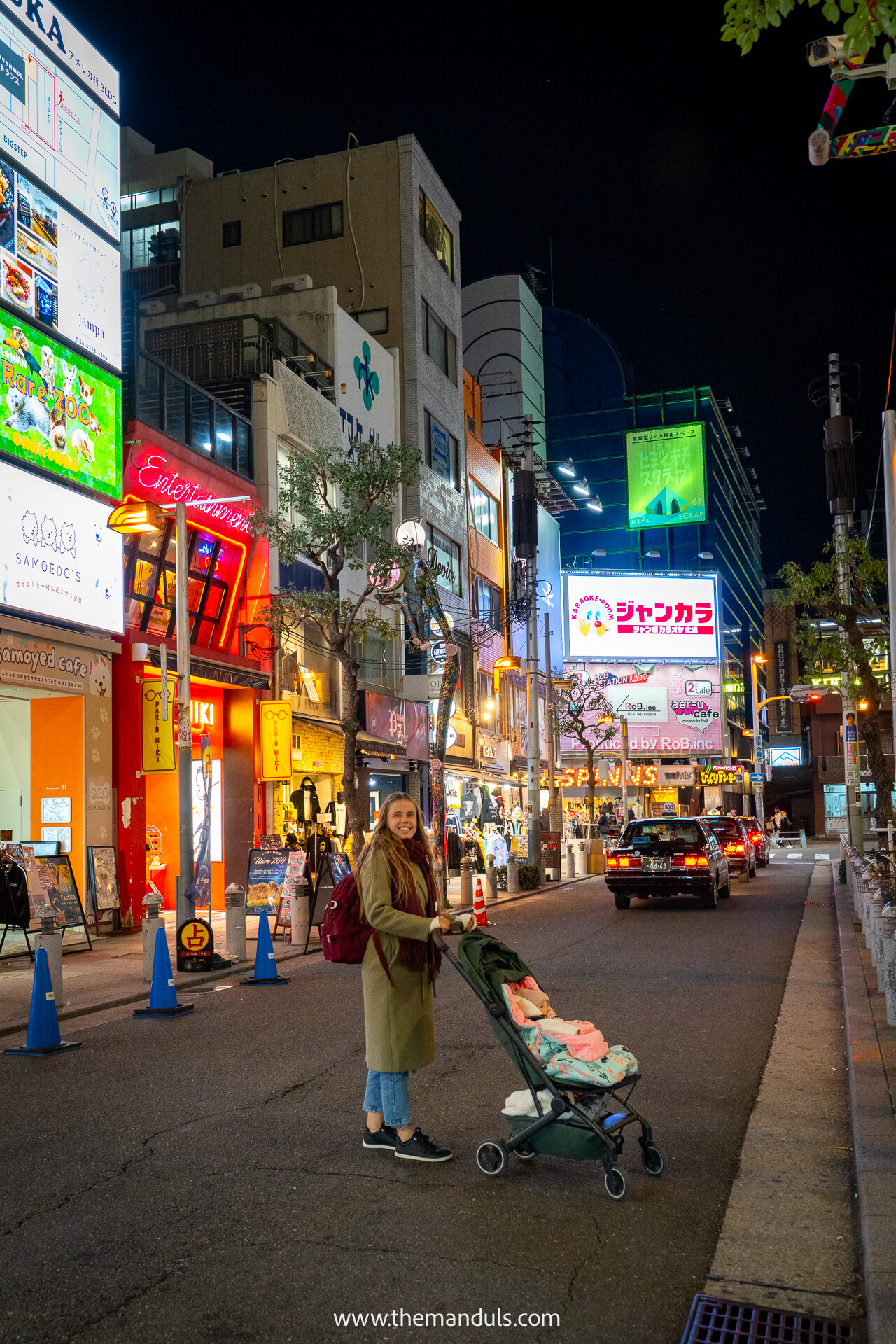
Walking through the area, you’ll see thrift shops, sneaker stores, street art, small cafés, and people dressed in every style imaginable. It’s not really about ticking off sights — it’s more about wandering, shopping, people-watching, and soaking in the energy of the place.
We enjoyed America Mura as a casual stop between shopping and food, especially in the early evening when the area feels most alive. You don’t need much time here, but it’s a fun way to see a younger, more alternative side of Osaka.

11. Enjoy a Japanese Head Spa
Trying a Japanese head spa in Osaka was one of the most relaxing and unexpected experiences of the trip. It’s not just a quick scalp massage — it’s a full treatment focused on deep cleansing, massage, and overall relaxation, and it feels incredibly thorough.
What surprised us most was how calming it was, especially after long days of walking and sightseeing. The combination of warm water, slow movements, and scalp massage makes you completely switch off for a while.
It was so good and relaxing that I fell asleep two or three times, and after the treatment, I was told this happens to many people, which honestly made me glad it wasn’t just me.
We decided to try a head spa in Osaka because it’s much cheaper compared to Tokyo, and it was definitely worth it. The one we tried was Head Spa QUATRE, and we highly recommend it not only for women, but also for men. A 1-hour treatment cost around $75, which felt more than fair for how good the experience was.
We booked our appointments through Instagram, and the whole process was super easy.
12. Have Fun at a Maid Café
Visiting a maid café was one of those experiences we were curious about and ended up enjoying more than expected. It’s playful, a bit over the top, and very much part of modern Japanese pop culture — especially in areas like Namba and Nipponbashi.
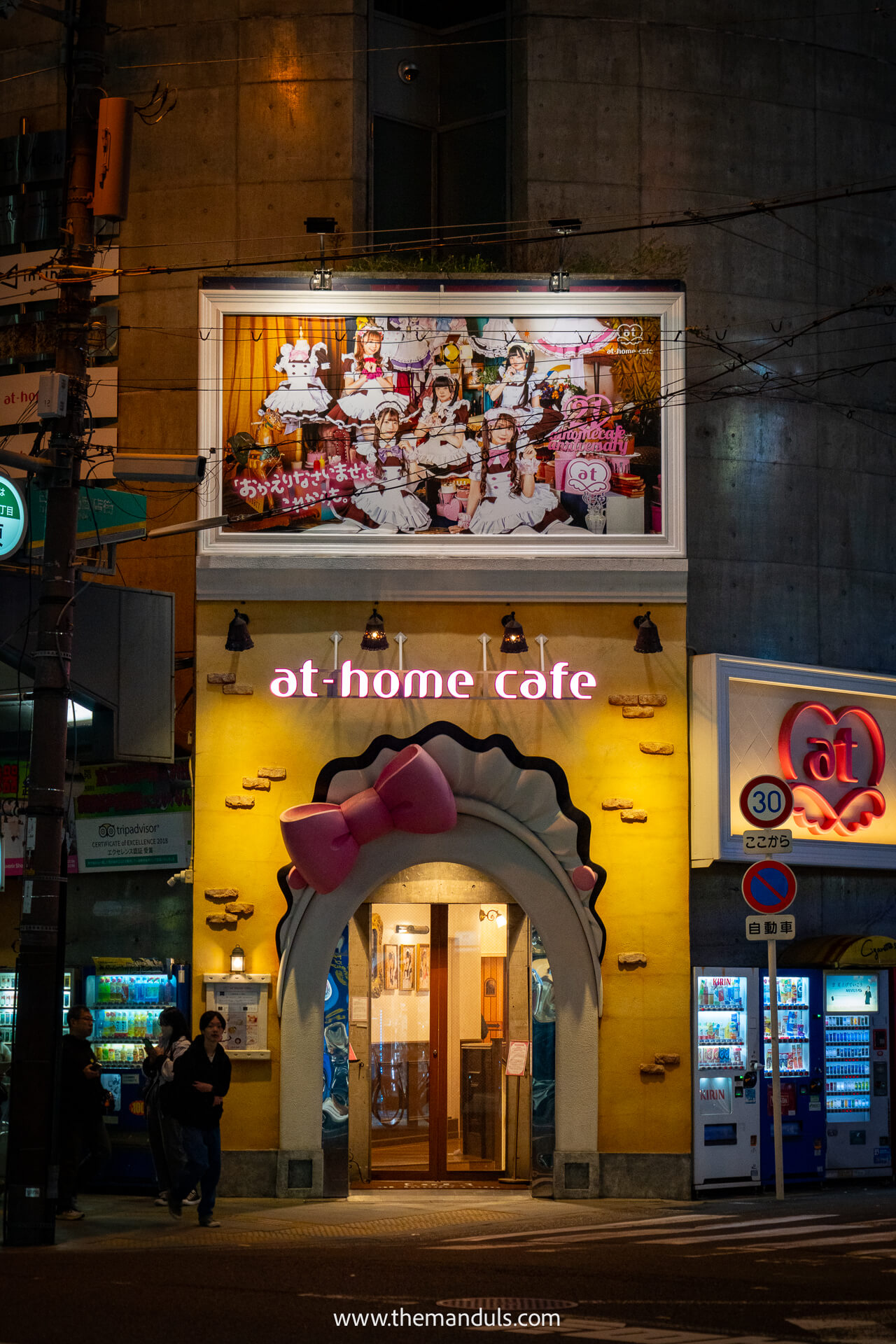
The experience is more about interaction and atmosphere than food. You’re welcomed in character, there are cute rituals around ordering, and everything is intentionally light-hearted and exaggerated. It’s not something we’d do every day, but trying it once was genuinely fun and memorable.
The one we recommend is Maidreamin. Even though it’s not cheap, it’s an experience you honestly can’t find anywhere else in the world.
If you go in with the right expectations — knowing it’s meant to be playful rather than serious — it’s a fun break from temples, shopping streets, and food-focused sightseeing.
Just keep in mind that you pay for a set time with the maid, and if you go over the limit you’ll need to pay again — they always ask whether you want to continue or finish, and while we didn’t love this system, we completely understand why it works that way.
13. Visit Nipponbashi
Nipponbashi, often called Den Den Town, is Osaka’s go-to area for electronics, anime, manga, gaming, and all things pop culture. It feels more niche and less chaotic than Akihabara in Tokyo, which we actually appreciated.
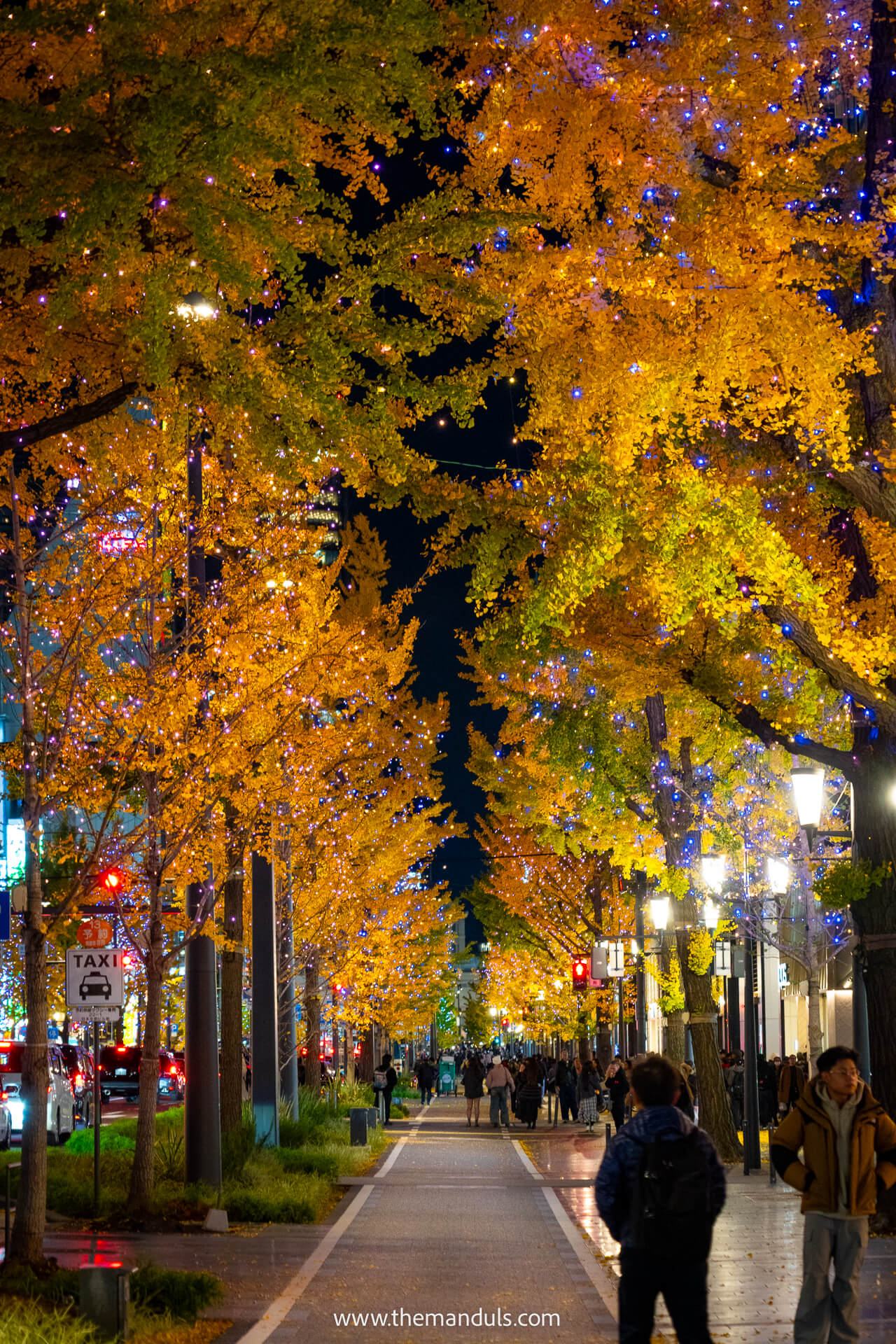
Walking through the streets, you’ll find shops selling figures, retro games, electronics, trading cards, and plenty of themed stores. Even if you’re not planning to buy anything, it’s fun to browse and see just how deep Japan’s hobby culture goes.
We liked Nipponbashi as a slower, more focused alternative to the bigger shopping areas. It pairs really well with Namba or a maid café visit and doesn’t need a huge time commitment — just wander, explore a few shops, and move on when you’ve had your fill.
14. Shop Along Shinsaibashi
Shinsaibashi is one of Osaka’s main shopping areas and a place you’ll almost certainly pass through. We were genuinely blown away by the length of this shopping street — it feels endless. We ended up spending a lot of time here shopping for souvenirs, clothes, and food.
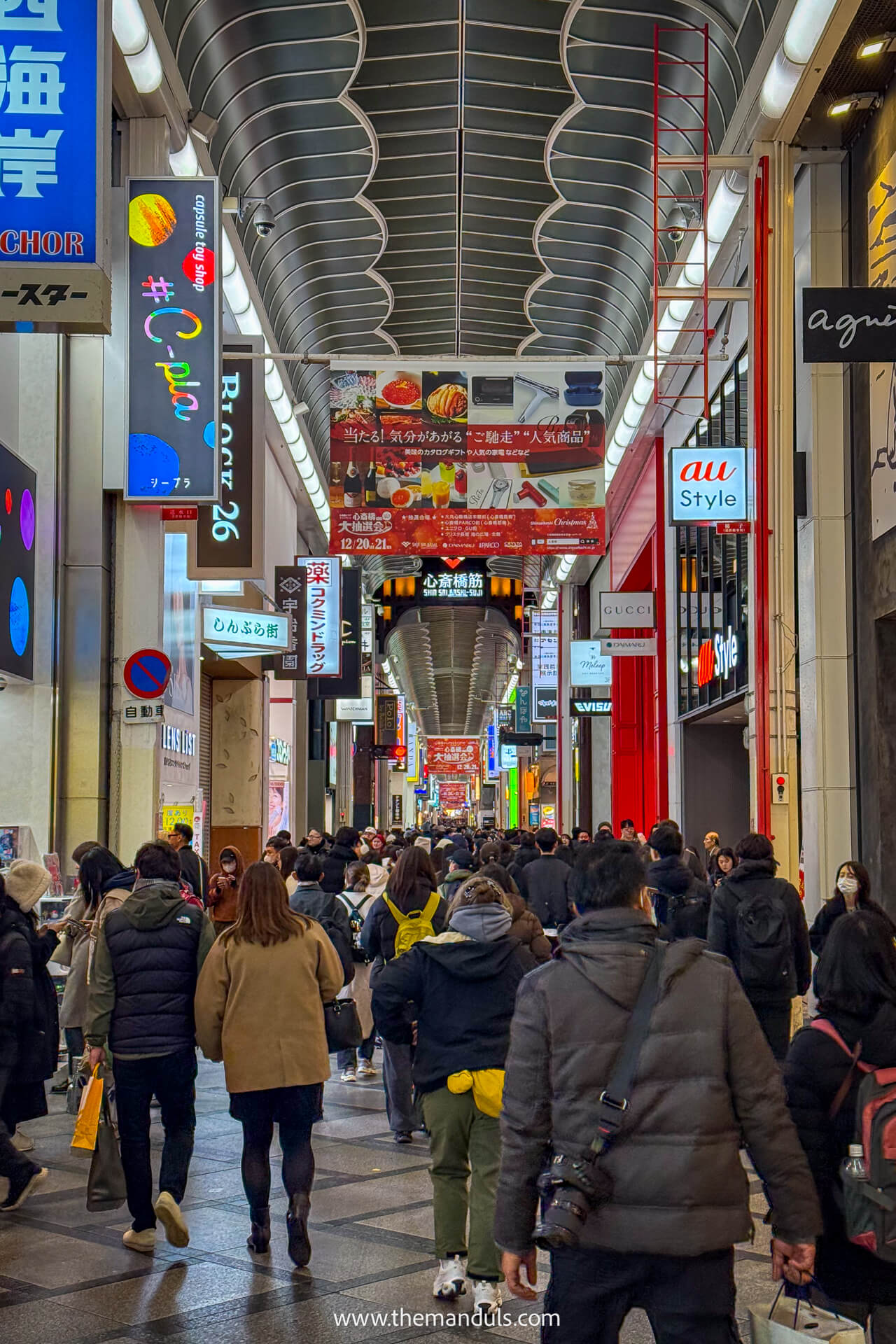
During our visit, it was packed with people, but it was still manageable. Everything is close together, so it’s easy to pop in and out of shops without much planning, especially if you’re already coming from Dotonbori or America Mura.
If you want a smoother experience with fewer crowds, we recommend coming in the early afternoon. Whether you’re shopping seriously or just browsing, Shinsaibashi is an easy and enjoyable stop while exploring Osaka.
15. Day Trip to Koyasan
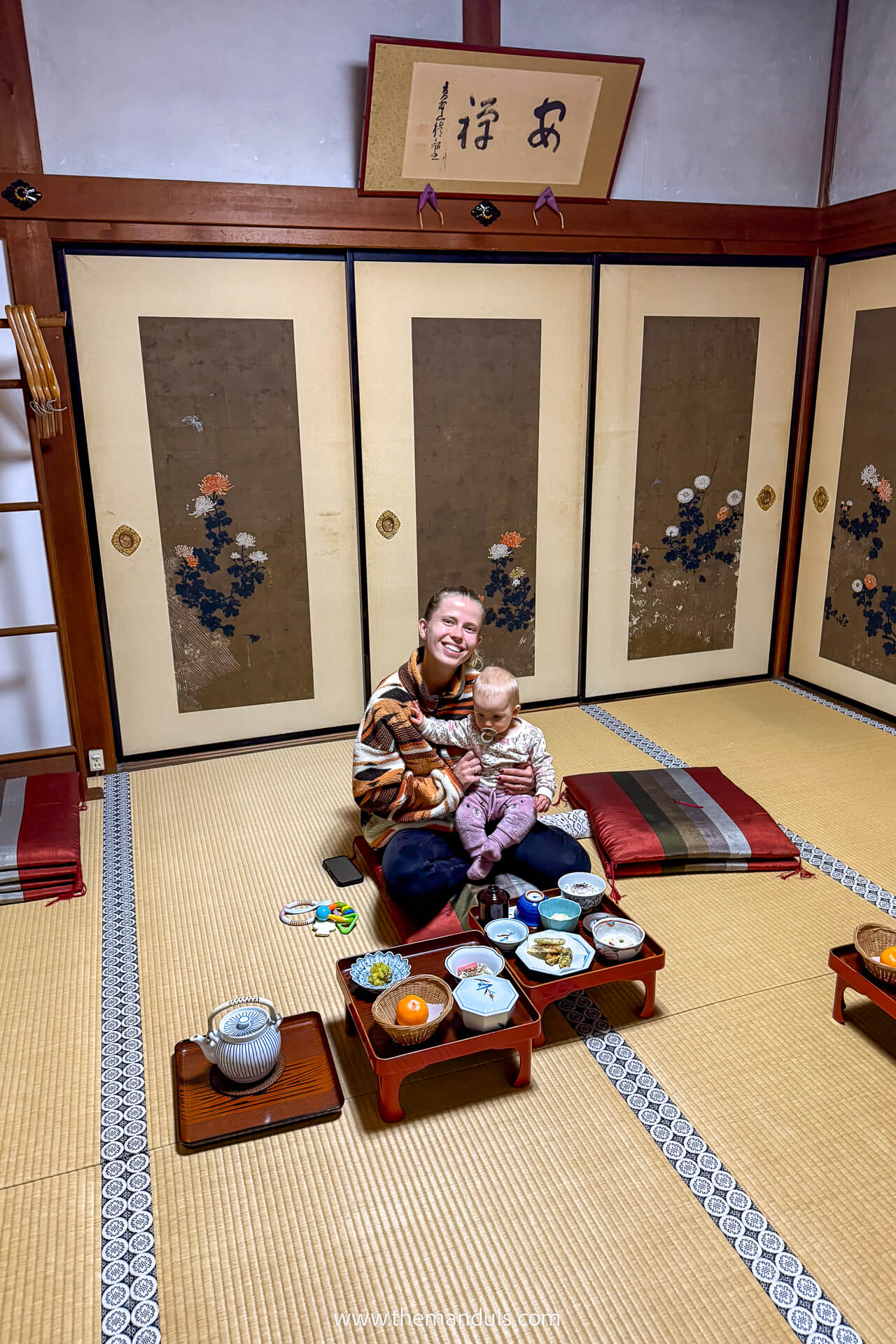
Instead of a day trip, we highly recommend staying overnight in Koyasan — sleeping in a Buddhist temple was honestly one of the coolest experiences of our entire Japan trip. After the busy streets of Osaka, the calm mountain setting feels like a complete reset.
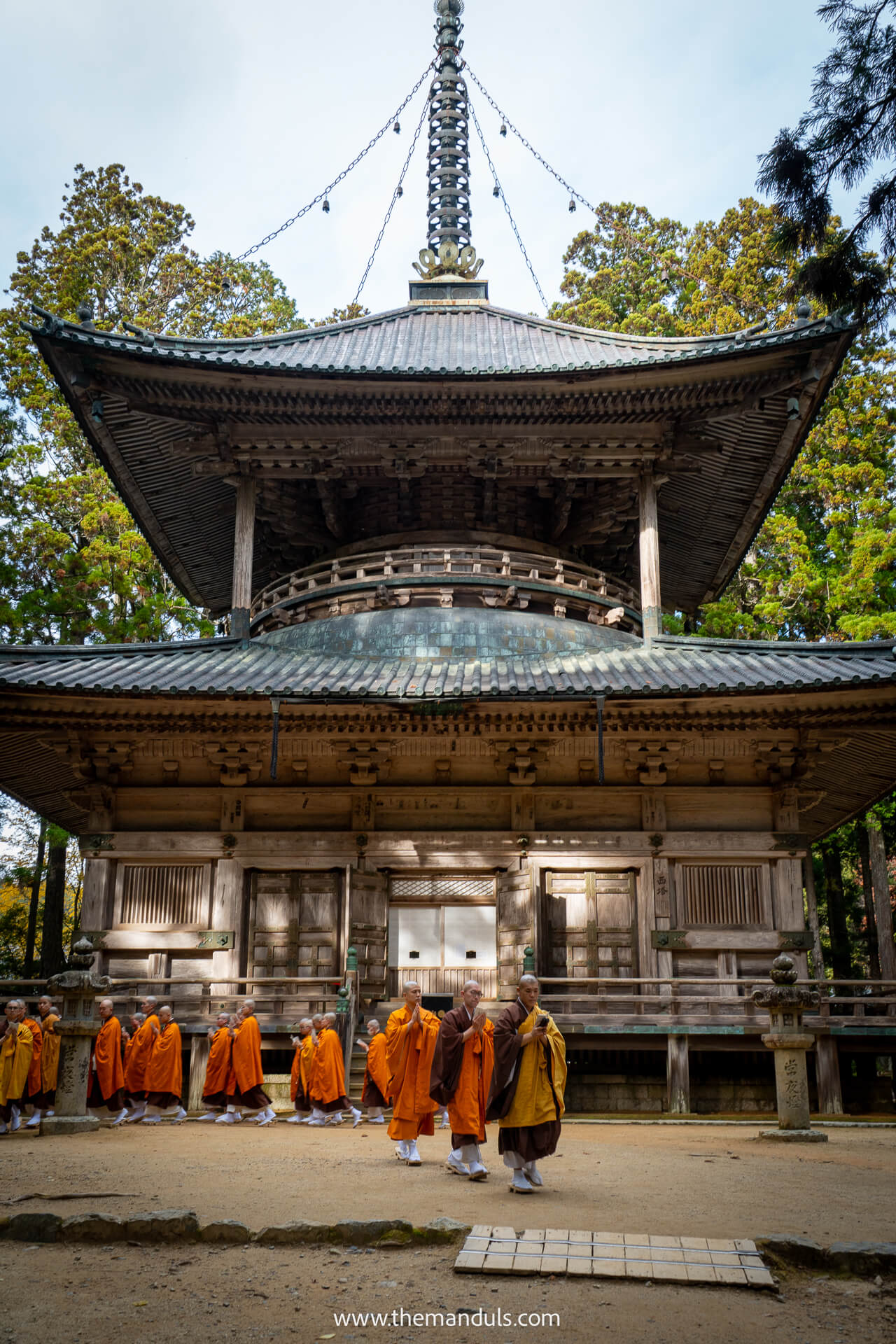
We paid around $200 for one night, which included dinner, breakfast, and access to an onsen. After a full day of exploring, soaking in the onsen was something we truly enjoyed, and the temple meals were simple but memorable. Staying overnight also lets you experience Koyasan once most day-trippers leave, which makes a big difference.
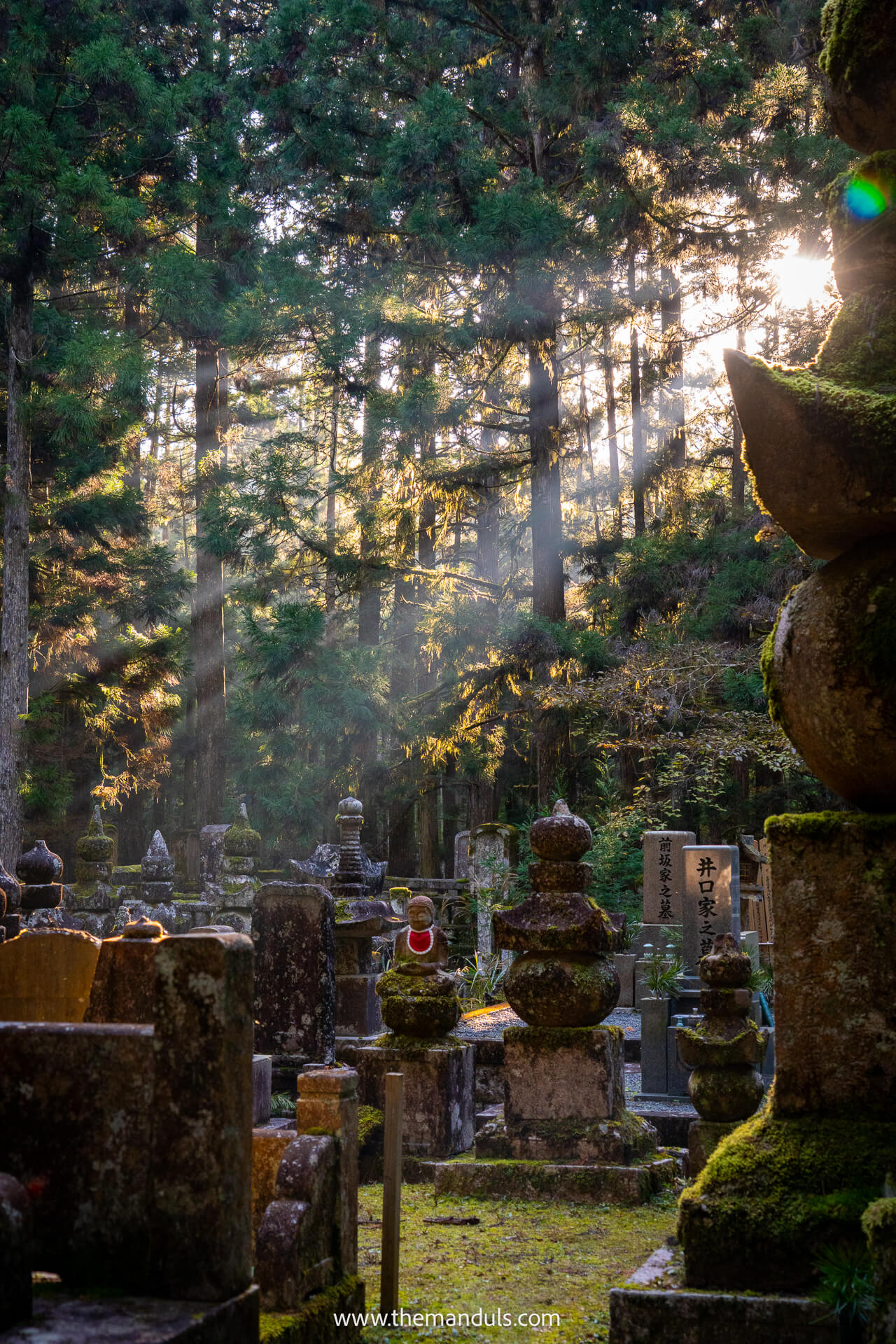
One of the biggest highlights is the largest cemetery in Japan. We visited it both during the day and at night, and the atmosphere was completely different each time — both were incredible in their own way, so we strongly recommend doing the same.
We traveled to Koyasan by train from Namba Station, and while the journey takes some time, it’s straightforward and very much part of the experience. If you’re deciding between a quick visit and staying overnight, this is one place where spending the night is absolutely worth it.
16. Day Trip to Kyoto
Kyoto is an easy and very popular day trip from Osaka, especially if you want to add more traditional sights to your itinerary. With frequent trains and short travel times, it’s simple to base yourself in Osaka and explore Kyoto without changing hotels.
We stayed in Kyoto for four nights, which was enough time to cover all the sights we wanted to see at a comfortable pace. That said, if Kyoto isn’t part of your main itinerary and you still want to experience it, a day trip from Osaka is a great choice.
Kyoto feels very different from Osaka — calmer, more traditional, and centered around temples, shrines, and historic streets. If you’re planning this visit, we’ve put together a detailed guide to the best things to do in Kyoto.
For more information about the journey, see our How to get from Osaka to Kyoto guide.

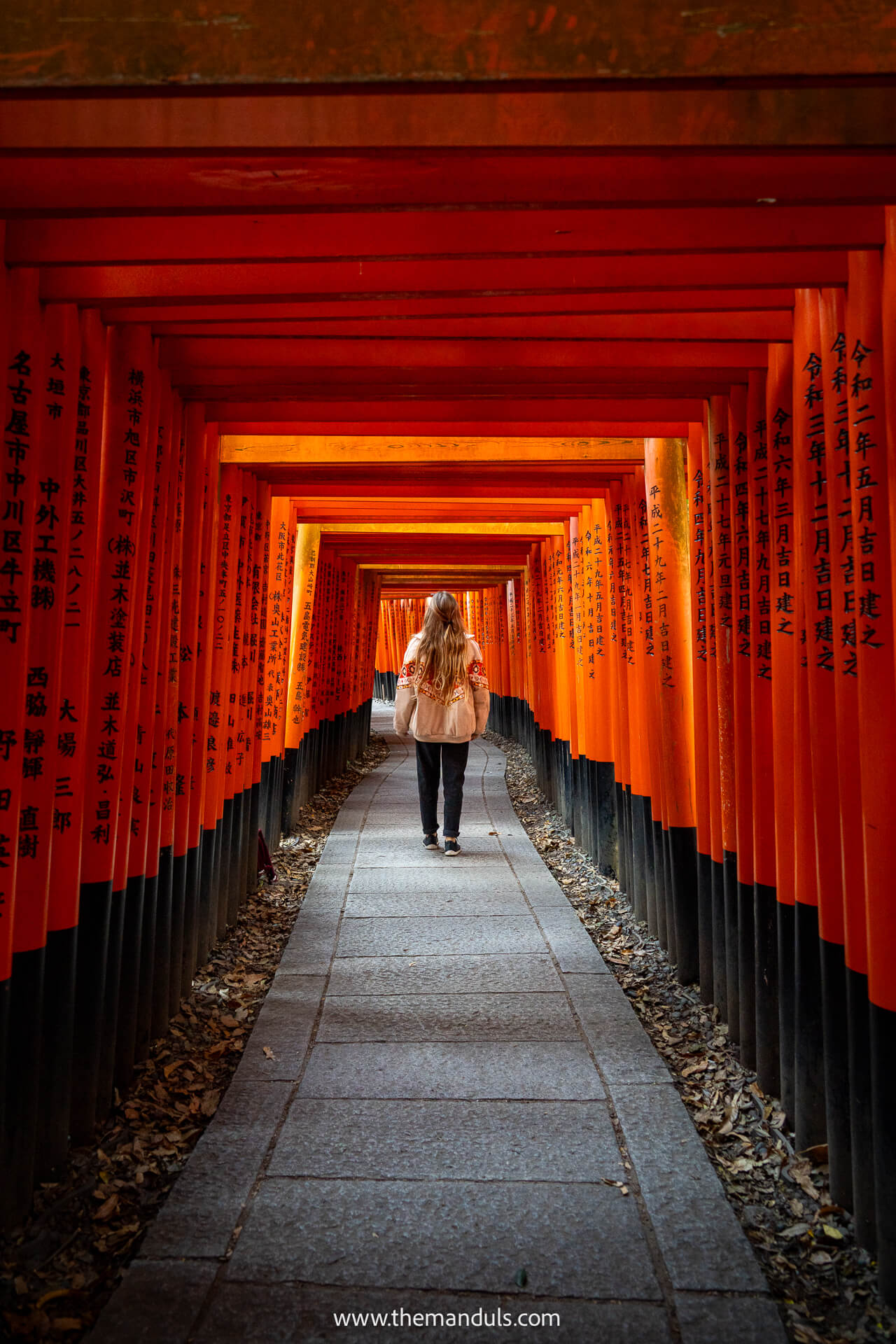
If you don’t want to deal with transportation and planning on your own, this day tour from Osaka is a solid option — it covers several of the most popular places in and around Kyoto (including highlights like Fushimi Inari and Arashiyama) in one day, making it an easy, stress-free way to see the essentials if you’re short on time.
Book your Kyoto Day Tour here with a free cancellation up to 24 hours before departure.
Final Thoughts
Osaka ended up being one of the most enjoyable stops on our Japan trip. It’s lively without feeling overwhelming, food-focused without trying too hard, and easy to explore even if it’s your first time in Japan. Compared to Tokyo and Kyoto, it feels more relaxed and playful — and that’s exactly what makes it special.
If we had to pick our can’t-miss experiences, they’d be exploring Dotonbori after dark, spending time with the deer in Nara, and slowing things down with an overnight stay in Koyasan. Those moments gave us the best mix of energy, fun, and calm.
Would we go back? Absolutely. Osaka works incredibly well as a base, offers great value for food and experiences, and has a personality that sticks with you long after you leave. If you’re planning a Japan itinerary, Osaka deserves more than just a quick stop.