
This article contains affiliate links. Learn more in our affiliate disclosure.
Malta was our final stop of the year — and visiting in December completely changed how we experienced the island.
Instead of peak-season crowds, we explored historic cities in near silence, watched sunsets without fighting for viewpoints, and even swam in surprisingly warm turquoise water.
The slower pace made it easier to appreciate what Malta really offers: dramatic coastlines, honey-coloured stone architecture, and a mix of cultural and natural sights packed into a small, easy-to-navigate island.
If you’re still deciding where to base yourself, choosing the right area makes a big difference — we’ve broken it down in our guide to the best areas and hotels in Malta.
In this guide to the best things to do in Malta, we’re sharing exactly what felt worth it based on our own trip — from must-see highlights to a few places we’d approach differently next time.
Best Things to do in Malta
1. Explore Valletta’s Historic Center

Entrance Fee: free, individual attractions ticketed

Opening hours: accessible 24/7
Valletta is Malta’s compact baroque capital, built by the Knights of St. John — and it was our very first stop. Honestly, it couldn’t have been a better introduction to the island’s vibe. If you enjoy history, architecture, slow wandering, and photography, this is where you should start.
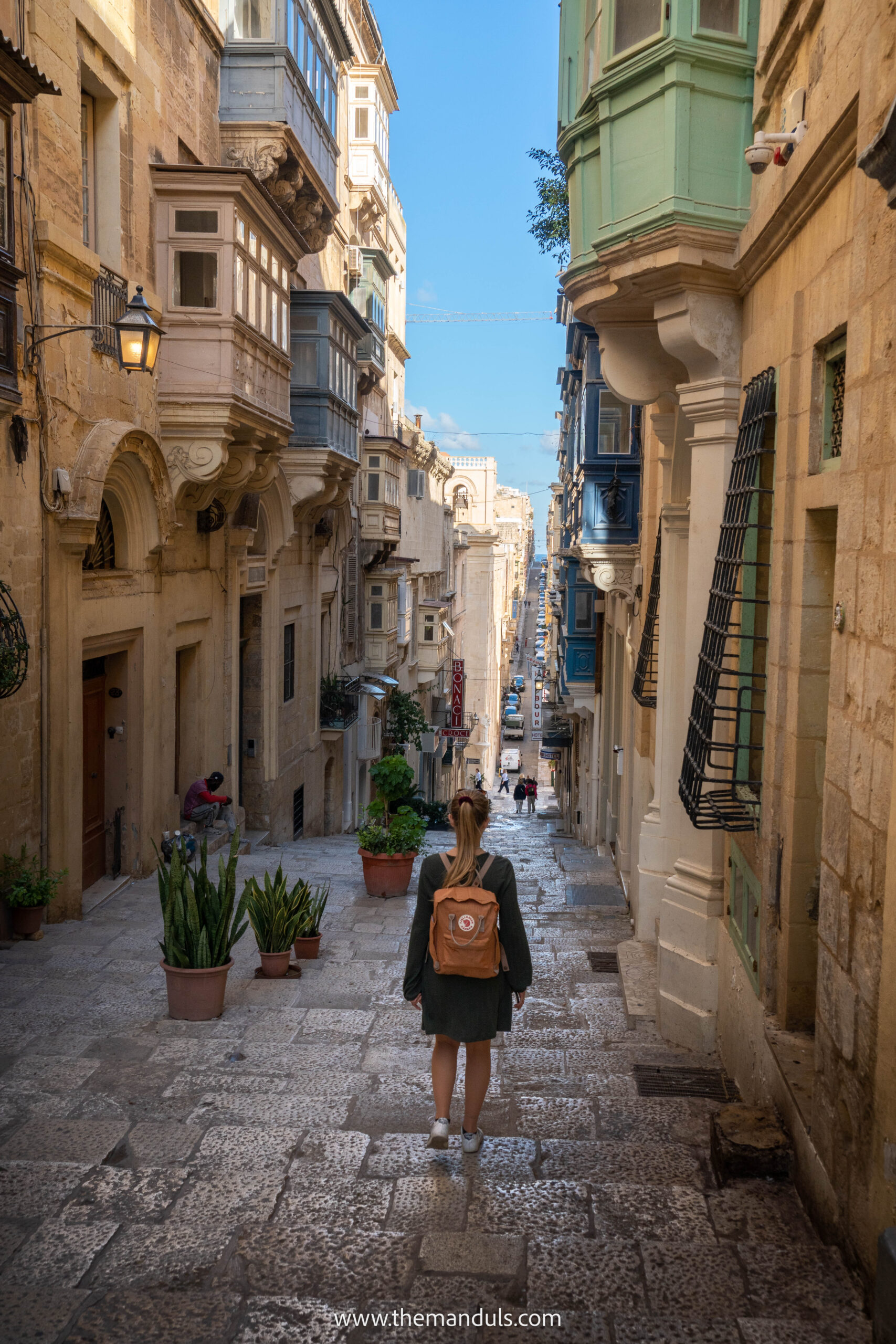
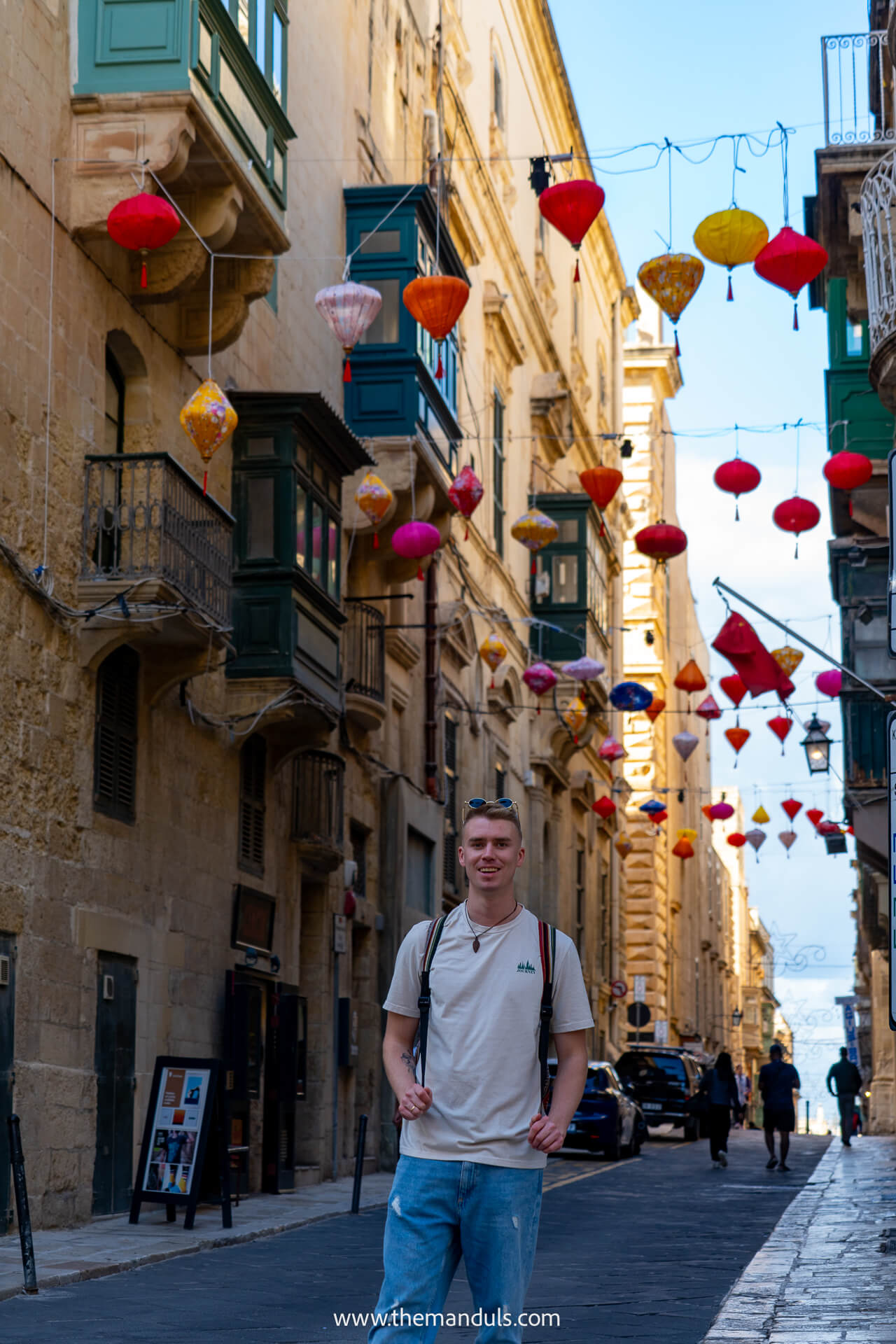
We visited in December, which made a noticeable difference. The calm, off-season atmosphere and Christmas lights made the honey-coloured streets feel even more magical. In peak season — especially on cruise ship days — it can feel crowded and slightly commercial.
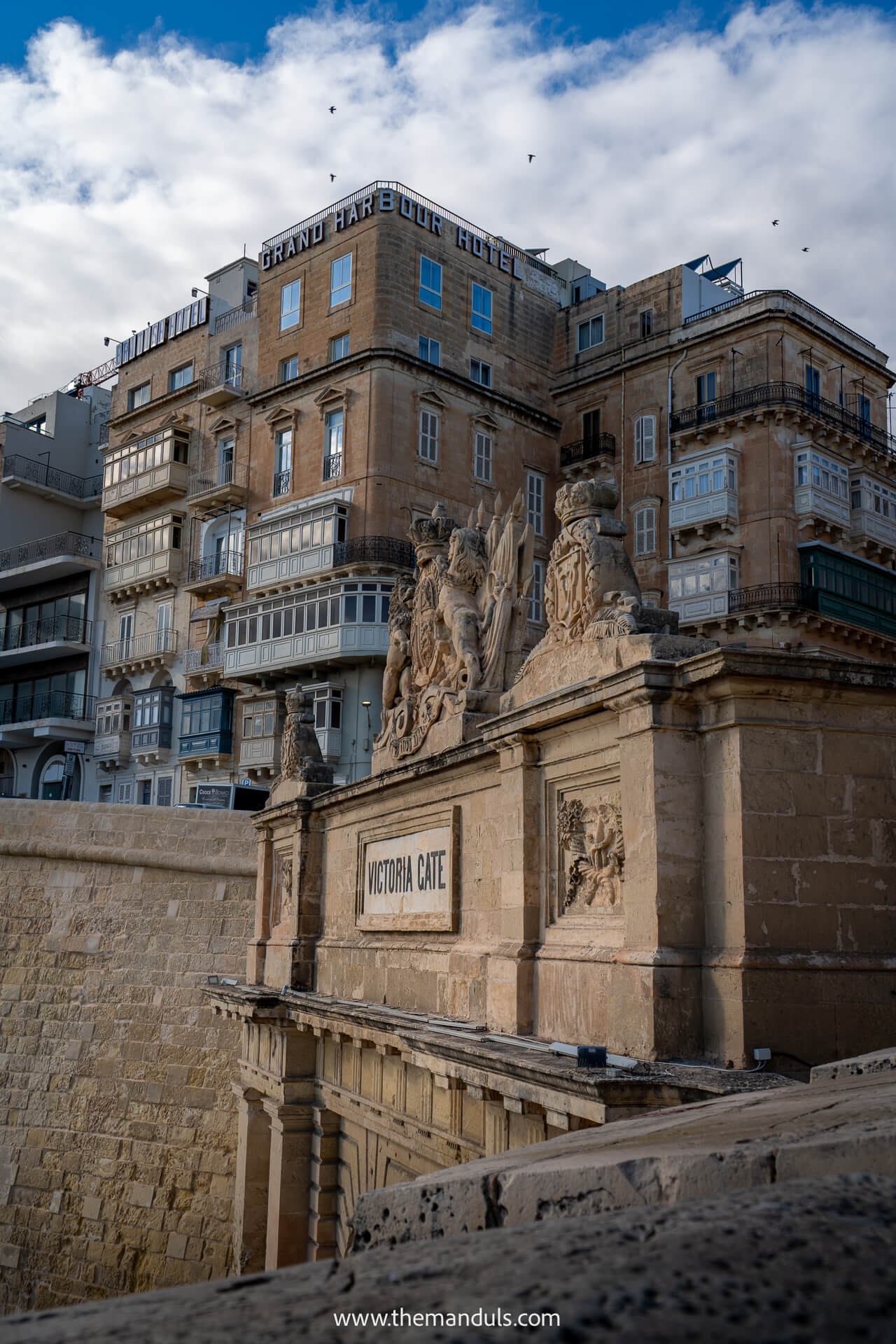
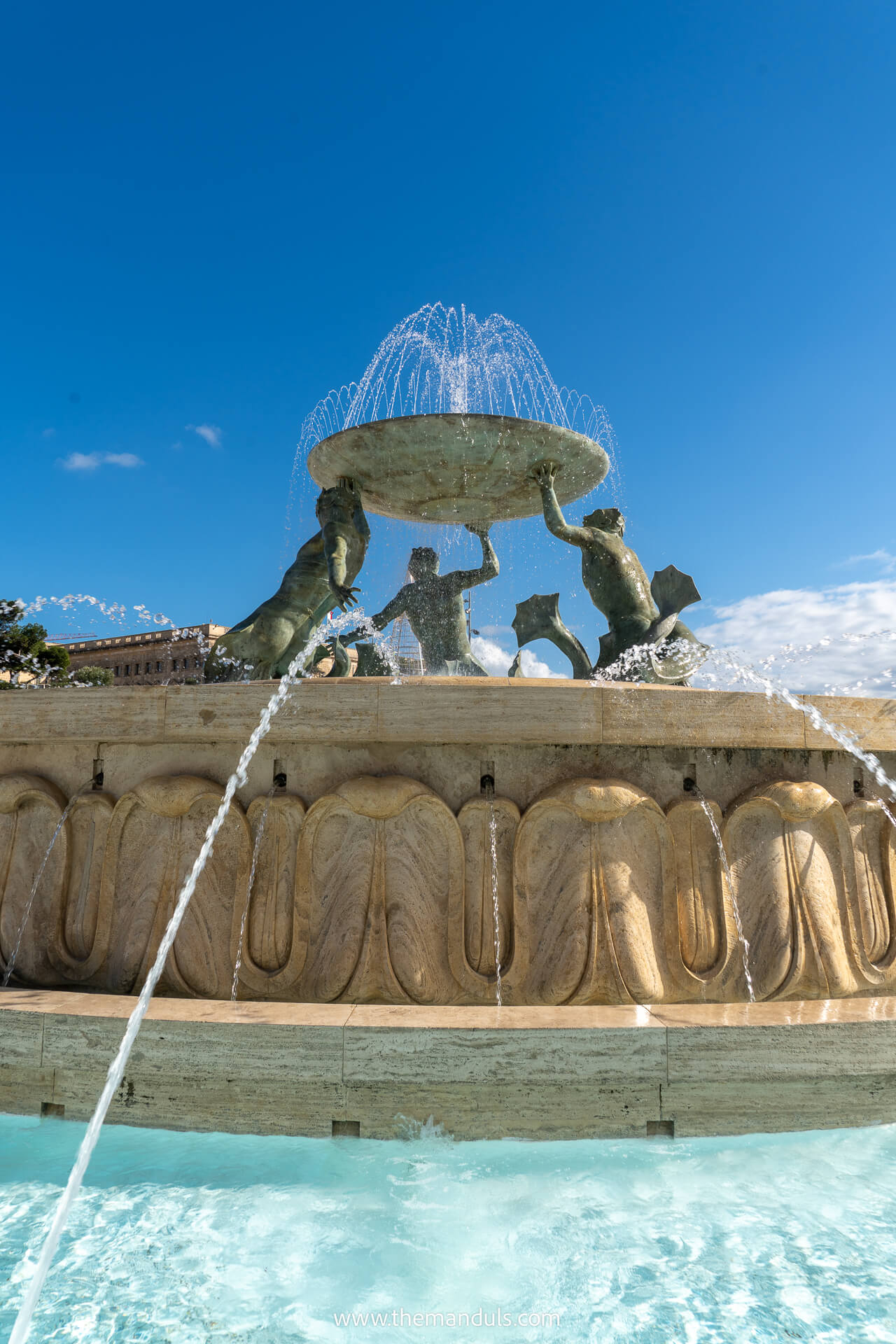
You enter through the city gate near the Triton Fountain, pass Parliament, and from there everything is easy to explore on foot. Half a day is enough to see the main highlights and enjoy lunch without rushing.
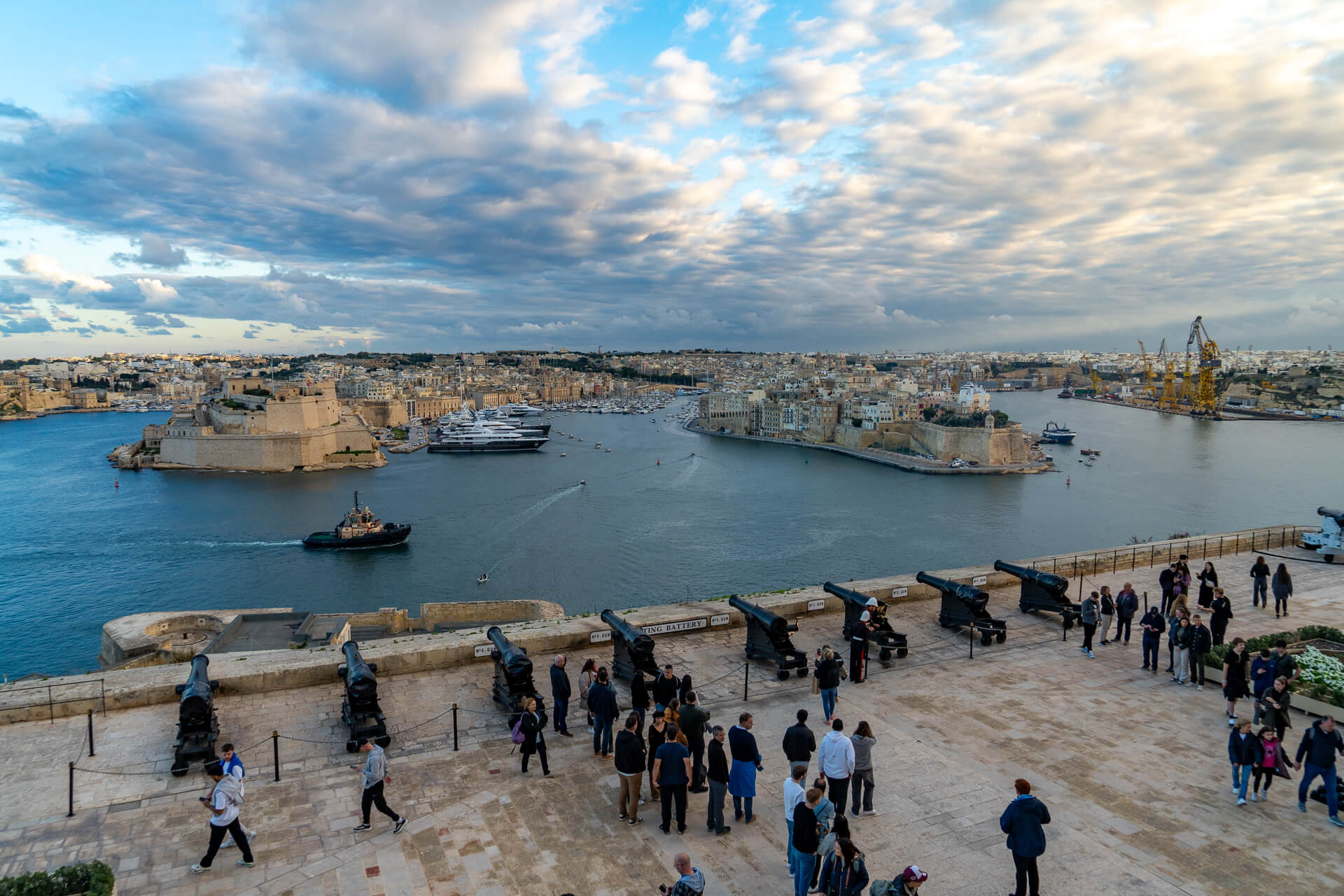
Don’t miss Upper Barrakka Gardens for harbour views and the daily cannon firing (usually at 12 PM and 4 PM), plus St. John’s Co-Cathedral and the Grandmaster’s Palace.
That said, our favourite moments came from simply getting lost — the quiet side streets felt far more authentic than the main squares.
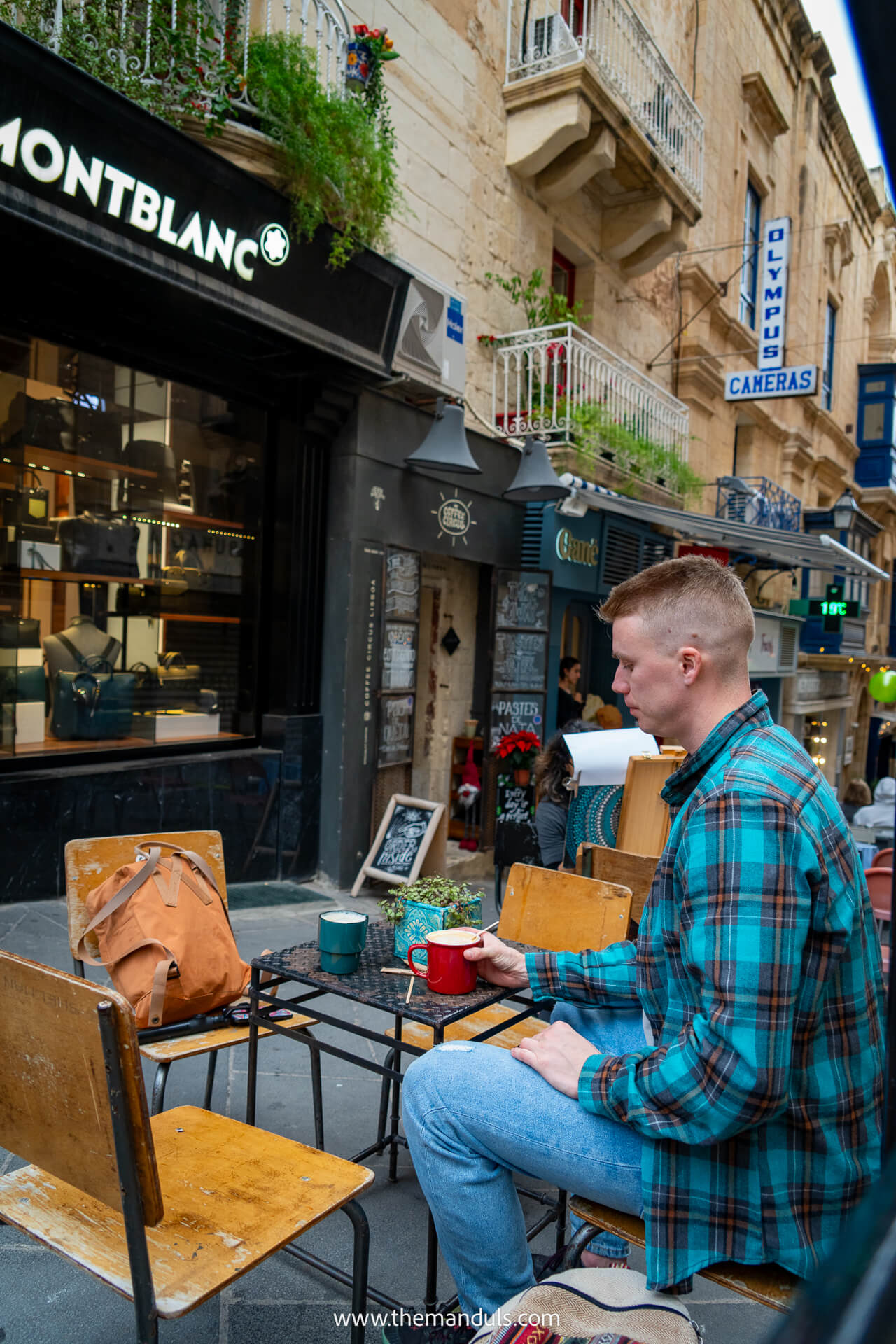
Insider Tip: For a coffee break, we loved Coffee Circus Lisboa on a cosy street with a relaxed vibe, and sometimes even local artists around.
2. Take a Boat to the Three Cities
Ticket Price: boats from 3€ for a single-ride, cities are free
The Three Cities — Vittoriosa (Birgu), Senglea, and Cospicua — sit directly across the Grand Harbour from Valletta and are known for their quieter, more local atmosphere and deep maritime history. In fact, they were settled even before Valletta.
This was high on our list, but with limited time, we had to choose — and Valletta won. If we had an extra half day, this is where we would have gone.
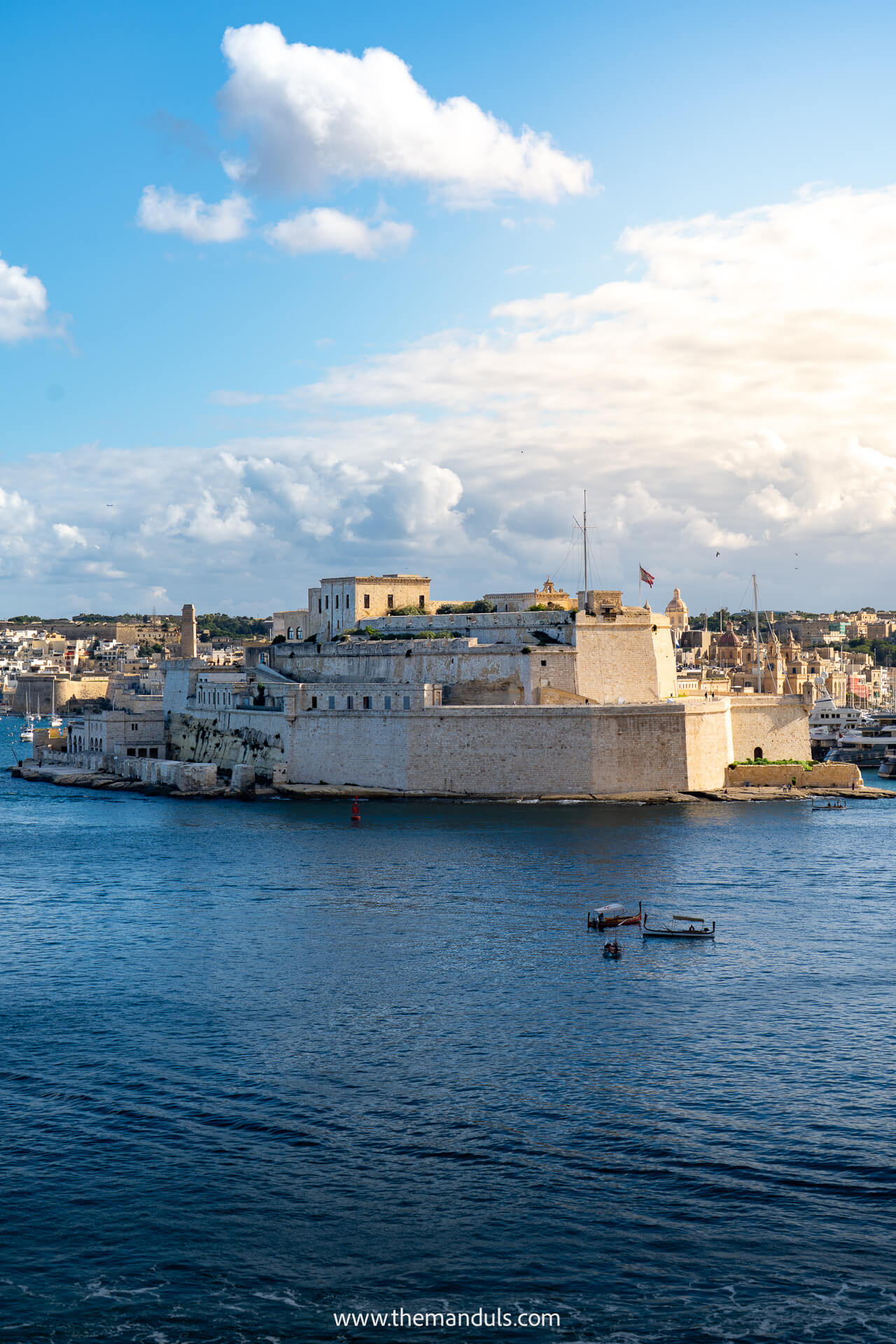
The best way to visit is by taking a traditional dgħajsa boat from Valletta’s waterfront or using the regular ferry. The ride takes about 10 minutes and offers beautiful views of the harbour fortifications — arguably reason enough to go.
This is a great option if you prefer calmer streets, marina walks, and a less polished version of Maltese city life. If you’re short on time and already exploring Valletta, it’s more of a “nice addition” than an absolute must.
Plan for 2–3 hours if you want to wander Birgu and visit Fort St. Angelo.
3. Watch Sunset at Tigné Point
Tigné Point is a modern waterfront promenade in Sliema with one of the best open views toward Valletta’s skyline — and it quickly became one of our favourite sunset spots. It’s a wide peninsula where you can sit on the rocks, watch boats glide across the harbour, and see Valletta slowly turn golden as the sun dips behind it.
If you’re staying in Sliema or St. Julian’s, this is an easy, low-effort highlight. You don’t need tickets, reservations, or planning — just show up about 30–45 minutes before sunset and find a comfortable spot. Plan to spend around an hour here.
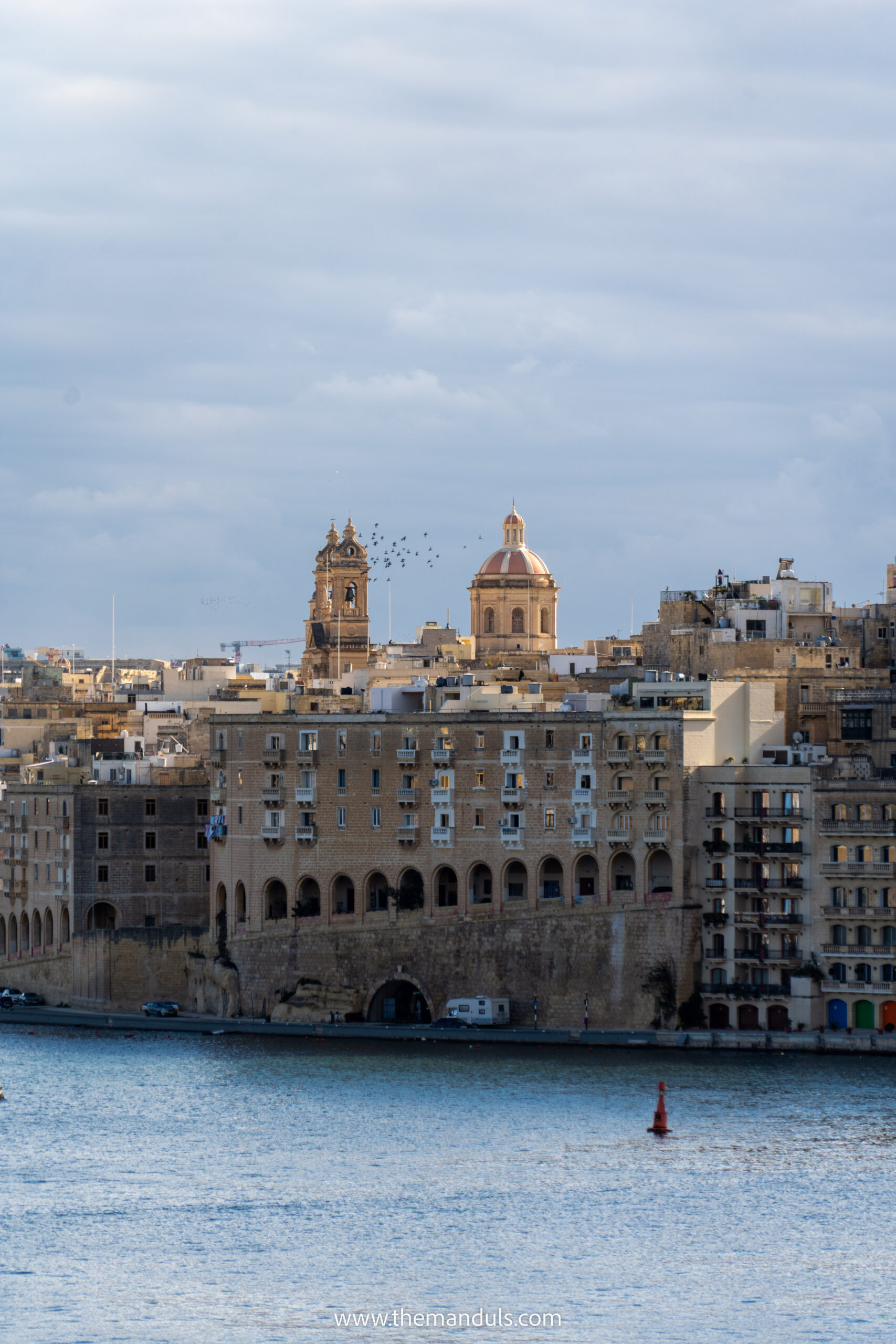
That said, it’s not a hidden gem. On clear evenings it gets popular, and there’s very little shade during the day. It’s more about atmosphere than dramatic cliffs or wild nature — but the skyline view makes it worth it.
Insider Tip: Bring something to sit on if you don’t love rough rocks, and check wind conditions — it can get breezy.
These are our top hotels in Malta we’d book again
⭐️⭐️⭐️ Hyatt Centric Malta (our top pick) – Modern lifestyle hotel in St Julian’s with design details, rooftop pool, and the perfect location near the promenade.
⭐️⭐️ HOLM Boutique Hotel & SPA – Playful boutique stay in Sliema with colorful design, spa, and rooftop pool close to the sea.
⭐️ Strand Suites by NEU Collective – Affordable studios in Sliema with rooftop pool access and a convenient location for exploring Malta’s best attractions.
4. Visit Marsaxlokk and Its Colorful Fishing Boats
Entrance Fee: free
Opening hours: accessible 24/7
Marsaxlokk is a traditional fishing village in the south, best known for its bright wooden boats called luzzu, painted in blue, yellow, and red.
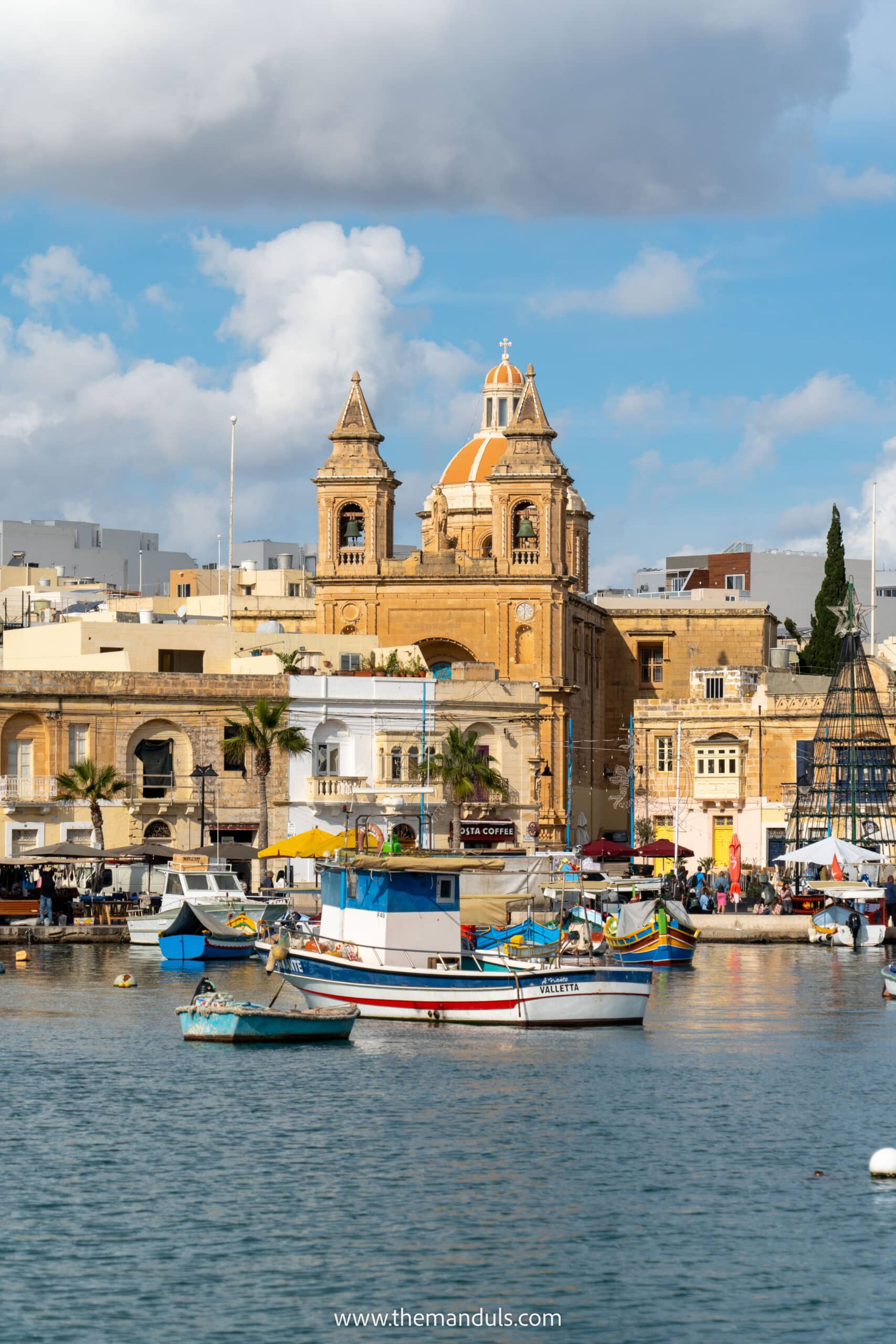
When we arrived, it instantly felt different from Valletta — slower, more local, and incredibly photogenic. The harbour filled with colourful boats against calm blue water looks like a postcard, but in real life it feels even more charming.
This is a perfect add-on to your Malta itinerary if you enjoy relaxed seaside walks and an authentic village atmosphere. If you’re expecting big landmarks or museums, you might find it underwhelming.
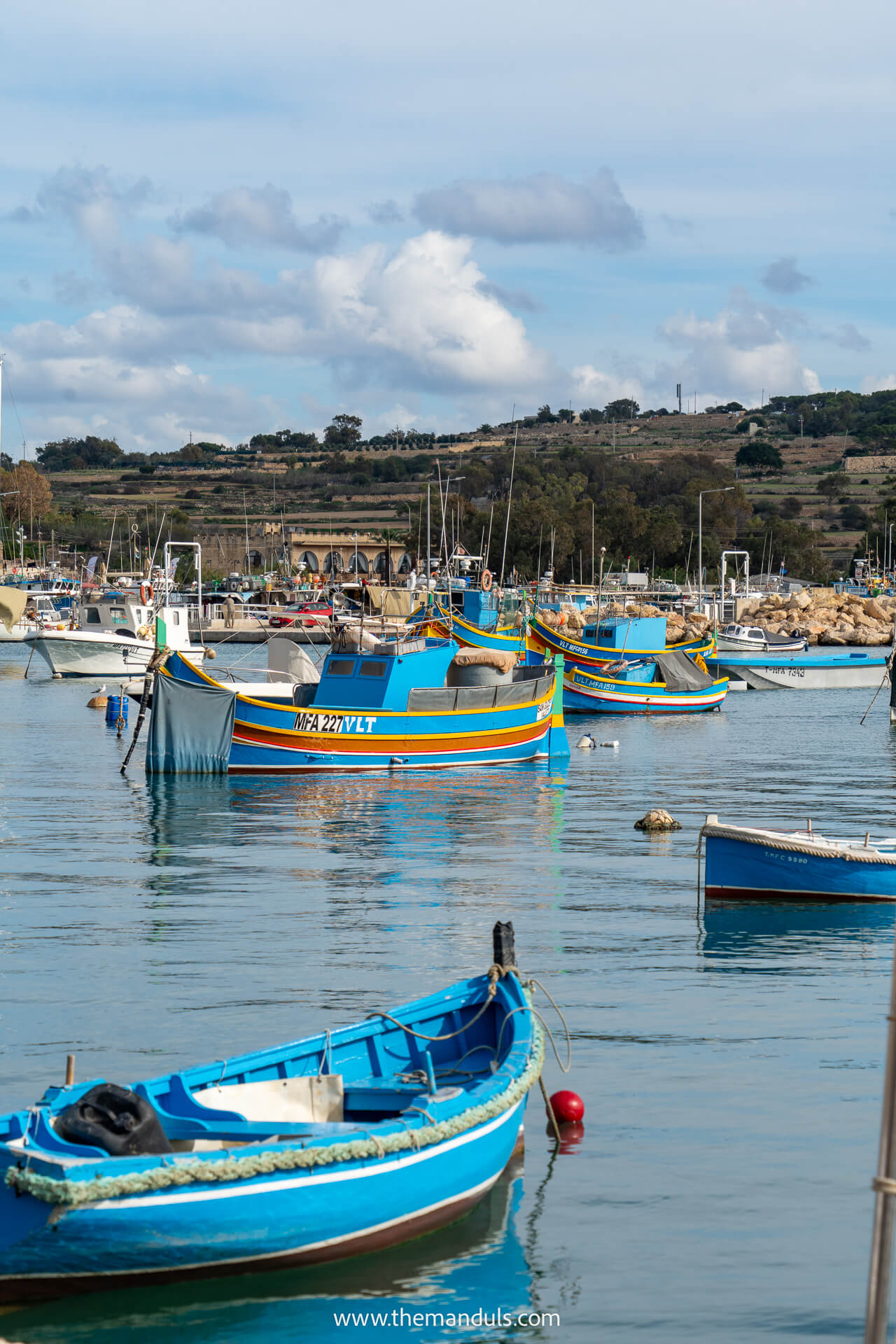
The main thing to do is simple: stroll the waterfront, watch fishermen at work, and stay for seafood lunch. Plan for 1–2 hours unless you’re staying longer for a meal.
Sundays are the busiest because of the large fish market, which adds energy but also crowds. Weekday mornings feel far more peaceful.
Insider Tip: Walk a little beyond the main restaurant strip — prices drop and the harbour views are often better.
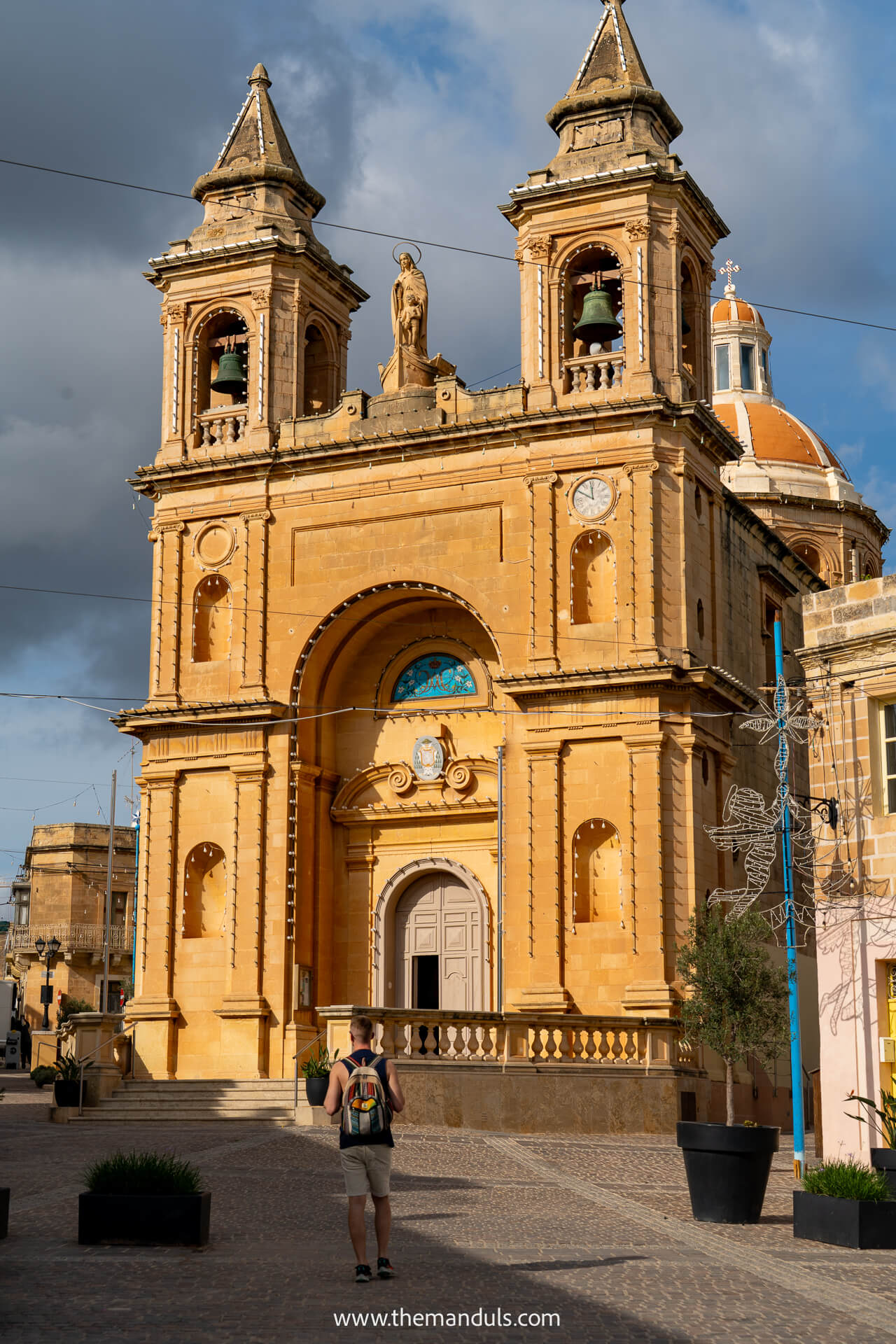
5. Cliff-Jumping & Swimming at St Peter’s Pool
Entrance Fee: free
Opening hours: accessible 24/7
St Peter’s Pool is a natural rock swimming spot near Marsaxlokk, known for its smooth limestone platforms and crystal-clear turquoise water — and this was one of the places we were most excited to see.
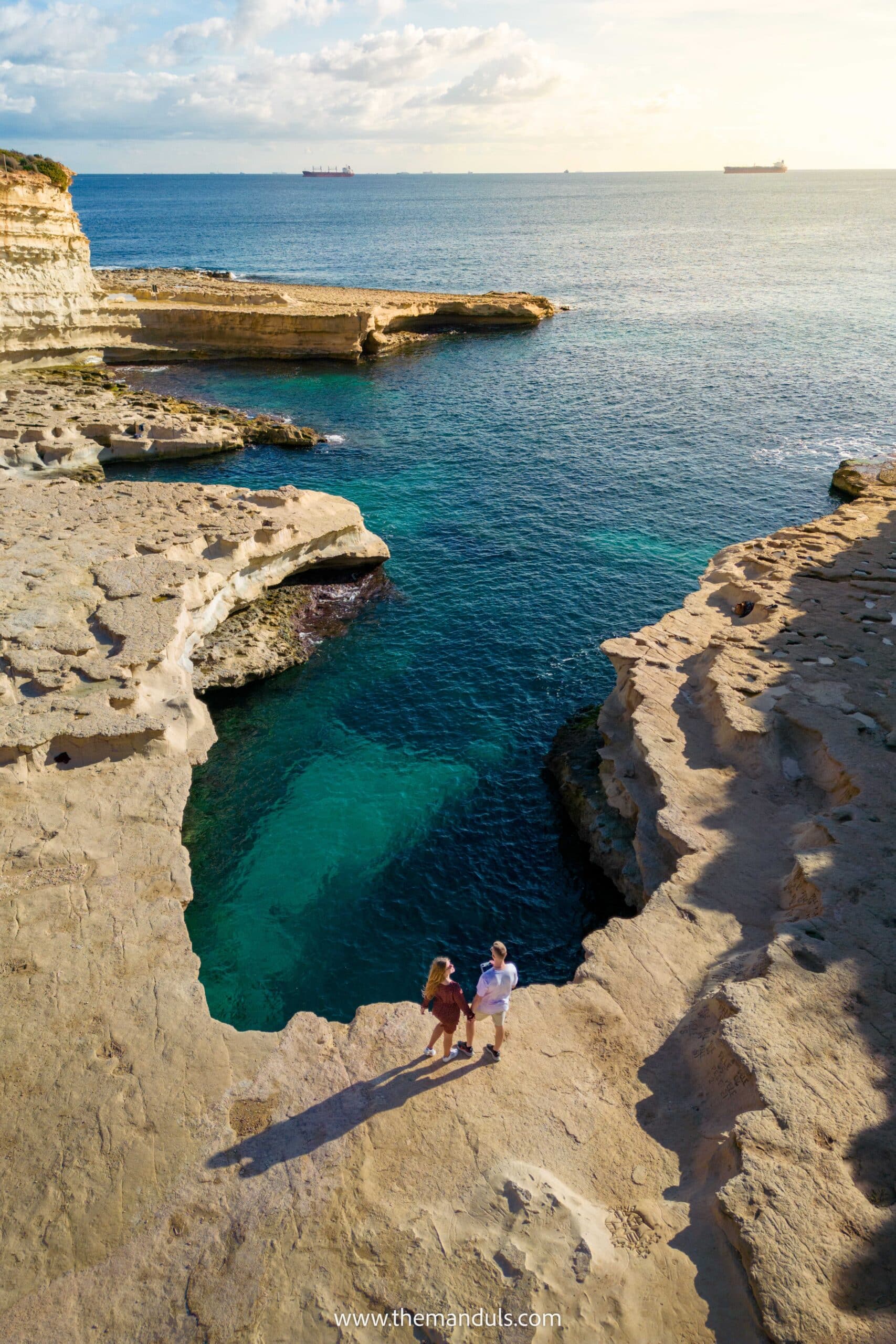
When we arrived, the colour of the water honestly surprised us. Even in December, it looked unreal. Swimming here feels completely different from a typical beach day — more raw and adventurous. If you enjoy jumping into deep water and don’t mind rocky terrain, you’ll love it.
Juraj couldn’t resist and did a few cliff jumps. There are different heights to choose from, and the water is deep enough in most areas — but always check before jumping. Plan to spend 1–2 hours here, longer if you’re swimming and relaxing.
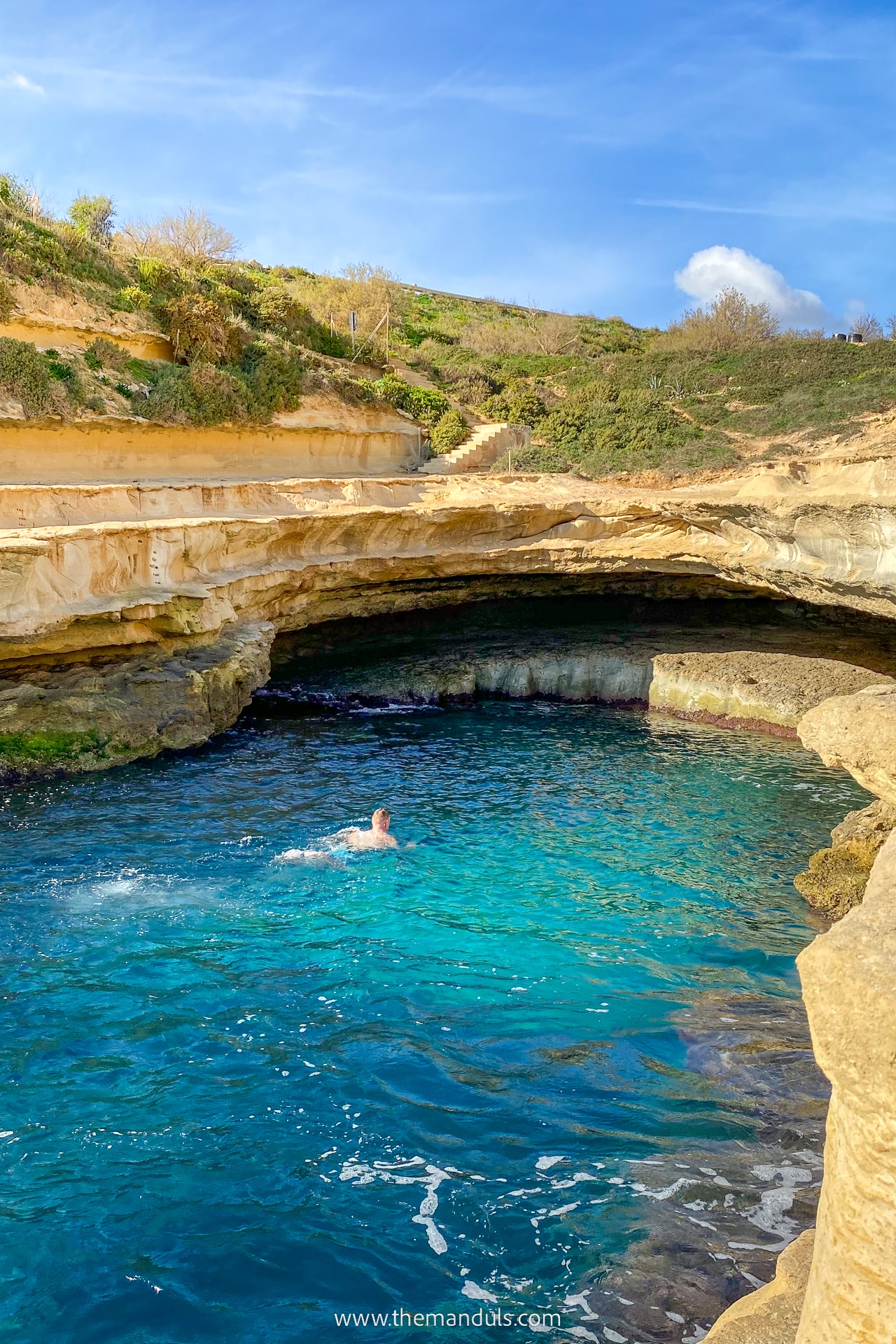
That said, access isn’t easy. The path down is uneven, the entry can be slippery, and there are no ladders or sandy sections. It’s not suitable for small kids, people with mobility issues, or anyone expecting facilities. There’s no shade, toilets, or cafés — bring water and sunscreen.
When to go: Early morning or late afternoon to avoid harsh sun and crowds.
Insider Tip: Check wind conditions — rough sea makes jumping and swimming unsafe.
6. Swim at Il-Kalanka (A Quieter Alternative)
Entrance Fee: free
Opening hours: accessible 24/7
Il-Kalanka is a rocky swimming bay just around the corner from St Peter’s Pool — but noticeably less popular and more relaxed. If St Peter’s feels a bit too busy for you, this is where to go instead.
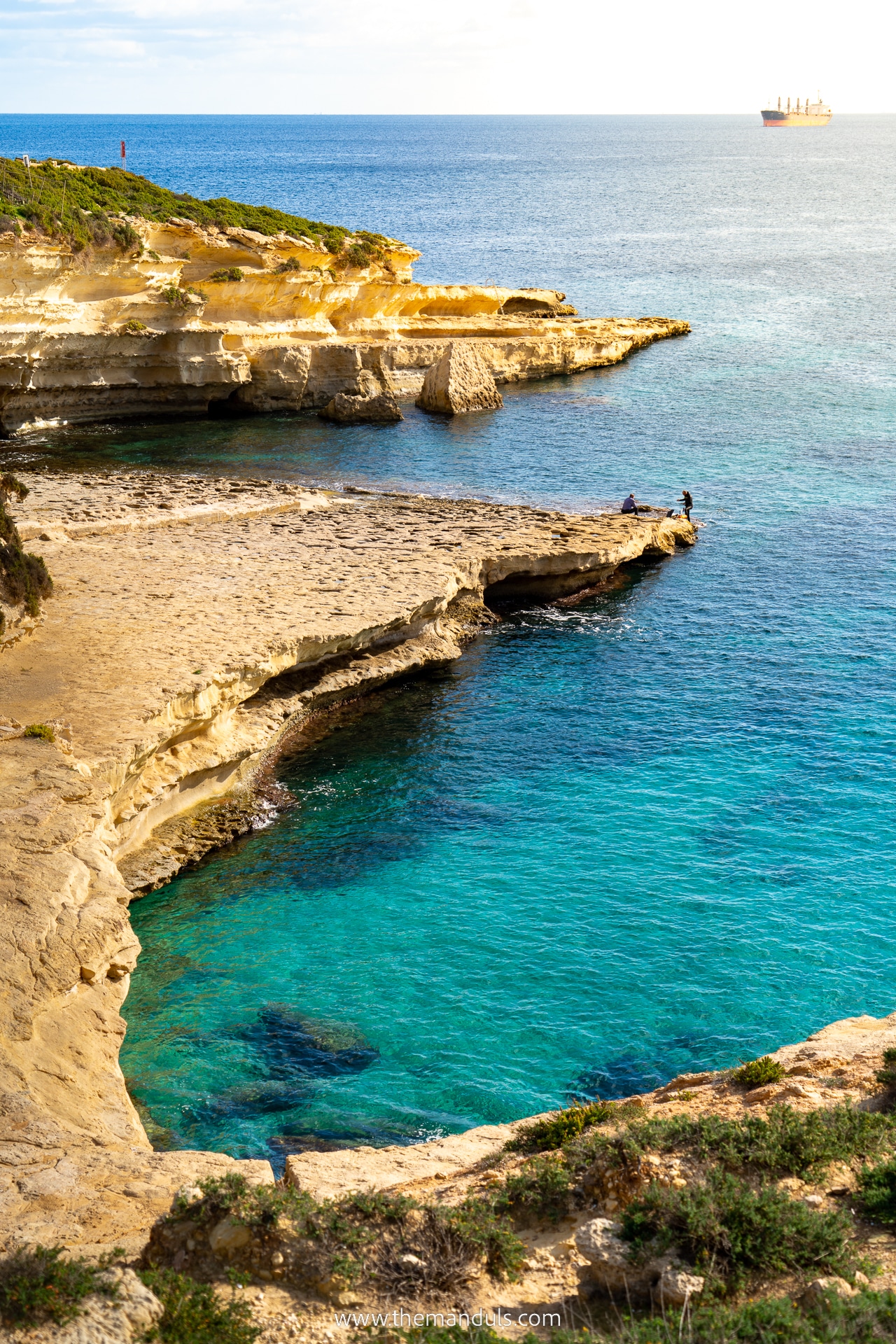
Expect fewer people, more space on the limestone platforms, and the same crystal-clear, deep blue water. Swimming here feels just as wild and adventurous. Cliff jumping is also possible, but as always, check depth and conditions first.
The entry is similar — directly from the rocks — though we noticed one metal ladder toward the back, which makes getting in and out slightly easier. It’s best suited for confident swimmers and not ideal for small kids or anyone uncomfortable with uneven terrain.
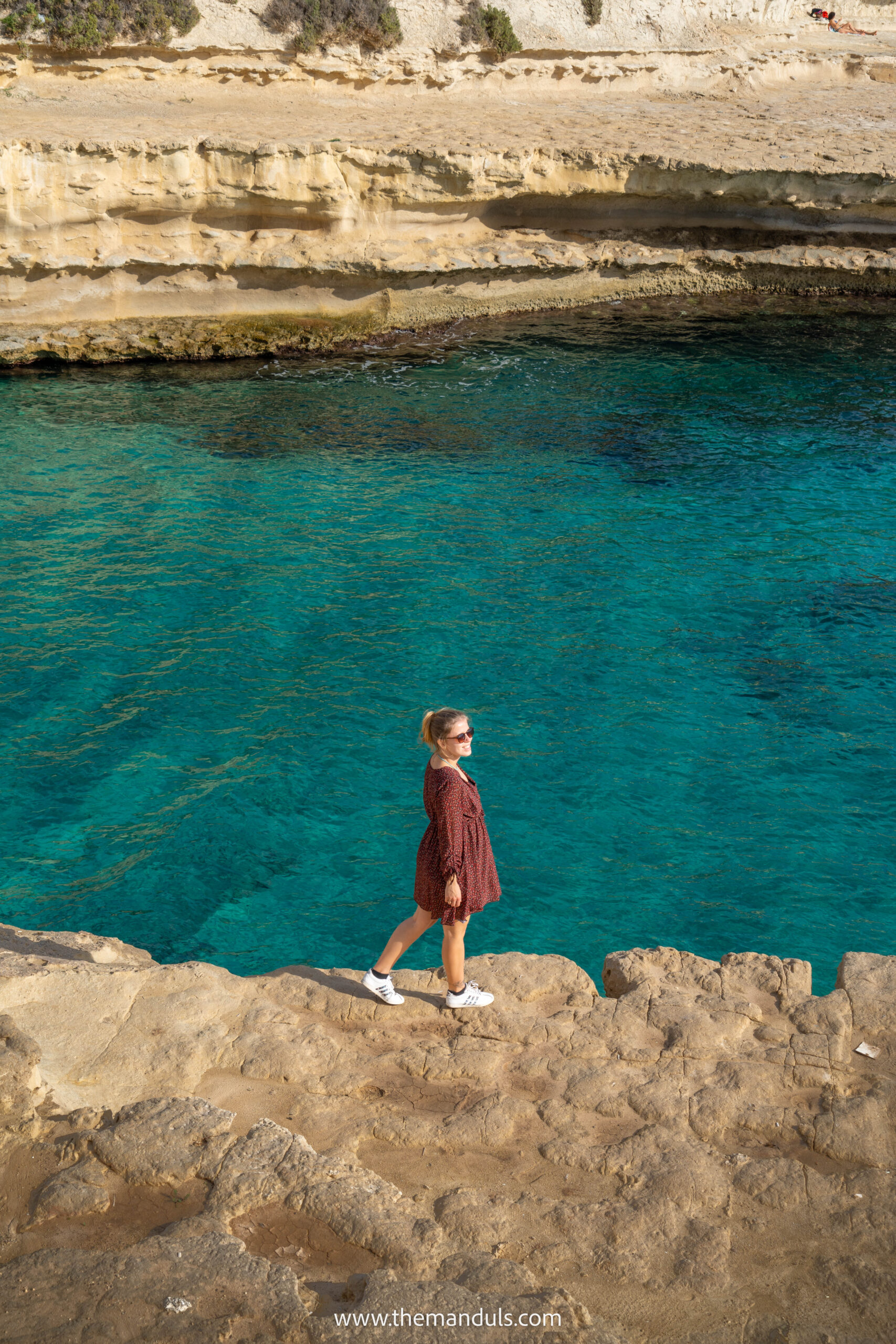
Plan for 1–2 hours, especially if you’re gonna relax here for a while. There are no proper facilities. We saw a small truck shop near the parking area that may operate in season, but don’t rely on it.
When to go: Morning or late afternoon for calmer light and fewer people.
Insider Tip: Same sa St Peter’s Pool, strong SE wind can make the sea rough and unsafe for swimming.
7. Sunset at Dingli Cliffs
Entrance Fee: free
Opening hours: accessible 24/7
Dingli Cliffs are the highest point in Malta and offer some of the most dramatic coastal views on the island. If you’re looking for wide, open scenery rather than city skylines, this is the place.
We visited in the afternoon, and even then the scenery was impressive — endless blue sea, rugged cliffs, and total openness. But it was immediately clear that sunset would be the best time to come. The light here must be incredible during golden hour.
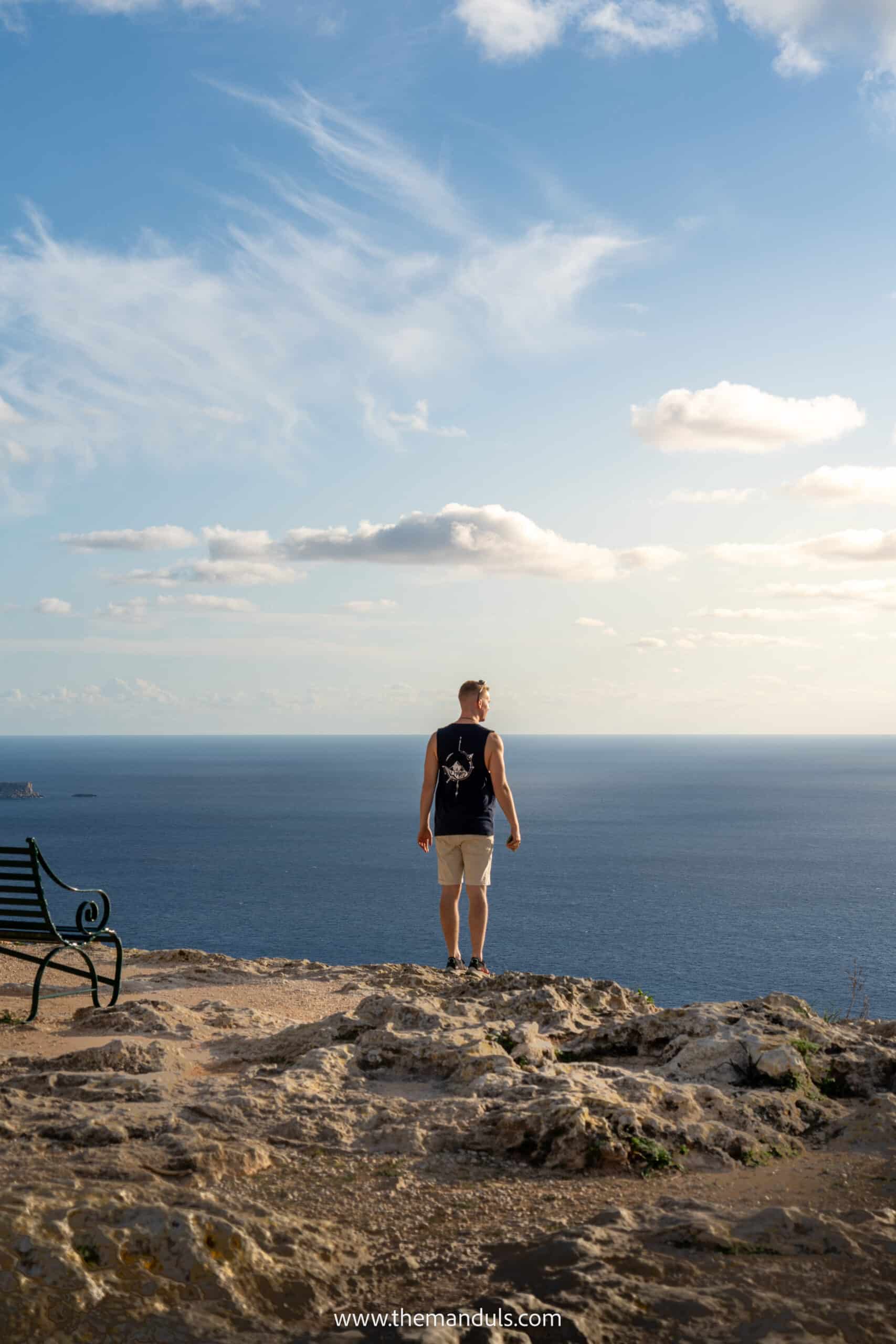
There’s a simple walking path along the cliffs and a small chapel nearby, but the main reason to visit is the view itself. Plan for 30–45 minutes unless you’re staying to watch the full sunset.
It’s perfect if you enjoy quiet, natural landscapes and don’t mind wind. If you’re expecting cafés, facilities, or dramatic rock formations to explore, this isn’t that kind of stop.
Parking is easy and access is straightforward, but be careful near the edges — especially on windy days.
When to go: Arrive 30–45 minutes before sunset for the best light.
Insider Tip: Bring a light jacket — it’s noticeably windier here than in other parts of the island.
8. Stroll Mdina’s Narrow Streets (The Silent City)
Entrance Fee: free to enter, ticketed cathedral
Opening hours: accessible 24/7
Mdina is Malta’s former capital, a fortified medieval city sitting on a hill in the center of the island — and it truly lives up to its nickname, The Silent City.
From our perspective, this was one of the most atmospheric places on the island. After the coastal energy of Valletta and Marsaxlokk, Mdina felt calmer and more timeless. The narrow streets, warm limestone walls, and carved wooden doors create a completely different mood — especially as the light softens later in the day.
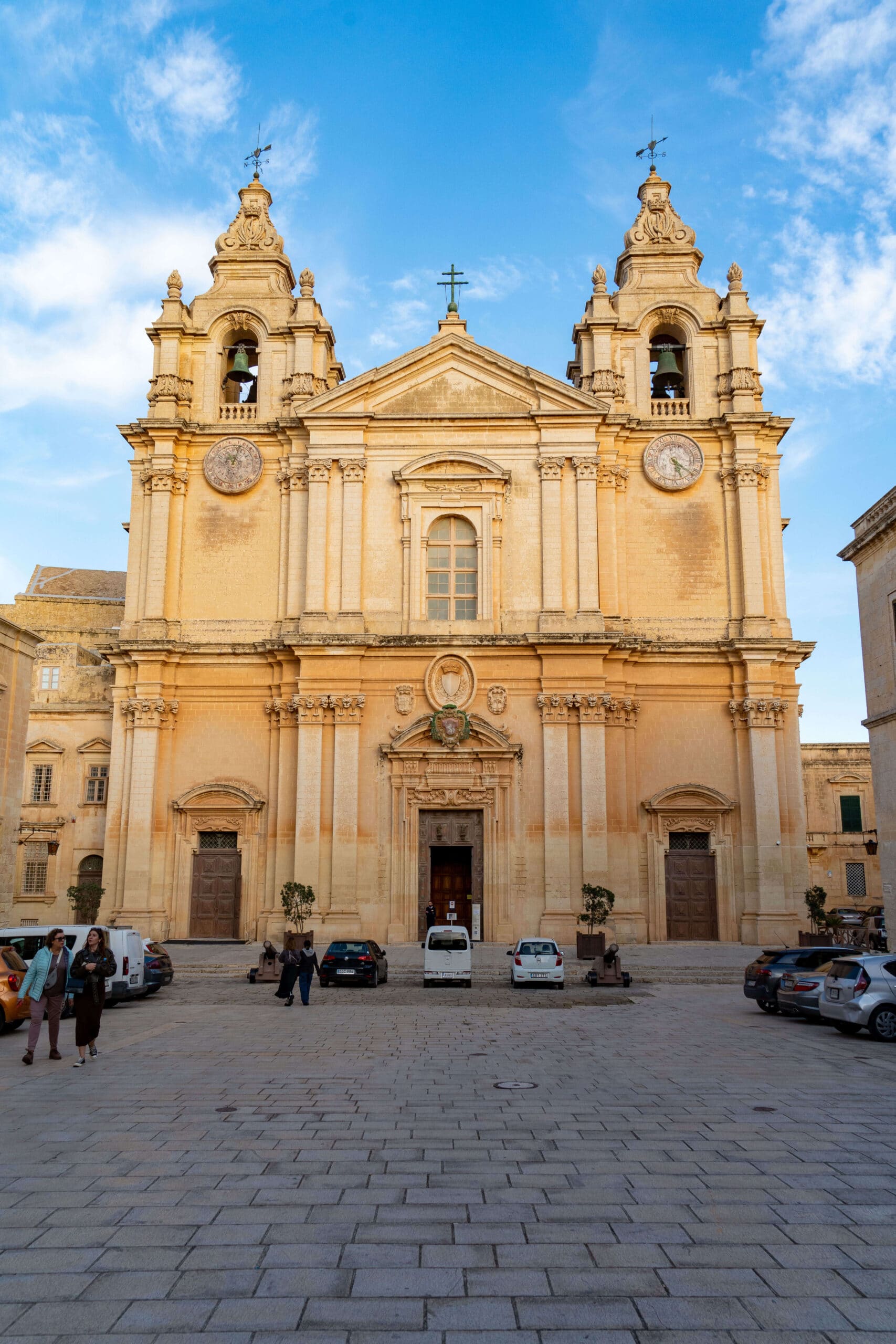
There’s no traffic inside the city walls, which makes wandering feel peaceful. We didn’t follow any route — honestly, the best part was turning into random alleys just to see where they led.
Walk along the bastions for countryside views and stop by St. Paul’s Cathedral while exploring.
It’s perfect if you enjoy historic towns and photography. If you’re expecting lots of attractions or entertainment, you might find it small. Plan for 1–2 hours unless you’re staying longer for dinner.
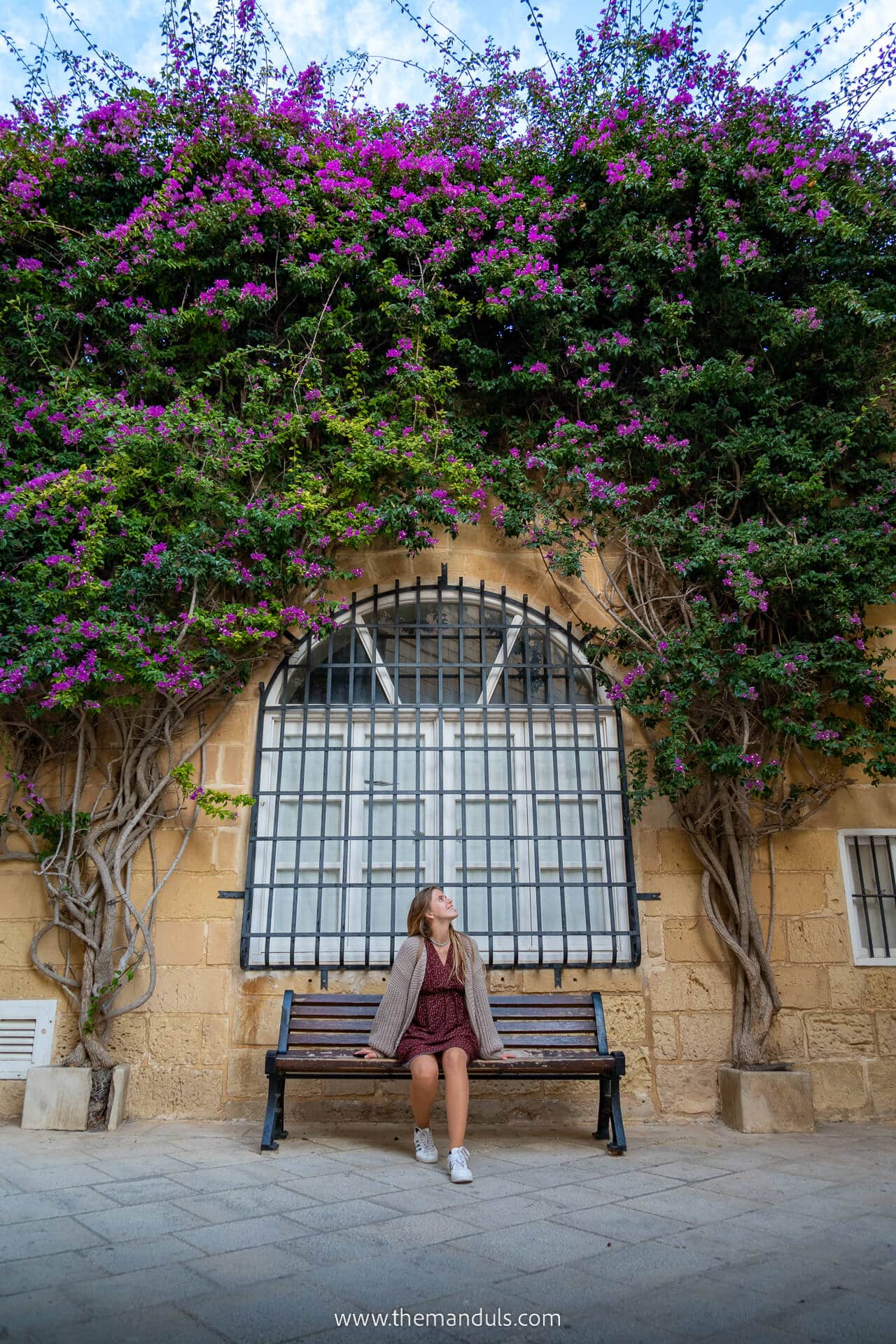
We visited in late afternoon when it already felt quieter. Midday can feel busier near the main gate, so timing makes a difference.
Insider Tip: Stay until early evening — once day-trippers leave, Mdina becomes noticeably more peaceful.
9. See the Blue Grotto
Entrance Fee: free, paid boat tours
Opening hours: viewpoint 24/7, boats weather-dependend
The Blue Grotto is a series of sea caves on Malta’s southern coast, famous for its intense blue reflections when sunlight hits the water.
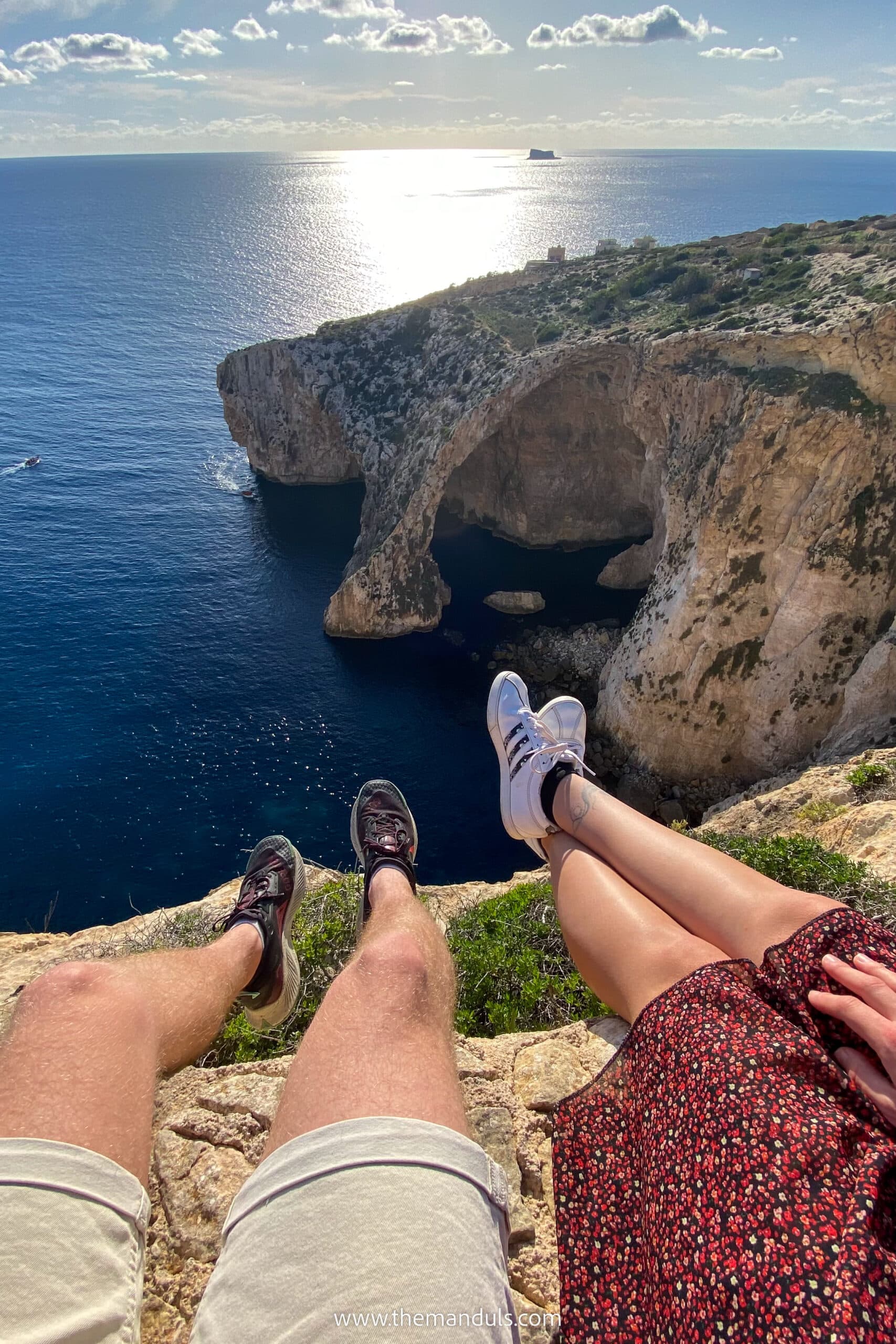
We first stopped at a viewpoint marked on Google Maps. From above, the rock formations and deep turquoise water looked impressive — but it felt more like a quick photo stop than a full experience.
The real highlight is taking a small boat from the harbour below. The boats enter the caves themselves, and that’s when the magic happens. Inside, the sunlight reflects off the seabed and lights up the rock walls in glowing shades of blue.
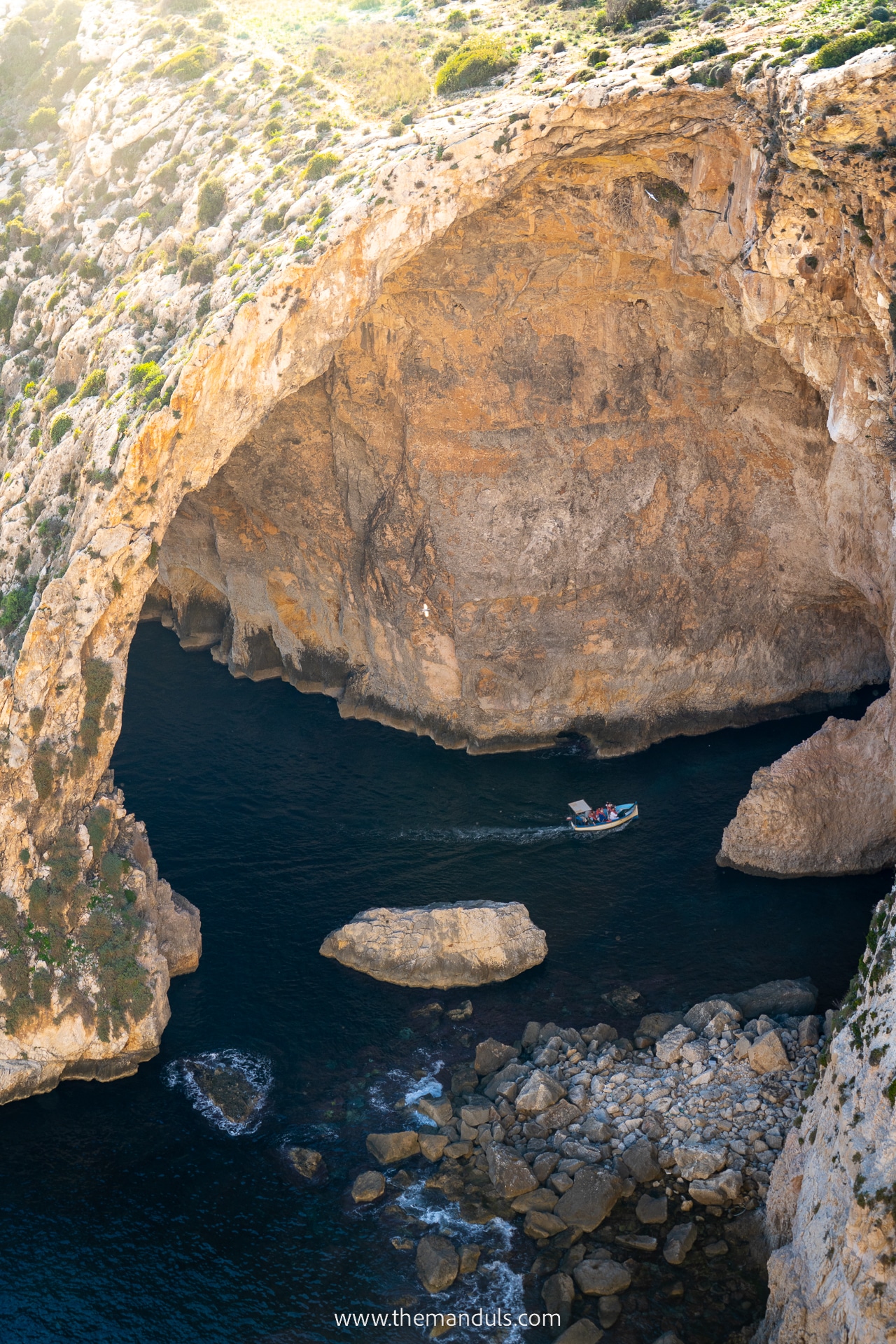
It’s perfect if you enjoy dramatic coastal scenery and short boat rides. If you’re prone to seasickness or visiting on a windy day, it might not be ideal. Sea conditions determine whether boats operate at all.
Plan for 1-1.5 hours including the boat ride.
When to go: Morning is best for colour intensity and calmer water.
Insider Tip: Check wind forecasts before you go — rough sea means no boats and a very different experience.
10. Swim Spots Not to Miss in Malta
Entrance Fee: beaches are free to enter
Malta isn’t all dramatic cliffs and rocky platforms — there are also proper sandy beaches, and a few stood out to us depending on what kind of swim we were after.
If you want the most comfortable, family-friendly option, Mellieħa Bay (Għadira Bay) is the safest bet. It’s the largest sandy beach on the island, with shallow, calm water and plenty of space. It’s not the most dramatic setting, but it’s practical and easy.
Golden Bay and Gnejna Bay feel more scenic and natural, especially toward sunset. We didn’t manage to visit both this time, but they’re widely considered among the most photogenic sandy beaches on the island.
In the south, near Marsaxlokk, we liked Pretty Bay for its wide sandy stretch and turquoise water. The only downside is the visible industrial harbour nearby — something to be aware of.
Balluta Bay is smaller and more urban, surrounded by hotels and buildings. It’s not the most natural setting, but if you’re staying in St. Julian’s, it’s convenient for a quick swim.
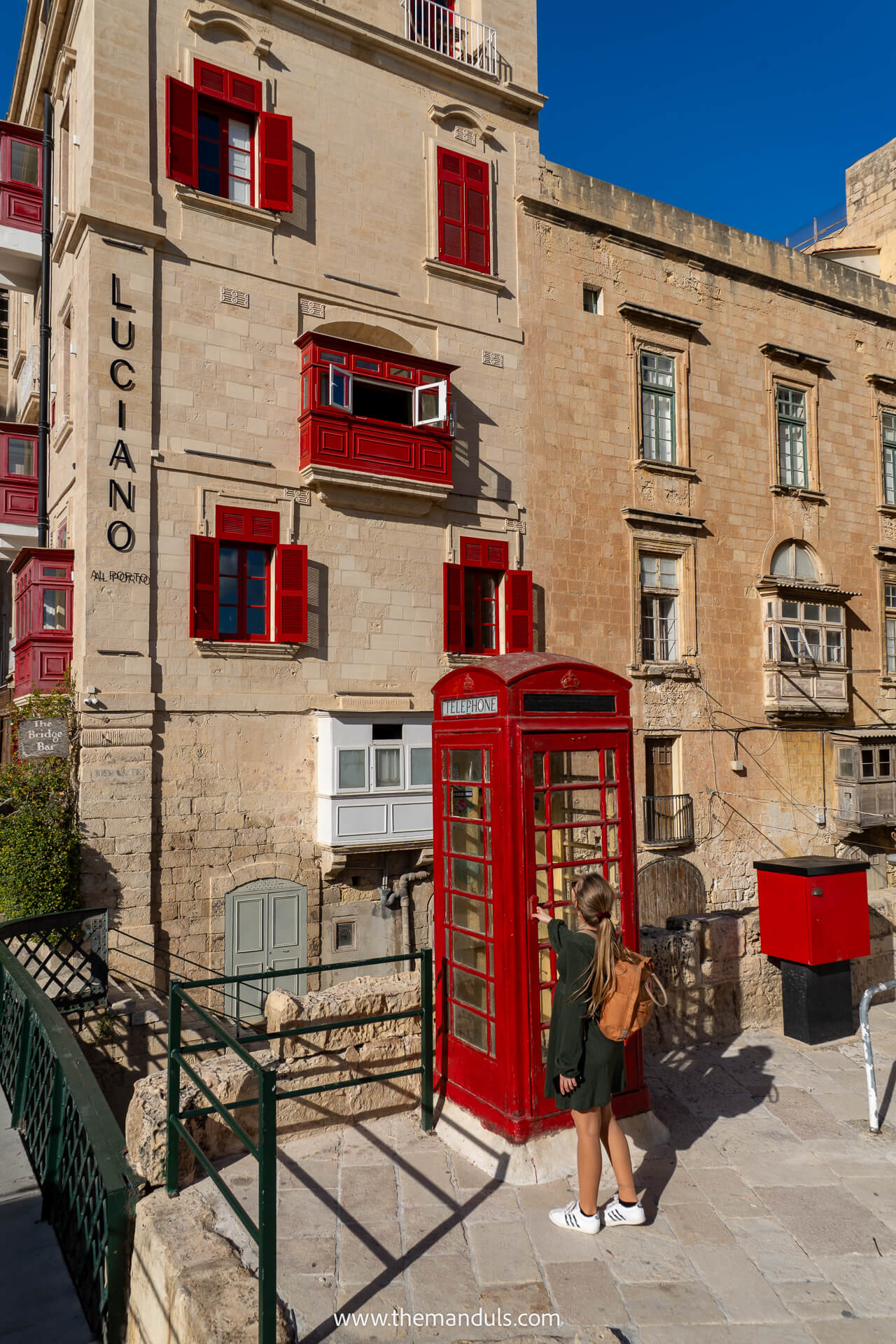
11. Party in Paceville
Paceville is Malta’s nightlife hub in St. Julian’s — and if you’re looking for clubs, bars, and late-night energy, this is where it all happens.
We walked through in the evening just to see what it’s like, and the vibe felt completely different from the rest of the island. Loud music, neon lights, promoters inviting you inside — it’s more of a Mediterranean party strip than a historic island atmosphere.
Everything is concentrated within a few streets, so you can easily move between bars and clubs in one night. It’s ideal if you’re in your 20s or specifically looking for nightlife.
If you prefer relaxed evenings, scenic sunsets, or romantic dinners, this probably isn’t your scene. It can feel chaotic, crowded, and heavily commercial — especially in peak season.
12. Boat Trip to the Blue Lagoon on Comino
Entrance Fee: boat tour requiered, starts from 30€
The Blue Lagoon on Comino is one of the most iconic spots — shallow, crystal-clear water with a bright white seabed that makes the sea glow almost unreal turquoise.
The only way to visit it is by boat. We recommend this full-day catamaran tour from Bugibba, which combines multiple swim stops with comfort and fun on board.
The trip lasts around 6–7 hours (with a shorter 4-hour sunset option) and usually includes a stop at Crystal Lagoon (May–October, weather permitting), where you can swim in a dramatic cliff-surrounded bay, followed by time at the Blue Lagoon itself. Along the way, the boat also cruises past sea caves, including the beautiful Santa Maria Caves.
What makes this tour stand out are the extras — a waterslide straight into the sea, underwater viewing windows, sunbeds, shaded and sunny seating areas, swim ladders, toilets, and a snack bar on board. It feels relaxed and well-organized.
And if the Blue Lagoon gets crowded during peak season, you’ll appreciate having the option to stay onboard.

13. Visit Gozo on a Day Trip
Gozo is Malta’s greener, quieter sister island — and it feels noticeably different the moment you arrive. The landscape is more rural, the roads are calmer, and the coastline feels wilder and less developed.
There’s a surprising amount to see for such a small island. The historic heart is Cittadella in Victoria, a fortified hilltop city with panoramic views and layers of history.
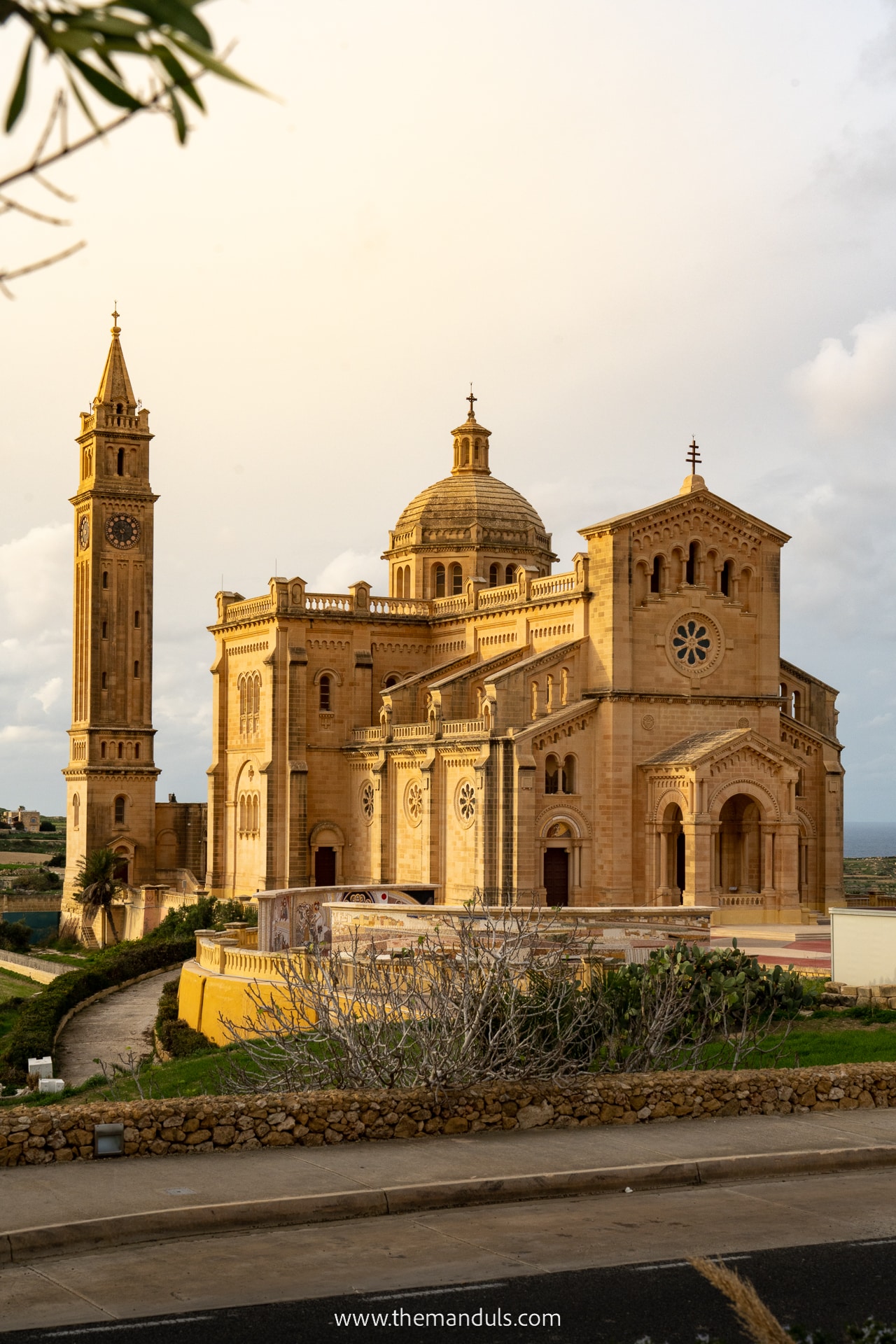
Nature was our personal highlight, though. Tal-Mixta Cave completely impressed us — the cave perfectly frames the red sand of Ramla Bay.
We also stopped at Wied il-Għasri, a narrow fjord-like inlet cutting into the cliffs — unusual and dramatic swimming spot. Around Dwejra, the Blue Hole, Fungus Rock, and the Inland Sea are all worth seeing, and the traditional salt pans near Marsalforn add another unique coastal stop.
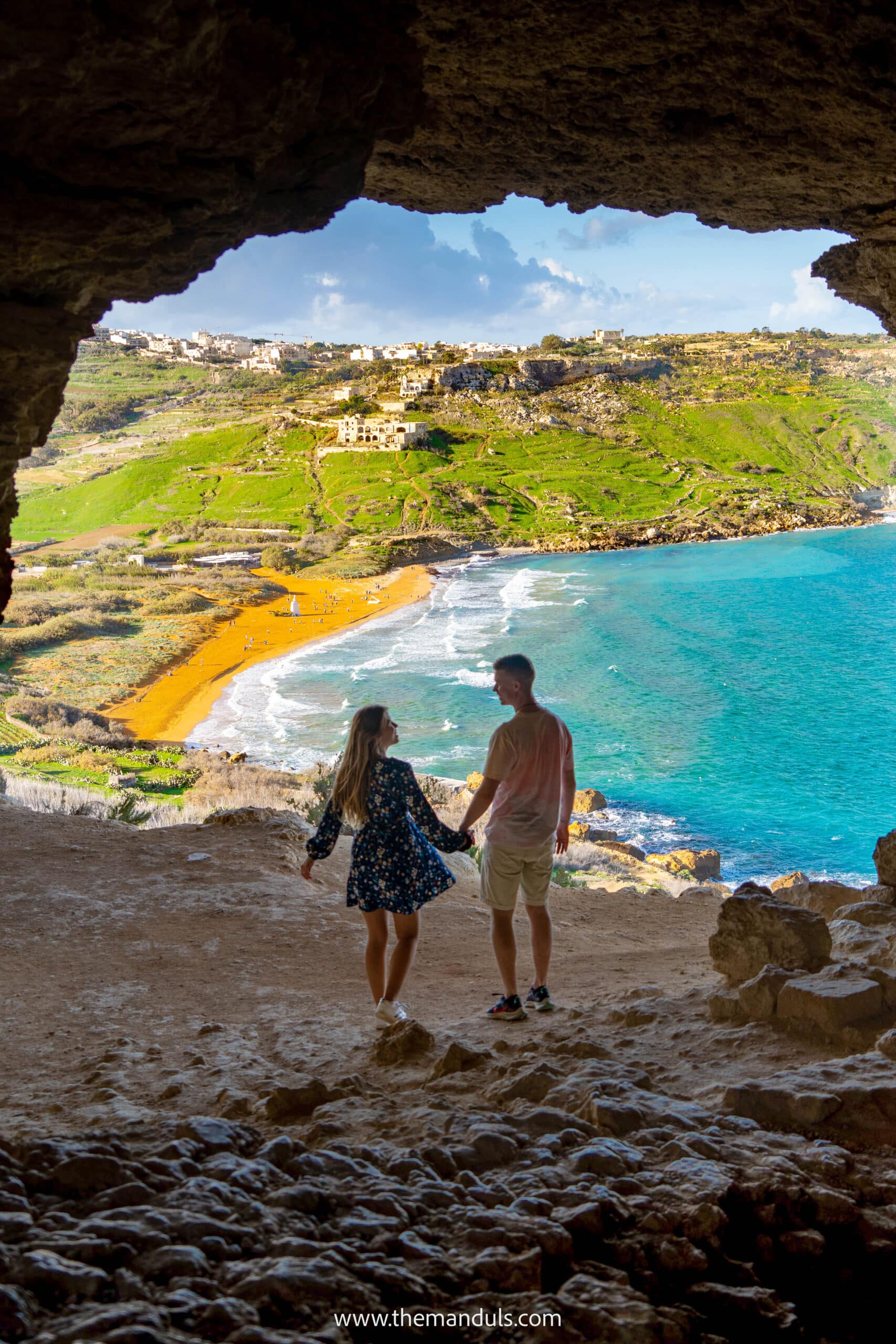
We visited independently with our rental car, taking the short car ferry across. It was simple, flexible, and allowed us to move at our own pace.
If you’d rather not drive, a great alternative is a UTV full-day adventure tour. It covers many of Gozo’s top highlights while giving you an open-air, panoramic experience without worrying about navigation.
14. Malta National Aquarium
Entrance Fee: adult €16.9, child (4-12) €10.9
Opening hours: 10 am – 6 pm
The Malta National Aquarium is more of a weather-dependent or family-friendly stop rather than a must-do highlight. If you’re visiting in winter, on a windy day, or with kids, it can be a nice change of pace from outdoor sightseeing.
Inside, you’ll walk through themed zones featuring local fish species, reptiles, and larger ocean tanks — including a curved underwater tunnel where sharks and rays swim above you.
It’s well-organized and easy to navigate, and you don’t need more than 1–1.5 hours to see everything.
Official website: aquarium.com.mt
15. Popeye Village: Is It Worth It?
Entrance Fee: adult €20, children (3-12) €16
Opening hours: changes seasonally, see the official website
Popeye Village is a colorful wooden film set built in 1980 for the movie Popeye, and today it functions as a small theme park and tourist attraction.
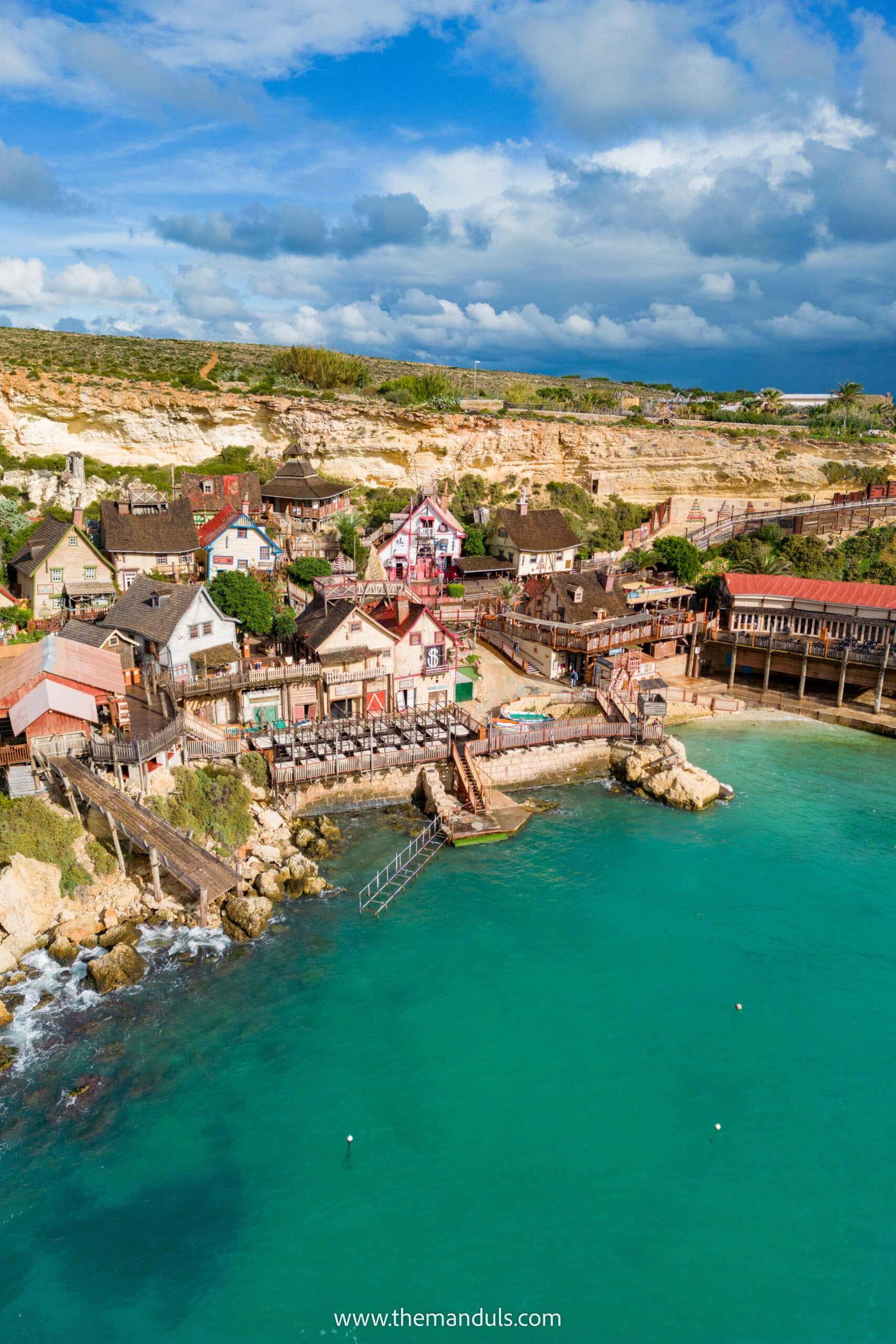
From a distance, it honestly looks amazing. We enjoyed the view is from the panoramic viewpoint above the bay — that’s where we got the classic photo of the bright wooden houses against turquoise water. And for that view alone, it’s worth a short stop.
We didn’t go inside the park itself. The entrance ticket includes small shows, activities, and seasonal events, which can be fun for families with kids, but as adults traveling mostly for scenery and atmosphere, it didn’t feel necessary.
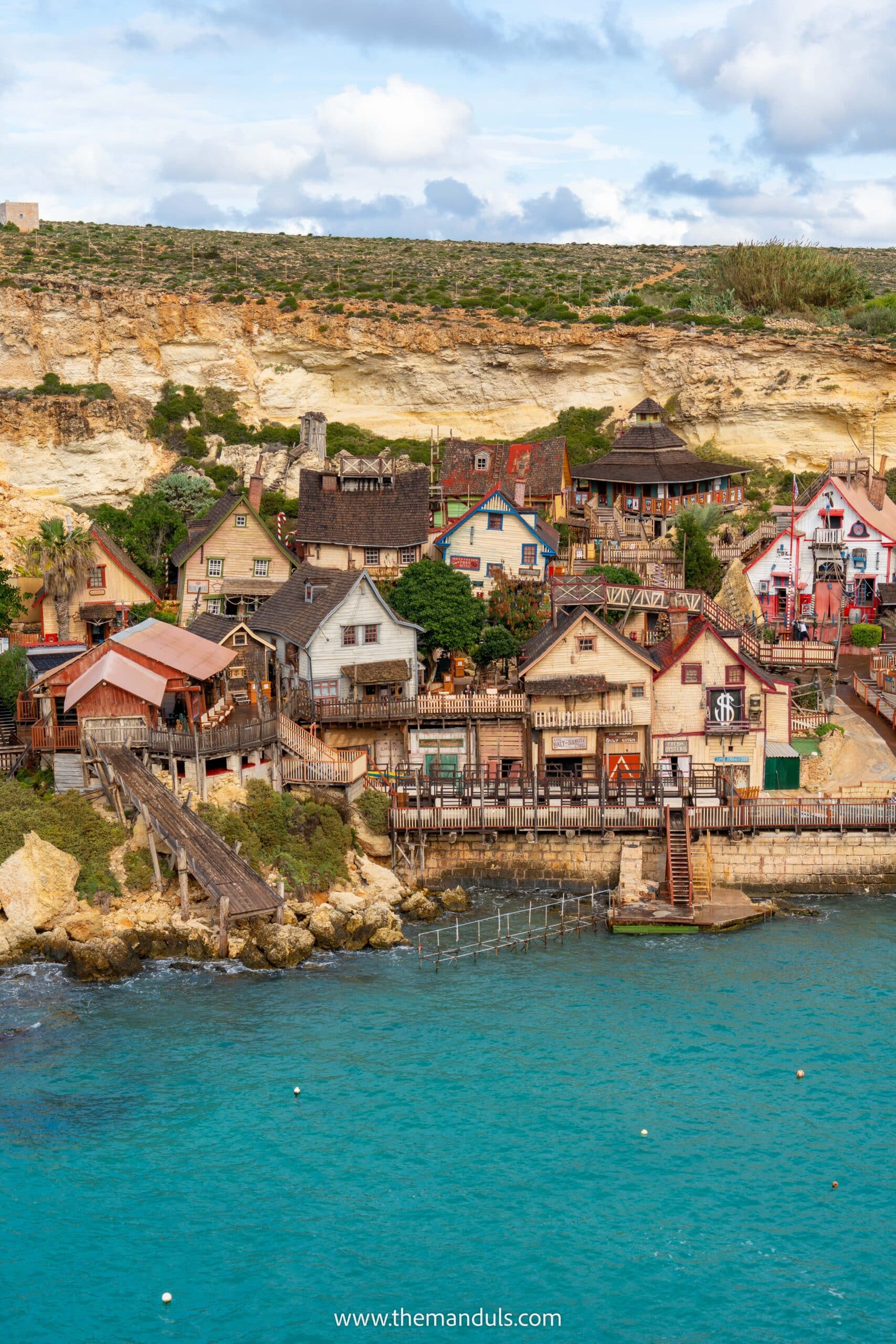
If you’re visiting Malta with children or you’re curious about the film history, it might be worth entering. Otherwise, we’d say stop at the viewpoint, take your photos, enjoy the coastal scenery — and move on.

Buy your Popeye Village entrance tickets in advance to avoid long queues.
Quick Tips & Local Insights
- Start sightseeing early in Valletta — cruise ship crowds arrive mid-morning.
- Book restaurants in St. Julian’s and Valletta ahead in summer.
- Sea temperatures are best from late June to October.
- Drivin in Valletta’s historic center is forbidden.
Final Thoughts
Malta may look small on the map, but the variety of experiences here surprised us. From fortified old towns and prehistoric temples to cliffside viewpoints and crystal-clear swim spots, the island gives you a little bit of everything within short distances.
We were honestly excited about how easy it was to mix culture in the morning with a swim or sunset walk later the same day.
That said, the experience really depends on how you plan it. Don’t try to squeeze every attraction into one packed schedule. Choose the activities that match your travel style, group them smartly by area, and leave room for slow dinners by the water.
If you’re deciding where to base yourself, our guide to the best areas and hotels in Malta will help you choose the right spot before locking in your stay.