
This article contains affiliate links. Learn more in our affiliate disclosure.
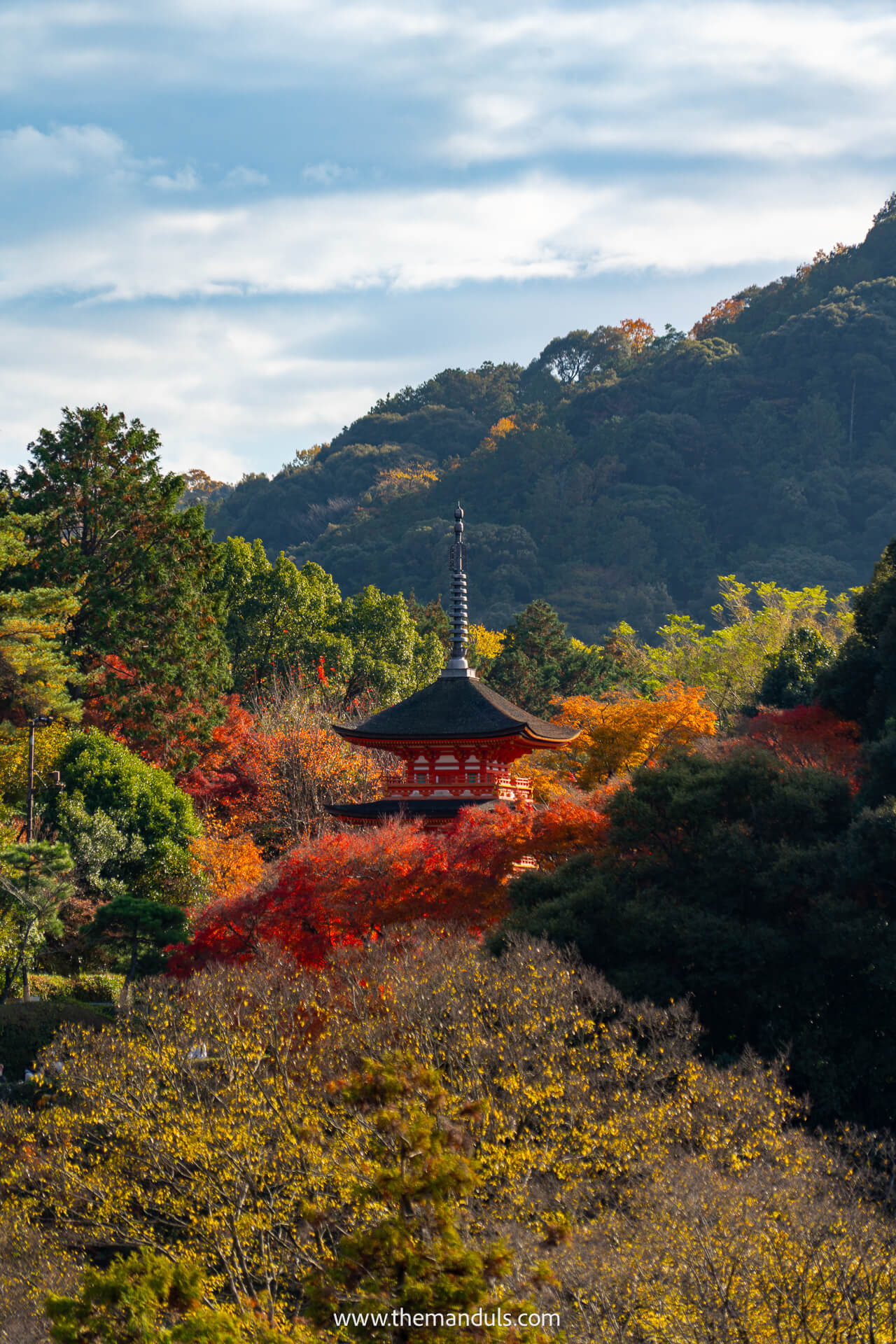
We planned our Japan trip around autumn foliage, so our day in Gion was always going to be about chasing fall colors. But Kiyomizu-dera ended up being one of those places that completely surprised us.
We thought we’d pop in, take a few photos, and move on. Instead, we walked into a sea of glowing red and orange trees that made the whole temple feel way more exciting than we expected.
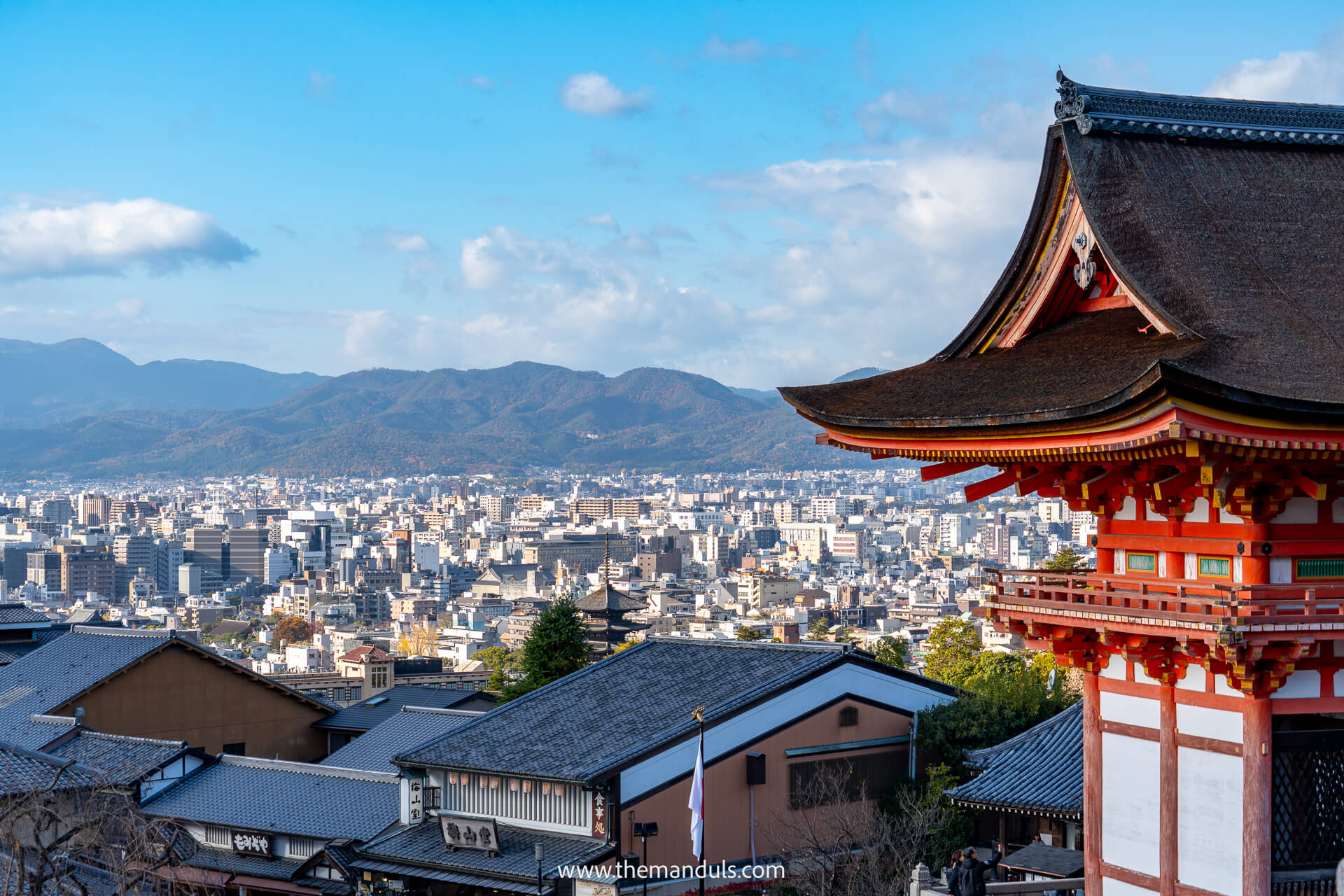
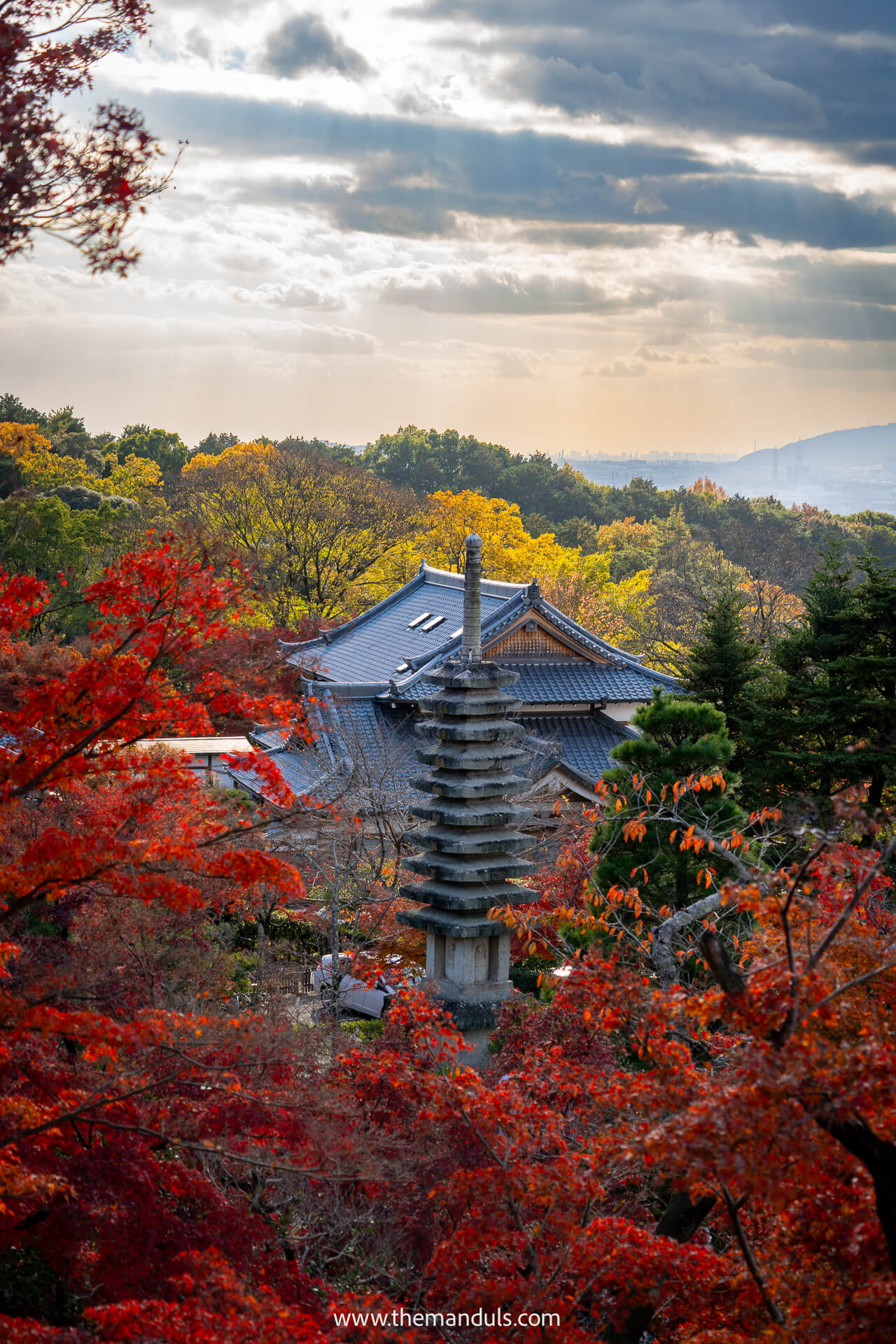
The biggest surprise, though, was the view at sunset. Standing on the wooden stage and looking out over Kyoto with autumn leaves in the foreground felt unreal — the city slowly lighting up below us while everything around was on fire with fall colors.
It wasn’t peaceful (actually far from it), because yes, it definitely gets crowded, especially during peak foliage season. But even with people everywhere, the atmosphere was still worth it.
In this guide, we’re sharing our experience visiting Kiyomizu-dera, along with practical tips on when to go, what to expect, how crowded it really gets, and how to plan your visit together with other best things to do in Kyoto.
Key Highlights
📍Location: Eastern Kyoto
⭐️ Best time to visit: early morning or near sunset
💰 Entrance fee: free, temple ground ¥ 500
🕥 Opening hours: 6 am – 6 pm, seasonally longer (check current opening hours here)
🚗 How to get there: walk from Gion
🥾Accessibility: easy walking with some stairs
Is it worth it?
Yes — as long as you know what to expect.
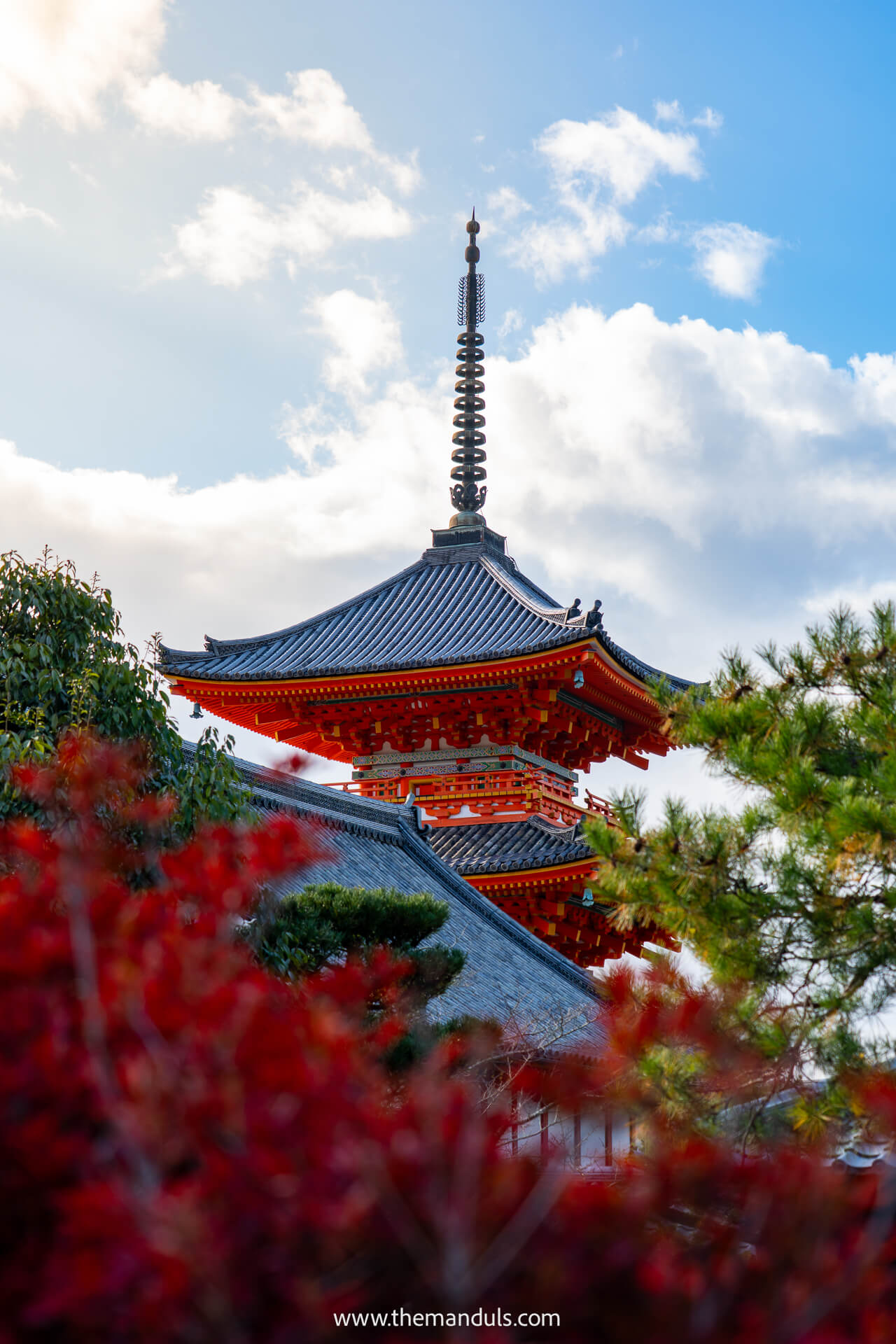
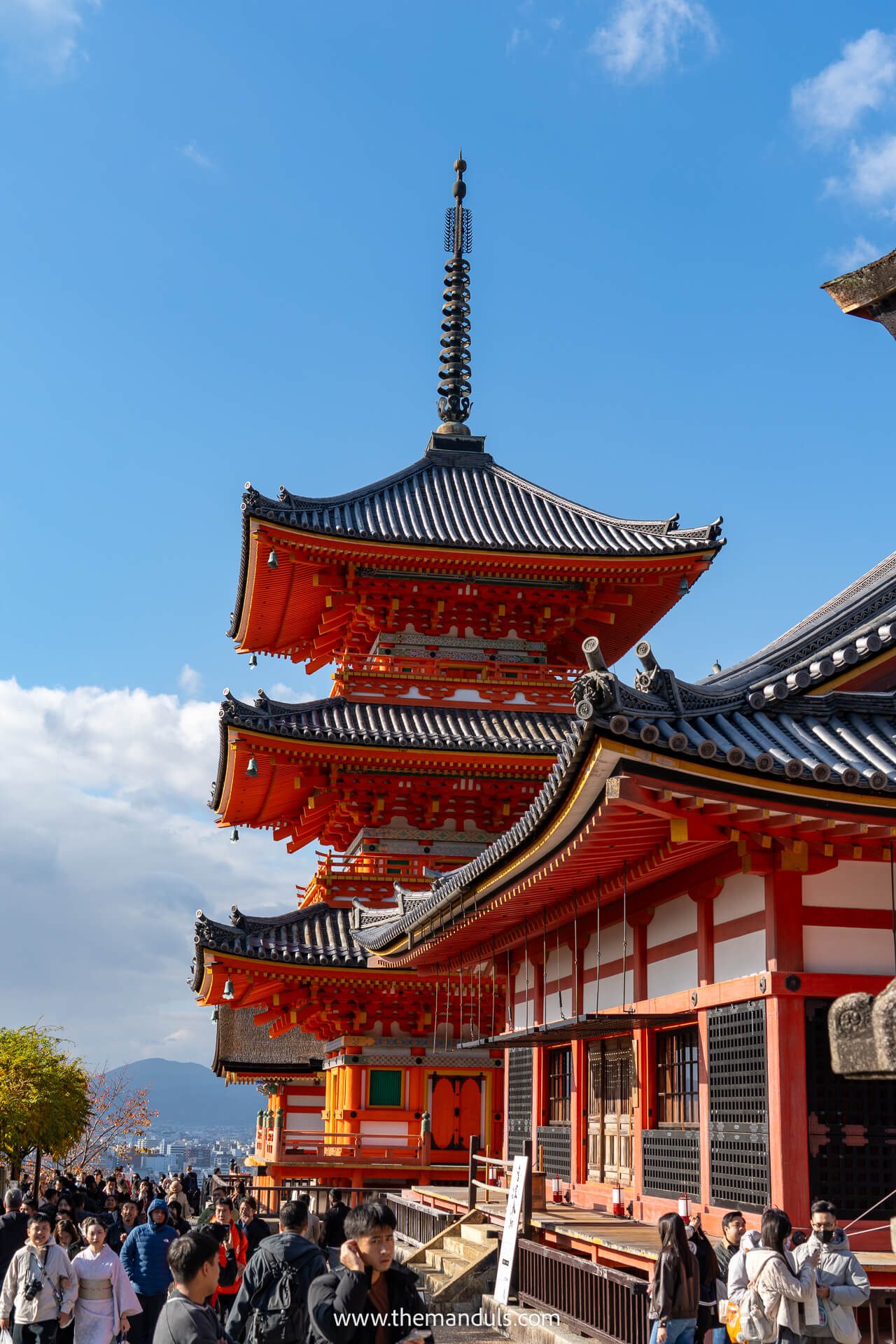
Kiyomizu-dera is worth visiting for its views over Kyoto, iconic wooden stage, and location above Gion, which makes it easy to combine with a walk through Higashiyama.
Even if you’ve seen photos before, the scale of the temple and the city view are more impressive in person.
That said, it’s one of the busiest temples in Kyoto. Crowds are part of the experience here, no matter the season, and it doesn’t have the calm atmosphere you’ll find at smaller temples.
Timing matters a lot — visiting early in the morning or later in the afternoon makes a noticeable difference.
Overall, we’d say Kiyomizu-dera is worth seeing once, especially if you’re already exploring Gion or Higashiyama.
In a hurry?
These are our top hotels in Kyoto we’d book again
⭐️⭐️⭐️ Cross Hotel Kyoto (our top pick) – A modern mid-range stay in a central part of downtown. Comfortable rooms, great design, and an easy base for exploring.
👉 See prices & availability →
⭐️⭐️ The Thousand Kyoto – A luxury hotel with spacious, minimalist rooms and an excellent breakfast. Its location makes getting around the city incredibly easy.
👉 See prices &availability →
⭐️ Guesthouse Soi – A simple and budget-friendly guesthouse near Kiyomizu-dera with clean rooms and a genuinely warm, helpful atmosphere.
👉 See prices & availability
Where is Kiyomizu-Dera Temple
Kiyomizu-dera is located in eastern Kyoto, on the edge of the Higashiyama district, just above the historic streets of Gion.
In terms of distance from popular nearby spots:
- Yasaka Shrine: around 25 minutes on foot
- Gion: about 20–25 minutes on foot
- Sannenzaka & Ninenzaka: 5–10 minutes on foot
📍Save the location to your Google Maps.
How to get there
On foot
We came on foot while already exploring Gion, and it turned out to be the easiest and most enjoyable option. The walk took us through Sannenzaka and Ninenzaka, past traditional streets, small shops, cafés, and a few other sights along the way.
The only thing to be ready for is the final uphill section with stairs, and depending on the time of day, quite a lot of people are heading up at the same time. Still, coming by foot felt unrushed, and it fit perfectly into a day around Higashiyama.

By bus
We used Kyoto buses several times during our trip and found them easy to use, especially with Google Maps, which clearly shows stops, lines, and schedules. They’re a good option if you’re coming from farther away.
That said, buses can get very crowded, and with a stroller it wasn’t the most comfortable experience — manageable, but not ideal. We took the bus from the Nanzen-ji area to Gion, then walked from there to Kiyomizu-dera, which worked well.
You can get to the temple entrance by bus so you’ll still have to walk the final section.
Good to know: on Kyoto buses, you pay when you exit, and it’s a flat fare, no matter how many stops you ride.
By taxi
Taxis are convenient if you’re short on time or don’t feel like dealing with buses. They can drop you close to the temple, but not right at the entrance, so a short uphill walk is still unavoidable.
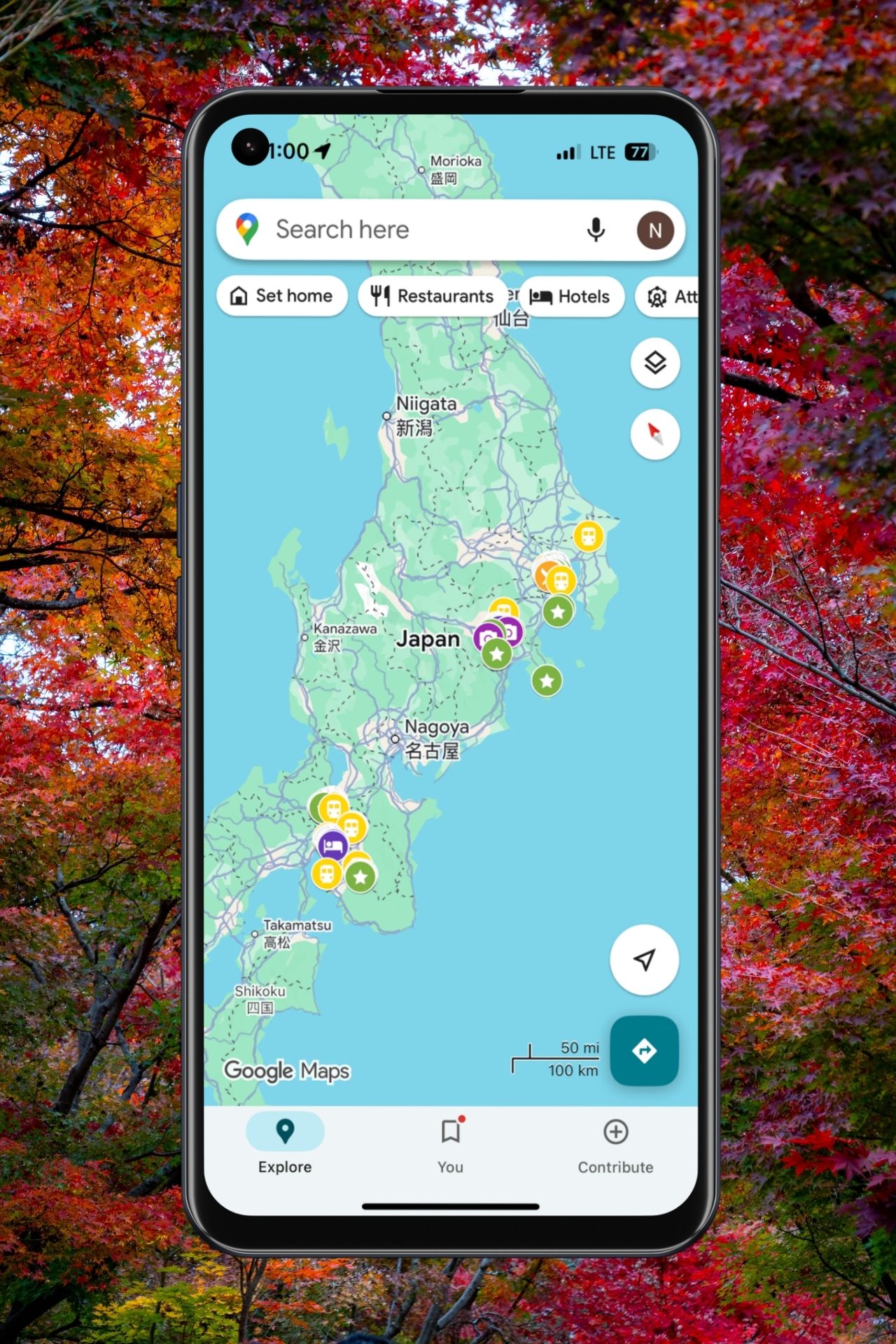
Our Japan Google Maps
Built from our real trips across Japan — only places we actually visited and loved.
No tourist traps. No random saves. Just a ready-to-use map that saves you hours of research.
219 handpicked spots, including:
📍 Highlights & hidden gems
🍜 Restaurants we’d go back to
🏨 Areas & hotels we’d book again
🗺️ Stops that fit into real, logical itineraries
Entrance fees

Entrance Fee: ¥ 500
Kiyomizu-dera has a large temple complex that’s free to enter, and you can already see quite a lot without buying a ticket. This includes walking around the grounds, enjoying beautiful views over Kyoto, and visiting several prayer halls along the way.
There’s also a paid section that gives access to the main hall and the famous wooden stage. During our visit, the line for tickets was long, so we decided to skip the paid area — and honestly, we didn’t feel like we missed out.
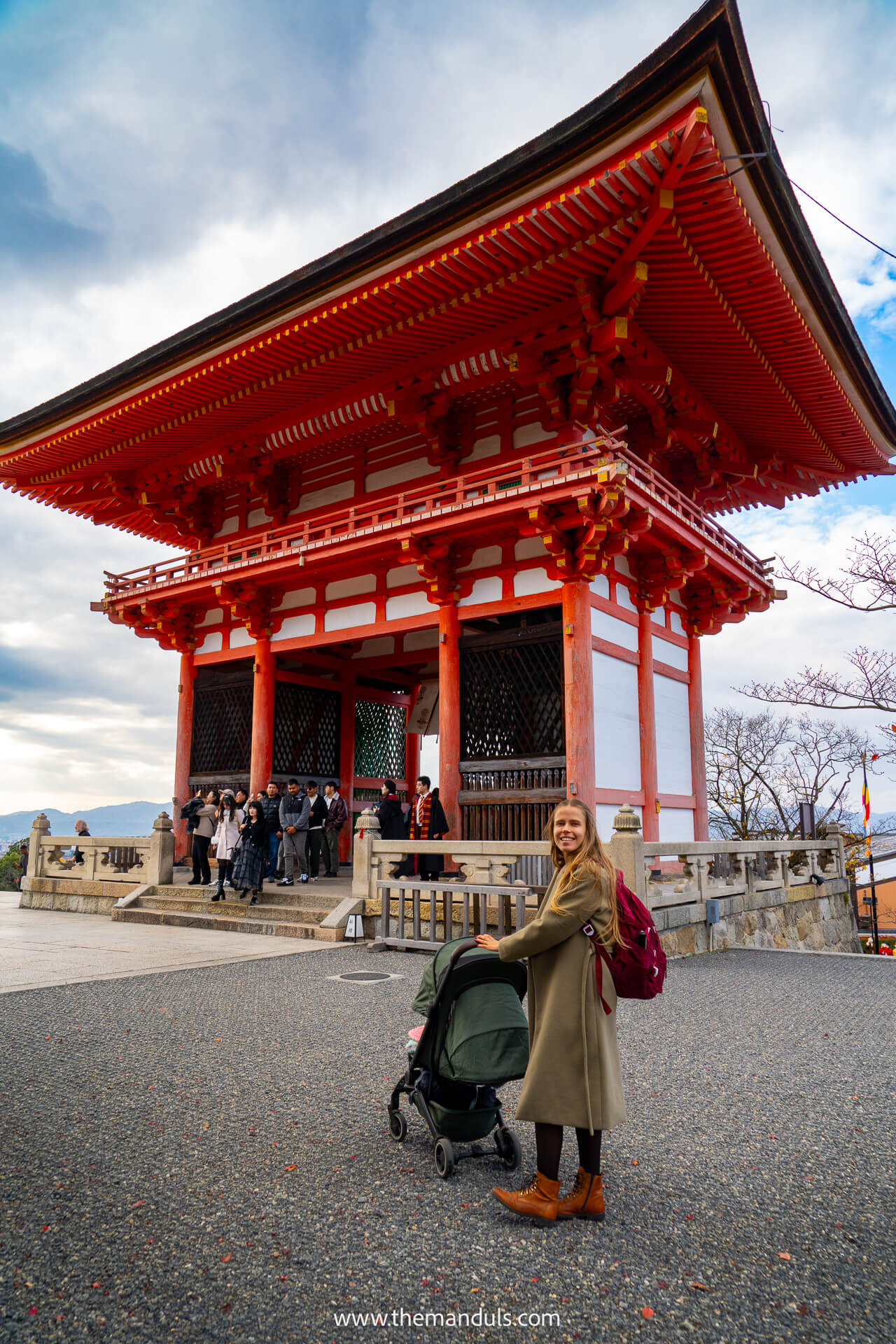
The free parts were spacious, scenic, and offered plenty of viewpoints to enjoy at a relaxed pace.
During autumn, the temple also hosts evening illuminations, when the paid areas stay open later and the foliage is lit up after dark. If you’re visiting in that season and don’t mind crowds, this can be a nice alternative to a daytime visit.
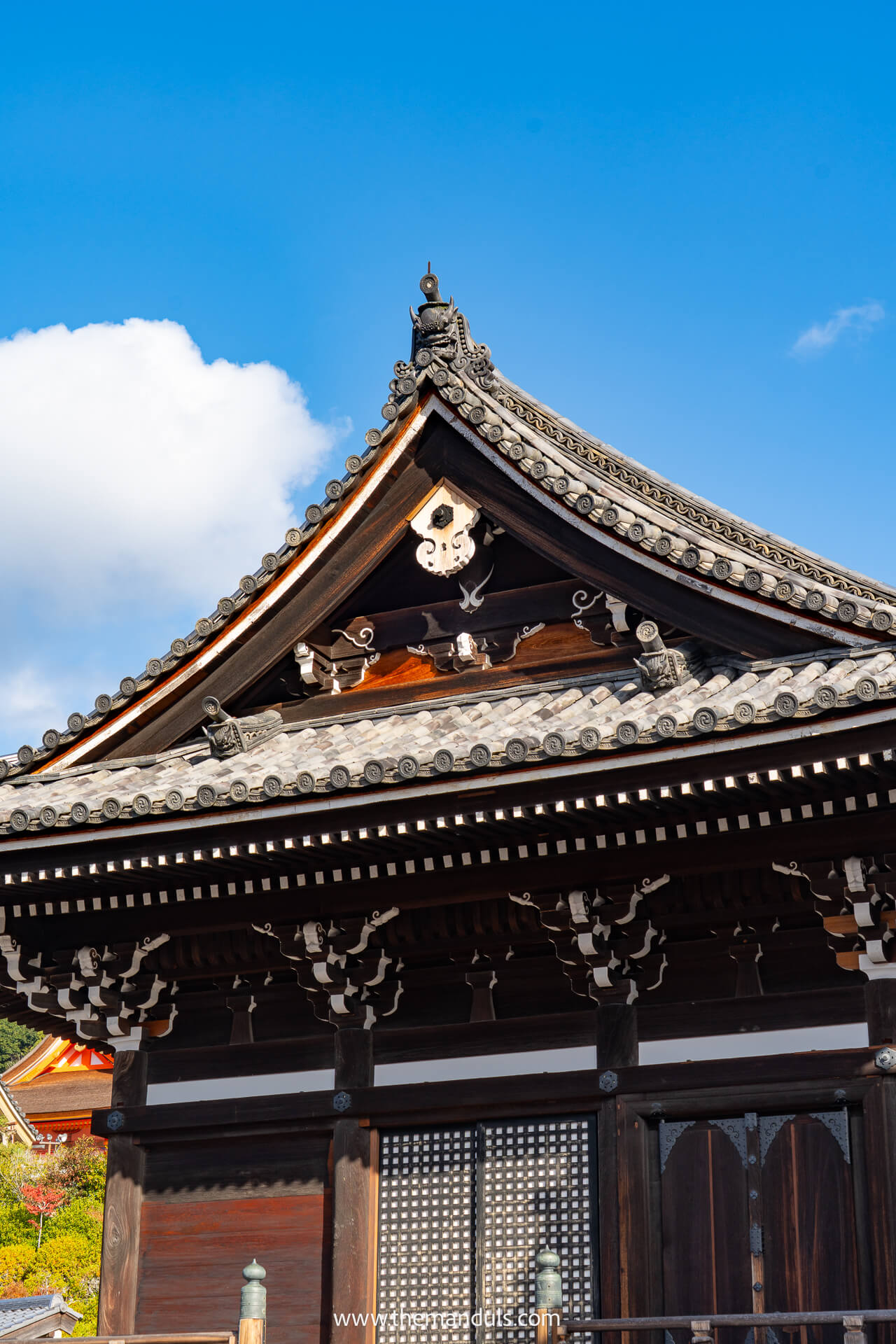
What to expect at Kiyomizu-Dera
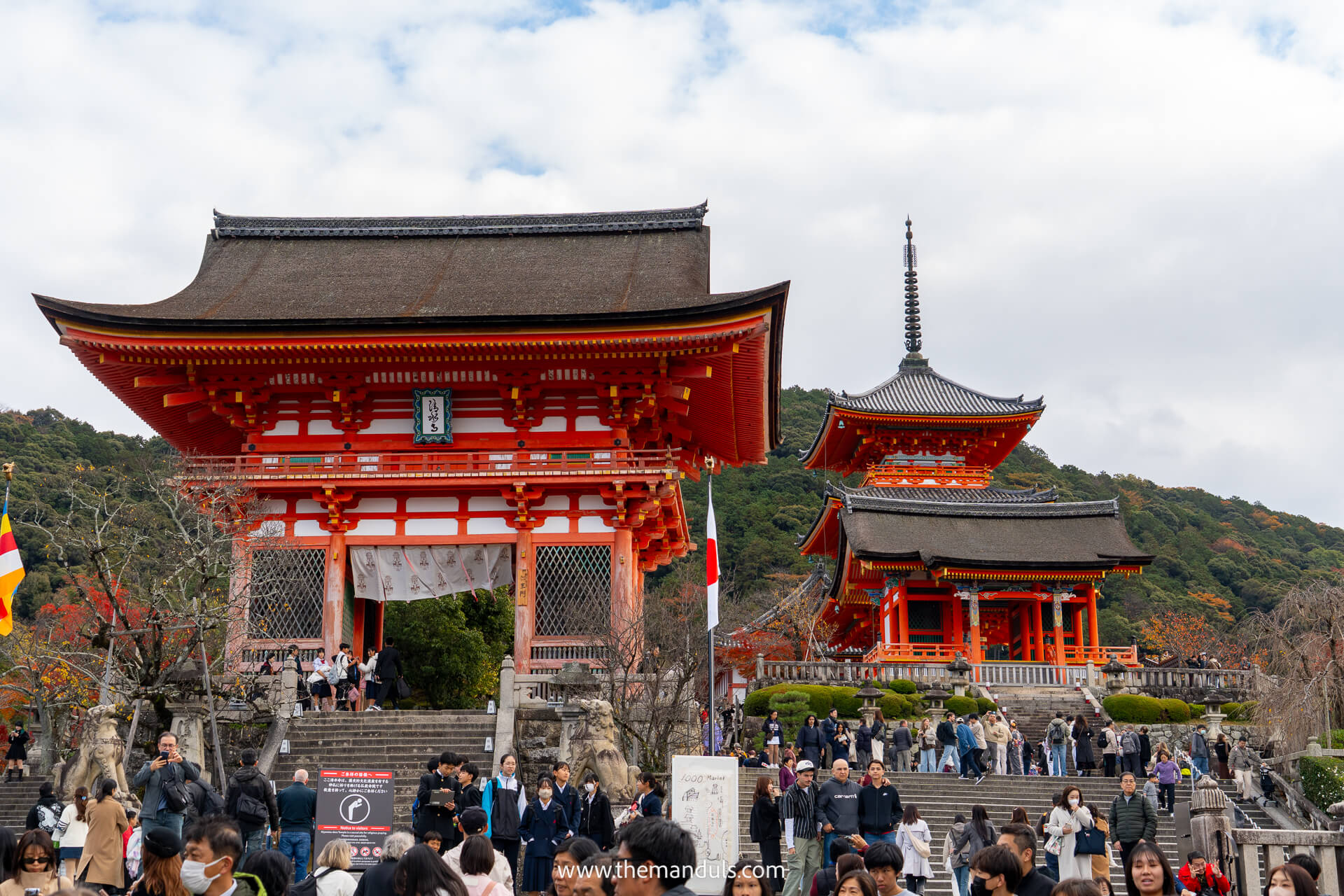
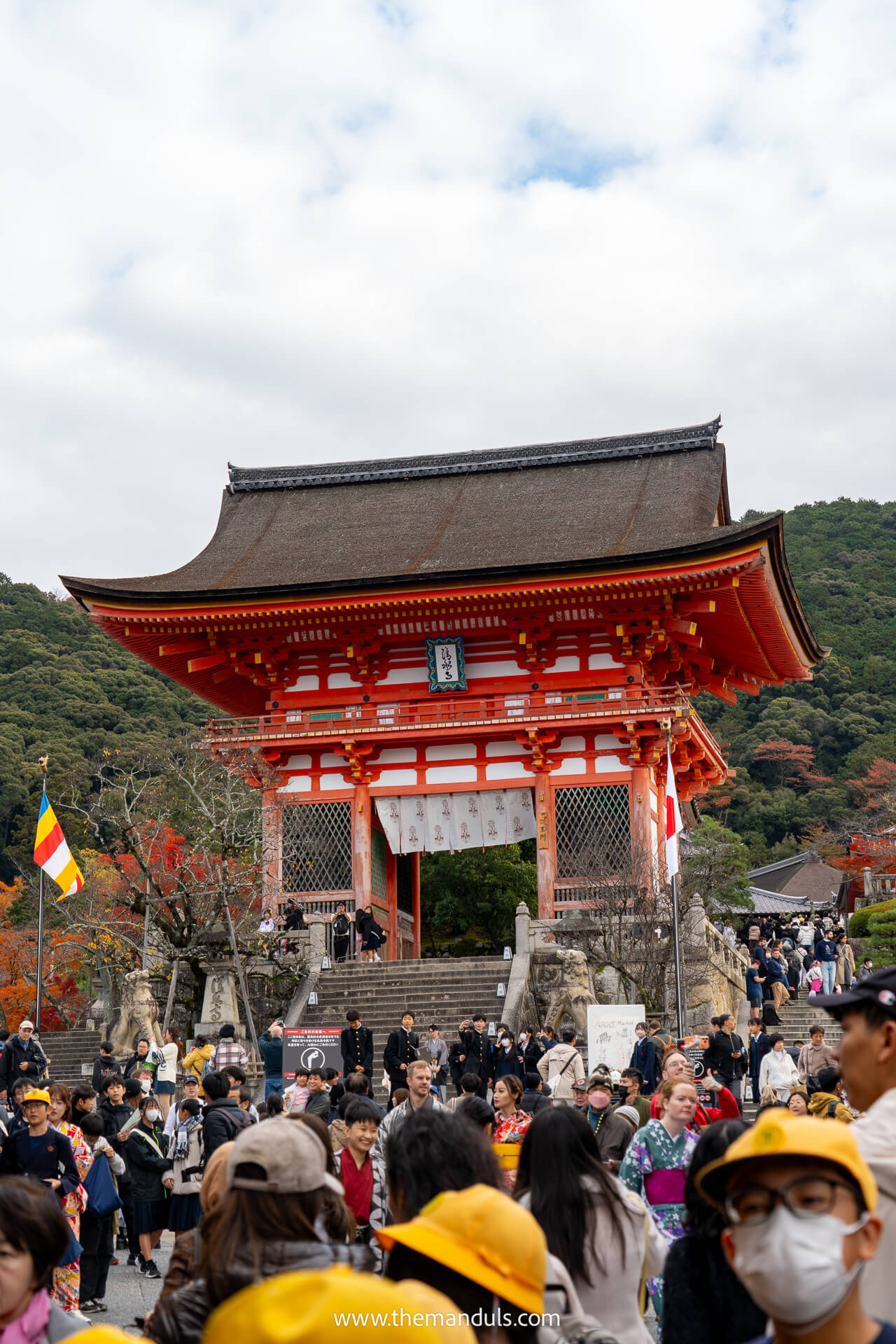
Kiyomizu-dera is a large, open temple complex on a hillside, so expect a mix of walking, viewpoints, and busy paths rather than a quiet, enclosed temple visit. As soon as we approached the entrance, it was clear this would be a popular and lively place.
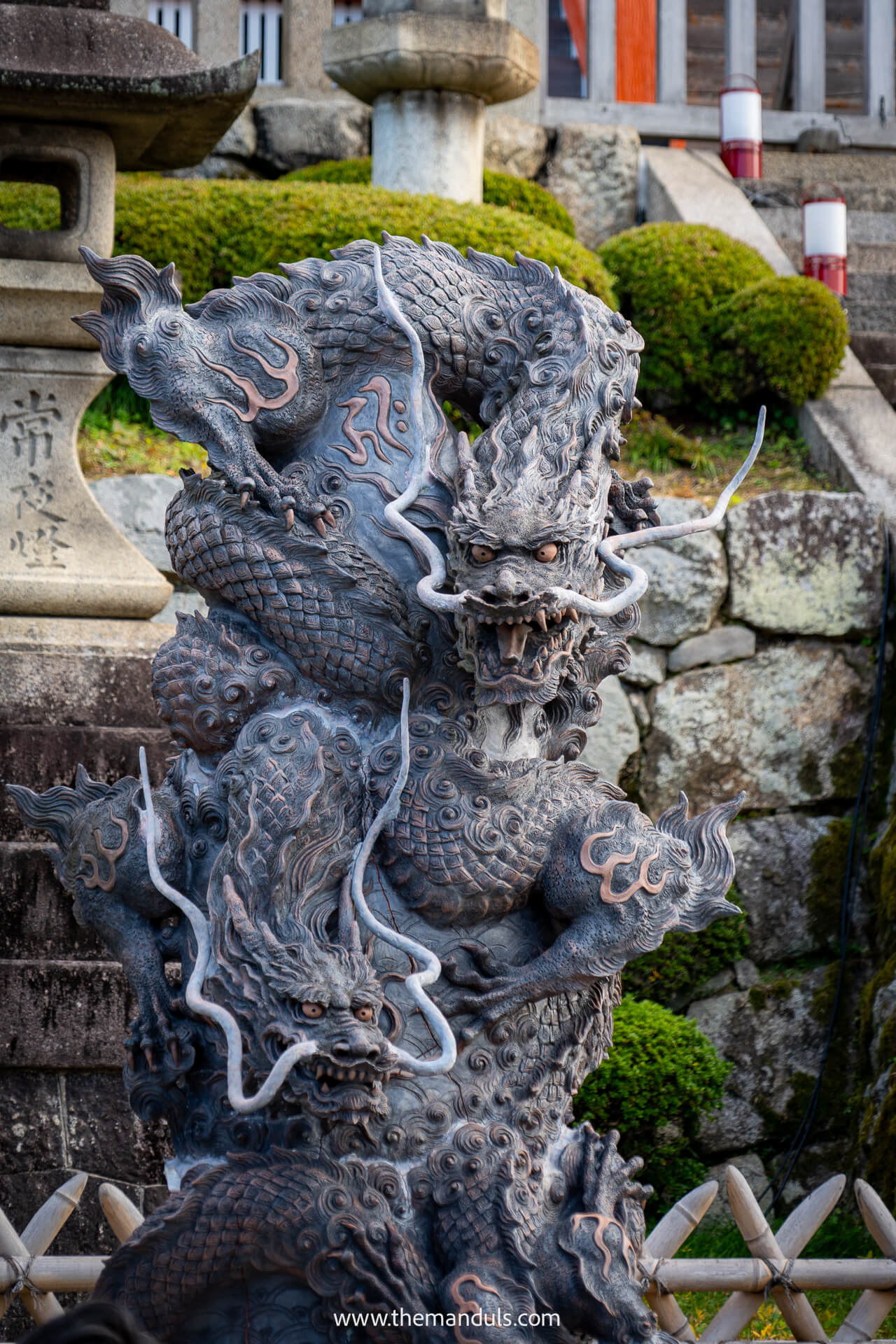
Right at the start, you walk up a series of stone steps, passing small temple structures, statues, and decorative elements along the way. This was one of our favorite parts — we loved stopping to look at the statues before reaching the upper level.
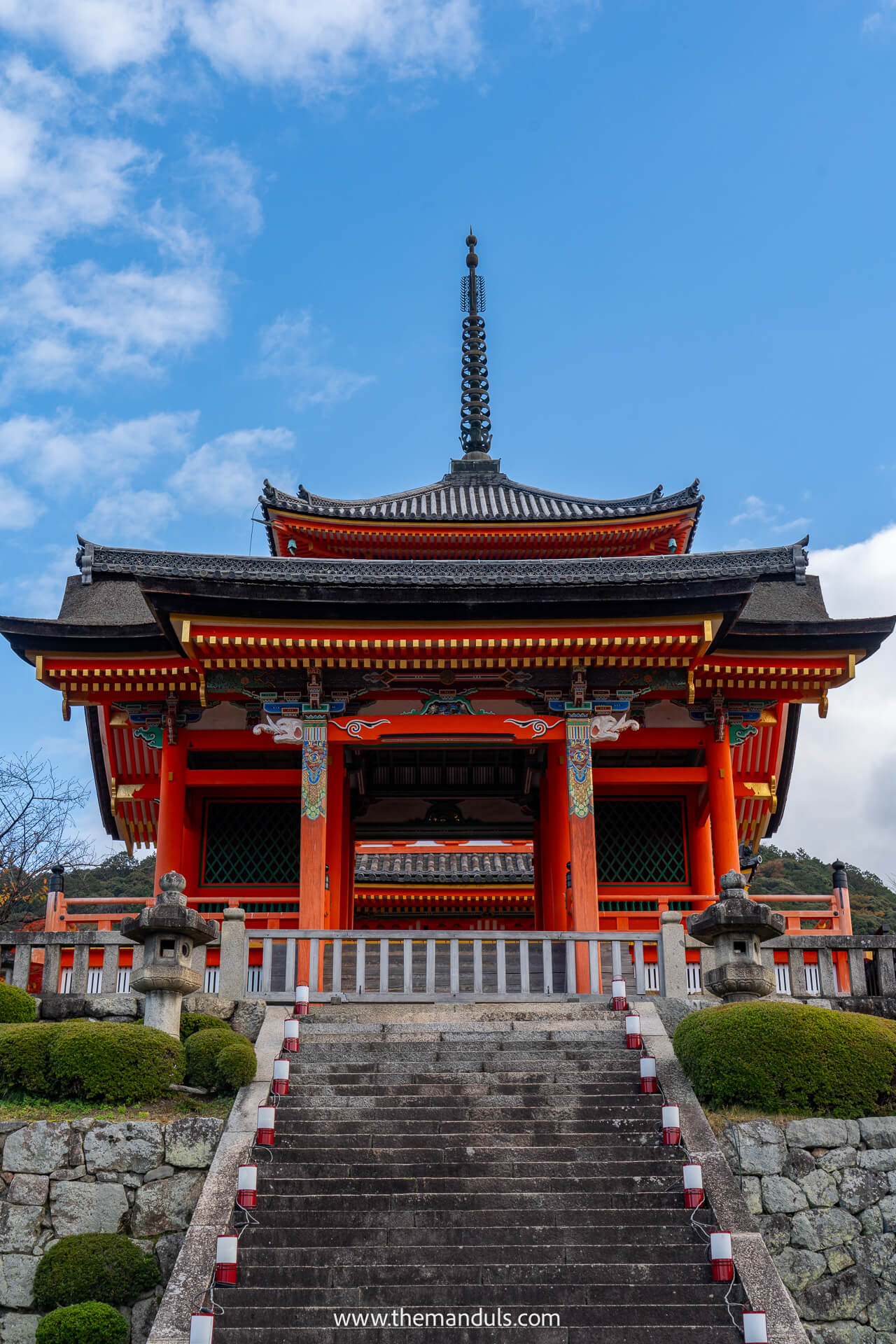
At the top, you’re greeted by a large red-and-white gate with a classic curved roof. Just beyond it, there’s a prayer hall positioned in the center of the complex.
To the right of this hall, we found one of the best spots for city views, especially later in the day when the light softens toward sunset.
Behind the prayer hall, the paid entrance leads to the main hall and wooden stage, with another terrace overlooking the surrounding trees. During our visit, this area was especially scenic.
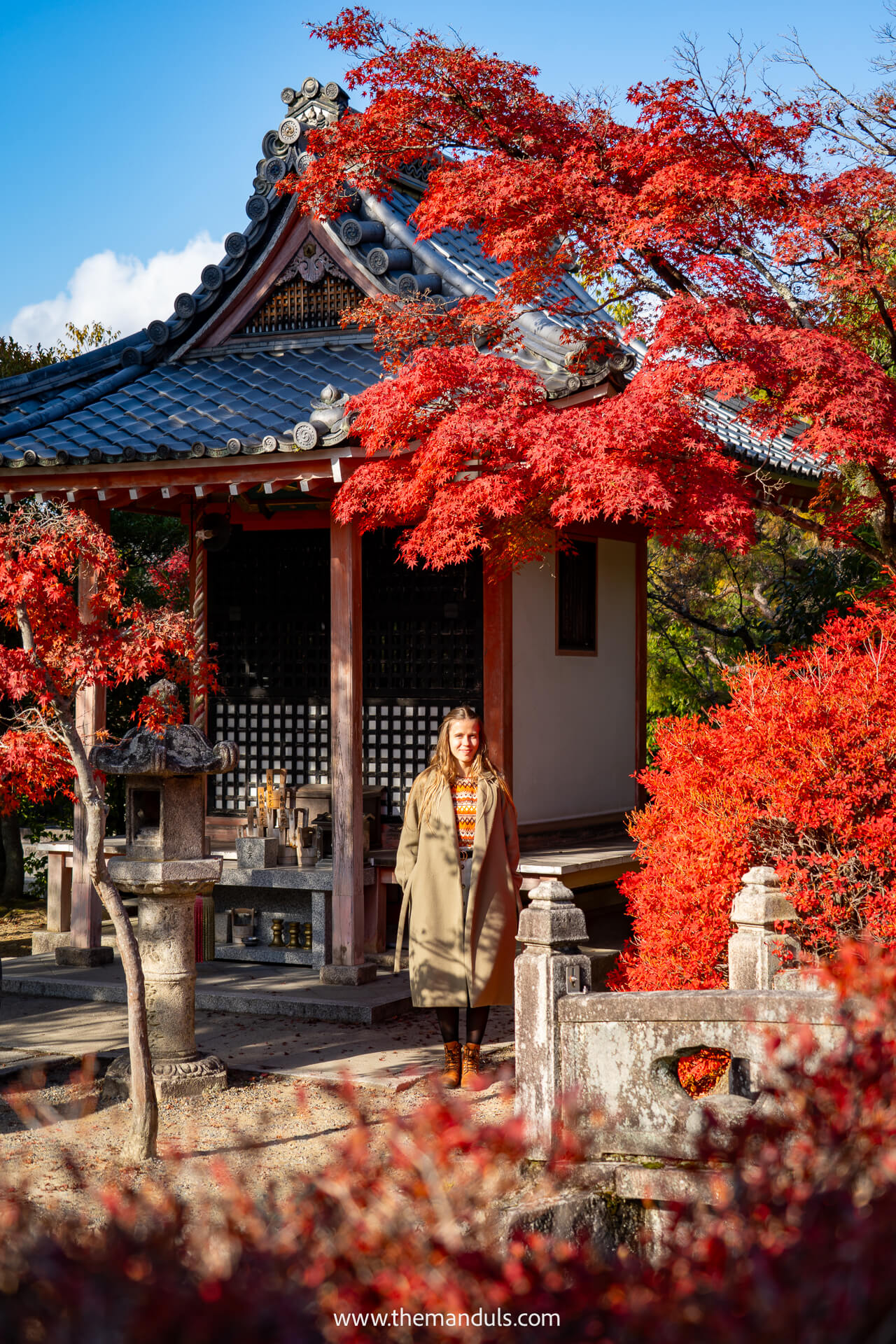
We personally enjoyed the left side of the complex the most, where there’s a small pond, a bridge, and a few quiet shrines tucked away. It felt noticeably calmer here, with fewer people around, and was a nice contrast to the busier central areas.
Facilities
Kiyomizu-dera is well set up for visitors, especially considering how many people pass through each day.
You’ll find public toilets within the temple area, along with small souvenir shops selling traditional items and local snacks. There are also food stalls and cafés around the entrance and along the streets leading up to the temple, making it easy to grab something before or after your visit.
Seating is limited inside the complex, and there are no large indoor rest areas, so it’s more of a walking visit than a place to sit for long breaks. Vending machines are available nearby, but it’s still a good idea to bring water, especially in warmer months.
Where to eat and drink
- Tarekatsu – Affordable and tasty tare-katsu bowls. Light, sauce-coated katsu that’s perfect for a quick meal between sightseeing.
- Izugen – Traditional Kyoto-style sushi, including sasazushi wrapped in bamboo leaves. A good place to try something local and unique.
- WAGYU SAMURAI BURGER KYOTO – Soft wagyu beef burgers with rich flavour. Ideal if you want something casual but still high-quality.
- Gion Danran – Small restaurant run by an elderly couple. Opens at 5 PM and fills up fast. We loved the beef yakisoba — simple, delicious, and affordable.
- Tendon Restaurant Loosen Up! – Crispy tempura bowls with generous portions. Great comfort food after a long day of walking.
Best time to visit
Early morning is easily the calmest option. There are fewer tour groups, walking through the grounds is easier, and it’s the best time to enjoy the views and take photos without constantly navigating around people.
It’s also when the streets, shops, and architecture along the way feel most pleasant and unhurried.
We arrived just after noon, and by then it was already very busy. While we still enjoyed the area, the crowds were intense — especially around Sannenzaka, Ninenzaka, and the streets leading up to the temple. Once inside the temple complex, it felt a bit better thanks to the more spacious layout.
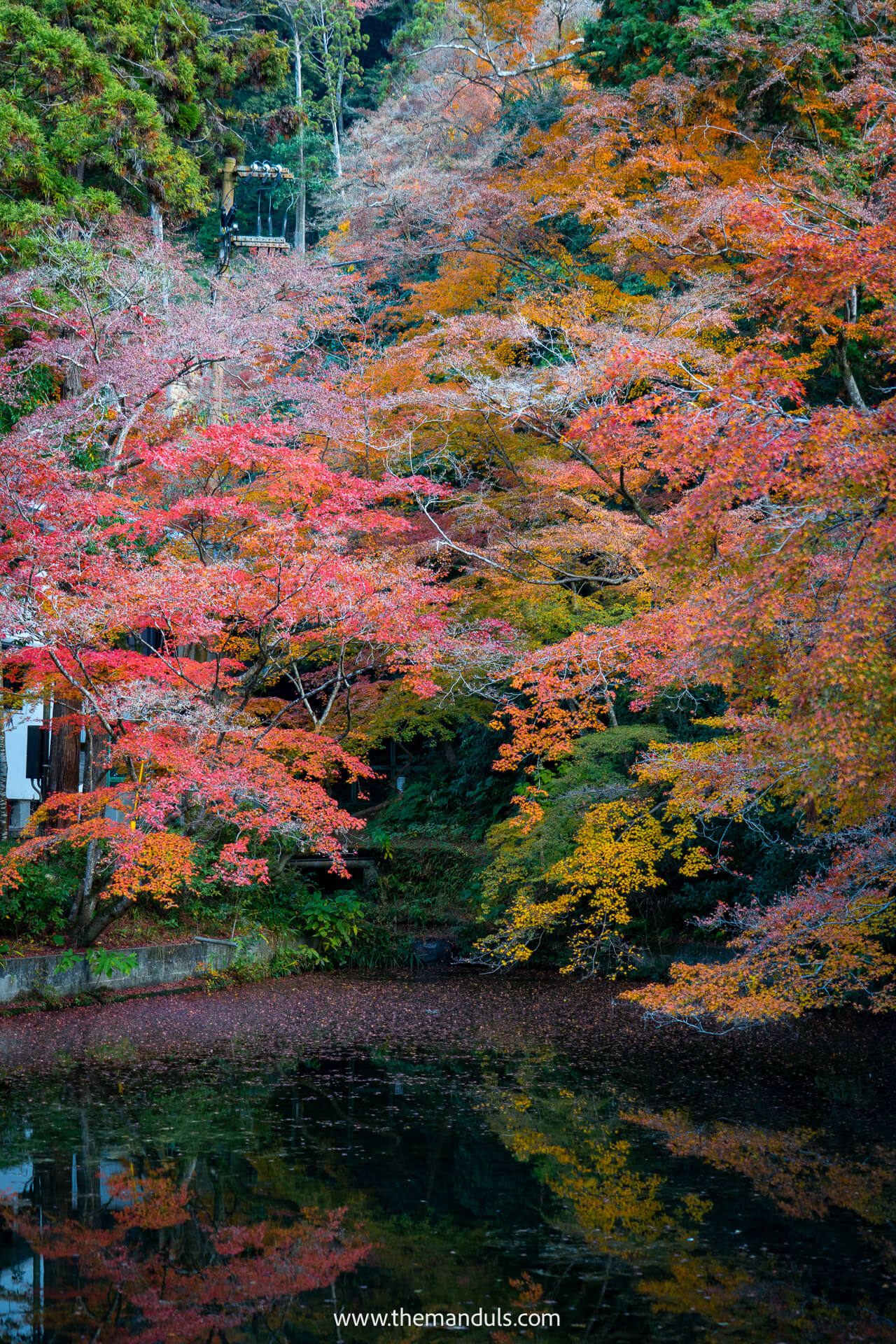
We stayed until sunset, hoping it would calm down, but it actually went the opposite way. Crowds increased as more people arrived, which made sense given it was illumination season and many visitors came specifically for the evening atmosphere.
In a different season, sunset might feel calmer, but during peak periods it tends to be one of the busiest times of day.
Season-wise, spring and autumn are the most popular and busiest, summer is quieter but hot and humid, and winter usually brings fewer visitors and a more relaxed pace — just with cooler temperatures and shorter days.
Where to stay in Kyoto
Kyoto is a city where location really matters. Staying central makes it much easier to balance sightseeing with relaxed evenings, while the right hotel can be a calm retreat after busy temple days.
For Kiyomizu-dera and Gion, we’d focus on central or Higashiyama-adjacent areas, where you can walk a lot and avoid long commutes.
If you’re still deciding which part of Kyoto suits you best, check out our full guide on where to stay in Kyoto — it breaks down the best areas, with hand-picked hotel recommendations for different travel styles.
Here are the ones we’d happily book again:
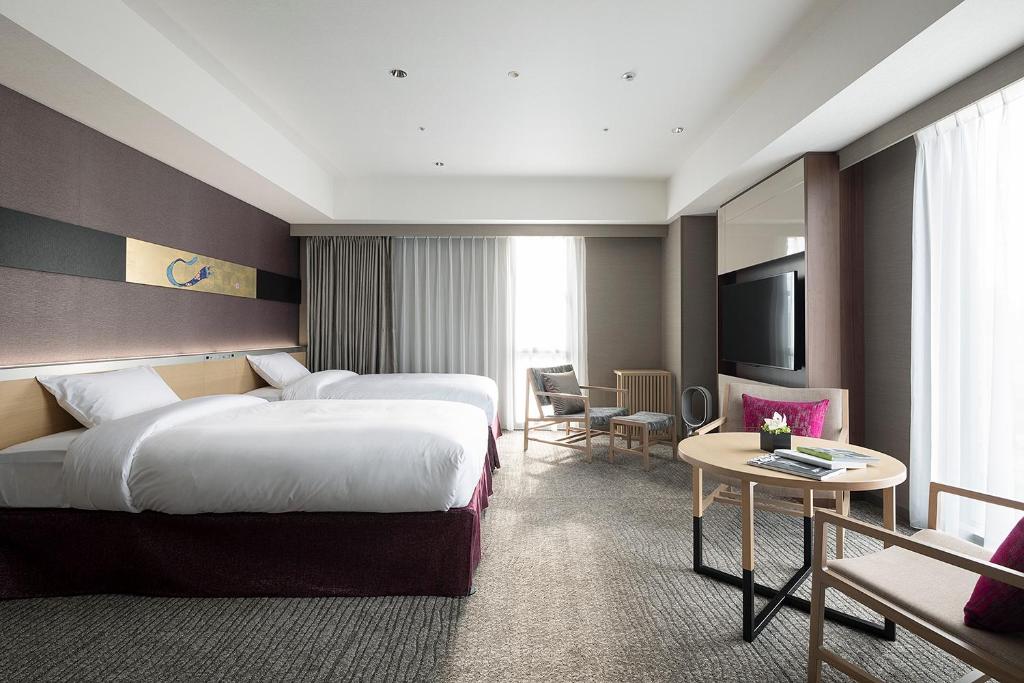
⭐️⭐️⭐️ Cross Hotel Kyoto (our top pick)
Cross Hotel Kyoto makes sense if you want a hotel that is in a central location. Rooms are laid out efficiently, with proper luggage space, good lighting, and quiet nights — which matters after long days of walking. The hotel feels calm in the evenings.
⭐️ Best for: Couples or travelers who want stylish comfort in a central, walkable area.
👉 See prices & availability →
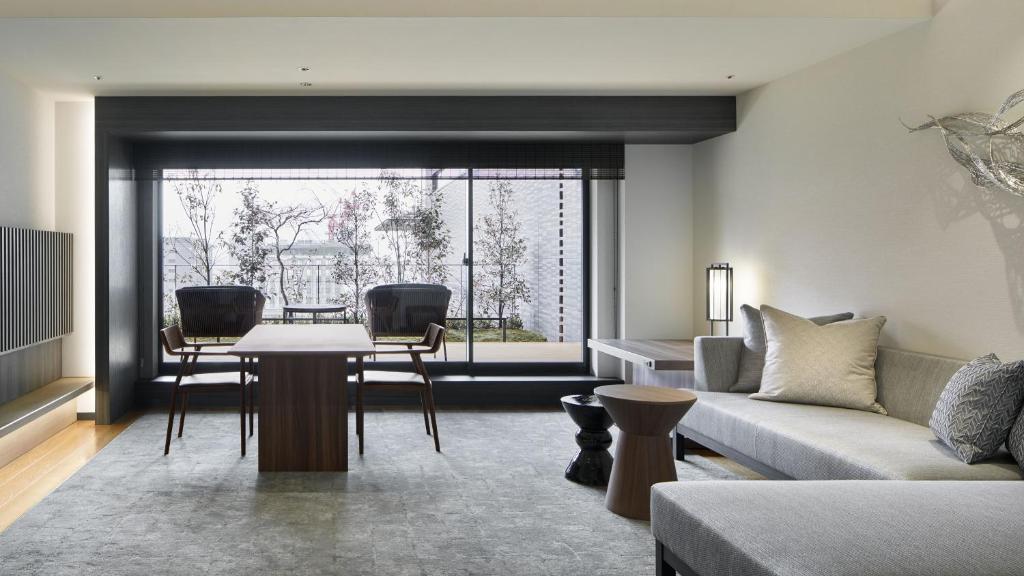
⭐️⭐️ The Thousand Kyoto
The reason to book The Thousand Kyoto is the contrast it offers. You step out into one of the busiest transport hubs in the city, then immediately step into a hotel that feels quiet.
Rooms are larger than average for Kyoto, with layouts that give you space to unpack and slow down rather than just sleep. We’d choose this hotel when we want full comfort at the end of the day.
⭐️ Best for: Travelers who want modern luxury with the easiest transport access in Kyoto.
👉 See prices & availability →
⭐️ Guesthouse Soi
Guesthouse Soi is the one to book if you care more about atmosphere than amenities. It’s small and informal, with shared spaces that feel lived-in. It’s easy to chat with other travelers or get local tips.
⭐️ Best for: Budget travelers who want to stay in Kyoto’s most atmospheric area without paying premium prices.
👉 See prices & availability →
FAQ
Most visitors spend 45–90 minutes, depending on crowds and whether you enter the paid area. It fits well into a half-day walk around Gion and Higashiyama.
It’s possible, but expect slopes, and uneven paths. The area is accessible, and offers alternative paths, but it’s not fully stroller- or wheelchair-friendly.
Final Thoughts
Kiyomizu-dera is busy, energetic and it delivers some of the best city views and an impressive temple setting above Higashiyama.
You don’t need to rush or feel pressured to see everything. Even exploring the free areas can be enough, especially if lines are long. Timing matters more than anything else here, and visiting early or planning it as part of a wider Gion walk makes the experience feel smoother.
Overall, we’d recommend Kiyomizu-dera as a must-see for first-time visitors to Kyoto, not as a quiet escape, but as a memorable stop that shows a different, more lively side of the city.