
This article contains affiliate links. Learn more in our affiliate disclosure.
Getting around Osaka in Japan feels more straightforward than it looks — and honestly, a bit more relaxed than Tokyo. The city is dense, well connected, and most places you’ll want to visit are clustered around a few key areas, which makes moving around surprisingly efficient.
During our time exploring the city, we relied almost entirely on trains and walking, and that combo covered nearly everything. Neighbourhoods like Namba, Umeda, Shinsekai, and Osaka Castle are easy to link together, and many of the best things to do in Osaka sit just a few stops apart.
One thing we noticed quickly is how much your base matters here. Staying in the right area can turn the city into a very walkable city, while the wrong one means extra transfers you don’t really need. That’s why we break it down properly in our guide on where to stay in Osaka, including the areas that made daily sightseeing noticeably smoother for us.
This guide is based purely on how we actually got around Osaka — what worked day to day, what we barely used, and what we’d do again without hesitation.
Quick Overview
⭐ Best overall: Trains (Metro + private lines) — fast, frequent, and cover almost everywhere.
⚡ Fastest: Osaka Metro
🚌 Best backup: Buses — useful for short hops or specific routes, but rarely faster than trains.
🚖 With luggage or nights: Taxis — reliable, safe, and easy to find around major stations and nightlife areas.
🚫 Avoid: Driving — dense traffic, confusing road layout, and expensive parking.
Is Osaka Easy to Get Around?
Osaka is very easy to get around, especially once you’re in the city. Based on our experience, it’s actually less overwhelming than Tokyo and quicker to figure out, even on the first day.
The transport network is efficient and well signposted in English, most stations are relatively compact, and trains run so frequently that waiting times are rarely an issue.
The only time it can feel confusing is inside major hubs like Umeda or Namba, where the extensive underground network really shows its scale.
Namba in particular was a bit of a nightmare for us at first — with local lines, long-distance trains, and metro lines all intersecting underground. In some cases, it took 10–15 minutes just to walk to the correct platform.
Even then, Google Maps is extremely accurate and usually tells you exactly which platform and exit to use, which makes a huge difference once you trust it and stop second-guessing every turn.
Getting Around Osaka: All Transport Options
Walking
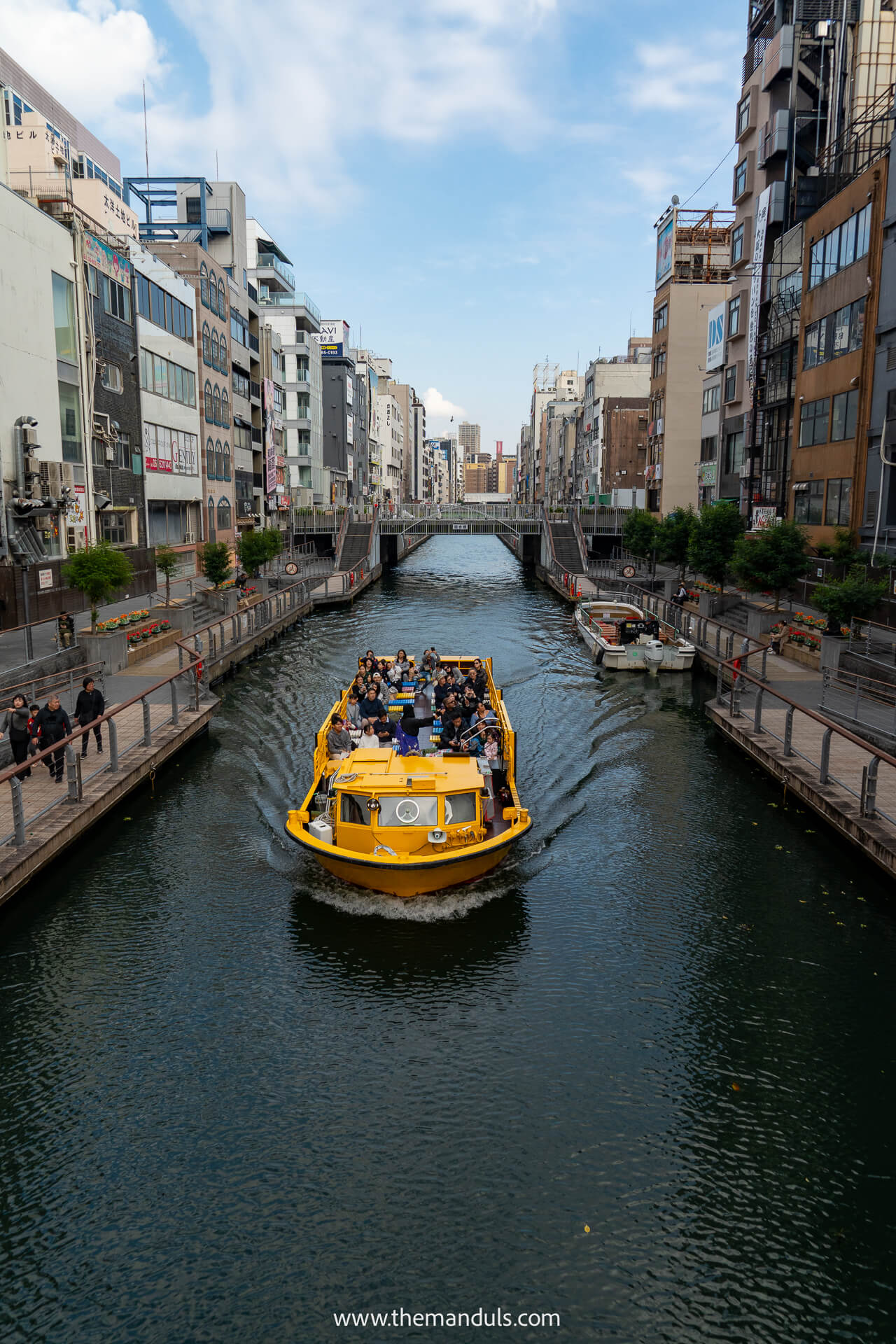
We walked a lot — more than we expected — and in many areas it was honestly the best way to get around. Neighbourhoods like Namba, Dotonbori, Shinsekai, and even parts of Umeda are compact, lively, and made for exploring on foot.
Osaka feels very pedestrian-friendly. Sidewalks are wide, crossings are clear, and distances between sights are often shorter than they look on the map. Walking also let us enjoy the spots that we’d completely miss if we were hopping from station to station.
That said, Osaka is still a big city. Walking works best in combination with trains.
Trains (Metro, JR, Private lines)
Trains were our main way of getting around, and once we got the hang of it, they felt very straightforward. The city is served by Osaka Metro, JR lines, and several private railway companies — but in practice, you don’t need to overthink who runs what.
We mostly just followed the fastest route in Google Maps and took whatever train made the most sense. Within the city, prices are similar, and transfers are usually quick. Stations are well signposted in English, and trains run frequently, so you’re rarely waiting long.
The only real challenge is navigating large underground hubs like Namba or Umeda, where platforms can be far apart and spread across multiple levels. A 10–15 minute walk to the correct platform isn’t unusual there, so it’s worth allowing a bit of buffer time.
For payment, we used an IC card on our phones (Apple Pay) and barely thought about tickets at all. Just tap in, tap out, and go. It’s fast, reliable, and removes a lot of friction when moving around multiple times a day.
Buses
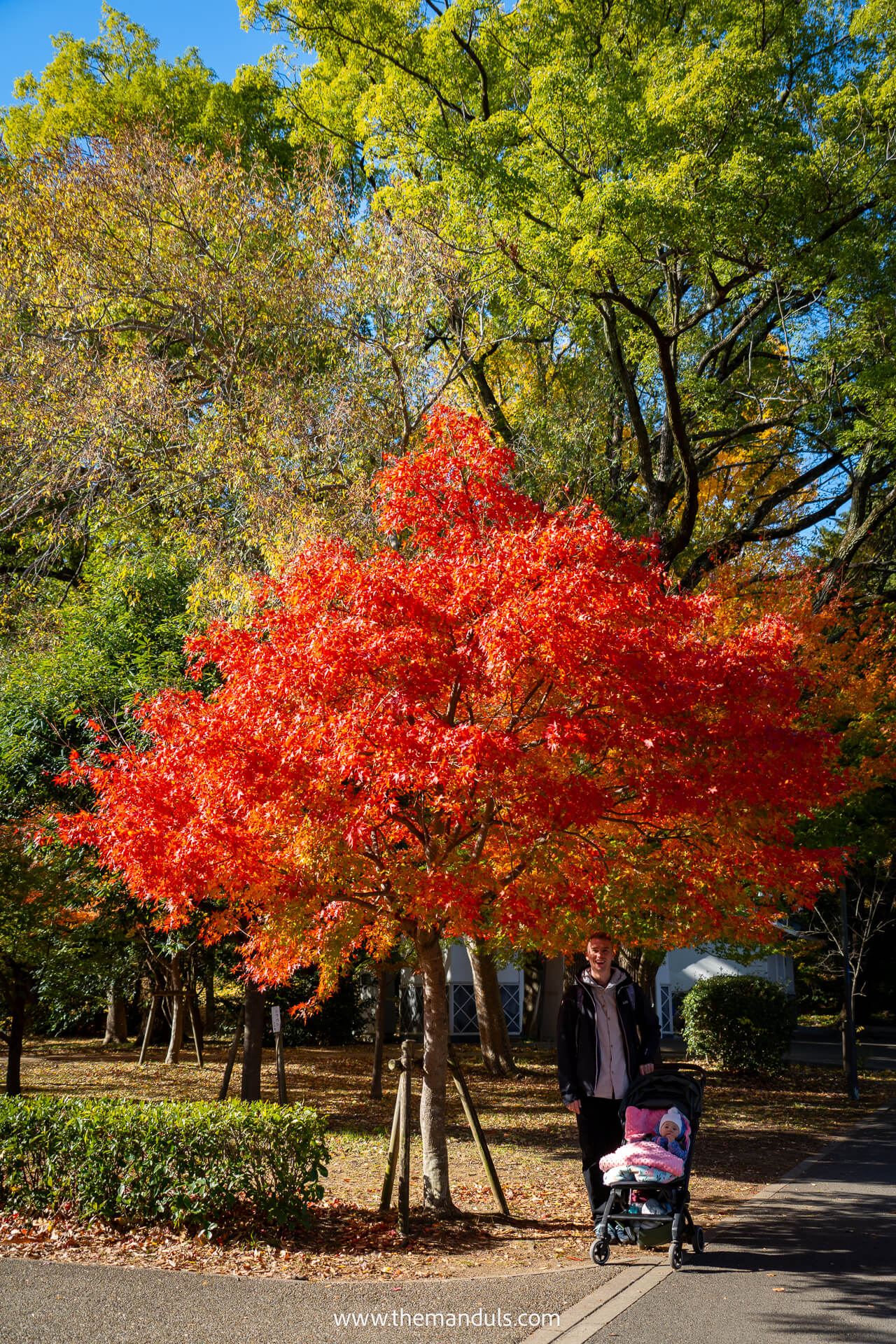
We only used buses a few times, mainly when trains didn’t really make sense for a specific route. They work, but compared to trains, they’re definitely slower and less convenient.
Traffic makes a big difference here — buses often take longer than expected and can get quite full, especially during the day. Travelling with a stroller wasn’t easy either, and space can be limited once the bus fills up.
That said, they’re simple to use. Buses accept IC cards like Suica, and there’s one flat fare no matter how many stops you ride. You pay when you get off, tapping your card next to the driver.
Overall, we’d treat buses as a situational option, not something to rely on daily. If Google Maps clearly shows a bus saving time, it can be useful — otherwise, trains are usually the better choice in Osaka.
Taxis & Ride Apps
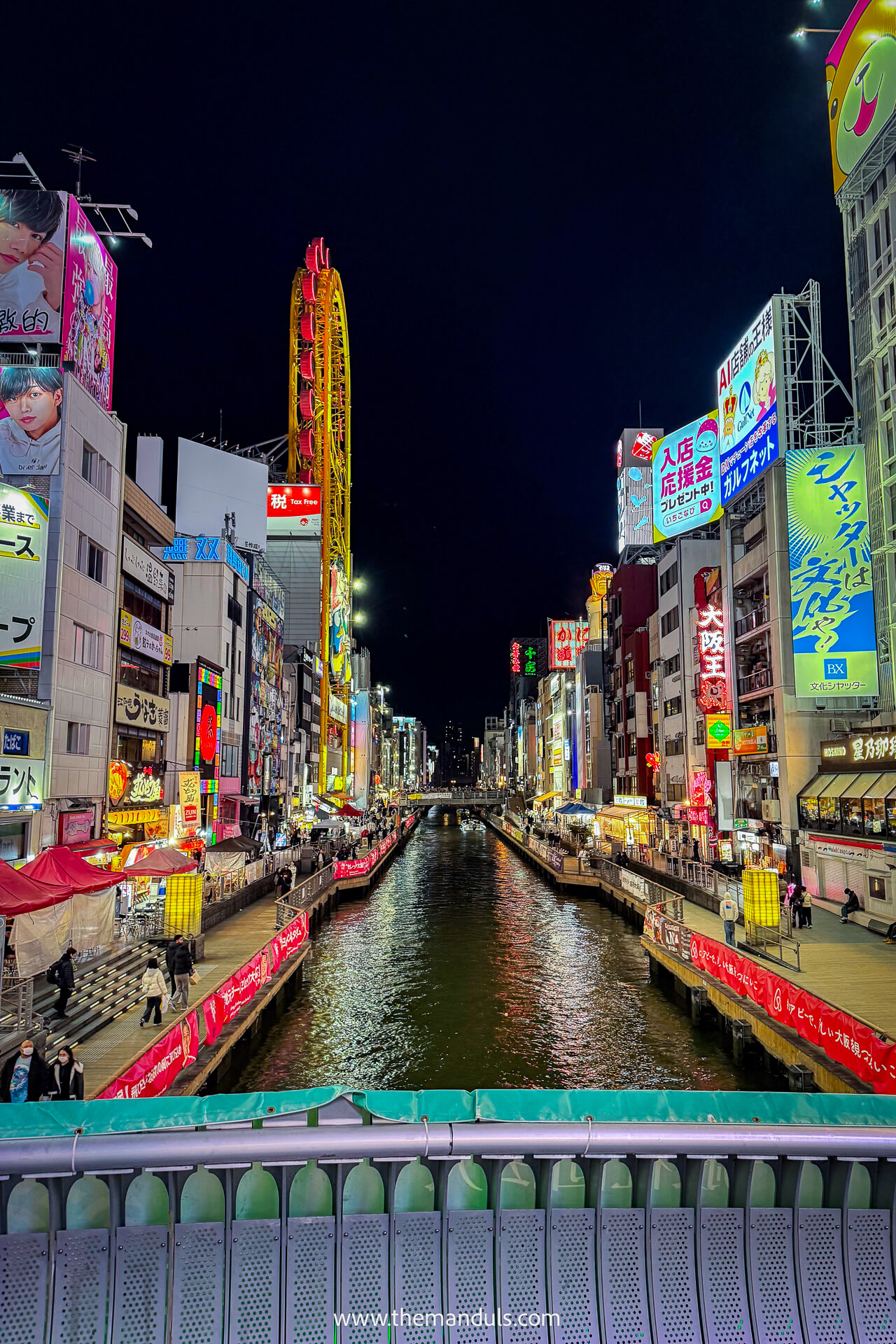
We actually didn’t use taxis in Osaka at all. Trains and walking covered everything we needed, even on longer sightseeing days.
That said, taxis are easy to find and generally reliable if you need them — especially late at night, with luggage, or if you’re staying a bit farther from a station. Ride-hailing apps like Uber or GO work here too, but they mainly function as taxi-hailing services, connecting you with licensed taxis rather than private cars.
For most visitors, though, taxis are more of a backup option. Unless convenience is your top priority, trains remain the faster, cheaper, and more efficient way to get around Osaka.
Renting a Car
Renting a car in Osaka isn’t something we’d recommend for city travel. Public transport is faster, cheaper, and far less stressful, while driving means dealing with heavy traffic, complex road layouts, tolls, and expensive parking.
Inside the city, a car offers no real advantage. The only time renting a car makes sense is if you’re planning to leave the city and explore more rural areas where public transport is limited.
If you do decide to rent one, we recommend DiscoverCars, where you can also easily compare price from multiple dealers. Adding full coverage insurance through them is usually better value than booking directly with rental companies.
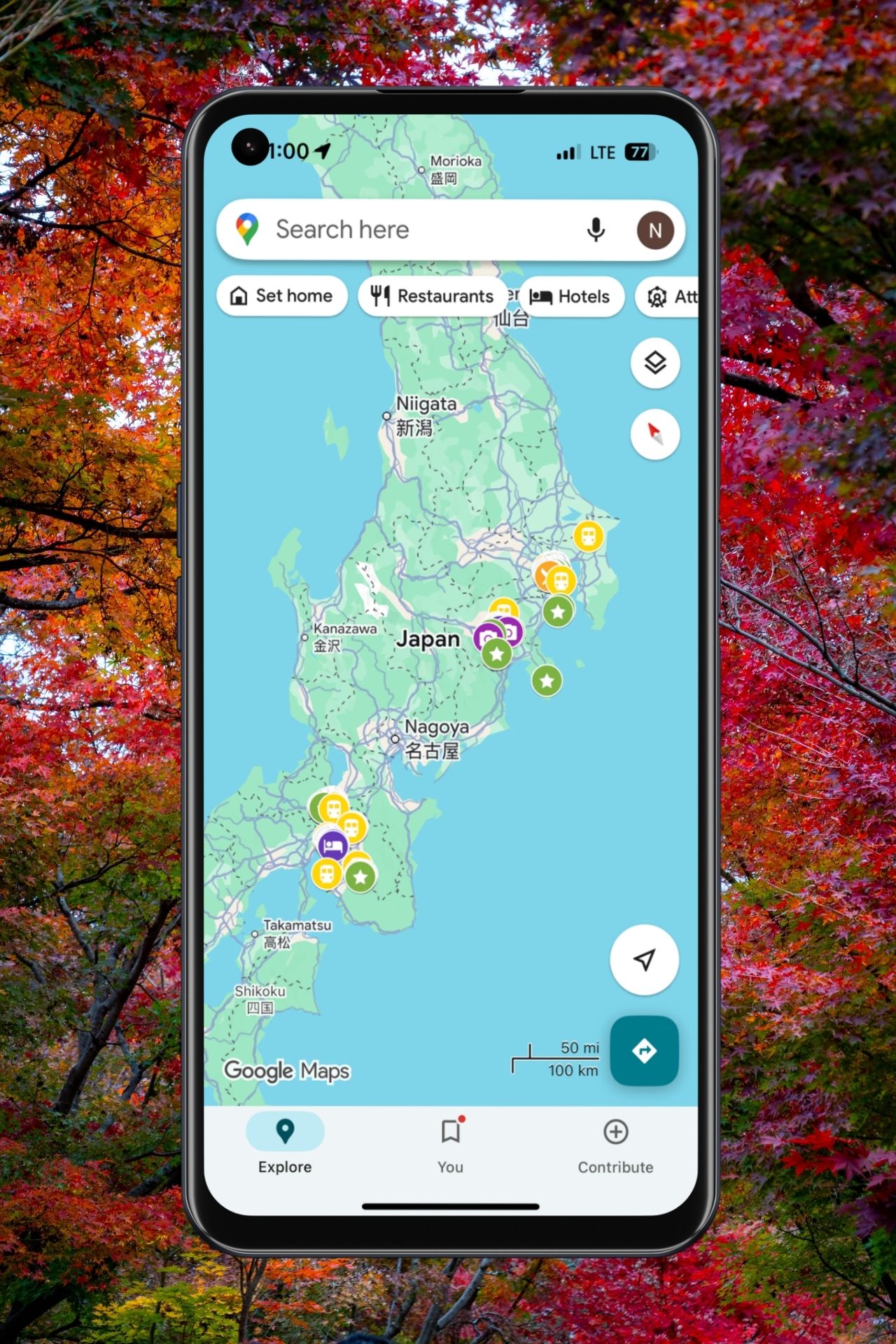
Our Japan Google Maps
Built from our real trips across Japan — only places we actually visited and loved.
No tourist traps. No random saves. Just a ready-to-use map that saves you hours of research.
219 handpicked spots, including:
📍 Highlights & hidden gems
🍜 Restaurants we’d go back to
🏨 Areas & hotels we’d book again
🗺️ Stops that fit into real, logical itineraries
Airport Transfers
If you’re arriving at Kansai International Airport (KIX), trains are by far the best and easiest way to get into Osaka. There are two main options, and which one you choose really comes down to speed versus cost.
Limited Express Trains (Fastest)
These are the fastest and most comfortable options, with fewer stops and reserved seating:
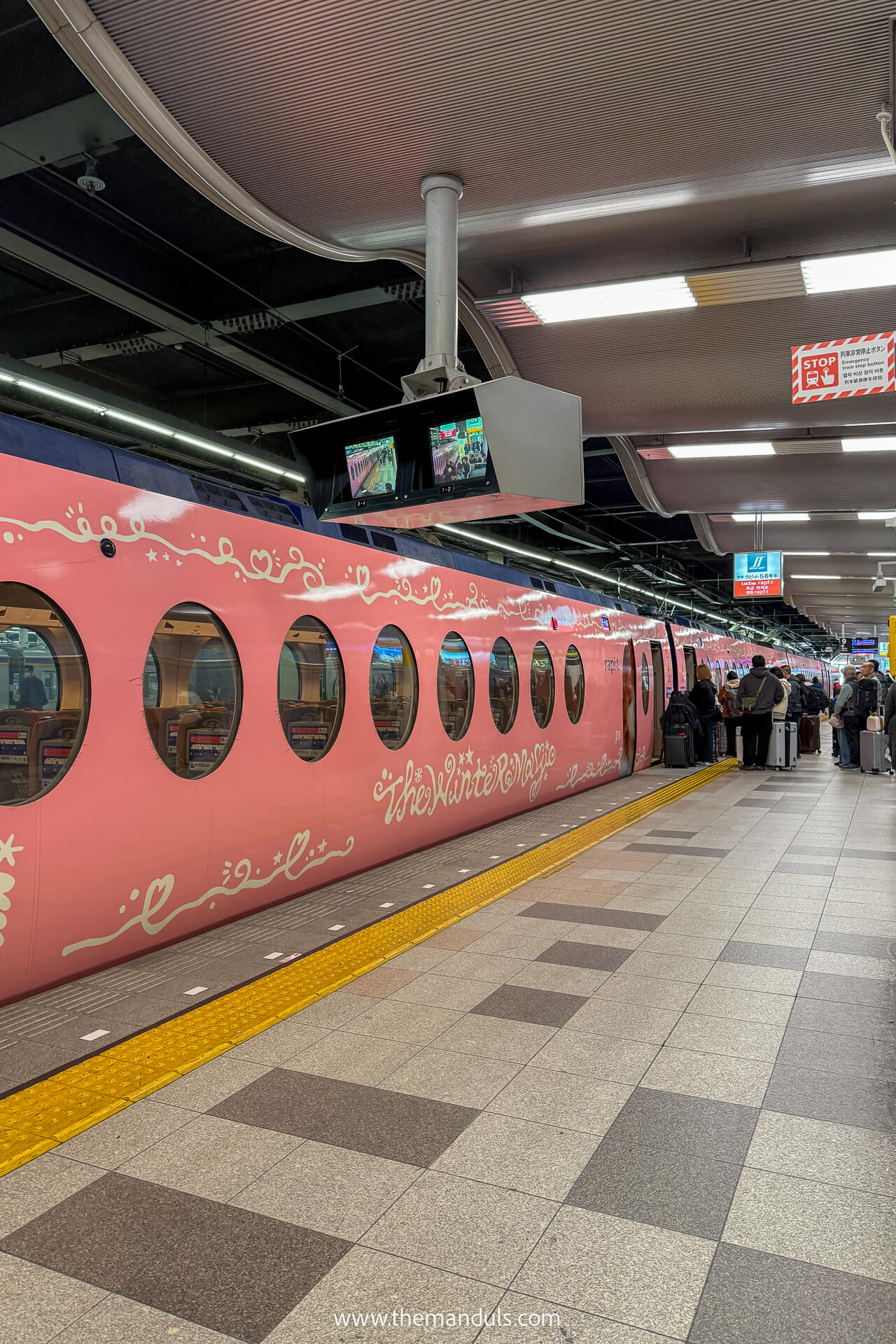
- Nankai Rapi:t → best for Namba
- JR Haruka → best for Tennoji, Shin-Osaka, Kyoto
They make fewer stops, have reserved seating, and offer more space for luggage.
They’re a good choice if you’re tired after a long flight, short on time, or staying close to a major station like Namba, Tennoji, or Shin-Osaka. The downside is the higher price — and for many travellers, the time saved isn’t essential.
Don’t forget to pay the limited express surcharge on top of the regular ticket fee.
Local / Rapid Trains (What We Used)
- Nankai Airport Express → Namba
- JR Rapid Service → Tennoji / Osaka / Shin-Osaka (with transfers)
The second option is the local or rapid trains, which is what we used. These run very frequently, are cheaper, and still connect KIX directly with central Osaka. It does take longer and there are more stops, but in practice it worked smoothly and didn’t feel stressful at all.
If you’re not in a rush, this is easily the best value option, and we’d choose it again without hesitation.
Private Airport Transfer
If you’d rather skip trains entirely — especially after a long flight, with luggage, or with kids — a private airport transfer from Kansai International Airport straight to your hotel is the easiest option.
We’d recommend this GetYourGuide private transfer, which takes you directly from Kansai International Airport to your accommodation with no transfers, and no navigating stations.
It’s more expensive than trains, but for late arrivals, families, or anyone wanting a stress-free start (or end) to their trip, it can be well worth it.

Getting Around With Kids
The biggest challenge for us was traveling with a stroller. Elevators do exist, but they’re not always where you expect them, and sometimes reaching the right platform means a long walk underground.
With a stroller, this can take time, so it’s worth adding a buffer and following lift signage rather than aiming for the nearest exit.
One practical tip that helped us a lot: in Google Maps, turn on wheelchair-accessible routes. This shows which station exits have elevators and helps avoid unnecessary stairs.
We also found that buses weren’t very stroller-friendly.
But people were patient and helpful, stations felt manageable, and getting around with a child felt far less stressful than we expected.
Common Mistakes to Avoid
- Overthinking train companies. Metro, JR, private lines — it doesn’t really matter. Just take the fastest route and move on.
- Underestimating big stations. Places like Namba or Umeda look close on the map but can involve long underground walks. Always allow extra time.
- Ignoring exits in Google Maps. Choosing the wrong exit can add 10+ minutes of walking, especially underground.
- Not using Google Maps at all. Trust us, it’s a life-saver.
Final Thoughts
Getting around Osaka is far easier than it might look at first. Once you stop overthinking the system and rely on trains, walking, and an IC card, everything falls into place quickly.
Based on our experience, you don’t need to master every line or station — just focus on what actually works day to day. With a good base, smart use of Google Maps, and a bit of flexibility in big stations, moving around the city becomes effortless.