
This article contains affiliate links. Learn more in our affiliate disclosure.
Chiang Rai in Thailand is often treated as a quick day trip from Chiang Mai — and honestly, that’s where most people get it wrong.
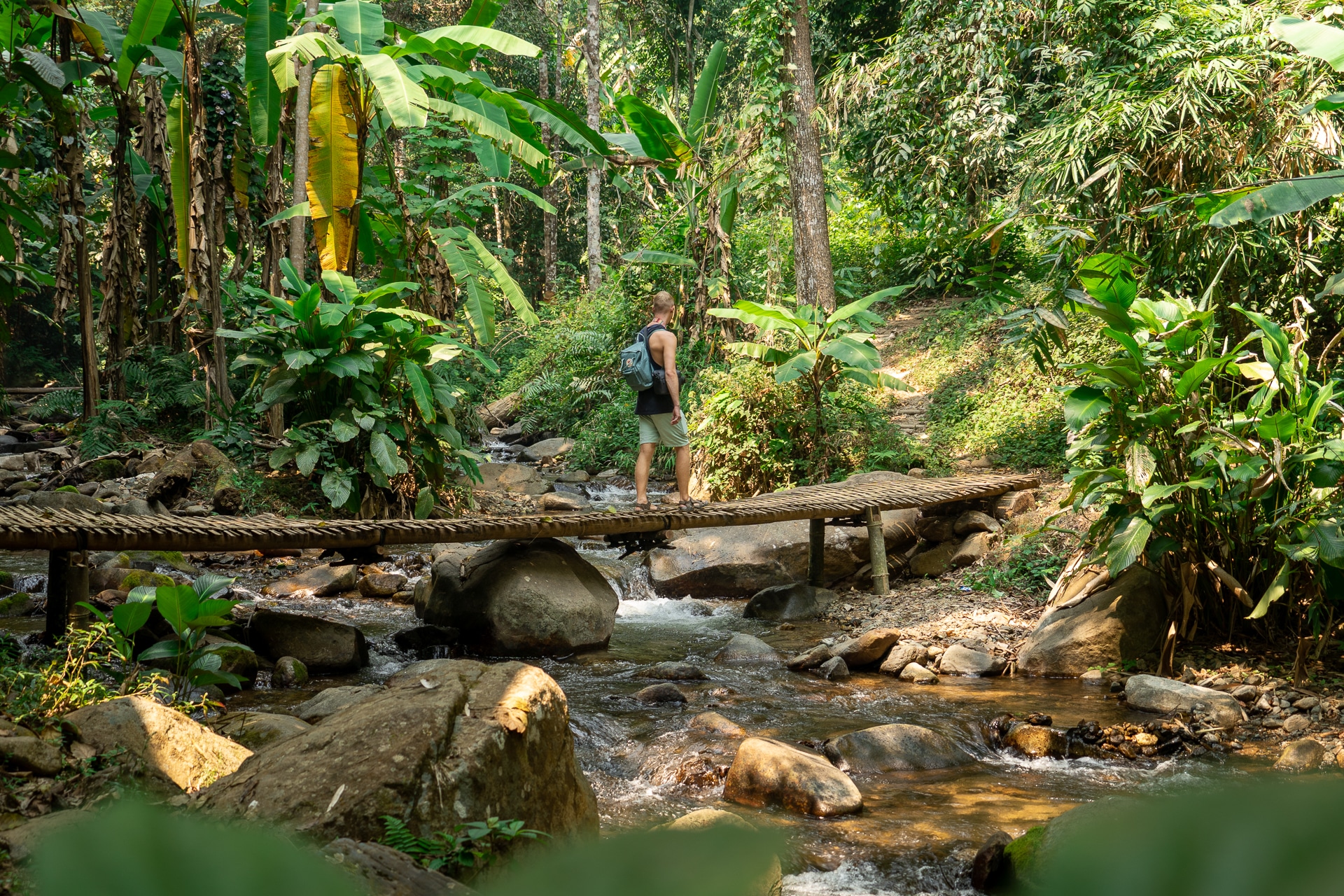
We came in expecting a quiet stopover between Chiang Mai and the border. We left wishing we’d booked an extra night. The temples are stunning — but it’s the tea plantations, the waterfall hike, and the surprisingly good café scene that pushed Chiang Rai to the top of our North Thailand list.
We spent six days here in February, including the start of burning season — which wiped out one attraction entirely and is worth knowing before you plan.
This guide covers what’s actually worth your time, in what order, and what to skip depending on how many days you have.
Is Chiang Rai Worth Visiting?
Yes — especially if you prefer a slower, more relaxed atmosphere. It’s best with 2–3 days, but even one day can work if you plan it carefully.
Chiang Rai feels very different from Chiang Mai. It’s quieter, more spread out, and less focused on temples alone — with places like the tea plantations, countryside roads, nature, and smaller local spots often being just as memorable as the main sights.
If you’re deciding between the two, it really comes down to travel style.
Chiang Mai is more developed, with more nightlife, cafés, and a strong digital nomad scene. Chiang Rai, on the other hand, is calmer and more laid-back, with fewer but more distinctive attractions and a stronger countryside feel — which we personally ended up preferring.
That said, it’s easy to rush the area and leave underwhelmed. If you only plan to visit the main temples in a day, you’ll likely miss what actually makes it special.
Quick Overview: How to Plan Chiang Rai
If you’re short on time, this is how we’d plan the trip based on our experience.
With 1 day, focus on the main highlights: the White Temple, Blue Temple, and Black House, plus the Clock Tower light show in the evening.
If you don’t have your own transport, we’d recommend joining the Chiang Rai Highlights guided tour, rated 4.9/5 with over 1600 reviews. It covers all the main stops in one route — including places that are difficult to combine on your own — and comes with hotel pickup, which saves a lot of time.
Skip the logistics — check the full-day highlights tour here →
With 2 days, you can slow things down and add a sunset at Wat Huay Pla Kang and one experience outside the city, like a tea plantation or waterfall.
With 3 days, Chiang Rai starts to feel completely different. This gives you time to explore the countryside properly — tea plantations, quieter roads, and nature — which is where we felt it stood out the most.
One key decision: don’t treat this as just a “temple stop.”
Getting around: having your own transport makes a big difference — distances are larger than they look.
Reality check: outside the White Temple, crowds are manageable, but the main sights still get busy.
Where We’d Stay
⭐️⭐️⭐️ Mora Boutique Hotel (our top pick) – Best all-round stay if you want comfort, a pool, and a more boutique feel near the center.
👉 Check availability on Booking.com →
⭐️⭐️ Sleepy House – Where we stayed. Simple, clean, well-located, and good value close to the Night Bazaar.
👉 Check availability on Booking.com →
⭐️ Baan Jaru – A relaxed budget guesthouse close to the Clock Tower, best if you want a central stay without spending much.
👉 Check availability on Booking.com →
Best Things to Do in Chiang Rai — What’s Actually Worth It
1. Wat Rong Khun – The White Temple

Entrance fee: 200 THB in 2026

Opening hours: 8 am – 5 pm
If you only visit one place here, make it this.
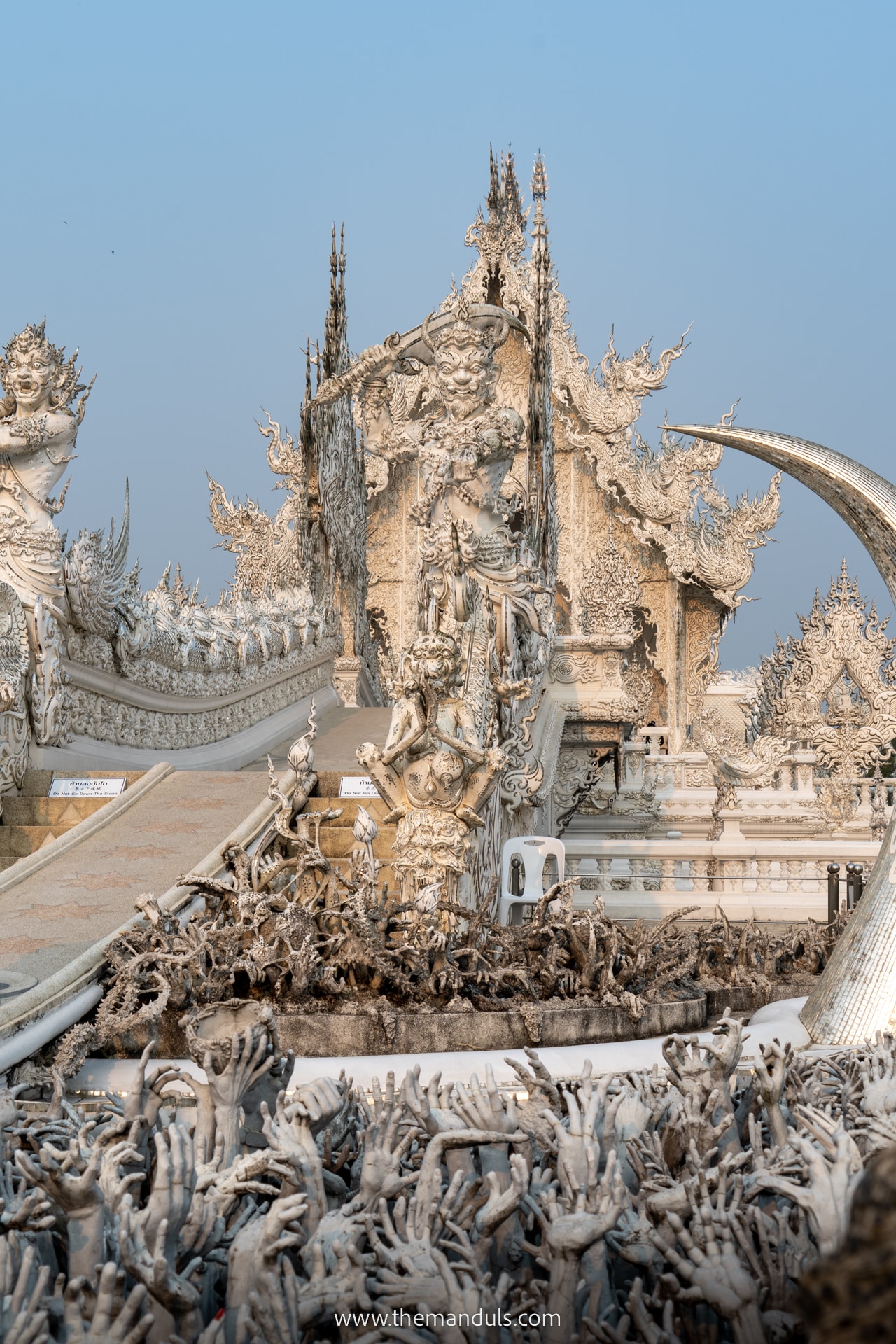
We’ve seen a lot of temples across Southeast Asia, but nothing quite like Wat Rong Khun. It’s not a traditional temple — it’s a modern art project, and that’s exactly what makes it stand out. The bright white exterior is almost blinding in direct sunlight, and the level of detail across the entire complex is far beyond what most people expect.
Plan 1.5 to 2 hours here. The ticket includes the full complex and the art gallery — and even the toilets are designed as part of the experience (surprisingly worth checking out).
The biggest downside is the crowds. Tour buses from Chiang Mai start arriving around 10 am, and it gets busy fast. Arriving right at opening (8 am) completely changes the experience.
Getting there: Local bus from Bus Terminal 1 (platform 4 or 8, look for “White Temple”), running roughly every 45–60 minutes (08:10–16:20), 25 THB. Renting a motorbike gives you the most flexibility. Grab works, but morning availability can be limited.
If you only have one day and don’t want to organize transport, this is one of the main stops included in the Chiang Rai highlights tour mentioned above.
Worth knowing: drones are prohibited and parking is free.

TIP: Dress code is strictly enforced — knees and shoulders must be covered. Sarongs are available to borrow at the entrance if you forget. Don’t rely on this in peak season when they run out.
If you’re planning your day independently, we’d visit the White Temple first thing in the morning, then continue to Khun Korn Waterfall before heading back to the city.
2. Wat Rong Suea Ten – The Blue Temple
Entrance fee: Free
Opening hours: 7 am – 8 pm
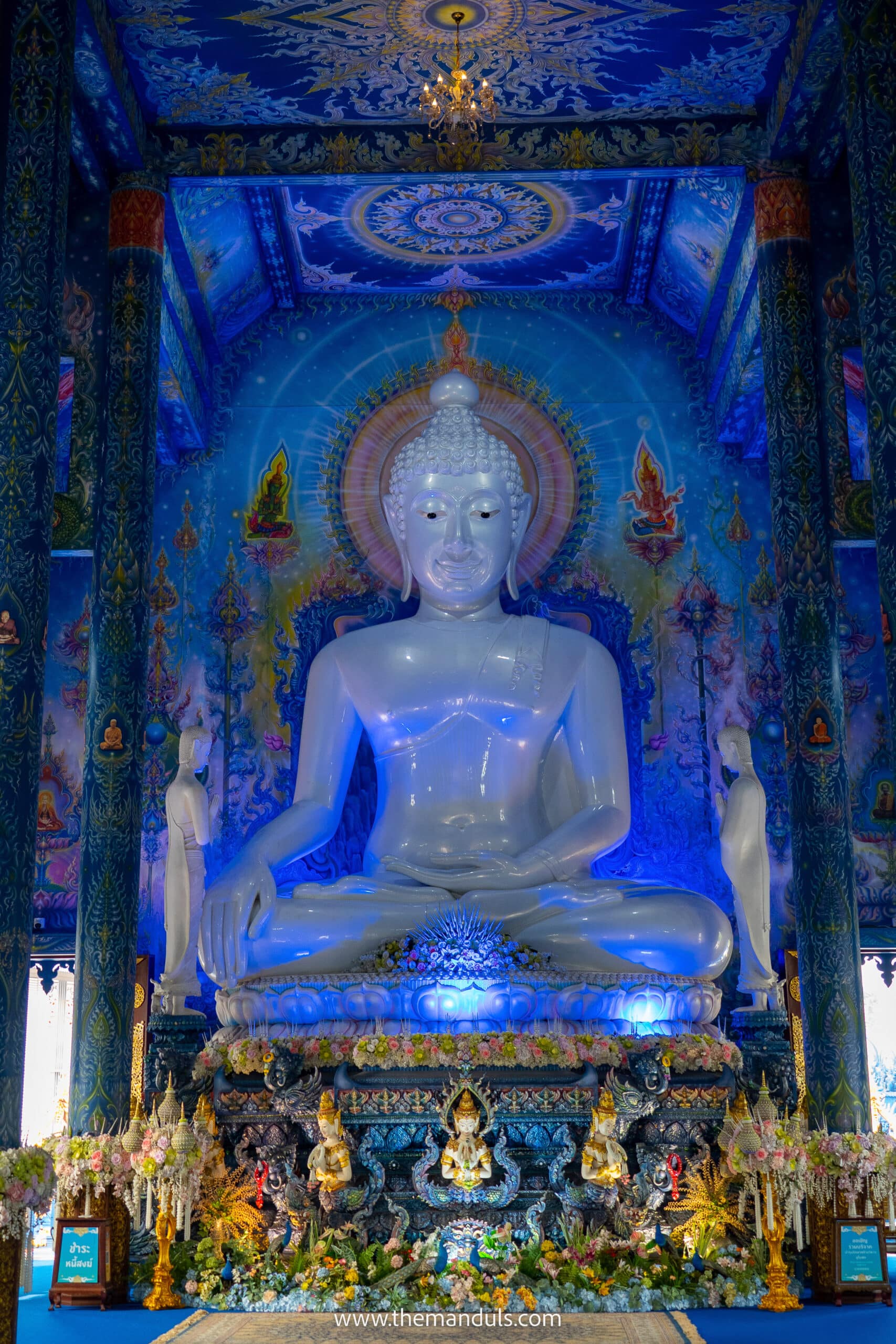
The Blue Temple is the one most people consider skipping after the White Temple — but we wouldn’t.
They share nothing but the fact that they’re both built by living artists. Walking inside feels completely different — we were surprised by its darker atmosphere. That contrast is exactly why doing both is worth it.
It’s also smaller and significantly less crowded, so unlike the White Temple, you don’t need to plan your visit around tour buses. Come whenever it fits your day. Around 45–60 minutes is enough.
Getting there: about 4 km north of the city center across the Mae Kok River. Use Grab or a motorbike, and combine it with the Black House Museum, which is just 5 minutes away.
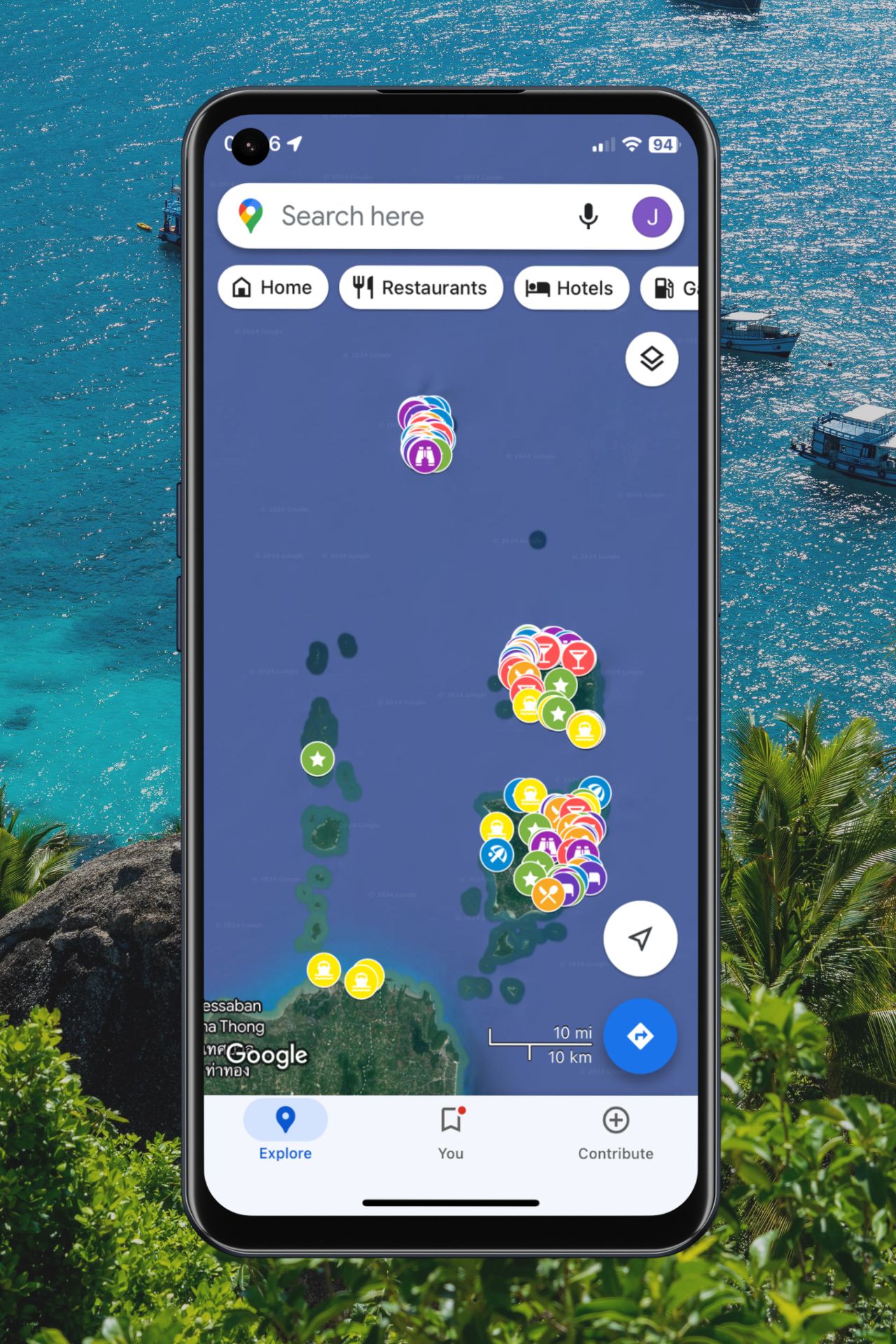
Our THAILAND locations in your Google Maps
Includes 167 pins on Koh Samui, Koh Phangan, & Koh Tao:
🐠 Best beaches and snorkeling spots
👀 Viewpoints, Sunset Points
☕️Cafes & restaurants
🍹Bars, nightlife
🏨 Recommended Hotels
⛴️ Important transport points
⭐️ Lifelong updates
See more3. Sunset at Wat Huay Pla Kang
Entrance fee: Grounds free | Guan Yin statue elevator: 40 THB in 2026
Opening hours: 7 am – 9 pm
Wat Huay Pla Kang quickly became one of our favorite stops in Chiang Rai.
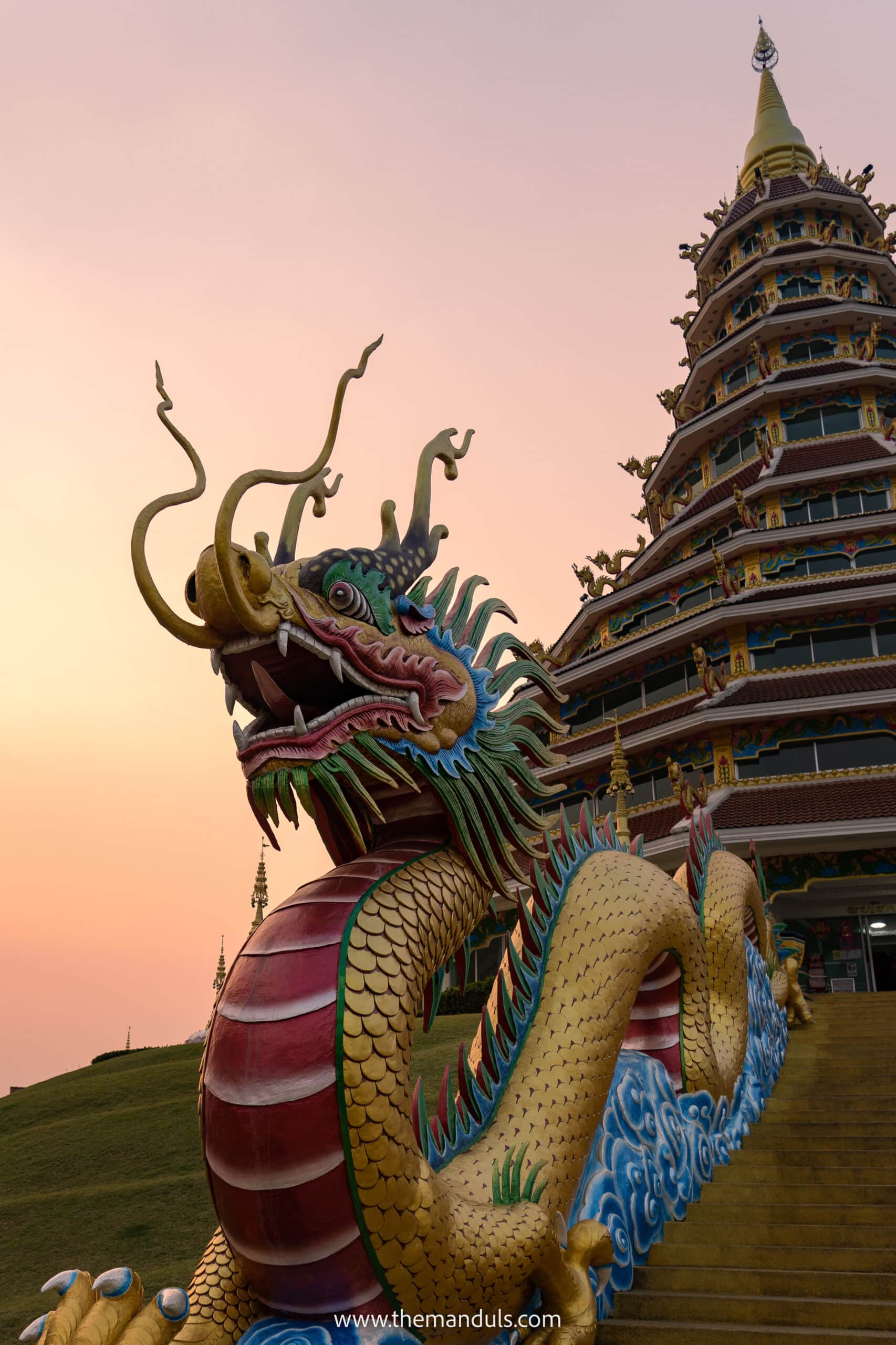
The complex has three main structures, but the highlight is the 90-meter white Guan Yin statue. You can take a small elevator (40 THB) to the top for panoramic views over the city and rice fields — which ended up being better than we expected.
There’s also a 9-story pagoda with colorful dragon staircases, but we wouldn’t bother climbing it. The views are limited, so it’s better enjoyed from the outside. A smaller white temple on the grounds is quieter and worth a quick look.
The entire complex is free to enter, and 1 to 1.5 hours is enough.
We came about an hour before sunset, and that timing made a huge difference — softer light, fewer people, and a much calmer atmosphere than the temples we visited earlier in the day.
Getting there: about 6 km northwest of the city center. Grab works fine, but a motorbike gives you more flexibility.
TIP: Dress code applies here too — cover shoulders and knees, especially if you’re temple-hopping.
4. The Black House – Baan Dam Museum
Entrance fee: 80 THB in 2026
Opening hours: 9 am – 5 pm
Baan Dam is unlike anything else on the Chiang Rai circuit. Artist Thawan Duchanee spent decades building this complex of around 40 dark wooden buildings, filling them with animal bones, crocodile skins, taxidermy, and phallic carvings alongside Buddhist iconography. The main hall stops you in your tracks.
Less visited than the temples, no real crowds, and about an hour is enough. If dark and macabre isn’t your thing, skip it. Everyone else should add it, especially since it’s 5 minutes from the Blue Temple.
Getting there: about 10 km north of the city. It’s easiest to combine with the Blue Temple, as they’re just a few minutes apart.
5. The Clock Tower Light Show
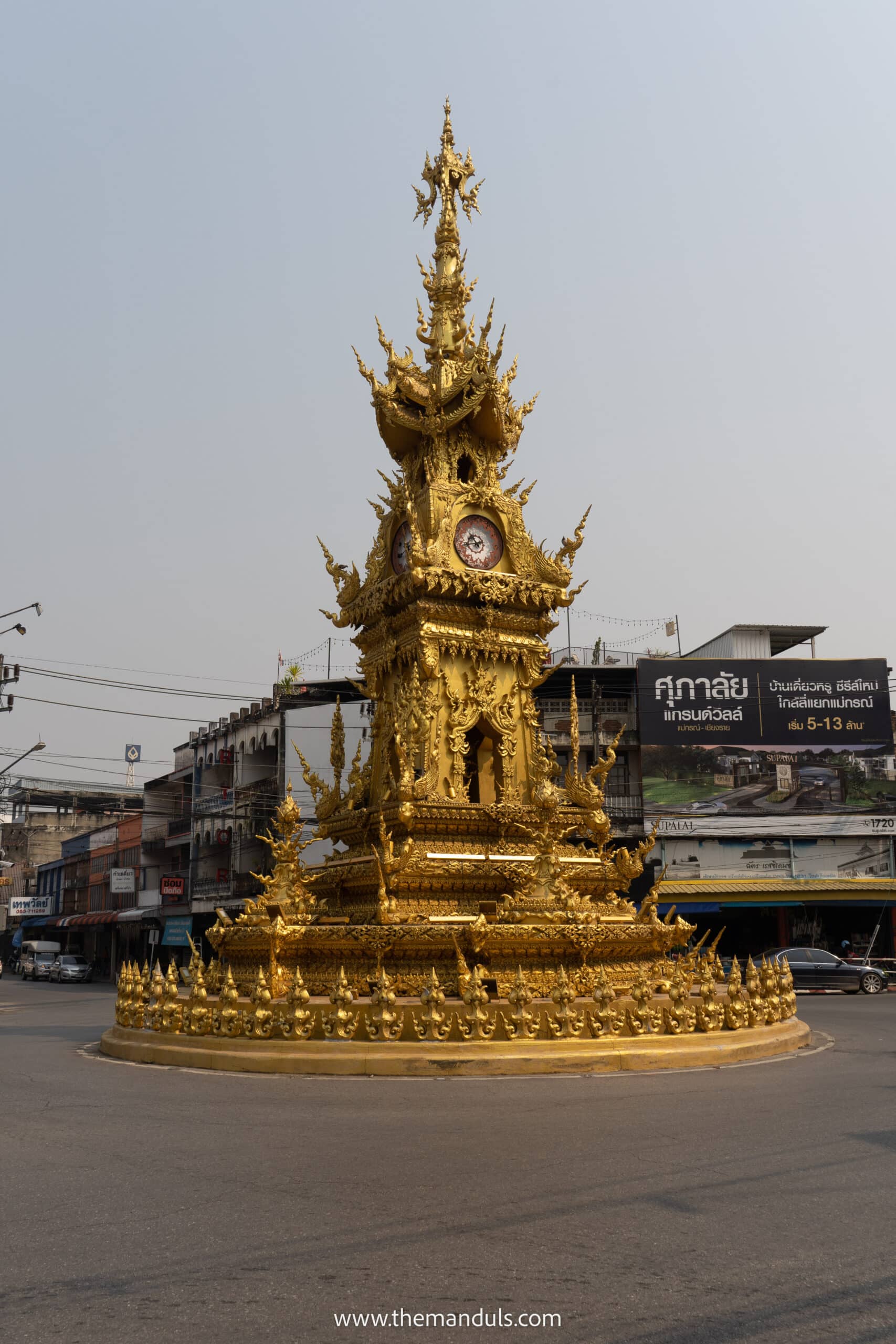
The Clock Tower sits in the middle of a busy roundabout and was designed by the same artist behind the White Temple. During the day it’s easy to overlook — at night, it’s a completely different atmosphere.
At 7, 8, and 9 pm, it lights up with a short music show. We actually stumbled onto the 9 pm one while walking back from dinner, and it ended up being one of those small, unexpected highlights.
The Night Bazaar is just a few minutes away, which makes this an easy stop. We wouldn’t plan our whole day around it.
👉 Worth knowing: all three shows are identical — one is enough.
6. Night Bazaar and Saturday Walking Street
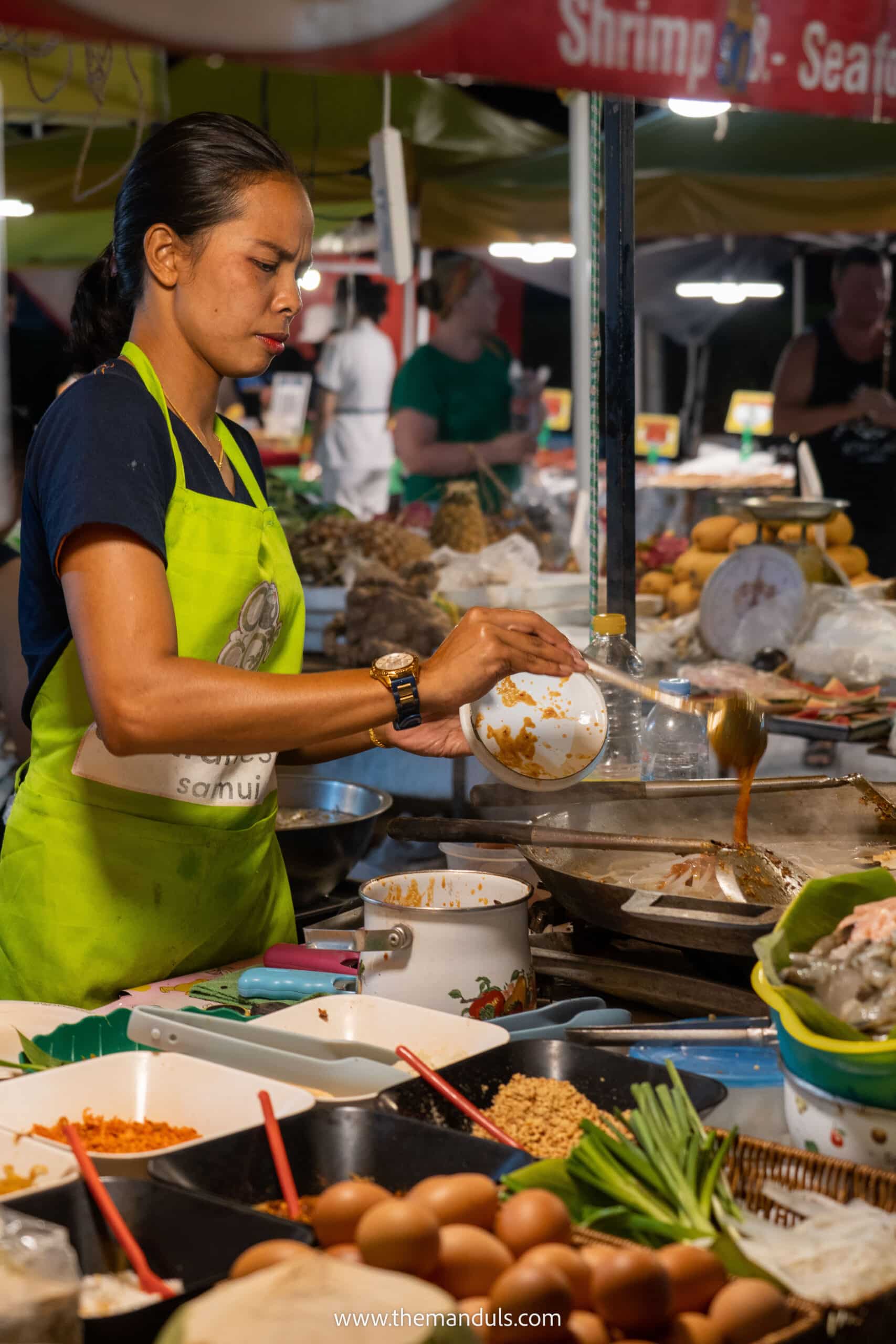
If you enjoy street food and night market atmosphere as much as we do, this is an easy yes — it’s one of our favorite ways to spend an evening in town.
The Night Bazaar near Bus Terminal 1 runs daily and is a solid spot for cheap food, drinks, and live music. We ended up here more than once, mostly for dinner, and it never disappointed. The shopping is fairly standard tourist stuff, so for us, the real reason to come is food.
If your visit overlaps with it, the Saturday Walking Street on Thanalai Road is even better. It’s larger, feels more local, and the food selection is noticeably more varied. We’d actually plan an evening around this one.
Both markets open around 5–6 pm and wind down by 10 pm.
👉 Tip: come hungry — this is easily the best cheap food you’ll find here.
7. Tea Plantations – Choui Fong or 101
If you have more than a day here, this is one of the experiences we’d actually prioritize — and something we regret not making time for. If we were planning this trip again, this is the first thing we’d add after the main temples.
The tea plantations north of the city are completely different from the temple circuit. Instead of crowds, you get rolling hills, quiet roads, and views that feel much more like northern Vietnam than typical Thailand.
The most popular option is Choui Fong Tea Plantation, about 40 km north of the city. Entry is free, and the views from the café terrace over the tea fields look incredible. It’s also known for its oolong tea, and most people spend around 1.5 hours here walking the terraces and stopping at the café.
The main alternative is 101 Tea Plantation, which is smaller and quieter, and works better if you’re heading further north towards the Golden Triangle. If we were planning our trip again, we’d go with Choui Fong for the views.
Getting there: no public transport — you’ll need a motorbike or car. The road north is in great condition, but it does take time.
If you don’t want to deal with transport, the Highlights Tour we mentioned earlier (rated 4.9) includes Choui Fong, the White Temple, Blue Temple, Black House, and hotel pickup — which is exactly why it makes sense if you only have one day.
8. Lalitta Café
Entrance fee: 60 THB adults / 40 THB children (redeemable against food and drinks) in 2026
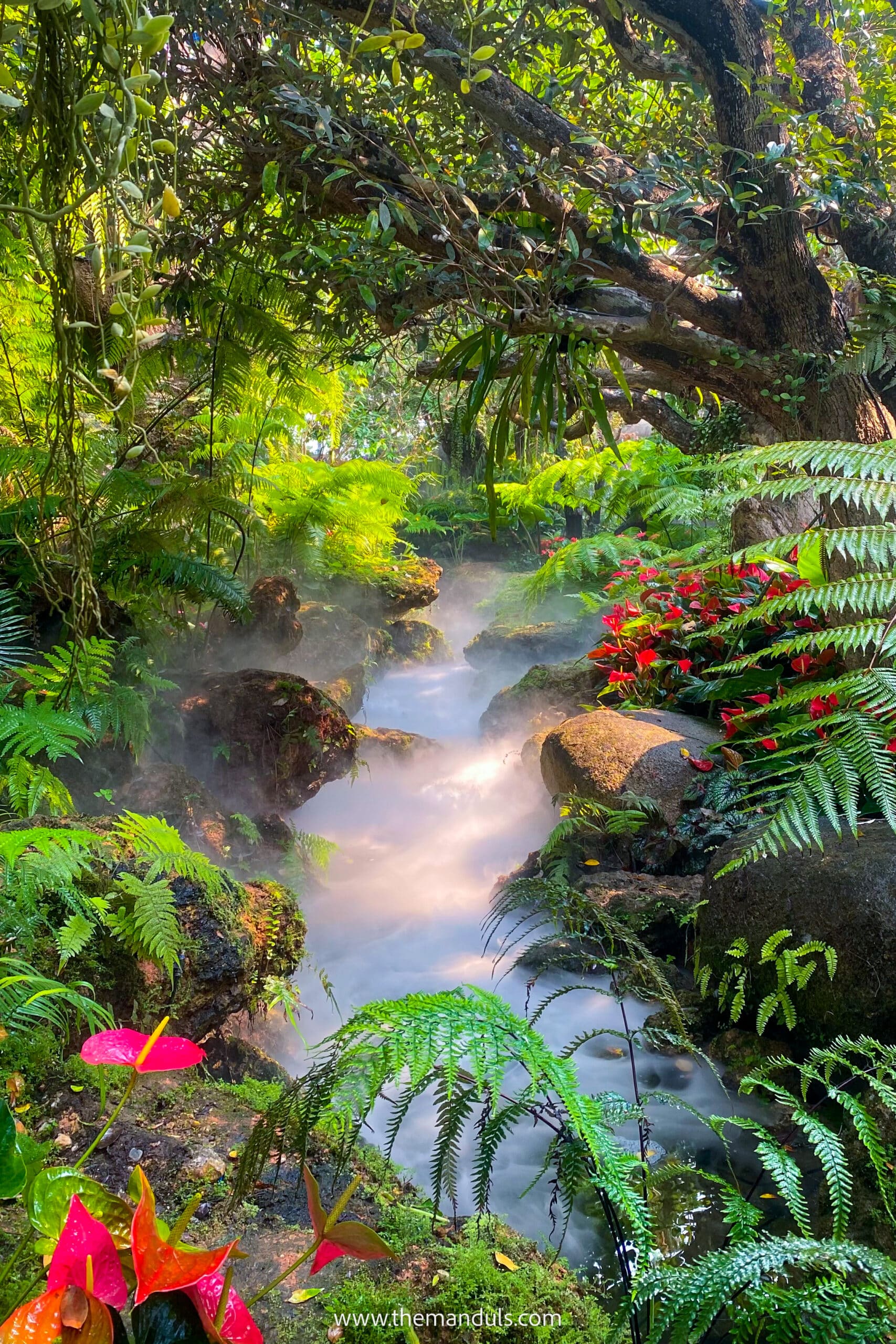
Lalitta Café is one of the most unusual places we came across in Thailand — and easily the craziest café we’ve ever visited.
It’s not really a café in the traditional sense. It’s more like a themed garden with mist machines, narrow green pathways, artificial rock formations, and a small waterfall. The whole place feels almost otherworldly, and the setting is the main reason to come here — not the coffee.
We found it by accident, which honestly felt like the perfect way to discover it. That said, we could easily see someone planning a stop here just for the experience.
The entrance fee works as a drink voucher, so there’s no real downside to stopping. Plan around 30–45 minutes.
We’d combine it with Wat Huay Pla Kang nearby, either before sunset or as a relaxed stop earlier in the day.
9. Khun Korn Waterfall Hike
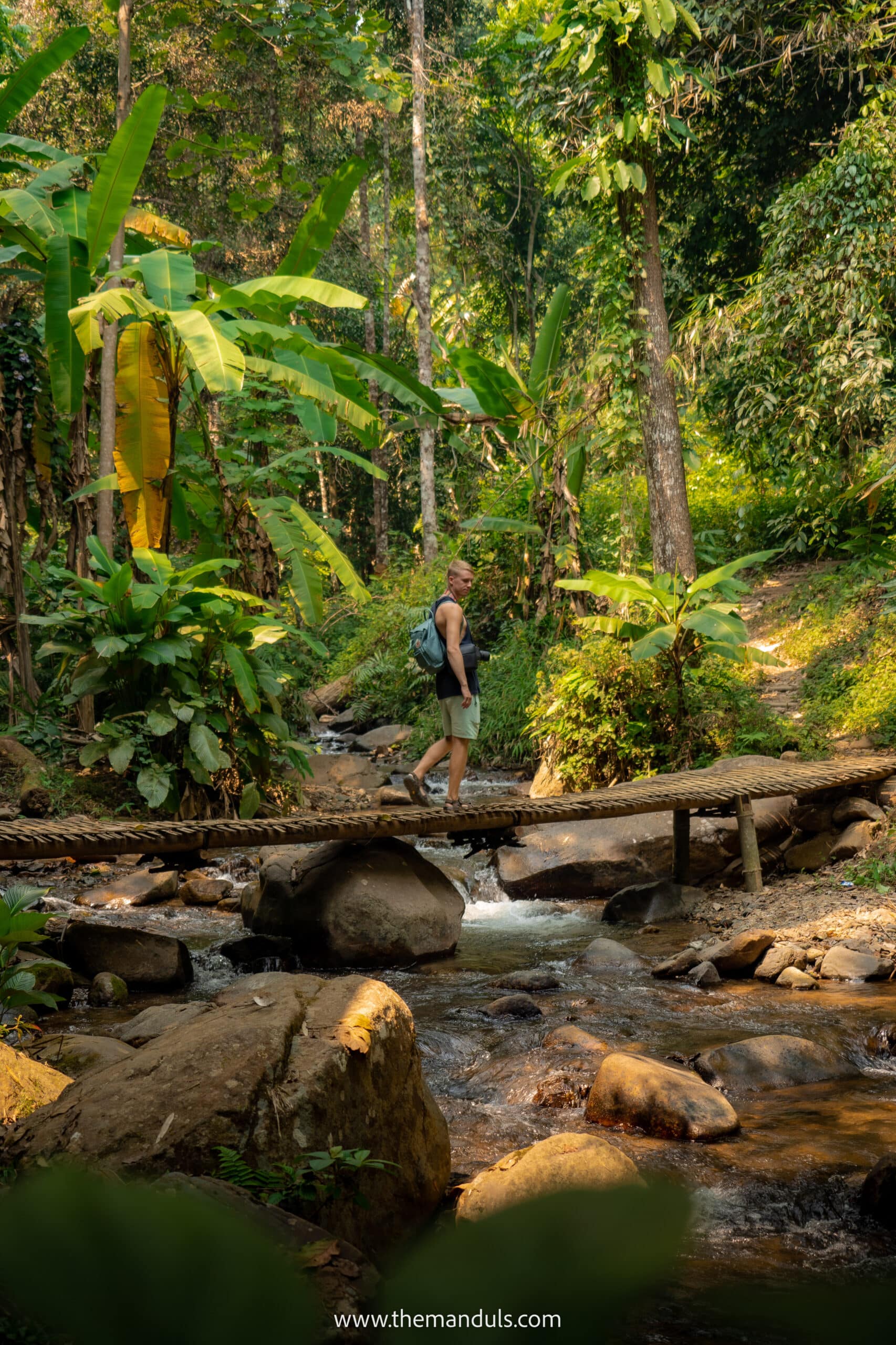
If you’re into nature or short hikes, this is one of the places that really won us over.
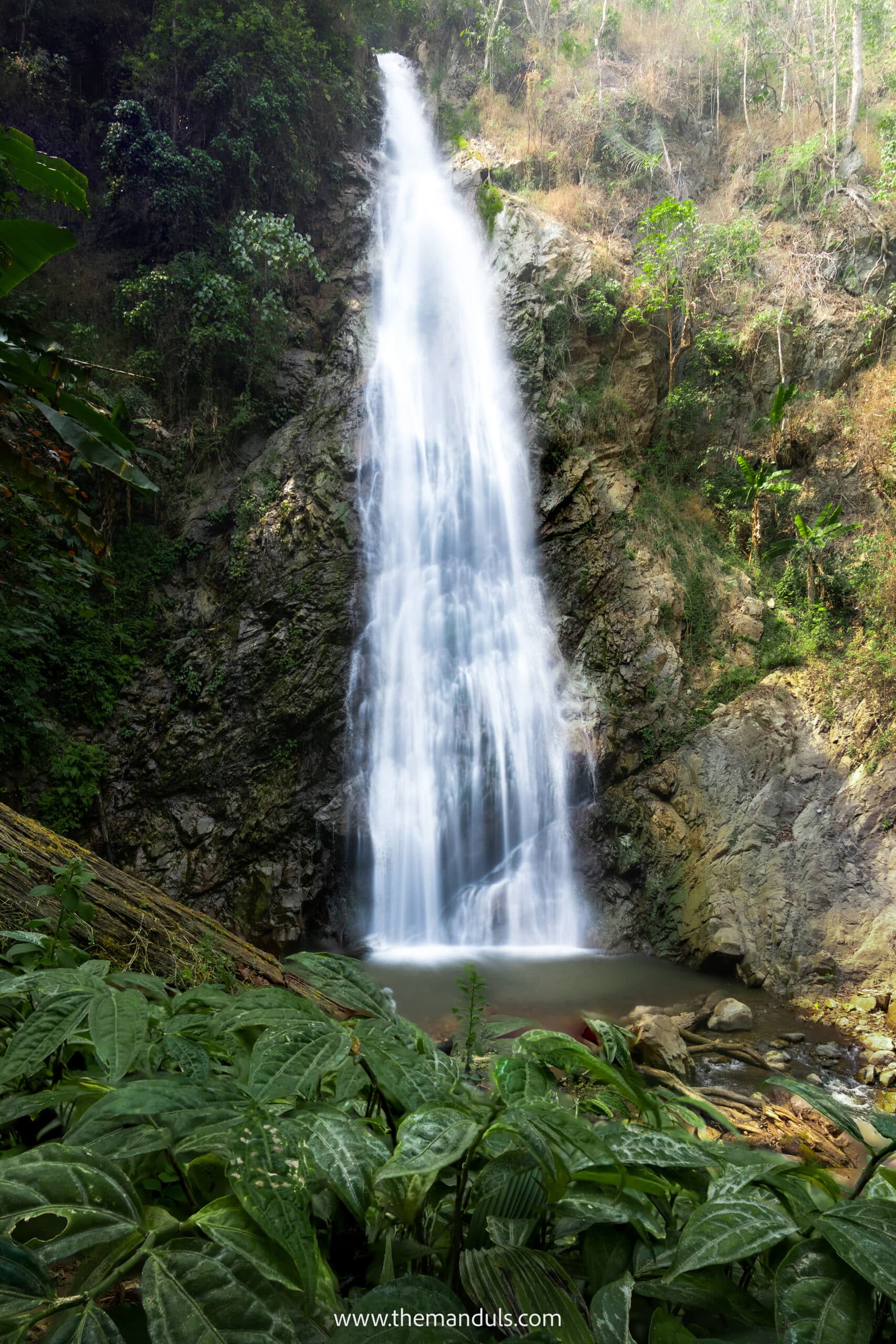
Khun Korn is a 70-meter waterfall reached by an easy 30-minute jungle walk. The trail is mostly flat and shaded, and the payoff is a full-volume waterfall dropping into a cool pool — refreshing enough to feel it instantly.
We visited in February during the dry season and there was still plenty of flow, which surprised us.
It’s also one of the least visited spots in the area. Compared to the temples, it feels much quieter and more natural — which is exactly why we’d include it if you have the time.
There’s no entrance fee, and most people spend around 1.5 to 2 hours here including the walk.
On the way to the trailhead, there’s a small valley with a river and a few very local restaurants built on bamboo platforms right above the water. It genuinely feels like you’re floating while eating. The menu is typical Thai, but that’s part of the experience — simple food in a really unique setting. This is the Google Maps location of the restaurant we chose, its name is in Thai “ร้านแพไม้ริมน้ำกรณ์”.
👉 Combine it with the White Temple — both are in the same direction south of the city, making this an easy half-day plan.
10. Pong Phrabat Hot Springs
Pong Phrabat Hot Springs is more of a nice add-on than a main attraction. We’d only add this if you’re already exploring north of the city or want a relaxed stop after a motorbike day. Don’t make it a standalone trip.
The setup is simple: free foot-soaking pools, a public bath for around 20 THB, and private tubs from about 50 THB. There’s also a small massage area, and prices are surprisingly low for what you get — we paid around 70 THB, which felt almost unreal for the quality. Prices confirmed in 2026.
We came here in February after a day on the motorbike, and it ended up being a really relaxing way to wind down before heading back to the city.
It’s definitely season-dependent, though. In cooler months (November to February), it works well. In March or April, soaking in hot water outdoors isn’t nearly as appealing.
11. Long-neck Village
The long-neck villages are one of the more debated experiences in the area — and it’s not a neutral one.
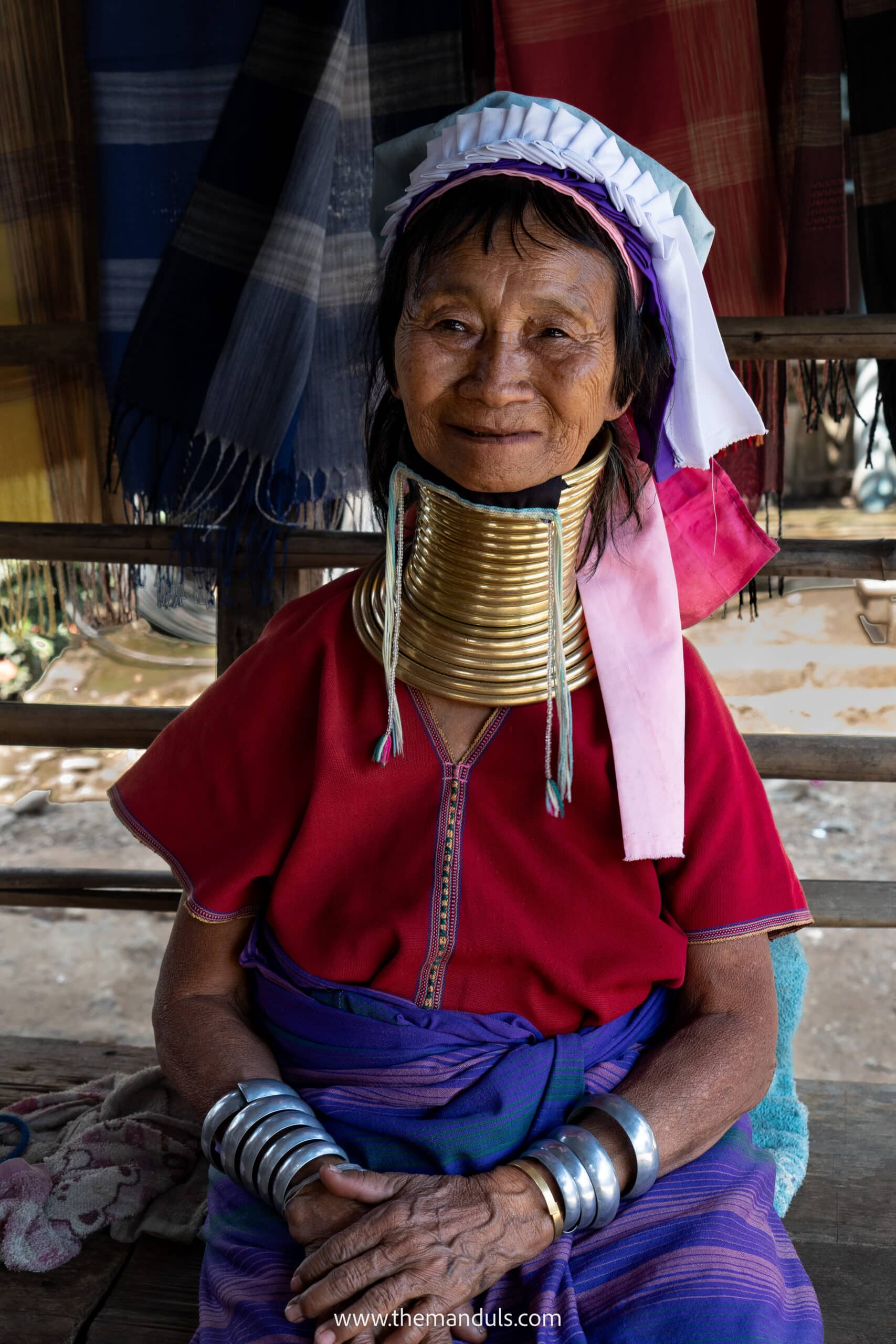
They’re home to Kayan communities originally from Myanmar, and tourism plays a big role in their income. Most visits from Chiang Rai are short stops as part of organized tours, which can feel quite staged depending on your expectations.
We visited a similar village Huay Pu Keng in Mae Hong Son instead, where we stayed overnight — and that made a big difference. Spending more time there gave us a better sense of daily life beyond just a quick visit.
If you’re considering going, it really comes down to your perspective. Some people find it meaningful and a way to support the community, others feel uncomfortable with how tourism is structured here.
We wouldn’t make this a priority on a short Chiang Rai trip. If you’re genuinely interested, we’d choose a slower, more responsible visit over a quick photo-stop tour.
12. Pu Chi Fa – Only in November to January
This is one of those places that’s either incredible — or not worth going at all.
Pu Chi Fa sits on the Laos border, about 120 km from Chiang Rai, and in the right conditions the valley below fills with mist at sunrise. It’s one of the most photographed views in northern Thailand for a reason.
But timing is everything.
We went at the end of February, right as burning season started early that year — and there were no views at all. Thick smog covered the entire valley, and the 2.5-hour drive each way ended up being a complete waste of time.
If you’re visiting between February and April, we’d take this off your list entirely and focus on something more reliable like the tea plantations or the waterfall instead.
Even in the right season, we’d only recommend adding this if you have extra time in Chiang Rai. It’s a long drive for a single viewpoint, so it works best as part of a slower itinerary rather than a short visit. Check air quality before committing to the drive.
If your timing is right (November to January), it’s much more straightforward than it looks. The road goes almost to the top, and the final walk is short. Stay overnight near the park entrance and aim to be at the viewpoint before 6 am.
How We’d Plan 3 Days in Chiang Rai
If you have 3 days in Chiang Rai, this is how we’d structure it based on our experience — grouping places logically so you’re not wasting time driving back and forth.
Day 1 – The Temple Route + Waterfall
Start early at the White Temple (Wat Rong Khun) — coming at opening makes a huge difference before tour buses arrive.
From there, continue south to Khun Korn Waterfall. The hike is easy and a great contrast to the temple visits — this ended up being one of our favorite stops.
On the way back, you can optionally stop at Pong Phrabat Hot Springs to relax before heading into the city.
In the evening, head to the Clock Tower light show and have dinner at the Night Bazaar.
If you don’t have a motorbike or don’t want to deal with transport, this is exactly what the Chiang Rai highlights tour simplifies into one day with hotel pickup.
Day 2 – Blue Temple, Black House + Sunset
Start the day at the Blue Temple, then continue to the Black House (Baan Dam Museum) — they’re only a few minutes apart and easy to combine.
In the afternoon, slow things down. This is a good time to visit Lalitta Café if you want something different.
End the day at Wat Huay Pla Kang for sunset — this was one of the calmest, most enjoyable moments of our trip.
Day 3 – Countryside & Tea Plantations
Use your third day to get outside the city — this is where Chiang Rai really stands out.
Head north to the tea plantations (Choui Fong or 101) and take your time exploring the area. This is something we regret not doing, and it’s what we’d prioritize if we came back.
If you prefer nature, you can swap this for a slower day revisiting the waterfall area or exploring smaller countryside roads.
👉 Only consider Pu Chi Fa if you’re visiting between November and January and have extra time — otherwise skip it.
How to Get to Chiang Rai
Most people visit Chiang Rai from Chiang Mai or Bangkok — and the best option depends entirely on how far you’re coming from.
This is the most common route — and for most people, the bus is the best option.
From Chiang Mai
We took the GreenBus and would do the same again. The journey takes 3 to 3.5 hours, buses are comfortable (AC, assigned seats), and it’s a direct route with multiple departures throughout the day.
Prices start from around 423 THB (confirmed in 2026), and the main thing to watch is availability — popular time slots can sell out.
👉 We recommend booking through 12Go to secure your seat in advance and compare departure times in one place.
From Bangkok
If you’re coming from Bangkok, we wouldn’t overthink this — just fly.
Flights take around 1 hour 20 minutes, and prices are often low enough that the time saved is absolutely worth it. The alternative is a 13-hour bus or train, which only saves a small amount and isn’t a great use of your time.
There are multiple daily flights from both Suvarnabhumi and Don Mueang, with airlines like Thai Lion Air and Nok Air.
👉 Check flights via Skyscanner or directly with airlines to compare prices and schedules.
Getting Around Chiang Rai
The city center is walkable. Everything else requires wheels. For most people, we’d either rent a motorbike or join a day tour depending on how much time you have.
Rent a motorbike (best overall) — this is the right choice for anyone comfortable on two wheels. Prices from 250 THB/day. We used B Rider and had a good experience. The roads outside the city are excellent and the distances are manageable.
Grab (good for short distances) — works well for in-city trips and getting to nearby attractions like the Blue Temple or Wat Huay Pla Kang. Less reliable for remote spots like the waterfall or tea plantations.
Songthaew — shared red trucks, useful for getting to the White Temple (departs from Bus Terminal 1 for 20 THB). Negotiate everything else upfront.
Day tour — the right call if you only have one day or don’t want to handle transport logistics. The GetYourGuide highlights tour covers the main temples and includes lunch.

Required: International Driving License for motorbike rental. Police checkpoints do stop foreign tourists — a fine starts at 500 THB and arguing doubles it.
Best Time to Visit Chiang Rai
November to February is the sweet spot. Dry, cool (around 20–25°C), and the mist-covered mornings in the hills are at their best. Hotel prices are higher, especially around Christmas and New Year — book 3–4 weeks ahead for December.
February to April: avoid if possible. This is burning season across northern Thailand. We were there in late February 2024 — the air quality was poor, the sky was a dull grey, and Pu Chi Fa was completely socked in. It doesn’t affect the temples, but it ruins anything outdoors and can make the city genuinely unpleasant to breathe in.
July to October (rainy season) brings lush green scenery and fewer crowds. Rain typically falls in heavy afternoon bursts rather than all day. If you’re flexible on timing and want better prices, late September and October are reasonable compromises.
Before You Go – Practical Notes
eSIM: Get one before you arrive. We use Airalo for Thailand because it makes arrival, maps, Grab, and navigation much easier.
Travel insurance: Don’t rent a motorbike without it. SafetyWing covers Southeast Asia at a fraction of what most insurers charge.
Cash: Most temples, local restaurants, and market stalls are cash-only. ATMs are available in the city center. Withdraw before heading to remote spots like the waterfall or tea plantations.
Dress code: Temples require covered knees and shoulders. Carry a light wrap if you’re planning a temple-heavy day — it’s easier than relying on borrowed sarongs at the entrance.
FAQ
Yes, but your route will be more limited. Grab works well for short trips around the city and nearby sights like the Blue Temple, Wat Huay Pla Kang, and the Clock Tower. The White Temple is also possible by local bus or taxi.
The harder part is visiting places outside the city, like Khun Korn Waterfall, Choui Fong Tea Plantation, or Pu Chi Fa. For those, we’d either rent a motorbike, hire a driver, or join a guided tour.
Chiang Rai felt very safe when we visited. The city is calm, the center is easy to walk around, and evenings near the Night Bazaar felt relaxed rather than hectic.
The main thing to be careful with is transport. If you rent a motorbike, wear a helmet, carry an international driving permit, and avoid riding unfamiliar roads after dark. Distances outside the city are longer than they look on the map.
Yes, but it depends on how you plan your days. The city itself is calm and not overwhelming, which can be easier with kids than busier places like Chiang Mai.
That said, some attractions are spread out, so long scooter days or packed temple routes can get tiring. For families, we’d keep the itinerary slower, stay near the Night Bazaar, and choose a few easy stops each day rather than trying to see everything.
Chiang Rai is one of the more affordable stops in northern Thailand. As a rough daily budget, we’d plan around 900–1,500 THB per person if you stay in simple accommodation, eat mostly local food, and rent a motorbike.
For a more comfortable trip with a nicer hotel, cafés, Grab rides, and a few paid attractions, 1,800–3,000 THB per person per day is more realistic.
The city center is walkable, especially around the Clock Tower, Night Bazaar, cafés, restaurants, and Bus Terminal 1. That’s one reason we recommend staying in this area.
But the main attractions are not walkable from the center. For temples, waterfalls, viewpoints, and tea plantations, you’ll need Grab, a motorbike, local transport, a driver, or a tour.