
This article contains affiliate links. Learn more in our affiliate disclosure.
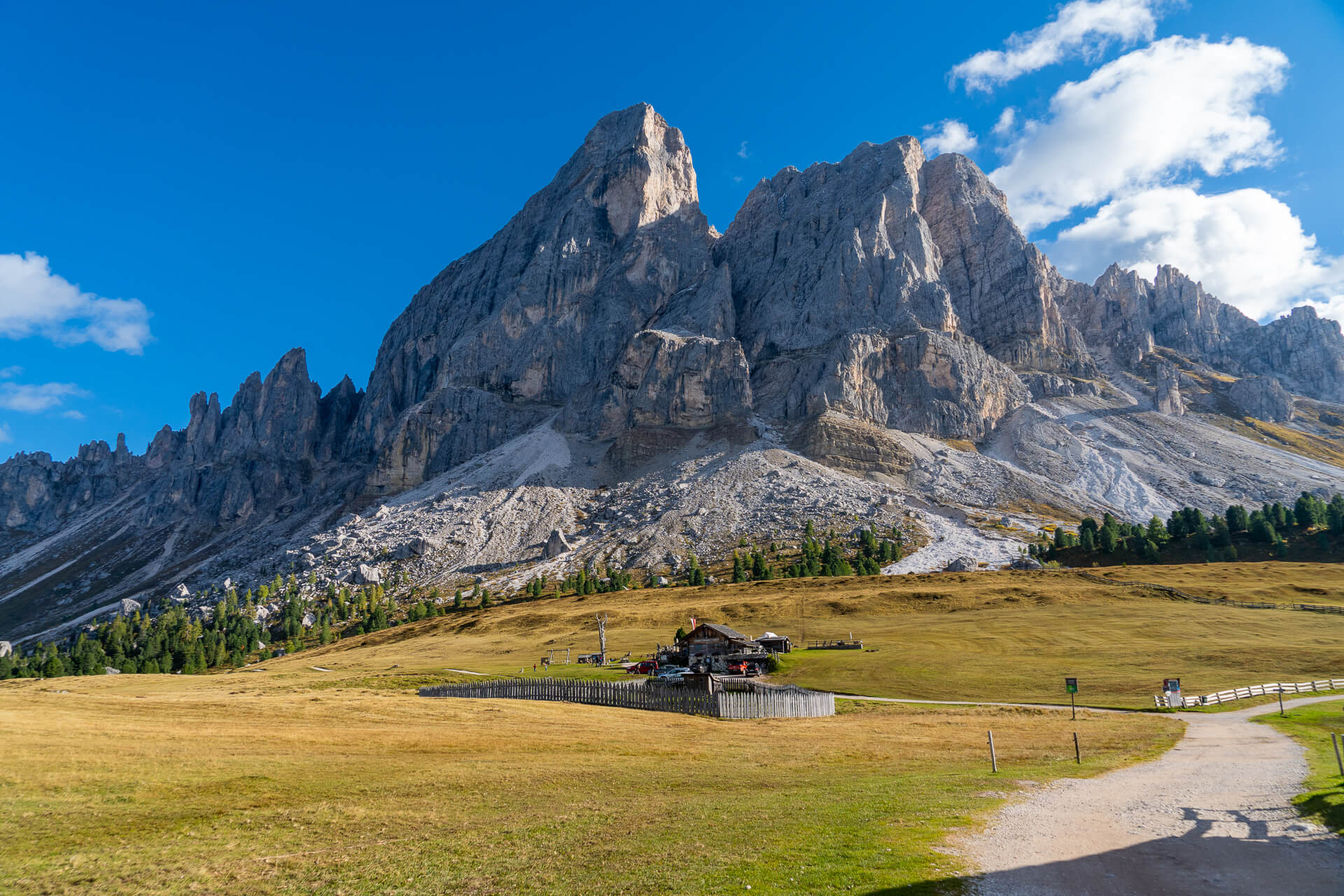
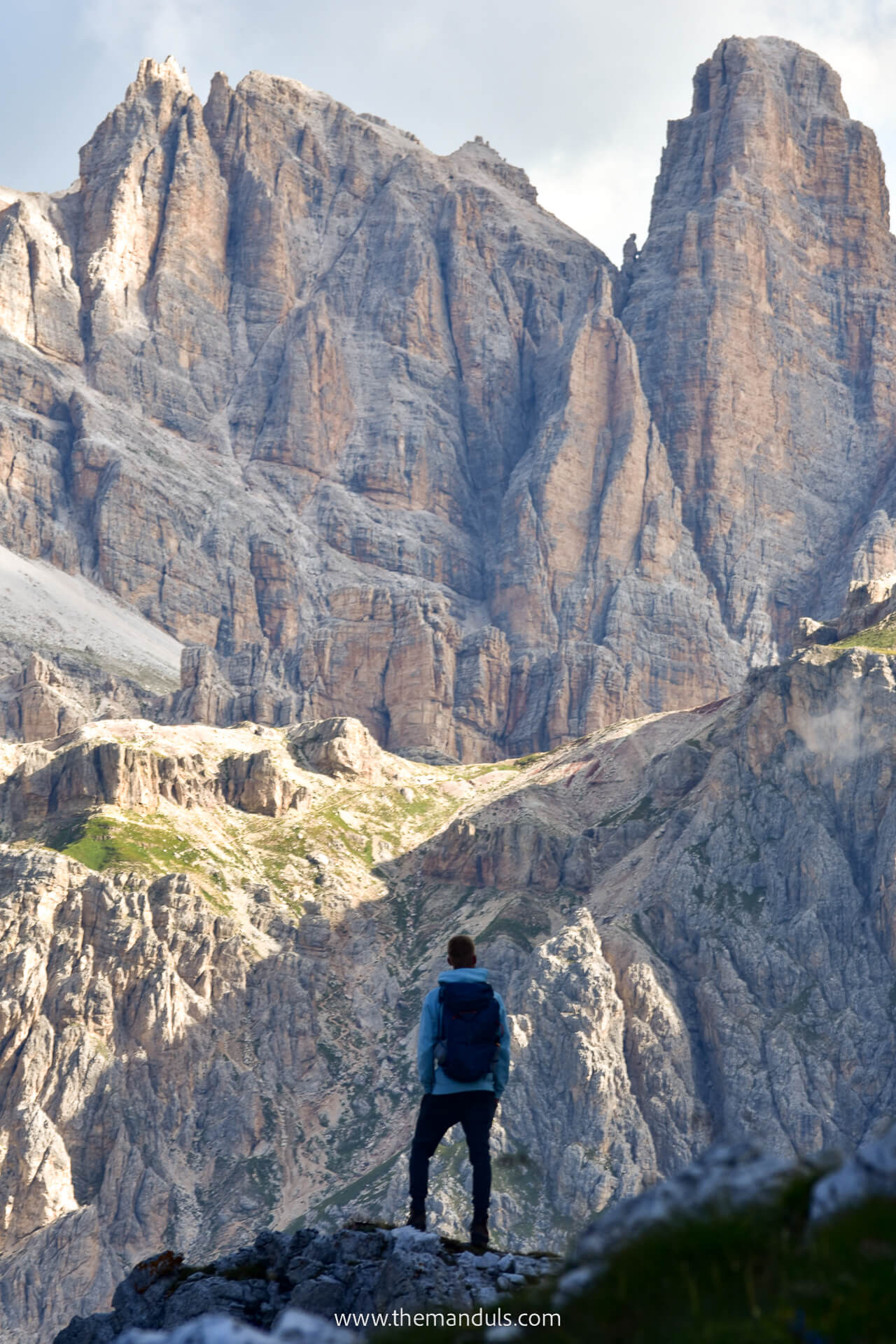
What makes hiking in the Dolomites special isn’t just the dramatic scenery, but the variety. In a single trip, you can walk beneath towering limestone peaks, cross wide alpine meadows, follow gentle valley trails, or stand on exposed viewpoints with sheer drops just a few steps away.
The Dolomites left a strong impression on us from the very first visit. We first explored them in August 2021, and then returned again in September 2025 — this time travelling with our six-month-old daughter, Ema.
Travelling with Ema forced us to be more selective. We paid closer attention to logistics, trail conditions, parking rules, weather windows, and crowd levels — things that are easy to overlook on a fast-paced trip.
And since our first visit, a lot has changed. Several of the most popular hikes now have new access rules, parking limits, or time restrictions, which can affect your experience if you don’t plan ahead.
This list is based entirely on our own experience in the Dolomites. We’ve included both iconic Dolomites hikes and quieter alternatives, with honest notes on who each trail is best for, what kind of effort to expect, and when it’s worth adjusting your plans.
If you’re looking for first-hand, up-to-date hiking advice rather than a generic checklist, these are the Dolomites hikes we genuinely think are worth knowing about.
These are our top hotels in Dolomites we’d book again
⭐️⭐️⭐️ Naturhotel Leitlhof (our top pick) – Excellent location, top-notch spa and saunas, great food, and views we loved.
👉 See prices & availability →
⭐️⭐️ Granbaita Dolomites – A luxury alpine stay in Selva with a great spa, excellent breakfast, and easy access to mountain roads and lifts.
👉 See prices & availability →
⭐️ Hotel Valpudra – A simple, well-rated budget choice with friendly hosts, clean rooms, and good value for the area. Ideal if you plan to spend most of your time hiking and driving passes.
👉 See prices & availability →
Best hikes in the Dolomites
1. Tre Cime di Lavaredo

Distance: ~10 km

Duration: 4-5 hours

Difficulty: medium
Tre Cime di Lavaredo is one of those hikes that feels special no matter how many times you do it. We’ve hiked it twice — first in peak summer conditions, and then again in September 2025 with our daughter, Ema, which gave us a completely different perspective on the trail.
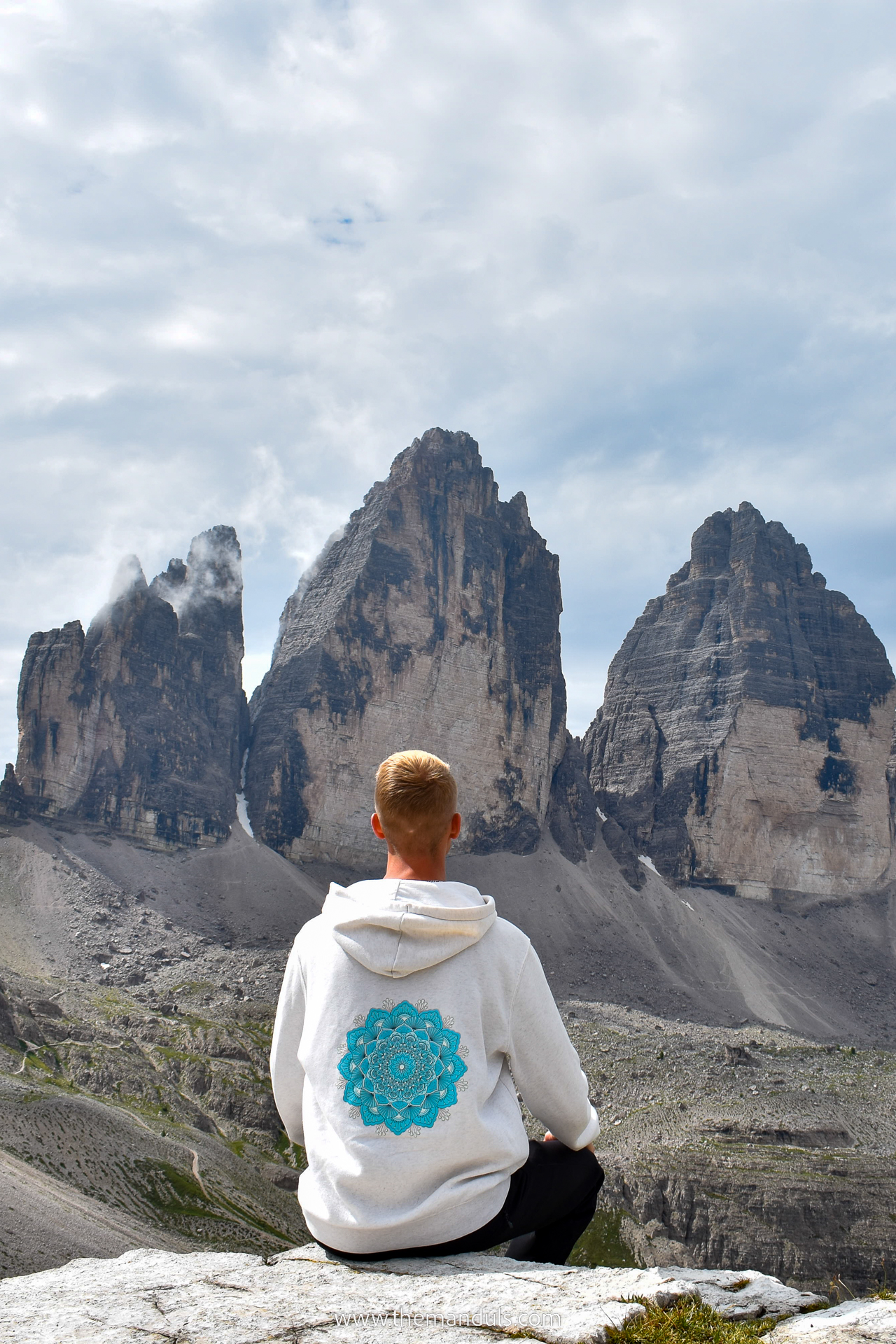
The loop takes you beneath the three iconic limestone peaks, with constantly changing views along wide gravel paths, rocky sections, and open viewpoints that make the mountains feel impressively close. On our summer hike, we dealt with passing storms and busy trails, while our September visit was quieter, colder, and dusted with early snow in places — beautiful, but definitely more demanding.
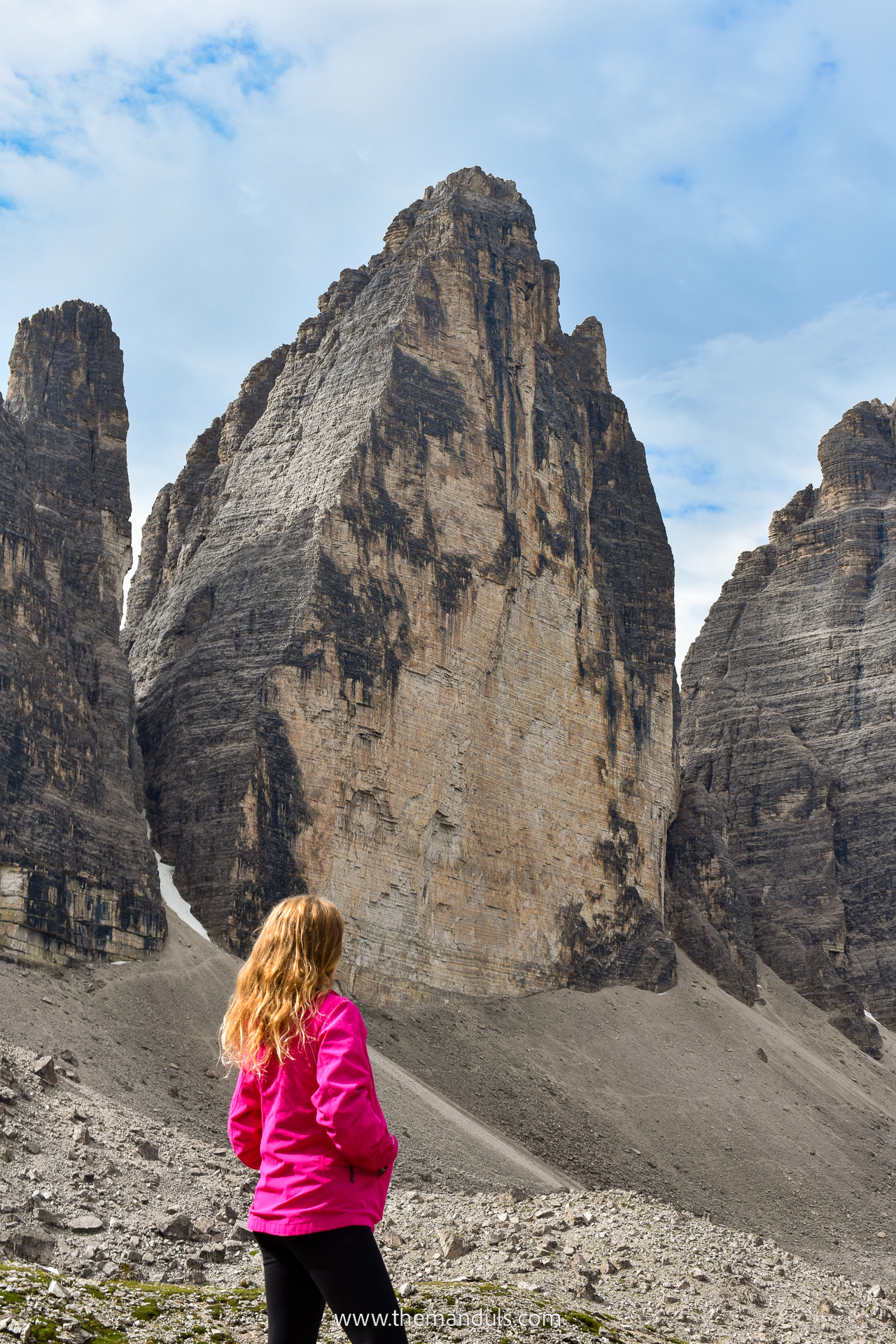
With the huts already closed in September, the hike felt wilder and more exposed, and planning mattered much more. Even so, the atmosphere was incredible, with crisp air, dramatic light, and far fewer people around. It reinforced how different this hike can feel depending on season, weather, and timing.
Despite its popularity, Tre Cime still delivers. It’s accessible enough for most hikers, but scenic enough to feel unforgettable — whether you’re visiting for the first time or returning years later.

If this is your first time hiking here, we recommend reading our full Tre Cime di Lavaredo hiking guide — it covers parking, route options, timing, and the mistakes we’d avoid next time.
2. Sassolungo Round Hike
Distance: 16.1 km
Duration: 6 hours
Difficulty: moderate / difficult
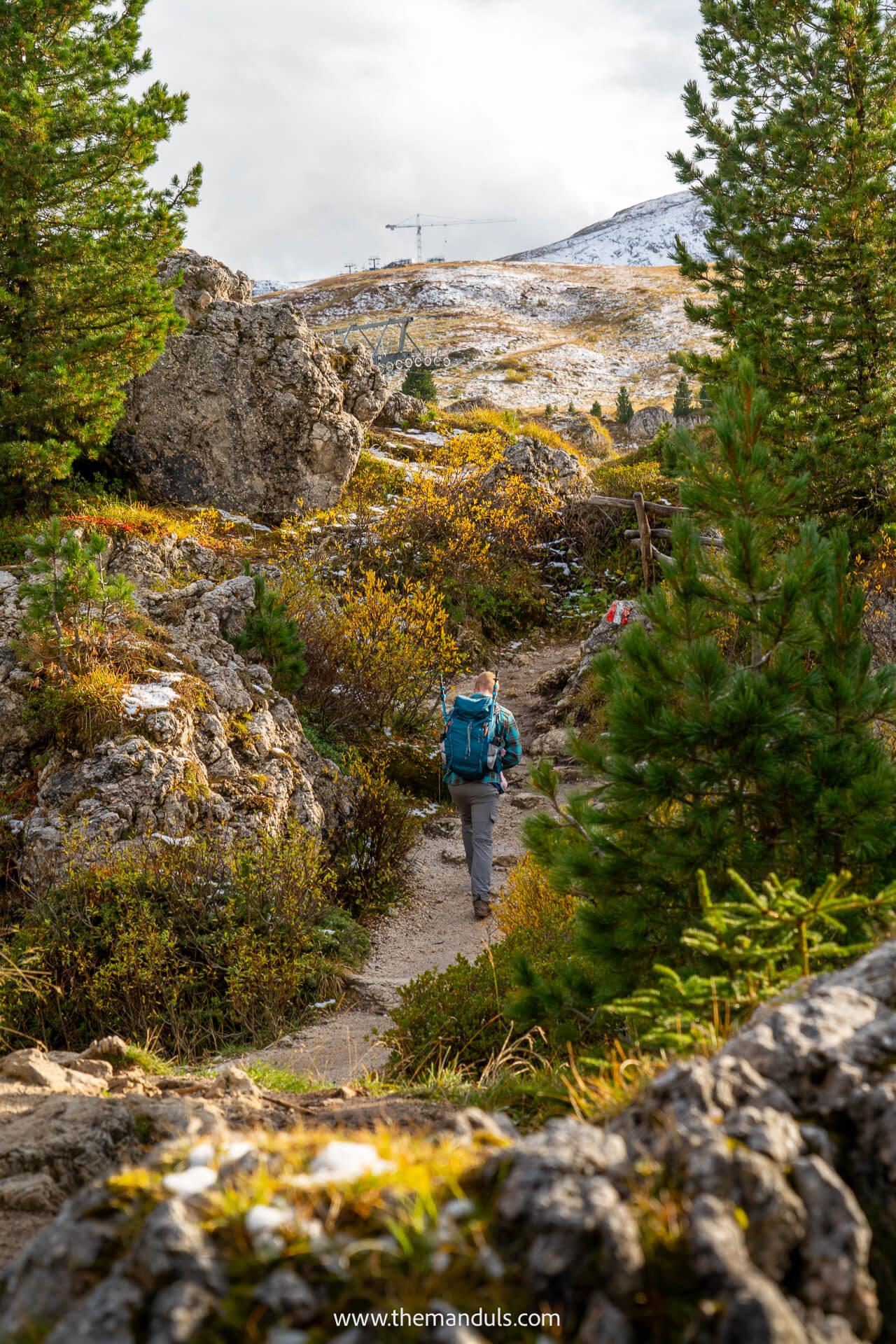
We planned our Sassolungo hike for September, expecting crisp autumn air and clear trails — and instead woke up to fresh snow. It could’ve gone either way, but thanks to proper shoes, warm layers, and crampons, we decided to go for it. That decision paid off big time, because this hike ended up becoming our personal favorite in the Dolomites.
The route loops all the way around the Sassolungo massif, and that’s what makes it so special. The scenery never gets repetitive — sheer rock walls, wide alpine valleys, quiet forest sections, and constantly changing perspectives of the peaks. Even after hours on the trail, it kept surprising us.
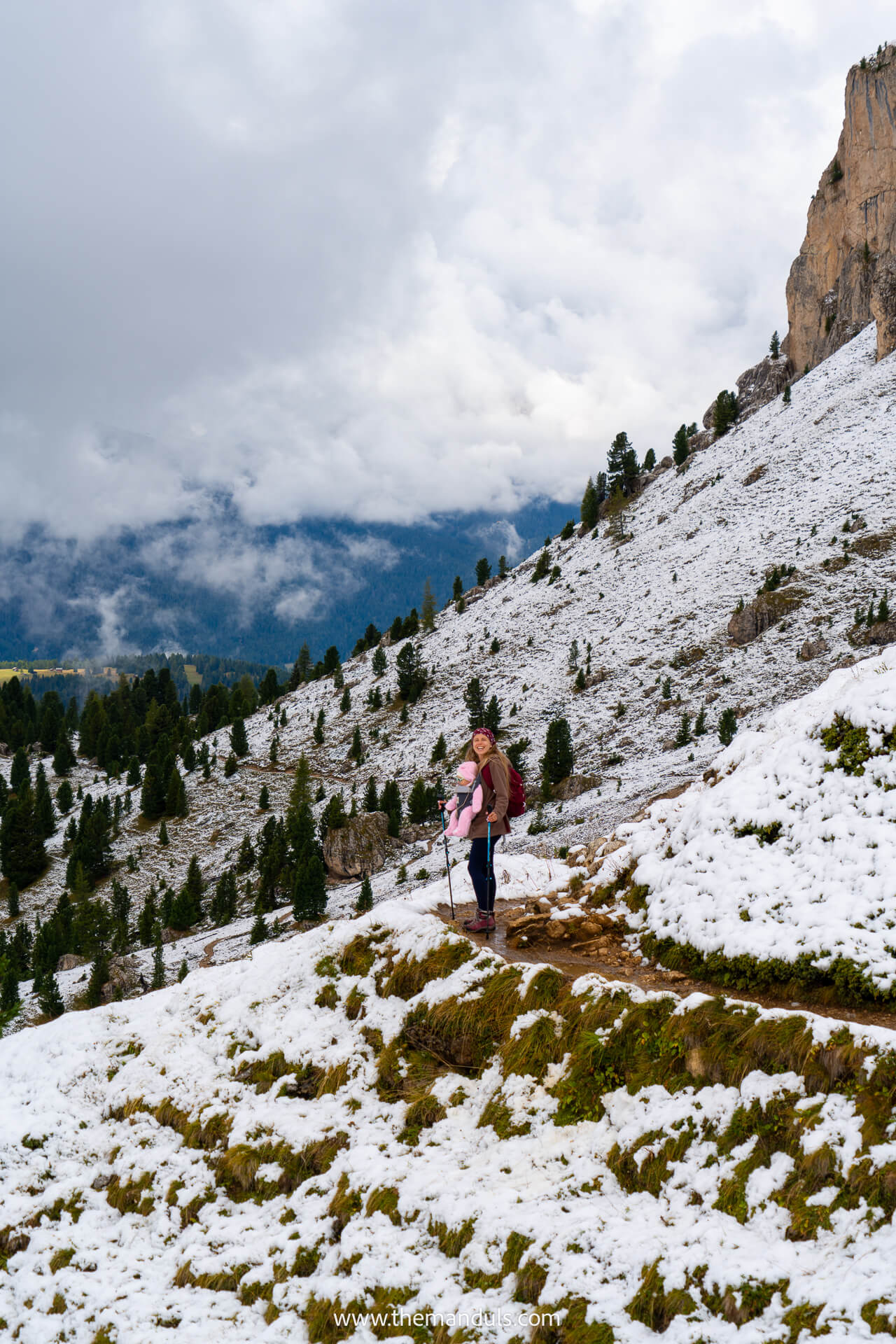
What we loved most is how well balanced the hike feels. It’s challenging enough to stay interesting, but never overwhelming, and the number of mountain huts along the way makes it easy to break the day into manageable sections.
Stopping for warm food while snow crunched under our boots is one of those Dolomites moments we won’t forget.
If you’re looking for a hike that combines variety, big scenery, and a real sense of adventure, Sassolungo delivers.
We break this hike down step by step in our complete Sassolungo round hike guide, including cable car options, distance variants, and what kind of views to expect along the way.
3. Lago di Sorapis
Distance: ~12 km
Duration: 4-5 hours
Difficulty: moderate / difficult
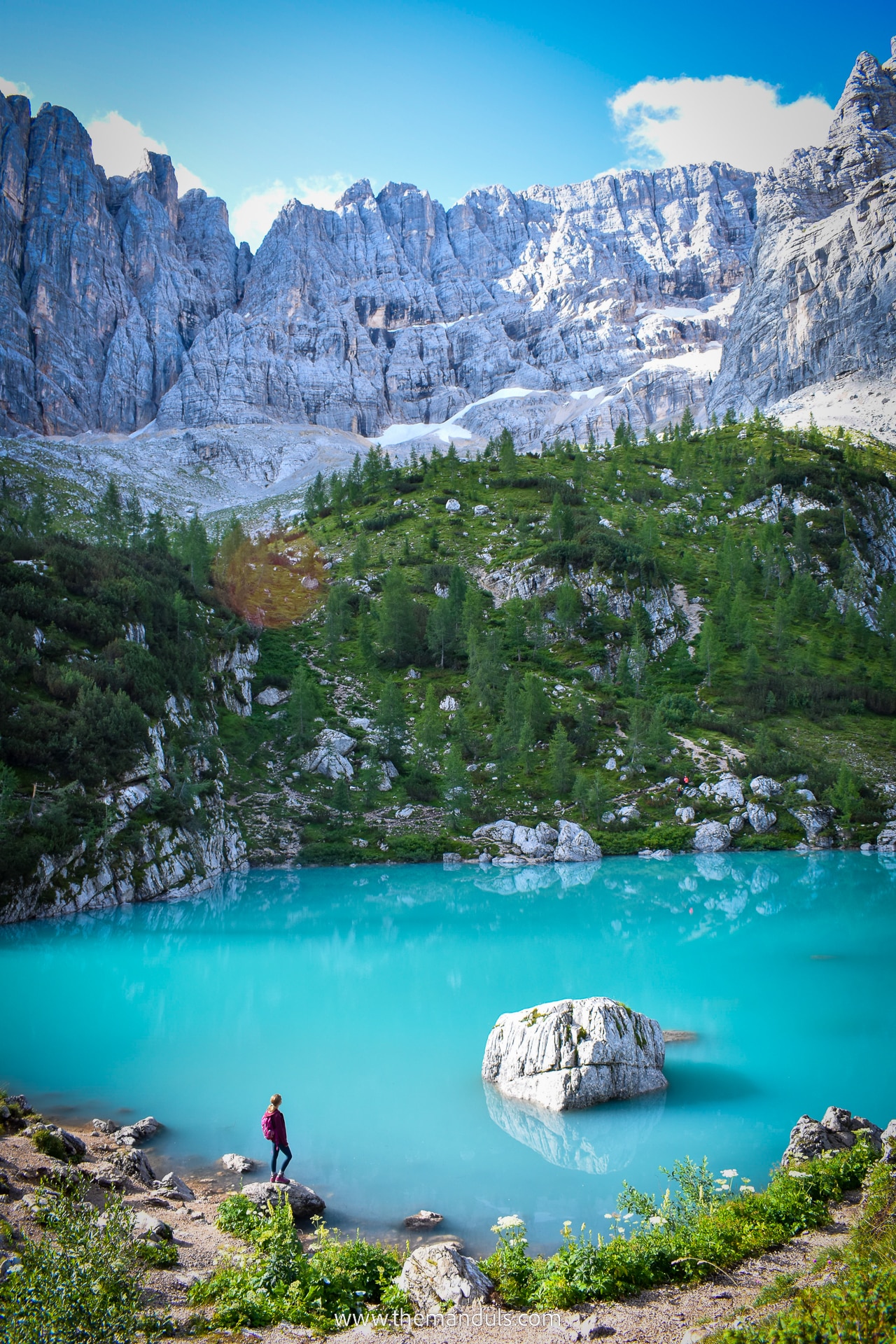
Lago di Sorapis is famous for its unreal turquoise color, and yes — it really does look that good in real life. Reaching it requires a proper hike, but the moment the lake comes into view, surrounded by sharp limestone peaks, it’s immediately clear why this trail is so popular.
Together with Lago di Carezza, it ended up being our favorite lake in the Dolomites.
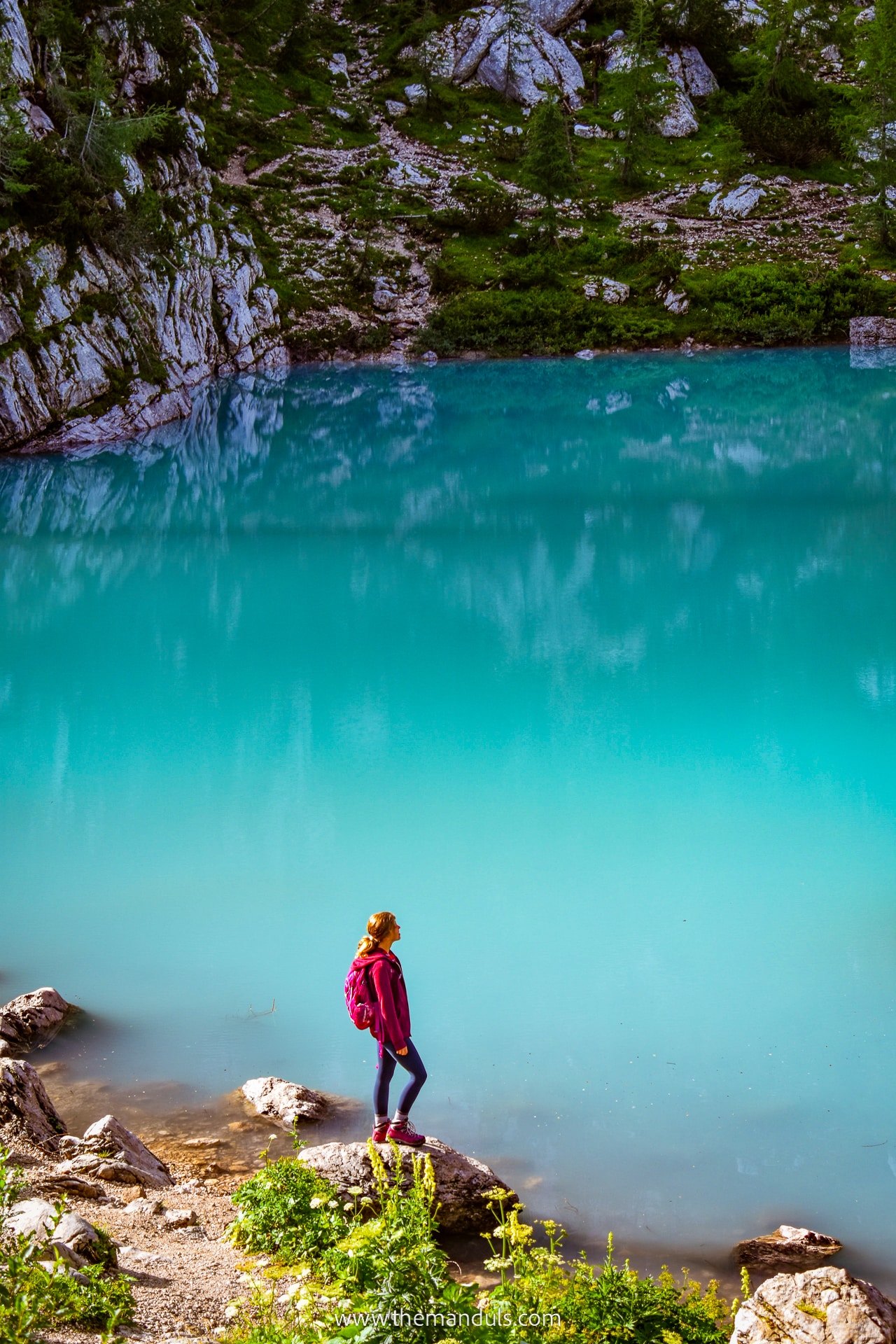
We hiked to Sorapis early in the morning, starting before 7 am, and that made all the difference. The trail felt calm and almost empty on the way up, which allowed us to fully enjoy the dramatic cliffside sections and changing views along the route.
By the time we reached the lake, the light was soft, the water was glowing, and the atmosphere felt genuinely special. We only met a handful of tourists around the lake.
On the way back, we saw just how busy this hike can get — narrow sections quickly filled up, and the contrast to the quiet morning was huge. That experience alone confirmed that timing matters more here than on most Dolomites hikes.
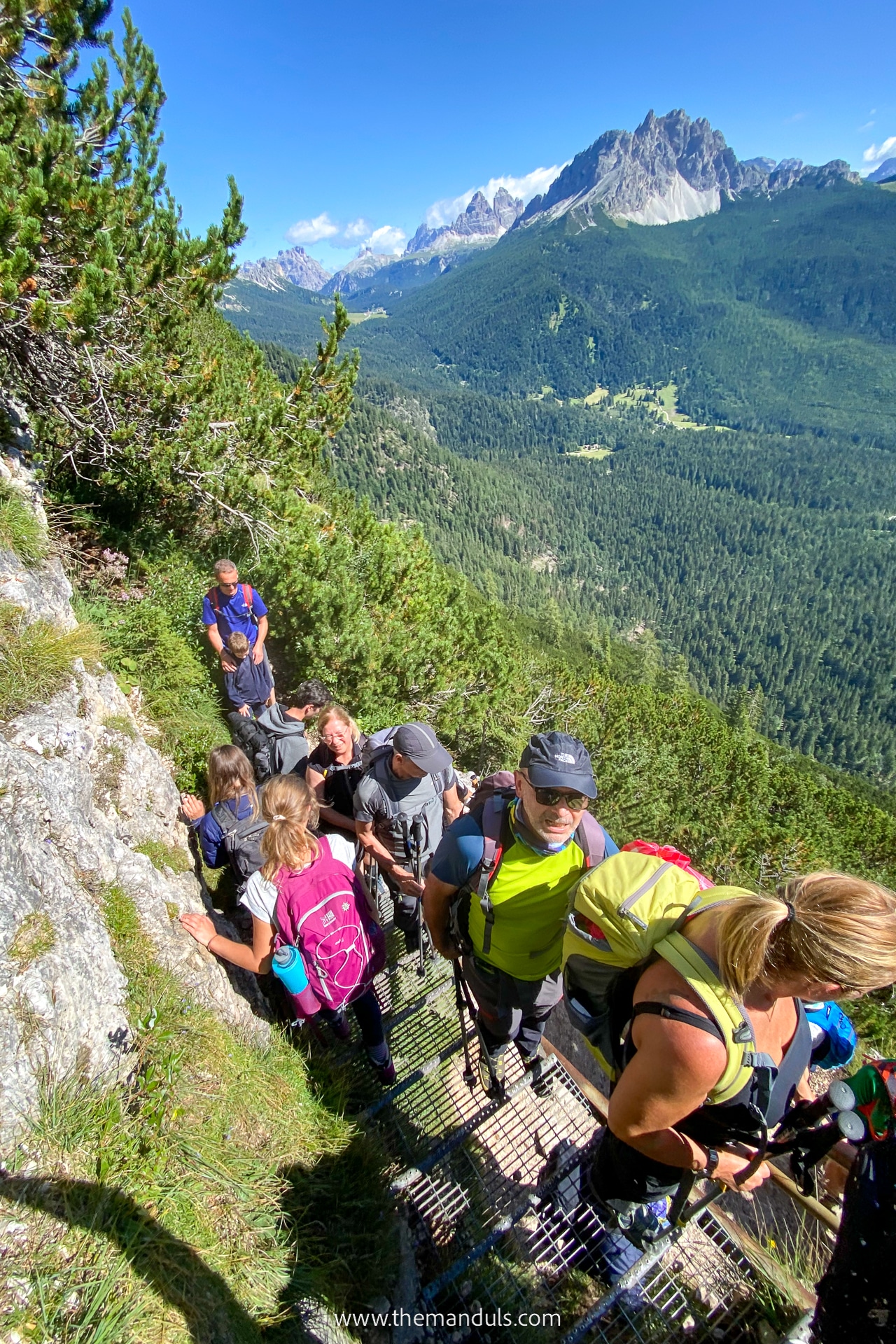
Challenging in parts and exposed in places, Lago di Sorapis isn’t a casual walk, but if you start early and come prepared, it’s absolutely worth the effort.
Because this trail can be surprisingly busy and conditions change quickly, we’ve put together a detailed Lago di Sorapis hiking guide with timing tips, difficulty notes, and safety advice.
4. Val Fiscalina
Distance: 3.9 km (one-way)
Duration: 1.5 hours
Difficulty: easy
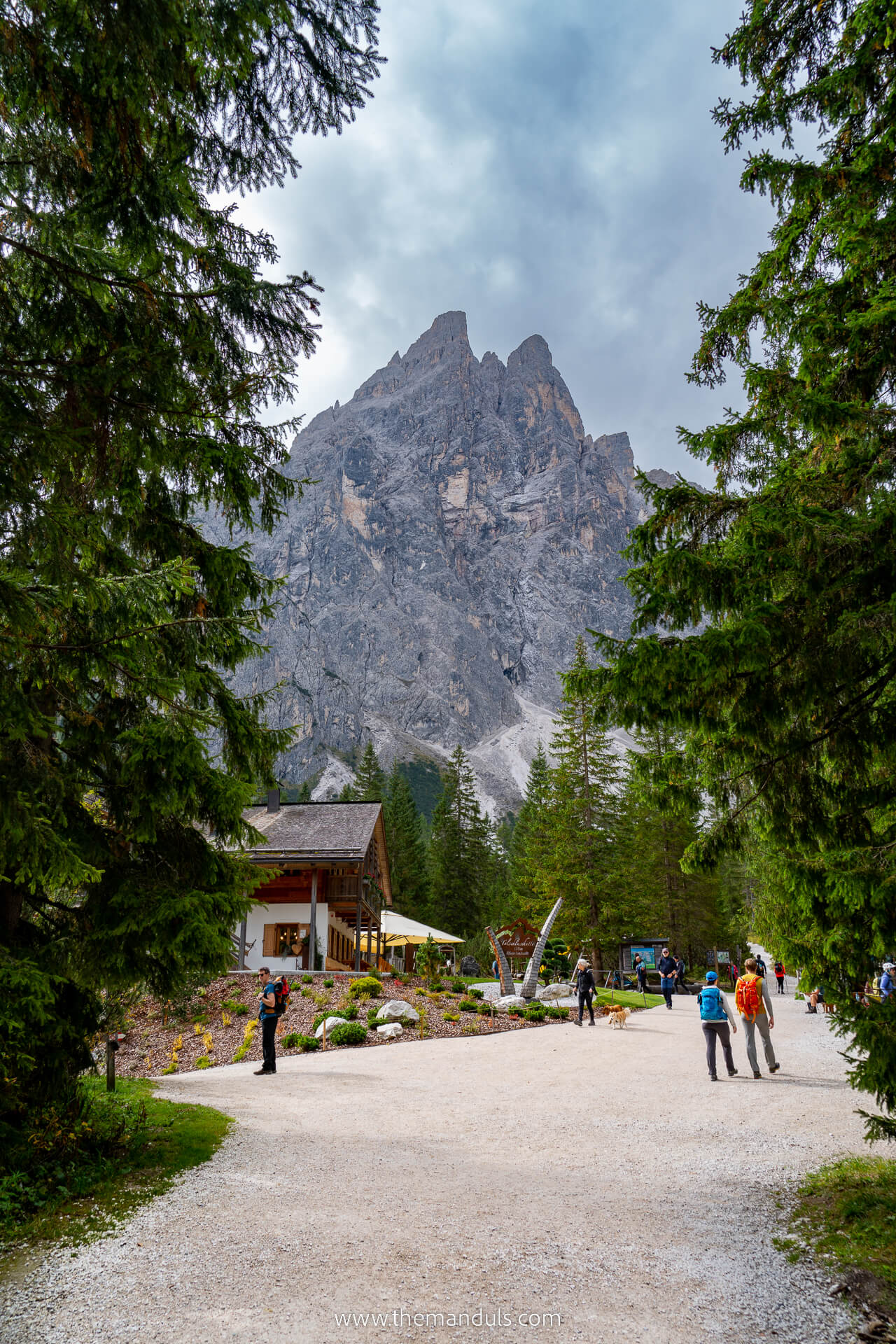
Val Fiscalina (Fischleintal) is one of those places that feels almost too pretty for how little effort it takes. We visited in late September and it honestly couldn’t have been better — crisp air, calm weather, and that quiet end-of-season vibe where you can actually hear the cows in the meadows instead of a crowd behind you.
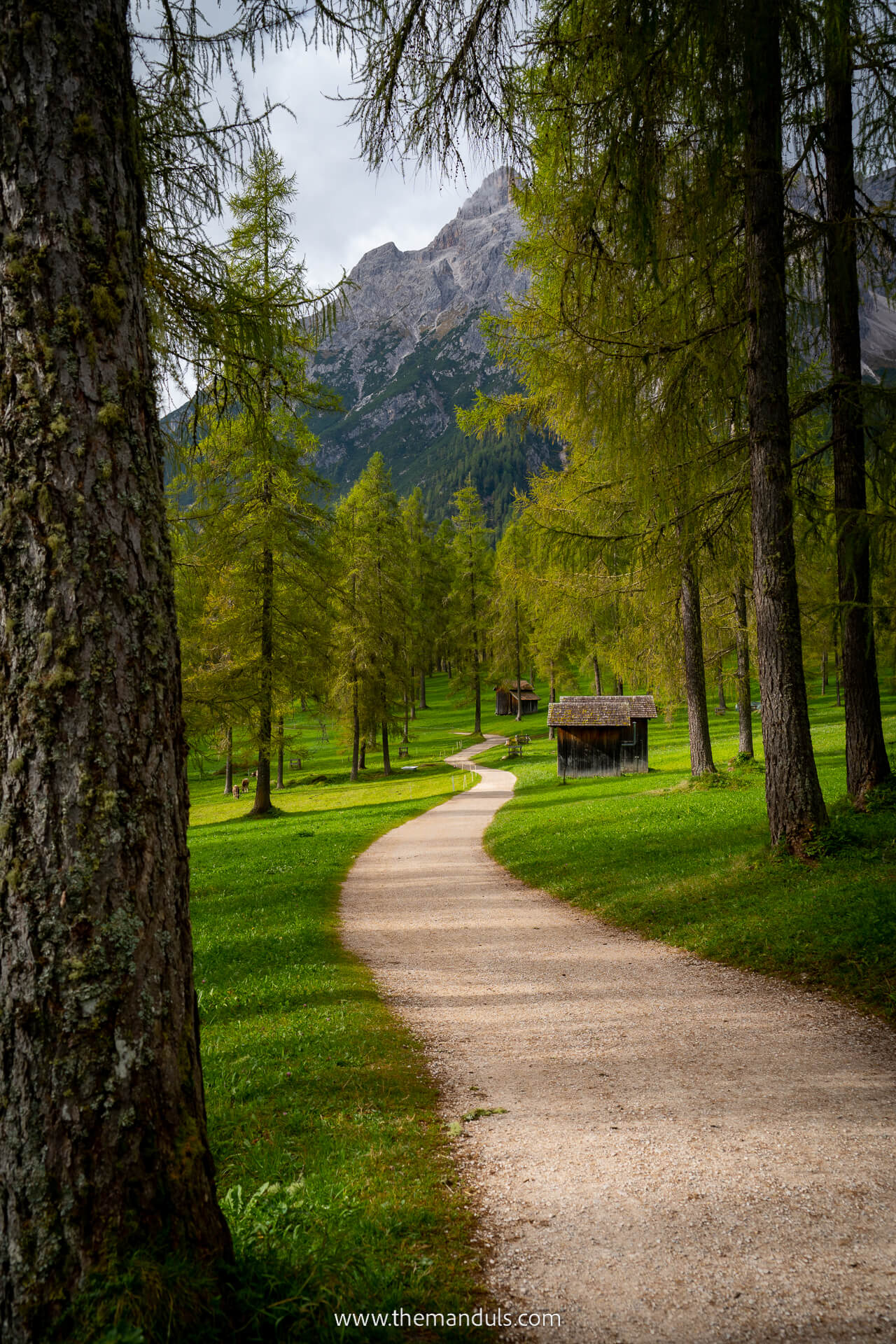
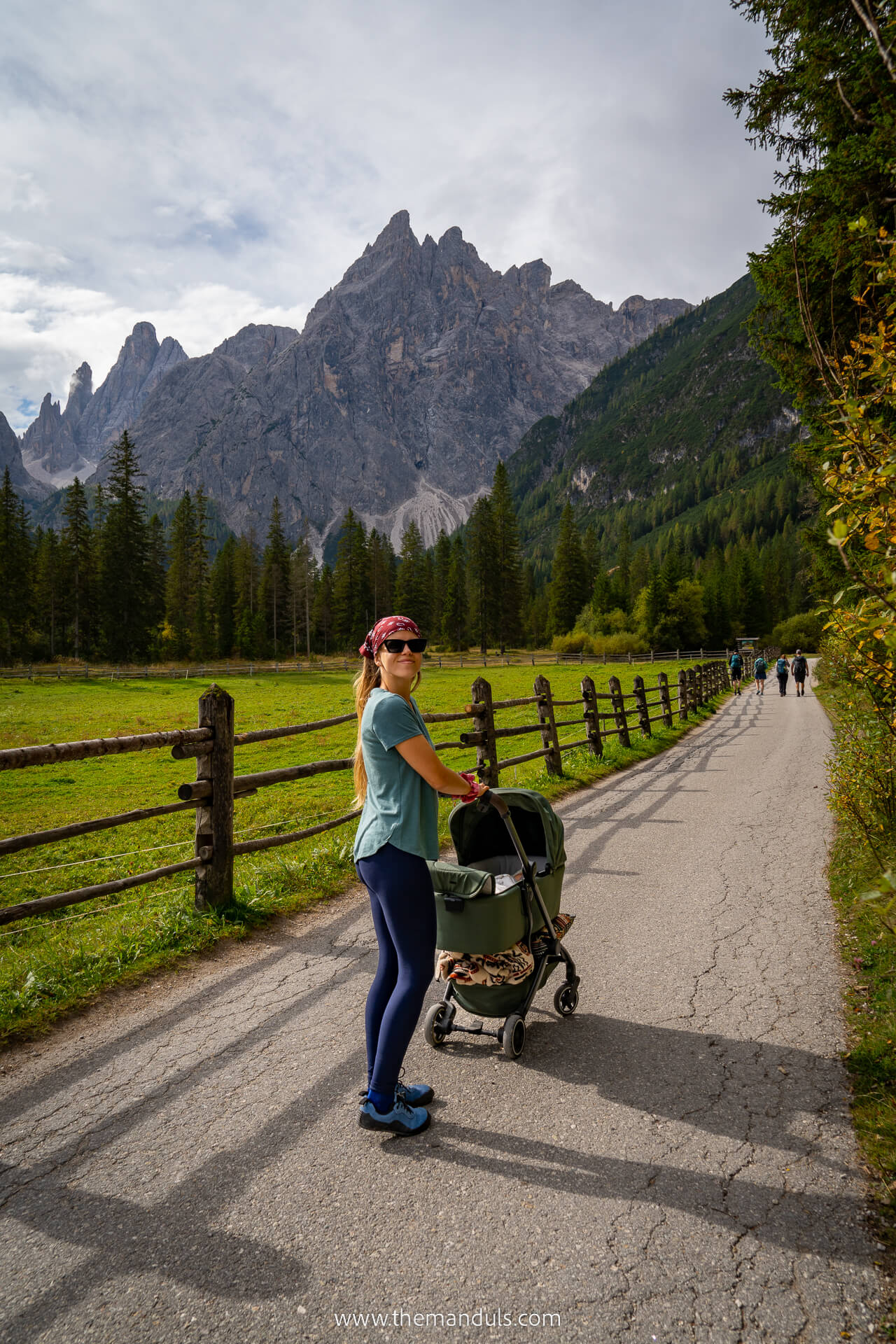
What surprised us most is how easy and family-friendly the trail is. The path runs almost completely flat through wide open meadows with dramatic peaks closing in around you, so you get that big Dolomites scenery without the big climb.
We even did it with a stroller and it worked perfectly, which says a lot for a mountain valley walk.
It’s peaceful, cinematic, and genuinely relaxing — the kind of hike where you can slow down, take photos, stop for coffee and apfelstrudel, and still feel like you’ve seen something special.
And if you want to extend the day, it’s super easy to combine with nearby Lago di Dobbiaco for a calmer lake walk. Or to make it more difficult, you can hike all the way to Tre Cime and the Rifugio Locatelli hut.
Our Val Fiscalina guide explains the best walking routes, hut stops, and how to turn it into a half-day outing.
5. Rifugio delle Odle (Geisler Alm)
Distance: 8.9 km
Duration: 3.5 hours
Difficulty: easy
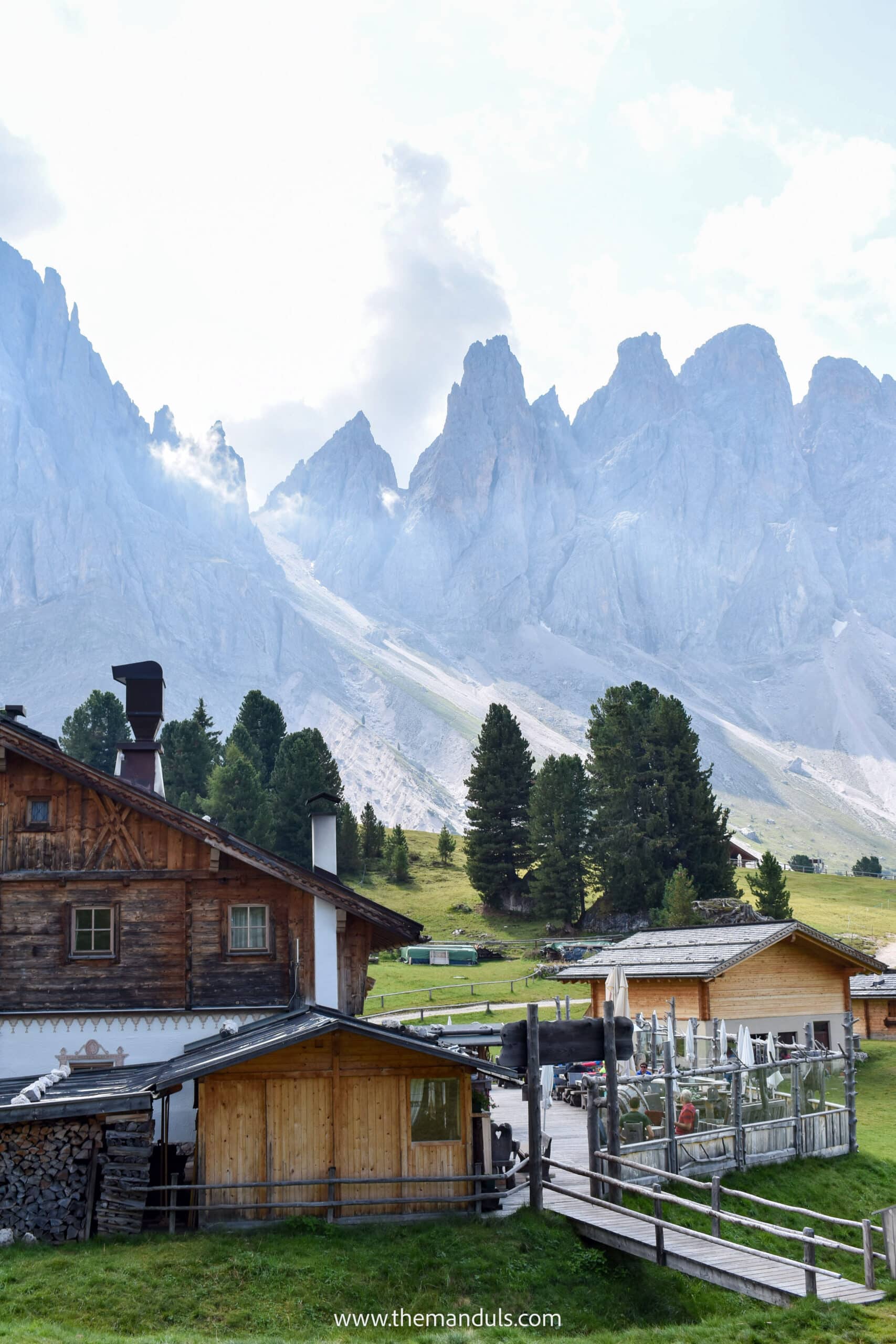
Adolf Munkel Weg, also known as Via delle Odle, is one of the most scenic easy hikes in the Dolomites — and a perfect change of pace after more demanding trails.
We walked it during our road trip through the region, right after visiting Seceda, and loved how different the experience felt. Instead of exposed ridges or steep climbs, this trail stays gentle and relaxed, running through forests and alpine meadows beneath the dramatic Odle peaks.
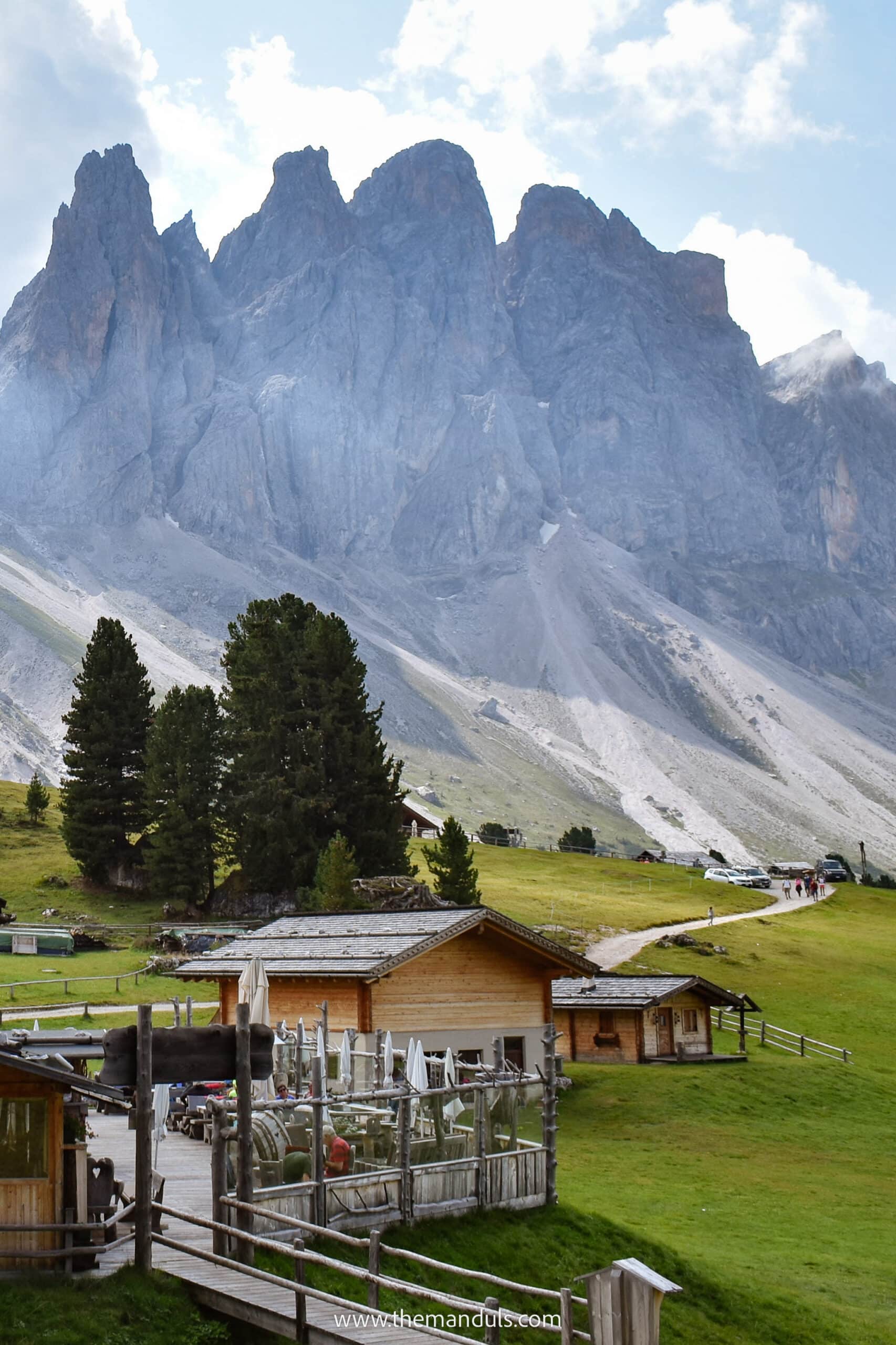
The highlight is reaching Rifugio delle Odle (Geisleralm), a picturesque mountain hut that’s become famous for its “Geislerkino” benches and postcard views of the jagged peaks. Even though there are no alpine lakes along the way, the combination of scenery, peaceful walking, and cozy huts makes this hike incredibly rewarding.
What really stood out for us was how effortless it felt. After several days of hiking in the Dolomites, this was exactly the kind of trail we needed — easy, beautiful, and perfect for slowing down and actually enjoying the surroundings without thinking about elevation or distance.
We recommend checking our Rifugio delle Odle (Geisler Alm) hiking guide for more details about the trail.
6. Seceda Ridgeline
Distance: various options
Duration: from 30 minutes up to 3 hours
Difficulty: varies from easy to moderate
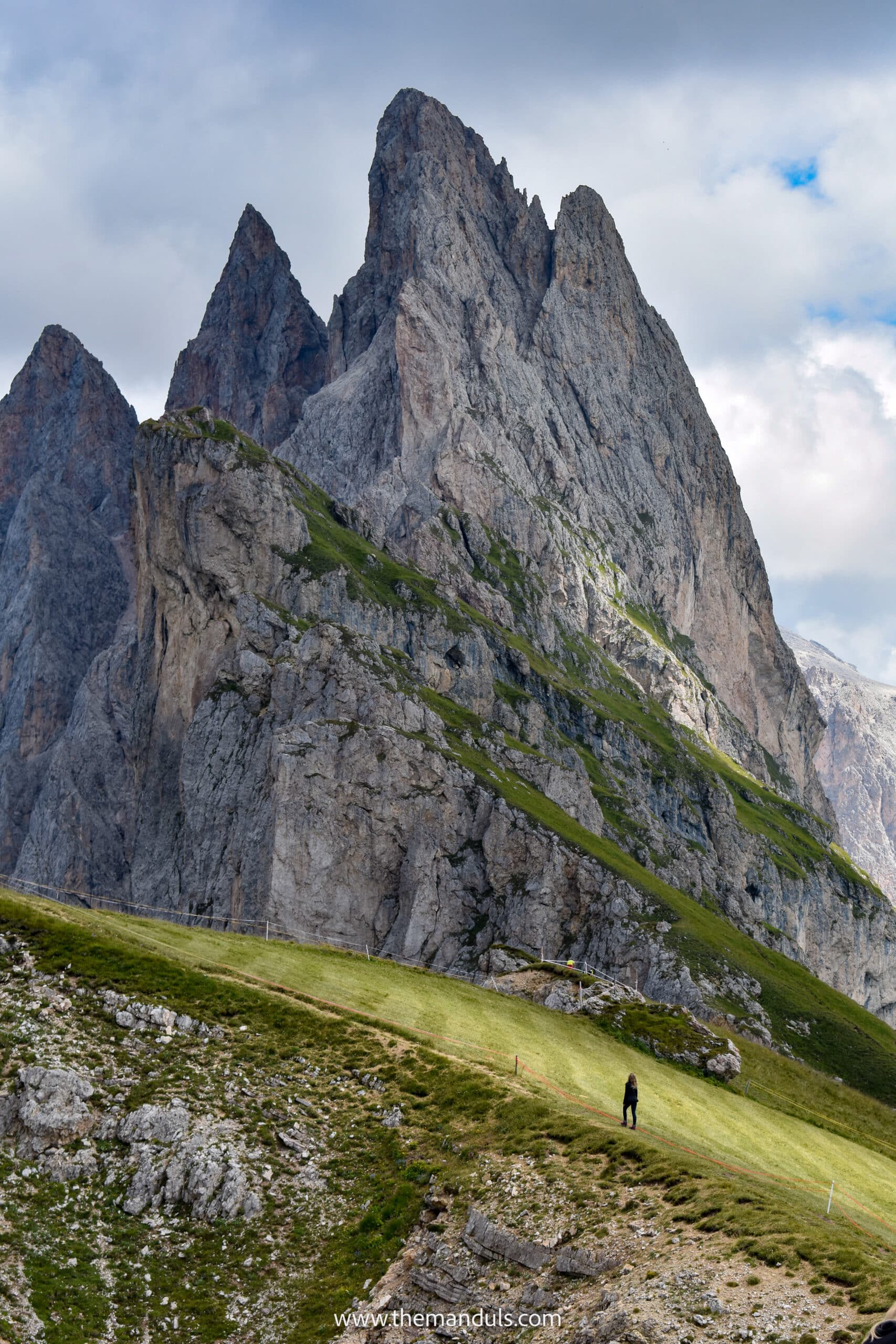
Seceda Ridgeline took our breath away the moment we saw it. The sharp, rugged peaks with steep drops on the side look almost unreal, and even though it’s one of the most photographed places in the Dolomites, it still feels incredibly impressive in real life.
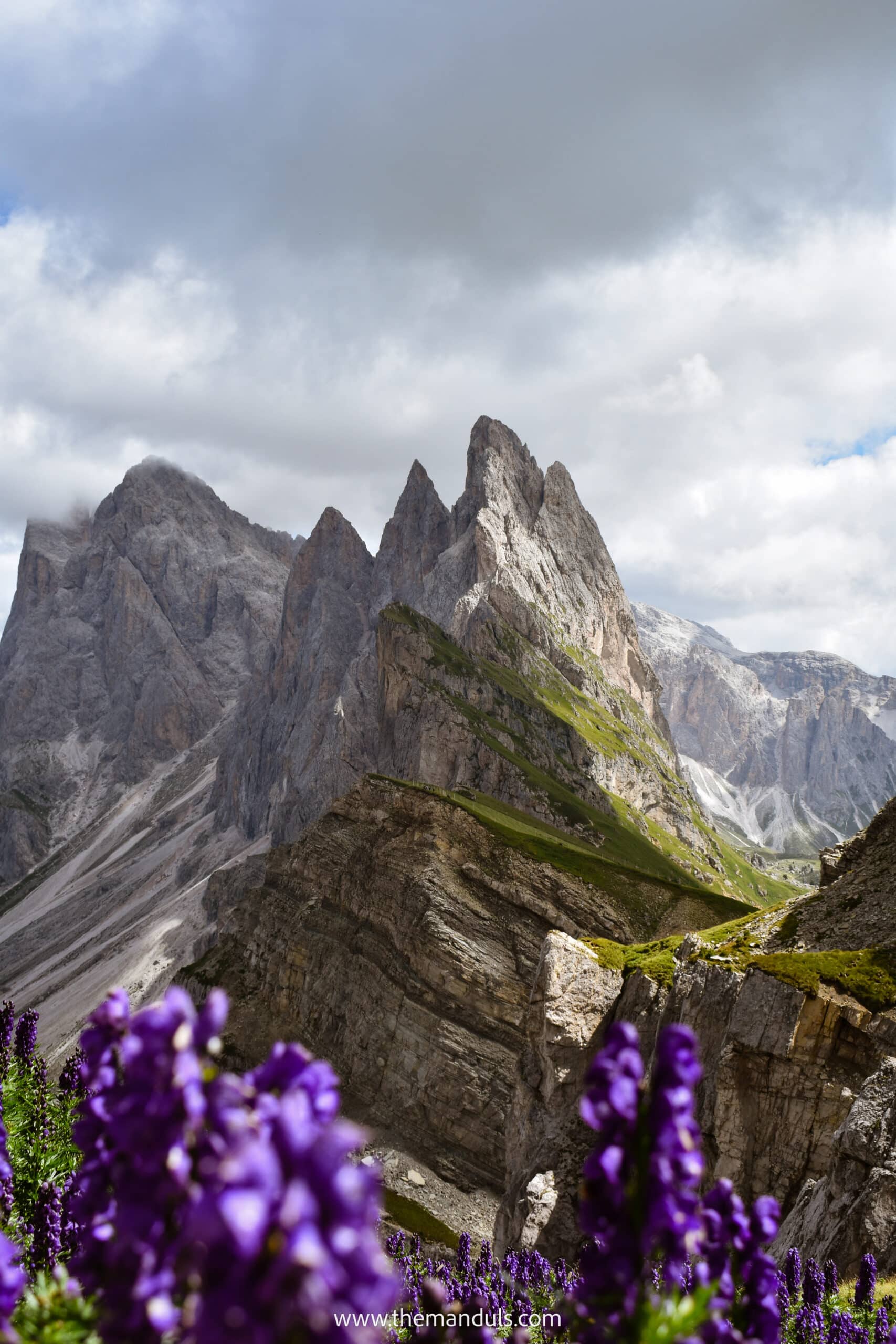
We visited it during our Dolomites road trip on a sunny day with dramatic clouds rolling in and out — and the changing light made the views even more striking.
We especially loved that there are multiple ways to experience Seceda — from a short walk from the cable car to a scenic loop hike through alpine meadows and mountain huts.
It’s a place that works just as well for a relaxed visit as for a half-day hike, which makes it one of the most versatile stops.
We go into much more detail in our Seceda hiking guide, including cable car logistics, best photo spots, and how to avoid the worst crowds.
7. Lago di Braies circuit
Distance: 3.5 km
Duration: 1-1.5 hours
Difficulty: easy
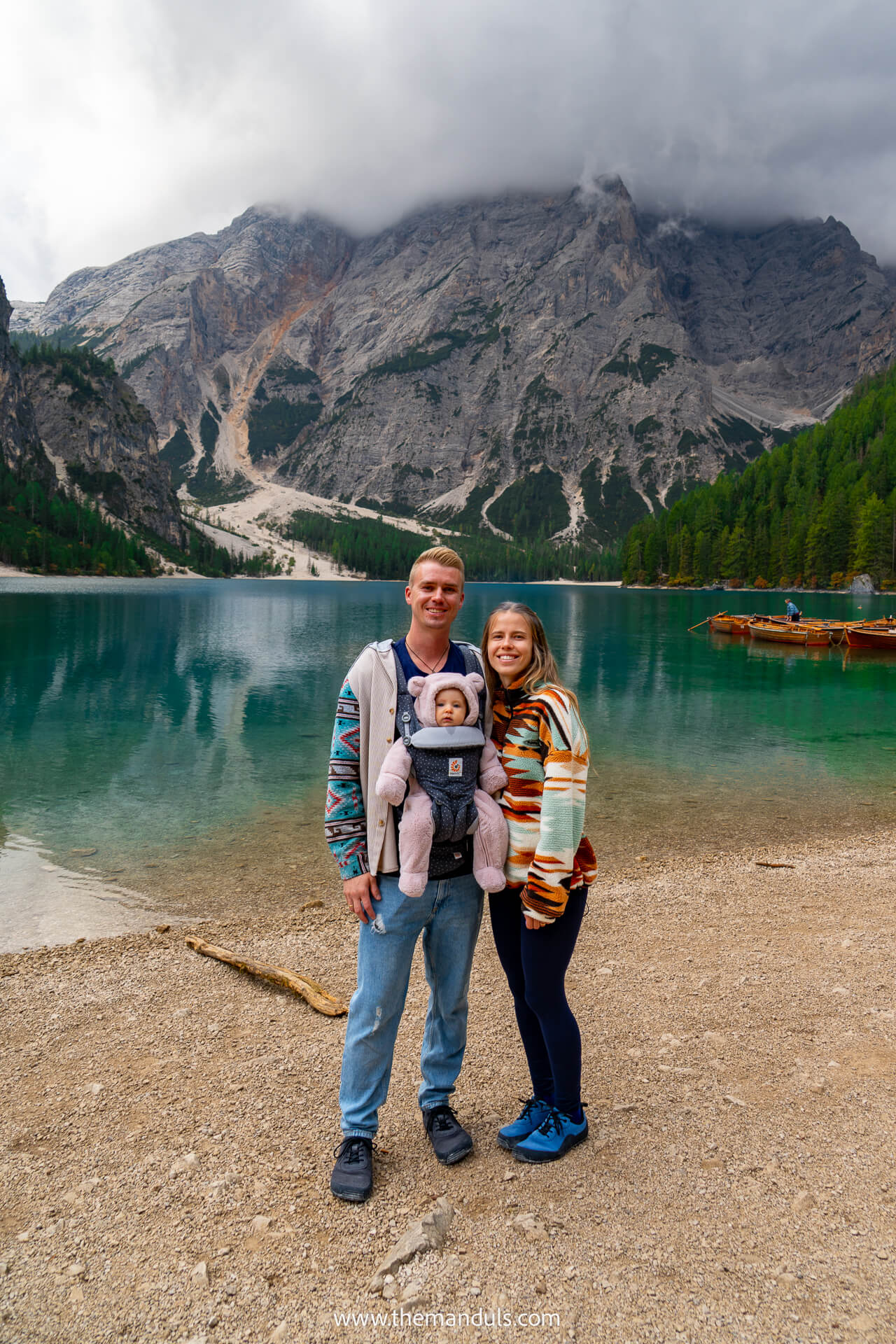
On our first visit we somehow skipped Lago di Braies — which is wild, considering how iconic it is. When we returned later, it became non-negotiable. And honestly, it delivers exactly what it promises: unreal turquoise water, steep peaks rising straight behind the lake, and an easy loop trail that gives you postcard views the entire way.
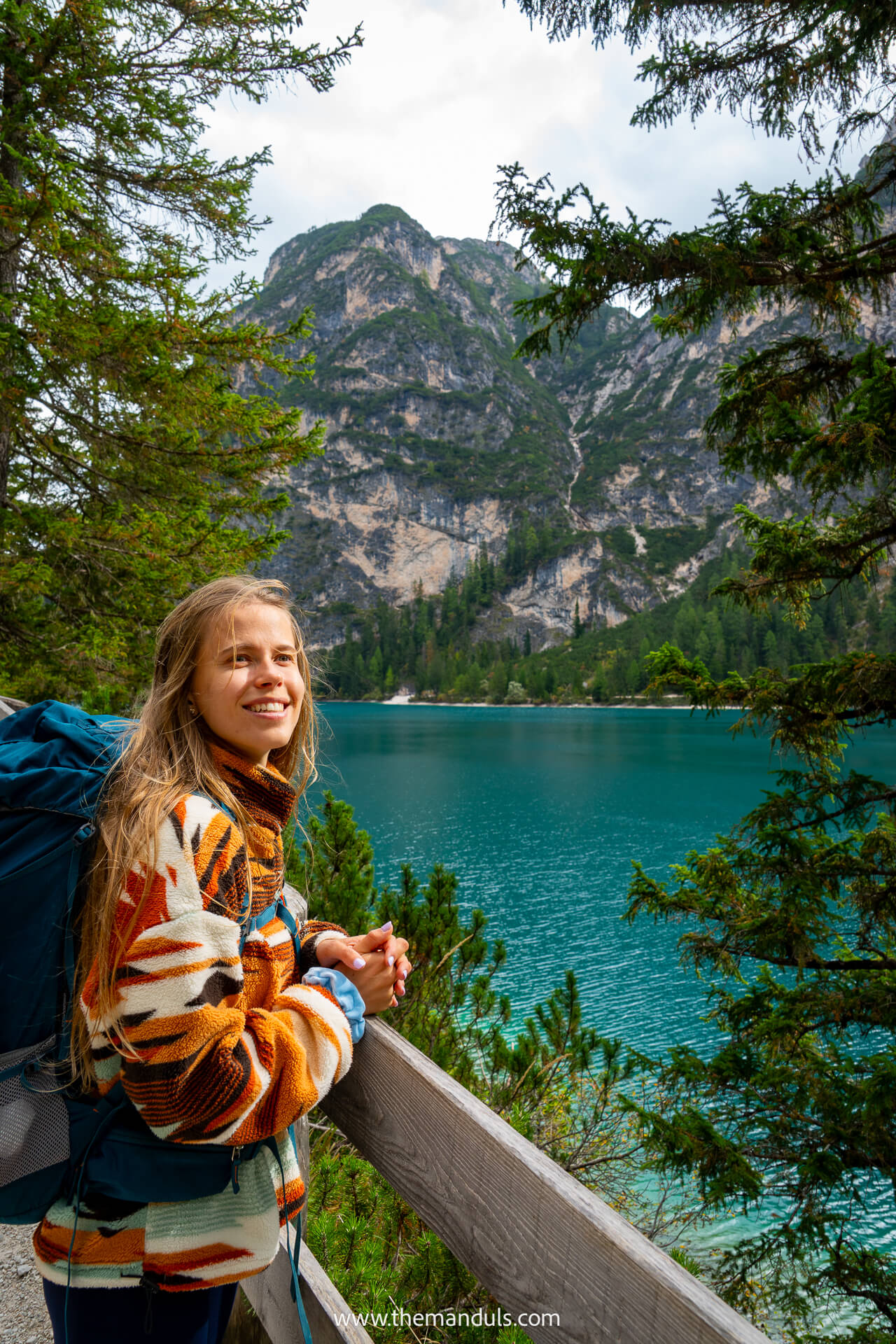
What surprised us most was how busy it still felt even in late September. It was calmer than peak summer, but definitely not quiet — this isn’t a “hidden gem” and it never really feels undiscovered.
That said, visiting off-season made a big difference: we parked easily after 8 AM without pre-booking anything, and the walk felt relaxed enough to actually enjoy.
We also skipped the famous wooden boats. They look great in photos, but they’re seriously overpriced for a short ride, and we enjoyed the loop trail way more than standing in line.
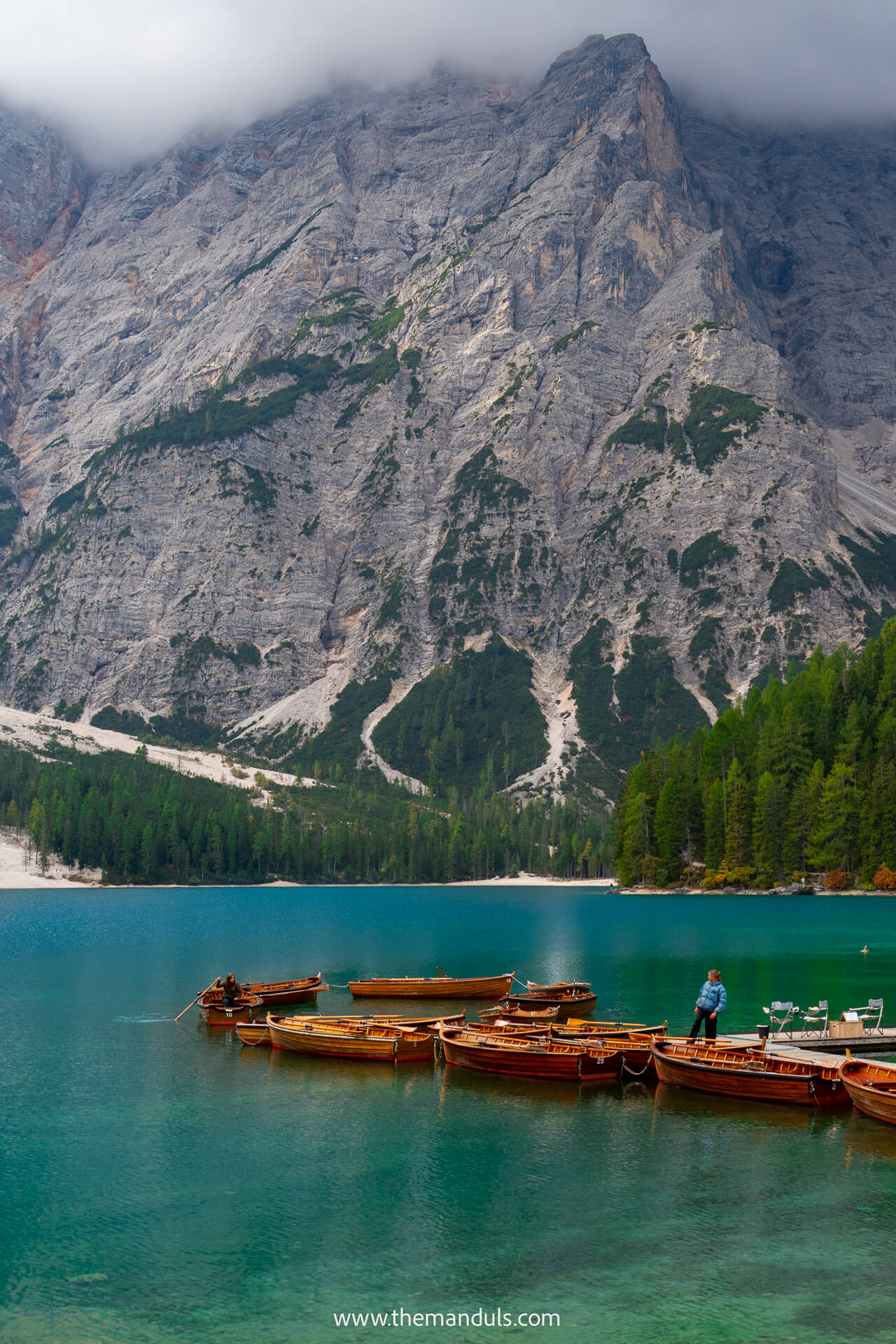
If you time it right and set your expectations, Lago di Braies is 100% worth it — just come for the scenery and the easy walk, not for solitude.
Since Lago di Braies is more than just a walk around the lake, we’ve created a full Lago di Braies travel guide covering access rules, parking, timing, and whether it’s worth it beyond the photos.
8. Cinque Torri from Passo Falzarego
Distance: 2 km loop only or 10 km hike
Duration: 40 minutes or 5-6 hours
Difficulty: easy or moderate / difficult
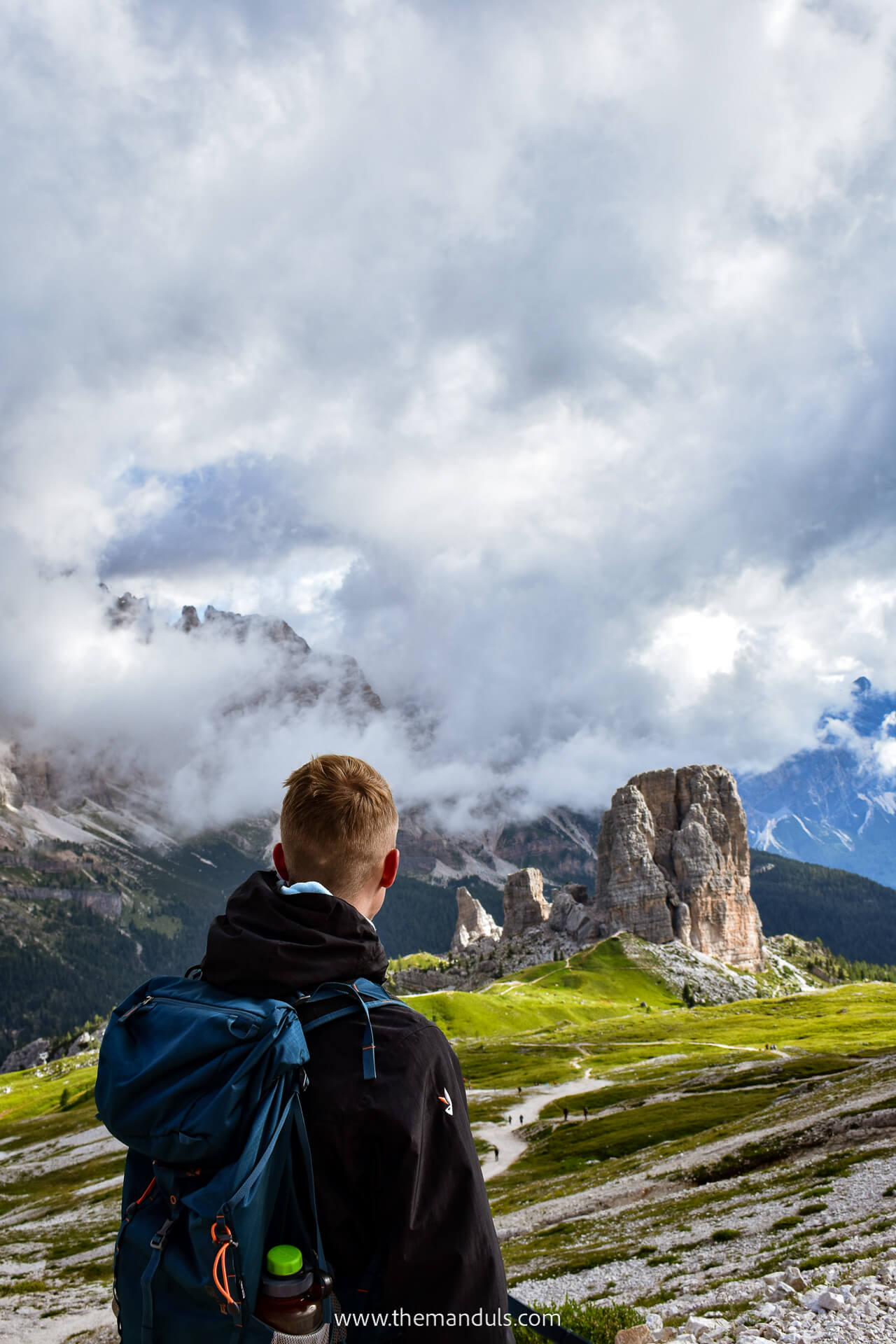
Cinque Torri is one of those hikes that works no matter how you approach it — but hiking in from Passo Falzarego via Lago Limides made it one of our favorite days in the mountains.
We started early, reached the small alpine lake Lago Limides just after sunrise, and then continued through open meadows and rocky terrain with views constantly changing as the towers slowly came into sight.
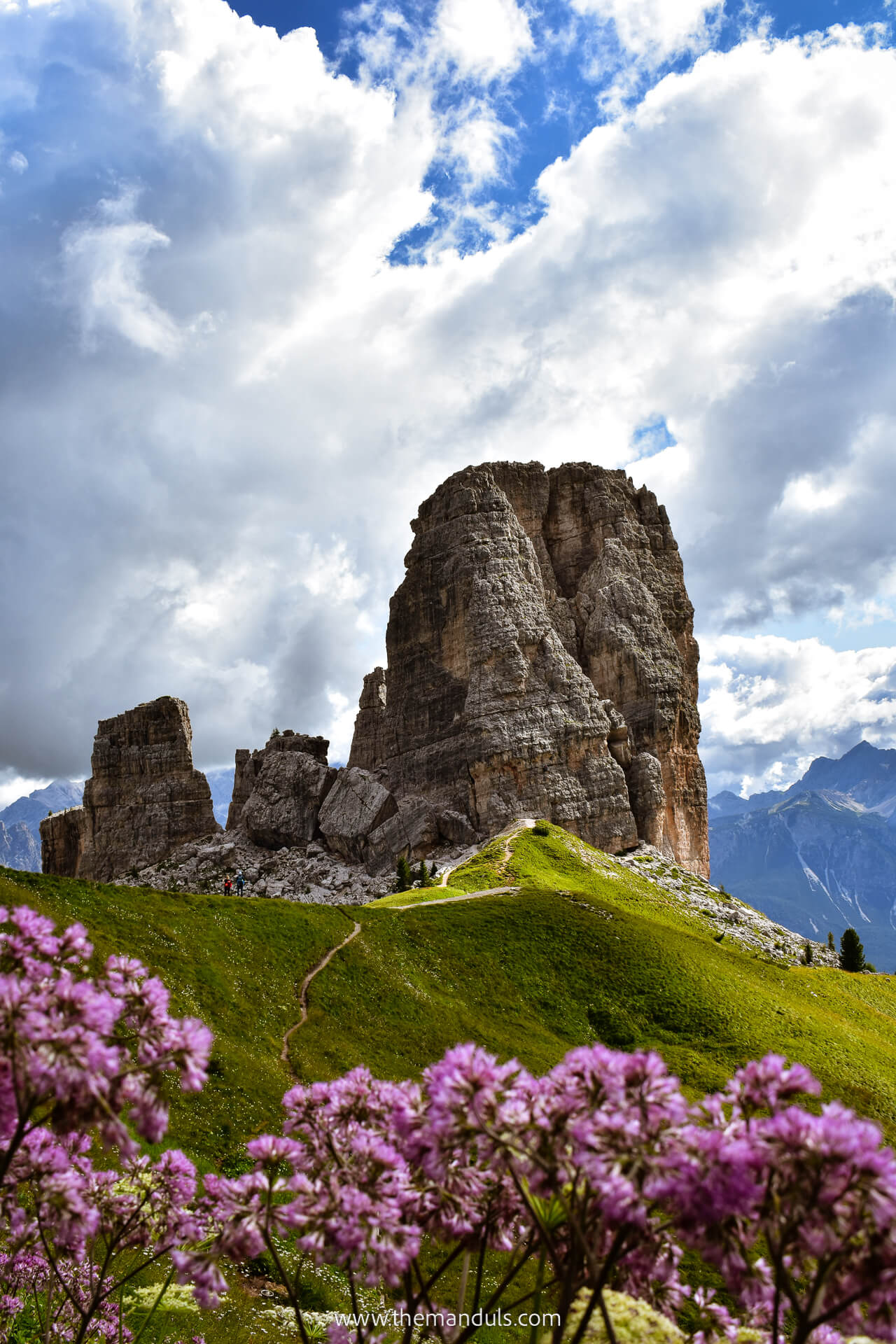
What we loved most is how balanced this hike feels: scenic from start to finish, never overly technical, and flexible enough to adapt to your energy levels.
Once you reach Cinque Torri, you can walk the Giro delle 5 Torri loop right under the rock towers, stop at a rifugio, or explore a bit further before heading back. You can take a chairlift or shuttle to get here, but arriving on foot makes the experience feel far more rewarding.
For exact trail options, and parking advice, our Cinque Torri hiking guide covers everything you need before heading out.
9. Cadini di Missurina
Distance: 3.6 km (round-hike)
Duration: 1.5 hours
Difficulty: easy
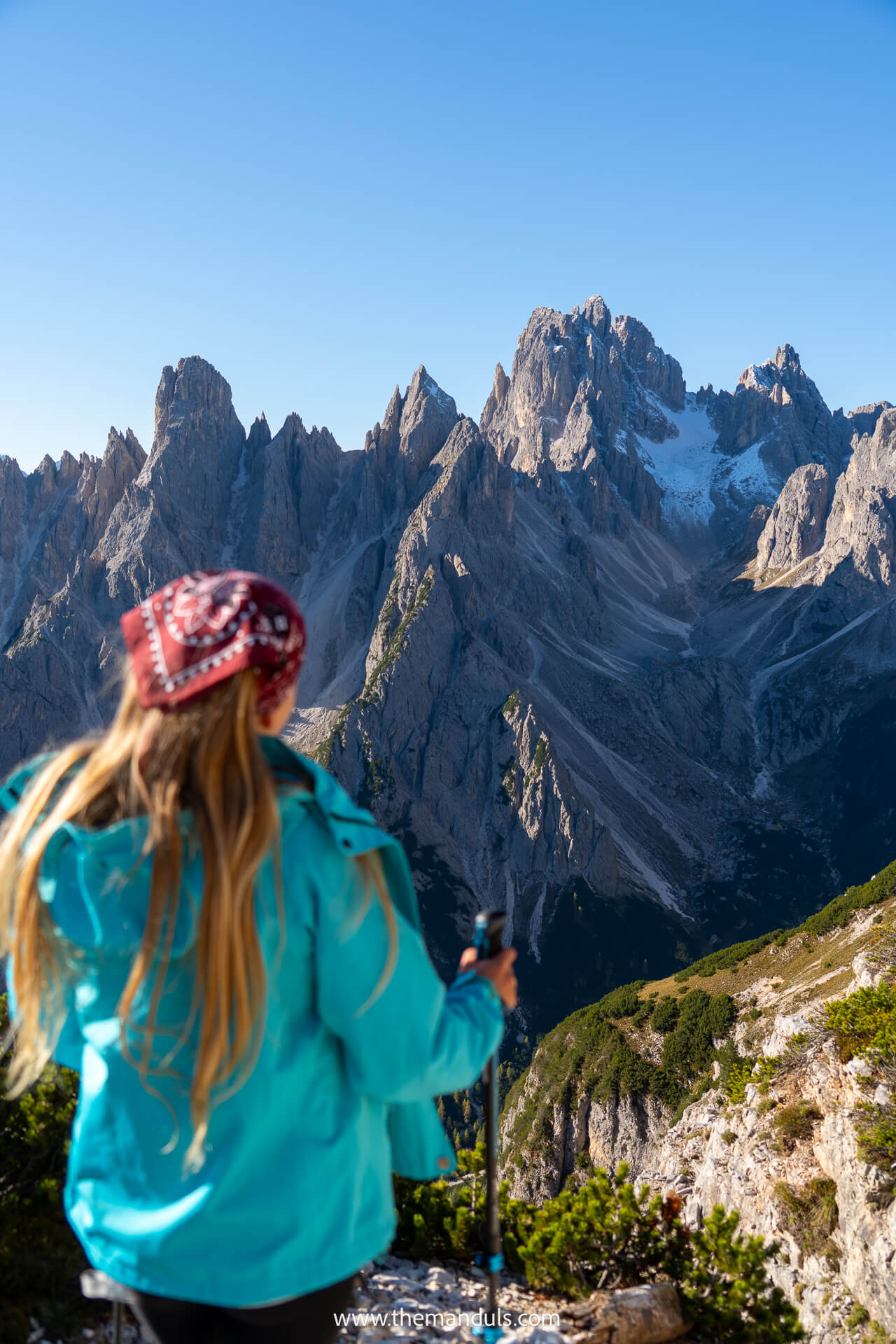
Cadini di Misurina was on our list for years, but it took two trips to the Dolomites before we finally managed to hike it.
The trail itself is short and relatively easy, but the landscape feels far more dramatic than the distance suggests — sharp, jagged peaks rising straight out of the ground, with incredible views almost the entire way.
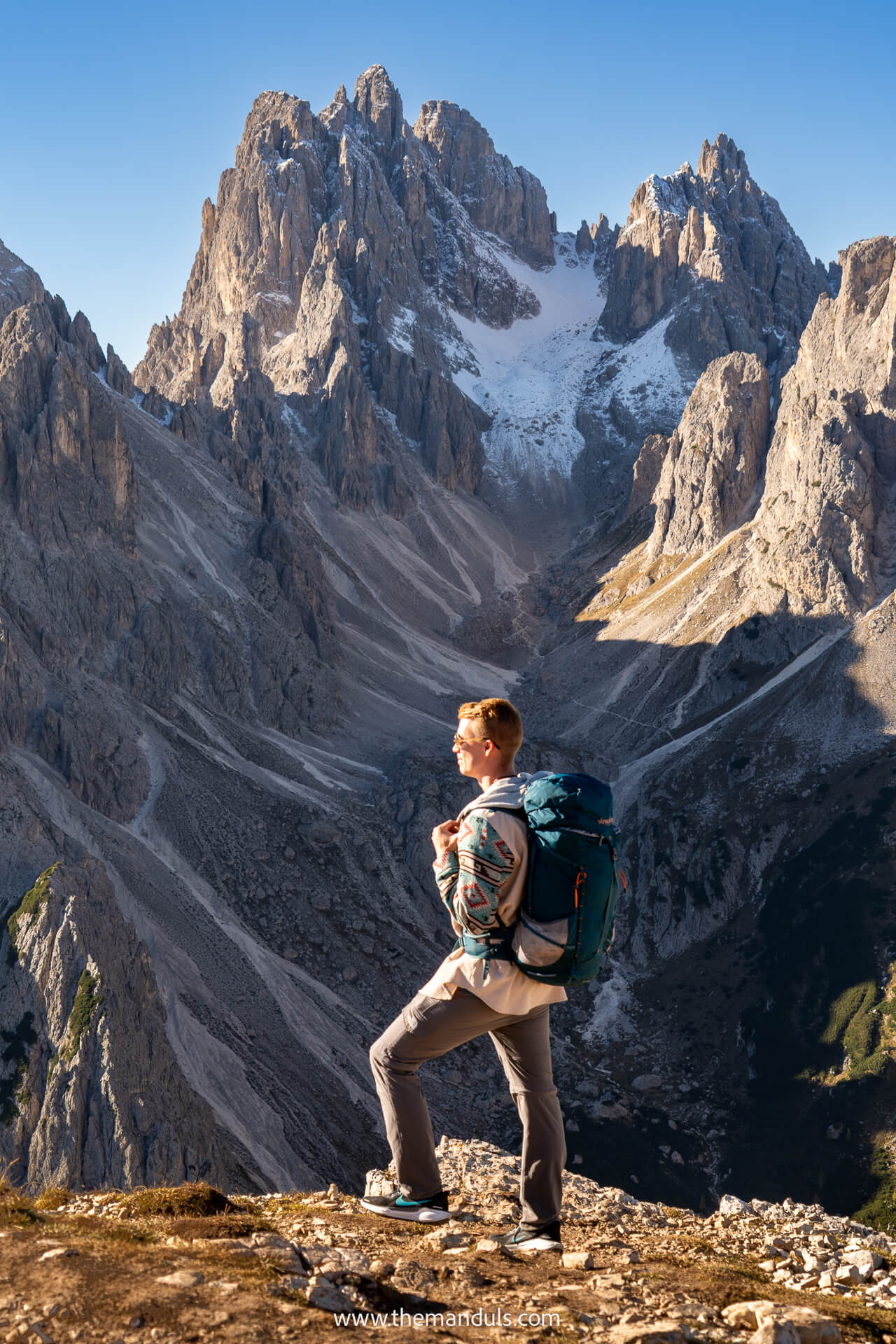
What surprised us most was how much we enjoyed the hike before the final viewpoint. While the famous photo spot has turned into a clear Instagram hotspot with people often lining up, the approach offers plenty of stunning perspectives that feel quieter and more rewarding.
This hike looks short on paper but deserves respect — our Cadini di Misurina guide explains the trail, exposure, and how to visit safely.
10. Sass de Putia circuit
Distance: 13.2 km
Duration: 5 hours
Difficulty: moderate
The Sass de Putia circuit ended up being one of the nicest surprises of our time in the Dolomites. We didn’t have particularly high expectations going in, but the moment we arrived at Passo delle Erbe, we knew this hike was going to be something special.
The massif rises straight in front of you, so the views start immediately — no warm-up needed.
The trail begins gently, leading through wide alpine meadows with traditional wooden huts scattered along the way. This first section feels relaxed and incredibly scenic, making it easy to settle into the hike without any rush.
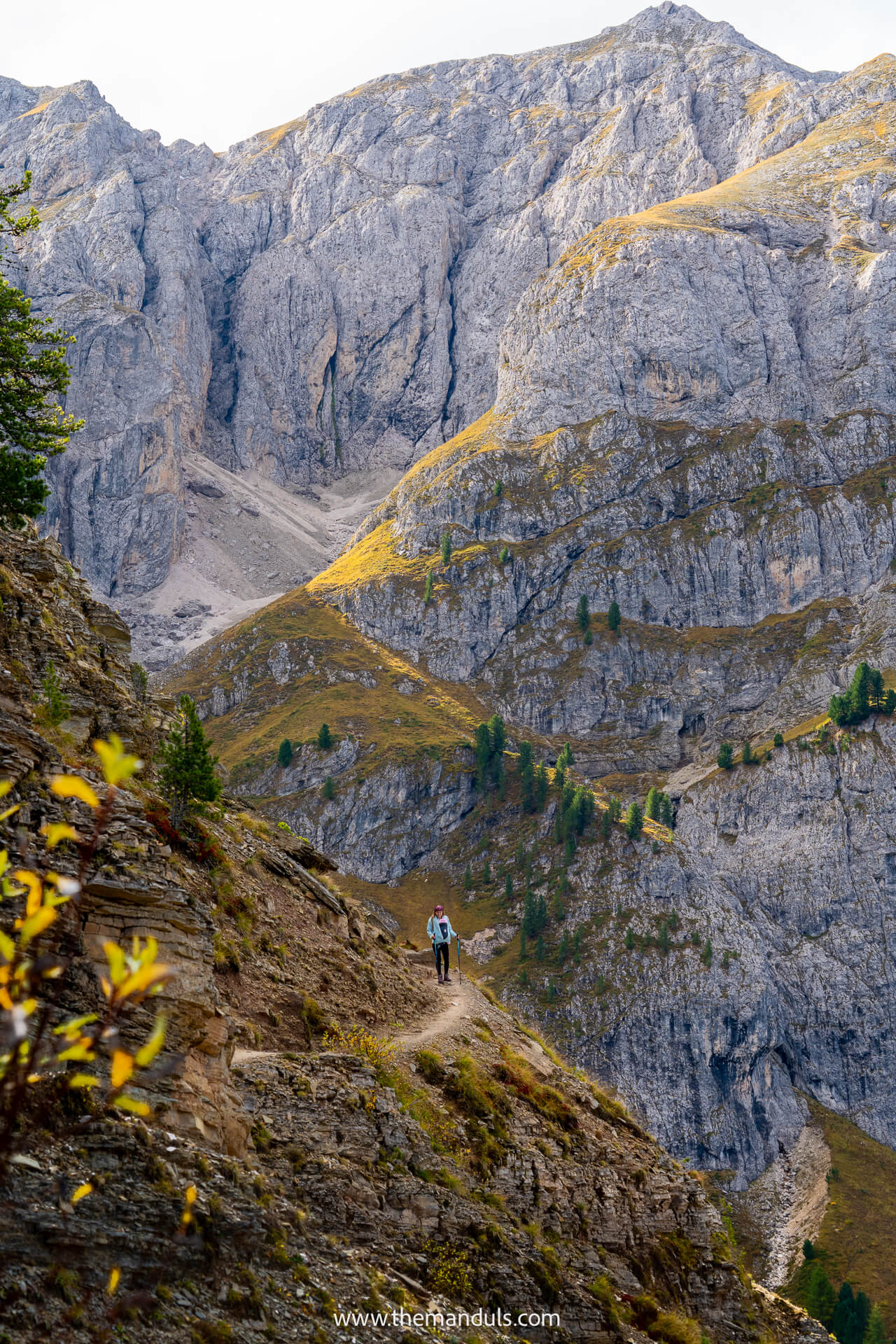
After looping around the mountain, the trail gradually becomes more demanding, with a steady climb that definitely makes you work a bit — especially when we did it in autumn, with patches of snow still lingering on the ground.
Once past the main ascent, the character of the hike changes completely. The path turns into a peaceful, flowing walk through rolling pastures and open landscapes. It’s the kind of trail where you stop thinking about distance and just enjoy being there.
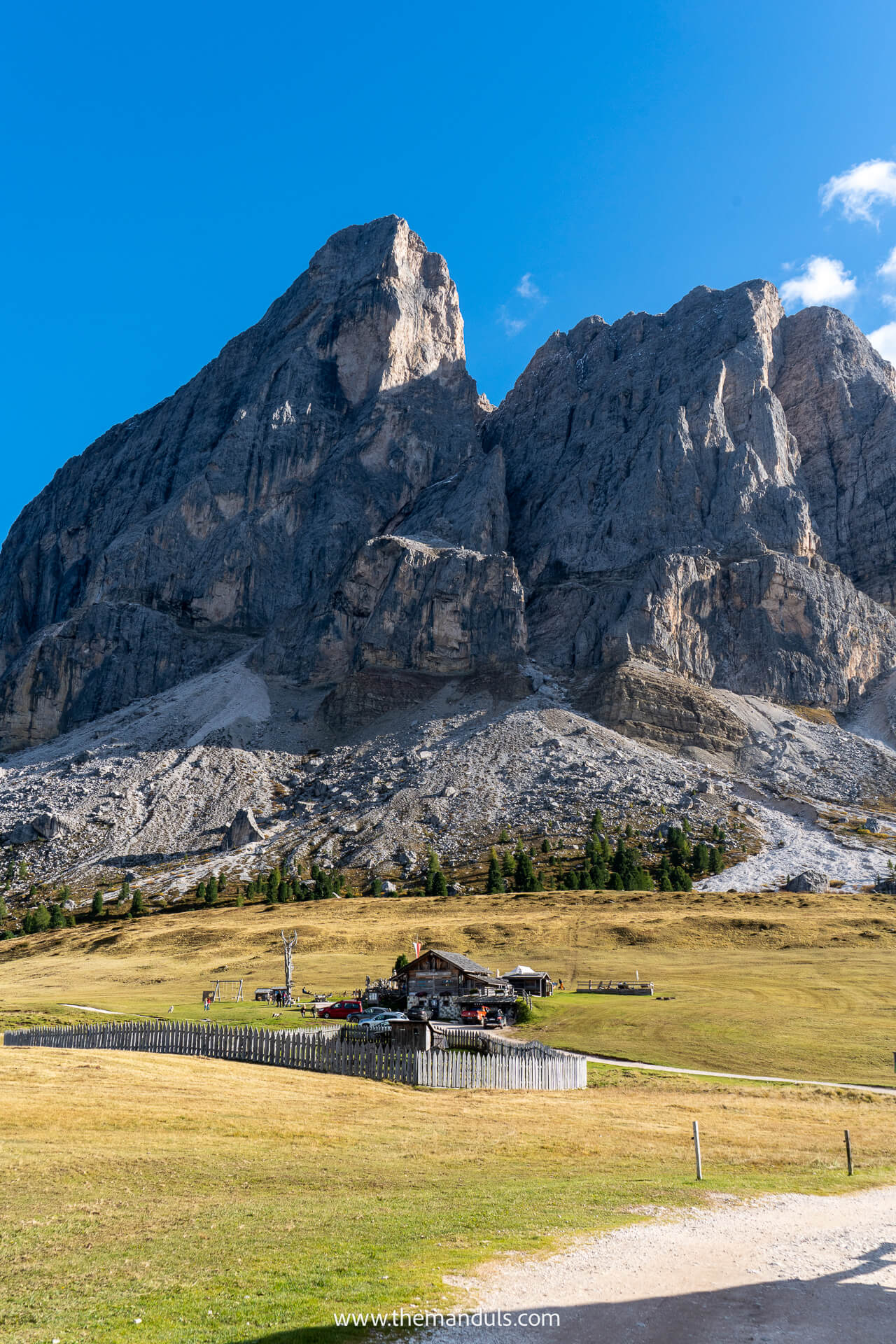
One of the highlights for us was stopping for lunch at a mountain hut along the route. We ate at Ütia Vaciara, and the food was honestly incredible — hearty, comforting, and exactly what you want on a hike.
What we loved most about this trail is how balanced it feels. You get immediate scenery, a satisfying climb, and then a long, gentle finish that lets you fully enjoy the landscape.
It’s beautiful without being overcrowded. If you’re looking for a hike that flies a bit under the radar but still delivers classic alpine scenery, the Sass de Putia circuit is an easy one to recommend.
11. Alpe di Siusi
Distance: 9.4 km
Duration: 2.5 hours
Difficulty: easy
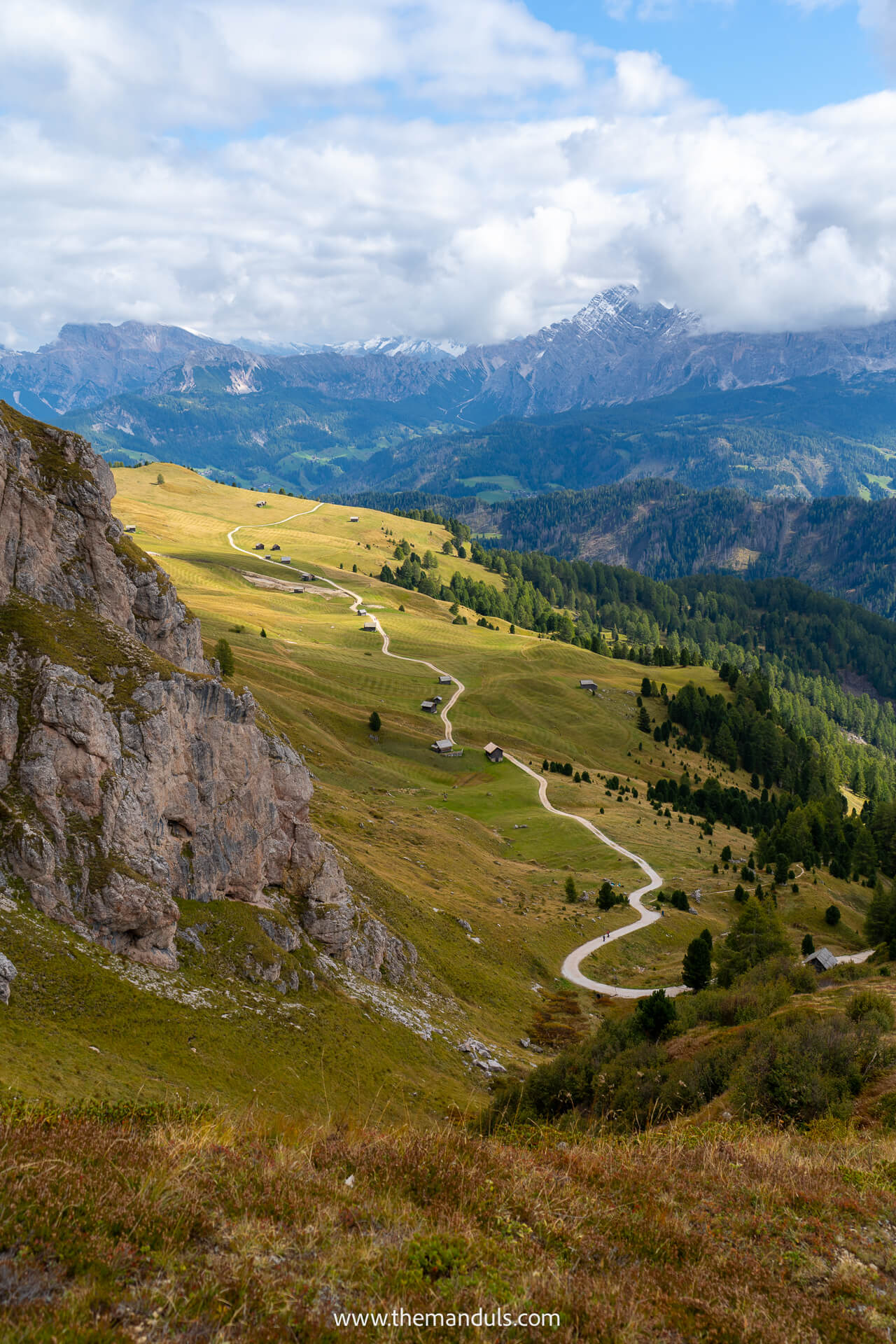
Alpe di Siusi is the largest high-alpine meadow in Europe, and it feels exactly like that when you’re there — vast, open, and almost unreal in scale. What makes it so famous isn’t a single viewpoint or landmark, but the rolling green meadows, scattered wooden farmhouses, traditional mountain huts, and the views.
What we loved most is how spacious and calm it feels, even though it’s one of the most visited areas in the Dolomites. The landscape stretches out beneath the Sciliar (Schlern) massif, with views toward Sassolungo (Langkofel) and the Odle / Geisler group depending on where you are.
Alpe di Siusi is incredibly versatile. You can explore it by hiking, cycling, or simply walking between huts and viewpoints. It’s perfect for a relaxed day as it is for longer hikes.
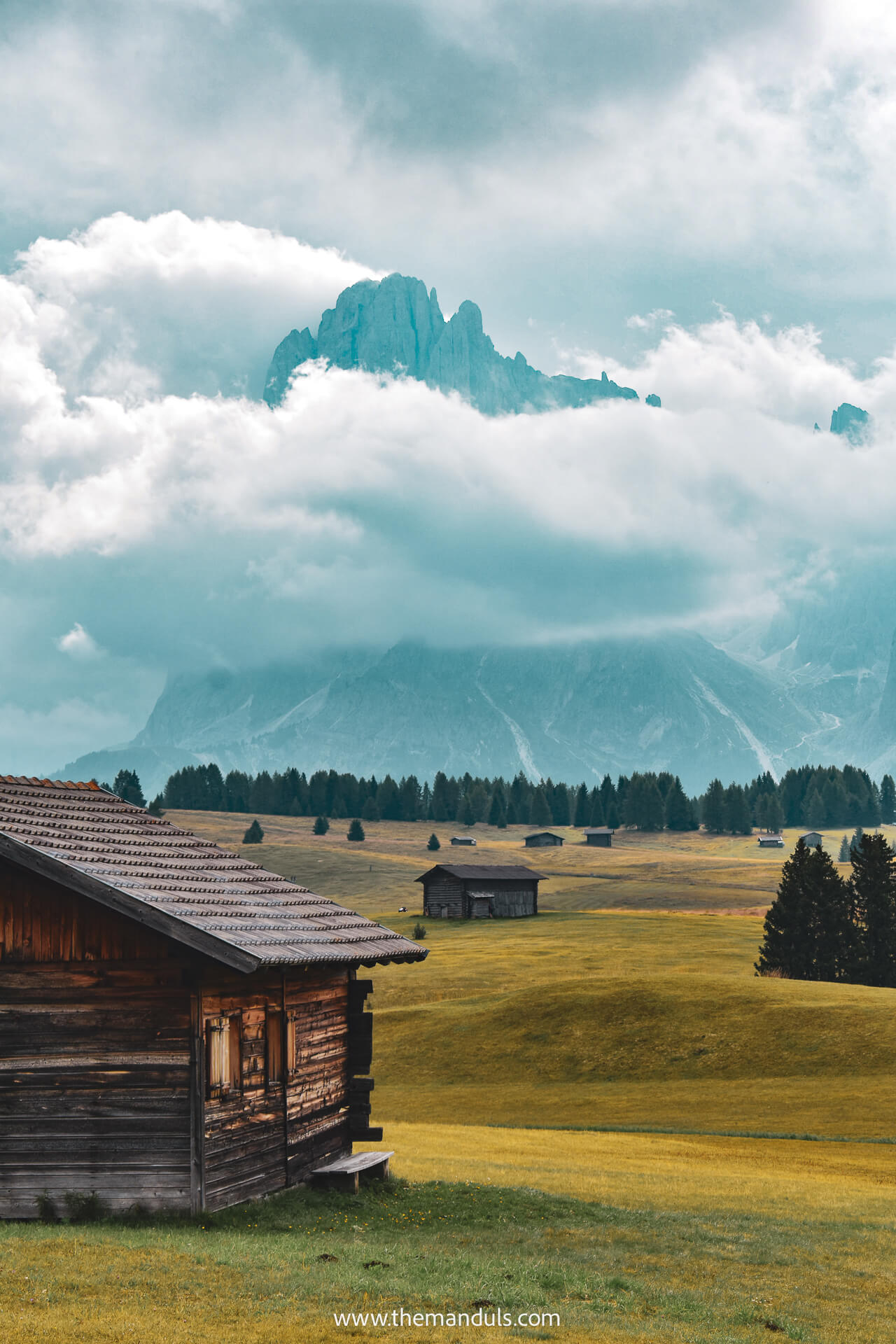
We chose a pleasant, rewarding hike starting from Compatsch, following a gentle trail no. 6 across open meadows toward Sporthotel Sonne, then looping back via a slightly different route 6B. It wasn’t a demanding hike, but the views were constant and varied, and the terrain made it easy to slow down.
One important thing to know before you go: road access to Alpe di Siusi is restricted during the day. Private cars are not allowed to drive up between 9:00 AM and 5:00 PM (times can vary slightly by season), unless you’re staying at an accommodation on the plateau.
Outside these hours, you can drive up freely, or you can use the cable car or bus connections during the day.
12. Croda Rossa from Passo Croce
Distance: 11.5 km
Duration: 4.5 hours
Difficulty: moderate
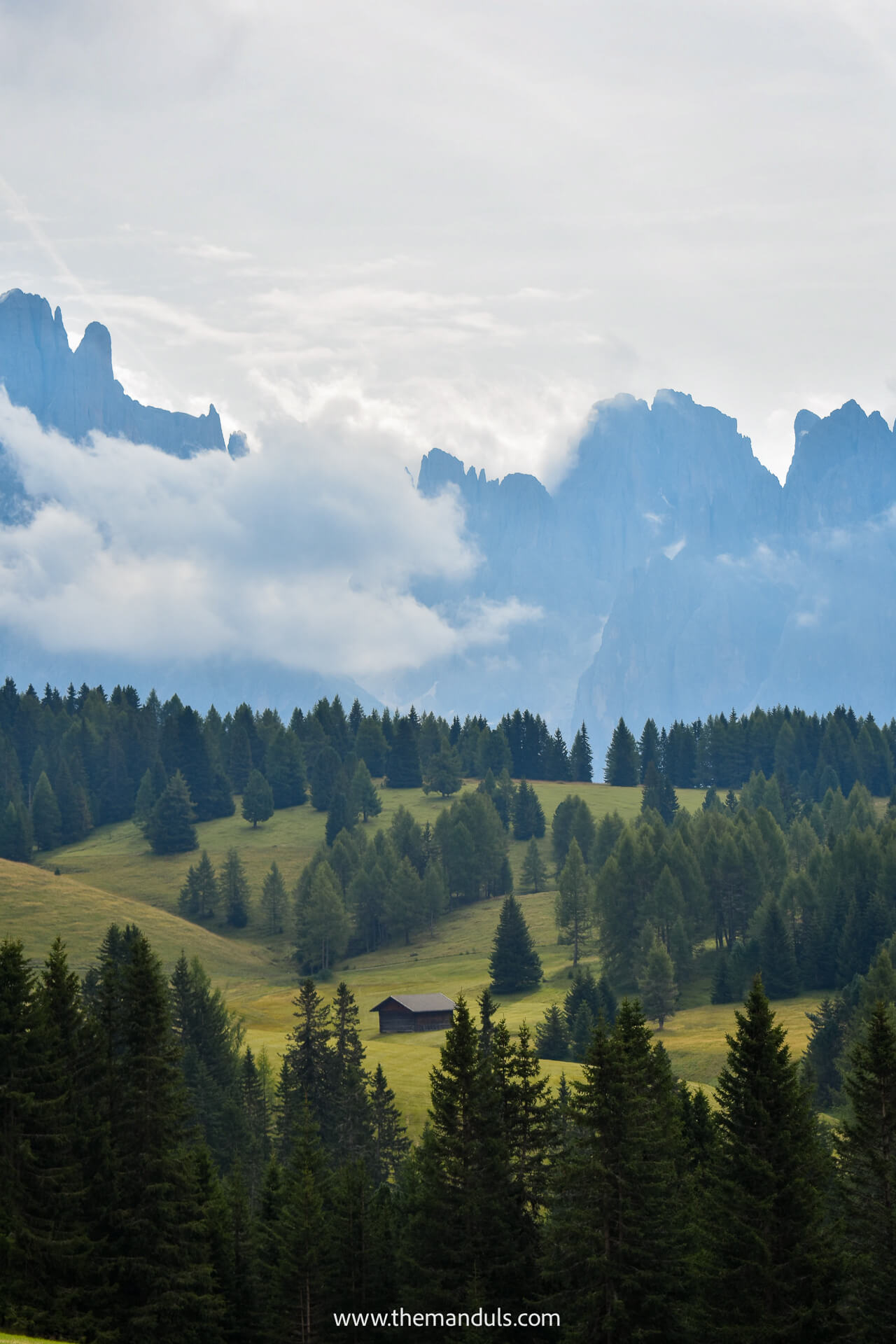
We hiked to Croda Rossa while staying at Hotel Kreuzberg, which is also the starting point of the trail. Not having to drive anywhere made the whole experience feel very relaxed from the start — we simply stepped outside and began walking.
The trail 15 runs beneath the Croda Rossa di Sesto (Rotwand) massif, following the valley with open views almost the entire way. It’s an easy, steady walk that never feels technical or demanding, making it a good choice if you’re looking for something scenic without a big physical effort.
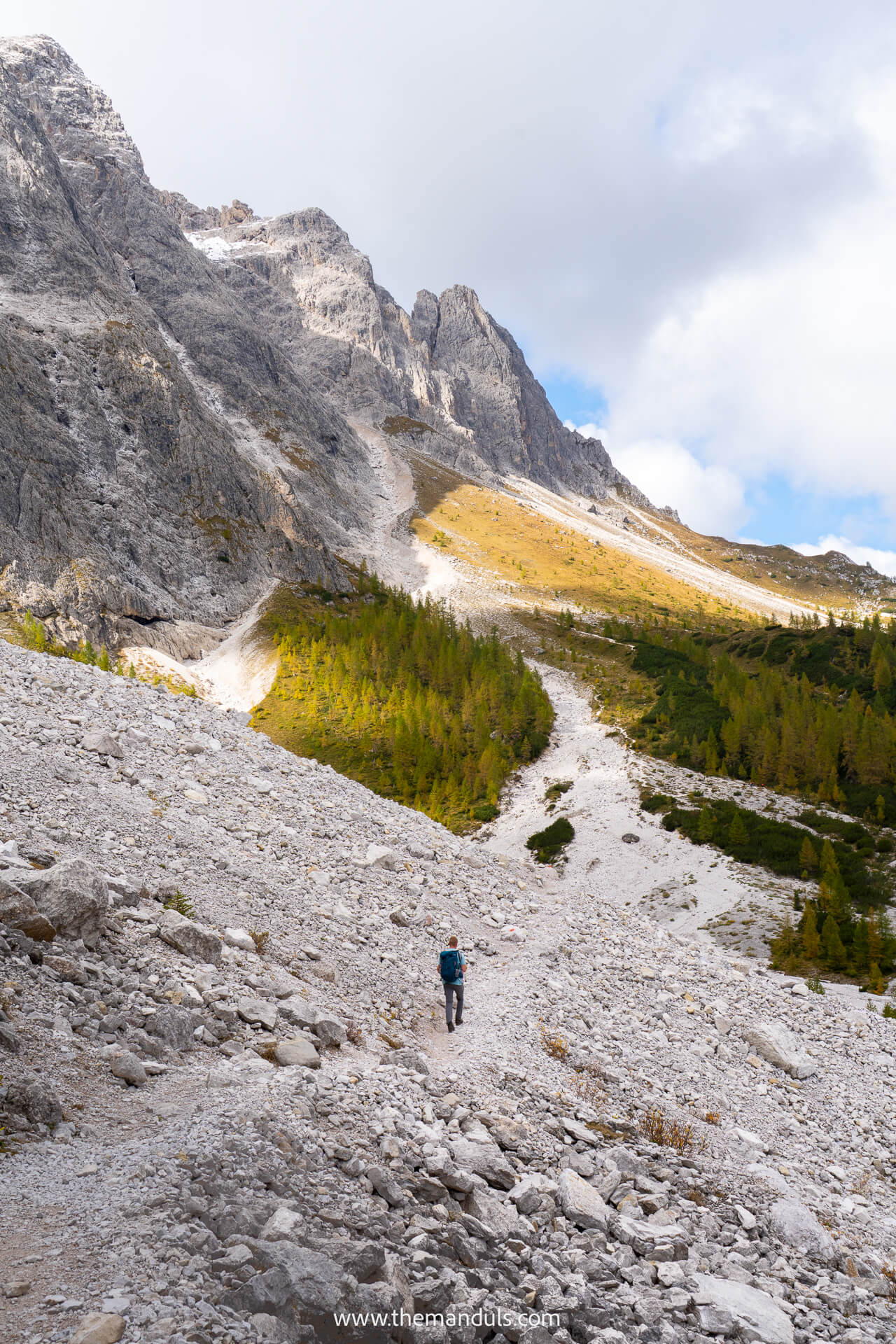
Our favourite part was definitely reaching Croda Rossa itself. The area opens up into a wide alpine plateau with several mountain huts spread across it, and it feels surprisingly spacious.
We stopped for lunch at Rifugio Rudi, and it was honestly one of the best meals we had in the Dolomites. Simple, flavourful mountain food, generous portions, and a setting that makes you want to sit a bit longer than planned. We’d definitely recommend stopping here if you do this hike.
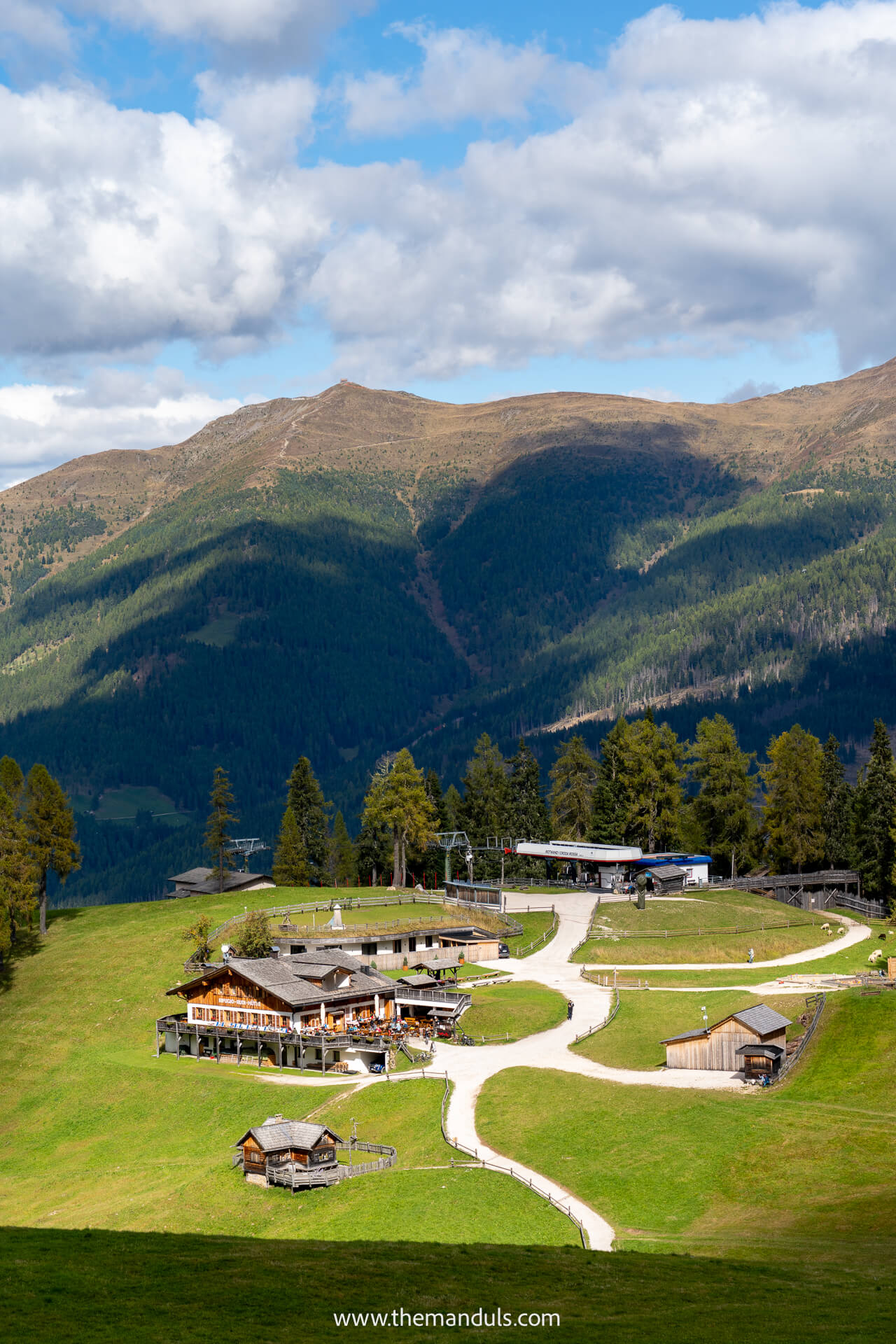
For the way back, we followed the lower trail (no. 18), which turned out to be a great choice. It’s gentle, easy to walk, and gives you slightly different views without adding any difficulty.
If you’re staying around Passo Croce or Sexten and want an enjoyable hike with good views and great food at the end, Croda Rossa is an easy one to add to your itinerary.
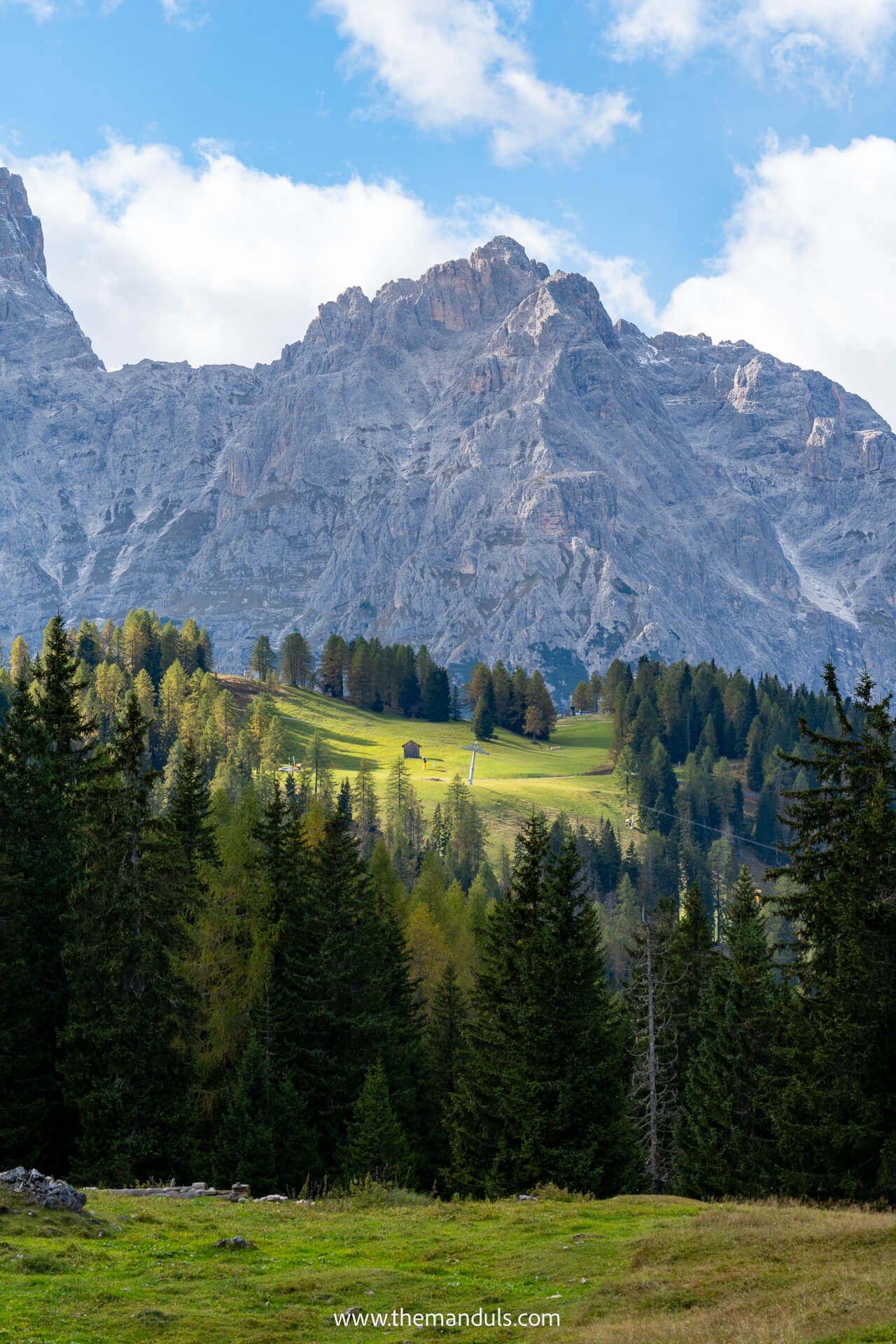
13. Santa Maddalena Panorama Trail
Distance: 7.5 km
Duration: 2.5 hours
Difficulty: easy
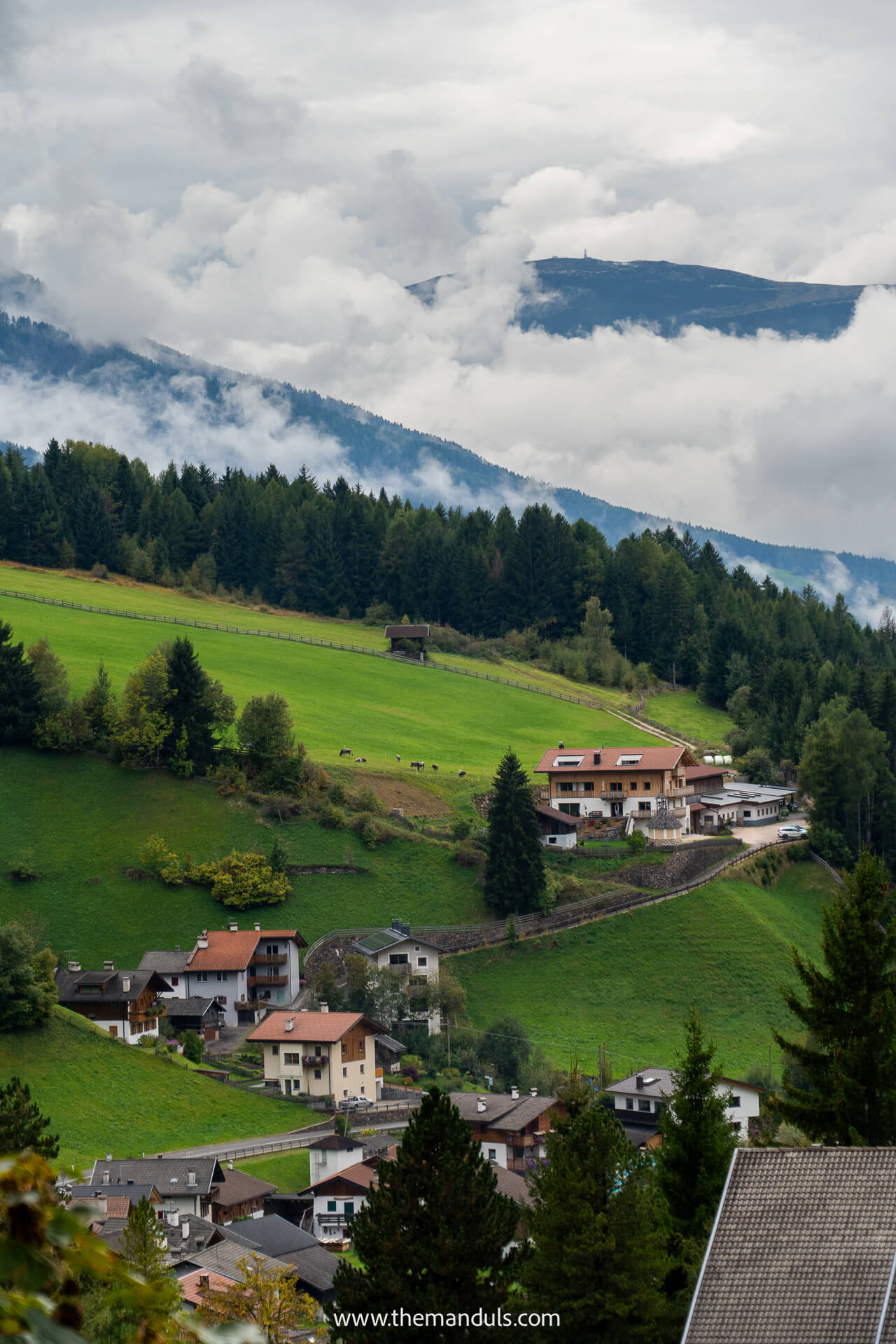
The Santa Maddalena Panorama Hike is a relaxed loop trail that takes you through the village of Santa Maddalena and along open paths with views over the famous churches and the Odle / Geisler mountain range.
It’s not a demanding hike at all — more of a scenic walk — and it’s a great option if you want Dolomites views without committing to a long or strenuous trail. The route passes through meadows, quiet roads, and viewpoints.
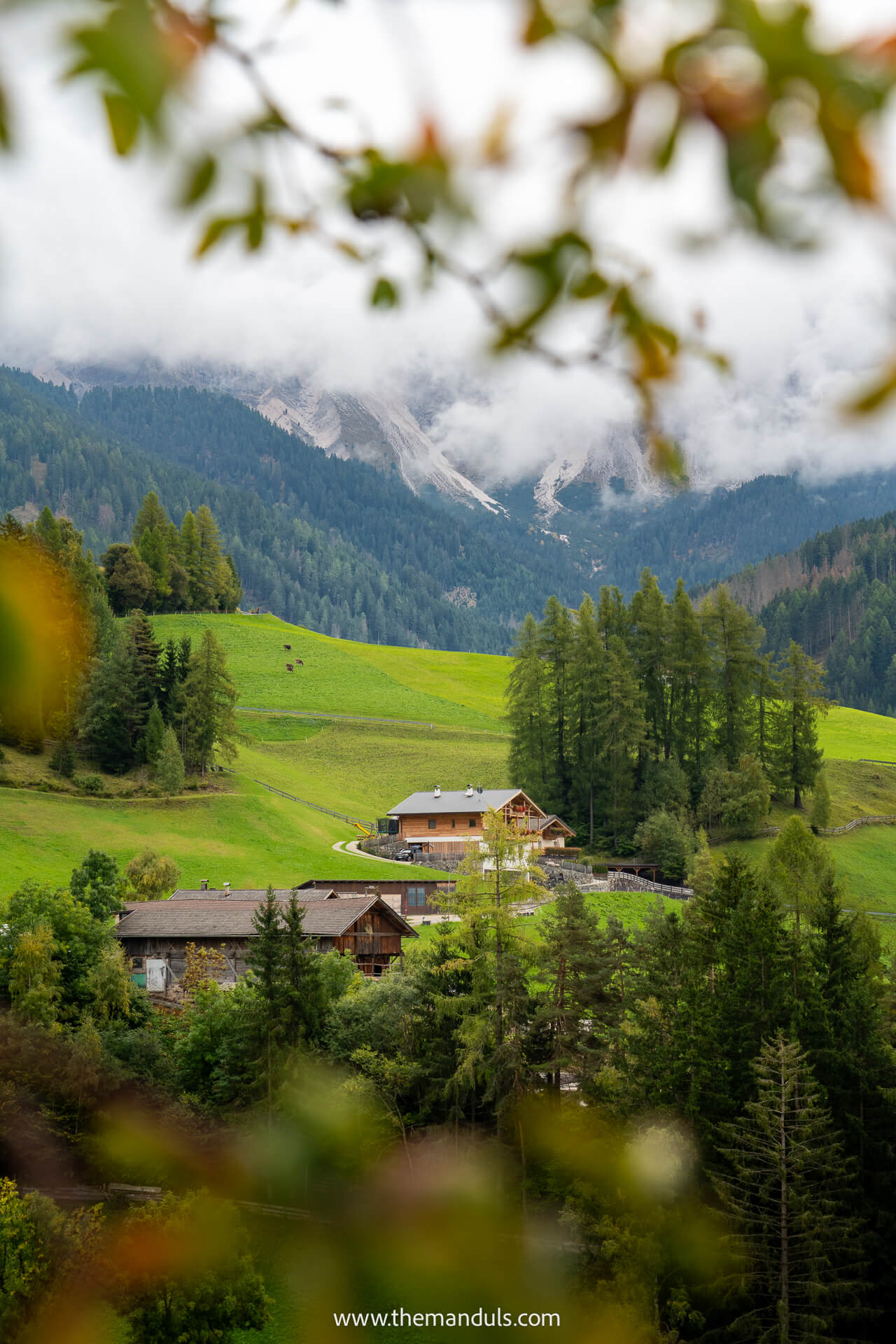
We originally planned to walk the full loop, but a storm started rolling in while we were out, so we decided to turn back and only do a shorter section. Even with that change of plans, it still felt like a really pleasant way to spend the day.
What we liked most was the balance between village life and scenery. You’re never far from houses or farmland, yet the views are incredible.
14. Vallunga Valley
Distance: 7.9 km
Duration: 2.5 hours
Difficulty: easy
Vallunga Valley (also known as Langental) is a long, open alpine valley that starts right at the edge of Selva di Val Gardena and slowly leads you deeper into the Dolomites. Unlike many hikes in the area that take you up onto ridgelines or high viewpoints, this one stays down in the valley — and that’s exactly why it feels different.
What we really liked here is that instead of being up on the mountains, you’re walking beneath them. The cliffs and peaks rise straight above you on both sides, which gives the whole walk a completely different perspective compared to most Dolomites hikes.
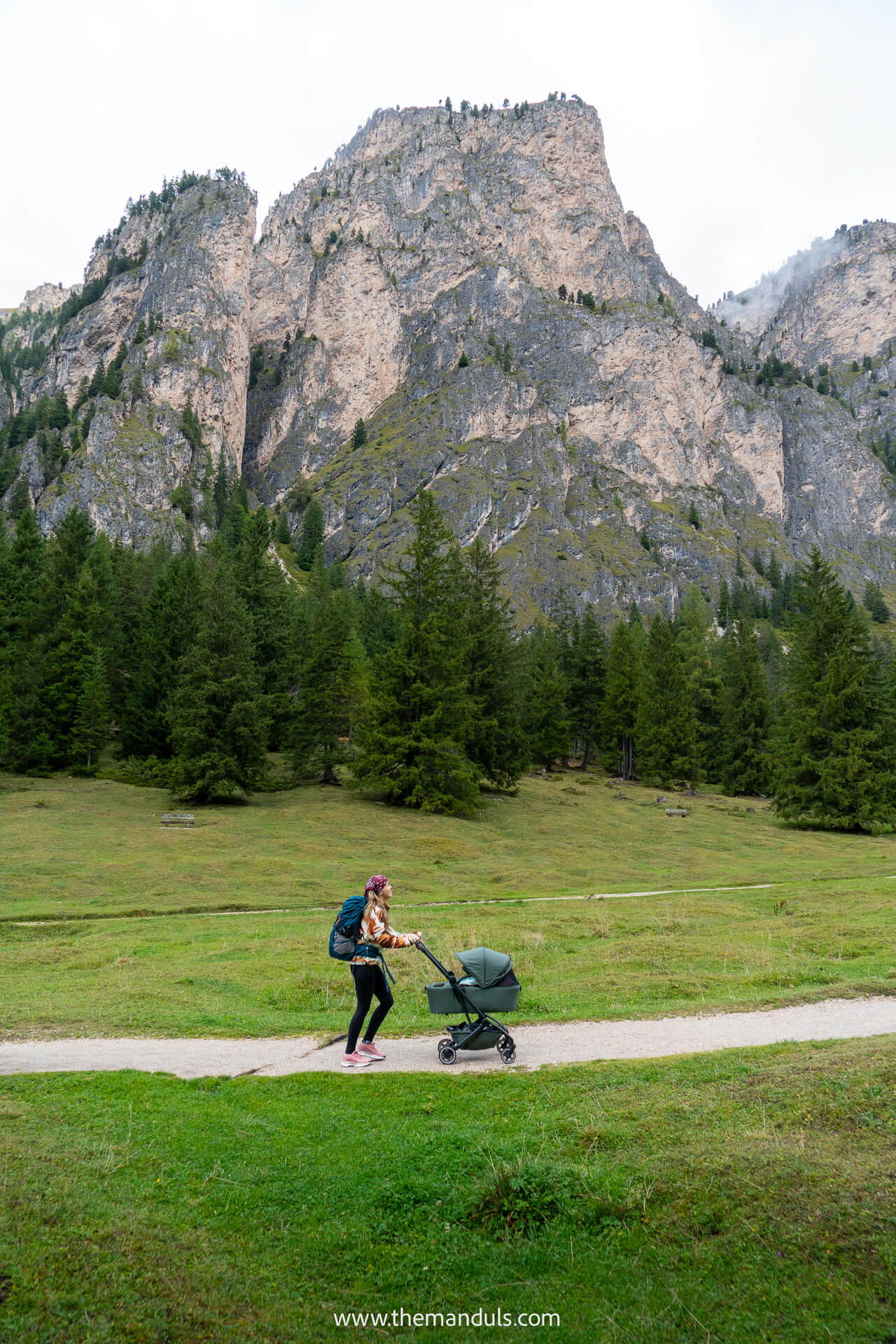
We did this walk in September with a stroller, and it worked perfectly. The trail follows a wide, well-maintained gravel road with almost no elevation gain, making it one of the easiest walks we did in the Dolomites. It’s also comfortable for kids, and still scenic enough that it never feels like a compromise.
The path runs through open meadows, forest sections, and along dramatic rock walls, with the scenery slowly unfolding as you walk further into the valley.
This is the kind of place that works really well as a slower day between bigger hikes like Seceda or Sassolungo. It’s also a great option if the weather isn’t perfect or if you simply don’t feel like climbing uphill.
15. Prato Piazza
Distance: 4.8 km
Duration: 1.5 hours
Difficulty: easy
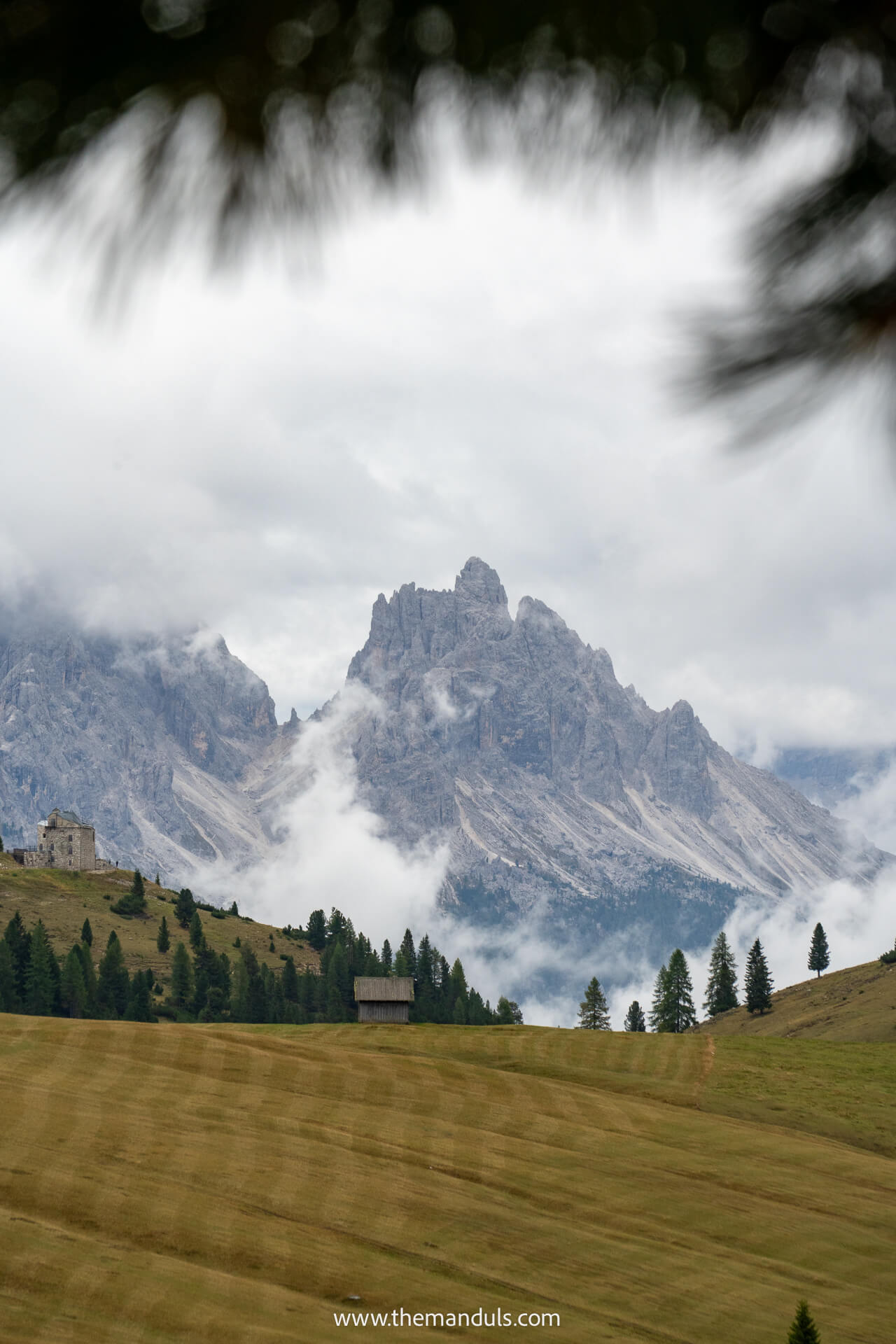
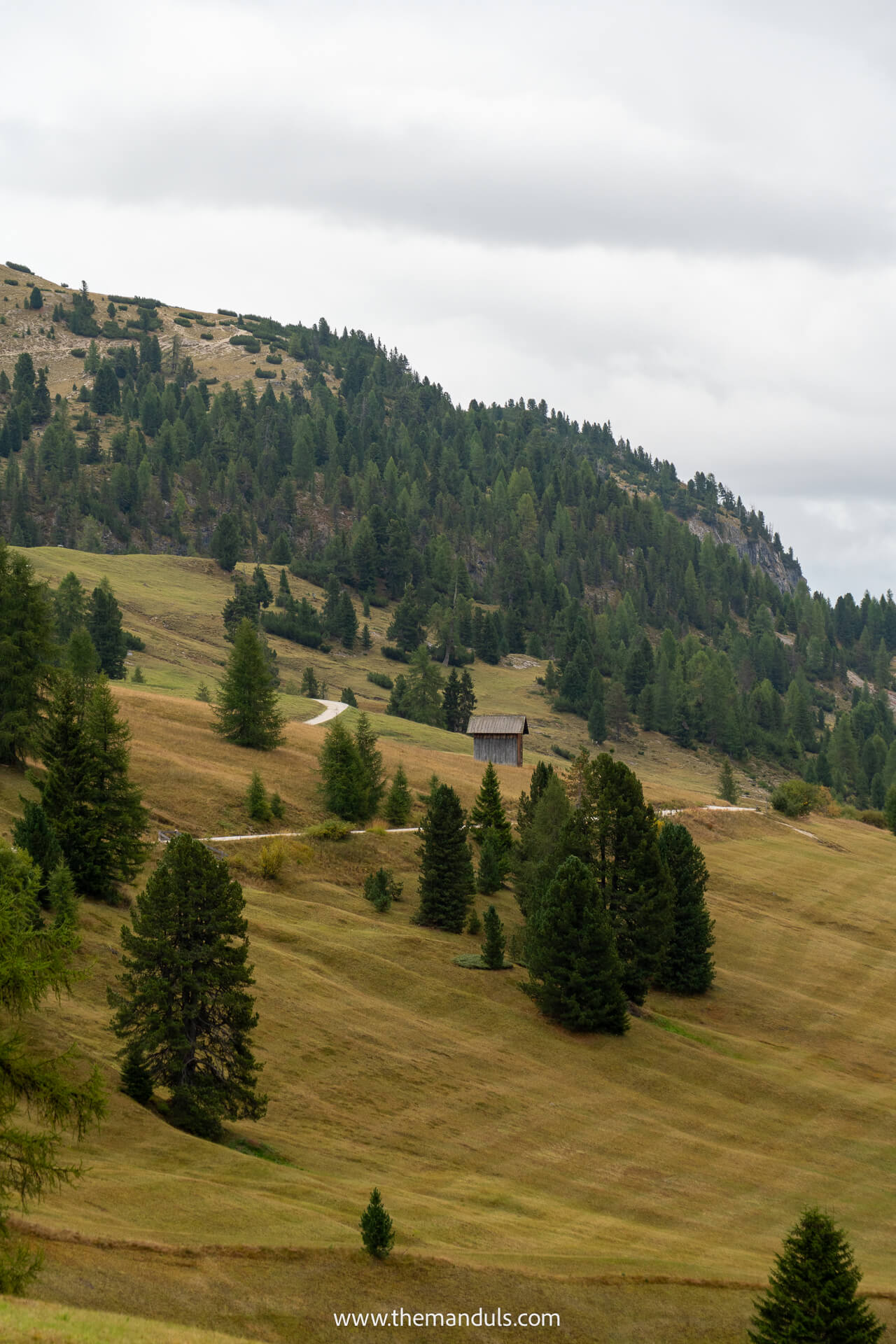
Prato Piazza is a high alpine plateau that feels completely different from the valleys and passes around it. As soon as you arrive, everything opens up — wide grassy fields, long views in every direction, and mountains lining the horizon instead of towering right above you.
From Prato Piazza, the scenic panorama trail toward Rifugio di Vallandro gently leads you across the plateau with constant views over the surrounding peaks. It’s an easy, well-maintained path, more of a walk than a hike.
One important thing to know before coming here is the road access. During the main season, the road up to Prato Piazza is closed to private vehicles during the day (usually between late morning and afternoon). If you want to drive all the way up, you need to arrive early in the morning or later in the afternoon, outside the restricted hours.
Otherwise, you’ll need to park lower down and use the shuttle bus, which runs regularly during the season. This regulation helps limit traffic on the plateau, but it’s definitely something to plan around.
We planned to walk further toward Rifugio Vallandro, but the weather had other plans. Heavy rain rolled in quickly, and instead of pushing on, we only did a short section of the trail before turning back. Even so, it didn’t feel like a disappointment. That short walk was enough to understand why this area is so loved.
Prato Piazza is a great choice if you want an easy, flexible day in the Dolomites or if the weather is a bit unpredictable. Even a brief visit feels worthwhile. It works especially well for relaxed walks, families, or as a lighter day between bigger hikes.
Where to stay in the Dolomites
The Dolomites are spread out, and where you stay really matters. The best hikes aren’t all in one valley, so choosing the right base can save you hours of driving. For this guide, we’ve picked the best hotels in different Dolomite areas, each working perfectly as a base for many of the hikes mentioned.
If you have time, we highly recommend splitting your stay between two areas — it makes the trip far more relaxed and lets you experience very different sides of the Dolomites.
If you’re still deciding which part of the Dolomites suits you best, check out our full guide on where to stay in the Dolomites, where we break down the best areas with detailed hotel picks.
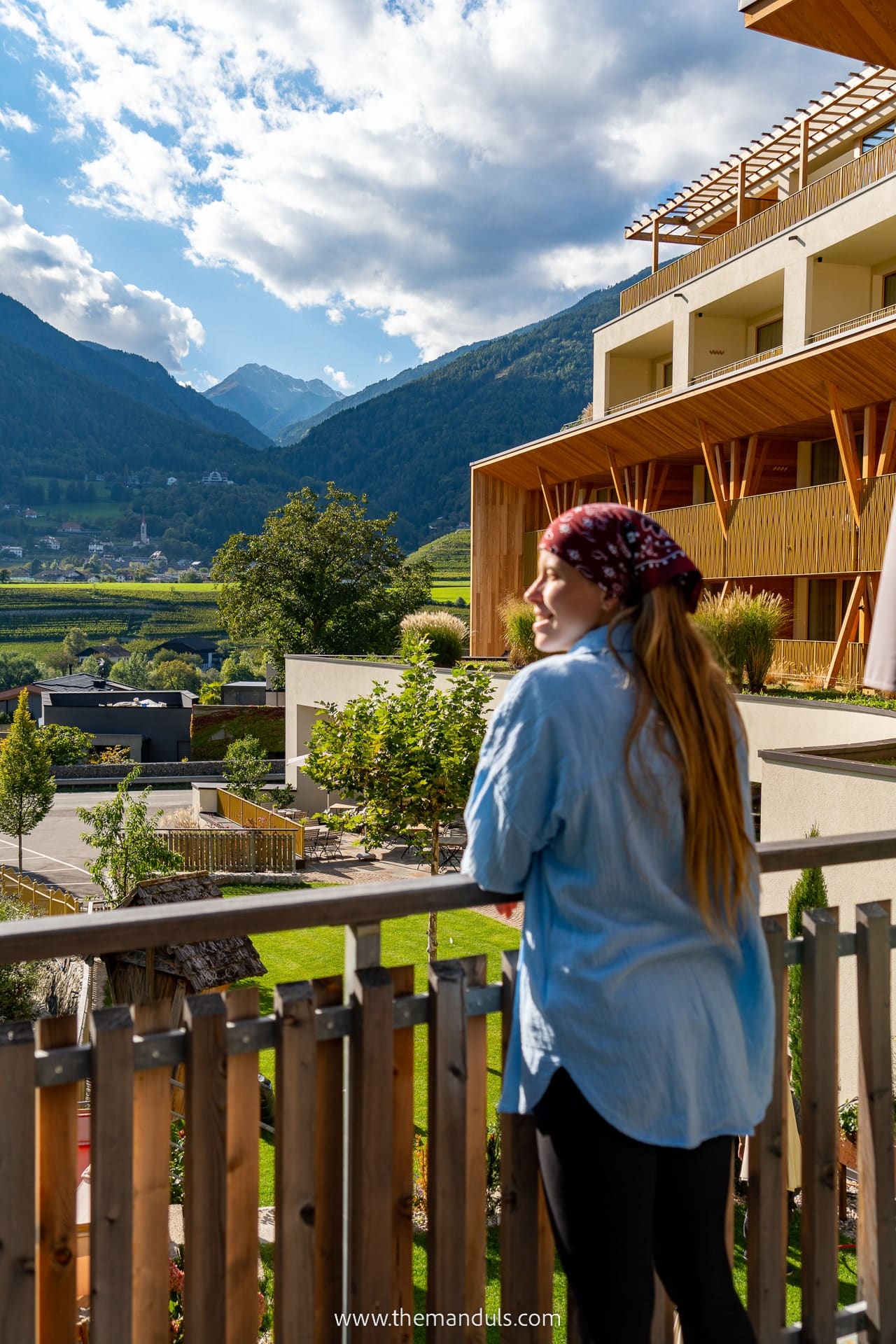
Here are the ones we’d happily book again:
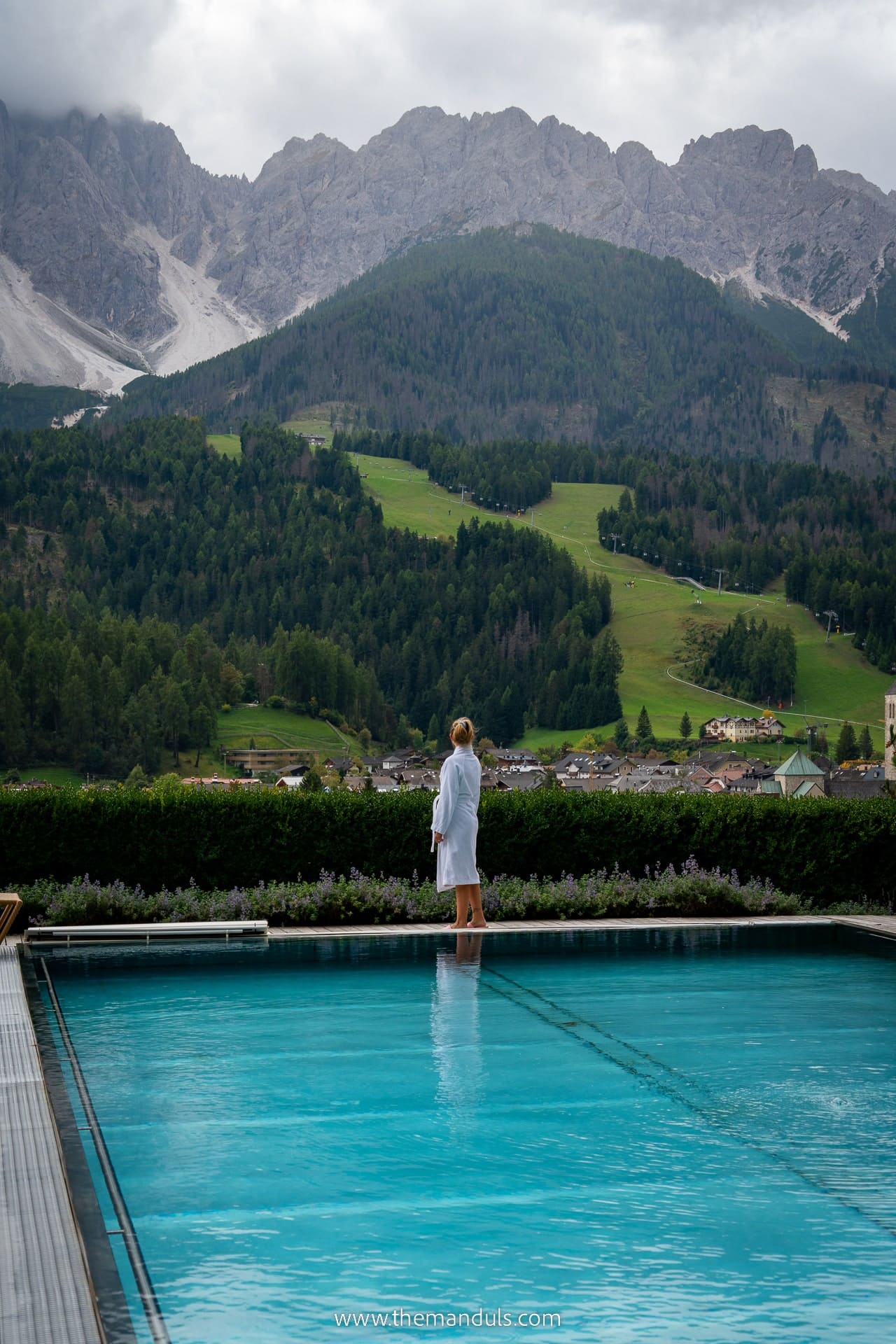
⭐️⭐️⭐️ Naturhotel Leitlhof (our top pick) – Located in San Candido (Innichen), right on the edge of the Dolomites, this is where we stayed — and honestly, it set the bar very high. The hotel feels calm and refined, with natural materials, warm interiors, and big windows that constantly remind you you’re in the mountains.
What really stood out for us was the spa area: panoramic saunas, outdoor pools, and quiet relaxation spaces that feel earned after a long hike. A great bonus were the sauna rituals.
The food deserves a mention too — dinners are thoughtful, seasonal, and easily something we looked forward to every evening. We’d book it again without hesitation.
Best for: Hikers who want a peaceful base with great wellness and food
👉 Check current deals →
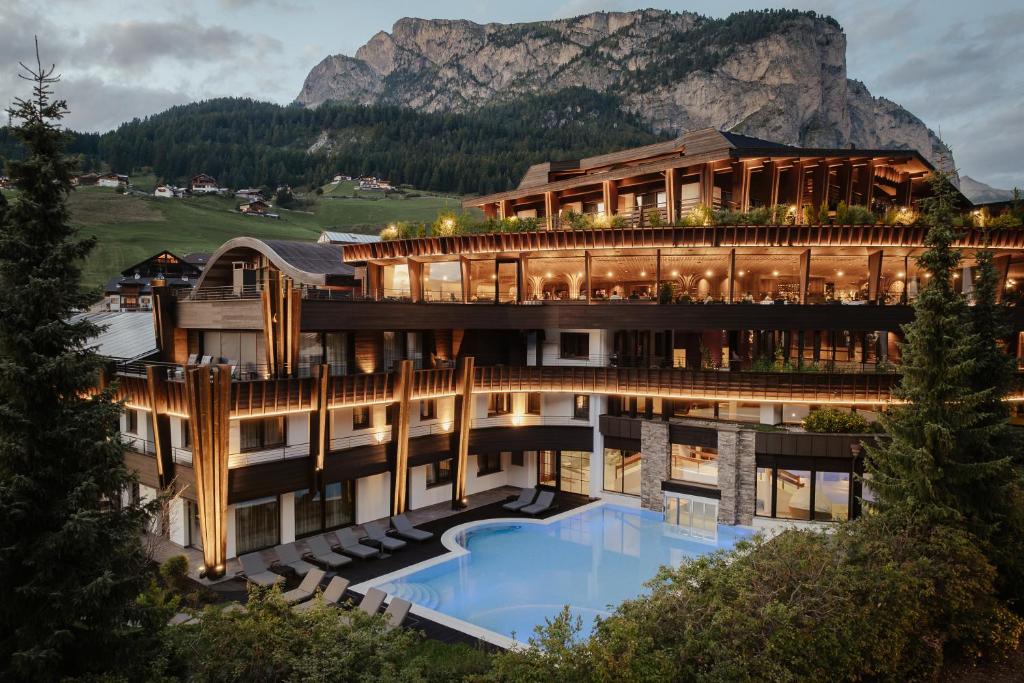
⭐️⭐️ Granbaita Dolomites – Set in Selva di Val Gardena, this is a classic Dolomites base with immediate access to some of the region’s most iconic hikes. Staying here means you’re surrounded by dramatic peaks from the moment you step outside, and trailheads, lifts, and cable cars are all close by.
Guest reviews often mention the friendly service and mountain views, and the hotel has a comfortable, traditional alpine feel that fits the area perfectly. It’s luxurious, reliable, well-located, and makes early starts very easy — exactly what you want in Val Gardena.
Best for: first-time visitors focused on iconic hikes and easy lift access
👉 Compare prices →
⭐️ Hotel Valpudra – Just outside Ortisei in Val Gardena, Hotel Valpudra is a simpler, more budget-friendly option that still puts you in a fantastic hiking area. The setting is quieter than staying right in town, which many guests appreciate after busy hiking days, and you’re still close to major cable cars and trail networks.
Reviews often highlight the relaxed atmosphere and good value for money. It’s the kind of place we’d choose if we planned to spend most days out hiking and wanted a comfortable base to return to in the evenings.
Best for: budget-conscious hikers who still want a great location
👉 See availability →
Final Thoughts
Looking back at these hikes, what we love most about the Dolomites is how much variety you get in such a relatively compact area. You can hike dramatic ridgelines like Seceda, walk beneath towering rock walls in valleys like Vallunga, enjoy relaxed alpine meadows in places like Alpe di Siusi, or take on iconic classics such as Tre Cime and Sassolungo.
Not every hike needs to be epic or exhausting to be memorable. Travelling here twice, and once with a baby, really reinforced that the Dolomites reward flexibility and good timing more than ticking off every famous viewpoint.
If we had to give one piece of advice, it would be this: don’t try to do everything. Pick a mix of well-known hikes and quieter, easier ones, plan around weather and access restrictions, and give yourself time to actually enjoy where you are.