
This article contains affiliate links. Learn more in our affiliate disclosure.
I’ve been to Batu Caves twice — and both visits felt like completely different places.
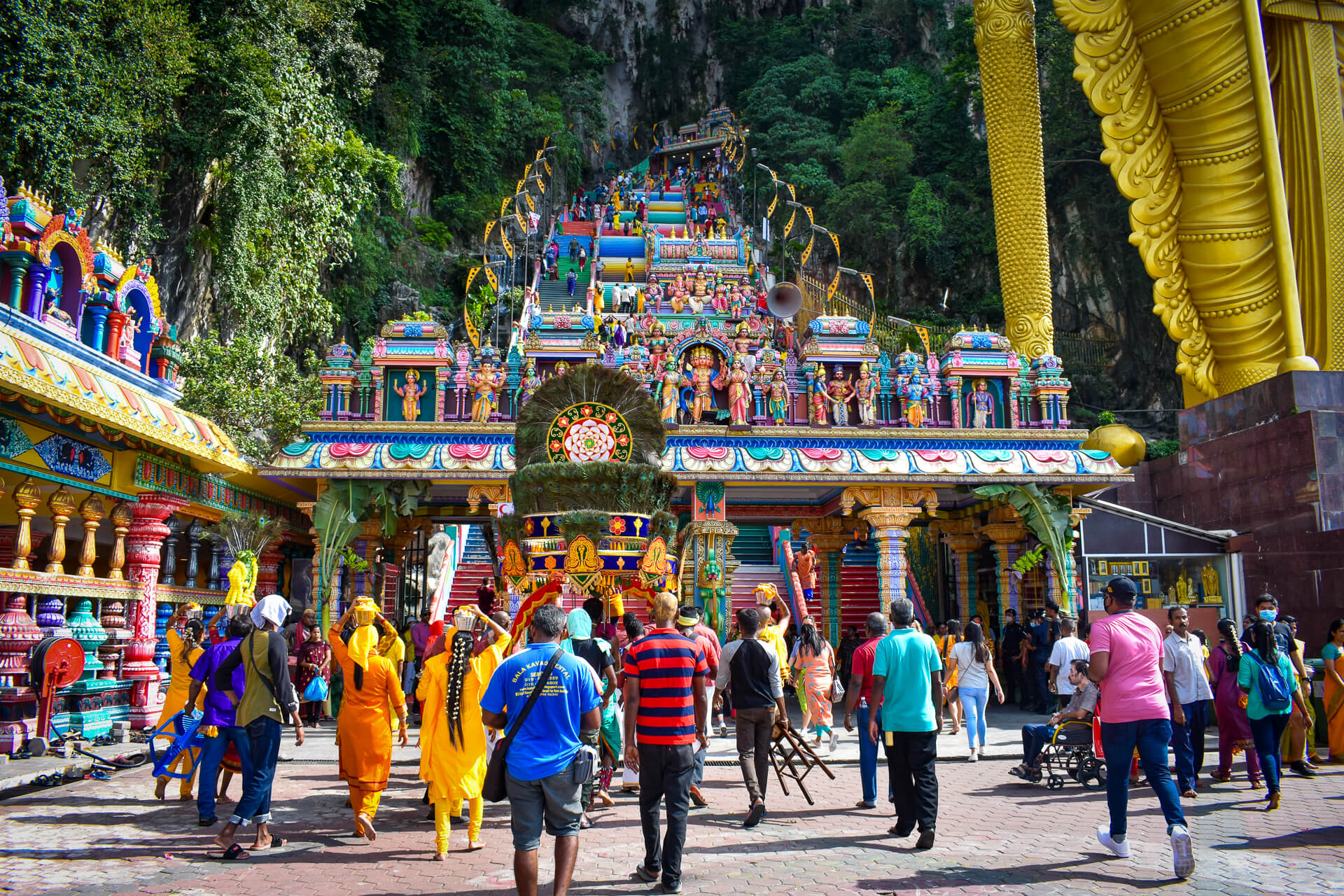
The first time was in 2020, when I was traveling solo through Malaysia as a backpacker. I got incredibly lucky (without even planning it) and arrived during the Thaipusam festival. It was intense, chaotic, emotional, and honestly a bit overwhelming in the best possible way.
Thousands of devotees climbing the steps barefoot, carrying offerings, some performing extreme rituals — the whole place felt alive, loud, and deeply spiritual. It wasn’t the peaceful tourist stop you see on Instagram.
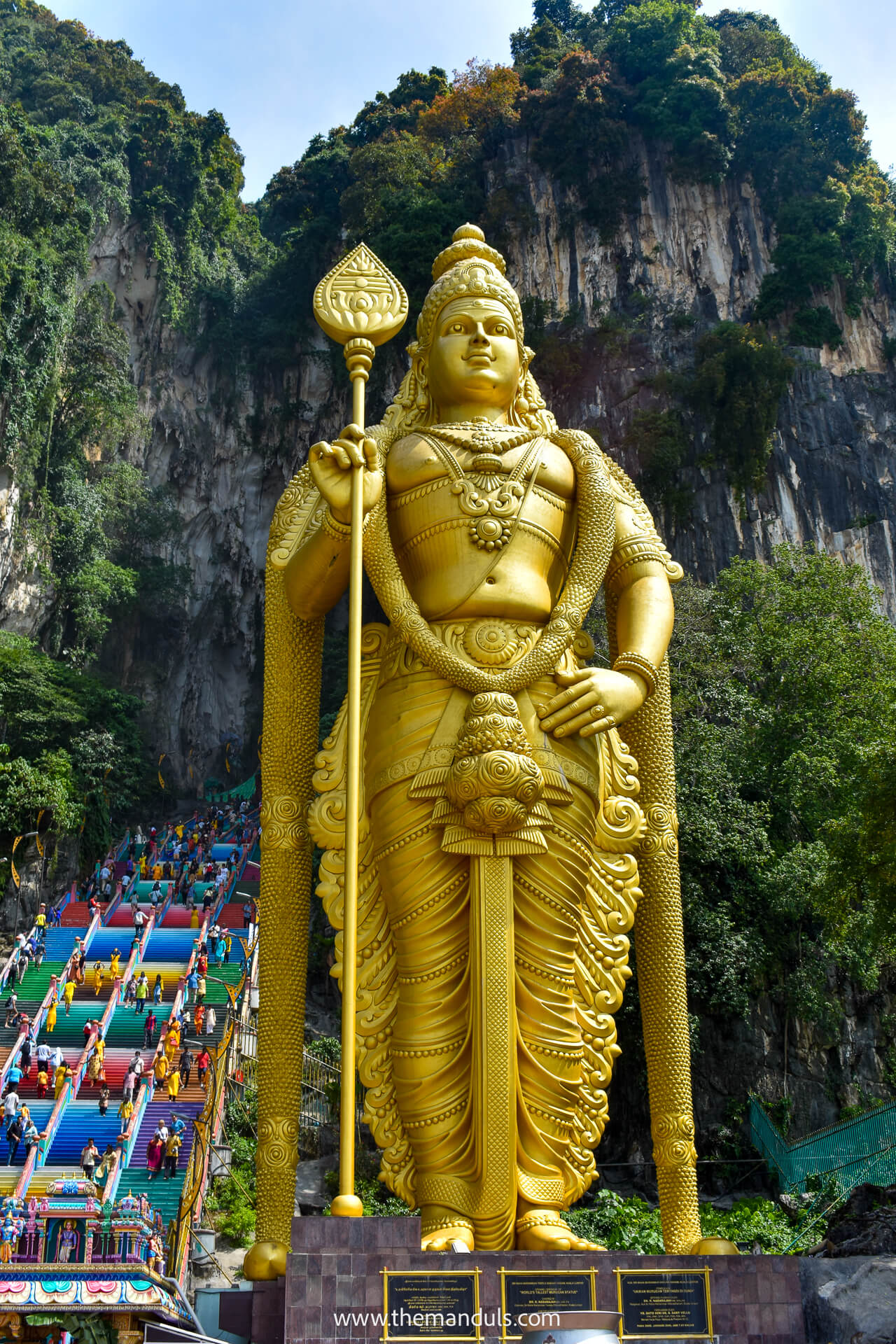
The second time was in 2023, when I came back with Juraj. This time, Batu Caves was calmer, and much more “tourist-friendly.” The colorful staircase, the massive golden Murugan statue, and the temple caves were still impressive — but without the festival, the atmosphere was completely different.
More time for photos, more space to walk around, and more focus on the site itself rather than the rituals. Seeing Batu Caves on both occassions really made me appreciate how much timing changes the experience.
Batu Caves is one of those places that almost everyone visiting Kuala Lumpur ends up seeing — and for good reason. It’s easy to reach, visually striking, and culturally important.
But it’s also a place where a little preparation makes a huge difference, especially with dress code, crowds, and knowing what to expect once you start climbing those 272 steps.
If you’re planning your trip and looking for the best things to do in Kuala Lumpur, Batu Caves will almost certainly be on your list — so it’s worth doing it right.
In this guide, I share exactly how to visit Batu Caves, when to go, what to expect, and all the practical tips we learned from seeing it in two very different moments.
Key Highlights
📍Location: Gombak, 13 km north of central KL
⭐️ Best time to visit: early morning on weekday
💰 Entrance fee: free
🕥 Opening hours: typically 6 am – 9 pm
🚗 How to get there: KTM Komuter train
🥾Accessibility: 272 stairs to reach the main caves
Is it worth it?
For us, Batu Caves is worth it because it feels big, loud, and completely different from the rest of Kuala Lumpur. The first time you see it in real life, with the huge golden statue and the colorful stairs cutting straight into the cliff, it’s immediately obvious that it’s a special place.
What makes Batu Caves stand out is that it’s a working temple. You’re not walking through something made for tourists; you’re sharing the space with people who are actually there to pray.
It’s important to set expectations. Batu Caves is famous for the statue, the 272 stairs, and the cave temple at the top — not for peace and quiet. It gets crowded, it’s hot, and you will sweat. This is not a hidden gem or a romantic sunset spot. There are monkeys, people stopping for photos all the time, and a lot going on around you.
The reason to go is simple: it’s one of the most interesting cultural spots near the city, and it gives you something you won’t get from malls or towers. The reason to skip is also simple: if you really hate crowds, stairs, and heat, you won’t enjoy it.
In a hurry?
These are our top hotels in Kuala Lumpur we’d book again
⭐️⭐️⭐️ Santa Grand Signature Kuala Lumpur – A stylish, central stay with a rooftop pool and skyline views, perfect if you want to be close to everything without paying luxury prices.
👉 See prices & availability →
⭐️⭐️ Ascott Star KLCC Kuala Lumpur – Spacious serviced apartments near the Petronas Towers with full kitchens, a great gym, and a pool, ideal if you want more comfort and space.
👉 See prices & availability →
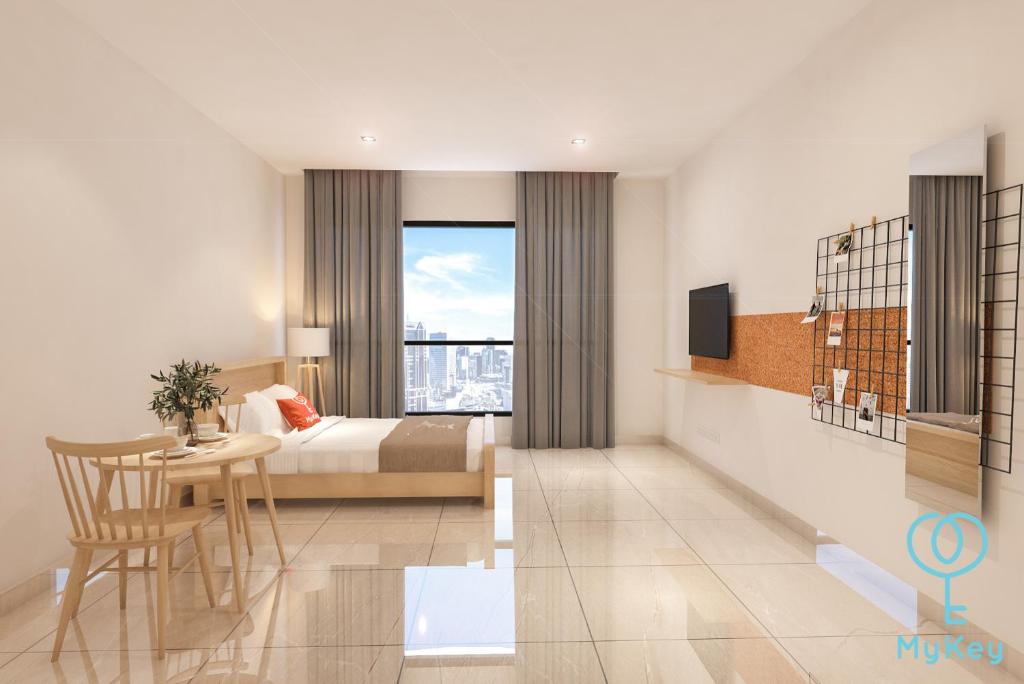
⭐️ Mossaz Suites by MyKey – Modern budget-friendly suites with kitchenettes and easy self check-in, best if you want your own space and good value without fancy extras.
👉 See prices & availability →
Where is Batu Caves
Batu Caves is located in the town of Gombak, on the northern edge of Kuala Lumpur. It’s not in the city center, but it’s close enough that visiting feels more like a short city trip than a real excursion.
From popular KL spots, it’s roughly:
– 20–30 minutes from KL Sentral
– About 30 minutes from Bukit Bintang
– Around 25 minutes from the Petronas Towers area
📍Save the location to your Google Maps.
How to get there
By train
Both times we visited Batu Caves, we went by train — and we’d do it the same way again.
We took the KTM Komuter train from KL Sentral and stayed on until the final stop, Batu Caves station. The ride took us about 30 minutes and was easy, cheap, and air-conditioned and with no transfers.
We used a Malaysia eSIM to navigate and check train times on the way to Batu Caves, which made getting there much easier. Google Maps was very reliable in showing us the up-to-date schedules.
When we stepped off the train, the caves were literally right in front of us. Another advantage is that it costs very little, and feels stress-free.
By Grab or a taxi
A Grab from central KL (Bukit Bintang, KLCC, KL Sentral area) usually takes 20–30 minutes, depending on traffic. This is the easiest option if you don’t want to think about transport or you’re traveling with kids. Just be aware that traffic can be bad later in the morning.
With a tour
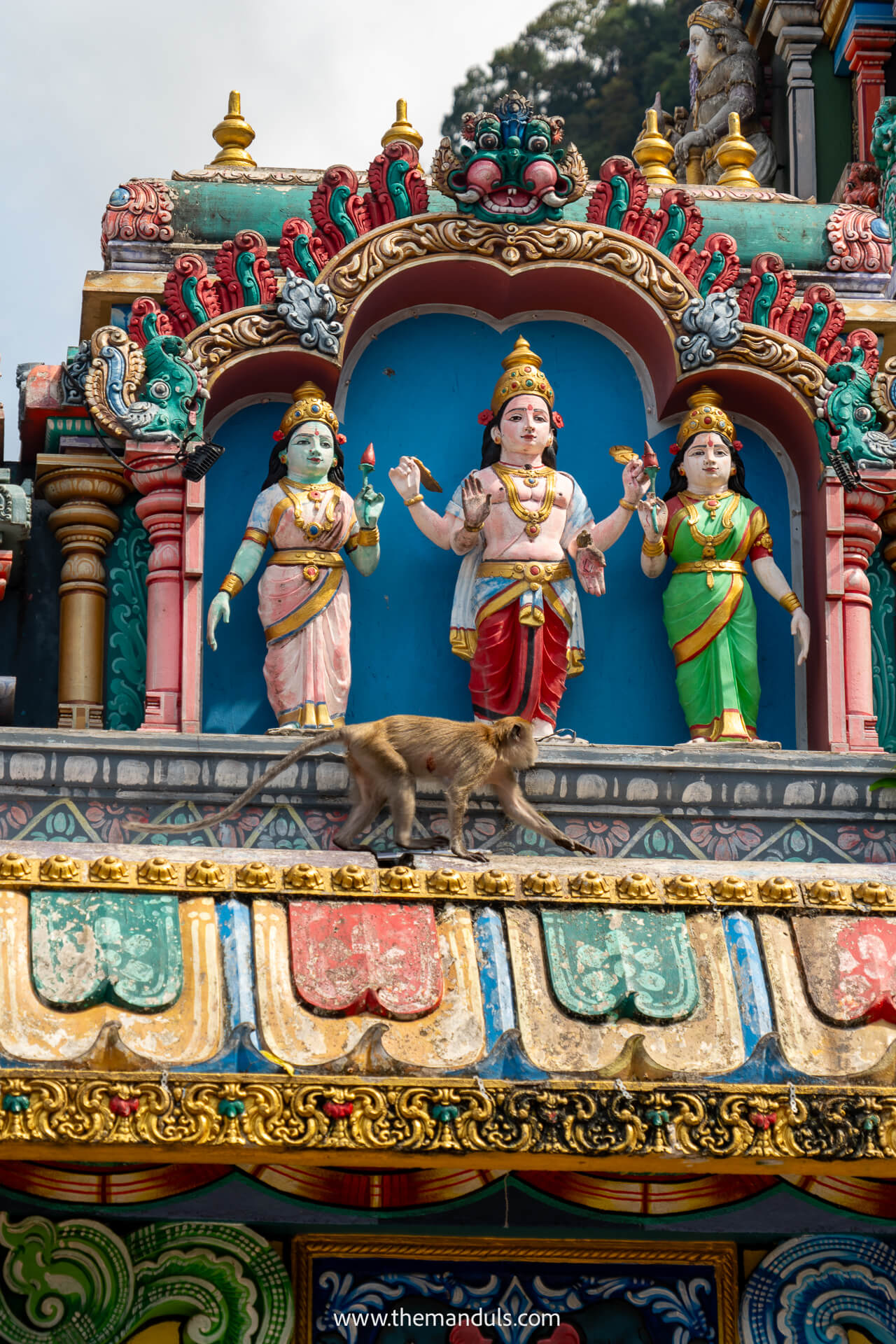
If you’d rather let someone else handle logistics, another solid way to visit Batu Caves is with a guided half-day experience. One popular option is the “Batu Caves and Batik Workshop”.
This tour starts with a stop at a batik workshop where you can watch artisans create designs using traditional wax and dye — which adds a nice cultural layer before the caves themselves.
Then you’re driven in a comfortable, air-conditioned vehicle out to Batu Caves, where your guide gives some context and tips before you explore on your own.
You’ll still have time to climb the stairs, wander the caverns, and see the shrines — but without worrying about transport, directions, or navigating public transit.

What to expect at Batu Caves
Dress code and temple rules
This was honestly the most stressful part of our visit — and something we really wish we’d known better in advance. Batu Caves is a working Hindu temple, so there is a strict dress code: shoulders covered, and knees covered for both men and women.
Even though we knew this and came prepared, it still didn’t go smoothly. We had our own clothes with us to cover up — I used a long layer to cover my shoulders and legs, and it actually covered more than the sarongs they were selling at the bottom of the stairs.
Still, as we tried to climb, we were repeatedly stopped, shouted at, and physically pulled back by women selling sarongs. They insisted I had to buy theirs, even though I was already fully covered.
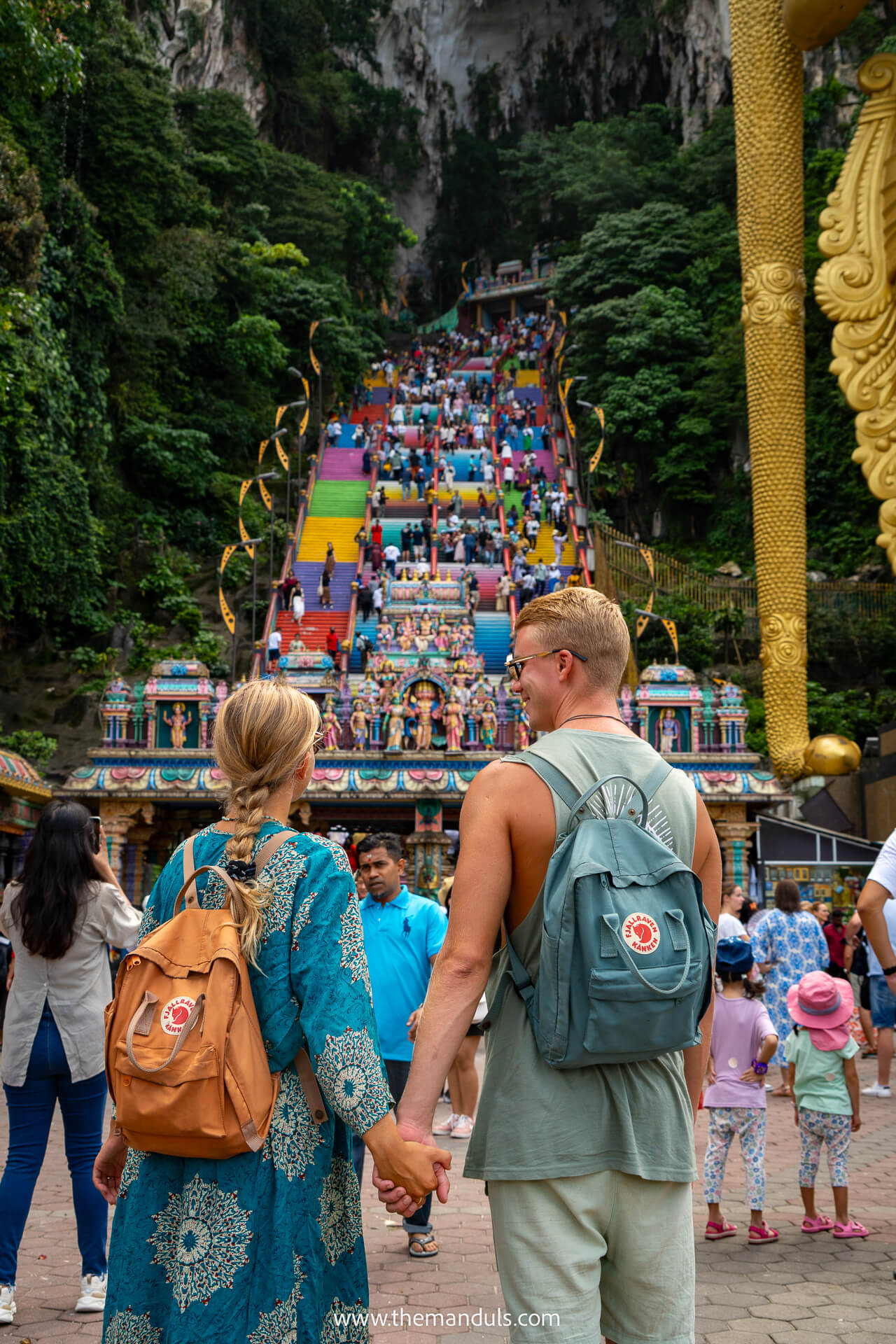
It felt way too aggressive and uncomfortable, especially in a place that’s meant to be spiritual. We’re fully on board with respecting temple rules — that’s not the issue. The problem is how it’s enforced.
The sarongs are overpriced, and the pressure to buy them can feel more like a business than a religious rule.
Wear long pants or a long skirt and a T-shirt with sleeves from the start. Don’t rely on layering at the entrance — even if you are covered, you may still get stopped. If you’re clearly dressed “correctly” already, you’re much more likely to walk straight up without hassle.
The Murugan statue
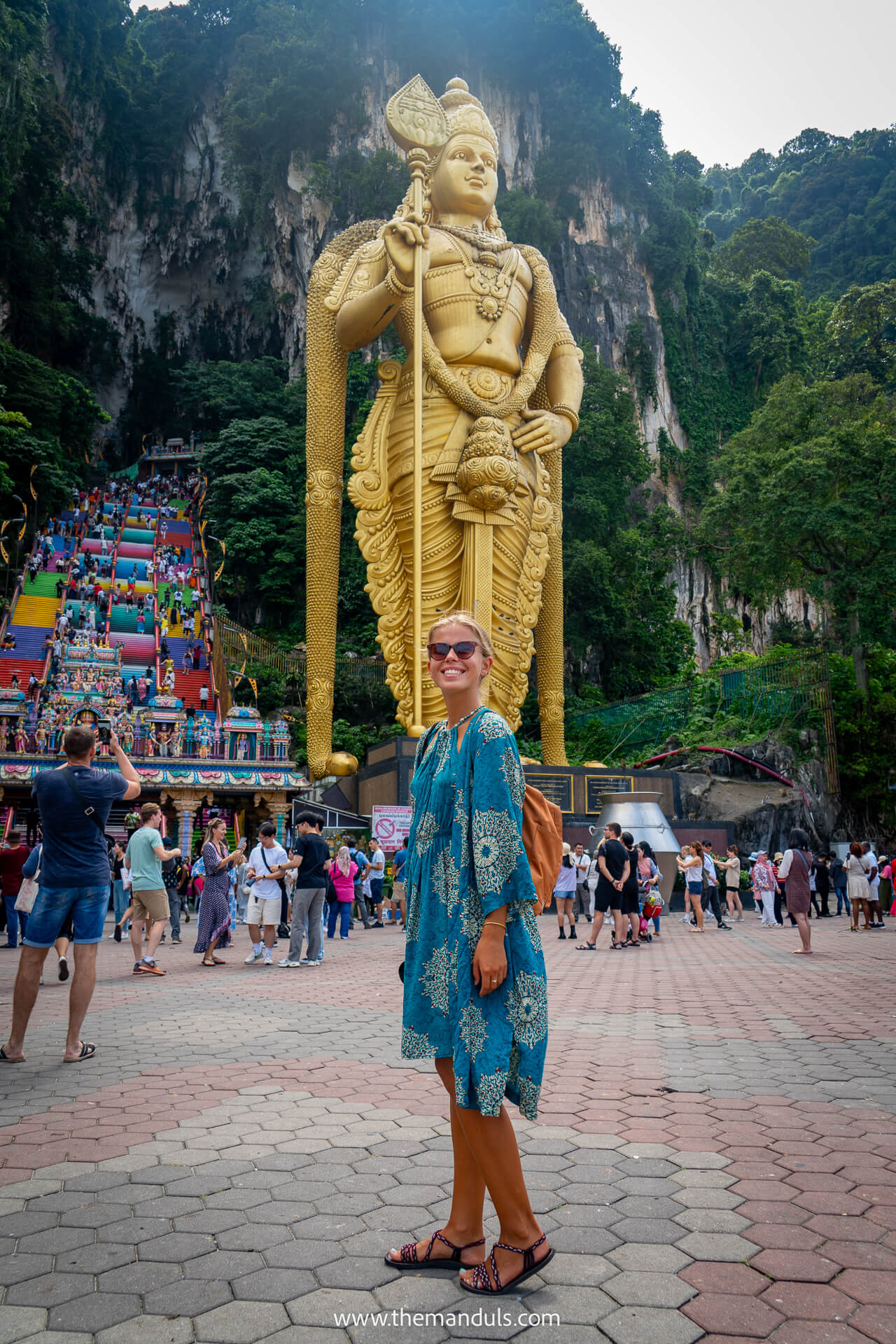
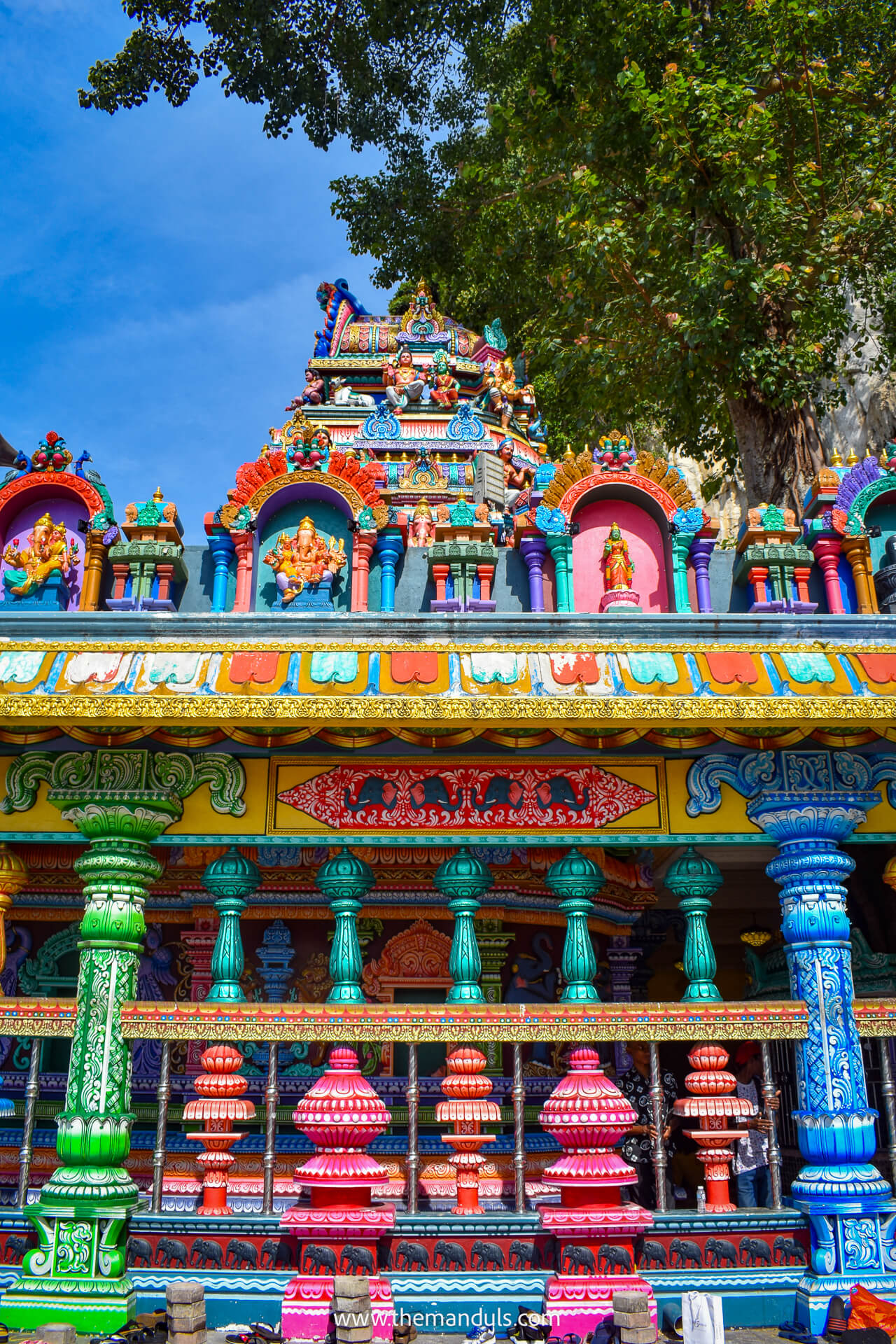
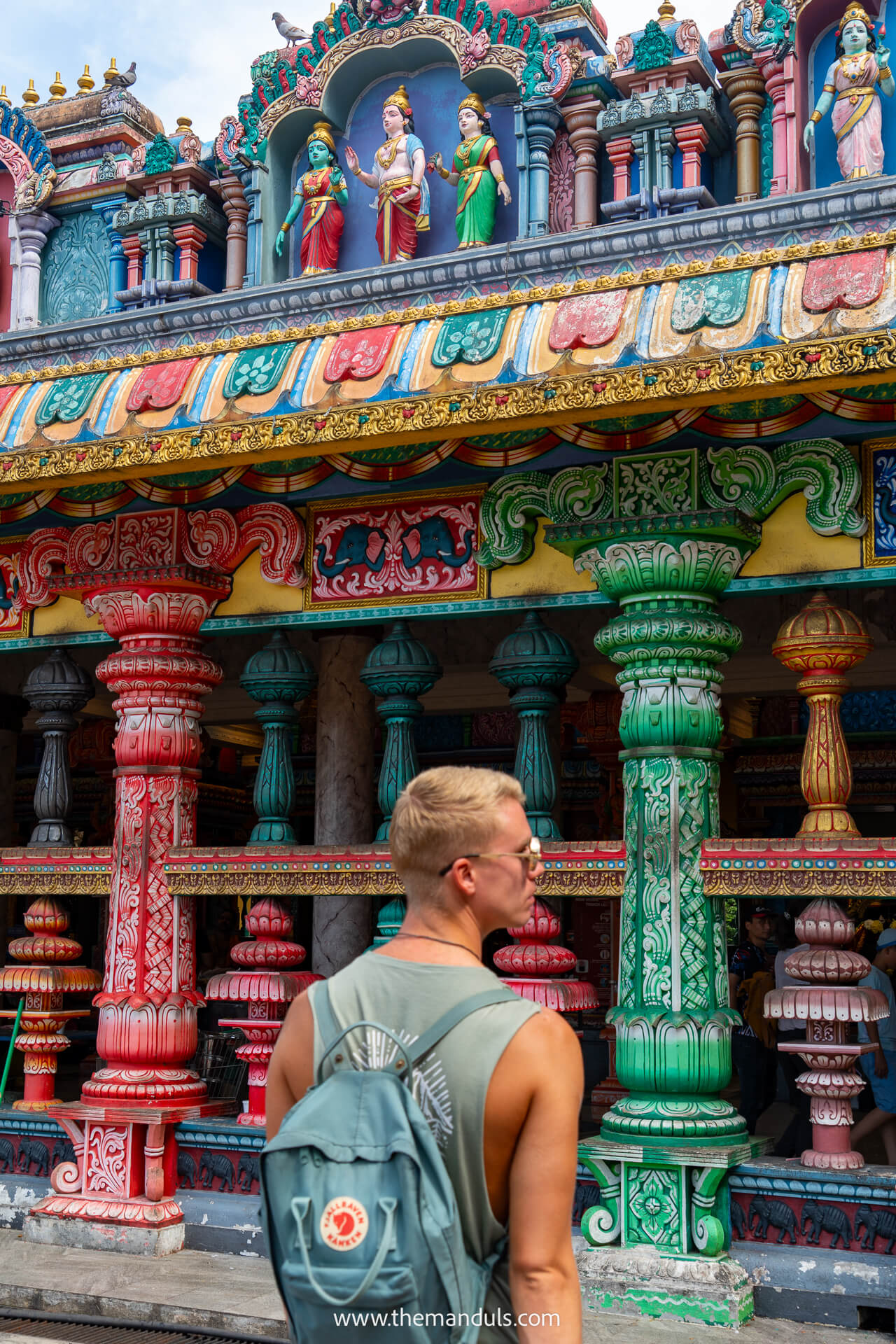
The giant golden Murugan statue is the first thing you’ll notice — and it really is impressive in real life. It’s massive, bright, and stands right in front of the limestone cliffs, which makes the whole entrance feel dramatic.
This is the classic photo spot, and where most people stop first. Even if you don’t climb the stairs, this part alone already feels iconic.
Climbing the stairs
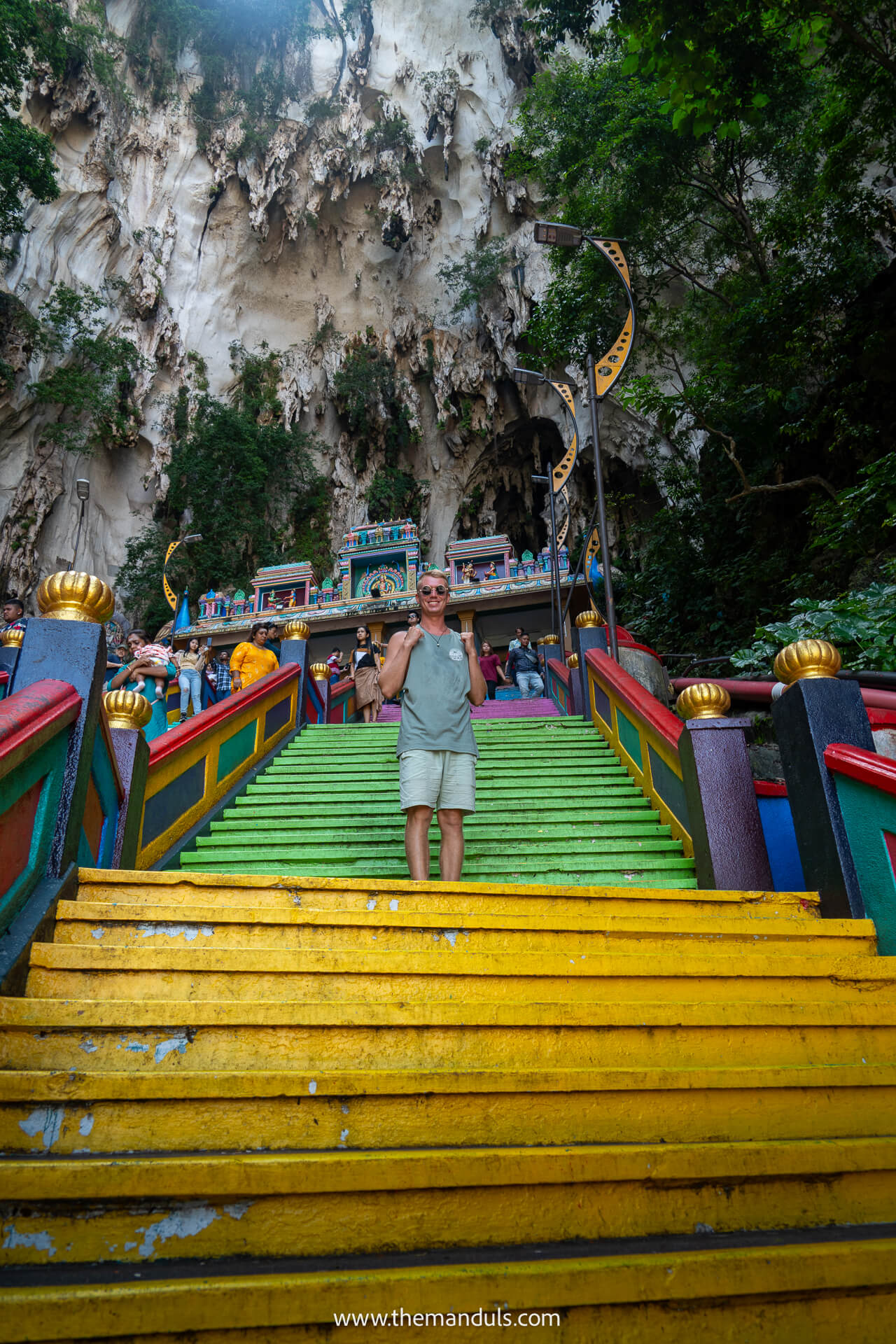
The 272 steps painted in bright, rainbow colors are one of the highlights. They’re way more intense in real life than they look in photos. From the bottom they seem manageable, but once you start, you really feel the heat and the steepness.
We didn’t rush it. We just went step by step, stopped when we needed to, and watched everyone else doing the same — people taking breaks, or stopping for quick photos. It’s crowded and slow, but that kind of becomes part of the experience.
Halfway up, you also get some nice views back over the area.
And then there are the monkeys.
Monkeys
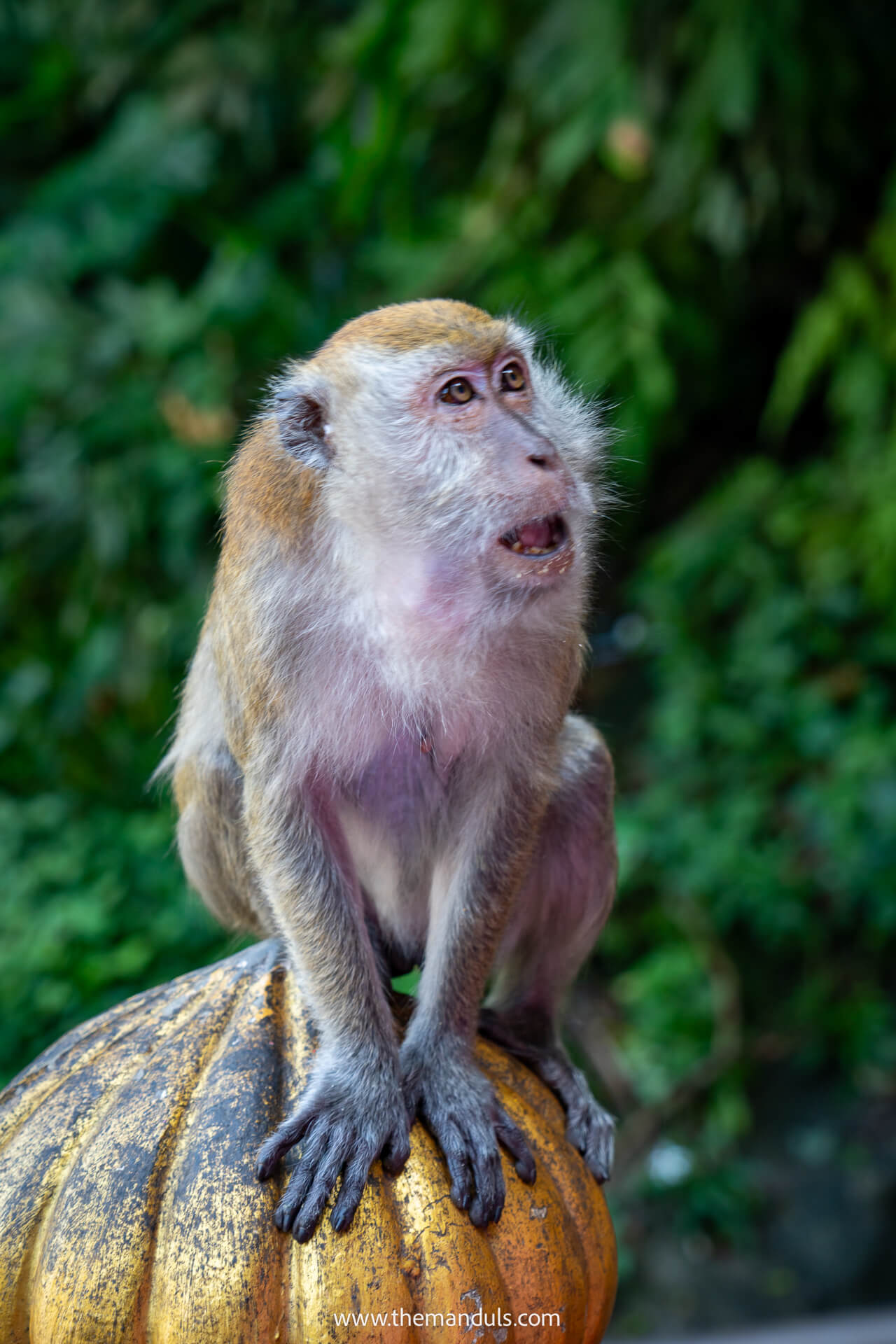
The monkeys at Batu Caves are not shy at all. We saw them jump onto railings, run between people’s legs, and grab plastic bags straight out of hands. One tried to unzip a backpack right in front of us. They’re used to tourists and clearly know where the food usually is.
Our advice: don’t carry snacks in your hands, don’t keep food in open bags, and don’t stop to feed them (even if they look cute). If you have something in a plastic bag, they’ll assume it’s food.
Inside the cave temples
Once we reached the top of the stairs, we walked straight into a huge open cave — and that’s when Batu Caves really felt different from just another tourist stop.
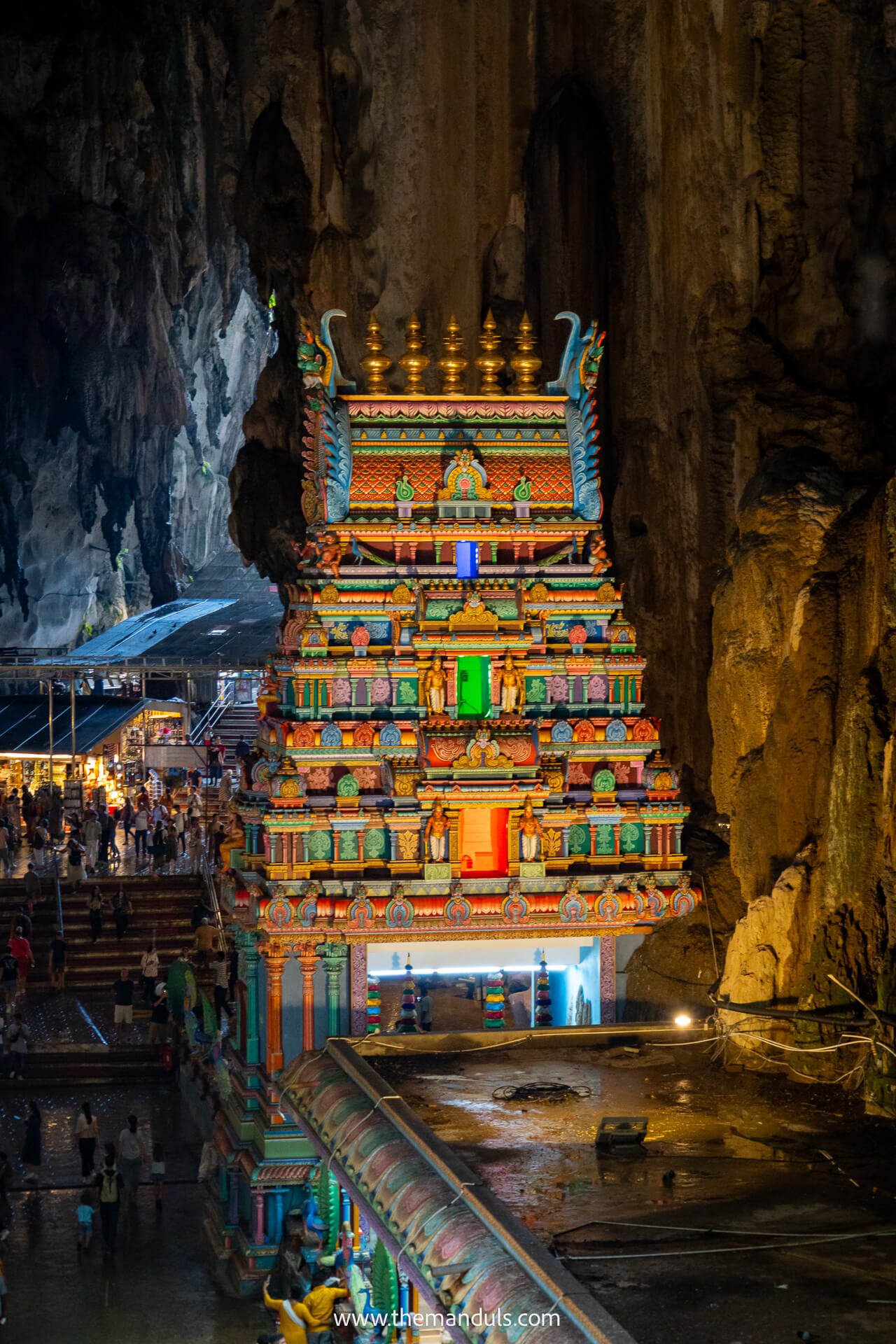
The cave is massive, with daylight coming in from above, so it doesn’t feel dark or closed in at all. We were standing inside a real limestone cave, but with shrines, statues, and people praying around us at the same time.
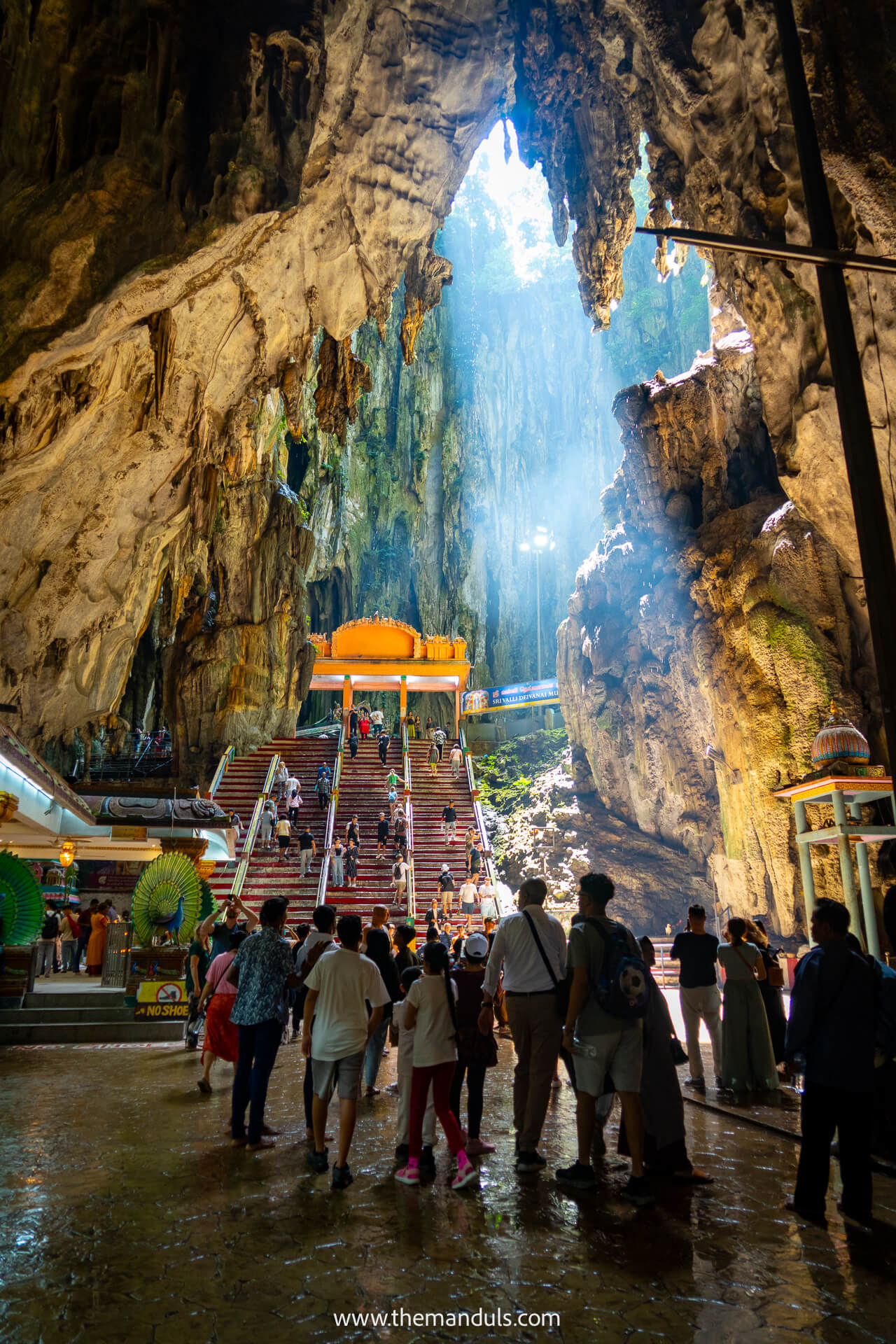
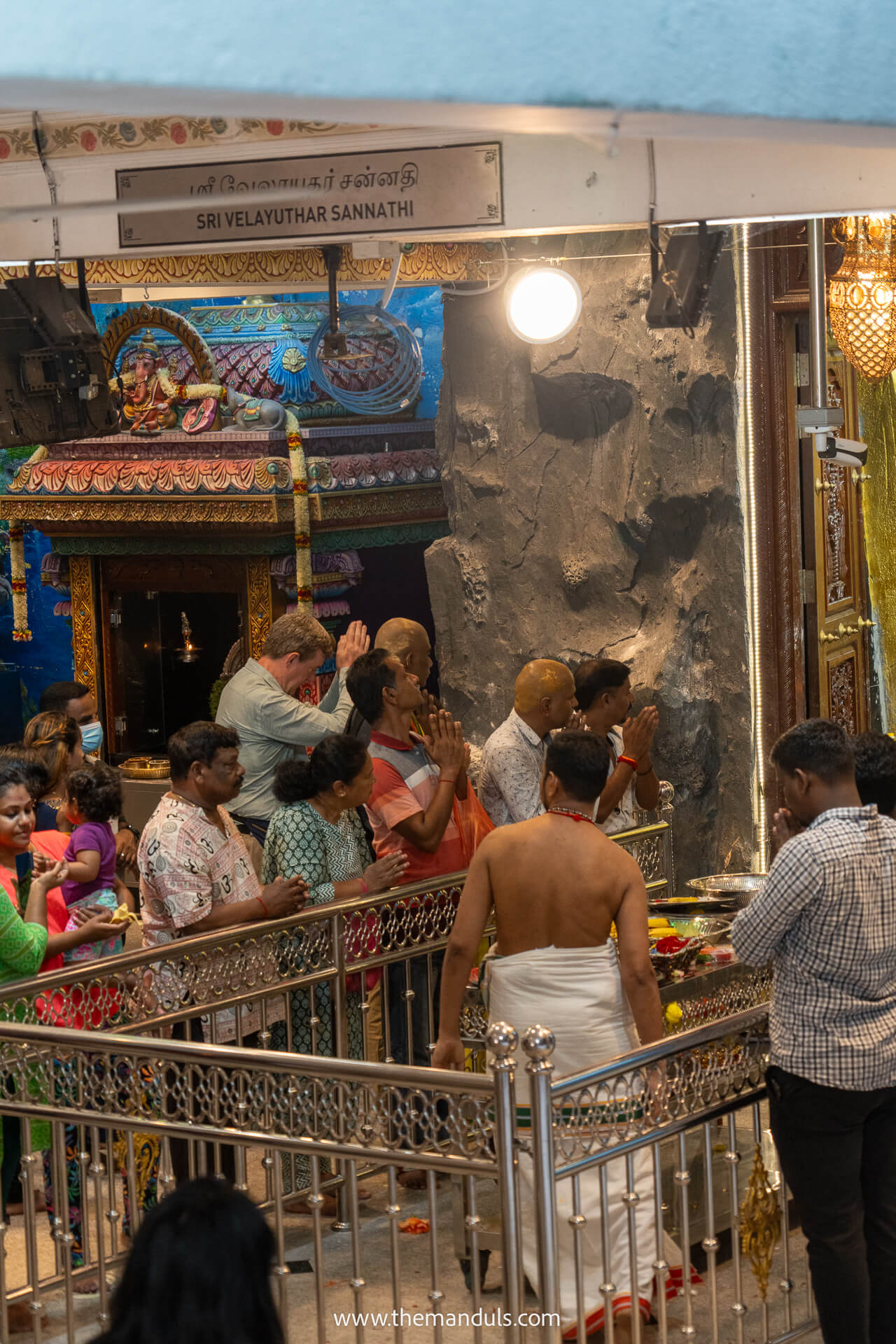
It was noticeably calmer up there than on the stairs. We watched devotees lighting incense and making offerings, while other visitors quietly walked around the sides trying not to get in the way.
Even with other tourists around, the atmosphere up there felt more grounded and spiritual than the chaos at the bottom.
Thaipusam festival
My first visit was during Thaipusam in 2020 and it felt like stepping into a completely different world. I didn’t plan it; I just arrived at the same time as one of the biggest Hindu festivals of the year.
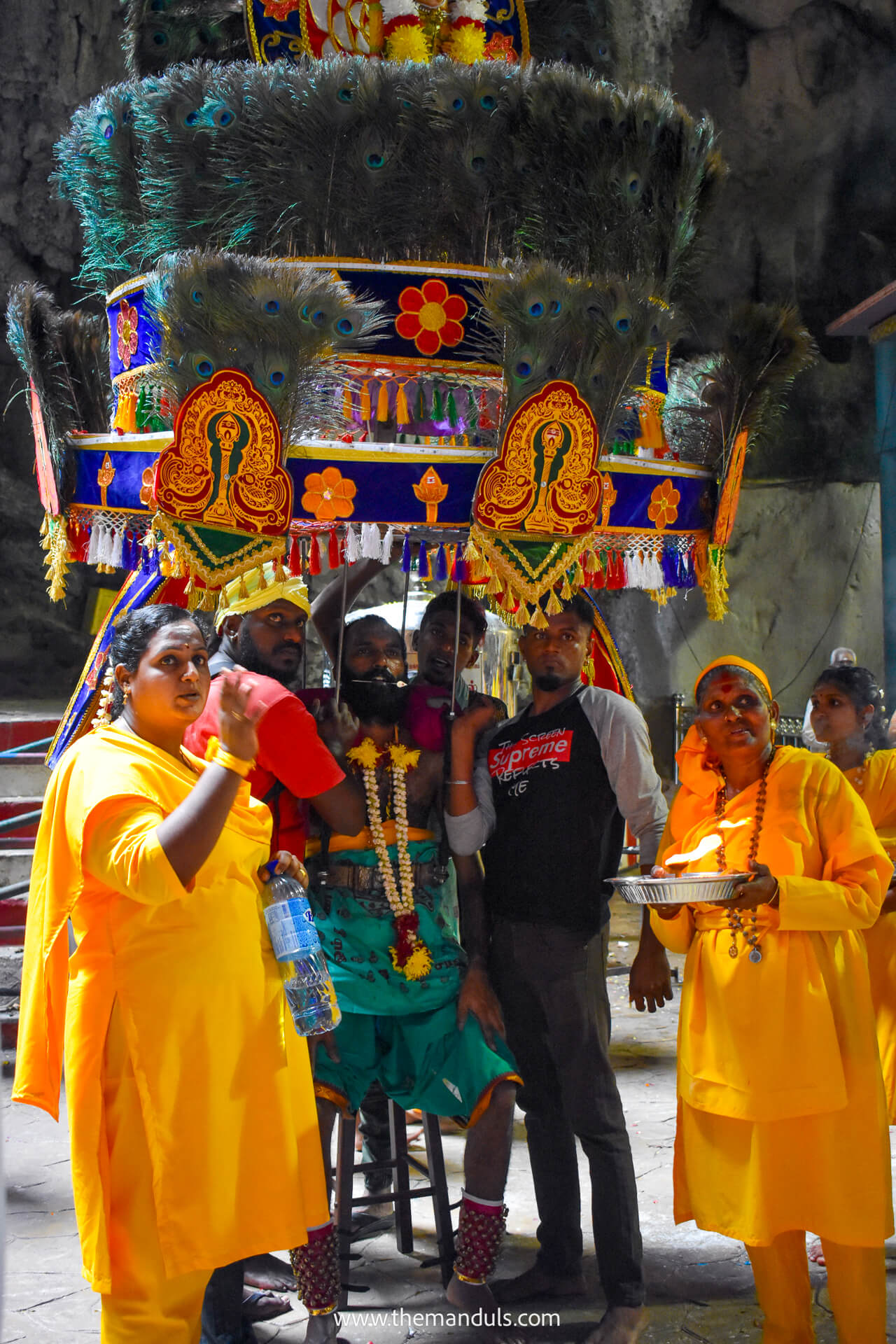
The rituals are extreme. Thaipusam is about devotion, sacrifice, and fulfilling vows made to Lord Murugan. Some devotees carry heavy decorated structures (kavadis) attached to their bodies, others pierce their skin with hooks or skewers as a form of spiritual offering.
Seeing this in real life was intense. It wasn’t something you see every day; it felt very important and emotional for the people involved.
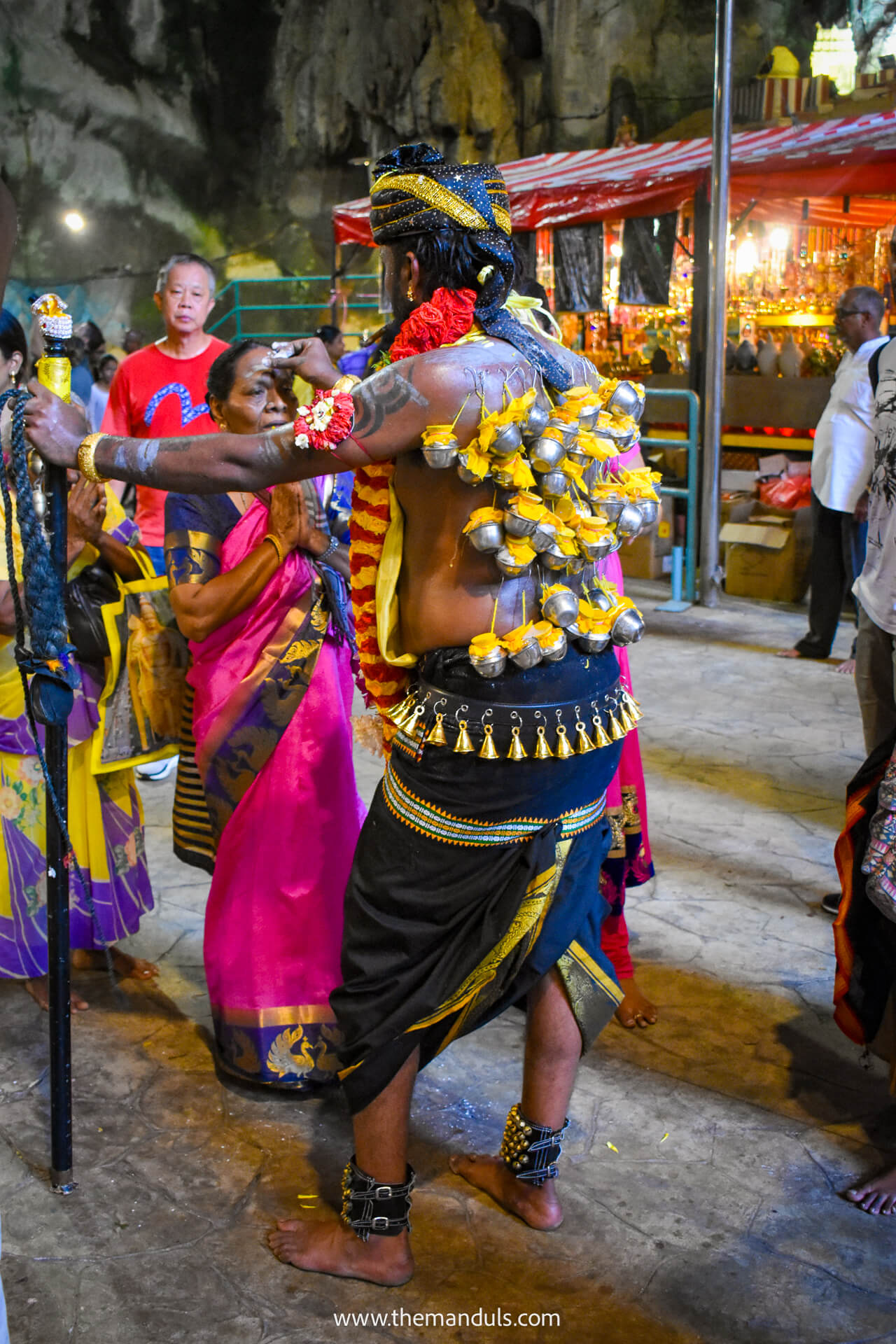
The whole area was packed with thousands of people. Devotees climbed the stairs barefoot, some clearly in pain but completely focused. There was loud music, chanting, drums, and nonstop movement everywhere.
It wasn’t pretty or calm — it felt raw, chaotic, and powerful. You could tell immediately this day was not about tourists.
Facilities
- Restrooms: Public toilets near the base of the stairs and plaza area. Some are free, others charge a small fee (around MYR 1–2).
- Food & drinks: Small stalls selling water, soft drinks, and simple snacks near the entrance and one in the cave.
- Souvenir shops: A few stalls at the bottom of the staircase selling postcards, T-shirts, and small souvenirs.
- Shade & seating: Limited shaded spots and some seating near the entrance plaza. No benches on the stairs themselves.
- Help & staff: Temple staff and volunteers are usually around the main areas if you need assistance.
Where to eat and drink
- Second Cut BBQ – The best spot for tasty meat. We tried their steaks and they were tasty & high-quality.
- Farm Cafe – Generous portions, satisfying food and wide selection.
Best time to visit
The best time to visit Batu Caves is early in the morning, ideally between 7:00 and 9:00 am. It’s cooler, less crowded, and much more pleasant to climb the stairs before the heat really kicks in. Both times we went later in the morning, and it was noticeably busier and more exhausting.
In terms of days, weekdays are better than weekends. Weekends can feel chaotic, especially around mid-morning when tour groups arrive. If you want photos without too many people in them, go as early as you can.
Season-wise, Batu Caves can be visited all year, but be aware of Thaipusam (usually in January or February). During the festival, the atmosphere is completely different. It’s an incredible cultural experience if that’s what you’re looking for, but it’s not a “normal sightseeing visit.” If you want a calm, easy visit, avoid that period.
Where to stay in Kuala Lumpur
Kuala Lumpur is a city where choosing the right area really changes how your trip feels. Stay central and you can walk to food courts, malls, and train stations. Stay near KLCC and you get skyline views and easy access to the main sights.
Most good hotels here are modern, well-priced for what you get, and designed for comfort after long, hot sightseeing days.
If you’re still deciding which part of the city suits you best, check out our full guide on where to stay in Kuala Lumpur— it breaks down the best areas, including hand-picked hotel recommendations.
Here are the ones we’d happily book again:
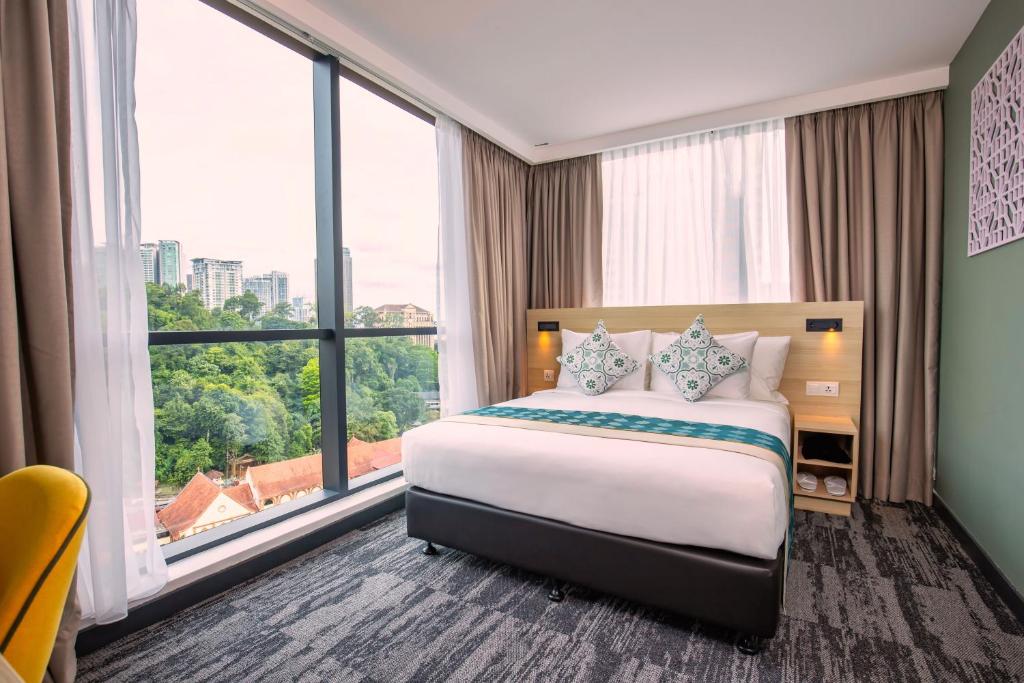
⭐️⭐️⭐️ Santa Grand Signature (our top pick) – This is the kind of hotel we love in big cities: stylish, central, and easy to come back to after a long day out. The rooms feel calm and modern, the beds are genuinely comfortable, and the rooftop pool with skyline views is a real bonus.
It’s close to public transport and food spots, so you’re not stuck relying on taxis all the time. If we came back to KL and wanted a hotel that feels like a safe, high-quality choice without going fully luxury, this is exactly what we’d pick again.
Best for: Travelers who want a well-located, comfortable base with a touch of design and a great pool.
👉 Check current deals →
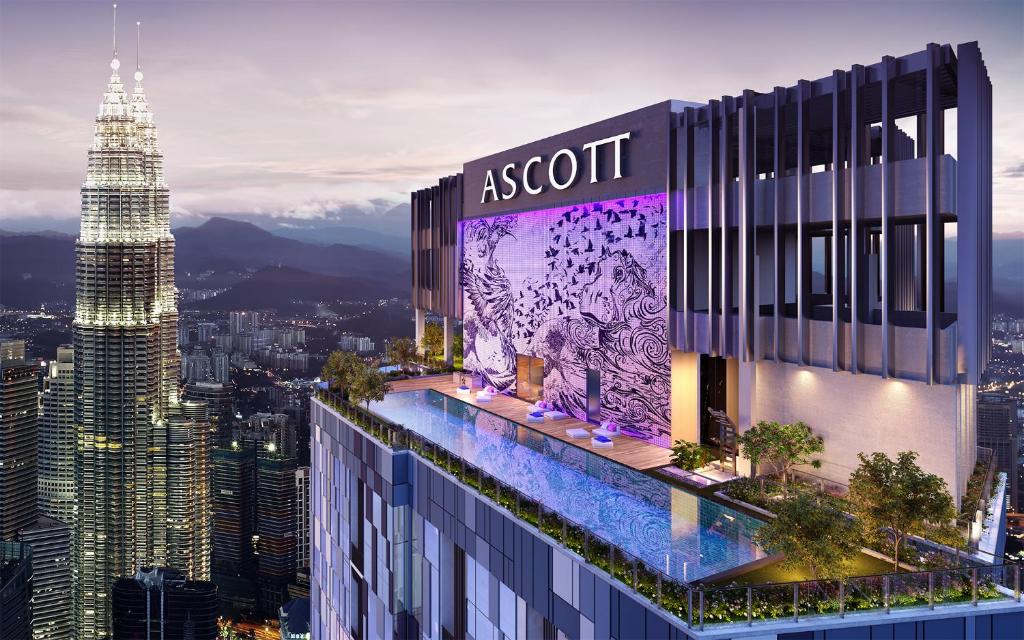
⭐️⭐️ Ascott Star KLCC Kuala Lumpur – This one feels more like living in the city than just sleeping in it. You get proper space, a kitchen, and a layout that works for more than just one night.
We’d choose this if we wanted to slow down a bit, cook occasionally, or just enjoy having room to spread out. Being near the Petronas Towers also makes evening walks and dinners feel special without needing long rides back to the hotel. It’s a great option if you like comfort and privacy but still want a premium city location.
Best for: Couples or longer stays where space and comfort matter more than boutique vibes.
👉 Compare prices →
⭐️ Mossaz Suites by MyKey – This is a smart budget option if you want your own little apartment instead of a basic hotel room. The suites are modern and simple, with kitchenettes and self check-in, which makes everything feel easy and flexible.
It doesn’t try to be fancy, but it is clean, practical, and good value for money. If we were visiting KL on a tighter budget or just wanted a functional base for exploring all day, this would be an easy choice.
Best for: Budget travelers who want space, independence, and good value without giving up comfort.
👉 See availability →
FAQ
Plan about 1–1.5 hours. That gives you time to climb the stairs, walk around inside the cave, and take photos without rushing.
It can be, but keep in mind the 272 steep steps, heat, and monkeys. Older kids are usually fine; strollers are not practical.
Even from the bottom, the statue and staircase are impressive. But the cave is what makes the visit feel complete — if you’re there, it’s worth climbing up.
Final Thoughts
Batu Caves isn’t the kind of place you visit for peace and quiet. It’s loud, busy, hot, and sometimes a bit chaotic, but that’s also what makes it feel real. Between the massive statue, the colorful stairs, the cave temple, and the mix of tourists and worshippers, it shows a very different side of Kuala Lumpur than malls and skyscrapers.
Our biggest takeaway is that timing and preparation matter a lot here. Go early, dress properly, don’t bring food for the monkeys, and expect crowds. If you come with the right mindset, it’s a strong cultural experience and an easy half-day trip from the city.