
This article contains affiliate links. Learn more in our affiliate disclosure.
Renting a car in the Dolomites is one of the best ways to explore the mountains at your own pace. The region is full of scenic mountain passes, hidden valleys, and remote trailheads that are much easier to reach when you have your own wheels.
We visited Dolomites twice and both times we had our own car which gave us complete freedom and flexibility to adjust plans according to the weather.
In this guide, I’ll share everything you need to know about renting a car in Dolomites —from costs and requirements to driving tips and where to book. Whether you’re planning a short visit or a longer stay, this info will help you get the most out of your trip.
Renting a car in Dolomites – Quick Overview
The most convenient place to rent a car for exploring the Dolomites is Bolzano. The city has a small airport. It’s also well connected by direct trains from major airports like Verona, Venice, Innsbruck, and Munich.
Booking your rental car in advance is highly recommended, especially during summer and ski season when demand is high.
When renting a car in the Dolomites, drivers usually need to be at least 21 years old, with additional fees for drivers under 25. Prices typically start around €30–€50 per day, depending on the season and vehicle type.
Roads across the Dolomites are generally well-maintained but narrow and winding, particularly on mountain passes. Because of that, we recommend choosing a smaller but reasonably powerful car, which makes driving and parking much easier.
Full insurance coverage is strongly recommended when renting a car in the Dolomites, and it’s often cheaper when booked online. We usually use DiscoverCars to compare deals from multiple providers, benefit from free cancellation, and get reliable customer support.
It’s also a good idea to download offline maps, as mobile signal can disappear in remote valleys and high mountain areas.
Do You Really Need a Car in Dolomites?
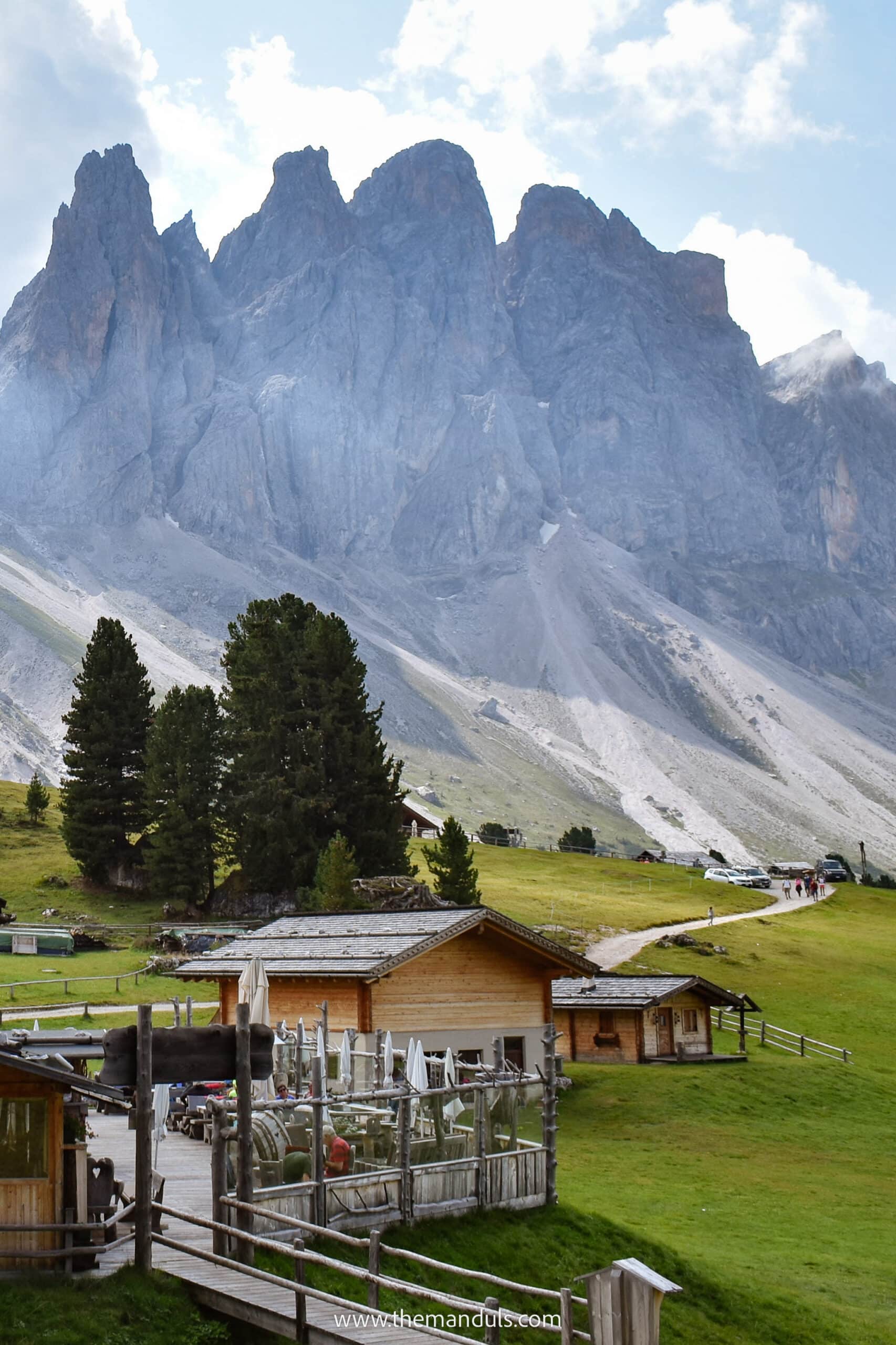
The Dolomites actually have a very good and reliable bus network, and many popular areas are well connected by public transport. Buses run between major towns, mountain passes, and cable cars, and during the main hiking season they operate quite frequently.
Because of this, it’s definitely possible to explore parts of the region without renting a car, especially if you plan to stay in one area.
However, public transport still comes with a few limitations. You’re tied to the bus schedules, which might not always work well for longer day hikes or sunrise and sunset visits. Missing the last bus can also mean a long wait or an expensive taxi ride.
It can also be more difficult to reach more remote valleys, smaller trailheads, or scenic mountain passes that aren’t directly connected by bus.
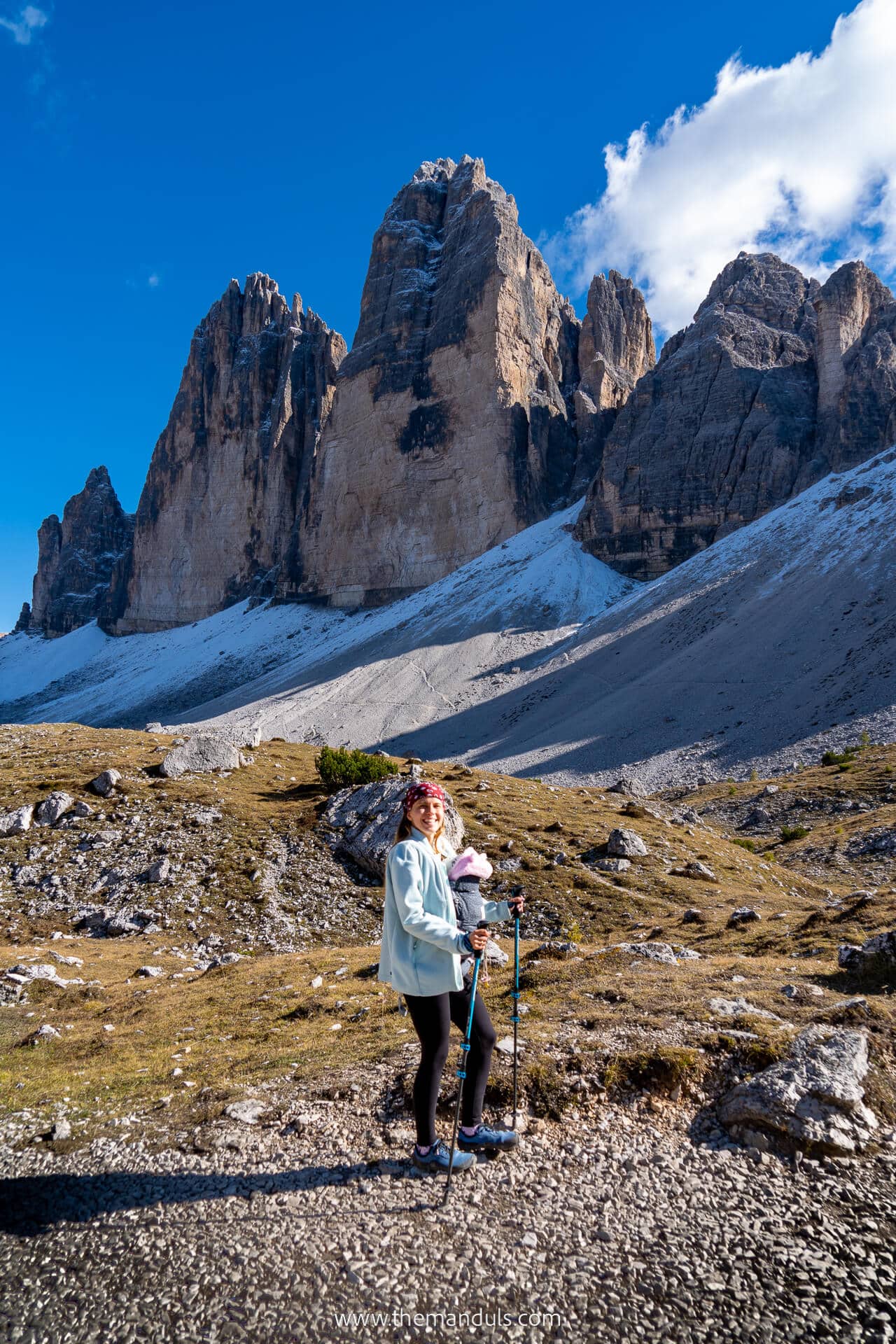
During our trips, having a car gave us much more flexibility. We could start all our favorite hikes in Dolomites early, adjust plans depending on the weather, and easily combine several places in one day — which is much harder to do when relying only on buses.
Car Rental Requirements
When renting a car in the Dolomites, the requirements are generally the same as anywhere else in Italy.
Rental companies may request an International Driving Permit depending on your country of origin, so it’s always best to check in advance.
The minimum age for renting a car in Italy is usually 21, though some companies may allow younger drivers. If you’re under 25, expect to pay a young driver surcharge. Renting is usually easiest and cheapest for drivers 25 and older.
A credit card in the main driver’s name is typically required for the security deposit. You’ll also need your passport or national ID when picking up the vehicle.
If you plan to include additional drivers, most rental companies allow it for an extra fee. This can be useful if you’re planning longer drives across the Dolomites and want to share the driving.
Driving in Dolomites – Our Experience
Road conditions
Before our first trip to the Dolomites, we weren’t sure what the roads would be like. With so many mountain passes on the map, we expected rough or poorly maintained roads in some areas. In reality, the road quality was much better than we anticipated.
Most roads we drove on were smooth and very well maintained, even in more remote valleys. We honestly don’t remember seeing many potholes at all.
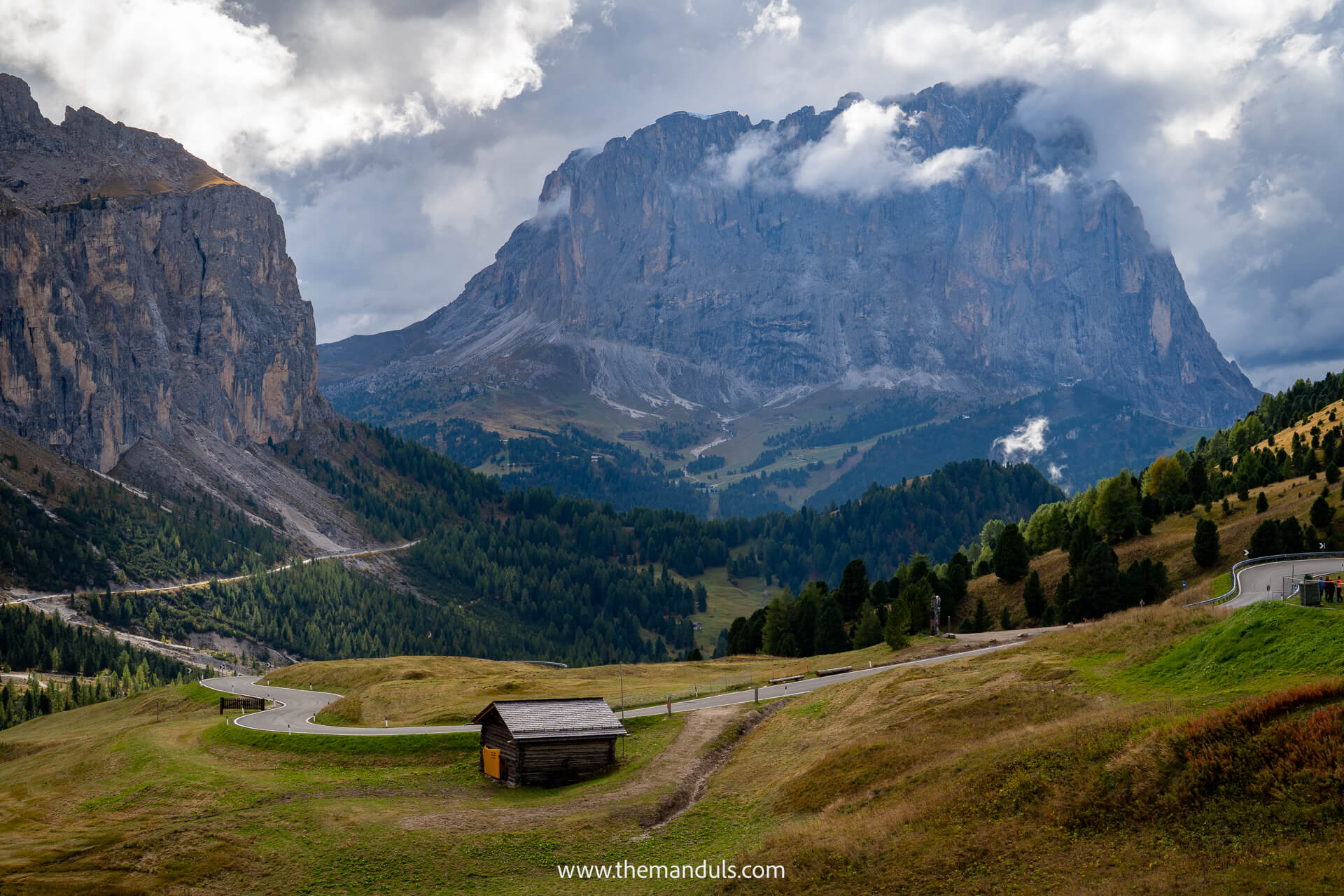
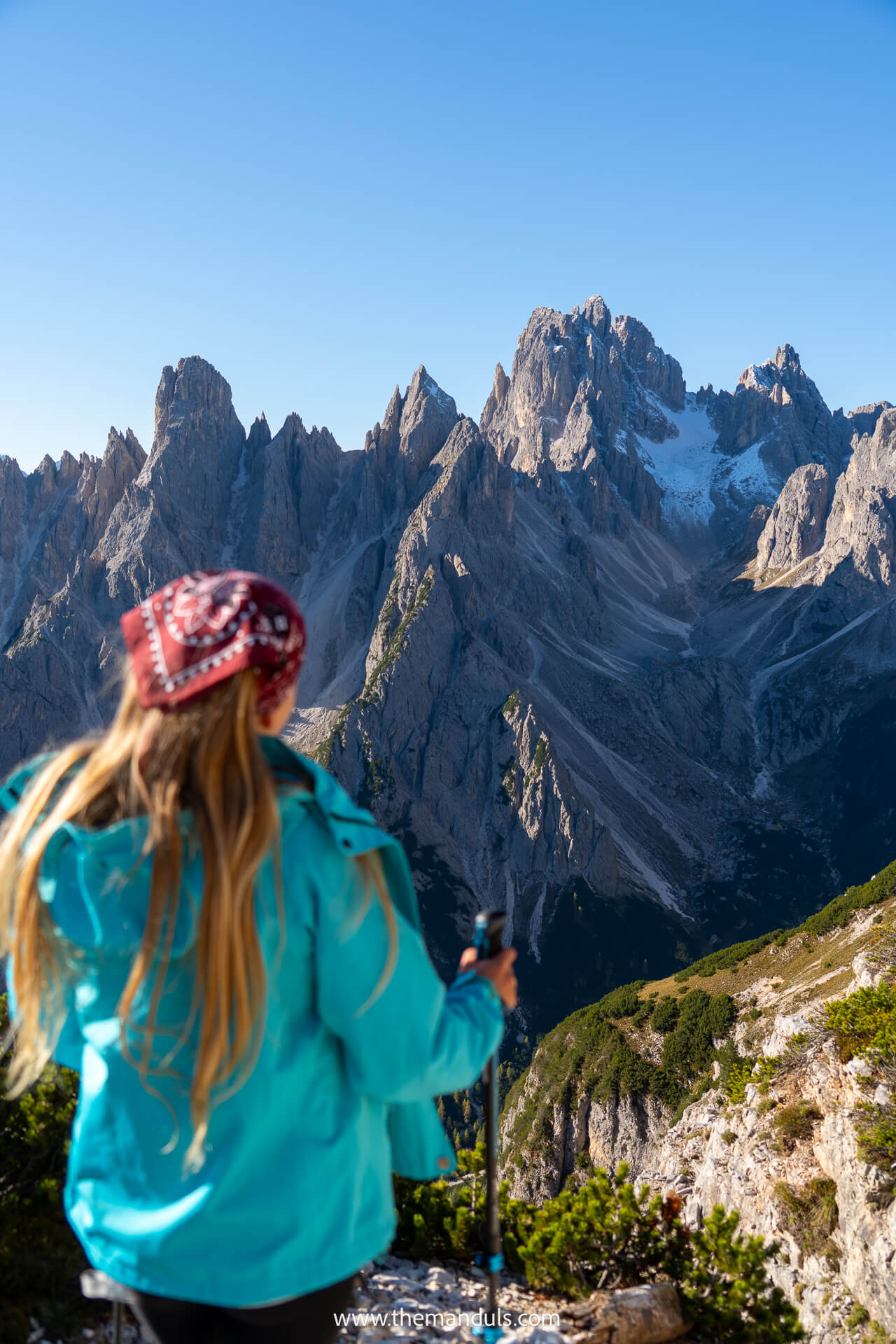
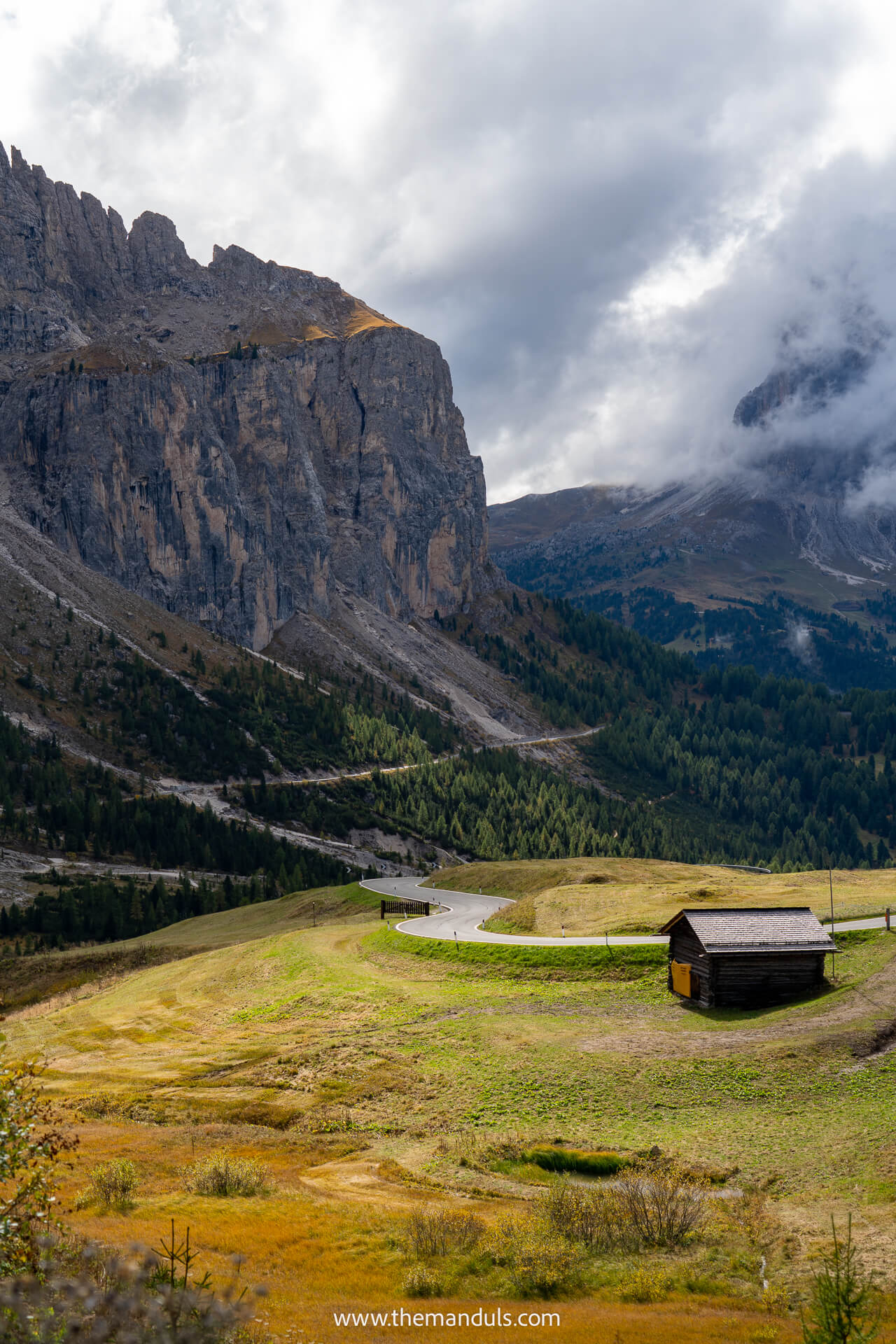
What makes driving here more challenging isn’t the road quality, but the terrain. Many roads are narrow and winding, especially on famous mountain passes like Passo Giau, Passo Gardena, or Passo Sella, where you’ll encounter plenty of tight hairpin turns.
At first, it felt a little intimidating, but we quickly got used to it. Traffic usually moves slowly, and most drivers are familiar with these roads. The only moments where we had to be extra careful were when passing buses or cyclists, which are very common on mountain passes.
Overall, we actually found driving in the Dolomites to be a really enjoyable experience. The roads are scenic, the views are incredible almost everywhere, and the journey itself often feels like part of the adventure.
Using GPS
Like on most of our trips, we relied on Google Maps for navigation while driving in the Dolomites, and it worked very well most of the time. Almost every trailhead, parking lot, or viewpoint we wanted to visit was easy to find.
The only minor issue we experienced was losing signal in tunnels or deeper valleys, which happens quite often in the mountains.
Because of that, we recommend downloading offline maps in advance. It only takes a minute and can save you from confusion if your signal drops in more remote areas.
Choosing the right car
When renting a car in the Dolomites, it’s worth paying attention to car size, engine power, and transmission type.
We actually drove our own car during our trips — a VW Touran — and it handled the mountain roads without any problems. The engine had enough power for steep climbs, even on higher passes, and the car felt stable on winding roads.
That said, if we were renting a car specifically for the Dolomites, we would probably choose something a bit smaller. Many mountain villages, parking areas, and scenic viewpoints have limited space, and some roads can feel quite narrow when two cars pass each other.
A compact car with decent engine power is usually the best balance. It’s easier to park, more comfortable on narrow roads, and still capable of handling the steep mountain passes.
Also keep in mind that manual cars are very common in Italy. If you’re not comfortable driving a manual on steep roads with tight turns, choosing an automatic transmission can make the whole experience much more relaxed.
Where to rent a car in Dolomites
There are a few ways to book a rental car in Dolomites, but the best option is to book online in advance. That way, you’ll get better prices, more car options, and you can pick up your car directly at the airport without extra hassle.
We always use DiscoverCars, a platform that lets you easily compare offers from both international and local providers. It’s not just for comparing — you actually book through them, which keeps everything simple and clear.
Their full coverage is much cheaper than what rental counters usually offer, and they provide free cancellation up to 48 hours before pickup. We’ve had great experiences with their support, and booking through them always felt safe and smooth.
Insurance & Coverage Explained
When renting a car in Dolomites, you’ll be offered several types of insurance — and it’s important to understand what’s actually needed.
Basic insurance is usually included in the rental price, but it comes with a high excess (the amount you’re responsible for if anything goes wrong). That’s why most people opt for full coverage.
If you book through DiscoverCars, you can easily add full coverage during the booking process. It’s much cheaper than what rental desks offer (we’re talking about €8–€10 per day vs. €20–€30). It covers damage, theft, flat tires, lost keys, misfueling, and more.
In case anything happens, you pay the rental company first, then file a refund claim with DiscoverCars — we’ve read good things about their claims process.
Pick-up checklist
1. Check the car for damage
Walk around the car and take photos or videos of any existing scratches, dents, or other issues. Make sure they’re all noted in the rental agreement and the company is aware of them.
2. Ask about fuel policy
Most rentals come with a full-to-full policy, meaning you return the car with the same fuel level. Make sure to confirm this so you’re not charged extra.
3. Verify what’s included
Double-check what’s included in your rental — especially insurance coverage, extra driver, and mileage limits, if any. If there are other islands you can visit by a car ferry, ask about that, too.
4. Understand the deposit and payment
Make sure you know how much will be blocked on your credit card and when it will be released. If you paid for full coverage via a platform like DiscoverCars, clarify how to handle damages.
5. Get contact details
Ask for a phone number you can call in case of emergencies or issues during your rental.
6. Inspect basic functions
Check that everything works: lights, AC, windows, wipers, GPS if included. Also look at the tire condition and make sure there’s a spare tire or repair kit.
7. Ask about tolls & road rules
The Dolomites don’t have traditional toll roads, and most mountain passes are completely free to drive. However, a few places have access or parking fees, such as the road to Tre Cime di Lavaredo.
Parking Tips
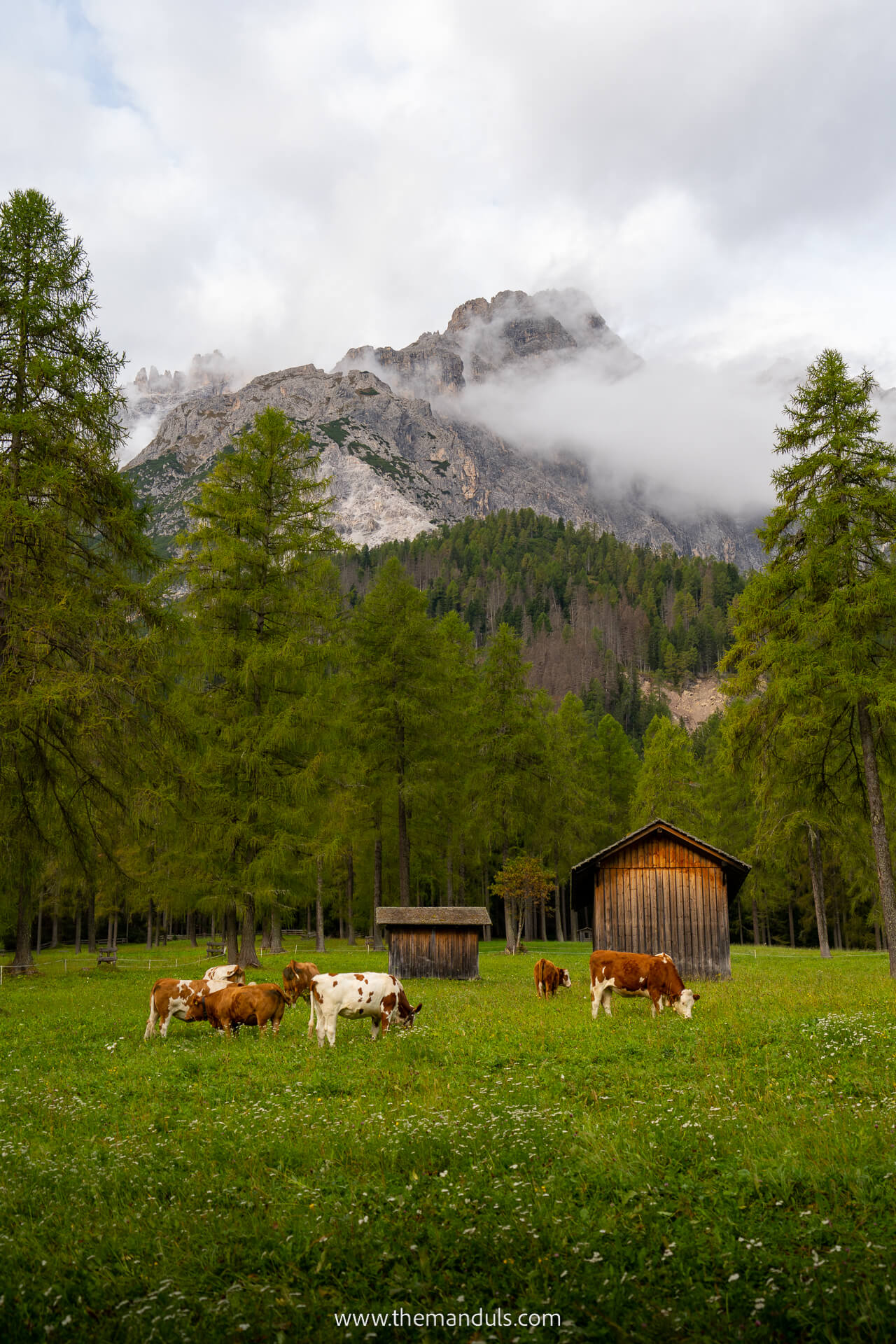
Parking in the Dolomites is usually quite straightforward, but it can become challenging at the most popular attractions and trailheads, especially during the summer hiking season.
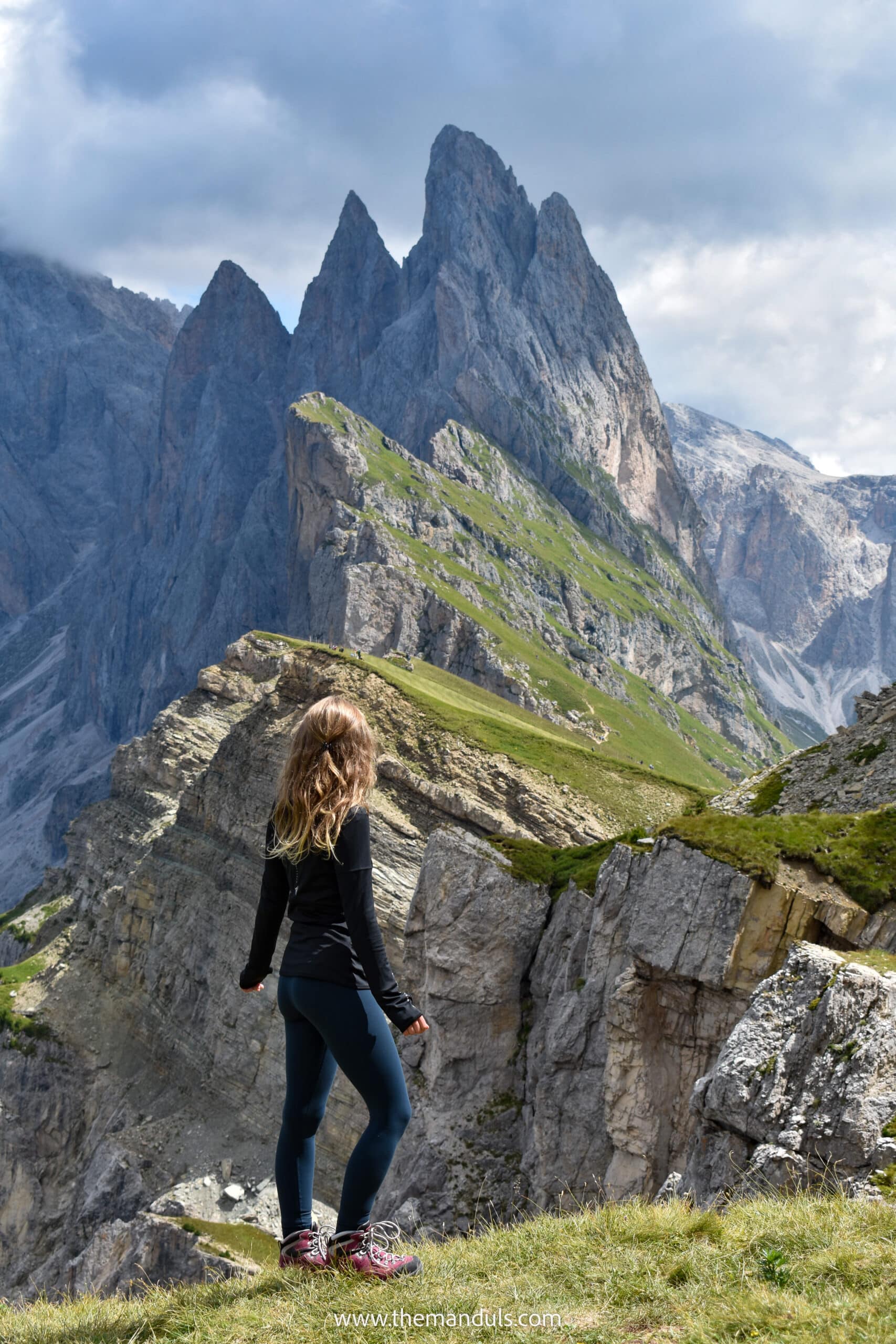
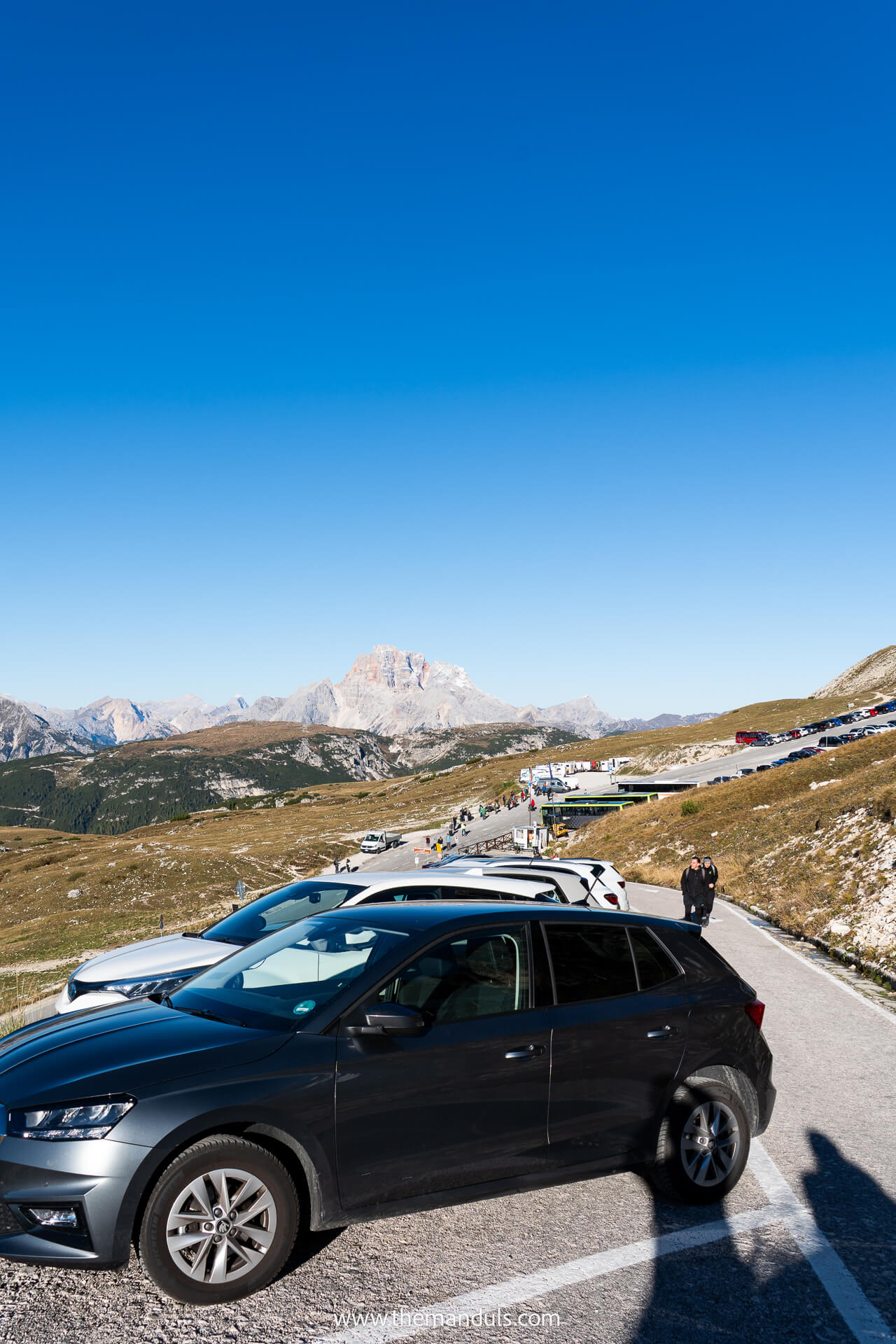
Places like Lago di Braies, Tre Cime di Lavaredo, Seceda cable car stations, or Passo Giau can fill up surprisingly early in the morning. On busy days, some parking lots are already full by 8–9 AM, so arriving early makes a big difference.
Most official parking areas near hiking trails or viewpoints are paid parking lots, typically costing around €5–€10 per day, depending on the location. We usually paid in a machine with card, but having cash is always a good idea.
In smaller villages and mountain passes, we sometimes found free roadside parking. But always check the signs carefully to avoid restricted zones or private parking areas.
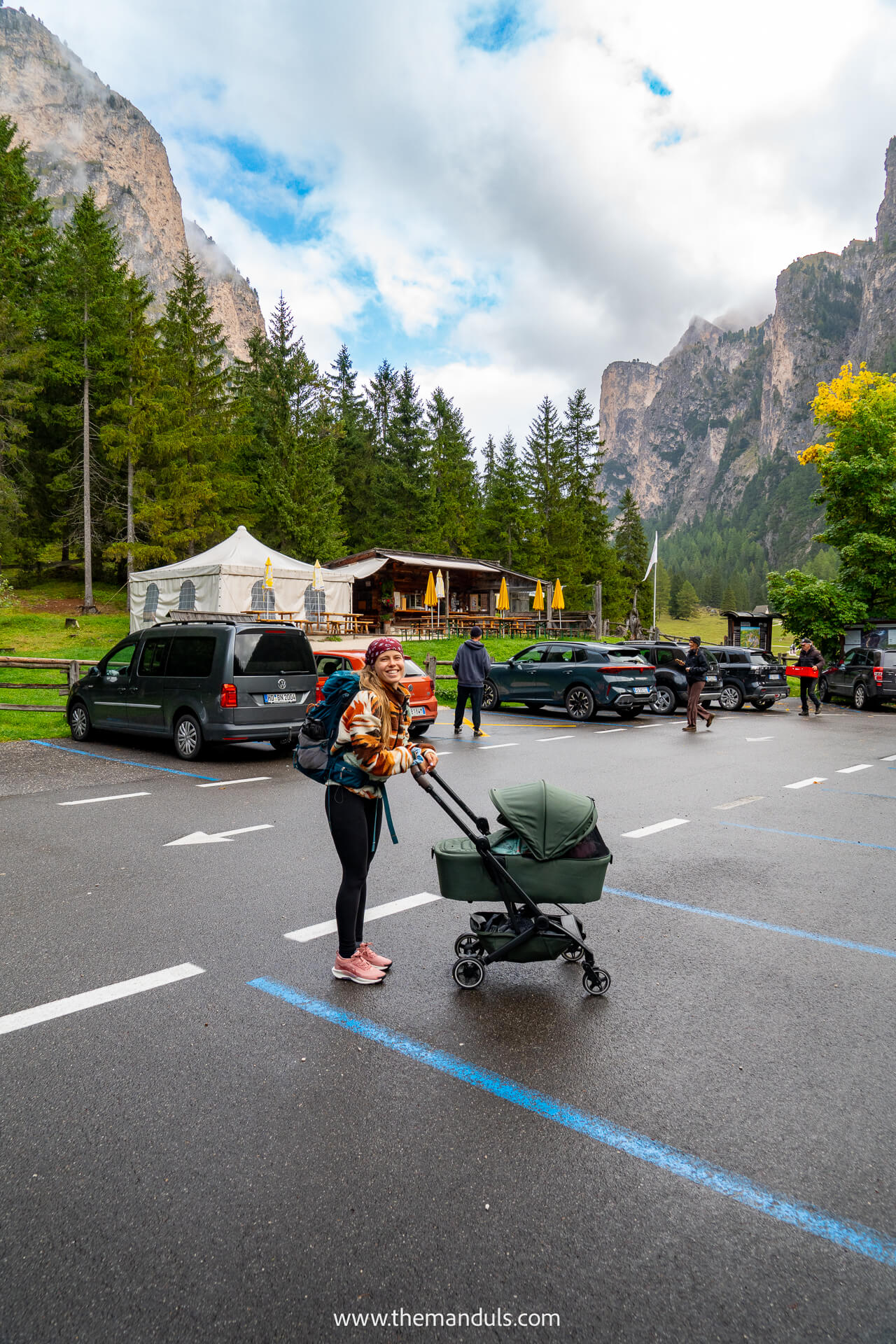
Another thing we noticed is that parking spaces can be quite tight, especially in mountain villages or near cable cars. This is another reason why renting a smaller car can make driving much easier.
Toll & Road Fees
Most mountain roads in the Dolomites are free to drive.
However, if you use Italian highways (Autostrade) you’ll need to pay a toll. These highways operate on a ticket system. When entering the motorway, you take a ticket from the machine, and when exiting, you pay based on the distance traveled.
Child Seats: What You Need to Know
Legal Requirements
In Italy, children under 150 cm in height or under 12 years old must use an appropriate child restraint system when traveling in a car. This can be a rear-facing seat for babies, a forward-facing seat for toddlers, or a booster seat for older children.
The seat must match the child’s weight and height, and it’s the driver’s responsibility to ensure it’s installed correctly.
Renting vs. Bringing Your Own
Most car rental companies offer child seats and booster seats at an extra fee (5-10€ per day). When using DiscoverCars, you have the option to add a child seat (or other extras) in the first step.
While convenient, prices add up, and seats may not be the newest or crisply clean. Bringing your own seat ensures comfort, familiarity, and hygiene for your child.
Alternative Transport for Non-Drivers
If you don’t plan to rent a car, it’s still possible to explore the Dolomites using public transport and cable cars.
The region has a well-developed bus network, connecting most major towns, mountain passes, and cable car stations. During the main hiking season, buses run frequently and are generally reliable.
However, relying entirely on buses means you’ll need to plan around their schedules, which might not always be ideal.