
This article contains affiliate links. Learn more in our affiliate disclosure.
Dotonbori in Osaka, Japan, is one of those places that almost everyone ends up visiting — neon signs, endless street food, packed crowds, and a very loud first impression. It’s famous for a reason, but it’s also one of the most debated spots in the city. Some people love the energy, others leave feeling overwhelmed.
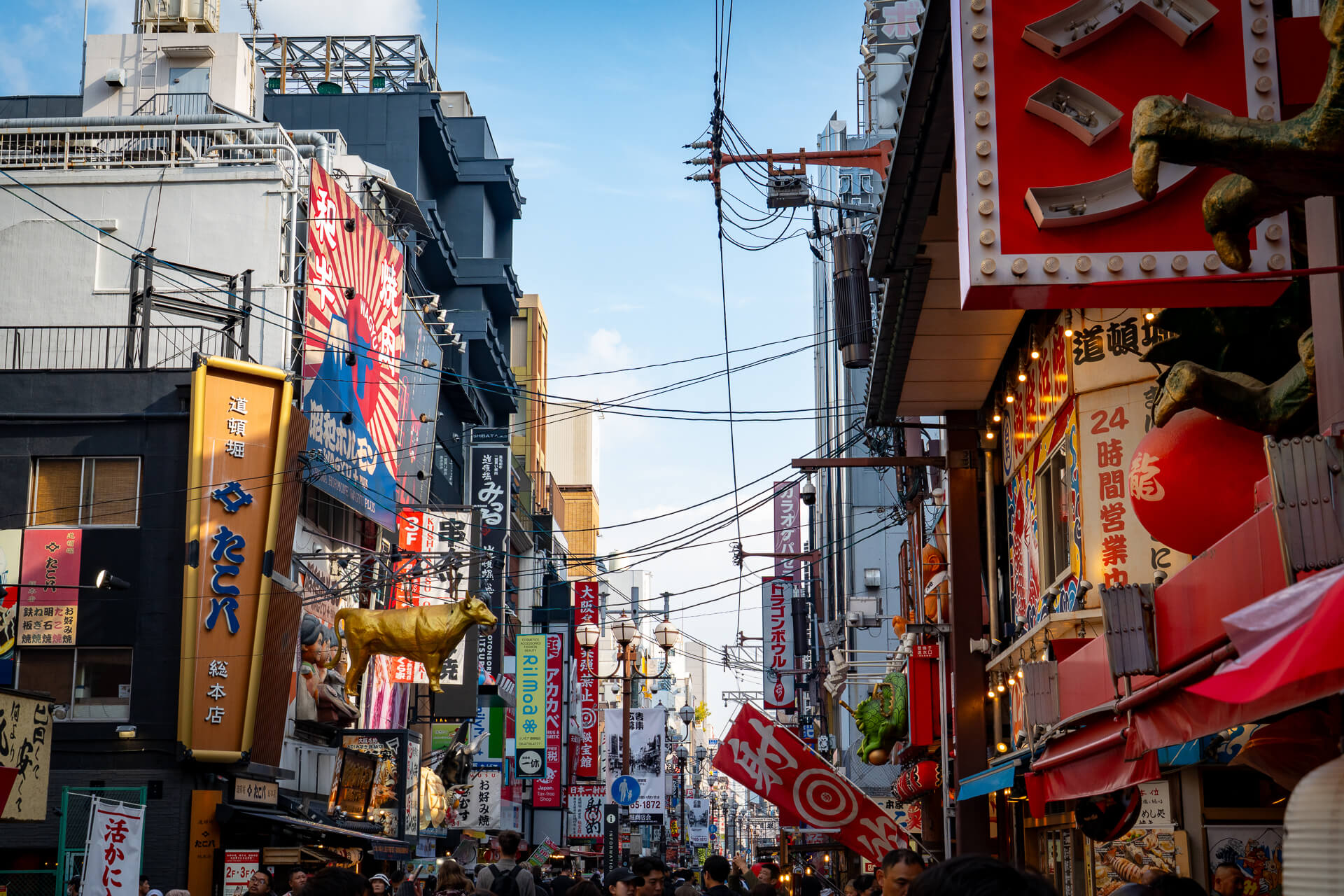
We personally couldn’t wait to walk along the canal for the first time — surrounded by flashing neon lights, larger-than-life signs like the giant crab and the iconic Glico man, and that unmistakable buzz that makes Dotonbori feel alive from the very first step.
It’s chaotic, colourful, and over the top — and that’s exactly what makes it special.
We experienced Dotonbori both during the day and later in the evening, and honestly, seeing it transform after dark completely won us over. By the end of our visit, we’d fully fallen in love with the place.
In this guide, we’ll share what Dotonbori is really like, what’s worth doing and eating, what to skip, and how it fits into your Osaka itinerary — and if you’re planning more sightseeing, you can also check our full things to do in Osaka guide to help you plan the rest of your time in the city.
In a hurry?
These are our top hotels in Osaka we’d book again
⭐️⭐️⭐️ Citadines Namba Osaka (our top pick) – A reliable mid-range hotel right in Namba with spacious studio-style rooms, and an easy walk to Dotonbori.
👉 See prices & availability →
⭐️⭐️ Osaka Marriott Miyako Hotel – Luxury hotel in Tennoji with high-floor rooms and sweeping city views. Ideal if you want comfort, space, and a calmer area.
👉 See prices & availability →
⭐️ Lespedeza Osaka – A simple, budget-friendly option in Tennoji offering basic comfort and quieter nights.
👉 See prices & availability →
Where Is Dotonbori
Dotonbori is located in the heart of Osaka, right next to Namba, one of the city’s main transport hubs and entertainment districts. It runs along the Dotonbori Canal, between Namba Station and Shinsaibashi, making it incredibly easy to reach no matter where you’re staying in the city.
📍Save the location to your Google Maps.
Why It’s Famous
Dotonbori is famous for being Osaka’s most iconic entertainment and food district, a place where the city’s lively personality is on full display.
For centuries, this area has been associated with theatre, nightlife, and indulgence — long before it became a neon-lit hotspot for street food and photos.
The district dates back to the early 1600s, when the Dotonbori Canal was constructed to support Osaka’s growing commercial activity. Soon after, the area developed into a theatre quarter, filled with kabuki and puppet theatres that attracted crowds from across the city.
Even though most of those theatres are gone today, the spirit of entertainment never really left.
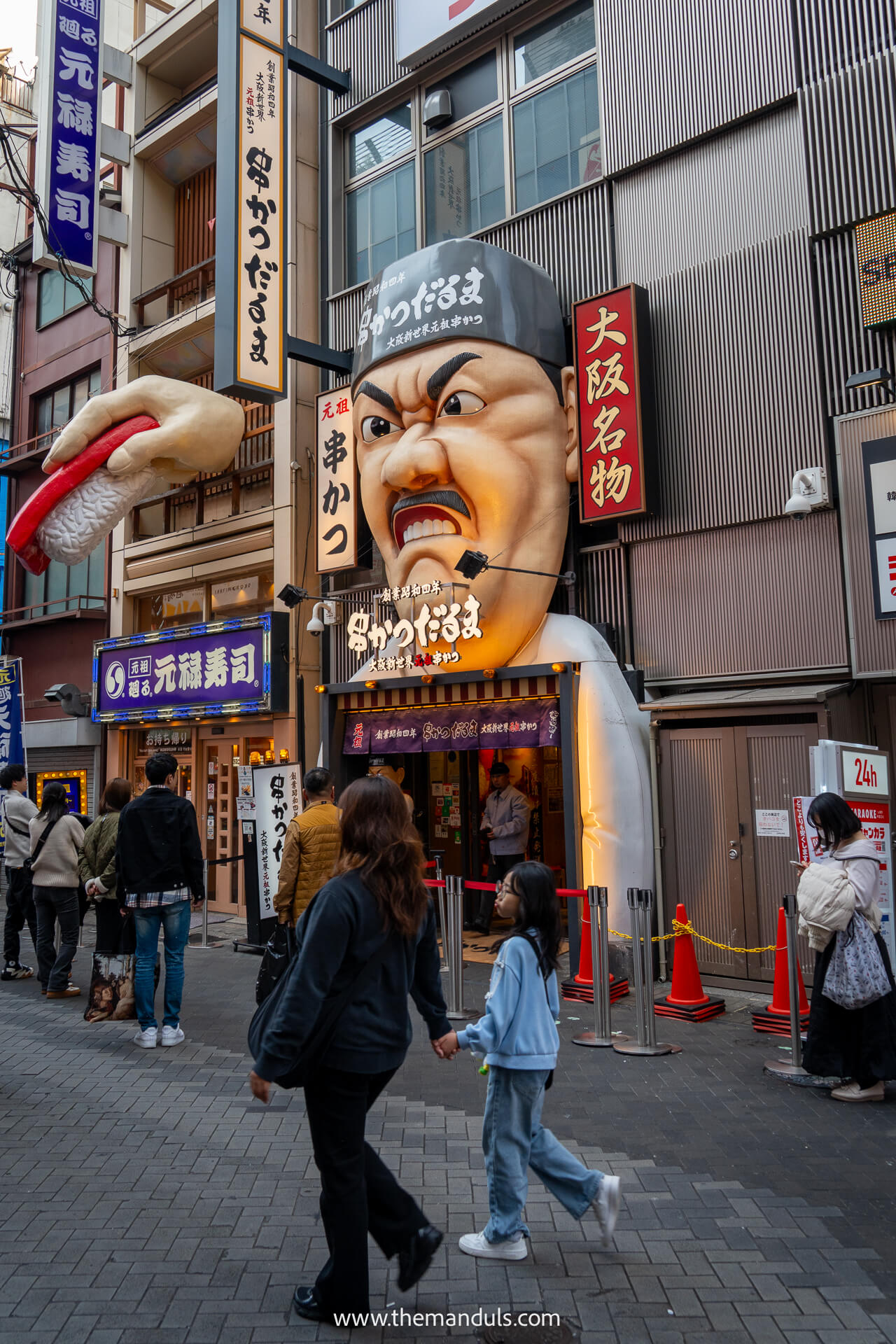
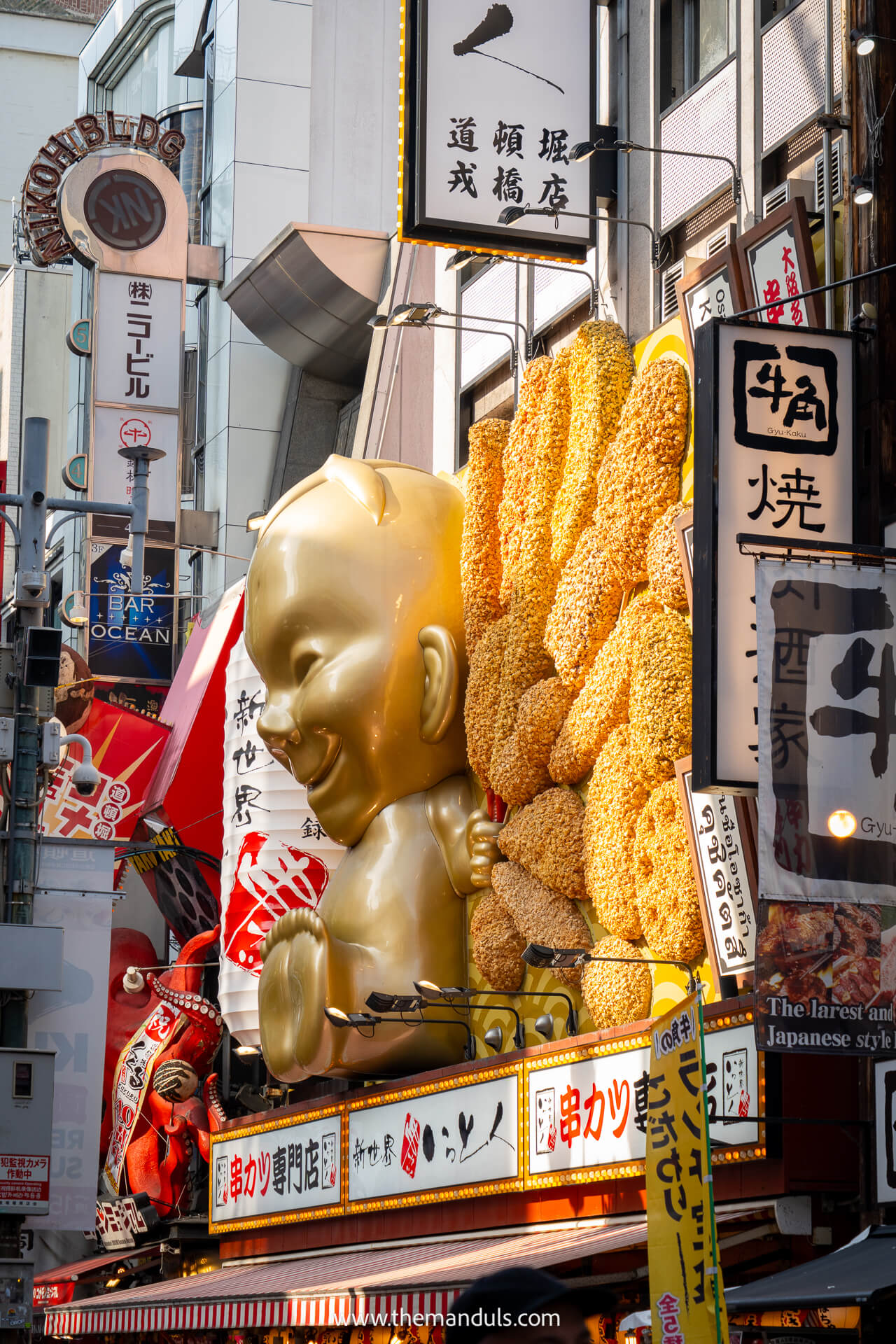
What truly made it world-famous are its larger-than-life signboards — the giant crab, the running man, and countless animated, over-the-top restaurant façades designed to grab your attention instantly.
They reflect Osaka’s long-standing culture of food and fun, often summed up by the local saying “kuidaore” — roughly meaning eat until you drop. That mindset still defines the city today and explains why it remains one of the most memorable places to visit.
Things to Do in Dotonbori
1. Walk along the Dotonbori Canal
This was the very first thing we did in Dotonbori. We just walked along the canal, stopped whenever something caught our eye, and let the noise, lights, and movement pull us in.
What stood out most was how alive everything felt. Boats passing below, people leaning over the railings taking photos, the smell of food coming from every direction — it’s chaotic, but also exciting at the same time.
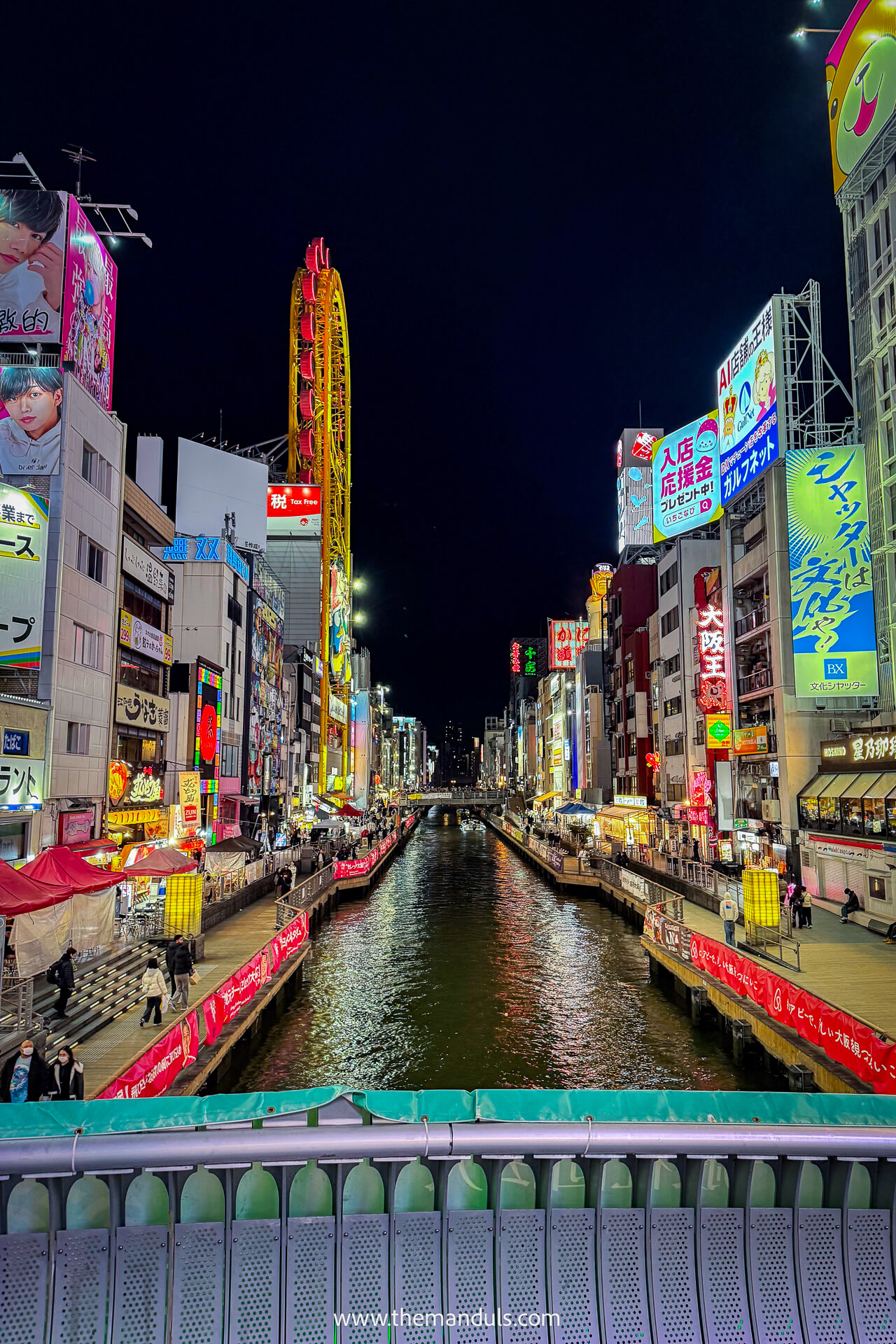
In the daytime, it was easier to look around and notice details; in the evening, the same walk felt completely different, with the reflections of neon lights dancing on the water.
If you have enough time, we’d recommend visiting this area both during the day and night.
2. Cross Ebisu Bridge (and soak in the views)
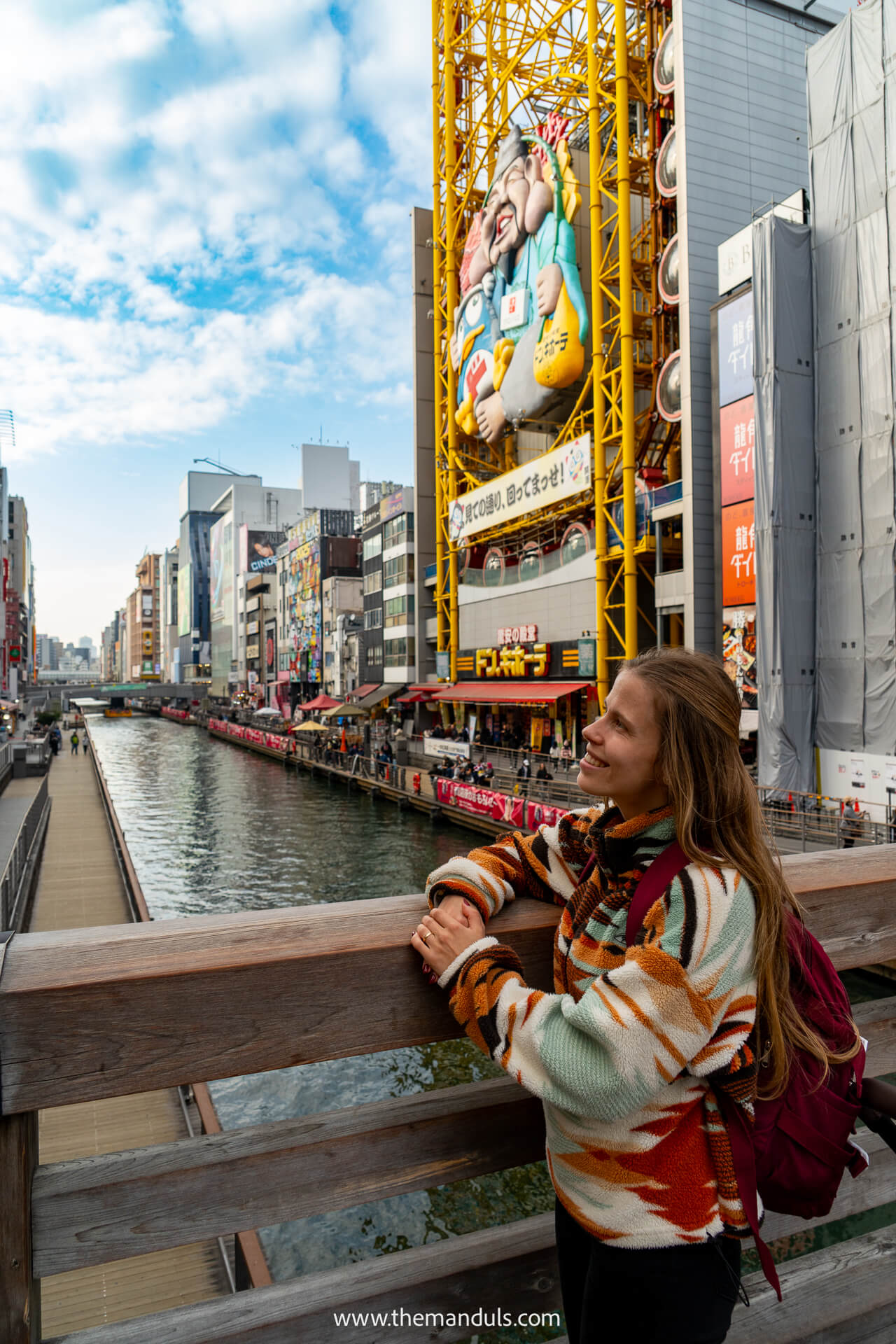
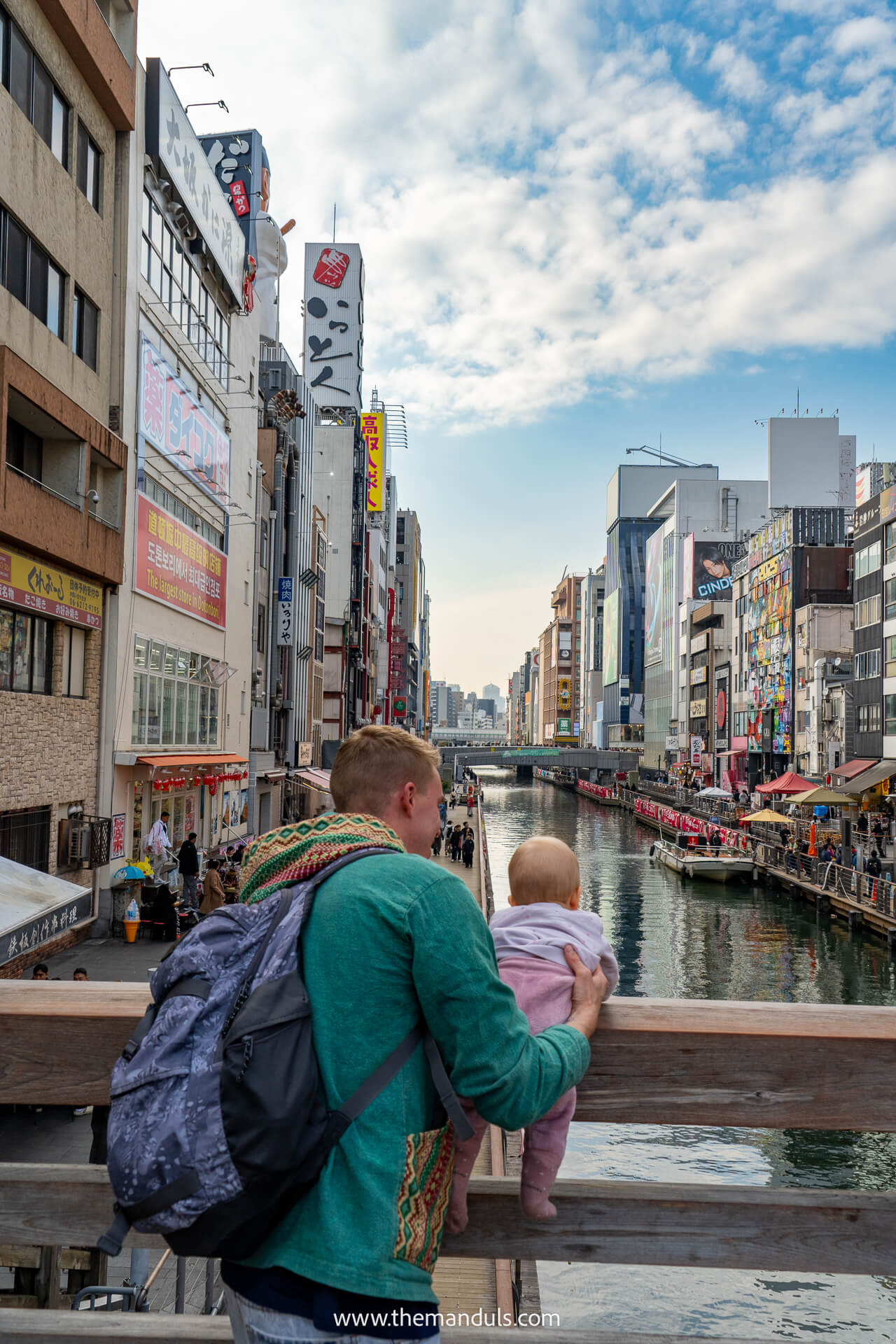
Ebisu Bridge is the main pedestrian bridge over the Dotonbori Canal and one of the most recognisable spots in the area. It connects the busiest parts of Dotonbori and sits right in front of the famous running man sign, which is why almost everyone ends up here at some point — whether they plan to or not.
From the middle of the bridge, you get one of the best overall views of Dotonbori: the canal below, boats passing through, and layers of neon signs.
3. Take a Dotonbori River Cruise
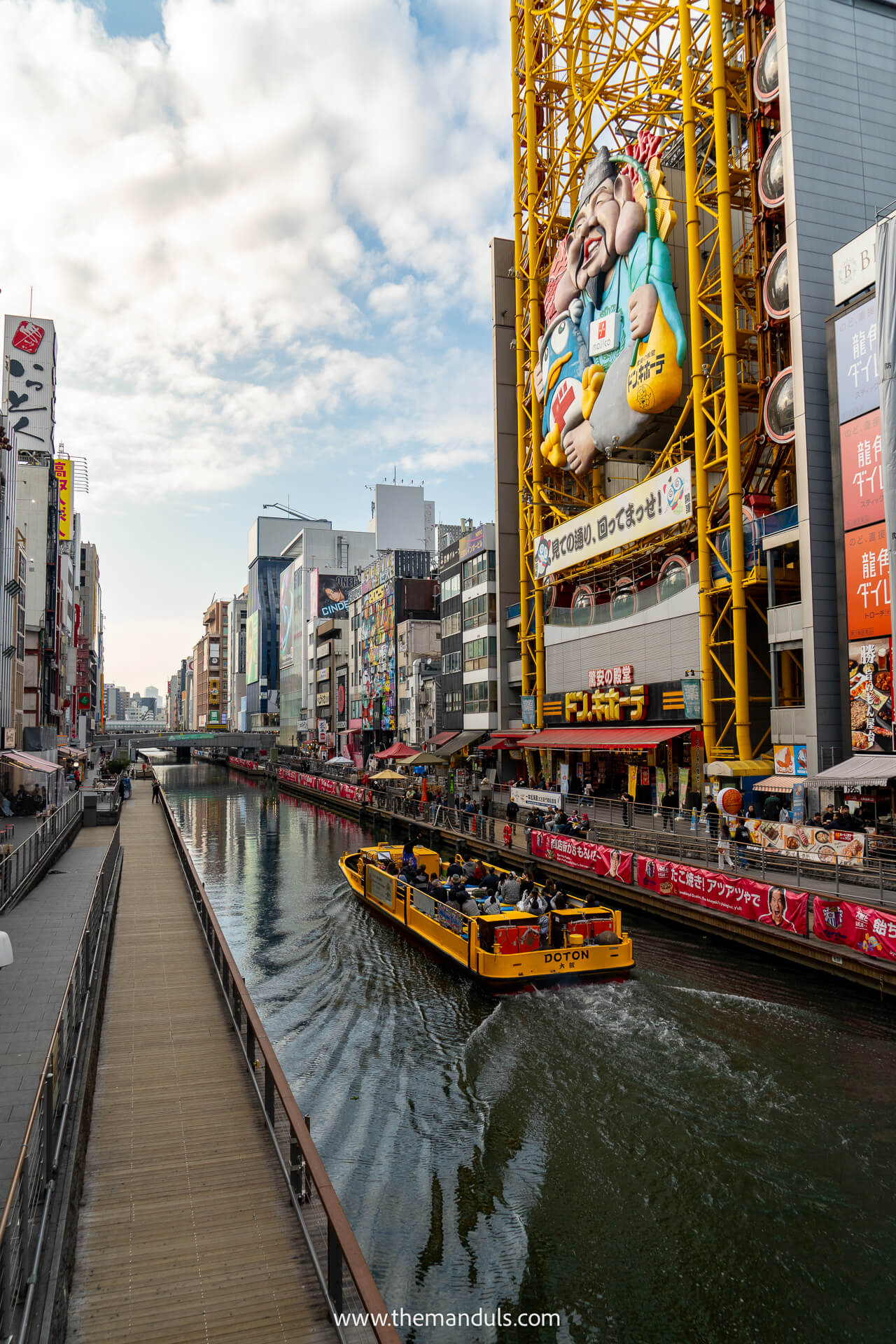
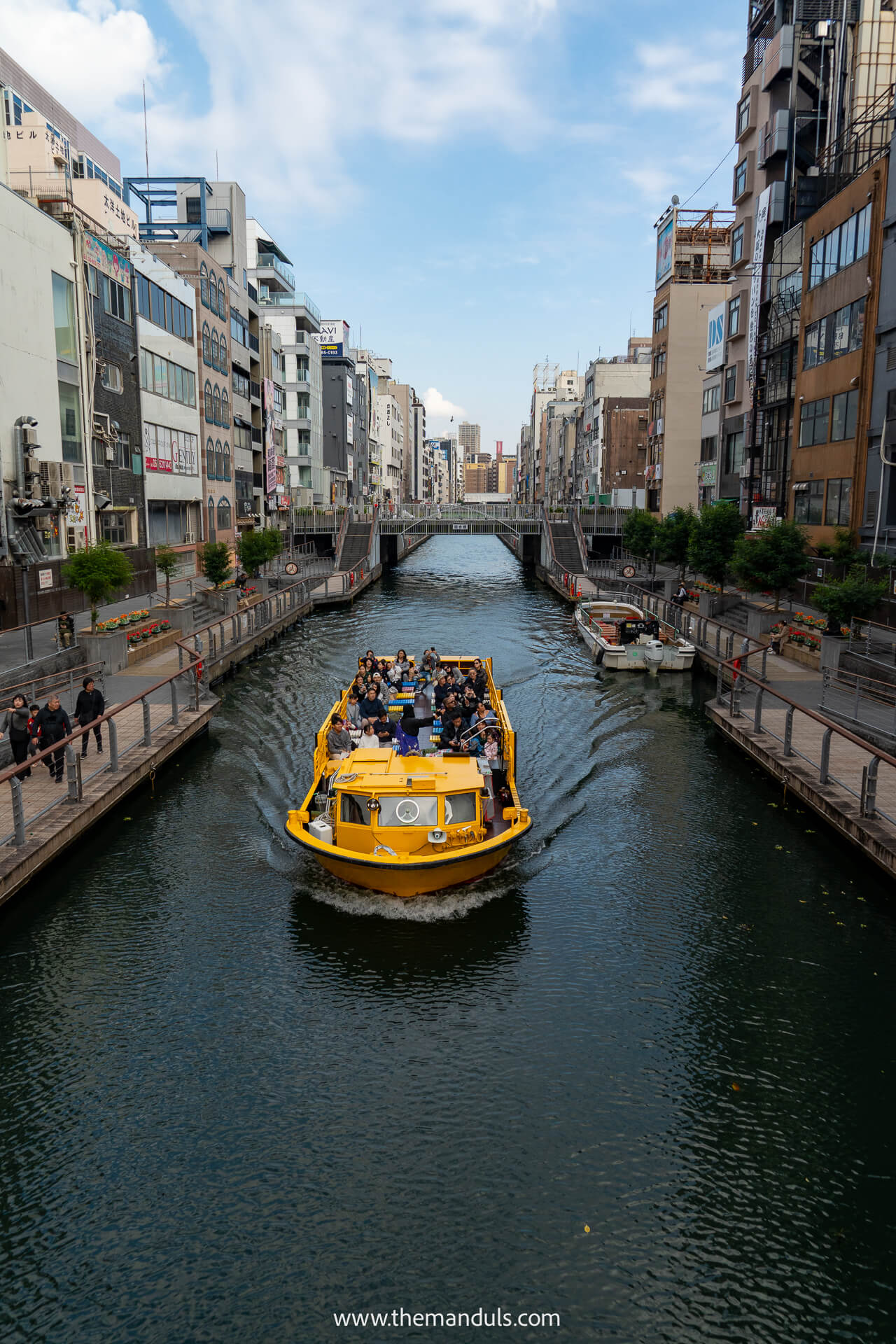
We didn’t personally take the river cruise, but after spending time walking along the canal and watching the boats pass by, it’s easy to see why this is such a popular way to experience Dotonbori — especially if you want a break from the crowds.
The cruise runs directly along the Dotonbori Canal, giving you front-row views of the neon signs, bridges, and restaurants from the water. It’s short and easy to fit into your itinerary, and from what we observed, it offers a calmer, more relaxed perspective.
If it’s something you’re considering, this Dotonbori River Cruise is a convenient and well-reviewed option to book in advance — especially during busy seasons when spots can fill up quickly.
Book your Dotonbori River Cruise here with free cancellation up to 24 hours in advance.
4. Photograph the famous signs
This is the part of Dotonbori we were most excited about — and it still managed to exceed expectations. Seeing the signs in person feels very different from seeing them online. They’re bigger, brighter, and way more playful than photos suggest.
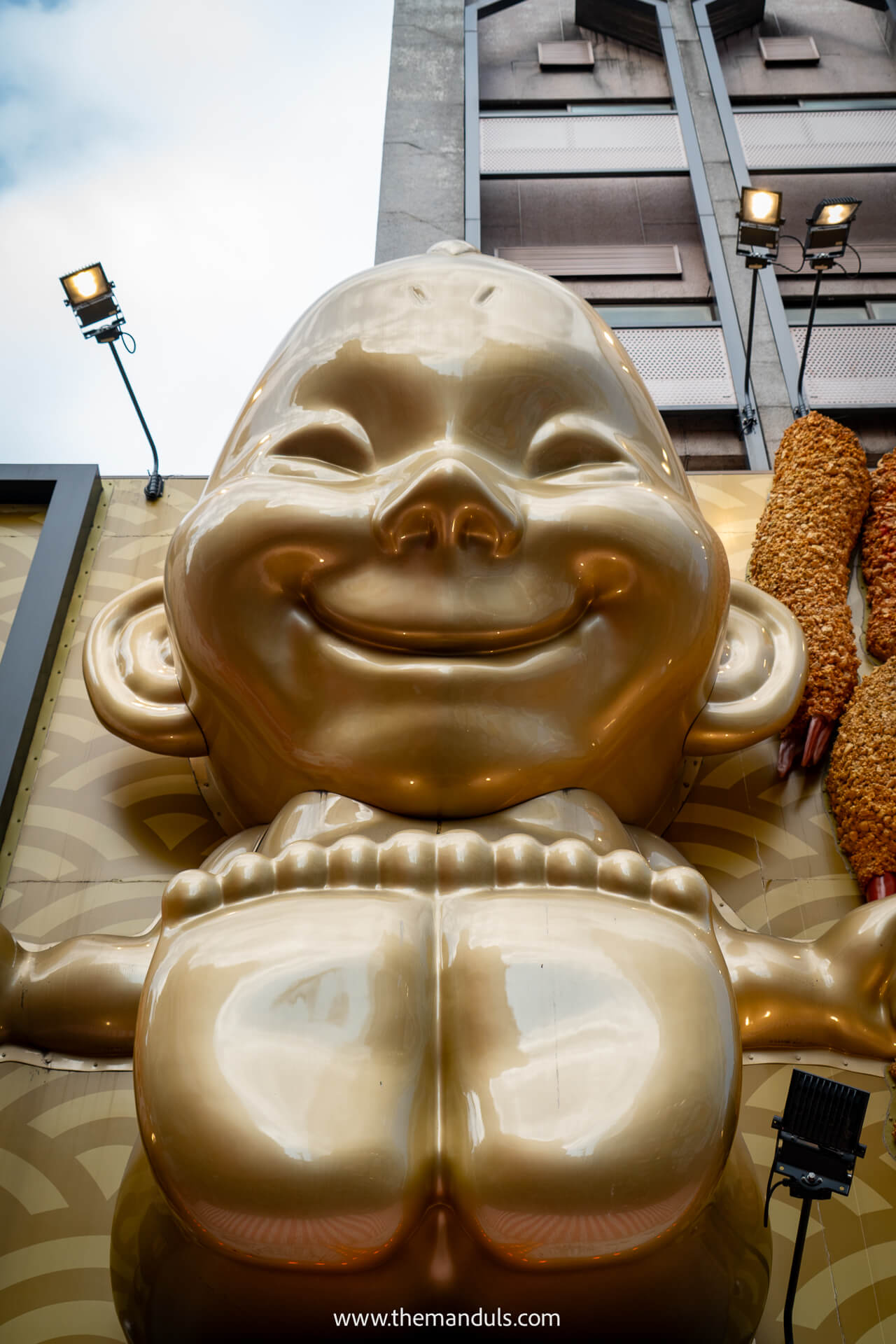
The most famous one is the Glico Running Man. It’s become a symbol of Osaka itself. The sign has been here in some form since the 1930s, and over the decades it’s turned into a popular meeting point, celebration spot, and photo spot for millions of visitors.
Then there’s the giant crab from Kani Doraku. We knew it was big, but seeing it move above the street, right over the crowds, made it impossible to ignore.
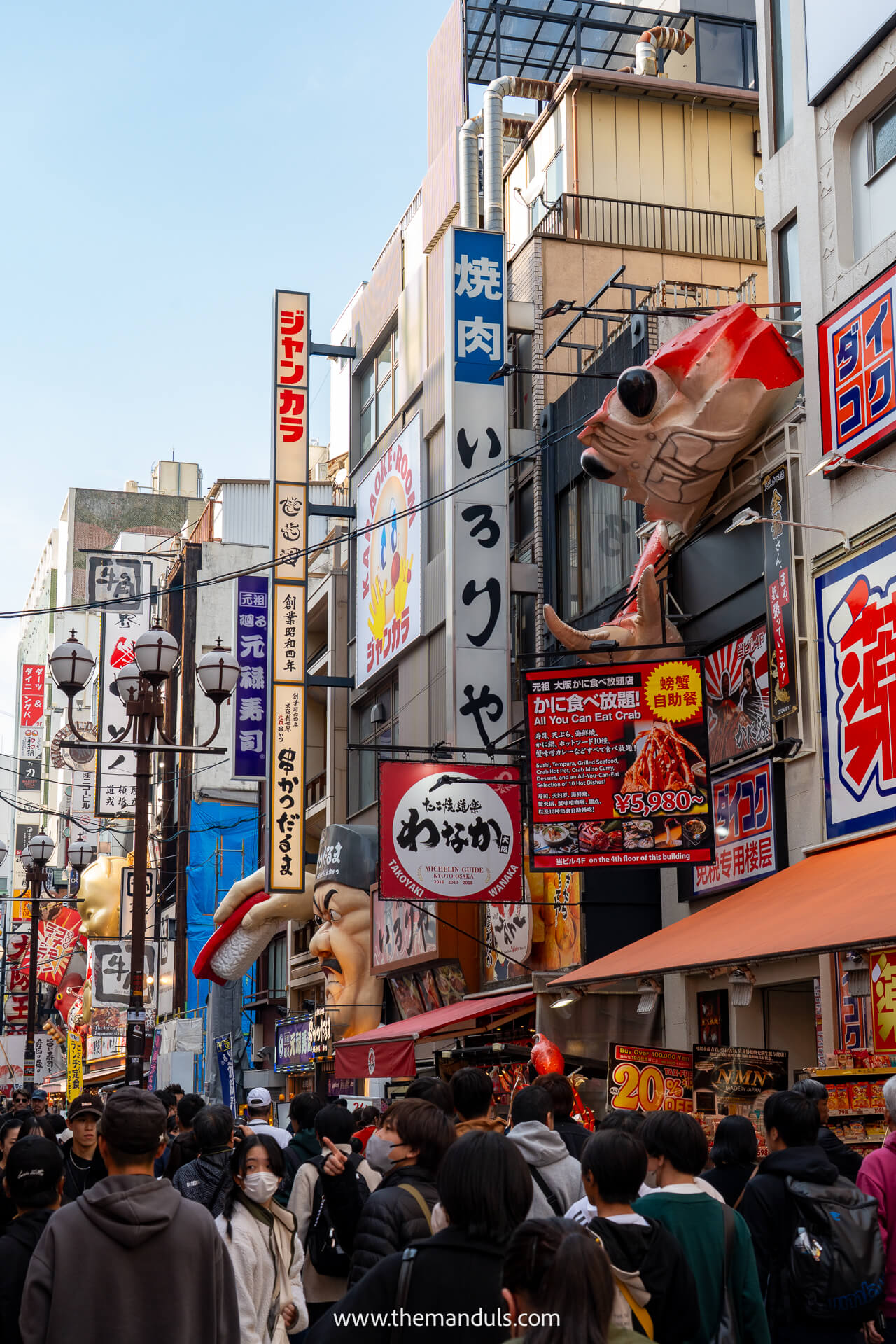
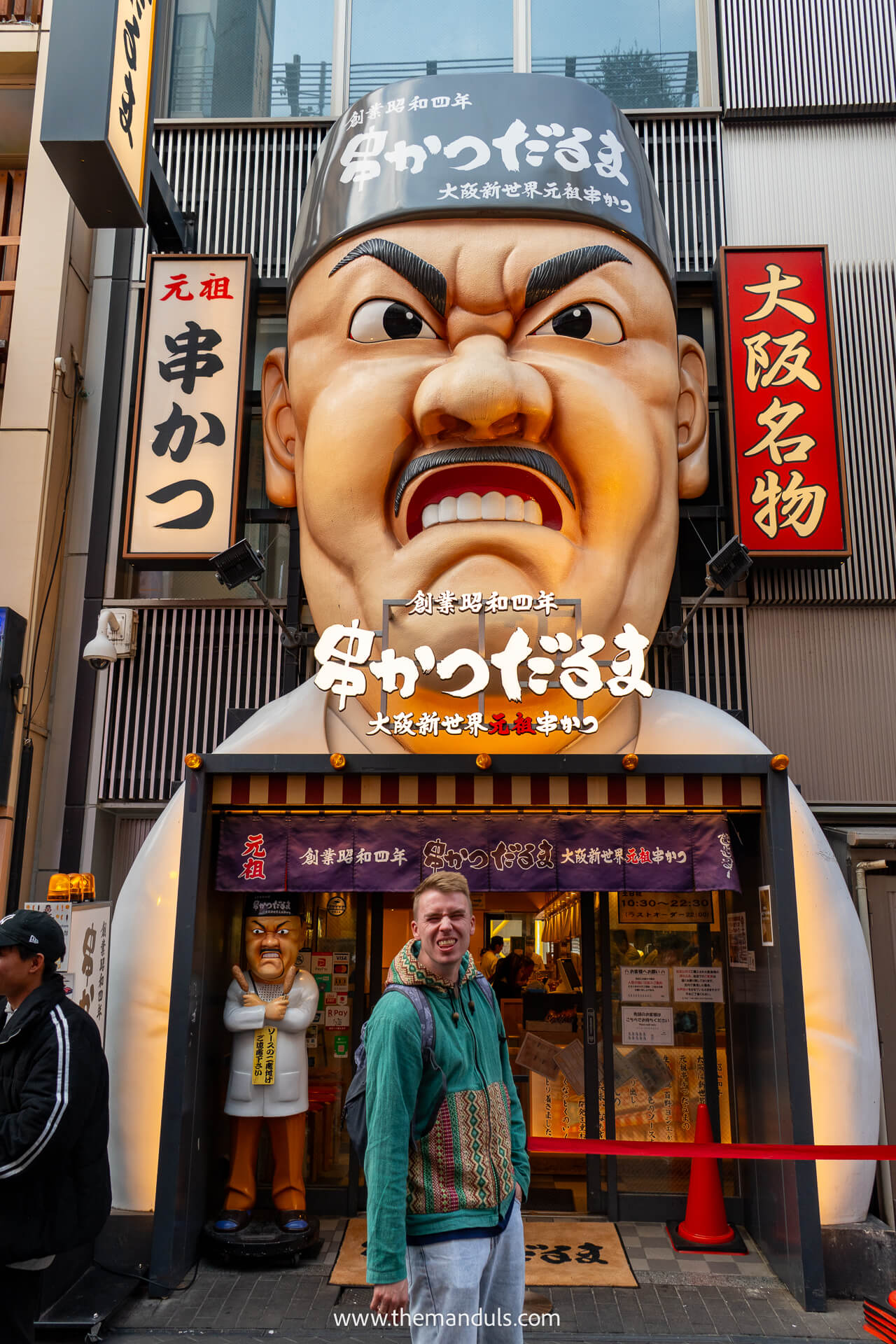
We also loved the funny face at Kushikatsu Daruma, one of the most recognisable local food chains. Even if you don’t eat there, the storefront is part of the visual experience and adds to the experience.
Our favourite time for photos was early evening — when the signs are fully lit but the crowds haven’t peaked yet.
Our Japan Google Maps
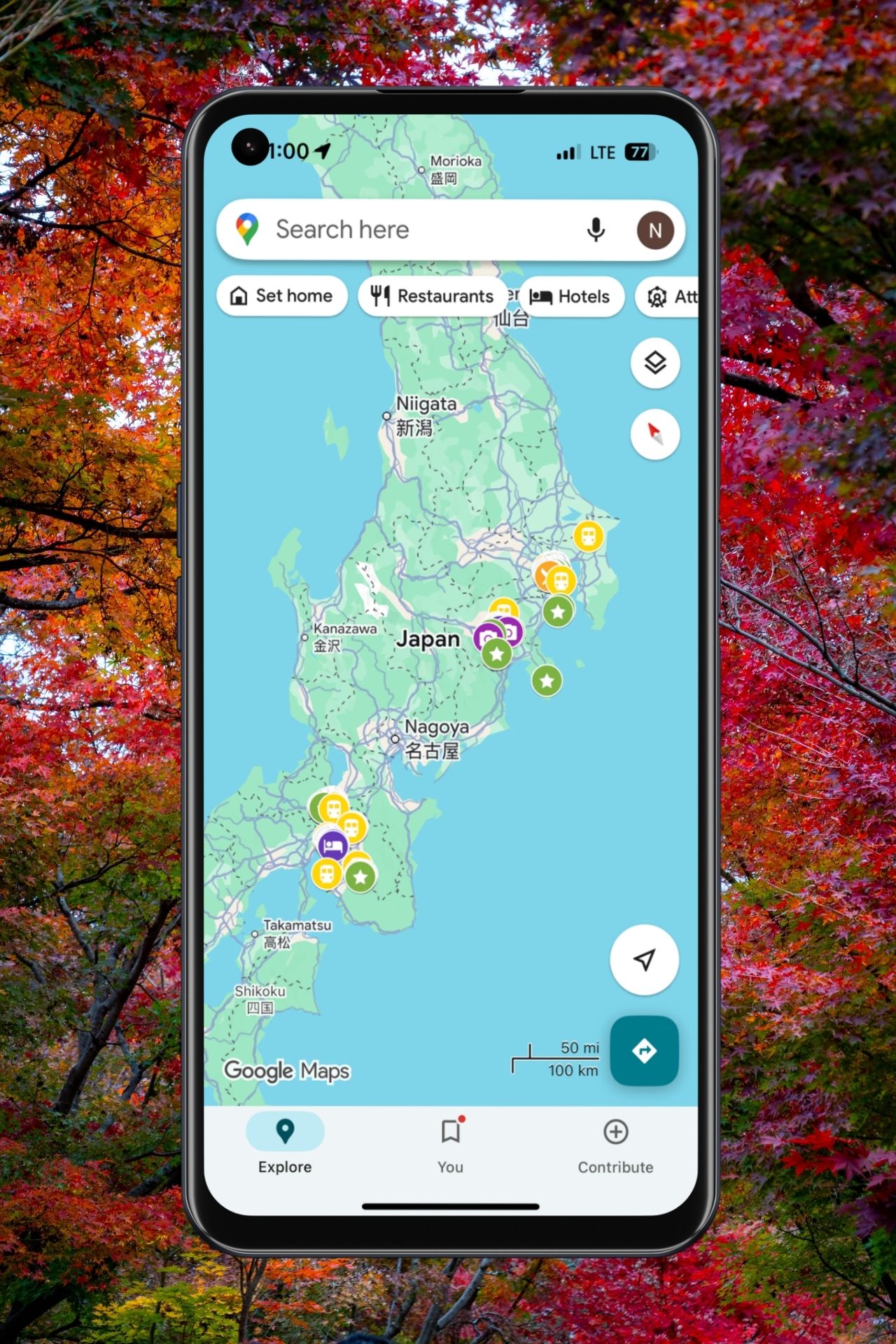
Built from our real trips across Japan — only places we actually visited and loved.
No tourist traps. No random saves. Just a ready-to-use map that saves you hours of research.
219 handpicked spots, including:
📍 Highlights & hidden gems
🍜 Restaurants we’d go back to
🏨 Areas & hotels we’d book again
🗺️ Stops that fit into real, logical itineraries
5. Play arcade games
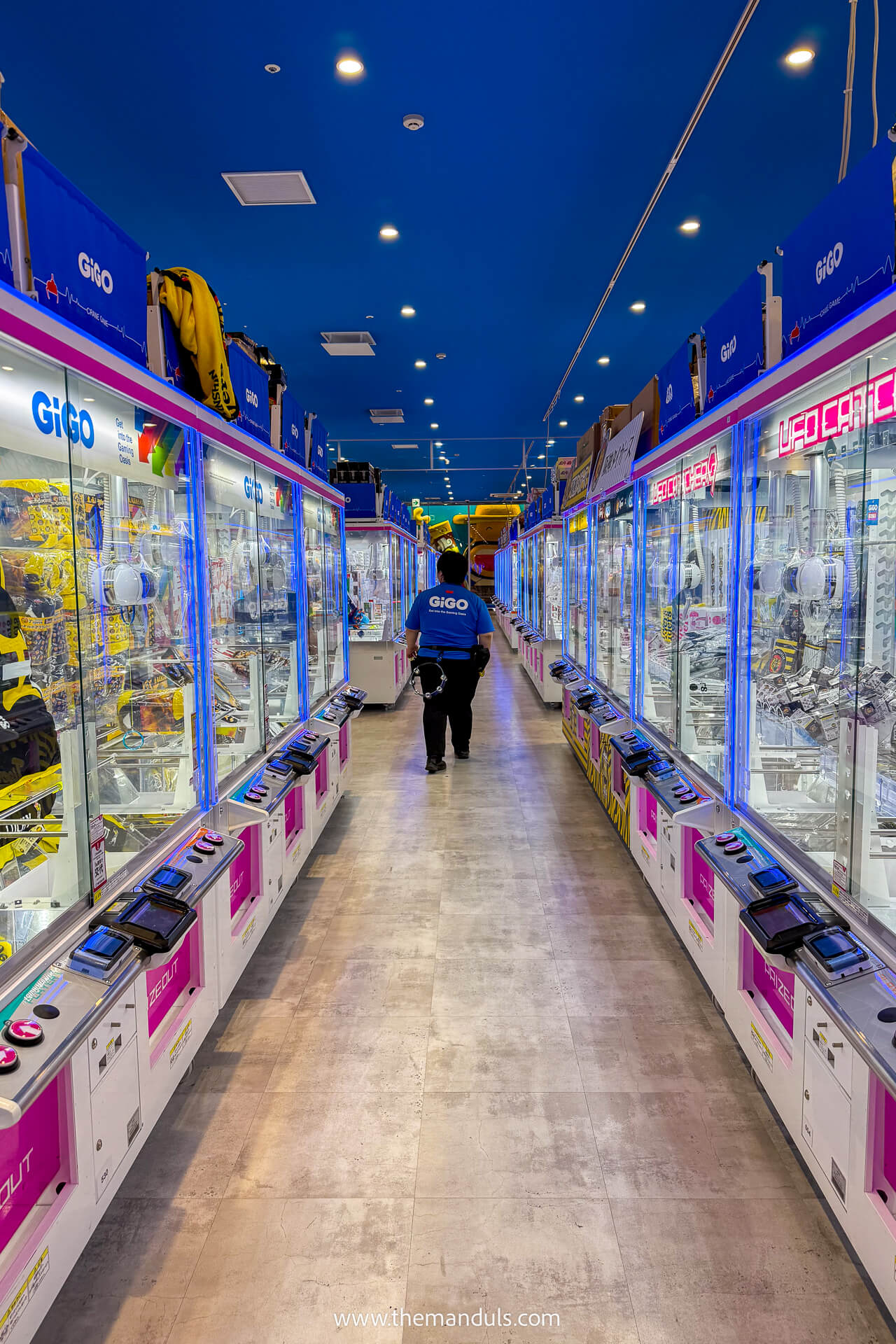
We almost skipped the arcades after losing a few times in Tokyo, but it turned out to be a good choice. The key is choosing the right machine. We recommend looking for claw games marked with “easy win” signs — they’re usually written in Japanese, and while they often cost a bit more per try, they really do make a difference.

That’s exactly what we did at GiGO arcade, and it paid off fast. We won three times in a row and somehow walked out with seven huge plush toys.
One very practical tip if you get lucky like we did: stop by Daiso afterwards and grab a compression bag. It’s a simple solution, but it made taking our oversized prizes home so much easier.
Even if you don’t win anything, the arcades are worth popping into for the atmosphere alone. But with a bit of luck — and the right machine — you might leave Dotonbori with more souvenirs than you expected.
6. Explore Hozenji Yokocho
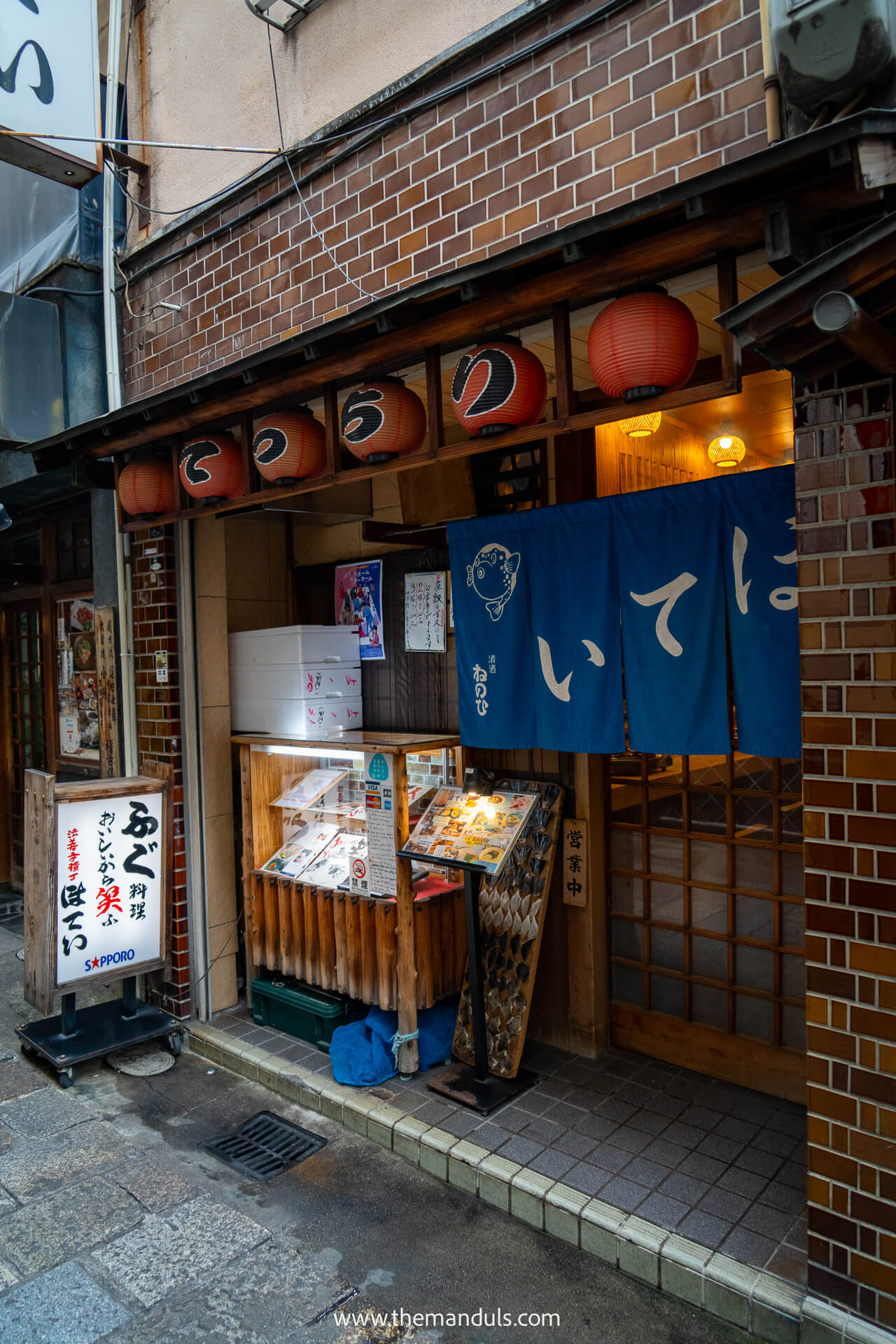
Hozenji Yokocho is a narrow, stone-paved alley tucked just behind the chaos of Dotonbori. It feels worlds apart from the neon and noise — quieter, more traditional, and surprisingly intimate for such a central location.
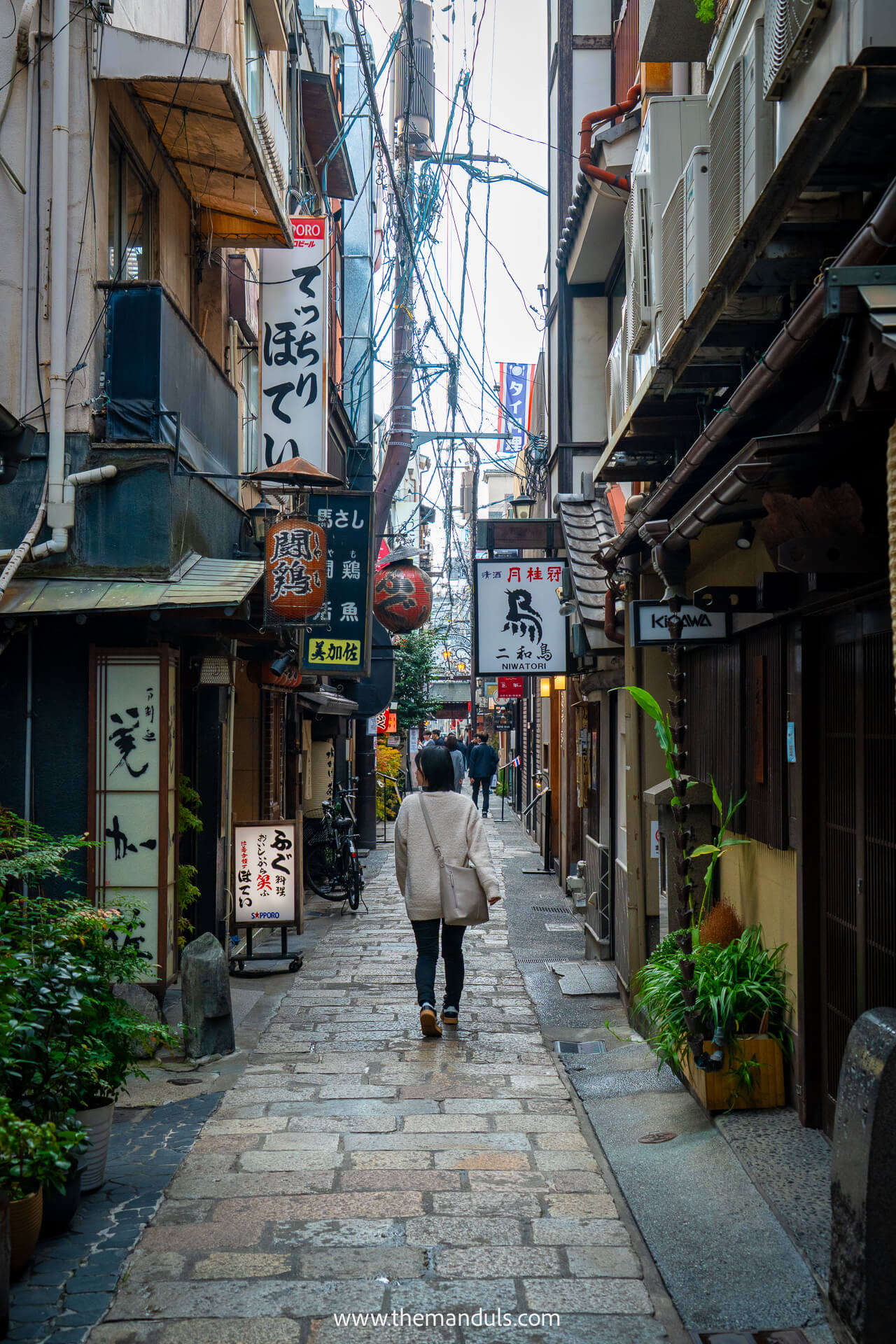
If you’ve been to Tokyo, the closest comparison is Omoide Yokocho, but Hozenji Yokocho feels calmer. You get lantern-lit façades, tiny bars, and small restaurants that look like they haven’t changed much in decades.
We’ll be honest — we timed our visit wrong and came in the afternoon, when almost everything was closed. But it was easy to imagine how different it must feel later on. In the evening, when the lights come on and the small bars and eateries open, this alley is a great stop.
7. Visit Hozen-ji Temple
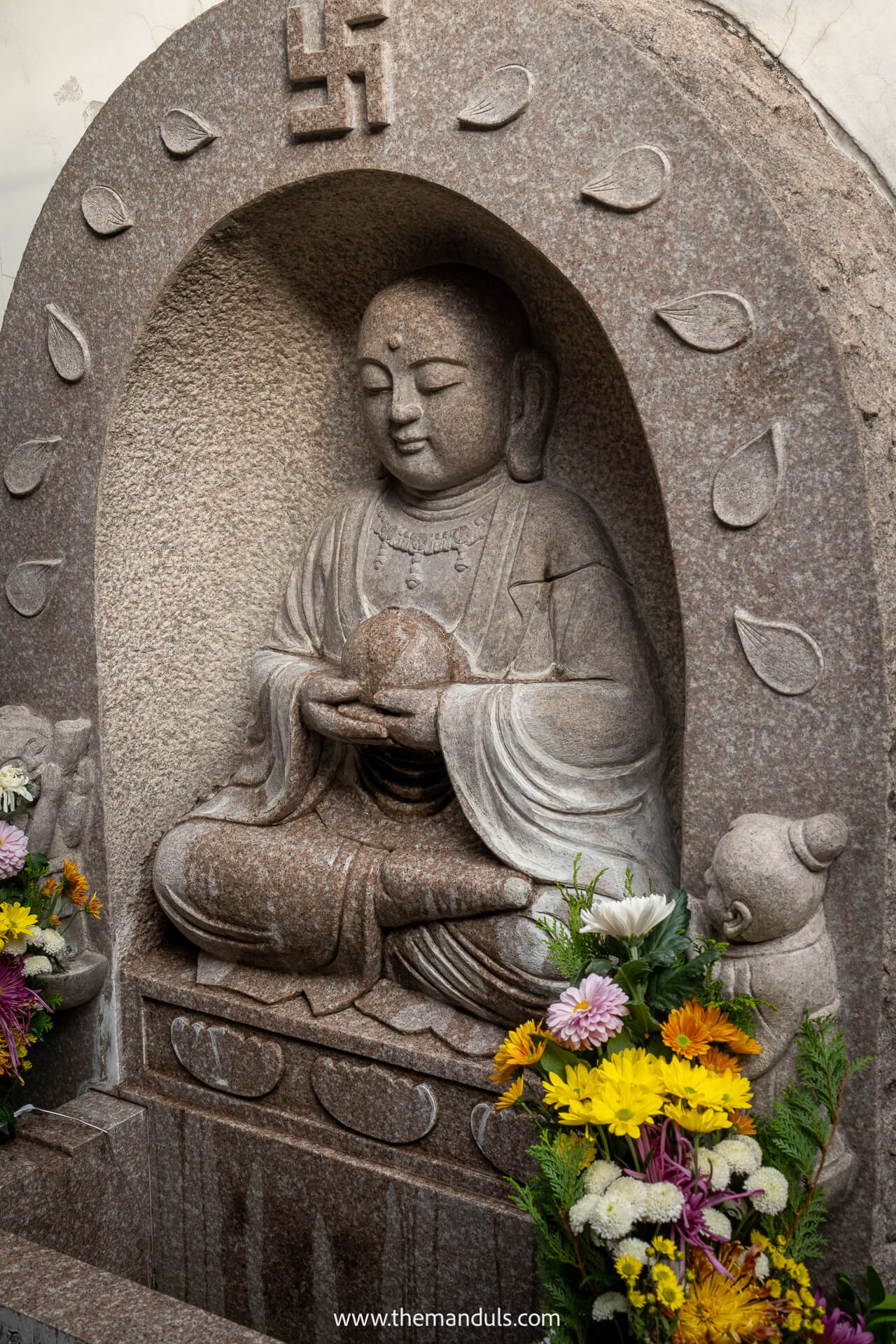
Just a few steps from Hozenji Yokocho, Hōzen-ji Temple is small and easy to miss, but that’s exactly what makes it special.
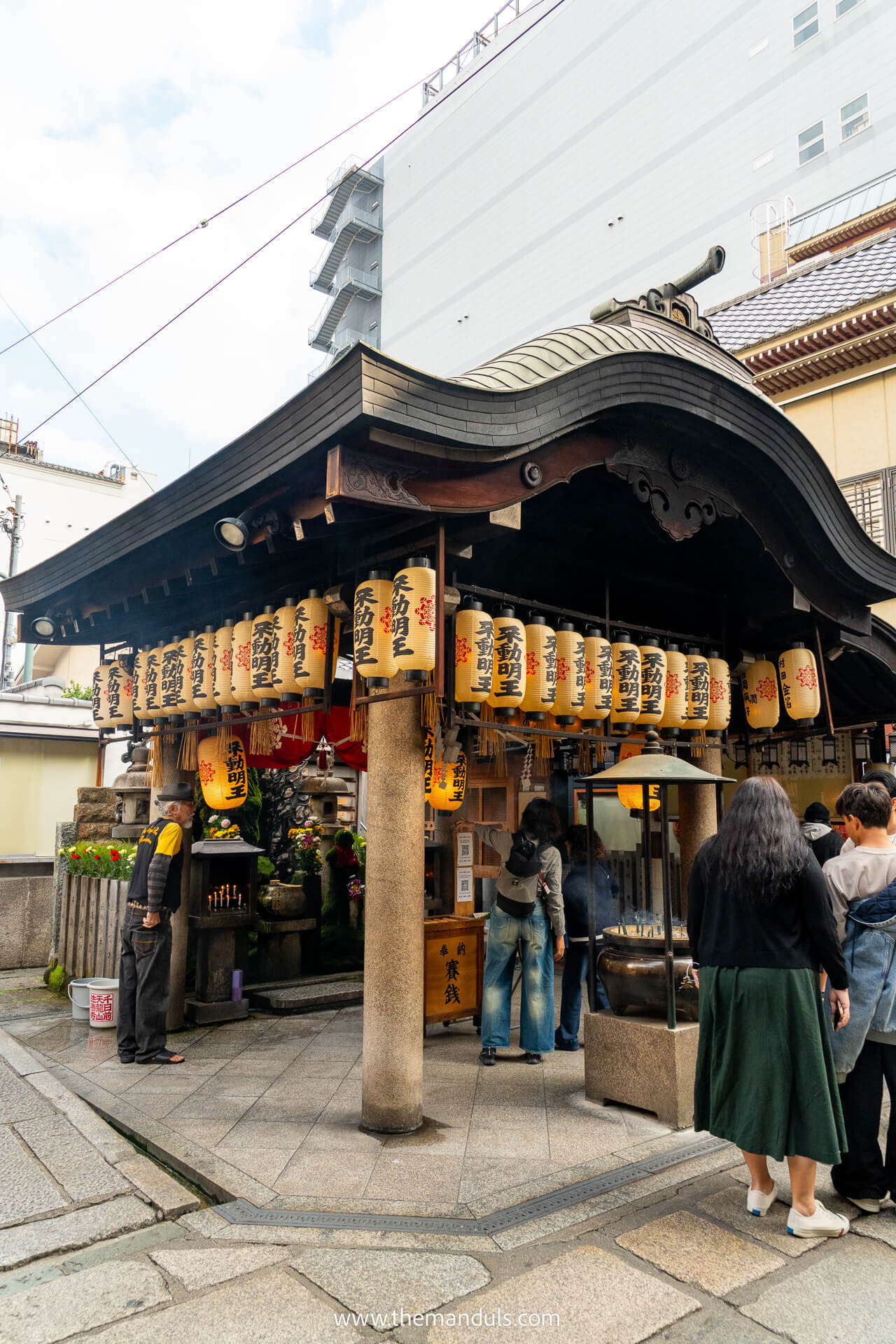
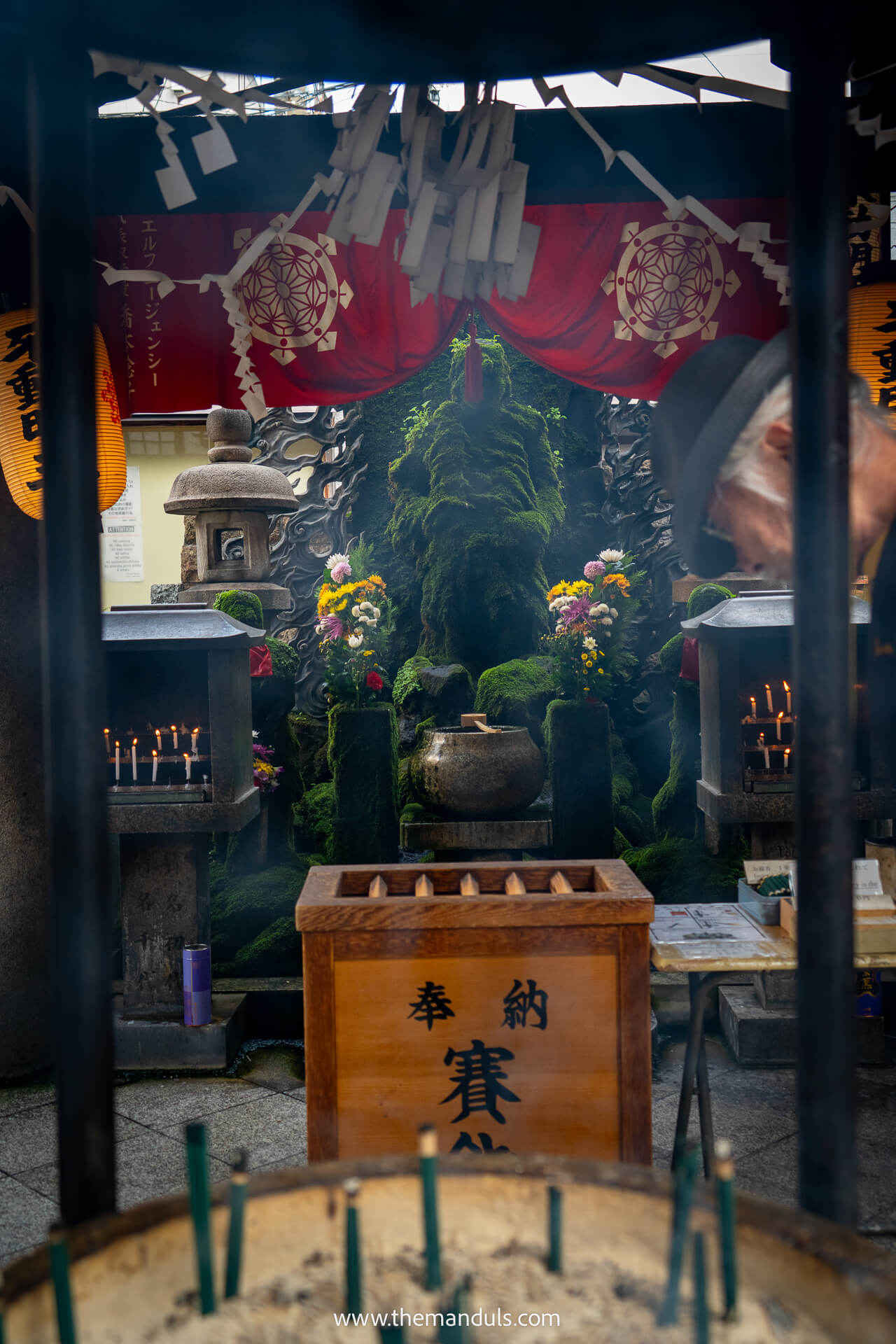
The first thing that caught our attention was the moss-covered Fudō Myōō statue. Visitors splash it with water as part of a local tradition, and over time it’s become completely covered in thick, green moss.
It felt surprisingly peaceful considering how close we were to one of Osaka’s busiest streets. We didn’t spend a long time here, but it was one of those places that’s worth a quick visit.
Best Street Food to Try in Dotonbori
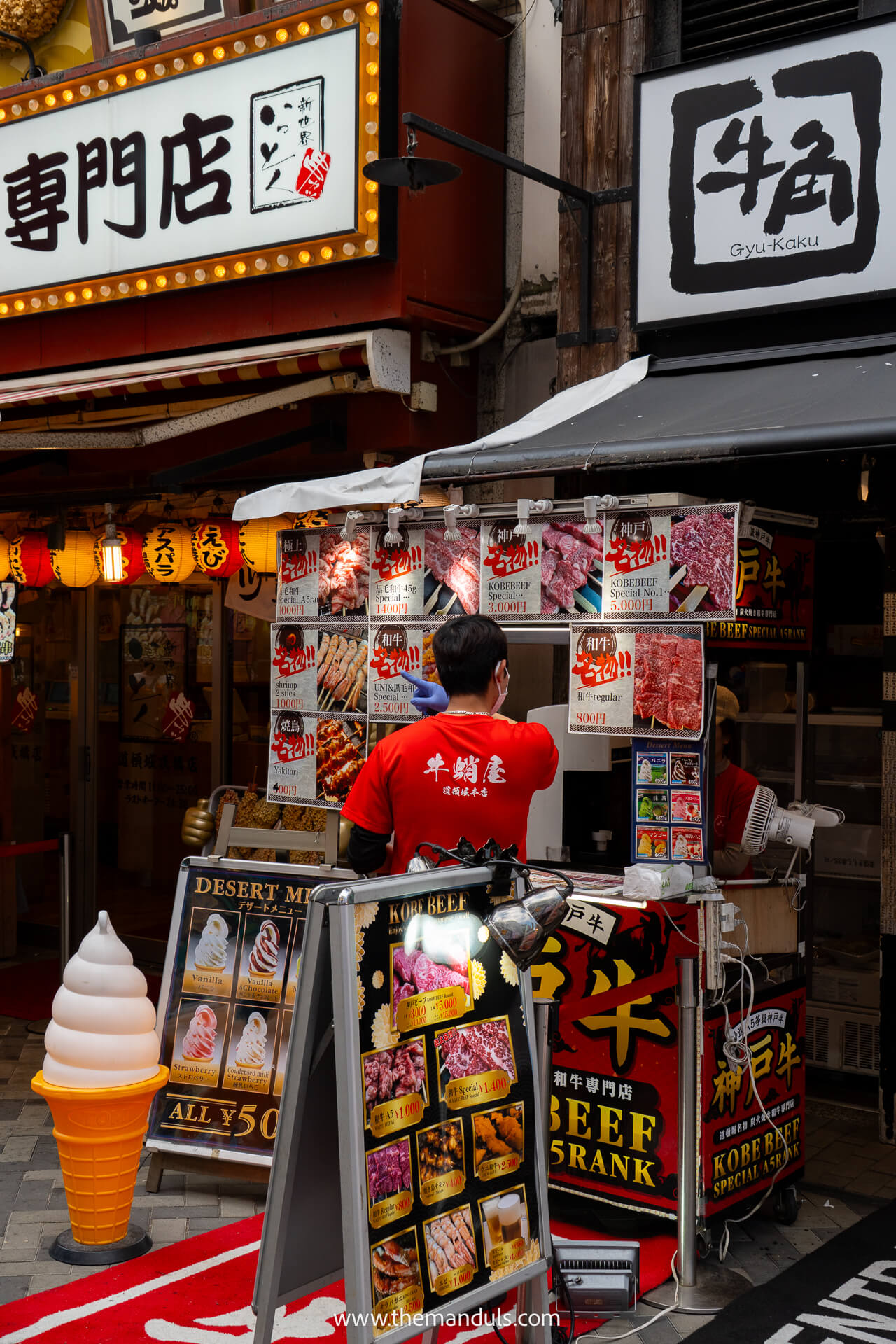
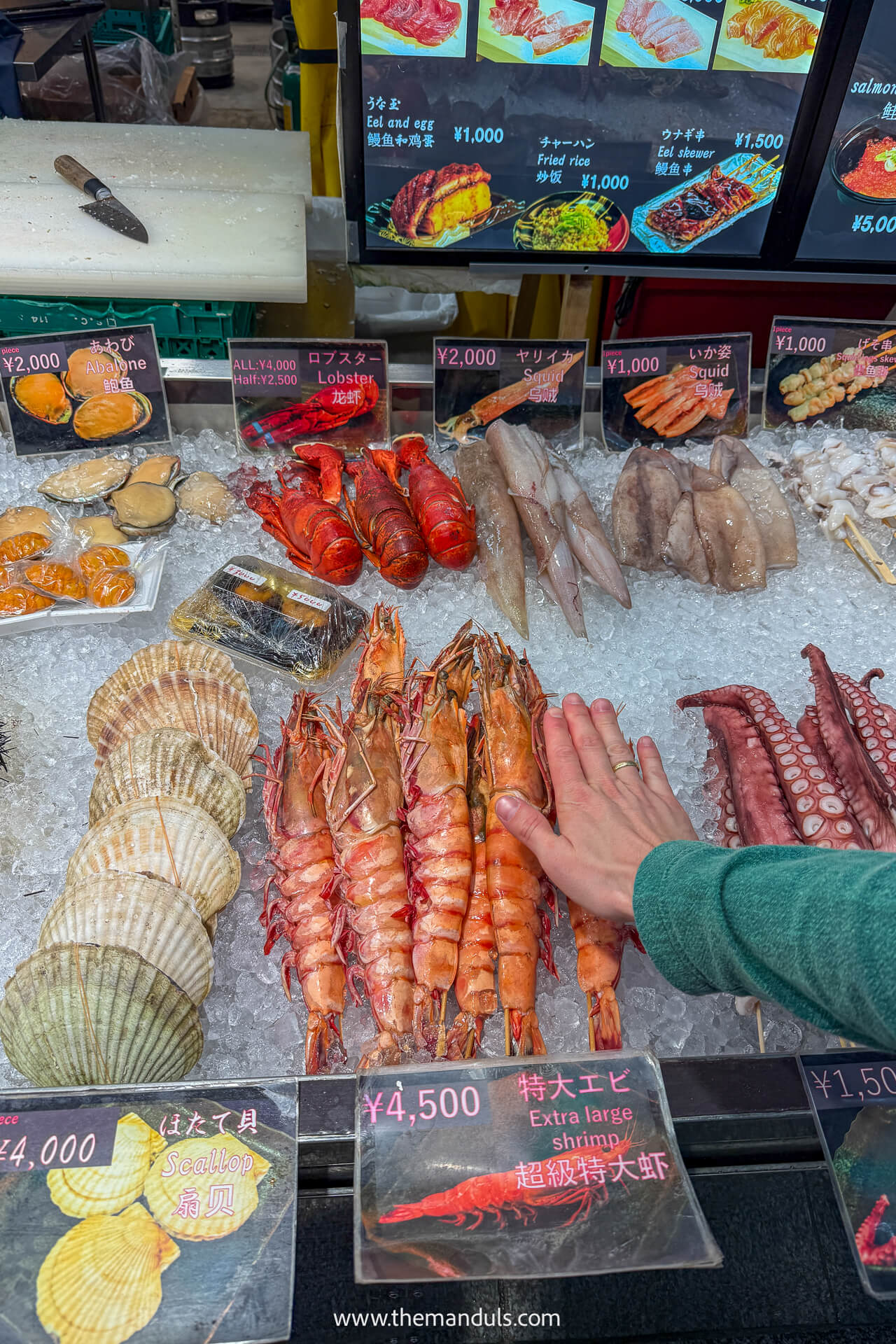
Dotonbori is all about snacking your way through Osaka, but it pays to be selective. These are the classics worth looking out for:
- Takoyaki – Osaka’s signature snack. Freshly cooked octopus balls with crispy edges and a soft, almost creamy centre.
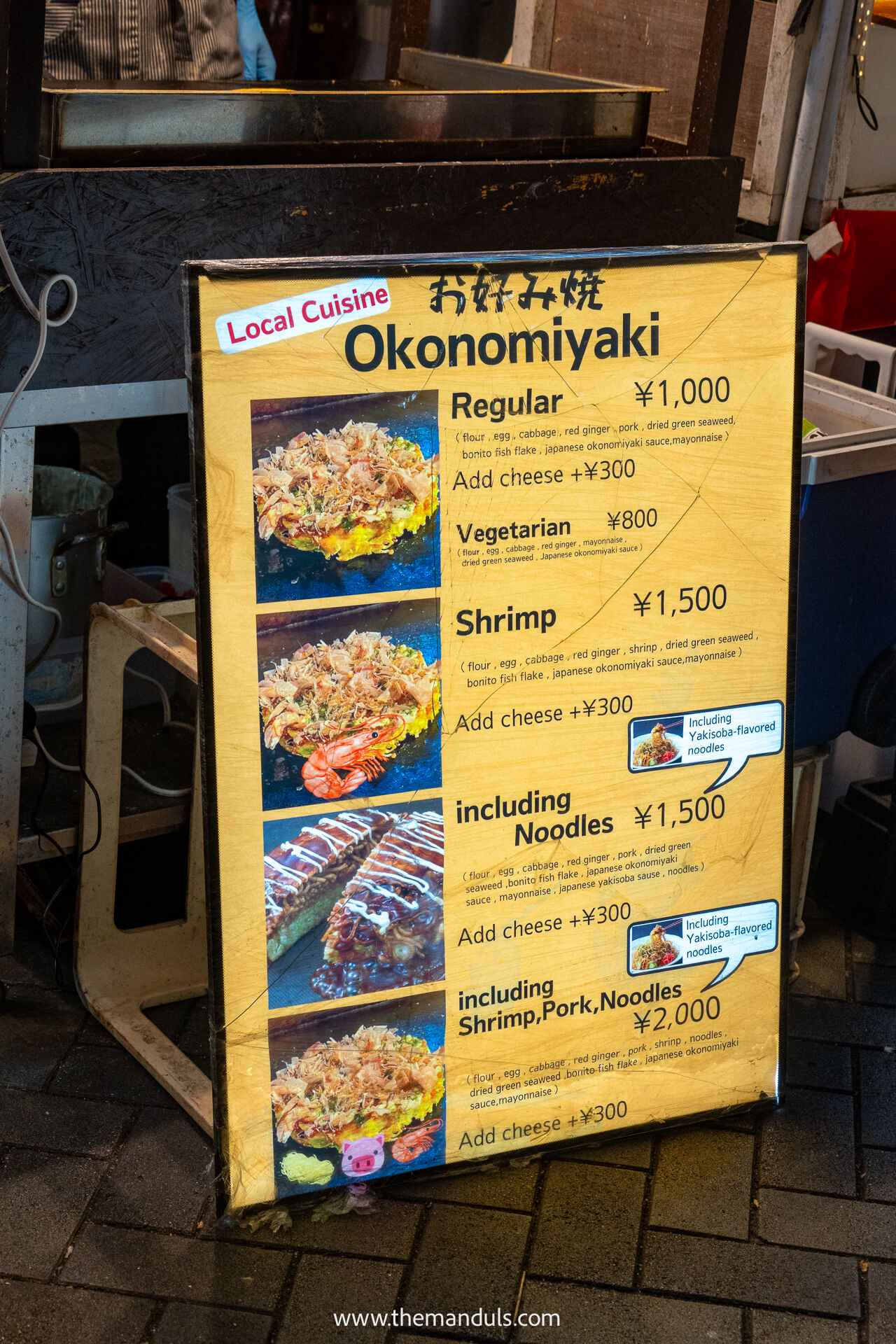
- Okonomiyaki – A savoury pancake made with cabbage, batter, and toppings like pork or seafood; filling and best shared.
- Kushikatsu – Deep-fried skewers of meat, seafood, and vegetables, served with dipping sauce.
- Taiyaki – Fish-shaped pastries filled with custard or red bean, perfect if you want something sweet in between.
- Grilled scallops & seafood skewers – Common along the strip and especially tempting for seafood lovers.
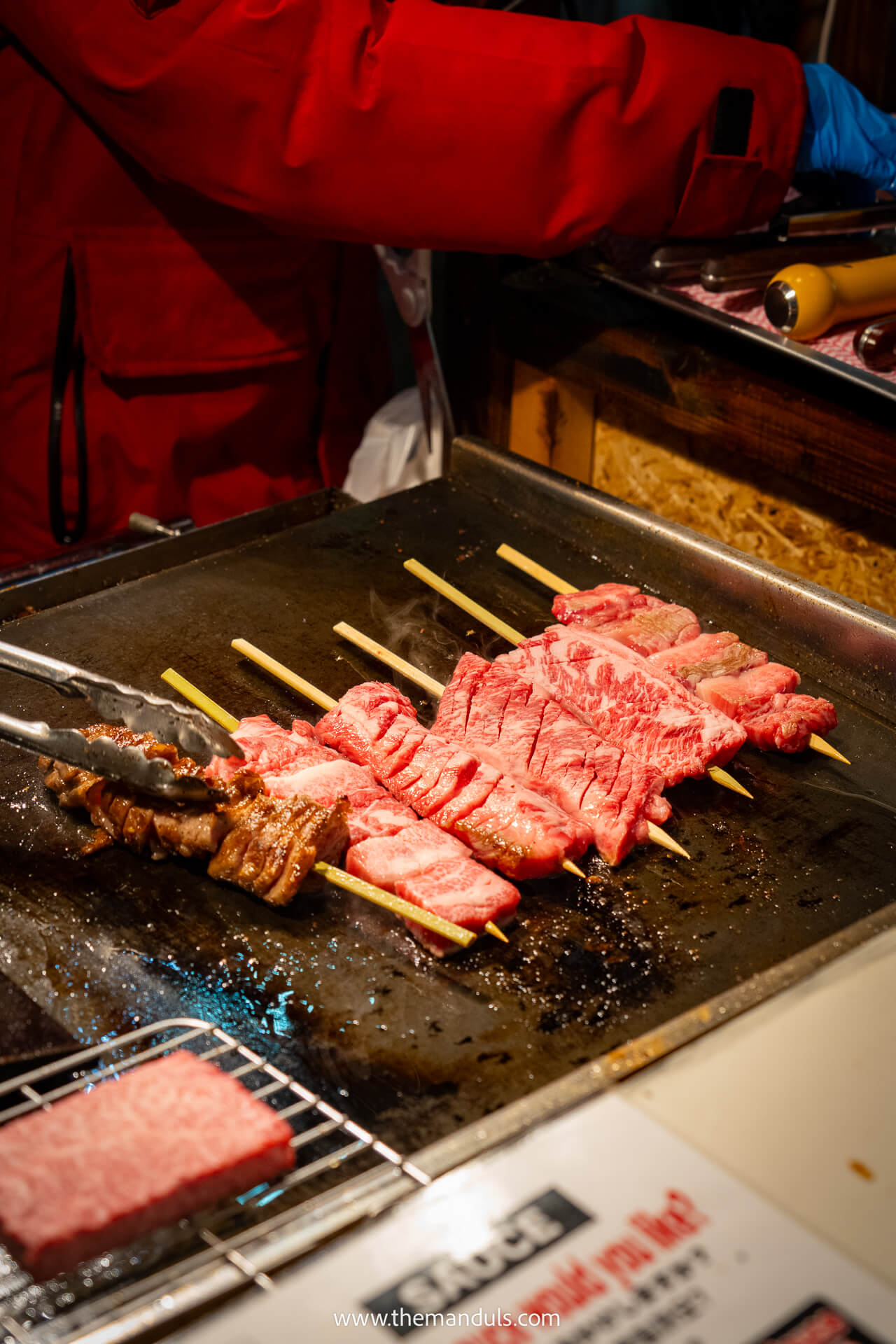
If you’d rather skip guesswork (and tourist traps), we’d actually recommend booking a guided food tour instead of randomly queuing. This food tour is especially good for first-time visitors and focuses on quality over hype.
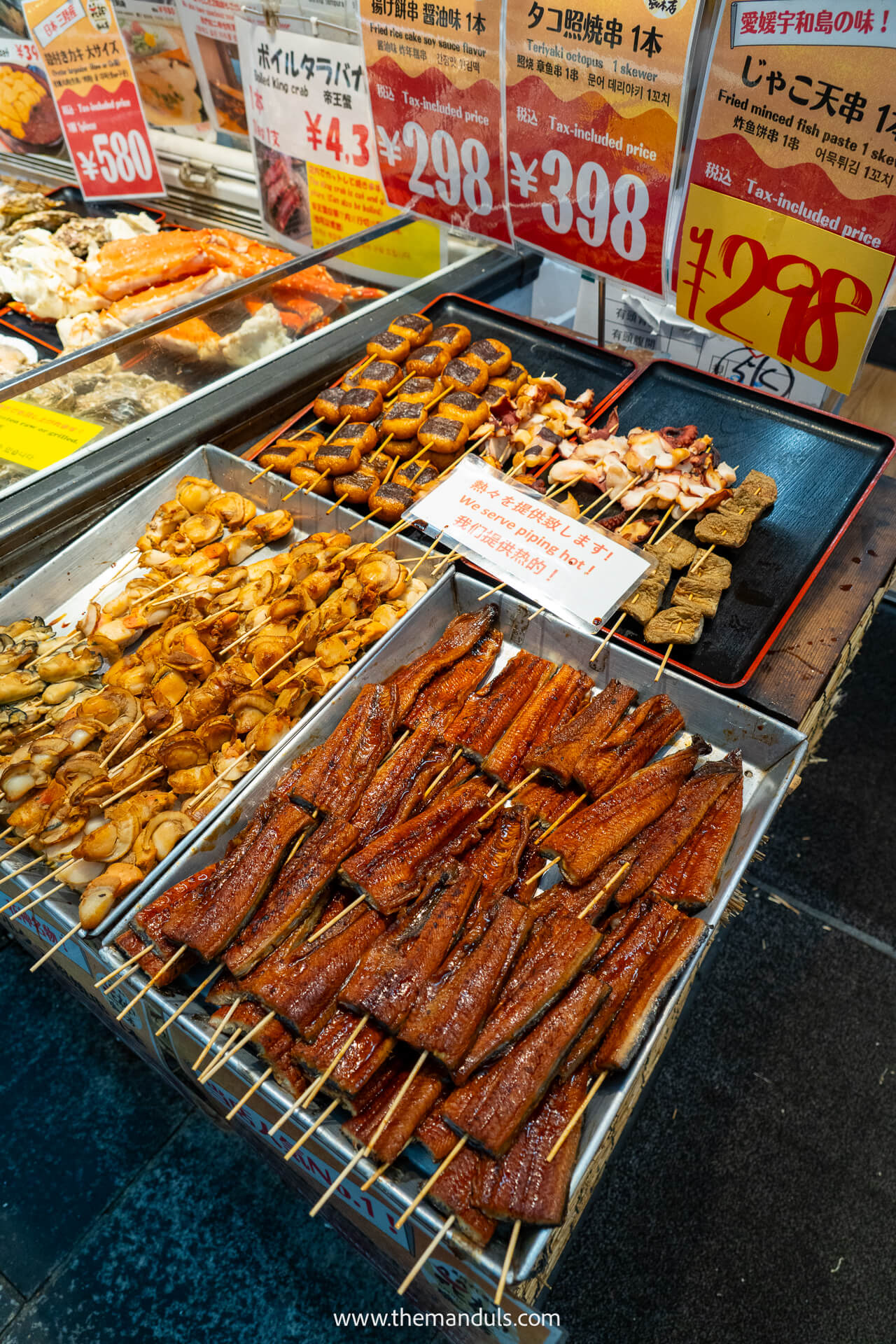
You’ll try 12 different Japanese dishes, visit sake bars genuinely loved by locals, and get clear explanations of what you’re eating and how to eat it — with a bit of local history mixed in.
Book this Guided Food Tour with 12 Dishes via GetYourGuide.
Dotonbori at Night: What Changes After Dark
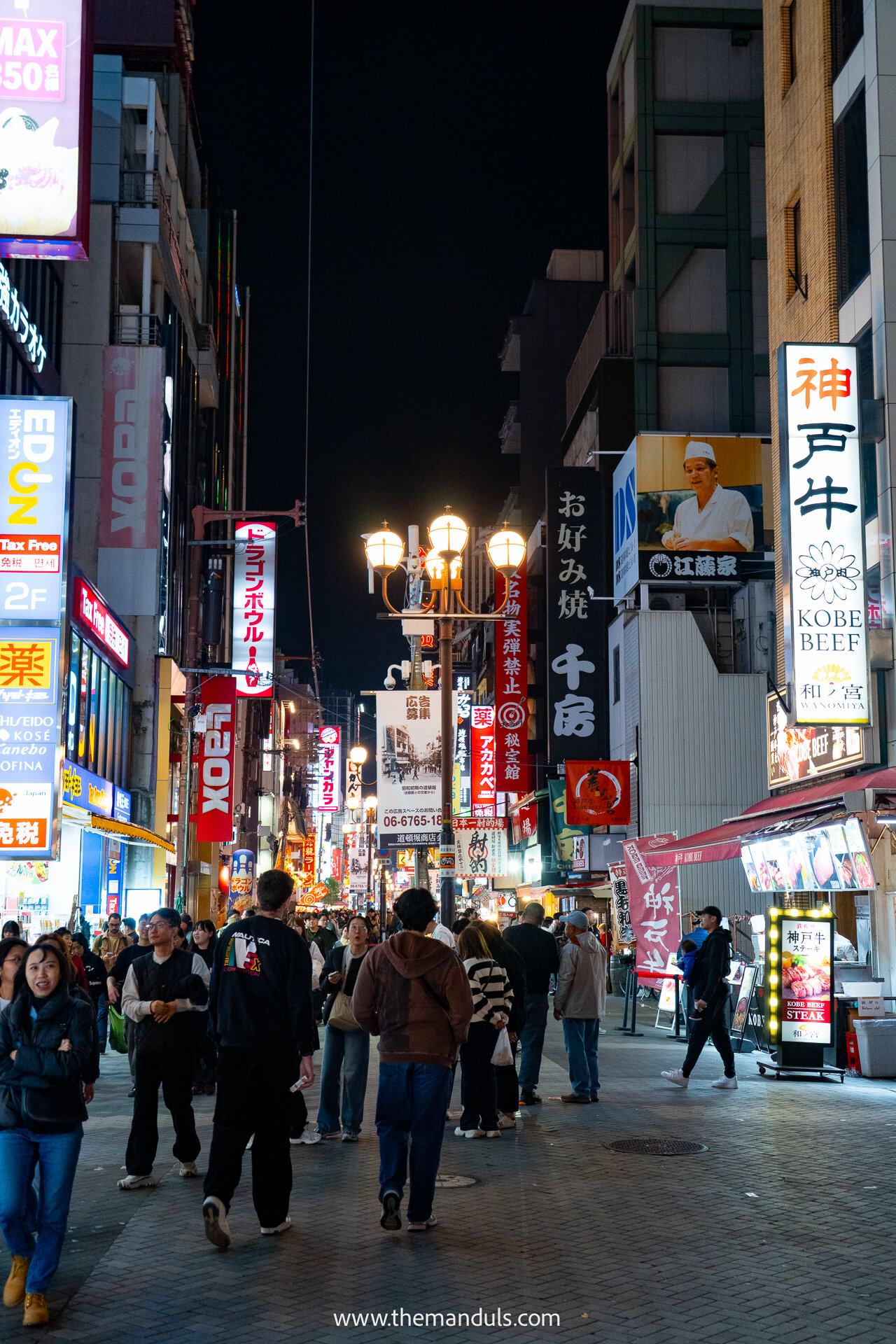
Dotonbori during the day is busy — but at night, it’s a completely different experience. This is when the neon signs fully take over, the crowds get denser, and the whole area feels louder, brighter, and more alive.
We came back in the evening on purpose, and it was absolutely worth it. The canal reflects the lights, the food stalls are in full swing, and there’s this constant buzz that makes it hard to leave.
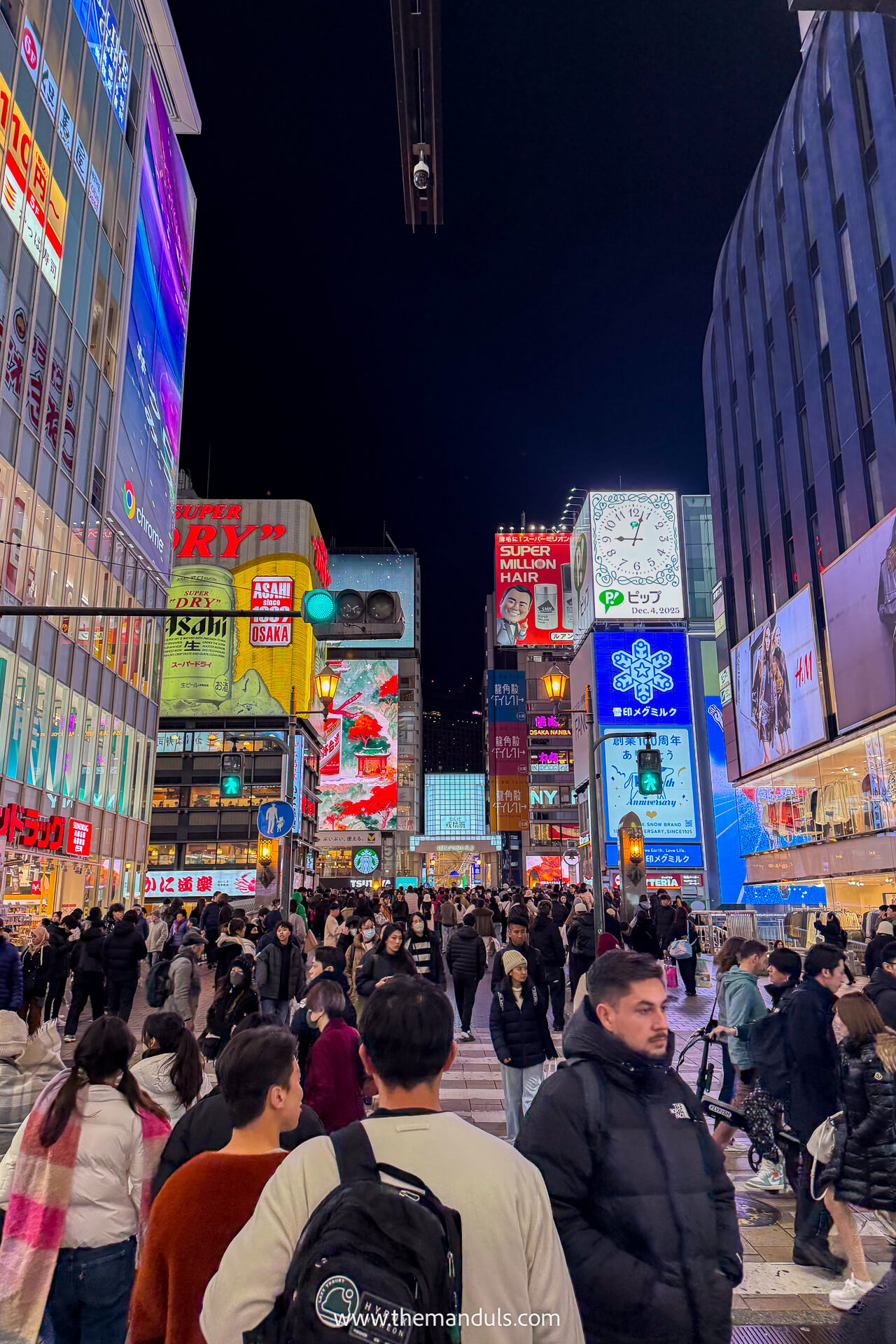
It’s was chaotic than daytime, but also more fun — this is the version of Dotonbori most people picture when they think of Osaka.
That said, it does get crowded. If you’re not a fan of shoulder-to-shoulder walking, aim for early evening rather than late night.
Is Dotonbori Worth Visiting?
Yes — but with the right expectations. Dotonbori isn’t about quiet sightseeing or hidden gems. It’s loud, busy, and a bit overwhelming at times. If you go in expecting a calm stroll, you’ll probably be disappointed.
For us, it was absolutely worth it because it shows a side of Osaka that feels fun. We wouldn’t spend an entire day here, but for an evening walk, some street food, and soaking up the atmosphere, it delivered exactly what we hoped for.
How Much Time You Need in Dotonbori
You don’t need a full day for Dotonbori. For us, 2–3 hours felt just right — enough time to walk along the canal, cross Ebisu Bridge, explore a side alley like Hozenji Yokocho, and try a few snacks without feeling rushed.
If you’re planning to eat more, play arcade games, or join a food tour, you could easily stretch that to half a day.
Best Time to Visit Dotonbori
The best time to visit Dotonbori is early evening, just before and after sunset. This is when the neon signs start lighting up, the atmosphere kicks in, but the crowds haven’t fully peaked yet. It felt like the perfect balance between energy and actually being able to move around.
Daytime is calmer and easier for walking and photos, but it doesn’t show Dotonbori at its best. Late at night is fun too, especially if you like busy streets and a party-like vibe, though it can feel overwhelming if you’re not into crowds.
How to Get to Dotonbori
Getting to Dotonbori is easy — it’s right in the middle of Osaka and well connected by public transport. The closest and most convenient hub is Namba Station, which is served by several subway and train lines.
From Namba Station, it’s usually a 5–10 minute walk, depending on which exit you take. One thing we didn’t expect is just how massive the underground network is — it honestly felt like a maze, with endless corridors and exits.
We lost a bit of time trying to navigate underground before realising it’s much easier to just get outside as soon as you can and orient yourself from there. Once you’re above ground, finding Dotonbori is simple.
Common Mistakes to Avoid in Dotonbori
- Queuing blindly for food – Long lines don’t always mean great food here. Some of the best bites had short queues, while some popular-looking spots felt overpriced and disappointing.
- Only visiting during the day – Dotonbori is fine in daylight, but it really shines after dark. Skipping the evening means missing what makes it special.
- Trying to do everything at once – This isn’t a checklist destination. Rushing from sign to sign makes it feel overwhelming instead of fun.
- Ignoring the side streets – Places like Hozenji Yokocho are just steps away and offer a completely different vibe. Don’t stick only to the main strip.
Where to stay in Osaka
Osaka is a great city to base yourself in — lively, well connected, and easy to get around. Areas like Namba, Shinsaibashi, and Umeda are especially convenient, whether you want nightlife and food on your doorstep or quick transport links for day trips.
If you’re still deciding which part of Osaka suits you best, check out our full guide on where to stay in Osaka. It breaks down the best neighbourhoods based on travel style, plus hand-picked hotel recommendations we genuinely think are worth booking.
Here are the ones we’d happily book again:
Best hotels in Osaka
⭐️⭐️⭐️ Citadines Namba Osaka (our top pick) – If you want to stay right in the middle of Osaka’s action but still have space to breathe, this is a great choice. Citadines Namba Osaka sits steps from Dotonbori and Kuromon Market, yet feels calm once you’re inside. The rooms are modern, well-designed, and ideal if you like having a bit more room (and sometimes a kitchenette) after busy sightseeing days. Book this if location is your top priority and you want comfort without paying luxury prices.
⭐️ Best for: Travelers who want space, comfort, and a central base that actually feels convenient
👉 Check current deals →
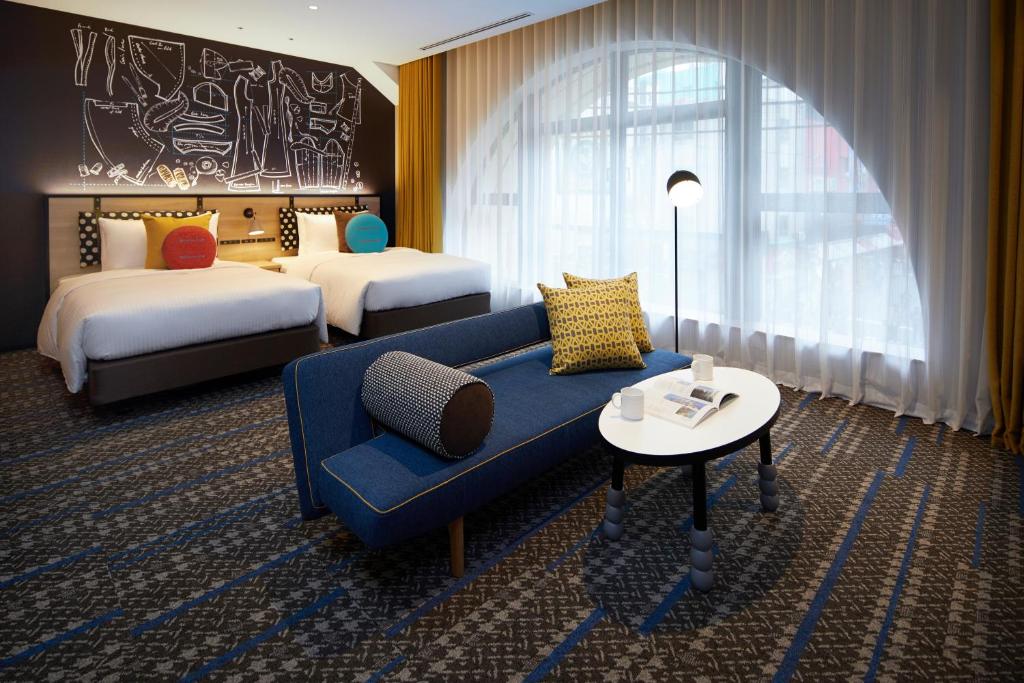
⭐️⭐️ Osaka Marriott Miyako Hotel – This is the stay you book when you want Osaka to feel special. Located high above the city, the views alone are a reason to choose it — especially at night. Everything here feels polished, from the spacious rooms to the service. It’s not the cheapest option, but you’re paying for a memorable experience rather than just a place to sleep. Book this if you want a standout stay with unforgettable city views.
⭐️ Best for: Couples or travelers looking for a quieter, more upscale experience with incredible views.
👉 Compare prices →
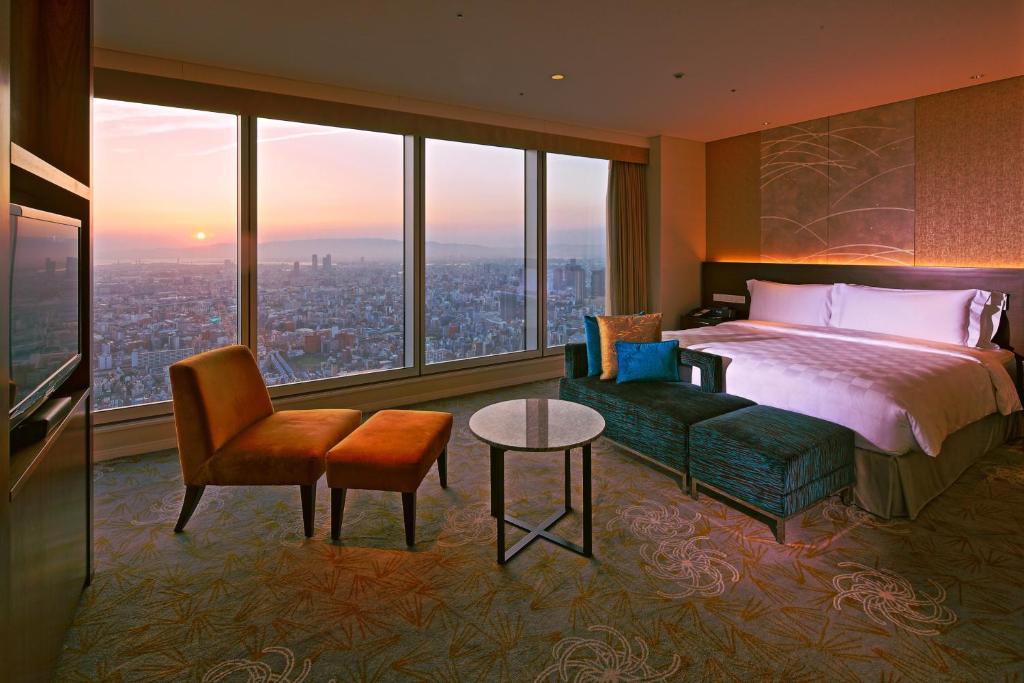
⭐️ Lespedeza Osaka – A solid pick if you’re looking for something simple, affordable, and well located without sacrificing style. The rooms are compact but thoughtfully designed, making it a good fit for travellers who plan to spend most of their time out exploring. Book this if you want a clean, modern base near central Osaka at a reasonable price.
⭐️ Best for: Budget travelers who value location and quiet nights over hotel amenities
👉 See latest prices →
Final Thoughts: Is Dotonbori Overrated or a Must-See?
Dotonbori can feel overwhelming at first — it’s loud, crowded, and very busy.
For us, it’s a must-see because it shows Osaka at its most playful and food-obsessed. You don’t need hours here, and you don’t need a strict plan. An evening walk, a few snacks, some people-watching, and maybe getting lost down a side street is more than enough.
So no, it’s not overrated — you just have to experience it the right way.