
This article contains affiliate links. Learn more in our affiliate disclosure.
Traveling between Tokyo and Kyoto is one of those classic Japan routes almost everyone ends up doing at some point.
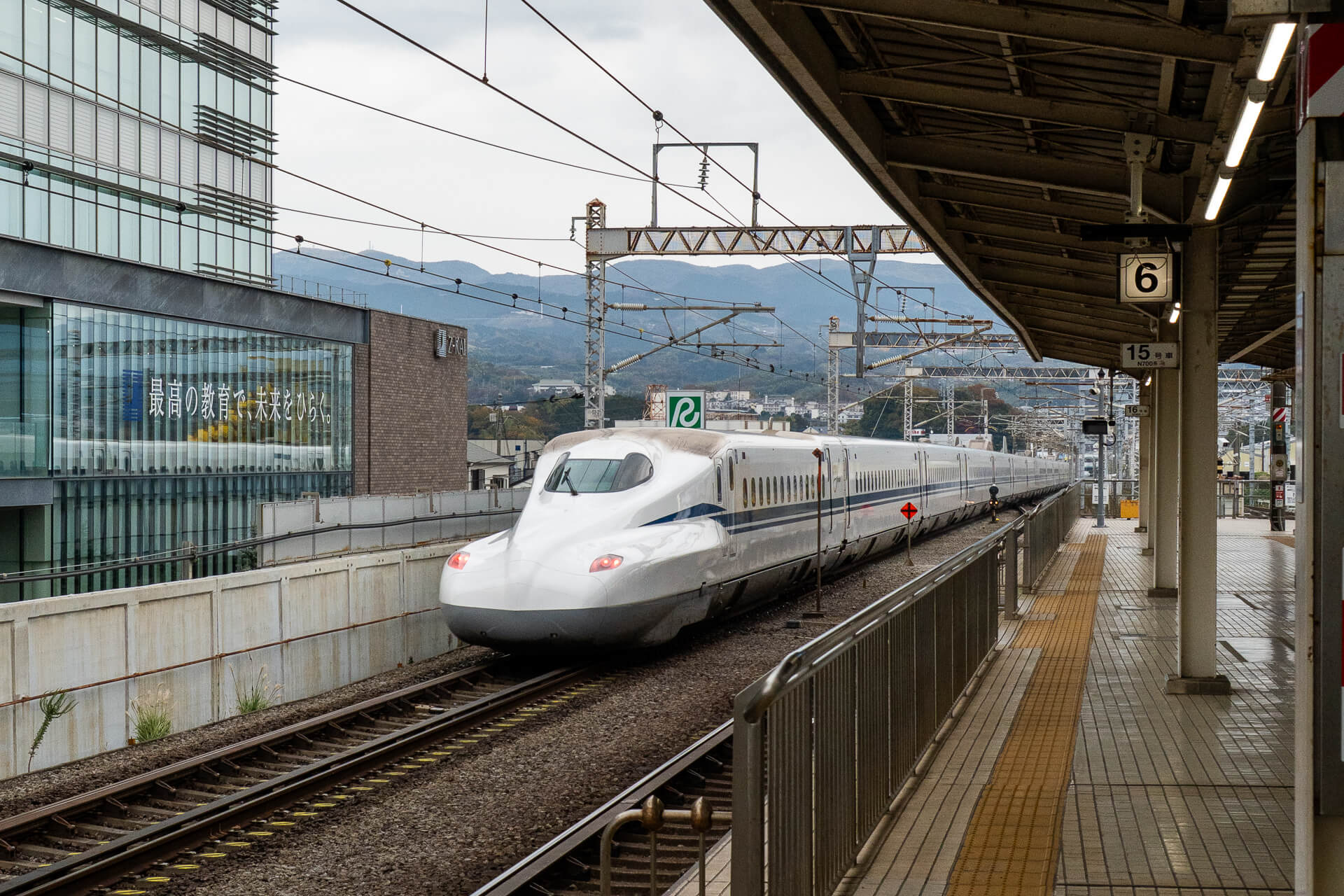
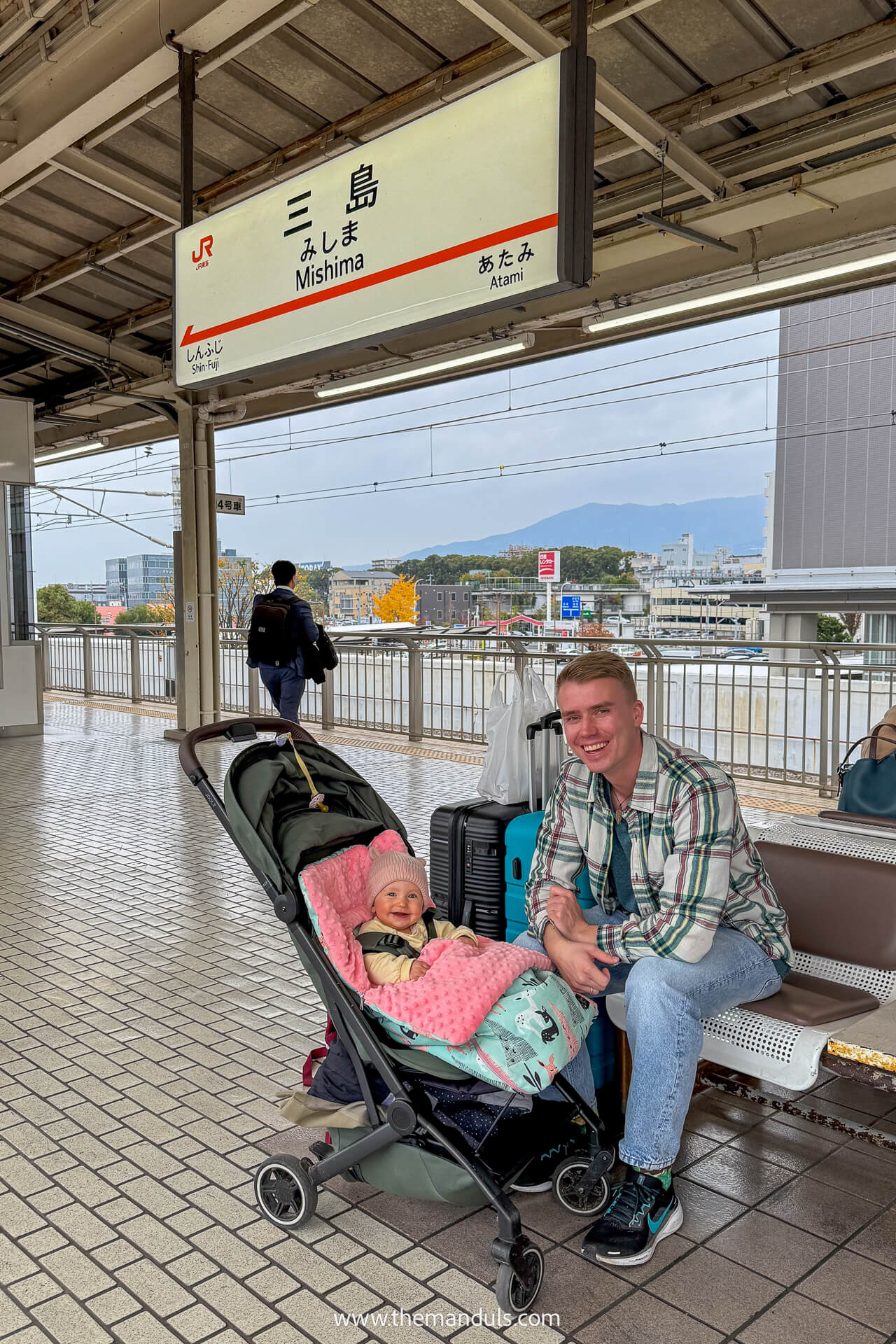
While we didn’t ride the full Tokyo–Kyoto Tokaido Shinkansen in one go, we did experience this line firsthand when we detoured through the Mount Fuji area and took the Shinkansen from Mishima onward.
That partial ride was still enough to understand why the Tokaido Shinkansen is a good choico: it’s fast, smooth, incredibly well organized, and perfect long-distance travel.
In this guide, we’ll break down exactly how the Tokaido Shinkansen works on the Tokyo–Kyoto route, tickets and luggage rules, and a few common mistakes worth avoiding.
If you’re deciding whether this is the right way to travel between the two cities, this should give you a clear answer.
Still haven’t figured out the accomodation? Read our Where to stay in Kyoto, where we compare the best ares and recommend different hotel options for all types of travelers.
In a hurry?
These are our top hotels in Kyoto we’d book again
⭐️⭐️⭐️ Cross Hotel Kyoto (our top pick) – A modern mid-range stay in a central part of downtown. Comfortable rooms, great design, and an easy base for exploring.
👉 See prices & availability →
⭐️⭐️ The Thousand Kyoto – A luxury hotel with spacious, minimalist rooms and an excellent breakfast. Its location makes getting around the city incredibly easy.
👉 See prices &availability →
⭐️ Guesthouse Soi – A simple and budget-friendly guesthouse near Kiyomizu-dera with clean rooms and a genuinely warm, helpful atmosphere.
👉 See prices & availability
Where to Board in Tokyo
You can board the Tokaido Shinkansen from Tokyo Station or Shinagawa Station.
Tokyo Station is more central and convenient if you’re staying in areas like Ginza, Asakusa, or Ueno. Shinagawa is often easier if you’re coming from southern Tokyo or straight from Haneda Airport.
Both stations are well signed, easy to navigate, and offer the same Shinkansen services — the choice mostly comes down to what’s closer to your accommodation.
Where You Arrive in Kyoto
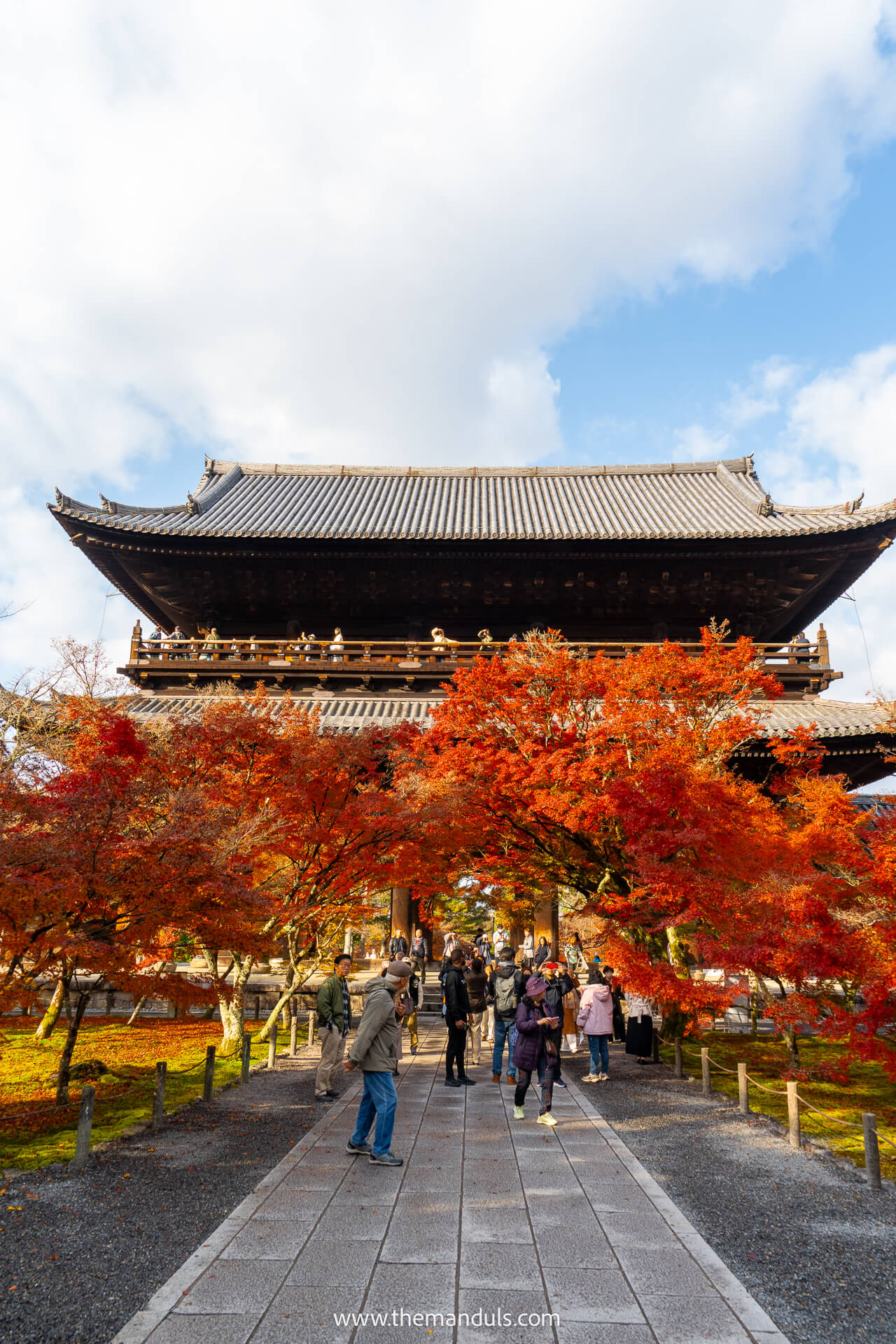
All Tokaido Shinkansen trains arrive at Kyoto Station, the city’s main transport hub. From here, it’s easy to continue by city bus, subway, local train, or taxi.
How to Buy Tokaido Shinkansen Tickets
Buying Tickets at the Station
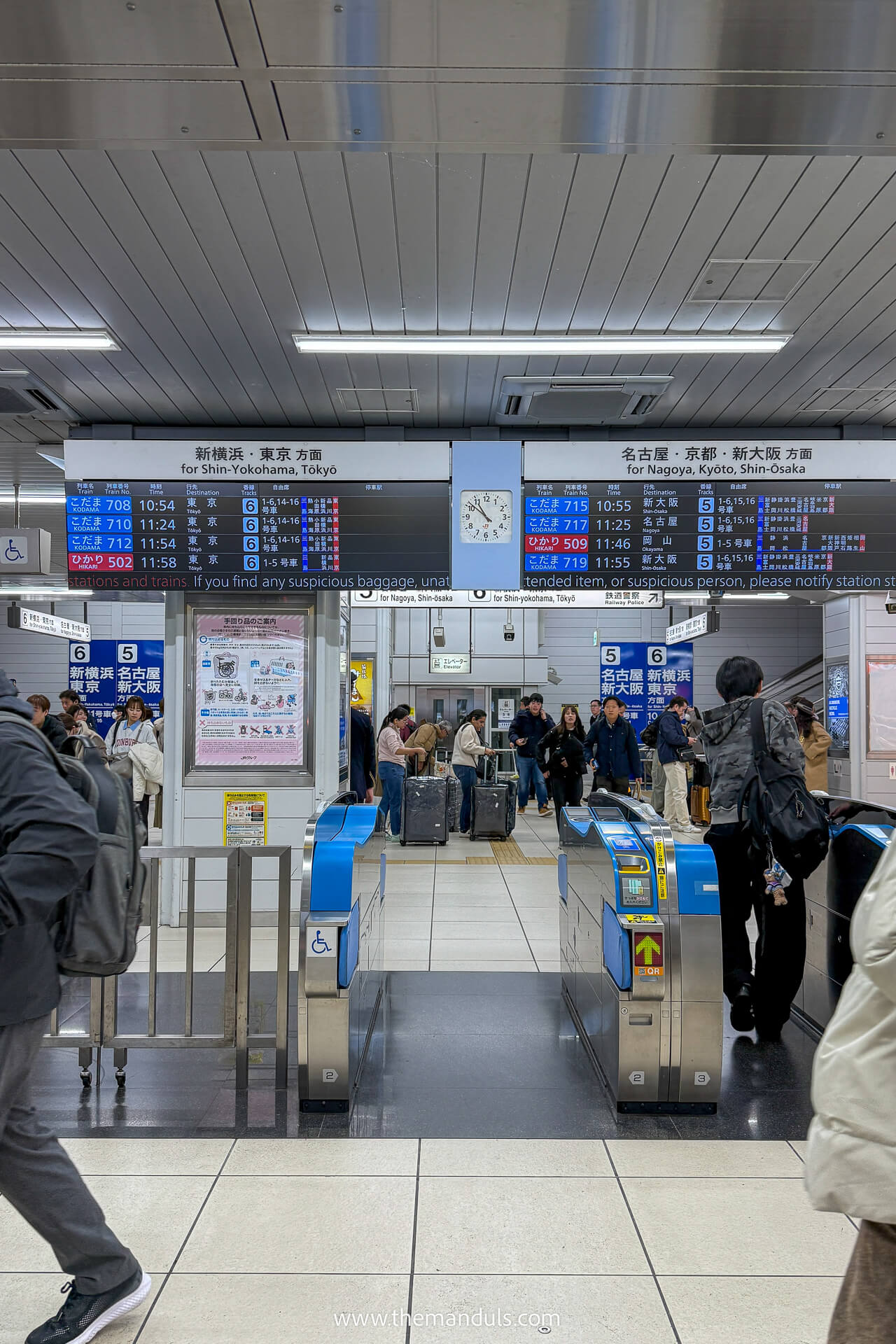
If you’re already in Japan, buying tickets at the station is an easy and very safe option. You can use Shinkansen ticket machines, where you select the train type, route, seat type, and pay by card.
Another option is JR ticket office. Staff are used to helping international travelers, so this is a great choice if you want to make sure everything is done correctly, especially when traveling with luggage or kids.
Buying Tickets Online
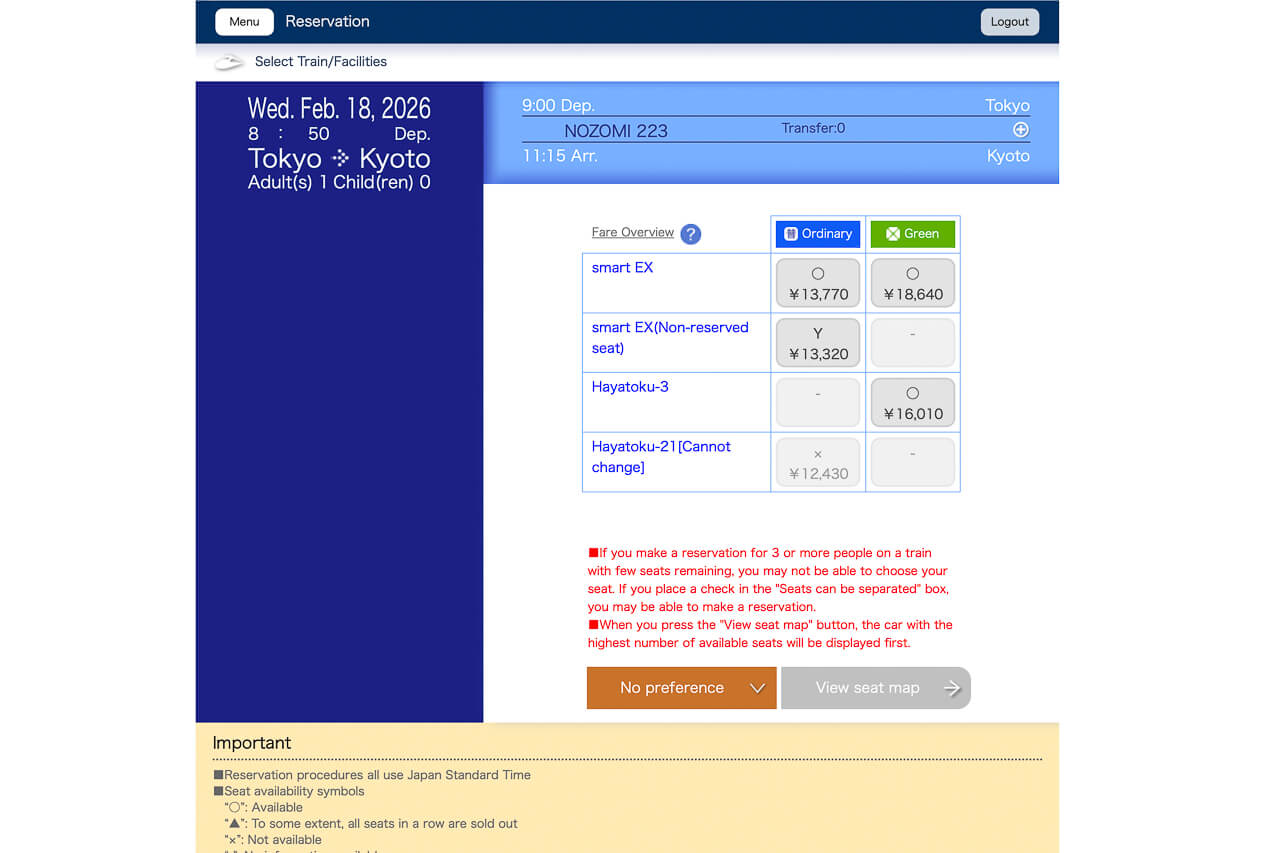
This is the option we used before our trip to Japan even started, and it worked really well. We booked our tickets through the SmartEX website, which is the official online booking system for the Tokaido Shinkansen.
To buy tickets, you first need to register an account — the process is straightforward, but you’ll receive a numeric login ID, so make sure to save it.
Once logged in, you can search for trains and choose between reserved seats, non-reserved seats, or Green Car tickets. SmartEX is often said to offer the lowest prices for reserved-seat tickets, which makes it a very solid option.
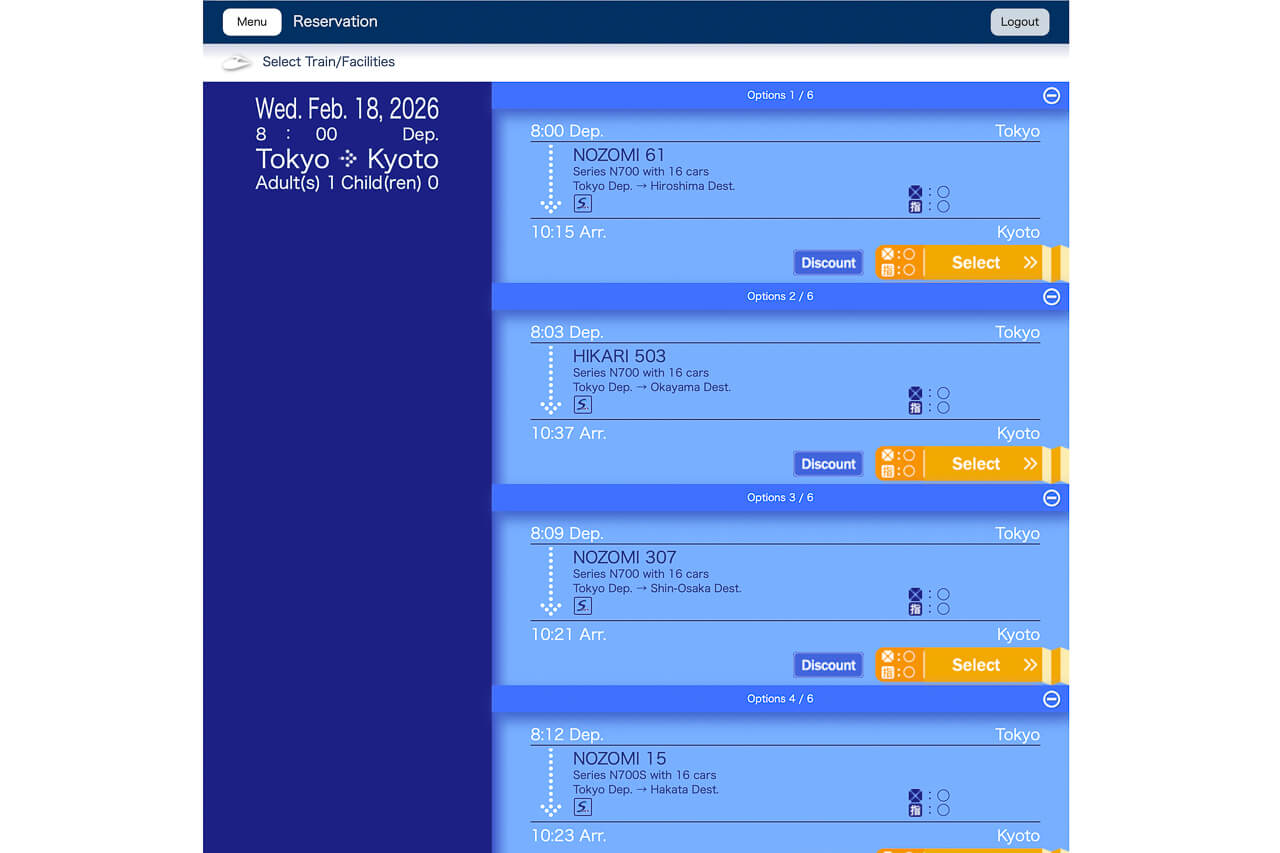
Occasionally, you’ll also find advance discounts, and sometimes even Green Car tickets for the same price as regular seats, so it’s worth checking a few different train connections before booking.
After purchasing, you’ll receive a confirmation email, and you can board the train using the QR code directly on your phone, without needing to collect physical tickets. It’s simple, efficient, and ideal if you like having everything sorted in advance.
A slightly less complicated alternative is Klook, but prices there are usually higher.
JR Pass
If you’re traveling with a JR Pass, you don’t need to buy a separate ticket for eligible Tokaido Shinkansen trains. For a non-reserved seat you can simply board the specific train.
However, seat reservations are free with the pass and highly recommended during busy periods, especially on weekends and in peak travel seasons. You can easily reserve a seat using the ticket machines or at an office.
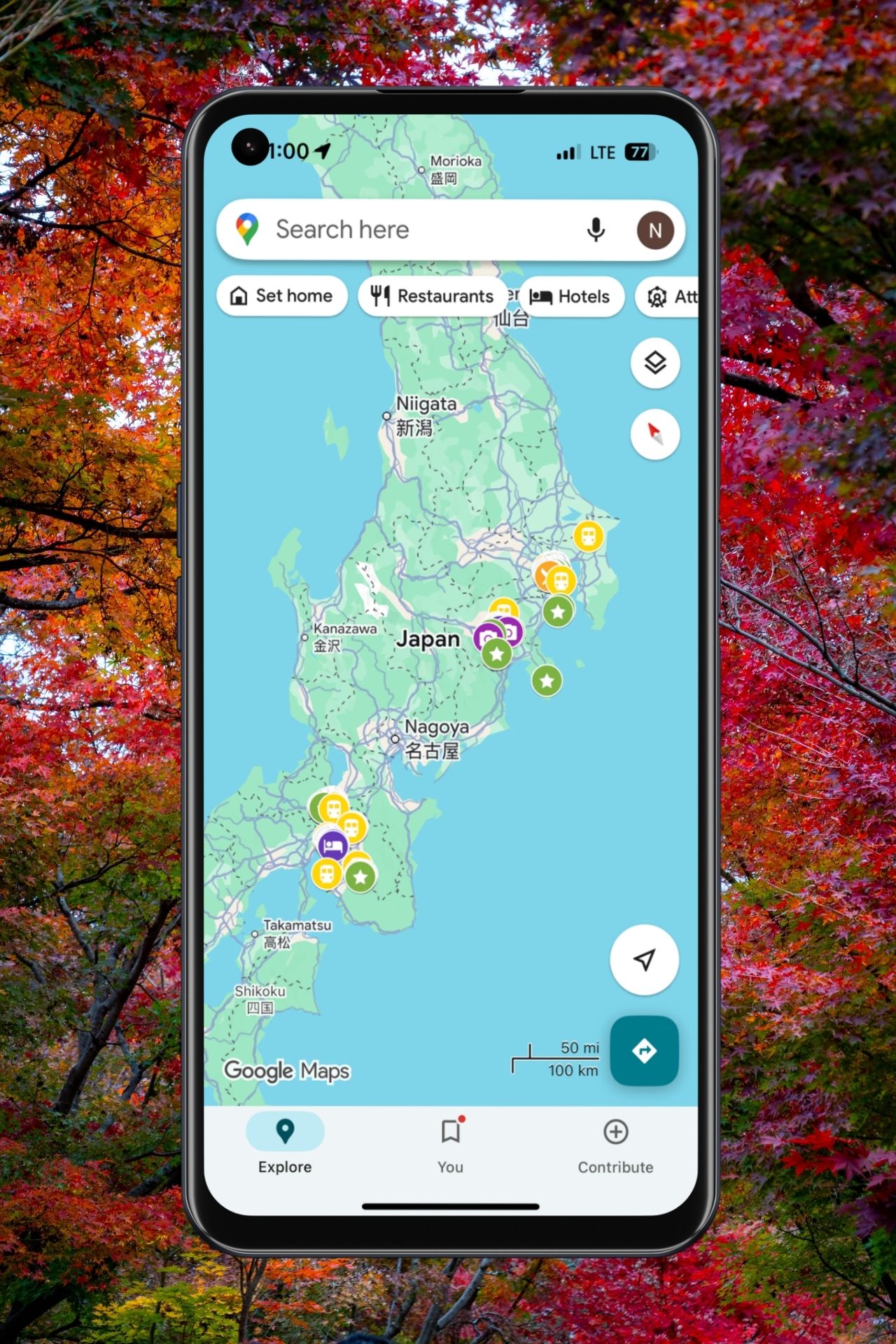
Our Japan Google Maps
Built from our real trips across Japan — only places we actually visited and loved.
No tourist traps. No random saves. Just a ready-to-use map that saves you hours of research.
219 handpicked spots, including:
📍 Highlights & hidden gems
🍜 Restaurants we’d go back to
🏨 Areas & hotels we’d book again
🗺️ Stops that fit into real, logical itineraries
Reserved vs Non-Reserved Seats vs Green Car
When traveling on the Tokaido Shinkansen, you’ll be choosing between non-reserved seats, reserved seats, and the Green Car.
Non-reserved seats are the cheapest option and don’t come with an assigned seat. You line up in the marked cars on the platform and take any available seat. This can work on quiet weekdays, but on busy routes like Tokyo to Kyoto there’s a real chance you’ll end up standing, especially during peak seasons.
Reserved seats come with a specific seat on a specific train. This is the option we chose, and it made the whole experience completely stress-free. When we were booking through SmartEX, the price difference between non-reserved and reserved seats was so small that it was honestly not worth skipping the reservation.
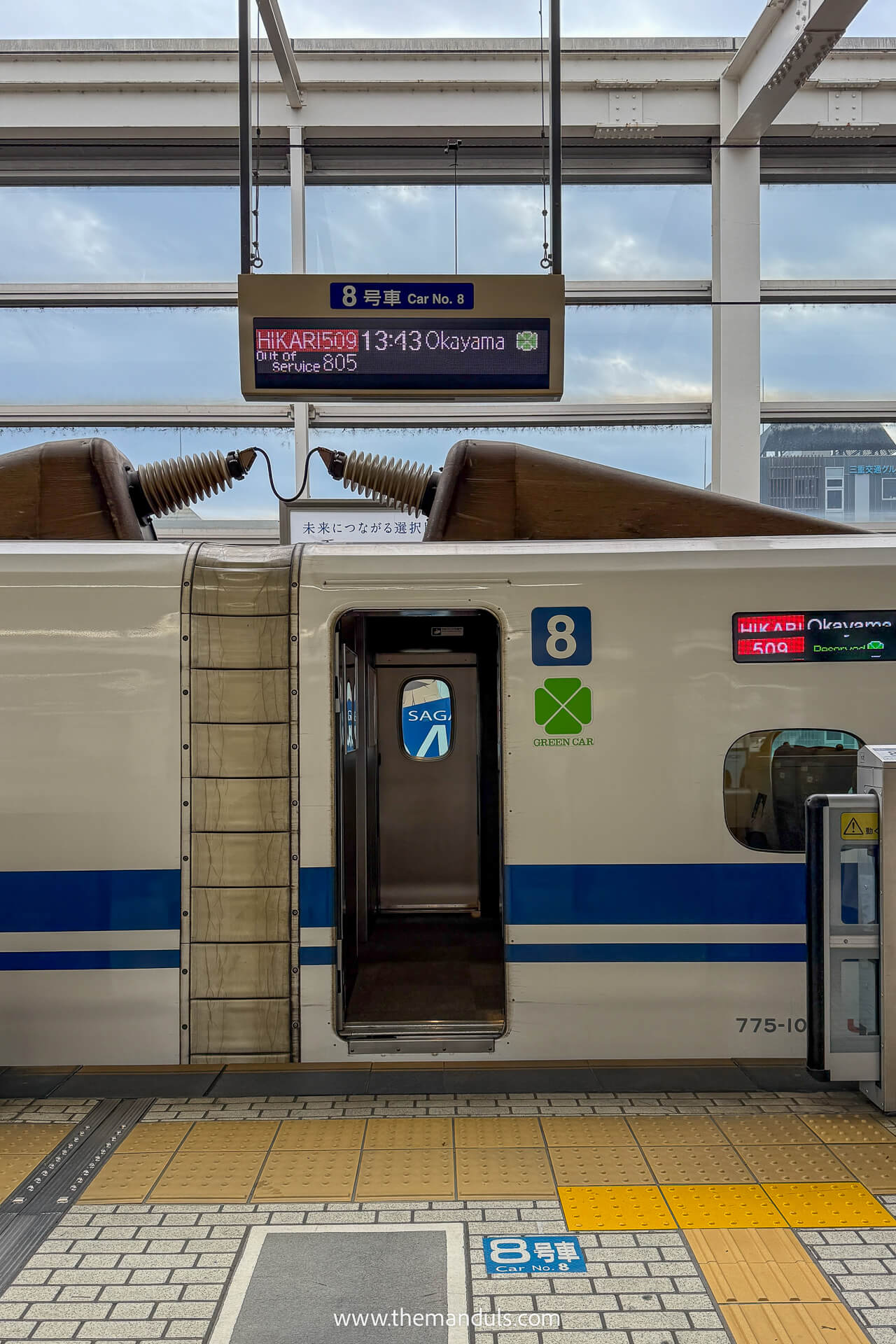
Green Car is the first-class option on the Shinkansen, with wider seats, more legroom, and a quieter cabin. It’s not essential, but if you spot a discounted Green Car ticket when booking in advance, it can be a really nice upgrade for a longer travel day.
Train types
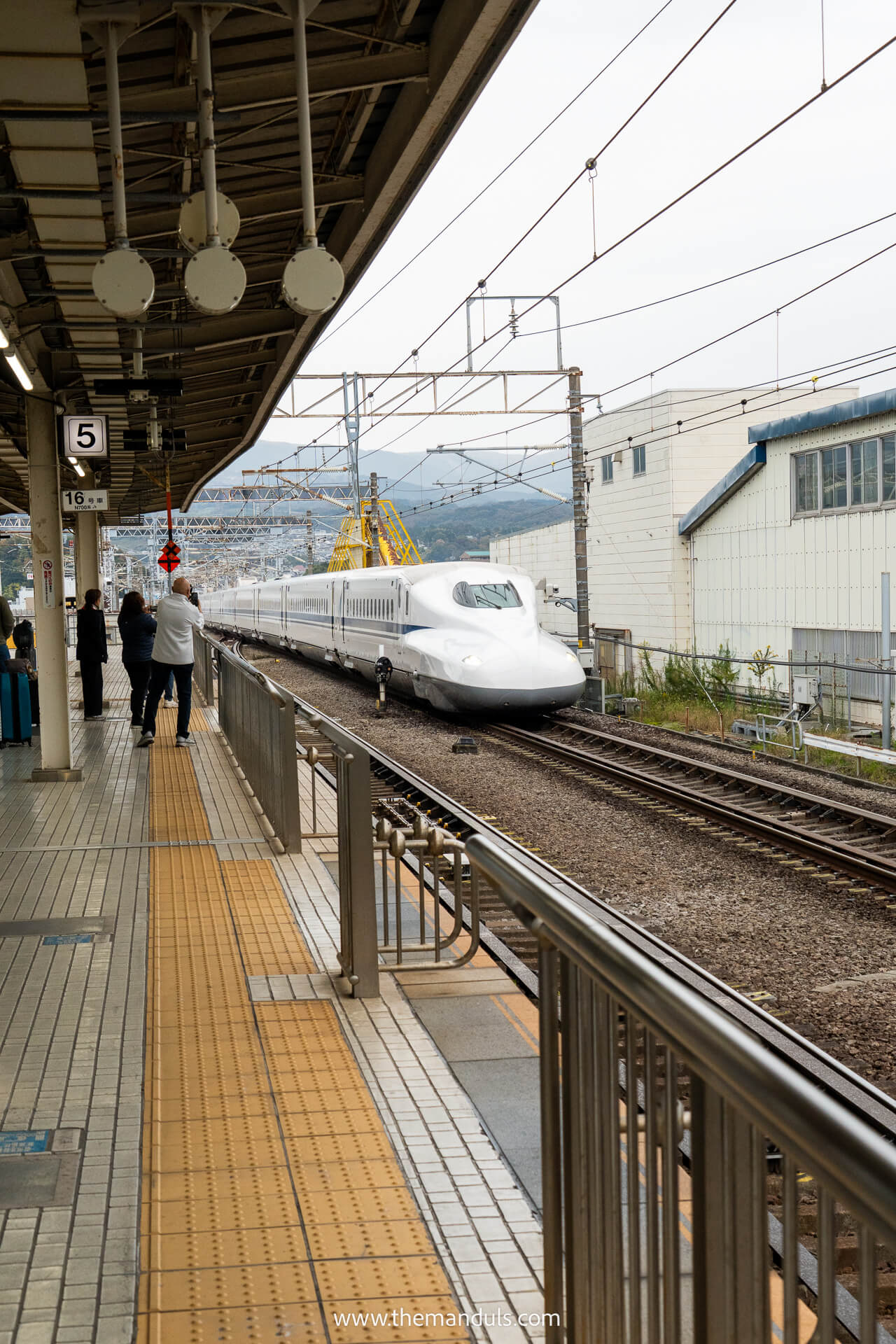
The Tokaido Shinkansen has three different train types running between Tokyo and Kyoto. All use the same tracks and trains, but the difference comes down to speed, number of stops, and ticket compatibility.
Nozomi is the fastest option and the most frequent. It stops only at major stations and is the best choice if you’re buying individual tickets and want to get from Tokyo to Kyoto as quickly as possible. Just keep in mind that Nozomi trains are not covered by the JR Pass.
Hikari is slightly slower than Nozomi and makes a few additional stops, but it’s still very fast and comfortable. This is the best option if you’re using a JR Pass, as it’s fully covered and doesn’t feel like a big compromise in travel time.
Kodama stops at every station along the route and takes significantly longer. While it’s also covered by the JR Pass, it’s usually not worth choosing unless you’re traveling a short section of the line or specifically want a slower, more flexible journey.
For most travelers, the choice is simple: Nozomi if you’re buying tickets, Hikari if you’re using a JR Pass.
Luggage Rules on the Tokaido Shinkansen
Luggage rules on the Tokaido Shinkansen are simple, but they do catch a lot of travelers off guard. Small and medium suitcases that fit in the overhead racks or at your feet are fine and don’t require any special booking.
If you’re traveling with large luggage (generally suitcases over 160 cm when adding height + width + depth), you’re required to reserve a seat with oversized baggage space.
These seats are located at the back of each car and come with extra space behind the seats for large suitcases. The reservation itself is free, but it must be made in advance when booking your ticket or seat.
If you board the train with large luggage without the correct reservation, you may be asked to move your bag or pay an additional fee, which can be inconvenient on a busy train.
That said, based on our experience, we traveled with two medium-sized suitcases just under the 160 cm limit, and the train was so empty that we had no trouble leaving them behind the last row of seats. No one checked our luggage size, and there were no issues at all.
Best Seats for Mount Fuji Views
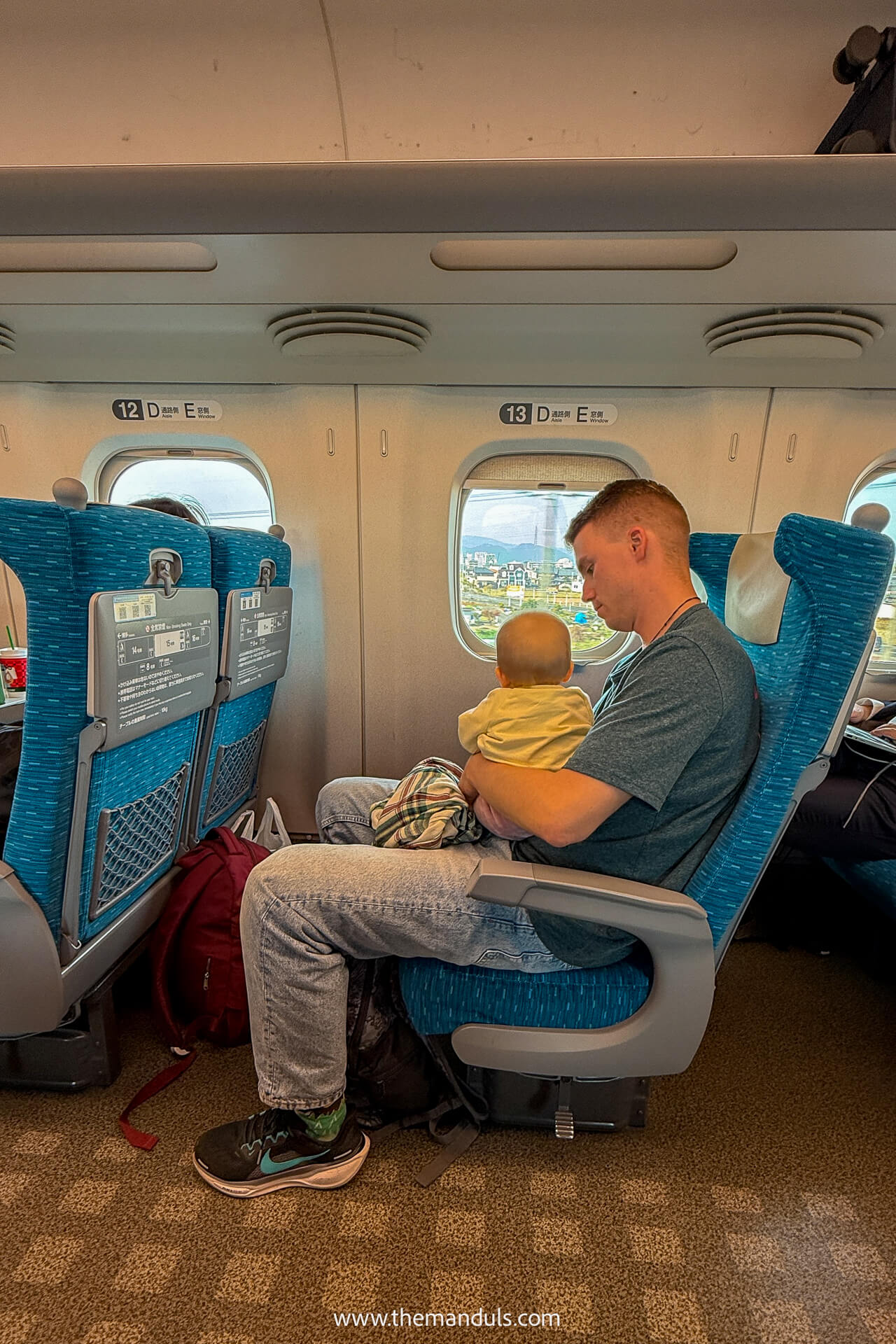
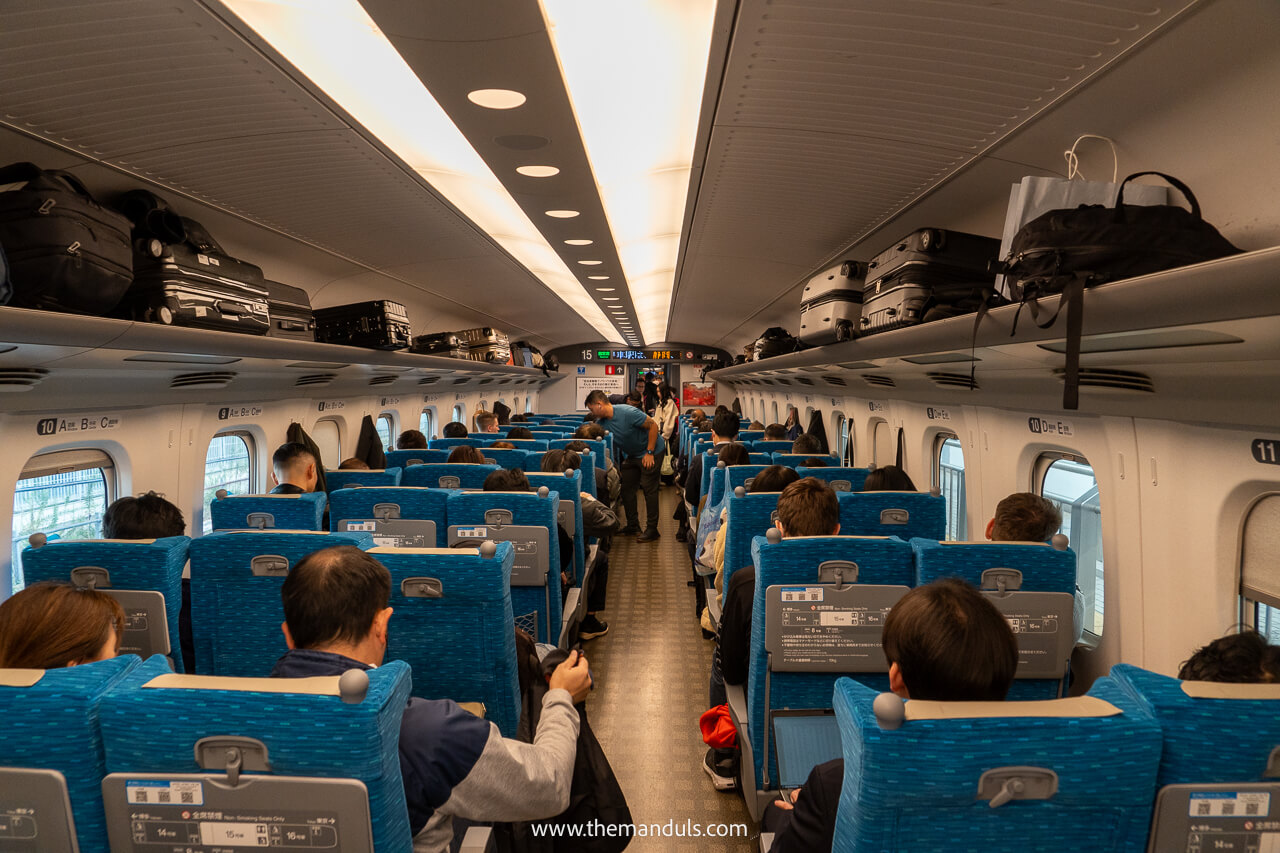
If seeing Mount Fuji from the Shinkansen is on your wish list, seat choice does matter — but timing and weather matter just as much. When traveling from Tokyo toward Kyoto, the best views are on the right-hand side of the train (seats D and E in standard cars).
The Mount Fuji section is reached shortly after passing Shin-Fuji and Mishima, and the view is brief, so it’s worth being ready. Clear days are essential, as clouds often hide the peak, especially in summer.
We spent a few days in the Mount Fuji area, so we didn’t worry too much about catching the perfect view from the train itself.
Traveling the Tokaido Shinkansen With Kids
Traveling on the Tokaido Shinkansen with kids is surprisingly easy and one of the least stressful ways to move between cities in Japan.
In terms of ticket pricing, children aged 0–5 years can travel for free if they don’t occupy their own seat and sit on an adult’s lap.
Children aged 6–11 years need a child ticket, which is typically around half the adult fare. If you want a dedicated seat for a child under 6, you’ll also need to buy a child ticket.
There’s plenty of legroom, wide aisles for moving around, and space for strollers (no additional fee required) — especially if you book reserved seats. Toilets are available in every train.
Is the JR Pass Worth It?
This was something we spent quite a bit of time debating ourselves. Before our trip, we seriously considered getting a JR Pass, but after doing a deep dive and actually counting how many long-distance trains we’d be taking, it became clear that it’s not always worth the money.
The JR Pass really only makes sense if you’re planning to take multiple long-distance journeys within a short time frame and all of them are covered by the pass.
For a more typical itinerary like Tokyo, Kyoto, Osaka, and the Mount Fuji area, we found that the JR Pass sin’t worth it. Buying individual Shinkansen tickets was noticeably cheaper and also gave us more flexibility, especially since the fastest Nozomi trains aren’t included in the pass anyway.
If we were to buy a JR Pass again, we’d get it via Klook. The booking process is simple, everything is in English, and it saves you from dealing with multiple official JR websites or confusing registration steps.
Final Thoughts
For most travelers, the Tokaido Shinkansen is the easiest, fastest, and most stress-free way to travel between Tokyo and Kyoto.
If you book reserved seats, understand the luggage rules, and choose the right train type for your itinerary, the whole journey is incredibly smooth. And while the JR Pass can make sense for some routes, for many typical Japan itineraries, buying individual tickets offers better value and more flexibility.