
This article contains affiliate links. Learn more in our affiliate disclosure.
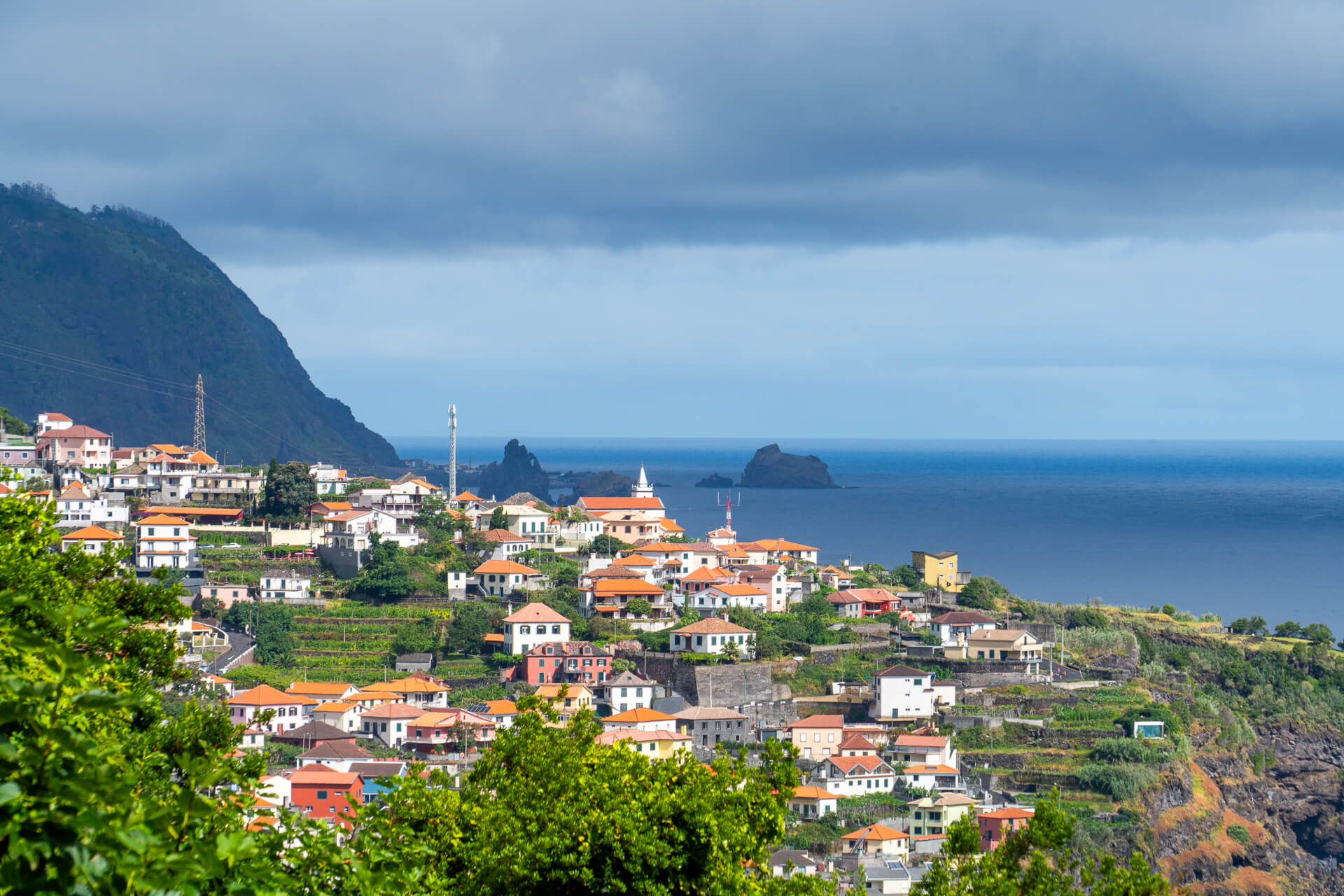
Madeira had been on our travel wish list for years. As nature lovers, we couldn’t stop thinking about an island where dramatic hikes, wild coastlines, and lush mountains all exist in such a small space.
And once we finally arrived, it didn’t take long to realise that Madeira is incredibly diverse.
We visited in late May to early June, right at the peak of hydrangea season, and it honestly felt like walking through a giant botanical garden. Roads, viewpoints, hiking trails — everything was bursting with colour.
Add to that the constant shifts in landscape, from misty mountains in the north to sunny coastal towns in the south, and Madeira kept surprising us day after day.
We travelled with our daughter Ema, who was just three months old at the time, and spent almost two full weeks exploring the island from north to south and east to west. That gave us the freedom to slow down, work around weather changes, and really experience Madeira instead of rushing between highlights.
Many of the places we loved most weren’t planned in advance — they were the result of staying flexible.
This itinerary is based entirely on how we explored Madeira ourselves, balancing iconic spots with quieter corners, scenic drives with hikes, and busy days with slower ones.
If you want a deeper look at individual places, our things to do in Madeira guide covers the highlights and a few spots we genuinely loved. Our where to stay in Madeira guide helps you choose the best base depending on how you want to travel.
Below, we’ll show you how to spend 10 days in Madeira in a way that feels realistic, flexible, and enjoyable — whether you’re here for hiking, scenery, or simply experiencing the island at a comfortable pace.
Every stop is based on real experience, with practical tips we picked up along the way.
In a hurry?
These are our top hotels in Madeira we’d book again
⭐️⭐️⭐️ Hotel Porto Mare – PortoBay (our top pick) – A polished oceanfront resort in Funchal set within lush tropical gardens, with multiple pools, and relaxed vibes.
👉 See prices & availability →
⭐️⭐️ Aqua Natura Bay – A modern boutique-style hotel in Porto Moniz with an infinity pool overlooking the Atlantic and direct access to the natural lava pools.
👉 See prices & availability →
⭐️ Quinta das Vinhas – A charming countryside stay in Calheta surrounded by vineyards and mountain scenery.
👉 See prices & availability →
How many days to spend in Madeira
Madeira is one of those destinations that looks small on a map but feels much bigger once you’re actually there. Distances aren’t huge, but winding mountain roads, changing weather, and how often you’ll want to stop for viewpoints all add up.
We spent almost two weeks on the island and never felt bored — if anything, it made us realise how much time Madeira deserves. From our experience, 10 days is the ideal amount for a first trip if you want to explore properly without rushing.
With fewer days, you can still see the highlights, but things start to feel compressed. Weather plays a big role here, especially for hikes.
Having extra days meant we could move plans around, wait for clearer conditions in the mountains, and enjoy places when they felt right rather than forcing them into a fixed schedule.
10-day itinerary for Madeira
Day 1: Porto Moniz Natural Pools & the north
- Porto Moniz Natural Swimming Pools
- Miradouro da Eira da Achada
- Ribeira da Janela
- Teleférico das Achadas da Cruz
Morning: Porto Moniz Natural Pools
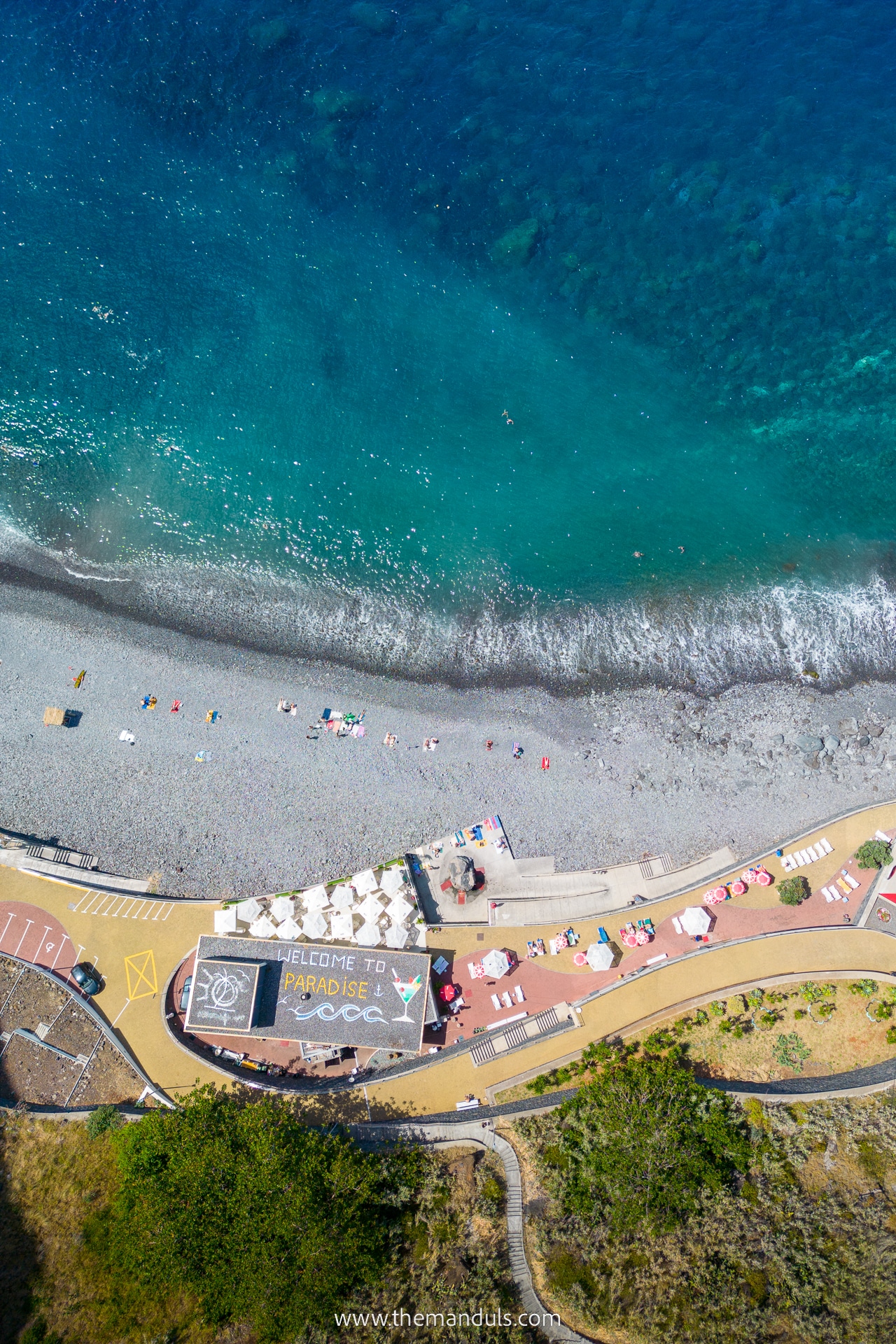
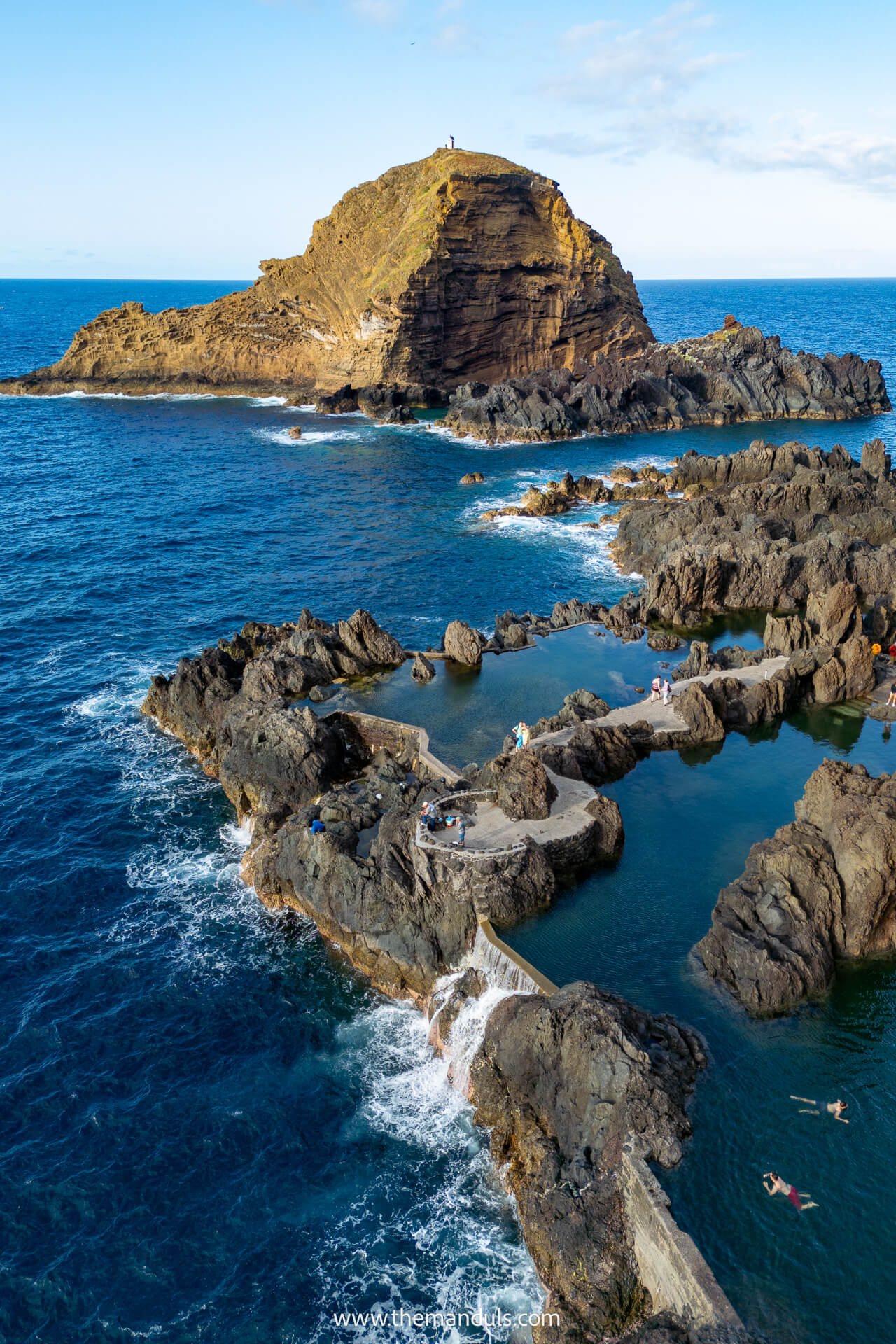
We chose to stay directly in Porto Moniz so we could explore the northwest without long drives from Funchal — and it turned out to be a great decision. Having the natural swimming pools right across the road from our hotel meant early swims, no stress, and enjoying the area before most day-trippers arrived.
Porto Moniz has both paid pools with facilities and free volcanic pools that feel more raw and natural. We tried both and personally preferred the free ones for their dramatic setting. Even in the morning, it’s not empty, but the atmosphere is calm and unhurried.
Afternoon: Northwest viewpoints & coastal stops
After lunch, we drove along the northwest coast, stopping whenever something caught our eye.
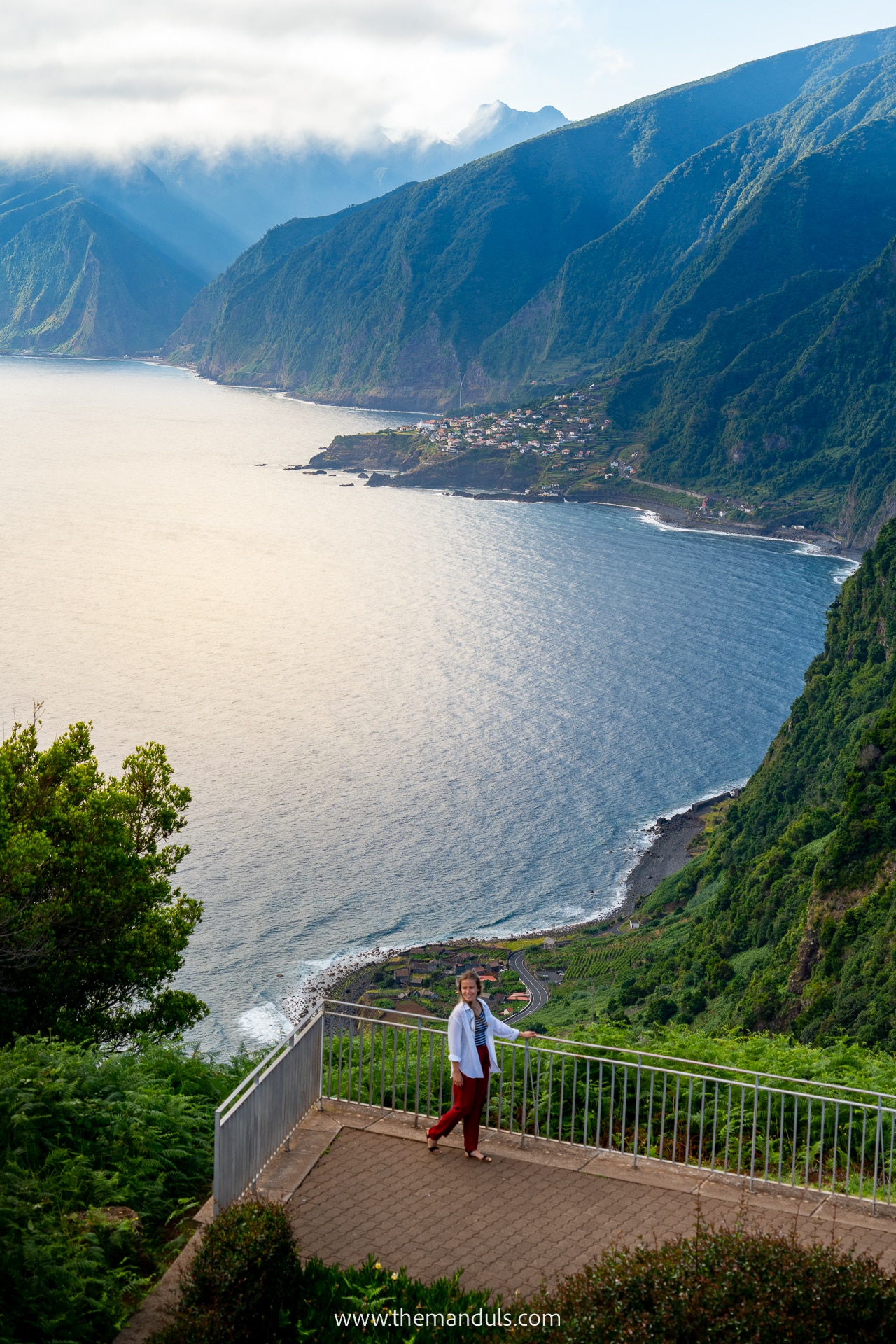
Miradouro da Eira da Achada was a surprise favourite — quiet, open, and almost empty, with wide coastal views near Seixal. It felt untouched and peaceful.
We also passed Ribeira da Janela rock formation, which we mostly enjoyed from a distance. It’s interesting to see if you’re already in the area, but not something we’d plan a detour for.
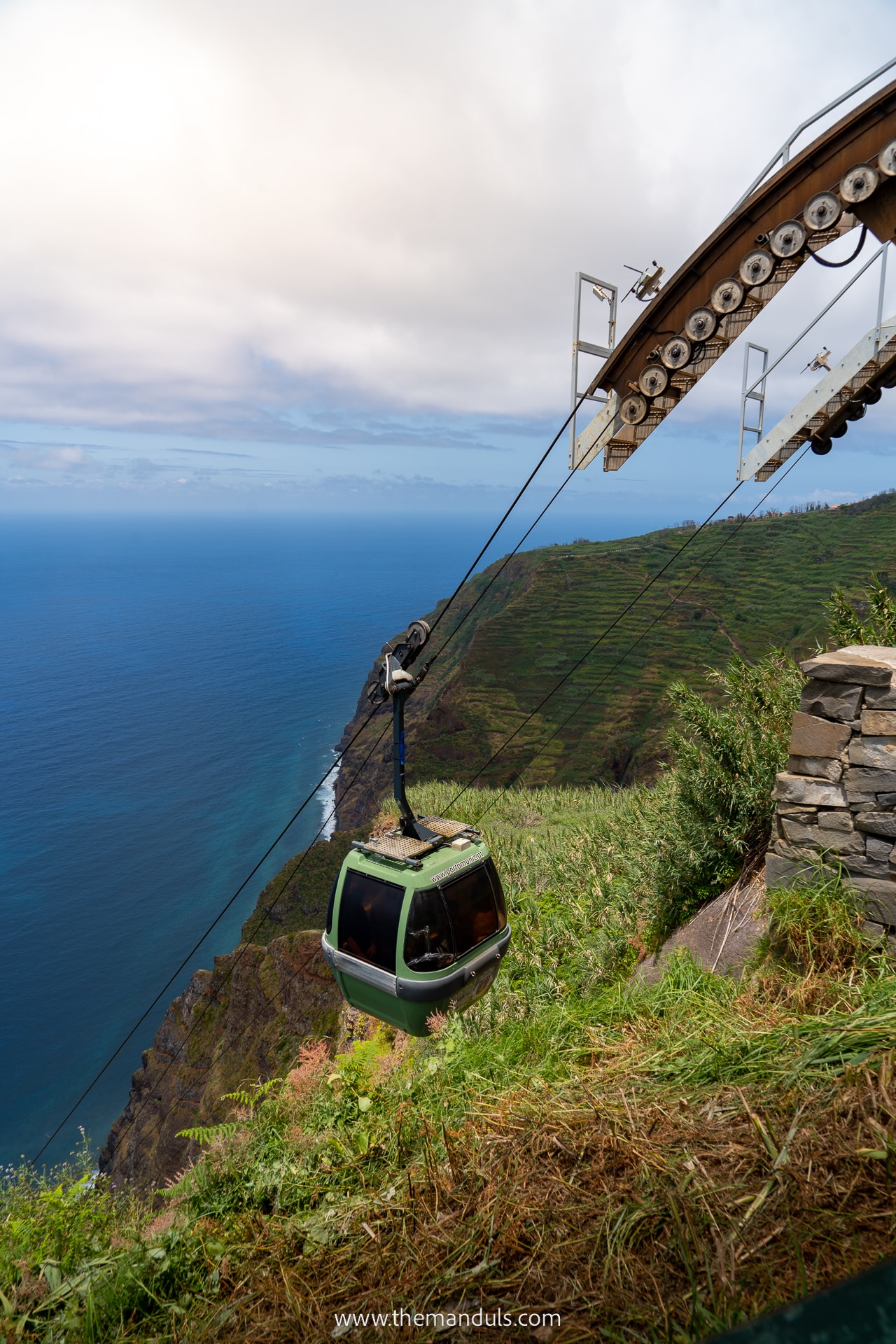
At the Teleférico das Achadas da Cruz, we didn’t take the cable car down, but the views alone were worth the stop. Grabbing a coffee at the terrace and soaking in the scenery was highlight enough — just expect a steep access road and limited parking.
Evening: Back to Porto Moniz
We ended the day back in Porto Moniz, which is exactly why staying here worked so well. No long drive, no rushing — just a relaxed evening by the ocean and a slow start to our Madeira trip.
Day 2: Seixal & Chão dos Louros
- Chão dos Louros
- Capela de Nossa Senhora de Fátima
- Miradouro do Véu da Noiva
- Seixal
Morning: Chão dos Louros & a quiet forest walk
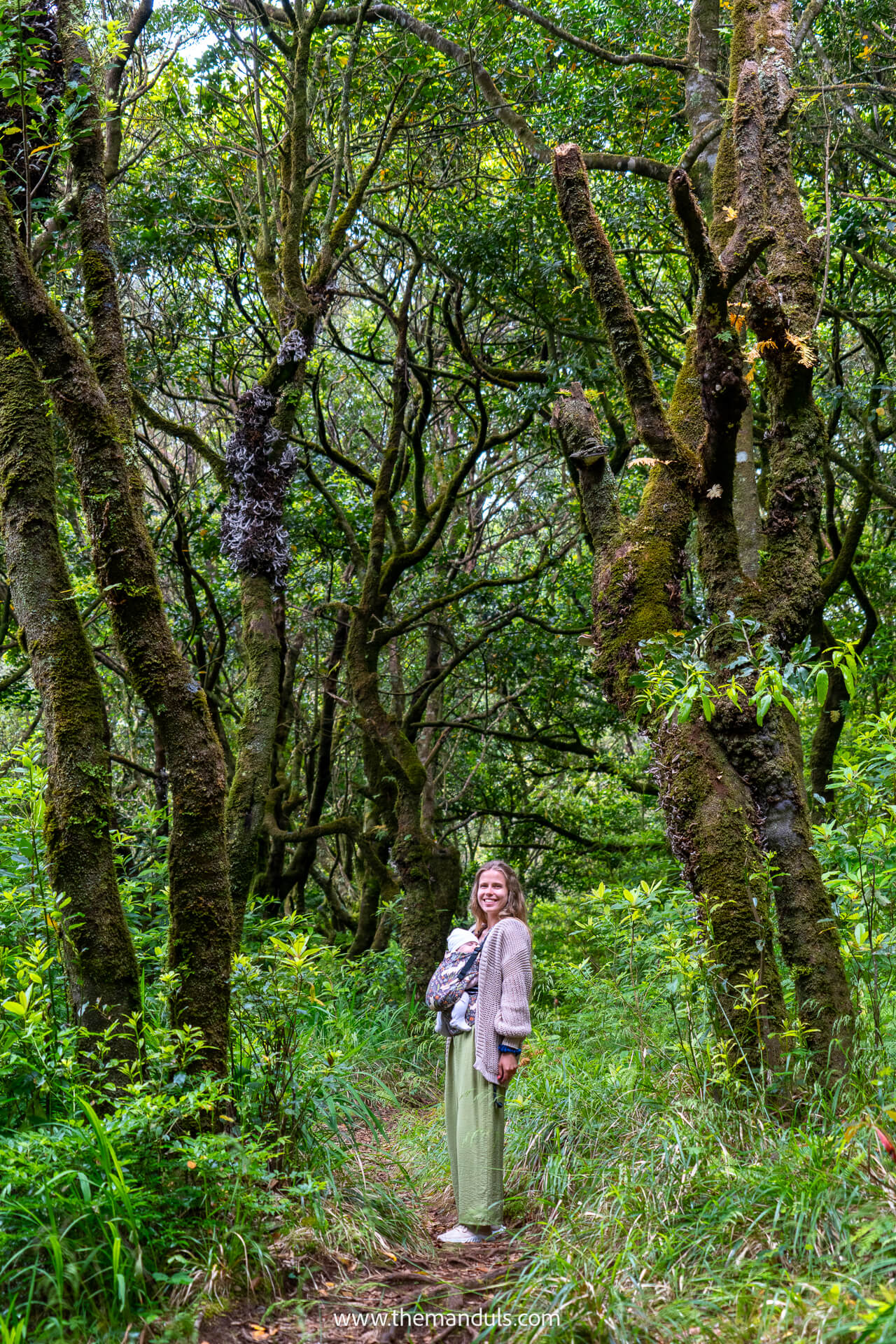
We started the day up in the mountains at Chão dos Louros, and it felt like hitting the reset button after a pretty full first day. This isn’t a hike you do for big drama or famous views — and that’s exactly why we liked it.
We parked at the mountain pass and walked straight into mist and low clouds, which instantly set a calm, slightly moody vibe. It felt quiet, cool, and very much like being tucked away inside the forest.
The trail itself is short and gentle, more of an easy loop than a proper hike, and it never felt demanding.
We did manage to take the wrong path at the very start, so it’s worth paying attention to signs early on. Most of the walk stays inside dense trees, but there’s a moment where the forest opens up and you suddenly get a view down toward São Vicente and the ocean.
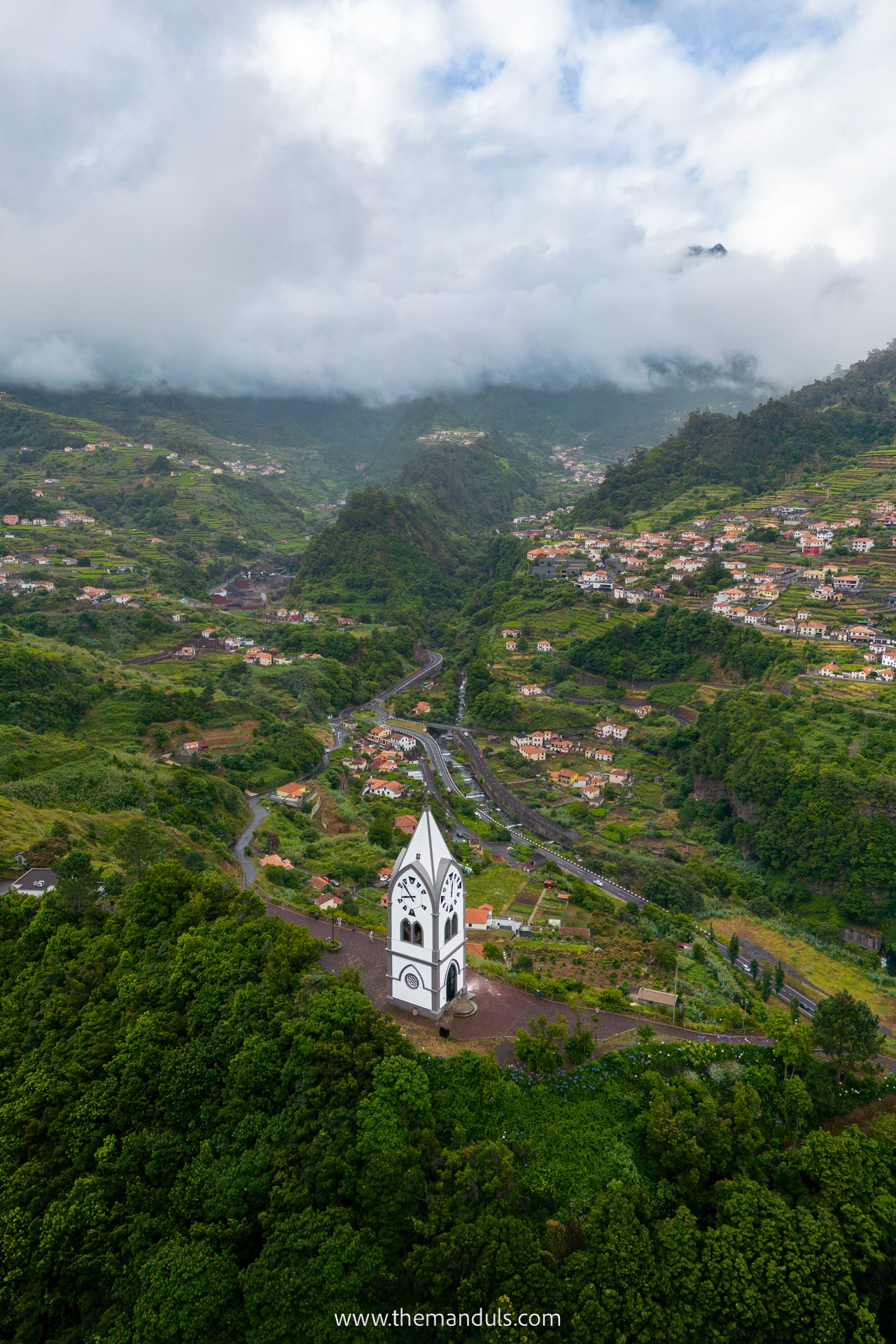
Right nearby, we stopped at Capela de Nossa Senhora de Fátima, which ended up being one of those small places we really didn’t expect to like as much as we did. The chapel itself is simple, but the views are wide open in every direction — hills, valleys, mountains, and the ocean far below.
It was quiet, uncrowded, and we ended up staying longer than planned, just walking around and taking it all in.
Afternoon: Waterfall views & Seixal
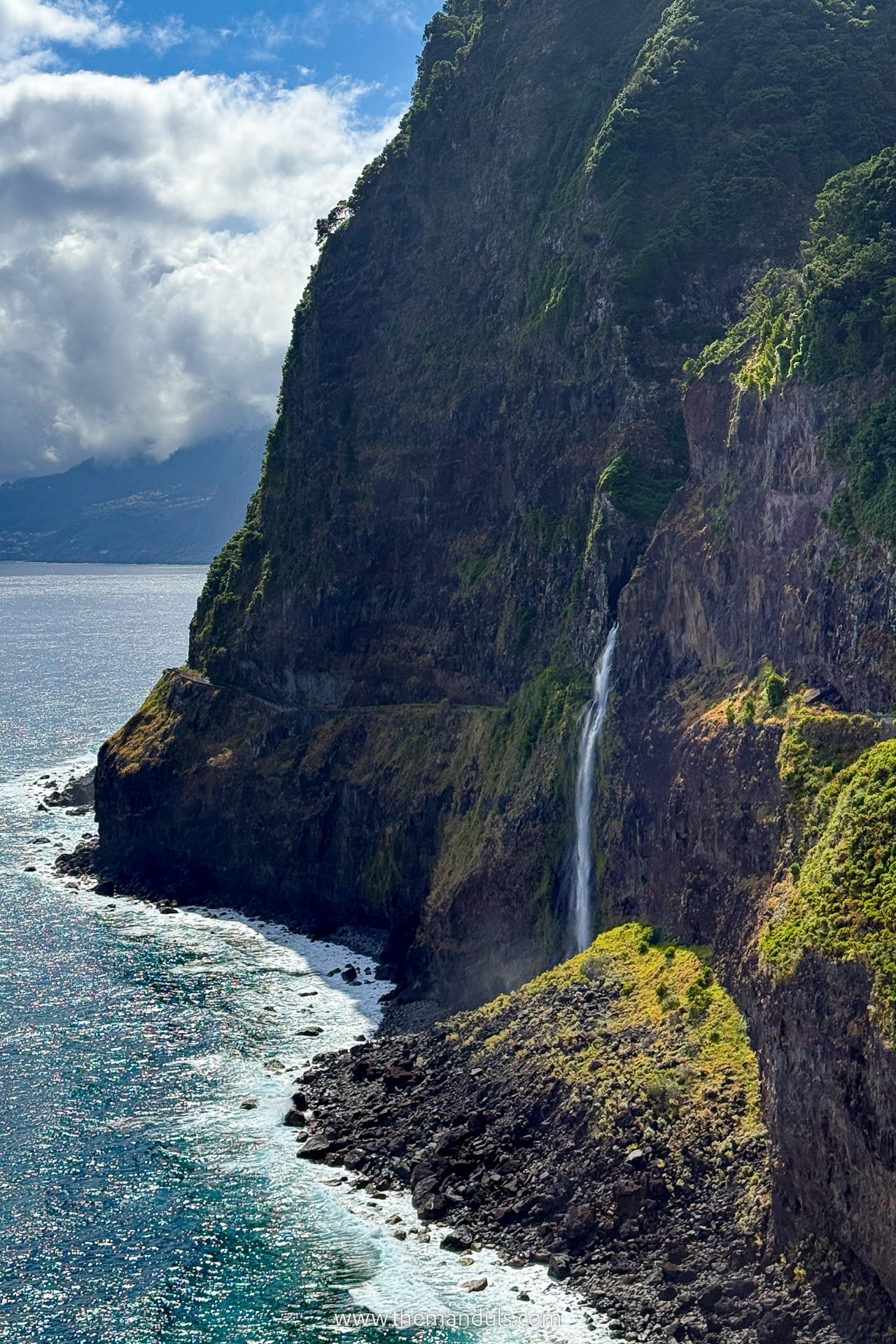
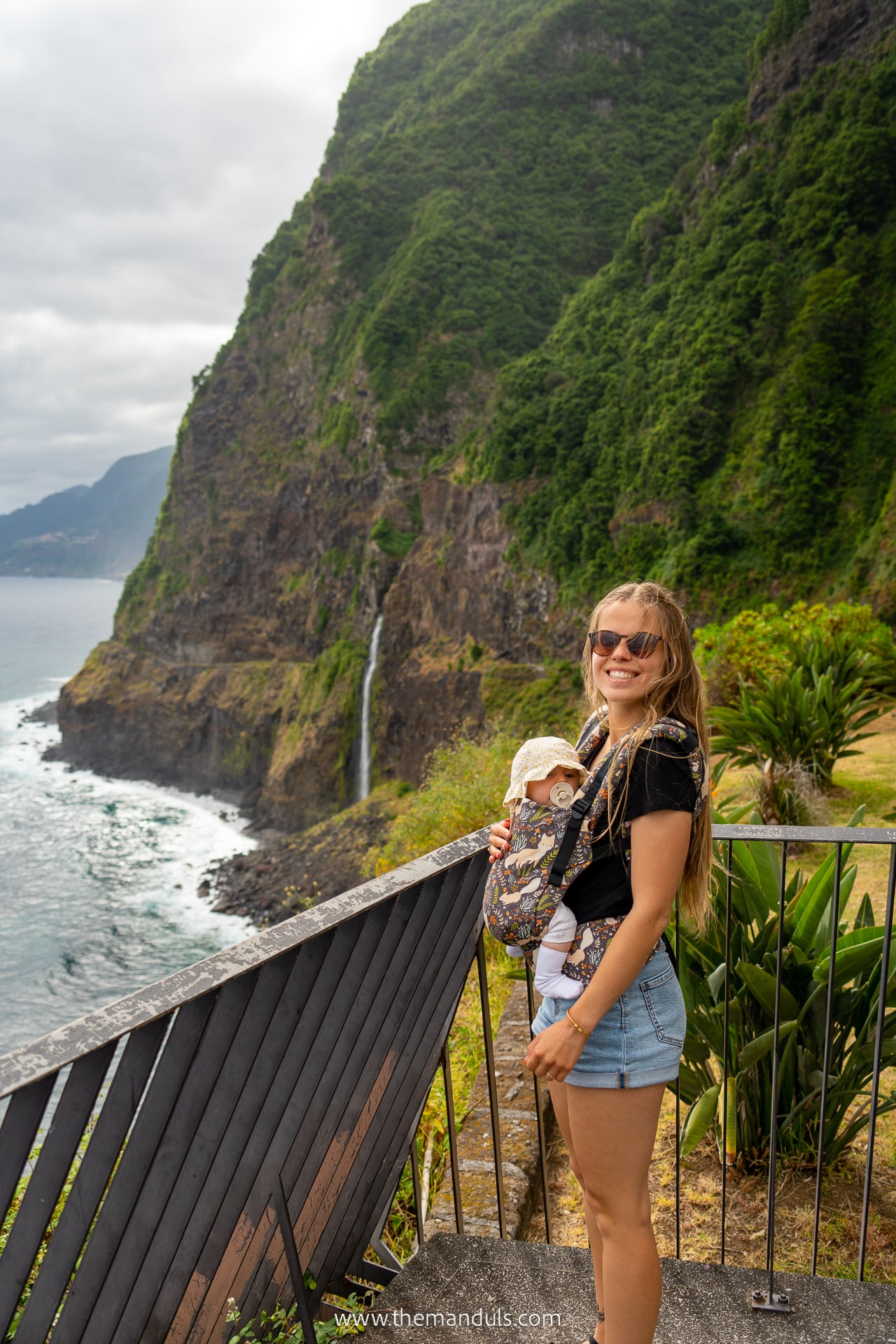
From the mountains, we drove back down toward the coast and stopped at Miradouro do Véu da Noiva. This is very much a “pull over, look, take a photo, move on” kind of stop — but the view of the waterfall dropping straight into the ocean is still impressive and worth the short pause.
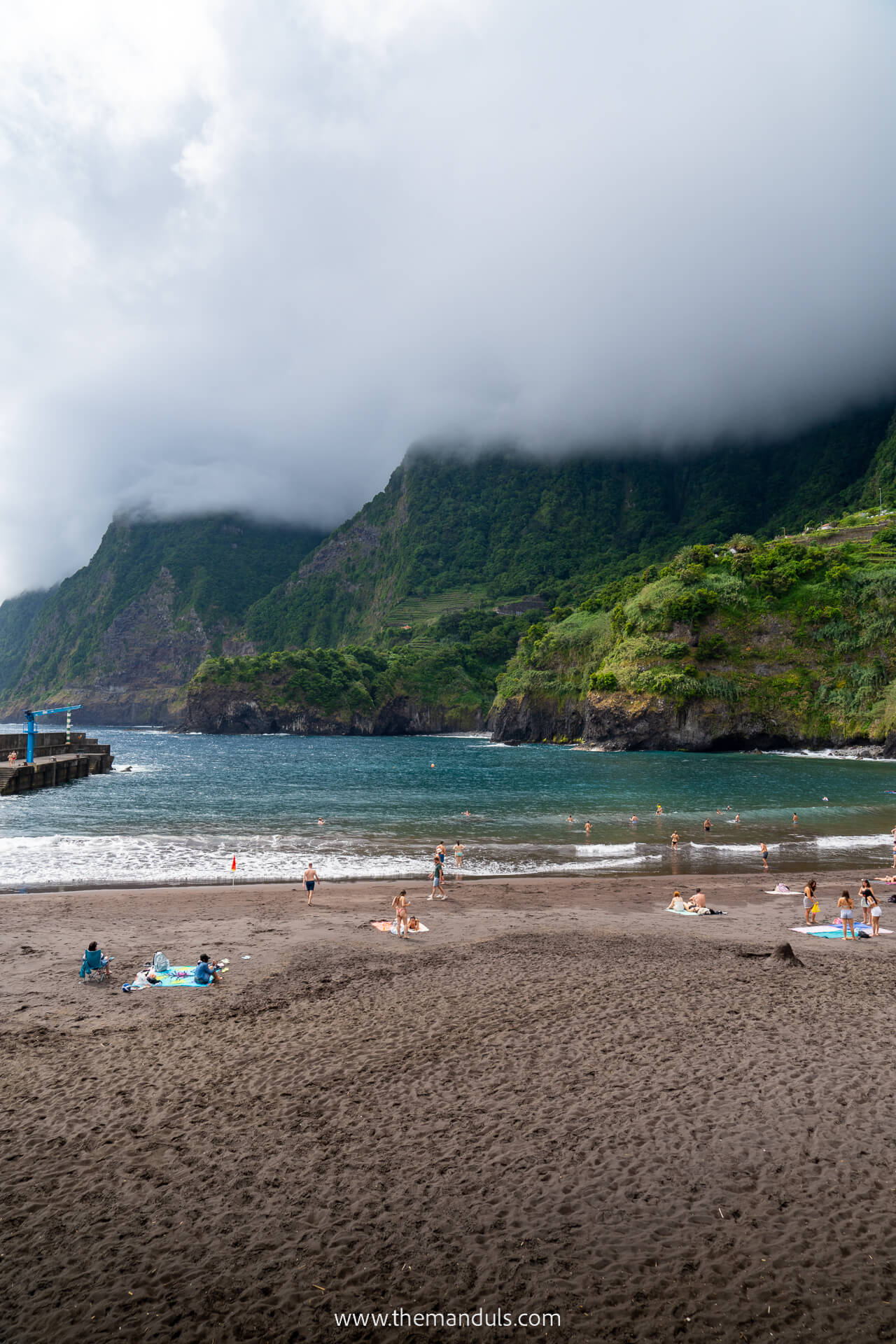
We then headed to Seixal Beach, which slowly became one of our favourite places on the north coast. The black sand, the steep green cliffs, and the open Atlantic give it a completely different feel from most places on the island.
What we loved most was how relaxed it felt. You can actually walk barefoot on sand here (which is surprisingly rare in Madeira), swim comfortably, or just sit and watch the waves. We visited twice, and timing made all the difference — midday felt much nicer for us than early morning.
If the beach isn’t your thing that day, Seixal also has natural pools, so you can easily switch plans without driving anywhere else.
Our Madeira Google Maps
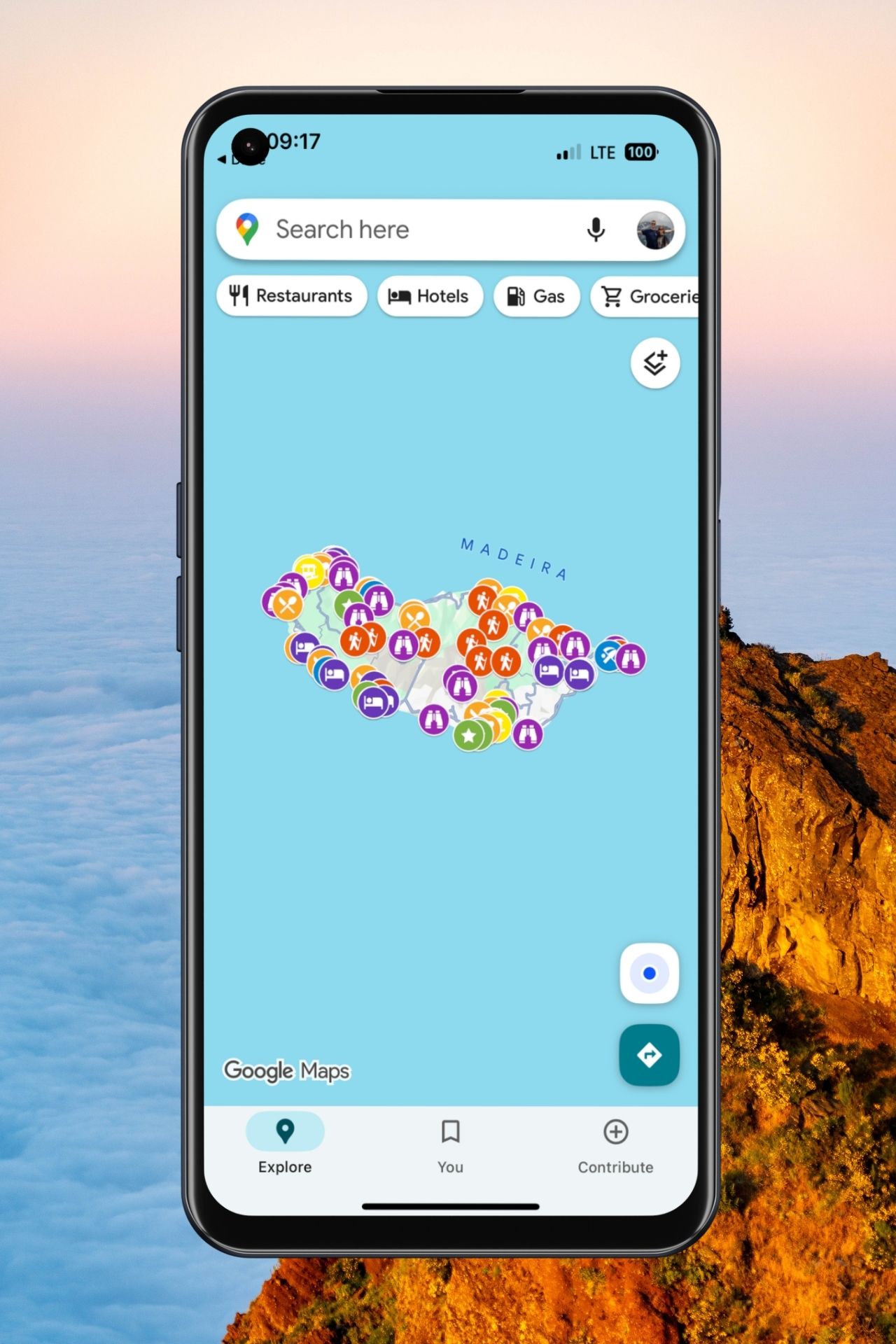
Built from our real trips around Madeira — only places we actually visited and loved.
No random saves. No wasted time. Just a ready-to-use map that helps you explore the island in a way that actually makes sense.
92 handpicked spots, including:
📍 The best attractions & unique places
🥾 Our favorite hikes & scenic viewpoints
🍜 Restaurants and cafés we’d go back to
🚠Scenic cable cars
Day 3: Levada das 25 Fontes & Fanal
- Levada das 25 Fontes
- Fanal Forest
Morning: Levada das 25 Fontes
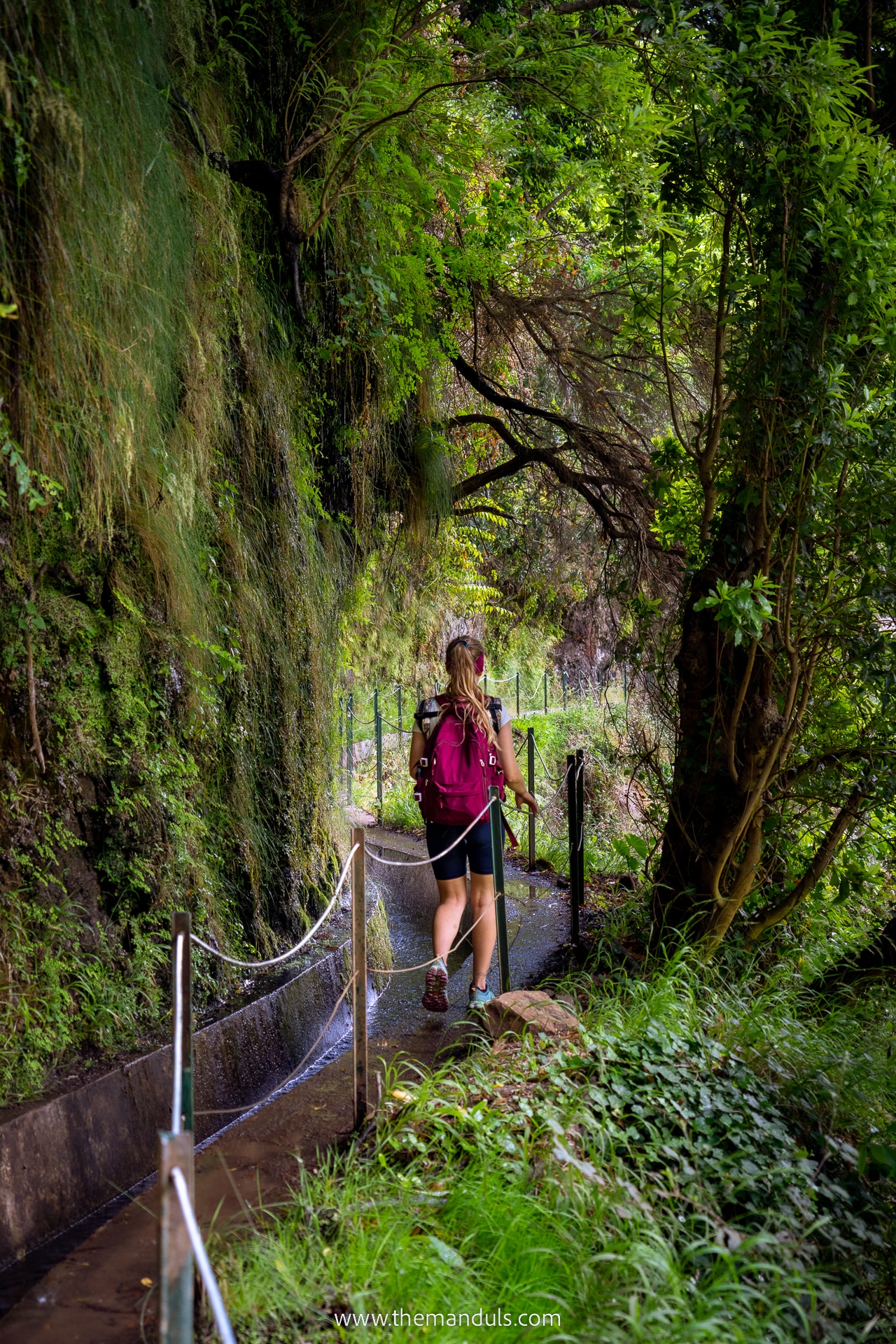
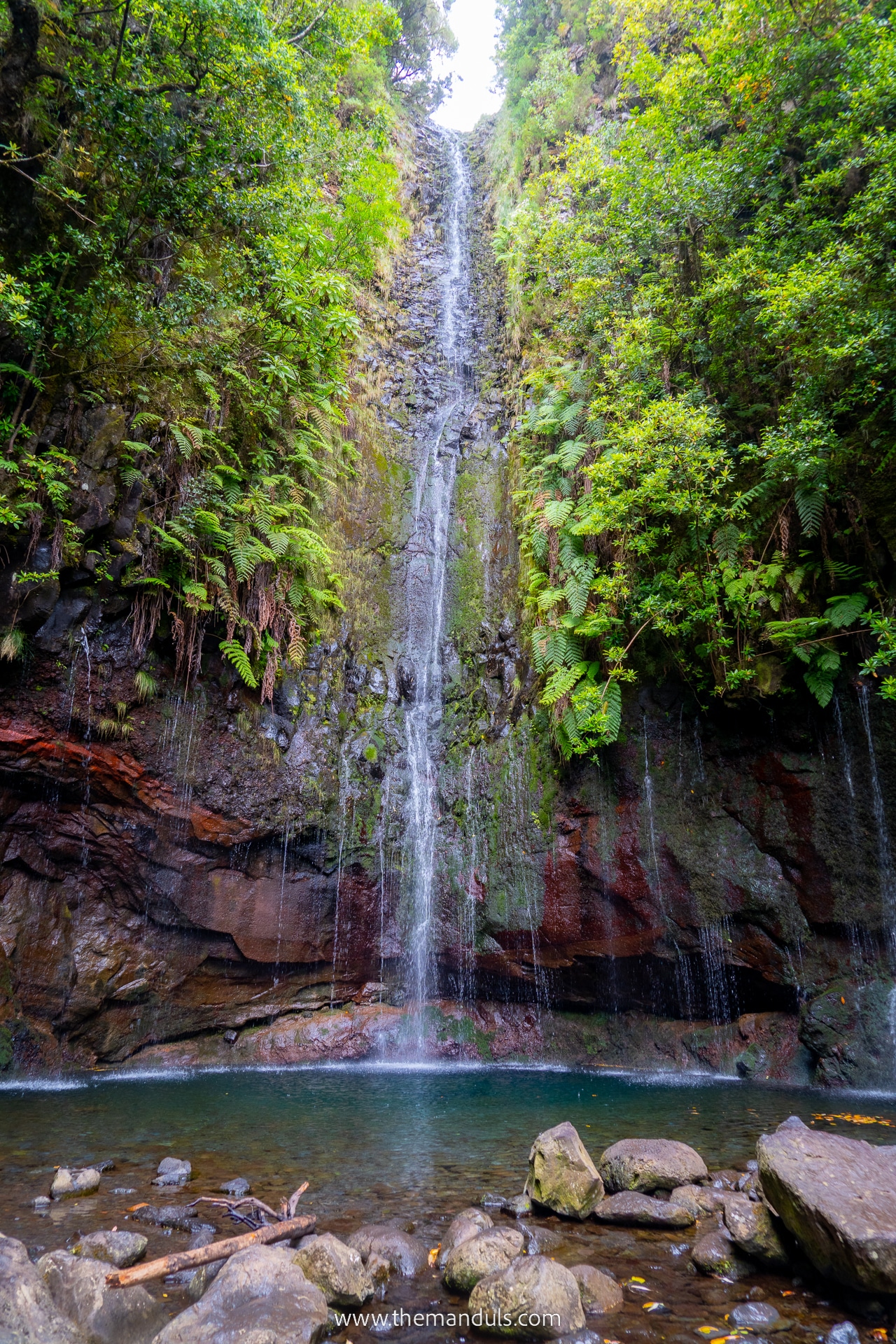
Levada das 25 Fontes is one of Madeira’s most popular hikes, and even though we were a bit unsure because of the crowds, we’re really glad we did it. The trail itself is beautiful from start to finish — twisted laurel trees, deep green forest, and the constant sound of water along the levada.
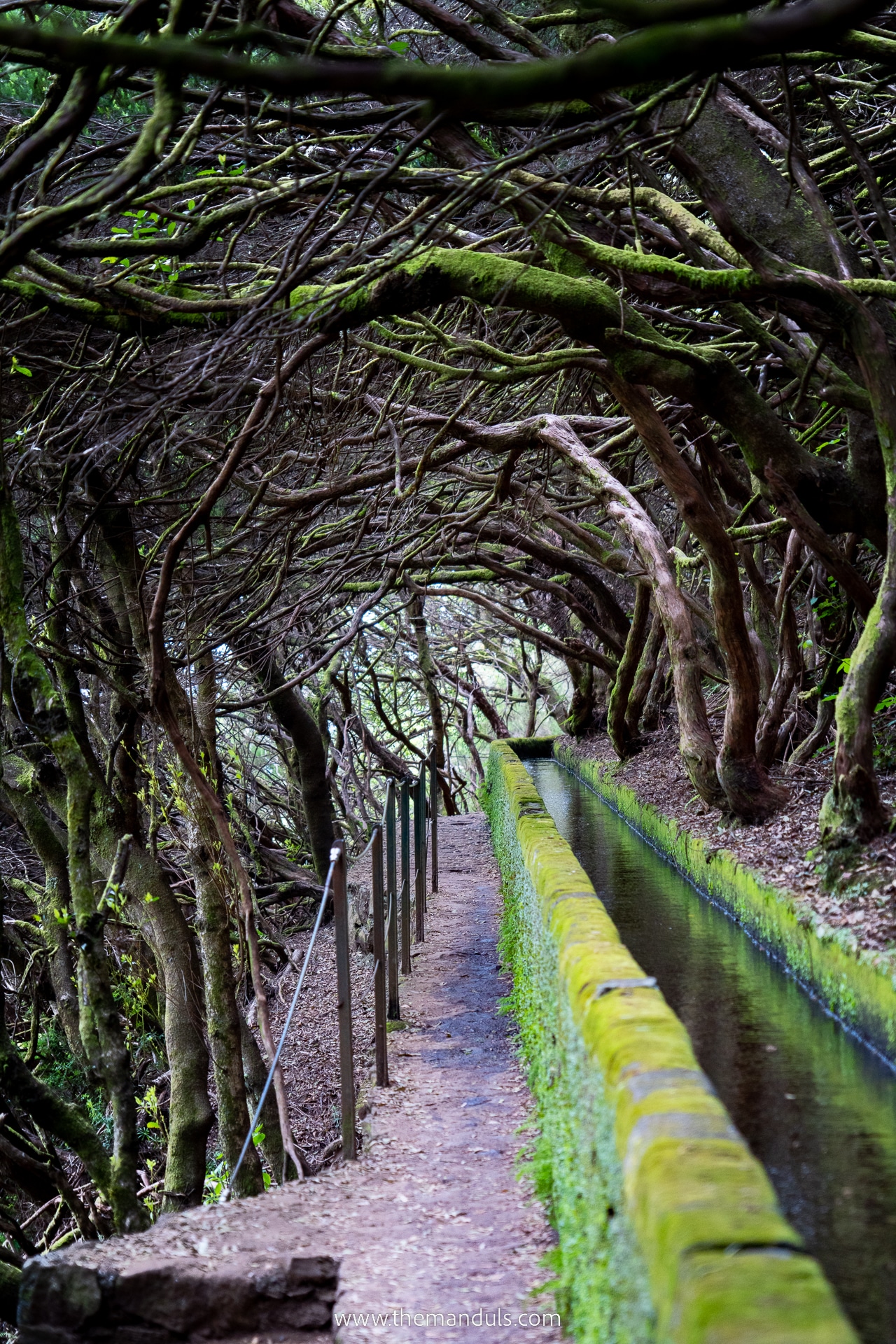
What stood out for us was that it’s not just about the waterfall at the end. The whole walk feels scenic and calm, especially if you time it right. We started later in the day, which made a noticeable difference, and even hiking with Ema in a carrier felt manageable.
The only thing to keep in mind is that the hike doesn’t start directly at the parking area — you either walk the paved road down to the café or take the shuttle back up later. Under normal conditions we’d just walk it, but the weather turned rainy on the way back, so the shuttle came in handy.
Afternoon: Fanal Forest
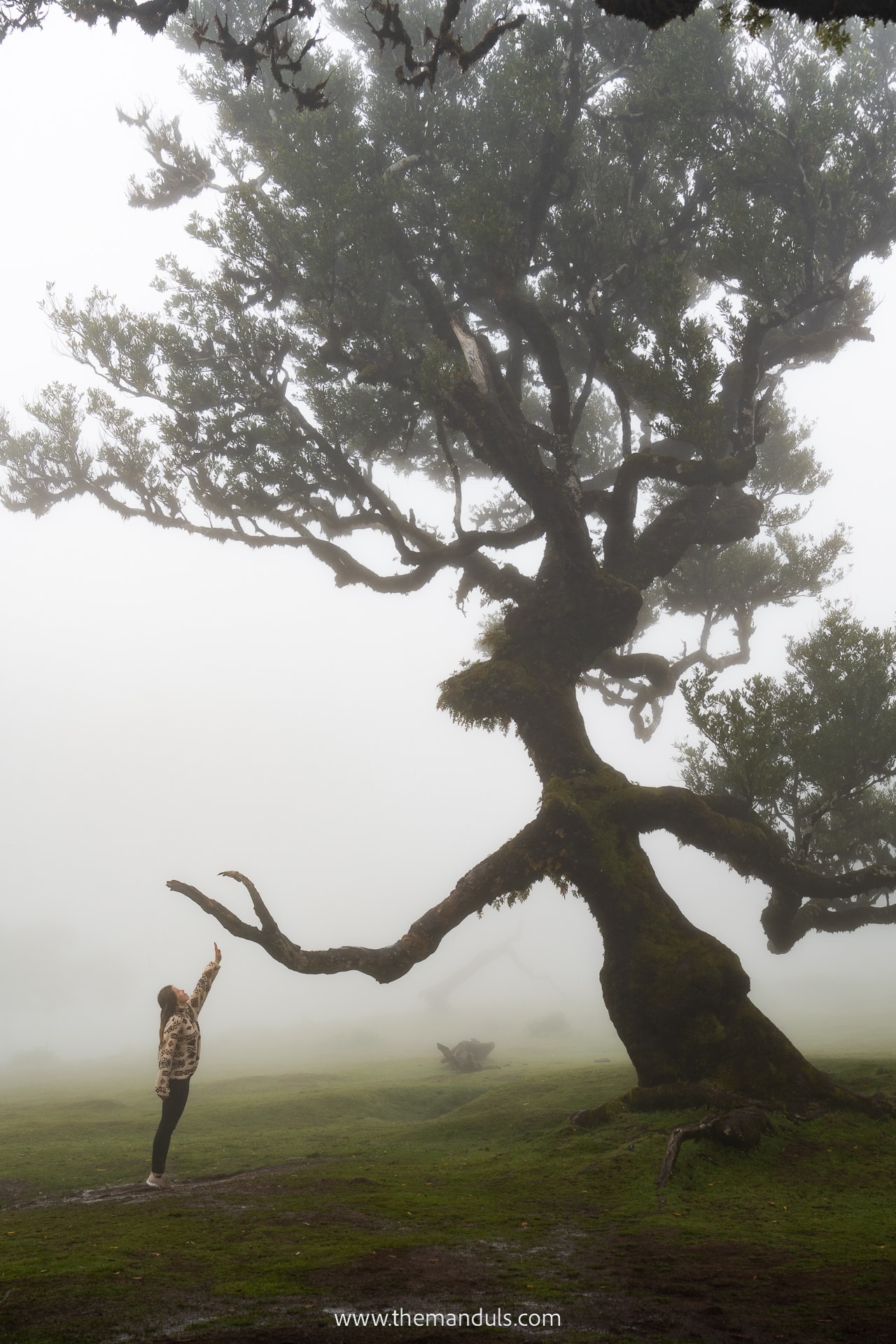
After the hike, we headed to Fanal Forest — and this place really does feel special. Ancient laurel trees, open space, and often a layer of fog that makes everything feel a bit surreal.
We actually visited twice in one day. Early on it was foggy and beautiful, but very windy, so we didn’t stay long. When we came back later, it was busier at first, but Fanal is big enough that you can easily walk away from the crowds. Once the rain started, most people left, and the forest suddenly felt quiet and almost magical.
Day 4: Levada do Moinho & beaches
- Levada do Moinho
- Levada Nova
- Praia do Calheta or Ponta do Sol
Morning: Levada do Moinho (Lombada)
This was one of our favourite levada walks in Madeira — and honestly, it surprised us a bit. Levada do Moinho manages to pack a lot into one hike without ever feeling hard or rushed.
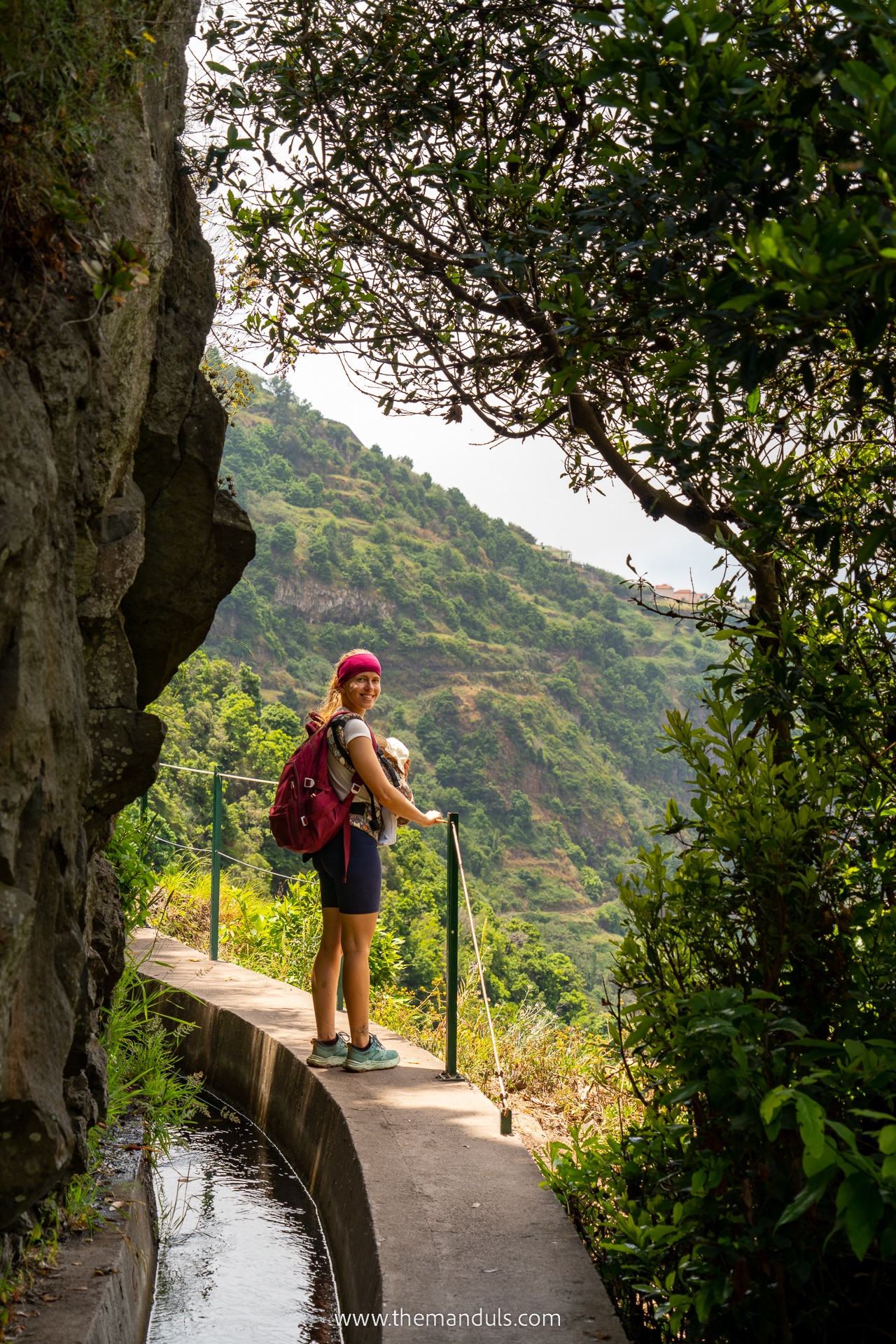
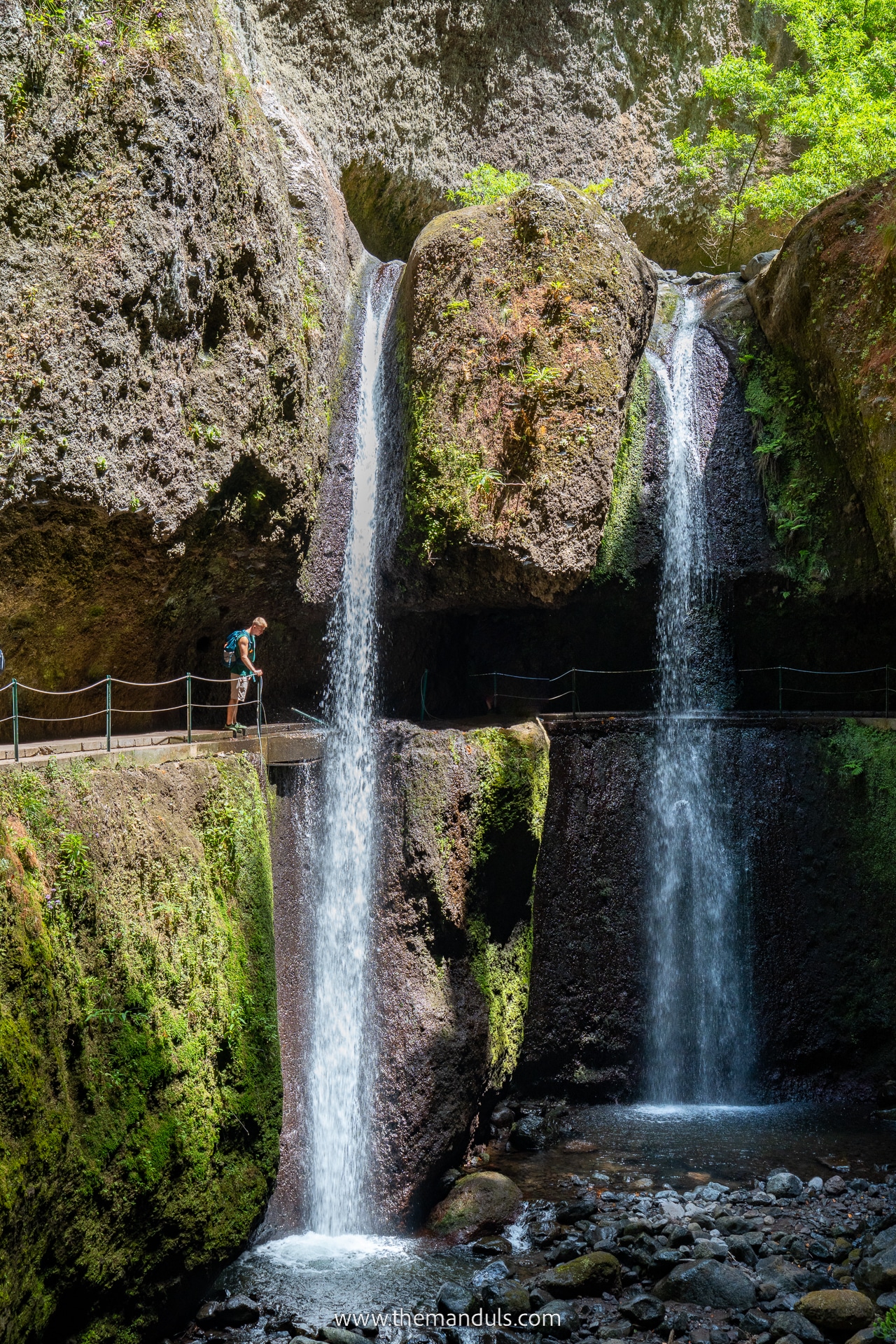
The trail is mostly flat and incredibly scenic from start to finish, which made it a great choice. You get a mix of open valley views, lush forest sections, waterfalls, a tunnel, and some exposed cliffside stretches that make things feel exciting.
One of the highlights is walking behind a waterfall on Levada Nova. The only thing to be aware of is parking: we arrived mid-morning and it was already full, so if you want it easy, coming earlier helps.
Afternoon: Beach time in the south
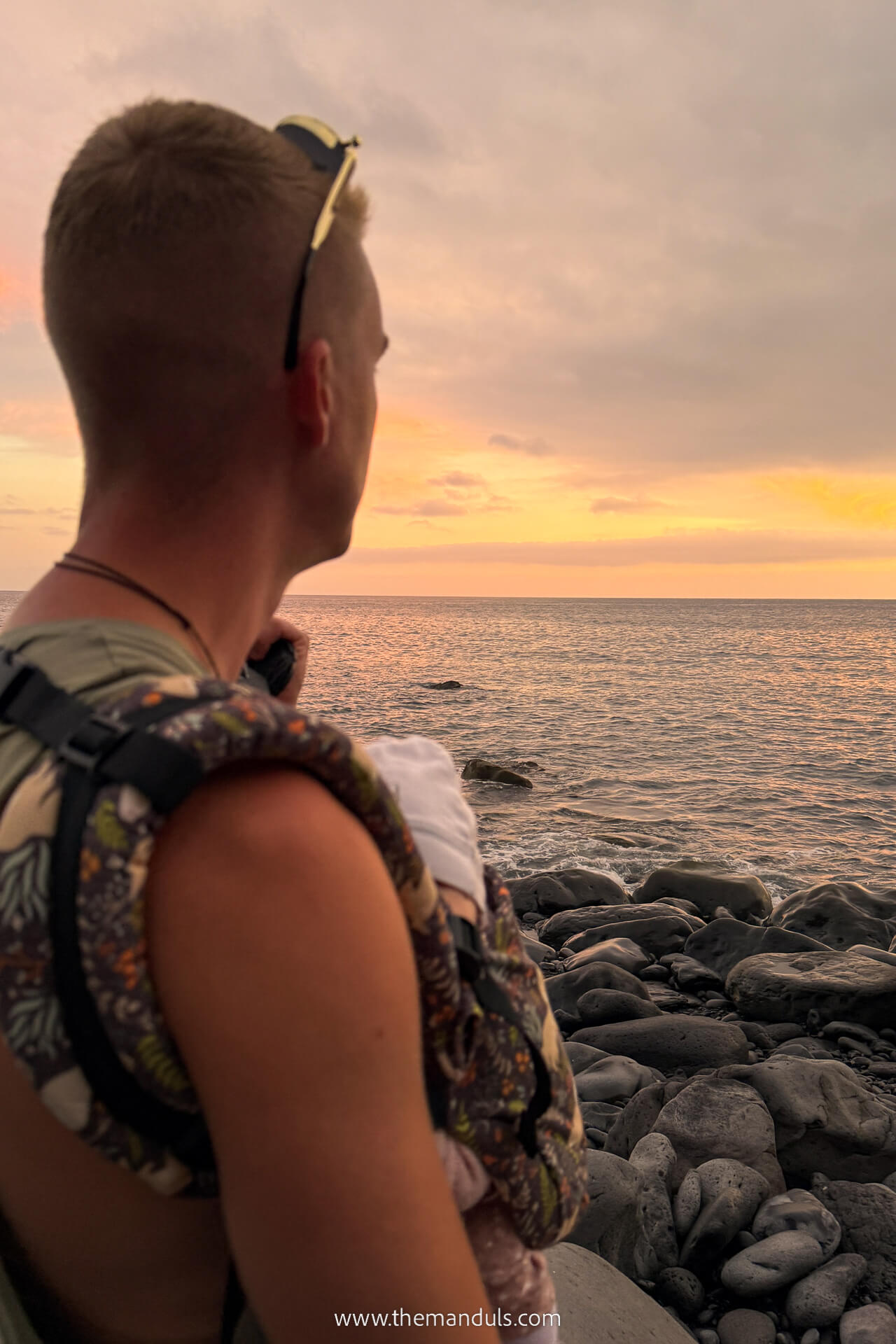
After the hike, we headed south for some well-earned downtime. Our go-to options here were Praia da Calheta and Ponta do Sol.
Calheta is one of the easiest beaches to relax at — sandy (imported, but still welcome), calm water, and plenty of space to just switch off after a hike. It’s great if you actually want to swim without dealing with rocks.
Ponta do Sol feels more local and low-key. It’s smaller and a bit quieter, perfect if you just want to sit by the water, dip your feet in, or grab a drink nearby. We liked how different the vibe felt compared to the north coast.
Day 5: Funchal
- Cabo Girão Skywalk
- Funchal City & Monte Palace Tropical Garden
- Doca do Cavacas natural pools
Morning: Cabo Girão Skywalk
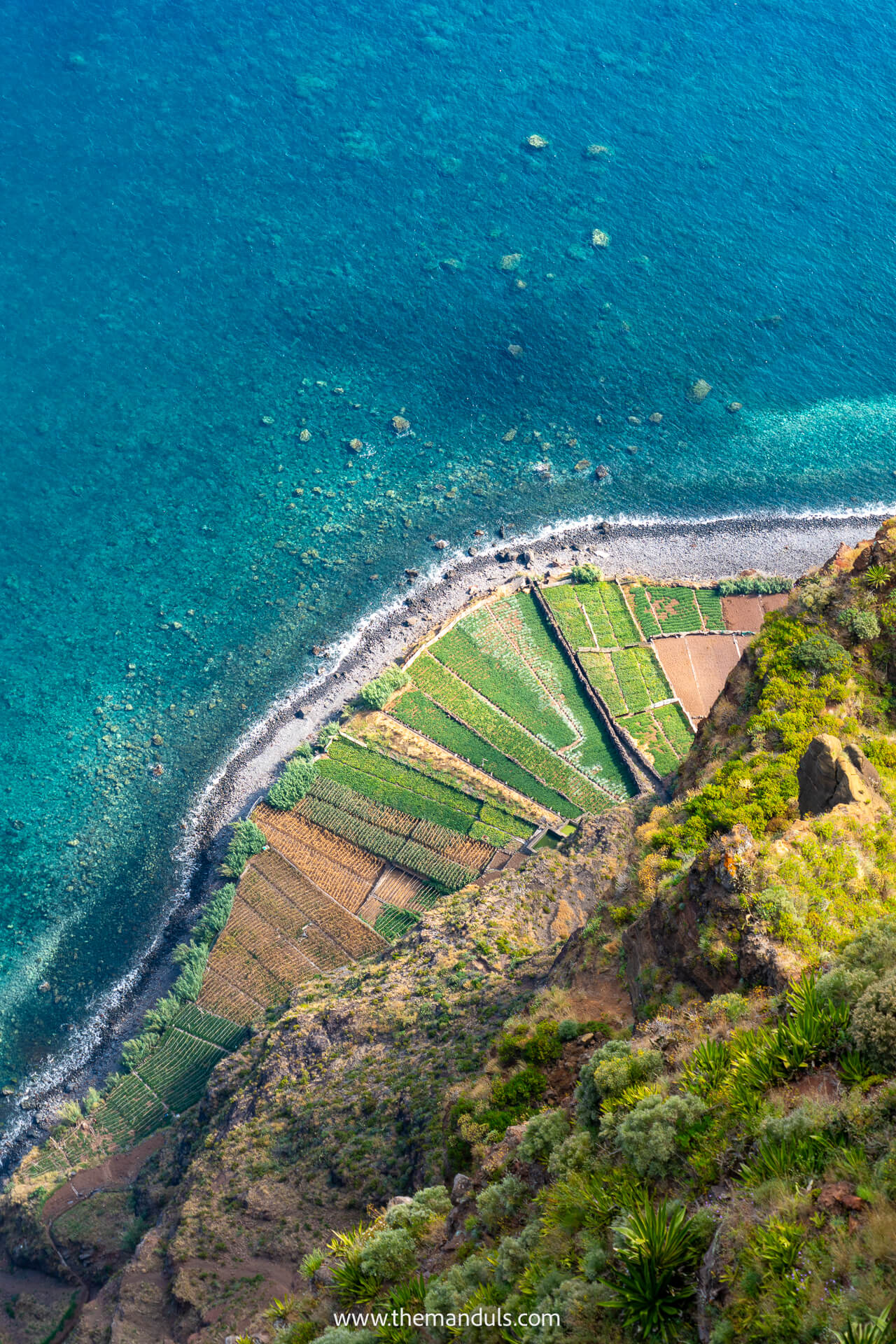
We started the day at Cabo Girão Skywalk, one of the highest sea cliffs in Europe. It’s a quick stop, but the views straight down to the ocean are impressive — especially if it’s a clear day.
The glass platform adds a bit of drama, but for us the real highlight was the scale of the cliffs and coastline. It’s an easy add-on when you’re driving toward Funchal and doesn’t take long, which worked perfectly for this day.
Afternoon: Monte Palace Tropical Garden
Funchal has a lot to offer, but since our trip was mostly focused on nature, we kept the city part fairly light. The one place we really wanted to spend time at was Monte Palace Tropical Garden — and it ended up being one of the most relaxing stops of the trip.
After days of hikes and coastal drives, this felt like a welcome change of pace. The gardens are large, beautifully maintained, and perfect for slow wandering. Paths wind through tropical plants, sculptures, small lakes, and quiet corners, and every so often you get beautiful views over Funchal.
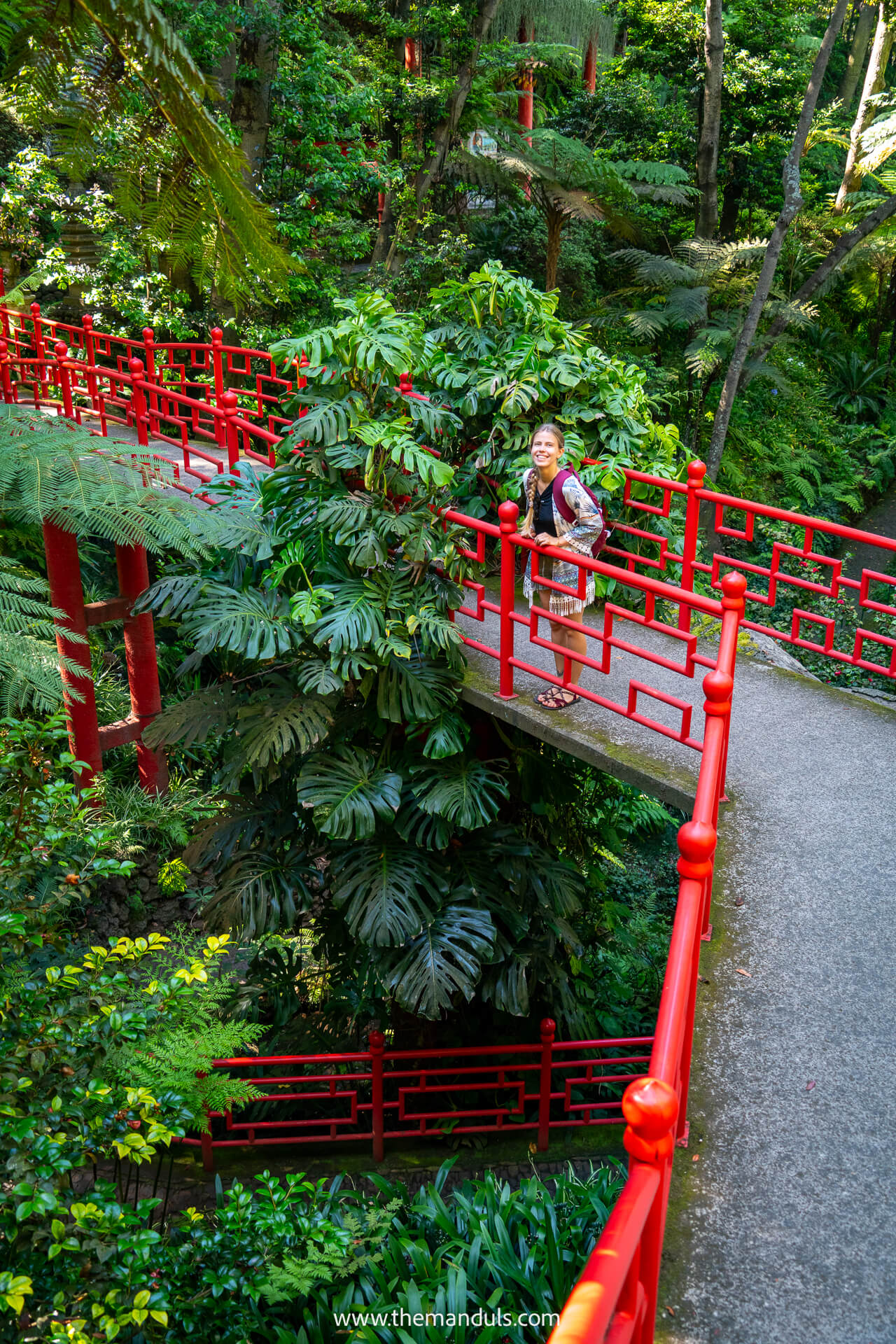
Even though it’s popular, it didn’t feel crowded, and we easily spent around three hours exploring without rushing.
Getting up to Monte is part of the experience. You can take the cable car, but we drove — and yes, the road is extremely steep and feels a bit crazy at first. If you’re comfortable with steep roads, it’s actually kind of fun.
Late afternoon: Monte Toboggan
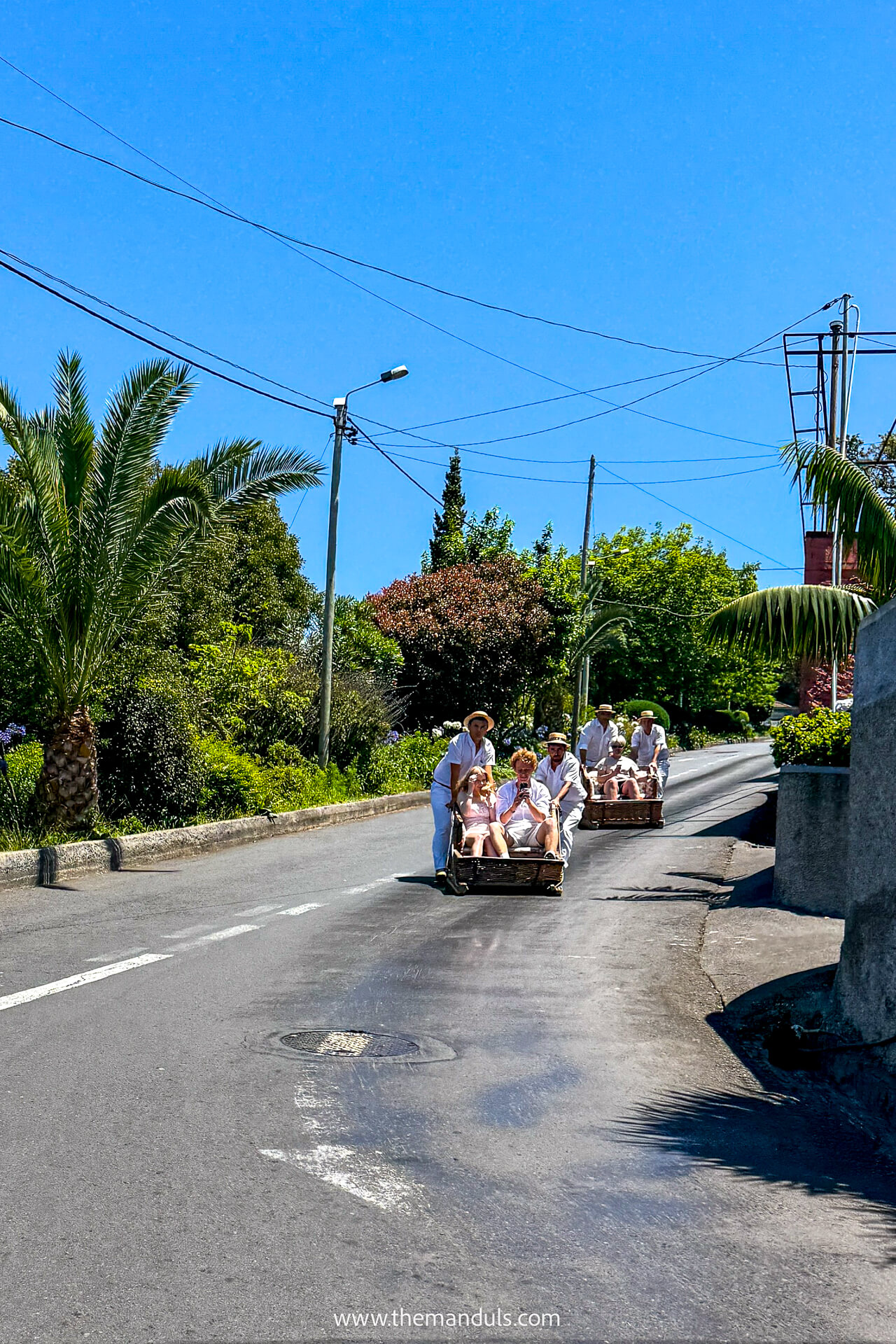
While we were up in Monte, we kept seeing people flying downhill in traditional wicker sleds — the famous Monte Toboggan. It looks chaotic, slightly ridiculous, and genuinely fun.
We didn’t do it ourselves (babies and fast downhill rides aren’t a great mix), but watching people come down laughing made it very tempting. If you’re traveling without kids and want something playful, this is an easy yes.
If you still have time, Doca do Cavacas Natural Pools is another option nearby that many people love, especially for a sunset swim. We didn’t make it there ourselves, but it’s often recommended as a more local-feeling alternative to the bigger natural pools elsewhere on the island.
Day 6: Vereda da Ponta de São Lourenço & beach
- Vereda da Ponta de São Lourenço
- Machico Beach OR
- Praia do Garajau beach
- Miradouro do Cristo Rei
Morning: Vereda da Ponta de São Lourenço
We came to Vereda da Ponta de São Lourenço fully planning to hike it — and then didn’t. The wind was really strong that day, and carrying Ema (she was just three months old), we decided it wasn’t worth the risk.
Even from the start, it was clear what this trail is about: raw, exposed coastal scenery with ocean on both sides and zero shelter from the elements. The landscape here feels completely different from the rest of Madeira — dry, volcanic, almost desert-like — and the views look dramatic the entire way.
On a calm day, this is easily one of the island’s most unique hikes. Just know that because it’s a peninsula, wind is a real factor.
Afternoon: Beach option 1 – Machico
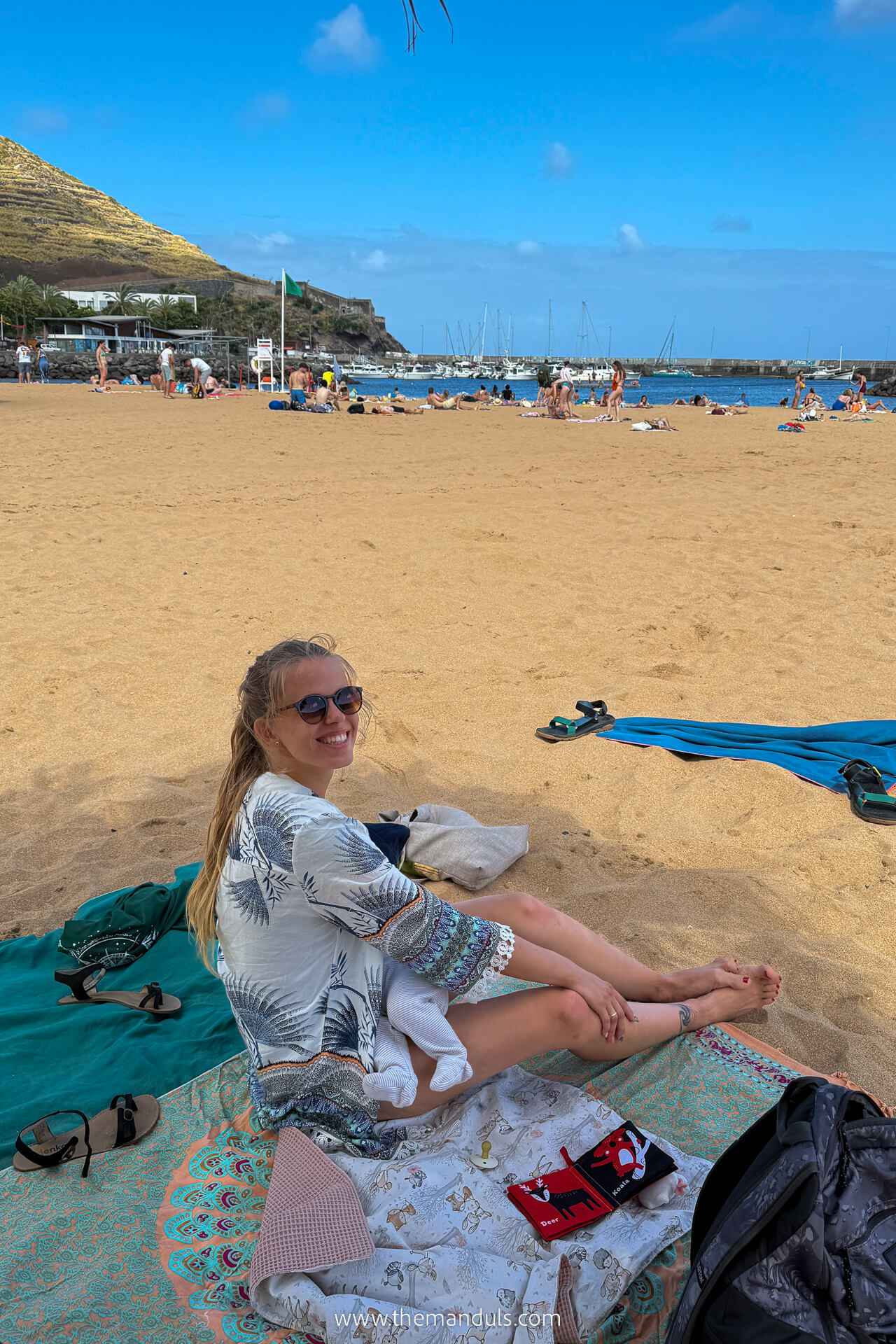
We first stopped at Praia de Machico, which feels very different from most Madeira beaches. It’s right in town, lively, and clearly popular with locals — kids playing, people swimming, cafés buzzing nearby.
The beach is wide, flat, and easy to access straight from the promenade, which makes it very convenient. We wouldn’t come here for peace and quiet, but as a practical, central beach where everything is close by, it still makes sense — especially if you’re already in Machico.
Afternoon: Beach option 2 – Praia do Garajau (our pick)
Later, we headed to Praia do Garajau, and the vibe instantly felt different. Sitting at the base of a huge cliff, with the Cristo Rei viewpoint towering above, the setting alone is impressive.
We arrived early, around 9 AM, and the beach was almost empty and still shaded — which actually worked in our favour. Calm, quiet, not too hot. As the morning went on and the sun reached the beach, more people arrived, but it never felt chaotic.
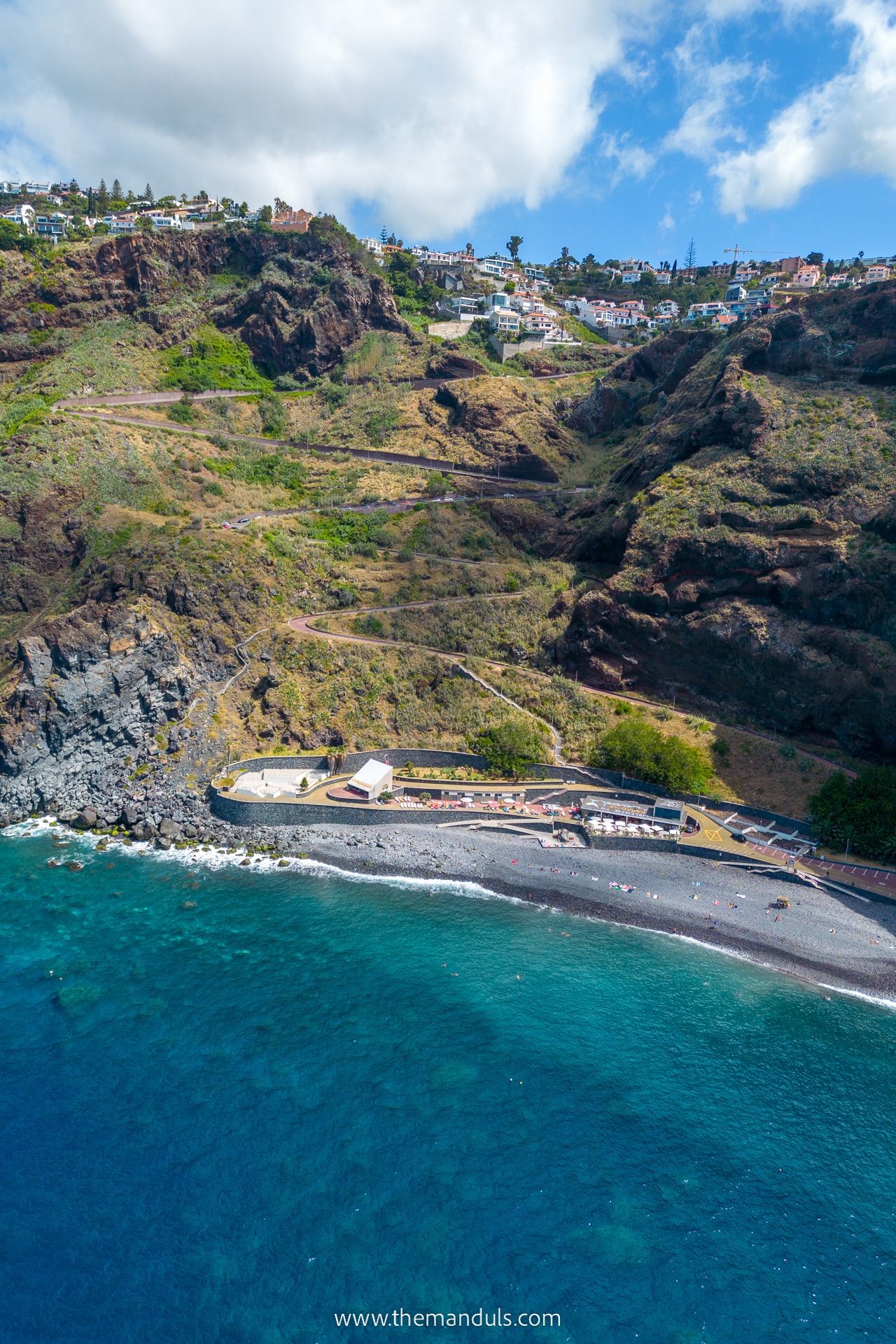
What we really liked here was how easy it was to spend a few relaxed hours without thinking too much. There’s a restaurant, toilets, showers, sunbeds, and clear water that’s great for swimming or snorkelling.
The cable car gliding down from the cliff just adds to the experience.
Day 7: Vereda do Larano & Santana
- Vereda do Larano
- Miradouro do Guindaste
- Rocha do Navio viewpoint
- Santana Houses
Morning: Vereda do Larano (coastal walk)
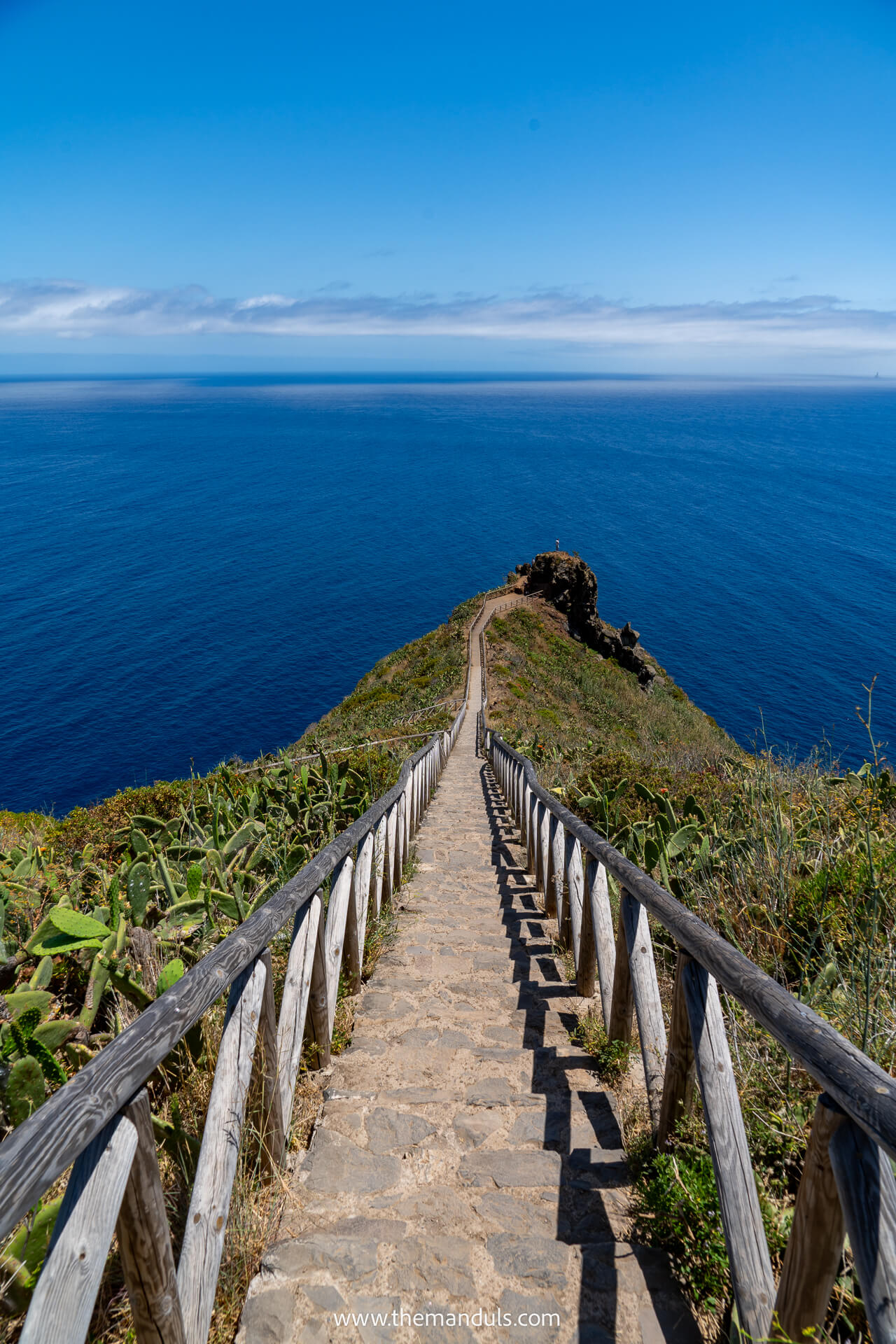
This ended up being one of our favourite coastal walks in Madeira — mostly because of how quiet and untouched it felt. On the whole hike, we only met a handful of other people, which is rare here.
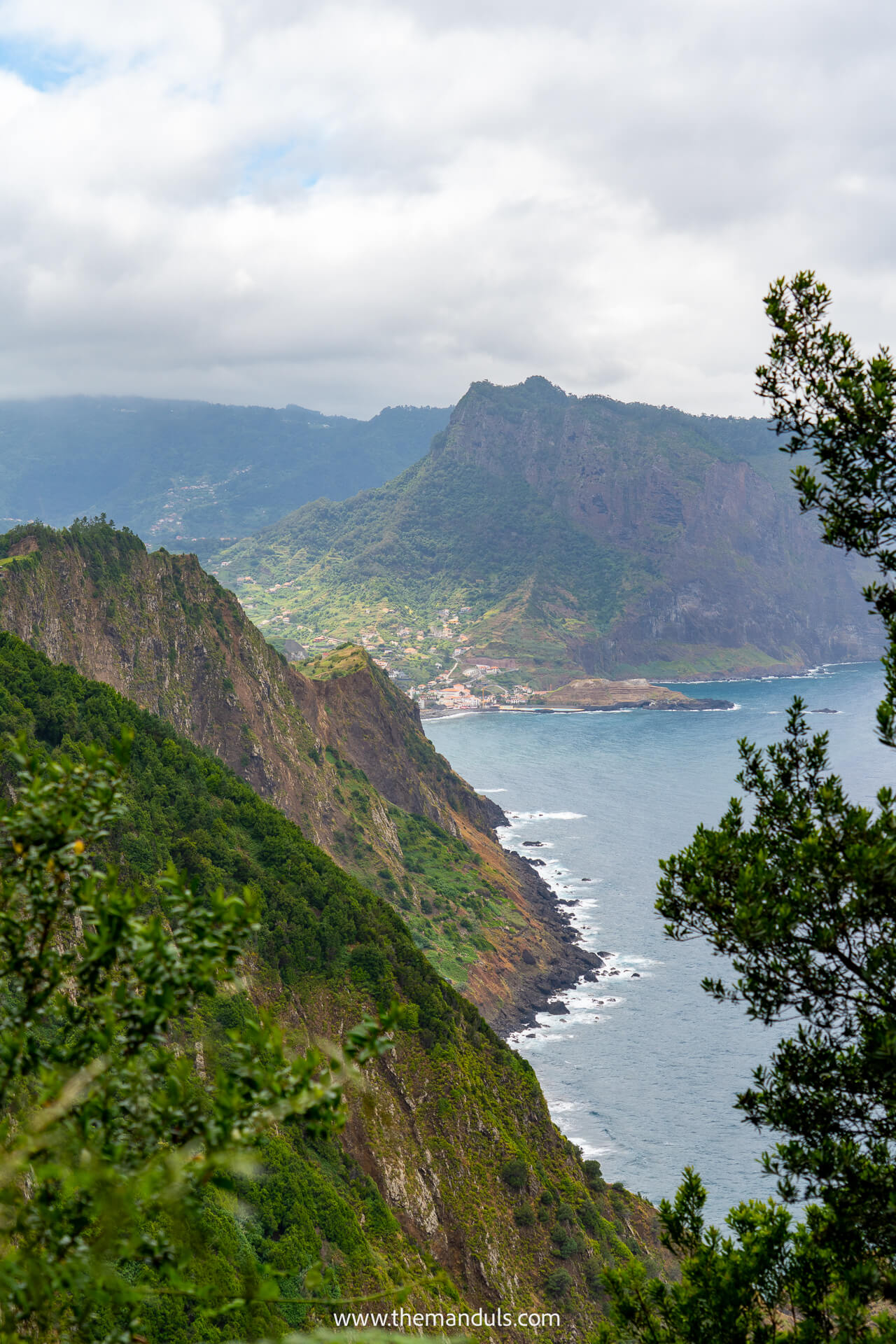
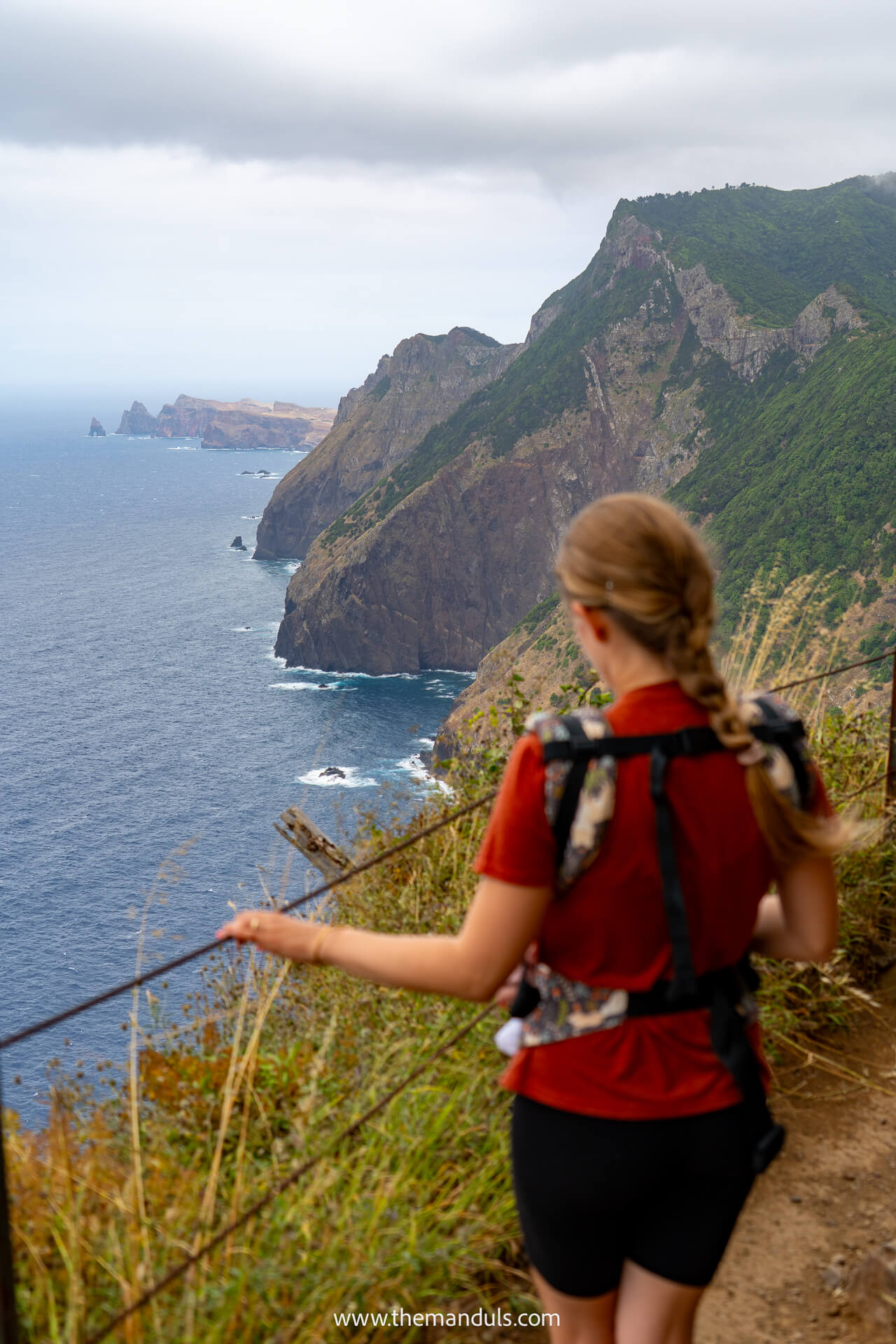
The first part felt calm and easy, almost like a warm-up. Then, quite suddenly, the trail opens up and you’re walking along an exposed cliffside with wide-open Atlantic views and waves crashing far below. That section alone completely exceeded our expectations.
You don’t even need to finish the full route to enjoy it. We turned back earlier than planned because it was very windy, but even that shorter out-and-back felt 100% worth it. From parts of the trail, you can even spot the distant peninsula where the Ponta de São Lourenço hike is.
The path is exposed but has railings in the key sections, so it never felt dangerous to us — though if you’re not great with heights, you’ll definitely feel it.
Afternoon: Viewpoints & Santana
After the hike, we stayed in the area and kept things easy.
We stopped at Miradouro do Guindaste, which offers dramatic views over the rugged north coast and crashing waves below. It’s a quick stop, but the scenery is powerful, especially on a windy day.
Not far from there is Rocha do Navio viewpoint, another great coastal viewpoint looking down toward the nature reserve and old cable car station. It’s one of those places that doesn’t need much time — just stop, look, and take it in.
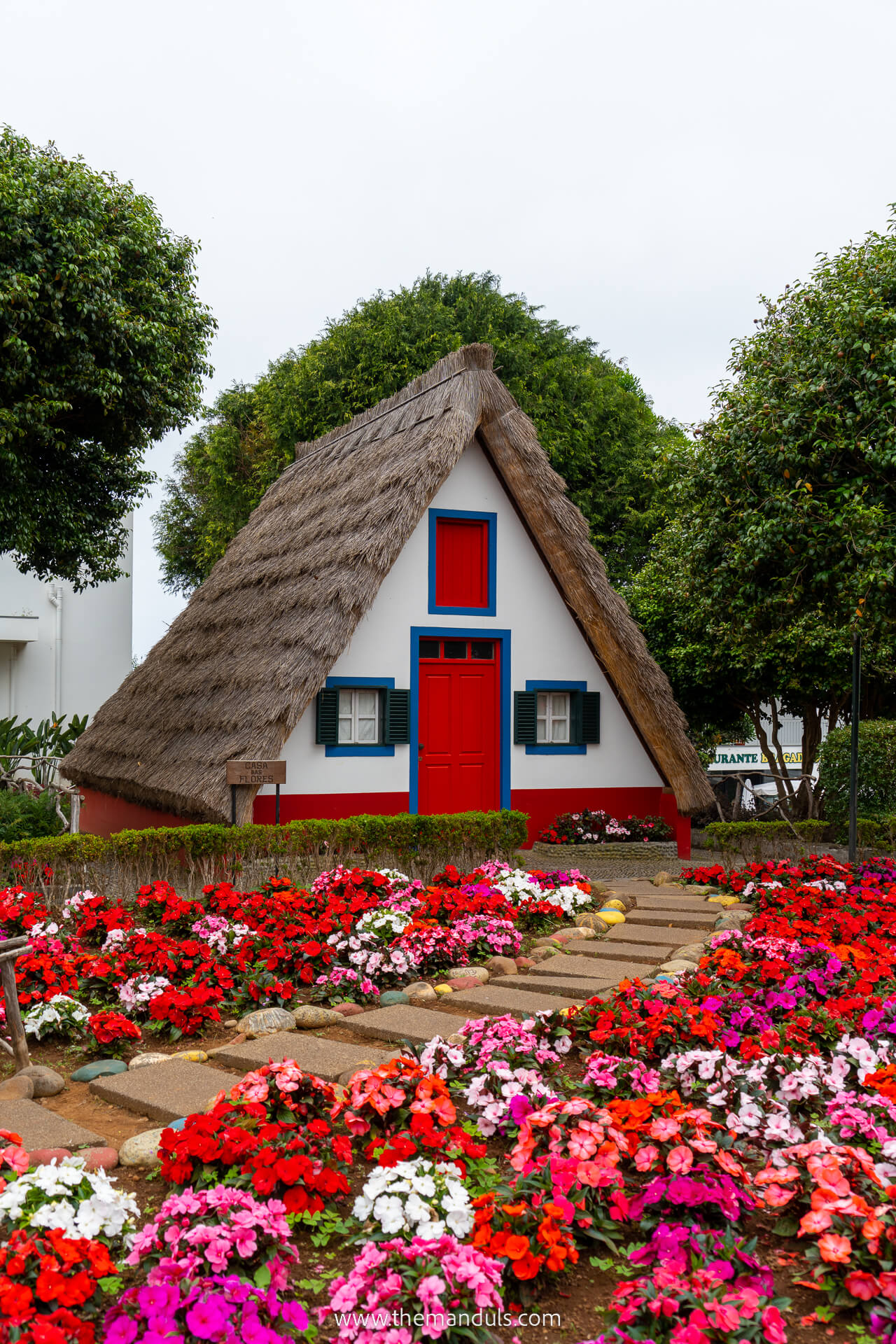
We then headed into Santana Houses. Yes, it’s touristy, but it’s still interesting to see Madeira’s traditional A-frame houses up close. We treated it as a short stop rather than a highlight.
Day 8: Pico do Arieiro
- Pico do Arieiro to Pico Ruivo hike (if open)
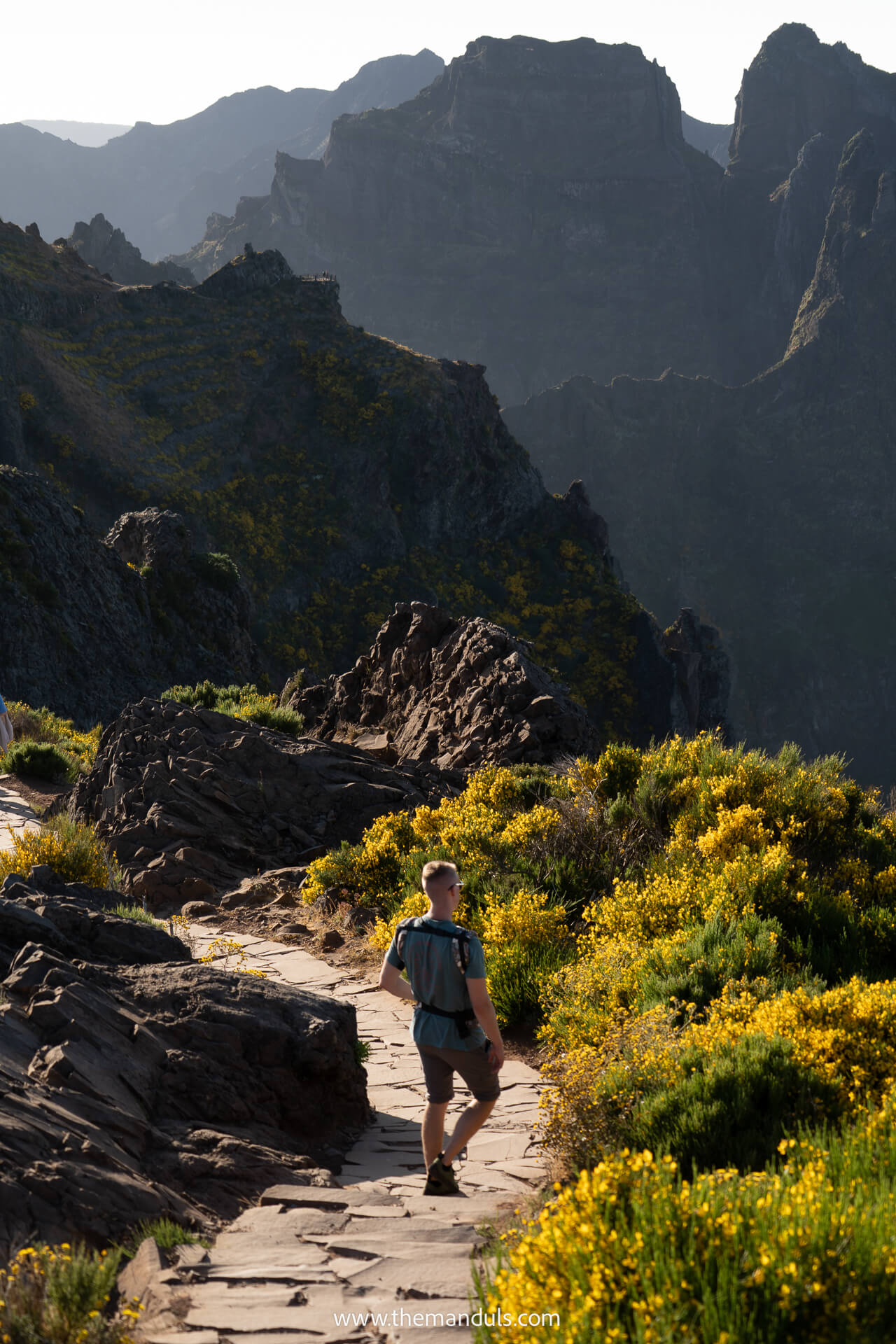
This was one of the hikes we were most excited about in Madeira. The PR1 Pico do Arieiro to Pico Ruivo trail is often considered the island’s most dramatic route — and even before stepping onto it, it’s obvious why.
When we visited, the trail was still partially closed after the 2024 wildfires, which meant we couldn’t complete the full hike. The complete route is scheduled to reopen in April 2026, but at the time, only a section near Pico do Arieiro was accessible.
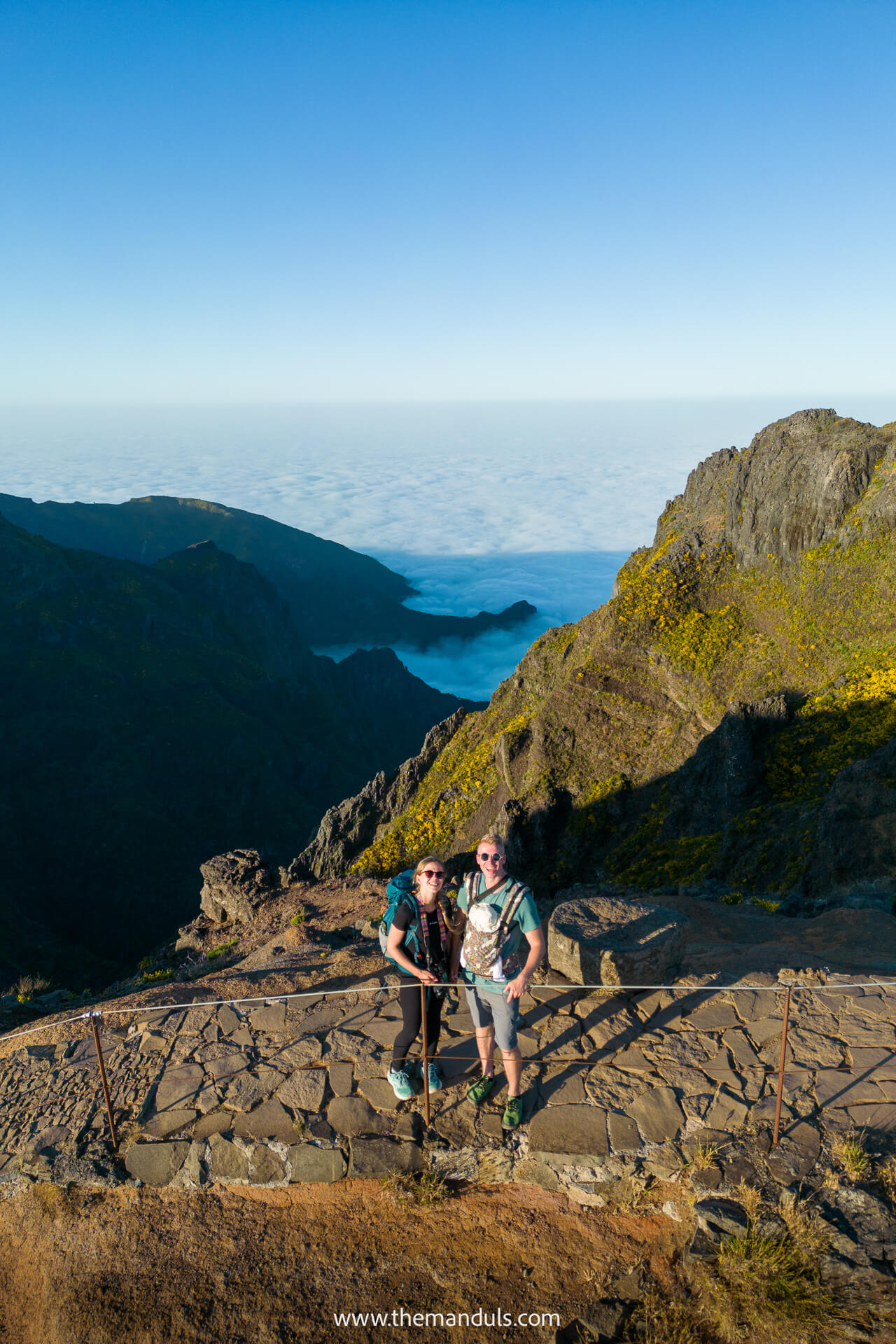
Even so, walking just the open part gave us a clear sense of how epic this hike really is. Narrow ridgelines, sharp volcanic peaks, long staircases carved into the rock, and clouds moving through the valleys below.
If the full trail is open during your visit, this is absolutely one of those hikes worth planning a full day around. It’s demanding, with constant ups and downs, but the payoff is huge.
If you don’t want to do the entire hike, Pico do Arieiro still works as a shorter experience. You can visit just the first section of the trail for sunrise or sunset and still get those iconic views.
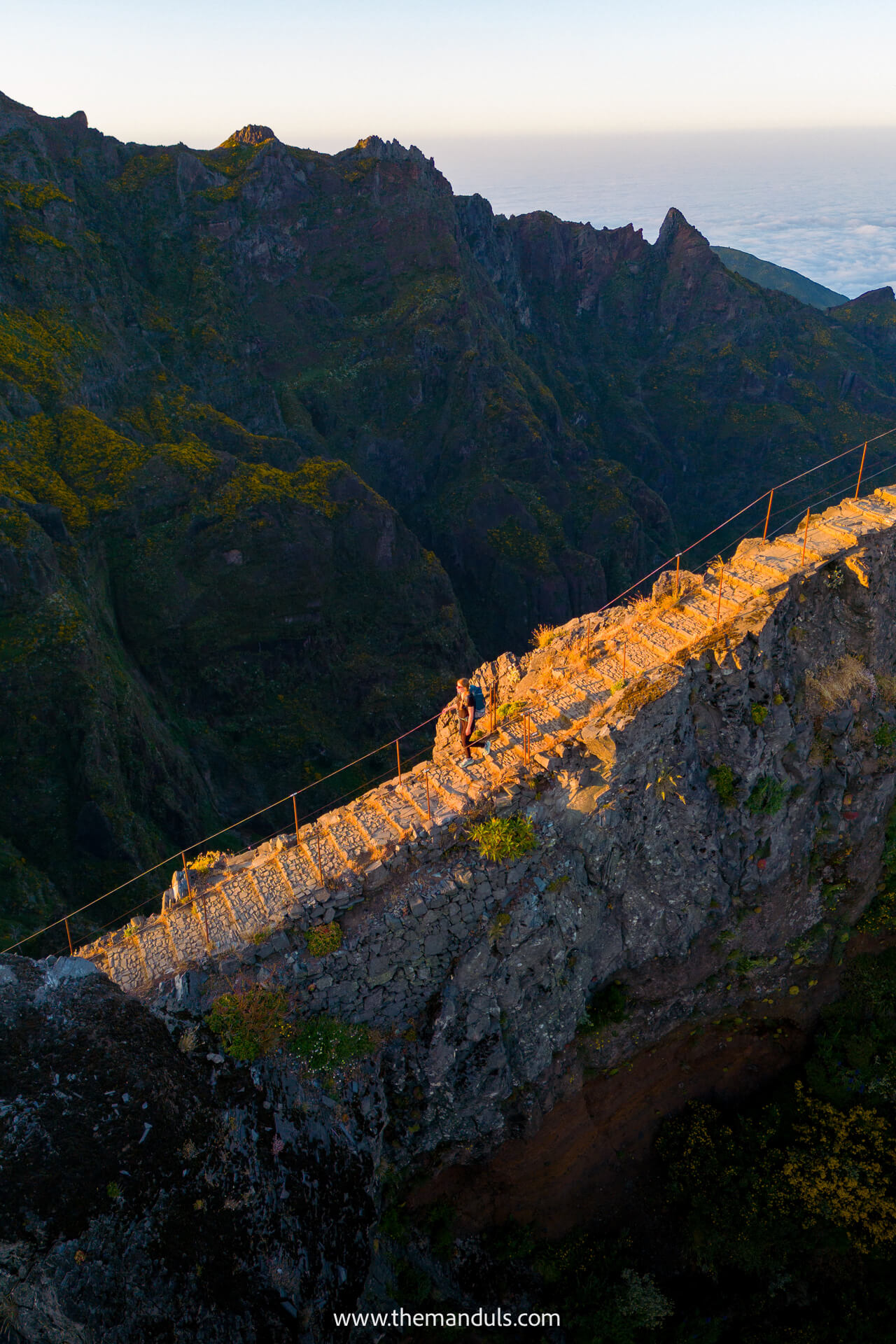
We’d personally lean toward sunset — fewer crowds, easier parking, and a much calmer atmosphere. But weather matters more than timing here, so always check the forecast before heading up.
If the trail is closed or conditions aren’t right, we’d swap it for Levada do Rei or Levada do Pináculo e Folhadal — both are excellent alternatives.
Day 9: Dolphin & Whale Watching & Levada hike
- Dolphin & Whale Watching Tour
- Miradouro da Eira do Serrado
- Levada dos Balcões
Morning: Dolphin & whale watching
Seeing dolphins and whales in the wild is one of the most memorable Madeira experiences that stays with you long after the trip. We didn’t end up doing a boat tour ourselves, but if we were to book one, this Ecological Catamaran Dolphin & Whale Watching is the one we’d choose.
It runs on a large, stable catamaran, focuses on responsible wildlife spotting, and consistently reports sightings thanks to experienced spotters. It’s the kind of experience that feels special — open ocean, dramatic coastlines, and the chance to see dolphins or whales moving freely in their natural environment.

Afternoon: Levada dos Balcões & Miradouro da Eira do Serrado
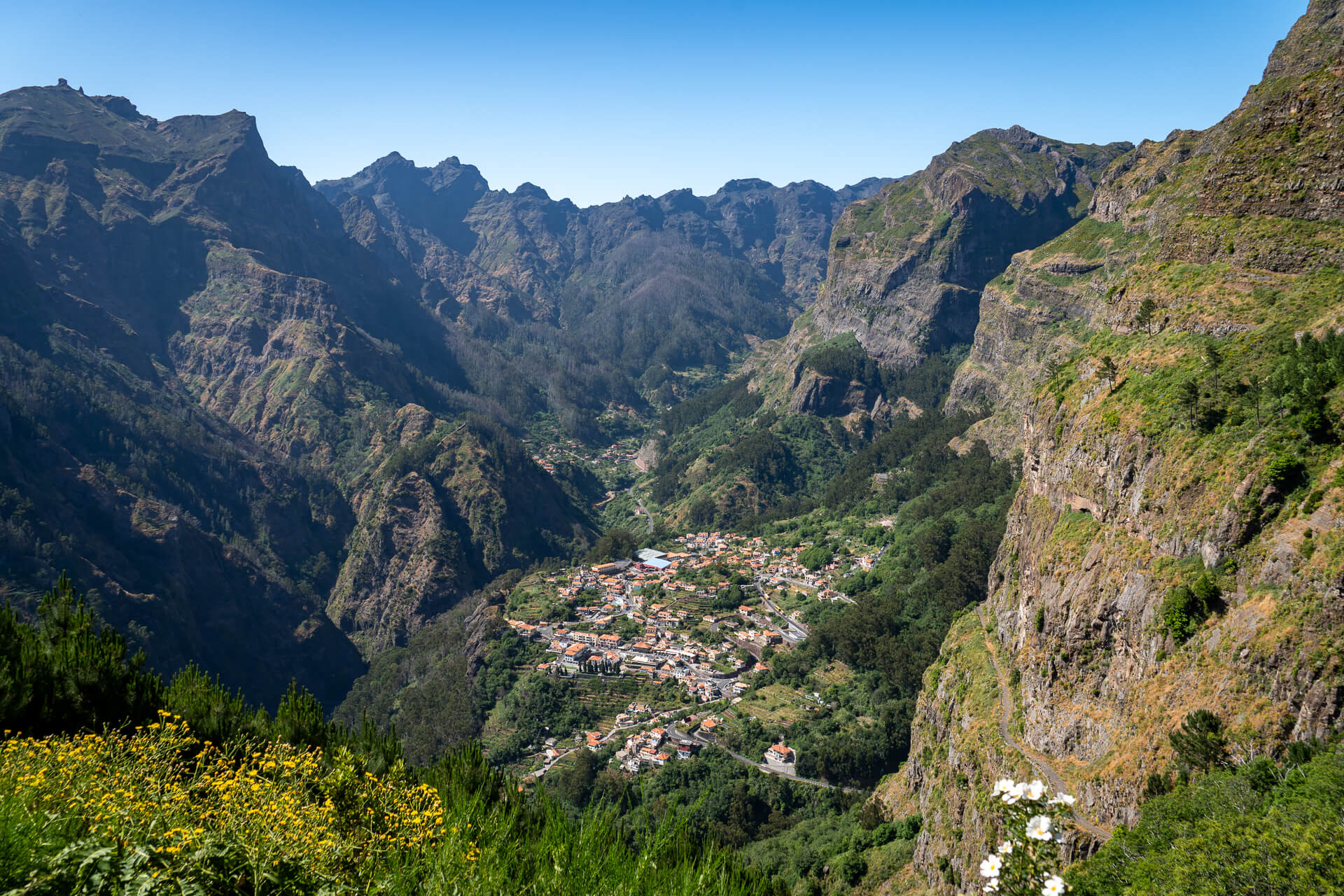
After being out at sea, head inland to Miradouro da Eira do Serrado. This viewpoint looks straight down into the valley of Curral das Freiras, surrounded by steep mountains on all sides.
It’s an easy stop with a big payoff — no hiking required, just wide views and a completely different landscape from the coast.
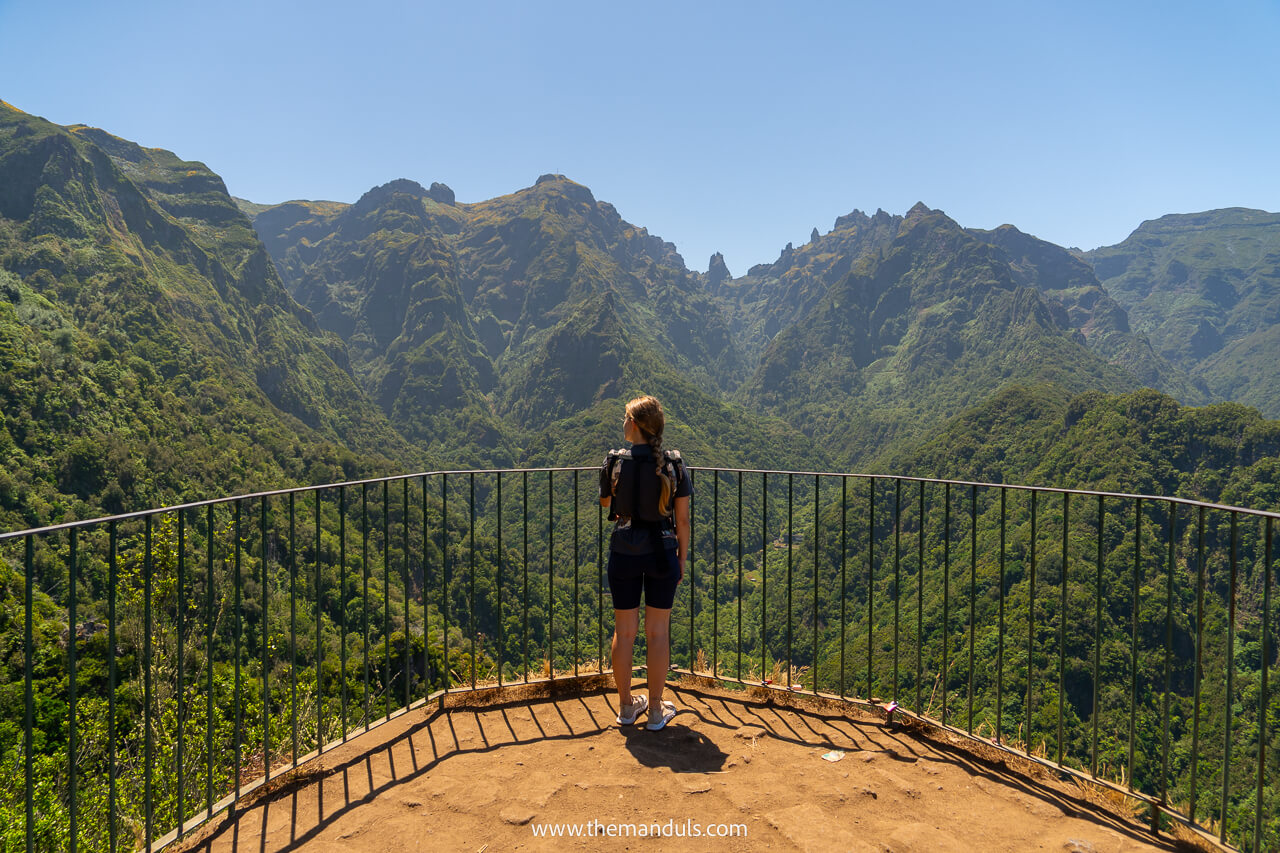
We finished the day with Levada dos Balcões, and this one really surprised us in the best way. It’s all about maximum reward for minimal effort.
The walk itself is short, flat, and easy, following a wide path through forest the whole way. It felt more like a peaceful nature stroll than a hike, which made it perfect for a day when we didn’t want anything demanding.
There aren’t many views along the path, but then right at the end, the trail opens up to a viewpoint overlooking the mountains and valleys — and for such an easy walk, the payoff feels genuinely impressive.
Day 10: Levada do Caldeirão Verde
- Levada do Caldeirão Verde
Levada do Caldeirão Verde is one of Madeira’s most iconic hikes and a natural way to end a trip that’s been all about waterfalls, forests, and raw nature. This is the kind of walk that feels impressive from the very first steps, following a narrow levada deep into the island’s interior.
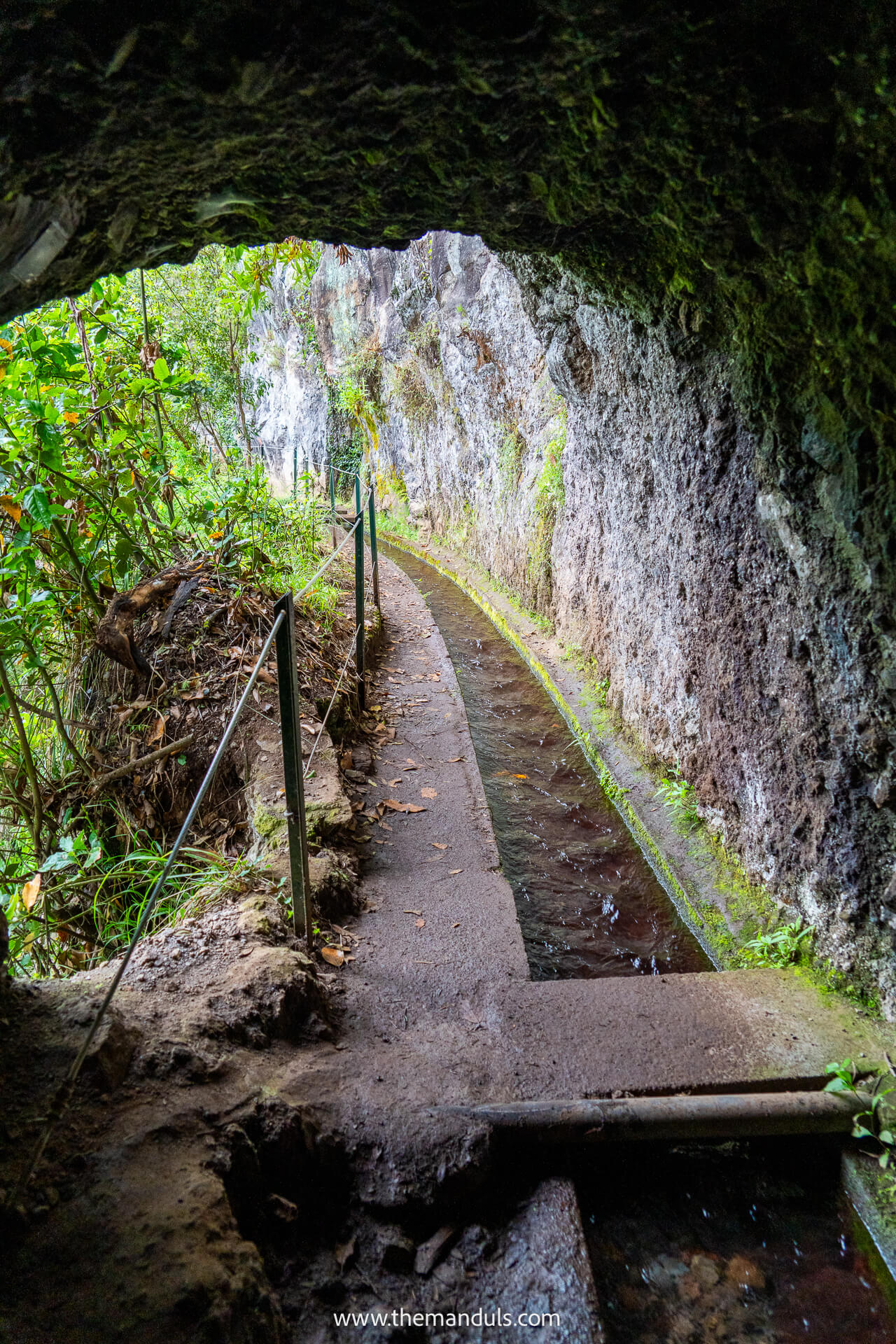
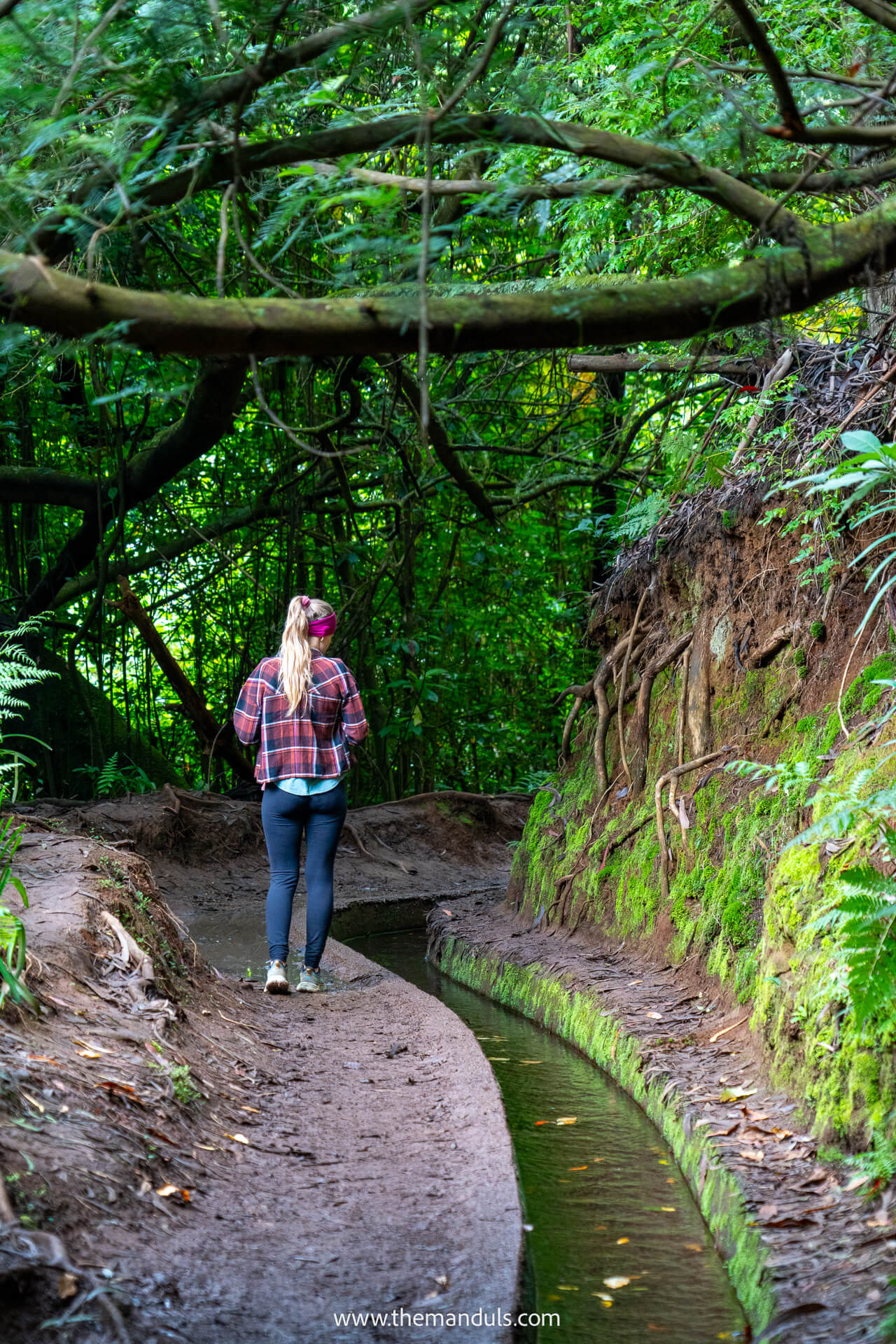
The trail runs through dense laurel forest, along mossy rock walls, and straight through long tunnels carved into the mountain, which adds a slightly adventurous feel without being technical. It’s green, and consistently beautiful, with the sound of running water alongside you almost the entire way.
The payoff comes right at the end, when the path opens up to Caldeirão Verde waterfall — a tall cascade dropping into a deep, emerald-green pool surrounded by steep cliffs. It feels remote and untouched, and reaching it really does feel earned after the long walk in.
While the hike is mostly flat and physically manageable, it’s longer than many other levadas. Some sections are narrow and can feel exposed, especially when the ground is wet, so proper shoes and a bit of focus are important. You’ll also pass through several tunnels, so a headlamp or phone flashlight is essential.
Where to stay in Madeira
Choosing where to stay in Madeira isn’t just about price or star rating — it really affects how your days feel. Some places are great for early starts and long island drives, others are better when you want to slow down and actually enjoy being at the hotel after exploring all day.
Because we spent almost two weeks on the island, we cared a lot about comfort, atmosphere, and how a place felt in the evenings, not just where we slept. After full days of hiking, driving mountain roads, or chasing viewpoints, coming back to the right hotel made a big difference.
If you’re still deciding which part of Madeira suits you best, we go much deeper in our full where to stay in Madeira guide, where we break down the best areas depending on how you plan to travel.
These are the places we’d happily book again — and two of them we actually stayed at:
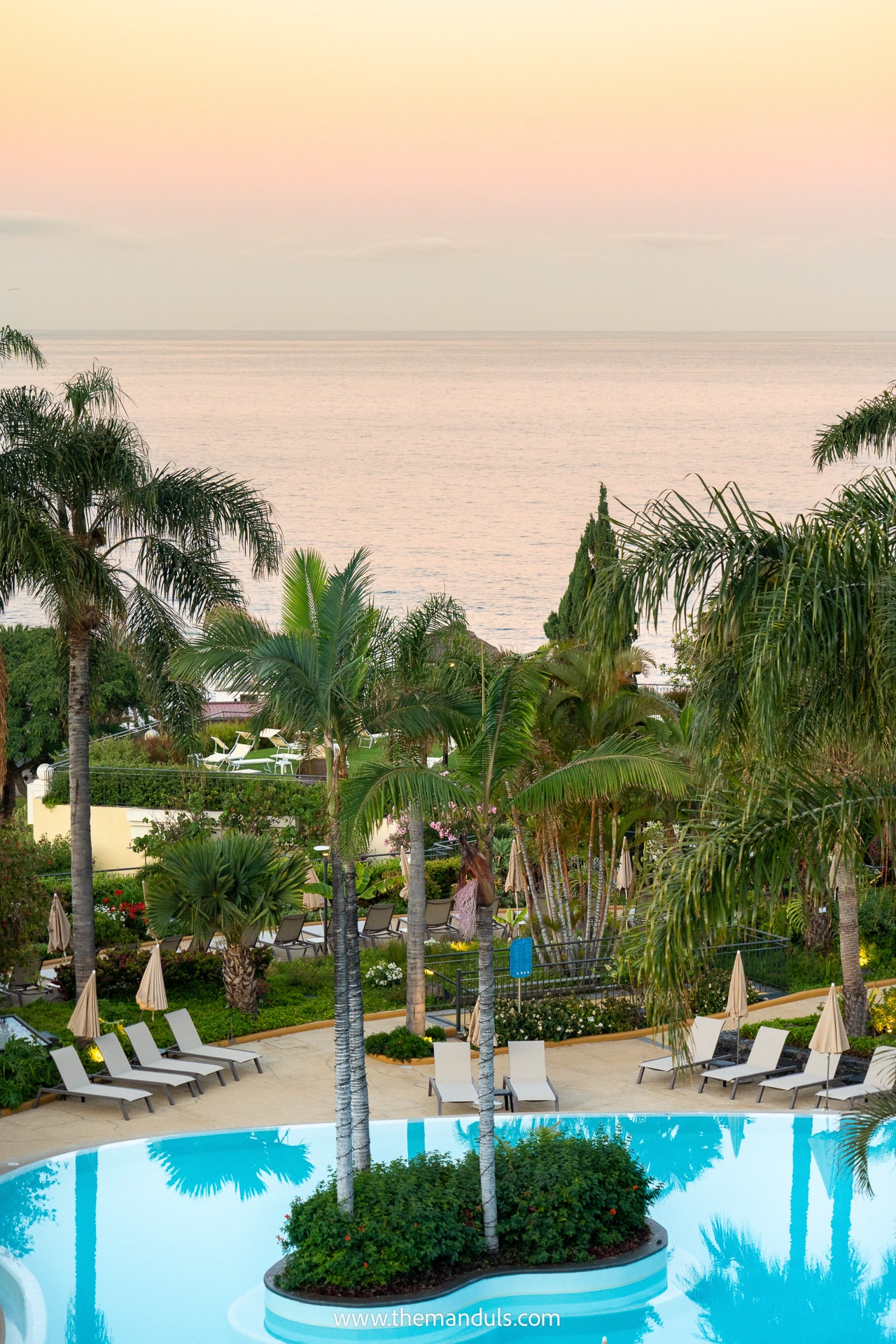
⭐️⭐️⭐️ Hotel Porto Mare – PortoBay (our top pick) – We stayed here and honestly loved how balanced everything felt. The tropical garden is a real highlight — lush, green, and surprisingly quiet — and the outdoor pool felt like a little reward at the end of busy days exploring the island.
What made Porto Mare stand out for us was that even on days when the weather turned bad (which does happen in Madeira), there was still plenty to do at the hotel. Pools, spa areas, lounges — it never felt like we were stuck inside.
Food was another big win. The buffet dinners with themed evenings quickly became a highlight for us. The variety meant dinner never felt repetitive, which matters more than you’d think when you’re staying longer. Add easy parking and a calm atmosphere, and it became the kind of place we’d book again without thinking twice.
Best for: A comfortable, all-round base where the hotel itself adds to the experience
👉 Check current deals →
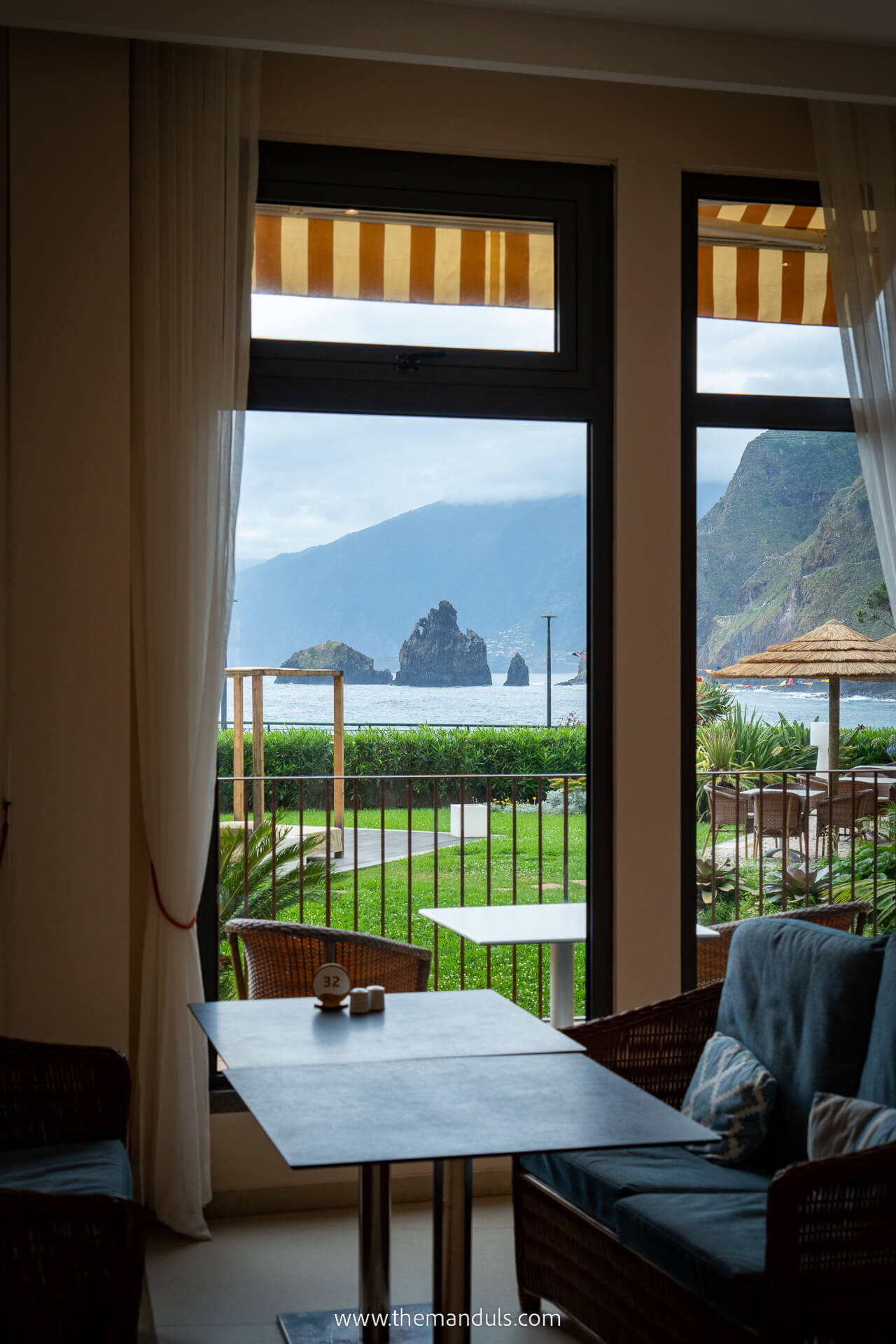
⭐️⭐️ Aqua Natura Bay – This stay felt completely different — in the best way. The biggest highlight is obvious the moment you arrive: the natural volcanic pools are literally across the road. Being able to walk straight there in a hotel robe, especially early in the morning or at sunset, was something special.
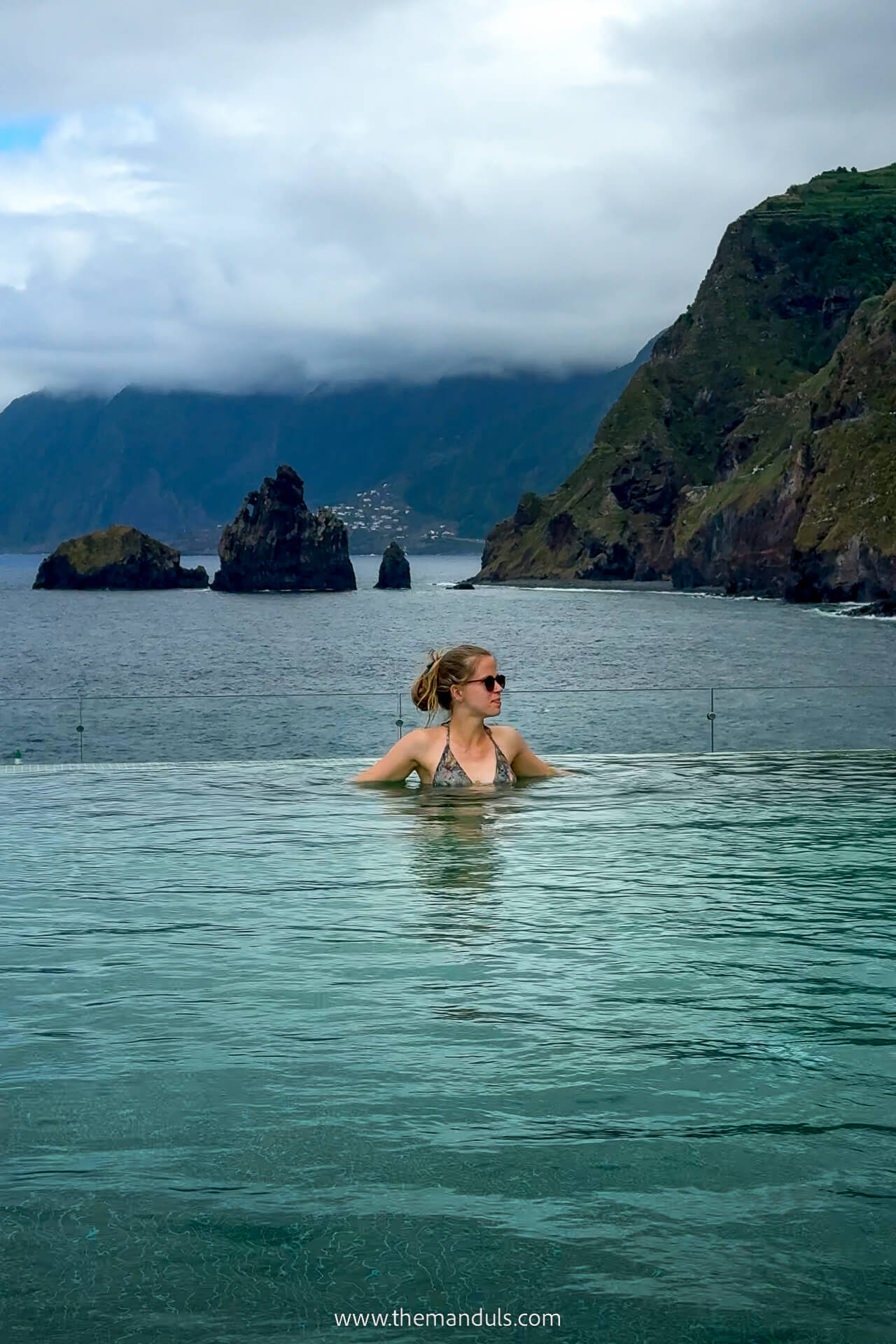
The hotel itself is small and has a really friendly, relaxed atmosphere. Rooms feel polished and cosy, and the attention to detail shows. We also loved the rooftop pool, which has incredible views over the ocean and cliffs.
Food here was another pleasant surprise. Everything felt high quality and thoughtfully done, not just “hotel food.” If you’re looking to experience the wild north coast properly, this is one of the best bases you could choose.
Best for: Ocean lovers who want a scenic, personal stay right by the natural pools
👉 Compare prices →
⭐️ Quinta das Vinhas – This is a place we didn’t stay at this time — but it’s very high on our list for the future. Quinta das Vinhas feels more like staying on a peaceful estate than at a traditional hotel, surrounded by vineyards and greenery.
It’s the kind of place you choose when you want to slow everything down: long breakfasts, quiet mornings, and evenings spent outside with a glass of wine.
Best for: A slow, romantic stay surrounded by nature and calm
👉 See availability →
Final Thoughts
This itinerary is built around how we actually experienced Madeira — moving slowly, chasing nature, and mixing big, dramatic highlights with quieter moments in between.
If there’s one takeaway, it’s that Madeira is best experienced at your own pace. Start early when it matters, slow down when it feels right, and don’t be afraid to change plans if conditions aren’t ideal.
Whether you follow this itinerary day by day or use it as inspiration, we hope it helps you experience Madeira the way we did — through real landscapes, unforgettable moments, and a deep appreciation for just how special and diverse this island is.