
This article contains affiliate links. Learn more in our affiliate disclosure.
We planned our Pico do Arieiro hike in Madeira in 2025 and hoped to follow the famous PR1 trail all the way to Pico Ruivo. At the time, however, most of the route was still closed following the wildfires in 2024.
The situation has since changed. As of July 2026, the full PR1 trail from Pico do Areeiro to Pico Ruivo is open every day. However, the route is now one-way beyond Pedra Rija, so hikers must continue towards Pico Ruivo and leave via Achada do Teixeira or Ilha rather than return to Pico do Areeiro.
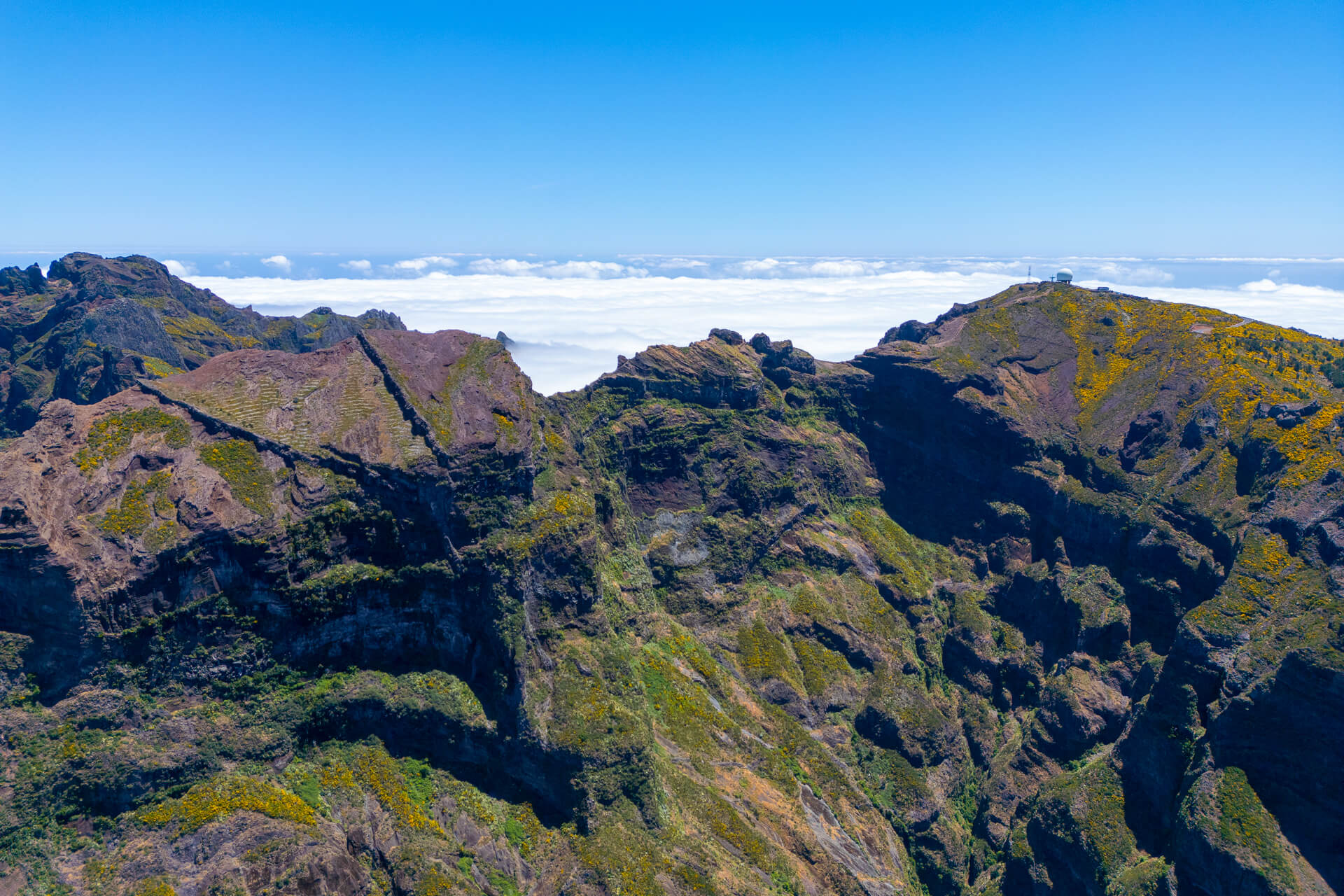
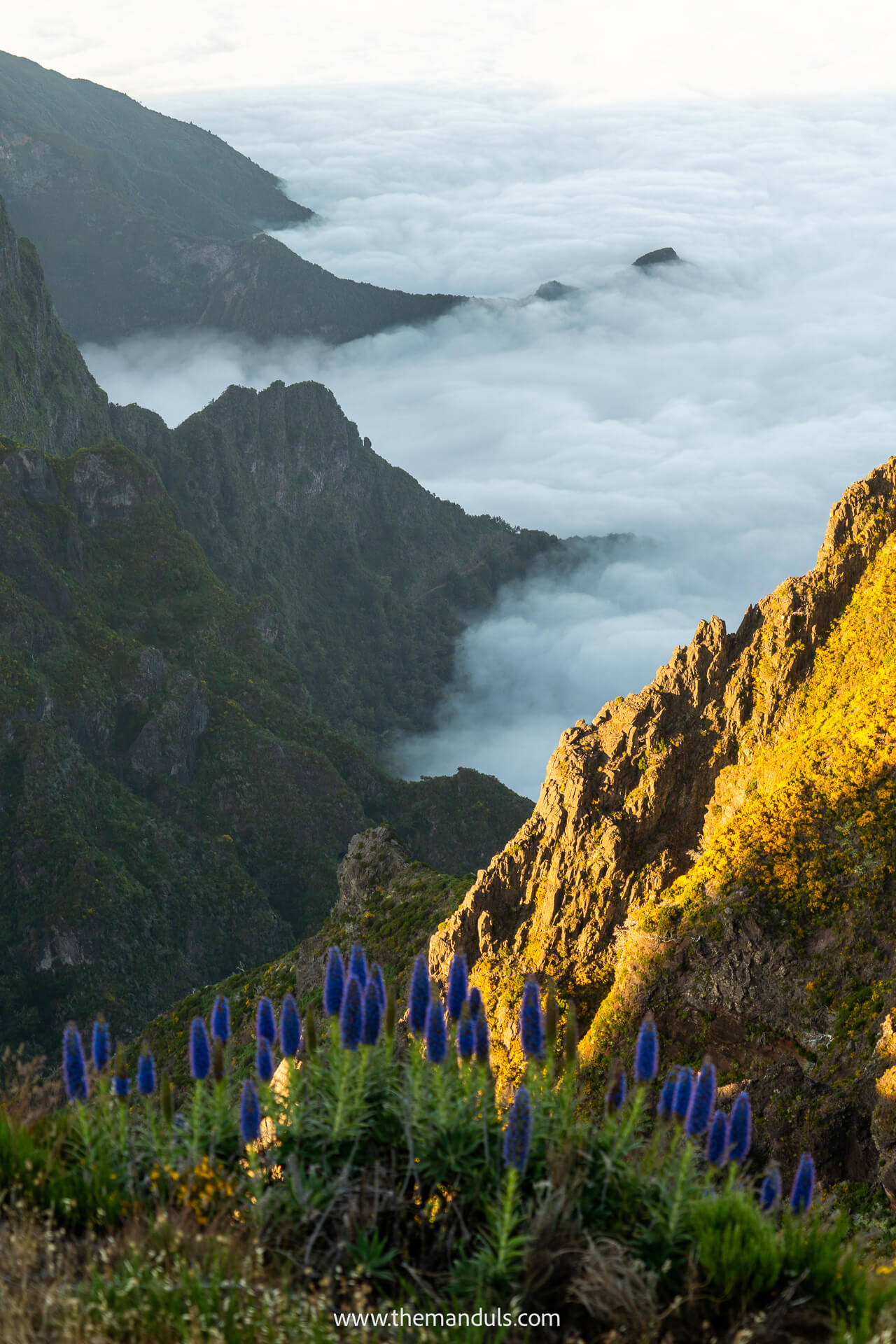
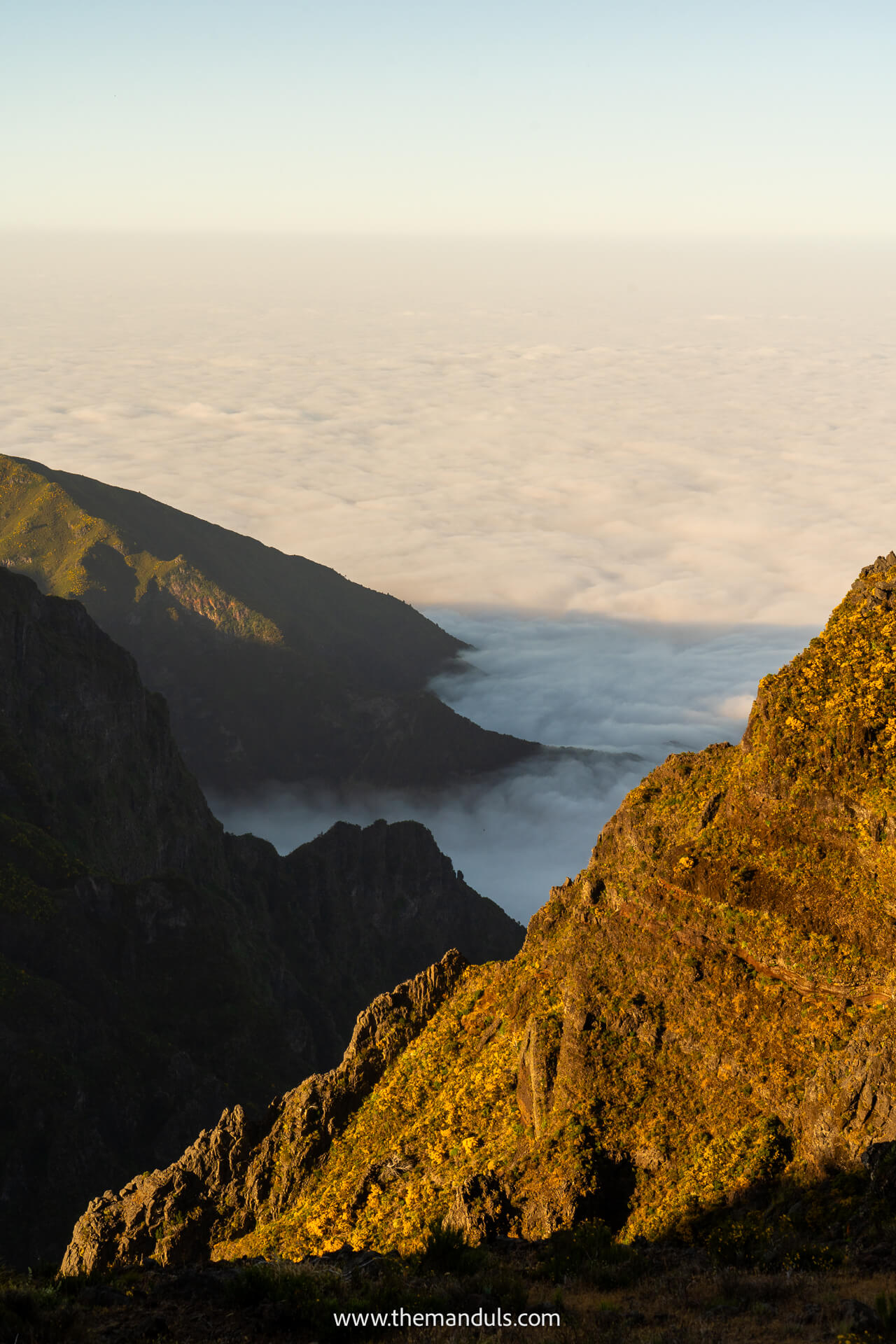
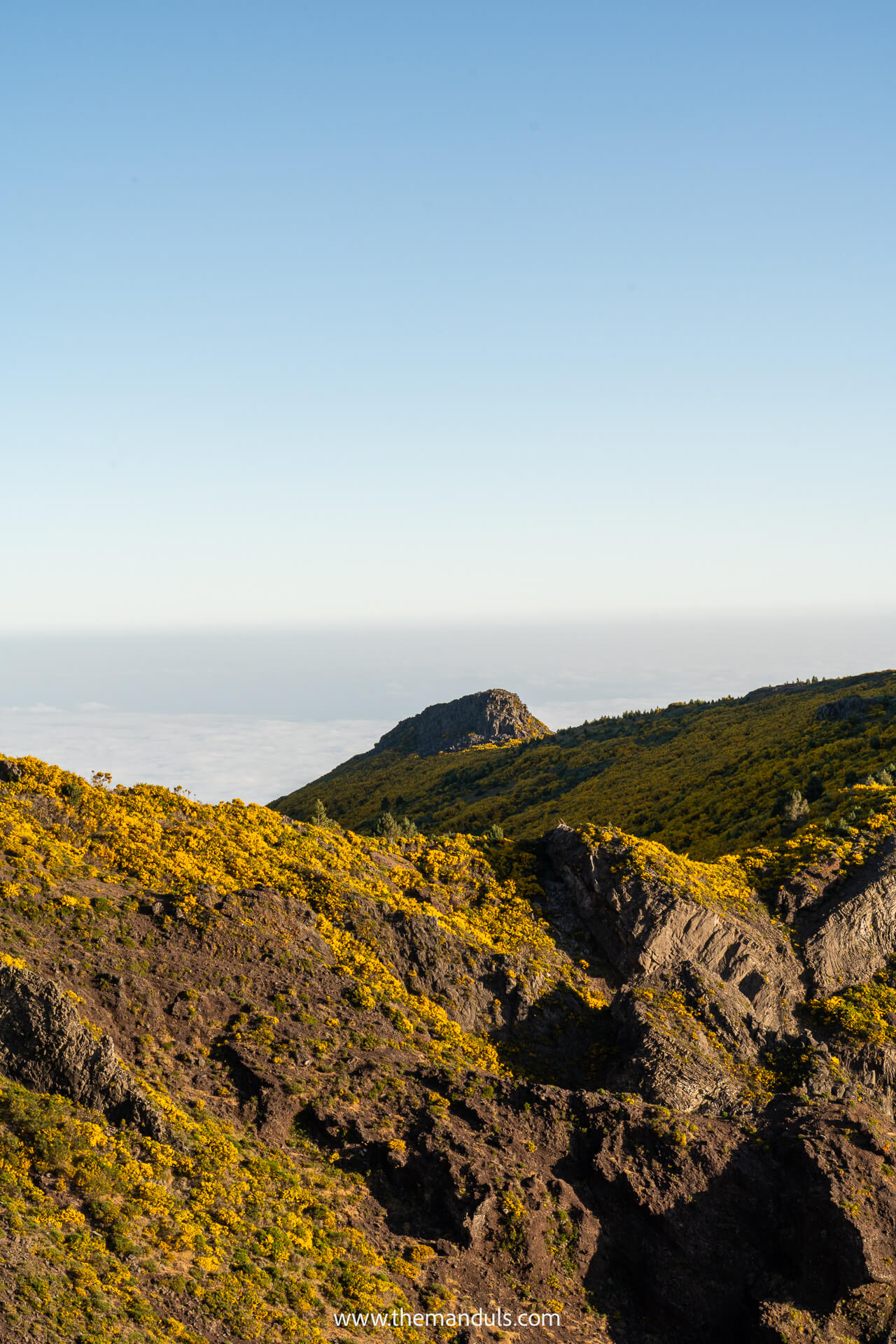
Even the short stretch we completed reminded us why this is one of the best hikes in Madeira. Sharp volcanic peaks, narrow ridgelines, endless stairs carved into the rock, and clouds drifting below your feet make the scenery dramatic from the very first steps.
As the sun dropped, the light softened, the crowds thinned out, and the whole landscape took on the quiet atmosphere Madeira is famous for. This is definitely one of the best things to do in Madeira.
In this guide, we share everything you need to know about hiking from Pico do Areeiro to Pico Ruivo under the current 2026 rules, including the one-way route, mandatory reservations, trail fees, transport from the finish, parking, and what to expect.
We also cover how to visit a shorter section for sunrise or sunset if you do not want to complete the full hike.
Key Highlights
📍Start / End of trail: Pico do Arieiro – Achada do Teixeira
🥾Distance: 7.2 km
🕥 Duration: 3.5 hours (walking time)
⛰️ Elevation gain: 472m up, 682m down
⬆️ Maximum elevation: 1790 m
🔥Difficulty: moderate / difficult
⭐️ Trail type: point-to-point
Why we think this hike is worth it?
Even though we only completed the section that was open during our visit, Pico do Areeiro was still one of the most memorable hiking experiences we had in Madeira.
The scenery hits immediately — dramatic ridgelines, jagged peaks, endless stairs, and clouds rolling beneath you. It feels raw and exposed in the best way, very different from Madeira’s lush levada walks.
What really makes it worth visiting is how quickly you reach the views. You don’t need to complete the entire route to experience the most dramatic scenery near Pico do Areeiro.
If you only want a shorter walk, you can hike to Pedra Rija (Stairway to Heaven) and return the same way. The full route to Pico Ruivo is a very different experience — longer, more physically demanding, and one-way beyond Pedra Rija, which means you also need transport arranged from the finish.
In a hurry?
These are our top hotels in Madeira we’d book again
⭐️⭐️⭐️ Hotel Porto Mare – PortoBay (our top pick) – Elegant oceanfront resort in Funchal with tropical gardens, multiple pools, and warm service.
👉 See prices & availability →
⭐️⭐️ Aqua Natura Bay – Boutique-style stay in Porto Moniz with an infinity pool, panoramic Atlantic views, and direct access to the natural lava pools.
👉 See prices & availability →
⭐️ Quinta das Vinhas – Charming mid-range stay in Calheta surrounded by vineyards and mountain views, perfect for a peaceful countryside escape.
👉 See prices & availability →
PR1 reservations and trail fees
A reservation is mandatory for both the short return hike and the full route. Bookings are made through the official SIMplifica platform using timed entry slots allocated in 30-minute intervals between sunrise and sunset.
Make sure you select the correct route:
- The short return hike to Pedra Rija costs €4.50 per person.
- The full one-way PR1 route to Pico Ruivo costs €10.50 per person and includes the continuation towards Achada do Teixeira or Ilha.
The short-route ticket does not allow you to pass through the one-way gates and continue to Pico Ruivo.
Everyone must be included in the reservation, including children. Visitors aged 12 or younger are currently exempt from the trail fee, but they still need to be registered.
Payment is made when booking. Once the fee has been paid, changes, cancellations, and refunds are generally only available when the trail is officially restricted or closed by IFCN.
A change in your plans or an unfavourable personal weather forecast does not automatically qualify for a refund.
Popular sunrise slots can fill first, so we recommend booking as soon as you know your date. Before driving up, check the latest trail status, mountain forecast, and webcam in case access conditions change.
Book your PR1 entry through the official SIMplifica platform →
Prices and rules checked in July 2026.
Hiking Map
When to Hke Pico do Arieiro
Full hike to Achada do Teixeira
If you’re planning to hike the full one-way route from Pico do Areeiro to Pico Ruivo and Achada do Teixeira, choose an early entry time. The hike takes several hours, and starting early gives you enough daylight, more time for breaks, and a better buffer if the mountain weather changes.
You must reserve a specific 30-minute entry slot in advance, so we’d choose one of the earliest practical times.
Short hike to Pedra Rija and back
If you’re only walking the shorter section to Pedra Rija before returning to Pico do Areeiro, you can choose any available entry time between sunrise and sunset.
Sunrise is usually the better option if your priority is clear mountain views and the classic sea of clouds. The downside is that it’s also the busiest time, with more traffic, fuller parking areas, and a more stressful arrival.
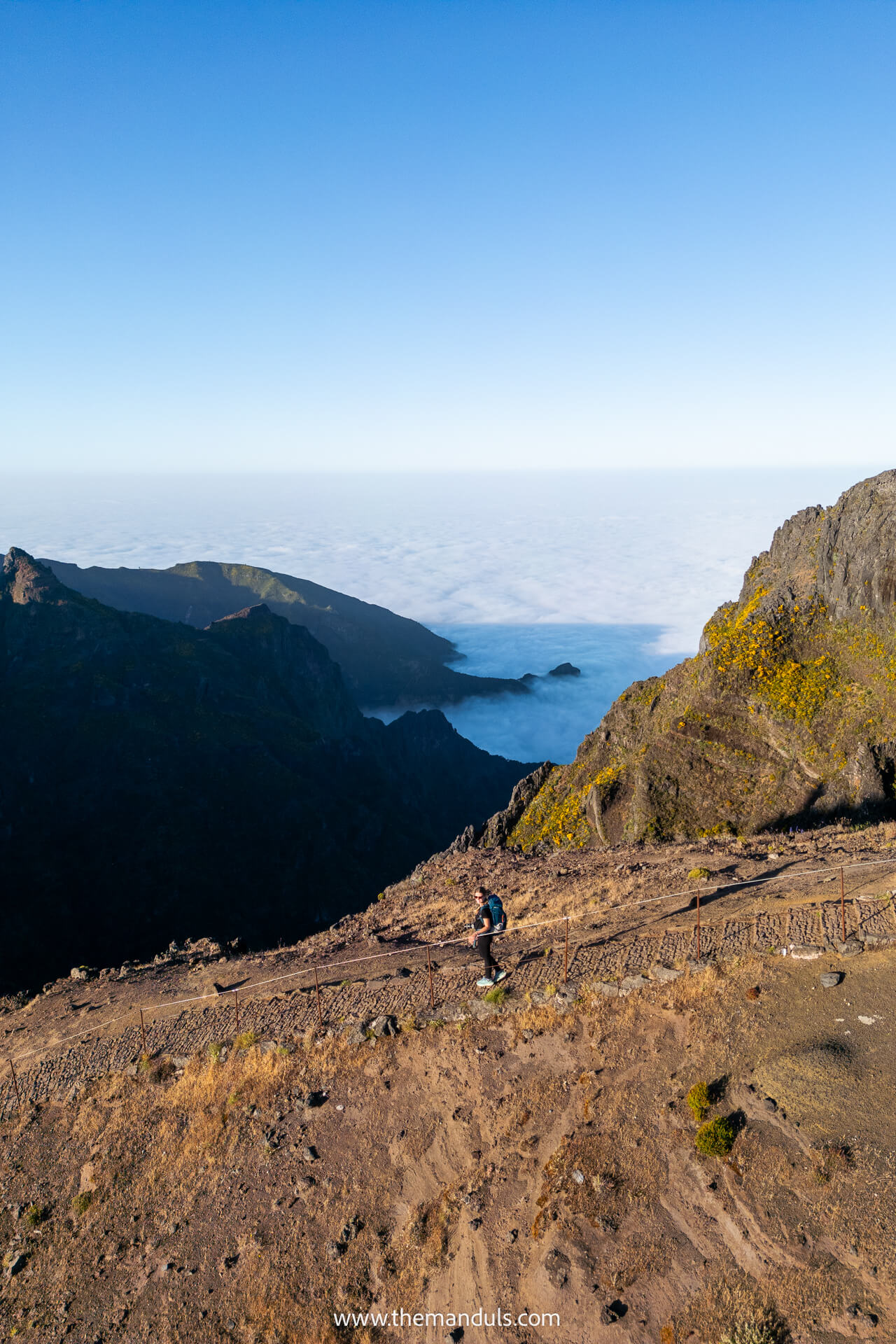
To avoid the early alarm and the biggest crowds, we visited for sunset — and honestly, we couldn’t have been happier.
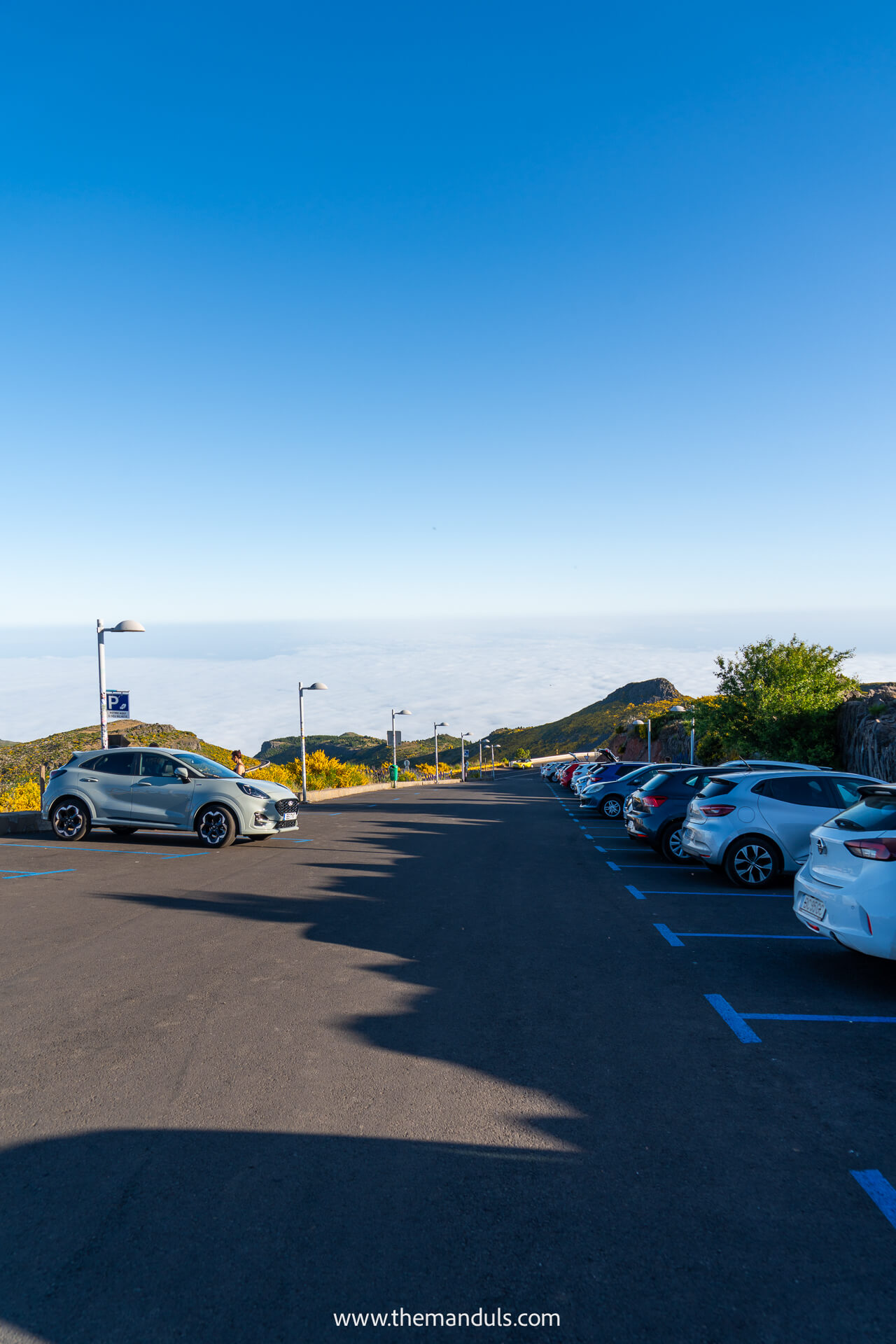
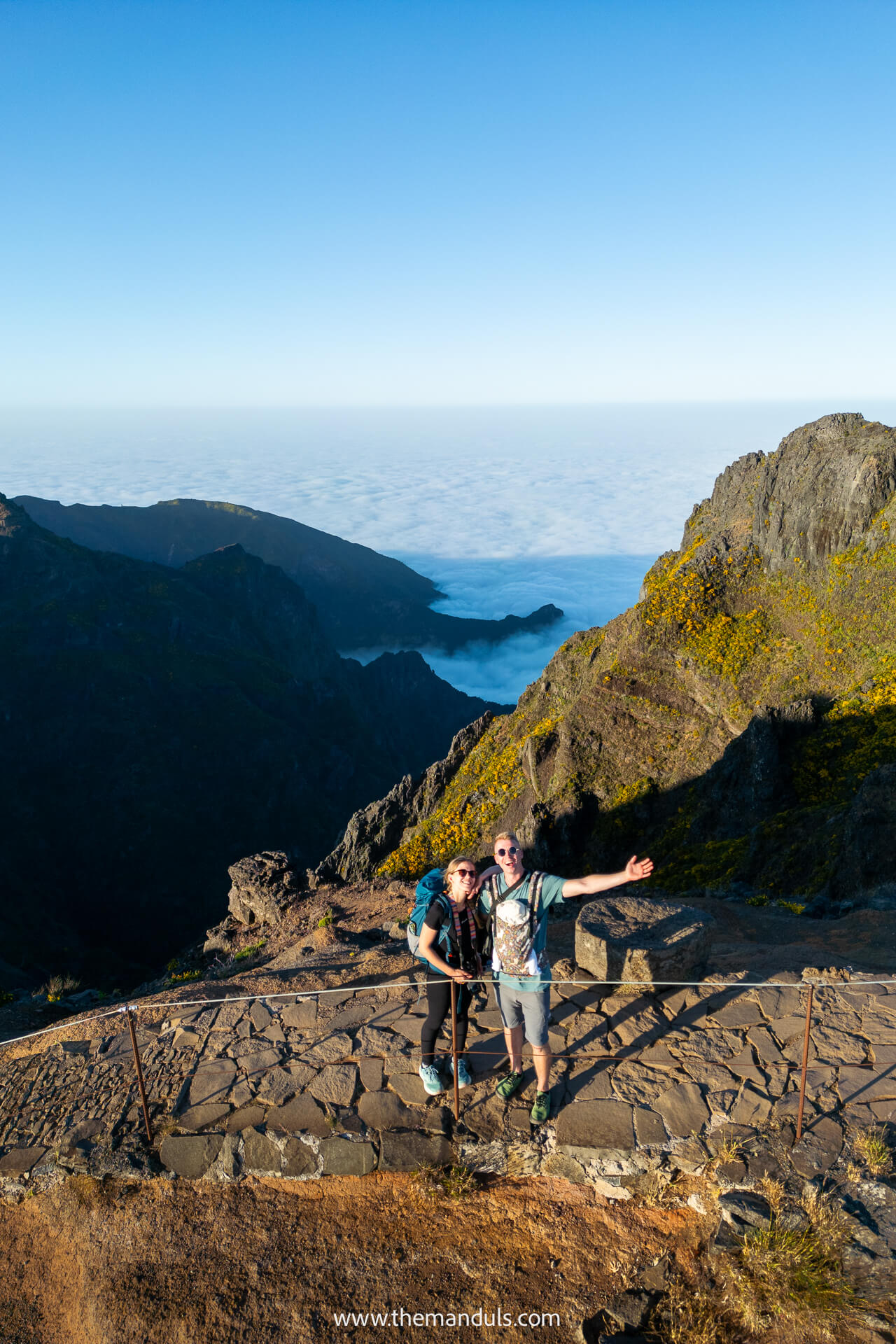
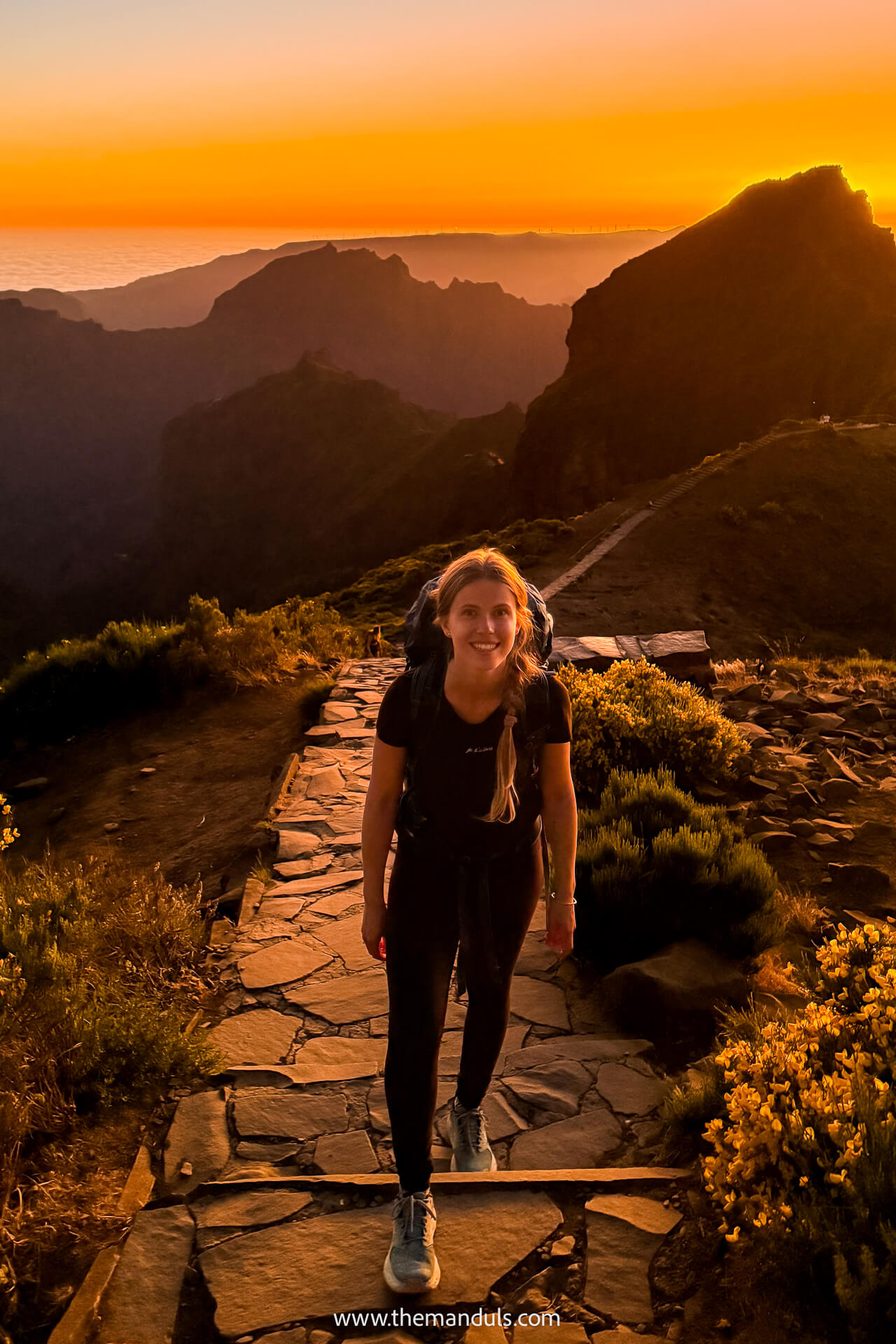
We parked right at the top without any issues, passed only a handful of people on the trail, and watched the peaks and valleys change colour as the sun dropped.
No matter when you visit, always check the mountain forecast, current trail status, and the Pico do Areeiro webcam before driving up. Conditions can change quickly, and visibility makes a huge difference here.
Getting to the trailhead
How you get to Pico do Areeiro depends on which version of the hike you’re planning.
If you’re only hiking to Pedra Rija and back, travelling by car or public bus is straightforward because you finish where you started. For the full route to Pico Ruivo and Achada do Teixeira, you’ll need to arrange transport from the finish before starting the hike.
By car
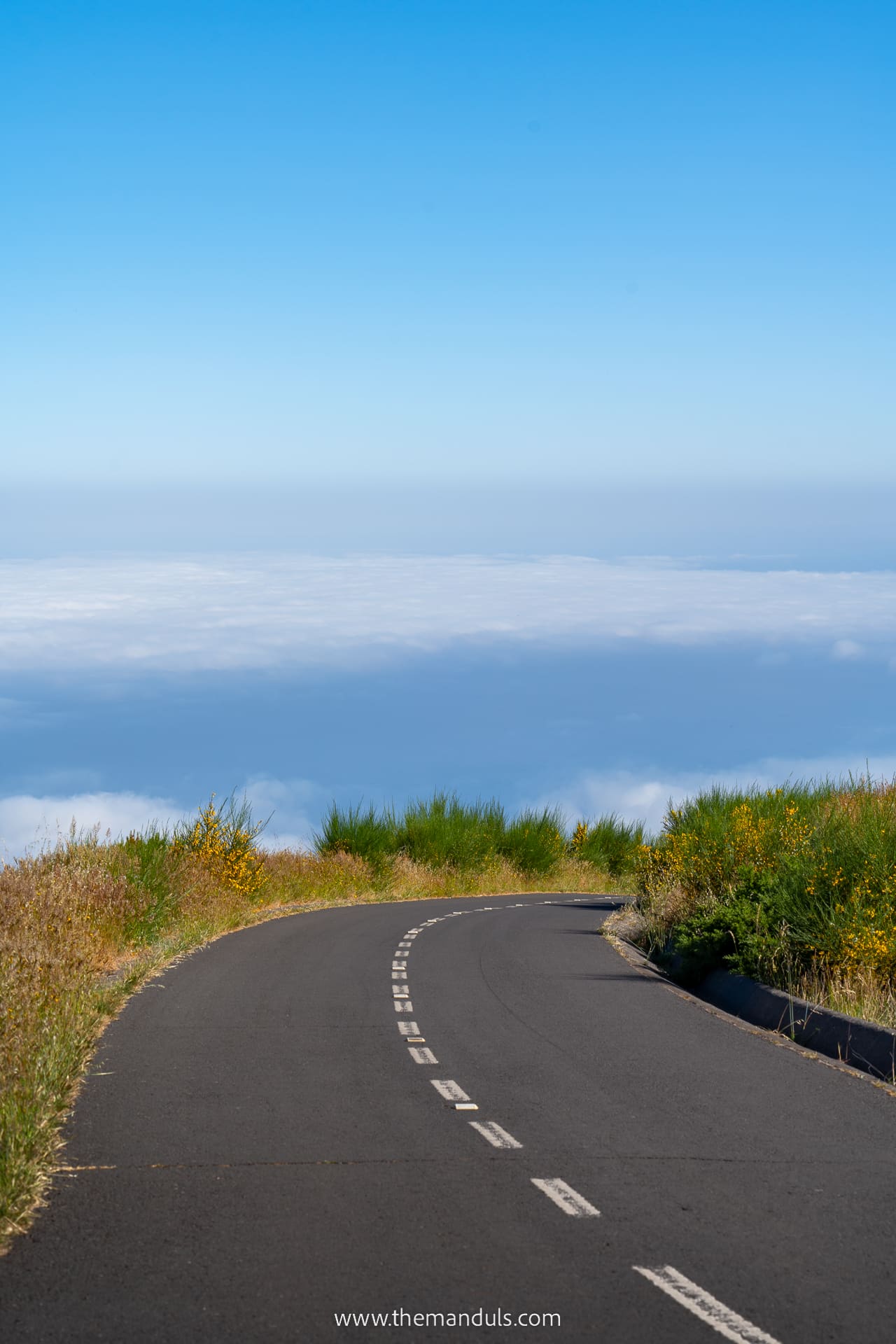
The road up to Pico do Areeiro is fully paved and in good condition, but it becomes narrow, steep, and winding as you get closer to the summit, with exposed sections and sharp turns. It’s not difficult to drive, but it requires more focus in low visibility or strong winds.
We had a rental car through DiscoverCars, which is the platform we use wherever we go. It compares prices from multiple suppliers, so you can quickly find the best option without checking each rental company separately.
We also always recommend adding full coverage insurance through the platform. It’s almost always cheaper than what rental companies offer at the counter, and it gives peace of mind when driving on unfamiliar mountain roads like these — allowing you to focus on the experience rather than potential damage or extra fees.

Read our full guide about renting a car in Madeira.
Parking & Parking fees
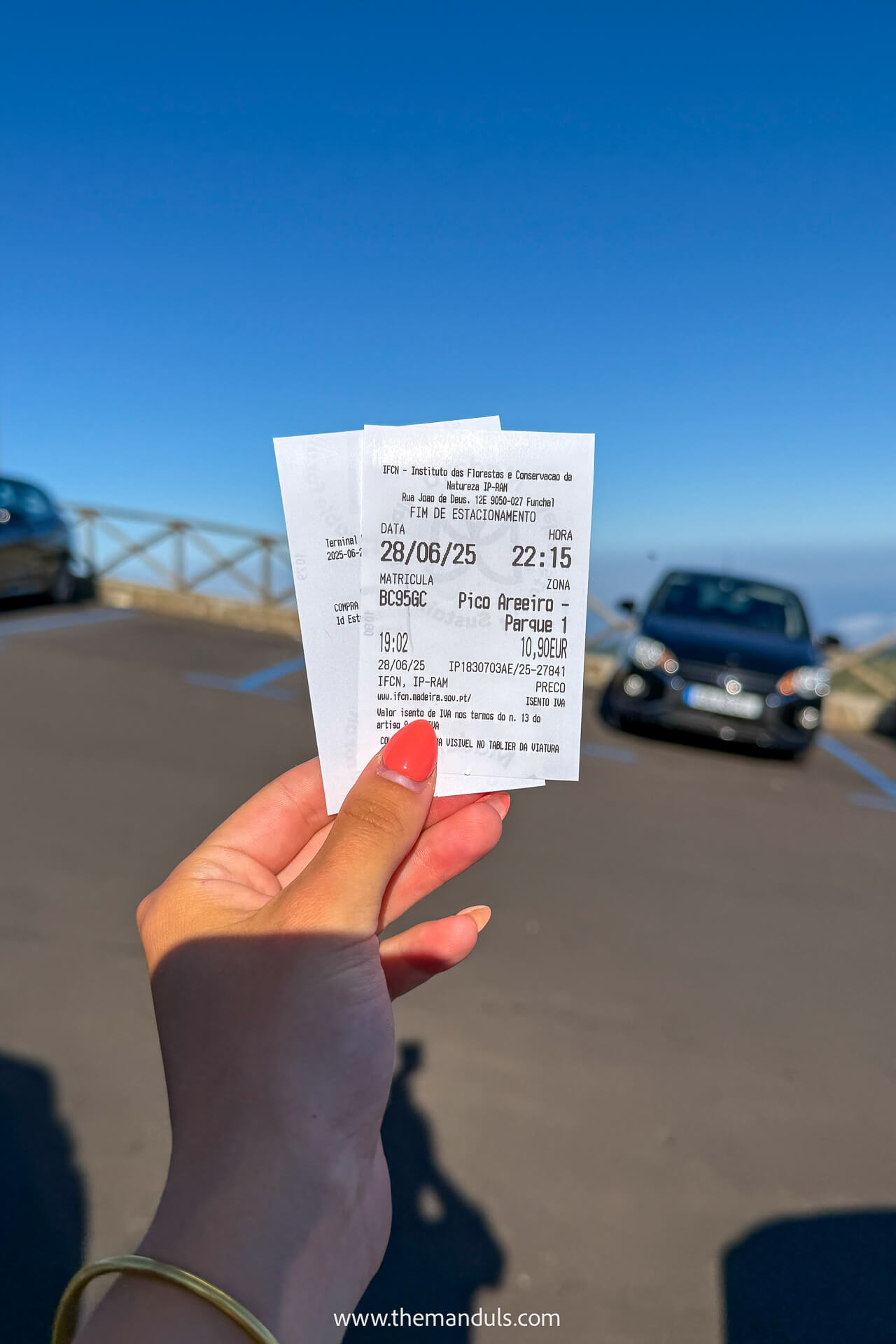
Parking is available near the summit, but the spaces closest to Pico do Areeiro are limited and can fill quickly, especially around sunrise.
The parking area closest to the summit currently costs €4 per hour. For a short visit, this may still be the easiest option, but the cost adds up quickly if you’re completing the full hike.
If you park lower down, an official shuttle connects CAM Florestal das Serras de Santo António, Parque do Pico do Areeiro, and the summit near the radar. It normally runs every 15 minutes during operating hours and costs €1.20 per person each way.
During the summer timetable, the shuttle operates between approximately 6:40 AM and 12:15 PM, and again from 2:10 PM until 7 PM. The final service runs at 6 PM during the winter timetable. Payments can be made by cash or card on board.
During busy periods, we’d leave extra time for parking and the shuttle rather than planning to arrive exactly at your reserved PR1 entry slot.
By public bus
You can reach the area by public bus from Funchal, which is a good option if you don’t have a car. The buses run regularly between the city and the summit. During the high season it’s every 15 minutes.
The bus starts near the lower cable car station to Monte called Teleférico Término, and takes you directly up to Pico do Arieiro. A one-way ticket costs €3 per person and is paid in cash to the driver once you’re on board.
If you want full flexibility or plan to stay late, driving or joining a transfer is still easier, but for a budget-friendly option, the public bus does the job.
By organized transfer – BEST FOR THE FULL HIKE
If you don’t want to drive — or you’re planning a one-way hike — an organized transfer is one of the best options. We recommend this Pico do Arieiro sunrise hiking transfer from Funchal, which takes care of transport logistics so you can focus on the hike itself.
This option is especially useful if you want to do the full hike from Pico do Arieiro to Pico Ruivo and continue to Achada do Teixeira. Since it’s a point-to-point route that starts and ends in different locations, having transport arranged in advance makes things much easier.

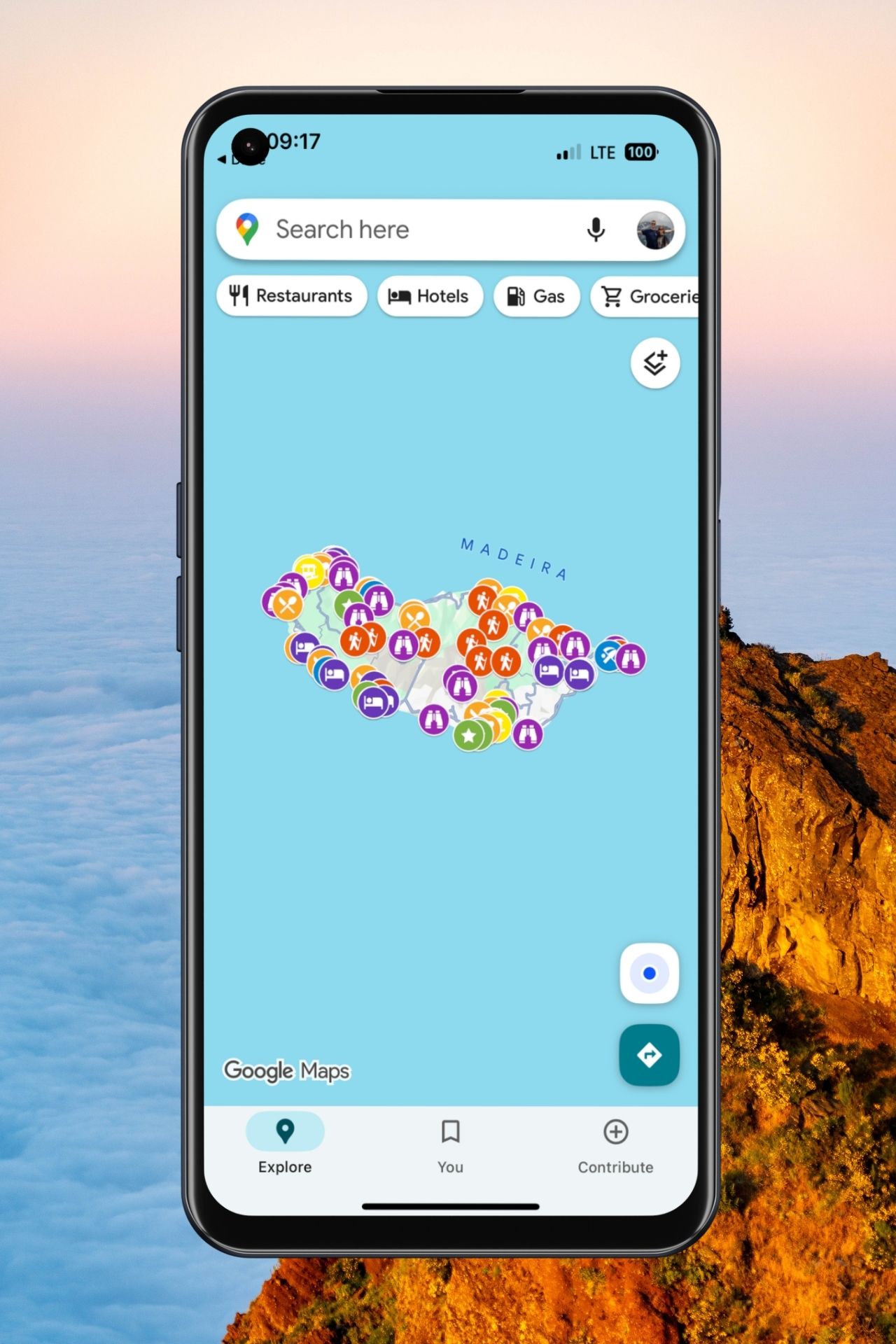
Our Madeira Google Maps
Built from our real trips around Madeira — only places we actually visited and loved.
No random saves. No wasted time. Just a ready-to-use map that helps you explore the island in a way that actually makes sense.
92 handpicked spots, including:
📍 The best attractions & unique places
🥾 Our favorite hikes & scenic viewpoints
🍜 Restaurants and cafés we’d go back to
🚠Scenic cable cars
PR 1 Pico do Arieiro to Achada do Teixeira Trail Description

Distance: 8.3 km

Elevation gain: 500 m

Duration: 5 hours
Note: During our visit, the trail was closed beyond the Stairway to Heaven, so everything after that point is based on the official route layout and what to expect when the full PR1 is open.
Pico do Arieiro
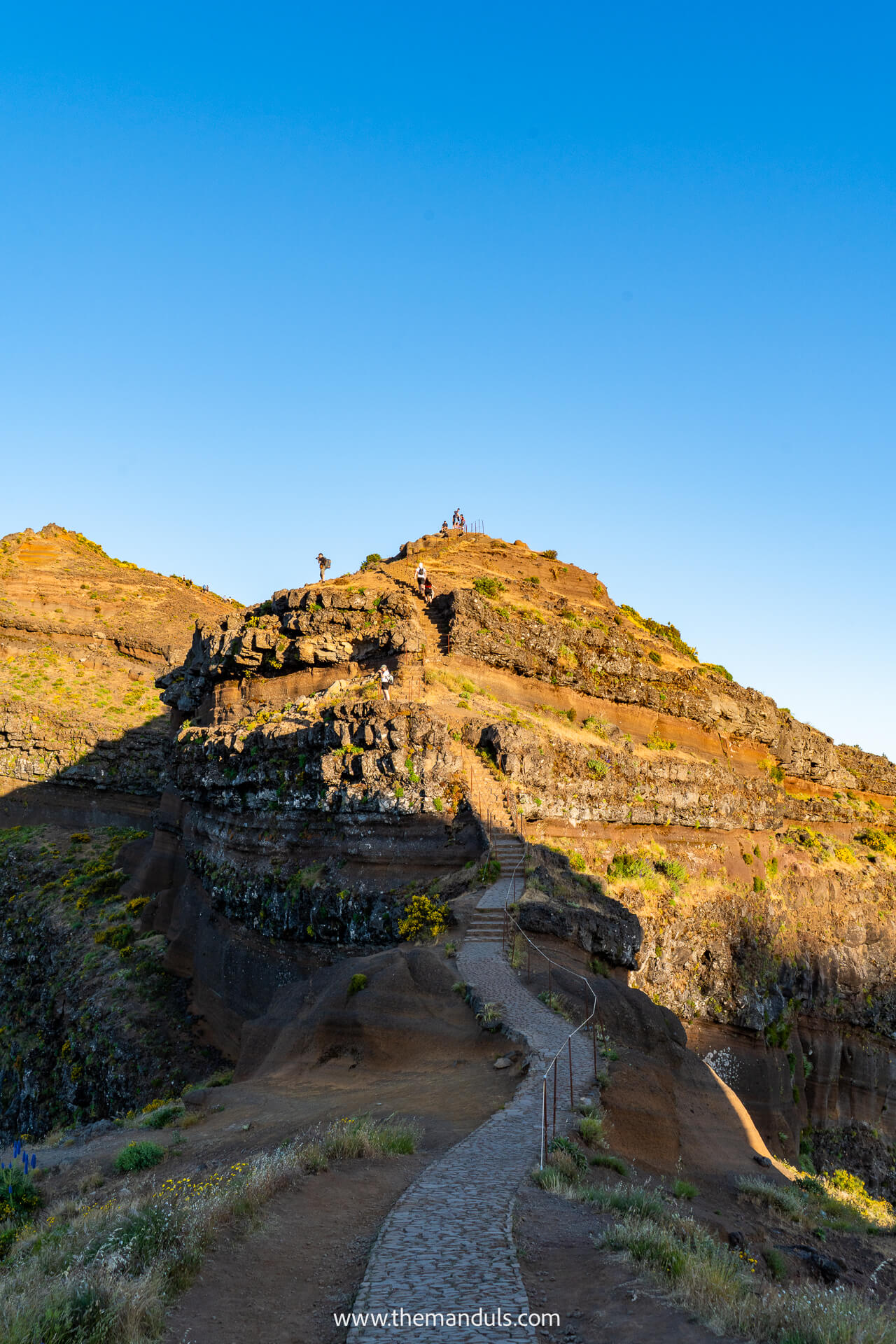
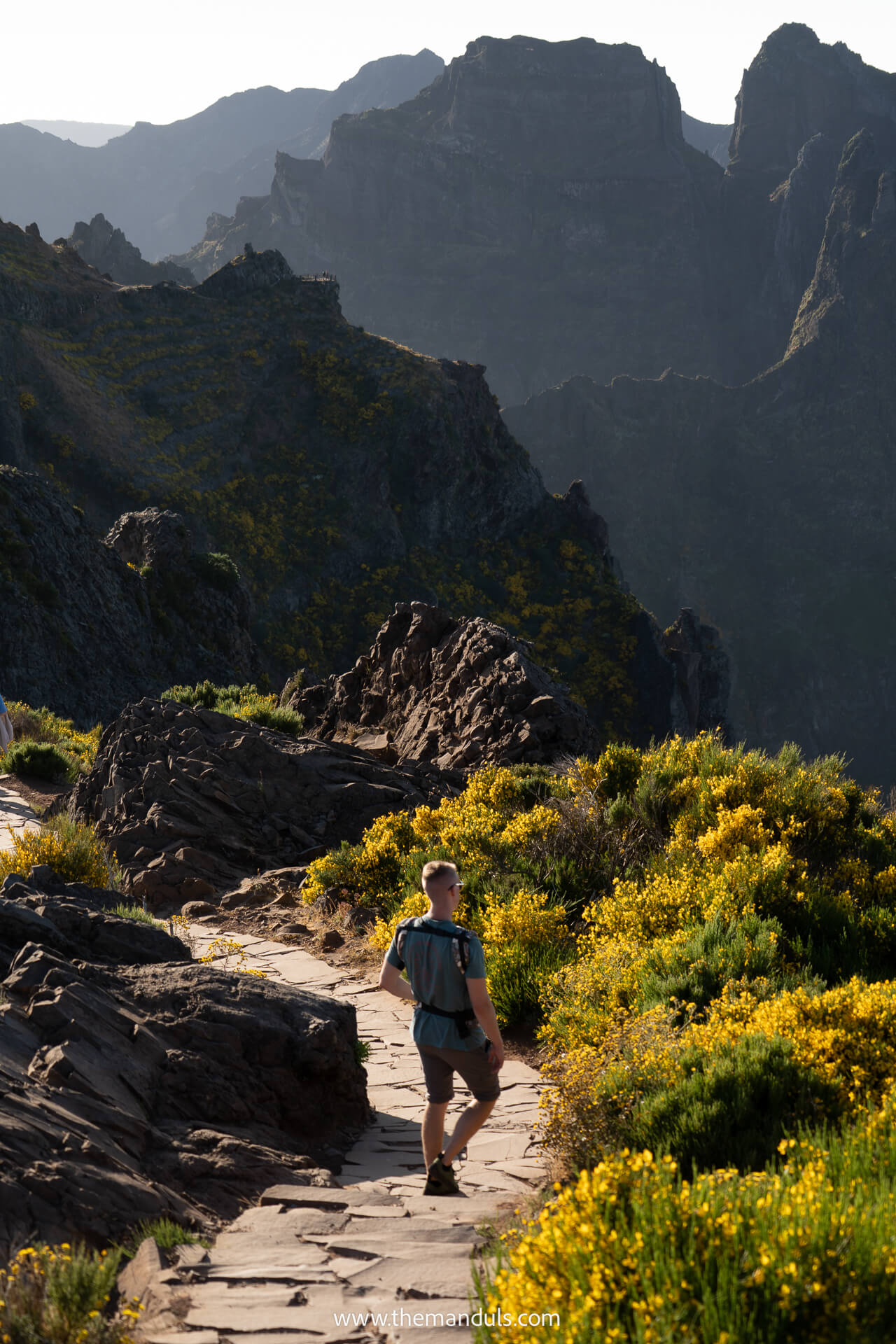
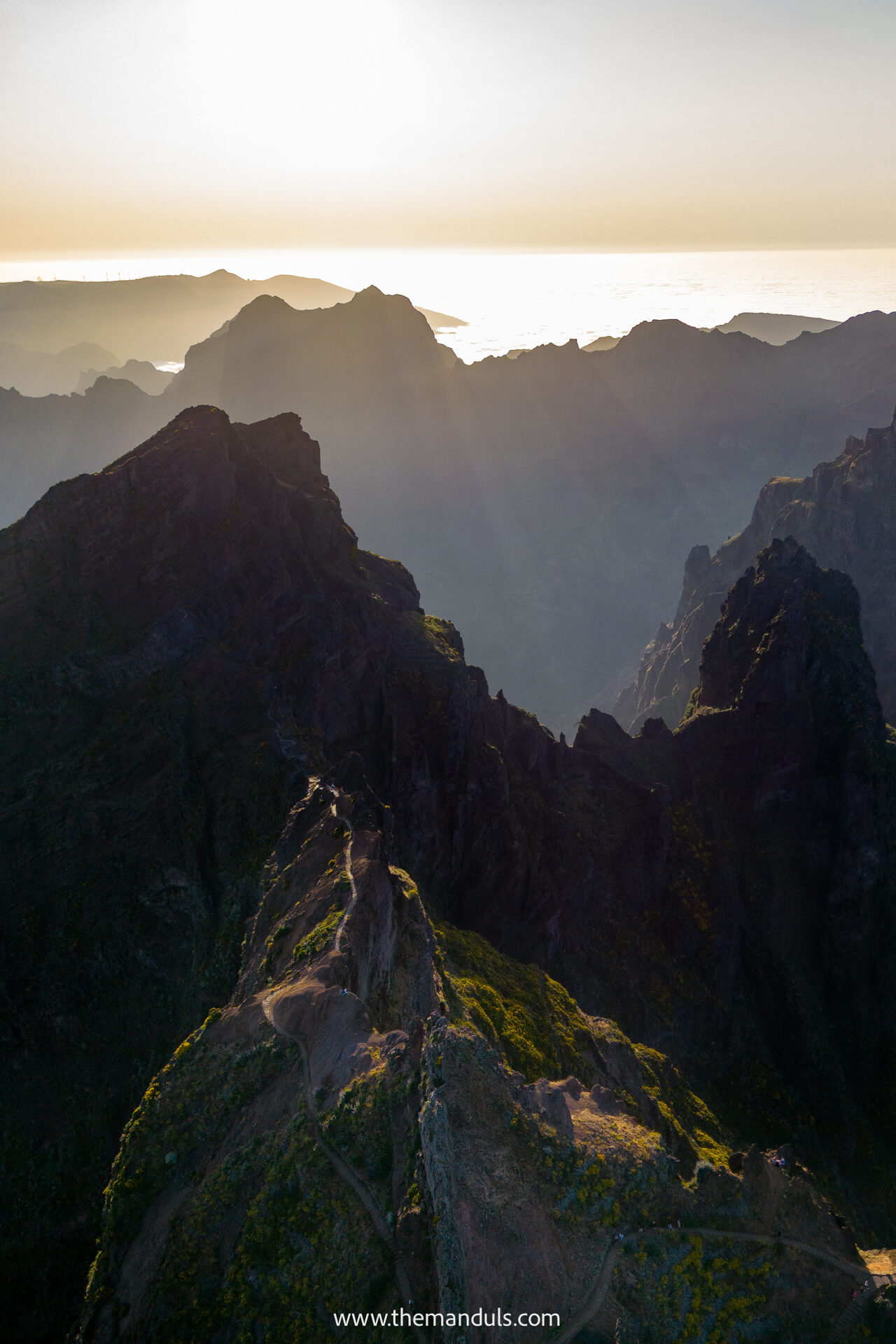
We started the hike right at Pico do Arieiro, next to the meteorological station and the main viewpoint. There’s no warm-up here — the trail drops straight into a long series of stone stairs carved into the mountain. Within minutes, you’re walking along a narrow ridge with deep valleys on both sides, and the views are already unreal.
This is a section where it’s really important to stay on the marked path. The rock is volcanic, uneven, and can be slippery, especially if there’s moisture in the air. Stepping off-trail isn’t just risky — in some places it could be fatal. We found the path well maintained, but it demands attention.
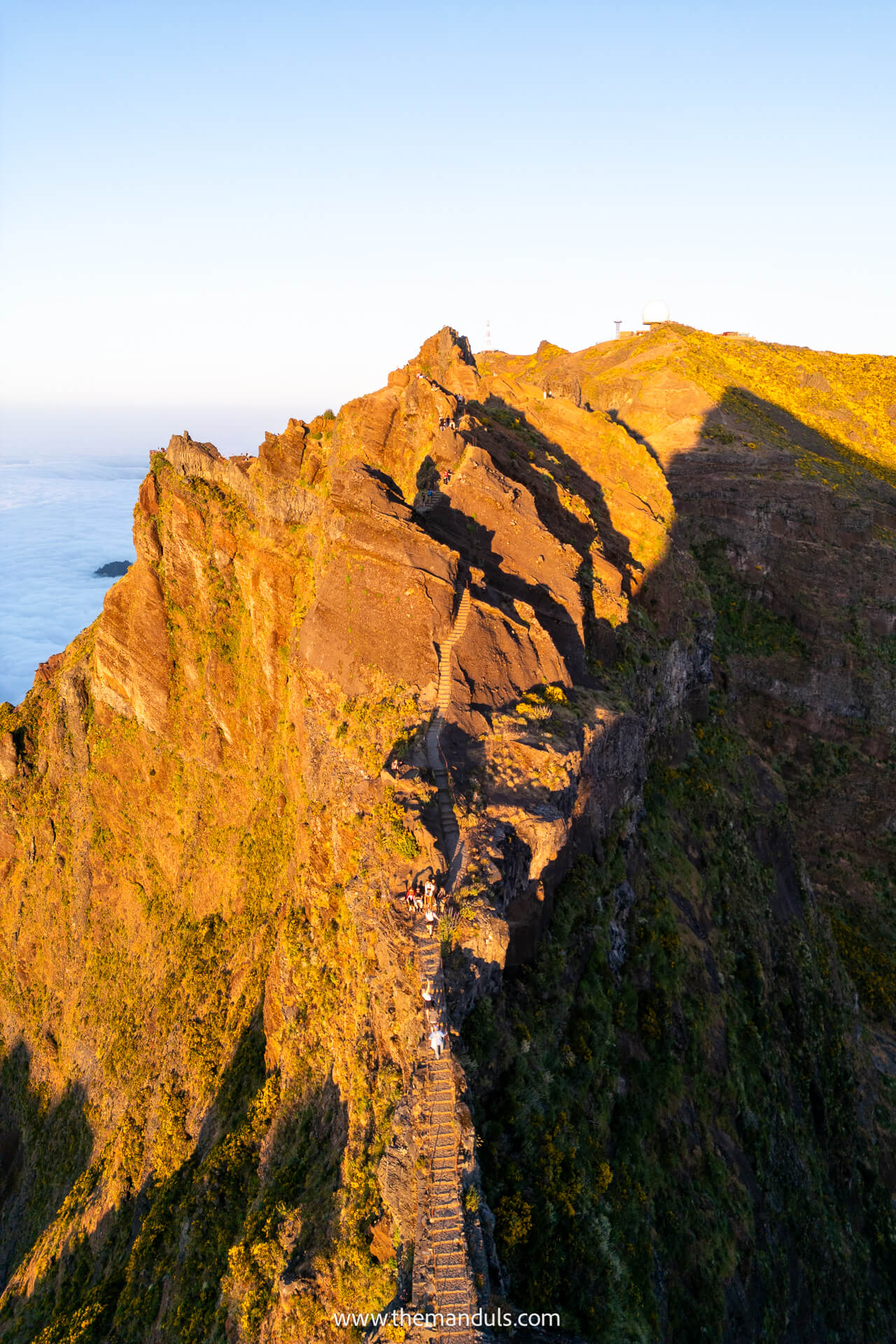
As we descended, the trail followed the mountain crest with endless stairs, giving us strong “Stairway to Heaven” vibes, just a bit less dramatic — and much quieter at this early stage.
Ninho da Manta Viewpoint
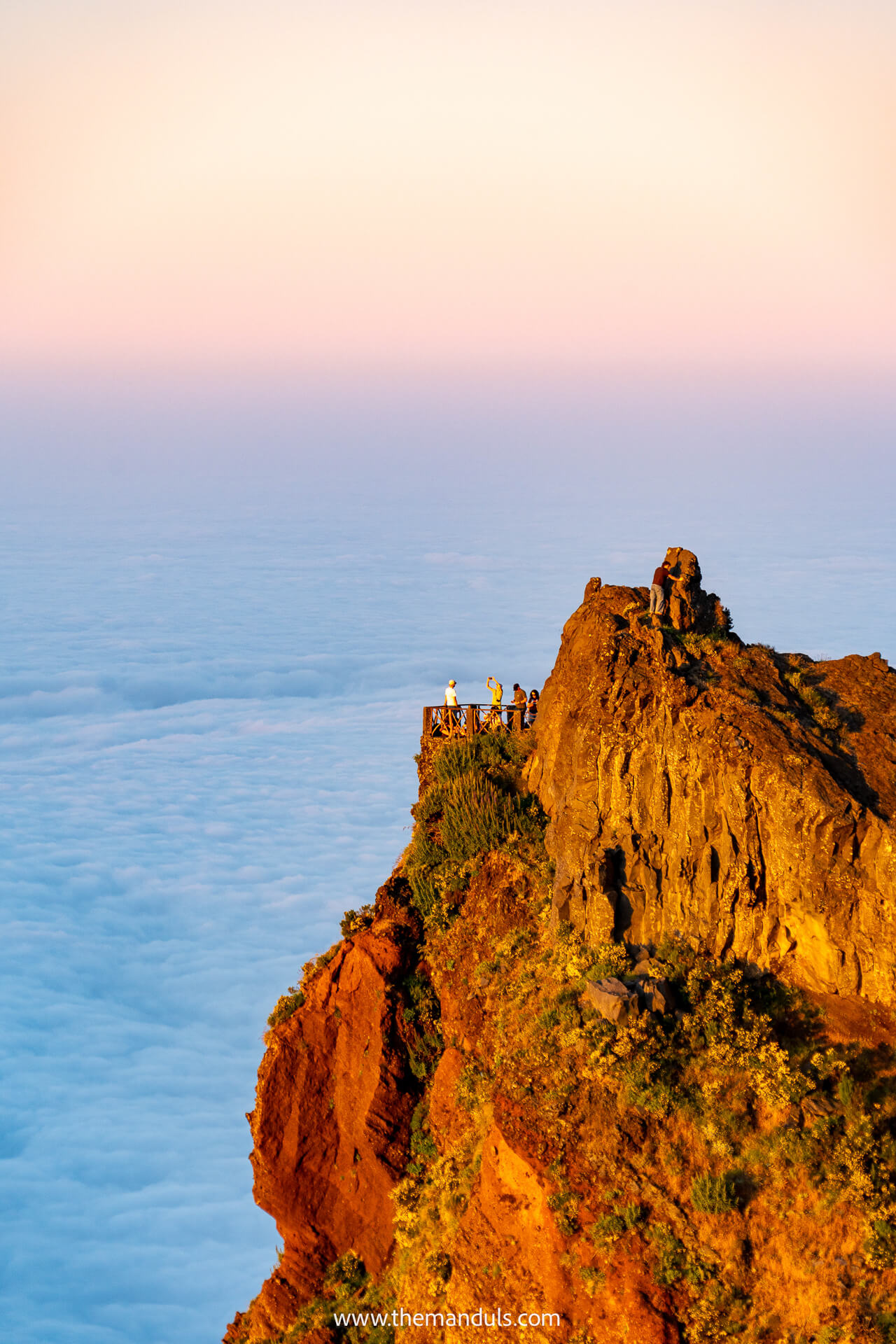
Not long after the descent, we took the short detour to Ninho da Manta viewpoint, which only adds about 5 minutes. It feels like a small wooden balcony hanging over the valley, and it’s absolutely worth the stop.
From here, the landscape opens up beautifully. The valley below often fills with clouds, and when they start moving through, the whole place feels calm and almost surreal.
Stairway to Heaven
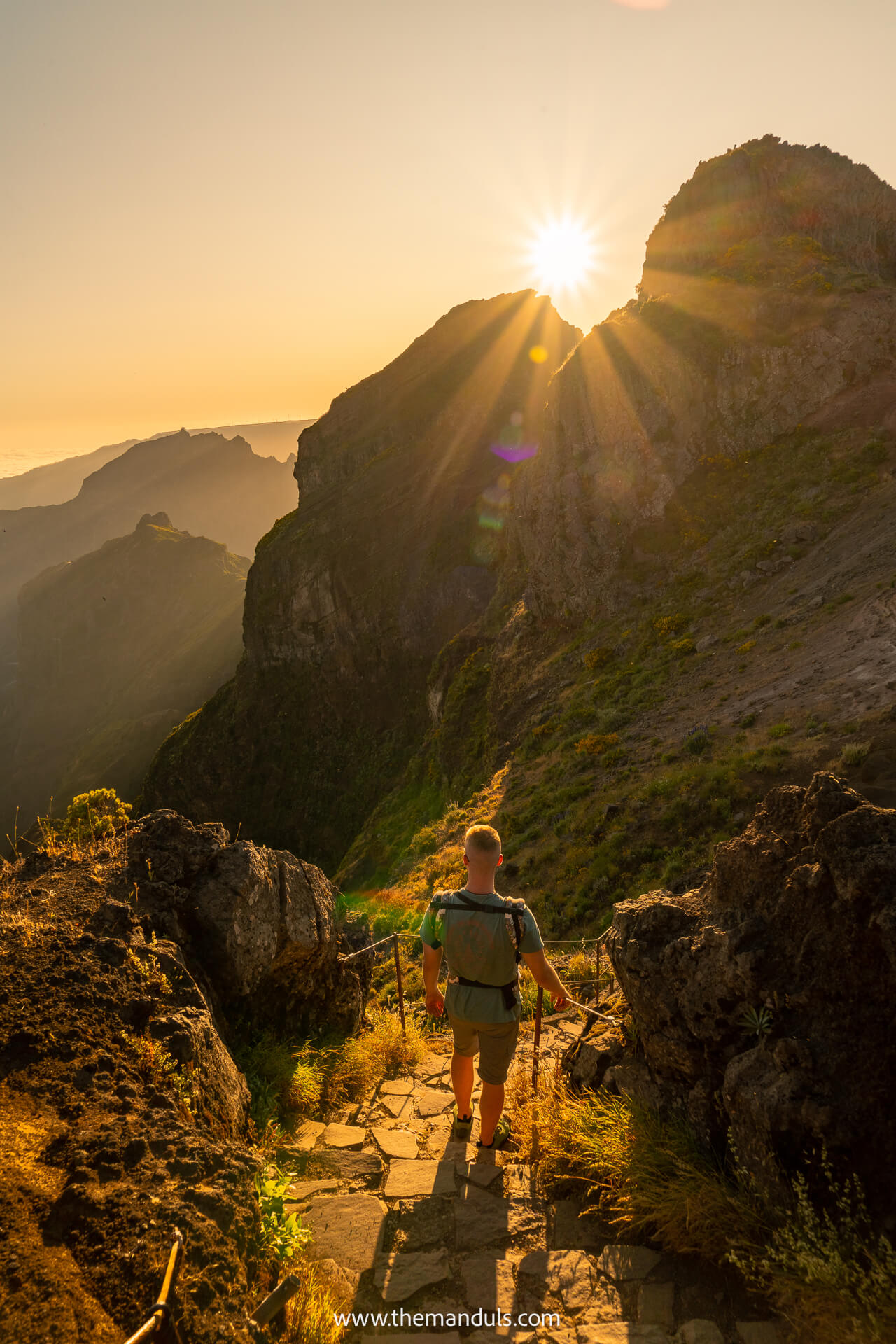
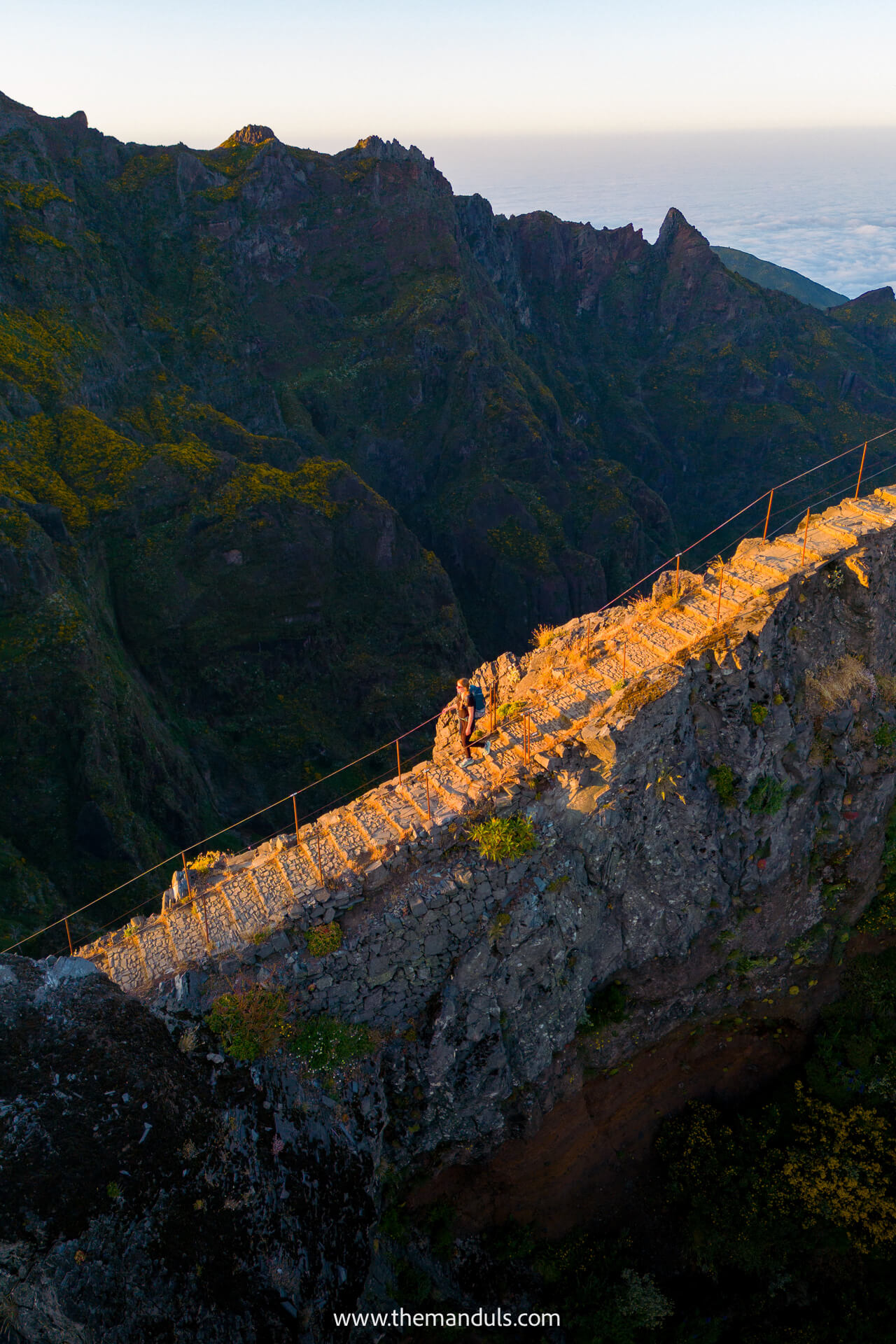
After returning to the main trail, the route climbs gently toward the famous Stairway to Heaven. This part is more exposed, but we always felt secure — all risky sections are protected with railings and fences. As long as you’re comfortable with heights and keep steady footing, it’s manageable.
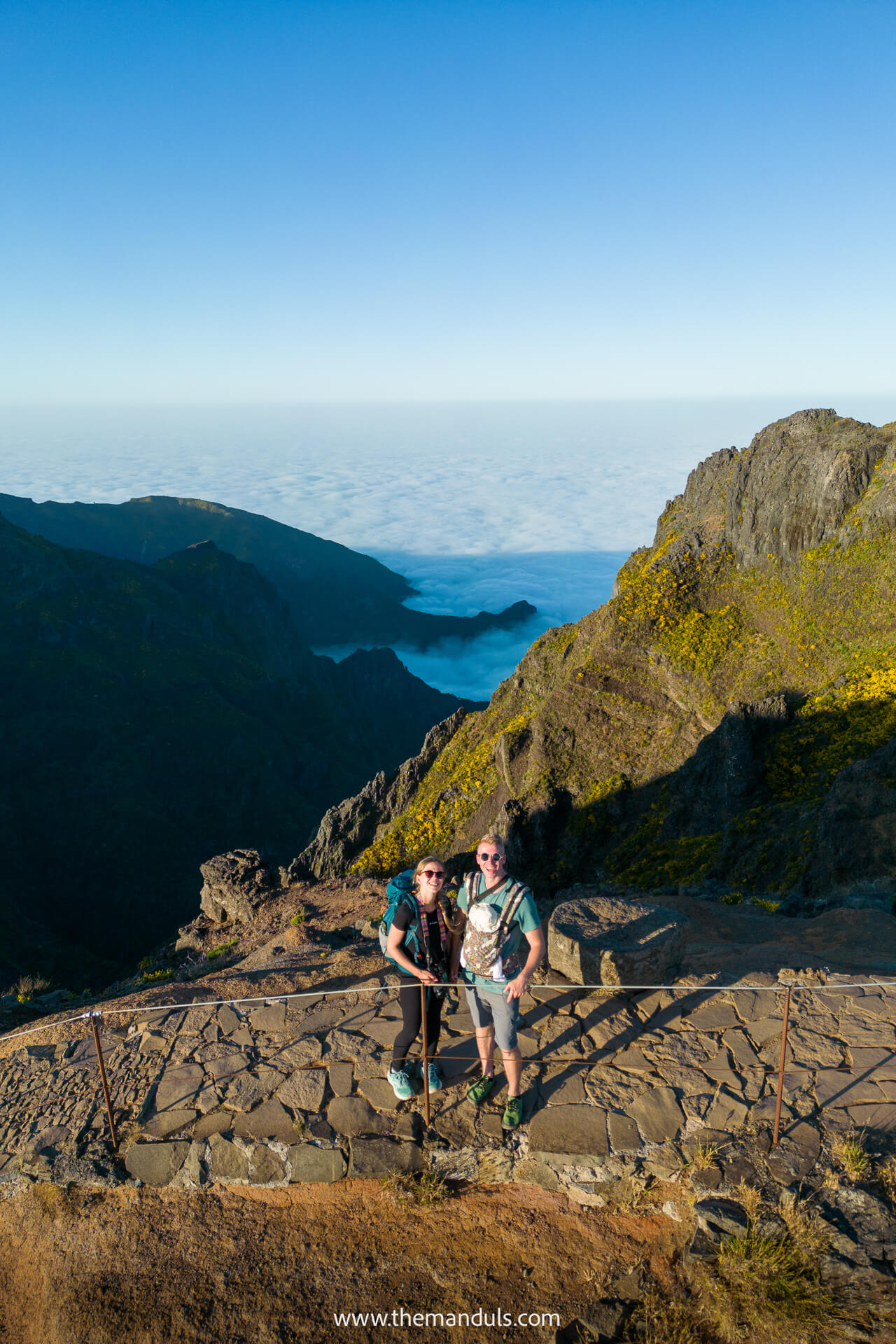
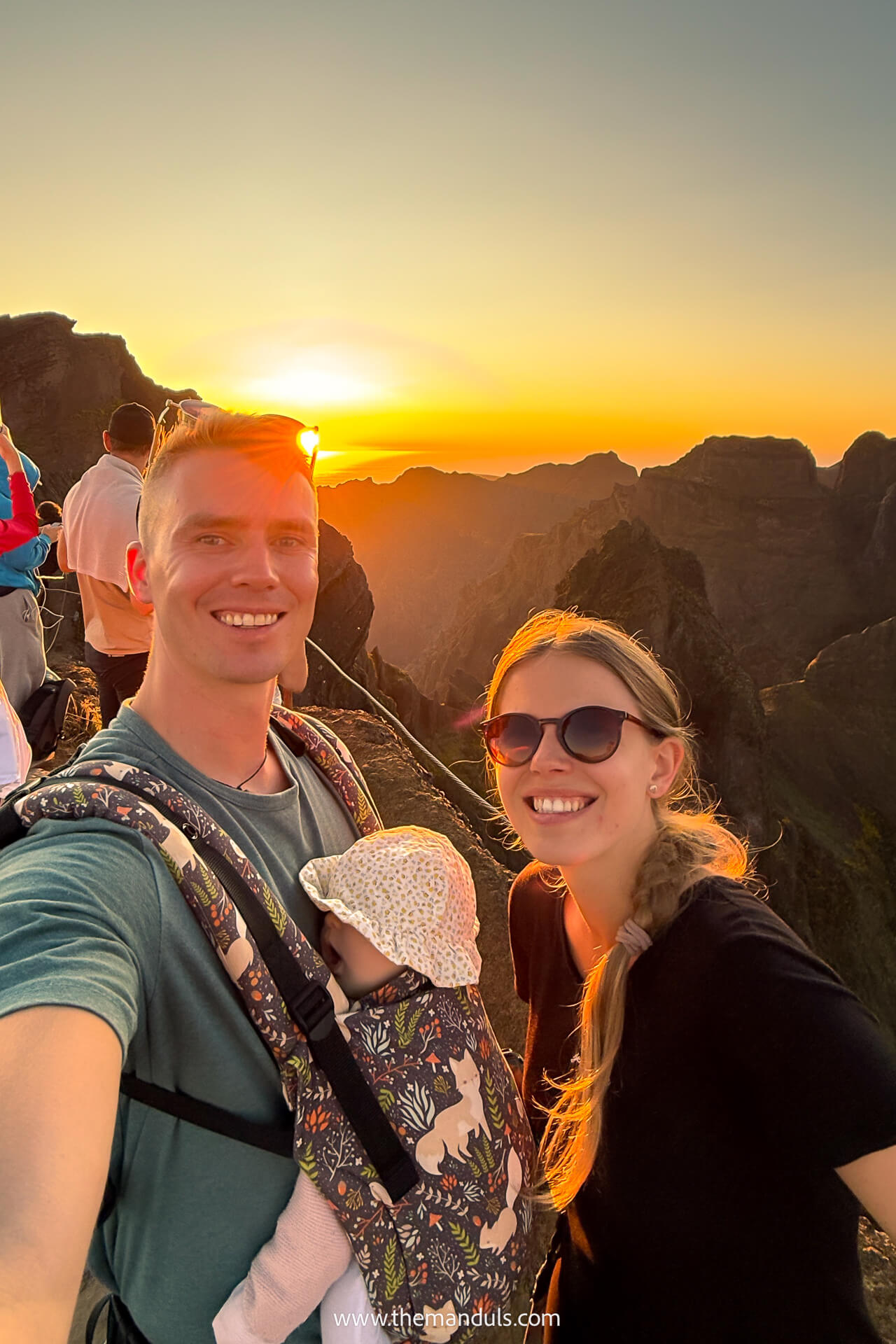
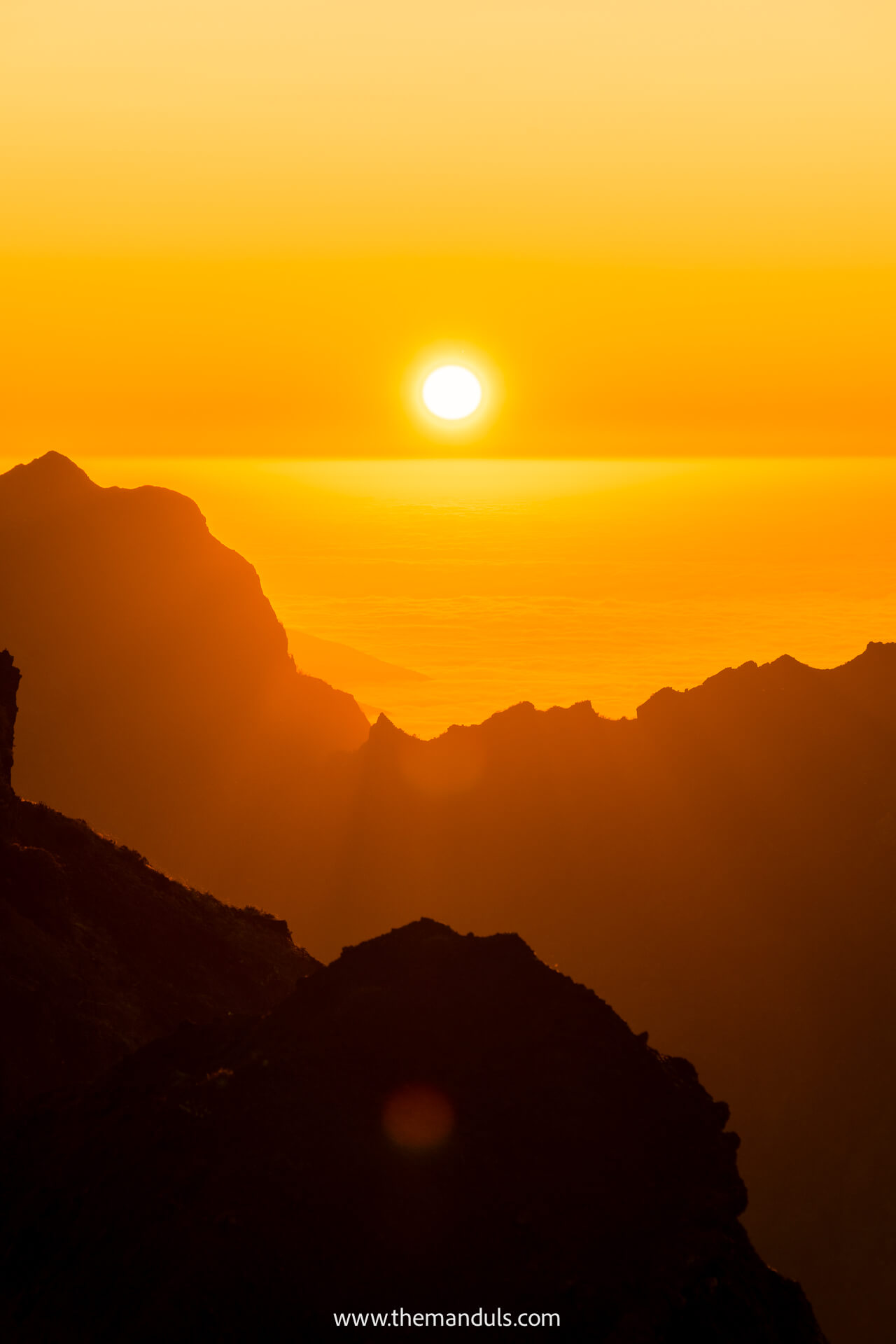
The stairs stretch along a sharp ridgeline, with views in every direction. This is where we stopped for sunset, and honestly, it was the highlight of our visit. The light changed fast, the colors were intense, and by this time, there were only a few people around.
This is also where the one-way section of the trail begins. It is clearly marked by turnstile gates, and once you pass through, you cannot return towards Pico do Areeiro.
Pico Ruivo
When PR1 is fully accessible, the trail continues past the Stairway to Heaven with a mix of ascents and descents, often on stairs and narrow mountain paths. All exposed sections are secured, but during busy summer months, this part can take longer as hikers move in single file.
Thank to one-way hiking, the traffic is not as terrible as before.
You’ll also pass through several tunnels, so carrying a headlamp or phone light is essential. Eventually, the trail reaches Casa do Abrigo, a mountain hut where the route splits. There are bathrooms, but the hut isn’t always open, so it’s best not to rely on it.
From here, it’s a short but steep 0.5 km climb up to Pico Ruivo, the highest point on Madeira.

TIP: If you don’t have a shuttle or taxi arranged from Achada do Teixeira, check out this transfer service.
Achada do Teixeira
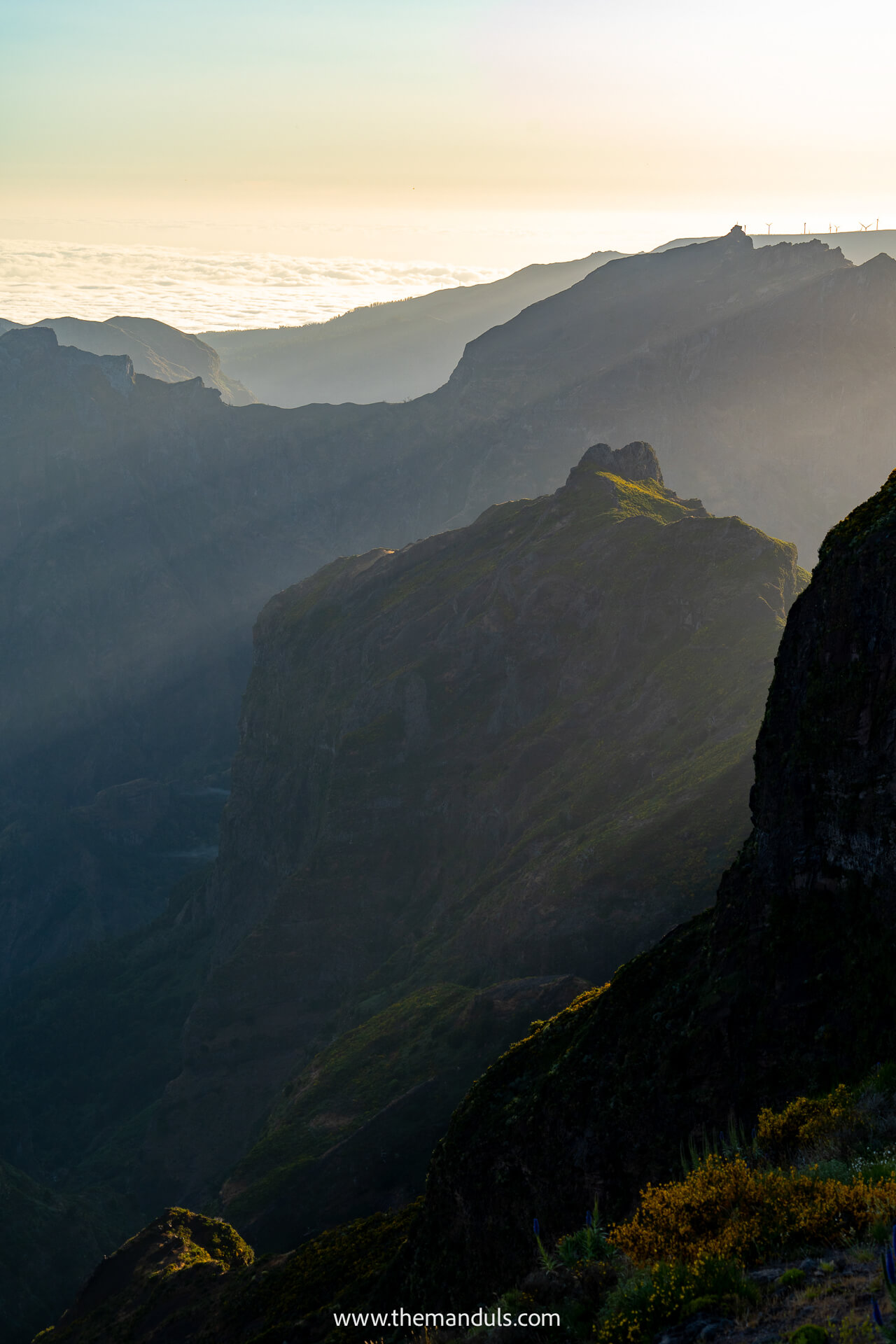
From Casa do Abrigo, the final section toward Achada do Teixeira is much more relaxed. It’s a gradual descent, less technical, and a nice way to finish such a dramatic hike.
This stretch is about 2.9 km and usually takes around one hour, with wide views and a calmer atmosphere.
TIP: If you plan to finish the whole hike, we recommend booking this organized transfer that will drop you off at Pico do Arieiro in the morning and pick you up at Achada do Teixeira once you’re done.

Sunrise & Sunset viewpoints recommendations
Sunset (our experience)
We spent sunset time around the Stairway to Heaven, and it turned out to be a great choice — dramatic ridgelines and warm light hitting the peaks.
That said, if we had more time, we’d actually choose to stay right at the start of the trail, where the first long descent down the stairs begins. This is one of the highest points along this section of PR1, and the views open up immediately in multiple directions.
Sunrise
For sunrise, it’s best to stay very close to the Pico do Arieiro viewpoint and meteorological station. This area faces east and gives you the best chance of seeing the sun come up above the clouds, often with a classic sea of clouds rolling through the valleys below.
Going further along the trail in the dark doesn’t add much for sunrise views and usually just means navigating stairs with a headlamp among crowds.
Facilities on the trail
Facilities along the trail are very limited, so we recommend carrying everything you need for the hike.
At Pico do Areeiro, near the start of PR1, you’ll find toilets and a café or snack bar where you can usually buy drinks and basic food. However, opening hours may not cover early sunrise starts or late sunset visits.
We came unprepared with very little water left, but the shops were already closed. Based on our experience, we wouldn’t rely on buying anything at the trailhead, especially early in the morning or late in the afternoon.
Once you start hiking, there are no shops, toilets, or water refill points until you reach Casa do Abrigo do Pico Ruivo. The mountain shelter normally sells water, coffee, soft drinks, cakes, and small snacks, and toilets are available.
However, opening hours and available products can vary, so bring enough water and food for the entire hike rather than depending on it.
There are several basic weather shelters along the route towards Achada do Teixeira, but these do not provide food, water, or other services.
At the end of the hike, Achada do Teixeira Mountain Spot Café serves drinks, snacks, and meals next to the parking area. It’s the most convenient place to stop after completing the full route, provided your transfer schedule leaves enough time.
Where to eat
- Boutique do Areeiro – Located at Pico do Areeiro near the start of the trail. It’s useful for coffee, sandwiches, snacks, or last-minute water when open, but we wouldn’t depend on it for an early start.
- Casa do Abrigo do Pico Ruivo – A small mountain shelter near Pico Ruivo serving drinks, homemade cakes, and basic snacks. Treat it as a useful bonus rather than your main food plan.
- Achada do Teixeira Mountain Spot Café – The best option for a proper post-hike stop, with drinks, snacks, and meals directly beside the finishing point.
Trail Difficulty
The full hike from Pico do Areeiro to Pico Ruivo and Achada do Teixeira is a challenging mountain route, even though the official PR1 trail is well marked and generally well maintained.
The main difficulty comes from the constant elevation changes, long stair sections, narrow mountain paths, and exposed ridgelines. You’ll also pass through tunnels and face a demanding final climb towards Casa do Abrigo and Pico Ruivo.
The descent to Achada do Teixeira is easier, but it comes after several hours of hiking.
Many exposed sections are protected with railings, but the route can still feel intimidating if you have a strong fear of heights. The stairs can also be tough on the knees, particularly during the longer descents.
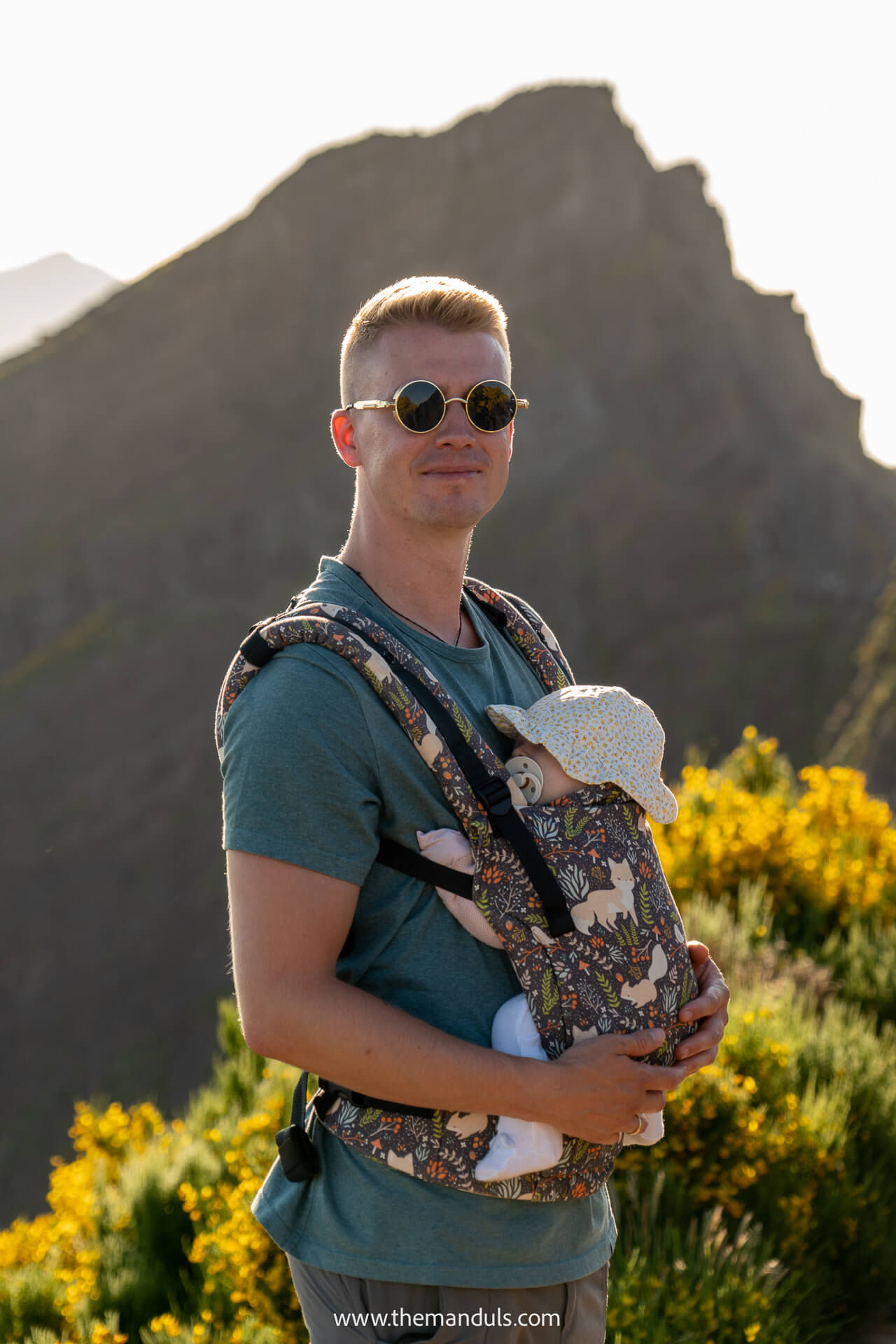
The shorter return hike to Pedra Rija is much more manageable. We completed this section with Ema, who was six months old, in a baby carrier. It worked well for us, but the path still includes uneven stairs and exposed sections, so we’d only recommend it if you’re comfortable carrying a child on mountain terrain.
Keep in mind that once you pass through the one-way gates beyond Pedra Rija, you cannot turn around and return to Pico do Areeiro. Only continue if you are prepared to complete the route and already have transport arranged from the finish.
Wind, fog, rain, and wet steps can make both versions of the hike considerably harder. Check the current mountain conditions before entering the trail and avoid continuing in poor weather.
Where to stay in Madeira
Madeira offers a wide mix of stays — from large coastal resorts to quiet countryside retreats surrounded by vineyards and mountains. Where you stay really depends on how you plan to explore the island: Funchal and the south coast are best for convenience and dining, while the north coast and rural interior feel wilder and more atmospheric.
If you’re still deciding which part of Madeira suits you best, check out our full guide on where to stay in Madeira — it breaks down the best areas, including hand-picked hotel recommendations.
Here are the places we’d happily book again:
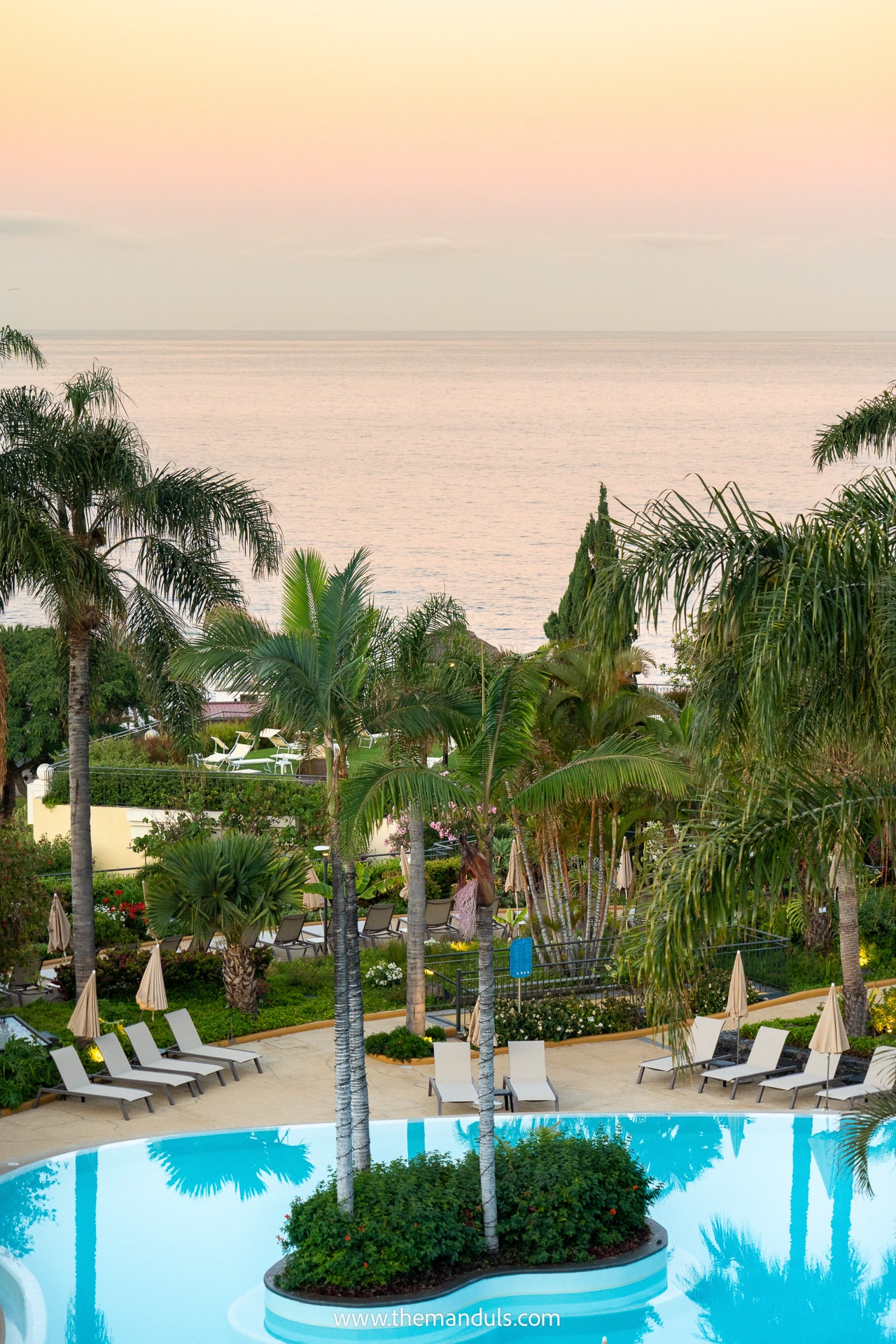
⭐️⭐️⭐️ Hotel Porto Mare – PortoBay (our top pick) – We stayed here and honestly loved how easy and comfortable everything felt. The hotel is set within lush gardens, the rooms are spacious and quiet, and the whole place has a calm, resort-style atmosphere without feeling over the top. Food was a highlight for us — generous, fresh, and well organised. We especially enjoyed the themed dinners.
The location worked perfectly as a base for exploring the island while still being close to Funchal’s restaurants and waterfront. It’s one of those hotels we’d book again without hesitation, especially for a longer stay.
Best for: a relaxed, high-quality base with great facilities
👉 Check current deals →
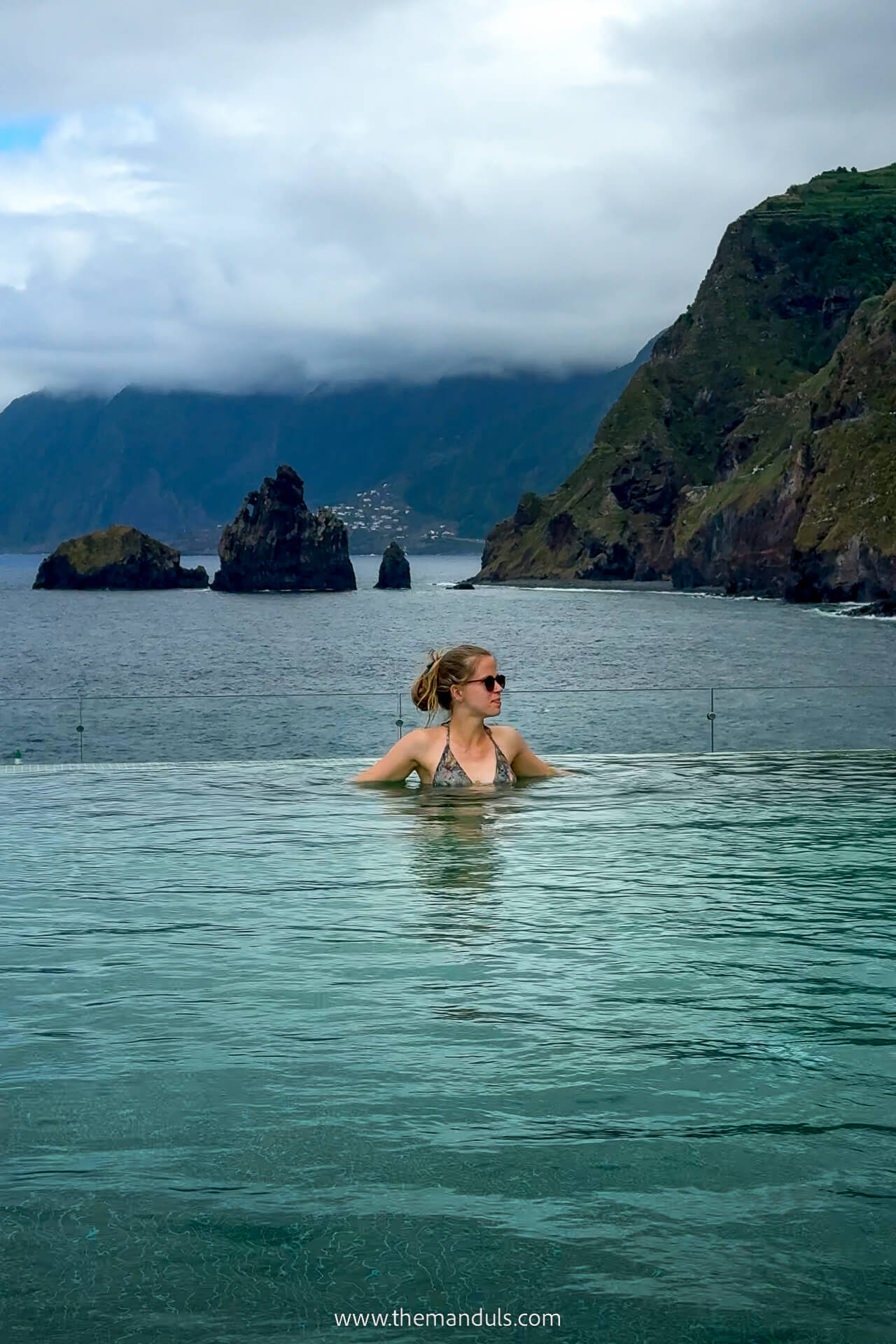
⭐️⭐️ Aqua Natura Bay – We also stayed at Aqua Natura Bay, and the location alone makes it special. Being right next to the Porto Moniz natural pools means you can enjoy them early or late, once the day-trippers leave. Many rooms face the ocean, and falling asleep to the sound of waves is part of the experience here.
The hotel feels modern and well maintained, with a focus on comfort rather than luxury. If we were planning a trip focused on the north coast, we’d happily stay here again.
Best for: ocean views and exploring Madeira’s wild north
👉 Compare prices →
⭐️ Quinta das Vinhas – This one offers a completely different experience — quiet, rural, and surrounded by vineyards and old stone buildings. It feels more like staying on a traditional Madeiran estate than in a hotel.
If we wanted to slow down for a few nights and experience a more authentic side of the island, this would be a dream stay.
Best for: a peaceful countryside escape with character
👉 See availability →
FAQs
No. You can hike PR1.2 from Achada do Teixeira to Pico Ruivo and return the same way, but you cannot continue along PR1 towards Pico do Areeiro. Beyond Pedra Rija, PR1 can only be completed in the direction Pico do Areeiro → Pico Ruivo.
Yes. Every person must be included in the reservation, regardless of age. Children aged 12 or younger are currently exempt from the trail fee, but they still need to be registered.
If the IFCN officially restricts or closes the trail, your access may be rescheduled or refunded. A poor personal weather forecast does not automatically guarantee a refund, so check the official trail status before travelling to Pico do Areeiro.
It’s not dangerous if you stay on the marked trail and hike in good conditions. Exposed sections are secured with railings, but the terrain is volcanic, uneven, and unforgiving — a wrong step off-trail can be serious.
Yes. Proper footwear with good grip is strongly recommended. The stairs and rocky sections can be slippery, especially in wind or moisture.
Only partially. Fit beginners can handle short sections, but the full hike is demanding due to elevation changes, stairs, and exposure. It’s not a casual walk.
Skip it. Visibility and wind make a huge difference here, and conditions can change quickly. Clear weather is key to enjoying this hike safely.
Final Thoughts
Pico do Areeiro was one of the most impressive places we visited in Madeira. The mountain scenery begins almost immediately, so you don’t need to complete the entire trail to understand why this area is so popular.
If you’re prepared for a challenging point-to-point hike and arrange transport from the finish, the full route to Pico Ruivo and Achada do Teixeira is the option to choose. If you’re short on time or don’t want to commit to several hours of hiking, the shorter return walk to Pedra Rija still includes some of the most dramatic views near Pico do Areeiro.
We chose the shorter trail for sunset and would happily recommend it. Parking and the trail felt much calmer than we expected, and the changing light over the ridgelines made it one of the highlights of our Madeira trip.
Whichever option you choose, plan around the weather, reserve your entry in advance, and be realistic about your fitness and comfort with heights. The full hike and the short return walk are very different experiences, but both can be worth it when you choose the one that suits your trip.