
This article contains affiliate links. Learn more in our affiliate disclosure.
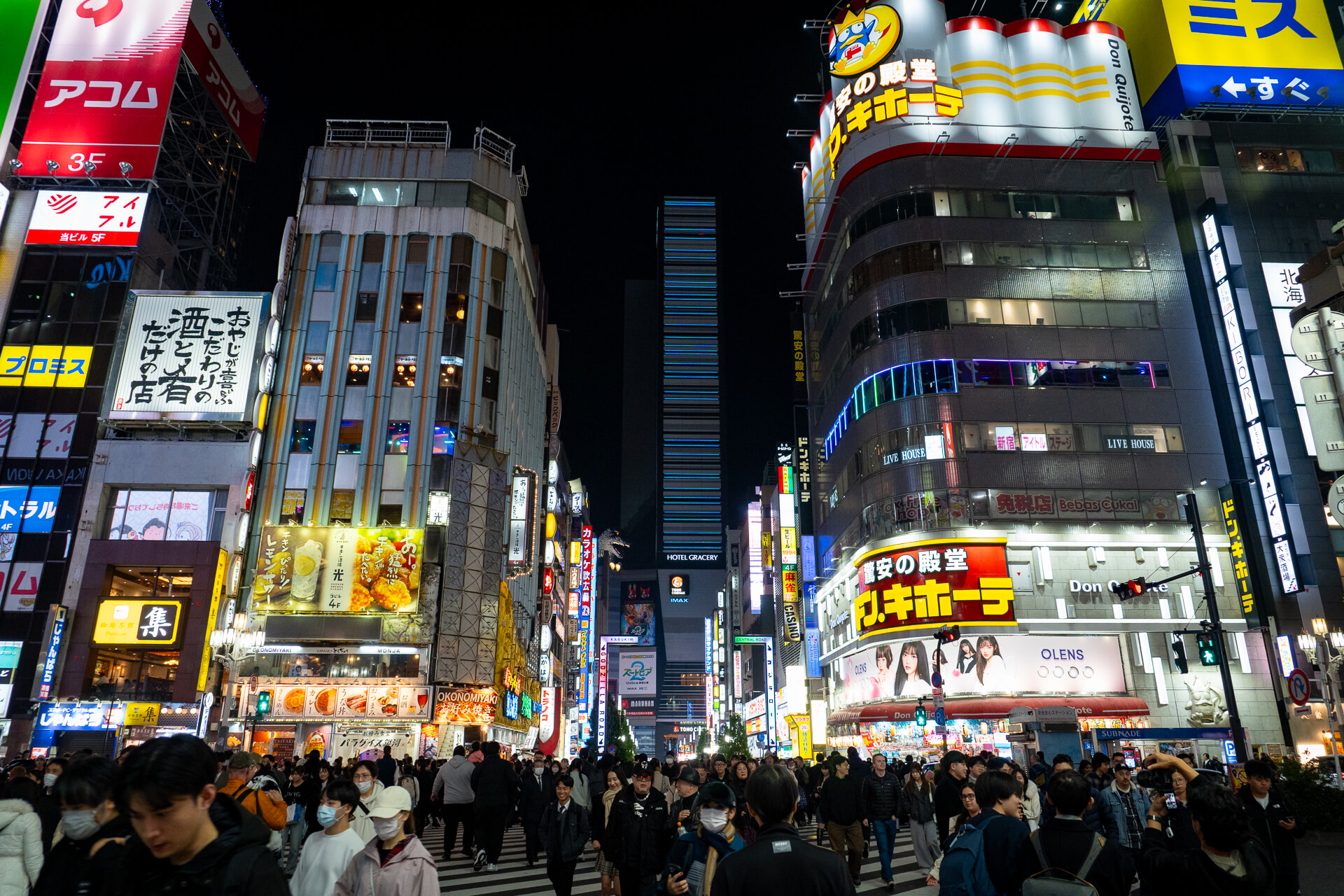
We explored Shinjuku both during the day and at night, and each felt completely different — and equally impressive.
Some areas are calm and surprisingly peaceful, others are buzzing with energy, and the contrast between them is what makes this place so special.
We put Shinjuku on our list of the best things to do in Tokyo, but it isn’t about ticking off one big sight; it’s about contrasts — quiet gardens next to skyscrapers, amazing restaurants minutes from arcades, and tiny bars hidden under glowing billboards.
We genuinely fell in love with this part of Tokyo and would recommend it to everyone visiting the city.
If you’re deciding where to stay in Tokyo, Shinjuku is easily one of the best choices. This list of the best things to do here is based entirely on our own experience and honest recommendations.
Top Things to do in Shinjuku
Map of all the attractions
1. Visit Shinjuku Gyoen National Garden

Opening hours: vary by season, so check it on the official website

Entrance Fee: 500 JPY, can be paid with Suica
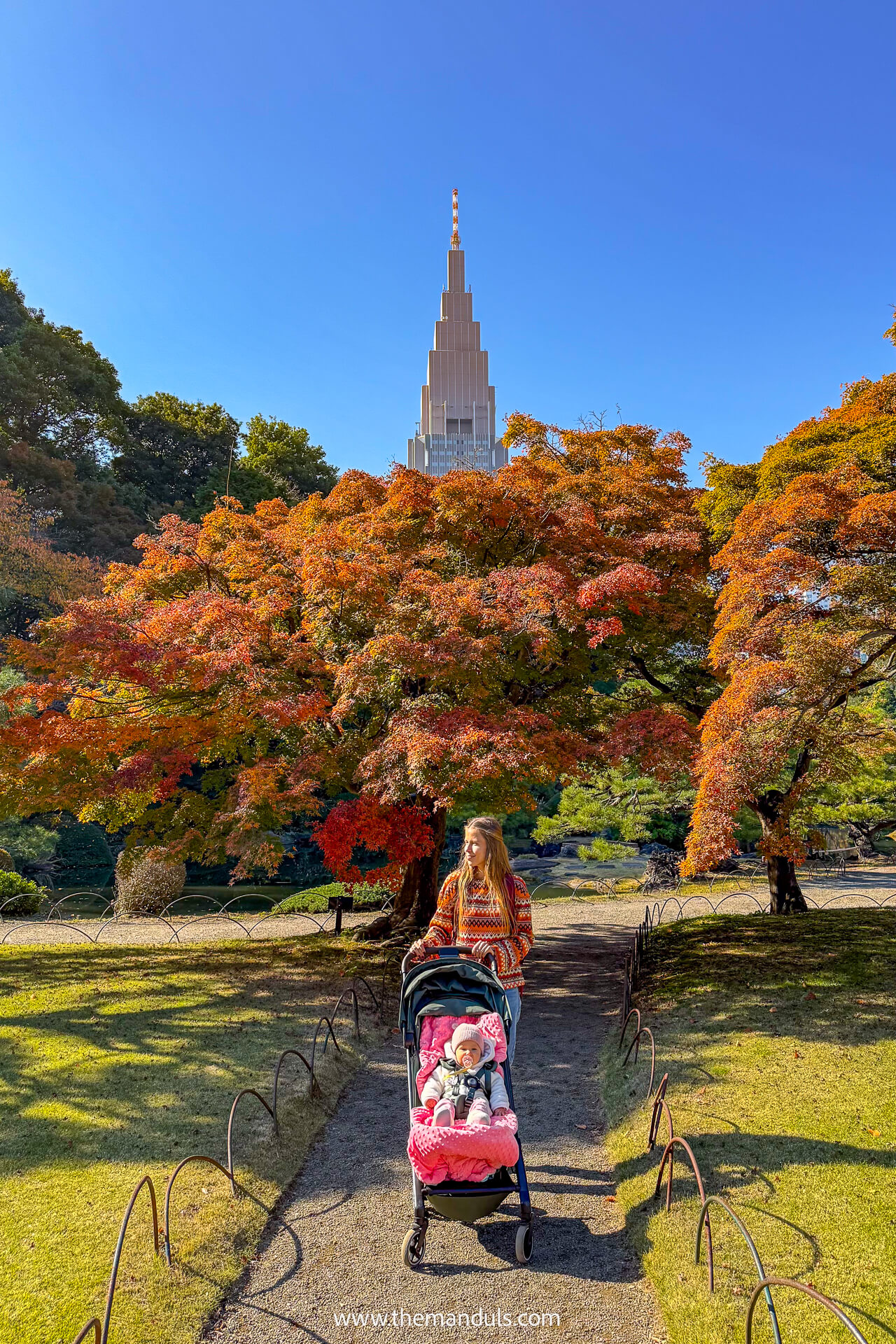
Shinjuku Gyoen is one of the best places to slow down and experience a completely different side of Tokyo.
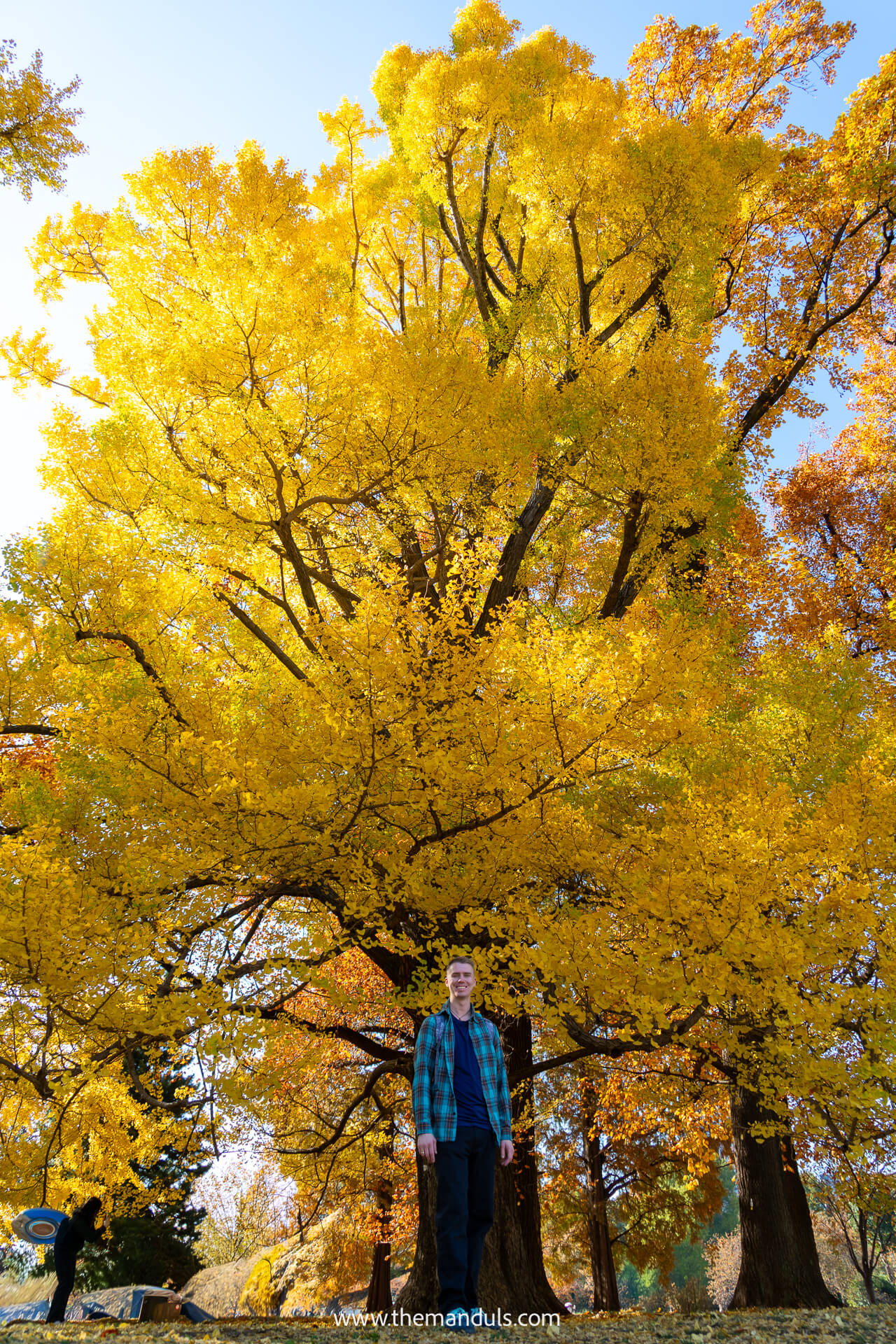
We visited on 21.11., right in the middle of autumn, and the colors were at their absolute peak — deep reds, yellows, and oranges everywhere, with skyscrapers rising in the background. That contrast alone made the visit feel epic and easily one of our favorite moments in Shinjuku.
We spent around two hours walking through the park and taking photos, without ever feeling rushed or bored. Despite being right in the city, it felt calm and spacious, especially compared to the streets outside.
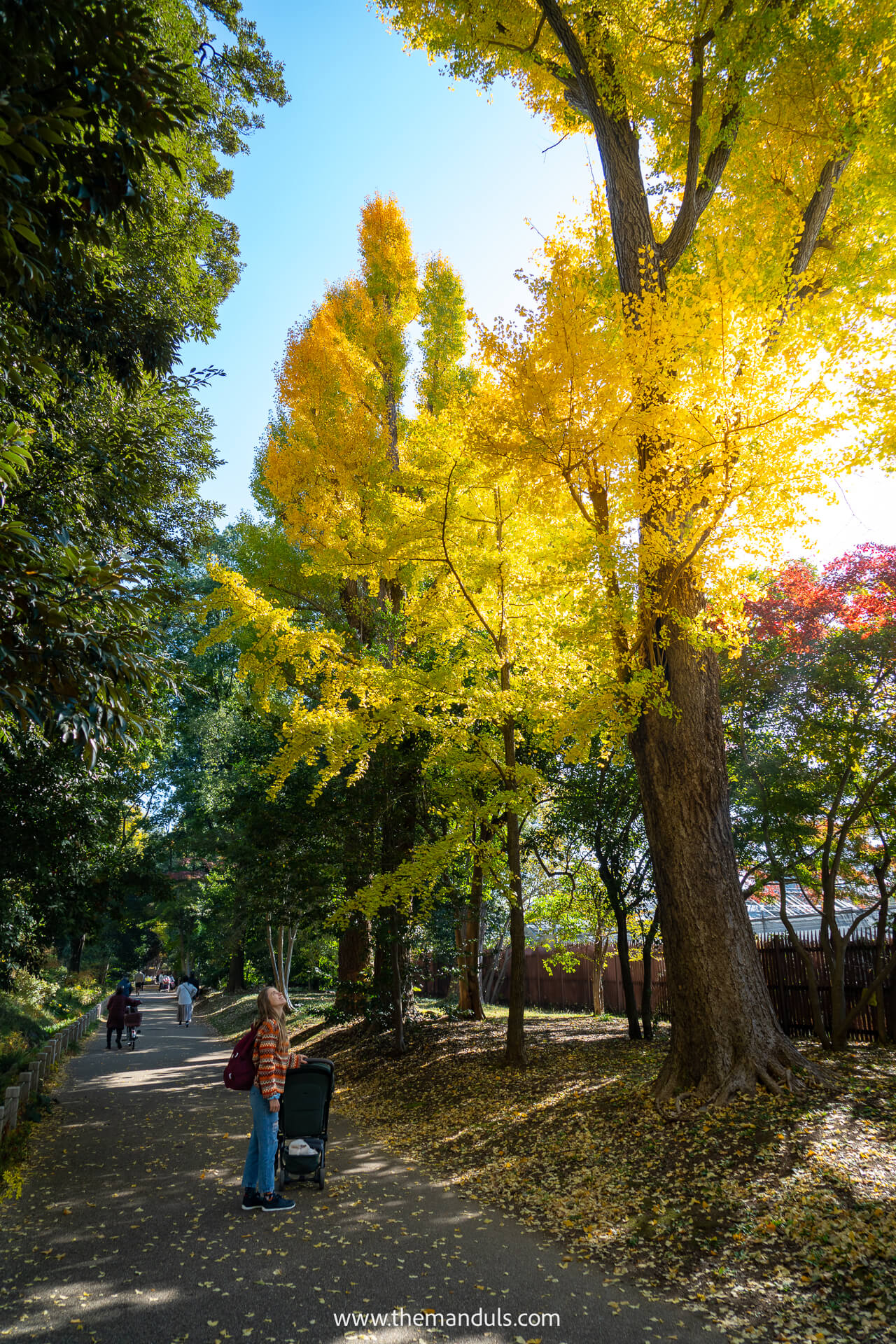
Entry requires a small fee, but it’s absolutely worth it for how much space and variety you get inside. There are vending machines and cafés if you need a break, and alcohol isn’t allowed, which helps keep the atmosphere relaxed.
Another great time to visit is spring during cherry blossom season, when the park looks completely different but just as impressive. Crowds are heavier then, but even so, this is one of those places that still feels worth it.
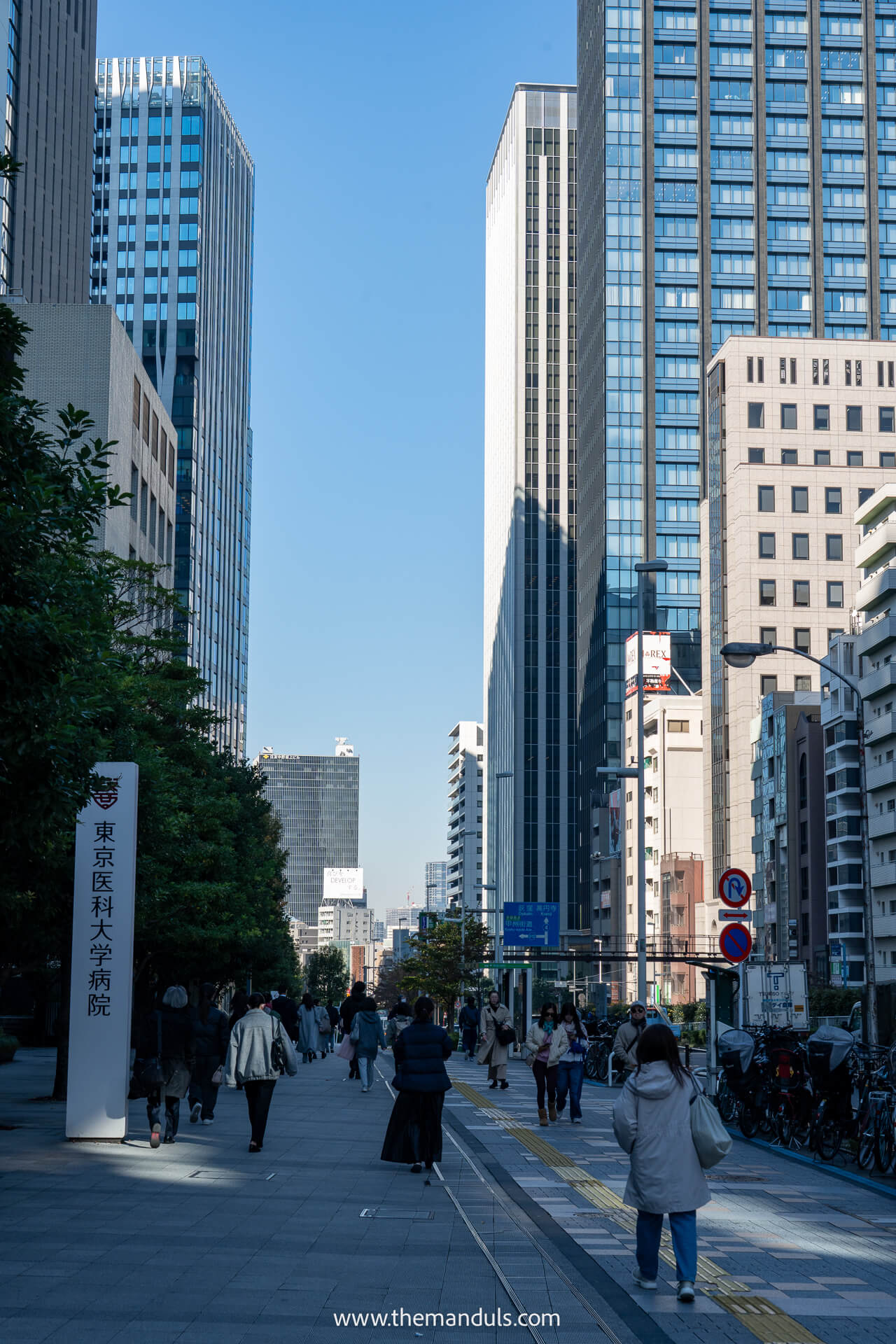
2. Visit Tokyo Metropolitan Government Building Viewpoint
Opening hours: 9:30 AM – 10 PM
Entrance Fee: free
We visited the Tokyo Metropolitan Government Building viewpoint twice, and honestly, doing it at different times of day completely changes the experience. The first time was right after opening at 9:30, when there were far fewer people.
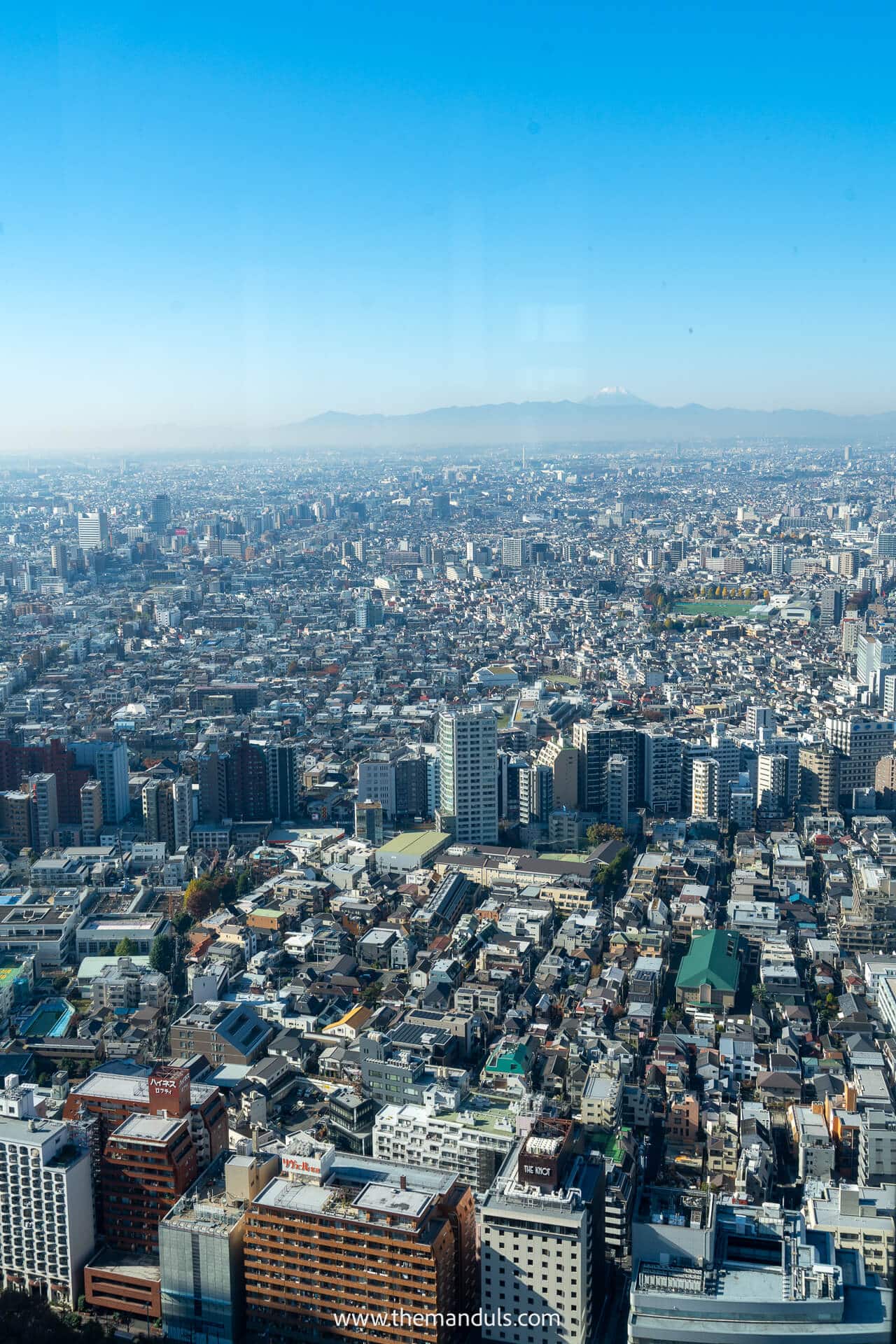
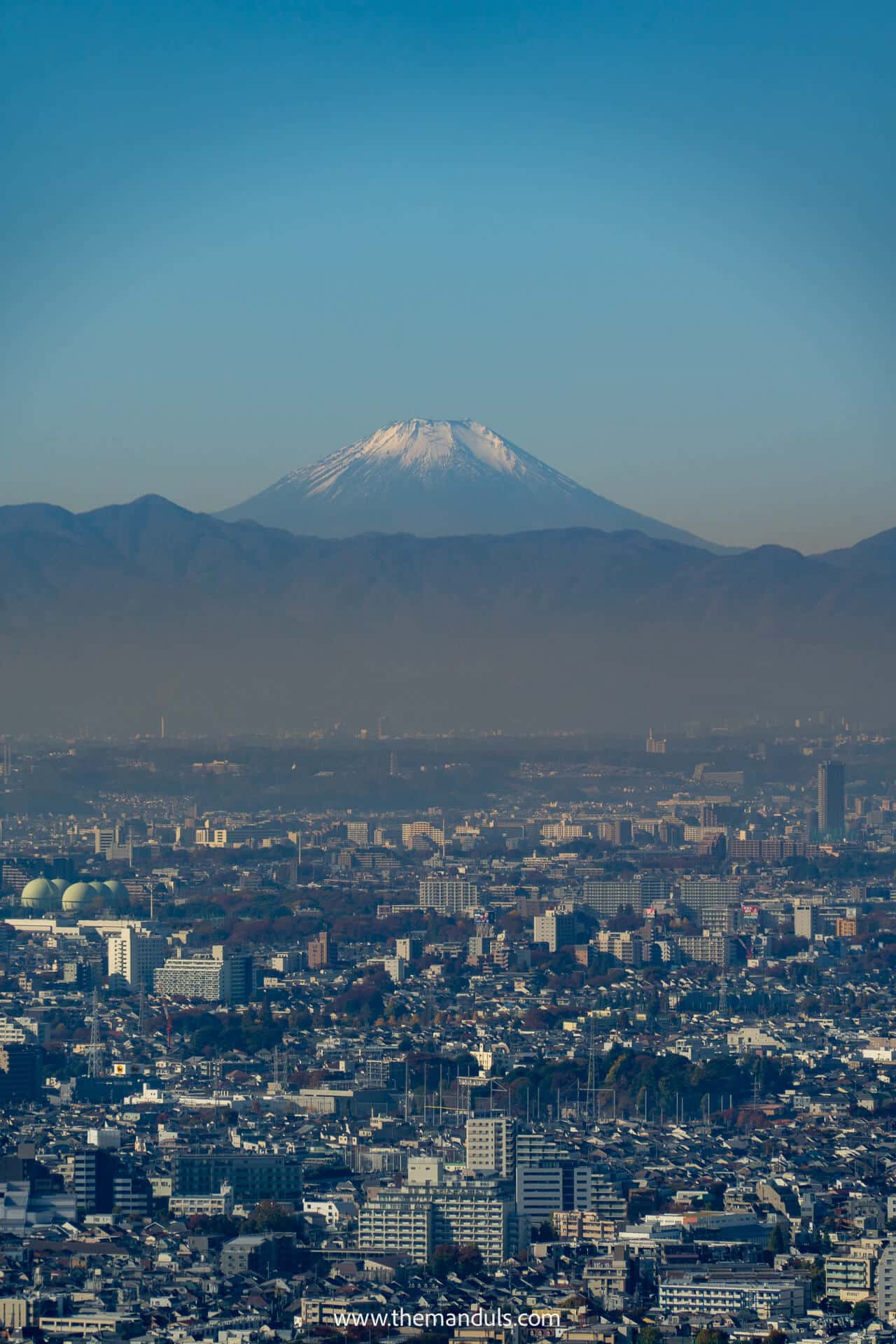
It was a clear day, and we were even able to see Mount Fuji in the distance, which was absolutely amazing and something we didn’t expect at all. If you can, plan your visit on a clear day — visibility makes a huge difference here.
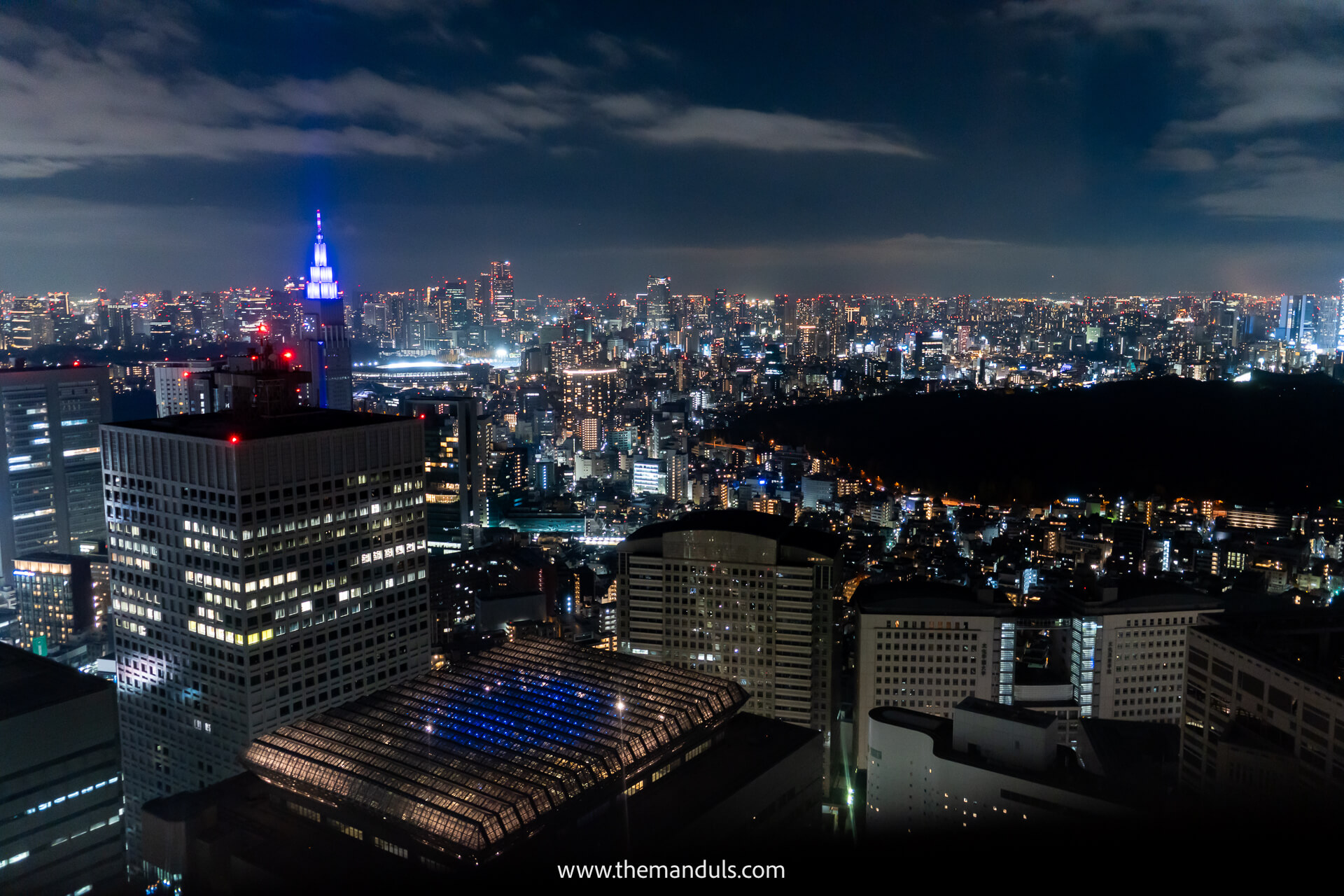
The second visit was for sunset, and we stayed until it got dark to see the city transition from daylight to full neon. This time, it was more crowded, and we waited around 15 minutes in line, but the sunset was genuinely mind-blowing and easily worth the wait. Watching the lights slowly come on across Shinjuku while the sky changes color is something photos don’t fully capture.
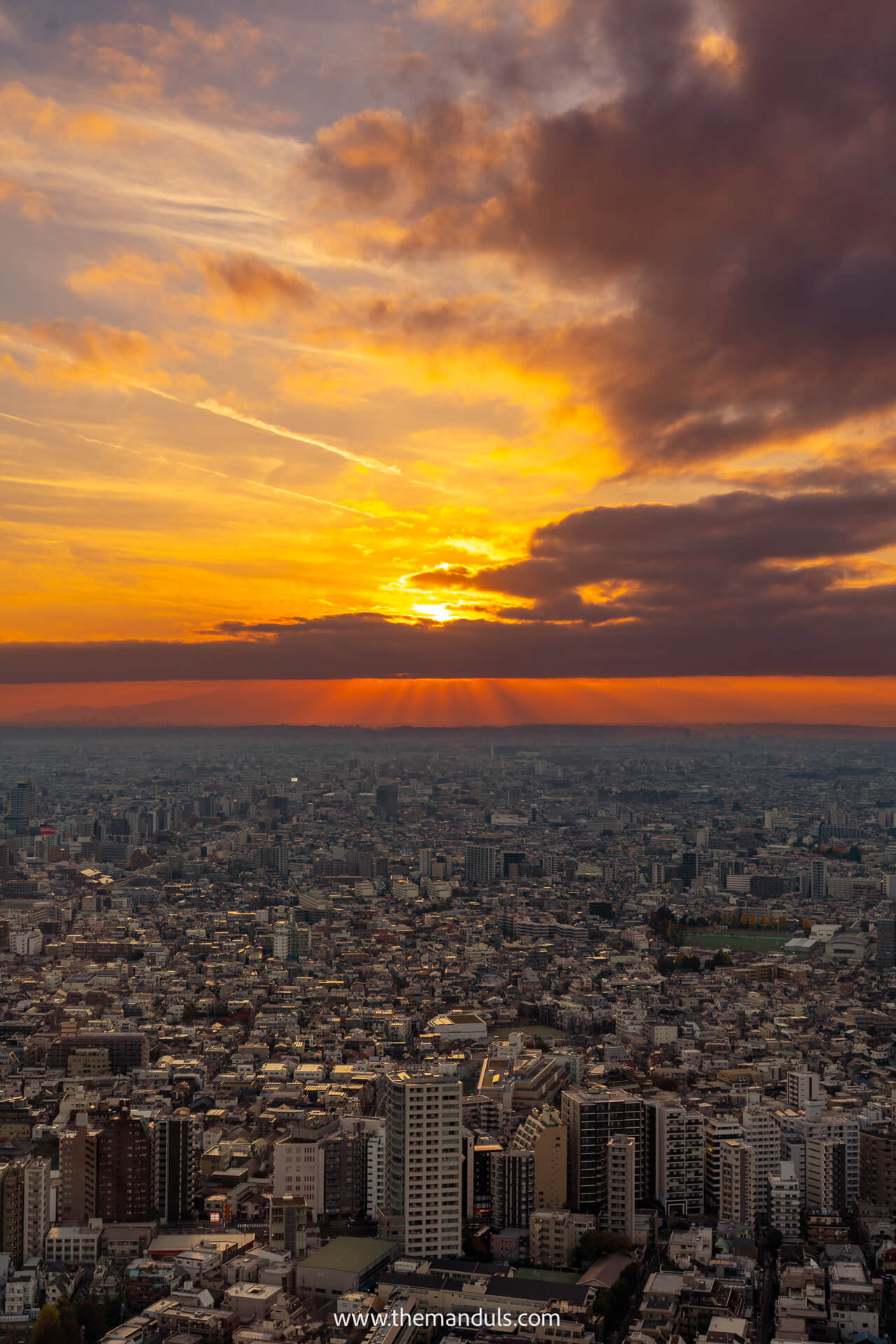
Both observation decks sit on the 45th floor, and there are two viewpoints with slightly different perspectives. The South Observatory works better for sunset and night views, with a more dramatic skyline and city lights, while the North Observatory is better during the morning or on very clear days, especially if you’re hoping for long-distance views.
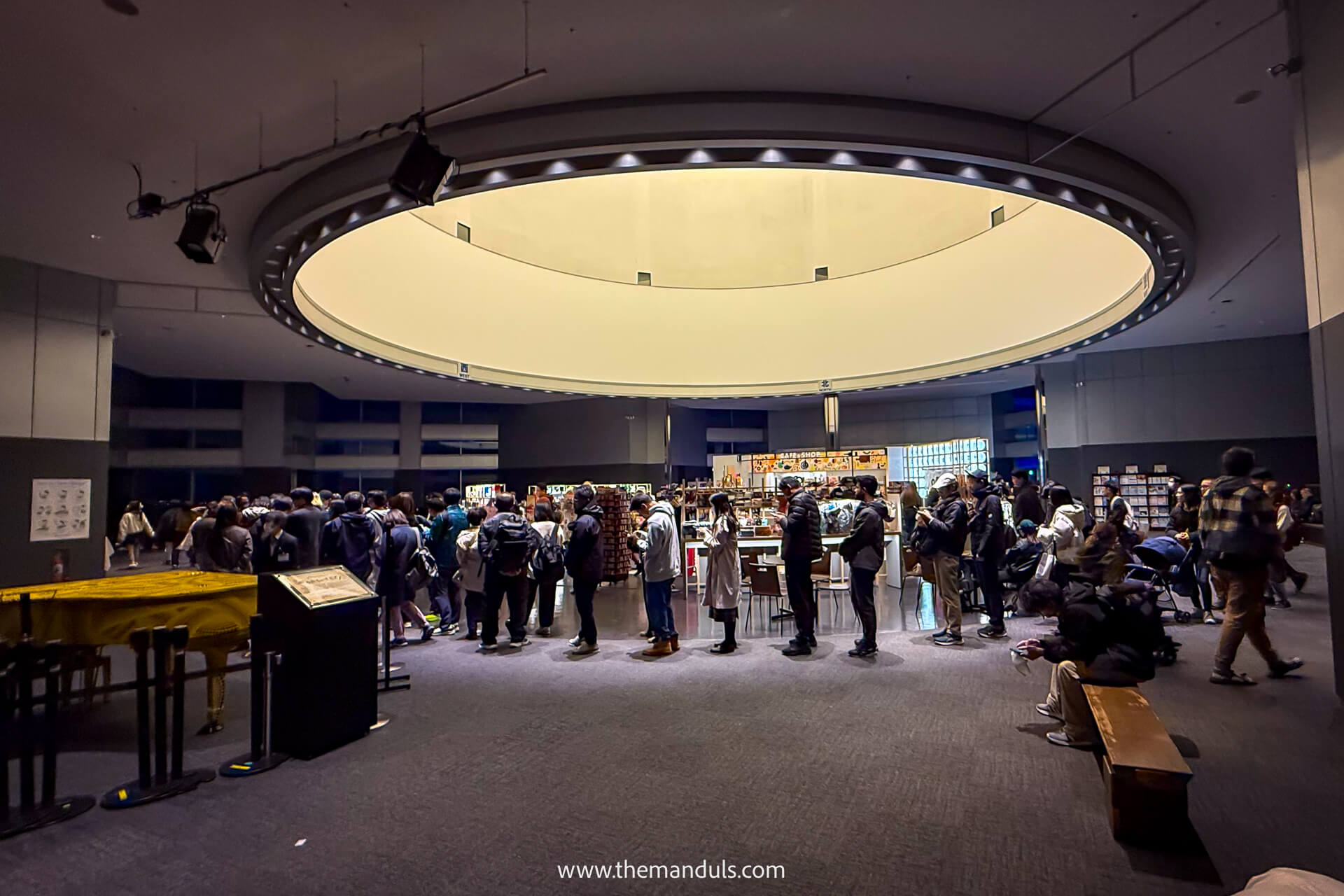
Inside, you’ll also find a small café, souvenir shop, snacks, and toilets, so it’s easy to stay longer if you want — there’s no time limit.
One important thing to know is that in the evening, queues can form not only to go up, but also to go down, especially around sunset.
3. Watch the Projection on Tokyo Metropolitan Government Building
Entrance Fee: free
Timetable: check current schedule here
After watching the sunset from the viewpoint and staying until it got dark, we took the elevator down and headed straight outside to find a good spot in front of the building for the projection mapping show. It’s an easy transition and honestly one of the best ways to end the evening in this area.
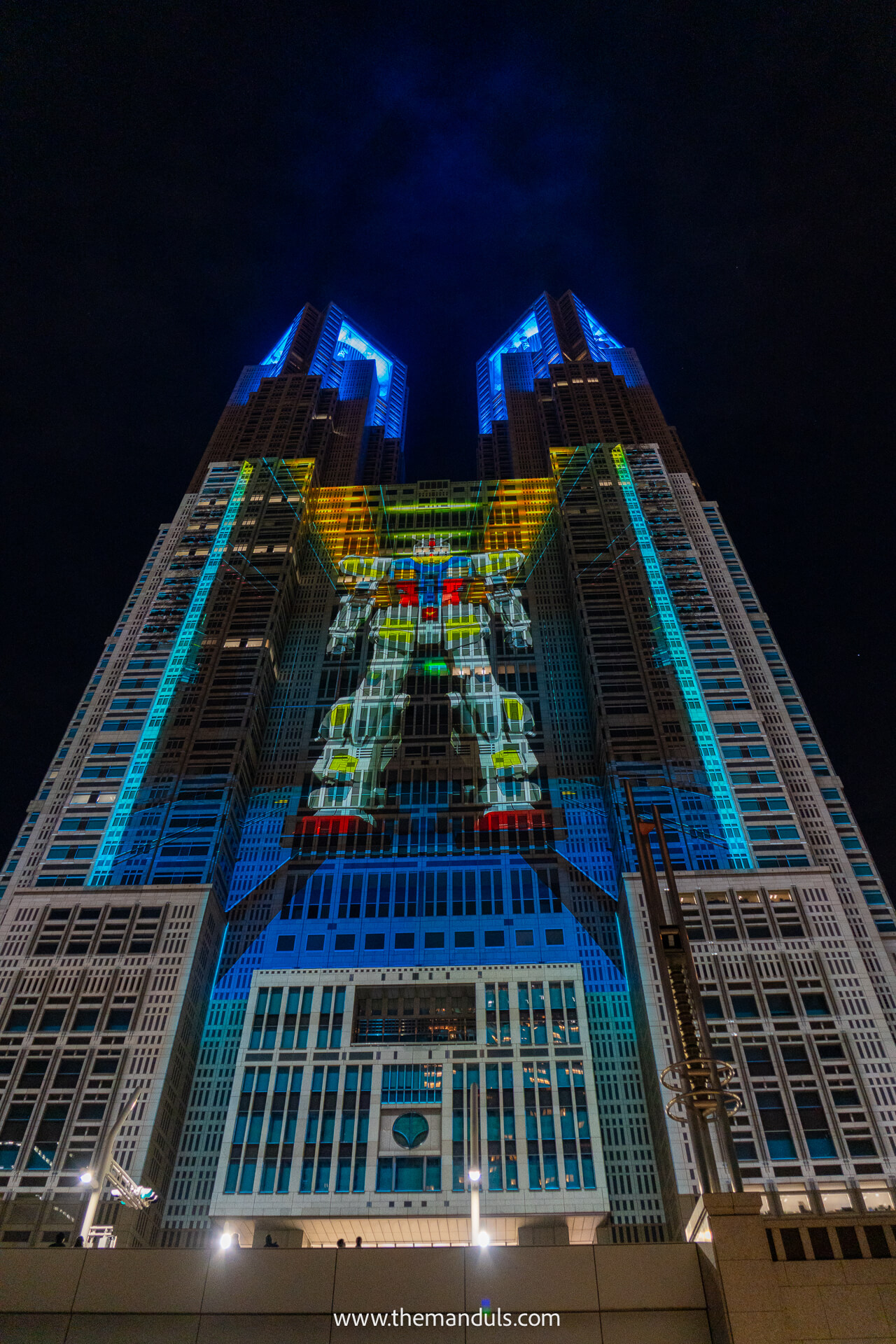
The projections are massive — this is one of the biggest projection mapping installations in the world — and it’s completely free, again.
When we visited, the shows were running in 30-minute intervals from 5:30 PM to 9:30 PM, and we watched anime-style visuals projected directly onto the building façade. It’s impressive even if you’re not specifically into anime, simply because of the scale and clarity.
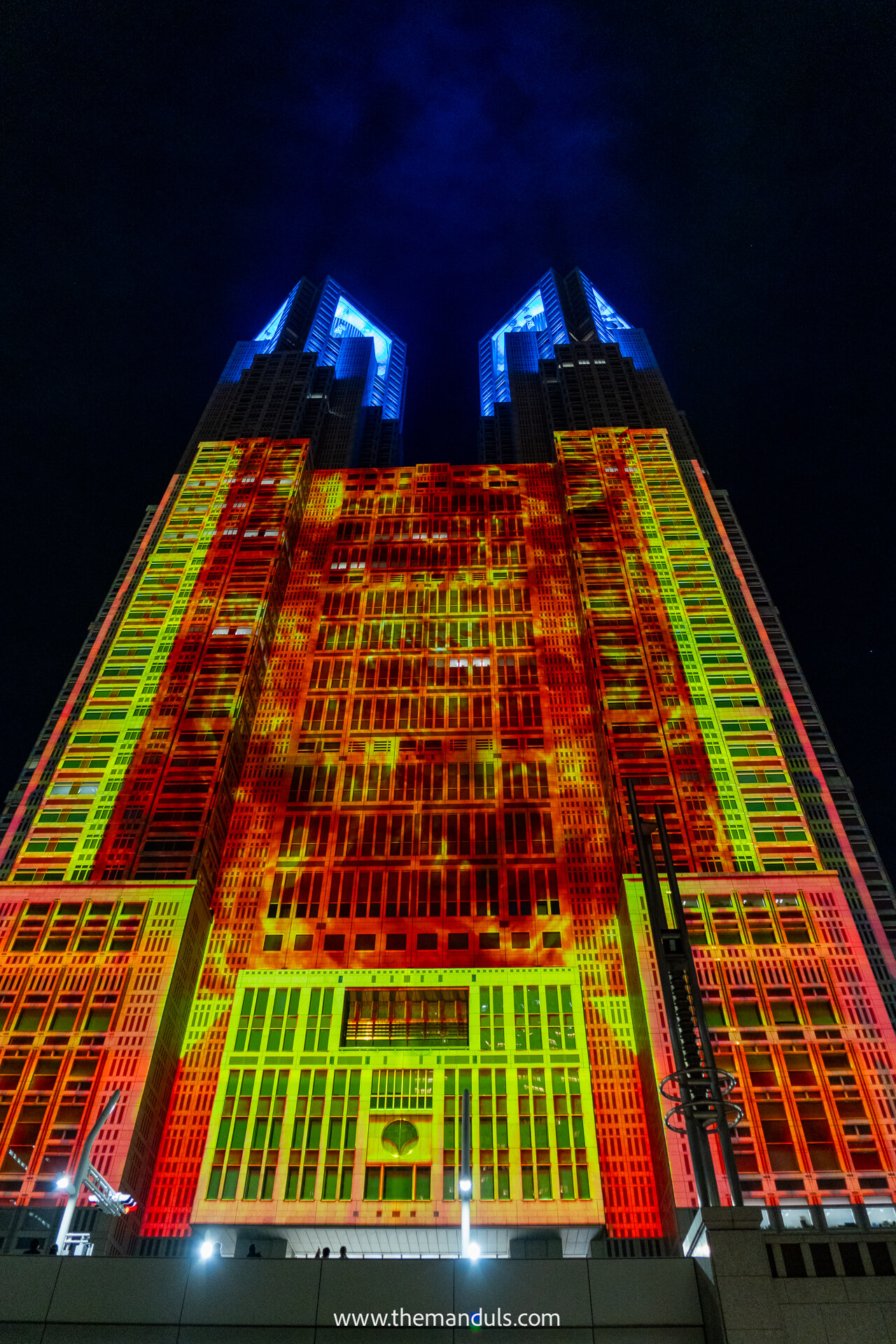
Timings change seasonally, so it’s important to check the official timetable before going. The most reliable source is the Tokyo Projection Mapping Project website.
Arrive a bit early if you want a good viewing spot, especially on weekends, but even with a small crowd, it’s very easy to watch and well organized.
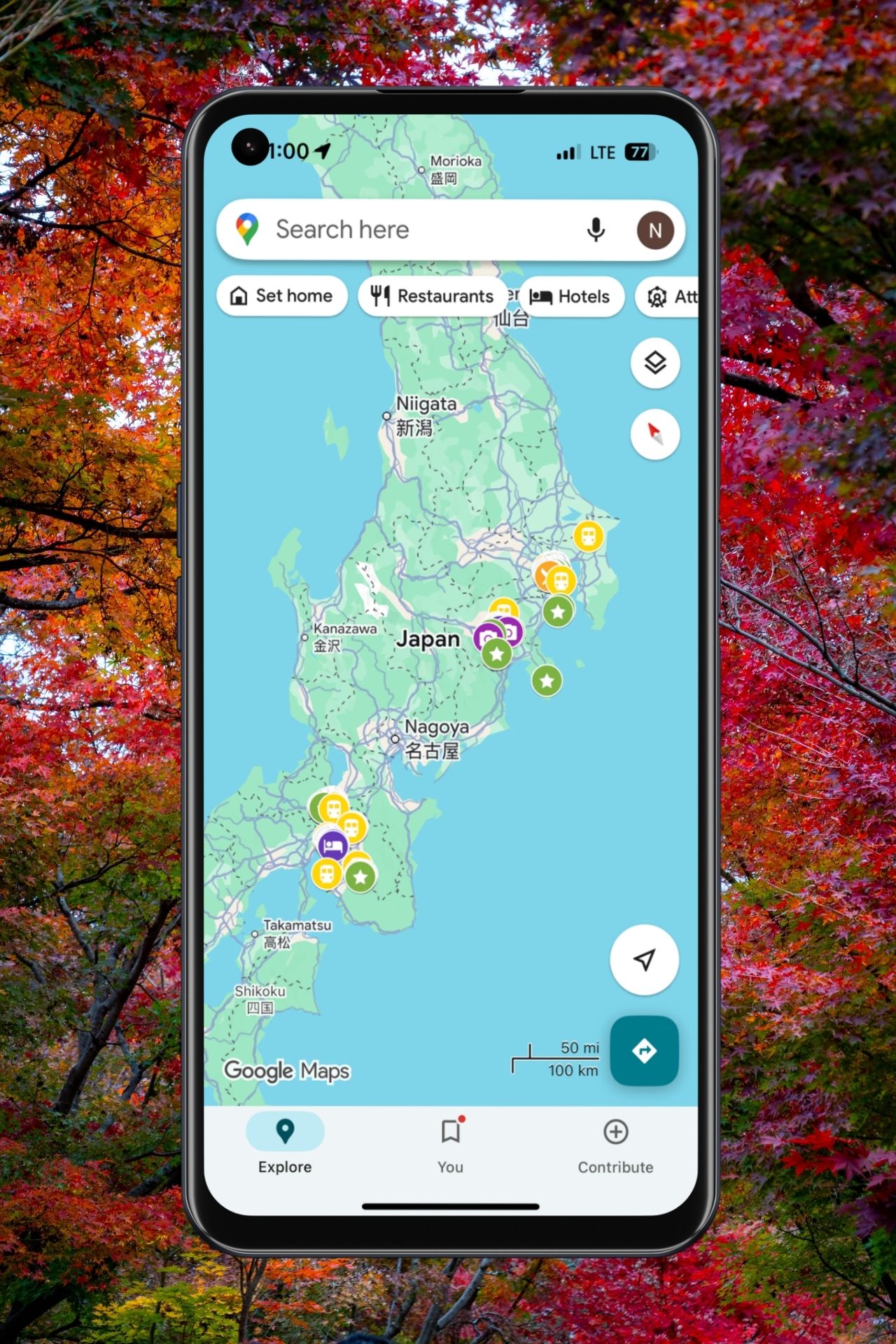
Our Japan Google Maps
Built from our real trips across Japan — only places we actually visited and loved.
No tourist traps. No random saves. Just a ready-to-use map that saves you hours of research.
219 handpicked spots, including:
📍 Highlights & hidden gems
🍜 Restaurants we’d go back to
🏨 Areas & hotels we’d book again
🗺️ Stops that fit into real, logical itineraries
4. Take a Photo of the Godzilla Head
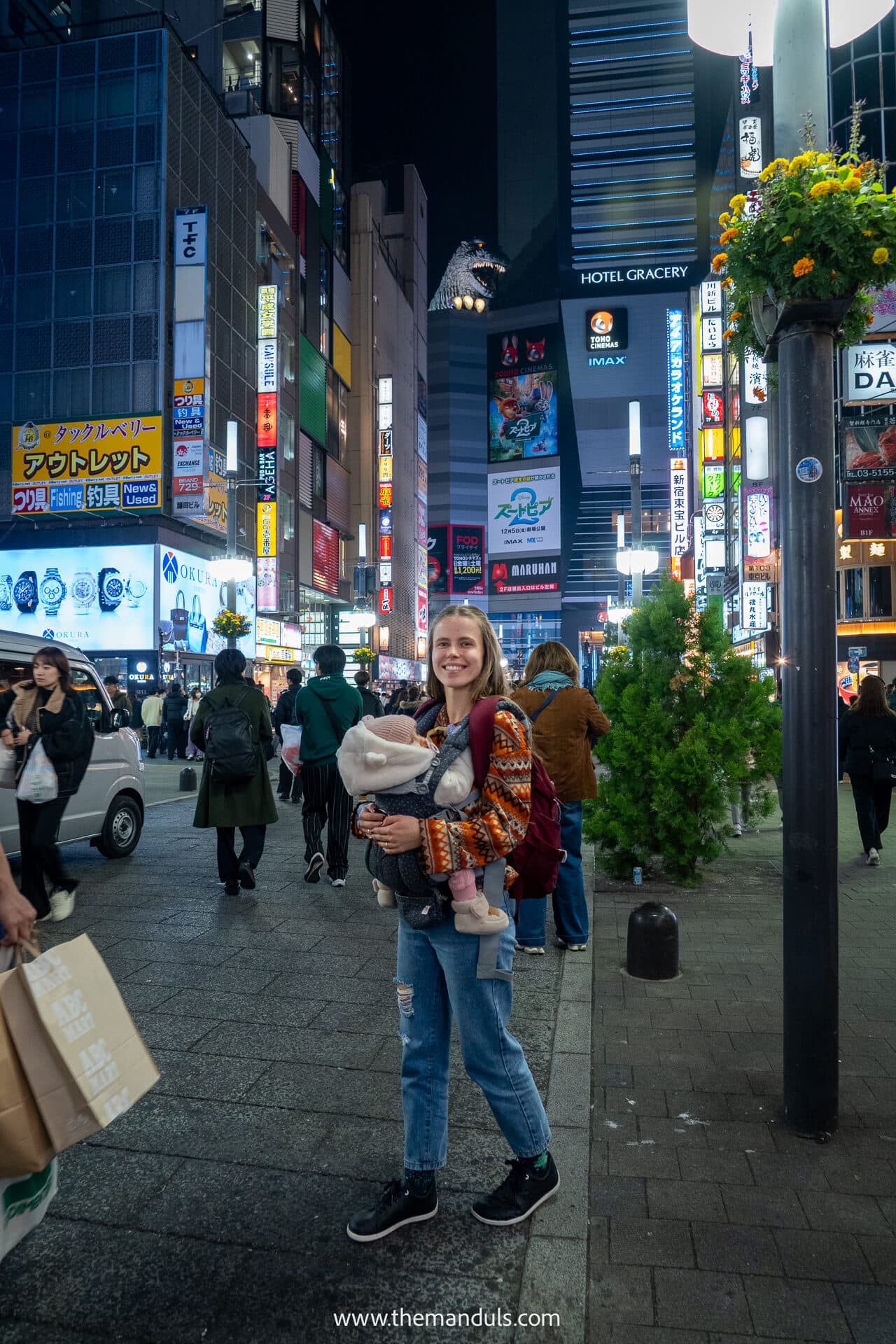
The Godzilla Head is one of those quick, fun stops and takes almost no effort. It sits on top of the Toho Cinema building in Kabukicho and is visible from the street, so it’s easy to combine with exploring the area. We treated it as a short photo stop rather than a major attraction, and that’s exactly how it works best.
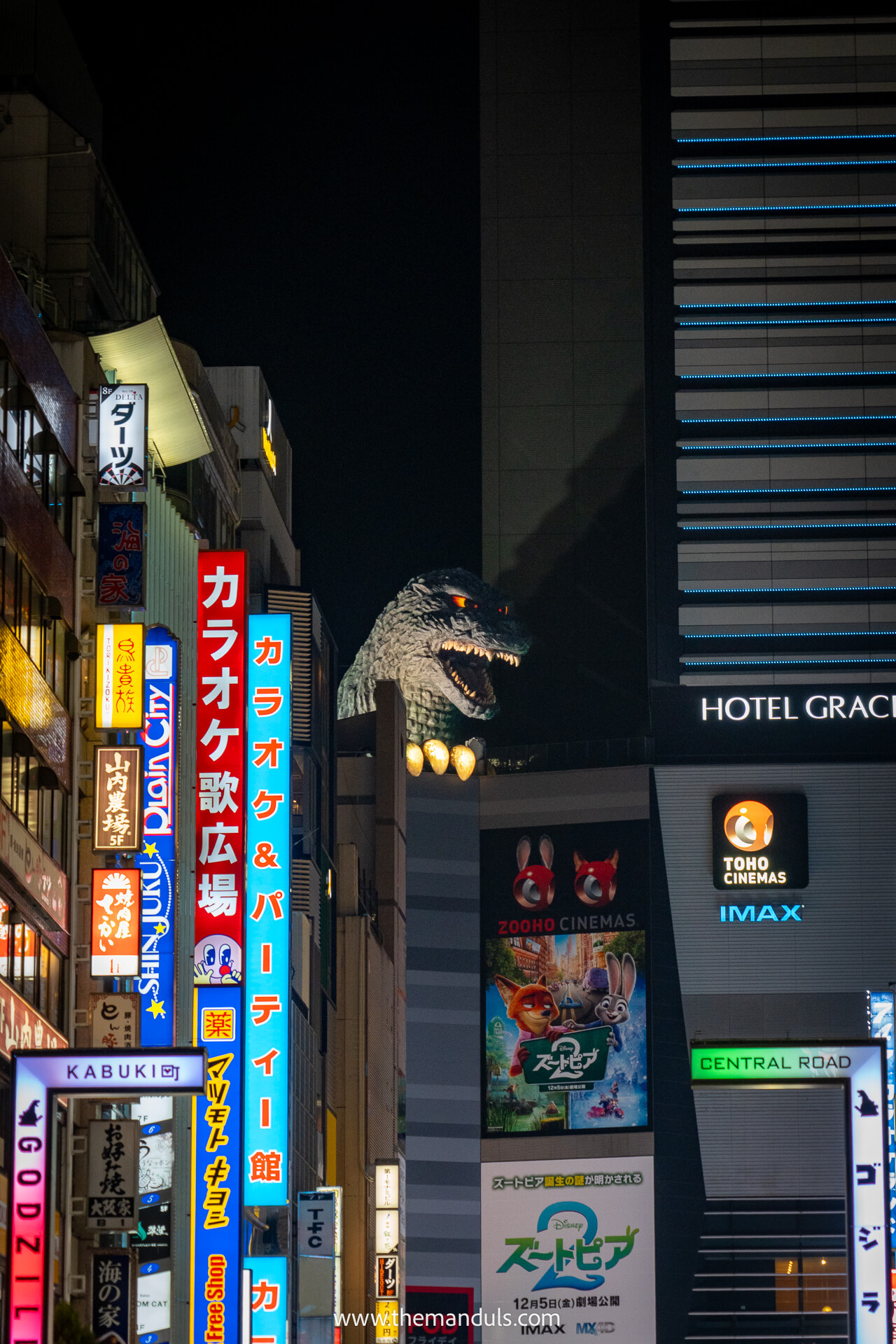
You’ll get the best photos after dark, when the neon lights around Kabukicho are fully on, and the Godzilla head is lit up. During the day, it’s fine, but at night, it feels much more dramatic and fits the chaotic vibe better.
The closest viewing point is from street level, but if you want a closer look, there’s a terrace at Hotel Gracery Shinjuku (same building), which is usually accessible during the day.
5. Visit Meiji Jingu
Entrance Fee: Shrine grounds are free to visit, but temples have an addmision fee
Opening hours: from sunrise to sunset, each month has different opening hours
Visiting Meiji Jingu felt like stepping into a completely different world, even though it’s just minutes from some of the busiest parts of Tokyo.
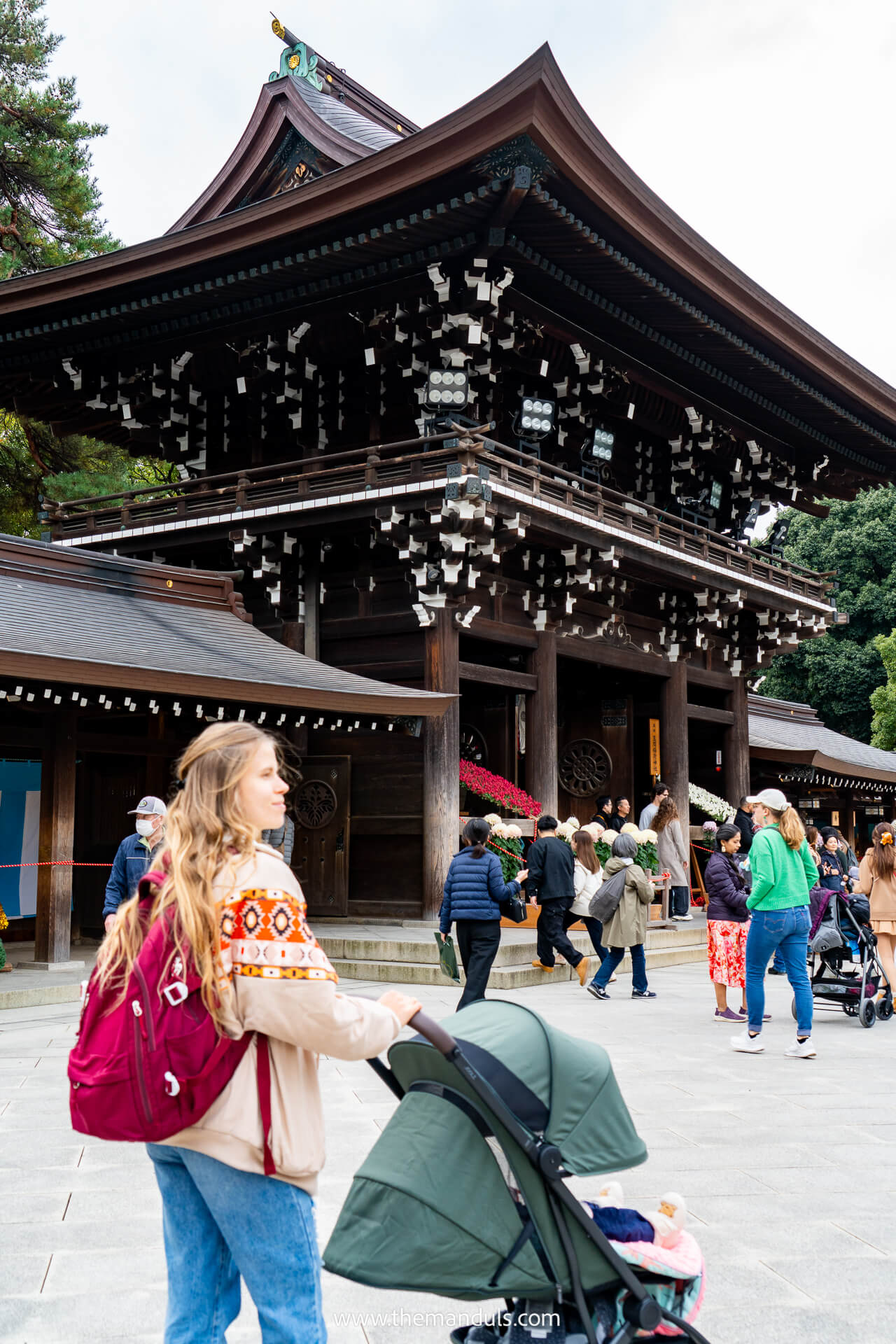
The long walk through the forested path immediately slows everything down, and by the time you reach the shrine, the city noise is completely gone. It’s one of those places where the contrast really hits — dense greenery and silence right next to Shinjuku and Harajuku.
We visited during the day and found it calm, but at the same time a bit crowded. The shrine itself is simple, and even if you’re not deeply into temples or shrines, the setting alone makes the visit worthwhile. We spent about 45–60 minutes here at an easy pace, including the walk in and out.
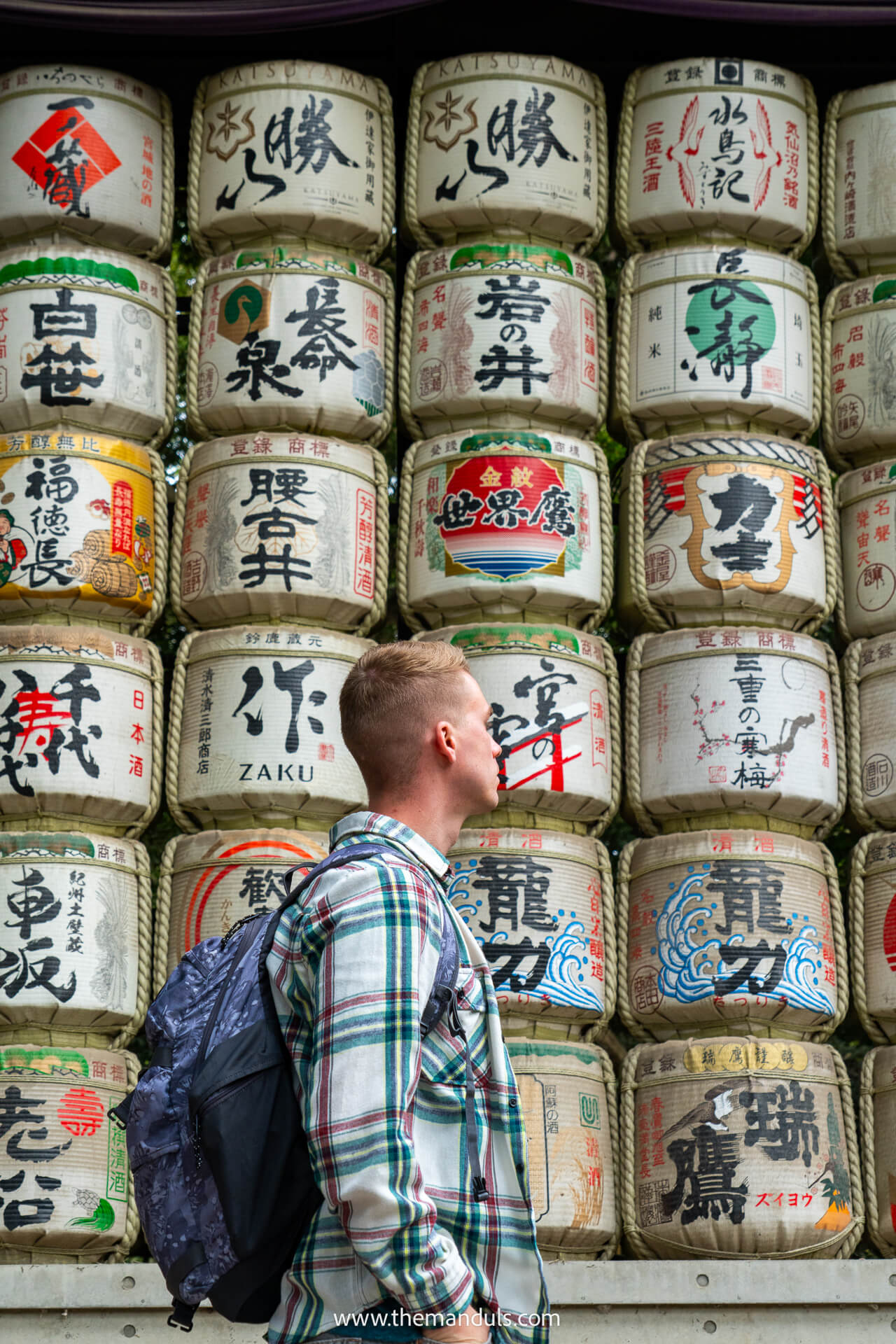
It’s free to enter and open year-round. Dress respectfully, keep voices low, and follow basic shrine etiquette — especially around the main hall. If you’re looking for a quieter, more reflective side of Tokyo without leaving the city, Meiji Jingu is absolutely worth the stop.
6. Eat Your Way Through Omoide Yokocho
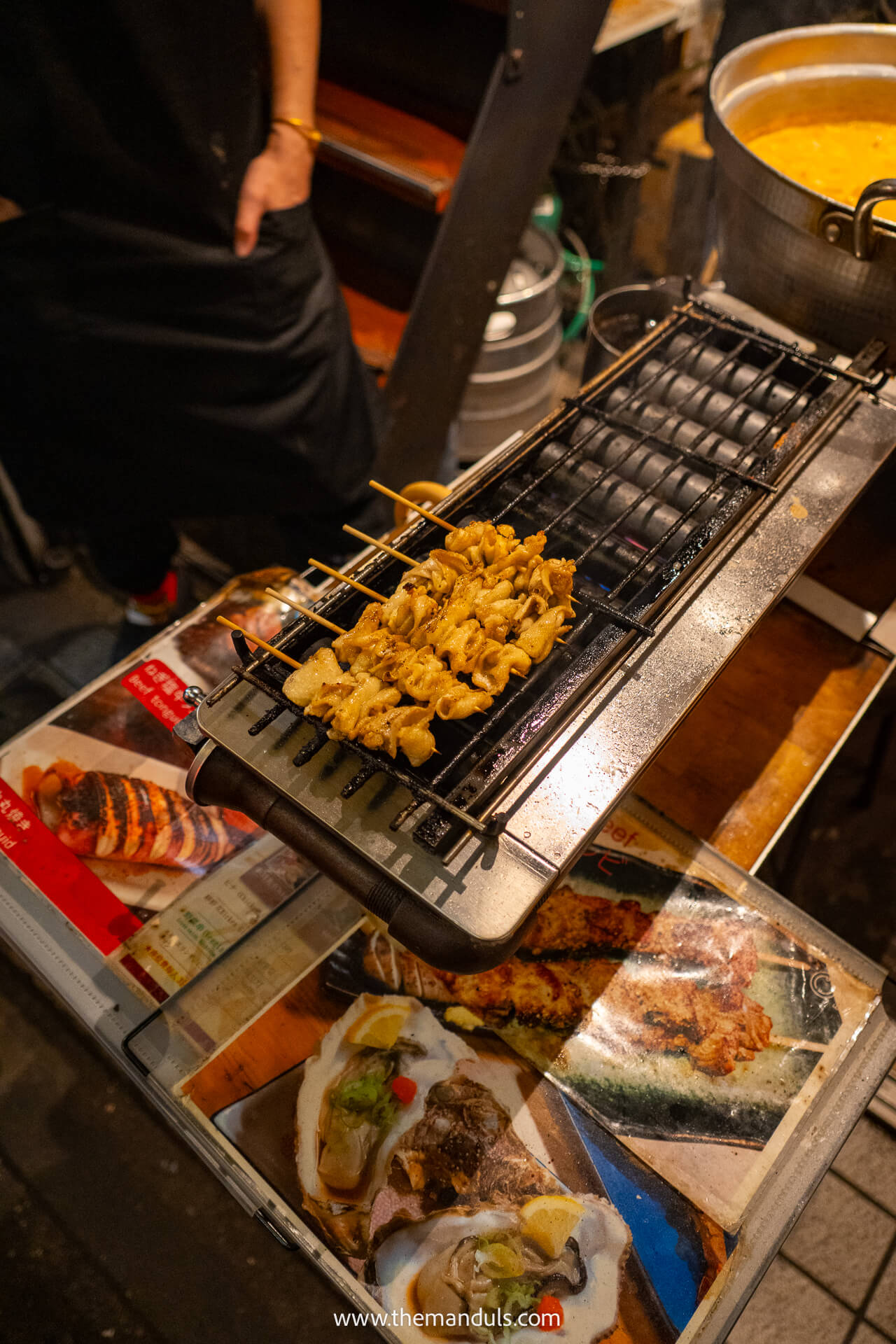
Omoide Yokocho is one of the most atmospheric places to eat in Shinjuku, especially in the evening when the lanterns are lit and the narrow alleys really come alive. It’s packed with tiny food stalls and bars, most of them serving yakitori, grilled meat, noodles, and simple comfort food. The whole area feels old-school and a bit chaotic in the best possible way.
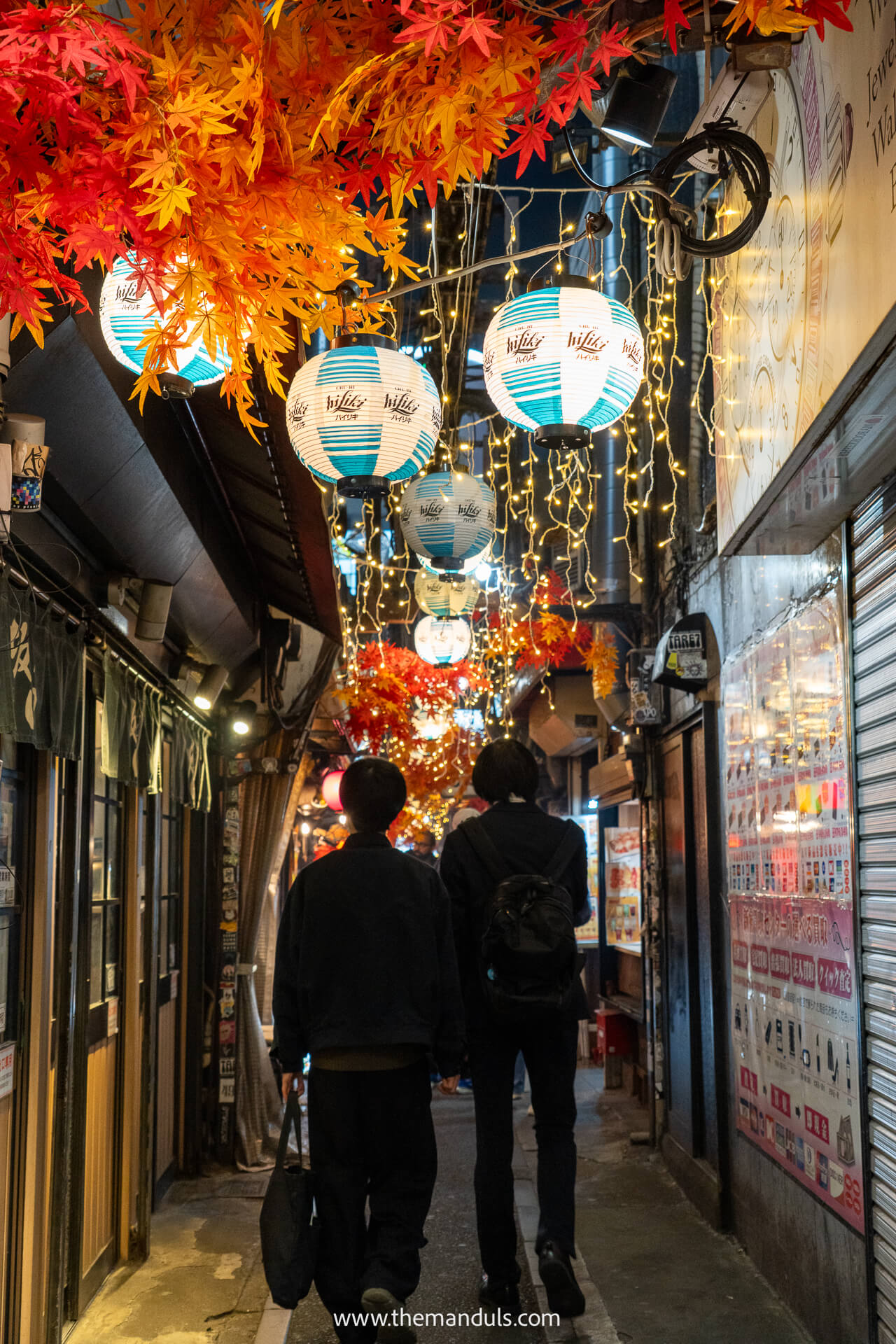
We came here in the evening and chose one restaurant to eat at since almost all the places were full, rather than hopping between multiple spots. Portions are small, prices are slightly higher than in more local spots, and some menus are tourist-friendly — but the atmosphere makes up for it.
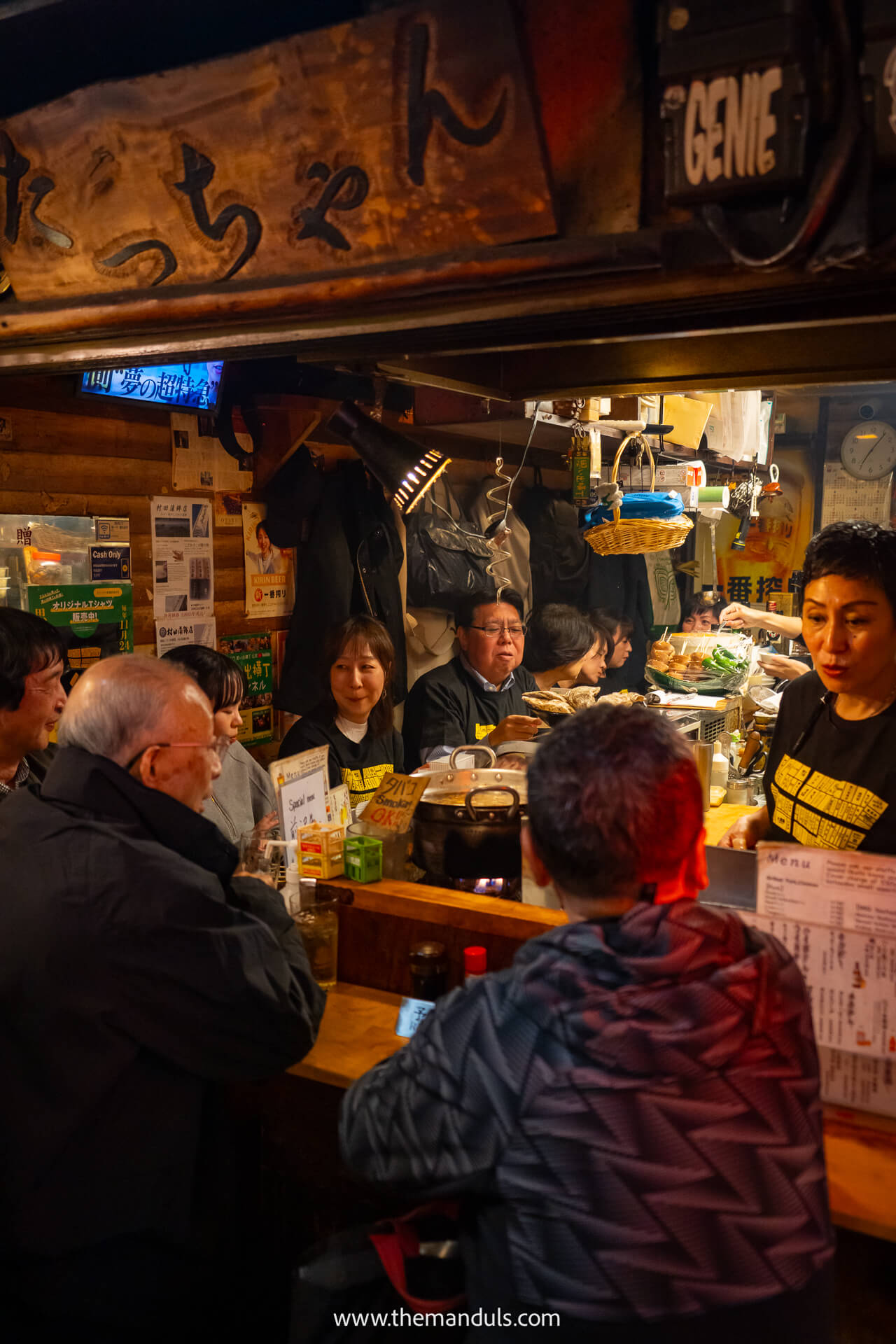
We came with a stroller, and it was impossible to bring it inside because the space is so tight, so if you’re visiting with a baby, your dining options here will be quite limited.
Go early if you want a seat without waiting, or be prepared to queue later in the evening. Most places are cash only, seating is tight, and it can get smoky, so don’t wear anything you care too much about. Even if you only stop for one skewer and a drink, Omoide Yokocho is absolutely worth experiencing.
7. Have a Drink in Golden Gai
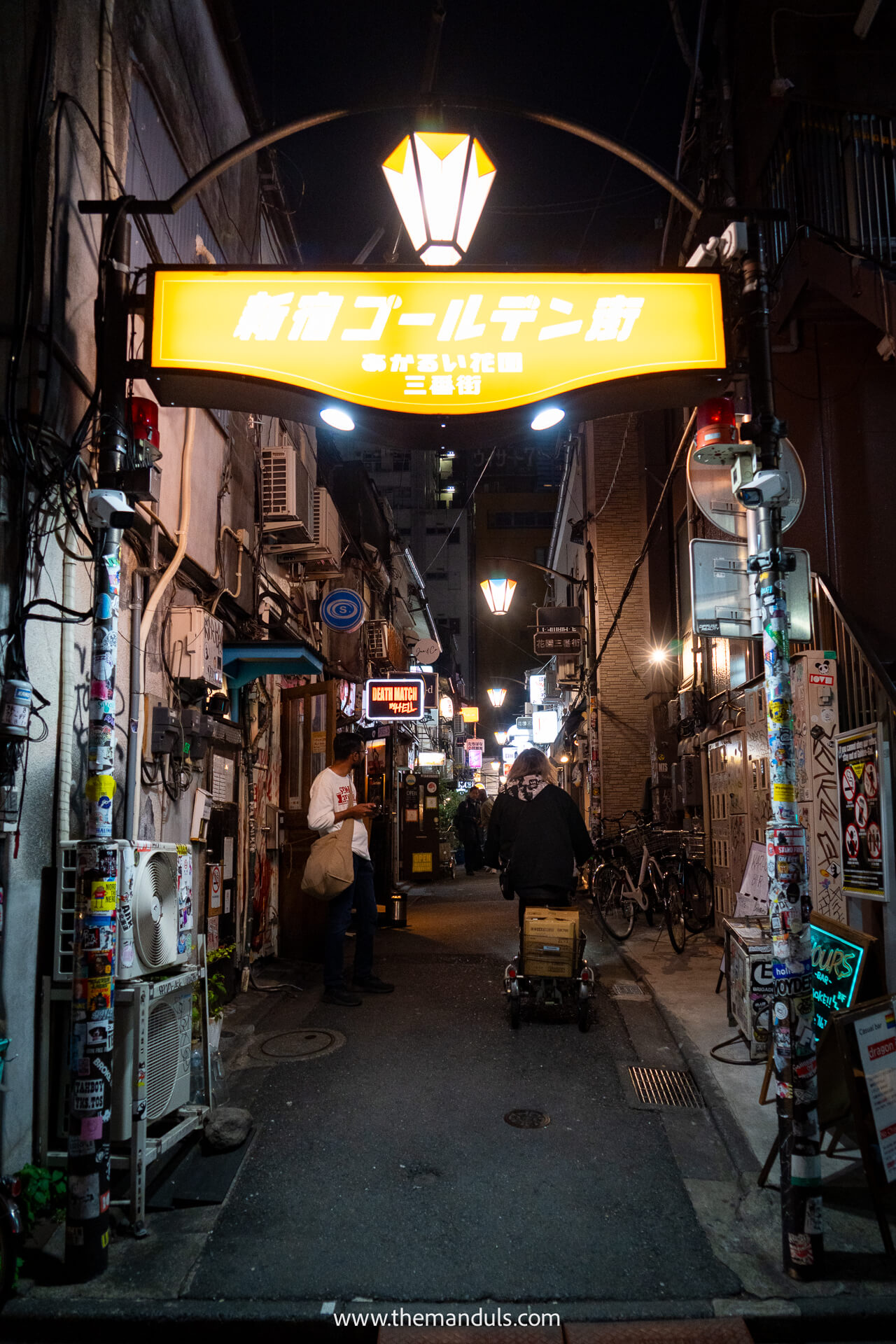
Golden Gai is one of the most unique nightlife areas in Tokyo, made up of tiny alleys packed with equally tiny bars, each with its own theme and personality. It’s right next to Kabukicho, but the vibe is completely different — more intimate, a bit chaotic, and very old-school.
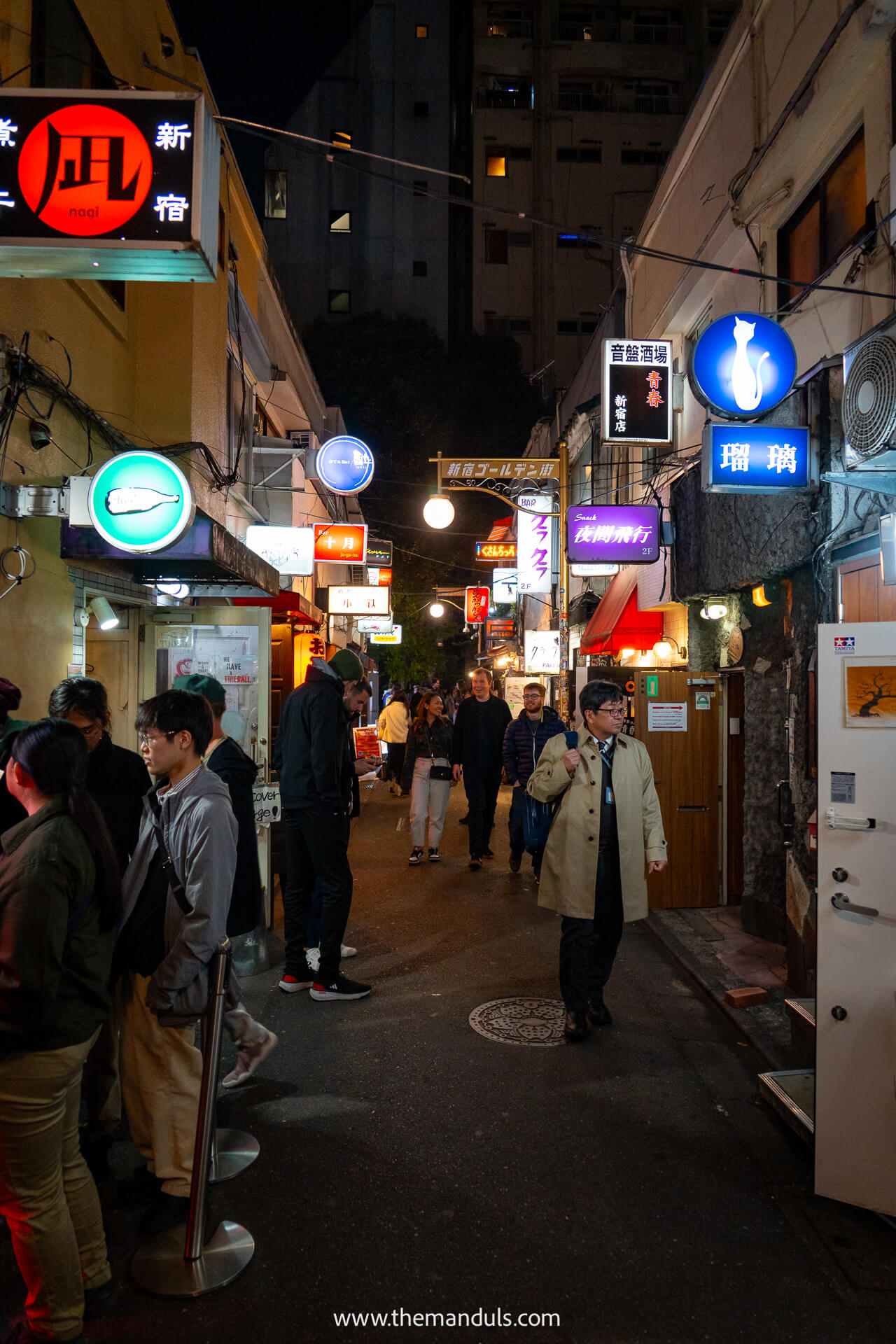
We didn’t stop for a drink here, even though we originally planned to. All the bars were extremely small, many allowed smoking inside, and with a stroller and a baby, it simply wasn’t appropriate for us. That said, walking through Golden Gai at night is still worth it just to see the atmosphere and understand why it’s so famous.
Some bars charge an entry fee of around 500 to 1,000 JPY, on top of drink prices, and others are locals-only or have strict house rules, so always check the sign before going in. Space is very limited, so this is best experienced as a short walk-through or quick drink if you’re traveling without kids, rather than a place to settle in for the evening.
8. Play Arcades
Playing arcades is one of those simple experiences that ends up being way more fun than expected.
The area is packed with multi-floor game centers offering everything from classic fighting games and rhythm games to claw machines and photo booths. Even if you’re not into gaming, it’s entertaining just to see how seriously people take it.
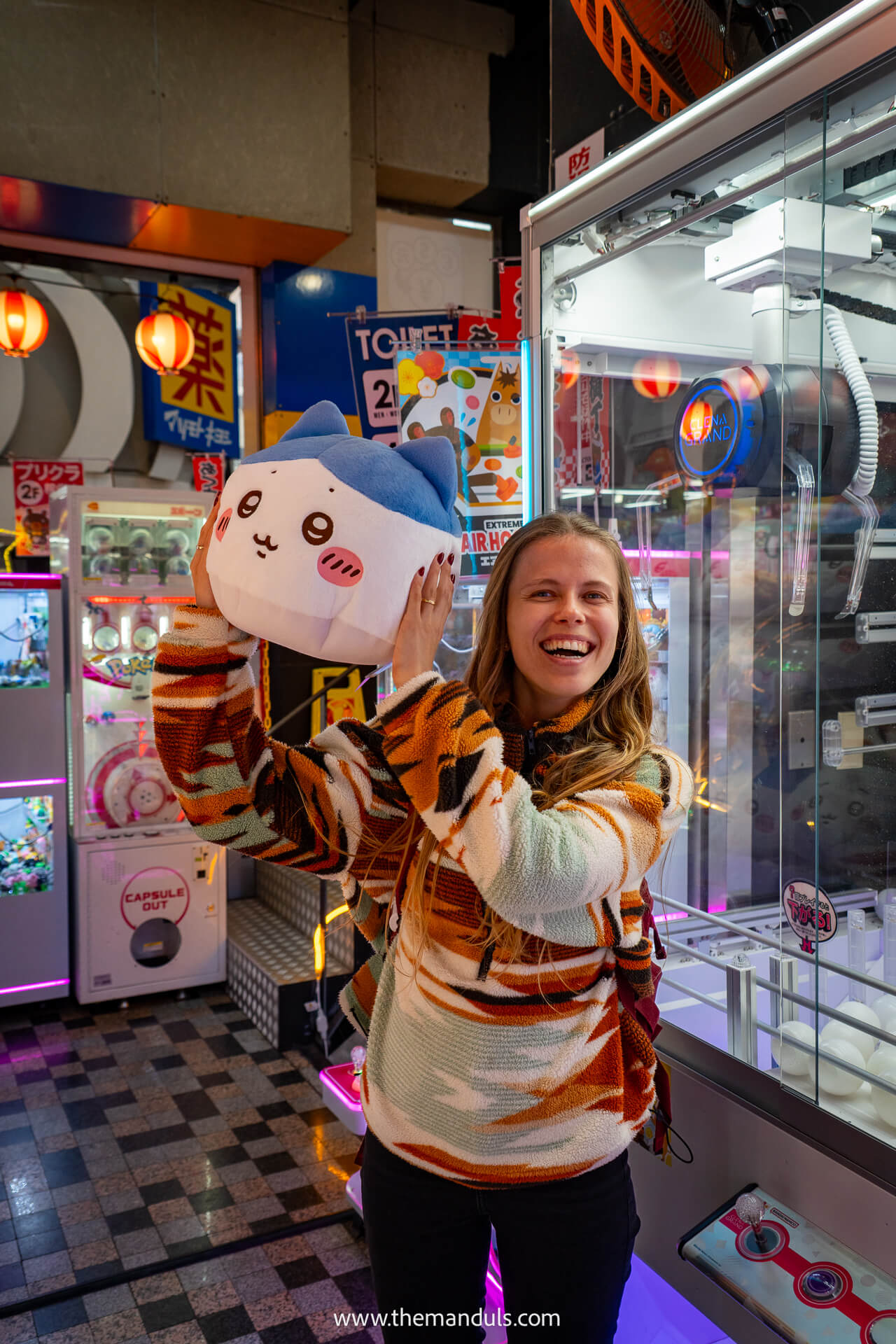
If you actually want to win, look for arcades marked as “easy to win” in Japanese. These machines usually cost around 500 JPY per game, and yes — they really are easier.
We won 6 toys in 3 games in a row, so this isn’t theory. If you don’t spot an easy-to-win machine, it comes down to patience.
The crane strength often increases after enough people play without winning, so we recommend watching one machine at least 12–15 attempts before jumping in. Once it looks like the prize is moving more easily, try your luck. If you don’t win within 3 games, stop — we wouldn’t keep playing after that.
9. Eat at a Standing Sushi Bar
Eating at a standing sushi bar is one of the most local-feeling food experiences you can have in Japan. There’s no seating, you order directly at the counter, eat quickly, and move on — simple, efficient, and very Japanese. It’s not about a long dinner, but about good sushi done fast.
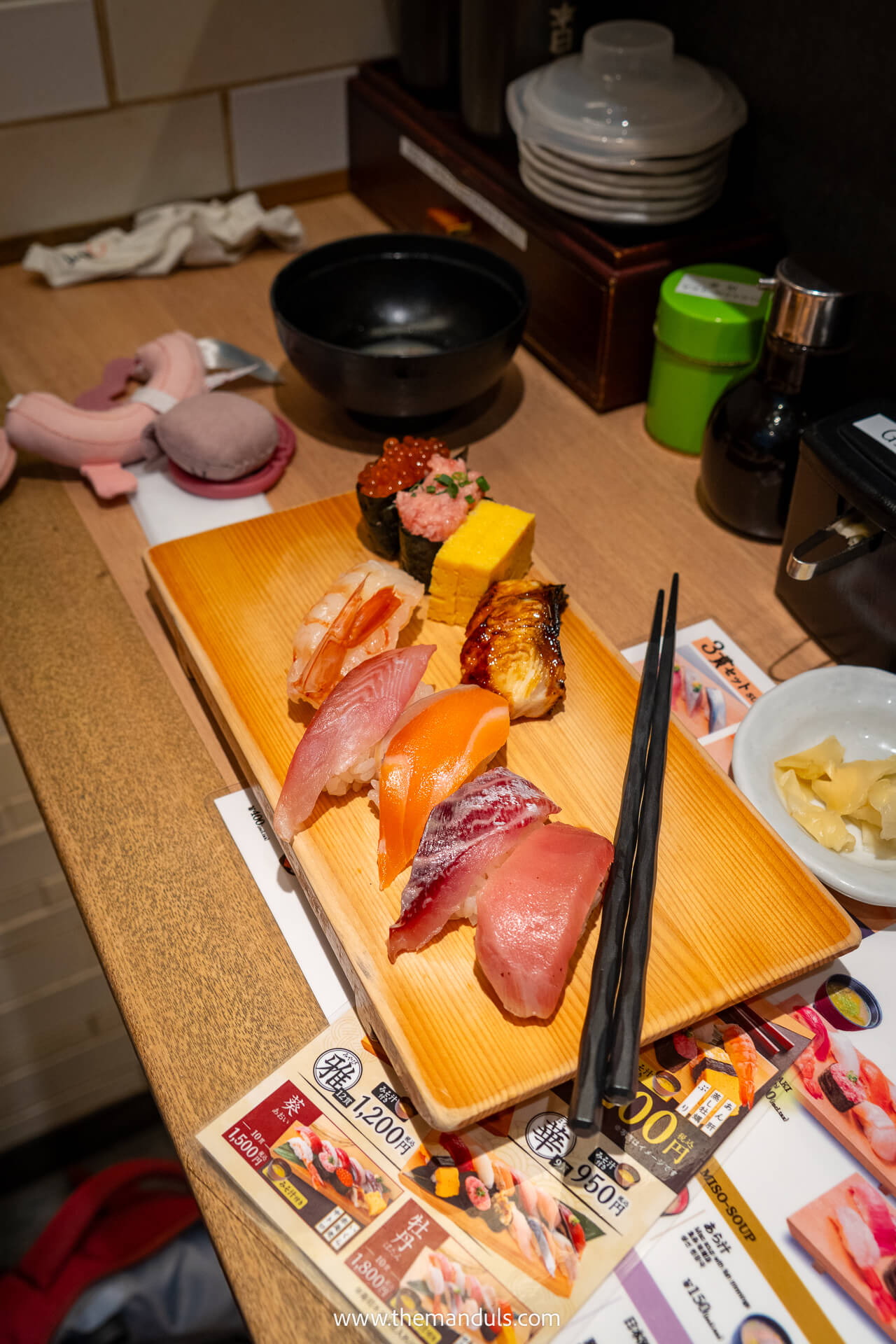
We stopped at a standing sushi bar during sightseeing and loved how straightforward it was. The sushi was fresh, portions were generous, and prices were very reasonable.
You can easily eat well without overthinking it, even if you don’t speak Japanese, since many places have picture menus or simple English options. Expect to spend 20–30 minutes max, eat a few pieces, and continue exploring.
10. Explore Kabukicho at Night
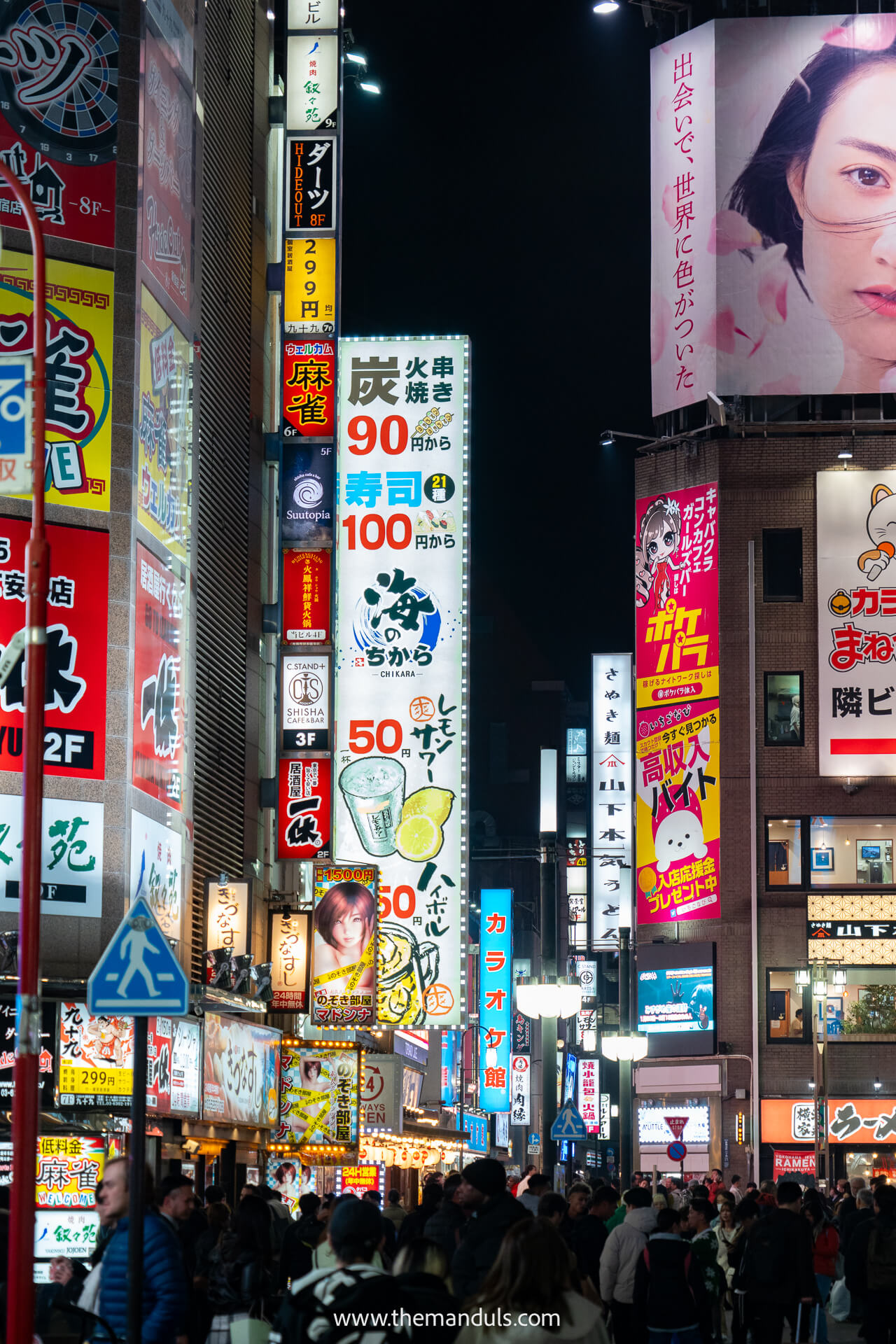
Kabukicho at night is incredible — neon everywhere, crowds moving in every direction, and a constant sense that something is happening on every street. Walking through it after dark feels completely different than during the day, and even if you don’t plan to go out, it’s worth experiencing just to see this side of Tokyo.
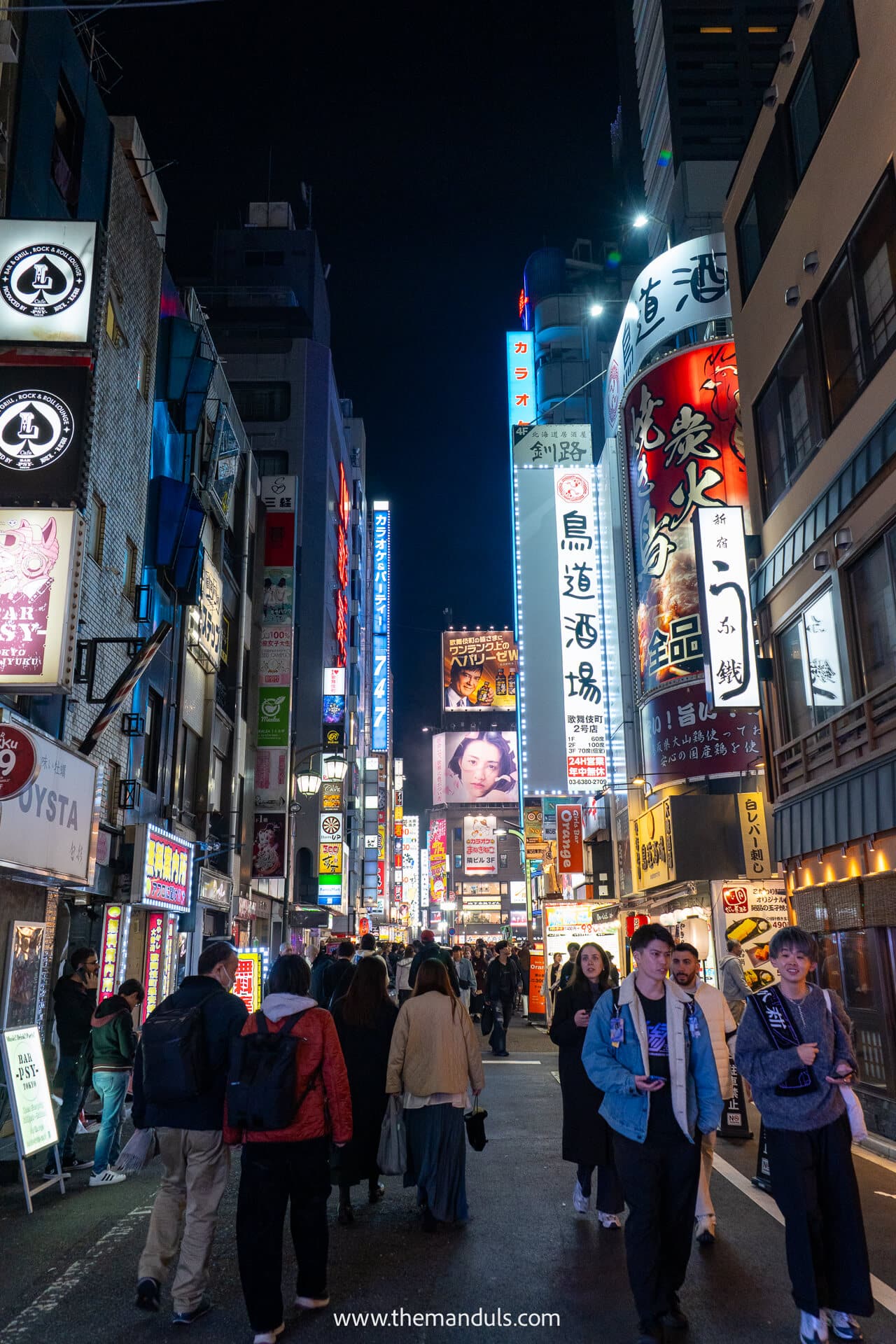
We explored Kabukicho in the evening as part of a walk rather than for nightlife, and that’s honestly a great way to do it. The area is loud, flashy, and overwhelming in the best way, but you don’t need to stay long for it to leave an impression. Neon signs, themed cafés, arcades, and bars are everywhere, making it one of the most visually striking places in the city.
It’s generally safe to walk through, but avoid interacting with touts and don’t follow anyone offering cheap drinks or clubs.
Where to stay in Shinjuku
Shinjuku is one of the best areas to stay in Tokyo, especially if you want excellent transport connections, endless food options, and a lively atmosphere both day and night. It works particularly well for first-time visitors or anyone planning to move around the city a lot, as nearly all major train lines pass through here.
We strongly recommend booking early to secure the best hotels and prices, and sticking with your reservation rather than cancelling in hopes of finding a better deal — availability drops quickly, and you can easily end up with fewer options or a hotel that’s worse than your original pick.
If you’re not sure whether Shinjuku is the best fit for your trip, we’ve also created a detailed guide on where to stay in Tokyo, covering four top areas and the best hotels in each, to help you choose the base that suits you best.
Here are the best hotel options:
⭐️⭐️⭐️ Odakyu Hotel Century Southern Tower – Our top pick thanks to its unbeatable location next to Shinjuku Station and the balance it strikes between comfort and value. Rooms are spacious by Tokyo standards with large windows and skyline views, and on clear days, you can even spot Mount Fuji. With dining options and a lounge on-site, it’s an easy, stress-free base for exploring Tokyo.
⭐️ Best for: Travelers who want comfort, views, and excellent transport access without overspending
👉 Check current deals →
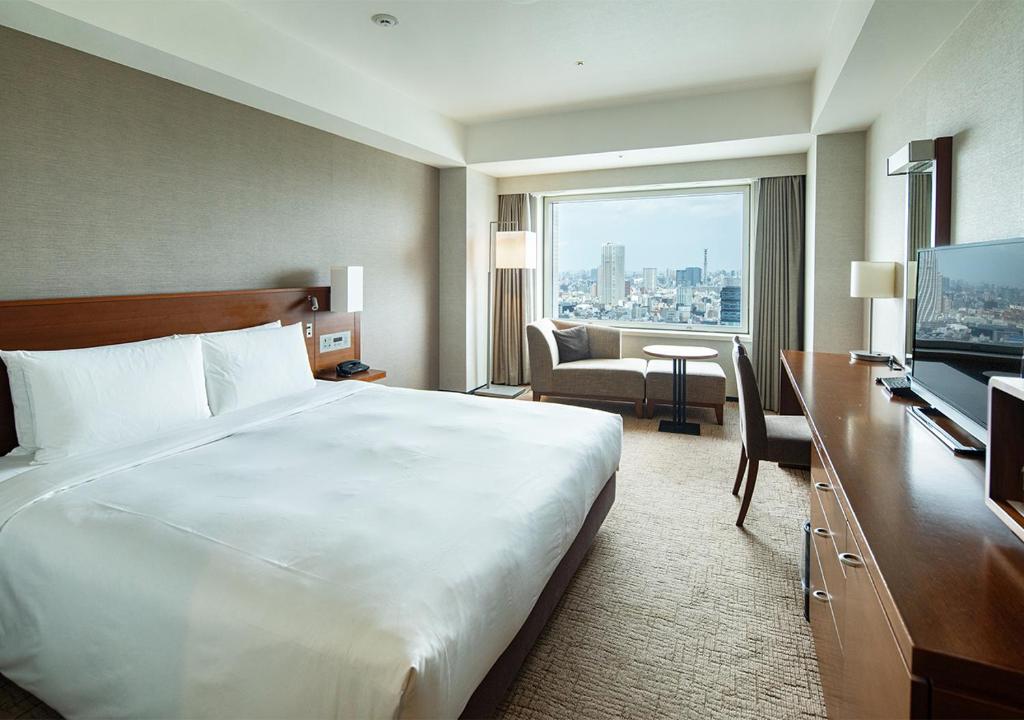
⭐️⭐️ Keio Plaza Hotel Tokyo Premier Grand – A more polished hotel offering generous room sizes, thoughtful amenities, and access to the Premier Grand lounge with city views. It’s a great option if you want a calm, comfortable hotel to return to after busy days in the city, while still being close to Shinjuku’s main sights.
⭐️ Best for: Travelers who value space, service, and a quieter hotel experience in central Shinjuku
👉 Compare prices →
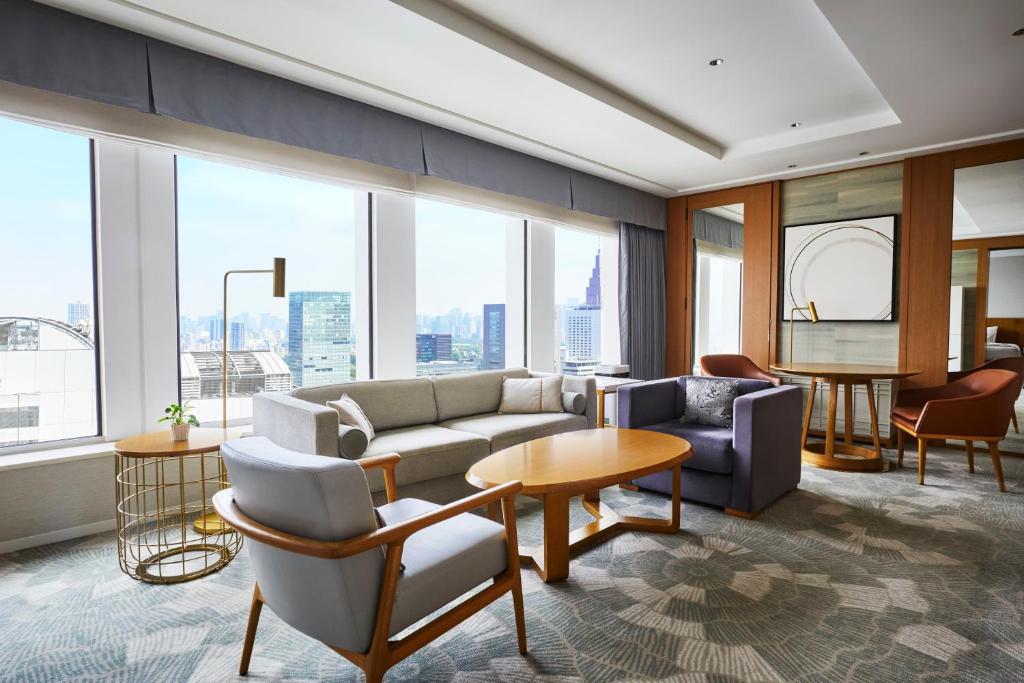
⭐️ Rosenheim Tokyo Shinjuku – A practical and affordable choice just a short walk from Shinjuku Station, with a lively street nearby for quick meals and essentials. Rooms are compact but clean and well organised, and having an on-site laundromat is especially useful for longer trips.
⭐️ Best for: Travelers looking for a budget-friendly hotel with great location
👉 See latest prices →
Final Thoughts
We’d absolutely go back to Shinjuku. What made it memorable for us was the constant contrast — peaceful gardens during the day, then neon lights, food alleys, and energy at night. It’s one of those places that shows just how many sides Tokyo has, often within the same few blocks.
If you’re short on time, our can’t-miss picks would be Shinjuku Gyoen National Garden and the Tokyo Metropolitan Government Building viewpoint.