
This article contains affiliate links. Learn more in our affiliate disclosure.
Hanoi Train Street looks chaotic in photos, but planning a visit is even more confusing than it looks.
Is it open or closed? Which section should you go to? When does the train actually pass? Do you need a ticket, or can you just walk in?
We visited the Le Duan section, and we’re glad we chose it. It felt relaxed, easy to access, and much less staged than we expected based on the famous photos online.
In this guide, we’ll explain how to visit in 2026, which location we’d choose, how the current access situation works, what train times to use as a rough guide, and what to know before sitting down at one of the cafés.
Updated May 2026: Access rules and train times can change quickly. We checked the latest visitor-facing schedules and official railway sources, but we still recommend confirming the next train with café owners when you arrive.
Key Highlights
📍Location: Phung Hung / Tran Phu near the Old Quarter · Le Duan Street south of Hanoi Railway Station
⭐️ Best location: We’d choose Le Duan for a calmer, easier experience
💰 Entrance fee: No official fee, but buying a drink is expected at most cafés
🕐 Access: No official opening hours; café access and train times vary by section and day
🚗 Getting there: Walk from the Old Quarter, take a Grab, or use a regular taxi
⏱ How long to spend: 1–2 hours is enough if you want to relax and catch at least one train
⚠️ Good to know: Train times are approximate — ask café owners when you arrive
Our Recommendation
Go to Le Duan in the evening, arrive 30–45 minutes before one of the listed train times, order a drink at a café, and confirm the next train with the owner.
That’s exactly what made our visit work well. We didn’t rush, we had time to pick a café we actually liked, and when one train was delayed, the owner told us to stay because another one was coming soon. We ended up seeing two trains instead of one.
If you only have time for one section, choose Le Duan.
In a hurry?
These are our top hotels in Hanoi we’d book again.
⭐️⭐️⭐️ Peridot Grand Luxury Boutique Hotel (our top pick) – Luxury boutique stay with a rooftop pool, spa, and incredible city views.
👉 See prices & availability →
⭐️⭐️ Hotel Du Palace – Modern mid-range hotel with comfy rooms, friendly staff, and a central Old Quarter location.
👉 See prices & availability →
⭐️ Hanoi Golden Hotel – Clean, affordable hotel in the heart of the Old Quarter — great for budget travelers.
👉 See prices & availability →
Is Hanoi Train Street Still Open in 2026?
Yes — but the honest answer is: it depends on which section you visit.
The main section near the Old Quarter has been partially restricted several times since 2019, and the situation can still change. Some entrances may be blocked or watched, especially around the most popular café areas. In many cases, visitors are only allowed through by a café owner and are expected to sit down and buy a drink.
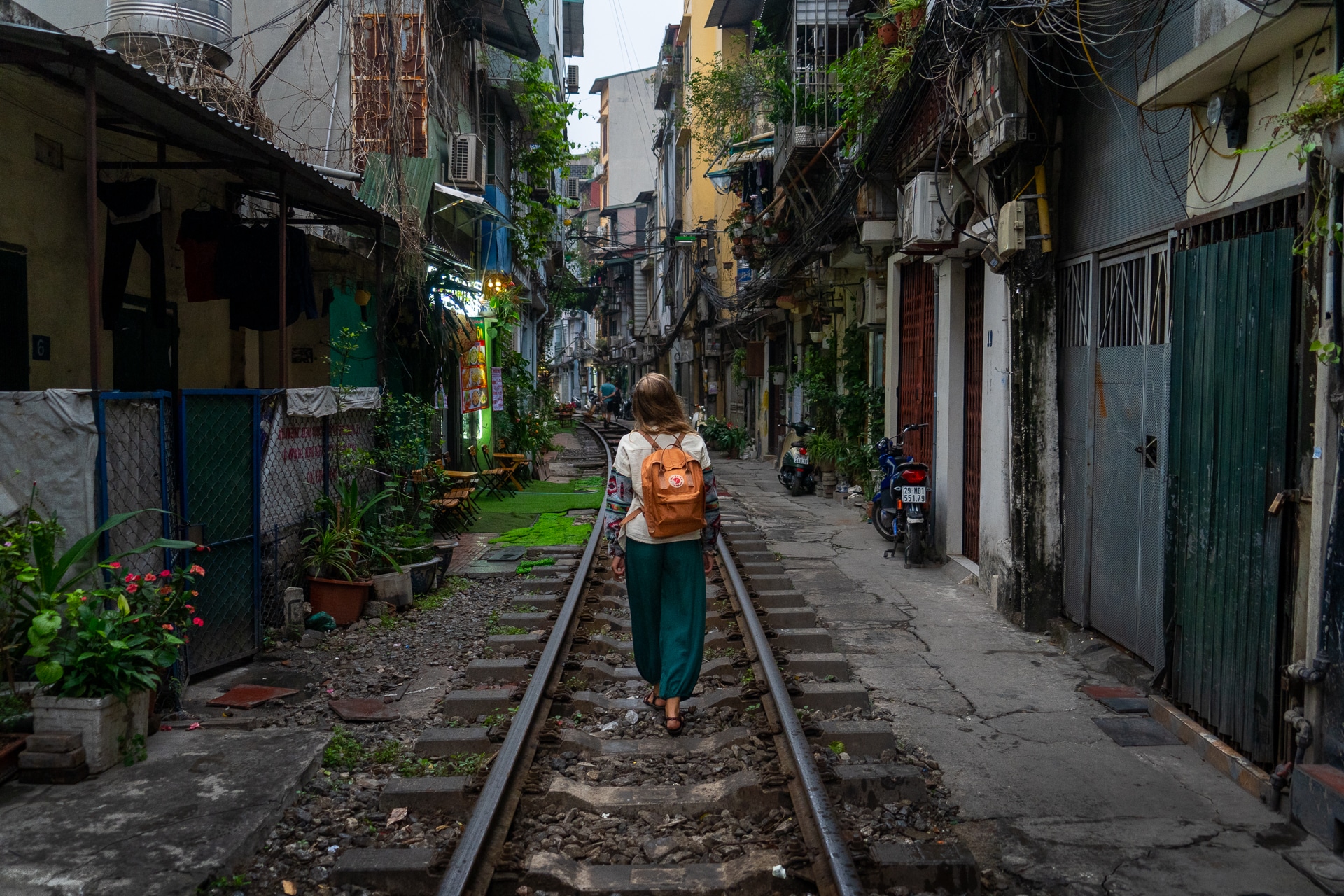
The Le Duan section was much easier when we visited. It felt open and calm, with no heavy pressure, no barricades, and no confusing entry process.
In March 2025, Hanoi’s Department of Tourism requested travel agencies not to organize tours to Train Street in the Cua Nam, Hang Bong, and Cua Dong ward areas, mainly because of railway safety concerns. Independent visits still appear possible, but access depends on the exact area and the situation on the day.
Hanoi has also been moving forward with plans to reduce some central rail services and divert freight trains away from the inner city. That doesn’t mean the Train Street experience has disappeared, but it’s another reason not to build your whole day around one specific train time.
Quick status in 2026
| Section | Current situation | What to expect |
|---|---|---|
| Phung Hung / Old Quarter section | Partially restricted | Access often depends on café owners; drink purchase expected |
| Le Duan section | Usually easier to access | More relaxed, fewer crowds, better for a low-pressure visit |
Quick Overview
With 1–2 hours:* Go straight to Le Duan, choose a café, order a drink, and ask when the next train is expected.
If you want the famous photos: Visit Phung Hung / Tran Phu, but expect more crowds, more restrictions, and a more tourist-focused feel.
If you want the best overall experience: Choose Le Duan. It was noticeably more relaxed when we visited.
Biggest mistake: Relying too much on online schedules. Use them as a rough guide, but always confirm locally when you arrive.
Worth it? Yes — especially if you treat it as a slow coffee stop rather than a quick photo stop.
What Is Hanoi Train Street?
Hanoi Train Street is a narrow railway line running through a residential part of central Hanoi, with cafés, homes, and small shops built right up against the tracks. When the train passes, the gap between the carriages and the buildings is literally inches.
The railway dates back to the French colonial period and was simply part of daily life for people living nearby for decades. What changed was the attention.
After photos and videos of trains passing just inches from café tables and doorsteps spread online, the street quickly became one of Hanoi’s most talked-about spots, and some locals opened cafés specifically to let visitors watch from a safe, seated position.
What makes it worth visiting isn’t only the train. It’s the contrast. One moment, people are drinking coffee, chatting, or walking along the tracks. Then chairs are pulled back in seconds, everyone moves to the side, and the train passes through the middle of it all. A few seconds later, daily life continues again as if nothing happened.
Hanoi Train Street Map
The most common mistake is searching only “Hanoi Train Street” and ending up at the wrong section.
There are two main areas visitors talk about: the Phung Hung / Tran Phu section near the Old Quarter and the Le Duan section south of Hanoi Railway Station. They’re close enough that both can fit into one day, but the experience is different enough that it’s worth knowing which one you’re heading to before you go.
If you’re staying in the Old Quarter, the main section is the closest. But if you want the calmer experience, we’d still choose Le Duan and take a short Grab or walk there if the weather is comfortable.
Le Duan section
Phung Hung / Tran Phu section
Two Locations: Which One Should You Visit?
Most photos online come from the main Old Quarter section, but that doesn’t mean it’s automatically the better choice. There are two main areas where visitors go, and the difference in experience is significant.
Location 1: Phung Hung / Tran Phu (main section)
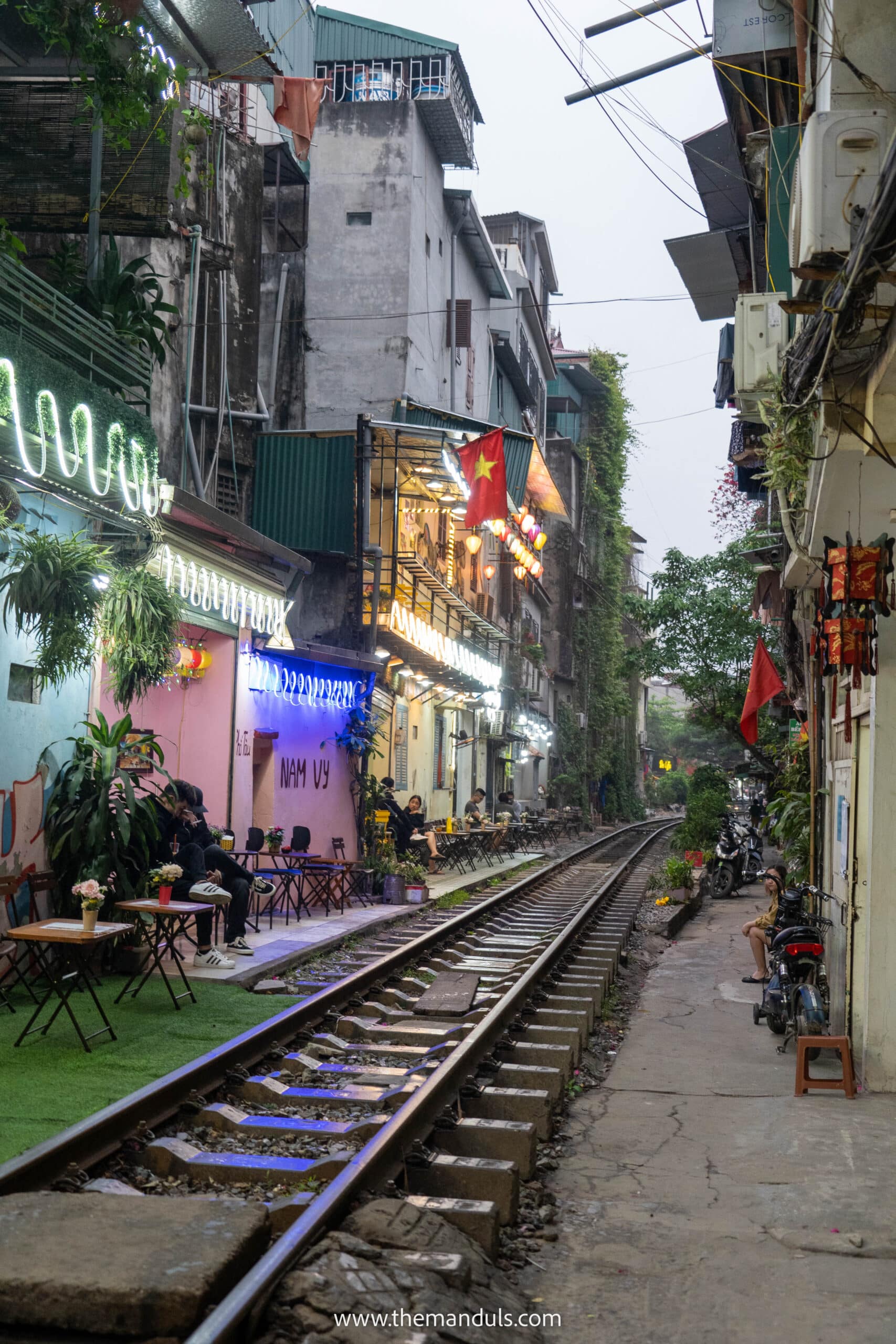
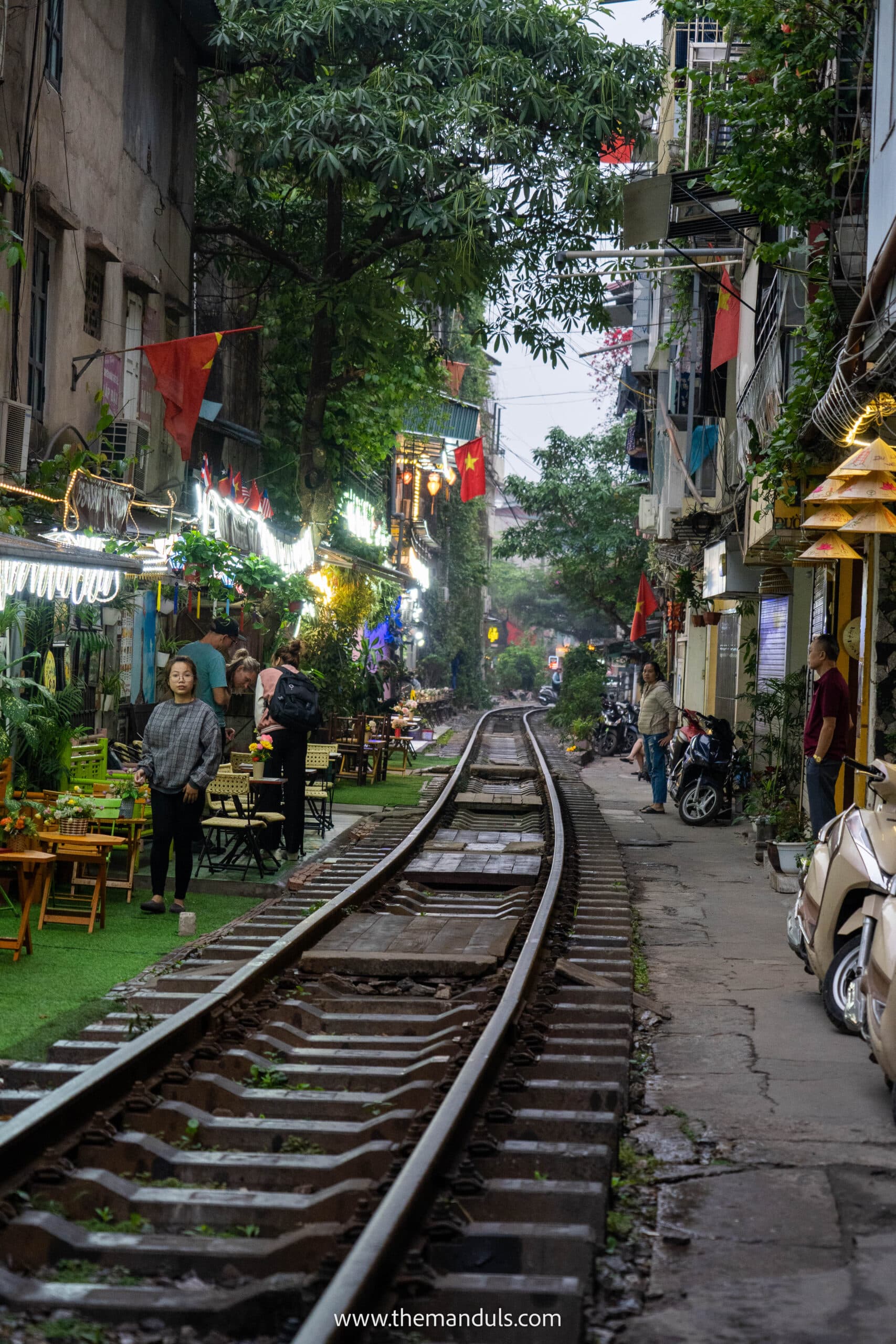
This is the most well-known part of Train Street — the section you’ve likely seen in photos, with decorated cafés, lanterns, and the train curving through a narrow gap between buildings.
It’s close to the Old Quarter and easy to reach on foot, which makes it convenient. The downside is that it can feel more controlled and commercial. Entrances may be blocked, café owners guide you in, and buying a drink is usually expected if you want to stay.
Worth it for: Classic photos, photographers who want that specific angle, visitors who are already close by. Skip if: You want a relaxed visit without crowds or pressure
Location 2: Le Duan Street (recommended)
Le Duan is slightly south, near Hanoi Railway Station. It takes a bit more effort to reach from the Old Quarter, but the difference in experience makes it worth it.
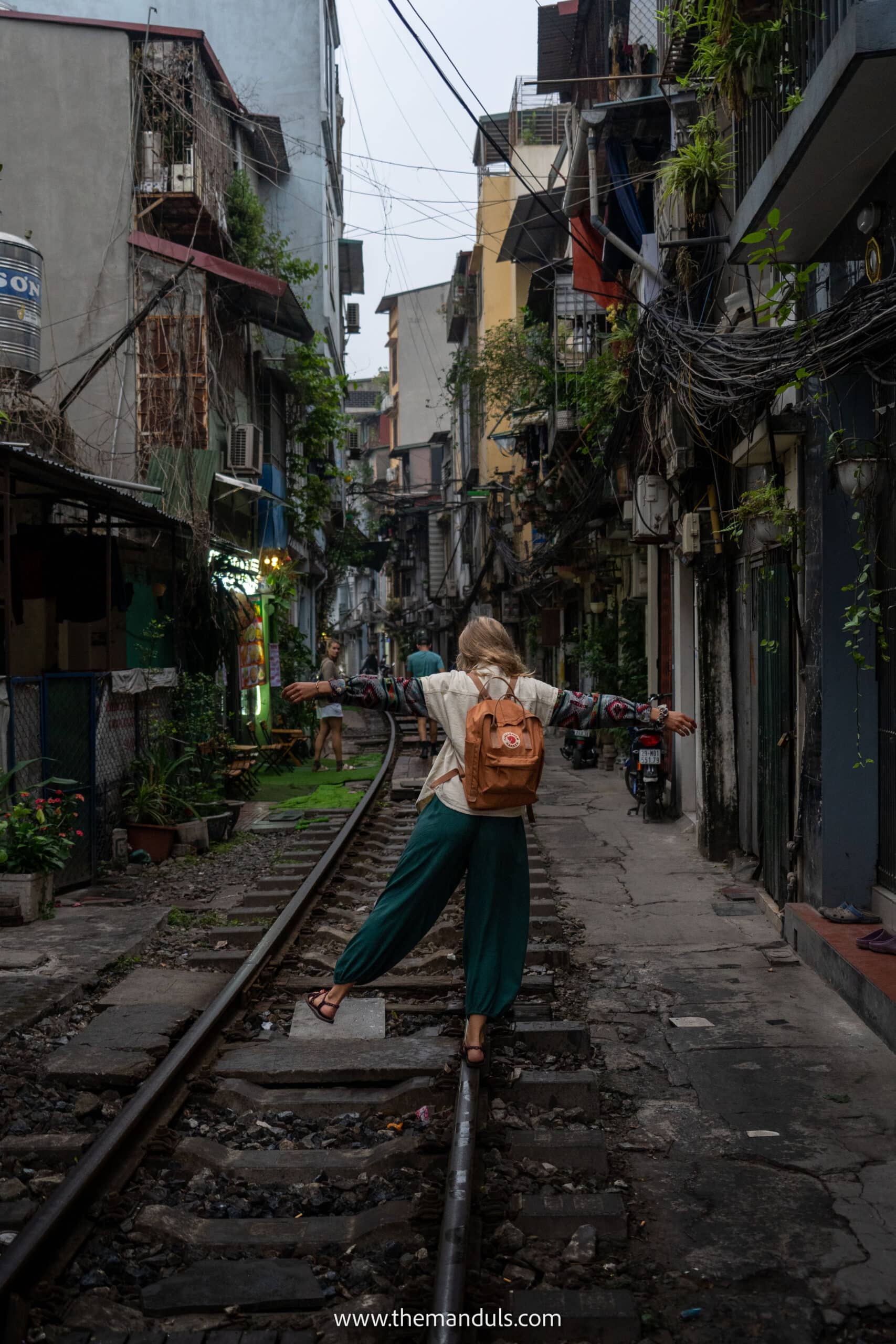
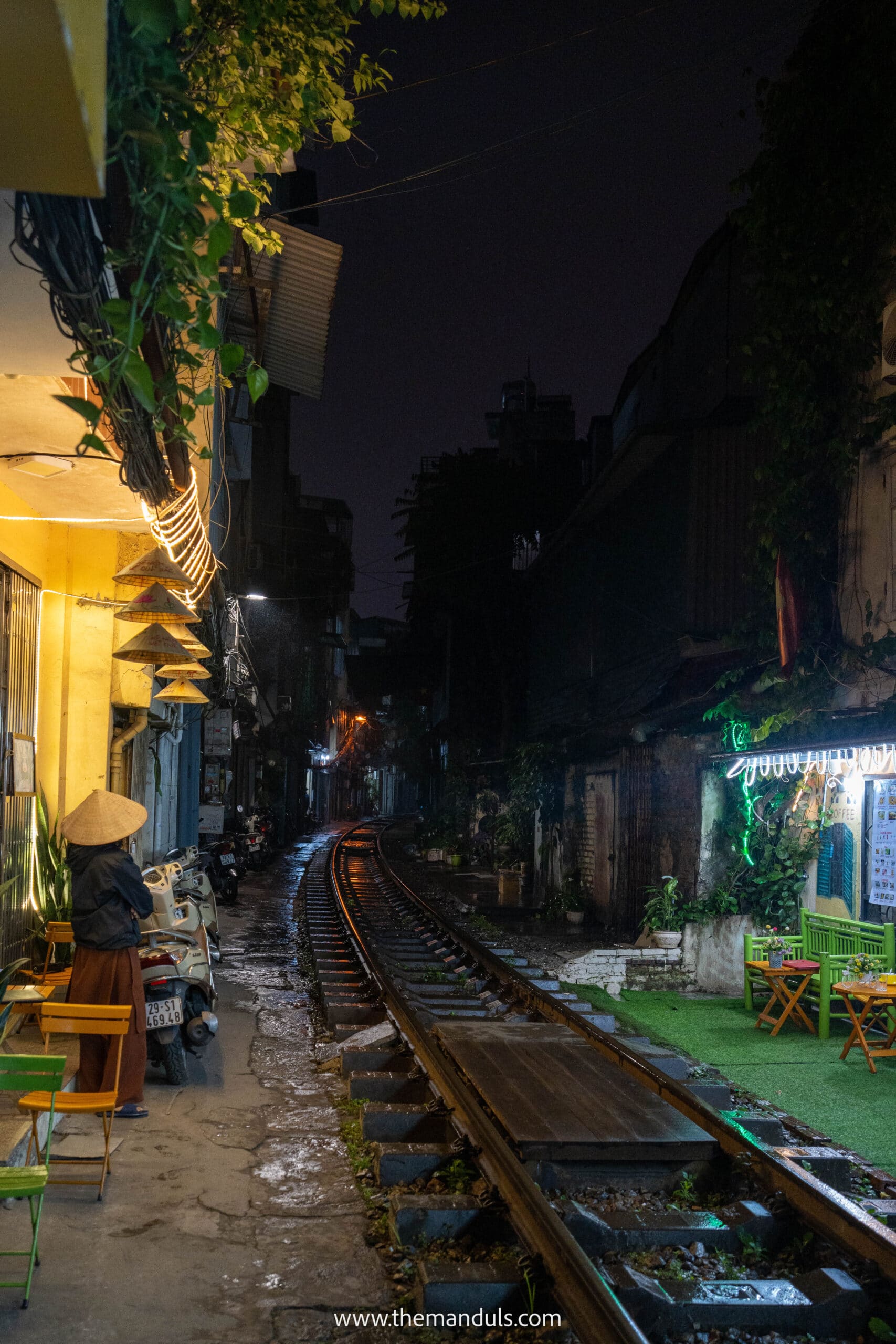
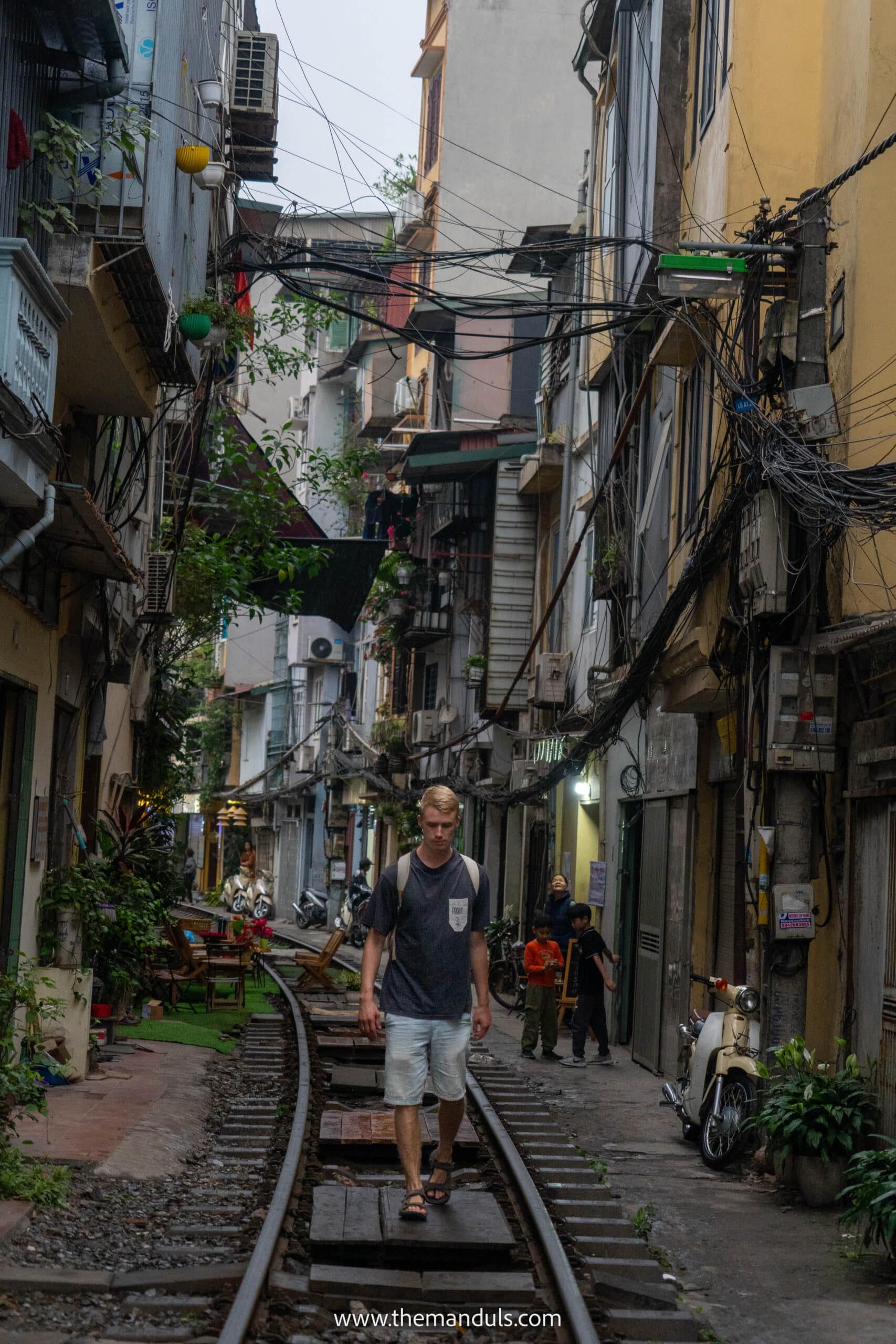
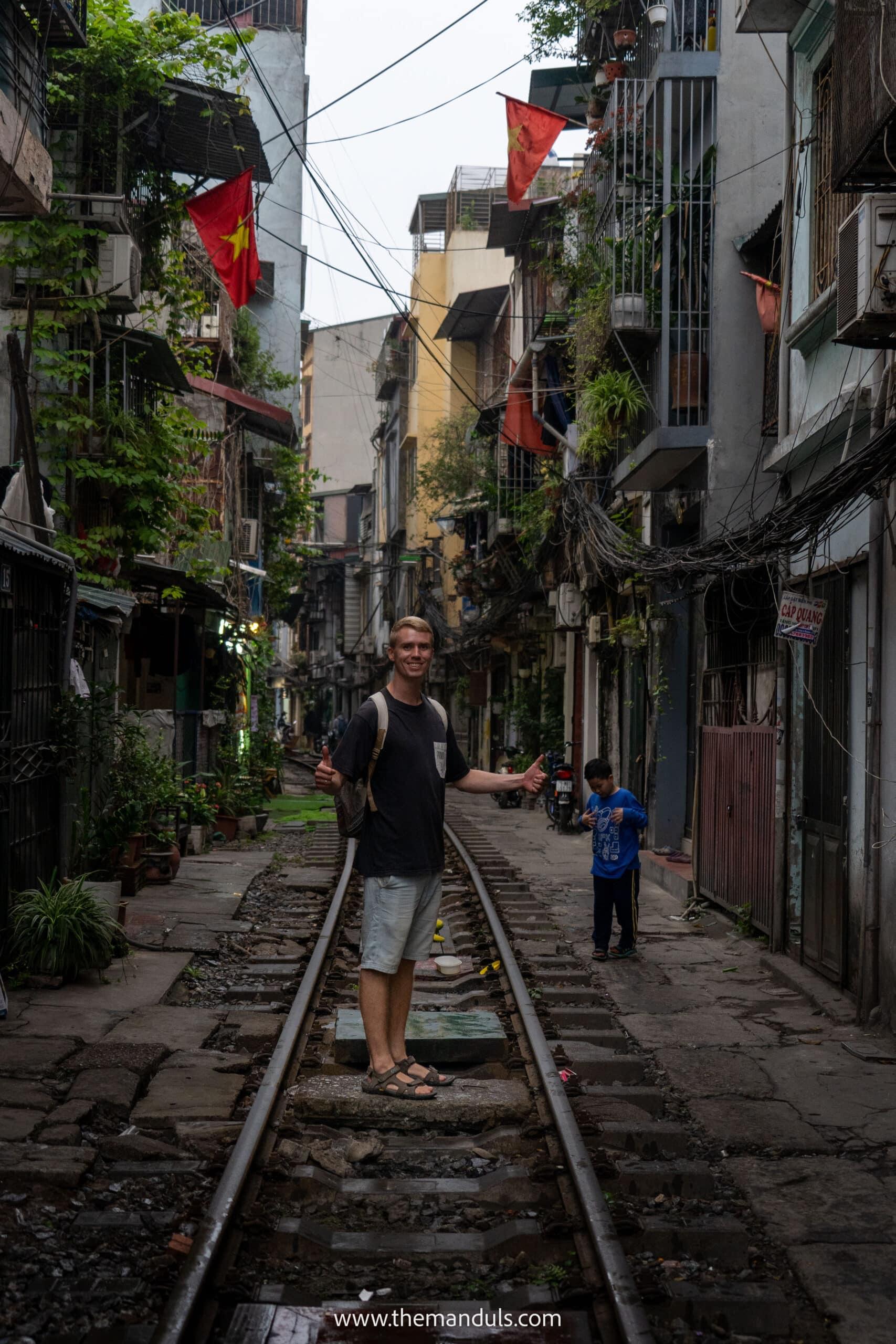
When we visited, there were no barricades, no police, and no awkward entry situation. A handful of small cafés line the tracks, run by friendly owners who’ll tell you roughly when the next train is expected. We walked around, took photos, picked a café we liked, and waited.
What surprised us was how calm everything felt until the last minute — then the owners quickly pulled back the chairs and tables, the train passed, and the street went back to normal almost immediately. A few seconds of movement, and then quiet again.
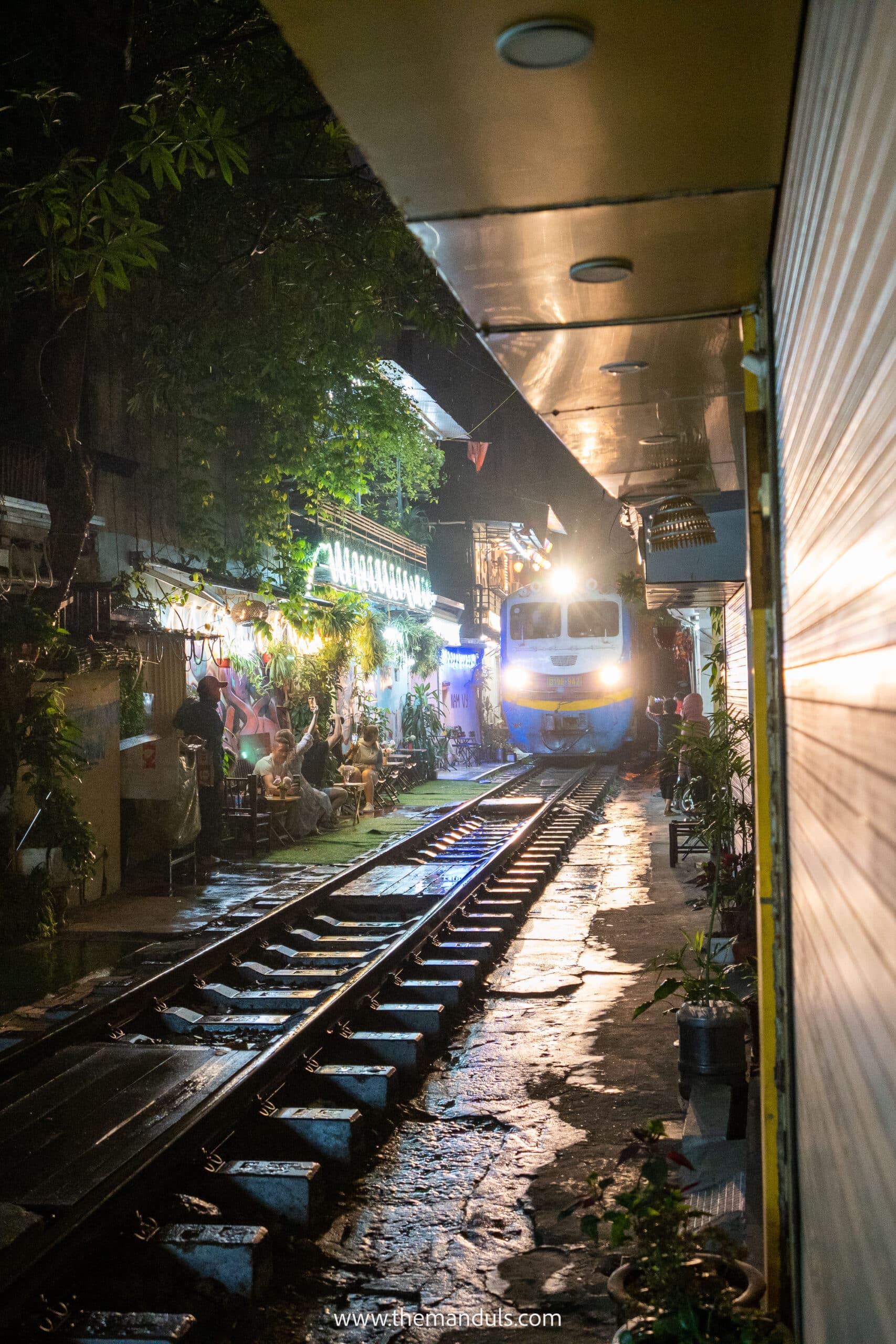
The atmosphere felt much closer to what Train Street must have been before it became so famous. After the first train passed, one café owner mentioned that a second train from Ho Chi Minh City was running late.
Sure enough, it came through a few minutes later. That one tip made the whole visit better than if we’d just followed an online schedule and left.
Worth it for: Almost everyone, especially first-timers who want the experience without the crowds Our pick: Le Duan.
Le Duan vs Phung Hung: Quick Comparison
| Location | Best for | Main downside | Our verdict |
|---|---|---|---|
| Le Duan | Relaxed visit, fewer crowds, easier photos, calmer cafés | Slightly farther from the Old Quarter | Best overall choice |
| Phung Hung / Tran Phu | Classic photos, decorated cafés, closest to the Old Quarter | More restricted, more crowded, more commercial | Good only if you want that specific photo angle |
If we were visiting again, we’d go straight to Le Duan and skip the main section unless we specifically needed those famous shots.
Train Times 2026 (Updated May 2026)
Train times are the hardest part of planning this visit, and we’ll be direct about it: any schedule you find online is approximate.
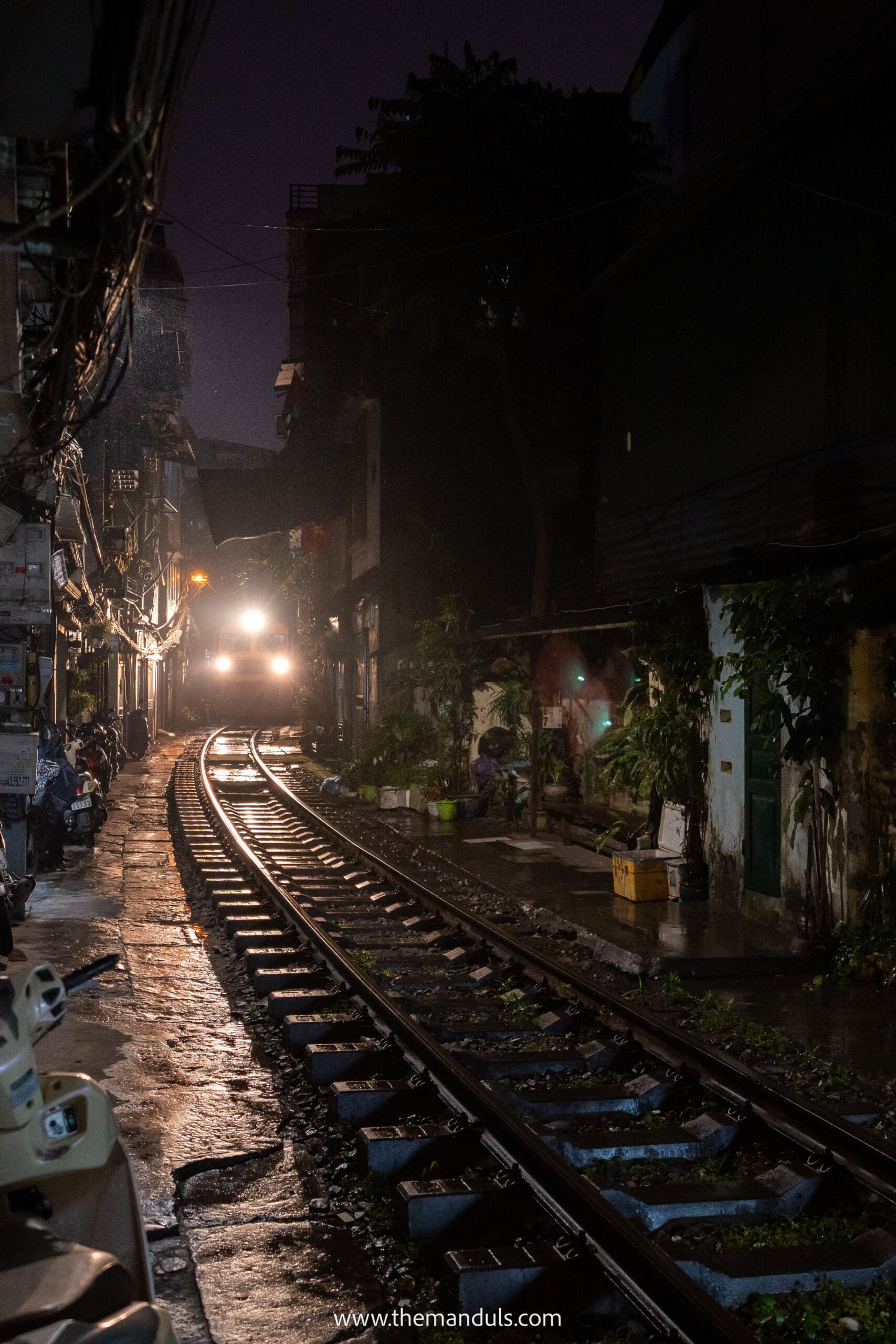
The trains passing through aren’t tourist trains. Many are regular long-distance services heading to or from Lao Cai for Sapa, Hai Phong, and Ho Chi Minh City. Delays happen regularly, and the times café owners use on the day often don’t match what’s published online.
The times below are based on currently published visitor-facing schedules, but treat them as a rough planning guide only. For official railway departures, Vietnam Railways / DSVN is the official platform — but it gives station-to-station times, not exact café-side passing times. The most useful real-time source is still the café owner when you arrive.
Phung Hung / Main Section
Monday – Friday: 8:30 AM · 9:30 AM · 11:50 AM · 3:15 PM · 7:50 PM · 9:15 PM · 9:30 PM · 10:00 PM
Saturday – Sunday: 6:00 AM · 7:15 AM · 9:30 AM · 11:50 AM · 3:30 PM · 5:30 PM · 7:30 PM · 7:50 PM · 9:15 PM · 9:30 PM · 10:00 PM
Le Duan Section
Monday – Sunday: 6:10 AM · 11:40 AM · 3:30 PM · 6:00 PM · 7:10 PM · 7:50 PM · 9:00 PM
Le Duan has fewer trains per day than the main section, so the timing of your visit matters more here. The evening window between 6–8 PM gives you one of the better chances of catching a train.
Practical tip: When you arrive, look for the daily schedule posted on café menus or boards along the track — many owners update these the morning of. This is usually more useful than relying only on an online schedule.
Best Time to Visit
Time of day
We’d visit in the early evening, especially at Le Duan. The light is softer, the cafés feel warmer with their lanterns on, and the heat from the day has eased off. It also felt less like a rushed sightseeing stop and more like a proper coffee break.
Morning works well if photography is your main reason for going — quieter streets, better light, fewer people.
We’d avoid midday unless it’s your only option. Hanoi can be hot and humid, and waiting beside the tracks isn’t enjoyable in strong sun.
Time of year
March–April and September–November are the most comfortable months to visit. The weather is mild, the humidity is lower, and walking around central Hanoi is much easier than in the height of summer.
June–August is hot and prone to afternoon rain. Go early in the morning if this is your window.
December–February can be cooler than people expect in the evenings. Bring a light layer if you’re planning to sit outside.
Weekday vs weekend
Weekdays are better at the main Phung Hung section — weekends bring noticeably more crowds. At Le Duan, it wasn’t an issue for us, but we’d still lean toward a weekday morning or early evening if you want the calmest version of the experience.
Best Cafés
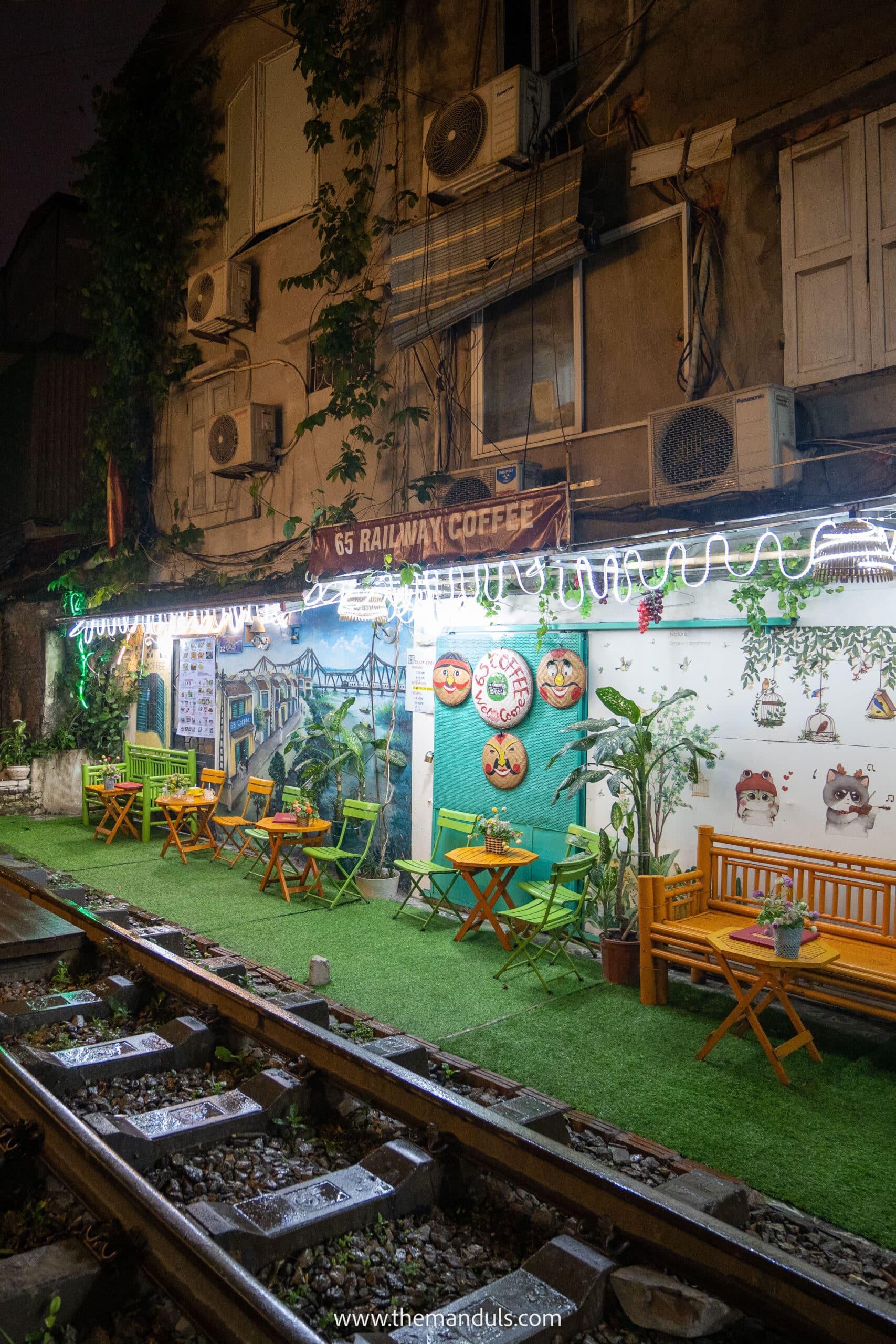
Choosing the café matters more than it sounds. You could be waiting 30–45 minutes, so it’s worth picking somewhere you actually feel comfortable.
At Le Duan
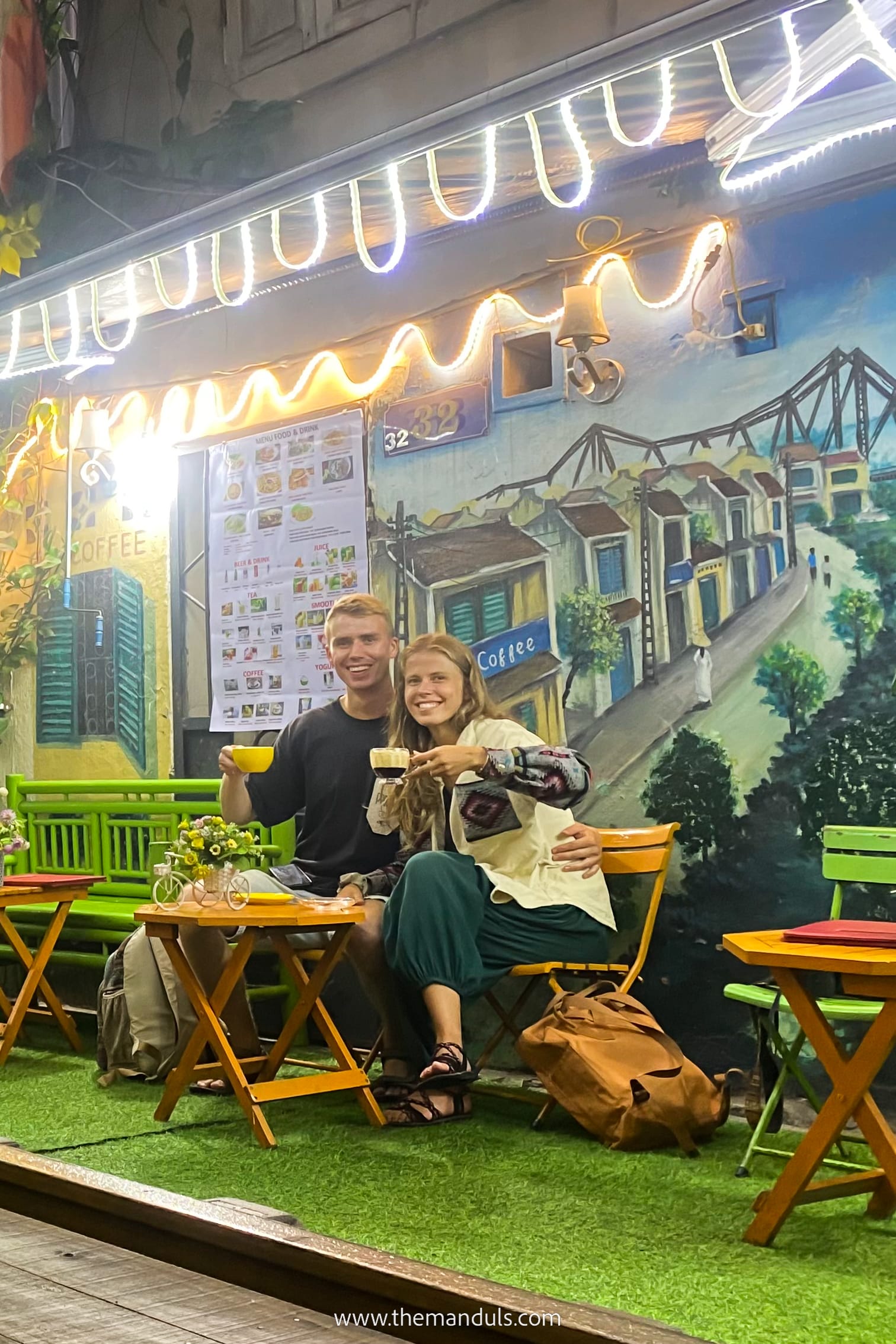
Hanoi 1990s — This is where we’d start. Good position along the track, calm atmosphere, and the owners were organized and clear with safety instructions before the train passed. If you’re visiting Le Duan for the first time, this is the café we’d recommend.
65 Railway Coffee — A quieter alternative, tucked a bit further down the track. If Hanoi 1990s is full or you want somewhere with less foot traffic, this is a solid choice.
Hanoi Café (2-story balcony) — Worth considering if you want a different angle. Most cafés give you a ground-level view, so the upstairs balcony here makes the experience feel noticeably different. They also do a rice wine coffee if you’re curious.
At Phung Hung / Tran Phu
Railway Café — Often mentioned as one of the original cafés associated with Train Street. Expect a photo-focused setup and a busier atmosphere than anything at Le Duan.
ChuChu Railways — Popular for its colorful décor and recognizable photo setups. A good choice if your main goal is getting those specific shots rather than having the calmest experience.
Coffee Chill 96 — The most relaxed of the main section options, with a solid track view and less of the staged atmosphere. We’d choose this one if we were visiting Phung Hung.
Do You Need a Tour?
No. Both sections are easy to reach independently, and the visit itself is straightforward once you know which location to go to.
Because Hanoi authorities have asked travel agencies not to organize tours to certain Train Street areas, we’d also be careful with any tour that advertises this as a main stop. If a broader Hanoi food or city tour includes the area, check the current details before booking.
For most visitors, going independently is the simpler and better option.
How to Get There
Grab or taxi is the easiest option, especially for Le Duan. Make sure to enter the right location — the Phung Hung section and Le Duan are not in the same place, and going to the wrong one wastes time. For Le Duan, search around 224 Le Duan or one of the cafés in that area. For the main section, search Phung Hung Train Street near the Old Quarter.
Walking from the Old Quarter to Le Duan takes about 30 minutes and passes Hoan Kiem Lake on the way. If the weather is comfortable, it’s a good way to turn the visit into a slow afternoon rather than a quick taxi trip. The main section is closer — around 10–20 minutes on foot depending on where you’re staying.
Local buses are possible but not worth the extra effort for most visitors. Grab is cheap enough to make the simplicity worth it.
Is It Safe?
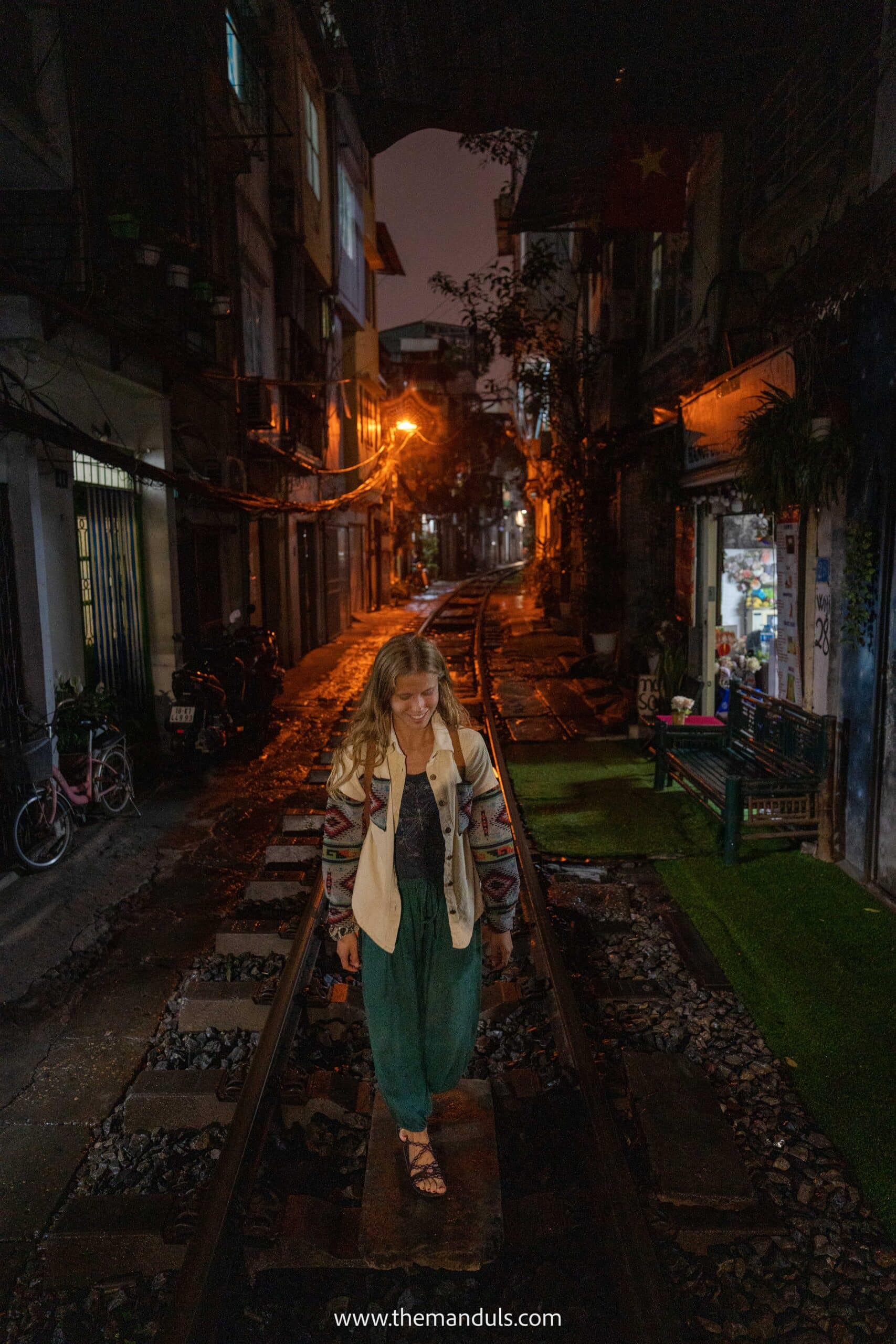
Yes — as long as you follow instructions and don’t treat the tracks like a photo studio.
The gap between the train and the café tables is genuinely tight. When the café owner tells you to step back, do it immediately and stay back until the train has fully passed. Don’t ignore them for a better angle, and don’t push past barriers at the main section.
The owners know the timing well and run this routine multiple times a day. The danger comes from people not listening.
A few simple rules:
- Don’t stand on the tracks when the train is approaching
- Don’t ignore café owners for a better photo
- Keep children well back from the tracks — hold them if needed
- Don’t push past barricades at the main section
- Don’t assume you have time just because you can’t see the train yet
The experience is more than worth it from a safe spot. You don’t need to be dangerously close.
Practical Tips Before You Go
- Bring cash. Most cafés along both sections prefer cash, especially for small payments.
- Arrive 30–45 minutes early. This gives you time to choose a café and ask about the next train before you’re rushed.
- Ask the café owner first. They usually have better timing information than anything you’ll find online.
- Don’t rely only on online schedules. They help with rough planning, but delays are common.
- If the main section looks blocked, go to Le Duan. The experience is better there anyway.
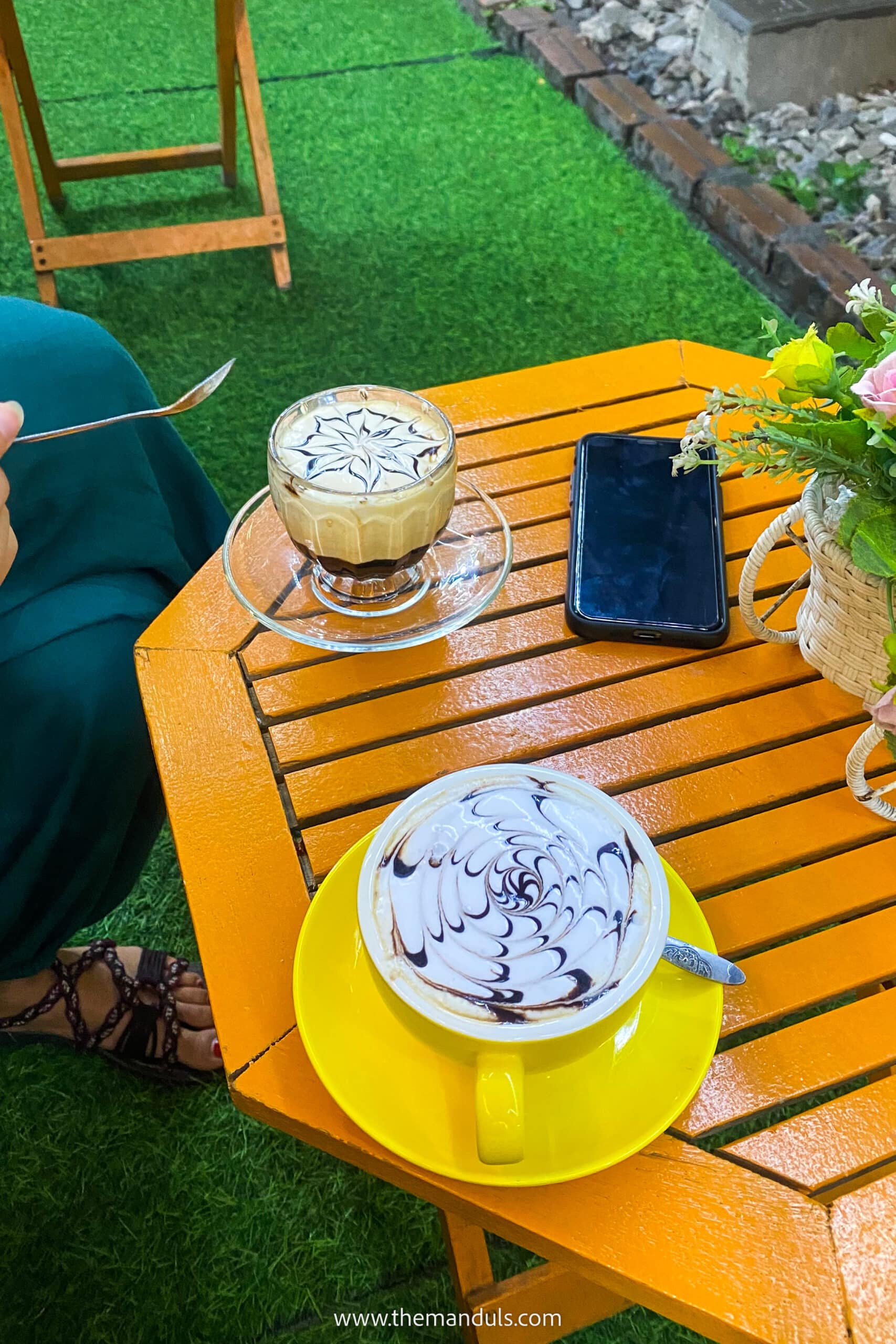
- Order a drink. Even at sections with no official entrance pressure, the cafés are part of how the visit works. A coffee costs very little and supports the people running the place.
- Keep your phone secure around the main section especially — it’s a busy tourist spot.
What We’d Do Differently
We’d spend less time researching exact train times before going. The online schedules gave us a rough window, but the café owner gave us better information in two minutes once we arrived. Next time, we’d just pick a good time window, go early, order coffee, and confirm locally.
We’d also choose Le Duan again without trying to fit in both sections on the same visit. The main section might be worth adding if you really want those photography angles, but for the actual experience of being there, Le Duan was better — calmer, easier, and more enjoyable than we expected.
Where to stay in Hanoi
If you’re planning a trip to Hanoi and aren’t sure which area to stay in, we’ve put together an ultimate guide to where to stay in Hanoi — covering the best areas and top hotels.
⭐️⭐️⭐️ Peridot Grand Luxury Boutique Hotel (our top pick) – ur top pick for a more special stay. The rooftop pool, spa, and city views set it apart from most central Hanoi hotels. This is where we’d stay if we came back for a longer trip or wanted to treat it as more of a base.
👉 Book on Booking.com →
⭐️⭐️ Hotel Du Palace – We stayed here and had a great experience. Modern rooms, helpful staff, and a location that made walking around the Old Quarter easy. A reliable mid-range choice that we’d book again.
👉 Check current deals →
⭐️ Hanoi Golden Hotel – A simple, well-located budget hotel in the heart of the Old Quarter. Rooms are clean and comfortable, and everything — from street food to shops — is just steps away. Perfect for budget travelers who want convenience.
👉 See latest prices →
FAQ
Yes, but access depends on the section. Le Duan is usually the easiest area to visit. The main Phung Hung / Tran Phu section can be more restricted and often depends on café access. Confirm locally when you arrive.
We’d choose Le Duan. It felt calmer, easier, and less commercial when we visited. The main section only makes sense if you specifically want those famous photography angles.
At the main section, yes — you should expect to buy something if a café owner lets you in. At Le Duan, it felt less pressured when we visited, but we’d still order a coffee. It supports the café and gives you a safe place to wait.
No official entrance fee. The practical cost is the drink you buy at one of the cafés.
Plan around 1–2 hours. That gives you time to choose a café, order a drink, ask about the next train, and wait without feeling rushed.
Yes — we think visiting independently is the better option. Both sections are easy to reach by walking, Grab, or taxi.
It can be, with close supervision. We’d choose Le Duan over the main section with kids because it’s calmer and less crowded. Keep children well back from the tracks when the train is approaching.
Morning light is better for photography. For atmosphere, we preferred the early evening, especially at Le Duan.
Final thoughts on Hanoi Train Street
Hanoi Train Street is worth visiting, but the best version of the experience depends on where you go.
If we were visiting again, we’d go straight to Le Duan, arrive before the evening train window, choose a café we liked, and ask the owner when the next train was expected. That approach felt relaxed and simple — much better than chasing exact schedules online.
The main Phung Hung section gets most of the attention, but Le Duan is where the visit actually worked for us. Go for the coffee, stay flexible with the timing, listen when the train is coming, and don’t overthink it. That’s when it becomes worth the stop.
Excellent write-up. I really enjoyed reading it. Thanks for all those great travel tips!!
Cheers from Sydney xx
Hi Bronte 😊 Thank you for your warm words. We wish you safe and happy travels 😇
Love the detailed explanations 🙂
Thank you! Glad to hear that 😊